

YESTERDAY in SUPES: Board Approves Letter of Support for Behavioral Health Triage Center Grant Application, Condemns Recent ‘Hate Events’ in Humboldt, and So Much More!
Isabella Vanderheiden / Wednesday, Jan. 25, 2023 @ 5:04 p.m. / Local Government
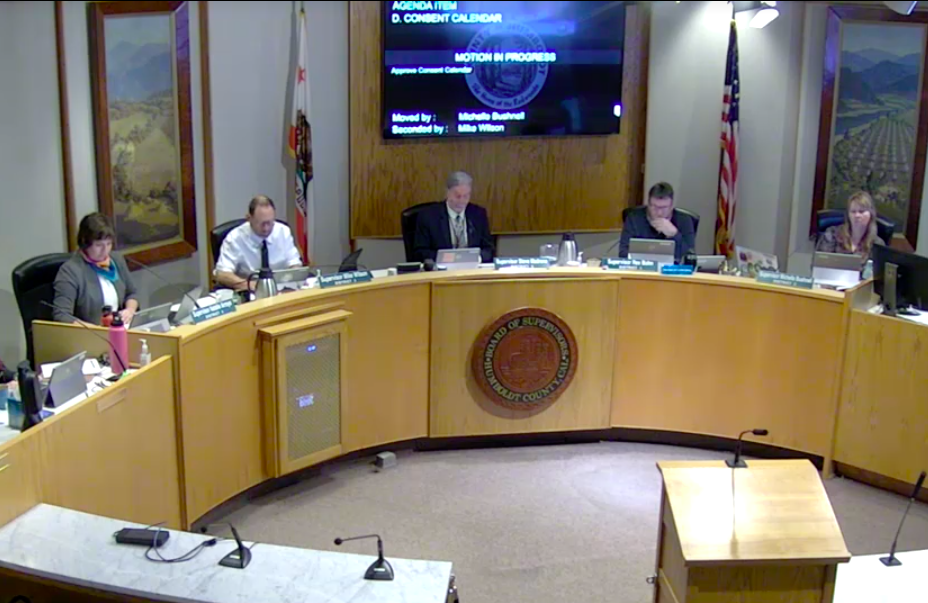
Screenshot of Tuesday’s Humboldt County Board of Supervisors meeting.
###
Humboldt County is in desperate need of mental health services.
Local health care providers and Department of Health and Human Services (DHHS) staff have spent the last year looking for long-term strategies to address the ongoing mental health crisis, which has only been exacerbated by the COVID-19 pandemic and insufficient local resources. The county has tried to get an adult crisis residential facility up and running for some time but hasn’t found a viable location for such a facility until recently.
During this week’s meeting, the Humboldt County Board of Supervisors took its first look at a proposal to build a behavioral health crisis triage center in Arcata and unanimously approved a letter of support for a grant application that would partially fund the construction of the facility.
The proposed facility, which is inspired by Be Well Orange County, would provide approximately 12 crisis stabilization beds, 12 sobering cots and nine mental health crisis residential beds, though the design and square footage of the facility has yet to be finalized. The facility would be built on property owned by Mad River Community Hospital but the exact location of the property has not been disclosed.
Several members of the North Coast Health Leadership Team emphasized the “extremely critical” need for additional mental health services in Humboldt County.
“This would be the best thing that could happen to really improve [mental health] care in Humboldt County,” David Neal, chief executive officer for Mad River Community Hospital, said. “What’s going on at Mad River [Hospital], Redwood [Memorial Hospital] and St. Joseph’s [Hospital] is a really grave concern. … We [need to] develop a unit where these patients could be housed, get the appropriate care that is necessary … so they can succeed in getting the treatment needed to then transition to other levels of care.”
Behavioral Health Director Emi Botzler-Rodgers said the proposed facility presents “an amazing opportunity to address mental illness in our community.”
“There is lots of judgment of people with mental illness and I think we as a community are still really learning about how to stop stigma and discrimination,” she said. “I think this is one of the ways to do it, to just recognize the need in our community and come together to normalize that people with mental illness need care with dignity and respect and kindness.”
The grant funding would come from the California Department of Health Care Services’ Behavioral Health Continuum Infrastructure Program. The latest round of grant funds would pay for $480 million in projects to address significant crisis care gaps in California’s behavioral health infrastructure.
“This is a unique situation where the state has a grant program where communities … can bring their ideas to the state for funding,” Connie Stewart, Executive Director of Initiatives at Cal Poly Humboldt, said. “This round of funding required a 10 percent match because of public and private partners.”
First District Supervisor Rex Bohn expressed enthusiastic support for the project and even suggested that the county “can do better” than a 10 percent match of $3 million to fund the project.
“This is long-term,” he said. “I think this is going to go a long way because … when you read stories of people that come out of homelessness and mental health [crises], it is because somebody spent some time with them and gave them dignity for a moment. Maybe that’s it. Maybe that’s our job.”
Fourth District Supervisor Natalie Arroyo asked how long patients would stay at the facility and whether or not people would be involuntarily held.
“Maybe this is nitty-gritty we can get into later, but the triage nature of it makes it sound like people are in and out of there relatively quickly,” she said. “Could you help me understand in broad terms how people come in and then get connected to other resources?”
It would vary, Botzler-Rodgers said, because the single facility would offer several components of care.
“Our goal is to get people to the right level of care,” she said. “They may come in, they may be triaged and they may not need to stay. They may just need to be linked to outpatient services and connected with a case manager or a clinician. … They may need more intensive, longer-term services like residential treatment, but at this facility, it’s really only 30 to 60, maybe 90 days. That would be the max.”
After public comment and some more discussion, Second District Supervisor Michelle Bushnell made a motion to approve staff’s recommendation to submit a letter of support for the grant funding application, which was seconded by Bohn.
The item passed in a 5-0 vote.
Anti-Hate Resolution
The board also approved an anti-hate resolution condemning recent “hate events” in the county, including several instances of racism, antisemitism and an increase in hate crimes, discrimination and violence towards the 2SLGBTQIA+ community. Recent events include posting anti-trans signage in the community, anti-2SLBTQIA+ graffiti/vandalism in local schools and at a queer-friendly church, as well as harassing phone calls being made to at least one community organization.
The resolution, brought forth by Fifth District Supervisor and Board Chair Steve Madrone and Third District Supervisor Mike Wilson, emphasized the county’s commitment to “diversity, equity, and inclusion of all religions, ancestries, and ethnicities regardless of immigration status as well as people of any disability, gender, sexual orientation, or gender identity.”
“While this resolution is broad and encompasses a lot of wishes and values in the community, I don’t think it’s speaking to abstract concerns,” Arroyo noted. “I think these are very real fears for people in our community and I hope that we follow it up with more forms of action. But in the meantime, I really appreciate it being brought forward and it’s an important moment in time to do so.”
During public comment, Humboldt County Human Rights Commission Chair Jim Glover reminded the board of the commission’s recent decision to create a “rapid response protocol” designed to address such issues in the community as they arise.
“We had two opportunities to respond to incidents targeted to segments of our population and to what some believe is a coordinated attempt to stoke fear,” he said. “To that extent, [the commission’s] efforts are meeting with some success. However, the commission is determined to educate the public about the inaccuracies being presented and the perceived hateful bias behind each event and the LGBTQIA+ Pride event in October that was interrupted by protesters.”
Glover added that the protesters were only focused on a single aspect of the all-ages Redwood Pride Halloween event: the drag show.
“The protesters would have had you believe that little else went on in that event except for a drag show for kids,” he continued. “There was far more to this event, but the focus of the protesters was only on one aspect.”
Glover thanked the board for bringing the resolution forward but urged the board to “be prepared to do even more in the future.”
Bohn made a motion to approve the resolution but said it should be “a little more encompassing” and include the homeless community as well.
“I think that is a crisis that we need to address,” he said. “I’m also proud that we’re bringing this forward but as we bring this forward, don’t forget the one [segment] of our population that is actually dying from us not doing anything is the homeless population. … I don’t know if it constitutes a hate crime, but it sure tears my heart apart that we’re not doing more.”
Arroyo said she appreciated Bohn’s comments and offered a second to the motion.
The board did not take any action to amend the resolution to reflect Bohn’s comments, though the board seemed to agree with his sentiment. The motion passed in a unanimous 5-0 vote.
Legislative Platform for 2023
Almost every year, as a part of the usual beginning-of-the-year housekeeping duties, the board is tasked with approving a legislative platform for the coming year. The document details the county’s official stance on various legislative issues, ranging from public safety to more specific issues like offshore wind, to inform state and federal lawmakers of our local priorities.
The board took its first look at the document two weeks ago but could not reach a consensus on one of the community’s most contentious issues: Caltrans’ Richardson Grove Improvement Project. During that conversation, Madrone indicated he would vote against the entire legislative platform if the document included supportive language for the project, as he’s done in years past.
In case you’re not familiar, the project, which has been tied up in litigation by environmental groups for the better part of the last decade, proposes minor realignment and widening of Highway 101 along a 1.1-mile stretch through the iconic Richardson Grove State Park.
The project has been modified several times since its inception to reduce potential impacts on old growth redwoods along the highway but opponents, including Madrone, argue that the changes don’t go far enough.
“As a hydrologist, I understand some of the issues of root systems and other impacts to old growth redwoods,” Madrone said. “There are a lot of trees that have died back … and that has a lot to do with the disturbance of root systems, disturbance of hydrology, as well as opening up the highway and having desiccating effects on the tops of the redwood trees. Those are well-studied effects on old-growth redwoods.”
Madrone added that the highway realignment project could dramatically increase the volume of large semi trucks traveling through the area.
Bohn argued in favor of the project and emphasized that impacts would be “less than significant.”
“I won’t change my position on Richardson’s Grove,” he said. “No old growth will be affected, no growth will be cut and old growth will be taken. … There’ll be less trucks if we have more space and that’s what they’re doing is allowing these larger, longer trailers to be able to go through the grove safely. It’s not going to be any big fuel-belching monsters coming through the trees.”
He added that the realignment project is essential for the county’s future and “for the betterment of the whole community.”
In an attempt to meet in the middle, Madrone suggested the county take a neutral stance on the project. He included a proposed revision to the legislative platform that would convey the county’s support for “efforts that would allow larger trucks into Humboldt County” as long as “no old growth redwood trees are affected with this construction, either from tree removal or root disturbance.”
During public comment, Tom Wheeler, executive director of the Environmental Protection Information Center (EPIC), urged the county to look into alternative solutions to the project.
“If the county is interested in promoting more efficient, more sustainable goods movement into and out of the county, there are things that we could do and legislation that we could possibly pursue,” he said. “ If we were to bring back something else along the lines of alternative solutions to allow for access during periods in which Highway 299 may be closed or something else. I think that that kind of fulfills the goal of the group goods movement.”
But throughout the debate, no one’s mind appeared to change. Arroyo said she could understand both sides of the issue and suggested that the board omit the item from the legislative platform entirely.
“I would prefer that our legislative platform is what we were asking our team to advocate for,” she said. “I would prefer that if we are not in agreement about something that it simply not be in there rather than say we’re neutral on something. I’d rather we just omit it.”
After some additional discussion, Bushnell made a motion to go with Arroyo’s suggestion and remove the item from the document. Arroyo offered a second.
The motion passed 5-0.
Measure S Payments
Early on in the meeting, the board received an informational report from the county Treasurer-Tax Collector’s office regarding the county’s backlog of Measure S tax payments.
Back in November, the Board of Supervisors agreed to temporarily suspend Measure S, the county’s commercial cannabis cultivation tax, for two years – 2022 and 2023 – to provide immediate financial relief to the struggling cannabis community. To further assist indebted farmers and offer a little more flexibility, the county will now allow any tax amount to be paid at any time.
“With the suspension of the annual billing of the Measure S tax, it has provided an opportunity for us to explore the option of taking payments during the suspension period,” said Treasurer-Tax Collector Amy Christensen. “Because the annual payments are suspended, that’s why we do have the ability to take on the payments. I’ll need to work with county counsel so the details are legal and we can proceed.”
Bushnell thanked Christensen for providing the option for struggling farmers. “This will be very helpful, I think, for people to come in and start chipping away at those amounts,” she said.
Speaking during public comment, Craig Johnson, owner and operator of Alpenglow Farms, thanked county staff for offering a little more flexibility.
“This is a step in the right direction and we sure appreciate this,” Johnson said. “We’ve been coming to the board since 2017 asking for help to prevent this entire situation on a county level and we’re going to continue to show up and advocate for our community. … No one wants to be behind. It’s because of extreme economic challenges.”
Likewise, Natalynne DeLapp, executive director of the Humboldt County Growers Alliance, thanked the county “for coming up with a mechanism to support the [cannabis] community.”
“I would like to remind the board that up until our economic crisis started, we had an 80 percent payment rate. That’s pretty darn good,” she said. “It was not until … the collapse of the industry that it really just became an insurmountable challenge.”
Bushnell made a motion to accept and file the informational report, which was seconded by Wilson. The motion passed 5-0.
Cannabis Permit Appeal
Towards the end of the meeting, the board considered an appeal to a recent decision by the Humboldt County Planning Commission to approve a conditional use permit for Cisco Farms, Inc., for a five-acre commercial cannabis operation on Chambers Road in Petrolia. After more than three hours of back-and-forth discussion, the board unanimously voted to deny the appeal, with several conditions, and uphold the Planning Commission’s decision.
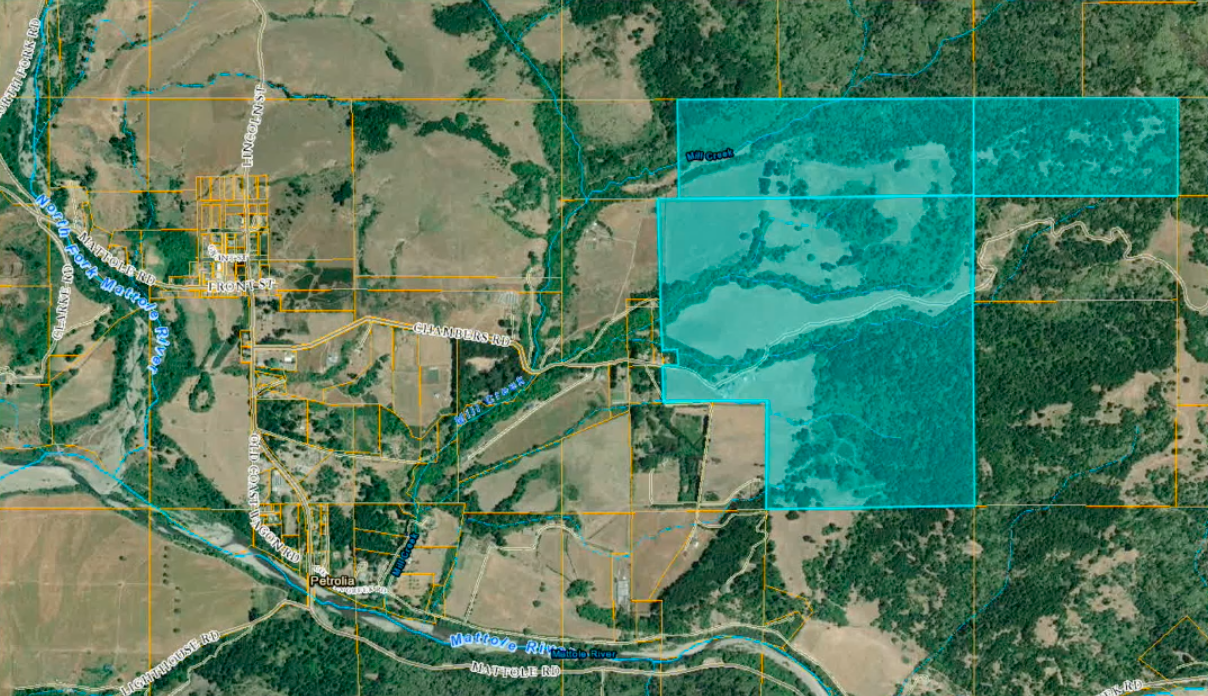
Screenshot of the project location on Chambers Road in Petrolia.
The appeal, brought forth by a group of Petrolia residents, cites numerous cumulative impacts associated with the cannabis operation.
One of the appellants, John Williams, spoke at length about the community’s “laundry list” of concerns surrounding the project. The primary complaints focus on the size of the cultivation area, water availability on the property, impacts on road infrastructure, as well as traffic and public safety near the school along Chambers Road.
“What I want to talk about more is the impact on the community, which is pretty much neglected in the initial study,” Williams added. “We all know from experience that permit conditions and laws are not effectively enforced in the Petrolia area, we’re just too remote. … We think there will be significant impacts that won’t be mitigated and that means we think the Planning Commission erred by [approving the pemit].”
The applicant, long-time Petrolia resident Cisco Benemann, reiterated his willingness to work with his neighbors and said he had done so throughout the application process.
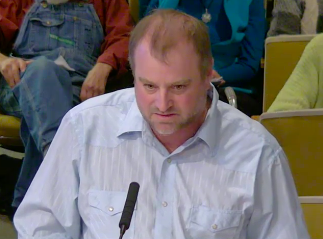
Benemann (Screenshot)
“We held a community meeting at the community center [and] I listened to my neighbors’ concerns that live on Chambers Road,” he said. “I understand [their concerns] but this is a project I’m gonna scale [up] over time. I’m not going to come out of the gate at five acres and build this whole thing out. It’s gonna take time and will take one acre at a time. … I would like to be able to have the potential to grow and scale this project for the next 20 years.”
Around a dozen Petrolia and Southern Humboldt residents addressed the board during public comment. The majority of the commenters were against the project, including Petrolia resident and Treasurer of the Mattole Valley Resource Center Kathryn Radke.
“I am burned out in trying to help our community maintain its social fabric and its public safety,” she said. “Our community is supported by volunteers. I would love to have volunteers come in who are related to the large-scale [cannabis] industry but I have not seen them. I have seen many volunteers from the small-scale industry but quite a few of them have had to move. We’ve lost EMTs, we’ve lost fire department members, we’ve lost board members and active people who are involved in the social fabric because they are priced out and we need to replace them.”
On the other hand, a number of residents sympathized with the applicant and felt as though he had met all of the requirements under the county’s Commercial Cannabis Land Use Ordinance (CCLUO).
The board went back and forth on the matter for the next hour and a half trying to decide whether to deny the appeal entirely or require the applicant to adhere to a list of conditions to quell the community’s concerns surrounding the project.
Ultimately, the board agreed on a list of additional conditions:
- Employees must arrive for work at the property before school starts and leave after school is out to avoid traffic safety issues involving students going to or leaving the school.
- The applicant and/or his employees must volunteer with local organizations for two hours a week once operations begin.
- The applicant must provide up to $20,000 in matching funds obtained by the community within the first five years for traffic safety improvements to Chambers Road.
- As the phasing takes place, the applicant will be subject to an annual review by the Zoning Administrator.
Bushnell made a motion to deny the appeal and approve the project with the aforementioned conditions, which was seconded by Arroyo.
The motion passed in a 5-0 vote.
###
You can find a recording of the meeting at this link.
BOOKED
Today: 7 felonies, 11 misdemeanors, 0 infractions
JUDGED
Humboldt County Superior Court Calendar: Today
CHP REPORTS
5451 MM101 N HUM M54.50 (HM office): Traffic Hazard
0 Koa Dr (HM office): Hit and Run No Injuries
Us-101 (HM office): Assist with Construction
Sr299 E / Blue Lake Blvd Ofr (HM office): Assist with Construction
7985 Mm101 S Hum 79.90 (HM office): Assist with Construction
ELSEWHERE
Governor’s Office: Governor, First Partner statement on the passing of Clint Reilly
RHBB: EPD Releases Information on Hours-Long Standoff on Eureka Rooftop
Governor’s Office: Governor Newsom announces continued growth in California ZEV sales as Trump’s reckless Iran war raises prices on Americans nationwide
KINS’s Talk Shop: Talkshop July 20th, 2026 – John Dalby
HUMBOLDT TODAY with John Kennedy O’Connor | Jan. 25, 2023
LoCO Staff / Wednesday, Jan. 25, 2023 @ 4:56 p.m. / Humboldt Today
HUMBOLDT TODAY: An anti-hate resolution is passed by the Humboldt County Board of Supervisors, numerous resources are available for earthquake victims, how you can deliver the mail, and more in today’s newscast with John Kennedy O’Connor!
FURTHER READING:
- A Little-Known Grant Program Can Help Earthquake-Proof Your Home, But It Desperately Needs to Find More Humboldt County Contractors to Do the Work
- NEED a JOB? The U.S. Postal Service Will be Holding a ‘Massive Hiring Fair’ Tomorrow in Arcata, and Here’s How to Register
###
###
Cal Poly to Break Ground on Craftsman Mall Project Next Month, University Announces; Housing Facility Will Have Room for Almost a Thousand Students
LoCO Staff / Wednesday, Jan. 25, 2023 @ 4:51 p.m. / Housing

Graphic: Cal Poly Humboldt
From Cal Poly Humboldt:
A new Cal Poly Humboldt housing project has been approved by the California State University Board of Trustees, with construction slated to begin in February. The facility will house 964 students and Phase I will be ready for occupancy in Fall 2025.
The project, which will be built at the former Craftsman Mall site about a mile north of Cal Poly Humboldt’s main campus, comes as the University is adding new academic programs and increasing enrollment as part of its polytechnic transformation.
The project was made possible by the historic $458 million state investment in the polytechnic effort approved by the Governor and Legislature in 2021. It represents a vital investment to fuel a truly modern polytechnic education in Northern California, and will help to address much-needed housing in Humboldt County.
The housing complex will include two buildings providing a total of 964 beds in apartment-style spaces, increasing University-owned student housing by nearly 50%. Shared community areas include study rooms, student lounge and multipurpose rooms, fitness space, café/retail space, indoor bicycle parking, and residential laundry. The project also includes administrative offices and apartments for housing staff. By incorporating the Higher Education Student Housing Grant programs, the project enables Humboldt to further demonstrate its commitment to affordable and high-quality student housing.
Exterior site features include green space, recreational facilities, and outdoor barbecue area. The project will also include 340 surface parking spaces, including electric vehicle-ready parking spaces and covered bicycle parking. To minimize the impact of the building height on the surrounding neighborhoods, the buildings will be taller at the center and step down in height along the perimeter of the site. Neither building will exceed 75 feet in height.
The project is designed to achieve Leadership in Energy and Environmental Design (LEED) Gold certification, and will be construction type 1A, which is the highest level of fire protection under the California Building Code. Planned sustainability features include high-efficiency irrigation, water-efficient plumbing, energy-efficient and CalGreen-compliant lighting and appliances, and durable exterior building materials. Energy Star appliances and LED lighting and controls will be used throughout the project, and on-site solar energy production will be provided.
The project site has been designated by the City of Arcata as an infill opportunity zone for high-density residential development in the City’s 2019 Housing Element and in updates to the City’s General Plan that are currently in preparation. By building at that location, Cal Poly Humboldt will be able to provide significant new student housing within about a mile of the main campus.
Cal Poly Humboldt was designated the state’s third polytechnic institution on January 26, 2022. The University is adding an anticipated 27 new academic and experiential programs by 2029, with 12 launching this fall. The University is also building a number of important new facilities, including the newly approved housing project at Craftsman Mall, a new engineering and technology building, and a sustainability and microgrid center.
More information is available on the student housing project website.
More information about the broader polytechnic transformation is on the polytechnic website.
‘Hostile Takeover’: Eureka City Schools Looks to Seize Operation of Academy of the Redwoods, Threatens to Sue Fortuna Union High School District Unless it Complies With That Demand
Ryan Burns / Wednesday, Jan. 25, 2023 @ 4:26 p.m. / Education

Academy of the Redwoods, an Early College High School, is located on the campus of College of the Redwoods. | Image via academyoftheredwoods.org
# # #
In a move that’s being described as a “siege” and an attempted “hostile takeover,” an attorney representing Eureka City Unified School District (ECS) on Friday sent a letter to Glen Senestraro, superintendent of Fortuna Union High School District (FUHSD), demanding that his district relinquish operations of Academy of the Redwoods, a public high school located on the main campus of College of the Redwoods.
The letter says that if the Fortuna district fails to comply, Eureka City Schools “is prepared to initiate litigation against Fortuna in Humboldt County Superior Court to compel Fortuna’s compliance with the law.”
The letter, written by an attorney with Sacramento-based public agency law firm Lozano Smith, argues that because Academy of the Redwoods’ facilities fall within ECS’s geographical boundaries, FUHSD has no legal right to operate the school.
“Because the law is clear on point,” the letter argues, “the [ECS] District believes that the most efficient and least disruptive path to resolve this dispute is that the [ECS] District and Fortuna coordinate with each other, and ultimately their Humboldt County Office of Education and College of the Redwoods partners, to transition the Academy’s operations from Fortuna to the [ECS] District, ideally before the commencement of the 2023-2024 school year.”
Local parents have responded to this demand with concern and indignation, accusing ECS Superintendent Fred Van Vleck of prioritizing enrollment-based financial reimbursement above student wellbeing.
“It seems like it’s a business deal,” said Patty Valtenbergs, whose daughter attends attended Academy of the Redwoods. She said schools across California are concerned about declining enrollment, which corresponds with declining revenues, but she added that Eureka City Schools appears to be holding student education hostage.
“It’s like a hostile takeover,” she said. “And [ECS] didn’t build [Academy of the Redwoods]. They didn’t have the vision for it. And they’ve let it be for how many years? … If this was for the benefit of the students, they would let the program be and celebrate it.”
Reached by phone, Humboldt County Superintendent of Schools Michael Davies-Hughes said the Academy of the Redwoods early college education program was created more than 17 years ago through a partnership between the Humboldt County Office of Education and College of the Redwoods.
“Five high schools in Humboldt County were involved in this discussion early on — we’re talking [circa] 2003 — about applying for this grant to establish this early college program,” Davies-Hughes said.
He said that he doesn’t personally know the history of how Fortuna Union High School District was selected, but once the program was established it gained momentum and the partnership has “stood the test of time,” serving local students for the past 17 years.
“We see students having options to further their education, and I’m 100 percent supportive of that,” Davies-Hughes said.
In an emailed statement, ECS said, in part, “Academy of the Redwoods is undisputedly located within the Eureka City Schools (ECS) district boundaries. Under state law, this obligates ECS to recognize the Academy as a school within its District.”
“Why now?” wondered Tonya Fleming, whose elder son attends Academy of the Redwoods and whose younger son hopes to do so next year. “It sounds like a hostile takeover and a threat,” she said, referring to the attorney letter.
Fleming, whose family lives just five minutes from the CR campus, said her sons appreciate the camaraderie and small-school atmosphere of Academy of the Redwoods, and she appreciates the school’s individualized education and its focus on preparing students for college. Academy of the Redwoods students often earn Associate of Arts degrees as they work toward graduation.
“I do not think Eureka City Schools would be a good fit for either of my children” Fleming said. “They haven’t gone there a day in their life, for one thing.”
Fortuna administrators aren’t taking the demand from ECS lightly. In response to questions from the Outpost, Senestraro emailed a statement saying FUHSD has successfully operated Academy of the Redwoods for 17 years. He added that ECS was initially offered the program but turned it down.
“Fortuna Union High School District took on this challenge when it was turned down by Eureka City Schools,” Senestraro says in his statement. “Fortuna Union High School District through years of collaboration, relationship building, innovative thinking and problem-solving built the program it is today.”
He goes on to say, “Fortuna Union High School District is entirely prepared to strongly defend and retain this program.”
The district expressed a similar message to parents in an emailed statement sent Tuesday evening.
“FUHSD is disappointed with the demands from ECS to take over [Academy of the Redwoods],” the message reads. It goes on to say, “FUHSD is prepared and committed to defending AR and its students during this siege by ECS.”
This fresh legal conflict arises amid an ongoing dispute concerning inter-district transfers — that is, the process by which parents who live in one district get permission to send their kids to a school in a different district.
Parents discussing the matter on Facebook say Eureka City Schools has routinely denied inter-district transfer requests for Academy of the Redwoods.
The Lozano Smith letter addresses this matter, referring to four pending requests from parents who live within ECS boundaries but want their kids to attend Academy of the Redwoods. ECS has denied those requests, and appeals have been filed with the Humboldt County Office of Education.
The demand letter from Lozano Smith says ECS will not challenge or oppose those appeals because the district “sees it as inevitable” that Academy of the Redwoods will be transferred to its jurisdiction.
“This aside,” the letter continues, “the District maintains that there are other students who reside within the District’s boundaries who have been unlawfully enrolled in the Academy by Fortuna over the years, including recent schools years. If litigation between the District and Fortuna becomes necessary as to the Academy overall, the District intends to simultaneously pursue claims against Fortuna for the unlawful enrollment of District students in the absence of compliance with the interdistrict transfer laws.”
According to the letter, ECS denied the transfer requests because there’s no agreement between ECS and FUHSD and because ECS has “knowledge of Fortuna’s history of unlawful enrollment of [ECS] District students without compliance with applicable laws.”
In his emailed statement, Senestraro says there may be some confusion about FUHSD’s lack of participation in a countywide inter-district transfer agreement.
“Let’s be clear,” his statement reads. “Fortuna Union High School District is absolutely accepting inter-district transfers. Fortuna Union High School District is just not bound to the February 15th deadline that the blanket County-wide agreement requires. Fortuna Union High School District will accept students at any point in the school year. Fortuna Union High School District fully believes in parent/student choice for education for their pupils. Additionally, we believe you can’t put a date or timeline for that choice.”
Davies-Hughes said he likes to see conflicts resolved at the local level, through conversations, but in this case the situation may have progressed beyond the point where such an amicable resolution is possible. With ECS taking a firm position that FUHSD is violating the law, he said, “that is something that unfortunately may have to be played out through the court process.”
Fleming suggested that the Humboldt County Office of Education should assume jurisdiction over Academy of the Redwoods and allow the program to continue with its current staff and faculty.
Davies-Hughes called that an interesting idea.
“I’m open to any opportunity to really see a continuance of that program,” he said. “It’s a wonderful program and pretty unique. As superintendent, I’m open to exploring possibilities for how we can continue supporting students in that program.”
Asked if the Humboldt County Office of Education might play a role in mediating this dispute, Davies-Hughes said it’s possible that the parties might be willing to take a step back and engage in productive discourse.
“I don’t know how likely that is,” he said. “There has to be a willingness from both parties, and they clearly have difference in stance on this. But I’m a willing partner for both school districts to sit down and see what can be done.”
Davies-Hughes said that he understands that the release of this letter from the ECS attorney has generated some uncertainty and anxiety from parents of students and prospective students at Academy of the Redwoods.
“What I will say is that Humboldt County educators have a longstanding history and track record of doing what’s in the best interests of students,” he said. “I’m hopeful and confident that at the end of the day we’ll come to that approach, that we’ll remember that it’s about what’s best for our students.”
Here’s the full statement released today by Senestraro and the Fortuna Union High School District:
Regarding the recent news that Eureka City Schools seeks litigation against Fortuna Union High School District.
Academy of the Redwoods is an Early College High School program that has been operating for 17 years. Academy of the Redwoods is operated successfully by Fortuna Union High School District and has been since its inception in 2005. Eureka City Schools was initially offered the program and turned it down. Fortuna Union High School District took on this challenge when it was turned down by Eureka City Schools. Fortuna Union High School District through years of collaboration, relationship building, innovative thinking and problem-solving built the program it is today. This program not only benefits students of our district but is a unique, beneficial program that is an asset for all county students collectively. Fortuna Union High School District is proud to manage Academy of the Redwoods, a program that offers so much to its students.
Academy of the Redwoods was created by the Humboldt County Office of Education, College of the Redwoods and Humboldt State University. Fortuna Union High School District has and still works closely with College of the Redwoods to ensure the program’s success. Academy of the Redwoods was built as a collective effort of some of our county’s top educational institutions. In the last 17 years, Academy of the Redwoods has graduated hundreds of students with diplomas, degrees and certificates from every part of our county. These Academy of The Redwoods Alumni are some of the brightest, most ambitious forward-thinkers the county has to offer.
Eureka City Schools has made it clear they are trying to take over the program/school. Fortuna Union High School District is entirely prepared to strongly defend and retain this program. Fortuna Union High School has a 17-year track record of success with the program, 17 years of graduating determined, innovative and ambitious students into our community and communities across the nation, 17 years of fantastic, qualified educators pouring their very best efforts into the program, 17 years of smart, responsible fiscal management. We aren’t prepared to let another district come in and take it. We are prepared for many more years of success — bigger, better, more experience and more innovative than ever.
Fortuna Union High School District staff has created a unique program for ALL Humboldt County Students. Academy of the Redwoods proudly serves all students of the greater Humboldt area. Fortuna Union High School District believes in program/school choice. There may be confusion out there about Fortuna Union High School District not participating in the County Wide Inter-district transfer agreement. Let’s be clear, Fortuna Union High School District is absolutely accepting inter-district transfers. Fortuna Union High School District is just not bound to the February 15th deadline that the blanket County-wide agreement requires. Fortuna Union High School District will accept students at any point in the school year. Fortuna Union High School District fully believes in parent/student choice for education for their pupils. Additionally, we believe you can’t put a date or timeline for that choice.
Academy of The Redwoods’ Mission Statement is “Academy of the Redwoods, an Early College High School, uses the Power of Place, an inclusive community, and a supportive environment to inspire and empower a wide spectrum of motivated students. Through a transformative program that incorporates rigorous high school curriculum with college immersion, we prepare all individuals to become contributing members of an ever-changing society.” I think our Academy of The Redwoods mission statement sums it up best. We will use the power of place, our inclusive community and a supportive environment to prevail in this minor but very disruptive setback.
And here’s the statement from Eureka City Schools:
Students attending the Academy of the Redwoods (“Academy”) benefit from the educational services it provides. The Academy is one of many high-quality educational options in our region.
Eureka City Schools remains supportive of students who have requested this educational choice and have complied with applicable transfer laws and procedures. Every district in California is required to follow state laws concerning oversight of public educational programs within their district boundaries and student requests to transfer to a school outside of their home school district. Unfortunately, for a significant number of students attending the Academy, this requirement has not been met.
Academy of the Redwoods is undisputedly located within the Eureka City Schools (ECS) district boundaries. Under state law, this obligates ECS to recognize the Academy as a school within its District. ECS has asked to meet with the Fortuna Union High School District so we can collectively address state requirements concerning district boundaries and prevent any interruption of educational services for students attending the Academy. ECS believes this can successfully be accomplished with the cooperation of the Humboldt County Office of Education and partners at the College of the Redwoods.
ECS is committed to strengthening ongoing partnerships with education institutions in our region so we can collectively meet our required oversight obligations under the law and provide educational services that best prepare all students for successful futures.”
# # #
A Little-Known Grant Program Can Help Earthquake-Proof Your Home, But It Desperately Needs to Find More Humboldt County Contractors to Do the Work
Hank Sims / Wednesday, Jan. 25, 2023 @ 1:55 p.m. / Emergencies
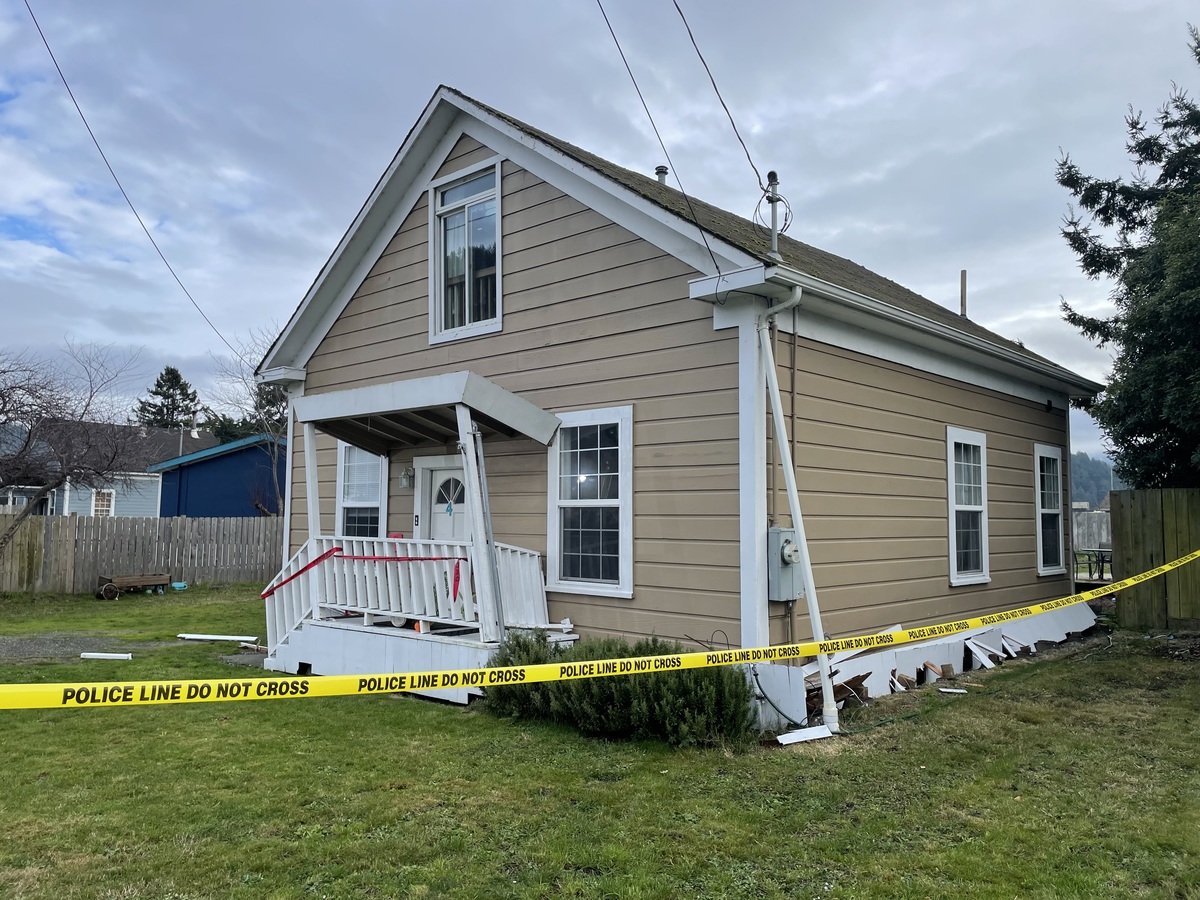
The aftermath of the December earthquake for one Rio Dell home. Photo: Ryan Burns.
One thing that last month’s earthquake demonstrated – as earthquakes in Humboldt tend to do, every decade or so – is the importance of retrofitting the beautiful old buildings that make up the bulk of the county’s housing stock. When the big ones strike, they invariably knock some old buildings off their foundations.
The Dec. 20 earthquake was the most destructive in quite a while. It made 69 buildings in Rio Dell at least temporarily uninhabitable. Most of them had old, unimproved foundations.
This is a serious problem in Humboldt County. The Census Bureau’s most recent version of the American Community Survey estimates that 59.4 percent of the county’s occupied housing units were built before 1980, the year that California instituted seismic safety standards for new construction. That’s just a bit higher than the state average (56.3 percent) and a lot higher than the national average (49.9 percent).
But it’s even worse than that. As much as 15.4 percent of the county’s housing stock is very old – built before 1940. That’s almost twice as much as the state as a whole. And the North Coast is the most seismically active place in the contiguous United States, and the really big one – the Cascadia Subduction Zone megathrust – is due, oh, any year now.
There’s a way to fortify old homes to better withstand big quakes. It’s called “Earthquake Brace and Bolt,” and it involves tethering the frame of a house to its foundation. There are two problems with it: It’s not particularly cheap, and it requires you to have a concrete foundation to begin with. Some houses in Humboldt don’t, but many do — and brace and bolt could save them.
“Every house in Rio Dell that I drove by that’s off its foundation could have benefited from an EBB retrofit,” said Janiele Maffei, a trained engineer who currently serves as the chief mitigation officer for the California Earthquake Authority, this morning.
Earthquake Brace + Bolt House Model Demonstration from CRMP on Vimeo.
Maffei is in Humboldt this week because the Earthquake Authority — a quasi-autonomous non-profit organization set up by the state that provides earthquake insurance to homeowners — has a program that can make these brace and bolt retrofits a lot more affordable to homeowners. The authority gives out $3,000 grants to people who wish to get their owner-occupied homes braced and bolted, and even larger grants for people who meet certain income qualifications. These grants amount to a significant percentage of the cost of doing this work (provided, again, that the homeowner already has a concrete foundation).
The problem? Humboldt County simply doesn’t have enough contractors signed up to perform that work. As of this moment, there are only three local contractors registered with the authority, and they need many more to meet demand. Maffei says that she has 169 local people signed up for the grant program, and three contractors aren’t enough to service all of them.
This is a bit puzzling, Maffei says, given the uptake in other parts of California.
“The nice thing is that we’ve been able to provide this steady stream of income,” she says. “There are contractors who this is all they’re doing. There are contractors who make this their industry.”
So she is up here recruiting new Humboldt County contractors to join the program, and also listening to contractors to hear about any impediments they might be facing that prevent them from joining. Earlier this afternoon she met with the Humboldt Builders Exchange and made her pitch. She said they had a “positive discussion,” and that the builders asked lots of great questions. She’s hopeful more contractors might sign on.
Meanwhile, if you’re interested in the grant program as a homeowner, there’s a bit of bad news: It’s currently closed to new applications for the year. But they’ll open applications again sometime in the coming months. You can sign up at this website to get on their mailing list and be notified when that happens. If you’re in an old pier-and-post home, their grants can also defray the cost of putting in a concrete foundation — and, of course, bracing and bolting your house to that new foundation.
NEED a JOB? The U.S. Postal Service Will be Holding a ‘Massive Hiring Fair’ Tomorrow in Arcata, and Here’s How to Register
LoCO Staff / Wednesday, Jan. 25, 2023 @ 11:54 a.m. / Economy

“A heroic US Postal Service mail carrier, digital art.” Graphic: DALL-E. Not sure what that dude in the background is doing.
Press release from the United States Postal Service:
What’s 800 miles long, blue and has 4,800 legs? It’s the U.S. Postal Service’s first-ever California, statewide job fair blitz! #USPSCoast2Careers
The USPS is looking to hire 2,400 new employees at simultaneous job fairs from 10AM to 1PM on Thursday, January 26th. Participating offices stretch the entire length of the California coast from San Diego all the way up to the Redwoods of Arcata.
“There is just so much opportunity to expand and grow with the Post Office,” says Pacifica mail carrier Reggie Torres. As a 27-year veteran of the Postal Service, he knows the benefits of working in a coastal town more than most. “When the sun is setting over the water, it doesn’t matter where you are in the city, you can’t help but stop for a couple of minutes and enjoy its beauty.”
The Pacifica Post Office is just one of the 15 locations along the Northern California coast hosting job fairs on Jan. 26th. From the South Bay to the Northern redwoods and everywhere in between, these 15 locations are hoping to hire over 900 new Mail Carriers, Clerks, and Tractor-Trailer drivers.
- Arcata
799 H ST
95521- Fort Bragg
203 N FRANKLIN ST
95437[Other 13 locations omitted. —Ed.]
“I talk to every new carrier I train about the opportunities available to them,” says Torres who has been training the next generation of carriers for more than a decade as an on-the-job instructor. He takes pride in teaching them more than just how to put letters in a box. “I’ve been a supervisor and a leader in my office, but most of all I love the people on my route. I’ve seen kids grow up and have kids of their own. I wouldn’t want work anywhere else.”
“This is a career with all the benefits, not just a job you do until something better comes along,” Torres continues. “If you want to do something fulfilling, this is where you start.”
Many of these job offerings at these locations career positions that come with full, federal benefits and plenty of room for growth.
- Competitive Pay
- Paid Holidays
- Paid Time Off
- Full Medical / Dental
- Retirement Benefits
Please use this link to register yourself at one of the above locations.
Would a Wealth Tax Actually Drive the Rich Out of California?
Grace Gedye / Wednesday, Jan. 25, 2023 @ 8:13 a.m. / Sacramento

Photo by Tima Miroshnichenko via Pexels.
Lawmakers in blue states like California may prefer to tax the rich, but there’s always a risk: What if the rich just move elsewhere?
Last week Assemblymember Alex Lee said he was introducing a new tax on “extreme wealth.” It wasn’t the first time the Milpitas Democrat pushed the idea. But this year, he had back up.
Lawmakers from seven other states, including Connecticut, Hawaii, New York, Illinois and Washington were introducing new taxes for the rich on the same day.
“The counter argument is that the rich will just leave,” said Lee. “Well, this is kind of the strategy of ‘You can run but you can’t hide.’”
Lee’s proposal would apply to individuals with a net worth of $50 million or more, taxing their wealth at 1% annually. Wealth beyond $1 billion would be taxed at 1.5%. The tax would apply to about 23,000 households, or the wealthiest 0.1% in the state, and would raise about $21.6 billion in revenue per year, according to calculations from UC Berkeley economist Emmanuel Saez, who helped design Massachusetts Sen. Elizabeth Warren’s national wealth tax proposal and had a hand in some of the state-level proposals.
Unlike income tax, a tax on overall wealth is unprecedented in the U.S. The proposal would apply to assets including shares of privately owned companies, art and collectables, “financial assets held offshore” and more.
Even in the overwhelmingly Democratic state Legislature, the proposal is a longshot. When Lee introduced similar legislation last year, it didn’t get a first hearing, much less a vote.
But Lee remains optimistic. One change is that last year the state was flush with cash. This year the California has a projected $22.5 billion budget deficit.
That deficit, Lee said, is almost exactly the same amount that the tax is projected to raise annually.
“The top 5 percent of income earners pay 70 percent of the personal income tax. And the personal income tax is California’s biggest source of revenue,” said Robert Gutierrez, CEO of the California Taxpayers Association, which opposes the idea. “So, if even a few of those taxpayers rethink California as a place to live, that does have an impact on the (state) budget.”
But do wealthy people actually relocate when their tax bill goes up? And if they do, how large is the exodus?
Research on the subject is growing rapidly, but a clear consensus has yet to emerge, wrote Cristobal Young, a sociologist at Cornell, and Ithai Lurie, an economist at the U.S. Treasury in a recent paper.
In 2018, Charles Varner and Cristobal Young, then both at Stanford’s Center on Poverty and Inequality, worked with Allen Prohofsky at California’s Franchise Tax board, looking at decades of California tax data to figure out the impacts of several tax changes. Before and after tax increases in 2004 and 2012, they compared top earners affected by the tax increases to those just below them on the income ladder — people who still make plenty of money, but weren’t affected by the raises.
First they looked at the number of $1-million-plus- per-year earners leaving the state each year versus moving to it. Before 2004, there was a net out-migration. In the years after the 2004 tax increase, that outflow decreased, and by 2007 it flipped: More million-dollar earners were coming to California than were leaving. That persisted after another tax increase in 2012 (the data goes through 2014).
That leads to another important point: The number of million-dollar-plus earners in California each year fluctuates considerably, but people moving to the state or pulling up stakes only account for a teensy portion of the change, they found. The average number of people earning more than $1 million per year varies by about 10,000 people each year; net migration accounts for only about 50 to 120 people. The number of super-high earners California has each year, in other words, is almost entirely driven by other stuff; mostly “California residents growing into the [million-dollar-earner] bracket, or falling out of it again,” they wrote.
Next they analyzed the 2004 tax increase — comparing top earners affected by the tax to the almost-top earners who aren’t — and found that the rate of top earners leaving the state actually declined slightly after the 2004 tax increase, while the almost-top earners continued to leave at the same rate. In other words, the 2004 tax increase didn’t drive the people paying a larger bill out of the state.
Then, they looked at the 2012 California tax increase, brought on by the passage of Proposition 30, which boosted the tax rate by 1% for individuals earning $250,000 to $300,000, 2% for individuals earning $300,000 to $500,000, and 3% for individuals earning over half a million dollars annually. “This was one of the largest effective tax rate increases in recent US history,” said Varner.
The researchers did find “a very slight” difference: For every 1 percentage point increase in the tax rate they found that the state lost about .04% of its million-dollar earners to net migration — about 40 people, Varner wrote in an email.
There’s a broader context too, to this research teasing out the specific effects that taxes have on rich people moving, Varner said: California has grown its population of million-dollar earners overall. In 2009, that rarified group was about 75,000 strong (adjusted for inflation), and by 2019 it was over 158,000 Varner said, drawing on data he received from the state’s tax board.
In 2019, a different group of researchers from Stanford also used tax data, again to examine the effect of the 2012 tax increase. They found a much larger effect: The tax increase drove an extra 0.8% of top earners to leave the state the year after it went into effect.
That 0.8% translates — with some fancy math putting more weight on the tippy top of the top earners to account for their disproportionate impact — to 535 additional people making $500,00 per year or more hightailing it as a result of thet tax. The impact on California’s budget, of course, is in the revenue lost from that exit rather than the headcount of people leaving.
Not every study of this issue has the same finding, said Saez, the Berkeley economist. But “if I were to summarize the work,” he said, “you will find that some people move to avoid paying higher taxes, but it is quantitatively small, meaning that the fraction of your tax base that you lose … (is) typically quite small.” He thinks Lee’s proposal would cause some wealthy people to leave, but the number of people would be small relative to the number of wealthy people in the state.
The possibility that ultra-wealthy people — and the taxes they pay, and the dollars they spend — will leave the state is not the only critique opponents of the tax make. They also argue it will immediately face a legal challenge, especially because the tax applies to wealthy people for a few years after they leave California. And they contend that it will be extremely difficult to evaluate the totality of the ultra-rich’s assets.
But, Lee points out, we already tax people on one form of wealth – houses – and “we have developed a whole system of assessment for millions and millions of units of homes” he said. “So we can do the same thing for mega yachts.”
###
CalMatters.org is a nonprofit, nonpartisan media venture explaining California policies and politics.


