

(VIDEO) Humboldt Bay Coast Guard Medevacs ‘Ailing’ Passenger From Cruise Ship Near Shelter Cove
LoCO Staff / Monday, May 4 @ 10:45 a.m. / Emergencies
###
Press release from the U.S. Coast Guard Southwest District:
HUMBOLDT BAY, Calif. — The Coast Guard medevaced an ailing cruise ship passenger 45 miles southwest of Shelter Cove, Saturday.
A Coast Guard Air Station Humboldt Bay MH-65 Dolphin helicopter aircrew hoisted a 45-year-old man and transported him to St. Joseph Hospital in Eureka. The man was reported to be in unstable condition.
Watchstanders at Coast Guard Sector Humboldt Bay received a notification at 8:47 a.m. Saturday from a crew member aboard the cruise ship Queen Elizabeth requesting a medevac for a passenger experiencing a serious medical condition.
After conferring with a duty flight surgeon, who recommended a medevac, watchstanders launched the aircrew and maintained regular communication with the vessel’s crew to monitor the patient’s status until the Coast Guard aircrew departed safely with the patient.
BOOKED
Today: 11 felonies, 14 misdemeanors, 0 infractions
JUDGED
Humboldt County Superior Court Calendar: Yesterday
CHP REPORTS
No current incidents
ELSEWHERE
Governor’s Office: Governor Newsom statement on compromise to address wildfire risk, support fire survivors, and create stronger accountability
RHBB: CDFW Announces Angling Closure at Mouth of the Klamath River
RHBB: Humboldt Bay Area Plan Planning Commission Workshop on Thursday, Sept. 3
Fire in Arcata Early Yesterday Morning Causes Estimated $325,000 in Damages
LoCO Staff / Monday, May 4 @ 10:43 a.m. / Fire

AFD works to extinguish the fire. Submitted.
Press release from the Arcata Fire District:
On May 3, 2026, at 2:10 a.m., units from the Arcata Fire District, Humboldt Bay Fire, Blue Lake Fire, and CAL FIRE (Trinidad) were dispatched to a reported structure fire in the 1200 block of Sunset Avenue in Arcata.
The first-arriving Arcata Fire units found a single-family residence with heavy fire coming from the rear of the structure. The fire had spread to a fence and a detached shed on the property. A neighboring residence had sustained significant heat damage and was beginning to ignite.
Arcata firefighters initiated an exterior attack, stopping the fire’s spread to the neighboring home. Additional Arcata Fire personnel arrived on scene, began fire attack on the primary residence, and conducted a search for occupants. No victims were located inside the residence. Personnel from Humboldt Bay Fire, CAL FIRE, and Blue Lake Fire arrived shortly thereafter and assisted with fire control in the exterior shed area. The fire was brought under control in approximately 30 minutes.
Firefighters remained on scene for an additional two hours extinguishing hot spots within the structures. During the Sunset Avenue incident, a separate, fully involved structure fire was reported in Blue Lake. A Blue Lake Fire engine and an Arcata Fire engine were released from the Sunset Avenue incident and responded to assist. For information regarding that incident, please contact Blue Lake Fire.
Following extinguishment of the Sunset Avenue fire, Arcata Fire personnel conducted an origin and cause investigation. The fire was determined to have originated in an exterior carport area; however, the cause remains undetermined and is under investigation at this time.
The main residence sustained an estimated $250,000 in damage. The detached shed sustained approximately $25,000 in damage, and the neighboring residence sustained approximately $50,000 in damage.
The Arcata Fire District would like to thank its allied fire partners and the Arcata Police Department for their assistance during the incident. There were no reported injuries to civilians or fire personnel.
Anyone with information regarding this fire is encouraged to contact the Arcata Fire District at (707) 825-2000.
OBITUARY: Dr. Stephen ‘Steve’ Wilson, 1941-2026
LoCO Staff / Monday, May 4 @ 7:14 a.m. / Obits

Photo: David Wilson.
Dr. Stephen “Steve” Wilson lived 84 years at full throttle before peacefully heading to the great dugout in the sky on April 1, 2026. Born in Dayton, Ohio on November 13, 1941; he was blessed with the arrival of three siblings — David, Julie and Dan — with whom he retained a close-knit friendship throughout the years.
A graduate of Northwestern University, Dr. Wilson spent decades as a general dentist serving his rural community in Garberville. His patients knew him as much for his clinical skills as his genuine compassion and sarcastic, witty sense of humor. Before settling into private practice, he served with distinction as a Navy officer attached to the Marine Corps during the Vietnam War. His bravery and selfless dedication earned him the Bronze Star Medal. A dedicated, passionate and very patriotic man, Dr. Wilson never hesitated to give thanks and recognition to anyone that displayed their representation of service to our great country, as it was an honor he held high and had an immense impact on the remainder of his life.
While he was a legendary fan of the San Francisco Giants and the Golden State Warriors, he was, above all, a family sports fan. His favorite arena wasn’t a professional stadium, but the backyard baseball field where he spent countless hours playing ball with his five children. He taught them that the game was always more about the people you played with than the final score. One of his most notable quotes was, “Praise Jah,” and he certainly exemplified that passion for life and sincere gratitude in all his affairs.
Beyond the field, he was a man of courage, hard work and enjoying life with a passion. A devoted father; it was about the laughter, the stories and the connection shared around the dinner table. Whether through his professional skills or his personal generosity, he lived by the principle that true success is measured by what you give back to your community and serving your country.
He leaves behind a starting lineup of five children: Galen, Patricia, William and Johnny Wilson, Mrs. Emily and son in-law Andy White. He is also survived by their wonderful mother, Jean Henne, and his widow, Julie Wilson. His three grandchildren were lucky to have known him and surely inherited some of his witty intelligence, Ramon and Emilia Carrillo and Ava White. He taught them how to keep a positive attitude, how to handle life’s curveballs, and how to live a life of integrity, service and compassion.
His widow, Julie Wilson, was a perfect addition to the family after they wed in 2015 and her commitment and companionship can not be surpassed. Their dog Jack, “the best doggie” was a devoted companion whom Steve absolutely adored and will be at the celebration of life to commemorate with his us.
A celebration of a life well-lived — with military honors — will be held on Saturday, May 16th at the Veteran’s Hall: 1426 Main Street in Fortuna. In honor of his spirit, feel free to wear your favorite team’s colors.
Doors open at 12:30 p.m. Please be seated by 1 p.m.
Praise Jah! We look forward to seeing you there.
###
The obituary above was submitted on behalf of Dr. Steve Wilson’s family. The Lost Coast Outpost runs obituaries of Humboldt County residents at no charge. See guidelines here. Email news@lostcoastoutpost.com.
OBITUARY: Alan Wade Franklin, 1958-2026
LoCO Staff / Monday, May 4 @ 6:56 a.m. / Obits

Alan Wade Franklin of Ferndale passed away from a tragic accident on April 22, 2026. A devoted husband, father, grandfather, son, brother, uncle, and friend, his presence and laughter will be deeply missed by all who knew and loved him.
Born June 23, 1958 in Fortuna to Marvin and Ida Franklin, he grew up in a close-knit family in the town of Scotia—the same town where he would later raise his own children. Life instilled in him a deep appreciation for family and tradition. He was especially proud of his Wailaki heritage.
After graduating from Fortuna High School in 1976, he first noticed Sandy in 1979. Introduced later by a mutual friend, it was love at first sight. The couple married on March 15, 1980 and went on to welcome three sons: Garrett, Landon and Tyler. Fatherhood became a profound turning point, giving his life deeper meaning that would live on through his boys.
Few things brought more joy than watching his sons compete in sports. Whether it was football, baseball, basketball, or motocross, he never missed a game. His competitive spirit always kept things lively and memorable.
A man who took great pride in his work ethic, he started with paper routes and grocery store jobs before spending 26 years at Pacific Lumber Company. In the years that followed, he took classes at College of the Redwoods, worked in construction, logged his own land, built the family’s forever home in Ferndale, and retired from UPS after forming many lifelong friendships. Even in retirement, he briefly worked for Diamond R Ranch.
Truly one of a kind, he was the heartbeat of the family and a man of his word. Throughout his life, he made sure those around him knew how much they mattered. If you were part of his tribe, there was never any doubt about his love or his willingness to do anything for you.
His accomplishments were many. An Eagle Scout and 42-year member of the Native Sons of the Golden West, he was also a boxer, abalone diver, black belt, motocross racer, logger, cowboy, member of the Cattlemen’s Association, patriot, hunter, basketball player and coach, golfer, party host, BBQ master, card player, music lover and a master storyteller who made everything happen.
He cherished his time at Ruth Lake — relaxing on the water, boating, playing cards, and enjoying a good highball. A man with a deep personal relationship with God, he gave thanks daily for his many blessings and always lived by his conscience, doing what he believed was right.
Alan leaves behind his beloved wife Sandy; sons Garrett Franklin and Lori, Landon Franklin, and Tyler Franklin and Alyssa Johnson; father Marvin Franklin and Dottie Gilliam; brother Brian Franklin (Tay, Briceland, and Keelan); sisters Dana Christen and Hans (Kady and Karly) and Wendy Franklin and Tami; grandchildren Sakari, Jakoda, and Nakinzi Franklin; special grandson Hudson Bobillot; and many cherished cousins, uncles, aunts, in-laws, and friends who were family to him. His favorite dogs, Pablo and Willy, wait for him at the door. He was preceded in death by his mother Ida Franklin in 2002 and several other beloved family members.
A graveside service will be held on Saturday, May 9 at 11 a.m. at Sunrise Cemetery in Fortuna. A celebration of life will follow at the Elks Lodge in Eureka at 1:30 p.m.
###
The obituary above was submitted on behalf of Alan Franklin’s family. The Lost Coast Outpost runs obituaries of Humboldt County residents at no charge. See guidelines here. Email news@lostcoastoutpost.com.
LoCO LIT BIT: An Excerpt From ‘Redwood Curtain Rising,’ a New Novel by Local Author Nancy Resnick
Nancy Resnick / Sunday, May 3 @ 8 a.m. / LoCO Lit Bit
Please find below an excerpt from Redwood Curtain Rising, a soon-to-be-published novel by local resident Nancy Resnick about “chosen family, healing and the courage it takes to write a new life chapter at any age.”
Redwood Curtain Rising will be available at local bookstores next month. You can preorder a copy at Resnick’s website. Also, there’ll be a reading and meet-and-greet with the author at the Morris Graves Museum on Sunday, May 24, at 1 p.m. See here for details.
Are you a Humboldt County writer who has written a book? Or a writer who has written a book about Humboldt County? You should share an excerpt with LoCO Lit Bit! Hit us up at news@lostcoastoutpost.com, and put “Lit Bit” in the subject line.
###

The cute 1920s Craftsman house was on I Street in Eureka, shielded from the busy through street by a high redwood fence and dense foliage.
“Ready to do this?” Keisha shifted the wine bottle and tray of brownies to one hand and knocked on the door with the other. Anna held a bright bouquet of flowers. Through the glass they could see people inside the house, but no one seemed to have noticed their knock.
“Should we just go in?” Anna asked. Keisha nodded her assent and they made their way past a group of relaxed, mostly gray-haired people, looking for Keisha’s colleague Romi, who had invited them to the birthday gathering.
“There you are, welcome!” Romi enfolded Keisha in a warm full-body hug that seemed characteristic of Humboldt. “And you must be Anna.” She extended her embrace to Anna, then whisked the flowers into a vase, positioned the brownies on a table already loaded with desserts, and deftly slotted the wine into place with a number of other bottles on a side table.
Everyone was talking about the earthquake. Where they were when it happened, what they’d lost to breakage. Some were making plans to help with food distribution and other relief work. Anna and Keisha found themselves welcomed, mingling and joining surprisingly wide-ranging conversations, talking with one woman about her travels with her son in Peru, and with another woman who was flying to Mexico the next morning.
Keisha stood next to a younger, dark-haired woman who was adding more unmatched plates and cutlery to the table. “Hi, I’m Rebecca. It’s my mom’s birthday party, and this is my house.”
“Your house is lovely,” said Keisha. The Craftsman-style house was small but full of charm, with high ceilings and well-proportioned rooms.
“Yeah, I was super lucky to buy this a couple of years ago before the prices started going up.” Rebecca adjusted their offerings on the table already filled with bowls and platters of food.
“No kidding,” said Keisha. “I live in Portland and prices have been sky-high there for a long time.”
“For sure. Portland’s a good city. I grew up in Humboldt and wouldn’t have predicted I’d want to come back. I left after high school and lived in some different cities in the Midwest and on the East Coast. But here I am, with my parents and my sister nearby.”
Romi joined their conversation. “My kids are adults and live here now too. I’m glad they came back; we see each other all the time.”
“You’re both lucky to have family close like that,” said Keisha. “I don’t have any siblings. I was adopted as an eight-year-old, but in foster placements before that. My adoptive parents died when I was starting college. My only close relative wasn’t really a blood relative, but I called her my Nanna. She passed less than a year ago.”
She found herself unexpectedly near tears. She didn’t know why she was confiding in these women. Probably all this emotional openness was contagious. Romi put an arm around Keisha’s shoulders. “That just happened, then. I’m so sorry for your loss,” she said, and rather than being a rote phrase, her words reflected genuine kindness.
What was it with all of this touching and hugging, Keisha wondered. It was kind of nice in a way, even though the hug was a form of physical intimacy she hadn’t been expecting; but still, the air inside the cottage started to feel too warm, excessively cozy and intimate. She needed to get out of there. She glanced around the party and, seeing that Anna was engaged in conversation, decided to go walk around a couple of blocks.
###
Once outside in the crisp evening air, Keisha wondered what the hell had just happened. It wasn’t like her to start revealing deeply personal things to people she didn’t know. She was practiced at keeping her own counsel. She felt agitated and started taking long brisk strides along the residential street, barely noticing the well-maintained Craftsman bungalows and tidy yards.
Don’t let them get to you, never show weakness, always demonstrate competency. Show that you have earned your place. Take nothing for granted. These principles had served Keisha well as a child, keeping her out of trouble, her grades always high despite disruptions in her living situation — even those times she would wake up in the morning and have to recall which placement she was in, which family was pretending she was part of them. The approach was pretty ingrained by the time she became an adult. She knew it was atypical for a kid in foster care; it was more common to preemptively strike out, to misbehave, not wait to be rejected. But Keisha had her Teflon to keep her strong and contained.
She’d been starting third grade when she was adopted by Carl and Pamela. They were solid people: sincere, matter-of-fact, kind. They belonged to the Unitarian Church, helped their community, and respected different beliefs and creeds. She sometimes felt as though her adoption allowed them to check off a box labeled ‘good deeds.’ But even if there was a tiny bit of self-satisfaction involved in their adoption of a mixed-race child, it didn’t diminish the goodness of their actions.
Keisha’s life improved. It was much better to have stability, continuity, to live in a pleasant, clean, modest single-story tract home in a neighborhood of small lots and well-tended gardens. Over the next years she proved to them that they hadn’t made a mistake in taking her in. She wanted to convince them, but at the same time she held a part of herself back, just to be safe. She was waiting for proof, too-that they were legitimately her parents and the whole thing wasn’t just temporary.
And then meeting Nanna gave Keisha’s life another turn for the better. Their relationship started with a chance encounter on the street. Keisha had been walking by when the little old lady called out to her, something about what a nice day it was. An old lady in a battered straw hat, brown and skinny as the rake she was using to weed her vegetable patch.
Greetings grew into conversations over homemade cookies and lemonade on the big front porch. It was like discovering a grandmother who lived right around the corner. Keisha started helping Nanna with her big vegetable garden and learning about cooking from her. She’d worried at first about how Carl and Pamela would react. To their credit, they took the relationship in stride. They called her Nanna too, and treated her as Keisha’s honorary grandmother. Something about the connection to an older generation seemed to anchor the family. Keisha would always be grateful for how Nanna helped her appreciate her good fortune in her adoptive parents.
Soon after she started college, her life crumbled. Carl and Pamela were one freeway exit from their home, returning from dinner at one of their favorite restaurants. They were hit by a truck that had crossed the center divider, the driver trying frantically to brake. The mechanical malfunction was fatal for both Keisha’s parents and the truck driver, a young man with a pregnant fiancée. Supposedly, all the deaths were instantaneous. Keisha tried to find comfort in knowing that Carl and Pamela had been happy at the end, coming home from a pleasant evening, secure in their love for each other. But she grieved their deaths and wished she had let herself love them more.
Nanna was a comfort: warm and kind, but always pragmatic. It was a hard time, and she would have been completely alone without Nanna. Together they decided that Keisha needed to use the scholarship she’d earned and continue with college. Nanna was always in her corner, with no limitations on what she envisioned Keisha capable of accomplishing. Nanna’s became the home that Keisha visited, the only place she knew she could relax and let the Teflon dissolve.
She was fortunate to go to law school just before the price of admission skyrocketed, so her student loan debts were manageable. After joining Randolf, Patterson in San Francisco, she’d quickly realized that the same qualifications that got her offers at prestigious firms could be leveraged for a different path — law professor. It was satisfying, and she liked the life she’d built. So, what was this deep well of emotion all about?
Do we ever stop needing to prove ourselves, she wondered. Do we ever relax and feel deeply secure in our lives? She’d earned professional legitimacy, and she liked her work. But what about other aspects of her life-love, possibly a family? Her friend Yasmine was a successful attorney, married with a beautiful family, and she didn’t seem to suffer from self-doubt. Keisha wasn’t sure whether she envied Yas or felt relieved not to be juggling so many balls in the air. She might want a messier, more complex life. But that meant relinquishing control, and she had so many reservations about that.
She’d already walked about ten blocks and had come full circle back to the house. Maybe being in this new place was a means to becoming more grounded and comfortable with herself. In any case, Keisha had had more than enough introspection for the moment. It was getting cold, and it was time to get back to the party.
###
Anna was in conversation with a lean, silver-haired guy, probably around her age. He had a nicely shaped goatee and a face that reminded her a little of Brad Pitt, the older, sexy version. He’d lived in Oakland for years before moving to Humboldt. An artist, getting ready to have a show open: a collection of his new pieces, encaustic on wood. This was a medium far bolder than the watercolors Anna had experimented with. She was definitely finding herself intrigued by the art around here.
Was the guy flirting with her? Deep-blue eyes with a crinkle, tall, broad shoulders, curly hair pulled back in a ponytail-he was seriously good looking, and unless Anna was mistaken, he was turning on the charm. It had been a while since Anna had engaged in flirtation of any kind, but just as she started wondering what this vibe was, and whether she wanted to be part of it, a woman came up behind them. Putting her hand on his arm with a distinctly proprietary air, she looked directly at Anna with a challenging glint in her eyes, evidently intending to establish her territory. The message couldn’t have been clearer: Back off, he’s taken.
Anna found herself pasting a pleasant expression on her face and backing away. “Great to meet you both,” she said blandly. “I look forward to seeing you — both — at the Arts Alive opening. My friend and I are planning to be there.” I am conceding your clear ownership of the good-looking artist.
The other woman watched Anna leave, not concealing a victorious gleam. Anna felt a surge of amusement. What a reminder that attractive men are always in short supply, she told herself. And what a thin veneer of convention separates us from other primates — seriously, that was like watching monkeys at the zoo. I guess we are all animals when it comes down to it, she thought. At least no one at the party was actually urinating on bushes. A sudden vision of monkeys with bright-pink bottoms picking lice from each other’s heads came into her mind and she could barely suppress a snort of laughter.
TO YOUR WEALTH: Why Does the Stock Market Keep Going Up?
Brandon Stockman / Sunday, May 3 @ 7 a.m. / Money
This is one of the questions I get periodically, especially with so much negative news filling our news feeds.
One simple reason is found in two words: earnings growth.
The stock market is made up of shares in publicly traded companies, and many of those publicly traded companies are currently making money and expect more money to be made in the future. Therefore, they are worth more.
Recently, Exhibit A released a great chart to illustrate this:

“But wait,” one might say.
“There are troubling things happening in the world.” Yes.
“Gas prices are going up.” True. Filling up the gas tank strains the pocketbook.
“The robots are taking over.” I’m team humanity.
“The President uses it to make decisions.” Likely true.
Sometimes the answer really is as boring as earnings.
You don’t always need a revelatory chart or secret mathematical equation or cabal of ultra-rich people pulling strings to explain it.
I’m not saying it won’t go down. For example, price-to-earnings ratios — how expensive the market is — are high by historic standards. And earnings outlooks could change, which is why investors must always be prepared for the stock market to go down.
But even if the bears turn out to be right and the stock market drops, don’t forget: Historically, the stock market usually goes up.
Financial author Ben Carlson ran the numbers going back nearly a century:
The U.S. stock market has experienced positive returns:
- 56% of the time on a daily basis
- 63% of the time on a monthly basis
- 75% of the time on a yearly basis
- 88% of the time on a 5 year basis
- 95% of the time on a 10 year basis
- 100% of the time on a 20 year basis. (1)
So one simple answer to the question: “Why does the stock market keep going up?” is “Because that’s normally what happens.”
###
Source:
1. “The Stock Market Usually Goes Up (But Sometimes it Goes Down)”, May 21, 2023. Accessed online.
###
Brandon Stockman has been a Wealth Advisor licensed with the Series 7 and 66 since the Great Financial Crisis of 2008. He has the privilege of helping manage accounts throughout the United States and works in the Fortuna office of Johnson Wealth Management. You can sign up for his weekly newsletter on investing and financial education or subscribe to his YouTube channel. Securities and advisory services offered through Prospera Financial Services, Inc. | Member FINRA, SIPC. This should not be considered tax, legal, or investment advice. Past performance is no guarantee of future results.
Search Warrant Served at Miranda’s Rescue Amid Allegations of Felony Animal Abuse, Fraud and Conspiracy
LoCO Staff / Saturday, May 2 @ 10:01 a.m. / Crime
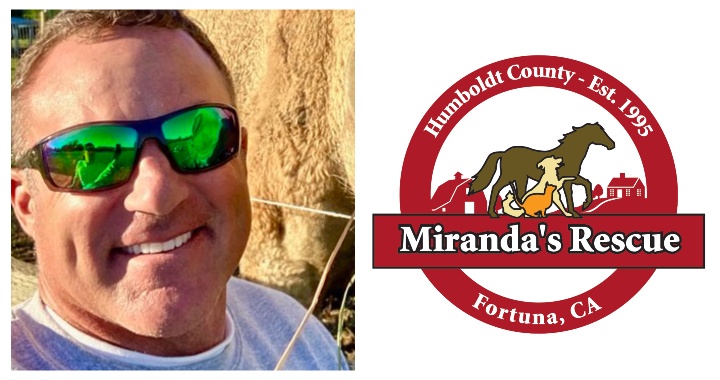
Shannon Miranda of Miranda’s Rescue.
###
Press release from the Humboldt County Sheriff’s Office:
On April 22, 2026, the Humboldt County Sheriff’s Office received credible information regarding allegations of felony animal abuse, animal cruelty, fraud, and conspiracy associated with Miranda’s Rescue, located in the 1600 block of Sandy Prairie Road in Fortuna.
Due to the serious nature and complexity of the allegations, the Humboldt County Sheriff’s Office Major Crimes Division was assigned as the lead investigative unit. Based on evidence provided to and subsequently obtained by investigators, a search warrant was sought and granted for Miranda’s Rescue, including the residence and business.
On May 1, 2026, at approximately 6:30 p.m., investigators served the search warrant at the location. During the service of the warrant, evidence related to the investigation was seized.
Animals located on the property, including dogs and cats, were examined by Humboldt County Animal Control. At this time, Humboldt County Animal Control will continue to monitor the animals on a daily basis while the investigation remains ongoing.
This is an active and ongoing investigation. The Humboldt County Sheriff’s Office is asking anyone with information related to this case to contact the Major Crimes Division at (707) 445-7251 or the Sheriff’s Office Crime Tip Line at (707) 268-2539.
The Sheriff’s Office takes allegations of animal abuse and related criminal conduct seriously and will continue to pursue this investigation thoroughly.


