FIRE UPDATE: Surprise Weather Again Comes to Firefighters’ Aid; Community Meetings Scheduled in Burnt Ranch, Hoopa
LoCO Staff / Friday, Aug. 26, 2022 @ 8:50 a.m. / Emergencies
A handcrew works to clear brush along a contingency line near Waterman Ridge. Photo/caption by CAIIMT14, via Inciweb.
###
From the command of the Six Rivers Lightning Complex:
The Six Rivers Lightning Complex remains in unified command with California Interagency Incident Management Team 14, California Highway Patrol, Trinity County Sheriff, and Humboldt County Sheriff. The Six Rivers Lightning Complex is currently 28,904 acres with 80% containment and 1,843 personnel assigned to the incident.
CURRENT SITUATION
With forecasted weather predicting hot and dry conditions Thursday, firefighters were prepared for high or extreme fire activity. As the day went on, the heavy smoke from the fire reduced the preheating of vegetation and kept the humidity higher. As a result, fire activity remained low to moderate for another day.
The Ammon Fire experienced another spot fire across the line Thursday morning, near its southeast corner. The spot was recognized early and contained. The possibility for spot fires remains a threat, so firefighters continue to monitor and improve containment lines.
The Campbell Fire is the most active of the two fires. There, firefighters are strengthening containment lines, preparing control lines, establishing contingency lines, and conducting defensive firing operations. The fire is burning in areas with no recent fire history with significant dead and down trees. The potential for significant fire activity is a concern, so the priority is to complete the primary control line along Lone Pine Ridge and contingency line along Tish Tang Ridge.
Thursday night, weather conditions remained favorable for the defensive firing operations. The sections of control line that were fired from saw good consumption of fuels which creates a wide buffer ahead of the main fire front. Moving into Friday, there is no predicted weather that would restrict the ability to continue with defensive firing.
Please check this link for air quality resources.
COMMUNITY MEETINGS
To provide our communities with the most accurate and up to date information, two community meetings have been scheduled. Those attending in-person or virtually will hear from Incident Command staff and local leaders. Virtual at Facebook.
Saturday, August 27th, 2022, 10:00 a.m.
Hawkins Bar Volunteer Fire Department
71 Trinity Court
Burnt Ranch, CA 95527Sunday, August 28th, 2022, 3:00 p.m.
Hoopa Fire Department and OES
11120 CA-96
Hoopa, CA 95546CLOSURES
Due to a large presence of fire personnel and machinery working to build containment lines for the Ammon Fire, residents are asked to limit travel on Titlow Hill Road/Route 1 in zones HUM-E052 and HUM-E062 to essential traffic only. Residents may still use roads to travel out of evacuation order zones:
The following roads into evacuation zones have been closed.
- Forest Route 7n15 at Six Rivers Forest Boundary
The following roads are restricted to local traffic only:
- Horse Linto Creek Road at Saddle Lane (Open to residents only)
- 6N06 Sandy Bar (Route 6)
- Titlow Hill Road (Route 1) at Horse Mountain Botanical Area
State Route 299 remains open to through traffic. Residents are encouraged to visit the CalTrans QuickMap to check for state highway closures.
EVACUATION UPDATES
For the latest evacuation information go to Humboldt County Office of Emergency Services (https://humboldtgov.org/2383/Current-Emergencies) or Trinity County Office of Emergency Services (https://www.trinitycounty.org/OES). For an interactive map of evacuation zones visit: https://community.zonehaven.com/. To sign up for alerts: www.humboldtgov.org/alerts.
EVACUATIONS LIFTED on 8/25
Evacuation Warnings for the following zones have been lifted: HUM-E056, HUM-E057, HUM-E061-B, and HUM-E064. Salyer Heights south to Highway 299 and from Quimby Creek west to the Humboldt County line. This area includes zones 490, 491, 493, 494, 495, 496, and 497.
EVACUATION ORDERS remain in effect for zones: HUM-E058 and HUM-E061-A.
EVACUATION WARNINGS remain in effect for zones: HUM-E032 HUM-E062 HUM-E063 HUM-E076-B HUM-E077 Zone 483 - Fisher Road and all residences off of Fisher Road, Trinity Village, Wallen Ranch Road. Zone 482 - Suzy Q Road and all roads off of Suzy Q Road Zone 480 - Ziegler Point Road / Forest Service Road 7N04
An EVACUATION WARNING remains in effect for Campbell Ridge Road from Salyer Heights to Seeley McIntosh Road. Salyer area, including Galaxy Road, and the area of Ziegler Point Road/Forest Service Road 7N04 have been reduced to an Evacuation Warning.
ANIMAL EVACUATION CENTER
Hoopa Rodeo Grounds
1767 Pine Creek Rd. Hoopa, CA 95546
Phone: (707) 492-2851
BOOKED
Today: 7 felonies, 12 misdemeanors, 0 infractions
JUDGED
Humboldt County Superior Court Calendar: Today
CHP REPORTS
Us101 N / Scotia Ofr (HM office): Traffic Hazard
ELSEWHERE
Coalition for Responsible Transportation Priorities: How Can We Reconnect Arcata?
RHBB: Forgotten Ballots from November Election Will Be Counted After Court Order
RHBB: Vehicle Fire Reported on Northbound 101 Near Fortuna
Governor’s Office: Governor Newsom proclaims Harvey Milk Day
‘Close to the Line:’ California’s Top Campaign Finance Watchdog Wants a Deeper Look at Donor Network
Alexei Koseff and Ben Christopher / Friday, Aug. 26, 2022 @ 7:30 a.m. / Sacramento
The state Capitol in Sacramento on Aug. 22, 2022. Photo by Rahul Lal, CalMatters
###
California’s campaign finance regulator will not investigate a complaint into Govern For California, the subject of a CalMatters investigation that explored the nonprofit’s role influencing legislative elections and “pushing the envelope” of state campaign finance law.
But the chairperson of the Fair Political Practices Commission said he would seek to develop new regulations more clearly defining coordination among affiliated campaign committees, because he has questions about the independence of Govern For California’s network of chapters and whether they could potentially be circumventing contribution limits.
“I’m troubled by the allegations that were presented in the complaint and I’m troubled by the fact that this organization seems to be, I think, playing very close to the line,” said Richard Miadich, who said he plans to bring up the issue at the September FPPC meeting. “It’s one thing to say you’re independent. It’s another to in fact be independent.”
Days after CalMatters published its article earlier this month, Dave Low, a former labor union leader, filed a complaint with the commission. Low characterized Govern For California’s network of legally independent campaign committees as a “corporate structure that facilitates money laundering and vastly exceeds the contribution limits to candidates.”
Staff lawyers at the FPPC disagreed, though they offered little in the way of explanation in the rejection letter they sent to Low this week. “After review of the complaint and evidence provided, the Enforcement Division will not pursue an enforcement action in this matter,” wrote division chief Angela Brereton.
The letter did not specify whether the FPPC’s rejection of the complaint implies its seal of approval for the way that Govern For California has structured its campaign spending, or if this particular complaint lacked sufficient evidence to warrant an investigation. Jay Wierenga, a spokesperson for the FPPC, declined to provide clarification.
“No comment, the letter speaks for itself,” he wrote in an email.
Still, Govern For California founder David Crane declared vindication. “We are pleased that this baseless complaint was summarily rejected by the Fair Political Practices Commission, and that the legality of GFC’s organization, structure and operations have again been confirmed by the FPPC,” he said in a statement.
Through a spokesperson, Crane declined to comment on Miadich’s concerns about Govern For California.
Though the commission’s enforcement division, which has sole legal authority to launch investigations, declined to investigate this complaint against Govern For California, that does not prevent commissioners such as Maidich from directing staff to revise old regulations or write up new ones.
Crane, a Stanford lecturer and former advisor to Gov. Arnold Schwarzenegger, founded Govern For California as a nonprofit in 2011 to serve as a check on the political influence of organized labor and other “special interests.” As detailed in the CalMatters article, 18 spending committees affiliated with Govern For California have come to play an increasingly prominent role in state politics by making direct contributions to legislative candidates across the state. A majority of the funding to these chapters comes from the same group of 20 donors. Because the chapters are considered to be legally independent of one another, each donor can make a maximum contribution of $8,100 per calendar year to each chapter. The chapters frequently support the same candidates — often making identically-sized contributions on the same day.
Assemblymember Robert Rivas talks to Assemblymember Ash Kalra during a floor session at the state Capitol in Sacramento on Aug. 1, 2022. Photo by Rahul Lal, CalMatters
As of Thursday, the network has donated nearly $3.1 million to 113 candidates in the 2022 election, including 84 who are running for legislative seats. Its spending took on added relevance this year with the ongoing squabble between Democratic Assembly Speaker Anthony Rendon and Democratic Assemblymember Robert Rivas over who will lead the chamber in 2023. Rivas is one of the Govern For California network’s largest beneficiaries; his brother, Rick Rivas, serves as Govern For California’s longtime advisor.
CalMatters spoke to eight campaign finance experts for the story. Though none said the organization was doing anything illegal, some argued that it raised ethical concerns or highlighted important loopholes in state law.
Ann Ravel, former chairperson of the FPPC and former head of the Federal Election Commission, called the structure “undemocratic.” But she also said it was not fundamentally distinct from the way that many organized labor groups arrange their campaign spending.
Crane has also likened Govern For California’s independent chapters to political action committees affiliated with the Service Employees International Union. However, as some experts pointed out, union locals have hundreds of members, draw on a wider array of small donors and, besides deciding political spending, represent workers in bargaining for wages and benefits. If FPPC commissioners do instruct their staff to review the definition of coordination between affiliated campaign committees, as Miadich said he hopes they will, it is unclear if and how the distinction between Govern For California’s networks and organized labor-affiliated committees would be made.
In 2020, the FPPC signed off on Govern For California’s approach in an advice letter that gave the chapters permission to coordinate as long as each was “controlled by different individuals, who independently direct and control the entities’ respective contributions.” That determination was based on the facts as provided by Govern For California, not through an investigation.
The Govern for California chapters are in “strict compliance” with that advice letter, wrote Steven Lucas, lawyer and treasurer for Govern For California, in his response to Low’s complaint. “The complaint fails to include a single factual allegation that would support its legal allegation…The GFC Chapters are all run independently of each other,” Lucas wrote.
But Miadich, the FPPC chairperson, noted that “the advice letter doesn’t define independence. The advice letter assumes the truth of what the organization is saying.”
He told CalMatters that there are other factors relevant to determining the independence of the chapters that Govern For California did not address in its original inquiry to the FPPC. He still wants to know whether Govern For California leaders appoint the chapter chairpersons; whether the chapters have formal meetings or exist on paper only; and if anyone from the top levels of the organization attends the chapter meetings.
“This seems like it has the potential of circumventing contribution limits,” he said.
These were among the questions that CalMatters posed to Crane while reporting its story. He declined to address them.
Miadich said he did not know everything the FPPC enforcement division reviewed before rejecting Low’s complaint, so he could not comment on whether he agreed with the decision. But he said he would ask the commission’s legal counsel to explore what regulatory options are available, including whether it could adopt rules laying out the factors the enforcement division should consider when determining independence in a case such as the complaint against Govern For California.
Miadich was appointed to the commission by Gov. Gavin Newsom in April 2019. Prior to that, he was a partner at the prominent Sacramento election law firm OIson Hagel & Fishburn, now Olson Remcho. Through FPPC spokesperson Wierenga, Miadich said he has no recollection of “any direct contact” with any of the parties involved, including Govern For California, Robert Rivas or Rendon.
CalMatters also reached out to the other three FPPC commissioners for this story, but they did not respond or declined to speak on the record. Miadich said he would tell his colleagues not to discuss Govern For California with CalMatters to avoid violating state open meeting laws.
Asked for his response to the rejection of his complaint, Low, a former California School Employees Association president, said “there’s not much I can do if FPPC won’t even look into it.”
While the FPPC enforcement division isn’t investigating Low’s complaint, it is apparently reviewing a fake flyer that was provided to a CalMatters reporter from a source who was granted anonymity. Based on the flyer, CalMatters incorrectly identified Crane as the sponsor of a political event benefiting Assemblymember Rivas last month.
In an email exchange shared by Crane, FPPC consultant Amber Rodriguez asked Govern For California’s lawyer Lucas for “a copy of the forged document/false advertisement that CalMatters later issued a correction for” so that staff could “review it for a possible violation” of state election law.
Though the FPPC wouldn’t confirm an investigation, Crane said he was “gratified that the FPPC will review the forged flyer for possible violation of California’s Political Reform Act.”
“It is not often that we see such a blatant attempt to distort the political process by forging a document and passing it off on the media,” he added in his statement. “It is a clear violation of the Act to steal the identity of a registered PAC in good-standing. This is an egregious dirty trick perpetrated on the media and intended to smear members of the Assembly and Govern for California.”
###
David Crane and many donors to Govern For California are financial supporters of CalMatters, which retains full authority over editorial content and makes news judgments independent of donor support.
CalMatters.org is a nonprofit, nonpartisan media venture explaining California policies and politics.
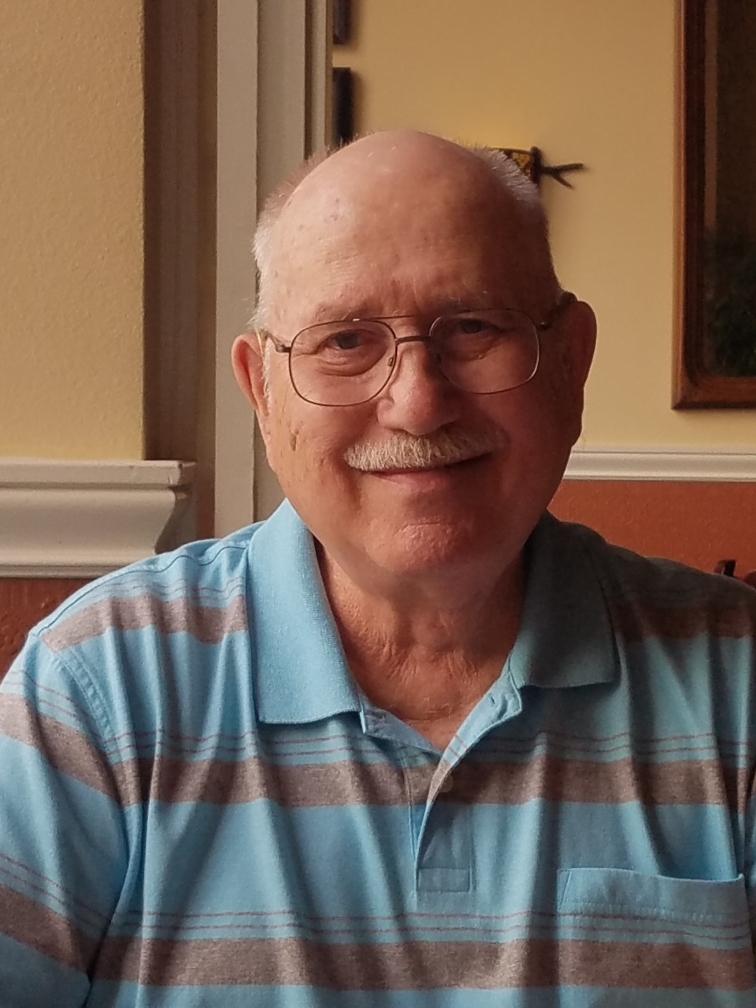
OBITUARY: John R. Buell, 1949-2022
LoCO Staff / Friday, Aug. 26, 2022 @ 7:11 a.m. / Obits
John R. Buell, 73, of Eureka, passed away on July 18, 2022. He was
born to parents John and Louise Buell, on July 11, 1949 in Ohio. He
moved with his family to Los Angeles when he was nine years old. As
John grew up, he attended LaHabra High School, graduating in 1967. He
married his high school sweetheart, Gretchen Scholl in 1969 and they
moved to Humboldt County in 1970. Together they had their two
children, Heather and Shawn, who were raised in Eureka. Although John
and Gretchen divorced after 20 years of marriage, they remained very
close friends, sharing holidays with their families and enjoying time
with their grandchildren.
John was very involved in his children’s lives and loved supporting other kids in the community. One major way John contributed to the greater Humboldt community was through volunteering for service organizations. John was a 4-H leader for several years, teaching a woodworking class where kids learned to make a birdhouse, tool caddy and bookends. In addition he shared his love of candy making and taught a very popular chocolates class, where 4-H students learned to make their favorite chocolate treats. John was also very involved with the Boy Scouts of America, where he served as den leader, Webelos leader, assistant Cubmaster and Cubmaster for Pack 28 in Cutten. John was also vice-president for membership and the vice-president for Cub scouting with the Redwood Area Council for several years. John earned the Boy Scouts of America Award of Merit representing the Humboldt Bay area in 1989.
To support his family and share his many talents, John worked as a Professional Picture Framer for 36 years, opening Affordable Frames in 1977, with his mother-in-law Peggy Davis. They made a great team and worked with many amazing Humboldt County artists. Peggy and John worked together until her passing in 1988, John then carried on the legacy and eventually moved the frame shop to Henderson Center. Affordable Frames was open for 36 years, closing in May of 2013. After closing Affordable Frames, John worked several years as one of the managers at the cafeteria at Humboldt State University. He loved working with the students and getting to know each and every student that came through the cashier line. He learned the student’s names and loved how they shared their stories with him. He retired from HSU at the end of 2020.
While owning Affordable Frames John became very involved with Old Town Rotary. He loved working closely with other Rotarians to help the community and promote goodwill on a global scale. During the 12 years he was involved with Rotary he was elected, and spent a year, as the president of Old Town Rotary. It was such an honor for John to lead this great group of community business leaders. One of his most inspiring moments was shaving his head to support and encourage donations for a local Rotary fundraiser! John found purpose, community and camaraderie in his time with Old Town Rotary.
John loved to hike around the local redwood forests as well as explore the National Parks. He had a passion for working to help save the forests for future generations, donating to Sierra Club, the Arbor Day Foundation and many other organizations. John loved to share his love of the redwood forest, he demonstrated this by taking his grandchildren on many hikes through our local forests, always stopping for an ice cream treat on the way home! He always knew how to make memories and instill his values in his children and family.
John is survived by his daughter, Heather Becksted and her husband Aaron; his son, Shawn Buell, and his grandchildren, Blaine Becksted, Jared Nolen, Kyler Becksted, Caitlyn Nolen and Luke Becksted. John and his youngest grandson, Luke, shared a birthday and celebrated the last 14 years together as “birthday bros.” John’s children, grandchildren and extended family will all miss his wonderful hugs, his smile and laughter, and his ability to make them each feel like they were the most important person in his life.
John was preceded in death by his parents, John and Louise Buell; David Buell, his younger brother; and Peggy Davis, his mother-in-law and business partner.
A Celebration of Life is scheduled for Sept. 10, 2022 at 2 p.m. at Eureka Women’s Club. The family would love to invite all friends, co-workers and acquaintances of John, to join them in sharing in the celebration of his well-lived life.
###
The obituary above was submitted by John Buell’s loved ones. The Lost Coast Outpost runs obituaries of Humboldt County residents at no charge. See guidelines here. Email news@lostcoastoutpost.com.
CALIFORNIA’S ELECTRIC DAY: State Phases Out Sales of Gas Cars
Nadia Lopez / Thursday, Aug. 25, 2022 @ 2:21 p.m. / Sacramento
An electric vehicle charges at a station in Millbrae. Photo by Martin do Nascimento, CalMatters
New gasoline-powered cars will be banned in California beginning with 2035 models under a new groundbreaking regulation unanimously approved today to force car owners to switch to zero-emission vehicles.
In its biggest move yet to reduce reliance on fossil fuels and fight climate change, the new rule approved by the state Air Resources Board culminates a decades-long effort to transform the auto and power industries and change the cars people drive — the state’s leading source of air pollution.
The regulation is the first in the world to end the sale of traditional gas-powered vehicles and ramp up sales of cars powered by electricity. A small number of other states and nations have set only voluntary targets.
The proposal was first unveiled in April. In response to several board members’ concerns, the staff made minor revisions today to address issues related to electric car battery durability and added provisions to enhance assistance for low-income residents.
“This regulation is one of the most important efforts we have ever carried out to clean the air,” said Air Resources Board Chair Liane Randolph. “Our previous regulations to make cars cleaner made improvements, but those improvements were incremental. This regulation will essentially end vehicle emissions altogether.”
Automakers will have to gradually electrify their fleet of new vehicles, beginning with 35% of 2026 models sold, increasing to 68% in 2030 and 100% for 2035 models. As of this year, about 16% of all new car sales in California are zero-emission vehicles, twice the share in 2020.
Existing gas-powered cars and used car sales are unaffected by the mandate, which only sets a zero-emission standard for new models.
The switch to zero-emission vehicles marks a historic precedent that would ripple across the country, paving the way for other states, and perhaps countries, to follow.
John Bozzella, president and CEO of the Alliance for Automotive Innovation, a trade group representing automakers, said automakers support the transition to electric cars, but called the timeline “very aggressive,” adding that it will be “extremely challenging” for the industry to adjust in time.
“Whether or not these requirements are realistic or achievable is directly linked to external factors like inflation, charging and fuel infrastructure, supply chains, labor, critical mineral availability and pricing and the ongoing semiconductor shortage,” he said. “These are complex, intertwined and global issues well beyond the control of either the California Air Resources Board or the auto industry.”
Environmental justice advocates, who had been calling for a sales goal of at least 75% zero-emission cars by 2030, expressed disappointment at today’s hearing. While the rule is a “step in the right direction,” the board missed an opportunity to include more robust provisions in the policy to make sure low-income people can afford them, according to Roman Partida-Lopez, legal counsel at the Greenlining Institute.
“California had an opportunity to set a stronger standard,” he said. “The board came up short by not making this a more stringent rule or one that has environmental justice provisions that are mandatory rather than voluntary.”
Concerns about affordability, durability
For many families, electric cars are an attractive option, but barriers keep them out of reach. New electric cars range in price from $25,000 to $180,000. Price markups at dealerships due to car shortages and high demand have also inflated the cost of some electric cars by more than $10,000, sometimes as high as $15,000.
Air board officials project that the cost of an electric car will be equal to a gas car’s price as early as 2030 as supplies surge to meet the mandate.
Despite the higher upfront cost, the air board’s analysis projects that drivers will end up saving much more in maintenance and operation expenses. Charging at home costs about half as much as gas for the same number of miles driven. Drivers in California already pay some of the highest gas prices in the country.
At today’s hearing, air board members, environmental justice advocates and members of the public echoed concerns they raised during a June hearing about the proposal — challenges with high vehicle costs, lack of charging infrastructure and consumer reluctance.
The state’s subsidy programs, designed to help low and middle-income residents who purchase electric cars, have repeatedly suffered from inconsistent and inadequate funding. Meanwhile, auto groups said the industry is already dealing with global supply chain disruptions, battery shortages, and other constraints.
Air board staff member Anna Wong, who is part of the agency’s sustainable transportation and communities division, acknowledged that the plan has a “stringent but achievable path.” Many of the changes they proposed in the revised policy include provisions to help manufacturers cut costs for consumers, she said.
Under the mandate, electric cars must have a range of at least 150 miles on a single charge. Batteries will need to be more durable and carry a manufacturer’s warranty. At least 80% of the original range must be maintained over 10 years, starting in 2030, a year earlier than initially proposed.
To ease the strain on automakers, the staff reduced the range requirement to 75% for the first eight years that a new car is on the road, extending it by an additional three years.
Automakers will be allowed to use a credit system that allows them to meet a lower percentage of sales if they offer cheaper cars at dealerships and participate in state subsidy programs.
To ensure enforcement, state officials could penalize manufacturers that don’t meet their yearly percentages with hefty fines of $20,000 for every car they fail to produce in a given year, according to air board staff. Automakers that fail to meet those requirements would need to get credits from another manufacturer that already met their targets. Air board staff also assured the public that they could amend the regulation at any point to address lingering equity and compliance issues.
Can the power grid cope?
Critics say the state needs more charging stations as electric car sales surge. California has about 80,000 stations in public places, falling short of the nearly 1.2 million public chargers needed by 2030 to meet the demand of the 7.5 million passenger electric cars anticipated to be on California roads.
Another question remains: Will there be enough electricity? Experts say California needs a more reliable power grid, sourced from climate-friendly renewables like solar and wind.
California’s electricity consumption is expected to surge by as much as 68% by 2045. But the power grid — marred by outages and increasingly extreme weather — needs massive investments to attain the clean-energy future outlined in California’s five-year climate roadmap, called a scoping plan.
Gov. Gavin Newsom in recent months has been pushing the idea of keeping the Diablo Canyon nuclear plant open, introducing draft legislation earlier this month that would continue operations past its scheduled 2025 closure date. It’s part of a wider effort to maintain the reliability of the state’s increasingly strained power grid and reduce its reliance on fossil fuels as California makes progress on transitioning to renewables.
But the contentious proposal, which would give owner Pacific Gas & Electric $1.4 billion, has widespread opposition. A new draft bill is being circulated within the Legislature and instead proposes using that money for renewable infrastructure.
California already has the largest zero-emission car market in the country, with more than 1.13 million plug-in vehicles registered across the state. Nationally there are about 2.64 million. That means California accounts for 43% of the nation’s plug-in cars.
The California Air Resources Board is meeting today to vote on its historic zero-emission vehicle mandate. Photo by Rahul Lal, CalMatters
The board’s move today “is the most important action it has taken in 30 years,” said board member Daniel Sperling, who also is director of the Institute of Transportation Studies at UC Davis.
California often sets tougher climate change policies that the federal government then follows. There are also at least 16 states that currently follow the state’s strict auto emission standards that are expected to adopt these regulations. These states, along with California, represent about 40% of the country’s new car sales, according to the board.
“California now has a groundbreaking, world-leading plan to achieve 100% zero-emission vehicle sales by 2035,” Newsom, who in 2020 directed the board to develop the rule, said in a statement. “It’s ambitious, it’s innovative, it’s the action we must take if we’re serious about leaving this planet better off for future generations.”
Healthier air
Air board staff project that the new rule will reduce passenger vehicle emissions by more than 50% by 2040. That results in 395 million fewer metric tons of greenhouse gases — the equivalent of emissions from burning 915 million barrels of gasoline.
The rule is considered essential to reducing smog and soot pollution, which violates health standards in much of the state, and to meeting California’s goal of carbon neutrality by 2045.
Battling California’s severe air pollution for longer than half a century, the air board has long believed in the promise of an electric vehicle future, initially implementing a zero-emission mandate in 1990, requiring that 2% of new car sales between 1998 and 2000 be emissions-free, increasing to 5% in 2001 and 2002. The board reversed its decision six years later after automakers expressed concerns that the technology and battery lifespan were not advanced enough to comply.
“The mandate has led a very tortured life and it was basically weakened for almost 20 years and then in 2012, we started strengthening it again,” board member Sperling said. “So this represents an embrace of the original vision. It’s important for California, it’s important for the U.S. and it’s important for the world.”
State officials said Newsom’s $10 billion investment in vehicle incentives, charging infrastructure and public outreach over the next six years will be a critical tool to ramping up sales and improving access and affordability.
The proposal comes just a couple of weeks after Congress passed a sweeping climate bill, which pours billions into clean energy projects and renewables. The new law includes electric vehicle tax incentives that offer up to $7,500 in rebates for Americans who want to purchase a new zero-emission car or $4,000 for a used one. That rebate, in addition to the state’s multiple subsidy programs, are expected to help provide some financial relief for car buyers.
###
CalMatters.org is a nonprofit, nonpartisan media venture explaining California policies and politics.
‘Absolute Game Changer’: Yurok and Hoopa Valley Tribes Awarded $127M in Grant Funding for Broadband Access
Ryan Burns / Thursday, Aug. 25, 2022 @ 1 p.m. / Broadband , Tribes
Federal and local representatives stand with tribal members in front of an internet tower ahead of Thursday’s announcement. | Image courtesy the Hoopa Valley Tribe.
###
A hefty grant from the National Telecommunications and Information Administration (NTIA) will bring increased broadband access to Yurok and Hoopa Valley tribal communities.
The $126.8 million chunk of federal funding will support the installation of miles and miles of fiber optic cable to enhance broadband access and increase connectivity to existing fiber optic lines in rural portions of Del Norte and Humboldt counties.
In a joint announcement event broadcast via Zoom Thursday morning, Hoopa Valley Tribal Chairman Joe Davis said, “Having that [improved] connectivity will only increase our educational inputs and outputs, as well as access to health care. There are so many other great benefits for people and it’s really just a day where we’ve taken a step forward towards stronger, better tribal sovereignty.”
The Yurok Tribe’s Telecommunications Corporation today received $61,661,365 while the Hoopa Valley Tribe received $65,140,407. In a press release, the Yurok Tribe said the funds will be used to install 62 miles of “middle-mile” fiber optic cable from Orick to Crescent City as well as last-mile spurs extending from the main line to Requa and Klamath Glenn.
Yurok Tribal Chairman Joe James described the grants as a big win for Indian country as a whole.
“We talk about self determination, sovereignty. Here it is,” James said. He thanked the NTIA, the Biden administration, Congressman Jared Huffman and others for their efforts, saying the project will bring high-speed internet to probably 1,000 homes, 110 business and 18 anchor institutions while providing cell service across the Yurok reservation and producing nearly 200 local jobs.
“This is just the beginning,” he added, saying the tribe will continue to pursue the resources needed to ensure that everyone in the Yurok Tribal area has access to reliable high-speed internet.
Andy Burke, the NTIA’s special representative for broadband, talked about the internet’s power to connect communities, noting in particular the Yurok Tribe’s efforts to revive its language and saying broadband will help further those efforts. Burke said the two awards should connect 2,000 households to high-speed internet.
The last bipartisan infrastructure bill provided $65 billion for broadband connectivity, and Burke said $14 billion of that will go toward improving affordability. “And particularly for those who live on tribal lands, you now have a $75-a-month voucher if you make less than 200 percent of [the federal] poverty [level]. That is really huge,” he said.
Fifth District Supervisor Steve Madrone was present at the announcement.
“Wow, what a day, right?” he said. “This is just an amazing thing. $127 million. We as a committee are honored by the support from NTIA as well as the support from Congressman Huffman. And, you know ‘humble’ is a part of our name in Humboldt County, right? And we are truly humbled as a county by this federal support in Indian country.”
Reached by phone ahead of this morning’s announcement, Congressman Jared Huffman told the Outpost the grant funding would be a “game changer” for the Yurok and Hoopa Valley Tribes.
“This is going to be transformative, I think, for both of these tribes,” Huffman said. “There are folks on the reservation that don’t even have electricity. This is just a huge game changer for their quality of life and for economic development and other opportunities that they sorely need. To finally be able to deliver on something that literally solves the problem – that’s pretty exciting.”
Huffman added that the announcement served as “a great example of the federal government finally stepping up to deliver on things that we’ve been talking about for years.”
“A lot of federal money is being rolled out for infrastructure, for clean energy, tribal needs and for health care,” he said. “There’s just a lot of good news, finally, from Washington that is beginning to meet community needs and a really exciting way.”
Press release from the Yurok Tribe:
Today, the Yurok Tribe’s Telecommunications Corporation received a $61 million Tribal Broadband Connectivity Program grant from the National Telecommunications and Information Administration (NTIA) to significantly increase broadband access and boost the economy on California’s far north coast.
With the NTIA funds, the Tribe will install 62 miles of middle-mile fiber optic cable from Orick to Crescent City as well as last-mile spurs extending from the main line to Requa and Klamath Glenn. Representing one of the largest-ever technological advancements in the region, the project will bring high-speed broadband to nearly 1,000 homes, 110 businesses and 18 anchor institutions. The installation of the critical infrastructure is projected to produce nearly 200 local jobs in the next few years.
“This is an absolute game changer, not only for us, but for every community throughout our ancestral territory in Northern California,” said Joseph L. James, the Chairman of the Yurok Tribe. “On behalf of the Yurok Tribe, I would like to sincerely thank the Biden Administration and NTIA’s Tribal Broadband Connectivity Program for investing in our effort to eliminate the digital divide and resolve longstanding disparities in healthcare, economic development and education.”
“I am equally excited about the capacity-building and economic development elements of this project. This historic undertaking will further diversify our economic development portfolio and create lasting, living-wage jobs for our citizens,” said Yurok Vice Chairman Frankie Myers. “It will also help us address the longstanding disparity in access to affordable, high-speed internet services.”
“I am proud that we will be able to put the infrastructure in place to bring internet and electricity to the most remote parts of our reservation,” said Yurok Tribal Council Member Mindy Natt, who represents the Pecwan District.
“I would like to thank Congressman Jared Huffman for consistently supporting our rural community. After more than a decade of hard work, affordable high-speed internet and approximately 200 jobs are coming to the North Coast,” said Del Norte County Supervisor Susan Masten, who represents the Fifth District.
The Yurok Tribal Council was intimately involved in the development of this life-changing project. The Tribal Council thanks the NTIA for the opportunity to have such a positive impact on the community. In addition to the fiber optic line, the Tribe will construct seven towers equipped with commercial-grade telecommunications equipment to serve the Yurok Reservation. The towers will be placed at the following locations: Johnsons, Notchko, New Village, Schoolhouse Peak, the Klamath River Jet Boats property, Redwood RV park and Klamath Glen. The project will also create opportunities for better cell service in the region.
The far-sighted project will also provide professional development opportunities to local individuals interested in pursuing broadband-related jobs. The Tribe will conduct trainings to teach community members how to install, maintain and operate broadband equipment. Administered in partnership with the Yurok Tribal Employment Rights Office, the trainings will offer tribal citizens the skills, certifications, and experience they need to take advantage of well-paying jobs with the Tribe and in the private sector.
“The Yurok citizens who complete the training will be able pursue career-level jobs to support their families. To me, this is one of the most important parts of this project,” said Yurok Tribal Council Member Ryan Ray, who represents the Requa District. “This project will also level the playing field for tribal entrepreneurs, who will be able to market their amazing products online for the first time.”
“The Yurok Telecommunications Corporation looks forward to implementing this much-needed project, we’ve been diligently preparing in hopes of receiving this funding.” said Kori Cordero, a Yurok Telecommunications Corporation representative. “The region has needed this infrastructure for a really long time and we can’t wait to begin the build.”
This project will substantially strengthen the tribal and local economies in the long term. Once the fiber optic cable is installed, the Tribe will offer broadband and interconnection services to residents, businesses, non-profits and government organizations. The Tribe will also have the ability to lease space and create additional revenue for infrastructure maintenance.
Extending from Damnation Creek in Del Norte County to the Little River in Humboldt County, Yurok ancestral territory is located in one of the most technologically underserved parts of the California. The big telecoms companies have made very few investments in this rural region because they can generate bigger profits in more populated places. On the reservation, the lack of reliable internet is the single biggest impediment to progress in several key areas, including: public health, education, economic development, emergency communications. There are numerous reservation residents who lack access to cellular and internet services. These residents, which include tribal elders, cannot call 911, participate in distance learning or schedule telehealth appointments.
Over the past decade, the Tribe has continuously increased access to broadband services. It began in 2009 with the creation of Yurok Connect and the deployment of some on-Reservation infrastructure. The Tribe has expanded from that first key infrastructure and in 2020, the Tribe installed a 150-foot tower in Wautec and elevated five existing telecoms towers. The Tribe is also a partner in the Klamath River Rural Broadband Initiative (KRRBI), a project led by the Karuk Tribe. Currently in the permitting phase, the KRRBI project will extend a fiber optic cable from Orleans to Orick. Once complete, the KRRBI fiber infrastructure will be jointly owned and managed by the Yurok Tribe and Karuk Tribe and will complement the Yurok fiber project between Orick and Crescent City.
###
The Yurok Tribal Council, staff and NTIA representatives. | Photo via the Yurok Tribe.
Outpost reporter Isabella Vanderheiden contributed to this report.
Midtown Eureka Residence Allegedly Found to Harbor Fentanyl Sales and Illicit Weaponry, Drug Task Force Says
LoCO Staff / Thursday, Aug. 25, 2022 @ 12:02 p.m. / Crime
Photos: HCDTF.
###
From the Humboldt County Drug Task Force:
On Tuesday August 23rd, 2022, the Humboldt County Drug Task Force (HCDTF) served a search warrant in the 2100 block of C St. in Eureka for suspected fentanyl sales. During the service of the search warrant agents detained the resident, William “Billy” Nickols (32 years old).
Agents conducted a search of Nickols, his residence, and his vehicles. Agents located approx. ½ ounce of fentanyl, a digital scale, packaging materials, a handgun, a short-barreled shotgun, and 3 rifles. Nickols is a previously convicted felon who is not allowed to possess firearms.
Nickols was arrested and transported to the Humboldt County Jail where he was booked for the above charges:
11351 H&S Possession of fentanyl for sale
11370.1 H&S Possession of fentanyl while armed
33215 PC Possession of a short-barreled shotgun
29800 PC Felon in possession of a firearm
30305 PC Felon in possession of ammunition
Anyone with information related to this investigation or other narcotics related crimes are encouraged to call the Humboldt County Drug Task Force at 707-267-9976.
Drug Tasks Force Arrests One Following Investigation Into Drug Dealing Complaints Centered on Humboldt Hill Driveway
LoCO Staff / Thursday, Aug. 25, 2022 @ 11:39 a.m. / Crime
Press release from the Humboldt County Drug Task Force:
On Tuesday August 23rd, 2022 the Humboldt County Drug Task Force (HCDTF) responded to a residence in the 2300 block of Fischer Ln. on Humboldt Hill in Eureka. HCDTF was following up on multiple neighbor complaints of suspected drug activity taking place at a travel trailer parked in the driveway. During their investigation agents had determined that Joseph Titus (41 years old) was living in the trailer with his girlfriend. Titus was found to be out of compliance with his required annual registration as a sex offender. Titus had not registered in over two years.
HCDTF agents placed Titus under arrest for the violation of PC 290, due to his failure to register. Agents searched Titus, incident to arrest, and found him to be in possession of methamphetamine. It is a felony for a PC 290 registrant to possess any quantity of controlled substances.
Titus was transported to the Humboldt County Jail where he was booked for the above charges:
11377 H&S Possession of methamphetamine
290 PC Failure to register as a sex offender
Anyone with information related to this investigation or other narcotics related crimes are encouraged to call the Humboldt County Drug Task Force at 707-267-9976.