

While Conducting Aforementioned Drug Bust in Rio Dell, Drug Task Force Agents Spot Hoopa Man Wanted for Suspected Fentanyl Trafficking
LoCO Staff / Friday, May 6, 2022 @ 12:49 p.m. / Crime

HCDTF
PREVIOUSLY: Suspected Arcata Drug Traffickers Arrested in Rio Dell
# # #
Humboldt County Drug Task Force press release:
On Friday May 6th, 2022 at approx. 1 a.m. the HCDTF was serving a search warrant on a vehicle in the 500 block of Wildwood Ave. in Rio Dell for cocaine and firearms violations. During the search warrant agents saw a vehicle pull into the gas station at this location and park. Agents recognized the driver as James Smith AKA: Hollywood (42 years old from Hoopa). Agents had been looking for Smith the previous day as they had information that Smith was trafficking fentanyl into Humboldt County and selling it in the Hoopa Valley. Agents already had a signed search warrant for Smith. Agents contacted Smith and detained him without incident.
HCDTF Agents conducted a search of Smith’s vehicle and located a concealed loaded .38 caliber revolver. Agents located two ounces of fentanyl hidden inside Smith’s pants. Agents also located a digital scale and packaging material inside of the vehicle. Smith was transported to the Humboldt County Jail where he was booked for the following charges:
- 11351 H&S Possession of fentanyl for sale
- 11352(a) H&S Transportation of fentanyl
- 11352(b) H&S Transportation of fentanyl across non-contiguous counties
- 11370.1 H&S Possession of controlled substance while armed
- 29800(a) PC Felon in possession of a firearm
- 25850 PC Loaded firearm in a vehicle
- 25400(a)3 PC Carrying a concealed firearm in a vehicle
In the last 24 hours the HCDTF has made three traffic stops, served three search warrants, and arrested 7 people for trafficking fentanyl or cocaine into Humboldt County.
Anyone with information related to this investigation or other narcotics related crimes are encouraged to call the Humboldt County Drug Task Force at 707-267-9976.
BOOKED
Today: 7 felonies, 6 misdemeanors, 0 infractions
JUDGED
Humboldt County Superior Court Calendar: Today
CHP REPORTS
US199 / Patrick Creek Rd (HM office): Traffic Hazard
2700 MM199 N DN 27.00 (HM office): Trfc Collision-No Inj
ELSEWHERE
RHBB: Family Searching for 25-Year-Old Man Released from Involuntary Hold at Eureka Hospital
KINS’s Talk Shop: Talkshop September 4th, 2026 – Pam Powell
Governor’s Office: California’s public safety strategy works: Governor Newsom’s commitment helps lower crime as new study shows violence prevention saves lives
Suspected Arcata Drug Traffickers Arrested in Rio Dell
LoCO Staff / Friday, May 6, 2022 @ 12:31 p.m. / Crime
Humboldt County Drug Task Force press release:
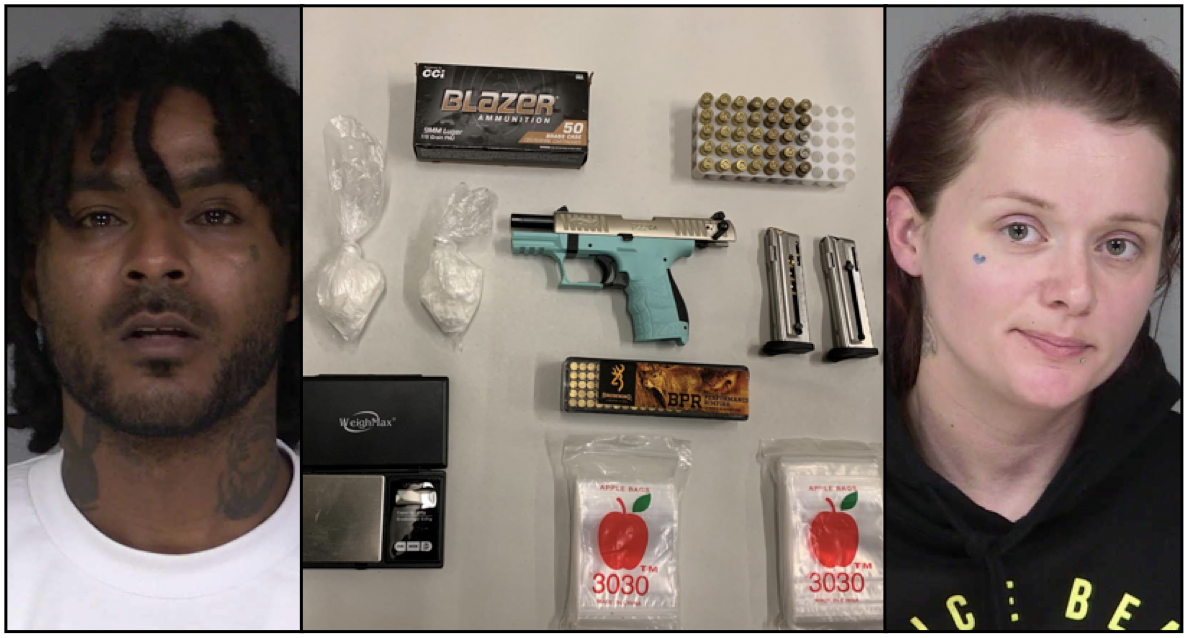
Since mid-April the Humboldt County Drug Task Force (HCDTF) has been conducting an investigation into Javier Ruiz-Keyes (30 years from Arcata) for trafficking narcotics into Humboldt County.
On Tuesday May 3rd, 2022 HCDTF Agents conducted surveillance on Ruiz-Keyes as he travelled down to Pomona with his girlfriend, Randa Osburn (31 years old from Arcata). Agents obtained a search warrant for Ruiz-Keyes and Osburn.
On Friday May 6th, 2022 HCDTF Agents conducted surveillance of Ruiz-Keyes and Osburn as they entered Humboldt County. The HCDTF made a traffic stop on Ruiz-Keyes and Osburn in the 500 block of Wildwood Ave. in Rio Dell. Both subjects were detained without incident. Osburn had her three kids in the vehicle as well.
HCDTF Agents conducted a search of the vehicle and located two ounces of cocaine and a concealed loaded .22 caliber handgun. Ruiz-Keyes and Osburn were transported to the Humboldt County Jail where they were booked for the following charges:
- 11351 H&S Possession of cocaine for sale
- 11352(a) H&S Transportation of cocaine
- 11352(b) H&S Transportation of cocaine across non-contiguous counties
- 11370.1 H&S Possession of controlled substance while armed
- 29800(a) PC Felon in possession of a firearm (Ruiz-Keyes)
- 25850 PC Loaded firearm in a vehicle
- 25400(a)3 PC Carrying a concealed firearm in a vehicle
Osburn’s three children were released to a family member who responded to the traffic stop.
Governor, Legislators Won’t Budge in High-Speed Rail Dispute
Ralph Vartabedian / Friday, May 6, 2022 @ 7:39 a.m. / Sacramento

A rendering of the proposed California High-Speed Rail. Courtesy of the California High-Speed Rail Authority
California Democrats are locked in one of the most consequential disputes in modern state history over the future of the Los Angeles-to-San Francisco high-speed rail project after a decade of troubled construction.
The $105 billion bullet train project — for which $10.3 billion has been spent so far — would be the largest single investment in state history, the most ambitious civil works effort in the nation and now a symbol to many experts of how not to build a railroad, all of which define the stakes in the current impasse.
The feud has festered for 16 months, since Gov. Gavin Newsom asked the Legislature for a $4.2 billion appropriation in early 2021. The request has triggered a standoff with Assembly Democrats, who have steadfastly refused to hand over the last remaining funds from a 2008 bond measure for high-speed rail.
The battle involves who will exert control over the project’s future, how to improve its efficiency and how the remaining funds can yield the greatest benefits, which involve sharp disagreements that could be difficult to resolve.
“The project is not proceeding according to a robust plan, which results in waste and other inefficiencies,” said Bent Flyvbjerg, a business expert in mega projects at the University of Oxford’s Saïd Business School and IT University of Copenhagen. “Given the political divisions, the cost growth, the schedule delays and the lack of a sound future revenue source, this project is going to the graveyard of famous boondoggles.”
Proponents of high-speed rail dispute such grave characterizations, asserting the project is solid.
“The naysayers are always going to be naysayers,” said Ray LaHood, U.S. Transportation Secretary under President Obama and a crusader for high-speed rail. “There’s construction underway. Hundreds of people are working on the project and have good paying jobs. There’s a plan now to go to Bakersfield. The future is very encouraging. It hasn’t stopped.”
A legislative standoff
But serious problems remain unresolved in the Central Valley, and new issues with utility relocations along the future tracks are again holding up construction.
The rail authority estimated in 2008, when voters approved $9 billion for the system, it would cost $33 billion and start running by 2020. But slow land purchases, delays in environmental documents, employee turnover and litigation over the last 14 years keep putting the goal further out of reach.
“There is no confidence in the project,” said Speaker Anthony Rendon, a Los Angeles Democrat. “We had an end date of 2020 and now we don’t have an end date.”
The latest estimate, made earlier this year, set the cost at $105 billion. The new price tag is based on some estimates made in 2019, not accounting for the spurt of inflation in construction materials and labor, according to the Legislative Analyst’s Office, the non-partisan adviser to the Legislature. The risk is that the real cost is still not known.
In his negotiations with the Legislature, Newsom has offered several billion dollars of sweeteners to the urban centers to get the $4.2 billion. So far, the Assembly has not bitten.
Newsom’s office did not respond to a request for comment.
Against this backdrop, Rendon and a majority of Democrats in the Assembly want to essentially detonate Newsom’s plan for the rail.
Asked in a recent interview what he could not accept, Rendon said, “I think this strict adherence to the current project is not really what we’re interested in.”
Newsom unveiled the “current project” in 2019, when he scaled back former Gov. Jerry Brown’s plans and adopted a blueprint for an electrified 171-mile partial operating system between Bakersfield and Merced. It would cost $23 billion, leaving the state with $2 billion to cover any setbacks, according to the 2022 business plan unveiled earlier this year.
“This project is big and complex and complicated and difficult and needs oversight,” said Laura Friedman, a Glendale Democrat and chair of the Assembly Transportation Committee. “It seems like there’s pressure being put on us to very quickly give them their money and just move on. ‘Legislature, get out of our way,’ which to me is really, really committing legislative malfeasance.”
The Senate has maintained its long silence on the rail project. Senate Transportation Committee chair Lena Gonzalez, a Democrat from Long Beach, declined an interview request and to answer written questions. In a statement, she said she is working on a “robust transportation funding package.”
Each side in the dispute believes the ultimate success of the project to connect downtown stations in Los Angeles and San Francisco with a 220 mile per hour train — an ambition that has existed for 40 years — hinges on their approach.
Competing California high-speed rail plans
In an Oct. 15 letter to Newsom, Rendon and Friedman offered to provide a $1 billion appropriation for upcoming construction and another $1.5 billion for cost overruns. As part of that offer, they sought an increase for high-speed rail segments in Southern California and an improved plan to connect the Central Valley segment to the Bay Area.
No deal was reached, though negotiations between staffs from the Legislature and the governor’s office have resumed in recent weeks. The budget for the next fiscal year would be adopted by July 1 with a possible revision in August.
In a statement, rail authority spokesperson Annie Parker noted that Newsom “proposed a $9.1 billion comprehensive transportation package” for transit and climate goals. It includes, she said, $4.9 billion for transit and other green transportation projects, as well as the $4.2 billion for the bullet train.
The bullet train, she added, “has been an economic engine.”
The rail authority’s need for the $4.2 billion immediately is not clear. The rail authority has about $1.5 billion in cash on hand, according to its financial reports, meaning it could keep the project going for at least a year.
Helen Kerstein, who monitors high speed rail for the Legislative Analyst’s Office, said the current standoff — though not an immediate threat — is important to resolve for the long-term future of the project.
But rail authority chief executive Brian Kelly has insisted that the agency needs the money now to provide stable planning and to make orderly advanced purchases of such items as trainsets that take a long time for delivery.
The views of Assembly Democrats, a majority of whom voted for a resolution last year that backed a recalibration of the program, rankles many supporters.
Of the urban legislators, former rail authority chairman Dan Richard said, “They will never be satisfied. I made agreements to give $470 million for Los Angeles Union Station and $700 million for electrification of Caltrain. We didn’t even get invited to speak at the dedication.”
The Assembly plan would also delay installation of a high voltage electrical system, until the Central Valley tracks connect somewhere. In the interim, it wants the rail authority to consider a new generation of battery-operated trains, which manufacturers say could reach 170 mph and higher in coming years. Kelly disputes that the battery trains could travel fast enough to comply with legal requirements.
A more basic question is whether the state can ever afford to make the costly connections to the coasts, involving lengthy mountain tunnels near seismic faults. Bakersfield to Los Angeles is priced at $50 billion and San Francisco to the Central Valley tie-in at Chowchilla $22 billion, according to upper end estimates in the 2022 draft business plan.
“There is a very significant outstanding question of where that money will come from and how to proceed at this point,” said Kerstein.
Legislators are worried that the 171-mile system would remain isolated.
“The idea that you would spend all your money on a train that doesn’t connect to anything and just hope that you’re going to get more money, I find a really frightening business proposition,” said Friedman.
Federal support likely insufficient
Bullet train proponents believe that the Bi-Partisan Infrastructure Law that was signed by President Biden last year could provide new money. But there is no designated carve-out for the California project, unlike for the Acela train from Boston to Washington, D.C. California might expect no more than $5 billion, grant experts say, a helpful amount but not a game changer.
A state-appointed peer review group raised serious concerns about the future of the project in an April letter to legislative leaders. It praised progress on environmental clearances and acknowledged the impact of COVID, but it faulted out-of-date cost estimates, lack of technical experience for upcoming contracts and legislative oversight.
“The cost and schedule experience so far does not yet support optimism about future performance,” wrote the author, Louis Thompson, the longtime chairman of the panel and a former Federal Railroad Administration executive and World Bank railroad expert.
Thompson went on, “Despite the possibility for additional federal funding, overall project funding remains inadequate and unstable making effective management extremely difficult. In addition, the authority has no clear guidance from the Legislature on the next steps in the project.”
Utility relocations derailing bullet train
Another complication is that construction in the Central Valley is bogging down, once again failing to meet a revised schedule. There are 119 miles currently under contract for roadbed and structures, which originally was supposed to be completed by 2017.
“There is visually nothing happening in the Central Valley,” said Jeff Denham, the former chairman of the House rail subcommittee, a Republican almond farmer who voted for the project when he was in the Legislature but later became a strident critic. “Equipment has been moved out.”
Construction has significantly slowed, said three officials working or consulting on the project, who asked not to be identified because they are not authorized under state contracts to speak to the news media. They say the state’s schedule for completion of 119-miles by December 2023 is impossible and a more likely outcome would put completion anywhere from 2026 to 2030.
Parker, the rail authority spokeswoman, said it is working on construction updates and will present those to the rail board this summer. One of the three construction contracts, led by the Spanish firm Ferrovial, is expected to be “substantially complete” by the current deadline, she said.
A central problem involves utility relocations, which are far behind schedule and delaying the start of bridges and viaducts. The rail authority’s most recent progress reports validate the executives’ concerns.
In its April progress report, the rail authority said that 57% of 1,850 utility relocation projects remain uncompleted by three teams of contractors some 10 years after construction began.
After utility owners approve designs to move wires or pipes, the rail authority has six months to start work, according to the three executives. If it goes past that window, it must start the process over, they said. For many reasons, designs often go through reapproval.
Parker said the authority has been transparent about the overall problems, which originated from starting construction “out of sequence” with land purchases and utility relocations. She noted, “Currently, we are working through those challenges and we’re implementing procedures to prevent these issues from happening on future contracts.” She said that work has begun on some uncompleted utility relocations, leaving 28% yet to start.
Slow land purchases have loomed over the project for a decade. The state lacks 222 parcels out of 2,291 that it needs, the report said. Only 28 of the 66 structures across four counties have been completed.
“There is no confidence in the project.”
— Anthony Rendon, Speaker, California Assembly
The rate of construction spending by the teams led by Tutor Perini and Dragados are lagging far behind projections, the reports show. At current billing rates, it will take about four years to complete the remaining value of work under their contracts, according to the progress reports. It would put completion at about 2026.
Two years ago, Kelly was quoted in the news media saying construction would reach full speed by now and employ 1,700 to 2,000 craft workers. In its April report, employment was reported at 906. Parker said the estimate was made before the COVID pandemic.
The three current contracts cover only 119 miles of the 171 miles of the route that Newsom wants to build. New contracts and land acquisition would be needed for 52 additional miles. Tracks, a complex signaling system and a high voltage electrical system would come after bridges, track bed and viaducts are largely completed.
As a result, the rail authority is facing monumental challenges to carry its first passengers on the Bakersfield to Merced partial operating system by Newsom’s deadline of 2030 and within the current $23 billion budget.
“Rail is challenged regarding economic return under the best of circumstances,” said Flyvbjerg, the Oxford and Copenhagen universities expert who describes the California project as a case study of how not to build a bullet train. “So, the last thing rail projects need, in terms of economic return, is delays and cost overruns that further undermine that return.”
###
CalMatters.org is a nonprofit, nonpartisan media venture explaining California policies and politics.
‘If I Get Something From You I Could Die’: Some Immunocompromised Cal State Students Feel Left Behind as COVID Safeguards Loosen
Julian Mendoza / Friday, May 6, 2022 @ 7:34 a.m. / Sacramento
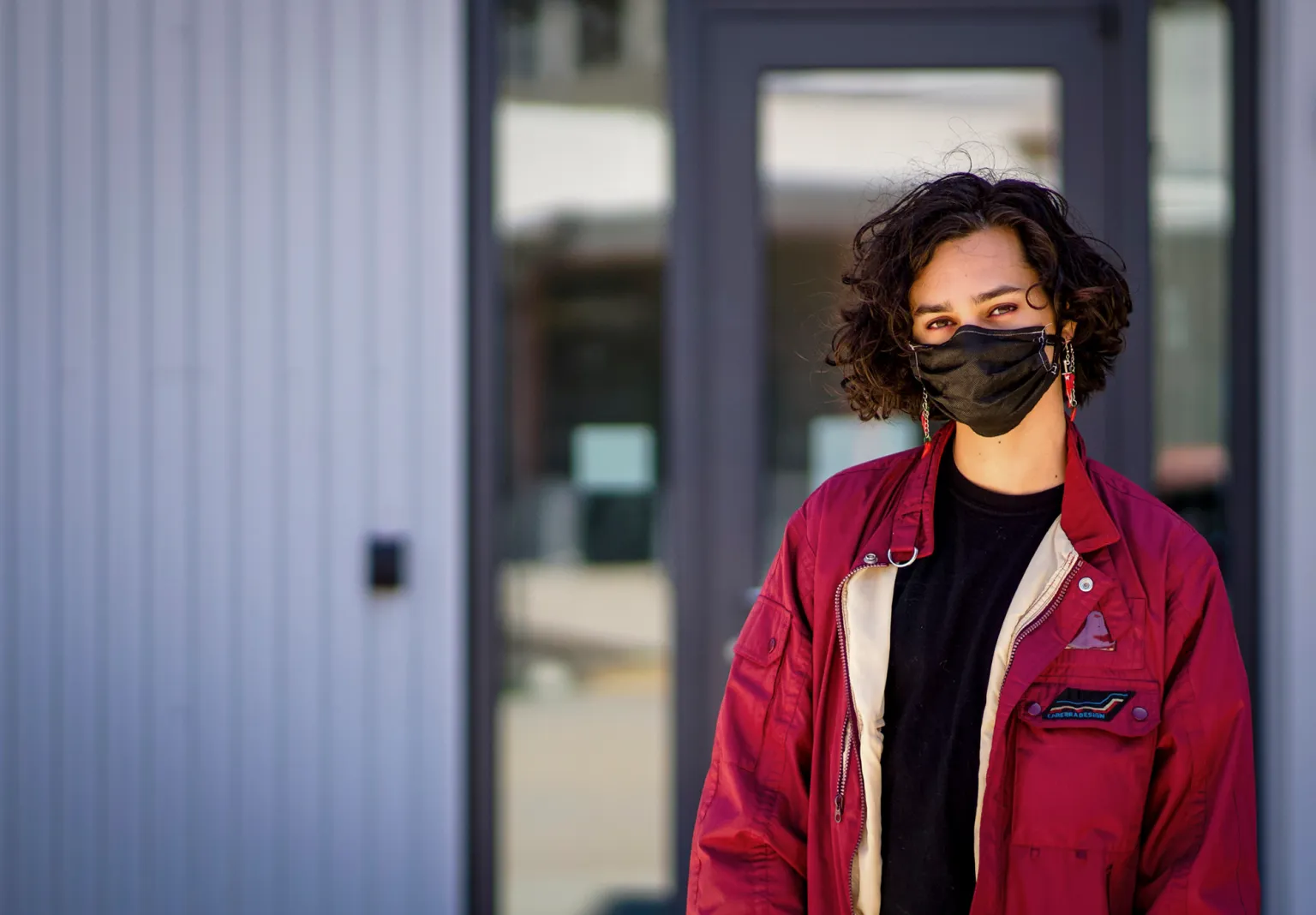
They can’t afford to take off their masks: Immunocompromised students and campus staff are highly susceptible to COVID-19, and with mask mandates dropping, some believe their schools don’t value their safety. Story from @CalMatters.
###
Students at Chico State University are no longer required to mask up indoors in order to prevent COVID-19. But Chico State public health professor Lindsay Briggs still requires students to wear masks in her class out of concern for her immunocompromised wife, who has lung problems.
“I told my students: ‘If you bring COVID into my classroom, and I bring it home, it is likely my wife will die,’ ” Briggs said.
Briggs isn’t alone in her concern. Across California State University, the country’s largest public four-year university system with close to half a million students, campuses are making different choices around COVID-19 protections as the pandemic moves into a new phase. For some immunocompromised students and staff — part of the third of California adults at a higher risk for serious COVID-19 complications and death — that means weighing the risks of attending in-person classes, and feeling neglected by university administration who they say didn’t consult them before easing restrictions.
Each of the system’s 23 campuses implements COVID-19 safety measures based on their communities’ needs, according to the Chancellor’s office. San Francisco State still enforces a mask mandate, as does Cal State LA, where the campus is peppered with signs reminding students and faculty to wear masks indoors. Meanwhile, Chico State and Cal Poly San Luis Obispo removed their mask requirements in spring.
The changes in campuses’ practices coincided with months of declining COVID cases and hospitalizations in the state — though those numbers started ticking up recently. Public health experts said colleges could institute safety measures beyond requiring vaccines to protect immunocompromised students, including socially distanced classrooms, testing after breaks, encouraging mask use and online class options.“I think that masking can play a role in helping to control viral circulation and certainly protecting immunosuppressed people,” said Dr. John Swartzberg, a UC Berkeley infectious diseases professor.
The College Journalism Network talked with immunocompromised students and staff about life during the pandemic, and the uncertainty and frustration they feel as the world seems to be moving on. Their sense of safety, they said, is affected by the precautions taken both on their campuses and in the surrounding communities.
M.W. Kaplan, Cal Poly San Luis Obispo
M.W. Kaplan was looking at a picture recently of themselves on a bus, but something looked off — Kaplan was wearing a mask, but no one else was.
Then the Cal Poly San Luis Obispo student realized it was a photo from 2019 — before COVID, when most of the world wasn’t worried about catching a deadly virus.Kaplan has a musculoskeletal pain disorder that causes neurological dysfunction and fatigue. They take a steroid that reduces the pain and inflammation associated with their condition, but also lowers their immunity, making them more susceptible to severe COVID-19 and other diseases.“Even before the pandemic started, I got sick quite a lot. And especially during flu season, I wore surgical masks even then, especially if I thought I was sick or if I was going to be somewhere crowded where I knew that people were probably going to be sick,” Kaplan said.Kaplan experiences headaches, sore throat, and nausea on a nearly daily basis. Kaplan calls this their baseline, and thinks COVID would be worse.
“Given how poor my health already is, I know that damage would make a very big, very obvious difference in my day-to-day life,” they said.
A communications major and president of the Cal Poly Disability Alliance club, Kaplan was enrolled in one in-person class for the fall and winter quarters. Being fully vaccinated and on a campus with a mask mandate, they felt just slightly uncomfortable in a classroom full of students. But when Cal Poly SLO announced it was removing the mask mandate in late March, Kaplan worried more about their safety and decided to switch their in-person class to a virtual one. It wasn’t hard to make the change, they said, since they know a lot of their professors in their department.
“They are incredibly accommodating and just generally very kind people,” said Kaplan. “So in that respect, I’ve been very lucky because I know people in a similar situation that have not had professors that were as accommodating.”
Cal Poly SLO’s decision to remove its mask mandate, they said, was “disheartening, but not shocking.”
“The lives of disabled people have never really been anyone’s priority,” they said.
Kaplan said Cal Poly SLO administrators did not consult the Cal Poly Disability Alliance club about removing the mask mandate — even after the campus newspaper, the Mustang News, published a story about the concerns of immunocompromised students.
Cal Poly SLO spokesperson Matt Lazier declined to comment on whether campus officials had talked to the club, citing student privacy.
”The lives of disabled people have never really been anyone’s priority.”
— M.W. Kaplan, Cal Poly San Luis Obispo student
“Cal Poly’s primary focus has been to do everything in its power to ensure the health and safety of all of its campus community members while also providing its students with a learn by doing experience that is as close to ‘normal’ as possible within current public health constraints,” Lazier said in an email.
For Kaplan, the dropping of the mask mandate illustrated a general lack of awareness about the issues disabled people face.
Healthy people might not think much about someone not wearing a mask, for example, but for Kaplan, it signals that they don’t value Kaplan’s life.
“It’s become really easy to tell who cares and who doesn’t based on whether they wear a mask, and what they say about wearing masks,” they said.
Ben Duarte, Chico State
Only 30% of Benjamin Duarte’s kidneys are functioning due to chronic kidney disease, and he grapples with diabetes and high blood pressure. These diagnoses made Duarte, an outreach specialist at Chico State’s STEM Connections program, approach his job differently in the last few years.
Duarte, 57, is both at a higher risk for a serious COVID-19 infection and passionate about his job, in which he helps recruit students from low-income and underrepresented communities into science, technology and math majors. He was recently nominated for a campus employee of the year award.
But continuing that work in an environment where he doesn’t feel protected by the university is difficult, he said — so much that he’s considering other career options, or retiring early.
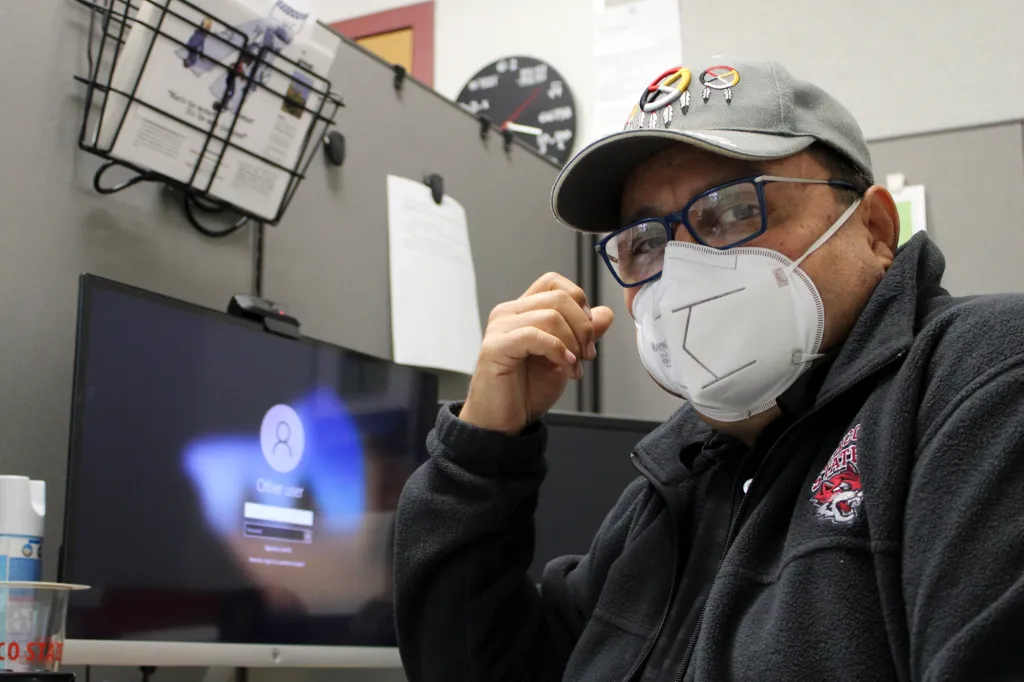
Benjamin Duarte sits in his office wearing an N95 mask. Photo by Julian Mendoza for CalMatters
Chico State’s president announced that the university was lifting the mask mandate in early March, citing Butte County’s “sharp decline in cases and hospitalizations” and the campus’ high vaccination rates.
Duarte spends most of the work day in his office wearing an N95 mask with his unmasked coworker. And although he mostly works on campus, he’s still often interacting with people on the phone or computer.
When students or staff ask why he is so strict about masking, he says he tells them, “Because if I get something from you I could die.”
He also gets upset when people compare COVID to the flu, as if that were less serious.
“I told my students: ‘If you bring COVID into my classroom, and I bring it home, it is likely my wife will die.”
— Lindsay Briggs, Chico State public health professor
“Yeah, a flu can kill my kidney,” Duarte tells them. “I can’t go through that. If I get the flu, and I get diarrhea, I get dehydrated, that’s seriously taxing my kidneys.”
He has sent repeated emails to Chico State administrators asking them to give better guidance on how to deal with exposure, and has been critical about the way administrators have handled the pandemic since March 2020, questioning if they are qualified to make public health decisions in a crisis.
Sean Murphy, a university spokesperson, said there are at least three public health professionals on Chico State’s emergency’s operations team, including a registered nurse and a physician.With most of his work done virtually, Duarte feels like he is missing out on a large part of what used to make his job fun: interacting with students.“I’m tired of being inside,” he said. “I’m a people person; I like being around people and engaging.”
Olive Patton, San Francisco State
“My life has kind of changed very positively in the last two years,” says Olive Patton, “by everybody wearing masks around me.”
A second-year graduate student in sexuality studies at San Francisco State University, Patton has Ehlers Danlos Syndrome, an inherited condition that affects connective tissues, compromises her immune system and gives her chronic pain, fatigue and brain fog.
As a child, Patton did gymnastics and dance and dislocated her joints often. She had pneumonia in elementary school and hip surgery in high school. At 16, she had bronchitis multiple times and had to go on steroids, she said.
“So pretty much the combination of having chronic pain and having a weakened immune system, I was pretty much sick at least every other week, pretty much all of my childhood,” Patton said.
“It’s also really intimidating to have to be the person to say, ‘I’m uncomfortable, people aren’t wearing masks.’ “
— Olive Patton, San Francisco State graduate student
Patton wasn’t diagnosed with EDS until she was 19. She is susceptible to the smallest of colds, but hasn’t worried too much about the risk to her health on campus because San Francisco State University still requires students, faculty and staff to wear masks. The city of San Francisco also has an 84.7% COVID-19 vaccination rate. That’s compared to 64.5% in San Luis Obispo, where Kaplan lives, and 51.4%% in Butte County, where Duarte lives.
“I think in San Francisco we’ve had a pretty good social climate around masks and distancing, and also, like, being really careful with checking vaccination cards,” Patton said. But leaving the city and seeing people holding large parties or making fun of others for wearing masks has been “a shock,” she said.
San Francisco State chose to keep its mask mandate and other safety measures such as weekly testing for those with vaccine exemptions in part to keep high-risk people and their family members safe, said Pam Su, associate dean of students at the university.
“We know that there are students and faculty who live with people who are immunocompromised, or have children who are not able to get the vaccine yet,” Su said.
Immunocompromised students who still have concerns about their safety can ask their academic department officials if they can take more of their classes online, Su said.
Though Patton’s classes are online, she still goes to campus because she is a fellow at the Paul K. Longmore Institute, an organization that studies and showcases disabled people’s experiences. Mask mandates, she said, remove the burden of asking another person to put on their mask, especially in a larger group.
“It’s also really intimidating to have to be the person to say, ‘I’m uncomfortable, people aren’t wearing masks,’ or, like, having to try to fight that,” Patton said.Having virtual classes throughout the pandemic made Patton feel safer, and she believes they should have been an option even before the pandemic. They give disabled people a chance to learn in the comfort of their own home without putting themselves in danger, she said.
Although she does feel safe, Patton feels like she is a special case. As a graduate student in a small cohort, she said she has more options. Other students may not have the same flexibility, she said.
“I wish there was some way for other people to understand why it’s so important to take care of one another and to continue practices that keep other people safe,” she said. “It really doesn’t need to be this extremely political statement.”
###
Mendoza is a fellow with the CalMatters College Journalism Network, a collaboration between CalMatters and student journalists from across California. This story and other higher education coverage are supported by the College Futures Foundation.
CalMatters.org is a nonprofit, nonpartisan media venture explaining California policies and politics.
OBITUARY: Donald W. Carter, 1934-2022
LoCO Staff / Friday, May 6, 2022 @ 6:56 a.m. / Obits
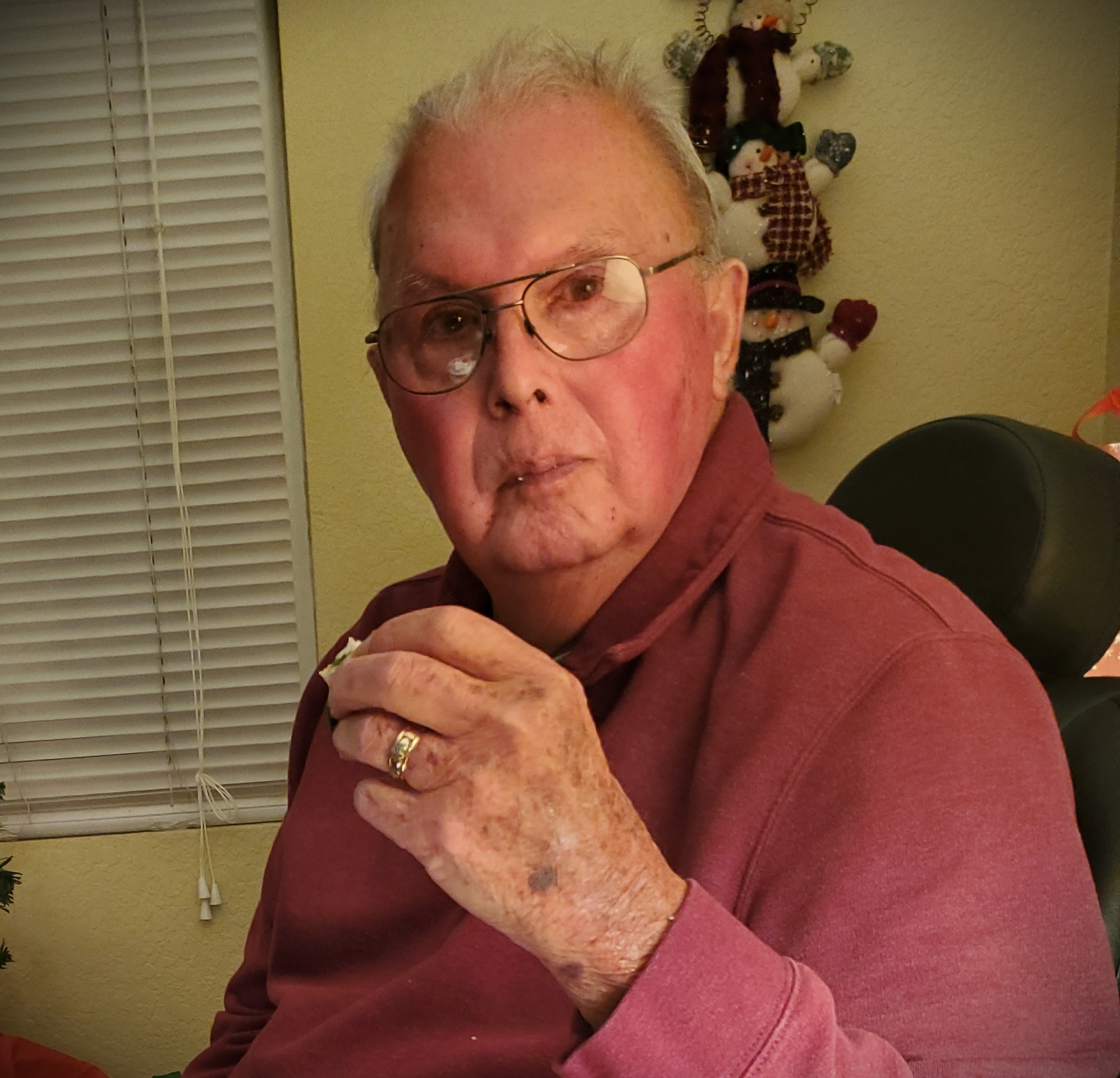
Donald
W. Carter, “Coach Carter,” passed away April 25, 2022. He was
born July 3, 1934 in Balboa to Eugene and Thelma Belle Carter.
He was drafted by the Milwaukee Braves in 1954 at the age of 19 and played in their farm system for four years. He made it to the AA level of the minors as a shortstop.
Offered a position for the Portland Beavers in the Pacific Coast Minor League system but declined the offer.
In 1957, Don married Bonnie Breeze, and the couple relocated from Bass Lake, CA, where his parents owned and operated the local grocery store, to Humboldt County, where they settled and had two daughters together.
Upon moving to Humboldt County, Don played for Humboldt Crabs Baseball during the summers of 1958-1962 and many years later was inducted to the Team’s Hall of Fame.
Don earned his teaching credential from Humboldt State University. His first teaching positions were at elementary schools in Bridgeville, Blocksburg and Hydesville. He started teaching at Fortuna Union High School in 1966, in the Special Education Resources Department.
He coached several sports, working hard to build various high school sports programs. In 1971, he became head coach of FUHS’s Varsity Baseball team and started the school’s JV program. He also coached JV Football and JV Basketball for many years. He even coached the wrestling team for a time. It was not uncommon to hear former student athletes affectionately greet Don with “Hey, Coach Carter!” when out and about in the Fortuna community all these years later.
After dating for several years, Don asked Vonnie to be his wife on his 50th birthday. The wedding was in 1985, and they were married for 37 years.
Don retired from FUHS, but he continued supporting the Fortuna Huskies by assisting with grounds maintenance and by keeping the (vintage) school marquee regularly updated with key school and community events. He also continued announcing Friday Night Huskies Football games for as long as he was physically able. He was eventually awarded the title of “The Voice of the Huskies,” and the FUHS Football Field’s Announcer’s Box was dedicated in his honor.
He was a dedicated, proud, loving husband, father, grandfather, and community member. He always kept a positive attitude, even after suffering a major stroke in 2007, which happened as he was on his way to announce a football game. Every single day that followed, he worked tirelessly to overcome his disabilities and never once let it bring him down.
He was a volunteer fireman with Fortuna Volunteer Fire Department’s Company One, from October 1968 to October 1986.
As much as Don loved teaching and coaching, he really loved the summers, when school was out on break. He loved playing almost-daily rounds of golf at the Redwood Golf & Country Club and maintained active membership for many years. He managed to score two Hole-in-One’s during his tenure. He also enjoyed bartending at Parlato’s restaurant and going on gambling trips to Tahoe and Reno. Other favorite pastimes included maintaining his perfectly manicured front yard, cutting wood in “the hills” and fishing at Ruth Lake.
More recently, he enjoyed weekly outings to local area casinos. The family credits these casino outings with helping him to regain his speech and other skills lost immediately following his stroke.
He is survived by his wife, Vonnie; daughters Catherine Carter Nunes, Rachael Breeze, and Allison Boyd; three grandchildren, Derek Boyd (Stacy), Madison Boyd, and Hailey Nunes; one great-grandchild, Rory Mae Boyd; and by numerous other relatives and close friends.
At Don’s request, there will be no funeral services. The family will host a Celebration of Life at a future date, yet to be determined. Details to follow.
###
The obituary above was submitted by Don Carter’s loved ones. The Lost Coast Outpost runs obituaries of Humboldt County residents at no charge. See guidelines here. Email news@lostcoastoutpost.com.
OBITUARY: Michael Joseph Brown, 1957-2022
LoCO Staff / Friday, May 6, 2022 @ 6:56 a.m. / Obits

Michael Joseph Brown came into this world on August 30, 1957 in Montebello, California, and departed on February 3, 2022 in Eureka. The third of six children born to James Oscar Brown and Isabel Caroline Campbell, Michael and his siblings spent the majority of their childhood in Pico Rivera with extended family as neighbors. Michael shared a particularly close bond with his grandpa, Joe Campbell. Michael attended Rio Vista Elementary, and graduated from Meller Junior High in 1972. Michael completed two years of vocational welding at El Rancho High School, and though he never graduated, he was able to put those trade skills to use to provide for his family over the coming decades.
Michael met and married his first wife, Linda, when the two were still kids themselves. They welcomed their daughter Michelle in November, 1974, and divorced soon thereafter. In April 1980, Michael married Susan Mary Hagler, and their daughter Sarah was born the following month. The family relocated to Hollister and were blessed with two more children: Brenda in 1983, and Edward in 1988.
As a young father, Michael struggled with his mental health and unresolved childhood trauma, which carried over into how he parented his own children. Still, he created positive memories with his children: spending weekend days at the beach in Monterey and Santa Cruz, and taking road trips to visit extended family, both in Northern and Southern California. With Michael’s diagnosis and eventual management of bipolar disorder in 1997, he was able to be more present as a father, to his youngest two children in particular.
In 1999, the Brown family relocated to Oroville. After 23 years of marriage, Michael and Susan divorced in 2003. After the divorce, Michael had a long-term girlfriend, Linda, with whom he remained friends until his final days. In 2005, he met his final love, Rebecca. The two were married in August 2006, and Michael embraced her family as his own. He created cherished memories with Rebecca’s three children, Katie, Josh, and Ethan. The two divorced in 2014, however their love did not end.
Michael had a great appreciation for music, and regularly shared songs and lyrics that were meaningful to him with those he loved. He loved fishing from an early age, and was an avid gardener. Michael was always mechanically inclined, and had an affinity for Volkswagen vehicles; he owned his first Beetle as a teen, which he later restored and gifted to his eldest daughter. He owned and drove almost exclusively VWs throughout his life. In 1990, while working on a Karmann Ghia restoration project, Michael came across an issue with finding replacement parts for the battery pan and front grille vents. Ever the innovator, Michael designed a process to fulfill the need. He went on to manufacture and sell numerous sets to other VW enthusiasts through 1996, primarily via Karmann Ghia Parts and Restoration in Moorpark, California.
Michael’s innovative nature was not limited to his work on VWs; he was a “do-it-yourself” guy by nature, and completed virtually all of his own home repairs, often single-handedly.
In the later years of his life, he could often be found assisting his brother, Joe, or one of his adult children in home improvement projects of their own. Michael was always there to help, and never seemed to find a problem that couldn’t be solved. A man of strong Christian faith, Michael lived by the directive to “love thy neighbor.” After relocating to Fortuna in November 2020, Michael could often be found helping one of his neighbors in the Royal Crest Senior Park, when he wasn’t out walking his little dog, Max.
Michael loved all his children and grandchildren, and was a very proud Grandpa Mike of seven amazing kids. Like his Grandpa Joe had with him, Michael shared a special bond with his grandson Solomon. Grandpa Mike and Solomon were kindred spirits from their first moment together. The two shared many adventures, laughs, snuggles, and butterfly kisses. Michael was known by those close to him for having deep faith, optimism, and a joyful contagious laugh that filled the room. These memories are gifts that will be treasured forever.
Michael was preceded in death by his grandparents, aunts, uncles, parents, brother Jim, and younger sister Lori. He is survived by his siblings: Dorothy, Kenneth and Steven; best friend and brother: Joseph Hagler; Joe and Lori’s children and grandchildren: Emily, her children Logan, Rowan, and Gemma; Brian, and Panda; three women who loved him dearly: Susan, Linda, and Rebecca; his children and grandchildren: Michelle Brown and her daughter Isabella Del Alcazar; Sarah Sullens, her husband Adam and children Miles and Lorelai; Brenda Lory, her husband Joshua and children Prudence and Solomon; and Edward Brown, his wife Hannah and daughters Ursula and Ylva.
We extend our deep gratitude to Goble’s Fortuna Mortuary for their compassionate and professional service. A celebration of life for Michael will be held at Rohner Park in Fortuna on May 29, 2022 at 1 p.m. Those who knew and loved him are encouraged to share photos and stories on his memorial website: https://www.forevermissed.com/michael-joseph-brown
###
The obituary above was submitted by Michael Brown’s loved ones. The Lost Coast Outpost runs obituaries of Humboldt County residents at no charge. See guidelines here. Email news@lostcoastoutpost.com.
OBITUARY: Ellen Hess LaBonte, 1931-2022
LoCO Staff / Friday, May 6, 2022 @ 6:56 a.m. / Obits
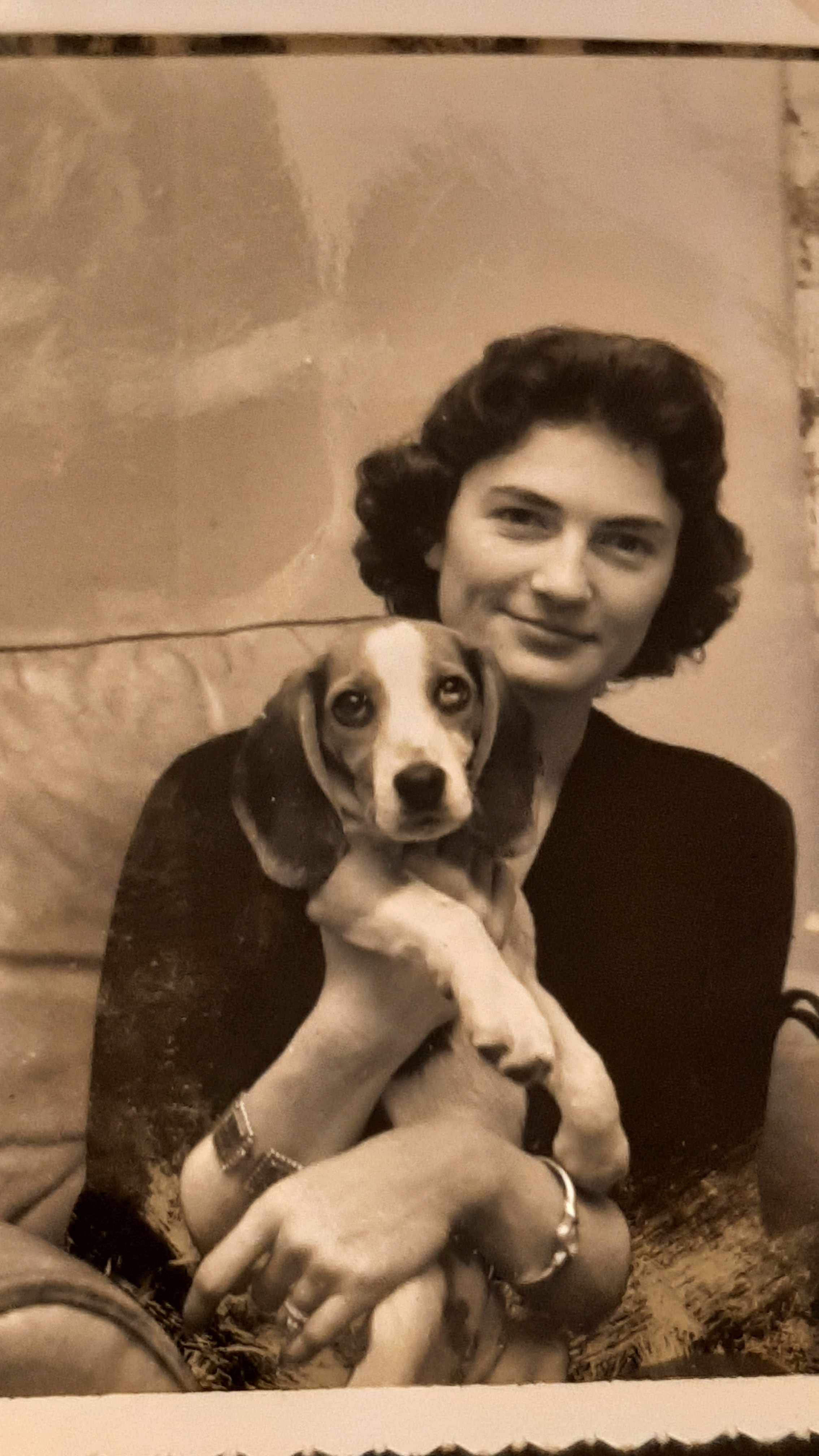
Ellen
passed peacefully with her family by her side on April 29, 2022. She
was 90 years old.
Ellen was the last matriarch of her generation. She was born in Pueblo, Colorado on November 5, 1931. She was the third and youngest of three girls born to Clarence and Edna Hess. She grew up in San Jose with her two older sisters, Charlotte and Maryanne. The three girls were very close throughout their lives and Ellen was connected to them as long as they were alive. She talked of all her family with fond memories. Ellen had a happy childhood and talked about the trips on the train she took to visit extended family in Omaha, Nebraska. Ellen also had many close friends from childhood and stayed in touch by phone with her life long friend, Louise.
Ellen was also a life long, devout Catholic. She attended Catholic schools and graduated from Notre Dame High School in 1949. Her only employment was in a local bank after her graduation.
Then Ellen met the love of her life John Henry LaBonte. She said it was love at first sight when she saw him in his Navy uniform. They were married on April 30, 1955. He had been stationed in Alaska a year before their wedding and Ellen loved to tell the story of how she waited for him and collected things for their new home when he returned. She saved all the love letters he wrote her during that time.
Ellen waited 9 years for the birth of her first child, Jacqueline Ann LaBonte born January 25, 1964. Her second child, John William LaBonte was born on May 6, 1967.
Ellen spent her life as a homemaker, wife and mother. She was committed to all her family throughout her life. She also welcomed her one grandchild, Andy LaBonte on June 4, 2000.
Ellen will be remembered as a gentle woman who loved animals and the little joys in life. She loved jewelry and shopping, getting dressed up and going out to eat. She had many good times with her husband going out to lunch and having a glass of wine. She also enjoyed visiting the family cabin in Willow Creek and sitting by the pool.
Ellen was generous to a fault and would give anything she had to someone in need. She donated to several charities during her life. She loved causes that supported animals or children in need. Her generous spirit will be missed.
Ellen had a strong faith in the Lord Jesus Christ and leaned on His strength during life’s challenges. She surrounded herself with prayer cards and pictures of angels.
Thank you to the nurses and doctors who cared for her at Saint Joseph Hospital during the end of her life and the kind staff at Hospice of Humboldt that was there at the end.
She is preceded in death by her parents, Edna and Clarence Hess, her sisters Charlotte Towne and Maryanne Doutt and her husband John LaBonte.
She is survived by children Jacqueline (Kevin) LaBonte, her son John LaBonte, grandchild, Andy LaBonte and her nieces and nephews: Joanne, Gail, Paul, Dennis, James, Kevin, Mark and Colleen.
There will be a Mass and service held at Sacred Heart Church on May 13 at 11 a.m.
###
The obituary above was submitted by Ellen LaBonte’s loved ones. The Lost Coast Outpost runs obituaries of Humboldt County residents at no charge. See guidelines here. Email news@lostcoastoutpost.com.


