

(AUDIO) Ten Mile Creek Revival Returns for Another Family-Friendly Bash at Black Oak Ranch, and the Festival’s Producer Popped by KHUM to Tell Us All About It
Toby Tullis / Friday, June 27, 2025 @ 9 a.m. / On the Air

(AUDIO) Ten-Mile Creek Revival Producer Biasha Mitchell on KHUM
###
Now in its second year, the three-day Ten Mile Creek Revival — named for Ten Mile Creek, which runs through the festival grounds — is set to take place this weekend!
The family-friendly festival aims to continue both the legacy of the Kate Wolf Music Festival and the 30-plus-year tradition of heartfelt events at Black Oak Ranch, celebrating bluegrass and Americana music in the immersive natural beauty of the Laytonville Valley.
This year’s lineup includes many Black Oak Ranch and Kate Wolf Music Festival favorites, such as Los Lobos, The Wailin’ Jennys, Old Blind Dogs, Rainbow Girls, The Sam Chase & The Untraditional, and The Real Sarahs, as well as newcomers like Miko Marks, Two Runner, and Broken Compass Bluegrass. The festival features two stages of music, the Shady Oak Bar, creekside camping, family activities, and food and craft vendors.
Biasha Mitchell is a second-generation “Hog Farmer,” a steward of Black Oak Ranch, and grew up helping produce events there, including the Hog Farm Pignic, Earthdance, and the Kate Wolf Music Festival.
Biasha joined Toby in the Morning in the KHUM studios this week to chat about the upcoming festival and the decades-long legacy of Black Oak Ranch— the longest-running hippie commune in the United States — best known for its role in the original Woodstock Music & Art Fair and the counterculture movement of the 1960s.
BOOKED
Yesterday: 10 felonies, 12 misdemeanors, 0 infractions
JUDGED
Humboldt County Superior Court Calendar: Today
CHP REPORTS
852 MM199 S DN 8.50 (HM office): Trfc Collision-No Inj
Poppy Dr / Sherwood Rd (HM office): Closure of a Road
ELSEWHERE
Mad River Union: Arcata’s petite data center only the first
Mad River Union: Whistleblower calls for Miranda’s Rescue end
Mad River Union: EV infrastucture needs in rural areas reviewed
Mad River Union: $600K grant for Jolly Giant, Butcher’s Slough resilience
OBITUARY: Kathleen “Kady” Frances Dunleavy, 1948-2025
LoCO Staff / Friday, June 27, 2025 @ 6:59 a.m. / Obits

With deep sorrow, we share the passing of Kathleen Frances Dunleavy, RN — known affectionately as Kady — on June 6, 2025, in Orange County, California. Kady was a beloved mother, friend, nurse, educator, and devoted member of her community.
Born on May 18, 1948, at Lennox Hill Hospital on Park Avenue in New York City, Kady was the eldest of six children and the first grandchild in the Dunleavy family. She was the cherished daughter of John and Frances Gilmartin Dunleavy, and older sister to Tim, Margaret, Sean, Mary Elizabeth, and Declan.
Kady’s passion for learning and caring for others shaped her life from an early age. She graduated from Mother Butler Memorial Girls High School in 1966 and went on to earn her nursing degree from D’Youville College in Buffalo, NY, in 1970. She furthered her education with an advanced nursing degree from New York University in 1973.
Her professional journey began where her life had begun — Lennox Hill Hospital in Manhattan — where she worked as a pediatric nurse. She later joined NYU Medical Center in the Murray Hill neighborhood, continuing in pediatric care while earning her master’s degree at NYU.
Kady’s adventurous spirit took her across the country. She served as head nurse in the neonatal intensive care unit at Tulane University Medical Center in New Orleans, then moved west to work as a private duty nurse at John Wayne Hospital in Orange County, California. Later, driven by a commitment to service, she accepted a special grant to help build a clinic for the Hoopa Indian Reservation in Northern California.
In 1998, she settled in Ferndale, California, and began a new chapter as an instructor in the Registered Nursing Program at the College of the Redwoods, where she shared her knowledge and love of pediatrics with first-year nursing students. Around 1999, Kady’s life was forever enriched when she welcomed her daughter, Cody.
Kady was deeply spiritual and active in her faith. She served as a Eucharistic Minister at St. Joseph Catholic Church and later became a Secular Franciscan. In retirement, she continued to give back to her community as a volunteer chaplain and Eucharistic Minister at Redwood Memorial Hospital in Fortuna.
A lifelong lover of travel, Kady explored Ireland and many parts of Europe. She cherished visits with family in New York and loved attending Broadway musicals, as well as shows in San Francisco and Sacramento.
A Celebration of Life will be held in her honor on June 29, 2025, from 1:30 PM to 4:00 PM at 1011 Meadow Lane, Fortuna, CA. Please join us in remembering Kady with joy. In lieu of traditional mourning attire, we kindly request guests to wear light or pastel colors — especially her favorites: lavender and purple. Finger foods are welcome.
For questions, please contact Irma Silva at (707) 682-6769.
###
The obituary above was submitted on behalf of Kathleen Dunleavy’s loved ones. The Lost Coast Outpost runs obituaries of Humboldt County residents at no charge. See guidelines here.
OBITUARY: Gerald Enlo Hale, 1939-2025
LoCO Staff / Friday, June 27, 2025 @ 6:58 a.m. / Obits

Gerald (Gerry) was born and raised in the small town of McKinleyville, in Humboldt County, California. Despite the best efforts of the paramedics, doctors, and nurses at St. Joseph Hospital, he passed away peacefully on June 14th, 2025, surrounded by his loving family. In his 85 years, he experienced life fully, felt deeply, and was cherished in return.
Throughout his life, he valued the foundation provided by growing up in Humboldt County. He never imagined the remarkable life he would eventually lead. As a young man, he worked at local mills, service stations, area farms, and at the family restaurant known as the Bella Vista Inn, now Six Rivers Brewery. This was his home for the first ten years of his life, and in later years, when dining there, he would exclaim, “You are now sitting in my bedroom.” Living close to a steady flow of customers and being surrounded by friends and family, he learned how to work hard as well as be social with a great variety of people. It was there he developed the skills of a lifetime. He was a people person to the end and loved telling stories of the adventurous life he led.
As a young man, Gerry’s free time was spent playing sports or exploring the outdoors. In high school, he was an integral member of the 1957 undefeated Arcata Tigers football team. In one legendary game against Crescent City, he broke off five teeth during a tackle but didn’t miss a single play. It was an early glimpse of the true grit that defined his character. He loved to go hunting, enjoyed fishing, and also spent time water skiing on Big Lagoon. One time he even water skied from Eureka to Trinidad on the open ocean with lifelong friends Don Miller, George Berry, and Don Daniels.
Later he attended Humboldt State, where he met his wife Carol in the pottery studio, “helping her center her pots.” It was a love that would last three days short of 64 years. They were a dynamic duo that shared a full and meaningful life.
After they married, Gerry joined the Air Force, where he became a cryptologist. In his work, he was exceptionally gifted at seeing patterns and connections that others missed. He attributed his special skill at decoding to his dyslexia. Recognizing his abilities combined with his desire to serve his country was a union that would shape the journey of his life’s work. He was stationed in Texas, Germany, and was later recruited by the National Security Agency (NSA) in Maryland. He loved the challenges of his job and the people he worked with.
Throughout the course of Gerry’s career, he was recognized as a gifted leader and received numerous awards. They include three NSA Meritorious Civilian Service Awards; the Exceptional Civilian Service Award; a National Intelligence Medal from the Director of the CIA; and a Presidential Rank Award from President George H. W. Bush. He received the Cross of Honor from the Federal Armed Forces of Germany for his work at NATO and a special recognition from England’s Prime Minister Margaret Thatcher. As a crowning achievement, Gerry was inducted into NSA’s “Hall of Honor” in 2016.
Gerry and Carol moved back to Humboldt County to rekindle childhood friendships and start new ones in their old stomping grounds. His retirement was filled with giving back to the community from which he started. When he was not outdoors, his activities included serving on the Board of Directors of the Clarke Historical Museum, the Eureka Rotary and then Mad River Rotary Club. He was also active in the Native Sons of the Golden West and the Humboldt County Pioneer Society. He was integral in supporting fundraising events and service projects.
He is survived by his loving wife Carol; sons Greg (Marja), Dan (Chris); and daughter Lisa. He also has five outstanding grandchildren. He was extremely proud of them all and excited about the future they will shape. He is also survived by one brother, five sisters-in-law, two brothers-in-law, cousins, and numerous special nieces and nephews. He was predeceased by his father George Hale and mother Matilda Ricci Hale.
Gerry was a force for good in the world that will be greatly missed. He loved his family, his home, and his country. His legacy lives on in the stories he shared, the people he touched, and the values he instilled. Memorial donations may be made to Clarke Historical Museum on behalf of Gerry Hale. The museum is located at 240 E Street, Eureka, California 95501.
###
The obituary above was submitted on behalf of Gerald Hale’s loved ones. The Lost Coast Outpost runs obituaries of Humboldt County residents at no charge. See guidelines here.
OBITUARY: Bettie Faulks, 1940-2025
LoCO Staff / Friday, June 27, 2025 @ 6:57 a.m. / Obits

With a heavy heart, I announce the passing of my mom, Bettie Faulks — born in Oak Grove, Louisiana, on October 23, 1940. Her family moved to Eureka, California, in 1946. She attended Lincoln and Franklin Elementary Schools in Eureka and graduated from Eureka Senior High in 1958.
She married Don Faulks in June 1958. Together, they made their home on Cummings Road in Eureka, in a house she designed. The house was completed in late 1960. By that time, she was a mother and pregnant with baby #2.
During this period, local lumber mills gave lumber on loan to build houses. Once completed, you would go to the bank to get a loan to pay the mill back for the lumber. Her story was that, as a minor — a woman under the age of 21 — she couldn’t apply for the loan, even though she was married and handled the finances. She told the bank manager, “I pounded the nails and helped build the house, but I need to have my husband come in?”
Her legacy was her family. She was more than a housewife — very active in the Freshwater community as we kids were growing up. She was involved in Blue Birds, 4-H, Webelos, Boy Scouts, and youth sports.
Summer vacations were spent traveling to the Bay Area to pick up Don’s daughters, who spent summers with the family. Many of those summers were also spent at Trinity Lake.
Always eager to further her education, she took night classes at College of the Redwoods in accounting. In the mid-1970s, she completed real estate courses and obtained her realtor’s license. By the 1980s, she went to work at Eureka Oxygen as a bookkeeper. They retired in 1983, bought a motorhome, and began traveling. They would go to Yuma, Arizona, in the winter to escape the rain in Northern California.
Always wanting to know her history, she started actively researching her roots which entailed going to the library and searching on microfiche.. She and Don traveled back to Mississippi and Louisiana so she could do further research into her heritage.
After Don passed away, she met Glen Reed. Together they traveled as she always wanted to go to Hawaii. They went on an Alaskan cruise and a trip with her brother and sister-in-law to their cabin in Canada.
She was preceded in death by her husband, Don Faulks; son, Don Faulks Jr.; stepdaughter, Sandy Faulks-Moller; brother, Jesse Grammer; her parents, Ray and Susie Grammer; and her long-time partner, Glen Reed.
She is survived by her brother, Johnny Grammer (Beverly); daughter, Nora LeAnn Doyle (John); stepdaughter, Debbie Kennedy (Tim); five grandchildren; 14 great-grandchildren; one great-great-granddaughter; and numerous cousins, nieces, and nephews.
A celebration of life will be held on August 16th at her home. The family wishes to express their sincere gratitude to the staff at St. Joseph Hospital, including the palliative care nurses and her doctor. A special thank-you to her neighbors Joyce and Jeff Woodard, and Ron and Sarah Owens, for looking after Bettie these past few years.
In lieu of flowers, contributions may be made to the American Cancer Society. Interment will be at Oceanview Cemetery.
###
The obituary above was submitted on behalf of Bettie Faulks’s loved ones. The Lost Coast Outpost runs obituaries of Humboldt County residents at no charge. See guidelines here.
OBITUARY: Allen Ray Adams, 1945-2025
LoCO Staff / Friday, June 27, 2025 @ 6:56 a.m. / Obits
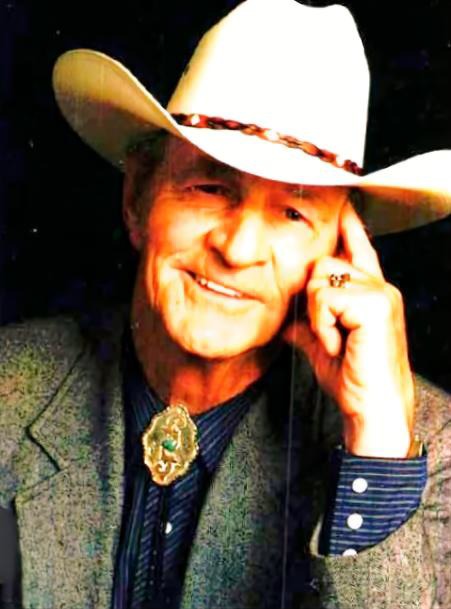
Allen Ray Adams passed away quite unexpectedly, in his home with his cherished wife Jacqueline Kay. He was the best husband, dad, papa, uncle, and friend.
Allen was born in Atoka, Oklahoma, on June 30, 1945, to Daniel O. Adams and Hazel B. Harrington- Adams. As the youngest of three brothers along with five sisters, he shared a special bond with his siblings. His passing has brought an end to an era for his loved ones, as he joins James Adams, Charlie Adams, Ruby May Adams, Lillian Maxwell, Wilma Taylor, Mary Horath, and Wanda Vickers in Heaven. We believe they are celebrating their reunion, playing guitars and singing together, their spirits united in eternal harmony.
Allen’s young life was extremely hard. He left Oklahoma and made his way to Humboldt County at the young age of 14. Mainly living in Manila, Calif., with whomever would allow him to stay in their homes. He met lifelong friends while in Manila, Jim and Donny Ford, Buddy Henderson Family, Baker Family, Papa Slim and Momma Lou. He had some pretty crazy stories to share with his many friends and family. He attending Arcata High School and College of the Redwoods, choosing not to graduate from either one but very well could have. We fondly remember when he took a sewing class!
Allen met the love of his life, Jacqueline Kay Barnick, at Arcata Redwood, where they both worked. What began as friendship soon blossomed into love, and they were married on June 14th, 1975 at Trinity Lutheran Church in Eureka, California. By marrying Jacqueline he not only gained a beautiful wife but also willingly became an instant father to Ricky, Tylene and Amber Barnick. Not many men would have stepped into such a challenging situation, especially considering the tragic experiences Jacqueline and her children had endured in the years prior, but Allen embraced it wholeheartedly.
His willingness to love, support, and become a true family man showed his compassionate and resilient spirit. On June 29, 1977, their family grew again with the arrival of Allen Ray Adams II who became known as Duece, and together they became a family of six. Their home was always open and welcoming — no one was a stranger, and visitors often stopped by to say “Hi” and share a “cup of Joe.” Speaking of coffee, it was their drink of choice; if a pot wasn’t ready, one was soon to be brewing, most of the time on the commercial grade coffee pot they had in their kitchen! All of the grandkids drank coffee at Nonnie & Papa’s house, a tradition and moments filled with love and warmth.
Allen worked many jobs at local mills and in construction throughout his life. When his body could no longer handle the physical demands of those trades, he joined Jacqueline Kay, whom he lovingly called Nonnis — in her at-home daycare (Nonnie’s Family Day Care). Many children and their families became like extended family to Papa and Nonnie, forging lifelong friendships. Quite a few families joined them at dinner time and during family events, making their home a hub of love and community.
Papa was the enforcer of discipline, often telling the kids to quit “whine-baggin” or “belly-achin” and Nonnie was the softy, offering gentle comfort. As their children, we were incredibly fortunate to have our own children cared for by our parents in such a loving environment. And of course, we can’t forget the nicknames — everyone got one, including the day care kids!! We especially want to thank the Daniels family for the extra love and attention they provided and continue to provide-to Nonnie. She loves you all dearly and cannot express her gratitude enough. Everyone’s support means more than they will ever know.
Allen, affectionately known as Pee Wee and later in life as Papa, was a man of distinctive style. His signature attire included western wear — cowboy boots, Western-adorned button-down shirts, Wranglers, and a cowboy hat, always dressed to the T. A talented musician, he played the guitar like a true pro, filling rooms with his melodies and guitar playing.
Known for his gift of gab, Allen could talk with anyone and had an uncanny ability to listen with genuine interest and care. Honesty, faithfulness, and old-fashion values were deeply ingrained in him, and he made sure to pass these principles on to those he loved. He often told his family, “Your word is all that you have,” emphasizing the importance of keeping promises and commitments. A wheeler and dealer at heart, he was always ready to strike a good deal, turning that good deal into a profit.
Country music was a vital part of Allen’s life; he was a talented songwriter who wrote many heartfelt songs and recorded an album titled “The Better Life” in Ventura, California. His music opened doors — he was invited to perform at numerous local events, sang a commercial, and played for friends during their final moments on earth. Allen wrote touching songs for his daughters, Tylene and Amber, and proudly sang them at their wedding receptions, where many tears were shed as expressions of love.
Since 1978, he documented his thoughts and experiences in a journal each night, capturing his life and his family’s journey. He shared his musical gift with the community, performing multiple times at Ridgewood and Cutten schools, once playing guitar with his grandson, Jordan Daniel Seaman, who was just in first grade at the time. A faithful member of Arcata Lutheran Church, Allen served on the church council and joyfully sang at various church events. His love for the Lord, the Son of God, was unwavering, and he wholeheartedly believe in life after death. We find comfort knowing that he is now watching over us from Heaven, his spirit forever present in our hearts.
Cars were another passion in Allen’s life, particularly the classic, vintage models rather than newer vehicles. He enjoyed attending car shows and cherished his collection of old cars he had during his lifetime. His son Duece is currently restoring his beloved 1957 Ranchero, a project that will be filled with love and memories and quite possibly a few tears. He helped his daughter Amber restore her 1964 El Camino. He enjoyed the flash and old time charm of vintage cars, and the smooth roar of their engines was music to his ears. The biggest grin would spread across his face whenever he heard that smooth engine sound. He often told his beloved Jacqueline Kay that he would love to own a Corvette, but after working part-time as a parking valet at Cher-Ae Heights Casino during his retirement, he changed his mind and said, “I never want to park a Corvette again, let alone own one!” His love for classic cars was a true reflection of his appreciation for timeless style and craftsmanship.
Family was everything to him and he was lucky enough to have so much family in his life and we have added more to our family since his passing. He is survived by his wife Jacqueline Kay. He loved her so much and she says he was the best, most beloved husband a lady could ask for, he was a Godsend to her, his son Ricky Barnick, his wife Gretchen and their daughter and grandchildren Meghann Barnick Erickson, her husband Cameron and their children Parker and Millie Erickson. His oldest Daughter, Tylene Barnick Lott Johnson, her husband Michael and their children and grandchildren, Sarah Lott — her sons, Isaiah, Jonah, Alexander and her daughter Kaiana Lott. Jackie Lott and her partner Edgar, their sons Jovani, Noah, Isaac, Remi and daughter Ember Lott. Ethan Lott and his daughter Scarlett. His youngest daughter Amber Barnick Seaman, husband Jim and their sons, Jordan Seaman, his fiancée Kali and their sons Henry and Vince. Jason Seaman and his fiancée Shara and their children, Jesse, Kolt Davis, Reece, Hailee and Raylynn. His youngest son and namesake Allen Ray Adams II, (Duece) and his wife Brooke. Many nieces and nephews, too many to list but he loved you all very much.
Allen was preceded in death by his infant daughter, Naomi Adams, born from his first marriage, who passed away in September of 1964. He was also deeply affected by the loss of his youngest grandson, Justin Davis Seaman, affectionately known as “the Governor” who left this world in September 2019-just a few short months before our Papa’s passing. Allen felt his son-in-law and daughter’s heartbreak to the core with the loss of Justin.
Allen never met a stranger, embodying kindness and warmth in every encounter. His love for God and his family was the foundation of his life, and he steadfastly kept his faith through all of life’s adversities. Loved by many, he is deeply missed on a daily basis. Though he is no longer with us, his warmth, spirit and boundless love remain eternal, forever etched in our hearts.
Orange Tic-Tacs, love pinches on the hand and corny jokes will always remind us of you. Until we meet again, we love and miss you, Papa.
A Celebration of life service will be held at the Arcata Lutheran Church located at 151 E. 16th Street, Arcata, CA 95521 on Sunday June 29th at 2:00PM with a reception to follow immediately in the gym located next to the church. Come celebrate a true western gentleman’s life and legacy. In lieu of flowers, the family would like to request donation be made to the Arcata Lutheran Church in Allen’s name.
###
The obituary above was submitted on behalf of Allen Adams’s loved ones. The Lost Coast Outpost runs obituaries of Humboldt County residents at no charge. See guidelines here.
OBITUARY: Darrell Thomas Branson, 1936-2025
LoCO Staff / Friday, June 27, 2025 @ 6:54 a.m. / Obits

Darrell Thomas Branson, 88, passed away on June 12, 2025, at Ida Emmerson Hospice House in Eureka, CA.
Darrell was born on September 26, 1936, in his parents’ railroad house in Cokeville, Wyoming. He was the seventh child and the youngest born to Cleo (Hoopes) and William Branson. In 1945, he, his parents, and four of his siblings moved to Rohnerville, California, from Deseret, Utah. Dad told the story of how the family’s car — a 1939 Chevrolet sedan — and a trailer that his dad built were so packed with belongings, along with everyone, a dog, and a guinea pig, that the car broke down due to the sheer weight of it all. They still made it to Rohnerville in two days.
Dad attended Toddy Thomas Elementary School and Fortuna Union High School. Toddy Thomas, the principal, taught Dad to play basketball, and that began a love of basketball in the family, with his sons and daughters playing — and continuing to this day with his grandchildren and great-grandchildren playing on teams. Dad played in high school and in church leagues. In 2016, Dad was inducted into Fortuna High School’s Hall of Fame for the 1952 Champion Basketball Team.
Dad met Mom on a double date when they were seniors. They were not on this date together, and Mom liked Dad more than she liked her date, so they began seeing each other. They married in March 1955. They were married 59 years until she passed away.
Darrell worked 26 years for Foremost Dairies in Fortuna. He also worked as a waiter during high school and held second jobs as a men’s clothing salesman and tax preparer. He worked at Humboldt Creamery after Foremost closed. Dad was also a co-owner of the family business, Hometown Aquarium in Fortuna, for 29 years.
When younger, Dad was a board member of the Rohnerville Elementary School District, a deacon at Campton Heights Baptist Church, and then at Loleta Evangelical Church. He also attended local churches during the last several years.
Dad worked hard to provide for his family. He was very skilled at home remodeling, building things, and had a green thumb. He enjoyed helping his family with various projects. Dad had a great smile, a wonderful laugh, and a good sense of humor. He attended many of his sons’ and grandsons’ basketball games. He also supported his kids’ talents, interests, and hobbies. He liked to fish, and when we were younger, Dad sometimes took us out on his fishing boat. He turned our backyard at Kenmar Road into a playhouse, a two-story fort, and planted a big willow tree for us to hide under, along with a cement pad area to shoot hoops. Dad was also a homebody. Even in retirement, going away for a few days was often plenty of traveling for Dad.
He is survived by his children Diana Branson, Sandra Branson, Jerry (Tammi) Branson, and Ken (Gina) Branson. Dad also leaves behind seven grandchildren, twenty great-grandchildren, six great-great-grandchildren, along with many nieces, nephews, and his sister-in-law Patti Branson.
Dad was preceded in death by our mom, Louise (Anderson), in 2014, and his second wife, Sandi (Bean), in 2024, whom he married in 2015. He was very devoted to and loved Mom and Sandi very much. He was also preceded in death by his parents, his siblings and their spouses: Francis and Jeanne Branson, Rose and Lamar Thornock, Velda and Gerald Abrahamson, Norma and Zip Gomes, Arlon Branson, Elva “Ann” and Glenn Gracey.
We would like to thank the medical staff at Seaview Rehab and Hospice of Humboldt for compassionately caring for Dad.
Family will hold a private service at a later time.
###
The obituary above was submitted on behalf of Darrell Branson’s loved ones. The Lost Coast Outpost runs obituaries of Humboldt County residents at no charge. See guidelines here.
Taken: What Happens After an LA Immigration Raid
CalMatters staff / Friday, June 27, 2025 @ 6:19 a.m. / Sacramento

Juan Flores Morales outside of a store in Tehuacan, Puebla in Mexico, on June 25, 2025. Photo by Cristopher Rogel Blanquet for CalMatters
The masked agents pull up quickly. They jump out of unmarked vans or trucks. They wear blue jeans or battle fatigues. They approach Latino men, at times yelling and carrying assault rifles. When someone runs, they’re taken. When they don’t answer a question, they’re taken. When they can’t produce papers, they’re taken.
Their families won’t know what happened to them. They’ll be shackled, whisked away to another state, forced to subsist for days on potato chips, apples, water, and the occasional cold sandwich. They’ll sleep on the floor with mylar blankets, without access to showers or even working bathrooms. These are not enemy combatants in a war zone, but people living and working in America’s second largest city.
In the last three weeks, federal agents have swarmed Los Angeles County, rounding up 1,600 people where they work, where their children play, where they shop for food. They have driven entire families into hiding. Videos of these encounters, shared on social media, have offered quick, shaky glimpses of the chaos.
But few details have emerged about what happens to those who are taken. CalMatters spoke with a number of men who were detained on the streets of Los Angeles during the first weekend of the raids. These are the stories three of them told about how they were arrested, how they were treated in government detention and, ultimately, how they were pressured to voluntarily leave the country.
***
At 3:10 p.m. on Sunday, June 8, Mauricio Oropeza was waiting for the 33 bus on the corner of Lincoln and Venice boulevards, in Santa Monica. He was headed back from his job cleaning apartment buildings for a maintenance company. It was a two-bus commute, and he was halfway home.
There were a few other people – three men, a woman and her daughter – waiting for the same bus. No one seemed to know what to make of the truck that suddenly pulled up in front of them, or of the men in jeans and baseball caps that stepped out of the vehicle. One of them was holding a photo of a Latino man with the word “BUSCA” – Spanish for “WANTED” – printed across the top.
“Have you seen this person?” he asked.
When two of the commuters began to run, Oropeza did the same. That’s when several Border Patrol vehicles stopped in front of them, he said, and armed men in tactical gear jumped out. One of the agents tripped Oropeza and pinned him to the ground.
“Don’t resist,” he told him.
 Mauricio Oropeza in Santa Maria Ajoloapan in Mexico State in Mexico, on June 25, 2025. Photo by Cristopher Rogel Blanquet for CalMatters

 A room in Mauricio Oropeza’s home in Santa Maria Ajoloapan. Last: A horse grazes on grass outside of Mauricio Oropeza’s home in Santa Maria Ajoloapan in Mexico, on June 25, 2025. Photos by Cristopher Rogel Blanquet for CalMatters
The agents took his cell phone and Mexican passport. He was loaded onto one of the vehicles along with the other men from the bus stop, all of them struggling to adjust to their new reality. They would not be going home that night. They would not get to call their families to explain.
As they drove away, the agents spotted two Latino men walking on the sidewalk. Oropeza said they got on their radio, said “two more,” and then another vehicle peeled off to pursue them.
***
Less than two hours later and exactly a mile away, Omar Sanchez Lopez left his apartment on Rose Avenue and Lincoln Boulevard, in Venice, with his apron draped over his shoulder. He was on his way to work bussing tables at a nearby Italian restaurant when a Honda Civic pulled into the apartment complex parking lot. Lopez thought the driver, who was in jeans, t-shirt and baseball cap, was there to visit one of his neighbors. But then the man stepped out of the car and approached him. He was holding a piece of paper with photos of four Latino men, and he asked Lopez, in Spanish, “Do you know these people?”
Lopez, 27, didn’t answer. But the man continued: “Do you speak English? Where do you work? How old are you? Are you a citizen? Do you have papers?”
When Lopez asked, “why are you asking me these questions,” the man pulled out his badge and said, “ICE.”
Lopez thought about turning around to go back inside, but a masked Border Patrol agent got out of the vehicle and told him to put his hands behind his back. Within minutes he was handcuffed and sitting in the back of the car.
 Omar Sanchez Lopez is detained by federal immigration agents on June 8, 2025. Photo courtesy Omar Sanchez Lopez
“What are you doing in the United States?” he said the agent asked him as they drove away. “It’s not your country.”
Lopez didn’t answer. He looked out the window at the traffic as the sedan pulled him farther and farther away from his home, his family, his life.
***
By the time Lopez and Oropeza were taken, Juan Flores Morales had been under arrest for more than 24 hours. He had been taking a lunch break on Saturday with three other men on his construction crew, eating a pizza outside the restaurant they were renovating in Inglewood, when masked Border Patrol agents rolled by in a truck.
Morales felt, for an instant, as though he was paralyzed. “The fear is crazy,” he said.
Then two agents got out of the vehicle, and Morales, 27, ran into the restaurant. He searched frantically for an escape, but a Border Patrol agent burst through the door and pinned him down.
“Tranquilo,” the agent told him. “Don’t move.”
They handcuffed him and asked whether he had participated in the immigration protests that had started the night before, following the first raids.
“I don’t get involved in that,” he told them. “You got us at work. You got us while working.”
They took his cell phone, he said, and plugged it into a device that unlocked it, which allowed them to look through his contacts and communications.
Morales thought his lack of a criminal record would help him. But it didn’t. “I don’t know why they don’t want us in Los Angeles,” he thought.
The agents drove him away, leaving his tools at the restaurant.
***
Lopez, Oropeza and Morales are now in Chiapas, Mexico City and Puebla, respectively, and we spoke to them by phone. Their accounts of their arrests, detention, and rapid removal suggest federal agents are working from a new playbook, one that dispenses with the longstanding practice of targeted arrests and relies on only the thinnest pretext, like a wanted poster, for approaching people who appear Latino.
In April, a federal judge issued a preliminary injunction barring the Border Patrol from conducting warrantless raids in the Central Valley. “You just can’t walk up to people with brown skin and say, ‘Give me your papers,’” U.S. District Court Judge Jennifer L. Thurston said, finding the warrantless stops likely violated the Constitution’s protection against unreasonable searches.
The man who led that operation, El Centro Sector Chief Gregory Bovino, is now in charge of the operations across Los Angeles.
 U.S. Border Patrol Sector Chief Gregory Bovino attends a press conference in Los Angeles on June 12, 2025. Photo by Aude Guerrucci, Reuters
The men’s stories also suggest that agents are pushing people to sign removal forms before they can call home or speak with an attorney. Ahilan Arulanantham, co-director of the Center for Immigration Law and Policy at the UCLA School of Law, said those tactics would be “blatantly illegal.”
“You can’t condition phone access on anything,” Arulanantham said. “They have a right to call their family. They have a right to call a lawyer.”
He also raised concerns about the treatment the men described in government facilities. “It’s not permissible to manipulate the conditions of detention to encourage people to give up their rights,” he said.
Migrants can challenge the legality of their arrest and detention, he said, but they usually have to be in the country and be able to call a lawyer.
The Department of Homeland Security didn’t immediately respond to a request for comment.
Immigration detention centers are well above capacity, and the men we spoke with were almost immediately moved to an ICE tent camp in Texas and, within days, across the border to an immigration facility in Ciudad Juárez.
Before the Trump administration began its mass deportation campaign, many immigrants arrested away from the border were released on bond with a notice to appear in immigration court. Those with criminal histories were typically held in detention facilities.
Now, Bovino has made clear, he considers anyone who crossed the border without documents – the farm worker, the day laborer, the paletero – a criminal.
“Bad people,” he called them during a press conference with Homeland Security Secretary Kristi Noem earlier this month.
New Immigration and Customs Enforcement data from June 1 to June 10, analyzed by the Los Angeles Times, shows that 69 percent of the people detained in the LA area had never been convicted of a crime.
A criminal records search in Los Angeles and the California state prison system for Oropeza, Lopez and Morales returned no results. Oropeza and Lopez said they had been caught at the border and deported years before.
***
From the bus stop on Venice Boulevard, Oropeza was taken to a parking lot in Santa Ana where the agents put him in shackles. He had chains on his wrists, his ankles, and around his waist. Then they loaded him onto another vehicle and drove him to a place he described as a kind of jail. There were no beds, he said, and everyone slept on the floor. Lopez and Morales were there as well.
At 5 am the following day, all three were taken to an airfield near the Mojave Desert, where they boarded a plane to Texas with around 35 other men from Mexico, Guatemala and El Salvador.

 First: Juan Flores Morales outside of this home in Tehuacan, Puebla in Mexico, on June 25, 2025. Last: Juan Flores Morales shows a document he signed prior to his deportation in Tehuacan, Puebla in Mexico, on June 25, 2025. Photos by Cristopher Rogel Blanquet for CalMatters
For the next few days, they were detained in an ICE tent camp in El Paso. Lopez said he was given a small bottle of water, potato chips and an apple. The cells were kept uncomfortably cold, he said, and the detainees were given only mylar blankets. When he asked to make a phone call, he was told he would need to share detailed information about the person he was calling – their name, address, place of work. He decided against it.
He said the agents told him that if he tried to talk to an attorney, he would be stuck there, under the same conditions, for eight months to a year. On Wednesday, just two days after he arrived in El Paso, he agreed to sign the voluntary deportation papers.
“How they treated you there, I would rather leave,” he said.
Oropeza signed the voluntary removal forms that day as well. Thirty minutes later, he was allowed to make his first call.
“I have a family, I have to provide for them,” he said. “I didn’t want to be stuck there.”
The next day, Lopez, Oropeza and Morales were driven across the border to Juárez, they said, along with dozens of other men from their cells who agreed to sign the forms. There, at a shelter set up by the Mexican government, they were able to shower, eat a hot meal and call their families.
They were also given 2,500 pesos – the equivalent of around $130 dollars – to make their way to somewhere else.
###
This story was originally published by CalMatters. Sign up for their newsletters.


