

CONVERSATIONS: San Marino Week Continues With a Visit From Paolo Rondelli, the Former Ambassador to the United States
LoCO Staff / Thursday, May 11, 2023 @ 7:03 a.m. / Elsewhere
###
Benvenuti a tutti! Today on San Marino Conversations, we are honored to welcome Paolo Rondelli, the enclave’s first ambassador to the United States!
Rondelli has lived a fascinating life, as his Wikipedia page indicates — just for instance, for six months last year he served as one of two S.M.’s Captains Regent, becoming the first and only openly gay head of state in the modern era — and today he’s here to tell the Outpost’s John Kennedy O’Connor (on assignment) about the diplomatic life, San Marino’s role on the international stage, and whether or not he regrets getting out of dodge before President Donald Trump made the scene.
Video above, rough machine transcript below.
###
JOHN KENNEDY O’CONNOR:
Well, welcome to another San Marino Conversation — not a Humboldt conversation today — and I’m very pleased to say that we’re joined today by Paolo Rondelli. Did I get that right? Because I have a terrible Italian accent.
PAOLO RONDELLI:
No, no, no, that’s perfect.
O’CONNOR:
And Paolo used to be the ambassador for San Marino to the United States. Right. Which I think is fascinating, the idea that this very small micro-state has such a wonderful representation in the international scene. How does this come about?
RONDELLI:
Well, first of all, I have to underline the fact that I was the first ambassador to the U.S. So, one of my duties was also to open an embassy, a chancery in Washington, D.C. So, it was something very big for a small country, but for each country, but for a small country it’s a little bit more. So, it was absolutely great. What year was that?
O’CONNOR:
What year was that?
RONDELLI:
2007. So I started with my tenure in 2007, presenting my letter of credence to President Bush. So I spent the last year and a half under his presidency and then I spent eight more years as ambassador to the US with the Obama administration. So I finished my tenure October 31st, 2016. So just four days before the election, the presidential elections to move in Paris as permanent representative to UNESCO for UN environment. So this wonderful agency talking about cultures, scientific issues and things like that. But well, Washington DC was a wonderful period, was really a wonderful period because it was a way to build something up, was the beginning of the relationship between our two countries and on a level of diplomatic representation until that year, until 2007, we were on a consular level only. So we started and was a big adventure to me. So it was really beautiful.
O’CONNOR:
Great. Now why was the US chosen to be one of the initial embassies for Samaritan? Because there aren’t very many, are there, around the world?
RONDELLI:
No, first of all, we have an embassy in Rome, we have more than one embassy in Rome because we have Italy, Holy See and Food and Agriculture Organization and all the international organizations. So we have more than one embassy, we have two ambassadors in Rome. That is since decades. After that we opened UN in New York and some others. At present we have very few stable embassies, so full-time open embassies. Obviously US and UN in New York. Vienna. I have met the ambassador in Austria. Elena. Yes. She is great. Then we have Brussels for the EU. Yes, exactly. Brussels has been open for many years.
O’CONNOR:
That’s an interesting relationship because San Marino is not in the EU technically, but in effect you are.
RONDELLI:
It’s a little bit more complex. So we are not part of the European Union but we have an agreement, a cooperation agreement since 1991 and on an economical level and on some specific items like food and agriculture. So then we are part of the Schengen territory.
O’CONNOR:
But you also use the euro.
RONDELLI:
We use the euro since the very beginning due to an agreement, a specific agreement. And we have our own euros so we are able to produce euros too. But we are not EU members. We are under a negotiation of a treaty for not a full adhesion but a kind of association agreement. So we will remain a third part but with some specific duties and some specific obligations, specific I think points in favor.
O’CONNOR:
Now your role in the US, I’m fascinated, I mean the US is one of the largest countries in the world, one of the top 10. Here’s San Marino which I believe is the fourth smallest, is that correct? Or the fourth smallest in Europe?
RONDELLI:
The third.
O’CONNOR:
The third, there you go. What is the role, I mean, how do you interact with this monolithic government and this monolith of the United Nations? Although I know that wasn’t your role, but they’re being combined now.
RONDELLI:
Obviously, being an ambassador of a small country and being our representation there, it’s more than very big embassies like United Kingdom or France with a lot of diplomats. I was at the very beginning the only one, the only diplomat in the US, so you have to walk a lot, buy a certain number of shoes because you have to walk a lot, knock a lot of doors and trying to introduce yourself, to introduce your country that no one knows, but it’s quite important to be on the scene. I remember I had a wonderful professional relationship with a colleague, she was the ambassador of Liechtenstein, another micro-state in Europe, so we were facing more or less the same problems. When you are alone in the Soviet countries, obviously your government has to give you some specific mandates on some specific issues because you can’t face all the arguments. The week is just seven days or more.
O’CONNOR:
I just need to ask, was it disappointing not to be part of the Trump administration? Or did you think, thank goodness I got out before it was too late?
RONDELLI:
Obviously, as an ambassador…
O’CONNOR:
You have no opinion.
RONDELLI:
No opinion. But I was happy to move to Paris after nine years and a half in the US. So I moved to Paris for three years as ambassador and permanent representative to UNESCO. It was really nice, Paris too. So obviously I have part of my family based in New York so I’m still quite often in the US. I have friends there so I’m traveling and I touched also the Trump administration.
O’CONNOR:
Paolo, it’s been lovely to meet you. It’s really interesting to know about how this tiny country interacts with the wider world. It’s really genuinely fascinating. Thank you for joining us in San Marino for a San Marino Conversation. And thank you for joining us and hopefully join us for more San Marino Conversations this week. Bye-bye.
RONDELLI:
Cheers!
BOOKED
Today: 9 felonies, 10 misdemeanors, 0 infractions
JUDGED
Humboldt County Superior Court Calendar: Yesterday
CHP REPORTS
4100 Sr169 (HM office): Car Fire
ELSEWHERE
RHBB: Family Seeks Help Finding Missing Eureka Teen
Governor’s Office: Munich Security Conference: Governor Newsom reinforces climate partnerships as Donald Trump abandons long-standing American allies
Governor’s Office: Governor Newsom, German Environment Minister pledge further climate and environment cooperation at Munich Security Conference
Times-Standard : Photo | Last-minute flower shopping
OBITUARY: Sue Patterson, 1947-2023
LoCO Staff / Thursday, May 11, 2023 @ 6:56 a.m. / Obits
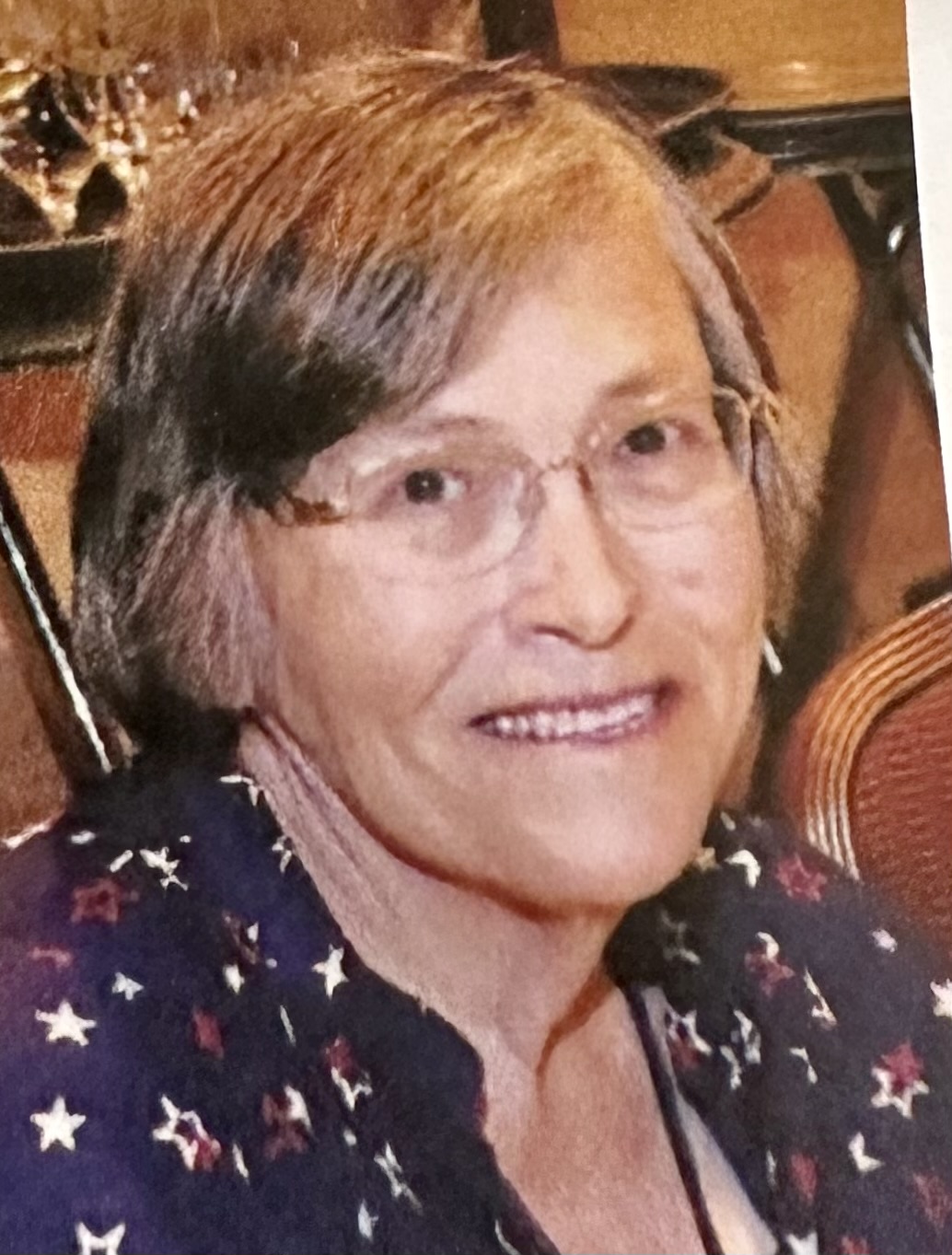
Sue Patterson died peacefully in her sleep on the
morning of May 5, 2023 after a brief illness. Sue was
born on July 28, 1947, in
Eureka. She was
predeceased by her parents, Harvie and Mae Patterson, her sister Ann Klint,
and her brother Cy Patterson. She is survived by five nephews and a niece: Mark
Krikava, Michael Patterson
(Chelsea), Dennis Krikava
(Janet), David Patterson
(Sydney), Matt Klint (Mary),
and Jennifer Klint & great-
niece Annie-Mae McCarty
(Charlie) and great-nephew
Patrick Patterson.
Sue attended high school in Watsonville and went on to graduate from the University of California Santa Cruz with a degree specializing in Spanish literature, during which time she spent a year studying in Spain.
After college Sue worked at Dominican Hospital in Santa Cruz and continued her education at CSU San Jose studying Library Science. Sue was a voracious reader and her home was always lined with bookshelves.
Sue moved back to Humboldt in the late 1980s and worked at Redwood Memorial Hospital in Fortuna and St. Joe’s Hospital in Eureka until retirement.
Sue was well-known as an animal lover. She spoiled her pets outrageously and was never without a cat or dog in her life.
Since moving to Fortuna Sue became an active part of the community and made many friends. In fact, she never met a person or an animal that didn’t fast become her friend. In addition to many social activities such as Bunco, book club, and daily visits to the dog park, Sue was an active member of the Daughters of the American Revolution and the Quilt Guild and sang in the choir at the Fortuna United Methodist Church.
Sue loved to cook and bake and enjoyed providing treats to her friends, family, and their dogs. She was famous for her Pecan Tassies, Snickerdoodles, & dog cookies.
Sue’s family would like to thank her many friends for their support and help in her final difficult years: Norma Allman, Deanne McCall, Toni Smith, neighbors Larry and Razia, and Max Schoenfeld to name a few.
We would also like to thank the Humboldt organizations that helped with Sue’s care: Redwood PACE, Agape, and Humboldt Hospice.
A celebration of Sue’s life is being planned and will be announced at a later date.
###
The obituary above was submitted on behalf of Sue Patterson’s loved ones. The Lost Coast Outpost runs obituaries of Humboldt County residents at no charge. See guidelines here. Email news@lostcoastoutpost.com.
(VIDEO) Coast Guard Flyboys and Flygirls Deploy Helichopper to Rescue People on Both the Lost Coast Trail and a Cruise Ship Monday
LoCO Staff / Wednesday, May 10, 2023 @ 6:24 p.m. / Emerald Triangle
Press release from the U.S. Coast Guard:
Coast Guard helicopter aircrews medically evacuated two people during two separate search and rescue cases off the Northern California coast on Monday.
U.S. Coast Guard Sector Humboldt Bay watchstanders received an agency assist request from CALFIRE to medically evacuate a female hiker suffering from symptoms of dehydration and sickness near Shipman Creek around 5 p.m.
Coast Guard Sector Humboldt Bay watchstanders then coordinated the launch of an MH-65 Dolphin helicopter aircrew around 5:40 p.m.
The aircrew arrived on-scene, hoisted the female hiker into the helicopter, and transferred her to emergency medical services at Shelter Cove around 6:30 p.m.
At approximately 7:30 p.m., Sector Humboldt Bay coordinated the launch of an MH-65 Dolphin helicopter aircrew to medically evacuate a passenger suffering from symptoms of a stroke aboard the Canadian cruise ship, Norwegian Sun, off the Northern coast of California.
Around 8 p.m., the aircrew arrived on-scene, hoisted the Canadian passenger from the Norwegian Sun, and began the transit to St. Joseph’s Hospital.
The aircrew arrived at St. Joseph’s Hospital around 8:40 p.m. and transferred the passenger to awaiting emergency medical services.
Both individuals are reported to be in a stable condition at this time.
HUMBOLDT TODAY with John Kennedy O’Connor | May 10, 2023 (San Marino Week, Day 2)
LoCO Staff / Wednesday, May 10, 2023 @ 5:34 p.m. / Humboldt Today
HUMBOLDT TODAY: A community garden in Arcata is again the victim of vandalism; a company set to develop offshore wind in our region makes a sizable financial commitment to a local nonprofit; plus, what does John think about Croatia’s Eurovision entry this year? Find out in tonight’s online newscast.
FURTHER READING:
- CONVERSATIONS: Civil Grand Jury Foreman John Heckel on the County’s Sorry State of Child Protective Services, Election Integrity, Becoming a Grand Juror and More
- RWE, the German Company Planning Offshore Wind Development Here, Announces $10K Annual Donation to Food for People
HUMBOLDT TODAY can be viewed on LoCO’s homepage each night starting at 6 p.m.
Want to LISTEN to HUMBOLDT TODAY? Subscribe to the podcast version here.
Former Deputy County Counsel Calls Out ‘Hazing’ Culture, ‘Boyz Club’ in Humboldt Department of Public Works, Seeks $1.4 Million in Damages
Isabella Vanderheiden / Wednesday, May 10, 2023 @ 3:11 p.m. / Local Government
After 11 months of allegedly being “hazed” by Public Works staff, former deputy county counsel Cathie Childs is preparing to sue the County of Humboldt and her former supervisors — County Counsel Scott Miles and Assistant County Counsel Natalie Duke — for wrongful termination. Childs is seeking $1.4 million in damages.
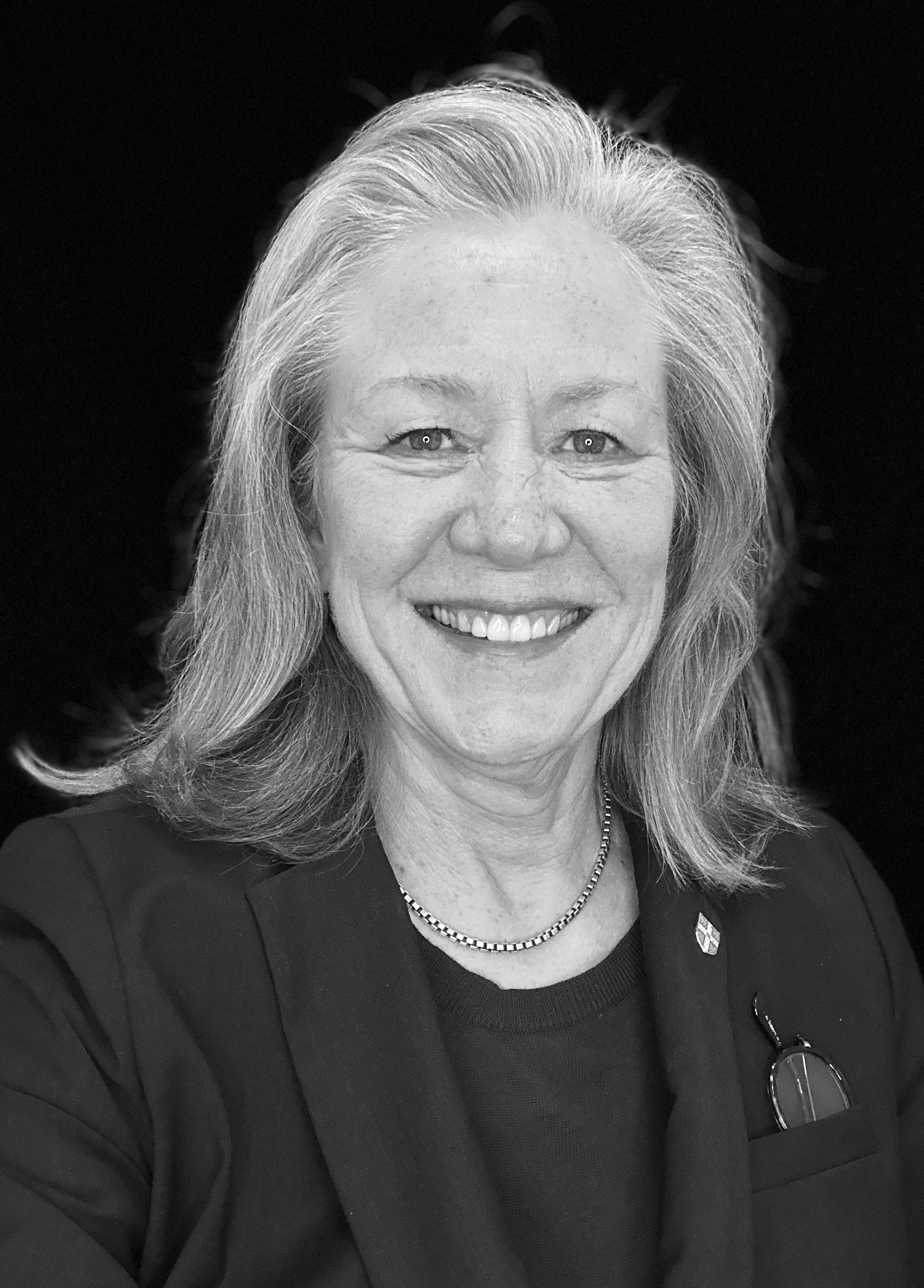
Cathie Childs
Childs, who is being represented by local attorney Cyndy Day-Wilson, claims her superiors and Public Works staff consistently undermined her legal authority and instructed her to go against her own legal judgment, putting the county at unnecessary risk. Childs pushed back against the county’s “continuing pattern of bad behavior” during her time as deputy county counsel but was ultimately fired for doing so, according to the Claim for Damages.
The County of Humboldt declined to comment on the allegations detailed in this story, citing pending litigation.
“This matter is important to the county; however, this is potentially a legal matter, and we want to preserve the integrity of that process,” county spokesperson Cati Gallardo wrote in an email to the Outpost. “As such, we will not be able to discuss this topic with the press further at this time.”
“Disrespectful and Inappropriate Criticisms”
After practicing law in Texas for the better part of 30 years, most recently representing local governments in the Austin area, Childs applied and interviewed for the deputy county counsel position with the County of Humboldt in September 2021.
In a Sept. 9 email to the County Administrative Office (CAO), then County Counsel Jefferson Billingsley said Childs would be “an excellent fit for [the] office,” noting her “extensive experience and history with government law,” and requested permission to offer her the job “as soon as possible,” according to the claim. Childs accepted the job offer shortly thereafter and stepped into the position at the beginning of October.
Once she was on the job, Childs was assigned to serve as the primary legal advisor to a number of county departments, including Economic Development, Elections and Public Works.
On her second day with the county, Childs was contacted by Tom DeAge, a Real Property Agent in Public Works, who introduced himself and asked her to review, approve and return a pre-drafted lease for a property by the end of the workday, according to the claim. She reviewed the lease and noted that “the County agreed to indemnify the Lessor in [the] lease when the County should not,” adding that the county “had not provided the required written notice to exercise the option term therein.”
“The last minute notice that a rush assignment was be [sic] sent to Ms. Childs – usually with just an hour or two notice – was normal operating procedure for Public Works,” the claim states. “When Ms. Childs asked Mr. Billingsley the following week if everything from Public Works was a rush, Mr. Billingsley replied, ‘It will if you let it be.’ Ms. Childs was given no direction on how to deal with the last-minute requests.”
This began a pattern of Public Works staff “undermining” Childs, the claim continues, by sending her pre-drafted legal documents written by “non-lawyers” with “incredibly short timelines” for review and approval.
“It became apparent to me that there was a certain way that county staff did things when it came to legal agreements and they were not things that I was accustomed to,” Childs told the Outpost during a recent interview.
Childs’ claim points to numerous situations in which DeAge “publicly dispargag[ed]” her legal opinion in front of non-attorney staff. She contacted DeAge directly and asked him to “clarify any questions or concerns he had about her work with her or her supervisors rather than on a multi-party Zoom conference.”
“I was openly criticized on Zoom calls and conferences by men in Public Works,” Childs said. “I requested of staff that if there were a disagreement with my legal conclusions, to come to me or my supervisor, rather than make it a non-lawyer group consensus. That did not go over well with staff. As a governmental attorney, I’m technically not staff’s attorney. I’m the county”s attorney. I’m supposed to protect the county.”
When his “disrespectful and inappropriate criticisms” continued, Childs contacted one of DeAge’s supervisors and asked if he “equally and publicly criticized men’s work,” adding that his behavior “needed to stop.”
Shortly thereafter, DeAge stopped contacting Childs directly and did not initiate communication with Childs during multi-member staff Zoom meetings, the claim states.
Ongoing Aviation Concerns
Childs was assigned to the Department of Aviation in January 2022 shortly after the Federal Aviation Administration (FAA) had agreed to dismiss its lawsuit against the county over past management practices of the county’s six-airport system. She was assigned to the department to investigate several action items outlined in the agreed upon stipulation issued by the court and to ensure the county’s compliance.
If you recall, that lawsuit originated from an anonymous whistleblower complaint, brought forth in 2018, that exposed a laundry list of regulatory compliance issues stemming from past management practices of the county’s six-airport system, which was previously under the purview of Public Works. These violations ranged from excessively cheap lease agreements with other county departments to the misuse and inappropriate diversion of airport revenue, among other issues.
“One of the things we had to consider moving forward were several action items that were identified by the court as needing the status on and how the County would comply in the future,” Childs told the Outpost. “Part of my job was assisting staff on informing the court about what those action items were and how the County would continue to address them in the future.”
Her chief concern was the county’s history of diverting airport revenue to Public Works. If the county slipped back into its old ways, the FAA could refile the lawsuit.
“After getting the County out of litigation with the FAA, I knew that documenting what was previously and could be perceived as continued noncompliance was not a good idea,” Childs said. “It doesn’t always have to be an intentional diversion of funds. Staff doesn’t necessarily have to intend or know they’re misusing airport revenue. There are very innocuous ways to misuse airport revenue.”
Childs and Billingsley worked closely with Aviation Director Cody Roggatz to address the concerns outlined in the court’s agreed upon stipulation. To address the misuse of airport revenue, the Aviation Department decided to “use its own contracts rather than submit its work requests to the Public Works,” which required a 15 percent commission fee for work performed by Public Works staff.
The claim also highlights the inappropriate use of specific documents, or templates, that are pre-approved by the Board of Supervisors and used by staff for various county transactions.
“Different transactions have different elements and require different documents,” Childs explained. “If you have template ABC but transaction XYZ, your templates will not address the legal issues that need to be addressed in the transaction. … I am used to lawyers determining what legal document is appropriate and drafting or tailoring that document to the facts.”
The problem is, when staff selects a template that does not cover the necessary legal issues, one of the county’s attorneys has to fix it. Not only is that an inefficient use of time, Childs said, but it can be difficult for staff who have become “emotionally invested in their work.”
“In one instance, a staff member e-mailed me a document that they had reported working on for over two months, refused my legal advice saying the CAO was waiting for it and that it needed to go on the board’s next agenda,” she said. “I advised this person that it wasn’t the appropriate document, [explained] why and then sent it through anyway after noting in the agenda system I had advised staff this was not the appropriate legal document. That seemed to make everyone happy.”
Childs went to her superiors and two department heads “to express her concerns about non-lawyers negotiating and drafting legal agreements for complex transactions,” but there’s no indication in the claim that any action was taken.
During her time working with the Aviation Department, Childs inevitably crossed paths with Public Works staff on various projects and the “hazing” continued.
“Beware Public Works”
In March 2022, Billingsley called a meeting to announce his resignation, effective April 15. Two days before his departure, Billingsley gave Childs her six-month performance review, “which was largely positive,” consisting of primarily fours and fives on a scale of one to five, with five being the highest.
“One of the lower ratings was for ‘client relations,’” according to the claim. “When [Childs] inquired about the low score, [Billingsley] advised [her] as he was leaving her office [to] ‘Beware Public Works.’”
On April 18, a few days after Scott Miles had stepped into the role of interim county counsel, Childs went to his office to express her concerns over the continued inappropriate use of airport revenue. She also asked Miles how she should address ongoing issues with Public Works staff.
“After a few discussions regarding the problems with Public Works department did not appear to be getting through to [Miles], [Childs] asked [him] for permission to speak plainly,” the claim states. “[Miles] said she could and [Childs] responded, ‘Scott, if I had a penis, I would not be treated this way,’ and [he] responded, ‘You’re right, you are being hazed.’ Stunned at [his] admission of inappropriate conduct and no offer to remedy it, [she] replied, ‘Hazing is not okay.’”
Miles advised Childs to file a claim against Public Works through the county’s Human Resources Department, but she felt such an approach “would not build good working relations,” according to the claim. Childs asked if she should undergo additional training to build a “shared understanding” of her role as deputy county counsel. Miles suggested he and Childs meet with the Human Resources attorney Anne Nguyen to discuss the next steps “so everyone could understand their various roles in the approval process and ‘stay in their own lanes.’”
The meeting didn’t amount to much. Nguyen, like Miles, advised Childs to file a claim against Public Works. The possibility of additional training never came up.
In a follow-up email, Nguyen acknowledged the difficult situation and was sympathetic to Childs’ strained relationship with Public Works staff. “I’m really sorry that you had to experience that,” Nguyen wrote. “I completely understand your desire to just move forward, but I would really appreciate the opportunity – whenever you are ready – to talk in more detail about what has occurred to date so that a thorough and complete assessment can be made of any possible violations of … county policy.”
Childs argued that bringing forth a claim would be pointless. She maintained that the root of the issue was “the county’s ‘Boyz club’ [and] ‘hazing’ culture,” according to the claim.
The behavior persisted. About three months later in July 2022, after someone from the CAO’s office had misconstrued her legal advice regarding an agreement between Aviation and Public Works, Childs contacted Miles asking for guidance.
“The reassignment of the Public Works assignment was in response to your concerns and to protect you from potential issues that you raised,” Miles wrote in an emailed response to Childs, as stated in the claim. “Aviation and Public Works do frequently work closely and this will likely not be the last time that you would have to work on an item that spans between Aviation and Public Works. With that in mind, how would you feel about swapping the Aviation assignment to another attorney in this office?”
Miles added that his offer was an attempt “to be as supportive as I can to you and your success here at the County.”
Childs felt the action was a punishment.
“I thought it was punitive action for my continuing to challenge the hazing I was receiving from Public Works,” Childs told the Outpost. “Neither Aviation nor I had requested a reassignment and as far as I knew, the Director of Aviation and I were in agreement on legal issues. … Ultimately, rather than address improper conduct my supervisor had called ‘hazing,’ the answer from my supervisors was to remove work and entire departments from my caseload which I felt was punitive.”
At this point, Miles had acknowledged that their relationship was “strained” and set up a second meeting with Human Resources Director Zach O’Hanen. During that meeting, Miles allegedly called Childs “disrespectful and unprofessional” for continuing to challenge the hazing incidents. O’Hanen allegedly told Childs that she “did not understand government employment.”
“They acknowledged my concern but it became clear to me that they had no intention of changing the way that things had historically been done by Public Works,” Childs said. “I felt I was approaching a crossroads where I had to make a choice between my job and my license. So, I went outside the chain of command and that’s what got me fired.”
Around the end of September, Childs requested a meeting with Miles and the CAO to address the ongoing “issue of the unauthorized practice of law by non-lawyer County staff.”
“At 5:00 p.m. on Thursday, [Sept. 22], despite repeated requests by [Childs] for an answer, [Miles] did not answer whether he would set up such a meeting,” the claim states. “[She] informed [Miles] that his lack of a response left her no choice but to file an ethics complaint against he and Duke with the California Bar for allowing non-lawyer County staff to practice law while [she] was not permitted to do so.”
Just before noon the following day, Childs was fired via email for “alleged repeated instances of disrespect to her supervisor.”
Childs Prepares to Sue the County
Childs received a Notice to Cease and Desist one week after she was fired from outside counsel representing the county. The notice ordered her to stop “disclosing confidential and/or attorney-client privileged information” as well as complaints, “whether they be criminal, administrative or disciplinary.”
Because Childs had not requested anything in return regarding her complaint with the California Bar, there was no violation, according to Day-Wilson. In addition, Day-Wilson argued that the county has “misapplied the definition” of attorney-client privilege.
“Attorney-client privilege protects only confidential communications made by a client seeking legal advice from their legal adviser,” the claim states. “County staff are NOT [Childs’] clients. The Board of Supervisors is the client.”
When asked if anything came of the ethics violation she filed with the California Bar, Childs said she had gone through with filing the complaint but months later in December it was closed. “I told [the Bar] that this was a culture in the county and the answer I eventually received was that it was closed due to a lack of specificity,” she said.
Childs filed the Claim for Damages against the county at the beginning of this year. The county responded with a Notice of Rejected Claim on Mar. 6, opening the six-month window for Childs to move forward with legal action.
Childs claims she has “suffered damages in excess of $25,000,” as well as loss of reputation, humiliation and an impaired ability to seek employment in her field. “Given the facts, her inability to obtain employment, and the County’s continuing pattern of bad behavior in the County Counsel’s office … she is demanding the sum of $1.4 million to fully resolve this matter,” the claim states.
“This has affected me personally,” Childs told the Outpost. “I moved here for this job [and] tried to do my job, but the only advice I got from my supervisors was to file a formal complaint. When I informed them I was filing a complaint, I was fired. … This whole situation just makes me feel sad. I had hoped this would be my last big move, that this would be the place I would spend the rest of my career and retirement. That”s not how it worked out.”
Childs plans to sue the county for wrongful termination. Day-Wilson added that they would also allege the violation of Childs’ federal civil rights and free speech.
“The lawsuit will be filed in federal court shortly,” Day-Wilson said.
###
Documents:
(UPDATE: FOUND) Sheriff’s Office Seeks Public’s Help in Locating Woman Who Went Missing This Morning, and is Possibly At Risk
LoCO Staff / Wednesday, May 10, 2023 @ 1:14 p.m. / Crime
UPDATE, THURSDAY MORNING:
The Sheriff’s Office says Ms. Robinson has been found, and is fine.
###
Press release from the Humboldt County Sheriff’s Office:
The Humboldt County Sheriff’s Office needs the public’s help to locate missing person Marian Sunshine Robinson, age 23, of Loleta. Robinson is believed to be missing under unknown circumstances and may be experiencing a mental health crisis.
Robinson was last seen leaving a residence on Bowie Road in Loleta at approximately 1:30 a.m. on May 10, 2023 and was reported missing by a family member at 2:11 a.m. after she failed to check into a hotel room in Loleta.
Robinson is described as a Native American adult female, 5 feet tall, 85 pounds, with brown hair down to her ribs, brown eyes, and a tattoo of a machine gun on her left arm. Robinson was last seen wearing a grey hooded sweatshirt with white stripes on the elbows, black leggings, and black slide shoes.
Anyone with information for the Sheriff’s Office regarding Robinson’s possible whereabouts should call the Humboldt County Sheriff’s Office at (707) 445-7251.


Robinson.
CONVERSATIONS: Civil Grand Jury Foreman John Heckel on the County’s Sorry State of Child Protective Services, Election Integrity, Becoming a Grand Juror and More
LoCO Staff / Wednesday, May 10, 2023 @ 10:50 a.m. / Local Government
Last week, the Humboldt County Civil Grand Jury released a second report from its work during the 2022-2023 year. In its first report, the jury found the county’s elections integrity to be sound. The second report was not so glowing.
In the latest HUMBOLDT CONVERSATIONS, grand jury foreperson John Heckel speaks with the Outpost’s John Kennedy O’Connor about the state of child welfare services locally — a system much-scrutinized for its perceived dysfunction in recent years.
Tune in above and/or peruse the transcript below.
O’CONNOR:
Well, welcome to another Humboldt Conversation. I’m really pleased to say today we’re joined by John Heckel, who is the jury foreperson for the 2022-2023 Humboldt County Civil Grand Jury. John, thank you for joining us for a Humboldt Conversation. It’s very nice to meet you.
Now, you just issued actually two reports for this particular season. The first one was not particularly contentious. It was about voter fraud, or potential voter fraud. And basically the jury’s decision was that we should have a vote on the election.
HECKEL:
Well, not exactly voter fraud. What we did was we took the temperature of the national climate and the national climate stories kept popping up about election difficulties, illegal elections, all of that stuff. So we decided what we wanted to do was take a look at Humboldt County’s elections and we were pretty sure that the volunteers that came from the community and served us did a great job. We investigated, we watched the whole process and then we issued a report in an attempt to assure the voters of Humboldt County that they can trust their local elections regardless of what it says on a national level.
O’CONNOR:
But the second report was much more contentious.
HECKEL:
Contentious is an interesting way of saying it.
O’CONNOR:
Well, it was regarding a complaint that actually you received about the child welfare services and how I think the word we used was dysfunctional and how their dysfunctionality was creating problems for child care services in the court system particularly. So what are the conclusions?
HECKEL:
Part of the complaint was also about the allegation that there was a toxic environment in child welfare services and then the complaint was specific about a number of issues within the department. So the grand jury which is charged by the penal code to look at all complaints that come in. Citizens of Humboldt County can send a fill out a complaint form and file the complaint with the grand jury and then we take all of those complaints seriously and we look at what’s what’s happening.
And we began that investigation and then discovered that in fact child welfare services within the county is dysfunctional, is running at maybe 50 to 60 percent filled position. There are a number of positions that are vacant that have been allocated. The sums for the positions have been allocated. So you’ve got literally let’s say you’ve got five people trying to do the work of ten people right. So the allocations for the majority of those other five people that are not filled, the sums of money has been allocated. So what happens is those five people are asked to work overtime. They create an incredibly difficult situation, stress, burnout and then what happens is those people quit.
So if you started with the five and you create that kind of toxic environment in child welfare services then you got more people that resign and so there’s a cycle that’s currently going on in relationship to that. And then the other thing we’ve discovered is that that also causes a problem in terms of any child that is in the system or any number of different reports that the social workers have to file in relationship to that child for the court system. And we found there’s a humongous delay in filing of those reports. And we discovered that there is statistical evidence that the longer a child is in the system the more traumatic it is for the child. And the sooner that we can make a decision regarding a child, whether to take that child put her in permanent foster care or return it to the home, the better for the child.
And Humboldt County Child Welfare Services is not doing a very good job in all of those regards.
O’CONNOR:
You’re obviously charged with looking into this and reporting findings, but are you also charged with coming up with the help?
HECKEL:
Yes, the penal code is really interesting about this in terms of the civil grand jury system in California. We can’t just criticize, we can’t just find failings within county government or city government or special districts or whatever. We have to come up with recommendations on how to solve the problem. So in this particular report, and I encourage people to read the whole report, then people can read what the Board of Supervisors are reading. Hopefully at this minute they’re taking a look at the report, looking at the recommendations. There’s some very specific recommendations in relationship to hiring practices, what the county can do to hire and to attract more social workers within the system. There are specific recommendations of what it can do in the training of those social workers that come in and how to create an environment so that the social workers that do come in and work within the system work within a more productive and enjoyable environment.
O’CONNOR:
To the board of supervisors to implement that, or do you have your budget to put on in terms of time constraints that this has to happen?
HECKEL:
Yes, the recommendations, typically, civil grand juries make recommendations addressed to specific people, in this case, Board of Supervisors, what they want the Board of Supervisors to do and by when they want the Board of Supervisors to do it. So this report starts a dialogue. The whole idea is that the civil grand jury starts a dialogue, and it starts a dialogue between the civil grand jury, what they discovered, the press, you, you get engaged in the dialogue, and the Board of Supervisors are required by the penal code to respond to all the findings and recommendations.
And because the Board of Supervisors is a board, and so their responses are put on the agenda and the public has a chance to comment on their responses, they have 90 days to respond. So the clock started ticking last week when that report came out or at the beginning of this week, so by 90 days from whenever the date of the release of the report is, Board of Supervisors has to respond. And they have to agree or disagree, and if they disagree with a recommendation or a finding, they have to state why. So now you have a dialogue, and the goal is to make that dialogue public so that people know about that dialogue and they can get engaged with that process.
O’CONNOR:
We, the Outpost, did actually publish your report on our website, so you can go look there. It did actually already spark a very healthy…
HECKEL:
I’ve read that. I’ve read the debate. I’ve read the debate.
O’CONNOR:
I know you can’t tell us exactly what you’re working but there are more reports coming in this season.
HECKEL:
Well, I can’t even tell you that because if I were to tell you that, that would be a violation of confidentiality. And if you if you if you read what’s going on nationally, the issue of confidentiality and grand juries is a constant topic for the press. And if we violated confidentiality, people wouldn’t talk to us. That makes sense, right? The only way that people talk to us is they know that we will never reveal who we talk to, what they said, all of that stuff. And all the members of the grand jury are sworn to confidentiality for life. It’s not even a matter of like our term is over in a month and a half from now. And even for the rest of our lives, we can’t talk about what went on in that room.
O’CONNOR:
That’s actually very, very reassuring and very good to know. But you are actually of course looking for jurors.
HECKEL:
Next year, right. Right now, there are applications for next year’s grand jury available on the county website and also at the grand jury office in the courthouse. They can drop by, physically take one from the door, fill it out, or they can go to the county website. And we’re really, really, as someone who’s lived in Humboldt County for almost 50 years, I’m really grateful to the other 19 grand jury people who have volunteered and who have served this whole year. And hopefully we can find another group to take over and do next year. Absolutely, it’s very, very important.
O’CONNOR:
John, thank you so much indeed for joining us today for a Humboldt Conversation.
PREVIOUSLY:
- ‘IT’S OK TO VOTE’: Grand Jury Issues Its First Report of This Cycle, Focused on Humboldt County Election Integrity
- In its Second Report of the Year, the Humboldt County Civil Grand Jury Tackles the ‘Dysfunctional’ State of Child Welfare Services in the County and the ‘Toxic’ Work Atmosphere Within the Department


