
HUMBOLDT TODAY with John Kennedy O’Connor | Feb. 15, 2023
LoCO Staff / Wednesday, Feb. 15, 2023 @ 4:44 p.m. / Humboldt Today
HUMBOLDT TODAY: What was the drug most seized by local law enforcement last year? The Humboldt Drug Task Force tells us with the release of its 2022 statistics. Plus, the City of Arcata moves to help keep renters safe. Those stories and more in today’s newscast with John Kennedy O’Connor.
FURTHER READING:
- TONIGHT in ARCATA CITY COUNCIL: City Will Introduce a Residential Rental Inspection Program to Ensure that Landlords are Keeping their Units Clean and Safe
- Humboldt County Drug Task Force Annual Report: Fentanyl and Meth Were the Most-Seized Substances Last Year
HUMBOLDT TODAY can be viewed on LoCO’s homepage each night starting at 6 p.m. Want to LISTEN to HUMBOLDT TODAY? Subscribe to the podcast version here.
BOOKED
Yesterday: 8 felonies, 13 misdemeanors, 0 infractions
JUDGED
Humboldt County Superior Court Calendar: Yesterday
CHP REPORTS
Salmon River Rd / Sr96 (YK office): Car Fire
ELSEWHERE
RHBB: Day Five on the Eel River: Sheriff Calls Recovery a ‘Little Win’ in a ‘Terrible Situation’
Times-Standard : Few large-animal vets juggle after-hours emergency care
Times-Standard : Civic calendar | Blue Lake to discuss water, sewer rate increases
RHBB: Juan Heredia Assists in Ongoing Eel River Search for Missing Covelo Woman
‘Cal Poly Homeless’: Does Northern California’s First Polytechnic University Have the Infrastructure to Support Its Growth?
Oden Taylor / Wednesday, Feb. 15, 2023 @ 7 a.m. / Sacramento
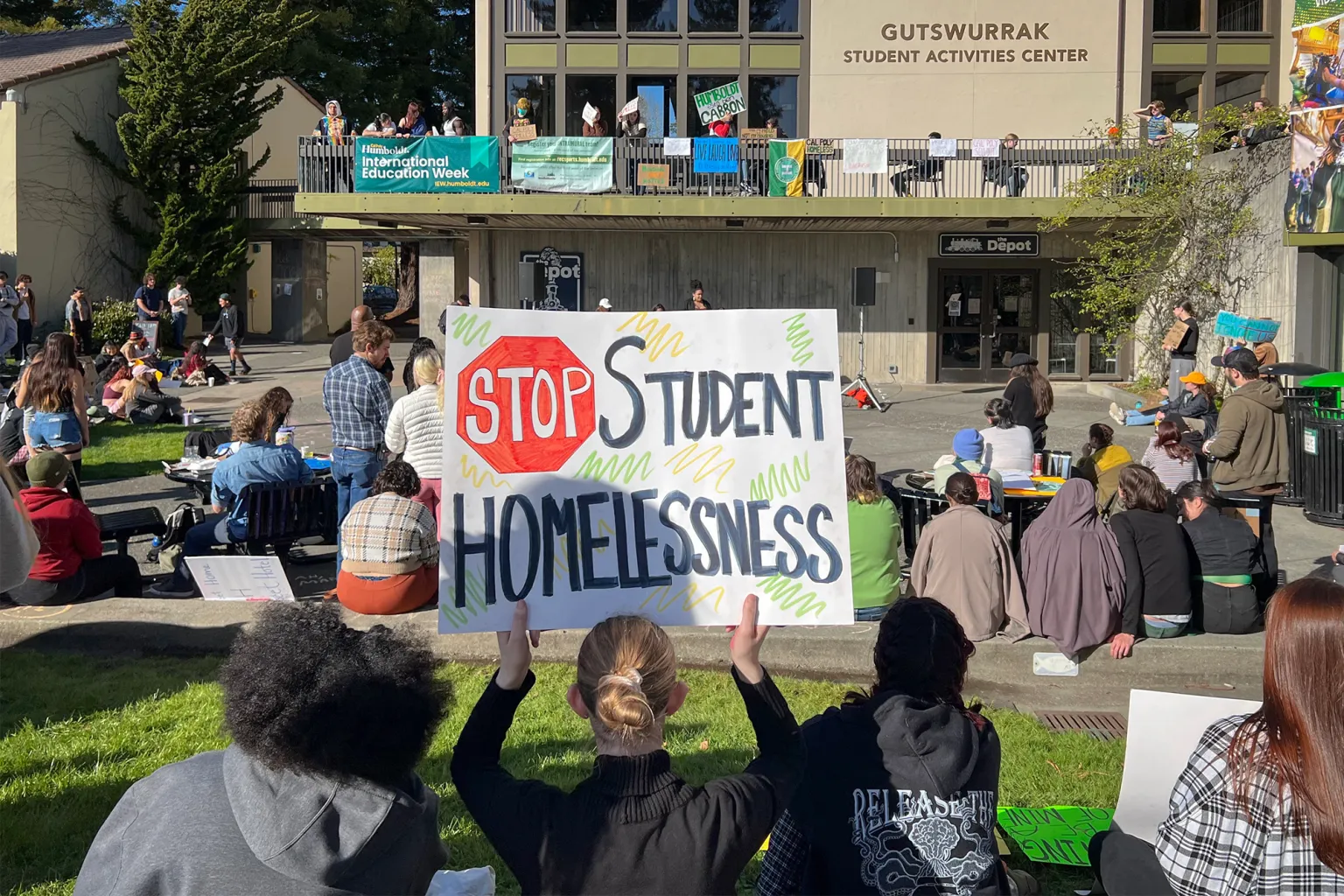
Hundreds of Cal Poly Humboldt students and campus community members protest against a housing policy change that left continuing students unsure where they would live next semester, at the campus quad on Feb. 8, 2023. Photo by Oden Taylor for CalMatters.
When students decide to attend Cal Poly Humboldt, they likely see themselves living in the forest among the state’s largest redwood trees, high enough on a hill that they can see Humboldt Bay and the ocean in the distance. They probably don’t picture studying from a motel or a floating barge.
But that could be the reality for hundreds of returning students next academic year as the university prepares for an influx of enrollees drawn by its recent transformation from Humboldt State to Northern California’s first polytechnic university. When the university revealed Feb. 4 that incoming first-years would have priority for all on-campus housing – likely locking out returning students – the move sparked protests, a petition, and the founding of a new organization, Cal Poly Homeless, to fight the change.
In response to the backlash, Cal Poly Humboldt partially walked back its plans, saying it will now find on-campus beds for about half of the estimated 1,000 returning students who were set to be displaced from the 5,700-student campus. But the uproar illustrates how central student housing has become to just about any major higher education initiative in California, where skyrocketing housing prices have students living in cars and state lawmakers have set aside more than $2 billion over the next few years to build new dorms and on-campus apartments.
The university became a polytechnic campus last year, receiving more than $450 million in state funds to add new STEM courses with a focus on environmental sustainability and to build the infrastructure to support them. Enrollment is expected to grow by 50% in the next three years and double by 2029. Already, the university has received more than 19,000 applications for fall 2023, nearly twice as many as for fall 2022.
The state funds will help pay for the new off-campus Craftsman Mall housing complex, projected to open to about 1,000 residents in fall 2025. New on-campus housing, along with a parking structure, will house another 600 to 700 students – but that won’t open until summer 2027, the university says.
“I think our transition has been really fast, and we’re starting to see the effects of not planning properly for the influx of additional interest,” said Juan Giovanni Guerrero, the president of the university’s student government.
Cal Poly Humboldt currently has enough on-campus housing for a little more than one-third of its students – more than some campuses in the Cal State system, where many students commute. A 2018 study found nearly one in five of the university’s students had experienced homelessness, twice the Cal State system average.
Housing students on a barge
The university says it has been “looking into many creative solutions” to bridge the gap until new housing is built, and has signed contracts with three local hotels – the Comfort Inn, Motel 6 and Super 8 – about three miles from campus to provide a total of 350 beds. Administrators also said they are considering housing students in “floating apartments or studios.”
Eureka City Manager Miles Slattery confirmed that the city has been discussing logistics for parking a barge in Humboldt Bay, and identified it as the Bibby Renaissance, which can house as many as 650 guests and crew members. The “floating hotel” is often used to shelter workers in remote locations. An online virtual tour shows spartan bedrooms, a gym and a roof terrace.
During the COVID-19 pandemic, housing students in hotels became a temporary solution to overcrowding and housing insecurity, including at a number of University of California campuses. Cal Poly Humboldt has housed more than 100 upperclassmen at the Comfort Inn since 2022.
But Cal Poly Humboldt students have said the hotel plan compromises their safety because it puts them in close contact with homeless people in the local community who may be mentally ill, doesn’t guarantee access for disabled students and places students of color and LGBTQ students in areas where they’re likely to experience bigotry.
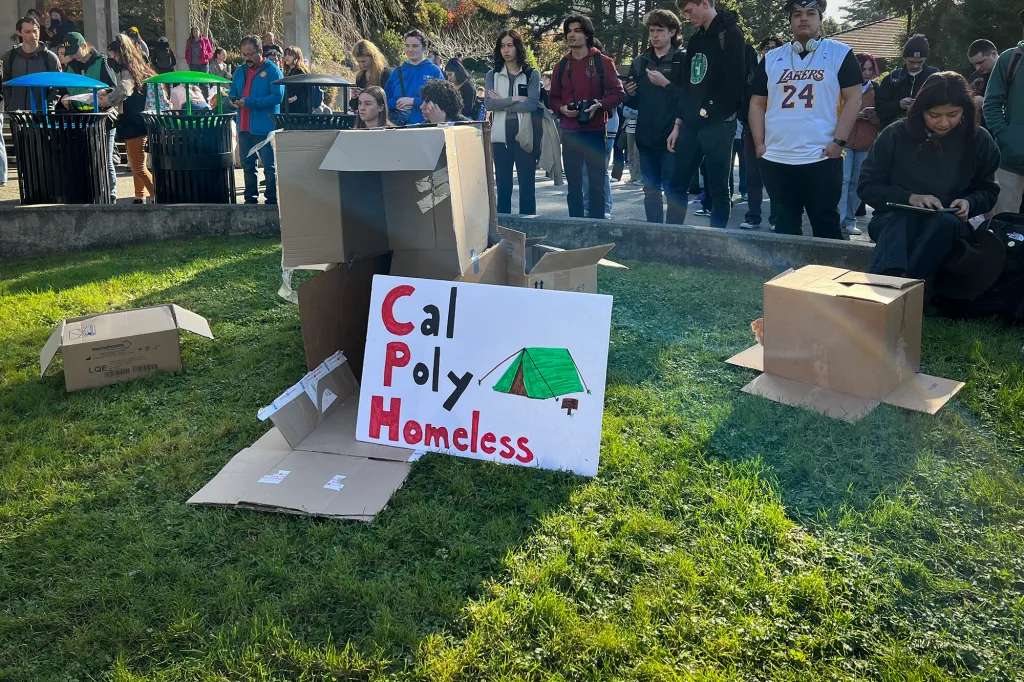
Cal Poly Homeless, a student-run organization that formed in response to recent housing policy changes at Cal Poly Humboldt, displays cardboard boxes on the campus quad as a representation of student homelessness, on Feb. 8, 2023. Photo by Oden Taylor for Calmatters.
Last week, hundreds of Cal Poly Humboldt students and community members gathered in the campus quad to hear hours of testimony from students affected by the change. Students set up tents and cardboard boxes to symbolize the housing options they are facing.
“The school made this decision without talking to any students. They just decided, ‘Hey, we’re gonna send all of the students to motels,’ and so we want to make sure that we are the ones involved in this decision,” said Annabel Crescibene, a sophomore involved with Cal Poly Homeless. The new organization has set up an Instagram account and plans to create a podcast for students to share their housing woes.
Many of the speakers at the protest talked about fleeing abusive homes and experiencing homelessness and housing instability for most of their lives. The campus has provided them with a safe haven, they said – but that’s not the case for the surrounding community.
Sydnie Berglund, a sophomore at Cal Poly Humboldt, works as a front desk agent at the Hampton Inn, which is next to the Motel 6 that will be used to house students this fall. She said that she always feels unsafe outside of the hotel because of the large number of homeless people who live there and throughout the small town of Arcata. Once when getting off work late at night, she said, she witnessed a woman being assaulted by a man with a sword near the hotel parking lot.
“This is not an adequate place to house students ever, unless they are going to address the homelessness issue,” said Berglund. “Not that they as people are the problem, but how they don’t have resources and what they have to resort to to survive, that is the problem.”
Environmental concerns and opposition from neighbors have slowed the development of affordable housing in surrounding Humboldt County, housing advocates say. Students also sometimes report being discriminated against when they try to find housing off-campus, said Chant’e Catt, the university’s off-campus housing coordinator.
“NIMBY-ism is huge — not in my backyard — and there is a lot of fear of taking the rural city and overexposing it to the metropolitan,” Catt said.
Concerns about racism
While Cal Poly Humboldt’s student body is only 45% white, the surrounding town of Arcata is 69% white. In 2018, after Black Humboldt State student David Josiah Lawson was killed at an off-campus party in a case that is still unsolved, the Eureka NAACP called on the university to stop recruiting students of color until conditions were met to ensure their inclusion and safety.
Some students of color and LGBTQ+ students at last week’s protest recounted facing racism and homophobia while off-campus.
Senior Daniel Garcia said he tries to avoid going off campus due to the racism he faces in the community. When his mother visits him and they spend time in the town of Arcata, he said, they often experience staring and hostility, and overhear people using discriminatory language.
At a pizza restaurant one night, he overheard several men saying racial slurs, he said.
“They were drunk, and I called them out in a way subtly, and the energy was really hostile,” Garcia said. He later heard that another student had been beaten up after asking a group of men to stop saying the N-word, and wondered if it was the same group.
Students involved in Cal Poly Homeless are demanding that all housing both on and off campus be safe and accessible – including resolving mold problems that some students have reported in the dorms – that transportation be provided, and that the university increase amenities in off-campus housing and lower the cost.
Some students and parents are also calling for a cap on admissions until the infrastructure is built to support a larger campus population. A Change.org petition started by Cal Poly Humboldt parents urging the university to accommodate returning students on campus has gathered more than 4,000 signatures.
“If Cal Poly Humboldt does not have the facilities to properly house their student body, they should not increase enrollment and should work with the CSU to address this crisis properly,” the petition reads.
In response, the university said Friday that returning students can apply for on-campus housing – though only 600 beds will be reserved for them – and that officials are looking into how they could provide students living in hotels with access to kitchens and study spaces.
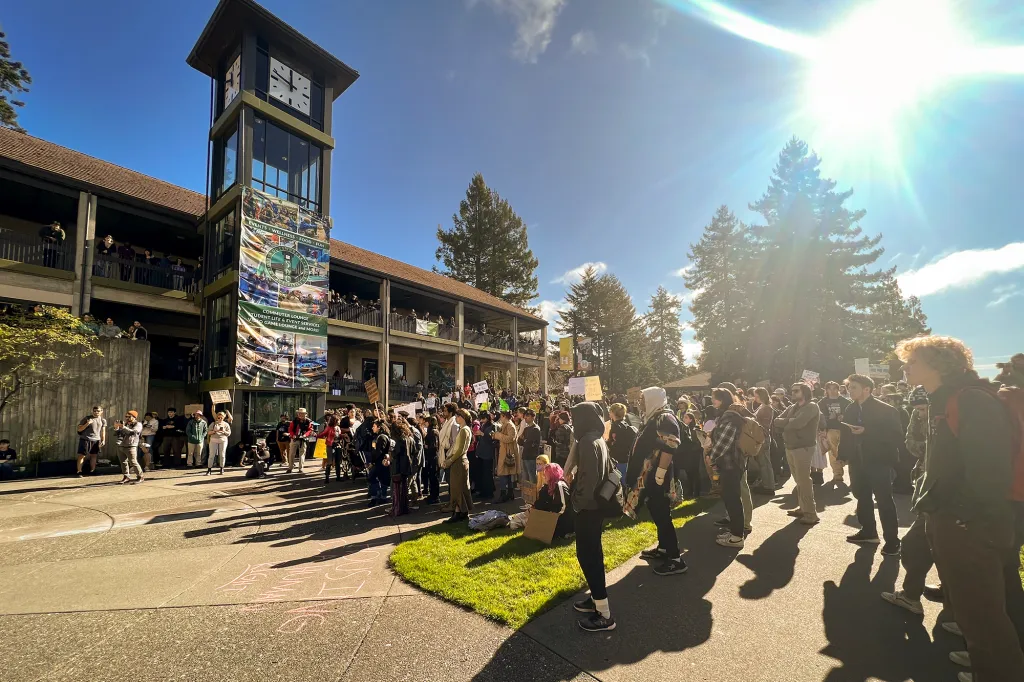
Cal Poly Humboldt students protest against university housing policy changes that did not guarantee returning students on-campus housing, in front of the Guttswurrak Student Activities Center, on Feb. 8, 2023. Photo by Oden Taylor for CalMatters
Some returning students with disabilities are entitled to single-room accommodation, which could affect the number of beds available.
Hotels used for housing students will have fenced-in perimeters with key cards required to access the buildings, the university said in an online FAQ, and only students and university staff will be staying there. The university also promised to provide shuttle transportation to campus with extended hours.
The promise of a Cal Poly
The conversion of Humboldt State to Cal Poly Humboldt is meant to help Cal State meet student demand for STEM careers. The campus is adding new programs in software engineering, marine biology, applied fire science and management, and cannabis studies, among others.
“Cal Poly Humboldt will be a polytechnic for the 21st century, preparing students to address the urgent issues our society faces,” Cal Poly Humboldt president Tom Jackson said after Cal State trustees approved the name change last year.
University leaders also hoped to reverse a trend of declining enrollment at the campus; the number of incoming undergraduates fell by nearly 40% between 2017 and 2022. Cal State has said it plans to withhold some state funding beginning in 2024 for campuses that fall 10% below their enrollment targets.
As enrollment declined at Humboldt, on-campus housing development also stagnated. Now the campus is playing catch-up.
“Essentially, with polytech designation came funding for new housing, but that housing takes time to build,” said Cal Poly Humboldt spokesperson Grant Scott-Goforth.
Studies have shown that students who live on campus are more likely to continue their education from one year to the next, said Hans Johnson, a senior fellow at the Public Policy Institute of California who focuses on higher education. “Living on campus gives students that sense of belonging and being part of the university,” he said.
It’s common for universities to guarantee on-campus housing for first-years but not for returning students, he said – but that strategy breaks down when there isn’t enough local housing.
“Ideally if you’re going to increase the size of the university you would build housing and have the housing ready to go on day one when you have a larger population,” he said. “But all these things are moving targets — you don’t know exactly how many students you’re going to get, and how many are going to want to move out of the dorms and how many are going to want to stay in. You have these periods where you have to scramble to find out what you’re going to do.”
Rick Toledo, a transfer student who started at Cal Poly Humboldt this semester, said he believes that in general, the Cal Poly change was a good idea for the university. But he worries about the impact of the housing crunch on students with disabilities, like himself – and on the new students who will arrive next year.
“They’re gonna bring in new freshmen who have no idea what’s going on,” he said. “They’re going to give them the good life on campus and then kick them into a motel the next semester.”
###
Taylor is a fellow with the CalMatters College Journalism Network, a collaboration between CalMatters and student journalists from across California. Former fellow Hannah Getahun and network editor Felicia Mello contributed reporting.
CalMatters.org is a nonprofit, nonpartisan media venture explaining California policies and politics.
OBITUARY: Jennifer Ballew, 1972-2023
LoCO Staff / Wednesday, Feb. 15, 2023 @ 6:56 a.m. / Obits

Jennifer Ballew left this world February 4, 2023. Jen was such a special person, having spent her whole life with disabilities. She was born on Cinco de Mayo — May 5, 1972 — to Carl and Wanda Ballew. She grew up in Eureka and attended Freshwater School, Sunset School-Arcata, Zane Jr High and Eureka High in Special Ed. Jen was found to have serious medical issues when she was 1 ½ years old and throughout her whole life was involved in the medical community as a patient. When Jen was first diagnosed with her condition as a baby, the doctors had no expectation for her to live past 7 or 8 years of age. Medical equipment was evolving and improving; and the doctors had no idea of Jen’s stubbornness. She got about 43 bonus years.
Jennifer was passionate about her friends and always wanted to help or protect anyone who was teased, bothered or had a problem. Many of her friends called her with whatever their problem might be and she would do everything in her power to help them. She would often commit to help them with problems she was not capable of solving, but she would call and find someone to take care of it. Jen “never met a stranger.” At appointments or anywhere in public she would start a conversation with anyone sitting nearby. She would say she liked something such as their hair or a purse or shirt and then ask their name and carry on the conversation from there. She had many friends.
She was artistic and involved in various art programs sponsored by the Northcoast Regional Center, creating sculptures, paintings and other crafts. She also loved latch hook and needle work.
Jen was preceded in death by her beloved grandparents, Joe and Audry Ballew of Eureka, Grama Red-Jean Mills of Blue Lake, her father Carl Ballew and her uncle Clint Hunter, who she loved very much. She is survived by her partner in life for over 30 years, Kevin Birindelli and his mother Gina, mother Wanda Wahlund, step dad Gary Wahlund, stepmother Merrilee Ballew, brother Jason Ballew, aunt Susan Hunter (who was always so kind and supportive to Jen) and many, many cousins. Jennifer will be missed much by all.
A celebration of Jen’s life will be held at Freshwater Grange on February 25 at 1 p.m.
###
The obituary above was submitted on behalf of Jen Ballew’s loved ones. The Lost Coast Outpost runs obituaries of Humboldt County residents at no charge. See guidelines here. Email news@lostcoastoutpost.com.
OBITUARY: David Paul Shewmaker, 1945-2023
LoCO Staff / Wednesday, Feb. 15, 2023 @ 6:56 a.m. / Obits
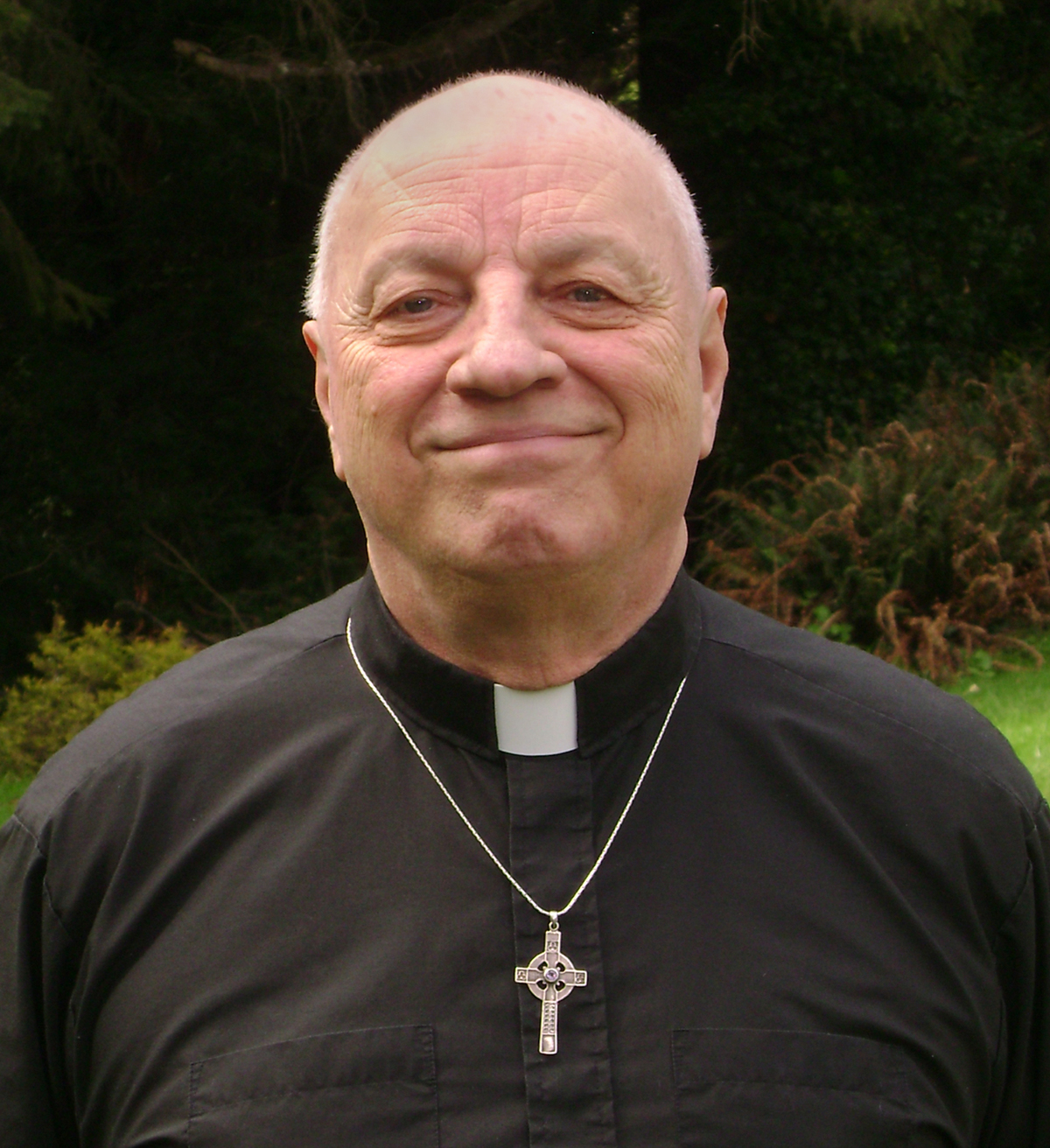
Father David Paul Shewmaker left this world on February 9, 2023 at
the age of 78 after battling congestive heart failure for two years.
He was in his home surrounded by the redwood forest and practicing
centering prayer when he passed. A memorial service will be held at
Christ Episcopal Church in Eureka on Saturday, February 25, 2023 at 11
a.m. All are welcome.
David was born to Marion and Carolyn Shewmaker (Sigrist) on January 18, 1945 in St. Joseph, Missouri. David was the youngest of three children. He grew up on a horse ranch in Missouri with his sister, Joyce, and his brother, Nelson. David and his dad broke wild horses to sell and David also worked at his father’s plumbing business. When he was a teenager he rode bulls in local rodeos until he injured his leg and had to spend a summer in bed. Some of his favorite memories were riding bareback across the fields of Missouri and camping under the stars.
He graduated from the University of Missouri in 1969 with a Bachelor’s of Art in English and a Masters of Arts in Education in 1971. David taught special education after graduating with his master’s degree. He later moved to California where he began his work in healthcare. David was a respiratory therapist for 35 years serving many people on the North Coast. Many of those years were spent at North Coast Home Care Specialties where he and his business partners provided home medical equipment and care to the Humboldt and Del Norte communities. In 1986 the business was purchased by, what is known today as Apria Healthcare, and David remained the manager until he retired in 2005.
David became an active member of St. Francis Episcopal Church in Fortuna in 1994 and started participating as a lay preacher. He then decided to attend seminary. David received a Certificate of Anglican Studies from The Church Divinity School of the Pacific in 2007 and became the priest in charge of St. Paul’s Episcopal Church in Crescent City in 2008. David and his family would travel from Eureka to Crescent City every weekend to join in worship with the congregation. While serving as the priest in charge of St. Paul’s David also worked as Chaplain for Hospice of Humboldt for 6 years. David retired again in 2018, and began serving as an associate priest for Christ Episcopal Church in Eureka.
David was involved in the community and participated as a Boy Scout leader for his son’s scout troop, was on the board of trustees for the Episcopal Diocese of Northern Californian, the board of directors of the American Cancer Society, and participated in the forming of True North Organizing network.
David was a loving husband and father. He fathered two children, James Shewmaker in 1976 and Megan Wurtz (Shewmaker) in 1988. He met his wife, Alicia Shewmaker (Cox) in 1984 and they married two years later. They recently celebrated their 36th anniversary by traveling to Gold Beach, Oregon.
David was preceded in life by Carolyn Shewmaker (mother), Marion Shewmaker (father), and Nelson Shewmaker (brother). David is survived by Alicia Shewmaker (wife), Joyce Shewmaker (beloved sister), James Shewmaker (son), Megan Wurtz (daughter), and Josh Wurtz (son in law) as well as his church family, many extended family, and long-time friends.
David was a spiritual man that touched many people’s lives and he will be missed immensely. Preaching, teaching others about the power of Centering Prayer, and serving the people, church, and God was his true passion.
Rainbows Never End: For I should like to be a rainbow when my days on earth are done I’d return a million times to show you that I’m fine. The darkness when it covers and all seems lost and bleak I’ll reach down from heaven and show my finest peak. That looks to be a teardrop that’s hanging off your cheek, but when you see that rainbow you know our hearts will meet. What beauty lies above us of this we’ll surely speak I’ll be with you in spirit in that rainbow’s brilliant streak. So long as there are rainbows you and I will never part. We’ll always be together forever in our hearts. But don’t expect a rainbow to be in every place. Somedays I will surprise you and bring a smile upon your face. — Kathy Mucha
A memorial service will be held at Christ Episcopal Church in Eureka on February 25, 2023 at 11 a.m. All are welcome. Any donations in memory of Father David can be made to Camp Living Waters…. c/o Saint Alban’s Episcopal Church, 1675 Chester Ave., Arcata CA 95521 or by donating online at http://camplivingwatershumboldt.org/
###
The obituary above was submitted on behalf of David Shewmaker’s loved ones. The Lost Coast Outpost runs obituaries of Humboldt County residents at no charge. See guidelines here. Email news@lostcoastoutpost.com.
OBITUARY: Glen Roberts, 1935-2023
LoCO Staff / Wednesday, Feb. 15, 2023 @ 6:56 a.m. / Obits
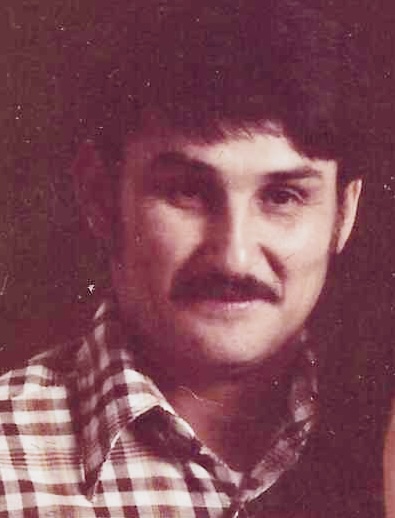
Glen
Roberts
May
7, 1935 – February 9, 2023
Glen Roberts passed away peacefully on February 9, 2023 with his loving wife Bonny Roberts by his side. Glen was born on May 7, 1935 in Hoopa to Sherman and Marie Roberts. He was a proud member of the Yurok Tribe with ancestral ties to the Village of Wasek. In his first years, he received loving care from his Grandparents Wasek Bob and Maggie. His grandfather was Headman of the Wasek Village. Glen’s father, Bob Roberts graduated from Haskell Indian College. He then moved to Tulsa, OK. where he met his wife, Marie Brannon. Marie came to speak the Yurok language fluently and was a hard worker who farmed, canned, and was a great cook. Together Sherman and Marie moved to Martins Ferry and had six children: Kenneth, Ruth Evelyn, Helen, Glen, Wilma and Wesley.
Glen is survived by his loving wife Bonny Marshall Roberts. They were married for 67 adventurous and loving years. They were best friends and barely spent time apart from one another. He will forever be cherished and remembered by his children; son Bob Roberts and wife Becky Roberts, grandchildren Byron Roberts and Derek Roberts, daughter Robin Roberts and granddaughter Linnea Jackson, and his son Russ Roberts. He is survived by his loving sister Wilma Roberts, sister in-law Linda Roberts and God-granddaughter LeMonie Hutt. He also leaves a special friend of note Grumpy Fountain.
Glen attended a one room schoolhouse in Martins Ferry (near Wasek Village). He kept busy with fishing, hunting, hiking and doing chores in his middle school years. He actively participated in high school sports and graduated from Hoopa High School in 1953. He developed a life-long passion for competitive sports.
After graduating from Hoopa High School, he married the love of his life Bonny Marshall Roberts. Together they lived in Martins Ferry while Glen worked construction and timber jobs. One day, a government agent from the Bureau of Indian Affairs arrived at their door to recruit Glen into the Indian Relocation Program. Glen and Bonny and their children moved to Chicago, IL. Glen attended Greer Technical School where he received accreditation as an auto mechanic and a body and fender mechanic.
They moved back to the West Coast and settled in Redding. In 1962, Glen found a new career specializing in tile setting. As a perfectionist with an eye for design, he soon became a master craftsman in his profession. These were exciting times, with projects ranging from beautiful high-end homes to commercial projects, including hospitals, schools and offices. His expertise took him and his crew across America completing over 20 Holiday Inn projects that entailed marble entries, pillars and pools. Traveling across the country, Glen made sure that his family and employees saw the sites, local monuments and tasted the local cuisines. Granddaughter Linnea, travelled every summer with her Nana and Papa seeing every amusement park, zoo and museum which greatly enriched her life.
In 1989, Glen opened his own business, Pacific Coast Ceramic Tile and Floor Covering in Crescent City. With the partnership of his wife Bonny and son Russ, the business was a great success, completing hundreds of residential and commercial works throughout Northern California and Southern Oregon, including Pelican Bay Prison. After working for decades of non-stop jobs, Glen’s health began to deteriorate, and it was time to retire.
Throughout Glen’s career, there were countless nephew, nieces, extended family and friends that Glen taught the value of hard work. Many were trained by Glen and took up the trade.
If you know Glen, then you know how much he loved sports. He was an avid fan of the San Francisco 49ers, San Francisco Giants and the Golden State Warriors. He often went to professional games with his family. He supported his son Bob Roberts and nephew Lyle Marshall as wrestlers throughout their high school career. He hit softballs to his daughter Robin every night which taught her the art of precision and hard work. Both Linnea and Robin played on Alaska State Championship softball teams. His number one sport was basketball. In the early years of Indian Basketball, Glen was the Manager and Coach of the North State Hawks. The Hawks travelled throughout Indian Country playing the tournaments. Glen coached his son Russ’s basketball team that competed in the Word of Life Tournaments that climbed the brackets to New York City. He also coached the Hoopa High JV Girls team. Another success stories was coaching and promoting his nephew Joseph Hutt all the way to the pro leagues.
Glen traveled throughout his life visiting his children all across the country. Glen and Bonny visited their son Bob in Oregon, Washington, Montana, Colorado, Idaho. He also visited his daughter and granddaughter in Alaska many times to enjoy hockey and the Great Alaska Shootout. They took many trips to the Bay Area to visit their son Russ and attend their favorite sporting events.
Glen was a voracious reader. Utilizing his artistic eye and tile carving skills, he enjoyed making native jewelry, abalone inlayed pipes, abalone salmon carvings and regalia.
Glen was known as a disciplined and fierce worker with a strong work ethic who believed in doing things right. Glen enjoyed hunting, especially with his son Bob in Idaho and the Risling and Fountain Families throughout his life. He loved boating and spent many years on the lakes.
After retirement, he fished the Klamath River, providing gourmet salmon, smoked and canned for his family. Many of those years, he was joined by nephew Sport Surber Jr. sharing his vast knowledge of the Klamath River, traditional fishing culture and history. Glen taught many of his family members and friends how to fish, fillet and smoke salmon.
Glen was a real uncle, he provided training, employment, help, coaching and life-skills. He offered good advice, wisdom and history. He was generous and shared many adventures, which included sporting events, dinners out, travel, water skiing, fishing and hunting. He included his nieces and nephews, too numerous to name, throughout his life.
Glen served on the Yurok Indian Housing Board for ten years, bringing with him a determination to be viewed ethically by the eyes of the public, as well as a constant reminder to follow Yurok policy. He was very proud of the time dedicated to this endeavor.
Glen Roberts had an unforgettable personality. He was quick witted, stern, well read and knowledgeable on any subject. He was a generous man to his entire family. His legacy will carry on forever reminding us to take responsibility, finish the job and do it well.
Glen was preceded in death by his great grandmother Mollie Kimeche, grandfather Wasek Bob Kimeche Roberts, grandmother Maggie Preston Roberts, Father Sherman Roberts, Mother Marie Brannon Roberts, Brother Kenneth Roberts and his wife Betty Faye Roberts, Sister Ruth Evelynn Roberts, Brother Harold Wesley Roberts and Sister Helen Roberts Pole.
His memory lives on with his entire family, numerous nieces and nephews, great nieces and nephews and many dear friends.
Pallbearers:
Clifford Marshall, Buck McCovey, Adam Allen, Jordan Hailey, Justin Hutt, Roman Hutt, Sport Surber Jr., Lawrence Tracy, and Douglas Risling
Honorary Pallbearers:
Lyle McKinnon, Robert Kinney, David Gensaw, Carlton Pole, Jeff Pole, Cynde Buford, Korie Bartnik, Carol Rutledge, Weldon Hailey, Mark Hailey, Wesley Hutt, Joseph Hutt, Baron Risling, Dale Risling, Gary Risling, Leslie Risling Jr., Mike Nipar, Lyle Marshall, Steve Baldy, Jack Jackson, Ed Moore, Gregory Moon, Neil Moon and Joe Davis
Service Announcement:
The service will be held at the Neighborhood Facilities (NF) on Friday, February 17, 2023 at 11 a.m. Interment will be held at the Wasek Village Cemetery. Directly followed by a reception at Yurok Community Center in Weitchpec.
###
The obituary above was submitted on behalf of Glen Roberts’ loved ones. The Lost Coast Outpost runs obituaries of Humboldt County residents at no charge. See guidelines here. Email news@lostcoastoutpost.com.
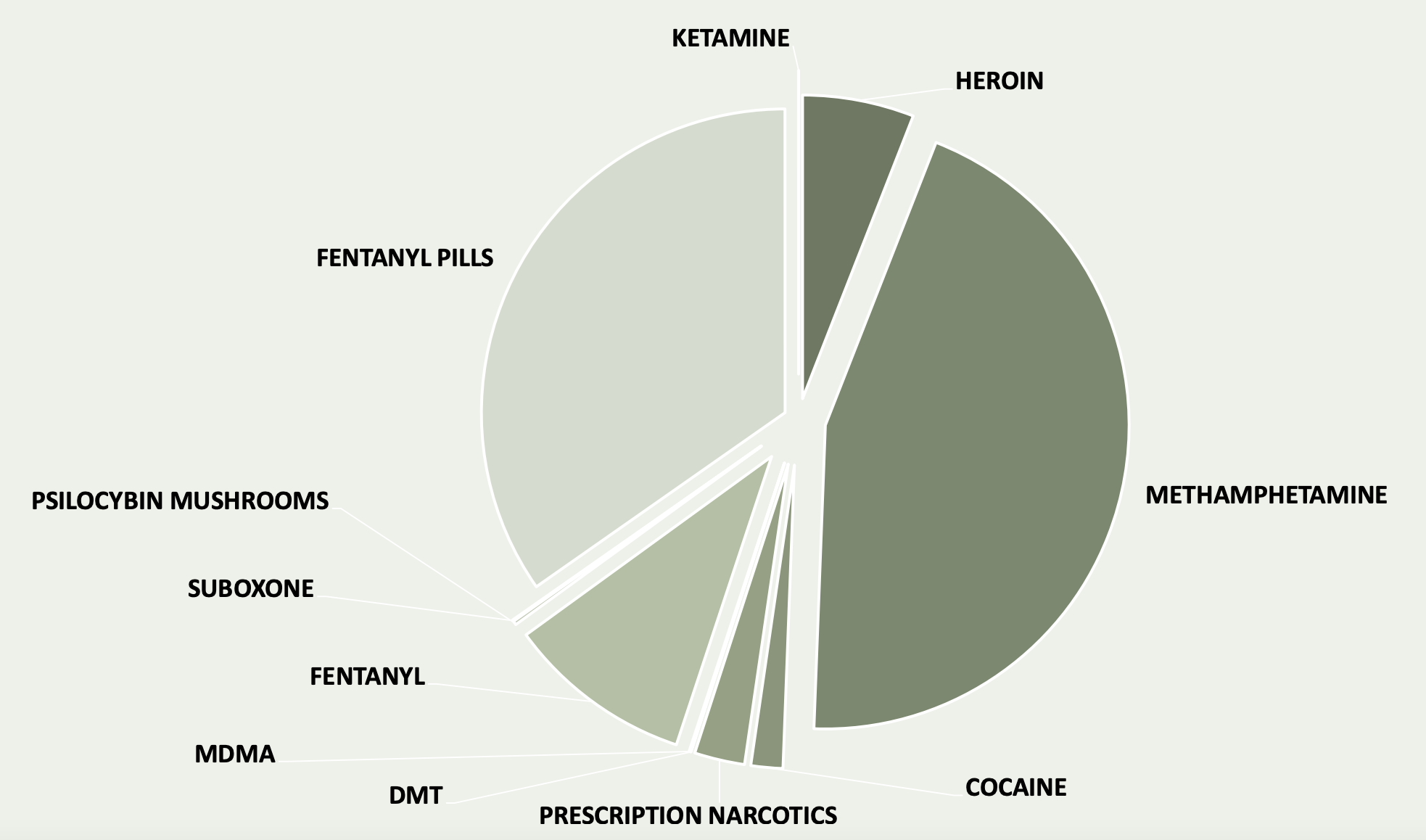
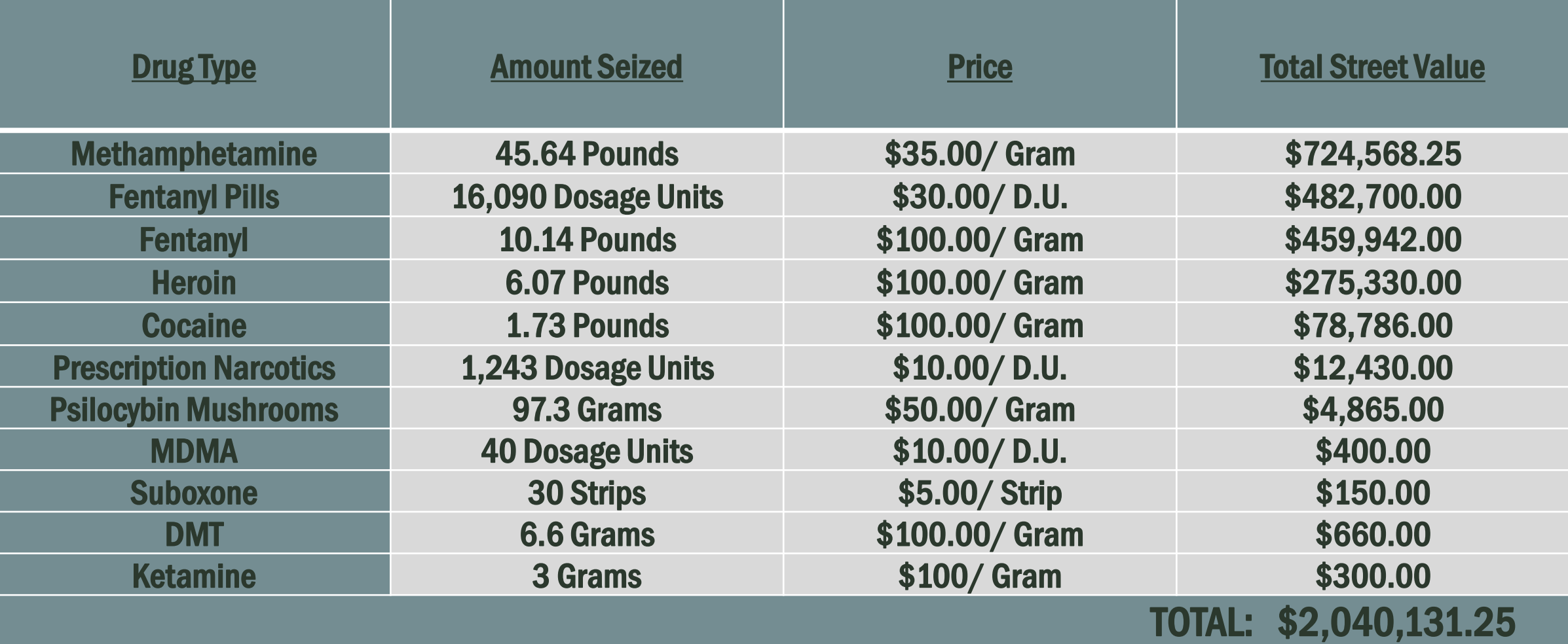
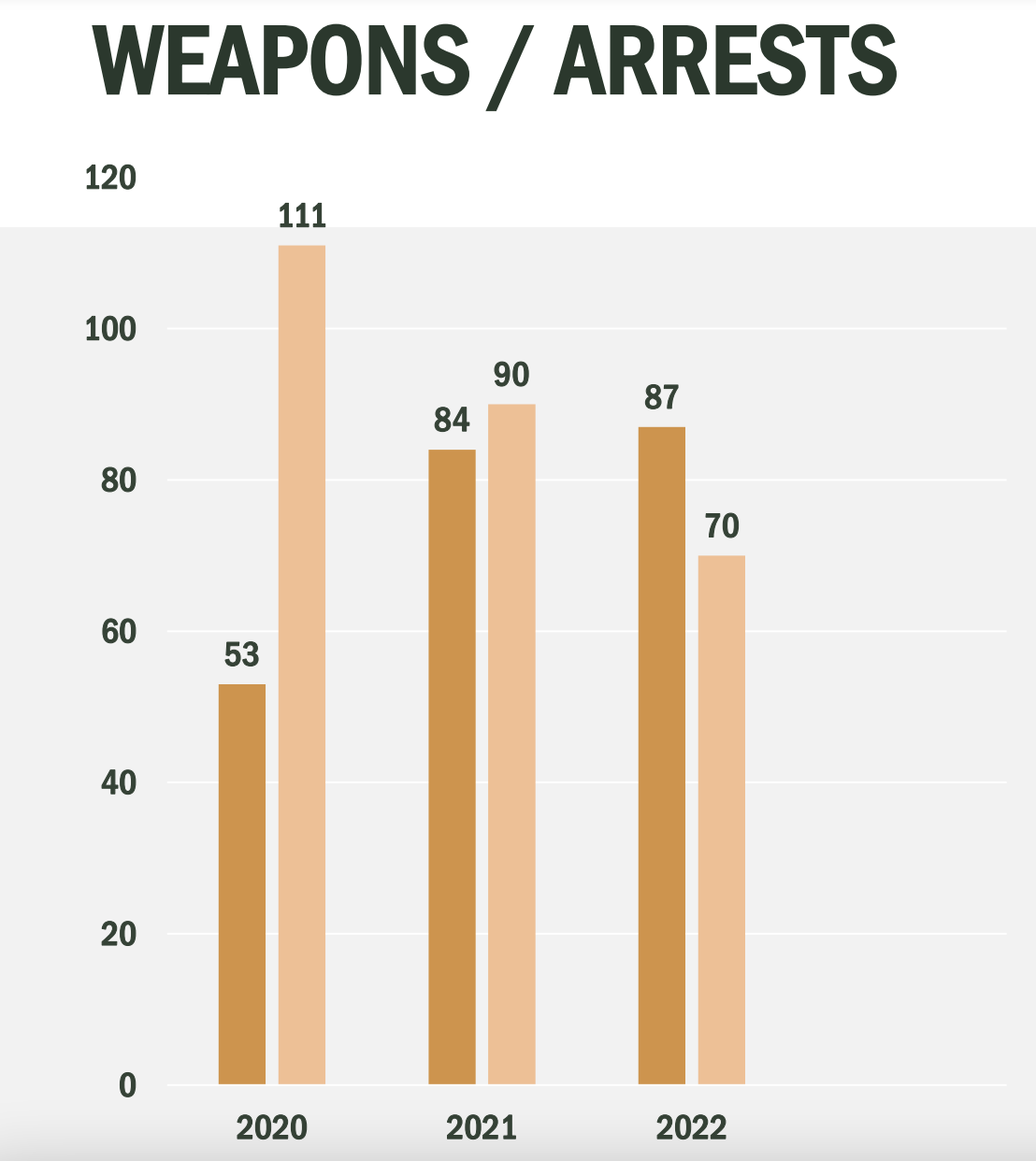
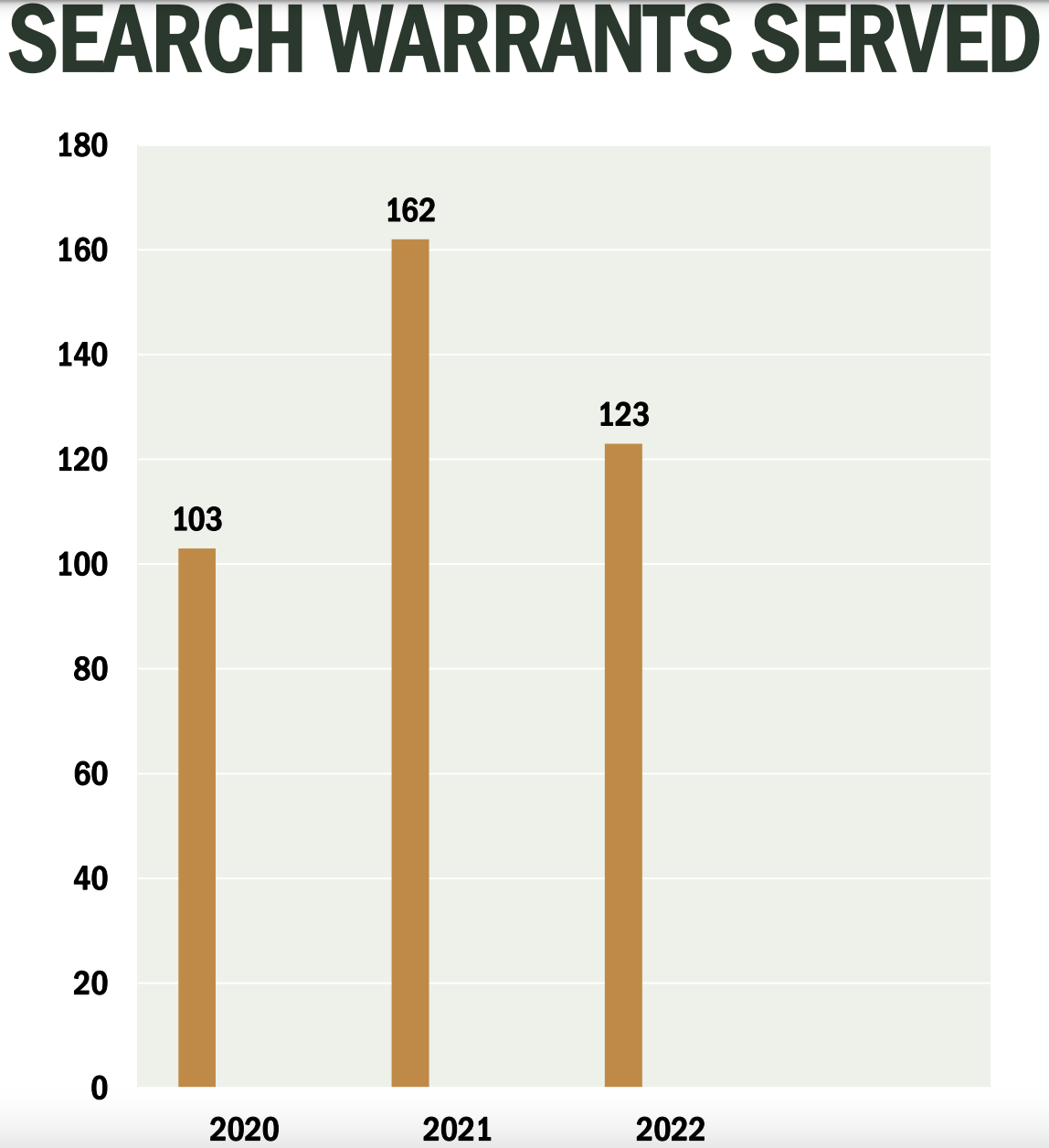
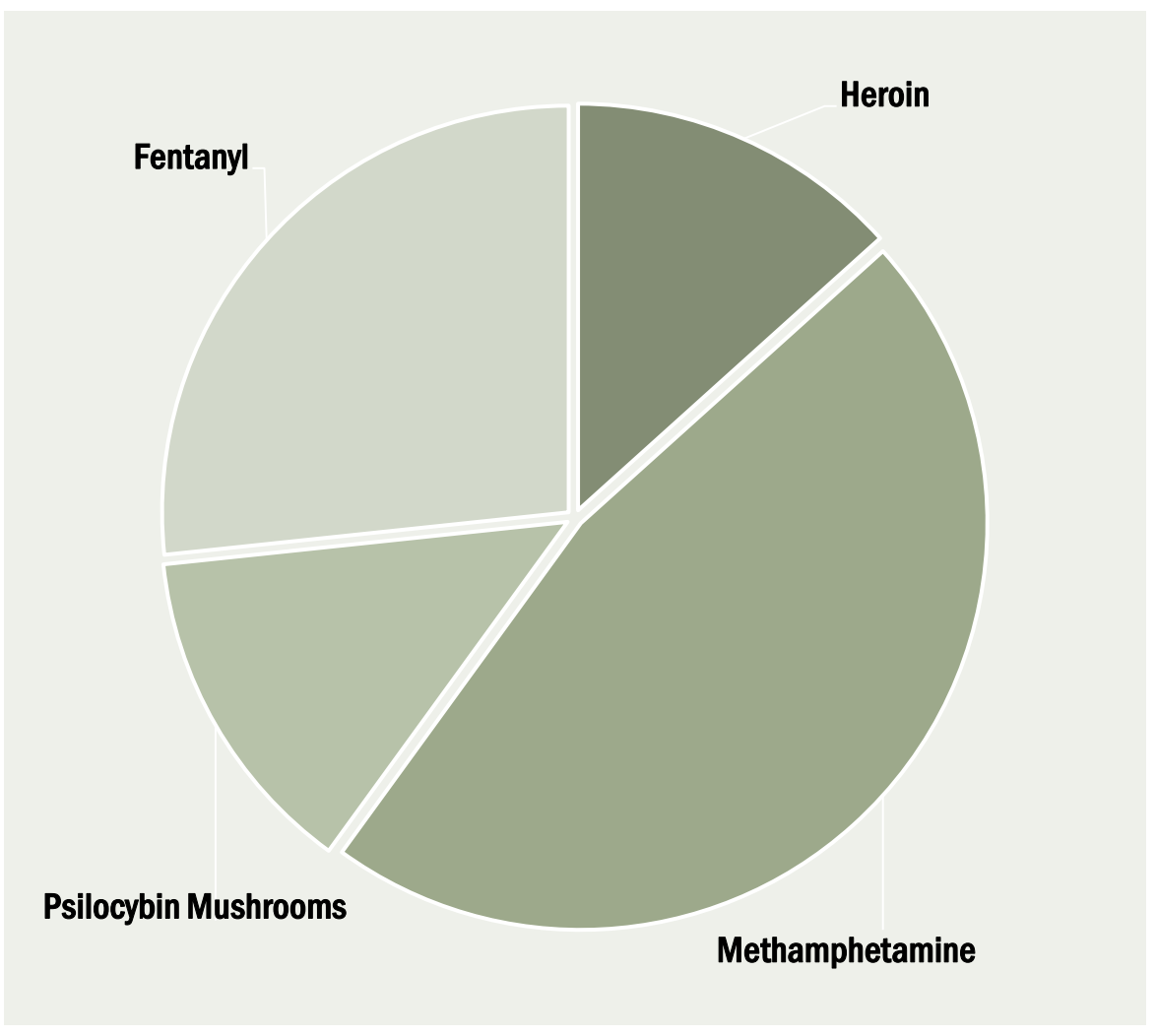
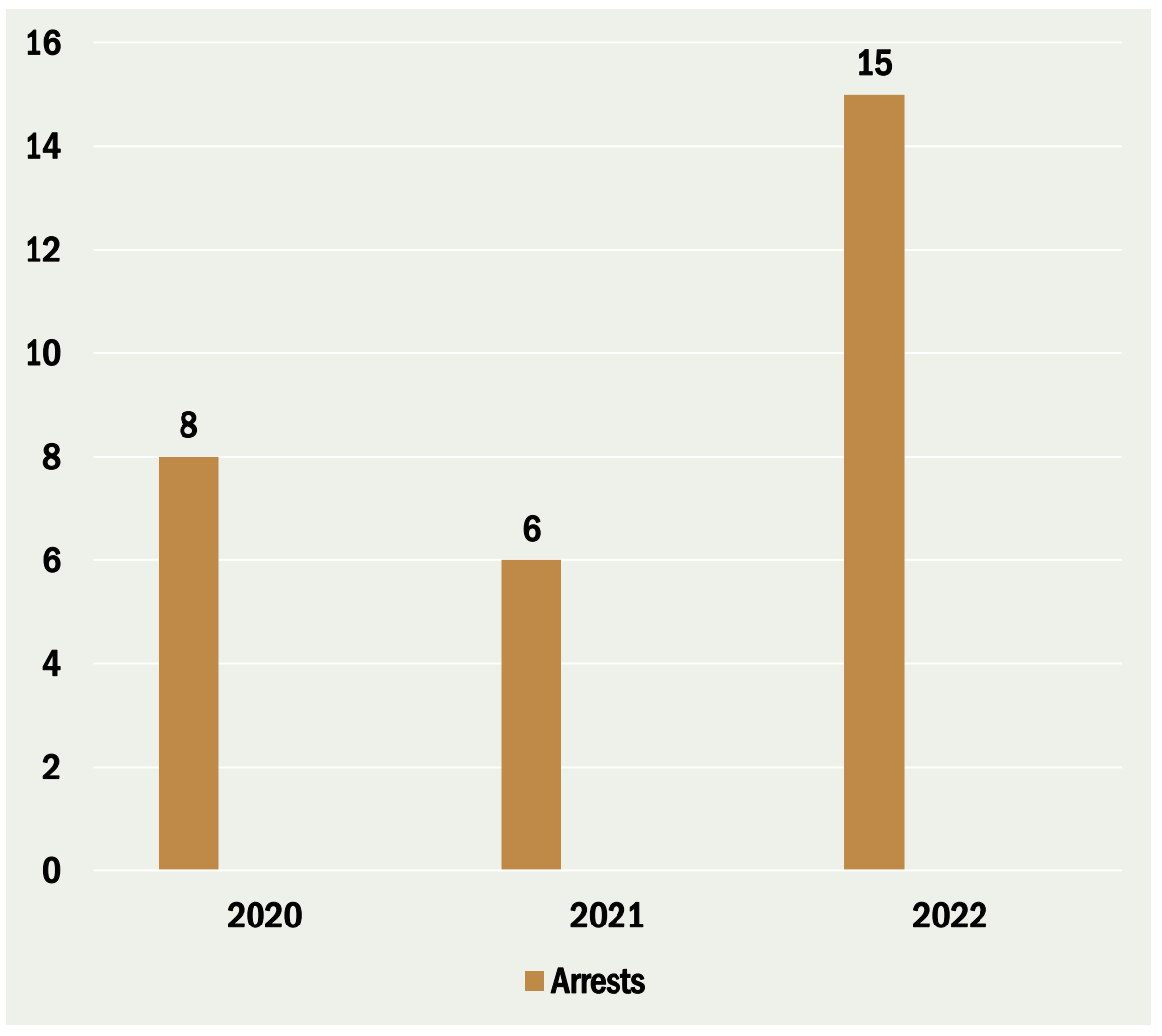
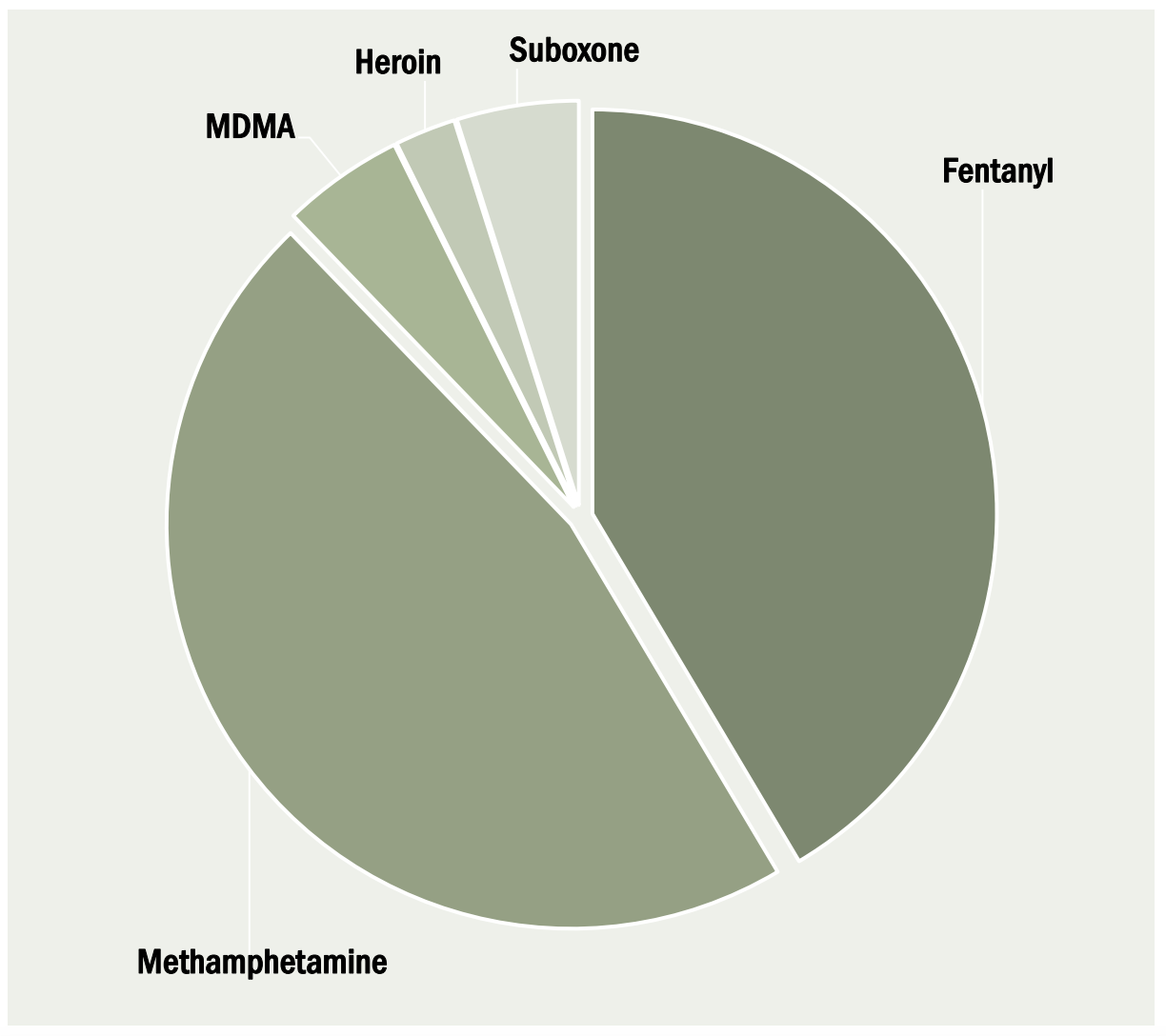
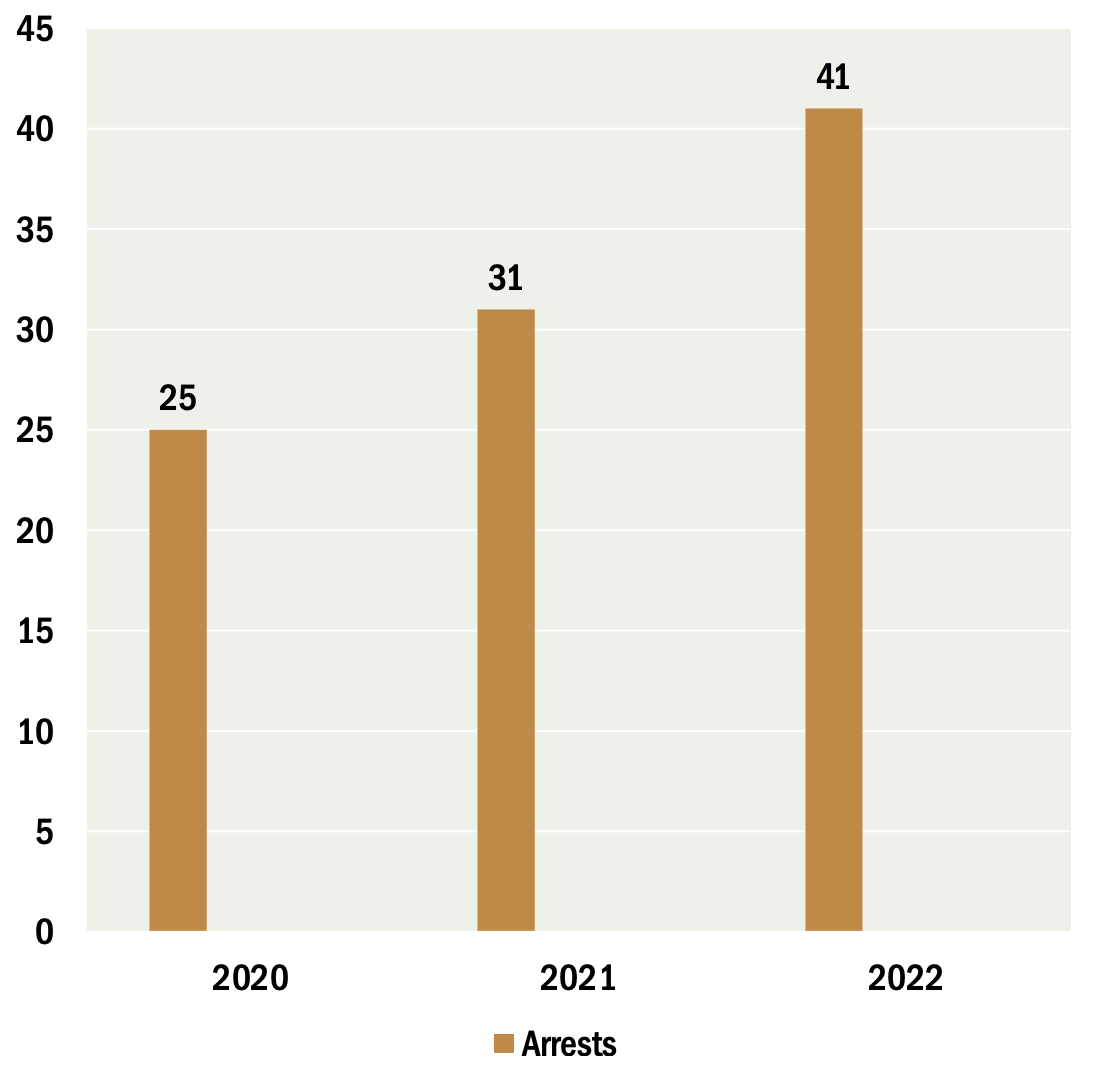
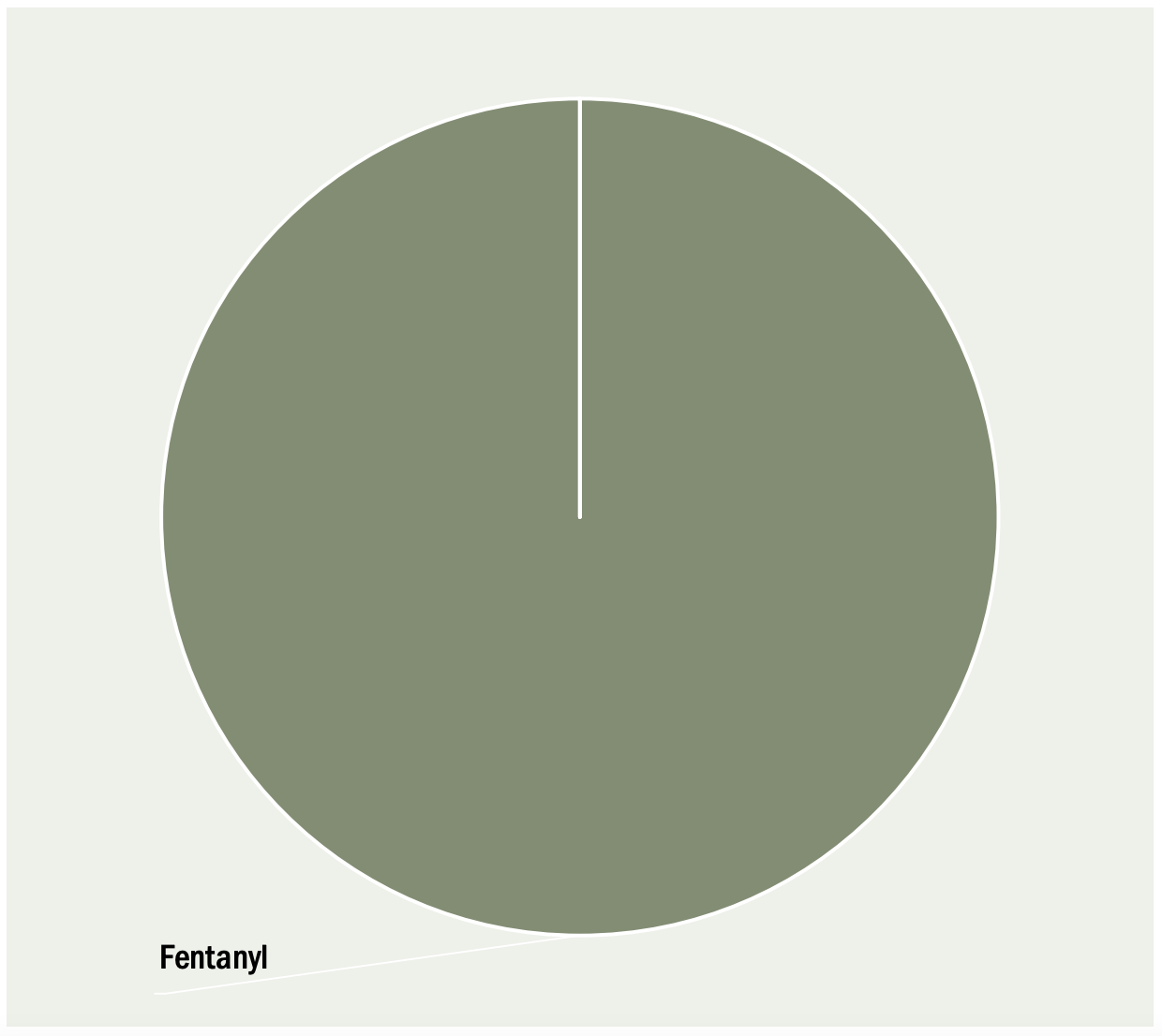
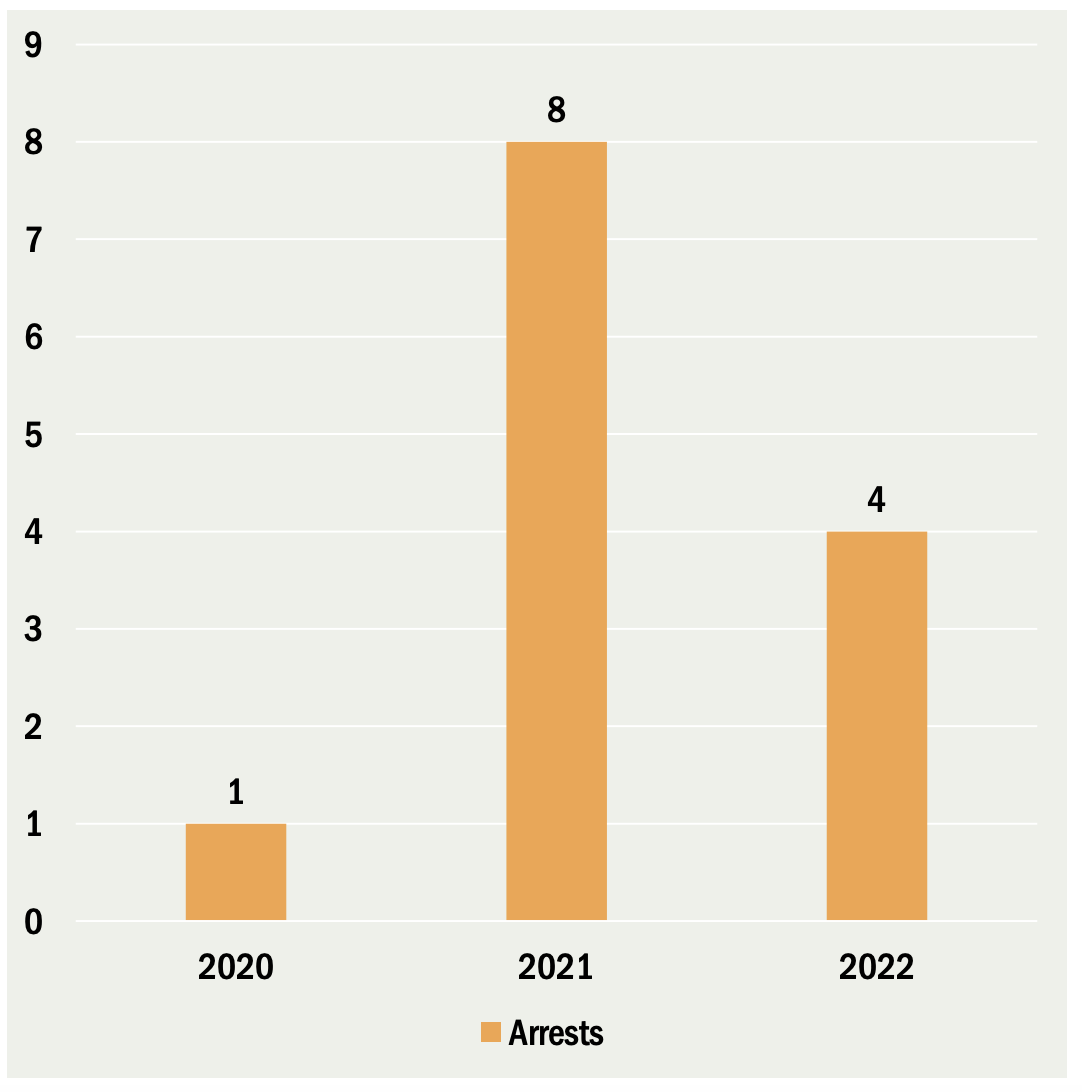
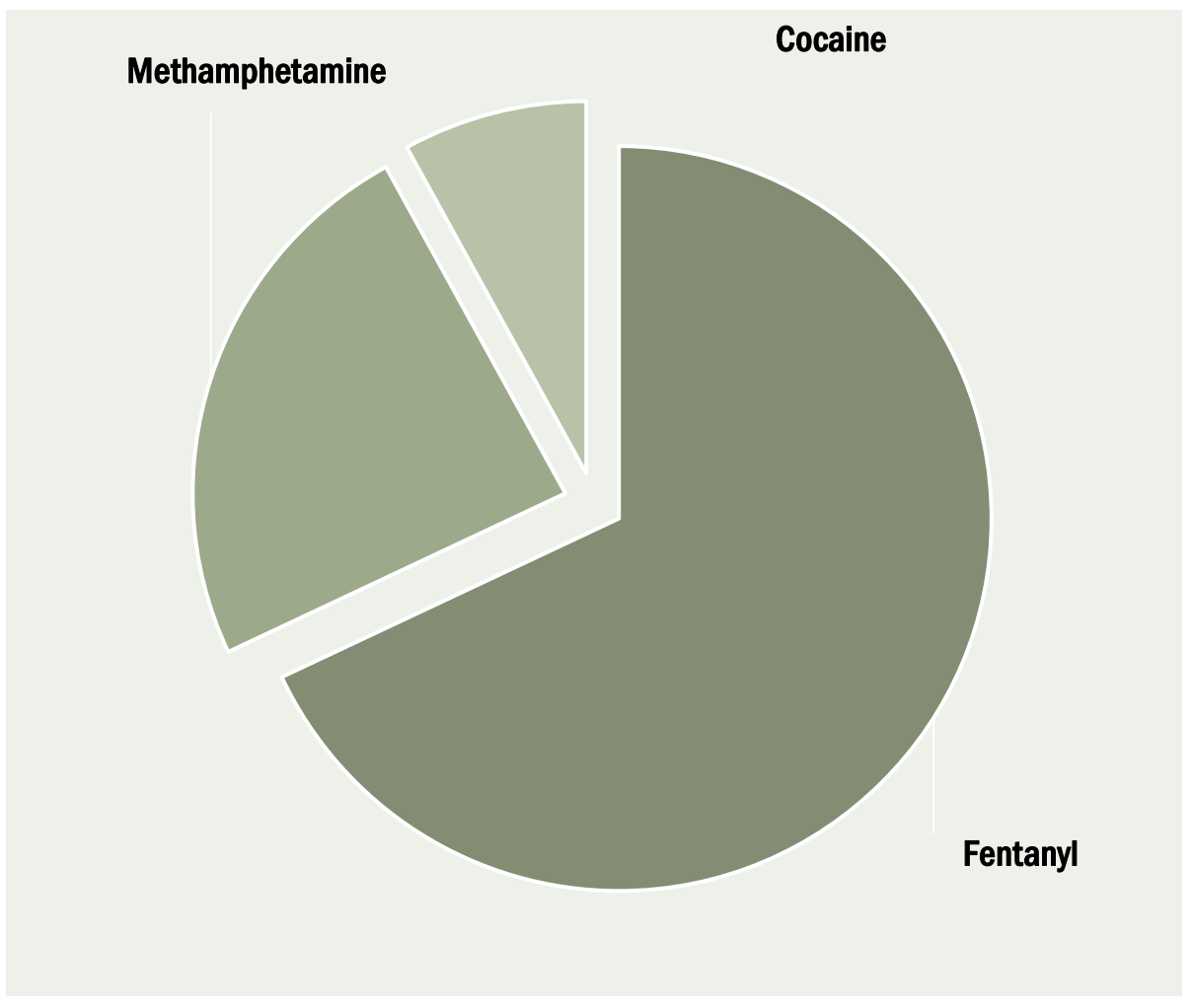
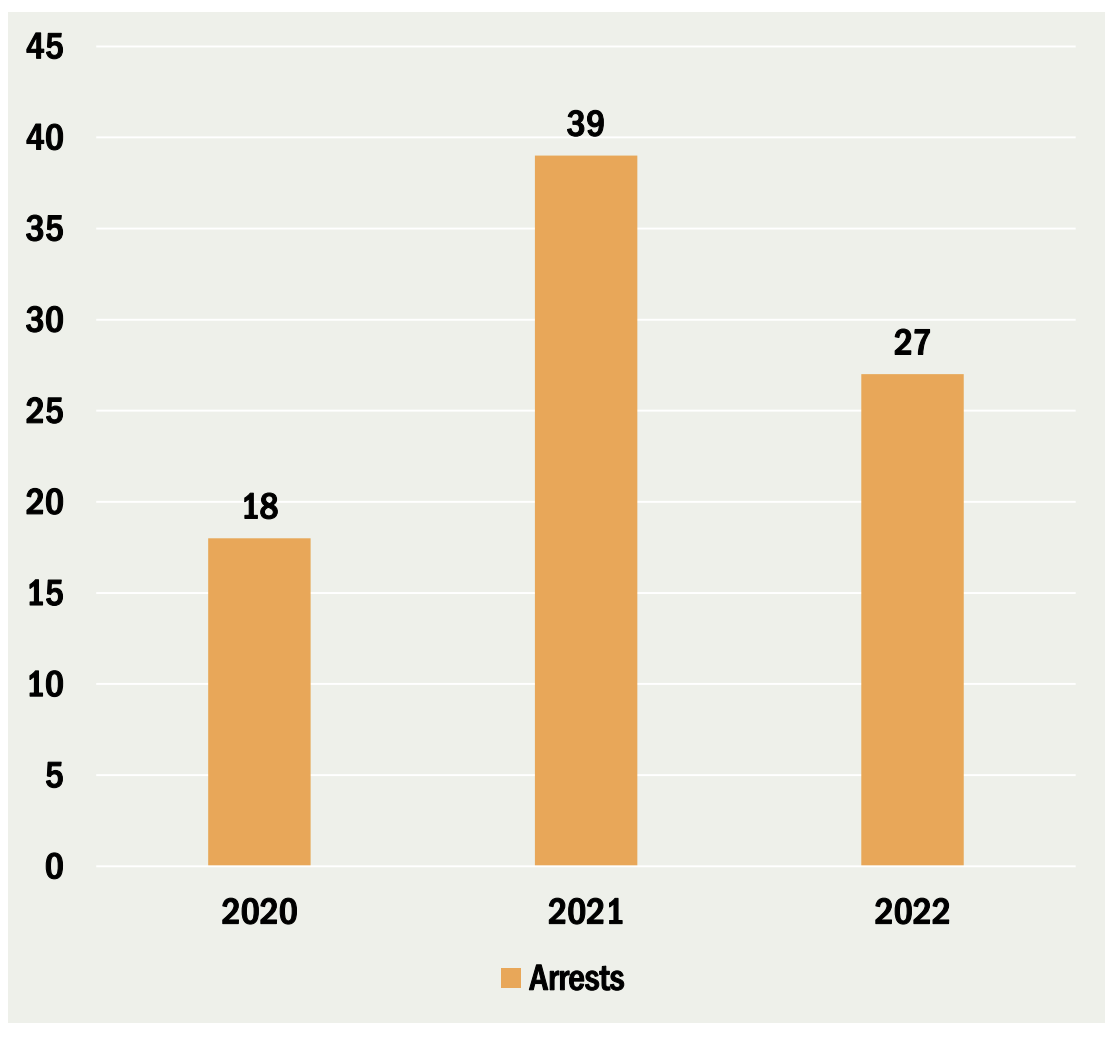
Humboldt County Drug Task Force Annual Report: Fentanyl and Meth Were the Most-Seized Substances Last Year
LoCO Staff / Tuesday, Feb. 14, 2023 @ 6 p.m. / Crime
The following information comes from the Humboldt County Drug Task Force Annual Report covering 2022.
The mission of the Humboldt County Drug Task Force is to actively investigate the sales, manufacturing and distribution of illicit drugs within Humboldt County by focusing investigative efforts on complex drug trafficking organizations and mid- to high-level drug traffickers.
In 1983, the California Department of Justice Bureau of Narcotic Enforcement established the Humboldt County Drug Task Force after a need for a coordinated and concentrated effort against drug traffickers was recognized. Command has since been transferred to the Humboldt County Sheriff’s Office. The Humboldt County Drug Task Force is the primary narcotic enforcement unit within Humboldt County and is now in its 40th year of operation.
The Humboldt County Drug Task Force is comprised of Special Agents from the following agencies:
The Humboldt County Sheriff’s Office also provides a Sergeant and Commander. The Humboldt County DA’s Office provides a Crime Analyst.
- Humboldt County Sheriff’s Office
- Humboldt County DA’s Office
- Arcata Police Department
- California Highway Patrol
- Eureka Police Department
- Fortuna Police Department
Controlled Substances Seized
Arcata Police Department Jurisdiction
Eureka Police Department Jurisdiction
Fortuna Police Department Jurisdiction
Humboldt County Sheriff’s Office Jurisdiction


Mad River Community Hospital to Suspend Home Health Services Program, Which Serves Nearly 100 Patients; 27 Employees to be Laid Off
Isabella Vanderheiden / Tuesday, Feb. 14, 2023 @ 4:42 p.m. / Health Care
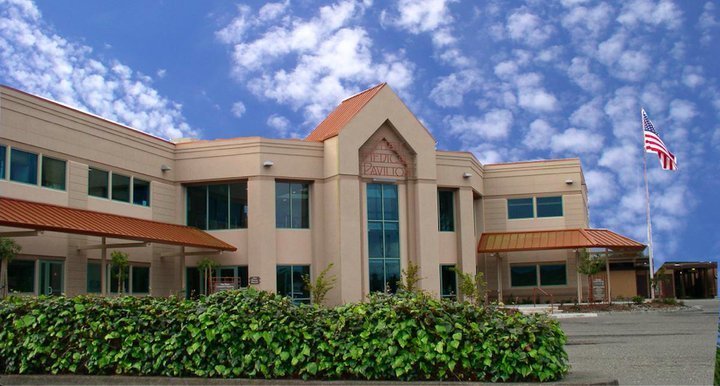
Mad River Community Hospital | Outpost file photo.
# # #
Citing ongoing financial struggles, Mad River Community Hospital has announced that it will suspend its home health services program. Twenty-seven full-time employees will be affected by the suspension, some of whom have already been laid off.
“Rural hospitals throughout California are financially struggling in the aftermath of the pandemic, and Mad River is no different,” Doug Shaw, chief executive officer at Mad River Hospital, said in a prepared statement. “Costs are at an all-time high, while patient volumes have yet to return to pre-pandemic levels and reimbursement rates have failed to keep up with inflation over the last 10 years.”
It’s not just Mad River: Rural hospitals across California are struggling to stay afloat, Shaw added. “Other rural hospitals are being forced to close important service lines, including Hazel Hawkins Hospital in Hollister which closed its home health agency in January.”
Jenna Schulte, a medical social worker for Mad River Community Hospital, was shocked by the sudden announcement, even more so when she was informed she would not receive any severance pay.
“We weren’t offered any severance pay or assistance with health insurance,” Schulte told this Outpost during a phone interview this morning. “It’s been really hard, you know? And they did it without any notice, so there was no time to plan for upcoming appointments or anything. … They gave us a handout about unemployment but, I don’t know, there’s not really any guidance for us.”
Mad River’s home health services program currently serves just under 100 patients, according to the hospital. What will happen to them after the program is suspended?
“I’m worried about our community,” Schulte said. “When you look at how many patients we serve … there will be a huge gap in services for people that are sick and can’t get out of their house. Homebound patients are not going to have visiting nurses and therapists. … I’m sure [Providence St. Joseph Hospital] already has a significant caseload. I’m not sure how they’re going to absorb our patients. It just seems like we’re leaving people hanging that we have served for a long, long time.”
The hospital will continue to provide home health services to existing patients through April. David Neal, who also identified himself as the chief executive officer for Mad River Hospital, said administrators have spoken to local and regional representatives from Providence about picking up the slack. [Note: Neal serves as the hospital’s chief executive, a position that is distinct from that of Shaw, the chief executive officer.] “I don’t know what their capacity truly is, but they told us they would work to help.”
Eventually, administrators hope to restore home health services “in a re-imagined way” once the economy stabilizes, according to a press release.
How long will it take before the hospital makes a decision on what comes next?
“It’s too early to tell,” Neal told the Outpost this afternoon. “When you suspend [a program], you have a year to kind of decide what to do with it. We are not removing home health services from our license but over the next few months, we’ll evaluate what’s happening with the health care climate and make decisions from there.”
Administrators encouraged affected employees to apply for vacant positions at Mad River Hospital. “We don’t just put them into a new job,” Neal said. “We’ve asked them to look and see what’s available and certainly apply [based] on where their interests are at.”
However, Schulte felt administrators should have done more to support their employees, especially long-term staff.
“I mean, I’ve been there for over a decade, and they’re not even offering to transfer to a different unit or anything,” she said. “Basically, we’ve been let go and we have to try and apply for another job. It just doesn’t seem like they’re approaching it in a more thoughtful way.”
Neal reiterated that the decision “was not taken lightly.”
# # #
Press release from Mad River Community Hospital:
The Board of Mad River Community Hospital voted to accept management’s recommendation to provide for the orderly suspension of home health services effective upon the completion of services to our existing patients (in or about April, 2023). Mad River Home Health Services will begin referring prospective home health patients to health providers within the County.
“The decision to suspend providing home health services was a difficult one, and a decision neither I, our leadership team, nor our Board took lightly” stated Doug Shaw, Mad River’s Chief Executive Officer. “Rural hospitals throughout California are financially struggling in the aftermath of the pandemic, and Mad River is no different. Costs are at an all-time high, while patient volumes have yet to return to prepandemic levels and reimbursement rates have failed to keep up with inflation over the last 10 years. Rural hospitals are struggling to survive in this climate, and many are at risk of closing or have closed, as was the case for Madera Community Hospital which closed its doors in December. Other rural hospitals are being forced to close important service lines, including Hazel Hawkins Hospital in Hollister which closed its home health agency in January.”
Mr. Shaw added, “We are committed to our long-term success and service to our community, but hard decisions, such as the decision to suspend home health services, will be required to better position Mad River in the post-pandemic economic climate. We look forward to providing home health services in a re-imagined way when the economic climate stabilizes, and we will be working diligently with our committed staff to see that this happens.”
The suspension will affect 27 employees, all of whom are encouraged to apply for vacant positions within the hospital or its outpatient departments upon completion of existing patient treatment plans. We thank those dedicated staff and nurses for their service to the community.
Mad River Community Hospital Leadership will be offering presentations in the coming months on the plights of rural medicine and how we can partner to overcome the challenges rural hospitals are facing.
# # #
CLARIFICATION: The headline of this post has been changed to clarify that existing patients will not see an interruption in their home health care.



