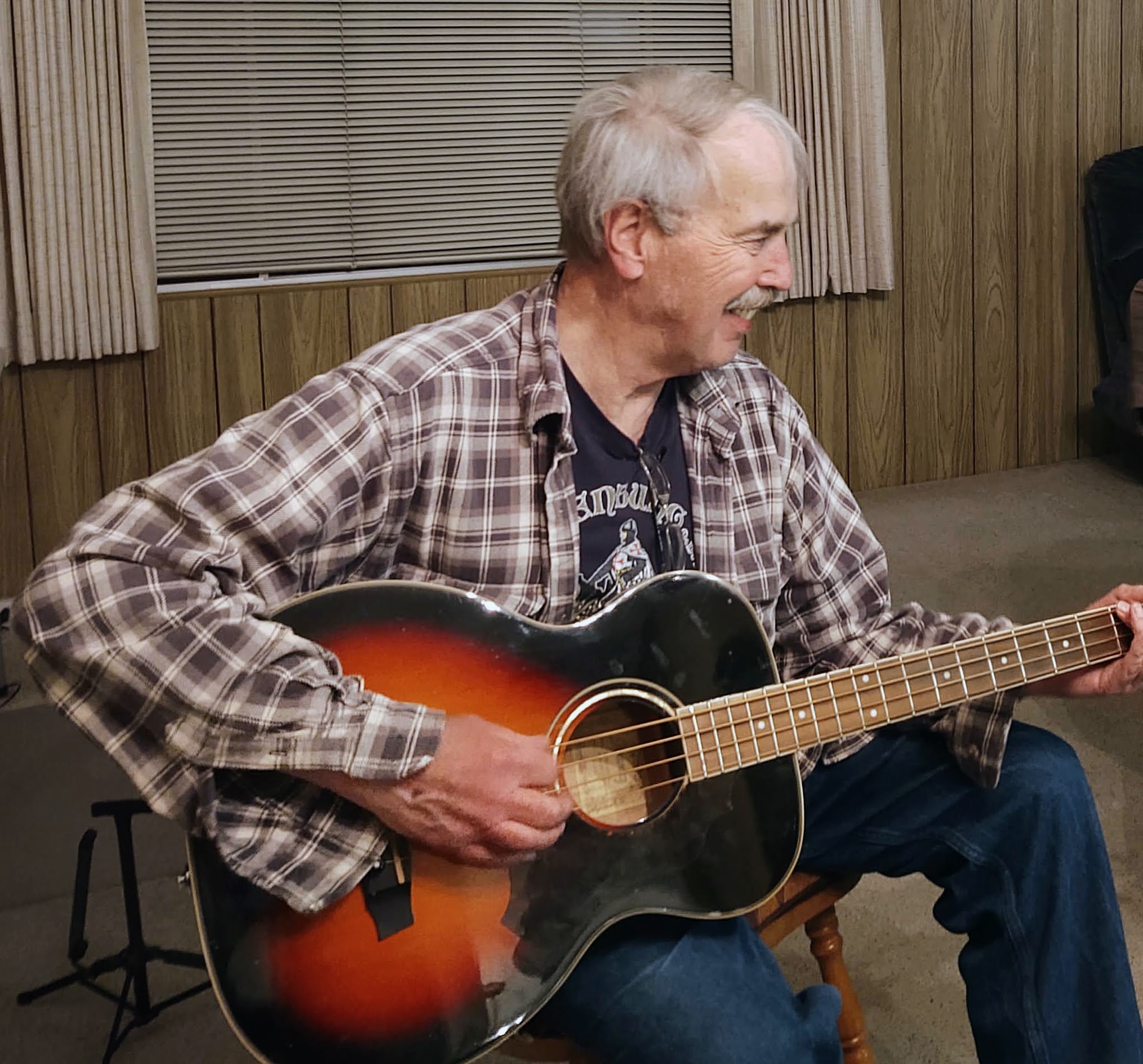
Stephen James Brinton passed away on October 14, 2022, with his
daughter holding his hand. He was a wonderful father and an amazing
Grandpa. Since he developed an extremely rapid form of dementia in
mid-May of this year, we have already been missing the man he was.
Now, we will miss the man he became and miss the opportunities to
give him hugs and see his wonderful smile. He was a good man.
Steve was born on September 10, 1947, to James and Mable Brinton. He
and his sister Linda grew up in Southern California. He attended St.
Jerome’s Elementary School in Los Angeles. He graduated from St
Bernard High School in Playa del Rey in 1965. He then moved to Orange
County in the summer 1965 and attended Cal State Fullerton, from
which he graduated in 1969 with a BA in Political Science.
Dad lived a life full of love and caring as attested to by his
long-time friend and first wife Sherryl, whom he met as a senior in
college in 1968. He was a published songwriter and enjoyed a wide
variety of musical genres. He loved 1950s cars and collected books
and models, and even owned a few over the years. Dad and Mom (Jan)
met when I was seven years old. Although they separated, he always
remained a wonderful and dedicated father to me. As Grandpa, he
taught his oldest grandson to play guitar and bass and encouraged
both of his grandson’s interest in musical instruments. He loved
learning about the music and games that the boys were getting into
and exploring it after their visits via YouTube. The hardest thing
for him at the beginning of the COVID-19 pandemic was not being able
to give his family hugs.
Steve worked many
different jobs, but closest to his heart were his time at HCAR where
he met his fourth wife, Claudia, and his position at Coast Central
Credit Union in the Card Services division where he met his dear
friend Lynn. After his retirement, Steve moved to the Lazy J Mobile
Home Park in Arcata, where he became friends with many of his
neighbors. He served on the homeowner’s council both as a member
and as the HR Council president for two years. We wish to extend our
deep thanks to his friend Suzanne who was a great support to our
family during this process.
Steve is survived by his daughter
Halona Rude (Michael), his grandsons Joe and Jamie Rude, his sister
Linda Edelman (Bill), his niece Maya Pell, and many dear friends who
were like family in many ways.
Many thanks to everyone who has supported our family through this
unexpected and difficult journey. Special thanks to the wonderful
team at Hospice of Humboldt, just knowing we could call you at any
time made this a little easier. Special thanks also to the caring
staff at Timber Ridge Eureka in the Renaissance unit, you all saw the
wonderful man my Dad was.
No memorial service is planned at this time. Steve’s family
requests that any donations be made in his honor to Hospice of
Humboldt, Breast and GYN Health Project, or the community charity of
your choice.
###
The obituary above was submitted on behalf of Steve Brinton’s loved ones. The Lost Coast Outpost runs obituaries of Humboldt County residents at no charge. See guidelines here. Email news@lostcoastoutpost.com.
The Eureka City Council will convene for another riveting round of civic engagement with its impassioned constituents tomorrow night.
This week’s agenda includes a couple of hot-button items, including a proposal to address homelessness in Eureka. The council will also discuss a few less interesting but nevertheless important items. Yes, I’m looking at you 2022-23 fee schedule update.
Let’s take a look at that agenda, shall we?
Eureka’s Homeless Action Plan
Back in 2016, the Eureka City Council signed a joint resolution with the County of Humboldt to adopt the Housing First model as a means of addressing homelessness in the region. In the time since, staff has worked to develop a city-specific Homeless Action Plan to expand efforts to address mental health and housing needs in Eureka.
The 24-page document outlines the city’s ongoing efforts to reduce homelessness in the City of Eureka by expanding affordable housing, bolstering outreach efforts and expanding partnerships with organizations that provide services to people experiencing homelessness.
“Significant progress has been made toward meeting the needs of community members experiencing homelessness in Eureka. …There is still important work to be done,” according to the plan. “The City of Eureka’s Homeless Action Plan outlines priorities in addressing issues related to homelessness and was created to provide a road map for use in working to address the issue of homelessness in Eureka. This plan details common unifying principles that define our purpose, connect our city and create a positive impact on the quality of life for all Eureka residents.”
The plan also acknowledges the community-wide impacts of homelessness, including compromised public health and safety as a result of environmental degradation.
“Without access to proper waste disposal, homeless encampments near neighborhoods and publicly used lands pose serious health and safety hazards to the community,” the plan states. “Homelessness causes significant fiscal impacts to the public sector and affects local businesses. … Local businesses report a range of problems associated with homelessness including individuals sleeping on the premises as well as the presence of needles and other hazardous/human waste, deterring customers from entering businesses.”
One of the biggest components is increasing engagement with individuals experiencing homelessness. UPLIFT Eureka and the Eureka Police Department’s Community Safety Engagement Team (CSET) have made strides in guiding homeless individuals to critical resources and assistance with navigating those services. Working in tandem with CSET, the city’s new Crisis Alternative Response of Eureka (CARE) team hopes to provide rapid support and therapeutic problem-solving to individuals experiencing a mental health crisis.
The plan outlines eight specific goals to address homelessness in Eureka, such as increasing the city’s affordable housing stock, bolstering UPLIFT’s rehousing program and implementing a homeless prevention program, among others.
The council will review the plan and consider its adoption. The full document can be found here.
Ban on Digital Signs
The council is slated to approve a resolution that would ban new digital signs in the city’s coastal zone. The council reviewed the proposed resolution during a public hearing earlier this month and, despite strong opposition from a single community member, agreed to move the item forward.
The matter was initiated two years ago when the council adopted an ordinance that rescinded and replaced a section of the city’s municipal code with a coastal sign amendment.
The ordinance was reviewed by the California Coastal Commission in July 2022. At that time, city staff was looking to restrict the number of illuminated digital billboards allowed in the city’s coastal zone and limit the brightness of said signs. Coastal commissioners, including Humboldt County Supervisor Mike Wilson, urged city staff to take the ordinance even further and ban new digital signs in the coastal zone altogether.
Staff agreed and drafted the resolution that will be up for consideration during this week’s meeting. If approved by the council, the resolution will move forward to the California Coastal Commission for certification.
“Because the Local Coastal Program amendment must be certified by the Coastal Commission, staff is asking the City Council to adopt a Resolution of Transmittal sending the Local Coastal Program Amendment to the Coastal Commission for certification,” according to the staff report. “The City Council’s action to adopt the Local Coastal Program Amendment would become effective immediately upon Coastal Commission certification.”
The council will also consider a second separate item that would update the city’s zoning code to ban new digital signs in the city’s inland areas as well.
Zero Waste Action Plan for Local Schools
The council will also receive a report on the city’s Zero Waste Action Plan and efforts to reduce food waste in local schools.
The draft Zero Waste Action Plan has been broken into several sections that will be presented to the council for consideration over the coming months. The section up for consideration this week focuses on schools and how the city can best serve, support and guide local schools in waste reduction.
“Studies show that introducing and teaching environmental topics and waste reduction behaviors earlier in development can foster environmental stewardship in youth, which is then shared with their family and community,” according to the staff report. “Staff [has engaged in] direct outreach, stakeholder interviews, and on-site tours which helped facilitate a realistic understanding of the current state of waste diversion programs, education, and opportunities at local schools.”
The staff report notes that public schools and districts are distinct government entities and not subject to the city’s waste management requirements.
The draft Zero Waste Action Plan is tentatively scheduled for completion at the end of this year.
CORE Hub Presentation
The council will also receive a presentation from the Redwood Region Climate & Community Resilience Hub, better known as CORE Hub.
Although the agenda doesn’t indicate what exactly the presentation will cover, it’s probably safe to assume that it has something to do with offshore wind development on the North Coast since the council recently agreed to sign on as a supporter of the CORE Hub’s North Coast Offshore Wind Community Benefits Network (the Network) strategy.
You can read all about the Network’s community-centered benefits strategy at this link.
###
The Eureka City Council will meet on Tuesday, Nov. 1 at 6 p.m. at Eureka City Hall — 531 K Street. The agenda can be found here.
UPDATE, Nov. 2: The Fortuna Police Department identified the remains as 48-year-old Lewis William Leckliter of Fortuna, who had been missing for approximately three months.
###
Human skeletal remains were found near a hiking trail in Fortuna’s Rohner Park on Saturday, according to the Humboldt County Sheriff’s Office.
After receiving a 9-1-1 call, a deputy coroner was dispatched to the scene to recover the remains, Public Information Specialist Samantha Karges said in an emailed statement to the Outpost.
“Due to the advance stages of decay, identification of the decedent was not immediately possible and is pending DNA comparison and analysis,” Karges said. “Foul play is not suspected at this time, however, an external exam to confirm manner of death is scheduled for tomorrow, November 1.”
The discovery was made by a juvenile female, according to Redheaded Blackbelt’s Lisa Music, who first reported it.
More information will be released when available, the Sheriff’s Office said. Anyone with information about this case is encouraged to call the Humboldt County Sheriff’s Office at (707) 445-7251 or the Sheriff’s Office Crime Tip line at (707) 268-2539.
An outside investigation has sustained an allegation against Supervisor Michelle Bushnell, finding that she violated the county’s code of conduct by mistreating a staff member during a meeting in the Planning Department late last year.
As we reported in April, an unidentified county planner accused Bushnell of losing her temper, berating and threatening the employee and slamming a door.
The investigation, conducted by Monterey County-based attorney Richard “Ren” Nosky, concludes that the county planner wasn’t blameless in the incident. Their own behavior at the Dec. 29 meeting “played a large role in provoking Bushnell and created an awkward and hostile tone,” his report summary says
But the Second District county supervisor, who was less than a year into her first term at the time, responded poorly.
“Bushnell reacted combatively to the employee, which escalated the tension at the meeting to the point where Bushnell left the room,” the summary notes.
Back in April, Bushnell admitted to getting upset and said she accidentally slammed a door on her way out Planning Director John Ford’s office. Reached by phone on Monday she reiterated that she’d become distressed during the meeting because she felt the county planner was mistreating constituents who were seeking help with cannabis permits.
“I do not wish for my constituents to be treated poorly by any staff member — that’s what happened,” Bushnell said. But she added that she doesn’t want to make excuses for her own behavior. “I still need to do better and not react and let the proper people deal with that. … I’ll do better.”
The investigation report summary says Bushnell’s behavior violated the county Board of Supervisors’ code of conduct in two ways:
First, Bushnell’s conduct violated Section B(3) of the Code of Conduct, which requires that Supervisors, “practice civility and decorum in discussions and debate, and refrain from abusive conduct, personal charges … or verbal attacks upon the character or motives of … staff … which has the effect of disrupting the County’s business … .” Even though Bushnell was provoked, she was overly confrontational with the employee and questioned the employee’s qualifications in front of a constituent. This did not show proper decorum and reflected poorly on her office.
Second, Bushnell’s conduct violated Section B(10) of the Code of Conduct, which requires that Supervisors “support the maintenance of a positive and constructive workplace environment for County employees … .” The policy also requires that Supervisors “address County employees, whether in public or in private, with courtesy and respect.” While Bushnell was provoked by the employee to a degree, it was inappropriate for her to engage with the employee in such a provocative fashion in front of her constituent and other staff members. The confrontation produced a highly awkward situation and did not serve to support a positive workplace environment for those staff members.
The code of conduct was revised last spring in the wake of the employee’s complaint.
That complaint also alleged that Bushnell inappropriately interfered in the cannabis permitting process by personally advocating on behalf of the applicant while disregarding evidence that the applicant had violated a number of county codes.
That finding was not sustained, nor were additional allegations that came in after the Board of Supervisors’ April 4 meeting.
At tomorrow’s Board of Supervisors meeting, Bushnell and her colleagues will discuss the findings of the investigation and consider whether to formally censure her, which would require a “yes’ vote from at least two-thirds of the board members present and voting, per county code. In other words, if all five supervisors are present and Bushnell recuses herself, at least three of the remaining four would need to vote in favor of the formal rebuke for it to pass.
Bushnell said she doesn’t know what will happen tomorrow, but in the past 10 months she’s worked to improve her behavior.
“I’ve done a lot of classes and training since [the incident] just to bettermyself,” she said. “I’ve been in many meetings with the director and staff and constituents and have not had a repeated incident — nor will I, ever. But I do want to say, I won’t let my constituents be beat up.”
After hanging up, she called back to speak on behalf of staff, generally.
“County staff, for the most part, are amazing,” she said.
The Board of Supervisors meeting is scheduled to begin Tuesday at 9 a.m. inside board chambers at the county courthouse. You can download the full meeting agenda, which includes instructions for participating remotely, by clicking here.
Press release from the Humboldt County Sheriff’s Office:
On Oct. 29, 2022, at about 8:26 p.m., Humboldt County Sheriff’s deputies were dispatched to a local hospital for the report of an assault that had occurred earlier that evening in the Willow Creek area.
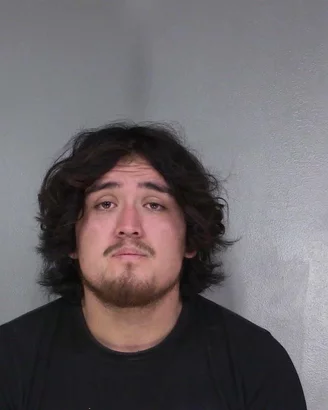
At the hospital, deputies contacted a 22-year-old male victim, who was being treated for moderate injuries, and the suspect, 23-year-old Dante Blade Rhoades, who was being detained by Arcata Police Department officers.
Rhoades.
During their investigation, deputies learned that the victim was working at a gas station on the 39000 block of State Highway 299 when he observed Rhoades shoplift from the store. The victim reportedly confronted Rhoades about the shoplifting and a physical altercation occurred between the two. Following the assault, Rhoades and the victim were transported separately to the hospital. At the hospital, Rhoades reportedly began causing a disturbance, prompting law enforcement response.
Rhoades was arrested and booked into the Humboldt County Correctional Facility on charges of battery with serious bodily injury (PC 243(d)).
Anyone with information about this case or related criminal activity is encouraged to call the Humboldt County Sheriff’s Office at (707) 445-7251 or the Sheriff’s Office Crime Tip line at (707) 268-2539.
Press release from the Humboldt County Sheriff’s Office:
On Oct. 30, 2022, at about 10 p.m., Humboldt County Sheriff’s deputies on patrol in the Samoa area observed a suspicious occupied vehicle parked along Vance Avenue.
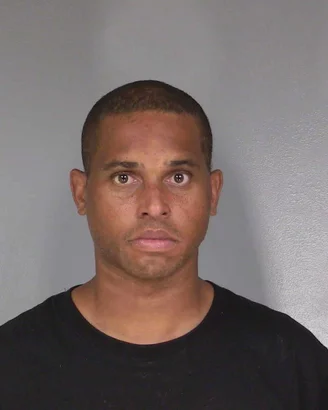
Deputies initiated an investigation into the vehicle and contacted two occupants, 37-year-old Quentin Laone Bell and 37-year-old Bianca Cassandra Welton. Bell initially gave deputies a false name. However, upon proper identification, deputies learned that Bell had outstanding warrants for his arrest. Welton was also found to have outstanding warrants.
During a search of Bell, Welton, and the vehicle incident to arrest, deputies located approximately 9 grams of methamphetamine, drug paraphernalia and suspected fentanyl.
Bell was arrested and booked into the Humboldt County Correctional Facility on charges of possession of a controlled substance (HS 11377(a)) and false identification to a peace officer (PC 148.9(a)), in addition to warrant charges of possession of a leaded cane (PC 22210), violation of probation (PC 1203.2(a)) and inflicting corporal injury on a spouse (PC 273.5(a)).
Due to medical concerns, Welton was cited and released on charges of possession of a narcotic controlled substance (HS 11350(a)), possession of a controlled substance paraphernalia (HS 11364(a)) and violation of probation (PC 1203.2).
Anyone with information about this case or related criminal activity is encouraged to call the
Humboldt County Sheriff’s Office at (707) 445-7251 or the Sheriff’s Office Crime Tip line at (707) 268-2539.
It’s difficult for housing advocates to criticize Gov. Gavin Newsom because he’s done more to boost production than any other governor in recent memory — but that’s mostly because the bar is so low.
Measured against the goal he set for himself, Newsom’s record is less impressive. Just 13% of the 3.5 million homes he campaigned on building have been permitted, let alone built. He’s walked back the goal many times, settling on a new target earlier this year: Cities need to have planned a combined 2.5 million homes by 2030. So, a million fewer homes planned for, not built, and over a longer time frame.
But as he finalizes his first term and coasts into the second, Newsom finds himself mired in an even deeper housing and homelessness crisis than the one he inherited.
Running for governor in 2017, then-Lt. Gov. Newsom pledged to spur a never-before-seen tsunami of homebuilding in California to bridge the gap between the growing population and shrinking stock of housing driving the affordability crisis.
“As Governor, I will lead the effort to develop the 3.5 million new housing units we need by 2025 because our solutions must be as bold as the problem is big,” Newsom wrote on Medium.
The goal was true to character: big, hairy and audacious. It would have required building an average of 500,000 homes a year in a state that has only surpassed the 300,000 mark twice in more than 50 years.
Newsom didn’t get even close.
In the nearly four years since he took office, California cities are projected to have permitted a total of about 452,000 homes — less than he pledged he’d build in one year alone, according to local data collected by the Construction Industry Research Board.
“The biggest risk in life, however one defines risk, is not that we aim too high and miss it. It’s that we aim too low and reach it,” Newsom said. “It was always a stretch goal.”
Housing advocates acknowledge that policy change is by nature slow and incremental, and like many other proposals, long-term housing goals took a backseat to the COVID-19 pandemic.
But the reality on the ground — that there aren’t enough houses for everyone and the ones that exist are hideously expensive — continues to exasperate Californians who repeatedly rank housing and homelessness among their top concerns.
“We need government to treat this the way we treat a natural disaster, because that’s how it’s impacting people’s lives,” said Chione Lucina Muñoz Flegal, executive director of Housing California, a housing advocacy organization. “And that’s not what we see happening.”
A Marshall Plan for housing?
Housing policy advocates described Newsom’s stated goal of 3.5 million new homes in four years the same way he has: aspirational. They say that’s because the state doesn’t build housing in California — private developers do, with the approval of local governments. So what really grabbed advocates’ attention was the “Marshall Plan for affordable housing” Newsom pledged to launch during his inaugural speech, recalling the multi-billion dollar program to rebuild Western Europe following World War II.
“As much as the number was important, the idea of building a streamlined process of building, that was amazing, because that’s really the challenge of California,” said Dan Dunmoyer, president of the California Building Industry Association. He said that dream remains elusive.
California has some of the highest housing costs in the nation because of how little “marshaling” there is, Dunmoyer said. Land costs are prohibitive, and zoning rules limit much of what can be built. Housing must get approved at the local level, which has ample opportunity for community input. Those communities can then block unpopular projects, such as multi-family or affordable housing. Another culprit: impact fees cities charge to fund infrastructure that can exceed $150,000 a home, some of the highest in the nation.
The closest Newsom may have gotten to bulldozing those barriers is Project Homekey. After COVID-19 hit, the administration scrambled to turn 94 hotels and motels into more than 6,000 shelter units for people experiencing homelesnsess, which would later become permanent homes, within record-setting months. The projects bypassed local land use rules and a marquee environmental law often blamed for slowing or killing controversial projects. The state has since expanded the $800 million project with more than $2.75 billion in new funding.
Newsom signed more than a dozen bills allowing housing types that met certain conditions to skip lengthy approval processes at the local level. Two are expected to have the biggest impact: one which legalized duplexes and fourplexes on the two-thirds of developable land in California previously zoned for single-family homes, and another that allows apartments on land previously allotted for retail centers, parking lots and offices along arterial roads.
While a zoning change doesn’t build housing, it’s a first step to making it legal. Combined, the two laws could open up previously blocked space for more than 2million housing units.
“The effect of legislation is often hard to prove, because it’s only one factor of many in the development process,” said Louis Mirante, vice president of public policy at the Bay Area Council. “To stop a project, you only need one red light. But to make a project go, you need at least 100 green lights. A lot of the legislation the governor has been signing has been those green lights.”
But yellow and red lights abound, including rising interest rates and prohibitive material costs. While it took political courage to sign a controversial measure like the one streamlining duplex and fourplex construction, Newsom remained largely quiet on those bills until they reached the finish line, and hasn’t championed a more sweeping production policy proposal on his own.
“He can step in and resolve the problems if he really wanted to prioritize the issue,” said Chris Martin, policy director at Housing California. “He has the power to do it but politically, it’s challenging. He’s going to have to make some uncomfortable decisions.”
“To stop a project, you only need one red light. But to make a project go, you need at least 100 green lights. A lot of the legislation the governor has been signing has been those green lights.” — Louis Mirante, vice president of public policy, Bay Area Council
Moving the goalposts
While Newsom has repeatedly called the 3.5 million goal taken from a 2016 McKinsey study a moonshot, he has put his weight behind another number: 2.5 million. That’s how many homes the Legislature has mandated California cities to plan for by 2030, and Newsom’s team is making sure they do.
“Before we can reach our stretch goals, before you can reach the moon, you’ve got to get off the launch pad,” said Jason Elliott, Newsom’s senior counselor on housing and homelessness.
The planning law has been on the books for decades, but it wasn’t until 2017 that the state Legislature gave the process teeth by creating standards and penalties cities must abide by. The plans for the housing that those standards and penalties apply to weren’t even due for most cities until this year. And the deadlines are different for different regions. It’s a slow process.
“For many years in California, the Regional Housing Needs (Allocation) process was an afterthought at best,” Elliott said. “It was not taken seriously because there were largely no consequences for local governments failing to meet their responsibilities. And that’s not ancient history, but through a very concerted effort by this governor and the administration in partnership with the Legislature, RHNA is now very serious. And I think communities are taking it seriously.”
But planning isn’t building, and a recurring complaint about the process from cities is that while it requires a lot of affordable housing to be planned for — 1 million of the 2.5 million units must be affordable to the lowest earners — the state doesn’t provide nearly enough tax credits and other subsidies to build it.
“We’re funding a quarter of that, at best,” said Paavo Monkkonen, associate professor of urban planning at UCLA’s Luskin School of Public Affairs. “So that’s an interesting conundrum, where their own goal is unattainable. And there’s not really a Manhattan Project to make that happen.”
With the Legislature, Newsom has dedicated unprecedented dollars to affordable housing, including $10.3 billion in 2021. Funding the current affordable housing need alone, however, would require nearly $18 billion a year over a decade, according to a recent estimate from Housing California and California Housing Partnership. And there is no long-term source of funding for housing in California. As budget projections for next year sour, affordable housing advocates worry those funds might dry up.
“In these years of good budget outlook, the administration has done a really good job,” said Marina Wiant, vice president of government affairs at the California Housing Consortium, a non-partisan housing advocacy organization. “It’s going to be interesting to see what they do when they have to make tough budget choices.”
###
CalMatters.org is a nonprofit, nonpartisan media venture explaining California policies and politics.