On Sunday, June 14, 2022, at approximately 1:50 P.M., the Fortuna Police Department’s Problem Oriented Police (POP) Team, assisted by Fortuna Police K-9 (Cain), served a search warrant in the 6000 block of Rohnerville Rd.
The POP team located evidence of controlled substances and several items of paraphernalia throughout the residence. It was determined through the course of the investigation that 63-year-old Nancy Gilmore was the property owner.
Subsequently, Nancy Gilmore was arrested for Maintaining a Place where Drugs are used and/or sold, a violation of section 11366 of the California Health and Safety Code. 26-year-old Destinee Line was also located on the property and was found to be in possession of Methamphetamine and Psilocybin Mushrooms. Destinee Line was arrested for Possession of a Controlled Substance, a violation of section 11377(a) of the California Health and Safety Code. Nancy Gilmore was subsequently transported to the Humboldt County Jail where she was booked without incident. Destinee Line was issued a criminal citation and subsequently released without further incident.
Ultimately, the Fortuna POP Team then served an additional search warrant based on an existing nexus to the original location, in the 2000 block of Van Duzen St. in Alton. The target of the search warrant identified as 28-year-old Brodie Houseworth was not found at the location. However, Brodie Houseworth was later located in Fortuna and was found to be in possession of Fentanyl and Methamphetamine. Criminal charges were filed against Brodie Houseworth with the Humboldt County District Attorney’s Office for unlawfully possessing both of Fentanyl and Methamphetamine.
It was determined prior to the execution of both search warrants, that there was an existing nexus in regard to the involved subjects selling and transporting illegal narcotics within the city limits of Fortuna, California.
The Fortuna Police Department remains committed to public safety and transparency. Any questions regarding this incident can be directed to the Chief of Police, Casey J. Day at (707)-725-7550.
On Thursday, June 2, Cooperation Humboldt’s Street Outreach workers were present at the Samoa Boulevard pullout encampment in Arcata (formerly Soilscape Solutions) on the day that residents were forced to leave their camp or risk arrest. Upon learning about the eviction, our team worked diligently to help people prepare for relocation. We were able to mediate conflict between homeless residents and the Arcata Police Department to ensure that no one was arrested and everyone was treated with dignity. We also managed to help several individuals salvage their belongings and move to a new location. While we are relieved that this transition was able to take place without anyone being arrested, we also recognize that day as emblematic of the constant upheaval, trauma and insecurity that our unhoused neighbors face on a daily basis. As a community we must build long-term solutions and advocate for transformative change that goes beyond simply playing musical chairs with the lives of our fellow human beings.
As a community, we need to begin working on upstream solutions instead of just continuing to push people around from one unsanctioned place to another. Ending homelessness once and for all will require a coordinated community-wide approach to total economic transformation, to build a society where everyone has their needs met without exploiting people or the environment.
The repeated pattern in our community of forcible removal of people from the areas that they choose to live has only resulted in the perpetuation of one of our region’s biggest problems. For example, while we were helping a few individuals from the Samoa Boulevard encampment re-settle in an alternate location, business owners near that new location were already phoning in complaints to the police. It is evident that there are plans in the works for the eviction of the residents in several of the other large and well-established unsanctioned camps in Arcata, which will do nothing to help the people and only exacerbate the problem. Past evictions like the one at the Palco Marsh (Devil’s Playground) with the intention to, “destroy sense of comfort and entitlement,” failed to address the problem of homelessness, and instead, contributed to the traumatization and persecution of our homeless community members. The Palco Marsh eviction was determined to be unlawful, and some victims were paid damages. Law enforcement and municipalities need to abide by the case law established in Martin v. Boise.
We urge local governments and law enforcement to:
Cease the eviction of unsanctioned encampments unless and until there are accessible, sanctioned places for all evicted people to live;
Cease the dispersal and arrest of homeless people living with disabling conditions such as mental illness, PTSD, and substance use disorder;
Provide adequate waste disposal and clean toilets for all residents regardless of their socioeconomic status, dysfunction, or behaviors;
Increase funding and decrease crippling regulations for housing, healthcare, food security, street outreach, service centers, and employment preparation programs and projects;
Concentrate large-scale funding and program development on broad-reaching upstream economic solutions.
At Cooperation Humboldt, we recognize that access to potable water, toilets, waste disposal, food, healthcare, and shelter are all fundamental human rights – not commodities or privileges that must be earned through specific behaviors or paid for with currency.
Regardless of questions of entitlement or enablement, every human being deserves to have their most basic needs met with dignity and respect - even if they are unwilling or unable to behave lawfully or engage productively with well-intentioned service providers. Mental illnesses and substance use disorders are disabling conditions resulting in impaired function - they are not behaviors. Homelessness is a symptom of our failing socioeconomic system, and while absolutely necessary, downstream projects like our Street Outreach project, which aims to address the immediate needs of homeless people are not solutions. Likewise, services like rapid re-housing – which must be offered without preconditions such as employment, income, absence of criminal record, presence of pets, or sobriety – transitional housing, and permanent supportive housing are all absolutely necessary downstream responses, not upstream solutions. Cooperation Humboldt fully supports the governments and organizations working tirelessly to provide and expand those essential services.
A housing crisis is often the result of a financial one. Current incomes are often much lower than is needed to comfortably pay average rental costs, leaving many people financially vulnerable to housing instability. Income support programs that can assist low-income people, such as Temporary Assistance for Needy Families (TANF) or unemployment compensation, help many people withstand economic crises. Often, however, people experiencing homelessness find these programs to be inaccessible and the benefits offered are often insufficient to help them achieve stability. Truly affordable housing development, rent stabilization, and programs designed to assist low-income people to increase their income are critical to supporting housing stability.
For the past year, Cooperation Humboldt’s Street Outreach team has been working closely with homeless members of our community to address their most pressing needs. The Street Outreach program is funded through an Emergency Solutions Grant for Coronavirus Response with the Department of Health & Human Services, and was formed through Cooperation Humboldt’s Community Health Worker Collaborative with the help of Eureka City Councilmember Leslie Castellano.
The Community Health Worker Collaborative builds independent Community Health Worker groups in close partnership with chronically underserved populations including people experiencing substance use disorder, people with extremely low or no incomes, Black, Indigenous, and people of color, LGBTQIA+ identifying people, and people experiencing mental illness and homelessness. The Street Outreach project is a compassion-based program that was designed under the direction of people currently or formerly experiencing homelessness; the program employs people in need to care for people in need.
“I don’t see how anybody can not be emotionally affected, but I think as parents we felt like, you know, this has got to stop,” Felicia Goodman told the Outpost in a phone interview.
She couldn’t even bring herself to read the first wave of news stories coming out of Uvalde. “It was just too gut-wrenching,” she said. But she quickly realized that there was one change she and her husband could make in their own home — a small sacrifice that could potentially prevent a future tragedy. She called her husband and said she wanted to get rid of their AR-15.
“There’s no need for us to have an AR-15 in our house,” she said. “We’re responsible gun owners, but you never know. I mean, we have kids who have friends over and, you know, … nobody ever thinks that their child will grow up to be somebody that does something heinous. But why even have the opportunity for our kids or their friends or anybody to have access to an AR-15?”
This model of semi-automatic grew to become “one of the most beloved and most vilified rifles in the country” in recent years. A version of the AR-15, rechristened as the M16, was issued to American ground troops in Vietnam, and the National Rifle Association has referred to it affectionately as “America’s rifle.” That organization attributes the AR-15’s popularity to it being “customizable, adaptable, reliable and accurate” and suggests that it can be used “in sport shooting, hunting and self-defense situations.”
It has also been the gun of choice for many perpetrators of mass shootings. NPR reporters assembled a partial list of when an AR-15-style weapon was used in a mass shooting:
Feb. 14, 2018: Shooting at Stoneman Douglas High School shooting in Florida leaves 17 people dead.
Oct. 1, 2017: The Las Vegas slaughter of 58 people.
Nov. 5, 2017: The Sutherland Springs, Texas, church shooting that claimed 26 lives.
June 12, 2016: The Pulse nightclub shooting in Orlando, Fla., that left 49 dead.
Dec. 2, 2015: The San Bernardino shooting that killed 14 people.
Dec. 14, 2012: The shooting at Sandy Hook Elementary School in Connecticut that took 27 lives.
The Uvalde tragedy is the latest addition to that list.
Goodman said their AR-15 formerly belonged to her brother-in-law, and when she and her husband found out that he planned to sell it, they decided to take it.
“We were like, ‘Oh, it would be kind of like cool to have this high-powered weapon. We could take it shooting at the river bar [or] at a range.’ … I mean, we had really no use for it other than just as a hobby.”
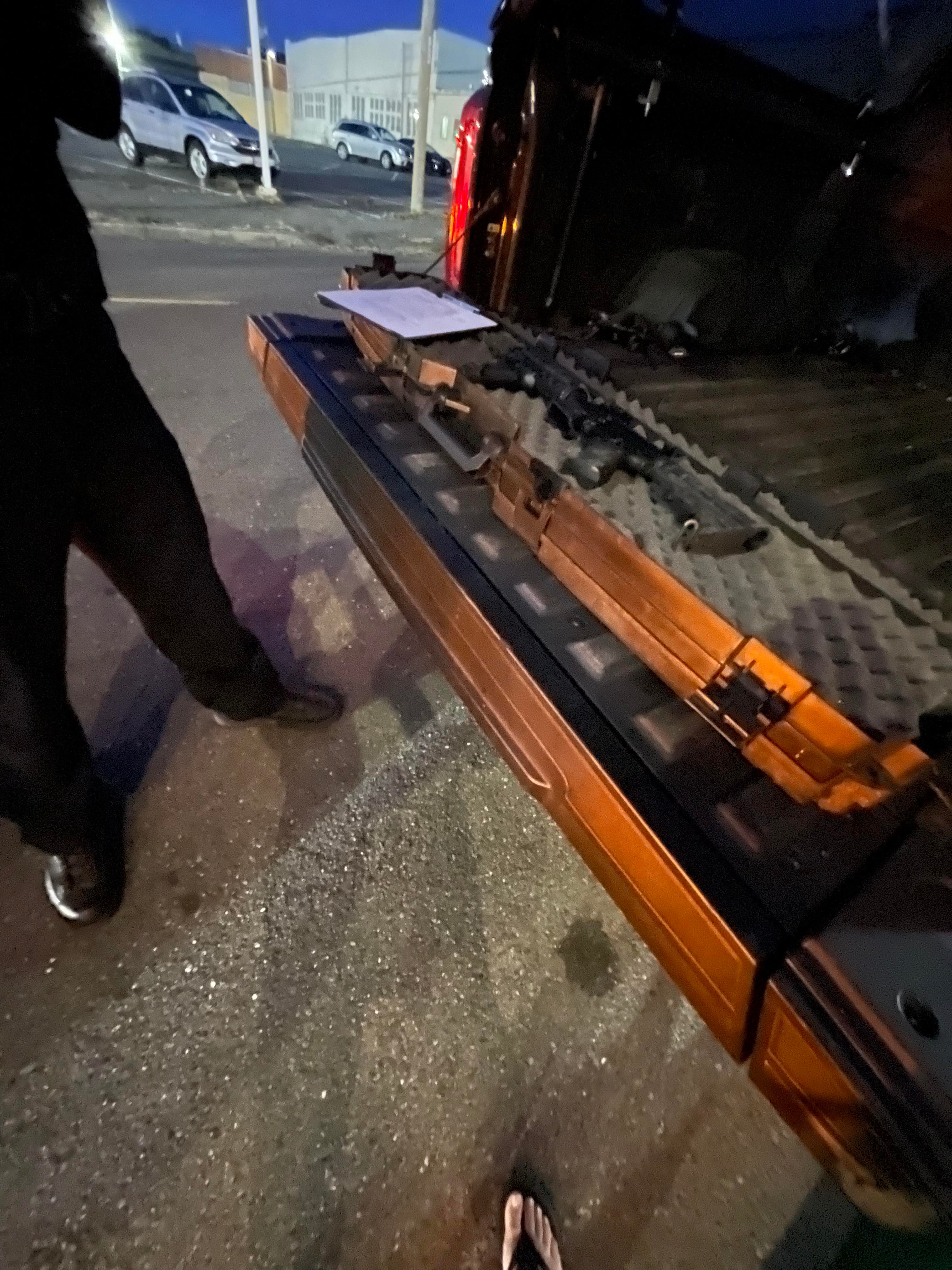
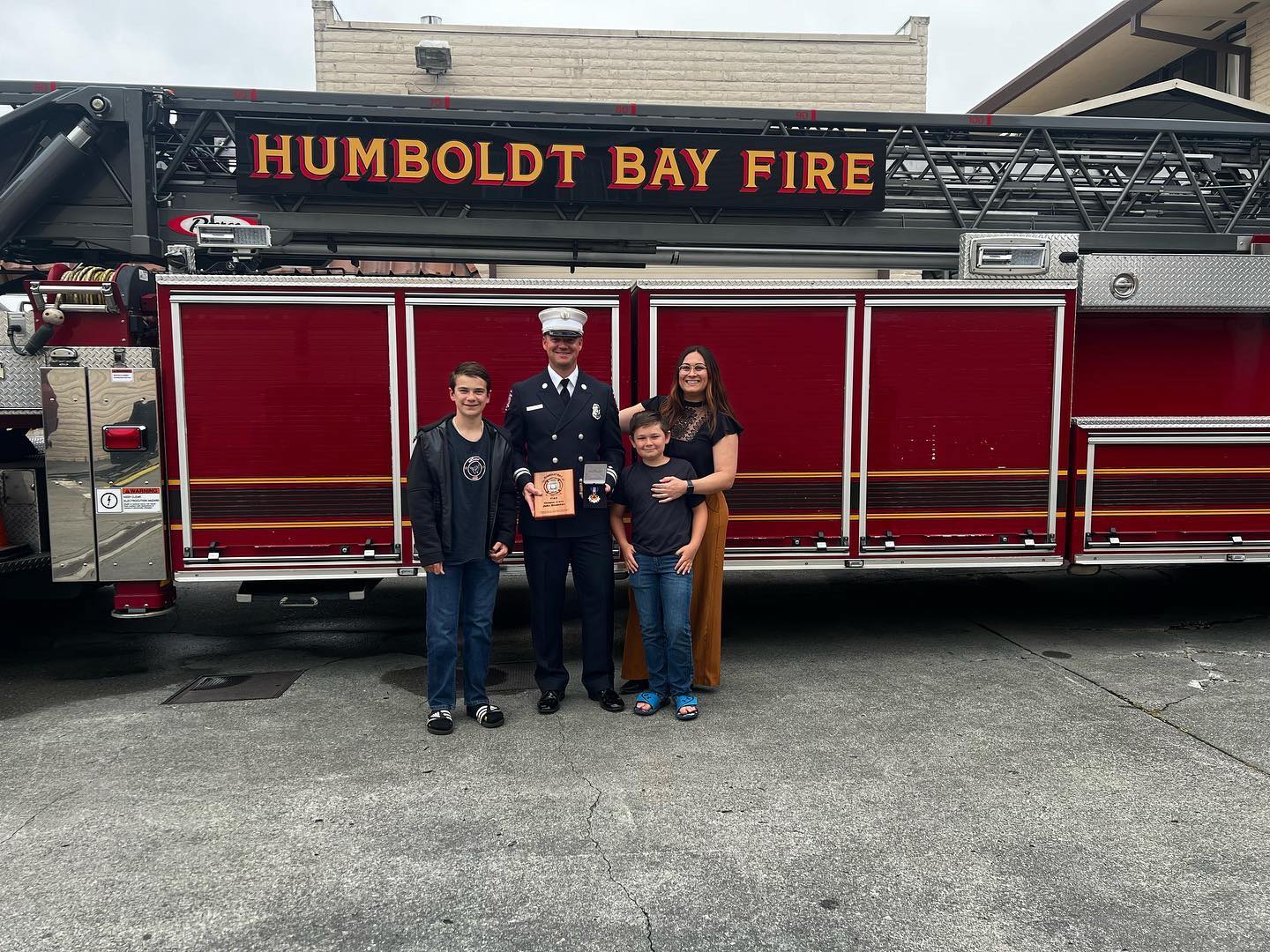
In light of the Uvalde mass shooting, she wanted the gun gone — not just out of the house but destroyed, she said. As a firefighter, her husband has contacts in law enforcement, so they reached out to the Eureka Police Department and arranged a time to meet officers at the department, fill out the necessary paperwork and surrender the weapon.
“It was really easy and simple,” Goodman said. “It took about 15 minutes.”
Brittany Powell, spokesperson for the Eureka Police Department, said the agency has done about 30 firearm surrenders since 2018. The previous year, 48 firearms were surrendered to the department during a two-day gun buyback program. Powell said the City of Eureka is exploring the idea of having another buyback event in the future.
It’s uncommon, however, for local people to surrender their guns in response to a mass shooting, according to local law enforcement officials.
“The most common scenarios are non-functioning firearms laying around the house or family members turning in firearms that had belonged to their loved one,” Powell said via email.
Samantha Karges, public information specialist with the Humboldt County Sheriff’s Office, said the agency does not have an official program for surrendering weapons but will accept them from residents within the county’s jurisdiction when needed.
“I don’t have any statistics readily available regarding the number of firearms surrendered per year, but if we had to estimate it would be pretty low,” Karges said in an email. “Many of the firearms that are surrendered to our department are due to a Restraining Order or a legal order preventing the person from possessing firearms.”
Arcata Police Chief Brian Ahearn said his department doesn’t have a buyback program either, though he said it does happen.
“Weapons are usually transported in bulk to a private company who then melts them down and utilizes the raw materials for other purposes, I think,” Ahearn said in an email. “Not many people surrender firearms so I do not have a lot of expertise in this area.”
Powell said all firearms surrendered to the Eureka Police Department are destroyed, while Karges said residents are given the option to either donate the firearm or have it destroyed.
“Donated firearms are sold and the money goes back to the department to purchase equipment,” Karges said. “Firearms marked for destruction are destroyed.”
Goodman would like to see more people make the decision that she and her husband made.
“So many of us talk about the change that needs to happen, but a lot of people are unwilling to be the change — and it’s so simple,” she said. “I hope that other people are moved to do the same.”
They still have firearms in their home, including a shotgun that they plan to keep for home protection.
“But I just don’t feel like there’s a reason for an AR-15,” she said. “If police officers were too afraid to go into the school [in Uvalde] to stop the shooting sooner because this person had an AR-15, what the fuck am I gonna do with it? … It needs to be a little bit harder for people to get these guns.”
If you or anyone you know is interested in surrendering a firearm, Powell and Karges offered some pointers.
For the Sheriff’s Office, Karges said, “In order to surrender a firearm or any other type of weapon, an individuals needs to call our main office and request a weapon surrender. A call for service will be created in our system and a deputy will be assigned to meet the person and pick up the surrendered items.”
The main office number is (707) 445-7251.
For the Eureka Police Department, Powell said, “When surrendering a firearm we ask that the firearm is brought unloaded and secured somewhere like a locked case and/or trunk. The firearm should stay in the vehicle and an officer will meet [you] outside. A field property receipt is then signed, clearly labeling the firearm as surrendered. All surrendered firearms are then destroyed.”
The Eureka Police Department can be reached at (707) 441-4060.
The Arcata Police Department can be reached at (707) 822-2428.
We reached out to the Fortuna Police Department for this story but did not hear back before the time of publication.
Press release from the Humboldt County Sheriff’s Office:
On June 15, 2022, at about 11:58 p.m., Humboldt County Sheriff’s deputies were dispatched to a Blue Lake residence for the report of a possible overdose.
Emergency medical personnel were first to arrive at the residence and administered Narcan to an unresponsive infant. The infant was successfully revived and was transported to a local hospital for medical treatment.
During their investigation at the residence, deputies located controlled substances in unsecured and easily accessible locations. The infant’s father, 45-year-old Joseph Charles Reinik, was taken into custody and booked into the Humboldt County Correctional Facility on charges of child endangerment (PC 273a(a)). The infant was placed into safe custody.
Anyone with information about this case or related criminal activity is encouraged to call the Humboldt County Sheriff’s Office at (707) 445-7251 or the Sheriff’s Office Crime Tip line at (707) 268-2539.
The case remains under investigation and no arrests have been made at this time. Upon completion of the investigation, the case will be forwarded to the District Attorney’s Office for review and potential prosecution.
The Sheriff’s Office would like to thank the community for their assistance in this investigation.
Approximately 95% of all wildfires in California are caused by human activity. Humboldt County is currently experiencing severe drought conditions and is entering into the warmest and driest months of the year. The community is urged to use extra caution this wildfire season by taking a few simple steps:
Properly maintain vehicle’s breaks and tire pressure, and ensure there are no dragging parts.
Practice safe towing by securing chains and properly maintaining your trailer.
Check conditions and regulations before you use fireworks or consider safe alternatives.
Anyone with information about this case or related criminal activity is encouraged to call the Humboldt County Sheriff’s Office at (707) 445-7251 or the Sheriff’s Office Crime Tip line at (707) 268-2539.
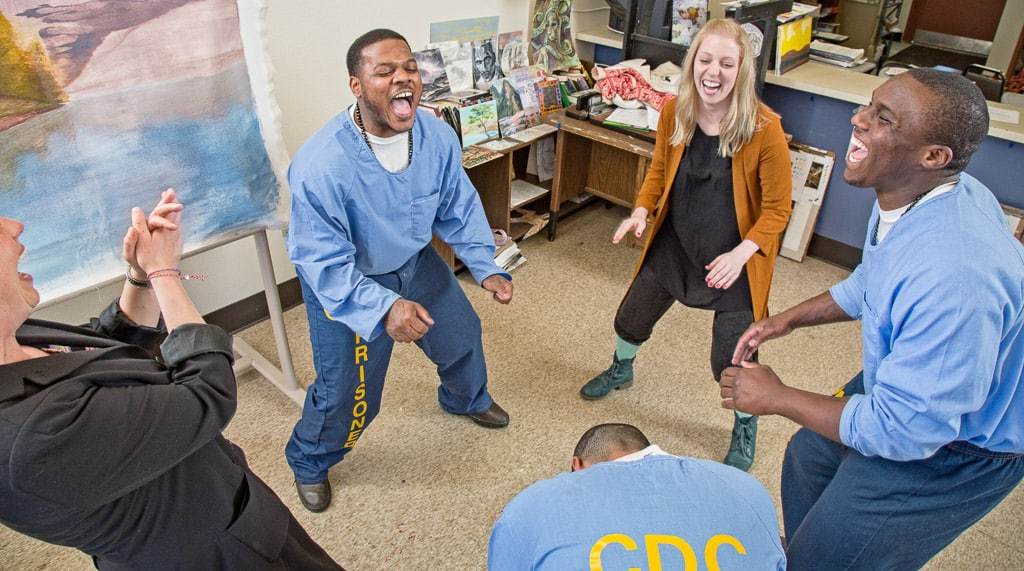
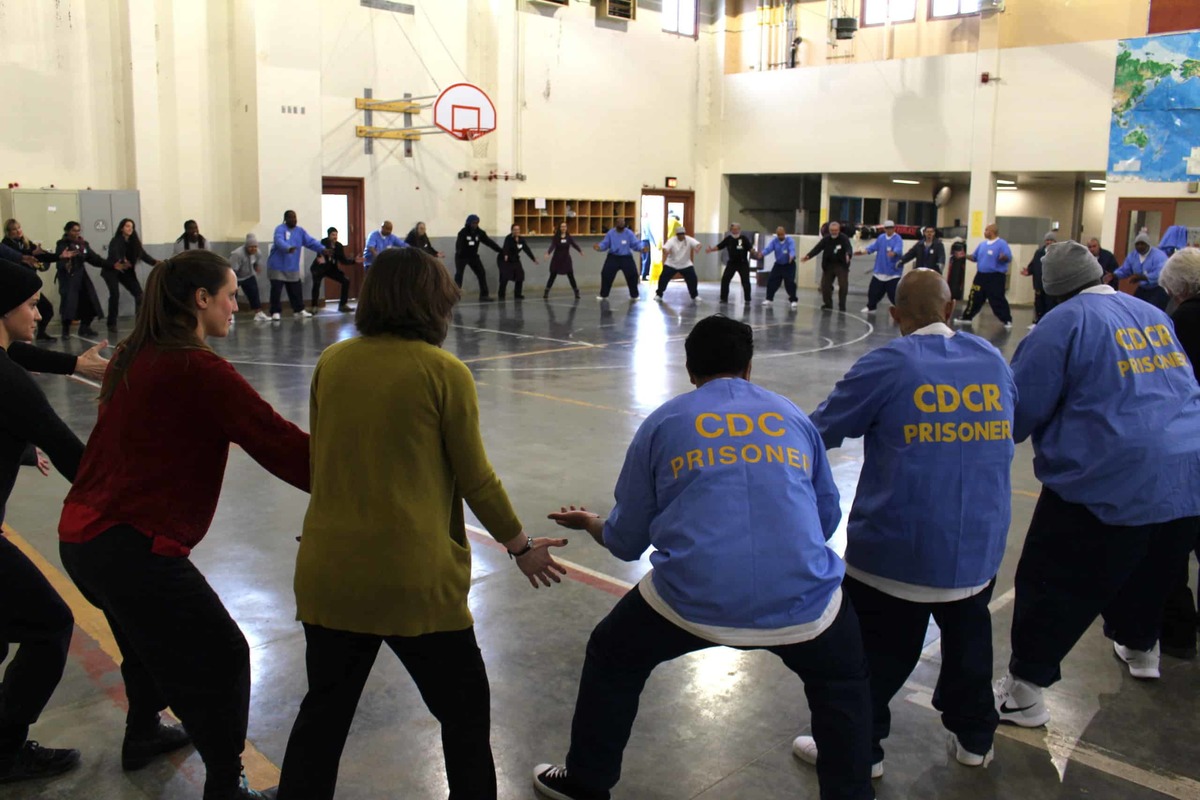
Janessa Johnsrude teaches weekly ensemble theater classes at Pelican Bay State Prison through Dell’Arte’s Prison Arts Program. All photos contributed by Dell’Arte.
###
Janessa Johnsrude didn’t know what to expect when she and Zuzka Sabata began teaching ensemble theater through Dell’Arte’s Prison Arts Program at Pelican Bay State Prison, north of Crescent City. Neither of them had set foot in a prison, let alone the one “designed to house California’s most serious offenders,” but they believed they could make an impact.
“Everyone has a story,” Johnsrude, the program’s director and co-founder, told the Outpost in a recent interview. “Once you start to really speak with the people who are incarcerated [at Pelican Bay] – especially in the arts and theater classes – you get to explore vulnerability and humanity through storytelling. It really breaks down those barriers of stereotypes. There’s really a lot we can learn from individuals who are incarcerated.”
Dell’Arte’s Prison Arts Program partners with California’s Arts in Corrections Program and the William James Association to bring professional artists into the prison to provide a space where inmates can express themselves therapeutically through storytelling, improvisation and original play development. Johnsrude and Sabata initiated the program in 2015, starting off small with a class of just four minimum-security inmates. Nearly seven years later, they’ve worked their way up to nearly 50 students, several of whom have been released from prison and continue to participate in the program as mentors.
“When we first brought the Dell’Arte faculty in a couple of years ago, I remember a student turned to me and said, ‘This is the first time I’ve interacted with people who aren’t prison staff in over 10 years.’ That was a real breakthrough moment for me,” Johnsrude said. “It is really important to me to keep these programs robust so there is a level of socialization and interaction that happens beyond the day-to-day at the prison. I think that’s something that the arts program provides. Redemption through creativity is a really beautiful thing.”
It is a higher-risk environment, she said, but there are protocols in place “to make sure everyone is safe, including the students themselves.”
Studies have shown that inmates can benefit from the arts in a number of ways. A study published in the Justice Policy Journal identified positive correlations between arts education and such skills as time management, intellectual flexibility, emotional control and self-confidence among incarcerated individuals.
“These programs often provide authentic learning experiences that engage the minds and hearts of the incarcerated,” according to the study. “For example, arts education can lead to improved writing skills, greater intellectual agility and creativity, motivation, and enhanced performance in other academic disciplines.”
Evidence suggests that the artistic process can also provide a safe and acceptable way to express, release and deal with potentially destructive feelings such as anger and aggression, the study continued.
One of the program’s participants, a young man only identified by his first name, Kunlyna, said the program had done exactly that, providing him with a space to “release anger through acting.”
“As someone who’s really into psychology, I think that there [are] many forms of healing,” Kunlyna said in a video interview. “As adults, I think we get accustomed to dealing with our problems in a certain way, probably with violence. … In the arts, you can kind of convey that in painting. You can throw your emotions on paint. In writing, you can put it out in a poem or a story. In theater, you can just let it go.”
“We don’t know how to deal emotionally,” he continued. “I’m in here because I didn’t know how to deal with emotions and eventually somebody died because of that.”
Brian, another program participant, recognized the mistakes he and his fellow inmates had made in the past but said, “That doesn’t make us lifelong criminals.”
“I’m a man who was trying to survive a hard situation and trying to give back to his family, not a criminal,” he said. “I don’t think any of us are criminals. We may have made mistakes in the past that led to his being here and we’re being punished for that now.”
Dell’Arte recently hosted two performers from the Zimbabwe Theatre Academy, Cadrick (Khe Khe) Msongelwa and Ronald Sigeca, who explored the cyclical nature of the prison system in their physical theater production Zandezi, or “Prison” in Shona. The narrative focuses on a man who is wrongfully convicted of a crime and, when he eventually regains his freedom, is confronted by a world that will no longer accept him. He offends again and the cycle continues.
The actors visited Pelican Bay inmates earlier this week to discuss the play and to perform Next, a sequel to Zandezi that explores what happens after incarceration.
“We [went] to Pelican Bay and talked to people who are incarcerated about what their lives will be one day,” Msongelwa told the Outpost in a recent interview. “Some of them said, ‘I’m going to be out this soon and I want to do this or this.’ We want to know how they want to live their lives when they’re out after spending life in prison.”
Arts programs can serve as a tool to bridge the gap between prisoners and the outside world, he continued. “It’s really, really important to have these art programs because it brings people from the outside world in … but it also provides an opportunity for the inmates themselves to create stories and give us insight about the realities they’re facing.”
Though the play is not finished, Msongelwa and Sigeca plan Next with the following soliloquy:
“So, what next? New opportunities? New possibilities? New challenges? This echoes in my mind. So, what next? Being out here seeing, listening, and encountering the beautiful colors, chaotic sounds, people again. I once lost all of this but not this time. We know what happens to us after we die; we go to heaven or hell. But what happens to us after we are released from zandezi?”
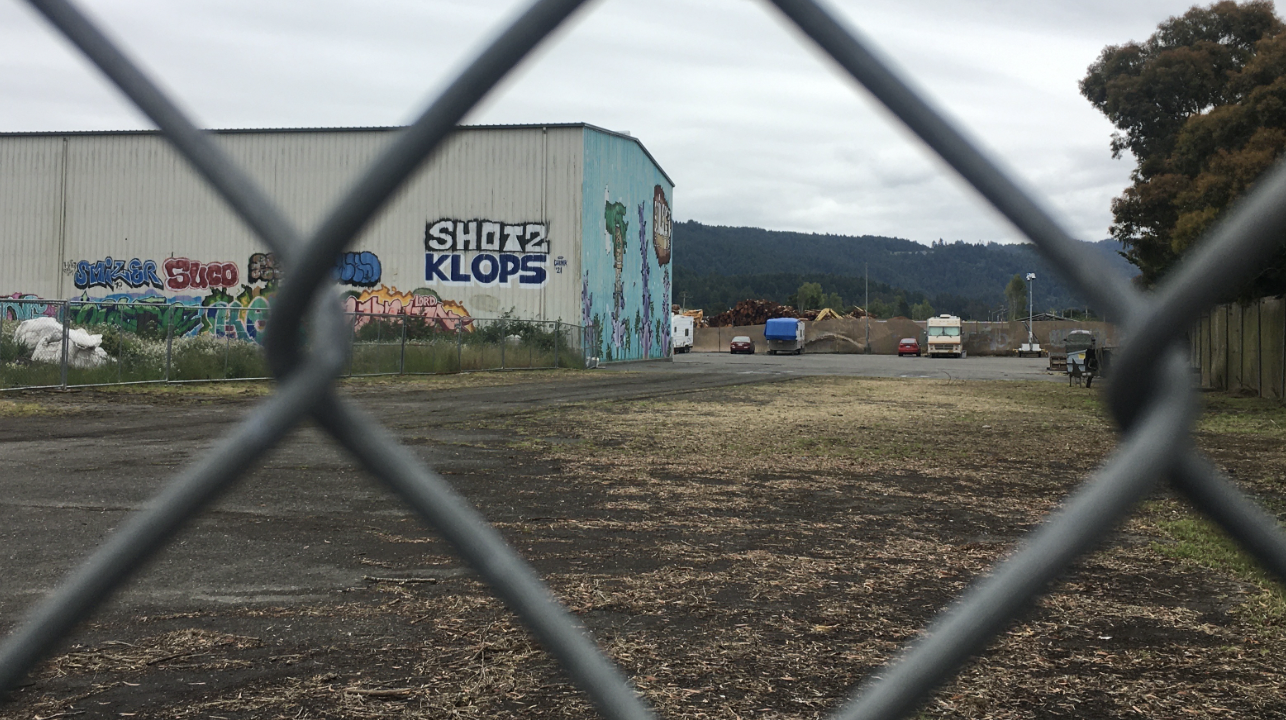
The site of the new Safe Parking Program, near the site of a previous encampment which has now been cleaned up | Photos: Stephanie McGeary
Arcata Police Department release:
The Arcata Police Department recently took part in a collaborative effort to transition people from an encampment on Samoa Boulevard into other forms of housing where food and services would be readily available. The encampment sprung up in a short period of time after it was announced that a Safe Parking Program would launch in the near future at 1680 Samoa Boulevard. As word spread several motorhomes and other vehicles began to park in a shoulder area adjacent to the property.
The location of the encampment
As can be the case with vehicle encampments the area soon became overrun with trash and human waste. Many of the vehicles parked there were dilapidated or inoperable and within weeks the area became a dumping ground for more vehicles that were inoperable and towed there where they were left abandoned. These became uninhabitable shelters for those without housing. This condition was unhealthy, unsafe, inhumane and not sustainable.
The Arcata Police Department developed a plan to work with community partners to offer shelter, food, healthcare and behavioral health services as well as other basic needs to anyone at the encampment. Over the course of several months Officers worked alongside client services personnel from many local agencies to transition people from the filth and waste infested conditions they were currently in, to an environment that provides basic needs in a clean, welcoming, service oriented and compassionate manner.
Arcata Police Department officers engage in this interaction with homeless people on an on-going basis. For decades we have assisted our region with managing the homeless crisis. There have been many lessons learned and changes in the law. The expertise developed over time by APD Officers as well as their critical thinking, interpersonal and active-listening skills and their commitment to promoting the basic right to a dignified existence for all human beings is our compass. We apply our expertise in a way that we think will ultimately lead someone to services. We know however, that many people will refuse the services provided. Some eventually accept services, perhaps incrementally, but many will never avail themselves of basic services in a sheltered environment.
As we do with all encampments, my officers approached this encampment with services as the goal. That is why we worked for months to build trust through relationships in hopes that all people would accept what is readily available to them in a region of California that is working hard to get every unhoused person off the streets. We knew many of the people staying at this encampment and have navigated them through the services schematic many times before. While we knew what many of the answers would be my Officers continued to visit the site daily hoping that those who refused services would be at a place where they were ready to accept.
There comes a point where the health and well-being of those staying at encampments and the surrounding neighborhood must be prioritized, if not by the individuals themselves then by the very mechanisms in place to assist them; to include the Arcata Police Department. After many months and countless visits of providing compassionate outreach the problem continued to grow as did the volume of complaints. APD leveraged existing laws to post each vehicle with a warning that the vehicle could be towed if left parked. Prior to that we engaged in a month’s long campaign to listen to every person at the encampment and inform them, repeatedly, that they could not remain parked there long-term and re-iterated our commitment to work with them to develop a safer and healthier living arrangement.
The property was cleared of all vehicles and trash as Arcata Police Department Officers orchestrated the implementation of a series of sequential steps designed to help those in need and restore the property to its original condition. Each new step built upon previous steps already taken. Communication with those associated with each vehicle was key so that everyone understood what alternatives there were to staying on this road shoulder and what the ultimate resolution was going to be. The goal was achieved and additional insight and expertise was gained that further cements our organizational commitment to “providing outstanding service to the diverse and unique community we serve.”
Our plan from the beginning never included an enforcement component. Our sights were set on resources. For those who refused we would work with them, as we always do, on alternative housing options. APD is grateful to all municipal, county and community partners who assisted in this effort. This is very difficult and noble work that many community members continue to devote their professional lives to.