Eureka Police Department is currently investigating an explosion that occurred on June
2, 2022, at about 10:36 a.m., at the 3300 block of Broadway (Bayshore Mall parking lot).
The EPD would like to remind our community members if something seems out of
place or appears suspicious, such as a device emitting smoke, don’t approach the
item(s), immediately gain distance from the device and call 9-1-1. This is an ongoing
investigation and no more information is available to share at this time.
Press release from the Humboldt County Department of Health and Human Services:
The Humboldt County Department of Health & Human Services Public Health Branch issued a health alert to local providers today after cases of monkeypox were recently confirmed in the U.S. and California, including three confirmed cases in Sacramento.
Public Health’s alert follows similar health alerts from the California Department of Public Health and the Centers for Disease Control and Prevention (CDC).
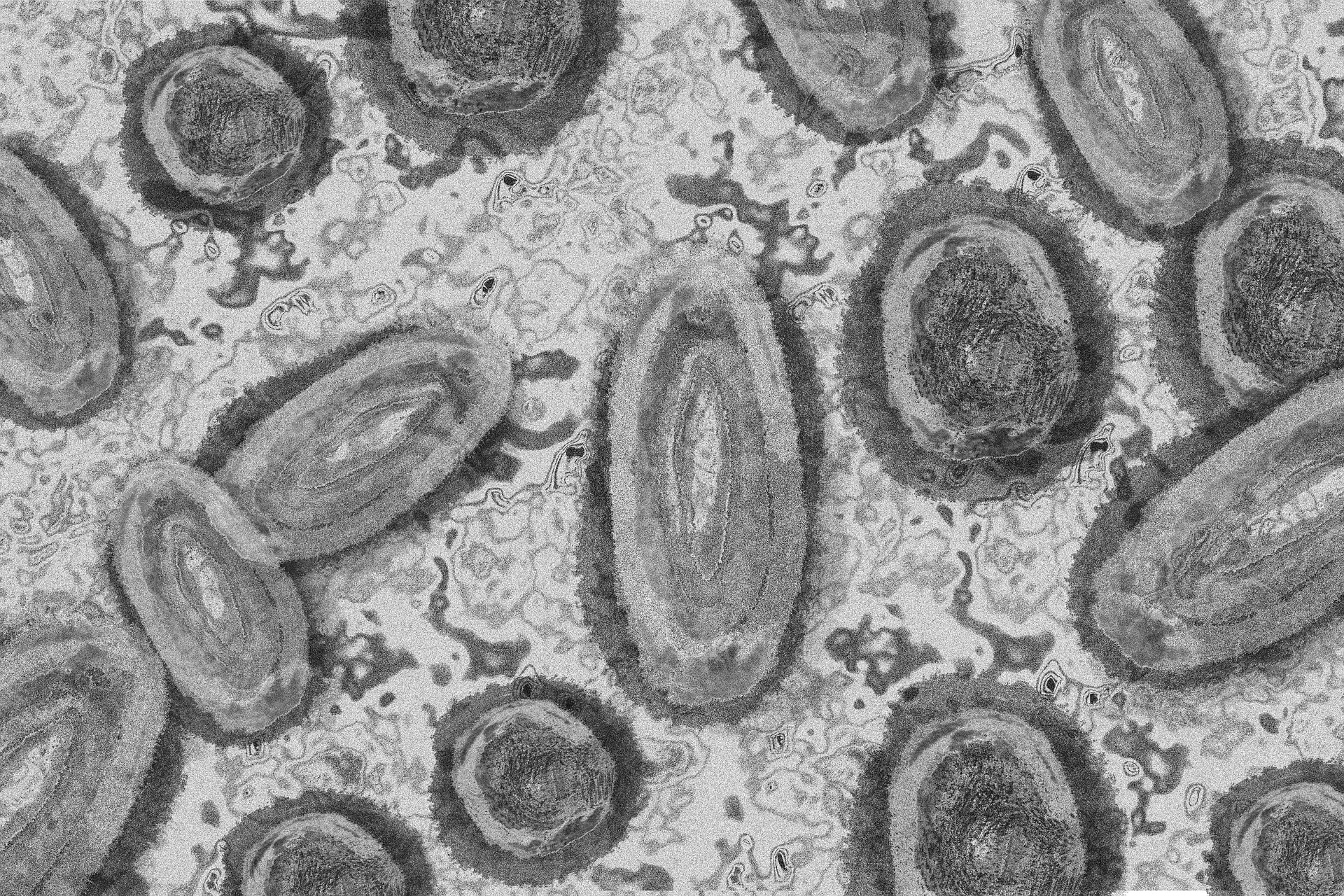
Monkeypox is a rare zoonotic infection caused by the monkeypox virus, which is in the same family as smallpox, but less severe than smallpox. Monkeypox is endemic to many Central and West African countries, however, there have been recent cases of monkeypox reported in non-endemic countries including the U.S., Canada and the U.K., as well as other parts of Europe and Australia.
Historically, monkeypox cases in the U.S. have occurred due to international travel and importation of animals. In 2021, the U.S., had two travel-related cases and 18 years prior, in 2003, there was an outbreak of cases associated with imported small mammals.
The monkeypox virus is spread to humans from infected humans, animals and materials contaminated with the virus. To learn more about monkeypox, visit the CDC at this link.
As California races to prevent the irreversible effects of climate change, some experts are questioning key policies that the state is counting on to meet its ambitious goals and accusing state officials of failing to provide substantial details to back up its claims.
The California Air Resources Board’s proposal, called a scoping plan, outlines policies that would transition the economy away from fossil fuels. The purpose of the plan is to fulfill state mandates to reduce planet-warming emissions 40% below 1990 levels by 2030 and achieve carbon neutrality by 2045.
In this year’s highly-anticipated climate policy blueprint, some critics say the state agency has not been transparent on how it plans to achieve its goals. The process has left legislators and others at the forefront of the climate discussion confused over the air board staff’s projections.
“The draft scoping plan does California a disservice,” said Danny Cullenward, an economist and vice chair of the Independent Emissions Market Advisory Committee, a group of five experts appointed by the governor and top legislators to assess the effectiveness of the state’s landmark cap and trade program. “It focuses on long-term goals at the expense of near-term action.”
At two recent state committee meetings, environmentalists, academics and climate policy experts who serve on state advisory panels voiced concerns over California’s approach to tackling the climate crisis. They called the plan incomplete, ambiguous and confusing.
In addition, in a letter sent Thursday to the Air Resources Board and Gov. Gavin Newsom, 73 environmental justice groups called the proposed scoping plan “a setback for the state and the world.”
“It fails to accelerate our 2030 and 2045 climate targets, and it fails to increase the pace of California’s actions beyond existing commitments,” the letter says. “We need a plan that transitions us away from the extractive, fossil-fueled energy system at the pace and scale demanded by climate science and environmental justice.”
The Air Resources Board did not send representatives to speak at either of the two meetings — a joint Senate and Assembly committee hearing and the emissions trading advisory committee.
But in a response to questions from CalMatters, air quality officials said the plan is a “guidance document” and that specific emissions reductions would be detailed when individual regulations are drafted.
“It is not a final document, nor intended to be. It is also not a regulation. It is a guidance document and as such leaves room for new information that may become available later,” said air board spokesperson Dave Clegern.
The debate pits those who want to mandate an end to fossil fuels against those who want an approach that relies more on market incentives and technology.
The plan focuses on increasing dependence on renewable energy, such as wind, solar and electric cars, and capturing carbon dioxide emitted by oil refineries and other industries.
The debate pits those who want to mandate an end to fossil fuels against those who want an approach that relies more on market incentives and technology.
Environmentalists have long viewed the use of carbon removal technology and cap and trade as continued investments in the fossil fuel industry. But others side with the oil industry, saying the state won’t be able to reduce carbon emissions fast enough without them. And across the political spectrum, many say the state’s approaches are too flawed to produce the results that the Air Resources Board says they will.
“In place of tangible strategies to reduce emissions, the draft plan aims to achieve far fewer emission reductions than other leading climate jurisdictions in the U.S. are already pursuing,” Cullenward said. “Nothing less than the future of California’s climate policy is at stake.”
The board plans to hold a public hearing on the plan on June 23 and vote in August.
Critics say staff haven’t provided much evidence of how some key components could work, including the state’s reliance on carbon removal and the role of its cap and trade program, which is a greenhouse gas market for industries that allows them to buy and sell credits.
Air board staff used modeling to predict how each sector of the economy will reduce its greenhouse gas emissions. In their draft plan, they say carbon removal technologies will help capture millions of tons of carbon dioxide at oil refineries and other industries that are difficult to decarbonize, such as cement.
The plan cites studies from Lawrence Livermore, MIT and other institutions about how the technology may work, but adds, “ultimately, the role for mechanical (carbon dioxide removal) will depend on the success of reducing emissions directly at the source.”
Air board officials included in their models that carbon capture technologies were deployed in 2021 and will ramp up quickly by 2030. The plan says about 2 million tons of carbon dioxide were captured in 2021 — even though no facilities exist in California.
But they acknowledged in the plan that this assumption was wrong: Use of the technology in California by 2025 is “unlikely, and those emissions will be emitted into the atmosphere.” They said they would revise their modeling in the final version.
No agreement on how well carbon removal works
Air board officials say reducing emissions alone won’t address the growing threat of climate change. The path to carbon neutrality cannot be achieved without extracting carbon dioxide from the atmosphere, according to their analysis. In their plan, by 2035, 5% of total emissions would be eliminated through carbon removal technologies, and that drops to 3.5% by 2045.
Carbon capture is the practice of collecting carbon dioxide emitted by smokestacks, transporting it in pipelines and injecting it deep underground for long-term storage so it does not warm the planet. (The practice is different from biological sequestration, where carbon dioxide is stored in natural habitats, such as vegetation, forests, wetlands and soil.)
The Air Resources Board’s staff’s preferred option, known as Scenario 3, projects that carbon removal technologies will capture nearly 80 million tons of carbon dioxide from polluting facilities per year by 2045. The scenario predicts that carbon removal infrastructure will be installed on most oil refineries by 2030 and on all cement, clay, glass and stone facilities by 2045.
A panel of experts speaking at a meeting of the Joint Legislative Committee on Climate Change Policies on Tuesday discussed the pros and cons of carbon capture and storage and how it could inform the types of policies lawmakers push for. Much of the hearing centered on the controversy behind the practice and whether it did more harm than good.
The panelists provided vastly different accounts on its effectiveness, frustrating some lawmakers, who said the comments were inconsistent.
“The frustrating thing for me is that we have conflicts on what we’re hearing today, so how do I do the right thing for my constituents or the environment?” said state Sen. Brian Dahle, a Republican from Lassen County who is running for governor. “That’s very challenging for a legislator, sitting here with four panelists not all agreeing as we’re trying to move to the future.”
George Peridas is director of carbon management partnerships at Lawrence Livermore National Laboratory, a federally-funded research facility. He said California is well-positioned to launch projects in parts of the state with deep sedimentary rock formations, including the Central Valley, which could serve as prime locations to store carbon dioxide.
“The Central Valley has a world class geology – that means just the right kinds of rocks for safe and permanent storage,” he said. “Carbon capture and storage is well-understood, heavily regulated, available for deployment today and has an overwhelmingly positive track record.”
Mark Jacobson, a Stanford University professor of civil and environmental engineering, told the legislators that the state is overstating the impact of carbon capture and storage, citing the capture rate of existing facilities that have produced much lower results.
He said the net capture rate is much lower because the fuels that are used to operate the equipment offset the emissions it swallows.
For instance, the Petra Nova carbon capture and storage project in Texas, which operates on natural gas, was designed to capture 90% of carbon dioxide. But the emissions generated from powering the plant bring down the capture rate to about 33%, according to the U.S. Energy Information Administration.
“Carbon capture and storage is well-understood, heavily regulated, available for deployment today and has an overwhelmingly positive track record.” — George Peridas, Lawrence Livermore National Laboratory
The Shell Quest carbon capture and storage project in Canada has also been widely scrutinized. The plant captured 5 million tons of carbon dioxide since 2015, but it also emitted 7.5 million metric tons of greenhouse gases over the same period – the equivalent carbon footprint of about 1.2 million gas cars, according to a 2022 report from Global Witness, an international watchdog organization. That means just 48% of the plant’s carbon emissions were captured, according to the report.
“It’s nothing close to what we would need to solve a climate problem,” Jacobsen said. “Completely useless.”
Sarah Saltzer, managing director of the Stanford Center for Carbon Storage and the Stanford Carbon Initiative, said the technology will improve in the coming decades. She said the state should streamline carbon removal projects to advance its carbon-reduction goals.
“We cannot rely on renewables alone as we do not have the capacity,” she said. “We believe that including carbon capture and storage and a wide range of portfolio options for reducing emissions of carbon dioxide provide a way to deal with hard-to-decarbonize sectors.”
In its analysis, air board staff said the facilities could have more benefits as they increasingly become powered by renewables and more companies start to invest in them.
Carbon capture “is nothing close to what we would need to solve a climate problem. Completely useless.” — Mark Jacobson, Stanford University
Carbon removal technology also has potential to produce hydrogen until the state can develop more hydrogen plants powered by renewables, according to the report. Most hydrogen today is produced by oil refining but officials expect the state will transition to “green hydrogen,”which is produced by splitting water atoms using renewable energy sources such as wind and solar.
Environmental justice groups say carbon capture will prolong dependence on the fossil fuel industry. They also worry pipeline ruptures and leakages and the continued operation of polluting facilities would keep harming the environment and health of nearby communities.
In a plea to lawmakers, Steven Feit, an attorney at the Center for International Environmental Law, said the state should not push for carbon capture projects if it truly seeks to phase out fossil fuels.
“Carbon capture and storage is pitched as one simple trick that can solve the genuine challenge of hard-to-abate emissions, but it may actually make the climate problem worse.” he said. “It will be a lifeline for emitting facilities and will lock in fossil fuels for decades to come.”
Jacobsen, of Stanford University, said the state should instead prioritize direct emissions reductions and renewables. “It can be done,” he said. “It’s far better to use renewable energy to replace fossil fuels.”
On the other hand, the oil industry is asking the air board to increase the plan’s reliance on carbon capture, saying it would ease the economic harm and job losses that would occur from phasing out fossil fuels.
“Our industry supports, invests in and is innovating towards more use of carbon capture technology,” said Kevin Slagle, a spokesperson for the Western States Petroleum Association, which represents oil and gas companies. “It’s simple, our state will not meet our climate goals without carbon capture and storage. This should be an area of agreement and opportunity rather than controversy.”
Implementing the scoping plan’s strategies would cost $18 billion in 2035, ramping up to $27 billion in 2045, the air board estimates.
Less reliance on cap and trade
The dispute over carbon removal mirrors a common refrain over the benefits of cap and trade.
In an earlier version of the scoping plan, air board officials in 2017 estimated about 38% of emissions reductions would come from cap and trade. But this year’s proposed plan leans more heavily on carbon removal technologies, a move that Cullenward said is “striking” considering the role the cap and trade program had in the past.
“The absence of an explanation is something that should be clarified,” he said at an Independent Emissions Market Advisory Committee meeting last week.
While the pace of emission reductions needs to more than triple to hit California’s 2030 target, just six pages of the 228-page scoping plan address how cap and trade is expected to contribute to that goal — with no detailed analysis of how significant that role will be.
“I continue to be frustrated by the lack of transparency and accountability from the Air Resources Board in this process overall.” — Catherine Garoupa White, state’s Environmental Justice advisory Committee
Air board officials said they will evaluate the cap and trade program in 2023 and provide more details after the scoping plan is voted on by the board this summer.
The cap and trade program, which puts a price on pollution, has long been a key state policy to reduce pollutants emitted by companies that are subject to state emissions caps. But it also has been widely criticized by legislators, analysts and environmental justice groups. For years, companies have been banking the credits that allow them to pollute, creating an oversupply of allowances in the system that could deter them from meeting future emissions targets.
Catherine Garoupa White, a member of the state’s Environmental Justice Advisory Committee, said the plan should have included substantial reforms to the program, including a tighter emissions cap, reducing the number of allowances currently in circulation, establishing no-trading zones in disadvantaged communities and eliminating the use of offsets and distribution of free allowances.
“I continue to be frustrated by the lack of transparency and accountability from the Air Resources Board in this process overall,” she said. “The explanation on cap and trade is very short and ambiguous in this giant document. The carbon market is unpredictable and there’s a lack of evidence that the program is going to provide the emission reductions that we need.”
Meredith Fowlie, a professor at University of California, Berkeley’s department of agricultural and resource economics who also serves on the state’s environmental justice committee, said it is critical to address concerns about the scoping plan and how cap and trade factors in sooner rather than later.
“The modeling is complicated…but given the high stakes, I think we’ve got to find a way to make it more transparent,” she said. “It’s essential that we tackle the issue right now.”
###
CalMatters.org is a nonprofit, nonpartisan media venture explaining California policies and politics.
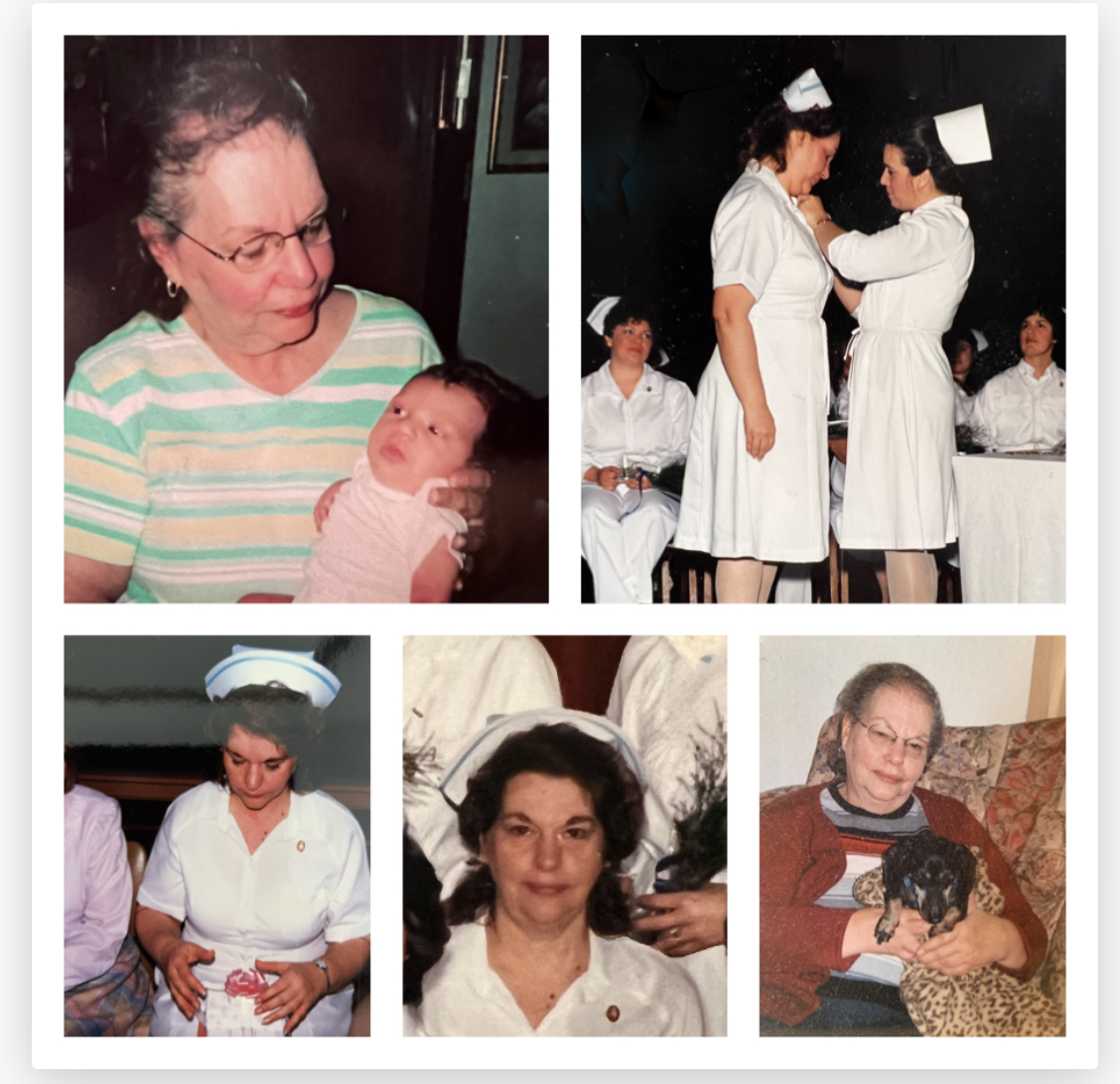
Our beloved mom/grandma/great grandma Lillian Caroline Hineline passed away on April 27,
2022 peacefully at her home in McKinleyville California from complications of Parkinsons. We
were around her, singing to her hymns her father used to sing and play on his guitar. She was
absolutely tough as nails, but also one of the most loving souls ever made.
Lillian was born on August 5, 1937 at the San Joaquin Valley Hospital in Rio Vista California to a
young couple named James and Violet Towers. She was the oldest of 5. She grew up in the
Central Valley attending school and playing in orchards with her younger siblings in that
beautiful region. As a teenager in the 50’s her family moved to Humboldt County where her
father started a career in the timber industry. Lillian lived in Humboldt ever since.
Shortly after high school she married her first husband Hugh Clawson and they began to raise a
family of three girls and a boy. Lillian enjoyed homemaking and being a young mom.
Lillian always had a heart for helping people. In her late 20s she started her career in
healthcare as a certified nursing assistant. She excelled greatly in this position.
At this time she met and married her second husband Richard Hineline Sr, had another
daughter, and became a stepmother to his son, and daughter. Lillian loved having a big family
and was always very attentive, creative, funny, and kind. She greatly loved large family
gatherings at birthdays and holidays.
Lillian decided to take her career to the next level and attended nursing school at College of the
Redwoods. She graduated in 1987 and began working MedSurg at General Hospital in Eureka.
She also worked at St. Lukes in Fortuna. This amazing lady worked full time as a nurse until
she was 72. Doctors she worked with nicknamed her “Diamond Lil” due to her excellent care of
patients, and it caught on quickly with her coworkers.
Lillian always set the best example of hardwork and caring. People were drawn to her and she
was always ready to lend an ear and help. She would be out at the mall, the bank, or grocery
store and people that were her patients would recognize her, and tell her she saved their life.
She said was just happy to help them.
Among many other great legacies, she is leader of three generations of nurses. She inspired us
all. Following in her footsteps are one of her daughters, a grandson, and a niece. Also one of
her granddaughters is preparing for nursing school.
Lillian adored becoming a grandmother and enjoyed taking them on shopping excursions. They
often pooped out way before she did! Lillian also cherished becoming a great grandmother. She
doted over and adored them all. The feeling was always mutual. One of her great
granddaughters is named after her.
Lillian loved movies and would frequent Broadway Cinema with her dear friend Phyllis with
whom she had many adventures including a long trip to the Bahamas. Lillian loved animals,
especially dogs, and they didn’t have to be hers. She had many great years with her beloved
miniature dachshund Buffy.
She is now celebrating in the presence of the Lord Jesus which brings immeasurable peace and
comfort. She attended many churches over the years with her kids, but knew true religion was
caring for people like Jesus said. Her lifetime career as a nurse was her ministry. Her love of
Jesus was so evident and she blessed so many.
She taught us strength in trusting God through hard times, and loss. She loved to be silly with
us. She loved everybody! She loved the sound of our chitter chatter. She just loved spending
time with us all. She was worried about leaving us all but ultimately she knows God will take
care of us. We love you sweet mom/grandma/ great gma Lillian! Until we see you again!
Lillian was preceded in death by her second husband Richard Hineline Sr., her son Michael Ray
Clawson, her granddaughter Jennifer Lynn Evenson, her parents James and Violet Towers, her
brother Jim Towers, and her uncle Walter Towers.
Lillian is survived by her children; Cheryl Dixon (Paul), Jodi Evenson (Bill), Gloria Clawson,
Darcie Barone (Jeremy), and stepkids Tammy and Rick Hineline, grandchildren; Ken Michna
(Gina), Joey (Maggie), Kenny (Hannah), and Isaac Dixon, Andrew Gallion, Sarah Campbell
(Steven), Charity Clawson, Billy Evenson Jr. (Angela), Jessica Vicario (Jeremy), Timothy
(Abbey), Thomas (Jenny), and Taylor Kennon, Amy Barone-Cobb (Tyler,) Emily Dittmar (Devin),
Isabelle Barone, great grandchildren; Hollie, Sophia, Zoey, Emma, Connor, Carson, Cayden,
Billy III, Katy, Gavin, Ayvin, Yisrael, Lilly, Zaine, Olivia, Adeline and Alice, her brothers; Guy
(Alice), Ben, and Lee Towers (Kathy), her nephews; Grant (Kathy), and Glen Towers, her nieces
Stephanie Rumley (Brad), Tiffany Towers, and many great nieces and nephews.
Lillian is also survived by her dearest lifelong friends Phyllis Dorey, Gail Glasscock, and their
families, along with many other friends.
A celebration of life will be held on June 25th 2022 at the home of her daughter in Cutten at
1PM. All friends and family of Lillian are welcome! Please call or text 707-832-3618, or send
message on Facebook @LillianHineline to RSVP and get info if you would like to attend. Family
wants to make sure there is plenty of food and good parking. It will be a relaxed outdoor
barbecue with kid’s activities and sharing our favorite stories about her because that is what she
specifically asked us to do! Please feel free to share photos and/or stories to her Facebook
page.
In lieu of flowers please make a donation to your favorite charity that benefits people or dogs.
Her family would also like to thank Redwood Coast PACE, Hospice, Mad River Community
Hospital, and Agape Home Care for excellent help in mom’s times of need. Especially her
dedicated caregivers Cory, Iris, Ariella, Donna, and Crystal.
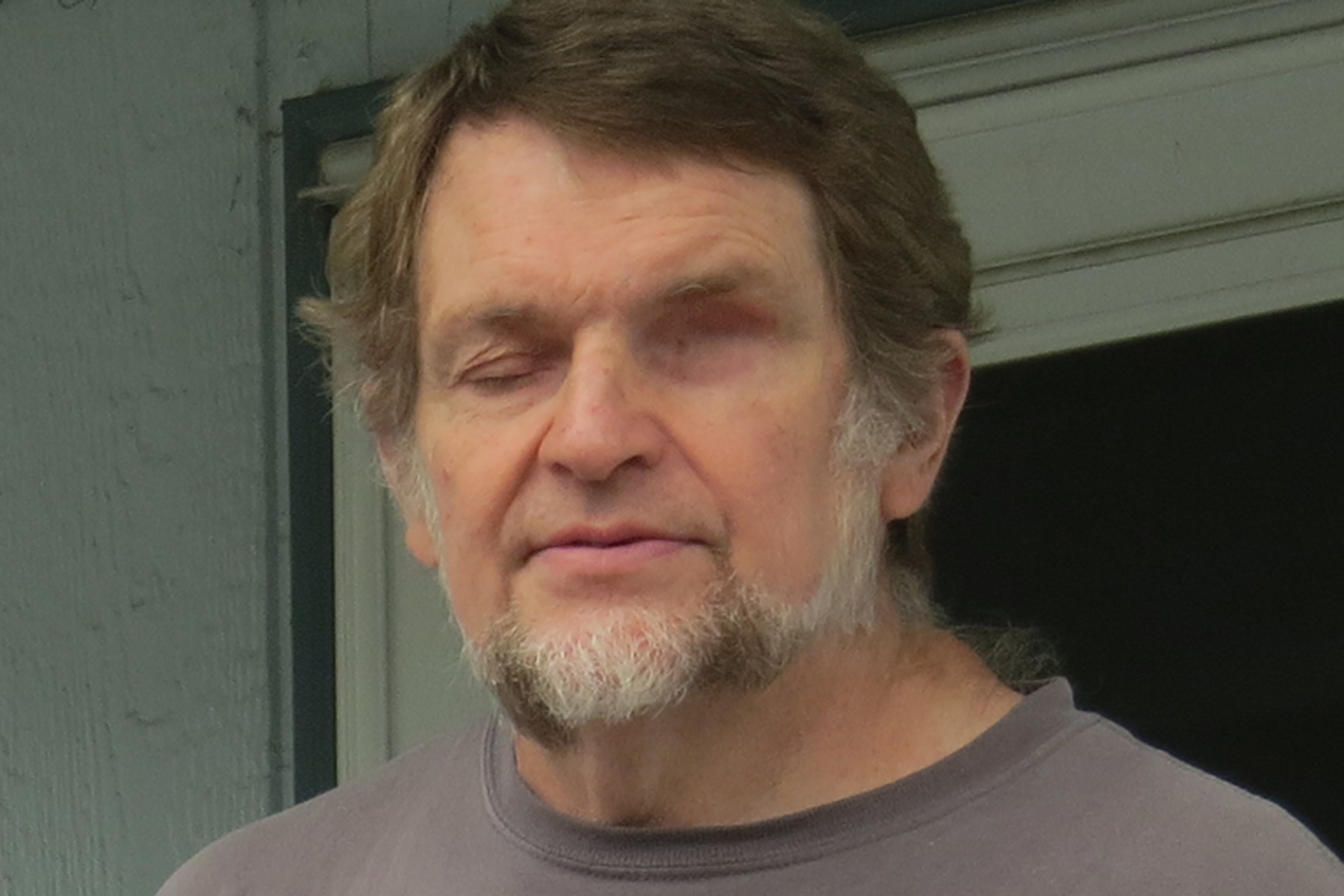
A celebration of life will be held for Douglas Dean Rose on June 11, 2022 at Northwoods MHP, Mckinleyville from 1 to 4 p.m. It will be outdoors in one of the cul-de-sacs. Finger foods will be provided and a brother and sister will be in attendance.
Doug and his wife, Patti Walker Rose moved to Mckinleyville in 1996 so that she could attend HSU. They fell in love with Humboldt and decided to stay.
Doug was born in Sioux City, Iowa on Oct. 26, 1958 and spent his last few hours at Hospice House, Eureka where he passed on April 8, 2022.
He is survived by 3 brothers, Russell Allen of Fresno, Dennis Eugene of Sioux City, Duane Leslie of Long Beach and his sister, Patricia Ann Fritz of Lincoln, Nebraska.
He is preceded by his parents, Gerald Vallie & Glora Alma ne Stewart of Homer, Nebraska and his oldest brother, Keith Rose of Homer.
Doug attended Nebraska Center for the Education of Children who are Blind or Visually Impaired in Nebraska City, where he graduated in 1977. He received his BS in psychology from Cal State Long Beach in 1983.
His passion was technology and he went on to do tech support for Packard Bell Computers, Net Help of Eureka, Humboldt Access and Lighthouse for the Blind and Visually Impaired in San Francisco. He had a technology-for-the-visually-impaired business where he contracted with the California Dept. of Rehabilitation. In later years he and Patti owned Rosepond Aquatics. They grew water plants, did pond maintenance/repair and pond consulting.
He volunteered with Reading Service of the Redwoods, Humboldt Council of the blind, Eyes Have It support group at the Mckinleyville Sr. Center, the North Coast Water Garden Club and several phone-based support groups through Well Connected.
He loved working in his shop. He built fences, laid brick walkways & patios, dug ponds with circulating water systems, did normal home maintenance jobs and kept up with his honey-do list.
He was a constant inspiration to the people around him and was loved by everyone he met. He had a kind and patient demeanor peppered with age old wisdom. He will be missed by everyone that knew him.
###
The obituary above was submitted by Doug Rose’s loved ones. The Lost Coast Outpost runs obituaries of Humboldt County residents at no charge. See guidelines here. Email news@lostcoastoutpost.com.
Mary Ellen LeVaugh November 14, 1936 - May 26, 2022
Mary Ellen LeVaugh, loving sister, mother, grandmother and great-grandmother, died on May 26, 2022, at St. Joseph Hospital.
Mary was born on November 14, 1936 to Manual and Mary (Hamilton) Serra of Crannell. Mary resided in Humboldt County all of her life, living in Crannell, Trinidad and Eureka. She spent many working years caring for others at Redwood United, until she retired in 2001. She loved soaking up the sunshine, doing jigsaw puzzles, and just being around her family. Her great grandchildren were the light of her life, and she enjoyed spending time with them whenever she could.
She is preceded in death by her daughter Tamara Dillard, son Charles LeVaugh and grandson Charles (CJ) Levaugh Jr.
She is survived by her sisters Viola (Gracie) Serra of Crescent City and Shirley Serra of Eureka; her daughter Charlotte LeVaugh-Paul and Peter Gray of Eureka; her daugher-in-law Allison LeVaugh of Eureka; grandchildren Tallie Noble and her husband Aaron Langston of Oceanside, Donald LeVaugh and Amber Sanchez of Eureka, and Charae Meeks and her husband Michael Meeks of Palmdale. She is also survived by her great grandchildren Allen, Kayleigh, DJ, & JC LeVaugh, Spencer & Riley Meeks, and many other relatives.
Special thanks to our cousin Roxie Burres for always being there for Mom. Your love and support have helped immensely.
A private celebration of life will be held in July for her immediate and extended family.
###
The obituary above was submitted by Mary LeVaugh’s loved ones. The Lost Coast Outpost runs obituaries of Humboldt County residents at no charge. See guidelines here. Email news@lostcoastoutpost.com.
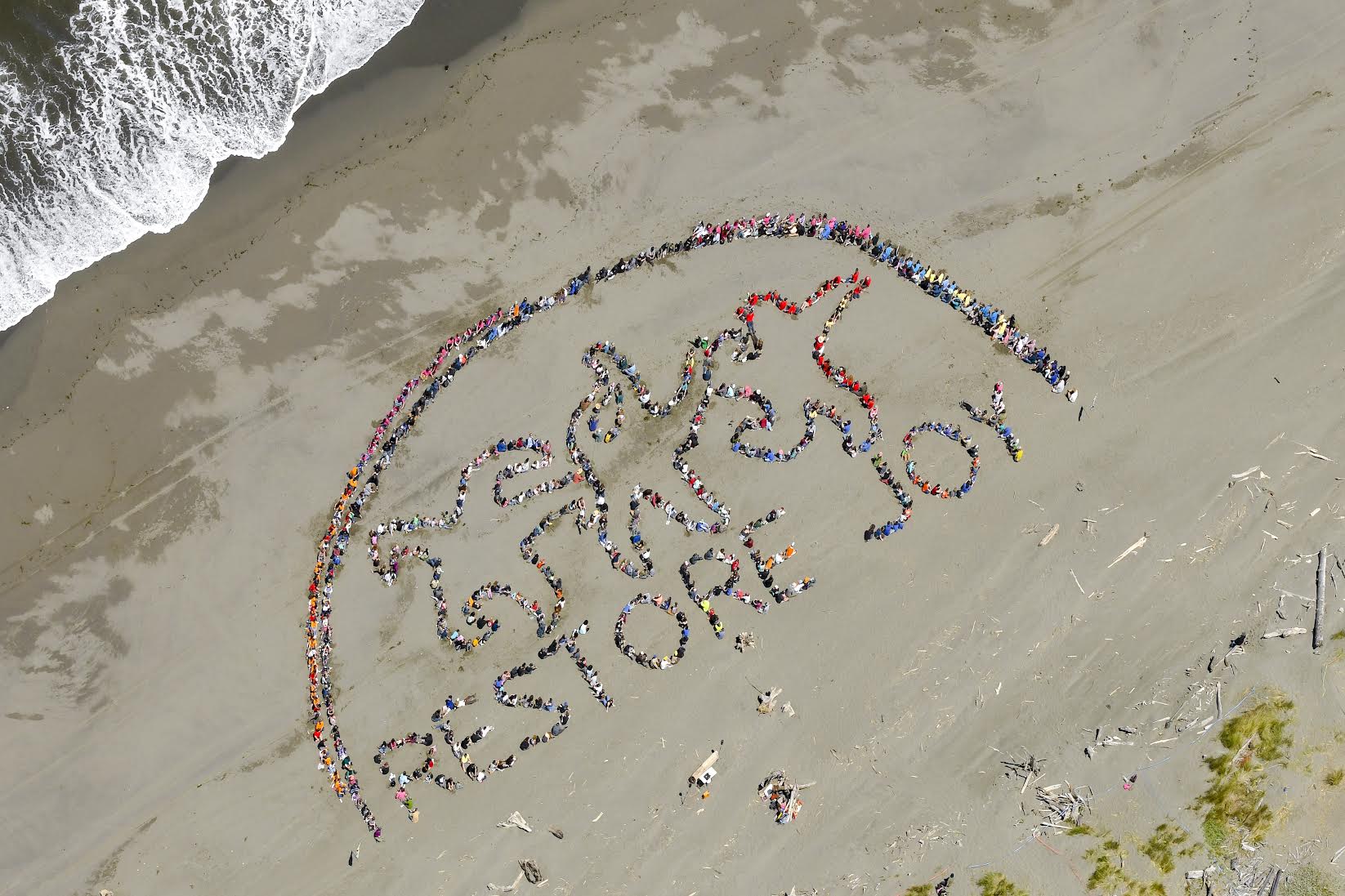
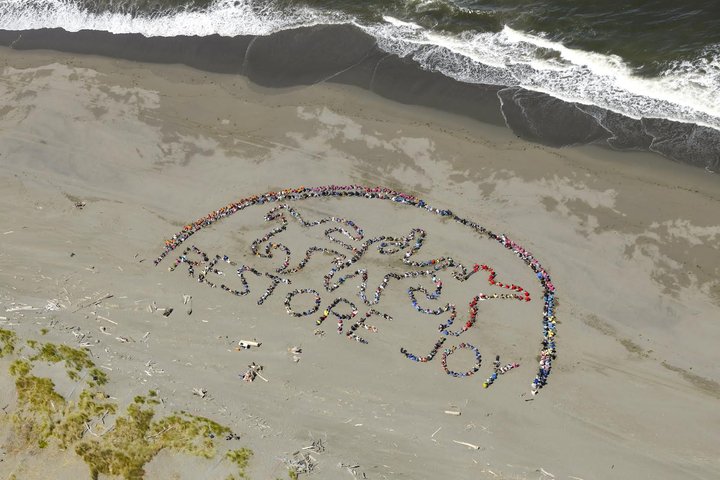
About 700 local students spent their school day caring for the coast during the 17th Annual Kids
Ocean Day event at the Mike Thompson Wildlife Area, South Spit of the Humboldt Bay. After
spending the day restoring dune habitat and picking up trash, students, teachers, and volunteers
formed three ochre sea stars with the message “Restore Joy.” Local pilot Mark Harris flew over
while photographer Patrick Cudahy captured the image.
Friends of the Dunes and the Bureau of Land Management Arcata Field Office organized the
Kids Ocean Day event locally, with help from the California Conservation Corps, California
State Parks Lifeguards, and US Fish & Wildlife Service. The Humboldt County event was part
of the statewide Kids Ocean Day program funded by the California Coastal Commission, a series
of student cleanups and aerial art displays at five sites along the California Coast. Across the
state, students received classroom presentations highlighting the biodiversity of California’s
coastal environments, how we are connected to these habitats through watersheds, and the
importance of protecting our coast and ocean. Kids all along the coast of California participated
in beach cleanup events throughout late May and early June, leading up to World Ocean Day on
June 8, a global day of ocean celebration and collaboration for a better future. In Humboldt
County, students participated in a day of ecosystem restoration, removing non-native invasive
plant species to create space for native biodiversity, along with trash removal. This year each site
focused on a message of Joy.
Our image of three ochre stars (Pisaster ochraceus) was chosen because these ocean animals
were hit hard by a sea star wasting syndrome almost 10 years ago with huge die-offs along the
west coast. In recent years, populations of sea stars have been recovering and they are once again
becoming a common sighting on northern California beaches. “This is our 17th Annual Kids
Ocean Day event in Humboldt County, and our first time back since 2019. This is our comeback
story, much like the ochre sea stars, and I am so proud to be a part of it.” said Emily Baxter,
Friends of the Dunes Education Coordinator. “During this event students from all over Humboldt
County come together to not only be coastal stewards but also to have fun! For many of these
kids, this is one of their first field trips since coming back to school full time, so we are excited
to bring back a joyous occasion that they look forward to every year.”
“It’s so wonderful that we are able to hold this event once again,’’ said Coastal Commission
Chair Donne Brownsey. “The students who take part in Kid’s Ocean Day are demonstrating how
to be good stewards of our precious coast and ocean, and reminding us of the joy of connecting with nature. They are truly role models.” The Coastal Commission provides financial support to
Kids Ocean Day efforts statewide with proceeds from the Whale Tail License Plate and
voluntary donations on the state tax return to the Protect Our Coast and Oceans Fund.
Participating Schools included: Blue Lake Elementary, Bridgeville Elementary, Fuente Nueva
Charter School, Jacoby Creek, Loleta, McKinleyville Middle, Pacific Union School, Redway
Elementary, Sunny Brae Middle School, Walker (South Fortuna) Elementary, and Washington
Elementary.
Friends of the Dunes is dedicated to conserving the natural diversity of coastal environments
through community supported education and stewardship programs. Projects include the Bay to
Dunes school education program, Dune Ecosystem Restoration Team and the Humboldt Coastal
Nature Center. For more information visit friendsofthedunes.org.
The Bureau of Land Management’s Arcata Field Office is responsible for the administration of
natural resources, lands, and mineral programs on approximately 200,000-acres of public land in
Northwestern California. The Area includes the 60,000 acre King Range National Conservation
Area and the 7,472-acre Headwaters Forest Reserve.
This annual event was started by the Malibu Foundation for Environmental Education and the
California Coastal Commission in Los Angeles in 1994. With funding from the Whale Tail
License Plate, this program expanded to the North Coast in 2005. The program focuses on
reaching children in underserved and inland schools.
The California Coastal Commission is committed to protecting and enhancing California’s coast
and ocean for present and future generations. It does so through careful planning and regulation
of environmentally-sustainable development, strong public participation, education, and effective
intergovernmental coordination. The Kids’ Ocean Day program is part of the Commission’s
effort to raise public awareness of marine and coastal resources and promote coastal stewardship.
Funding for this program comes from sales of the WHALE TAIL® License Plate and donations
to the Protect Our Coast and Oceans Fund on the California state tax return. For more
information about the California Coastal Commission’s programs and how to buy a Whale Tail
Plate, call (800) COAST-4U or visit www.coastforyou.org.