

OBITUARY: Anne C. Reynolds, 1935-2021
LoCO Staff / Saturday, Jan. 23, 2021 @ 5:56 a.m. / Obits

On January 3, 2021, Anne C. Reynolds (“Chris”) passed away due to complications from cancer.
Born in 1935, Chris grew up and was raised with her sisters in Schenectady, N.Y. She graduated Mont Pleasant High School and completed some secondary schooling prior to marrying Eugene Reynolds. Chris and Gene moved to California immediately after their wedding where they found gainful employment with Hughes Aircraft Co. and raised five children. Chris made an impact on many. As a Girl Scout Leader for her older daughter, “Sarge” encouraged many young ladies to earn their Junior, Cadette, and Senior badges, fostering future leaders. Chris was also very impactful with her daughters’ Bobby Sox Softball leagues. She was official scorekeeper, manager, concessions manager, fan, and consoler, on occasion. Chris worshipped our Lord in St. Irenaeus Catholic Church where she and her family donated countless hours to the success of the annual church fiesta. After working over 20 years, Chris retired as a technical writer from Hughes Aircraft Co.
Chris relocated (with Gene) to Harts Acres, a multiacre ranch in Humboldt County. There she continued her philanthropy by knitting and crocheting hats and blankets for the newborns, and leading a recycling campaign, raising funds for a local church. When not surrounded by skeins of yarn, Chris cultivated a large garden from which she produced various kinds of home canned goods. These she also shared with the less fortunate.
Chris was preceded in death by her husband, Gene, and her parents, Stephen and Ann. She leaves behind her five children - Debra (Greg), Michael, Monica (Greg), Veronica (Robert), and MaryAnn (Jay); five grandchildren – Gregory (Karen), Joshua (Lauren), Matthew, April (Mark) and Alex; four great grandchildren – Bayler, Tyler, Weston and Noa; and her two sisters – Veronica and Kathleen.
Visitation will be held at Acheson & Graham in Riverside on February 4th, 2021 at 9 a.m. with the Rosary starting at 10:30 a.m. Services will be held at St. Catherine’s Church in Riverside, CA on February 4th, 2021 at 11:30 a.m. Burial services will be held at Riverside National Cemetery, February 4th, 2021 at 1:30 p.m. Unfortunately, there is a 10-person limit at the burial service. If you wish to attend, they request you stay at or in your car as the family members will be the only people permitted at the service site.
It’s the family’s wishes to donate to UC Davis Comprehensive Cancer Center at this link.
###
The obituary above was submitted on behalf of Chris Reynolds’ loved ones. The Lost Coast Outpost runs obituaries of Humboldt County residents at no charge. See guidelines here.
BOOKED
Today: 8 felonies, 7 misdemeanors, 0 infractions
JUDGED
Humboldt County Superior Court Calendar: Today
CHP REPORTS
Us199 / Kings Valley Rd (HM office): Trfc Collision-1141 Enrt
ELSEWHERE
Governor’s Office: Governor Newsom signs bills to keep strengthening security and safe access for California’s faith and nonprofit communities
RHBB: Five Victims and the One Survivor of Fatal 299 Crash Identified
RHBB: Free Health Care Clinic Responds to Humboldt’s ‘Startling’ Needs
RHBB: PG&E Helicopters to Hover Over Humboldt for About a Month
Remains of 31-Year-Old Humboldt County Woman Found in Rural Oregon
LoCO Staff / Friday, Jan. 22, 2021 @ 4:31 p.m. / News
Press release from the Yamhill County Sheriff’s Office:
On January 18th, shortly before 9:00 a.m., a Yamhill County citizen located a suspicious object near the entrance to Stuart Grenfell Park, which is located at the intersection of Highway 18 and Harmony Road in rural Sheridan. The property owner promptly called law enforcement.
Yamhill County Deputies arrived on scene and began an investigation, eventually requesting response from the Yamhill County Sheriff’s Office Special Investigations Unit (SIU). SIU members identified the contents as human remains. The remains were removed from the scene and transported to the Oregon State Medical Examiner’s Office.
On January 19th the remains were confirmed to be that of an adult female. The female was later identified as 31-yr old Mariah Diane Lindgren. The last known address for Lindgren is Humbolt County, California. Lindgren was known to have been in the Grand Ronde and Willamina areas for the past few weeks.
Anyone who may have had contact with Lindgren or noted any suspicious activity in the area of Stuart Grenfell Park on or around January 18th is encouraged to contact the Yamhill County Sheriff’s Office at 503-434-7506. Please reference case number 21-171.
The Yamhill County Sheriff’s Office was assisted with the investigation by the Oregon State Police and the West Valley Fire District.
This investigation is ongoing.
Lanphere and Ma-le’l Dunes Designated National Natural Landmarks by U.S. Department of the Interior
Ryan Burns / Friday, Jan. 22, 2021 @ 2:21 p.m. / Environment , Government
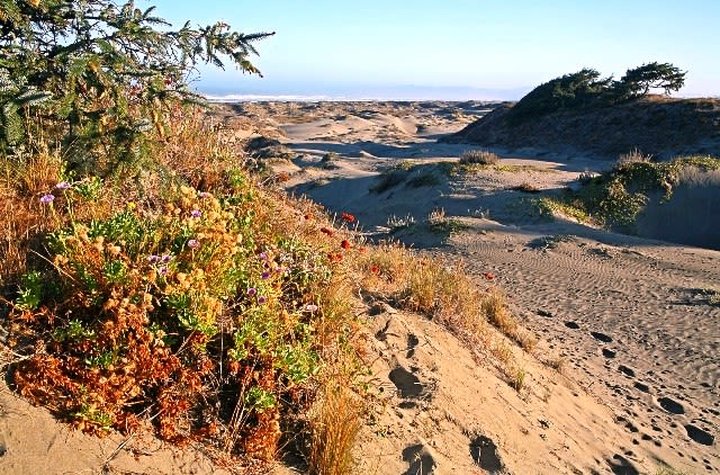
Lanphere Dunes. | Photo courtesy the Humboldt County Visitors Bureau.
###
On Tuesday, the final day of the Trump administration, Secretary of the Interior David L. Bernhardt honored the natural beauty and ecological value of Lanphere and Ma-le’l Dunes by designating them national natural landmarks.
The National Natural Landmarks Program, managed by the National Park Service, recognizes sites that have “outstanding biological and geological resources” while encouraging their conservation.
“It’s a way of recognizing truly special places that are of national significance,” said Mike Cipra, executive director of the nonprofit Friends of the Dunes.
The undulating sand mounds, woody swales and verdant wetlands of Lanphere and Ma-le’l Dunes, located on the Samoa Peninsula west of Arcata, are home to a remarkably diverse array of native flora. Coniferous and riparian forests rise above patches of pale green reindeer lichen, blooming sand verbena and Menzies wallflower, to name just a few species.
Cipra noted that with Friends of the Dunes’ recent acquisition of the 357-acre Samoa Dunes and Wetlands, there are now 1,600 contiguous acres of coastal dune habitat being preserved for conservation purposes.
Regarding the dunes’ designation as national natural landmarks, Cipra said, “I think it just reminds us that what we have here in Humboldt County, with these coastal dunes, is truly extraordinary and a treasure for all of us.”
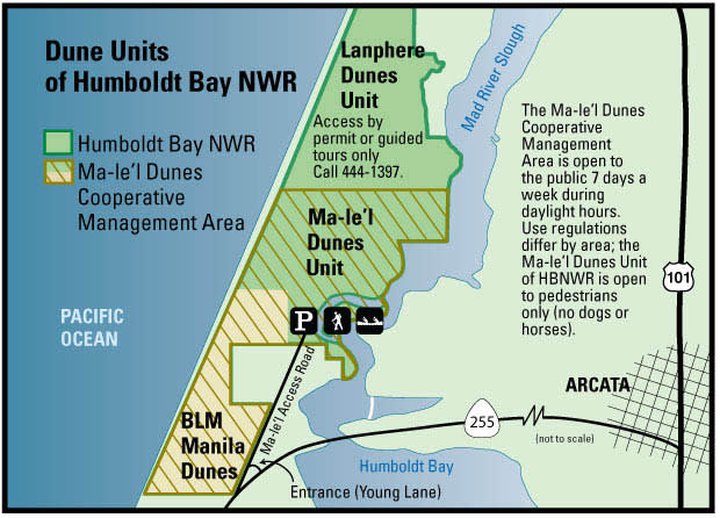
The Lanphere Dunes and Ma-le’l Dunes are part of the Humboldt Bay National Wildlife Refuge, managed by the U.S. Fish and Wildlife Service, though the southern section of the Ma-le’l Dunes are on land owned by the federal Bureau of Land Management and managed cooperatively.
Jennifer Kalt, executive director of the nonprofit Humboldt Baykeeper, was excited by the designation news.
“We are really so lucky to have these places so close by and in such intact condition,” she said. “They’re really unique and amazing places and unlike anything else really I’ve ever seen anywhere.”
The designation may also make the landmark ecosystems eligible for more government funding to improve conservation, she said, adding, “We need to protect the places that have so much of their value still left.”

Dune field at Lanphere and Ma-le’l Dunes. Photo by Andrea Pickart, courtesy U.S. National Park Service.
###
It may seem like odd timing that this designation was made on President Donald Trump’s last day in office. In the announcement, Secretary Bernhardt said, “The Trump Administration has prioritized conservation since day one, and we have made historic progress to improve conservation stewardship nationwide.”
In fact, the Trump administration revoked or rolled back more than 100 environmental rules, with the Interior Department working “to open up more land for oil and gas leasing by limiting wildlife protections and weakening environmental requirements for projects,” according to an analysis by the New York Times.
Bernhardt, a former lobbyist for the oil and agriculture industries, has been widely accused of pushing policies that benefit his former clients. According to Outside magazine, he spent years fighting for the rollback of Endangered Species Act protections for the Delta Smelt in the Central Valley on behalf of Westlands Water District.
So how did this landmark designation come to fruition under his watch? Local environmental advocates credit the years, even decades of advocacy from stakeholders in the U.S. Fish and Wildlife Service, the National Park Service, the BLM and various Humboldt County environmental organizations.
In a Jan. 21 letter to Kalt at Humboldt Baykeeper announcing the designation, Ray Sauvajot, associate director of Natural Resource Stewardship & Science at the Interior Department, sang the praises of the dunes, noting that they “contain virtually all the species of vascular plants typical of dune systems in northern California and southern Oregon.”
He added, “This 834-acre site is home to several rare species, including one of the best remaining populations of the endangered Menzies wallflower (Erysimum menziesii) and beach tidy-tips (Layia carnosa).”
The letter says designation as a national natural landmark (of which there are now 602) is intended “to encourage and support conservation of these nationally significant sites.”
The Ma-le’l Dunes are open to the public every day from sunrise to sunset. To visit the Lanphere Dunes you’ll need a permit, or you can attend a guided tour by contacting Friends of the Dunes at (707) 444-1397. More info is available on the organization’s website.
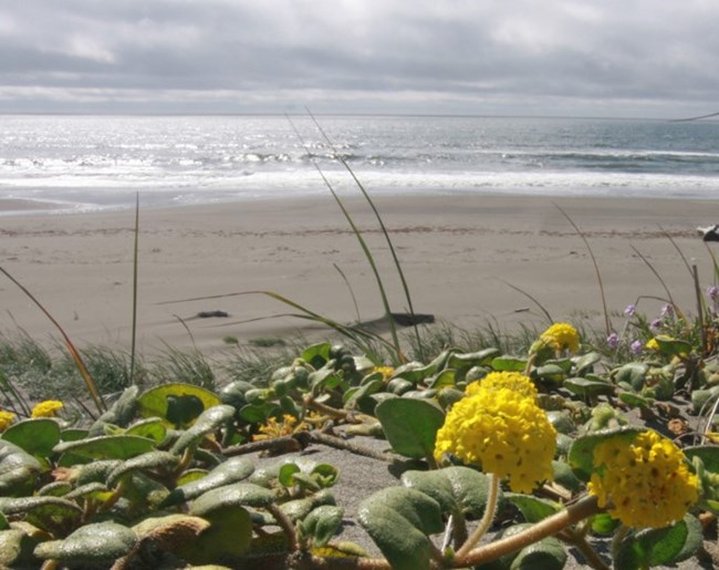
Yellow sand verbena along the beach at Lanphere and Ma-le’l Dunes. Photo by Andrea Pickart, courtesy U.S. National Park Service.
Eureka Man Arrested in Connection With Last Week’s Shooting on West Del Norte Street; Police Will Ask for Attempted Murder Charges
LoCO Staff / Friday, Jan. 22, 2021 @ 1:55 p.m. / Crime
PREVIOUSLY:
###
From the Eureka Police Department:
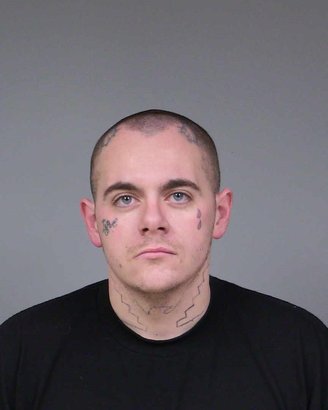
During the investigation into the January 14, 2021, attempted murder shooting, a Eureka Police Department Detective was able to positively identify 26-year-old Braylan Lanier of Eureka as the shooter.
On January 21, 2021, at approximately 5:40 pm, while on surveillance in the vicinity of Harris and “K” Streets in Eureka, the Eureka Police Department’s Problem Oriented Policing (POP) unit, assisted by agents from the Humboldt County Drug Task Force, witnessed Lanier enter a market in the 3100 block of “K” Street. Detectives entered the market and took Lanier into custody without incident for Attempted Murder. During a search of Lanier, POP Detectives removed a loaded firearm from Lanier’s person. Detectives also located and seized approximately 13 grams of heroin packaged for sale and 3.7 grams of Fentanyl.
Lanier was transported and booked at the Humboldt County Correctional Facility for Attempted Murder, possession of controlled substance for sale, transportation of controlled substances, possession of a controlled substance while armed, and felon in possession of a firearm as well as ammunition. Lanier is being held without bond.
State Activates Vaccine Clearinghouse Website
Barbara Feder Ostrov / Friday, Jan. 22, 2021 @ 11:23 a.m. / Sacramento

National Guard members and medical personnel administer COVID vaccines to health care workers at a drive-through distribution site at Cal Expo in Sacramento on Jan. 21, 2021. Photo by Anne Wernikoff, CalMatters
###
Facing criticism for its chaotic COVID-19 vaccine rollout, California has quietly launched a long-promised statewide website to help residents learn when they are eligible to receive the vaccine and schedule appointments.
Called MyTurn (myturn.ca.gov), the online registry has not yet been widely promoted and still is a work in progress. Gov. Gavin Newsom was expected to formally unveil the registry this week.
Californians can immediately register on the website to be notified when it’s their turn for the vaccine in a number of counties. But for now, it only can be used to schedule appointments in Los Angeles County — and then only if they are health care workers or aged 65 and older.
MyTurn is expected to improve in the coming weeks as more counties are able to link their registration systems to the state’s online platform. At least one local official has alerted their constituents to it, but the state has not yet announced or publicized it.
The website advises people without email addresses or a mobile phone to call the state’s COVID hotline at 833-422-4255.
MyTurn serves as a clearinghouse for residents, a one-stop place to get information that until now has been scattered over 58 counties and three cities. State officials largely have left the on-the-ground logistics of vaccine distribution to local health departments that have partnered with local health providers.
As a result, Californians have had to navigate numerous online registration or notification systems managed by county and city governments, hospitals and even supermarkets. They have spent hours on screens and on the phone, fruitlessly searching for appointments. Some online platforms have buckled under the strain, going dark for hours at a time.
“It’s been frustrating,” said Diane Mendoza, a school transportation manager from Visalia. Earlier this week, she spent hours online and on the phone to get a vaccine appointment for her 82-year-old mother.
MyTurn is expected to improve in the coming weeks as more counties are able to link their registration systems to the state’s online platform.
The fragmented and confusing rollout prompted a group of tech workers to launch their own statewide information portal, VaccinateCA.com.
“It’s been a blur,” Manish Goregaokar, a Berkeley software engineer and one of the site’s organizers, said of the site’s rapid growth since its launch last week.
“I really wish this (rollout) was more coordinated and that we’d prepped for this more,” Goregaokar said. “We didn’t know when it would be ready but we knew that at some point there is going to be a vaccine. The logistics of this should have been figured out.”
More than 100 volunteers are now vetting information on the site, Goregaokar said.
“This kind of haphazard way of getting the vaccine out just creates enormous frustration and is unnecessary,” said Dr. John Swartzberg, an infectious disease specialist at UC Berkeley.
Dagny Ellenberg, vice president of Fiona Hutton & Associates, a Sacramento public affairs firm that develops campaigns for state agencies, said a state-run registration site could be useful but had a caveat.
“In a perfect world, anyone in the state could use a single resource, but I think we’ve all lived through large-scale health care rollouts, like Healthcare.gov, and seen the confusion that can result,” Ellenberg said. “Technical glitches can overshadow the good that’s trying to be accomplished. It would be incredibly important to make sure it can be rolled out in a way that’s effective and avoids glitches.”
###
CALmatters.org is a nonprofit, nonpartisan media venture explaining California policies and politics.
Fortuna’s Community Garden is Moving to a Cool New Location, Where it Will Provide Educational Opportunities for Kids and Feed the Community
LoCO Staff / Friday, Jan. 22, 2021 @ 10:51 a.m. / Food
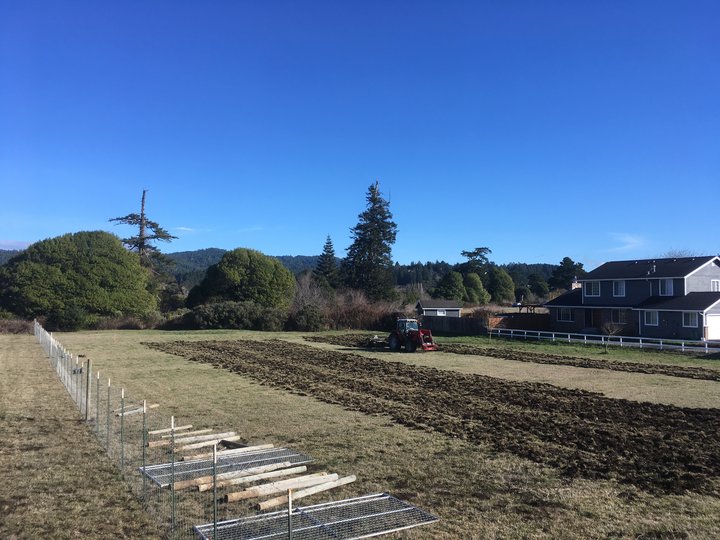
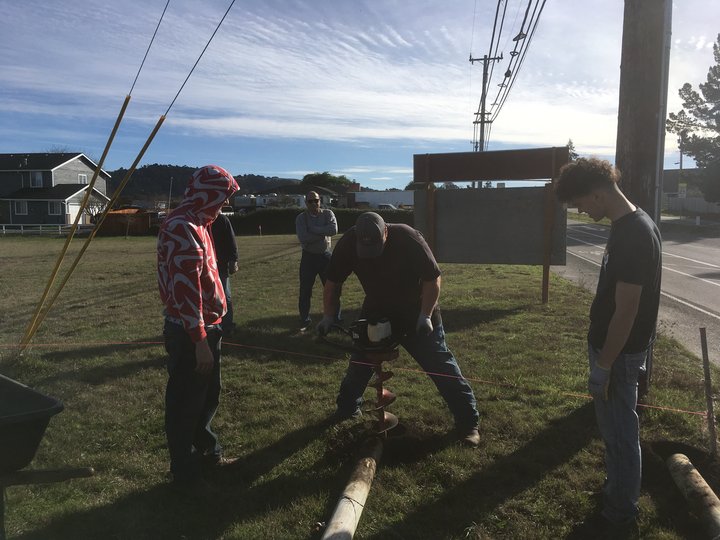
Photos: Fortuna SDA Church.
###
Press release from the Fortuna Seventh-day Adventist Church:
The Fortuna Community Garden Is Moving
The Fortuna Community Garden is moving to a new location. Rhonda Lewis, director of the Community garden says, “The move will give us an opportunity to expand our present garden to better serve the community. The community garden began nine years ago when Steve Palecki contacted the Seventh-day Adventist Community Services, located at 2331 Rohnerville Road and presented the idea to them. The Fortuna Catholic Church under Father Ramon Pons at that time volunteered the property on Newburg Road to host the garden. Through hard work, many sacrifices, and the support of the community, the garden expanded. It provides for not only the families who participate in it, but also provides food for the St. Joseph’s Catholic Food Pantry and the Seventh-day Adventist Community Service’s food pantry.
The Community Garden’s new location will be 1200 Ross Hill Road, on the campus of Fortuna Junior Academy, with Sean Todd heading it up. Sean was a student of Steve Palecki at College of the Redwoods garden. Steve Palecki brought Sean onboard at the Fortuna Garden. Sean mentored under Steve for well over a year. In addition, he continues to work at the College of the Redwoods garden and the Open Door clinic garden. Sean has a heart for these gardens and those it serves. Jamie Burzo, principal of Fortuna Junior Academy said, “Having the Community Garden on campus will be a great opportunity for our students to learn about science, their environment and God as well as helping our community.”
Pastor Dan Freedman from the Fortuna Seventh-day Adventist Church thanked St Joseph’s Parish and the Catholic Church for their nine years hosting the garden on their property. Father Eddie and Pastor Dan look forward to working together on more projects to help their community.
Moving the garden began in late December. By next spring the garden will be ready to re-open and serve the community. The Community Garden wants to thank everyone for their support and looks forward to its best year ever in 2021. For information e-mail Sean Todd at stodd@fortunaacs.com . We also want to take this time to thank Steve Palecki for his numerous years of managing the garden and building it up to where it is today. We wish him and his wife blessings and success in their move to Oregon.
California’s Bill for Fighting Trump in Court? $41 Million So Far
Byrhonda Lyons / Friday, Jan. 22, 2021 @ 7:52 a.m. / Sacramento

California Attorney General Xavier Becerra filed 100 lawsuits against the Trump administration. Photo by Gage Skidmore via Flickr (Creative Commons license); Anne Werrnikoff, CalMatters
###
California has spent $41 million over the past four years fighting the Trump administration over its regulations and rollbacks involving climate change, immigration, consumer rights and more.
During Donald Trump’s presidency, California Attorney General Xavier Becerra filed lawsuit after lawsuit, challenging the various federal agencies that set new national policies.
The costs are “almost entirely” personnel hours, which include work by Justice Department attorneys, legal secretaries, paralegal analysts and special agents, a Department of Justice spokesperson said. Also included were costs of printing, travel and facilities. It’s unclear if there were any outside consultant or expert witness costs, too.
“From Day 1, our team at CA DOJ has protected our public lands, natural resources and environment from four years of attack from the White House,” Becerra said in a statement the day before Trump left office. “It will take time to unwind the havoc the Trump Administration has wrought.”
California filed 110 lawsuits against the Trump administration. The attorney general’s office won 23 and lost five. Six are on hold, and 76 are pending. So far, that’s an 82%-18% win-loss rate over the Trump policies that state officials contested.
The cost of the litigation is a little more than 1% of the Justice Department’s total budget for the four years. Since the lawsuits are ongoing, the expenses will continue to add up. Compared with fiscal year 2016-17, the $3.7 million spent by the attorney general’s office tripled to $11.3 million in 2017-18 and nearly $12 million in 2018-19. By fiscal year 2019-2020, it reached $16 million.
The justice department calls it money well-spent. In a case won against the Department of Energy for delaying four energy efficiency standards, state officials say the victory will generate $8 billion in energy savings for consumers over the next 30 years.
“It’s not just a lawsuit for the sake of filing a lawsuit,” said Paul Nolette, a political science professor at Marquette University in Wisconsin and an expert on U.S. attorneys general. “There are some really important policies that are linked to them and policies that hundreds of millions, if not billions, of dollars are at stake.”
In 2017, shortly after the Trump administration put immigration enforcement conditions on certain law enforcement grants, Becerra responded with a lawsuit. The administration “cannot manipulate federal grant fund requirements to pressure states, counties or municipalities to enforce federal immigration laws,” he said.
Two years later, after the Ninth District Court of Appeals upheld an injunction in the case, the federal government had to award California $57 million.
“We have paid for all the work that we’ve done in essentially one action — defending these … grants,” Becerra said.
California also stopped the 2020 U.S. Census from including a question about immigration status.
One of the state’s biggest victories was saving the Deferred Action for Childhood Arrival (DACA) program, which protects more than 640,000 immigrants brought to America as children from deportation.
Several lawsuits were filed to block the Department of Homeland Security’s attempt to end DACA. California, Maine, Maryland and Minnesota argued that the administration did not offer a sufficiently detailed justification for ending it. The cases were folded into one, led by the Regents of the University of California, and the Supreme Court concluded that the attempt to rescind DACA was “arbitrary and capricious.”
California also forced the government to reverse course on some environmental rules. Courts forced the EPA to eliminate exemptions for asbestos reporting and stopped the administration from delaying a fuel efficiency rule. Other major lawsuits related to climate change, wetlands, endangered species and air pollution are still pending.
In just four years, U.S. states filed more multi-state lawsuits against the Trump administration than the 16 years of the Obama and George W. Bush administrations combined, according to the State Litigation and AG Activity Database maintained by Nolette.
Making regulatory changes is often time-consuming, and federal agencies have to follow specific rules and have clear reasons for making those changes. The Trump administration was hastily changing rules and had a difficult time defending them in court.
“The first year and a half or so, they were not mounting good defenses,” Nolette said. “They were vulnerable because, in part, they were trying to do things quickly. That leaves you completely vulnerable when you try to turn on a dime and say, everything that the previous guy did, we’re just going to completely overturn, and we’re going to do it quickly.”
California filed nine environmental lawsuits against the Trump administration in a single day — the day before President Joe Biden’s inauguration.
Suing an administration a day before a new president is sworn into office may seem pointless since Biden was just hours away from taking over. But it’s part of California’s strategy. Changing regulations can be a long process for the federal government, involving public notices and periods of public comment, so sometimes lawsuits speed up that process.
The Biden administration, in some cases, may simply choose to not defend the federal government.
“(Lawsuits) don’t automatically go away when there’s a change in administration because the EPA is still there, the Department of Education is still there,” Nolette said. “It just makes it much easier when you can kind of get a clean slate and be able to build your policy without having to worry about the Trump regulations.”
###
CALmatters.org is a nonprofit, nonpartisan media venture explaining California policies and politics.


