

At Night the Community Forest Belongs to the Animals and Not to Mountain Bikers, the City of Arcata Reminds You
LoCO Staff / Wednesday, Dec. 30, 2020 @ 2:52 p.m. / Environment

Illegal night riders are seriously harshing this ring-tailed cat’s mellow — yucking its yum, as it were. Photo: City of Arcata.
###
From the City of Arcata:
The City of Arcata would like to remind the community that the Arcata Community Forest is closed to the public from sunset to sunrise, per Arcata Municipal Code Section 10006.
One of the main reasons the Arcata Community Forest is closed after dark is to give local wildlife a break from human interactions.
Recently, the City has found that occurrences of mountain biking after dark, commonly known as “night riding,” have increased in the Arcata Community Forest. This activity is not allowed as it disrupts the natural balance between animals living in the forest who are active by day and at night. Night riding has been found to startle nocturnal wildlife and other animals that have adapted to be more active at night in order to avoid daytime human interaction. It intensifies the pressure animals experience from human daytime recreational activities by reducing the time they have for foraging, feeding and breeding, and it can disrupt predator/prey relationships.
The Arcata Community Forest is a wonderful place for residents and visitors to recreate, and the City of Arcata strives to create a balance for public recreation and environmental conservation. Community members are urged to follow the regulations by enjoying the forest in the daytime and leaving it to the wild creatures at night.
For more information on the recreational use of Arcata’s forests and for questions related to general forest management, please contact the Environmental Services Department at eservices@cityofarcata.org or call (707) 822-8184.
BOOKED
Today: 6 felonies, 10 misdemeanors, 0 infractions
JUDGED
Humboldt County Superior Court Calendar: Friday, Oct. 2
CHP REPORTS
No current incidents
ELSEWHERE
RHBB: First Week of October is the Annual Week Without Driving
RHBB: Arcata’s Annual Pavement Maintenance Project Underway
RHBB: CDFW Seeks Public Comment on Draft Bobcat Conservation Plan
Newsom Announces $450-Per-Student Incentive to Reopen Schools
Ana B. Ibarra / Wednesday, Dec. 30, 2020 @ 12:47 p.m. / Sacramento
Video of today’s press conference.
After painting a dark forecast for the pandemic earlier this week, Gov. Gavin Newsom today offered parents and students some hope: He has a $2-billion plan for schools to start in-person learning by spring.
Newsom’s January budget will call for providing a one-time payment of $450 per student to school districts that offer in-person instruction.
The phased-in approach would prioritize the state’s youngest learners, kindergarten to sixth grade, beginning in February, Newsom said. Distance learning will remain an option for families, he said. Schools serving low-income families, English learners and foster youth could qualify for more than $450 per student, according to the plan posted by the California Department of Public Health.
The proposal would need the approval of the Legislature, since it’s a major increase in spending for the state’s budget.
“It’s a good start, and we look forward to partnering with him on the details,” said Sen. John Laird, a Democrat from Santa Cruz who is chairman of the budget education subcommittee.
The announcement comes as California faces the toughest time in the pandemic, with hospitals strained and transmission rampant. Newsom’s plan isn’t a guarantee that schools will reopen soon, however. Schools will only qualify to reopen in counties with a seven-day average coronavirus case rate of 28 per 100,000 residents, and they must publish a safety plan.
That means students in the most highly populated and hard-hit counties, such as Los Angeles, Fresno and Riverside, may have to wait longer to return to in-person learning than students in other areas with lower infection rates.
“Kids are learning. They’re just not learning equally.”
— Gov. Gavin Newsom
For months, school leaders have been pushing Newsom to enact a plan for reopening. In a November letter, superintendents from across the state asked Newsom for additional funding and a “common standard” for reopening.
“As we plan for a new semester…there is a pressing need for a clear and consistent set of guidelines which would set forth the health, education and employee practices and standards needed to reopen our schools, and keep them open,” the letter said.
Newsom said the state will support schools with testing, contact tracing and personal protective equipment. Staff and students will have to wear face coverings — surgical masks are recommended for staff, according to the plan.
Reflecting on his own experience as a parent with four young children, Newsom said, he is aware younger children have a harder time learning online.
“Kids are learning. They’re just not learning equally,” he said.
In California, elementary schools are allowed to seek waivers to reopen even if they are in the purple, most restrictive tier of the state’s colored-tier system. But the majority of the state’s students have not reopened and continue to learn via Zoom. A system that has notably hurt students without reliable broadband connection.
Some officials noted that risk at schools is minimal. Among California’s 24,738 COVID-19 deaths, six have been among children under 17. “Many of our school districts are open, and they are open safely with little or no transmission, even in this time,” said Linda Darling-Hammond, the president of the California State Board of Education.
The state’s department of public health points to a Centers for Disease Control and Prevention study that shows transmission among students is uncommon, and that children are more likely to become infected in social gatherings and other less-controlled environments.
Newsom has been pressured by parents and legislators to reopen schools as many children fall further behind in their studies. But California’s largest teachers union has sought to slow down back-to-school plans. The California Teachers Association sent lawmakers a letter this month saying schools in purple tier area should not re-open.
Newsom said his plan got buy-in from the CTA. “The vast majority of what you’re hearing today has come from their input,” Newsom said today.
But E. Toby Boyd, president of the CTA, said that the union will continue to support distance learning while California remains a COVID-19 hotspot.
“The safety of students, their families and educators must be the top priority,” Boyd said in a statement today. “In all our conversations and letters sent, we have been calling for tougher safety standards, rigorous and consistent testing, data collection and transparency. While these tenets are addressed in the proposal released Wednesday, there are many unanswered questions and the devil is always in the details, particularly as it relates to implementation and execution.”
“Get teachers vaccinations, get them masks, get them socially-distanced classrooms, do what it takes.”
— Assemblymember Jordan Cunningham
Troy Flint, spokesperson for the California School Board Association, which represents the state’s school boards, also called Newsom’s plan promising, but agreed that a lot rides on the details.
“If staff are able to get vaccinated prior to return, I think that’s the ideal, but there will certainly be some school districts that will want to move more rapidly,” Flint said. “A lot will depend on community input and the relationship between district governance teams and their labor unions.”
Earlier this month, a group of legislators introduced legislation, AB 10, that starting March 1, would require public schools to reopen soon after they get permission from public health authorities.
Under the proposal led by Assemblymember Phil Ting, a San Francisco Democrat, public schools would need to have a plan for their transition to in-person instruction within two weeks of their county coming off the purple and most-restrictive tier in the state’s colored-tier system.
Assemblymember Jordan Cunningham, a San Luis Obispo Republican, earlier this month sent a letter to Dr. Mark Ghaly’s office, Newsom’s secretary of health and human services, asking that teachers be next in line for the COVID-19 vaccine.
California’s school situation has been a “colossal public policy failure,” Cunningham told CalMatters.
“Get teachers vaccinations, get them masks, get them socially-distanced classrooms, do what it takes,” Cunningham said.
The state is scheduled to finalize plans today for who will come next in the vaccine line. Teachers are expected to be prioritized in the next group.
###
Mikhail Zinshteyn contributed to this story.
CalMatters COVID-19 coverage, translation and distribution is supported by generous grants from the Blue Shield of California Foundation, the California Wellness Foundation and the California Health Care Foundation.
CALmatters.org is a nonprofit, nonpartisan media venture explaining California policies and politics.
New Law in 1 Minute: Cal State Requiring Ethnic Studies Class
Nick Roberts and Mikhail Zinshteyn / Wednesday, Dec. 30, 2020 @ 9:02 a.m. / Sacramento
At the height of the civil rights movement in the 1960s, California students led the nation in creating college ethnic studies programs that explored the histories and cultures of people overlooked by the dominant European-centric curriculum.
It was a time of national racial introspection and wide-scale protest. Echoes of then are loud and clear in 2020, and the state’s lawmakers were listening, voting this summer to make ethnic studies a graduation requirement for all California state university students.
The genesis of the requirement goes back to 1968, when a coalition of Black, Mexican American, Filipino and other student groups at what is now San Francisco State University demanded the school create an ethnic studies program.
After a five-month standoff, the university debuted the first college of ethnic studies.
Similar programs spread throughout the state.
But support for those programs has been uneven, prompting lawmakers and California’s Democratic governor to require that students at all 23 Cal State campuses take at least one ethnic studies course to graduate. CSUs should have their courses ready by fall of 2021.
Opponents argued against the state mandating what should be taught in higher education, maintaining that professors–not politicians– should decide what’s taught in higher ed.
But supporters say requiring ethnic studies will better prepare students for life in a multi-racial society and making it a required course will stabilize funding for ethnic studies programs.
Keep watching CalMatters.org for more in-a-minute videos about other new laws taking effect in 2021 — a smaller tally than usual given that the coronavirus pandemic dominated the Legislature’s 2020 session.
###
CALmatters.org is a nonprofit, nonpartisan media venture explaining California policies and politics.
How California Worked With Social Media Companies to Remove Election Misinformation
Freddy Brewster / Wednesday, Dec. 30, 2020 @ 7:53 a.m. / Sacramento

Photo by Priscilla Du Preez on Unsplash
###
One post on YouTube claimed a voter registered to vote under a fake name. A tweet alleged thousands of 2020 ballots were tossed out. Another tweet claimed a voter used an alias to vote in person.
These are just a few of two dozen social media posts deemed to be misinformation and removed from online platforms this year at the request of a newly formed cybersecurity team within the California Secretary of State’s office.
The Office of Election Cybersecurity in the California Secretary of State’s office monitored and tracked social media posts, decided if they were misinformation, stored the posts in an internal database coded by threat level, and on 31 different occasions requested posts be removed. In 24 cases, the social media companies agreed and either took down the posts or flagged them as misinformation, according to Jenna Dresner, senior public information officer for the Office of Election Cybersecurity.
“We don’t take down posts, that is not our role to play,” Dresner said. “We alert potential sources of misinformation to the social media companies and we let them make that call based on community standards they created.”
Even with the new cybersecurity efforts, misinformation still was a primary cause of frustration for California’s registrars of voters. A CalMatters’ survey of 54 of California’s 58 counties found that registrars dealt with everything from false or misleading information coming from the White House to all sorts of preposterous claims posted to the internet.
As the state works with social media companies to quell speech it considers misinformation, First Amendment advocates and privacy experts say they are concerned about increased censorship of online discourse and the implications of a database that stores posts indefinitely.
Protecting election integrity
The goal of the Office of Election Cybersecurity is to coordinate with county election officials to protect the integrity of the election process. Its duties also include monitoring and counteracting false or misleading online information regarding the electoral process and its integrity.
The office was established in 2018 because of foreign meddling in the 2016 election. With the passage of Assembly Bill 3075, the California state legislature established the Office of Election Cybersecurity with an annual budget of $2 million.
One of the first things the Office of Election Cybersecurity did was launch a 2018 voter education awareness campaign called VoteSure that encouraged voters to be on the lookout for misinformation. Initial monitoring was sparse — the Office mostly followed hashtags and tracked narratives via a complaint database. Dresner centralized the monitoring when she joined the office in July, and created a formal tracking system.
In 2018, state officials also started developing relationships with federal intelligence agencies and reaching out to social media companies. The Office of Election Cybersecurity worked to fully understand what happened in the 2016 election and the extent of foreign interference, Dresner said. One of the federal agencies it began working with was the Cybersecurity and Infrastructure Security Agency — also a new agency formed in 2018, but with a multi-billion dollar budget and a national purview.
During the 2020 election, the Office worked closely with CISA, the Stanford Internet Observatory, and other groups to measure the extent of misinformation facing Californians and Americans alike. Renée Diresta, research manager at the Stanford Internet Observatory, said that unlike the 2016 election, during which Americans saw disinformation generated and spread by foreign state actors, misinformation and conspiracy theories were largely generated domestically.
“Besides the incident with Iran that pushed the Proud Boys emails, most of the other actions taken by state actors appear to have been broadly attributable because they were put out by their [state-owned] media,” Diresta said.
“Even if they have no particular political candidate that they wanted to get behind, putting out that the American election is in chaos is beneficial to them.”
— Renée Diresta, research manager at the Stanford Internet ObservatoryShe saw foreign state media outlets take American social media posts and livestreams, repurpose them and then amplify them on foreign state media outlets to give a perception of widespread chaos.
“Presenting us as a nation in chaos that can’t get its election straight weakens the perception of the U.S. in the world abroad, which serves their broader interests,” Diresta said. “So even if they have no particular political candidate that they wanted to get behind, putting out that the American election is in chaos is beneficial to them.”
Diresta has been studying the effects of misinformation for five years and calls this period of cyberattacks a “warm war” — something that is a few steps beyond previous Cold War tactics between the U.S. and former Soviet Union, but stops short of open armed conflict.
“An information war is not the same thing as a war, but you can find a dynamic that is taking shape of all different factions fighting each other on the internet to try and gain attention to move policy or to move politicians,” Diresta said. “The introduction of foreign actors into that space, took it up to a level that we hadn’t seen before.”
Unintentional spread of inaccuracies
Those new levels of conflict are behind California’s decision to ramp up cybersecurity efforts to surveil the online posts of Californians.
Dresner is one of two people in the Office of Election Cybersecurity, which reports to Paula Valle, chief communications officer for the Secretary of State’s office.
Dresner defines misinformation as “inaccurate information unintentionally spread.”
That might include posts that either break a platform’s community standards policy or posts that violate California election laws.
“If someone is offering to get paid to vote on a certain behalf, that would be an example,” she said.
“Every sort of misinformation requires a different tactic (of response) and it is a sort of ongoing process to determine what that is,” Dresner said. “There is no clear threshold, it is a fine line between opinion and misinformation.”
Whether the posts are removed is up to the social media companies. Dresner said the state does not have access to private Facebook groups, direct messages or similar social posts and communication.
Instead, the Office of Election Cybersecurity monitors what is playing out in the public sphere. Staff use commonly available services that allow users to set parameters for search options and others that charge for the monitoring itself.
Twitter for example has an option called Tweetdeck, that allows users to view multiple columns of searches or feeds. To isolate a search column to a specific area, a user can enter what’s called a “geocode” to limit a search to that area.
Dresner said her office uses what they call a “Misinformation Tracker” to collect screenshots of posts and then they report each to the respective social media platform.
The office stores the screenshots indefinitely in the Misinformation Tracker to maintain a paper trail.
‘Indefinite seems unnecessary’
Such indefinite storage and the ways in which the state is surveilling its residents concerns David Greene, civil liberties director for the nonprofit Electronic Frontier Foundation.
“I don’t think the government should store any people’s personal information any longer than it needs to, indefinite seems unnecessary,” Greene said. “If there is some type of coordinated disinformation effort that poses a serious danger to the state, then I think they could retain it for investigative purposes, but you don’t want to be keeping dossiers just for the possibility that something may be useful for the future.”
Typically it is the federal government that removes content from websites, usually because it concerns instances of child abuse or what is known as Terrorist and Violent Extremist Content. Greene said he wasn’t surprised California is surveillancing misinformation, especially when it comes to election integrity, and he expects similar efforts surrounding coronavirus vaccinations. He just wants the state to be more transparent about what it is doing.
“To me this is something… they should do publicly and not behind the scenes,” Greene said. After all, California’s data privacy laws do not prohibit the state from looking at publicly available information.
For Dresner, she said she doesn’t think her office is violating the privacy of Californians.
“It is all public information and that is what we monitor, the public sphere,” she said. “We aren’t worried about what people are saying in the privacy of their own homes, we are worried about what they are putting out there for the world to see.”
###
Katie Licari, a reporter at the UC Berkeley Graduate School of Journalism, contributed to this story. This coverage is made possible through Votebeat, a nonpartisan reporting project covering local election integrity and voting access. In California, CalMatters is hosting the collaboration with the Fresno Bee, the Long Beach Post and the UC Berkeley Graduate School of Journalism.
CALmatters.org is a nonprofit, nonpartisan media venture explaining California policies and politics.
New Law in a Minute: California Aims to Improve Policing
Nick Roberts and Byrhonda Lyons / Wednesday, Dec. 30, 2020 @ 7:37 a.m. / Sacramento
In response to nationwide protests following the Minneapolis killing of George Floyd, Gov. Gavin Newsom signed two new policing laws aimed at improving police practices in California.
Starting Jan. 1, California will have its first statewide policy banning police from using a couple of neck restraints: carotid restraints, which temporarily cut off blood flow to the brain, and chokeholds, which temporarily cut off a person’s air.
Some cities, like San Francisco and San Diego, have already banned these neck restraints. Bu this is the first time there’s a state law. Significantly, it faced no opposition from police.
Also starting Jan. 1, the state attorney general will investigate incidents in which police kill anyone who is unarmed.
In the past, these have been handled by local law enforcement agencies — raising questions about police investigating their colleagues.
Supporters see it as a significant step to build trust by making investigations more independent, though the final version was neither a high priority for activists nor a target of police opposition.
While the state responded to political pressure with some new policing laws, many bills failed to make it out of the Legislature.
But they may make a comeback. Expect to see bills about making more police records available to the public and law about stripping cops of their badges when they commit serious misconduct to reappear in the 2021 legislative session.
###
CALmatters.org is a nonprofit, nonpartisan media venture explaining California policies and politics.
OBITUARY: Judith Rose Rex, 1943-2020
LoCO Staff / Wednesday, Dec. 30, 2020 @ 6:56 a.m. / Obits
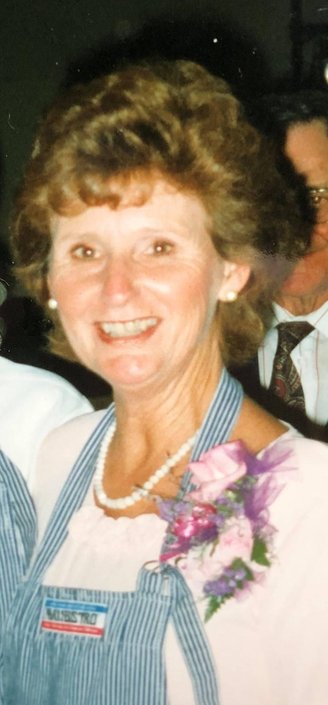
Judith Rose Rex passed away Dec. 18, 2020 after a seven-year battle with Alzheimers Disease.
Judy was born June 14, 1943 at General Hospital in Eureka. She grew up in the family home on Lowell Street, walking to school with her sister Maelene, first to Lincoln then Jr. High and Eureka High School. She was energetic to a fault, bright, artistic and musical. She played the piano and loved to sing. After High School her first year of college was at North Park College in Chicago. She excelled academically yet found time to be part-time nanny and housekeeper for Pierre Salinger, Press secretary to President John Kennedy. After one year at North Park she returned to Eureka to continue school at Humboldt State College enrolling as a junior.
In 1964 she married Bob Chandler and began raising the first of their three wonderful children, John, Karen and Todd Chandler. During that time she also began a 40-year career as a teacher at Loleta Elementary School, teaching every grade level from 1st-2nd to 6th, 7th and 8th. She loved the precious little ones and guided the older ones thru those awkward teen and pre-teen years. The children loved her and she loved all of them.
In 1989 she began the relationship that would last the rest of her life, with the love of her life Robert Rex. They were married in 1995, and together purchased the home they would restore to be shared for life. She enjoyed traveling, to the East Coast, especially Washington DC, Boston and the Carolinas. Closer to home, Judy loved flying their airplane to visit friends & relatives in Port Angeles, Wash., San Jose, Temecula, Camarillo, or Reno just to escape the summer fog. Add salmon fishing, water skiing, digging razor clams — she was up for all of it. Another side fewer knew was her participation in NASA’s “Teacher in Space” program. Going to Vandenberg AFB to meet Astronauts John Glenn and others, experiencing weightlessness and being able to incorporate that experience into her Summer School program, rocketry, math and fun. The kids loved it, and her.
Judith is survived by her husband Robert, sons John (Tiffany), Todd (Karen) and daughter Karen Chandler Scovil (Jeff), stepdaughters Lori Rex King(Dan) and Karen Rex Pretorius(Jim) Grandchildren Nathan & Ryan Chandler, Robert King and Granddaughter Julian Chandler, her sister Maelene Locker, brothers Gerald, and John (Cindy) Aunts Carol Kinser & LaRue Parsons.
Judy was preceded in death by her parents, Dorothy & Vincent Locker, her special uncle Melvin Parsons and her first husband Bob Chandler
A special thanks to all of Freys Care Home where Judy lived the last 11 months of her life. The kind and loving care given by everyone there, especially during this Covid lockdown for 10 months with no visitors-no exceptions. A difficult time for everyone.
Due to the COVID-19 restrictions, a memorial gathering will be planned for later in 2021 and announced when possible.
###
The obituary above was submitted on behalf of Judy Rex’s loved ones. The Lost Coast Outpost runs obituaries of Humboldt County residents at no charge. See guidelines here.
OBITUARY: William (Bill) Delbert Wheeler, 1935-2020
LoCO Staff / Wednesday, Dec. 30, 2020 @ 6:56 a.m. / Obits
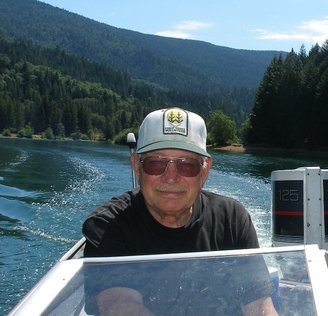
On Friday, November 13, 2020, Fortuna resident, William (Bill) Delbert Wheeler left this earth for the ultimate fishing hole. Bill is survived by his wife, Virginia (Ginger) Wheeler, and his first wife, Sandra L Wheeler; children Lisa Williams, Dana Guthery, Tami Wheeler-Carnes and Kelly LeNeave; siblings: Fay Short, Nora Smith, Paul Wheeler and Donna Milholland. He is preceded in death by his father, John Wheeler; mother, Laura Wheeler; and siblings, Pat Doyle and Gary Wheeler.
Bill was born August 29, 1935 in Marlow, Oklahoma to John and Laura Wheeler. The Wheelers moved to Humboldt County when Bill was only 6 years old. Bill grew up hunting South Fork mountain and fishing the local rivers, so he knew the woods and rivers of Humboldt like the back of his hand! Bill graduated Southfork High School in Miranda in 1954. During his high school years, he was well known for his skills at basketball, scoring 256 points in 12 games during his senior year. He loved the sport. Bill joined the Navy in 1958 after having served 4 years in the California Army National Guard while logging with his father in Humboldt County. He served on The USS Iwo Jima, USS Breckenridge, and The USS Guadalupe, working in the engine room and achieved the rank of Chief Petty Officer before he retired after 20 years of service. Towards the end of his 20 year Navy career, he “pushed boots” as a CO and was proud to watch his classes graduate to become a part of the Navy he loved. Later in life, Bill would tell the stories and tales of his wonderful time in the Navy to all his children, grandchildren and his great grandchildren! Bill met and fell in love with his wife, Ginger in the late 1970s while stationed in San Diego. Bill married Ginger in 1978 and adopted her daughter, Tami. Bill and Ginger decided after they were married to move back to Humboldt County to raise their family.
Bill successfully worked at several jobs after his retirement from the military. From running Big Bend Ranch in Maple Creek, to managing Resale Lumber on US 101, to top salesman at Coastal Auto Mart in Eureka. Bill loved the challenge of trying something new, and always seized the opportunity! Bill was a devoted husband to his wife Ginger for 42 years. He was a loving father to his 4 girls, his 12 grandchildren and his 9 great grandchildren. Bill had a second love after his family, Fishing! He was a master at it and he loved sharing his wealth of knowledge with family and friends at every opportunity. In 1996, Bill and Ginger sold their home in McKinleyville and purchased property at Ruth Lake. When they weren’t at their home base at Ruth, Bill and Ginger would travel around the US in their motorhome fishing the rivers and lakes from the East coast to the West coast of this great country, but always returning to Ruth to spend their summers on HIS lake. Morning would break and you would find Bill out on his boat fishing, talking to the fish hawks, and watching the fog melt away with the sun. On his days when he wasn’t fishing, you could find Bill piddling in his workshop listening to music, playing cards with friends or enjoying a football game on TV, while playing solitaire on his computer.
Bill was truly loved and will be missed by too many to count. Bill wouldn’t want anyone to be sad at his passing, he would rather you be happy as you see him on a river in heaven, fighting a large salmon, with a huge smile on his face! Out of respect for Bill’s request, there will be no services.
###
The obituary above was submitted on behalf of Bill Wheeler’s loved ones. The Lost Coast Outpost runs obituaries of Humboldt County residents at no charge. See guidelines here.


