

Eureka City Council Looks to Increase Enforcement Against Public Camping and Loitering, Streamline Local Ordinances Relating to Homelessness Issues
Isabella Vanderheiden / Thursday, Jan. 16, 2025 @ 1:47 p.m. / Homelessness , Local Government

Screenshot of Tuesday’s special Eureka Council meeting.
###
At a special meeting on Tuesday, the Eureka City Council considered potential changes to two ordinances that restrict unauthorized homeless encampments and loitering in public spaces.
After more than three hours of staff presentations and at-times fervent public comment and discussion, the city council directed staff to consolidate the Camping Ordinance and the Sitting or Lying on Sidewalks Ordinance into a single, simplified ordinance with “more teeth.” The proposed changes would give staff “more tools” to address homelessness and allow the Eureka Police Department to increase enforcement of the ordinance by upgrading penalties from an infraction to a misdemeanor.
The push to streamline the city’s homeless ordinances comes in response to the U.S. Supreme Court’s 2024 Grants Pass v. Johnson decision, which gave cities more power to cite, fine and arrest people for sleeping in public spaces. The ruling effectively overturned the Ninth Circuit’s Martin v. Boise decision, issued in 2018, which held that local governments cannot punish someone for sleeping outside.
Appearing via Zoom, Eureka City Manager Miles Slattery explained that the city attorney’s office reviewed the two ordinances after the recent Supreme Court ruling and determined both documents were “in need of a lot of revision.”
“[The ordinances are] very much similar in certain ways and we felt as though those two needed some revision based on past practices and what we’re currently doing,” Slattery explained. “We felt it would also be a good time to provide an update on our Homeless Action Plan, which is related to this, and go over the milestones associated with that.”
Over the course of the next hour and a half, the city council received detailed presentations on the city’s current enforcement efforts around quality-of-life issues stemming from homelessness. City Attorney Autumn Luna, EPD Sgt. Jon Omey, Managing Mental Health Clinician Jacob Rosen and Special Program Manager Jeff Davis each addressed the council.
Luna’s presentation largely focused on the history of Eureka’s homeless ordinances and the council’s decision in 2021 to shift to an “infraction-only model” per Martin v. Boise.
“The effect of that ruling was pretty profound,” she said. “We removed the ability to issue misdemeanor citations and prosecute on a misdemeanor basis. The only violation of the no-camping ordinance right now is a monetary fine, and there are a couple of tiers of that monetary fine but they’re all relatively low.”
Omey, who leads EPD’s Community Safety Engagement Team (CSET), said the enforcement actions allowed under the city’s current ordinance limit the department’s ability to “help people overcome homelessness.”
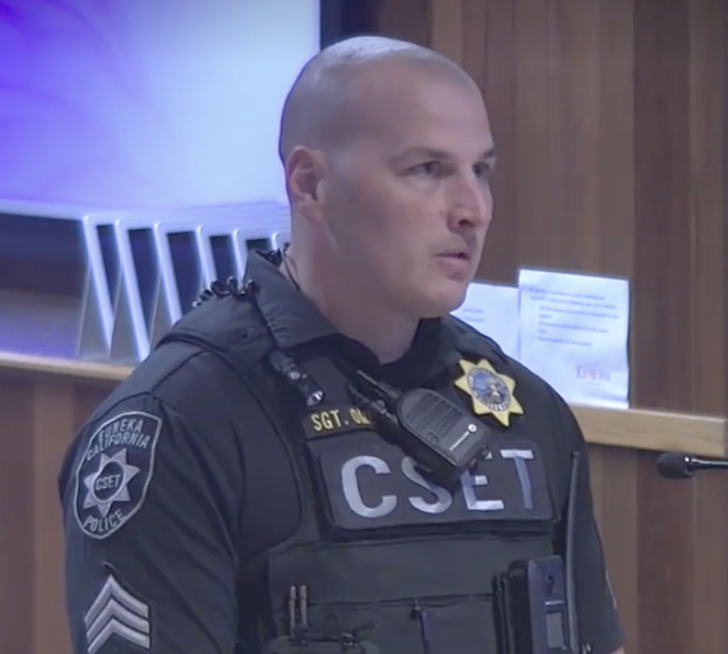
Omey | Screenshot
“Based [on] my experience, most individuals we contact at camps voluntarily comply,” Omey said. “They’ll pack up when we let them know about a complaint or whatever the problem is. However, there is a small percentage of individuals … who refuse to comply in those situations. … [T]here does come a point where we have to balance the needs of the community with the needs of the environment [and] the needs of the actual individual who’s failing to comply.”
Rosen’s presentation focused on the city’s approach to treatment and the importance of balancing accountability and enforcement while “promoting compassion at the same time.” One such tool is the city’s Law Enforcement Alternative Diversion (LEAD) program, which redirects people at risk of arrest to community-based services instead of jail. The program launched in 2020 but never gained traction, Rosen said.
“As you can imagine, between some difficulties with not having a ton of teeth to it, combined with this thing called COVID … it didn’t take off,” Rosen said. “[W]e are interested in re-implementing [the program], particularly if the option the council chooses is to move forward with escalat[es] the infraction to a misdemeanor because that would add the teeth that are needed to gain some of that motivation to help folks.”
Increasing penalties from an infraction to a misdemeanor would increase accountability, Rosen said.
“[D]eveloping the LEAD program locally would really enhance [EPD’s] ability to both collaborate with CARE [Crisis Alternative Response Eureka] as well as Uplift and get folks connected when they have anosognosia or their substance use disorder is preventing them from developing insight into their situation,” he continued. “It’ll really add that tool that we need to be able to work with individuals who are treatment-resistant, who are not otherwise engaging.”
Davis, who oversees the Community Access Project for Eureka (CAPE) and Uplift, provided an update on the city’s Homeless Action Plan and progress made in addressing the local homelessness crisis. In the last two years, the city has made tremendous strides in increasing its sheltering capacity and rehousing individuals, Davis said.

Davis | Screenshot
“We’ve housed over 200 people through our rapid rehousing program,” he said, adding the city is getting ready to open the Uplift Eureka Community Resource Center at the Municipal Auditorium. The city is also getting ready to open its 40-bed transitional housing facility at the Crowley Site on Hilfiker Lane. “What we’re doing here in Eureka is really far ahead of the curve, and we’re continuing to expand and enhance what we’re doing. There’s larger cities that have worked harder and longer — I’m sorry, not harder but longer — on this [issue] and, really, we are much, much, much ahead of where most cities are in providing social services.”
During the public comment portion of the meeting, volunteers with community clean-up crews and several members of the Humboldt Trails Council raised concerns about environmental impacts and safety issues associated with homeless encampments.
One local trail steward, who only identified herself as Susan, urged the city council to do more to address safety issues and litter along local trails. “[P]eople who are homeless are a broad spectrum of people,” she said. “Some of the people that are camping out there now come out to help us on our work days. Others of them shout at us. … The city is doing a lot, but we need to do more, and really, really soon. I hope some positive changes come out of this.”
Other commenters called for more compassion and accused the city of “criminalizing” homelessness. Eureka resident Caroline Griffith asserted that the city would be “creating criminals” by increasing the penalties for people who violate the local ordinances.

Griffith | Screenshot
“I think it’s really important to note that not everybody who is unhoused is a thief,” she said. “Not everybody who is unhoused is a criminal. When we create a pathway for people to start accruing these tickets … we are tacitly creating a criminal class. … We need to make sure there are places where people can actually exist before we start excluding them from everywhere.”
Griffith also talked about her experience working with the homeless community through various local programs and encouraged the city to treat unhoused people as individuals. “I mean, the range of people who are unhoused is the same as the range of people who are housed,” she said. “We have people who are senior citizens, who are unhoused because of health care expenses. We have folks who are parents. We have children, veterans, people who have really debilitating mental health issues. We have people who have substance abuse issues.”
During the council’s discussion, Councilmember Kati Moulton asked how increasing the penalty from an infraction to a misdemeanor would affect someone experiencing homelessness. Luna noted that infractions are “monetary penalties only” whereas misdemeanors “carry the possibility of jail time.”
“There’s also the possibility of other programs that we could and intend to put in place with that,” she said, referring to the LEAD program. “Jail time, traditionally, is the ‘teeth’ that you’re talking about when you talk about misdemeanor prosecution versus infractions.”
Moulton acknowledged that issuing an infraction “doesn’t make much of a difference” when an individual doesn’t have money. “But they do have their freedom, so if you threaten to take that away, that’s more of a consequence, more of a motivation,” she said.
“That’s the idea,” Luna said, noting that the money recouped from an infraction is “close to zero.”
Councilmember G. Mario Fernandez, who showed up late to the meeting, asked if and when staff would be able to launch the LEAD program and whether the city had adequate resources to do so. Slattery confirmed that the resources are there, adding that the city could theoretically launch the program “tomorrow” because the framework is already in place.
“Tomorrow we could literally have that done [but] I think we need something in place to allow us to have the authority to do so,” he said.
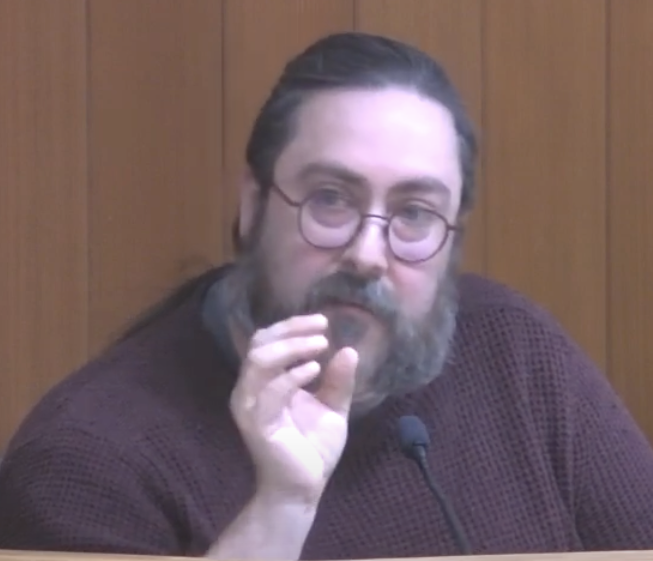
Fernandez | Screenshot
Fernandez asked if he was referring to the proposal to upgrade infractions to a misdemeanor, expressing concern that doing so would effectively “criminalize” homelessness in Eureka.
“First of all, I take exception to saying it’s criminalizing. Let’s keep this in context here,” Slattery said. “Giving a ticket for camping as a misdemeanor is no different than giving somebody a ticket for a drunk in public. They’re misdemeanors. Calling that criminalization, I think, is a little out of context. … If it wasn’t an infraction right now and it ended up being a misdemeanor, that misdemeanor could be charged to an individual tomorrow, and prior to going to court or being prosecuted by the city attorney, they could choose to do a diversion program.”
Councilmember Leslie Castellano expressed gratitude to city staff and local nonprofit organizations that offer support to the unhoused community. Even so, she admitted that the city is “struggling to find solutions.”
“There are things that haven’t gotten better despite the amount of resources — which is pretty extensive — that we’ve put into it,” she said. “I hear the folks on the trails council who say it’s getting worse again. I recognize that. … I also trust our city attorney. She wants to change people’s lives — not criminalize people’s lives — for the better.”
Councilmember Scott Bauer acknowledged that the city cannot take a one-size-fits-all approach to enforcement but emphasized that there is a “criminal element” that exists at some homeless encampments.
“In essence, a little bit of tough love [is needed], unfortunately,” he said. “Another tool is needed and our law enforcement is not going to use it like a hammer. It’s going to be used delicately. I truly believe that it will be used when it needs to be used to get people help.”
As the meeting approached the three-hour mark, Luna assured the council that staff would take their feedback into consideration while drafting a streamlined ordinance with increased enforcement. The draft ordinance will come back to the council sometime in the next couple of months.
The council agreed to receive and file the presentation, with Councilmember Renee Contreras-DeLoach absent, but did not take any further action.
BOOKED
Today: 9 felonies, 10 misdemeanors, 0 infractions
JUDGED
Humboldt County Superior Court Calendar: Yesterday
CHP REPORTS
Elk River Rd / Westgate Dr (HM office): Traffic Hazard
ELSEWHERE
RHBB: Amazon Warehouse Seen as Potential Revenue Lifeline in Tight County Budget
RHBB: This Valentine’s Day, Keep the Love Flowing — Not the Outages, says PG&E
The Tri-City Weekly is Folding, Taking Away These Intellectually Disabled Adults’ Jobs
Dezmond Remington / Thursday, Jan. 16, 2025 @ 7:52 a.m. / Community

Diane Cathey Center client Madison Titus prepares to throw an issue of the Tri-City Weekly at a porch.
Intellectually disabled adults at the Diane Cathey Center have, for the past 25 years, delivered the Tri-City Weekly around Fortuna. They rolled the papers up, walked around, dropped them off, and made a little money and earned some self-respect in the process.
That’s over now, as Media News Group, the owner of the Tri-City Weekly (as well as the Times-Standard), has decided to cease publication. This week was the Tri-City’s last printing, and its demise takes with it the livelihoods of some of Humboldt’s most vulnerable.
The Diane Cathey Center is a Fortuna-based nonprofit that supports adults with developmental and intellectual disabilities by training and educating them. Getting them jobs is a big part of that, Director Barbara Nelson told the Outpost recently. The center’s clients (currently numbering 10) learned skills delivering the papers and developed a routine they depended on. Some of them delivered those papers for 25 years. Community members looked forward to their deliveries and sometimes even invited the paper deliverers in for a snack. Couriers noticed when there were several weeks’ worth of papers out on a porch and checked up on the residents.
It’s a sad situation for everyone involved, said Nelson.
“It takes away their self-esteem,” Nelson said. “It takes a part of their livelihood. It takes away from being out there, being seen, being participants, being part of their community. It takes that away.”
Though there are many types of work the DCC’s clients can do, Nelson said most employers won’t hire them because they take longer to complete their work than neurotypical people. Employers are also usually concerned about working space if the clients need someone with them, like a disabled shelf-stocker with a companion handing them items.
“So the problem becomes ‘How do you find someone that wants to pay minimum wage to have something done that may take a little longer?’” Nelson asked. “It would have to be someone with some heart, and understanding that it may take our people a little bit longer, but they can do it.”
In the years since the center was founded — in 1999 — the increasing digitization of the modern world has made several of the jobs DCC’s clients could do go obsolete, such as delivering flyers for local businesses and shredding paper.
Some of the DCC’s clients have part-time jobs maintaining flower boxes or volunteering at thrift stores, but delivering the Tri-City was a main occupation for many of them. Job openings for the intellectually disabled are limited in small towns, especially a place as isolated as Fortuna.
“Most of them are still trying to absorb it,” Nelson said. “It’s not going to become a major reality until next week, when they would normally come in, and it would be time to roll their papers, and then it would be time to go deliver … . For some of them, we have to keep a routine. So what we’re going to end up doing is walk their old paper route with them and keep telling them ‘No papers,’ but at least keep that little bit of familiarity there for right now.”
Diane Cathey administrators currently don’t have anything lined up to replace the paper routes. Nelson said they were given less than two weeks’ notice that printing was over.
It’s also a big hit to their independence, Nelson said. Though the clients didn’t make a ton of money, it was enough to buy treats for themselves like hot chocolate or something from a thrift store. One girl saved her earnings so she could buy more backpacks for her collection.
Nelson laughed. “I swear, she must have 150 of them!”
“That check comes in, and it’s big money to them … ,” Nelson said. “And it feels good to say, ‘I made this money. I made this purchase. This is me. This isn’t someone coming to rescue me or do it for me or give me the money. This is me.’ And they won’t be getting those paychecks anymore.”
Online Censorship in Schools Is ‘More Pervasive’ Than Expected, New Data Shows
Tara García Mathewson / Thursday, Jan. 16, 2025 @ 7:50 a.m. / Sacramento

Illustration by Gabriel Hongsdusit, CalMatters
Aleeza Siddique, 15, was in a Spanish class earlier this year in her Northern California high school when a lesson about newscasts got derailed by her school’s internet filter. Her teacher told the class to open up their school-issued Chromebooks and explore a list of links he had curated from the Spanish language broadcast news giant Telemundo. The students tried, but every single link turned up the same page: a picture of a padlock.
“None of it was available to us,” Aleeza said. “The site was completely blocked.”
She said her teacher scrambled to pivot and fill the 90-minute class with other activities. From what she recalls, they went over vocabulary lists and independently clicked through online quizzes from Quizlet — a decidedly less dynamic use of time.
New data released this week by the D.C.-based Center for Democracy & Technology shows just how often some of that blocking happens nationwide. The nonprofit digital rights advocacy organization conducted its fifth annual survey of middle and high school teachers and parents as well as high school students about a range of tech issues. About 70% of both teachers and students this year said web filters get in the way of students’ ability to complete their assignments.
Virtually all schools use some type of web filter to comply with the Children’s Internet Protection Act, which requires districts taking advantage of the federal E-rate program for discounted internet and telecommunications equipment to keep kids from seeing graphic and obscene images online. A 2024 investigation by The Markup, which is now a part of CalMatters, discovered far more expansive blocking by school districts than federal law requires, some of it political, mirroring culture war battles over what students have access to in school libraries. That investigation found school districts blocking access to sex education and LGBTQ+ resources, including suicide prevention. It also found routine blocking of websites students seek out for academic research. And because school districts tend to set different restrictions for students and staff, teachers can be as frustrated by the filters as anyone because of how they complicate lesson planning.
Web filtering is ‘subjective and unchecked’
Elizabeth Laird, director of equity in civic technology for the center and lead author of the report, said The Markup’s reporting helped inspire additional survey questions to better understand how schools are using filters as a “subjective and unchecked” method of restricting students’ access to information.
“The scope of what is blocked is more pervasive and value-laden than I think we initially even knew to ask last year,” Laird said.
While past surveys have revealed how often students and teachers report disproportionate filtering of content related to reproductive health, LGBTQ+ issues and content about people of color, the center asked respondents this year if they thought content associated with or about immigrants was more likely to be blocked. About one-third of students said yes.
Aleeza would have said yes, after her experience with Telemundo. The California teen said how often she runs into blocks depends on how much research she’s trying to do and how much of it she has to do on her school computer. When she was taking a debate class, she ran into the blocks regularly while researching controversial topics. An article in Slate magazine about LGBTQ+ rights gave her a block screen, for example, because the entire news website is blocked. She said she avoids her school Chromebook as much as possible, doing homework on her personal laptop away from school Wi-Fi whenever she can.

When 15-year-old Aleeza Siddique tried to visit Telemundo.com, her school’s web filter blocked the attempt. Screenshot courtesy of Aleeza Siddique
Fully three-quarters of teachers who responded to the recent survey said students use workarounds to access an unfiltered internet. Laird found this number striking. Web filters, then, are not keeping students from accessing the websites they want to access, and they’re getting in the way of completing schoolwork. “It raises a fundamental question of whether this technology, in trying to prevent students from accessing harmful content, actually does more harm than good,” Laird said.
Nearly one-third of teachers surveyed by the Center for Democracy & Technology said their schools block content related to the LGBTQ+ community. About half said information about sexual orientation and reproductive health is blocked. And Black and Latino students were more likely to say content related to people of color is disproportionately blocked on their school devices.
For students like Aleeza, the blocking is frustrating in practice as well as principle.
“The amount that they’re policing is actively interfering with our ability to have an education,” she said. Often, she has no idea why a website triggers the block page. Aleeza said it feels arbitrary and thinks her school should be more transparent about what it’s blocking and why.
“We should have a right to know what we’re being protected from,” she said.
###
Audrey Baime, Olivia Brandeis, and Samantha Yee, all members of the CalMatters Youth Journalism Initiative, contributed reporting for this story.
CalMatters.org is a nonprofit, nonpartisan media venture explaining California policies and politics.
LA Wildfire Response From California Lawmakers: Lots of Ideas, Few Details
Yue Stella Yu / Thursday, Jan. 16, 2025 @ 7:46 a.m. / Sacramento

An American flag waves on a flagpole in the aftermath of the Palisades Fire. Firefighters are performing mop-up activities in the burn area, though the fire continues to burn. Pacific Palisades on Jan. 9, 2025. Photo by Ted Soqui for CalMatters
Expediting homeowner insurance claims. Fast-tracking rebuilds. Ensuring fire aid for undocumented immigrants. Boosting penalties for arsonists.
As wildfires continue to blaze through Los Angeles County, state lawmakers are quick to announce ideas to provide disaster aid and prevent future wildfires, touting their plans in press conferences, news releases and social media posts.
But how exactly would these work? What’s the price tag? And could the state afford all this?
Few, if any, know. Yet the answer to those questions is particularly important now as the state braces for economic uncertainties, partly due to a hostile incoming presidential administration, tax return delays and the unknown wildfire-associated costs to the state.
The Los Angeles fires have claimed at least 25 lives and torched more than 40,000 acres in the past week, with damage estimated at more than $250 billion. While outgoing President Joe Biden declared it a major disaster and promised 100% federal reimbursement of wildfire spending for 180 days, the state still must front the bill and may shoulder further costs.
Last week, Gov. Gavin Newsom projected a “modest surplus” in the upcoming fiscal year — albeit one achieved by drawing $7 billion from the state’s rainy day fund — but cautioned that uncertainties could drastically alter that proposal in just a few months. “The bottom could completely fall out,” Newsom warned.
Still, many legislators have rushed to propose measures with an unknown price tag in response to the LA fires. And the proposals — most of which lack details – largely mirror party ideologies: Republicans want to see a less-regulated insurance market and fewer environmental restrictions in the name of fireproofing and rebuilding, while Democrats hope to increase oversight of insurers and prevent or punish price-gouging.
The scramble could reflect legislators’ desire to quickly respond to a natural disaster, but it also represents a political benefit because “voters are looking to their elected official to do something,” said Christian Grose, a political science professor at the University of Southern California.
It is also more tangible for voters to see a politician react to a disaster rather than prepare for one, he said.
“Voters do reward parties and incumbents who spend money after disasters to help clean things up and fix things, so there’s a real benefit to literally spending more money, no matter where it comes from,” Grose said. “Spending after a disaster has really big electoral dividends.”
‘Governing by press release’
But Mike Madrid, a longtime GOP consultant in California, called the legislative ideas “tinkering around the edges” — arguing that state lawmakers are “governing by press release” without fully assessing Los Angeles fires’ damage.
“Keeping a politician away from a TV camera is like trying to keep a gnat away from a porch light,” Madrid said. “They believe that any action is better than no action, so they’d rather say something and get into the discourse and also…presumably show their constituents that they are doing something about it.”
On Monday, Newsom and Democratic legislative leaders proposed a $2.5 billion spending plan on wildfire response and recovery, expanding the scope of the ongoing special session to “Trump-proof” California. The move came after Republican lawmakers chided them for not devoting the special session to “fireproofing” the state.
Dubbed California’s “Marshall Plan” by Newsom, the proposal would allocate $1 billion in “emergency response” funding — costs Newsom said would be eligible for full federal reimbursement under the major disaster declaration, which would cover wildfire response, cleanup and recovery expenses. It would also include $1 million from the state’s general fund to support school rebuilding and repairs in Los Angeles, said H.D. Palmer, spokesperson for the state Finance Department.
The proposal also includes $1.5 billion — part of the $10 billion climate bond voters approved in November — to pay for disaster preparedness efforts. The governor originally proposed it in next year’s budget but now hopes to “accelerate” the spending in light of the wildfires, according to his office.
But the public has yet to see a spending breakdown. The Senate and the Assembly will hold budget hearings on the proposal on Jan. 22 and schedule a floor vote for the week of Jan. 27, according to legislative leaders.
Newsom’s office also issued several executive orders in the past week to allow displaced students to attend school outside their districts, expedite debris cleanups and suspend environmental permitting requirements to speed up rebuilding. One order extended the tax return filing deadline for fire victims in Los Angeles County until Oct. 15, aligning with the federal extension.
How that extension will impact state finances is unclear, Palmer told CalMatters. But he noted that the delay is only for one county, unlike the extension issued in 2023 for winter storm victims in 55 of the state’s 58 counties, which significantly affected the state’s ability to forecast its tax revenue that year.
Dems: Bonds to prop up FAIR? Catastrophe savings accounts?
Legislators thus far have introduced seven other wildfire-inspired bills, with unknown price tags.
Assemblymember Lisa Calderon, a City of Industry Democrat who chairs the Assembly Insurance Committee, re-introduced a pair of bills that failed last year to amp up oversight of the state’s FAIR Plan — an insurer-run last resort for homeowners living in high-risk areas to obtain fire insurance policies.
This time, there’s a new component: One of the bills, Assembly Bill 226, would authorize the FAIR Plan Association to ask the state-run California Infrastructure and Economic Development Bank to issue bonds if it is at risk of running out of money to pay insurance claims. Calderon has said it would “alleviate some of the uncertainty” for LA fire victims with FAIR policies.
She is also carrying Assembly Bill 232, which would, for five years, allow homeowners to establish a “catastrophe savings account,” exempt from state income tax, to cover insurance deductibles and costs of uninsured losses.
Assemblymembers John Harabedian of Pasadena and Jacqui Irwin of Thousand Oaks, both Democrats, introduced Assembly Bill 238 to require mortgage servicers to halt or reduce mortgage payments for fire victims for up to 180 days, with the option of extending it for another 180 days. They are also championing Assembly Bill 239 to establish a state-led task force to coordinate the rebuilding efforts in Los Angeles.
Assemblymember Mike Gipson, a Gardena Democrat, authored Assembly Bill 245 to “state the intent” of the Legislature to offer “meaningful and automatic” property tax relief for disaster victims. Lawmakers frequently use such intent bills as placeholders early in the legislative session, allowing them to meet the bill introduction deadline and adding substantive amendments later. For example, 40% of the bills introduced by the 2023 deadline were nonsubstantive bills, according to veteran lobbyist Chris Micheli.
More Democrats have floated ideas but have yet to provide specifics. Sen. María Elena Durazo of Los Angeles, for example, told Politico she wants to ensure undocumented immigrants who are fire victims and ineligible for federal relief can receive state aid.
Senate President Pro Tem Mike McGuire, a Santa Rosa Democrat, mentioned to reporters on Monday several policy ideas he supports, such as enhancing protections against price-gouging, making seasonal firefighters full-time positions, improving the state’s drinking water and utility infrastructure, and establishing a new commission to set rules for insurers to make it easier for homeowners who’ve made their homes more fire-resistant to secure insurance policies.

Assemblymember James Gallagher addresses the media during a press conference on the Los Angeles wildfires, at the state Capitol in Sacramento, on Jan 13, 2024. Photo by Yue Stella Yu, CalMatters
Whereas Democrats primarily blame the wildfires on climate change, Republicans have pointed fingers at the state’s Democratic leaders, insisting they did not do enough to help wildfire victims or to prevent wildfires from spreading.
“We’ve known this insurance issue is looming, and what have you seen out of the supermajority? And what have you seen out of the governor? There’s been no action taken,” Assembly Minority Leader James Gallagher of Chico said at a Monday press conference.
GOP: Tax donation checkoffs? Steeper penalties for arsonists?
In a letter to Newsom last week, legislative Republicans laid out their priorities, including sweeping aside environmental safeguards that they say will otherwise slow wildfire prevention projects such as prescribed burns, post-fire rebuilding and burying power lines underground. Philosophically, the party has long railed against the government permitting process and environmental reviews required by the iconic but controversial California Environmental Quality Act.
They also touted the idea of giving financial incentives to owners who upgrade their homes to make them fire-resistant, and endorsed increased state spending for wildfire prevention and steeper penalties for arsonists. And they said they wanted to stabilize the insurance market, although they’ve yet to explain how they would accomplish that.
“We have our solutions that we want to work on, but again, we need a special session and we need to focus on it,” Gallagher said Monday when asked about the lack of details.
During the press conference, Assemblymember Leticia Castillo of Corona called in Spanish for Newsom to resign if he did not call for a special session on wildfires, even though lawmakers did not need a special session to introduce bills. Assemblymember Carl DeMaio of San Diego said he’d sent a letter to Trump seeking a federal investigation into “a number of failures by state and local politicians” during the wildfires.
Assemblymember David Tangipa, a Fresno Republican and the vice chair of the Assembly Committee on Insurance, said the state needs to “mitigate risks” and cut red tape but did not offer specifics.
Tangipa is the only Republican thus far to introduce a bill in response to the wildfires, and it’s in keeping with the Republican penchant to avoid raising taxes: His Assembly Bill 241 would allow taxpayers to contribute to a “Wildfire and Vegetation Management Voluntary Tax Contribution Fund” on their tax returns, with the money designated for “resource conservation districts.”
###
CalMatters.org is a nonprofit, nonpartisan media venture explaining California policies and politics.
OBITUARY: Daniel Lawrence Hafer, 1947-2024
LoCO Staff / Thursday, Jan. 16, 2025 @ 6:56 a.m. / Obits
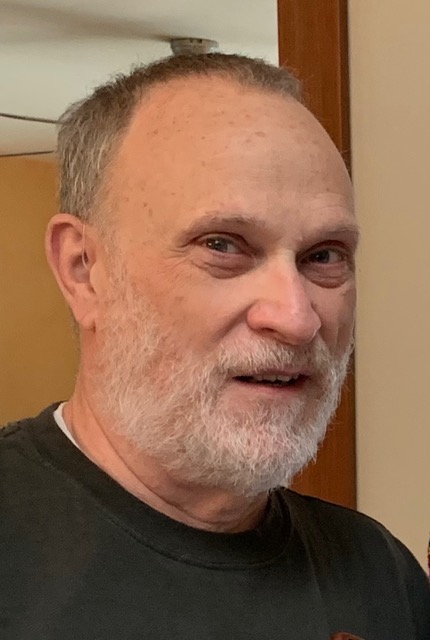
Eureka
resident Daniel
Lawrence Hafer died on October 17, 2024 in
the ICU-Blue at UC Davis Medical Center in Sacramento.
Daniel was born on May 30, 1947, in Chicago, Illinois, with his slightly older twin brother Dennis Frank Hafer. When they were six weeks old they were adopted by Donald and Violet Hafer, and a year later the Hafer family moved to Elkhart, Indiana.
When the twins were seven years old, the Hafers adopted a pair of natural sisters — Marilyn, who was a year older than them, and Bonnie, who was three years younger. Family life revolved around school, church, music lessons, paper routes, neighborhood play with all the other post-war boomer kids, and frequent visits to grandparents, aunts and uncles, and cousins in Chicago.
Later the Hafers took in a foster child, Dorinda, who became a great support to them over the years as the four older kids had gone their separate ways to California and Canada.
All of the children knew they were chosen and loved for who they were.
After high school, Daniel went off to Bob Jones University while Dennis waited a semester to join him — the younger brother paving the way for the elder. After graduation in 1969, Daniel enlisted in the Army, where he served in Headquarters Companies in Viet Nam and Germany. Dennis joined the Navy before moving to Canada.
Upon discharge from the Army in 1972, Daniel returned to Elkhart for a very brief period of time, before relocating to Los Angeles, knowing only his sisters Marilyn and Bonnie, who had already moved to Southern California.
Daniel spent his 43-year career in the insurance industry as a group health claims adjuster, working first for Pilot Life Insurance and then later for the Writer’s Guild.
Most importantly, it was in Los Angeles, on August 13, 1975, that Daniel met Steven Preston and developed a loving relationship that lasted for 49 years, including 16 years of marriage. They celebrated their sixteenth wedding anniversary on October 10, 2024 with cupcakes for all the medical team of the cardiac ICU at UC Davis Medical Center in Sacramento.
In 2014 Daniel and Steve began to think about moving from Los Angeles and were drawn to either Oregon or the northwest coast of California. After several house-hunting trips to both Eugene and Eureka, they decided to re-locate to Eureka, finding their home after four-and-a-half years of looking for “the right house in the right neighborhood at the right price.” A new cat, Opie, was adopted and life began anew in Eureka, where they became active members of Christ Episcopal Church and formed a strong and supportive relationship with members of the congregation.
In November 2023 Daniel was first diagnosed with a slow-growing chronic leukemia (CMML), and in July 2024 with congestive heart failure.
By the beginning of September Daniel seemed to be improving from the congestive heart failure, with lots of changes in meds, dosages, and frequency, in an attempt to get his edema resolved and blood pressure and pulse stabilized. The CMML-related anemia was to be dealt with once the congestive heart failure was stable.
On September 7, 2024, Steve took Daniel to the ER at Providence/St. Joseph Hospital in Eureka, since he was struggling to breathe, where a heart attack was diagnosed and he was stabilized.
Then the medical roller coaster began, with waiting for an open bed at a larger hospital after the decision was made to transfer Daniel from Eureka. There is a photo of a hospital visitor in Eureka — Kiya, the therapy dog — which Daniel enjoyed immensely. Daniel was life-flighted to UC Davis Medical Center in Sacramento on September 14. Then came days of waiting, tests, recommendations and treatments, including many heart and kidney procedures. Days of hope were followed by days of despair as Daniel’s kidneys began to fail. October 10 was one of the good days as Daniel and Steve celebrated their 16th wedding anniversary in a cardiac-care unit, but by October 14 Daniel was returned to the ICU and his condition was fragile. October 15 his condition became critical and dialysis was performed. On October 16 Daniel’s heart stopped, CPR was performed and he was placed on life-support with a ventilator; his condition was considered stable but critical, with multiple organ failure.
Through it all, Daniel just wanted to go home to Opie and to Eureka. Early in the morning of October 17 Daniel went home, to the arms of the Christ he loved. Steve was with Dan throughout his six-and-a-half week hospitalization, and was with him, holding his hand, at the time of his death.
Beginning sometime in 2017, Daniel began showing an interest in his biological heritage and the ancestry quest began. Original pre-adoption birth certificates showed that Daniel’s birth-mother was Helen Irene Lucas of Tab, Indiana, while the birth father was listed as ‘Intentionally Omitted’. Helen was one of six sisters and one brother and Daniel made contact with at least two maternal cousins.
Further investigation led Daniel to the Carter family of Hoopeston, Illinois, a family of five sons and four daughters. Various ancestry hints suggested that the unknown father was possibly one of the Carter brothers. Daniel wrote to the son and daughter of Eugene Carter, presenting his evidence and suggesting they take a DNA test. Both Ned and Mary Beth agreed and, when the tests showed they were siblings of Daniel, Ned’s first words were that he was “discombobulated” and that the results would change his life.
Around this time, Daniel’s twin brother Dennis took an Ancestry test and the results showed that he was related to Daniel (no surprise there), but was also related to a Ned Carter and to a Mary Beth Carter Nevitt. To say that these results changed everyone’s lives would be an understatement. Everything is different now, as there are now new branches of the Lucas, Carter, and Hafer family trees as well as the branches of their extended families — spouses, in-laws, cousins, nieces and nephews.
When they all –- Ned and his children Robert and Ethel (all from Sweden), Mary Beth, Daniel and Steve, and Dennis — met on Balboa Island in 2019 for a face-to-face reunion, they spent days getting to know each another. Daniel and Dennis remarked to each other of their amazement at their acceptance by the extended Carter family, including their cousin Lynne Carter Armstrong (whom they both have met), and Ned and Mary Beth’s maternal cousins Carol Pinnell and Marilyn Anderson. Daniel also developed a friendship with a Carter second cousin once removed, Beth Harrison, bonded by their shared Episcopal faith. Over the years Daniel also got to know a Lucas cousin, Karen Olsen.
Even if there were no relationships, Daniel and Dennis have said would want these people to be their friends.
Over recent weeks Ned, Mary Beth and Dennis have remarked more than once how Daniel’s curiosity and perseverance, and ultimately his discoveries, have immeasurably changed their lives.
Daniel Lawrence Hafer is survived by his loving husband of 16 years (after a 33-year involuntary engagement) Steven Preston and their beloved cat Opie, Dan’s identical twin brother Dennis Frank Hafer, adopted sisters Bonnie Mitchell and Marilyn Vadase, half-brother Ned Carter, half- sister Mary Beth Carter Nevitt, foster-sister Dorinda Jones, and numerous cousins, nieces, and nephews. He was pre-deceased by his adopted parents Violet (Gran) and Donald E. Hafer, his birth parents Helen Irene Lucas and Eugene Carter, and Helen’s other son from her marriage, Michael Lee Branam, a half-brother Daniel never met.
Daniel Lawrence Hafer’s life will be celebrated at Christ Episcopal Church in Eureka at 10:30 a.m. on January 25, 2025.
May Daniel’s memory be a blessing.
###
The obituary above was submitted on behalf of Daniel Hafer’s loved ones. The Lost Coast Outpost runs obituaries of Humboldt County residents at no charge. See guidelines here. Email news@lostcoastoutpost.com.
OBITUARY: Lynett Rae Flockhart, 1961-2024
LoCO Staff / Thursday, Jan. 16, 2025 @ 6:56 a.m. / Obits

Our beloved Gigi got on her dream horse and rode off into the sunset on the trail
leading to the stairway to heaven on January 3, 2025 with her family by her side. Born on
February 24, 1961 to Robert Lyness and Carol Gossett in Fortuna, Lynett was a very
kind and caring soul, who saw the good in all people. She touched the lives of everyone who
had the pleasure of knowing her.
Her childhood included growing up in Healdsburg with her older brother, Bob, riding her pony and playing with her yellow lab, Clarence. After moving back to Fortuna, she lived with her grandparents Ernie and Gwen Gossett, where she attended elementary and high school.
In 1977 she met the love of her life, Mike Flockhart, and they spent the rest of her life together. Lynett and Mike married in July 1981 in Fortuna, where she worked for Lon Winburn at Pacific Auto while she went to College of the Redwoods. She recieved her business degree and went to work for the County of Humboldt in the courthouse. She was fortunate enough to work in the Fortuna branch for Judge Suprey for many years.
Her first daughter, Mickelle, was born in 1988, after which she left her job to become a full-time mom. In 1992, she was blessed with the birth of her second daughter, Morgan. She spent the rest of her life dedicated and devoted to her family, where being a mom was her number one priority. As the children grew older, she went back to college and received a degree in nursing, in order to help fund the Mickelle and Morgan’s college expenses. She was hired immediately out of school at Redwood Memorial Hospital and worked the rest of her career (14 years) in the Med/Surg department. She loved her job and all her co-workers, and treated all of her patients with compassion, dignity and respect.
Lynett’s second love was her animals. She had numerous pets throughout the years, but her true passion were her horses, which she rode every chance she got. Her favorite spot to ride was at Cuneo Creek State Park Horse Camp. She looked forward every summer to camping and riding with all her riding buddies, Martha, Karen, Maggie, Jane, Cindy, and many others.
She was preceded in death by Ernie and Gwen Gossett, and Robert and Carol Lyness. She leaves behind husband Mike; daughters Mickelle and husband Travis Ammer, Morgan and husband Jerrad Morss; granddaughters Cassidy, Cadence, Timber and Raelynn; brother Robert Lyness; uncle Ernie and Bridgette Gossett; aunt Loene and Dan McCelland; aunt Diane and Bob Angelini; brother-in-laws Dan and Tiffany Flockhart, Doug and Janet Flockhart; cousins Denise and Seth Taylor, Nicole Robinson, Bob and Teri Angelini, Demaris and Lucas McCelland, Crystal Nichols, Kent and Karina Chapman.
The family would like to thank the all the doctors and nurses at UCSF, St. Joe’s and Hospice of Humboldt for their wonderful and excellent care.
A celebration of life for Lynett will be held on Saturday, February 1, 2025 at 2 p.m., at the Gene Lucas Community Center on Newburg Road in Fortuna. In lieu of flowers, please consider making a donation to the Lynett Flockhart Memorial Nursing Scholarship at College of the Redwoods link at this link or Hospice of Humboldt.
###
The obituary above was submitted on behalf of Lynett Flockhart’s loved ones. The Lost Coast Outpost runs obituaries of Humboldt County residents at no charge. See guidelines here. Email news@lostcoastoutpost.com.
OBITUARY: Anna Marie Holgersen, 1941-2025
LoCO Staff / Thursday, Jan. 16, 2025 @ 6:56 a.m. / Obits

Anna Marie Holgersen passed away on January 11, 2025.
Anne was born Anna Marie on November 7, 1941, in San Bernadino, Calif. Anne was raised in Fernbridge and went to and graduated from Fortuna High School. She married our dad, Curtis Lane Holgersen, on September 20, 1975. This is when our family became one. She had three children, and he had three. We were often — then and now — referred to as the “modern-day Brady Bunch.”
Our mom spent the next few years raising a family of six children and being a partner to her and her husband’s business. They ran a small dairy farm in Loleta (Holgersen Dairy) together while raising their family.
Anne had a couple of jobs early on; she worked for Harper Motors in the very early years, and after raising her children she worked for Dr. Wendell Schautz Chiropractic, Faith Center Foursquare Church and Lentz Department Store in Ferndale.
Anne spent many many years volunteering. She was a volunteer for St. Joseph’s and Redwood Memorial Hospitals, she volunteered for Hospice of Humboldt and was also an ombudsman. Mom was very involved when her children were in school. She was president of the PTA for South Bay School. The school had given our mom an engraved bell for her years of service. She was known to stand out on the front porch and ring that bell to call her children in for dinner.
Our mom truly spent her life in services to others. She had a strong faith in Jesus Christ, and I believe her biggest and greatest accomplishment in life was raising her children to believe in Him as their personal Lord and Savior.
Mom enjoyed gardening. She took a lot of pride in her yard and loved spending time in her greenhouse. One of mom’s favorite things to do was travel in the firth wheel with our dad. They had many adventures together.
Our mother is preceded in death by her beloved mother, Isabel Theresa Detlefsen. She is survived by her loving husband of 49 years, Curtis Lane Holgersen; her children, Theresa (Tom) Head, Edward (Jennifer) Holgersen, Todd Hansen, Sharon (Joe) Zanone, Chris (Brad) Jennings and Debbie Nickols (Jay Chamberlain); her 19 grandchildren and four great-grandchildren; siblings Gloria (Jeannie) Ward, David (Charlene) Hanson and Debbie (Grant) Philips.
I would like to give a special thank you to the people who helped us care for our mother over the last couple of years: Tessa Johnston, Leah Berti, the staff at First Choice Care Home and Hospice of Humboldt.
There will be a celebration of life service for Anne on June 14, at 1 p.m. at the Loleta Fireman’s Pavillion — 824 Loleta Drive, Loleta, CA. In lieu of flowers please consider giving a donation to the Parkinsons Support Group. Contact information: Rose Bond, 707-826-7764, rosebond95524@suddenlink.net or Hospice of Humboldt.
###
The obituary above was submitted on behalf of Anna Holgersen’s loved ones. The Lost Coast Outpost runs obituaries of Humboldt County residents at no charge. See guidelines here. Email news@lostcoastoutpost.com.


