

‘It’s Going to Be a Spectacular Experience’: State Sen. McGuire Talks Community Benefits, Public Safety and Wildfire Mitigation on the Great Redwood Trail at Annual Town Hall
Isabella Vanderheiden / Wednesday, Aug. 13, 2025 @ 1:06 p.m. / Trails
###
State Sen. Mike McGuire joined representatives of the Great Redwood Trail Agency (GRTA) at a virtual town hall meeting Tuesday night to discuss progress being made on the Great Redwood Trail, an ambitious project that, if completed, will transform the defunct railway between Humboldt Bay and San Francisco Bay into the longest hiking and biking trail in the United States.

Map of the proposed Great Redwood Trail. Click to enlarge.
“It was a dream for many for decades, and now that dream is becoming a reality,” McGuire said. “About six years into this endeavor, we are now at a major milestone: One-third of the entire 320-mile trail has either been completed, [is] under construction, or under final planning. … It is going to be a spectacular experience.”
During the annual update, McGuire and GRTA Executive Director Elaine Hogan fielded dozens of questions from North Coast residents, ranging from concerns over public safety to economic benefits associated with the rail-to-trail project. Speaking to the latter subject, McGuire cited a 2023 economic benefits analysis that projected more than $102.5 million in annual benefits for communities along the trail system.
“Five to seven million visitors will use the trail annually — locals and visitors alike — once it’s completed,” he said. “And it’s anticipated that the average daily food bill [for] trail users going into the communities and supporting restaurants [will be] $64 a day per user, $60 a day in retail [and] $93 per night in lodging. This is a game changer.”
Hogan added that the trail system will open up new opportunities for local businesses and artisans looking to expand their reach.
“What resources do they have that might benefit trail users? Do they want to cultivate farm-to-table dining or low-impact camping on their land? [How about] cultural events or a trail-side craft market?” Hogan asked. “Humboldt and Mendocino counties are home to a lot of artisans and local crafters that have made their living off the land for generations. We really need to work in partnership to make that legacy continue.”

An existing tunnel along Eel River Canyon. | Photo: GRTA
Speaking to public safety concerns, Hogan noted that the GRTA Board of Directors recently approved contracts with two community-based organizations that will actively monitor undeveloped sections of the trail and provide on-the-ground supportive services to people experiencing homelessness. The GRTA also hired an operations manager who will work with California State Parks and local governments to ensure the trail is equipped with necessary public amenities.
“When you hear us talk about creating a world-class trail, consistent maintenance is part of that,” Hogan said. “We anticipate we will have seasonal trail crews in the backcountry, similar to what you see in California State Parks and other long-distance trails. We will have areas for staff and ranger housing out there, as well as developed campgrounds for all of our backcountry trail users with appropriate amenities.”
“We really see this trail development as an opportunity to strengthen rural public safety infrastructure, and so we’ll be looking to our local partnerships to implement that,” she added.
Speaking to wildfire concerns. GRTA Board Chair Mary Sackett said the agency is working to establish partnerships with CalFire and local volunteer fire departments to create a wildfire mitigation plan.
“Wildfire prevention is foremost on our mind,” Sackett said. “We also hope that by having folks on the trail [who are] managing and working on those crews, they’ll have their eyes and ears on the ground and be able to respond more quickly. … We’ll work together to secure funding opportunities so that we can all prepare because we know that our volunteer firefighters in our small towns can’t handle the fire alone.”
Check “play” on the video above for a full recording of last night’s meeting.
BOOKED
Today: 10 felonies, 12 misdemeanors, 0 infractions
JUDGED
Humboldt County Superior Court Calendar: Today
CHP REPORTS
8967 Mm101 N Hum 89.70 (HM office): Traffic Hazard
Indianola Cutoff Ofr / Us101 (HM office): Traffic Hazard
17453-17489 Us101 (HM office): Trfc Collision-Unkn Inj
ELSEWHERE
RHBB: Multi-Vehicle Crash Closes South Fortuna Boulevard Near Strongs Creek Plaza
Governor’s Office: Governor Newsom announces nearly 15,300 illegal hemp, kratom and 7-OH products removed from California store shelves
KINS’s Talk Shop: Talkshop September 2nd, 2026 – Steve Madrone
Governor’s Office: California’s legal cannabis market generates $8.4 billion for Californians as state cracks down on illicit operators
Now You Can Learn Some Soulatluk While Strolling the Wigi Waterfront Trail!
LoCO Staff / Wednesday, Aug. 13, 2025 @ 12:07 p.m. / Our Culture

Photos: Ink People.
Press release from the Ink People:
A partnership between the Wiyot Tribe, the Ink People Center for Arts and Culture, and the City of Eureka is expanding awareness and understanding of Soulatluk, the Wiyot language, through a series of public signs and educational projects in the Eureka Cultural Arts District.
Fifteen signs, now installed along the Wigi (Humboldt Bay) waterfront, highlight Wiyot words for local animals, plants, places, and cultural practices, reflecting the Tribe’s deep, ongoing relationship with the coastal environment. Designed in collaboration with tribal cultural experts and local artists, the project supports ongoing efforts to revitalize the Soulatluk language and honor Wiyot ancestral territory. The community is invited to celebrate the signs and the Soulatluk language on Friday, August 15th at 4pm. The celebration will take place at the foot of F Street, on the Eureka boardwalk, where the signs have been installed.
The “Speaking Soulatluk” project, funded by a National Endowment for the Arts “Our Town” grant and facilitated by the Ink People, celebrates the cultural richness of our region by centering language revitalization efforts in the Eureka area and is in relationship with ongoing initiatives to support Indigenous visibility and education. The signs, located along the Eureka boardwalk at the foot of F Street and designed by local artist Kay Lopez through careful consultation with Wiyot cultural leaders, feature QR codes that link directly to Wiyot language resources, share images of local flora and fauna, depictions of coastal landscapes, and illustrations of Wiyot coastal cultural practices. The QR codes also link to audio recordings and educational resources, inviting residents and visitors to learn pronunciation and context from Wiyot speakers and cultural leaders.
Other components of this project include Soulatluk language signage on Humboldt Transit Authority buses and a Soulatluk listening station, beautified by a mural painted by local artist David Mata, which will soon be located in the Da Gou Rou Louwi’ Cultural Center at 417 Second Street in Old Town, Eureka.
According to Leslie Castellano, the director of the Ink People, “This project celebrates Wiyot culture and creates valuable opportunities for local residents and visitors to be in relationship with the Soulatluk language. This collaborative endeavor centers Indigenous voices, honors cultural knowledge, and uses art as a bridge for connection, nourishing community wellbeing.”
“The City of Eureka is proud to support Soulatluk language learning through this initiative,” said Mayor Kim Bergel. “By connecting culture and history, this project provides opportunities for us to learn more about one another, ensuring that future generations grow up surrounded by the language and culture of the Wiyot people.”
This collaboration builds on years of work by the Wiyot Tribe to further cultural vitality in the region. The signs are part of a growing effort to promote Soulatluk through public art, educational programs, and language workshops. More installations and activities are planned by the Wiyot Tribe throughout the coming year at the Da Gou Rou Louwi Cultural Center. Additionally, the Ink People will continue to support cultural vitality through community storytelling efforts and by nurturing ongoing partnerships in the Eureka Cultural Arts District.
About the Partners
The Wiyot Tribe is the sovereign nation of the Wiyot people, whose traditional territory includes the lower Mad River, Humboldt Bay (Wigi), and the lower Eel River Basin. The Tribe is committed to the revitalization of its language, culture, and lands.
The Ink People Center for Arts and Culture is a community-based arts and culture organization that supports creative expression and cultural equity through its DreamMaker Program, the MARZ youth program, community arts education, and artist-led initiatives.
The City of Eureka is located on California’s North Coast and works in partnership with the Wiyot Tribe and community organizations to promote cultural recognition, inclusivity, and historical justice.
The Wiyot Tribe, the Ink People, the City of Eureka, and Eureka Main Street are partners in supporting the ongoing efforts of the Eureka Cultural Arts District.

Caltrans Announces New Opening Schedule for Highway 36
LoCO Staff / Wednesday, Aug. 13, 2025 @ 11:43 a.m. / Traffic
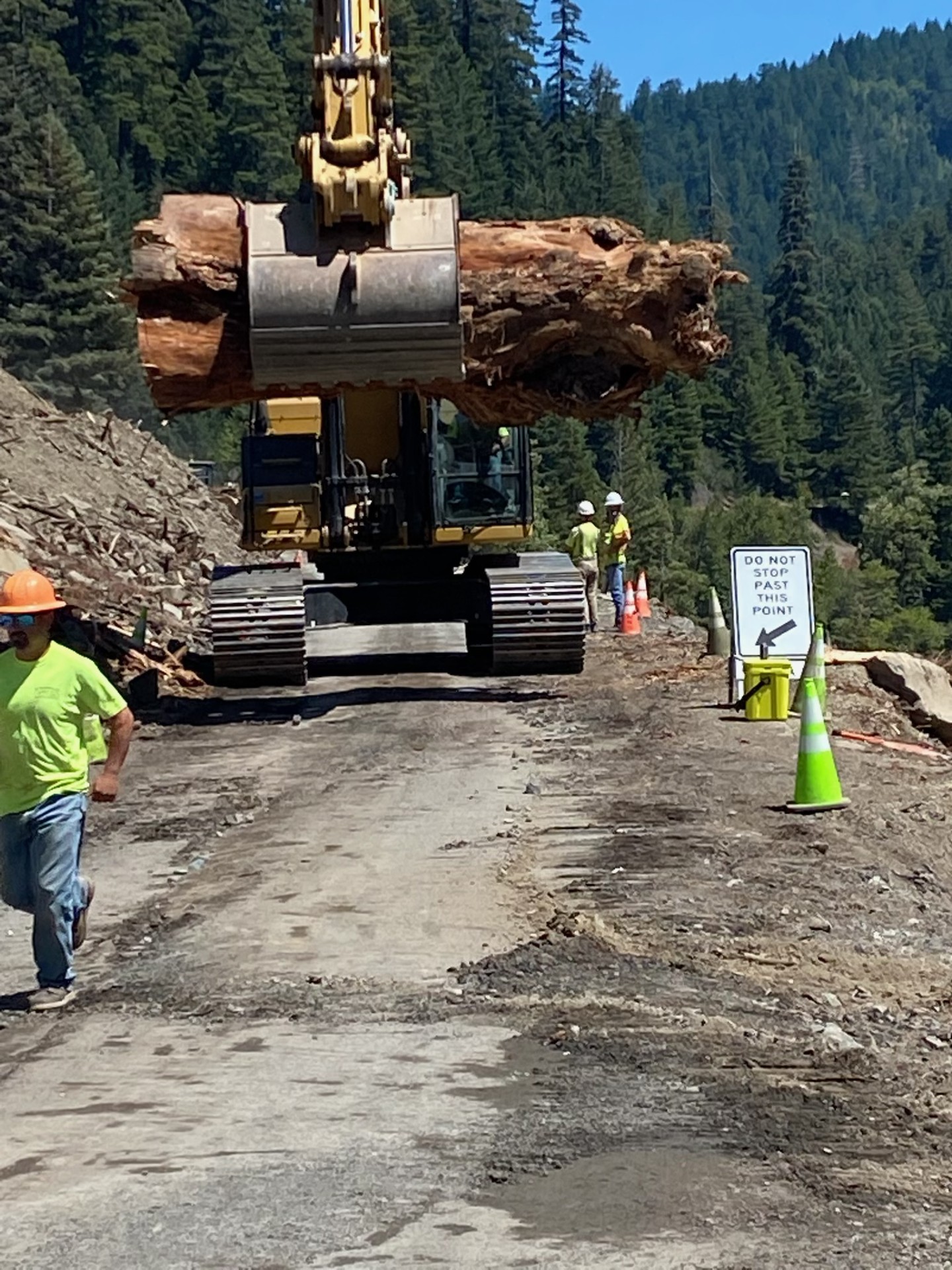
Photo: Caltrans District 1
###
UPDATE: Crews will implement shorter delays between 10 a.m. and noon on Saturday, Aug. 16, to accommodate traffic to BridgeFest in Bridgeville.
###
Caltrans release:
Route 36 remains open to one-way traffic east of Swimmer’s Delight near Grizzly Creek Redwoods State Park. Travelers should continue to expect delays and use caution when passing through the active slide zone.
This Saturday, crews will be moving rock and placing material in the slide area. Travelers should expect delays of approximately one hour throughout the day. Weekday traffic schedule:
- 🔴 Closed 9 a.m. to 12 p.m.
- 🟢 Release traffic at 12 p.m.
- 🔴 Closed until 3 p.m.
- 🟢 Open 3 p.m. to 4 p.m.
- 🔴 Closed 4 p.m. to 6 p.m.
- 🟢 Open after 6 p.m.
Hard work continues as we push to complete a new temporary lane farther from the hillside before the rainy season. The working bench now stretches across the entire slide area, providing better access for crews. We’re also looking for every opportunity to speed up progress, including Saturday work, with ongoing adjustments and design refinements to keep things moving.
This Republican Lawmaker Has Served California for Decades. Newsom’s Plan Could End His Dominance.
Deborah Brennan / Wednesday, Aug. 13, 2025 @ 7:52 a.m. / Sacramento
This story was originally published by CalMatters. Sign up for their newsletters.
###
Last year Republican Rep. Ken Calvert, the longest-serving Republican of California’s delegation, narrowly held his seat against a former federal prosecutor, Democrat Will Rollins.
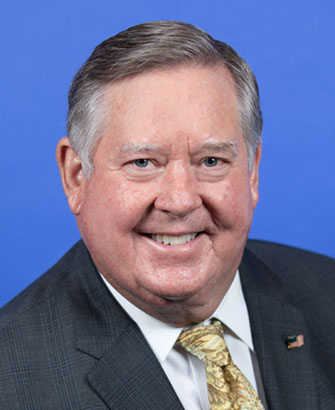
Calvert.
This year he faces eight challengers, and the possibility that his area, California District 41, could be redrawn to give Democratic candidates the advantage.
Gov. Gavin Newsom is proposing what lawmakers are calling an emergency redistricting plan for California, aimed at turning at least five red congressional seats blue. Calvert’s Inland Empire district is one of those targets.
Newsom floated his plan after Texas began redrawing its political lines to eliminate five Democratic seats. Texas Gov. Greg Abbott is pushing the proposal with the backing of President Donald Trump, who wants to bolster the GOP’s House majority in next year’s midterm election by skewing voting districts in Republicans’ favor.
“Donald Trump called up Governor Abbott for one simple reason: to rig the 2026 elections,” Newsom said in a statement, vowing to “fight fire with fire.”
But he faces some hurdles. Unlike Texas, where the legislature sets political boundaries, California relies on an independent citizens’ commission to draw voting lines. California voters approved the redistricting commission for state offices in 2008, empowering the bipartisan body to set boundaries based on geographic areas and “communities of interest,” which can include cultural and economic characteristics. In 2010, voters added congressional districts to the process.
To circumvent that, Newsom would ask California voters to approve new boundaries that would remain in place through 2030. He plans to release proposed voting maps next week. Then the state legislature has to authorize a ballot measure by Aug. 22 to place the redistricting plan on the November ballot.
Last week Newsom hosted Texas lawmakers who fled the state to delay a vote on its redistricting effort. And on Monday he sent Trump a letter outlining California’s counteroffensive. “You are playing with fire, threatening to destabilize democracy, while knowing that California can neutralize any gains you hope to make,” Newsom wrote.
Although the governor has been leading the charge for redistricting, his office said the legislature is handling the maps. “That is not something our office is actively involved in,” Brandon Richards, a spokesperson for the governor’s office, told CalMatters in an email.
Calvert didn’t comment on how the redistricting proposal would affect his district, but said the plan undermines California’s citizen-led redistricting process.
“I strongly oppose the scheme being orchestrated behind closed doors by Sacramento politicians to take constitutionally afforded power away from the Independent Citizens Redistricting Commission and replace it with a process that would allow legislators to draw district maps that are gerrymandered to benefit themselves and their political allies,” Calvert said in a statement to CalMatters. “A partisan political gerrymander is not what the voters of California want as they clearly stated when they passed the VOTERS FIRST Act and participated in the Independent Citizens Redistricting Commission process.”
If voters approve the new maps it could put Calvert’s seat at risk. Previous redistricting in 2021 added the liberal Coachella Valley to conservative parts of western Riverside County, making it a more competitive race. Rollins brought a tightly run campaign and $8 million war chest to the fight and lost by just 3% in November.
With even more Democrat-friendly boundaries and a wide field of candidates that include business executives, an educator and a pop star, the swing race would likely attract renewed national attention and campaign donations.
California Grocery Prices Could Rise if This Self-Checkout Bill Passes, Grocers Argue
Maya C. Miller / Wednesday, Aug. 13, 2025 @ 7:44 a.m. / Sacramento

thekirbster, CC BY 2.0, via Wikimedia Commons
###
This story was originally published by CalMatters. Sign up for their newsletters.
###
It’s been a long day at work, and you still need to stop by the store on your way home.
To spare yourself more social interaction, you make a beeline for the self-checkout station, praying for a quick and painless transaction.
“Please wait, help is on the way,” the machine’s feminine voice coos, taunting you as you try desperately to flag down a clerk.
Following a failed, union-backed effort last year to strictly regulate self-checkout machines, California Democrats are trying again to set guidelines that they say will improve the efficiency of self-service stations across the state’s grocery, drug and big box stores.
Senate Bill 442, from Los Angeles Sen. Lola Smallwood-Cuevas, who chairs the Senate committee on labor and public employment, would require stores to have at least one dedicated worker there to help self-service customers. Stores would also be required to operate at least one traditional staffed checkout lane at all times and restrict the type and number of items a customer could bring through self-checkout.
“This is about supporting our workforce, to make sure that they’re safe, but mostly to also make sure that they’re providing the level of service that customers expect and deserve,” said Smallwood-Cuevas on the Senate floor earlier this summer before the bill passed that chamber 26-10.
But the state’s business community, especially its grocers, still opposes the effort. Instead, without pointing to concrete studies or evidence, they say more regulations will drive up prices due to added labor costs that companies will pass along to consumers.
“This seems like a clear example of why Californians pay the highest prices for groceries, regardless of what checkout line they go through,” said Daniel Conway, a lobbyist for the California Grocers Association, at an Assembly Labor and Employment Committee hearing in June.
It’s not surprising that Smallwood-Cuevas, a former labor organizer herself, is carrying such a bill given her close alignment with the two union heavyweights cosponsoring the legislation: the California Labor Federation and the United Food and Commercial Workers. She votes their way more than 95% of the time, according to the Digital Democracy database, and has received nearly $30,000 in total campaign contributions from the groups since 2021.
Under the measure, stores would have to display signs that limit customers to 15 items or fewer in the self-checkout lanes and also designate one employee whose only assigned duties are to monitor the stands. Notably, the bill explicitly states that stores would not be penalized for failing to enforce the item limit, a condition that the business groups say is nonsensical. Proponents of the provision argue that signs will increase peer pressure and self-policing without strict enforcement.
More items banned from self-checkout
And building on a 2011 law that banned the sale of alcohol at self-checkout stations, another union-backed effort, Smallwood-Cuevas’s new bill would expand the ban to any items that require identification to buy, such as tobacco products, and anything with anti-theft security devices that must be removed by an employee.
Stores that want to add new self-service checkout stations must notify employees and their unions in writing at least 60 days in advance or face a $1,000 penalty per violation per day.
Democrats have largely voiced support for Smallwood-Cuevas’s bill, calling it a much needed remedy for the headache that is self-checkout.
Assemblymember Ash Kalra, a San Jose Democrat, scoffed at Conway’s assertion that self-checkout is an efficient and preferable choice for customers and said customers are often forced to use them since stores have reduced the number of cashiers.
“I don’t know if I can disagree with more points that were just made from our friends with the grocers,” Kalra told Conway during the late June hearing. “You must not be going to the stores if you think there’s an improved shopping experience from these self-checkouts.”
Opponents have expressed concern that a newly added provision in the bill would invite local municipalities to pass their own more stringent standards, as the city of Long Beach recently did, requiring stores to assign at least one clerk for every three self-checkout machines.
Companies warn that such a patchwork of laws would make it difficult to run stores with multiple locations, creating a burden for both owners and customers.
“Only a uniform, statewide approach can provide the consistency that both employers and employees need to thrive,” wrote Ryan Allain, a lobbyist for the California Retailers Association, which is currently opposed to the bill.
Even though Republicans admitted that they, too, despise the self-checkout process, lawmakers slammed the bill for overstepping businesses’ authority to regulate themselves and raise operating costs that would ultimately be passed along to the consumer.
Sen. Shannon Grove, Republican of Bakersfield, called it “completely unacceptable” for the Legislature to prevent businesses from introducing automation that could lower costs after committing to an affordability agenda.
“It’s a labor thing, I get it,” said Sen. Kelly Seyarto, a Murrieta Republican, on the Senate floor in June. “I’d like as many people to work as possible, but I’d also like to afford the groceries.”
Sen. Ben Allen, a Democrat from El Segundo, was among a few Democrats who expressed slight hesitations about the state preemption of local rules but voted for the bill anyway.
“I understand you’re going to be working with the grocers on that challenge,” he said in June.
The bill must clear the Assembly Appropriations Committee after lawmakers return from their summer recess on Aug. 18 before it goes to the floor for a vote.
Tara Gallegos, a spokesperson for Gov. Gavin Newsom, wouldn’t state a position on SB 442, saying the governor’s office “doesn’t typically comment on pending legislation.”
OBITUARY: Karen Anne Fredrickson, 1946-2025
LoCO Staff / Wednesday, Aug. 13, 2025 @ 6:56 a.m. / Obits
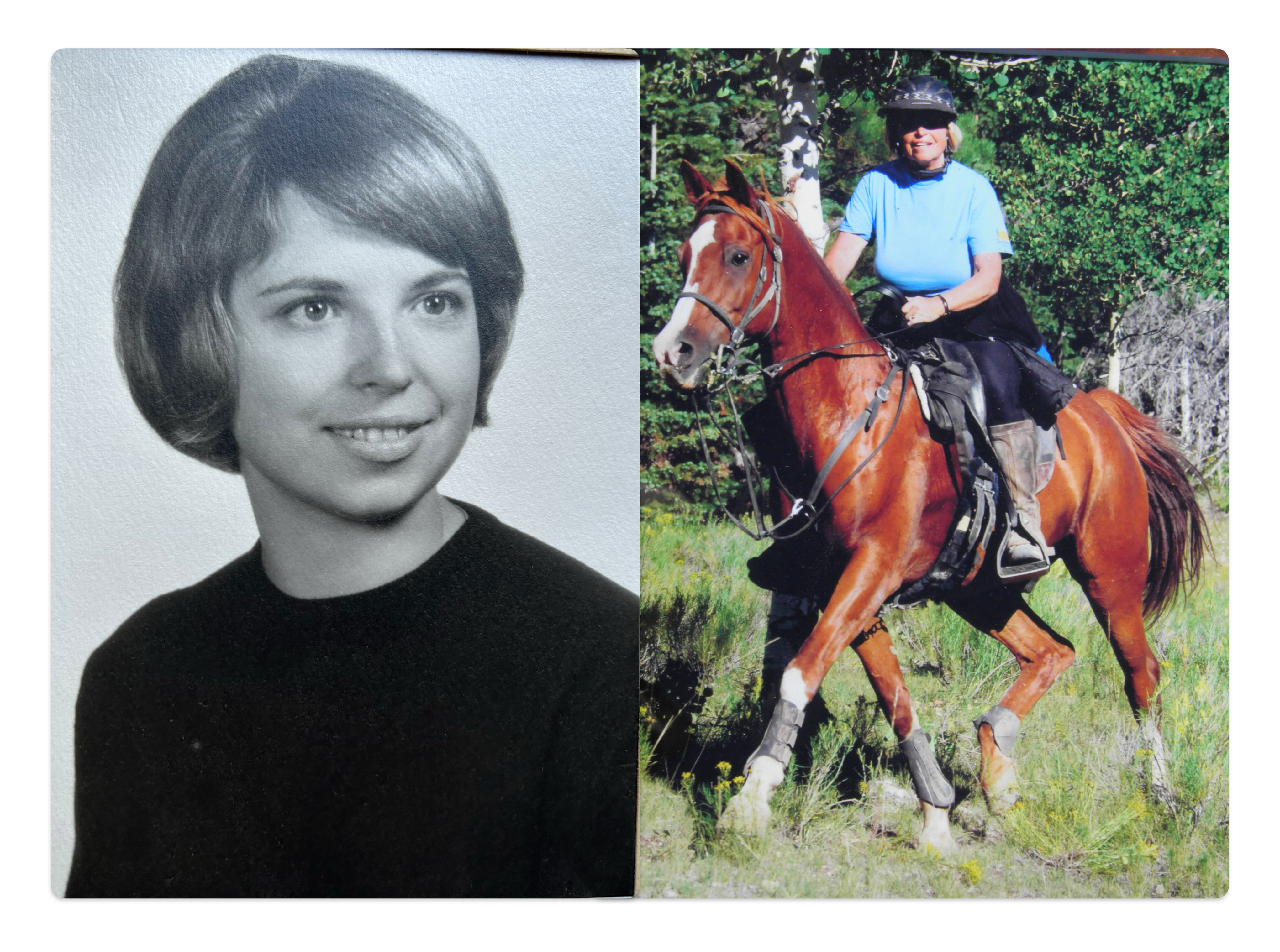
With profound sadness, we announce the passing of Karen Anne Fredrickson (née Moore), age 79, who left us peacefully at her home in Iaqua on August 6, 2025, surrounded by her loving family.
Karen was born on April 13, 1946, in Eureka at St. Joseph Hospital to Charles and Edra Moore. She grew up in Freshwater, attending Freshwater Elementary School, and spent her summers at the family ranch in Iaqua — a place central to the rest of her life. The ranch shaped her love of ranching, animals, community, and the land itself.
She graduated from Eureka Senior High School in 1964 and went on to earn her Bachelor of Science degree from Oregon State University’s School of Humanities and Social Sciences in 1968. Her experience in college would continue to influence Karen’s life, blending community and agriculture.
Karen began her professional journey with the Department of Food and Agriculture in Lebanon County, Oregon, and broke new ground as Oregon’s first female Brand Inspector. From there she worked for Oregon State University Agricultural Extension, serving as the 4-H Director for Benton County, Oregon. In 1982, she returned to Humboldt County, serving the community with Redwood Community Action Agency and later the Area 1 Agency on Aging.
Continuing her path of community service Karen was a key member of the Humboldt County Probation Office. From 1988 to 2003, Karen served as a probation officer, supervisor and director. Karen made a lasting impact in the department serving as founding supervisor for the Humboldt County Drug Court, leading the Intensive Supervision Unit, and ultimately serving as Division Director of Adult Probation. Compassion and commitment defined her professional career. Her dedication earned her the Pat Mitchell Award from the Eureka Police Officers Association along with the admiration and respect of the law enforcement community.
Karen married her beloved husband, Duane Fredrickson, and together they built a life of love, hard work, and shared passions. She was the proud mother of Shaun and Kylie Brenneman, Adrienne and Thomas Ross, Melissa Grace, and Jason and Emily Fredrickson. She adored her grandchildren — Meghann and Michael Weldon, Kaitlin and Kevin Marshall, McKenna and Andrew Miyashiro, Samuel Ross, Austin Grace, and Wyatt Grace — and her great-grandchildren, Elias and Agatha Miyashiro.
Karen is survived by her sister and brother-in-law, Kathleen and Roddy Gordon, and her brother and sister-in-law, Mark and Dina Moore. She also leaves behind a large extended family of nieces, nephews, great-nieces, and great-nephews, all of whom she cherished deeply. She was predeceased by her parents, Charles and Edra Moore. Her dear friends remained an important part of her life through the years.
Karen was a lifelong athlete competing in many endurance related sports from marathons to ride and ties, ultimately culminating in equine endurance rides. Karen was a lifelong member of Redwood Empire Endurance Riders and the American Endurance Ride Conference. Blending her love of horses and distance racing, she found her passion in endurance riding. Her endurance riding career was nothing short of remarkable. She completed the legendary 2,000-mile Pony Express Trail XP Ride three times in full and once in part (1,250 miles), riding from St. Joseph, Missouri, to Virginia City, Nevada. She logged countless 250-mile, multi-day rides across the western United States, amassing an extraordinary 18,155 sanctioned AERC miles between 2000 and 2018. During her two-decade racing career she gathered more than just miles, she collected a vast group of life-long friends.
Astride her beloved horse, Murphy (MRR Pyro), Karen achieved the coveted “Perfect 10” Award in 2011 — ten years, 10,000 miles, 10 first-place finishes, and 10 best condition awards — an honor held by only a select few in the sport’s history. That same year, they received the rare Pard’ners Award, recognizing the deep partnership between horse and rider. In 2014, Murphy was inducted into the American Endurance Riders Hall of Fame, and by 2015, they had completed 15,000 race miles together.
Karen’s passions extended far beyond endurance riding. She was a gifted gardener who inspired many to grow and nurture the land. Together with Duane, she owned and operated a successful cattle ranch in Iaqua. Their work together went beyond raising a thriving cattle herd, they strove to restore and improve the land. Working closely with Natural Resources Conservation Service, Karen and Duane endeavored to promote stewardship and conservation of the land they loved. Their shared efforts earned them the Buckeye Conservancy Stewardship Award.
In keeping with her trend of community service, she was a lifelong member of the Humboldt ranching community. Karen served as Secretary of the Humboldt/Del Norte Cattlemen’s Association from 1999–2000, was a member of the Farm Bureau, and the Buckeye Conservancy. At home, she was surrounded by the dogs she loved, her constant companions over the years.
Karen had a generous heart, a strong will, and an easy smile that made everyone feel welcome. She taught by example — showing others the value of hard work, loyalty, and living life of courage and joy.
A celebration of Karen’s life will be held at 1:00 PM, Sunday, September 21, 2025 at The Wharfinger Building, 1 Marina Way, Eureka, CA 95501. Friends and family are welcome. In lieu of flowers, donations may be made to Hospice of Humboldt and the Humboldt/Del Norte Cattlemen Scholarship Fund in her memory.
- Hospice of Humboldt, 3327 Timber Fall Ct., Eureka, CA 95503
- Humboldt/Del Norte Cattlemen Scholarship Fund, 5630 S Broadway, Eureka, CA 95503
Karen will be remembered as a devoted wife, mother, grandmother, great-grandmother, sister, aunt, great-aunt, and friend. We imagine her now riding through the mountains she loved so much, wind in her hair, astride Murphy, with Cat at her side.
The family would like to extend our heartfelt gratitude to Hospice of Humboldt County and the University of San Francisco Cancer Center for their compassionate care during her final days.
###
The obituary above was submitted on behalf of Karen Fredrickson’s loved ones. The Lost Coast Outpost runs obituaries of Humboldt County residents at no charge. See guidelines here.
OBITUARY: Joan Ellen Hirschfeld, 1955-2025
LoCO Staff / Wednesday, Aug. 13, 2025 @ 6:56 a.m. / Obits

Joan
Ellen Hirschfeld
July
18, 1955 – April 22, 2025
It is with great sadness I must relay that my good friend Joan Hirschfeld has died.
She was born in Los Angeles to Irving and Shirley Hirschfeld.
Joan was a very talented artist working largely in lithography. She had a number of shows locally in the late 1970s. She loved to sing and play guitar with a group of friends. She was also a voracious reader. I was lucky to have her share many books with me that she had enjoyed.
Joan graduated early at 16, from El Camino High School. She moved to Oakland and attended California College of Arts and Crafts.
She then moved to Quincy, California where she worked for the Forest Service.
From there, she moved to Humboldt County and began studying for her bachelor’s degree in Art at Humboldt State University (as it was then called). It was at this point she and I met and became friends. She worked for Matthews Picture Framing while studying for her degree in Art. That was a very good fit for an aspiring artist.
She moved to Altadena and worked for a catalog company there doing layout and design.
Joan returned to Humboldt County. She met Jay Dottle and they married. She was a stepmother to his two children, Jason and Heidi. Joan worked with Jay on building his construction business, doing design work, bookkeeping and management.
When that marriage dissolved, Joan created Abacus, a business helping others set up their businesses. She possessed great organizational skills. She would also help with designing logos and forms for these businesses. Eventually she decided to return to school.
She moved to Santa Barbara and attended Antioch College, completing her bachelor’s degree in both Art and Psychology, then went on to become a licensed Marriage and Family Therapist.
She returned to Humboldt County and worked for Humboldt County Juvenile Hall and Making Headway, before opening her own private practice.
When first diagnosed with cancer in 2009, she regrettably had to close her private practice.
She was diagnosed with a second cancer in August of 2024. She spent many months in treatment at UCSF and passed away at Serenity House hospice in Santa Barbara with her family by her side.
She is survived by her sisters Meila and Lisa, and her niece Jessie.
###
The obituary above was submitted on behalf of Joan Hirschfeld’s loved ones. The Lost Coast Outpost runs obituaries of Humboldt County residents at no charge. See guidelines here.


