On 9/18/2024 at 11:09 A.M., units from the Arcata Fire District,
Blue Lake Fire, Samoa Fire, Humboldt Bay Fire, Cal Fire, and Humboldt County
Sheriff’s Office were dispatched to a reported residential structure fire at the 600 Block
of Montana Road in McKinleyville.
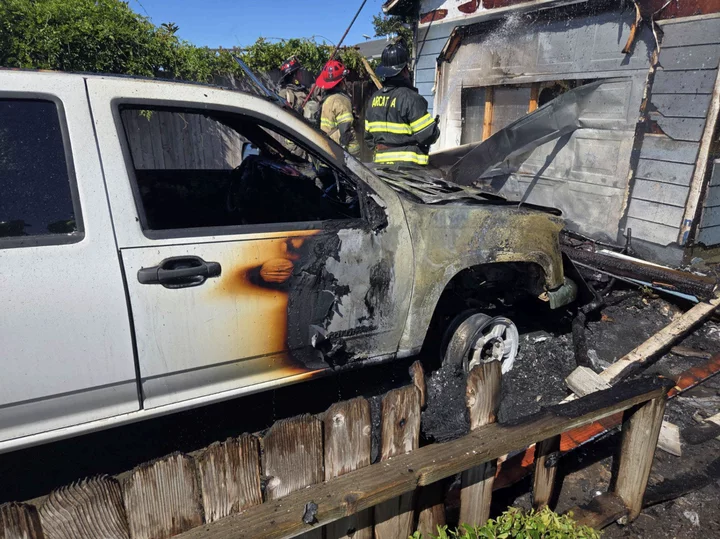
The first arriving Arcata Fire units found a single-family residence with flames on the
exterior that were starting to spread inside. They also found fire on the exterior of a
nearby house and a pick truck fully engulfed in flames. Arcata Fire personnel were told
that there were still occupants in the residence that may need rescue. Arcata Fire
personnel contacted a resident inside who was unaware of the fire and assisted them
from the structure. Humboldt County Sheriff’s Deputies entered the residence and
confirmed that all other occupants and animals were out of the house. Arcata Fire
personnel attacked the fire and extinguished fire on both houses and the pickup truck
within ten minutes. Additional Arcata Fire personnel and Arcata-Mad River Ambulance
personnel arrived on scene to assess the occupants of the residence who advised they
were uninjured. Blue Lake Fire and Humboldt Bay Fire personnel arrived on scene and
assisted with complete extinguishment of hot spots. Additionally, Arcata Fire District’s
Volunteer Logistics Unit responded to provide support on scene.
Arcata Fire personnel conducted an investigation into the cause of the fire. It was
determined that the fire originated at the vehicle and spread to the two houses. The
cause remains under investigation at this time. Damage to both houses and the vehicle
is estimated at $30,000.
Arcata Fire wants to thank the Humboldt County Sheriff’s Office for their assistance.
Their secondary search of the residence allowed fire resources to focus on
extinguishment of the fire, reducing risk to additional victims and minimizing damage to
both structures.
This incident is an excellent example of many agencies working together for the benefit
of all communities.
The Eureka City Council last night unanimously put its seal of approval on a 518-page document meant to shepherd the city away from the present state of its streets, toward a more bike-friendly future.
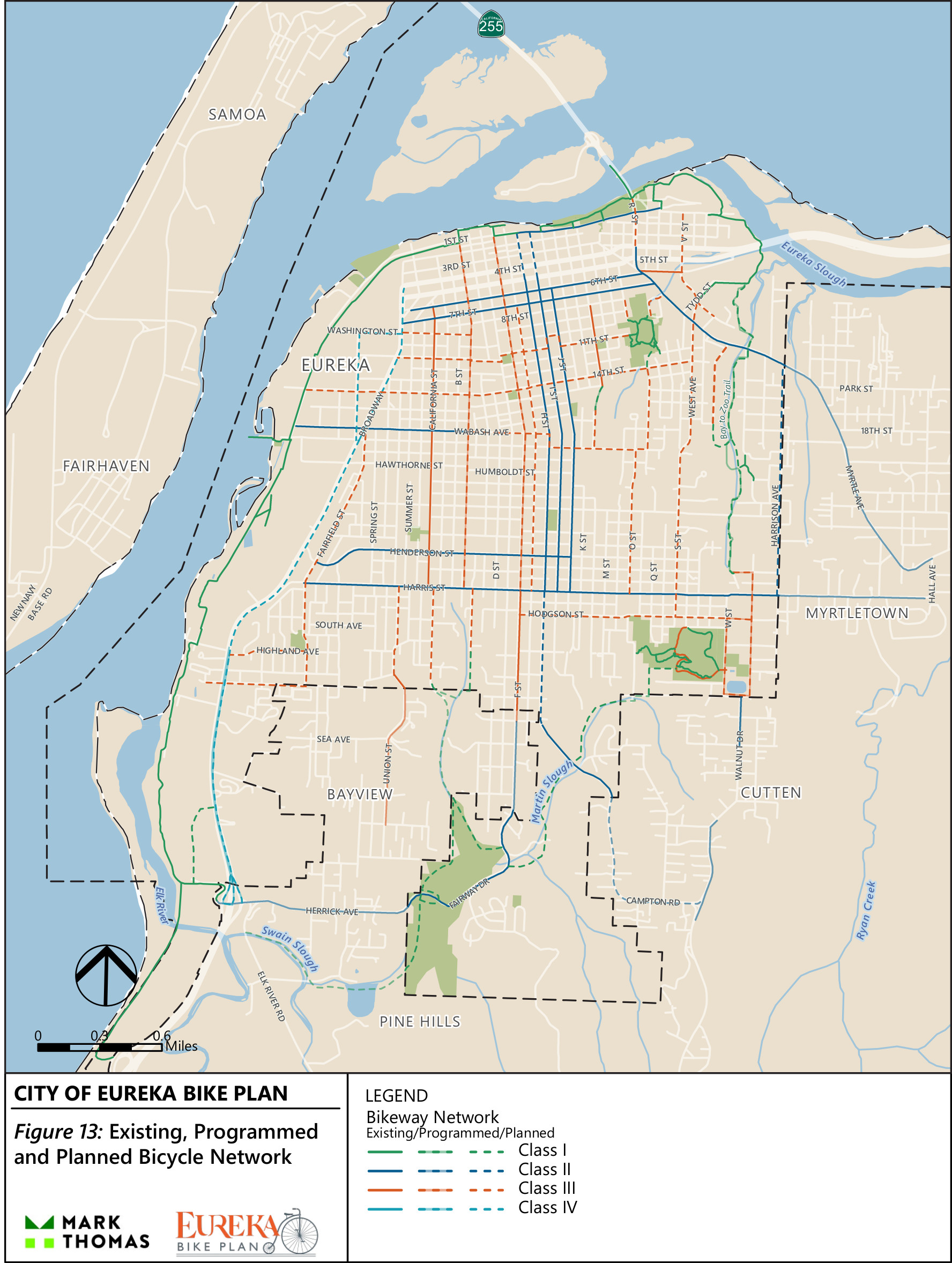
Page 26 of the Bike Plan shows a map of “existing, planned and programmed” bicycle-friendly improvements to city streets. Click to enlarge.
The Eureka Bike Plan, as it’s called — get the document here — contains a whole slew of different improvements all across the city. Its goal is to make the city safely navigable for bikes.
Some of this work has been done recently, and more is on the near horizon. For instance, the city’s “C Street Bicycle Boulevard” project, which will alter C Street’s design to prevent people from using it as a north-south car corridor, has already been funded, and work is scheduled to begin next year.
But the plan — which was worked out in collaboration with the Mark Thomas consulting firm — looks even further into the future, imagining north-south and east-west bike lanes, trails and other amenities reaching almost every part of the city.
Why the need for a such a plan? Well, if the goal is to build a network, rather than just a bike path here and there for recreational purposes, it helps to have an idea of that network in mind.
But also an on-paper plan helps get things done in a million other ways. Consultant Paul Martin of the Mark Thomas firm told the council that among other things, a comprehensive document like this is of great help when the city is looking for funding opportunities.
“When we advance our transportation planning studies, the name of the game, frankly, is money, and how we can position the agency for grant success,” he said.
Paul Martin.
As became clear during public comment, the city considers the plan a “living document” subject to change, rather than a set of hard goals with hard timelines.
Rick Knapp, president of the Humboldt Bay Bicycle Commuters’ Association, told the council that while the plan was an “impressive document,” its full content — including appendices detailing potential costs — wasn’t available until five days ago.
“I just wonder whether it’s appropriate for the city to adopt this tonight when nobody really got to see it,” Knapp said. “So that’s kind of an open question to you: Is five days from the time you sent out an email to some people enough time?”
But city staff assured the council that the document is easy to amend in response to changing circumstances and evolving technology, and that seemed to be enough to sway a couple of questions councilmembers had about timing. The document was approved on a 5-0 vote.
###
At
the end of last night’s meeting, City Manager Miles Slattery gave
the council an update on the EaRTH Center, the big downtown
development on Third Street between G and H streets that, if and when
it’s ever built, will house a big apartment complex over a regional
transit hub run by the Humboldt Transit Authority.
The
EaRTH Center project has undergone a few changes since it was first
approved by the council two
and a half years ago. Cal Poly Humboldt, an early partner, has
bailed out, as has the original developer. Early
this summer, the city cut a new deal with local development firm
Danco Builders to take over the project.
Slattery
told the council that city staff is still meeting with Danco and the
Humboldt Transit Authority every week or two, and that they’re
finalizing plans for the space. He said that it’s looking like
they’ll setting on something like 55 new low-income
units
for the complex, and
that there should be a proposal before the city’s Design Review
Committee before too long.
Mayor
Kim Bergel asked Slattery, for the public’s benefit, to clarify
what he meant by “low-income” housing. He assured her that these
apartments, along with other downtown parking-lot con, were for
“working people.”
“We
have people who work for the city who
have full-time jobs who
could qualify for that [low-income
apartment],” Slattery said. [Ed.
note:The
Outpost
ran a really clear explainer on this a while back. Here it is, in case you missed it.]
The
EaRTH Center is one of the developments targeted by Measure
F, which seeks to stop the conversion of city-owned downtown
parking lots into housing.
Pink hues adorn the horizon as the sun rises on a nondescript parking lot at Long Beach City College. The lot is quiet but not empty, with the same gray asphalt and slightly faded white lines as any other one on campus. But from 10 p.m. to 7 a.m., it is much more than a place to park.
The lot is a designated area for Long Beach City College’s Safe Parking Program, an initiative from the college’s Basic Needs Center that offers safe overnight parking for students and connects them to resources like showers and Wi-Fi. The program was created to address a particular student demographic: homeless students living in their cars.
A report from the Community College League of California found that 2 out of 3 of the state’s community college students struggle to meet their basic needs and almost 3 out of 5 are housing insecure.
To help these students, multiple legislative measures have tried to create safe parking options similar to Long Beach City College’s. The most recent effort was Assembly Bill 1818. Introduced by Assemblymember Corey Jackson early this year, the bill would have required the California Community College and California State University systems to create pilot programs to provide safe overnight parking for students living in their cars.
“Parking lot homeless programs are a best practice that’s been used throughout the nation; churches have done it, cities have done it, it’s time for colleges to step up and do it too,” Jackson said.
The bill was killed in the appropriations committee on Aug. 16, but would have required the California State University to select five campuses to participate in the pilot program; the California Community College chancellor would have had to select 20. The pilot program would have lasted through 2028.
The appropriations committee, which assesses the financial viability of a bill, estimated establishing pilot programs across the Cal State system would cost around $500,000 as well as an additional $2.25 million in annual costs. For the California Community Colleges, the committee estimated between $91,500 and $112,00 in one-time costs and $10 million to $13 million in annual costs for the duration of the program.
Justin Mendez, coordinator of Long Beach City College’s Basic Needs Program, oversees the safe parking program and said those estimates sound high, although he acknowledges that costs will vary from campus to campus. Long Beach City College has been able to fund their program for less than the committee’s estimated costs by working collaboratively with other departments and using existing contracts.
While the bill had garnered support from organizations like the California Faculty Association and the Student Senate for California Community Colleges, several community college districts and the California State University system opposed it. Some of their concerns include liability risk and cost. They also argue that providing secure overnight parking is not a permanent solution.
Letitia Clark, chief communications officer for the South Orange County Community College District, said the district has been investing in programs that support basic needs, including housing, as well as exploring building housing on campus as part of their facilities master plan.
“We don’t want any mandates or anything that would take away from that, and especially with an alternative that we actually don’t think is safe and really provides a good quality of life for our students,” Clark said.
Mendez at Long Beach City College acknowledges that overnight parking is not a housing solution.
“We’re not in the understanding that providing our students a safe place to park is providing them housing,” Mendez said, adding that the program is just one of the many resources available for students facing housing insecurity. However, overnight parking provides an immediate safe space while students are connected to longer term housing.
Providing holistic support
Started in 2021, the program has evolved over the years. The lot is now located next to the college’s campus safety building, which has allowed Long Beach City College to cut down on the nearly $500,000 they spent the first two years hiring an outside security company. Students have access to the bathroom in the campus safety building throughout the night and can access the locker room showers from 6 a.m. to 9 a.m. at the nearby school stadium.
Being next to the campus safety building means overnight security officers and parking employees periodically check in on the lot as part of their routine rounds. Mendez said that despite there not being 24/7 surveillance there haven’t been any safety issues.
The lot has 15 parking spots reserved for safe parking participants from 8 p.m. to 7 a.m. although the program can have around 30 folks enrolled at a time. Mendez said they rarely have issues with capacity because students use the resource to varying degrees — some enroll as a backup because they are at risk of losing their housing, others may only need a night or two while they wait to relocate.
Students in the Safe Parking Program need to be enrolled in the primary terms of fall and spring. However, they can continue using the program during summer and winter without being enrolled during those terms. They must also be independent; service animals are allowed but students can’t be living in their vehicle with family or have dependents.
These eligibility requirements have evolved as Mendez and his team assess what is realistic and better serves students. Originally, the program required students to have their vehicles registered and an up-to-date license but now that is something the college assists them with.
Once enrolled in the program, students receive a welcome packet, sign a liability release form and are connected with a case manager to find long-term housing, whether that be through one of the college’s community partners or elsewhere.
For the 2022-23 academic year, the program had a total of 24 students. Twelve of them found transitional or permanent housing. For fall 2023, 21 students enrolled in the program, two obtained permanent housing and 19 of them continued into spring 2024.
The community has also been supportive of the program. Mendez said that since it started, the program receives donations of blankets, gift cards, hygiene kits and other necessities.
“All we need is a place to park overnight.” — Brad Butterfield, president of the Alternative Living Club, Cal Poly Humboldt
Elliot Stern, the president of Saddleback College, spoke against AB 1818 during a Senate committee hearing, arguing that colleges need to get students out of their cars and into their basic needs centers so their needs can be “addressed holistically.”
At Long Beach City College, students access the parking program through the basic needs center and its online request form. What began as a COVID-19 emergency aid application has continued to be a useful one-stop-shop application for students seeking help.
“For all of our basic needs efforts, we always take a wide scope and try to cast the widest net we can,” Mendez said.
The survey asks whether students are facing housing insecurity, which could mean they are struggling to pay rent or have to move frequently, or if they are homelessness, meaning they don’t have a permanent place to live. If they answer yes to either, the survey then asks if they’re sleeping in their vehicle, couch surfing, staying in hotels or borrowing a room.
Through this data, the Basic Needs team can directly connect students with specific resources. For students who self-identify as living in their cars, the outreach coordinator then refers them to the Safe Parking Program.
When students aren’t allowed to park
AB 1818 was inspired by the experiences of students attending campuses without overnight parking. The bill originated as a response to Cal Poly Humboldt evicting students living in their vehicles.
On Oct. 25, 2023, Cal Poly Humboldt students received a mass announcement stating that the university would begin enforcing a parking policy it had previously overlooked and would be evicting students who were found sleeping in their vehicles overnight.
One of those students was Caleb Chen, a second-year public sociology graduate student. He applied to Humboldt in late June of last year and knew finding housing would be difficult. After doing some research, he learned about the university’s alternative living community and figured it would be feasible to live out of his van.
Chen was in the graduate lounge with a friend when they both got the email.
“Oh, the jig is up,” his friend told him.
The eviction announcement said allowing students to sleep in their cars was “unsanitary” and “unsafe” — terminology that not only made students feel dehumanized but also something they considered inaccurate.
First: Brad Butterfield standing inside his RV. Photo by Alexandra Hootnick for CalMatters
Brad Butterfield, president of the Alternative Living Club, a school club created by Humboldt students living in their cars to form a community and advocate for establishing a mail service, said the administration brought up similar sanitation concerns when they pitched the idea of a safe parking program on campus.
“We don’t need, nor ever asked for, bathrooms, showers or security,” said Butterfield, a journalism senior. “All we need is a place to park overnight.”
Butterfield lives in an RV, which has a built-in bathroom. He has a membership at a local gym and showers there. For students without RV’s, Chen said there still are bathrooms on campus that are open 24/7 and that most undergraduate students shower in the school gym.
“It’s really difficult to be pretty much told that you can’t exist,” Butterfield said. “We weren’t causing any harm. We all kept a really low profile.”
Butterfield said that at the time of the evictions, 25 to 30 students were living in their cars. Some lived in discrete vehicles like SUVs while others lived in RVs like him.
The email announcement stated that campus officers had received calls from members of the community “expressing fear and frustration about the situation.”
“There were never any issues between the vehicle dwellers on campus,” Butterfield said. “Not between us as a community and certainly not between us and the campus community at large.”
Brad Butterfield checks the top of his RV for leaks in Arcata on Aug. 24, 2024. Due to the high cost of education, Butterfield lived in his vehicle on campus at the California State Polytechnic University, Humboldt until the university prohibited students from doing so in the fall of 2023. Now, Butterfield parks in the city of Arcata, which requires he move his vehicle every 72 hours or receive a ticket. Photo by Alexandra Hootnick for CalMatters
According to Butterfield, it was quite the contrary. He said some students had told him they felt safer knowing there were students in the parking lot at night who could call the police if anyone was trying to break into their car — something the group had done in the past.
The stigma around homelessness is something that Mendez from Long Beach City College has been fighting since the beginning of the safe parking program. He said the staff have a student-centered approach and are mindful of treating students with dignity.
“There’s all of these negative stereotypes about what a homeless person is instead of realizing that these college students are coming here to be successful. They’re coming here to work on their long-term goals and help themselves and their families,” Mendez said. “I think that level of dignity has made the biggest impact beyond the actual connection of housing partners.”
The mischaracterization of homeless students is what ended a 2019 bill that was also advocating for safe parking. Assembly Bill 302 was introduced by Assemblymember Marc Berman, and would have required community college campuses to allow overnight access to parking, bathroom and shower facilities for students living in their cars.
The bill made it to the appropriations committee where it underwent significant amendments that Berman said “watered down the bill” and “treated homeless community college students like pedophiles” by placing restrictions for campuses within a certain distance from elementary schools.
“It was really unfortunate and damaging in terms of stigmatizing homeless students. And so, because of a lot of those reasons, we decided to stop the bill from moving forward and work on other solutions to the issue,” Berman said. He later drafted Assembly Bill 132, which successfully passed and required every California Community College to establish a basic needs center and hire a basic needs coordinator.
In 2020, another student tried starting a pilot overnight parking program at his campus. Grayson Peters, now a UCLA alumni, was a founder of UCLA Safe Parking and came across similar arguments from his administration at the time.
He said UCLA administrators told him allowing students to live in their cars and park overnight was “fundamentally unsafe.” Peters said that while he agrees with the statement, the alternative can be even more dangerous for students.
“Students are actively sleeping on unsecured city streets a few blocks over, without the benefit of university guards or university facilities or the student gym nearby to go to the restroom in the middle of the night if they need to,” Peters said. “The status quo is more unsafe than the solution we’re proposing.”
Butterfield and his partner have experienced that risk. After being evicted, they tried to find safe places to park around the city. But Arcata has a 72-hour parking limit, which meant they had to relocate every three days. Butterfield said the Arcata police have harassed them multiple times.
“It feels like we’re constantly trying to outrun the police because they keep wanting us to move from here to there to here to there,” Butterfield said.
Cal State Humboldt referred students to a safe parking program run by a local nonprofit organization, but that program ended this summer.
Stephanie Goldman, the associate director of the Student Senate for California Community Colleges, said data shows that a student’s proximity to campus can affect their academic outcomes.
“[Safe parking] is not only giving them a safer option, but an option that is conducive to them reaching their goals,” Goldman said.
Such was the case for Chen in Humboldt, who, before the eviction, was doing much better academically because the commute time was so short and he didn’t have to stress about where he would spend the night.
Chen spent the remainder of the semester and the following one at a local public parking lot. He now lives in a studio apartment he can afford because of loans and scholarships and is splitting rent with his partner who moved up to Humboldt.
Caleb Chen stands in the parking lot where he lived in his van at the California State Polytechnic University, Humboldt in Arcata on August 24, 2024. Due to the high cost of housing and education, some students at the university lived in their vehicles on campus, prior to the university prohibiting them from doing so in the fall of 2023. Chen, a sociology graduate student, said that finding affordable housing near the university is challenging, and only possible for him this year after moving in with his partner and receiving a fellowship that can be applied towards rent. Photo by Alexandra Hootnick for CalMatters
“When that announcement happened in November, it was just a wrench into a lot of people’s livelihoods let alone academic success,” Chen said.
Jackson said he was disappointed that the bill was “mischaracterized” by the educational systems as encouraging students to live in their cars as opposed to more effective interventions. Moving forward, now that the legislature is on a break until January, Jackson said he will be scheduling a meeting with the Cal State and California Community Colleges chancellors to see if “there’s ways that we can still get this done.” If not, he will be reintroducing the bill next year.
The Student Senate for the Community Colleges said they will continue to advocate for student basics needs including securing funding for dorms.
Jetaun Stevens, a senior staff attorney with the nonprofit law firm Public Advocates, said she hopes the bill returns with a greater coalition behind it. She said that while AB 1818 was mostly sponsored by the author, working with advocacy organizations who can co-sponsor the bill would help bring forward student stories and amplify the potential impact of the bill.
“Oftentimes it does take [bills] that are somewhat controversial quite a few times before they make it across the finish line,” Stevens said.
###
Briana Mendez-Padilla is a fellow with the College Journalism Network, a collaboration between CalMatters and student journalists from across California. CalMatters higher education coverage is supported by a grant from the College Futures Foundation.
CalMatters.org is a nonprofit, nonpartisan media venture explaining California policies and politics.
California’s new plan to decrease the number of maternal deaths centers on spreading awareness about health risks that can contribute to pregnancy-related complications. Photo by Jules Hotz for CalMatters
After a rise in the rate of maternal deaths, California health officials have a new plan to keep new mothers healthy before and after birth. Their goal: cut pregnancy-related deaths in half by 2026.
Between 2019 and 2021, more than 200 Californians died during pregnancy, at childbirth or within a year of giving birth. That’s about 70 deaths a year, or one mother every five days.
While California has one of the lowest maternal mortality rates in the country, health experts say the number of deaths is unacceptably high. By some estimates, 80% of maternal deaths are preventable.
A new plan from California Surgeon General Dr. Diana E. Ramos calls for an educational campaign targeting patients and health care providers. It focuses on spreading awareness about the factors that contribute to pregnancy-related deaths. Ramos wants patients to become more active participants in their health, and for them to be able to identify potential medical risks even ahead of pregnancy.
For example, the blueprint calls for an accessible, at-home questionnaire to help expecting parents assess their own risk of pregnancy complications. It will allow them to self-screen for risks, such as preeclampsia and preterm births. The vast majority of maternal deaths in California are caused by heart disease, hemorrhage and sepsis or other infections, state data show.
For health care providers, the blueprint suggests universal adoption of a tool known as the Obstetric Morbidity Index. It’s meant to help evaluate maternal risks at any stage of pregnancy and it’s used in other countries.
Ramos is scheduled to launch an educational campaign, Strong Start and Beyond, today in San Francisco. She’s expected to be accompanied by First Partner Jennifer Siebel Newsom and by U.S. Health and Human Services Secretary Xavier Becerra.
The state’s push for improving its maternal mortality rates also comes as California is experiencing a wave of closures of labor and delivery wards. More than 50 have closed in the past decade, creating maternity care deserts around the state. A similar trend is happening nationwide.
California’s new blueprint doesn’t include funding or new programming. It aims to raise awareness about the role that someone’s overall health plays in a pregnancy, Ramos said. She also wants to draw attention to resources already available in communities — including access to doulas, now a covered benefit in the Medi-Cal program — as well as services available through counties, health systems and community groups.
“We have so many resources, but up until now, everyone’s been…doing their own thing, it’s been fragmented,” Ramos told CalMatters. “We’re bringing together all of these efforts, breaking down these silos and really elevating the amazing work that everyone is doing.”
Ramos said her office created the plan with disparities in mind. Black women have the highest maternal mortality rates in the state.
“The significance of the blueprint is that we are moving from identification of the problem to solutions that bring together hospitals, clinics, public health, all centered around the patient,” said Dr. Amanda Williams, an associate professor of obstetrics and gynecology at Stanford’s School of Medicine. She is also a member of the advisory group that helped put the blueprint together.
“Sometimes in medicine, we act like people spend their whole life in the office, clinic or hospital, but it’s not where they truly are,” she added. “And so if we want to make a dent in perinatal morbidity and mortality, we have to work collaboratively and we have to work with the community.”
Chronic illnesses are a leading factor in maternal deaths
Prior to COVID-19, about a quarter of all pregnancy-related deaths were associated with heart disease, according to data from the California Department of Public Health.
Ramos says one way to truly make a difference is to emphasize the importance of managing chronic conditions from before pregnancy to after birth. This includes high blood pressure, cholesterol and obesity, all which are linked to heart disease.
In 2020 and 2021, deaths in pregnancy and within the first year of giving birth shot up in large part because of COVID-19 infections, which are included in the data. During the peak of the pandemic, 31% of maternal deaths in California were linked to infections, mostly COVID.
State data show that 23% of deaths happen on the day of delivery, another 23% take place within the first six days from delivery, and 27% occur seven to 42 days after giving birth. This highlights the importance of postpartum care, Ramos said.
“Oftentimes, as a new mom, you’re exhausted, you’re tired…you ignore your health,” Ramos said. “The message we can get to any new mom is to keep their postpartum visit, because depending upon what their healthcare coverage is, whether you’re Medi-Cal, Kaiser, a PPO, your likelihood of keeping that postpartum visit is going to vary, and it’s often at that postpartum visit when any complications that occur during pregnancy are followed through.”
“The postpartum visit can help save a mom,” she said.
Disparities among Black moms continue
In California, Black mothers are three to four times more likely than other racial or ethnic groups to die from pregnancy-related complications. This disparity has persisted for years.
Experts say the inequity is due to several factors, including chronic stress created by discrimination and racism, unhealthy community conditions and a lack of access to high-quality health care.
Last year, the California Department of Public Health commissioned a report that found:
By the time of delivery, about one in five Black mothers were diagnosed with hypertension.
About one in four Black patients experience symptoms of depression during pregnancy — higher than other racial and ethnic groups.
Older women tend to experience higher rates of preterm births across all racial and ethnic groups. But Black women’s preterm birth rates start to increase at a younger age.
“Nobody is talking about maternal health in California without talking about issues of equity,” said Williams. That’s racial equity, but also financial and geographic.
State data show that mortality rates are also higher for women on government-funded insurance compared to people on private insurance. And when it comes to geography, the San Joaquin Valley has the highest rates of maternal deaths in the state.
###
Supported by the California Health Care Foundation (CHCF), which works to ensure that people have access to the care they need, when they need it, at a price they can afford. Visit www.chcf.org to learn more.
CalMatters.org is a nonprofit, nonpartisan media venture explaining California policies and politics.
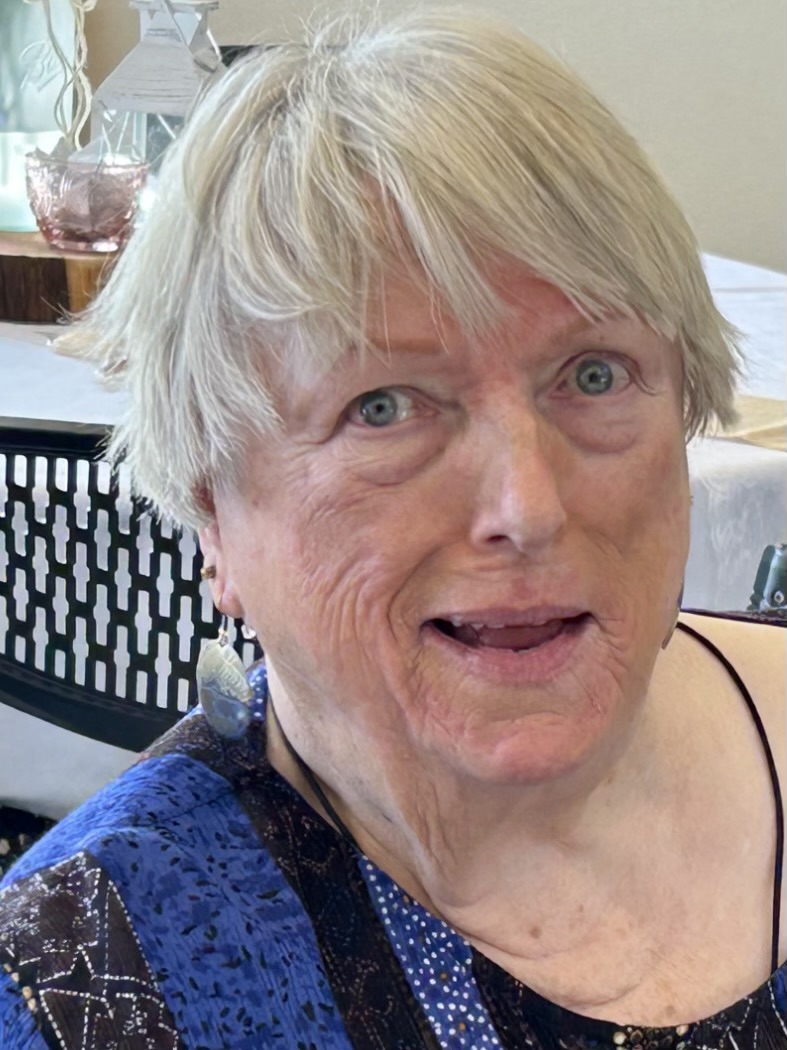
Mary Frances (Kutil) Edwards passed away peacefully in Eureka on
September 7, 2024.
Mary was born in Springfield, Illinois on September 27, 1942 to Frank A. and
Ruth V. Kutil, while they were en route from Wisconsin to California to join Frank’s
father, Frank J. Kutil. The family first lived in a small cabin below the airport in Dows
Prairie, but after the birth of her brother, Frank G. Kutil. the family moved to Eureka,
where Mary lived for the rest of her life.
Mary attended St. Bernard’s Elementary School beginning with Sister Monica’s
kindergarten class of 1947. Back then, the school was staffed almost entirely by nuns of
the Sisters of St. Joseph Of Orange. After eighth grade, Mary moved on to St. Bernard’s
High School, graduating with the class of 1960. While still in high school, Mary got her
first job, working in the kitchen at St. Joseph Hospital.
After graduation, Mary attended
Frederick and Charles Beauty College and became a licensed beautician. She worked as
a beautician in Eureka and in Nice, California. She also worked for several years, as the
receptionist for a local law office. Soon after that, she and a friend had a kite making
business in Eureka. They often had a booth at local special events. Much later, Mary
owned and operated a costume shop in Old Town, Eureka. But of all the jobs she had
over the years, the one she was most proud of was homemaker. Mary took very good
care of her home and her family. Cooking and canning were two of her many specialties.
In 1965, Mary married John Livingston and in 1969, they had a son, Frank D.
Livingston. Mary and John later divorced, but they remained lifelong friends. In 1990,
she married Bob Edwards and they were married until Bob’s death in 2012.
Mary enjoyed weaving, knitting, crocheting and quilting. For several years, she
had her own hand made spinning wheel and loom. As you might guess, her family and
friends were the recipients of many beautiful creations. Mary was a member of the
Moose Lodge, the Red Hat Ladies, the Horseless Carriage Club of America, the
Humboldt Bay Model A Club, and TOPS. Mary will be remembered as a devoted wife,
mother, grandmother, and friend. She will be greatly missed.
Mary was preceded in death by her parents, Frank A. and Ruth V. Kutil and by
her husband, Bob Edwards. She is survived by her son, Frank D. Livingston (Michelle),
grandsons, Bradley Livingston (Nicole) and Hunter Toland, granddaughter, Rachael
Livingston, and best friend since kindergarten, Madeline Stagnoli.
The family wishes to thank the staffs at St. Joseph Hospital, Caring Companions
Care Home, and Hospice of Humboldt for the special care Mary received in her final
months. Pall Bearers will be Dennis Grinsell, Paul Jerland, Weldon Benzinger, Bradley
Livingston, Hunter Toland, and John Livingston Jr.
Visitation will be Thursday, September 26 from 5 to 7 p.m. at Sanders Funeral
Home, Del Norte and E Sts. A rosary will follow there at 7 p.m., with Mary’s classmate,
Father Michael Cloney officiating. The funeral service will also be at Sanders, on Friday,
September 27 at noon, officiated by Father Michael Cloney. Interment will
immediately follow at St. Bernard’s Catholic Cemetery, officiated by Father Michael
Cloney.
Memorial contributions may be made to Hospice of Humboldt, 3327 Timber Fall
Ct, Eureka, CA 95503 or to a favorite charity.
###
The obituary above was submitted on behalf of Mary Edwards’ loved ones. The Lost Coast Outpost runs obituaries of Humboldt County residents at no charge. See guidelines here.
On 09-17-24, Officers from the Ferndale Police Department took a seventeen-year-old male juvenile into custody for felony evading with wanton disregard for safety. The arrest stems from a high-speed vehicle pursuit that occurred on HWY 211 on the 12th of September.
The Ferndale Police Department received several tips, which led to the suspect driver being identified. Surveillance camera footage was obtained, which positively identified the juvenile suspect driving the involved vehicle.
The juvenile was transported to the Humboldt County Juvenile Hall, where he was booked and lodge for the following charges:
2800.2(A) CVC-Felony Evading
12500(a) CVC-Unlicensed Driver
777 W&I-Juvenile Probation Violation
The Ferndale Police Department was aided in this investigation by the Bear River Tribal Police Department, The Humboldt County Juvenile Probation Department, and the Humboldt County Sheriff’s Office. The Ferndale Police Department is thankful for the community’s assistance in identifying the juvenile suspect.
Press release from the Humboldt County Sheriff’s Office:
The Humboldt County Sheriff’s Office is requesting the public’s help in the Bailey Blunt missing person investigation.
Bailey Blunt was reported missing to Humboldt County Sheriff’s Office (HCSO) one year ago on Sept. 25, 2023. Blunt was last seen on Sept. 22, 2023, when she reportedly went to retrieve her belongings from a location off Berg Rd and State Route 299, where she had been staying with her ex-boyfriend Tyler Burrow.
Since law enforcement’s first response to investigate the disappearance of Bailey Blunt, multiple searches of the Berg Rd. property were conducted, including the use of highly specialized K-9 teams and ground searchers without success. Blunt has not utilized any credit cards or contacted any of her loved ones since the disappearance a year ago. Interviews have been conducted by investigators with more than 30 individuals, including Tyler Burrow. Search warrants have been issued and served on vehicles, properties, cellular phones, and electronic records as part of the ongoing investigation. Tips received throughout the investigation have led to thorough searches of locations in Humboldt and Trinity Counties, and Oregon. At this point, the Sheriff’s Office has followed up on all possible leads and is requesting the public’s help in this investigation. Investigators believe there are people in this community that know what happened to Baily Blunt.
Baily Blunt is 29 years old and described as a white female, approximately 5 feet 5 inches tall, weighing 200 pounds, with brown hair and brown eyes. Blunt has a tattoo of a trident on her neck and a fishing hook on her left hand.
If anyone has any information, please contact Investigator Jennifer Taylor with the Humboldt County Sheriff’s Office Major Crimes Division. To make an anonymous crime tip please call 707.268.2539 or email HSO@co.humboldt.ca.us .