

Newsom’s Visit Underscores Electric Car Reality: China Holds the Keys to Battery Industry
Alejandro Lazo / Thursday, Oct. 26, 2023 @ 7:55 a.m. / Sacramento

Gov. Gavin Newsom, at left, meets with Chinese President Xi Jinping in Beijing, China, on Oct. 25, 2023. Photo by the Office of the California Governor via AP Photo
When it comes to California’s efforts to tackle climate change, China and California are linked in a critical way: The world’s most populous country processes the vast majority of rare metals needed for electric car batteries.
This week Gov. Gavin Newsom, a Democrat, is touring China with an emphasis on the environment, namely on how California and China can cooperate on climate.
Newsom is the third California governor in a row to make an official trip to China, and he does so at a moment when California is perhaps more heavily dependent than ever on the country to meet its own climate goals.
China’s role as a raw materials processor makes it a linchpin in California’s requirement that all new cars sold in the state are zero-emission vehicles by 2035. The relationship between the two governments is a longstanding one, and California and China have traded notes on everything from climate regulation to technology in recent years.
A California-China Climate Institute, led by former Gov. Jerry Brown, hosts a partnership between UC Berkeley and Tsinghua University in Beijing. The state and the government share similar policies, including emissions reduction targets, electric vehicle mandates and carbon trading programs.
“They look at what California is doing, and they treat it as a benchmark,” said Mary Nichols, former chairperson of the California Air Resources Board, which sets climate and air quality control policies. “They definitely are watching what happens in California.”
This year California met its goals for electric car and electric truck sales ahead of target, and that rapid initial consumer uptake has been a source of pride for Newsom.
The governor’s overseas trip comes after he took a high-profile swing at the oil industry in a United Nations address, where he was the only U.S. representative to speak at the Climate Ambition Summit during New York Climate Week.
On Wednesday, Newsom’s climate diplomacy reached a new level of visibility when the governor held an unscheduled meeting with Chinese leader Xi Jinping in Beijing. The two politicians discussed ways to “accelerate our progress on climate in meaningful and substantive ways,” Newsom said, according to The Associated Press.
The trip comes at a tense moment in U.S.-China relations. Last week, the differences in world alliances were on full display as Xi hosted Russian leader Vladimir Putin.
By keeping his focus on climate change and cooperation, Newsom has the chance to sidestep some diplomatic thorniness.
California’s climate regulations
Unlike the U.S. government, California has enshrined specific greenhouse gas emissions reductions targets into law. China has also taken that step, though its emissions goals are less ambitious than California’s, with the Chinese government seeking to achieve carbon neutrality by 2060, 15 years after California’s target.
China also modeled its carbon-trading market on California’s cap-and-trade program, which was launched in 2013 and reauthorized in 2017 under Brown. China opened its market in 2021.
Earlier this month, the governor signed two bills into law aimed at forcing large companies to disclose their greenhouse gas emissions and their financial risks. Given that many major U.S. companies have operations in China, getting clear industry data in that country will be critical for these reporting requirements.
The California Air Resources Board “is going to be examining the data that is submitted by companies that are subject to our statutes, and the Chinese are going to be very interested in following what California is doing — as they always are,” Nichols said.
State Sen. Henry Stern, a Democrat from Calabasas who also serves on the California Air Resources Board, said data from China will be important going forward.
“China is very clean in some parts of their system and very dirty in others, so data is everything here,” Stern said.
China embraces electric cars
In some aspects, the Chinese are ahead of California in clean vehicle adoption. The governor on his trip this week visited the Guangdong province, where the city of Shenzhen was the world’s first to adopt an all-electric bus fleet, with 16,000 buses and 40,000 charging stations, according to the governor’s office.
The Chinese electric vehicle company BYD has a battery-electric bus manufacturing plant in Los Angeles County. Newsom on Tuesday test-drove a hybrid vehicle manufactured by the company.
“They look at what California is doing, and they treat it as a benchmark. They definitely are watching what happens in California.”
— Mary Nichols, former chairperson of the California Air Resources Board
The governor also has plans to visit an offshore wind facility in the province of Jiangsu. His administration envisions offshore wind farms producing 25 gigawatts of electricity by 2045, powering 25 million California homes and providing about 13% of the state’s power supply.
And the Chinese are a critical supplier of electric vehicles to the world. The governor will complete his trip in Shanghai, visiting the Tesla Shanghai gigafactory, the world’s most productive electric vehicle plant.
California’s electric car mandate has helped kick off an automobile industry race to make cheaper, longer-lasting batteries that take less time to charge. The demand for electric vehicles has, in turn, sparked a worldwide rush to mine the needed materials, and China is at the center of that rush.
Chinese vendors have a near-complete monopoly on processing essential car battery materials.
Biden’s EV battery incentives
The Biden Administration is aiming to change that dynamic. The federal Inflation Reduction Act requires that by next year at least half of the battery components in electric vehicles be sourced in the U.S., or from a country that the U.S. has a free trade agreement with, in order for electric car buyers to qualify for rebates. That does not include China. The share of sourced materials increases to 80% in 2026. Chinese vendors are looking to develop their ties with companies here in the U.S. in response.
Nevertheless, the Chinese hold 80% of the world’s cobalt processing, which is used for lithium NCM batteries, along with 76% of the world’s natural graphite processing, 56% of synthetic graphite and 60% of the world’s processing capacity for lithium compounds, according to the U.K.-based firm TechInsights Inc.
China also produces 50% of the world’s sodium hydroxide, which is used for sodium ion batteries.
“China has developed the battery supply chain for many years in advance of other countries,” said Kevin Mak, an analyst for TechInsights Inc. “The Chinese government planned this early on.”
Mines and factories in Africa, Australia, South America and Asia produce the raw materials for batteries, and the hunt for those metals has become increasingly intense, with exploration in the Arctic Circle now being considered. Deep seabed mining is also underway, with China poised to dominate that particular underwater push, The Washington Post recently reported.
“Components right now — and in the future — are going to be vulnerable to control by the Chinese and their partners.”
— Duncan Jepson, former Hong Kong attorney, and labor and human rights investigator, who now lives in Los Angeles
China has forged other key economic and trading relationships that governments may have to rely on as they seek solutions for the climate crisis. China’s Belt and Road Initiative has made $1 trillion in infrastructure investments in developing countries across the world.
“Those relationships will affect supply chains on many materials,” said Duncan Jepson, a former Hong Kong attorney, and labor and human rights investigator, who now lives in Los Angeles. “Components right now — and in the future — are going to be vulnerable to control by the Chinese and their partners.”
An antagonistic relationship with the United States could make tackling those initiatives more complicated — and a relationship with California might help.
“One thing you have to consider here is that, particularly in California, you do have the largest Asian population, and a very large Chinese population, and that’s meaningful,” Jepson said. “California looks east.”
###
CalMatters.org is a nonprofit, nonpartisan media venture explaining California policies and politics.
BOOKED
Yesterday: 4 felonies, 11 misdemeanors, 0 infractions
JUDGED
Humboldt County Superior Court Calendar: Friday, April 10
CHP REPORTS
2500 Mm36 E Hum 25.00 (HM office): Road/Weather Conditions
ELSEWHERE
BBC: Want a better night’s sleep? Go camping
NY Times : Judges Fired After Blocking Deportations of Pro-Palestinian Students
NPR: The Great Green Wall’s one of the world’s most ambitious eco-projects. Is it working?
OBITUARY: Isaiah Rayne Ruhlen, 2001-2023
LoCO Staff / Thursday, Oct. 26, 2023 @ 6:56 a.m. / Obits
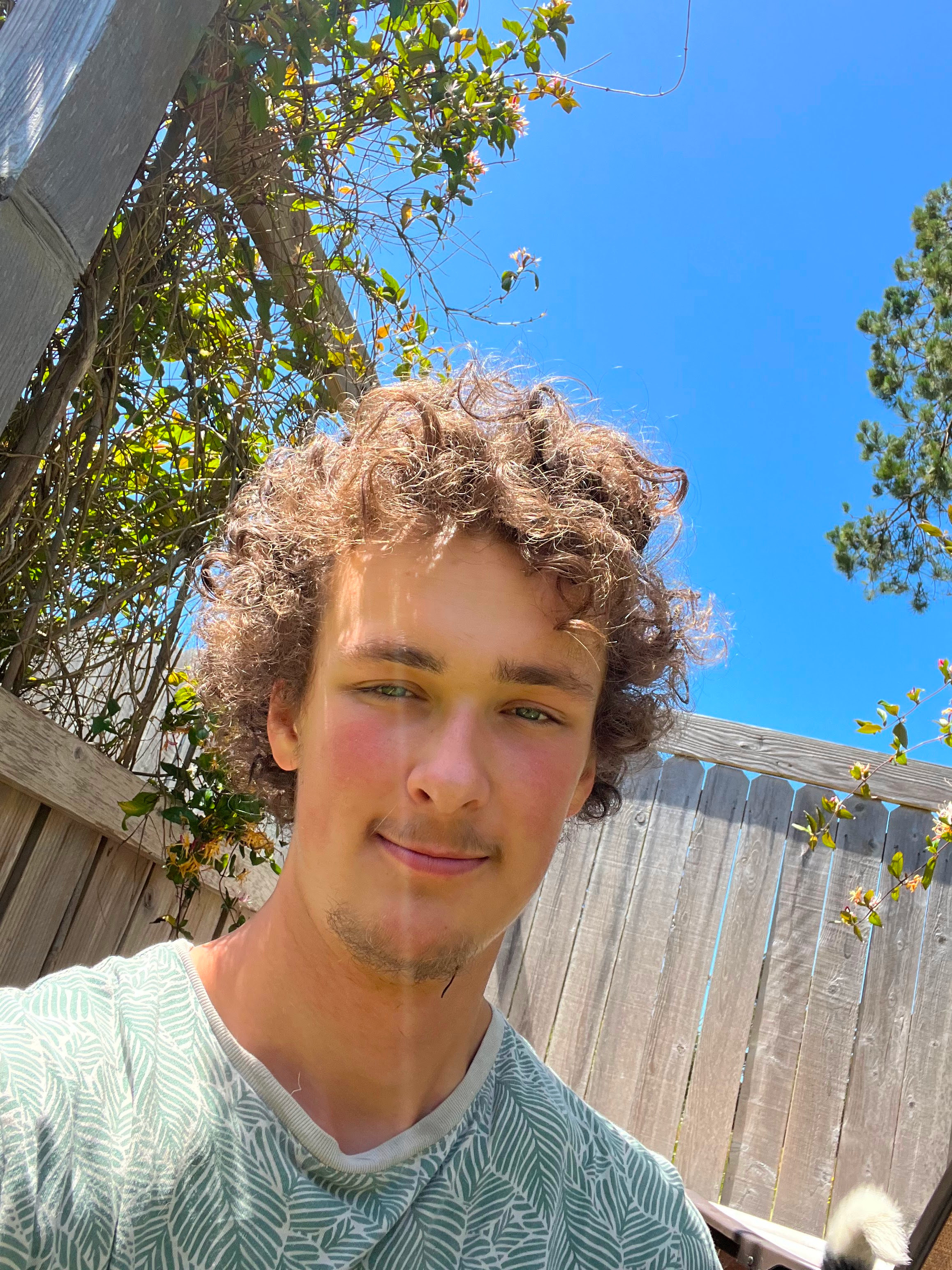
Isaiah Rayne Ruhlen, 22, passed away on Wednesday, July 26, 2023, of an accidental fentynal toxicity.
What can a father say about the needless death of his young beautiful boy? His life was ended short by an evil that has crept into our community and others like it. As his father I beg all parents and people to get help and find help for anyone who suffers in addiction. In the greatest sadness we offer this.
He was born May 3, 2001 to Ino Riley and Shelley Ruhlen at Mad River hospital. His early years were spent in the mountains around Willow Creek on various vegetable farms. As a young child he was behind the booths of his father’s vegetable farm and became loved by the customers and farmers alike. One of the first words he could spell was “organic”! Time on the land and with farmers at the local markets gave him an early passion for food and people.
Isaiah graduated Arcata High in 2019 where he became passionate about culinary arts. One of his first jobs was at Kneeland Glen Farm stand, where he was loved, thank you Kathy! He worked at Los Bagels as a high-school student. (Thank you, Eddie!) And after high school he took on a second job at Cafe Brio becoming a beloved and cheerful purveyor of the coffee bar. (Thank you, Tamara!) He was appreciated so deeply by his community and coworkers. He was loved for his cheerful positivity and he radiated this positive nature in every part of his life .
He also took to driving, as he was known to race up and down the local back roads. He would craft videos of this racing with his close friends who will surely miss him. Isaiah loved to drift his cars and drive fast along the steep and curvy Fickle Hill Road. He lived his life with gusto and fearlessness.
In his short life he pushed the limits with himself in every way. Enduring four broken collar bones, he had to break both twice! He skated avidly at the different local parks which he was very passionate about.
Isaiah had four little brothers and one little sister. He loved them and they loved him so deeply, his kind and loving spirit will carry with them for life.
He leaves behind so many sad faces in our community and he will be missed dearly by his family, his coworkers, his many friends of his peer group and the farming community of Humboldt County. He was a true Farmers’ Market kid, his first market was at the age of 6 months and he was part of that community up until the end. He was known by all of the farmers as this happy smiling face, chipper sweet voice and angelic curly hair!
When such a young life is so tragically lost in such a small community the word travels fast, the outpouring of support and kindness and love was almost immediate and continues to this day. Isaiah’s family sends their greatest thanks and welcomes all of the kind words, flowers and letters that have been shared by the staff at Cafe Brio and members of the NCGA and by many of his family friends. Thank you, all. He had so many loved ones and supporters. A special thanks to all of you out there in this area that have reached out to his grieving family. We embrace you all for that. Isaiah would have approved, as he always showed his best to everyone.
Isaiah is preceded by his great-grandmother Irene “Madhavi” Riley and his grandfather Scott Riley.
He is survived by a long list of family, some of which are the following: Ino Riley, Lauren Ballard-Riley, Cayleb Riley, Asher Riley, Shiloh Riley, Soraya Riley, Mike and Sue Ballard and the entire Ballard family, Faith Riley, Bijan Riley, Andrew Riley, Christine Bernard, Lacey Johnston, Jeffery Bernard, Shelley Ruhlen, Gabriel Ruhlen, Josh Ponce and Terry Ruhlen.
His remains were cremated at Ayres Family Cremation. A memorial is wanted but not planned yet.
###
The obituary above was submitted on behalf of Isaiah Ruhlen’s loved ones. The Lost Coast Outpost runs obituaries of Humboldt County residents at no charge. See guidelines here.
OBITUARY: Sherri L. Miller, 1946-2023
LoCO Staff / Thursday, Oct. 26, 2023 @ 6:56 a.m. / Obits
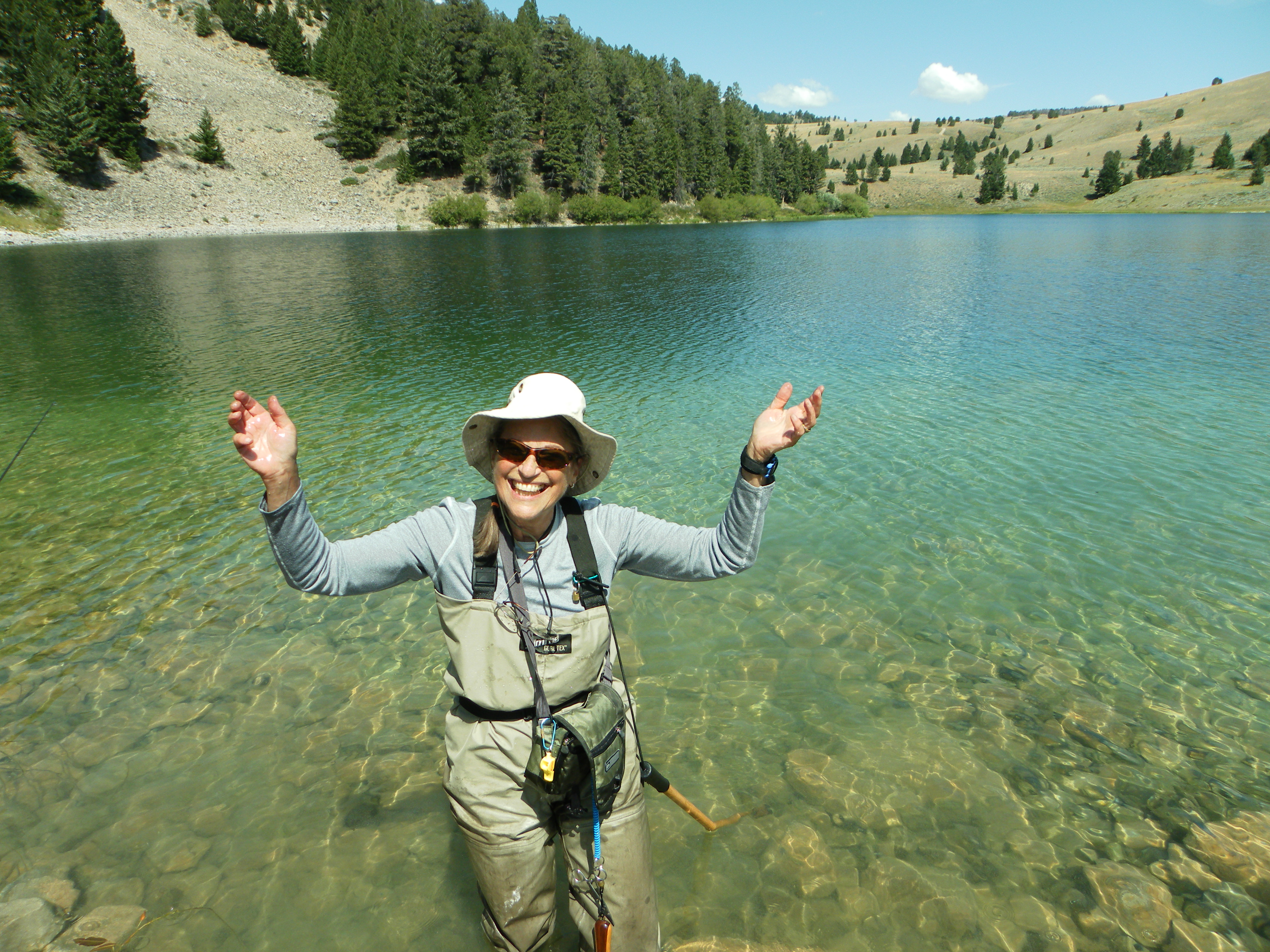
Sherri L. Miller (Jacoby) passed away peacefully on Sunday afternoon, October 22, 2023, surrounded by her family. Sherri was born in New York City in 1946 to Manny and Vivian Jacoby. The family moved to California when she was an infant. She grew up in Southern California with her brother Michael. She graduated from Reseda High School and in 1965 married Wayne Miller. They had two children, Karen and Marc. The family enjoyed many backpacking adventures into the Sierra Nevada mountains, motorcycle riding, and many trips to the beaches of Southern California. The family moved to Crescent City, Ca in 1975. She worked for the Del Norte Triplicate during her time in Crescent City. She always had a love of horses since she was a little girl and finally realized her dream of having her own, along with a myriad of other animals.
After moving a few times, the family moved to Arcata in 1981 where she attended Humboldt State University to obtain a degree in Wildlife Biology. She went on to receive a Master’s Degree in Wildlife Biology. She worked at the Arcata Union during her time in college, all the while raising two teenagers, which was not an easy feat.
After graduation, Sherri went on to become a Wildlife Biologist for the U.S. Forest Service, Redwood Sciences Laboratory. During her time at USFS, she worked for the Klamath and Humboldt Bay Bird Observatories in Arcata. She brought her delight in the natural world and keen observer’s eye to many important studies throughout northern California, Oregon and Alaska including monitoring Marbled Murrelets on land and in nearshore waters, American Dippers in streams and various species of land birds with censuses and banding. She published many important papers on her observations in prestigious scientific publications and received awards from the Forest Service and ornithological societies for her ground-breaking work. She was a kind mentor and role model to many young biologists, and provided sage advice to all who were fortunate enough to work with her. Sherri loved all birds. Even on her days off, you could find her out in the field bird watching. Sherri and her husband, Wayne, spent many days on the rivers canoeing. It became their passion. She lost her husband of 28 years in 1994.
In 1997, Sherri met the second love of her life, Bill Hogoboom, and a whole new set of adventures began. They bought a Sportmobile van and traveled to the remotest parts of the Western US with their dogs, always looking for the best fishing spot. She was an accomplished fly fisher. She would often take trips with her son Marc to fish. They both had a passion for the sport. After meeting Bill, she learned to kayak. They took many kayaking trips on rivers in the US, including the Colorado (Grand Canyon), Rogue, Trinity, Cal Salmon, and Eel Rivers (just to name a few). They also kayaked rivers in Ecuador and New Zealand. She definitely enjoyed life.
She was always up for any adventure and would try anything at least once. She became an accomplished weaver, always striving to get better. She made an array of baby blankets, table runners, kitchen towels, belts, and scarfs. We always loved getting something she created on her looms.
Sherri is survived by her husband of 25 years, Bill Hogoboom, her brother Michael (Linda) Jacoby, her daughter Karen Quenell and son-in-law Steve Quenell, her son Marc Miller and daughter-in-law Angie, her two grandchildren, Lindsay (Taylor) Thompson and Tyler (Maggie) Watkins. She is also survived by two great-grandchildren, with another on the way.
Sherri is preceded in death by her first husband Wayne Miller and her parents Vivian and Manny Jacoby.
Sherri was an adventurer always embracing life even when life wasn’t kind. She was a beautiful person inside and out and always cared about others. We will miss her tremendously but know that she is no longer in pain and is at peace.
There will be a Celebration of Life on Sunday, October 29, 2023 from 1 p.m. to 3 p.m. at the Moonstone Beach House. Please bring your stories to celebrate this amazing woman. Food and beverages will be provided.
The family requests that in lieu of flowers, donations to support the Humboldt County Animal Shelter be sent via Dog Rescuers (follow link for “how you can help”, please specify for Emergency Medical Fund or EMF), via PayPal @friendsforlife707, or mail to Friends for Life, P.O Box 962, Eureka, CA 95502; specify for EMF, in remembrance of Sherri Miller. There is also a wish list for the shelter animals created by Redwood Pals Rescue at this link. If you are able to honor dear Sherri and her deep love of animals by making a contribution of any amount, it is very appreciated.
###
The obituary above was submitted on behalf of Sherri Miller’s loved ones. The Lost Coast Outpost runs obituaries of Humboldt County residents at no charge. See guidelines here.
OBITUARY: Beverly Pontoni Sholes, 1944-2023
LoCO Staff / Thursday, Oct. 26, 2023 @ 6:56 a.m. / Obits
Beverly Pontoni Sholes passed away
peacefully on October 22, 2023, at the Ida Emmerson Hospice House in
Eureka as a result of very aggressive Lewy body dementia.
Bev was born to Martin and
Helen Pontoni on March 13, 1944.
She was raised on the
Pontoni Dairy on the Arcata Bottoms with her sister, Linda, and
brother, Ron. (Ironically, none of them liked or drank milk.)
After graduating from Arcata High School, Bev married her sweetheart, Robert (Bob) Sholes, in 1962. They had two daughters, Deborah Lynn and Julie Ann. In their early years of marriage, they enjoyed camping, horseback riding in the Marble Mountains, and houseboating with Bob’s sister Dodie’s family.
Bev had so many accomplishments. She began her banking career at United California Bank (UCB) in Eureka in 1971. After getting her family off to a good start, she went on to work at Humboldt Federal, Home Federal, and Umpqua Banks in McKinleyville. Bev was always extremely organized and juggled numerous jobs at once. While working full time as a banker, she also did all the bookkeeping for Bob’s business, Sholes Overhead Door Company, along with continuing to raise a young family. In the 1990s, Bev and Bob built a beautiful vacation home in Trinity Center where family and friends were always invited to enjoy boating, hiking, fishing, and relaxation.
Traveling brought great joy to Bev. She and Bob traveled often with family and friends. Bev especially enjoyed trips to Reno with her parents and siblings where her dad enjoyed the air shows and her mom loved the slot machines. Bev also took some exciting trips with her cousin Jennifer Cullen and special friends, Carol and Dennis Boshears and Sarie and Al Toste. She thoroughly enjoyed a fabulous trip to the Galápagos Islands and Machu Picchu with daughter, Debbie, son-in-law, Darren, and Darren’s mother, Rayelle.
Bev has always been active with St. Mary’s Parish in Arcata. For years she sold script and delivered meals to homeless shelters. Bev loved spending time with her family, often hosting holidays and birthdays at their home. She adored her three grandchildren, Weston, Morgan, and Juston. She spent countless hours supporting them with their school and sports activities. She was known as the “Umpqua Bank Learn to Earn Lady” by her grandchildren’s friends.
Bev had a huge heart and will be greatly missed by all her family and friends. She will always be in our hearts, and we will remember, “Death Separates Us Only For Awhile.” She was preceded in death by her parents, Martin and Helen Pontoni; daughter, Julie Sholes; nephews, Greg and Mike Scott; brothers-in-law, Joe Scott, Russell Rounds, and Larry Lyons; Aunt Emily Machado; Uncle Gale Andersen; Cousin Shirley Schmitz, and numerous other family members.
She leaves behind her loving husband of 61 years, Bob; devoted daughter, Debbie and husband Darren Frazier; cherished sister, Linda and husband Jim Roberts; admired brother, Ron and wife Michelle Pontoni; adored grandchildren, Weston Frazier (Kaileigh), Juston Frazier (Savannah Johnson), and Morgan Mayr (Casey & Skarlet); bonus grandson, Andrew; sisters-in-law, Dodie Scott and Nancy Rounds; nieces Kristy Agliolo (Eric, Vincent, Charis, Bo & Luke), Karen Pontoni McNally (Sean & Taylor), Wendy Cabalzar (Jeff), and Tonya Cornelius (Jamie); nephews, Kevin Roberts (Menetta & KJ) and Scott Pontoni (fiancé Julia Steinberger). She also leaves her precious Aunt Irene Andersen, special cousins, Jennifer Cullen, Margie Thomas, Rosemary Silva (Joe), Richard Machado (Kathy), Sandy Ardan (Joe), Dennis Pontoni (Shirley), Doug Oliveira (Karen), Sue Pontoni, and many other great nieces, nephews and cousins.
The family wishes to thank Hospice of Humboldt where Bev received the best care possible at the Ida Emmerson House in Eureka. (A special thanks to the three amazing nurses Simone, Karen, and Karen who went above and beyond to make Bev’s stay as comfortable as possible.) The family also thanks Linda Agliolo for her love and prayers, as well as Carol Boshears for being such a true friend to Bev for nearly 60 years.
Funeral arrangements will be made under the care of Paul’s Chapel in Arcata. Services will include a Mass and will be held on Friday, November 3, 2023, at 11 a.m. at St. Mary’s Church in Arcata, with a Rosary on Thursday, November 2, at 6 p.m. (visitation from 4 to 6 p.m.) at Paul’s Chapel. Any donations can be made to Hospice of Humboldt or the Alzheimer’s Association.
###
The obituary above was submitted on behalf of Bev Sholes’ loved ones. The Lost Coast Outpost runs obituaries of Humboldt County residents at no charge. See guidelines here.
OBITUARY: Steven D. Cave, 1947-2023
LoCO Staff / Thursday, Oct. 26, 2023 @ 6:56 a.m. / Obits
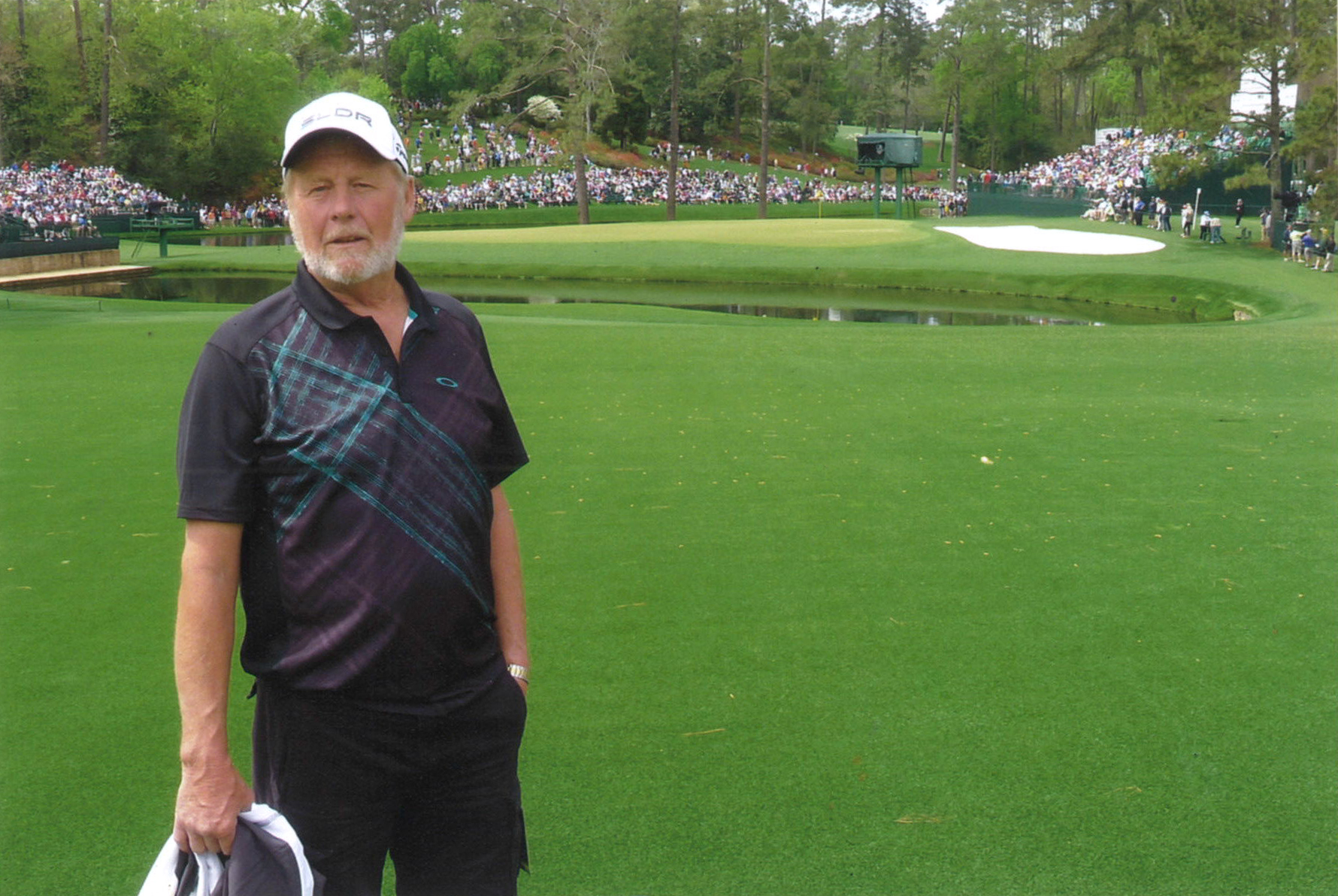
Steve Cave, son of Don and Vi Cave and brother to Tom Cave, passed away in the early morning of October 19th. His demise was caused by a severe concussion and multiple strokes.
Steve was a life-long resident of Eureka with a passion for bowling, baseball, golf and of course girls. He had bowled a 300 game, lettered in baseball at Eureka High School and spent many hours at Eureka Municipal golf course. After graduating from EHS in 1965 he attended Humboldt State and earned a degree in economics.
His work experience gained him many friends. He worked for many years at the Times-Standard, tended bar at Jan’s Pub and Dave’s Place, and his favorite job of all was at the Eureka Municipal golf course.
There will be a memorial service Nov. 4 at 2 p.m. at Sanders Funeral Home.
###
The obituary above was submitted on behalf of Steve Cave’s loved ones. The Lost Coast Outpost runs obituaries of Humboldt County residents at no charge. See guidelines here.
OBITUARY: Timothy Lawrence Carter, 1948-2023
LoCO Staff / Thursday, Oct. 26, 2023 @ 6:56 a.m. / Obits
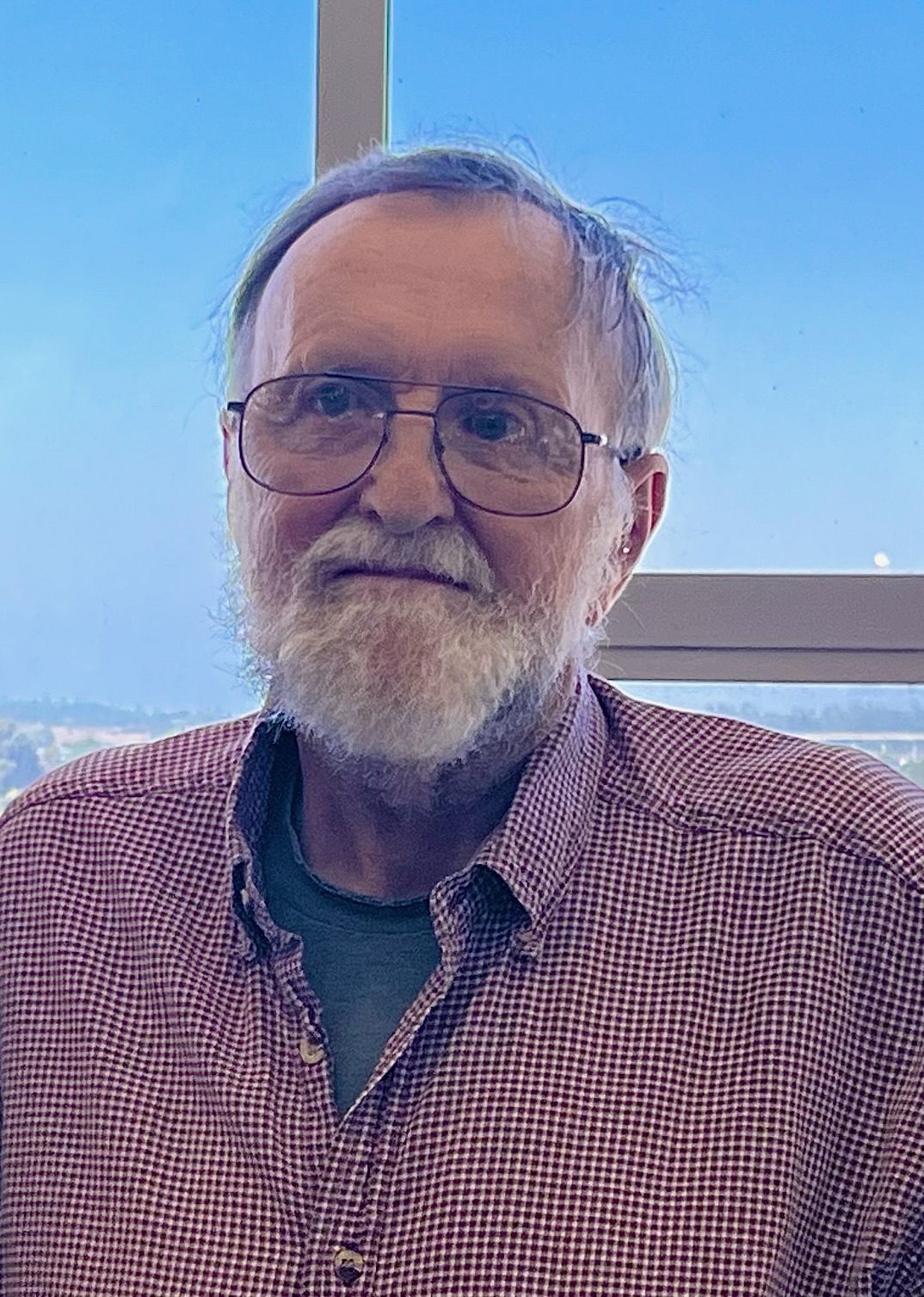
Timothy Lawrence Carter crossed over into whatever follows this earthly life at his home in Fortuna on the evening of October 9, 2023, following a struggle with cancer.
Tim was born in Scotia in 1948 to Myrtle and Ernest Carter, and spent the vast majority of his life on the Fortuna property where he grew up. He attended Fortuna Union High School, as well as college in San Mateo and Chico, before graduating with a B.S. in Aeronautics from San Jose State in 1974. He met his future wife and lifelong partner, Gale, on their first day at Chico State in 1968, and they were married in 1969.
He was in the U.S. Army from 1969 to 1971, stationed at Fort Polk, Louisiana, and at Fort Wolters, Texas, and Fort Rucker, Alabama, before being honorably discharged at Charleston Air Force base in South Carolina. Following military service and college, he and his wife moved back to the family property in Fortuna, where they stayed and raised two children.
Throughout his life, Tim worked at various sawmills, worked as a certified A&P mechanic at the Rohnerville Airport, and had a business repairing and tuning pipe organs. He loved working on various projects on the Fortuna property, everything from building a house and maintaining equipment, to building his own sawmill and crafting beautiful wood structures. He grew a vegetable garden almost every year, and enjoyed taking care of whatever animals were in residence on the farm, be it cows, chickens, cats or dogs. The dogs always loved following him around the place, and keeping him company at home. He restored an old cider press, and for many years made apple cider each fall that there was a good crop. He loved introducing children to the cider-making process, and would host cider-making parties with friends and family.
He always loved the outdoors, be it sitting and watching the birds, backpacking in the high country (especially the Trinity Alps Wilderness), fishing, or doing a little logging and working in his sawmill. He passed this love of the outdoors on to his kids from a very early age.
Tim is survived by his wife of 54 years, Gale Griffin, his son Arlen Carter-Griffin, his daughter-in-law Mercedes Scoles, his daughter Carrie Carter-Griffin, and three siblings, as well as several dogs who just adored him.
Tim did not want a funeral or memorial service, but will be cremated and his ashes brought home to the land he loved so much.
###
The obituary above was submitted on behalf of Tim Carter’s loved ones. The Lost Coast Outpost runs obituaries of Humboldt County residents at no charge. See guidelines here.
Humboldt County’s Economy is Struggling as Home and Retail Sales Decline, Interest Rates Climb
Ryan Burns / Wednesday, Oct. 25, 2023 @ 3:52 p.m. / Economy

The latest issue of the Humboldt Economic Index, a report produced by the Economics Department at Cal Poly Humboldt, shows a steep decline over the past year and a half or so. | Image courtesy Cal Poly Humboldt.
###
Humboldt County’s economy has seen some ups and downs since the beginning of 2021, but the overall trajectory over that timespan has been starkly downward, as shown in the latest Economic Index report [pdf] from Cal Poly Humboldt’s Economics Department.
The September report, which compiles data from multiple sectors of the economy, including home and retail sales, employment, electricity usage and hospitality, shows that the composite index fell 3.9 percent from the previous month and is down nearly eight percent from its mark five years ago.
Buffeted by nationwide headwinds, including rising interest rates, the end of COVID pandemic relief funding and 30 straight months of inflation, the local economy has faltered on several fronts.
For example, the county’s preliminary unemployment rate for September is 4.5 percent, up a full percentage point from the same time last year, according to data provided by the local office of the state’s Employment Development Department.
“One of the big headwinds is housing,” said Cal Poly Professor and Economics Department Chair Erick Eschker. Pointing to the data, he observed that after a slump during the worst of the pandemic, the county’s housing market came “back with a vengeance,” reaching records sales numbers toward the end of 2020 and into 2021.
While home prices have remained relatively high, the local housing market has been just “lukewarm,” which Eschker attributed largely to higher interest rates.

Home sales have fallen since reaching record sales numbers in 2021. | Image via Humboldt Economic Index.
###
Local Realtor Jill Macdonald said that while local housing sales have certainly cooled off from their white-hot peak in 2021, she believes the market is still healthy.
“Houses are still selling,” she said in a phone interview. In fact, in some ways she thinks the market is in better shape. “People aren’t having to pay $100,000 over asking [price], give their firstborn and release all contingencies. In that regard it’s a healthier market.”
Macdonald acknowledged that higher interest rates have slowed sales but said it would be unrealistic to expect rates to remain in the two to three percent range.
”So there has been some psychological recalibration,” she said. “People are getting used to the fact that seven percent, it’s not unheard of, but it also lessens [potential buyers’] ability to get into a property. It’s definitely harder; buying power has decreased. But that’s not a Humboldt County problem; it’s a nation problem.”
Scott Adair, the county’s economic development director, said the local retail and restaurant sectors have been particularly hard hit in recent months, and niche manufacturers have seen a decline in sales as consumers struggle to cover the increased costs of transportation, food, medical care and other essentials.
“We think that, to a great extent, what we’re beginning to experience are the more long-lasting after-effects of the pandemic,” Adair said. “We’ve talked to businesses who’ve shared that they’re not fully recovered from the emergency capital reserves expended during the pandemic.”
Plus, he said, the relief period for repaying federal emergency loans has expired.
“Consumers are paring down on what they’re willing to spend their income on,” Adair said. “We’re hearing from employers that they’re facing pressures to increase wages and salaries, and the concern is the cyclical effect of [businesses] then passing those costs back to consumers, which is hard for them to bear when they’re already feeling the pinch at home.”
Sales tax revenues for the unincorporated parts of the county have dropped steeply over the past two years. According to data provided by the county, annual sales tax revenues for the 2022-23 fiscal year were down 27 percent from the prior year and more than 35 percent from the year before that. That represents a loss of $2,664,832 from county government coffers and a significantly larger decline in receipts from local retailers.
The cities of Arcata and Fortuna have also seen declining sales tax revenues, which reflects difficult business conditions but also has an impact on the public sector.
“I think it is really important for the community to understand how changes in sales tax affect the budgets of small cities and our ability to provide services,” Fortuna City Manager Merritt Perry said in an email.
Still, not all the financial news is negative. Adair said the area has seen an influx of “climate refugees” and “equity refugees” as people move to Humboldt to escape the rising risks of natural disasters like extreme heat and wildfires or the rising costs of living in the Bay Area and Southern California.
“Also, the pandemic prompted this renaissance of interest in rural living and a slower way of life as people seek to get out of densely populated areas, which is why housing inventory been low and houses move very quickly,” Adair said. “We still hear stories of homes being sold sight-unseen from families trying to escape urban population centers.”
Adair noted that, like many rural areas, Humboldt can display a xenophobic streak, with a tendency to look down its nose at anyone whose family history doesn’t trace its county residency back multiple generations. He thinks that instinct generally comes from a good place of “trying to convey love and passion and how vested they are in the community, but for someone from the outside it does feel a little exclusionary.”
When new residents come to Humboldt, he said, they’re investing their own talent and education, bringing all of their life experience. “That’s a bonus and a benefit, to capture that intellectual property,” Adair said.
The pending development of offshore wind also presents economic opportunities for the region, and Adair said there has been an increase in interest from outside companies exploring investment in Humboldt County.
“And it’s as a result of Humboldt County being on the map, if you will, because of the potential for large federal projects in our region,” Adair said. “We’ve been contacted by companies not directly related [to wind energy] but [that] are part of the supply chain or even ancillary industries … . If we can work to capture some of those, it can create more wealth and spur job creation.”


