

City of Eureka Seeking ‘On-Call’ Volunteers for Emergency Overnight Warming Center
LoCO Staff / Wednesday, Oct. 25, 2023 @ 3:16 p.m. / Emergencies

Lifehouse Church on Hubbard Lane in Myrtletown will serve as this year’s Emergency Overnight Warming Center. Image via Google Maps.
###
Press release from the City of Eureka:
The City of Eureka is seeking volunteers to sign-up for an “on-call” volunteer list for Eureka’s Emergency Overnight Warming Center when severe weather events occur. Being led by Eureka’s faith- based communities and working in partnership with the Eureka Police Department’s Community Safety Engagement Team (CSET), Uplift Eureka, Crisis Alternative Response of Eureka (CARE), Betty Kwan Chinn Foundation, and other community partners, Eureka’s Emergency Overnight Warming Center program provides a safe place for people to stay on dangerously cold nights.
Throughout winter months and when severe weather events occur, Eureka’s Emergency Overnight Warming Center will rotate between Lifehouse and Faith Center. Severe weather can include high winds, significant rain, and freezing temperatures.
When open, the Emergency Overnight Warming Center will operate between 6pm and 7am. At night, four designated pick-up locations will transport individuals to the Emergency Overnight Warming Center location. In the morning, individuals will be transported back to service centers in Eureka. Pets are allowed.
“I’d like to not only thank the Lifehouse Church and Faith Center, but all of our faith-based community as we have received offers of assistance from other churches and look forward to working with them to continue supporting those most vulnerable within our community” says Miles Slattery, City Manager.
According to Lifehouse Church Senior Pastor Willy Bowles, “Opening up our building to be a safe place for men, women, and children to come in times of severe weather is a no-brainer. Nobody should ever freeze to death in Humboldt County. That is simply not acceptable.”
Volunteer signups are being sought to develop an “on-call” list for when the Emergency Overnight Warming Center opens. Volunteers will assist guests with check-in and provide additional support throughout the night. There is no experience necessary to volunteer and training will be provided. Although staffing is needed from 6pm to 7am, shift hours can be flexible to meet the needs of volunteers. When the Emergency Overnight Warming Center opens, volunteers will receive a notification by text requesting their assistance. Volunteers can then respond in real-time to confirm their availability.
One evening of your time can help save a life.
Sign up today at www.EurekaWarmingCenter.com. Any questions can be sent to EWOC@eurekaca.gov or by calling 707-441-4206.
###
BOOKED
Yesterday: 4 felonies, 11 misdemeanors, 0 infractions
JUDGED
Humboldt County Superior Court Calendar: Friday, April 10
CHP REPORTS
0 Pine Creek Rd (HM office): Trfc Collision-Unkn Inj
2550 Mm162 E Men 25.50 (HM office): Trfc Collision-Unkn Inj
ELSEWHERE
RHBB: Yurok Tribe and Blue Lake Rancheria Sign Fire Management MOU
RHBB: 37-Year-Old Found Deceased at Bottom of Fort Bragg Cliff
RHBB: Family Seeks Help Locating At-Risk Eureka Teen Last Seen in Arcata
RHBB: A ‘Check-Up For the Entire Community’: Humboldt County Health Survey
Humboldt Supervisors Approve Payment Plan for Delinquent Measure S Taxes, Discuss New State Regs for Fire Insurance
Isabella Vanderheiden / Wednesday, Oct. 25, 2023 @ 2:20 p.m. / Local Government
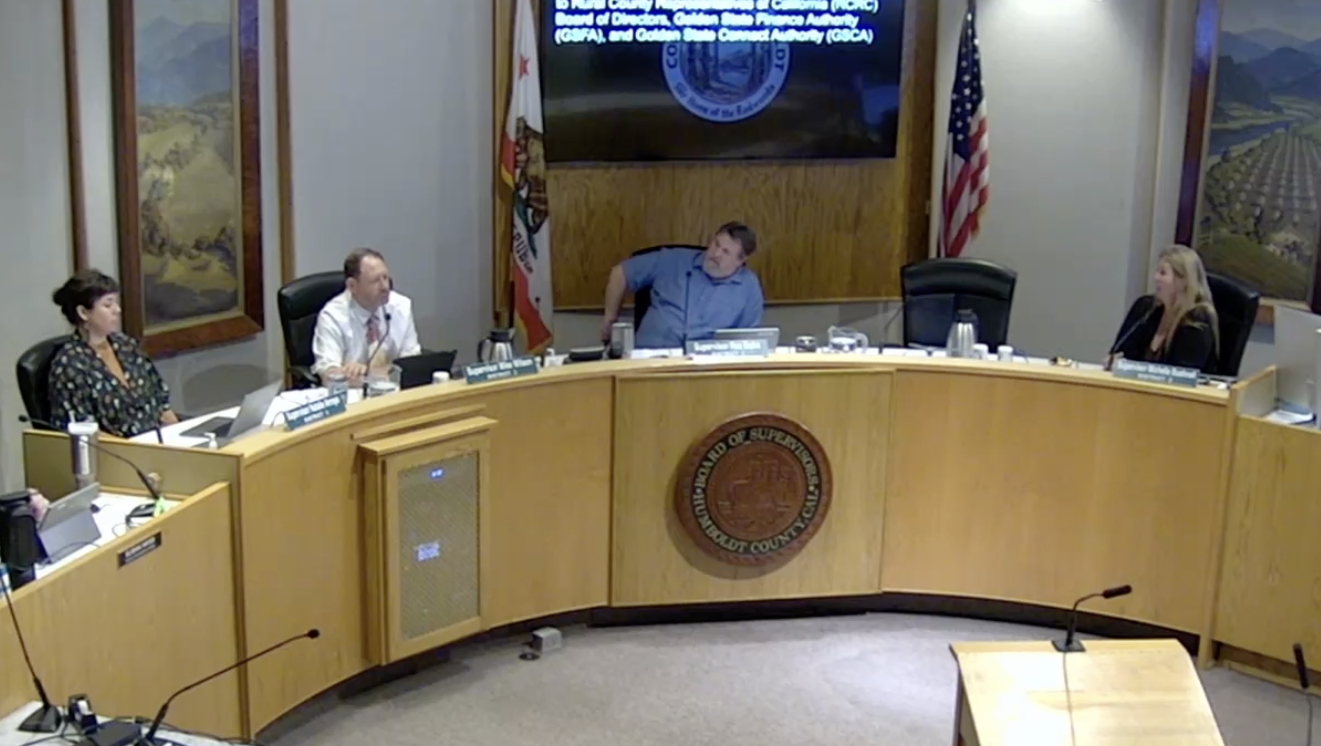
Screenshot of Tuesday’s Humboldt County Board of Supervisors meeting.
###
During Tuesday’s meeting, the Humboldt County Board of Supervisors heard a presentation from the state Department of Insurance regarding new rules aimed at addressing California’s longstanding insurance issues.
Since 2022, seven of the state’s top 12 insurers – accounting for 85 percent of the market – have restricted existing policies or stopped taking new business entirely due to increased fire risk in California.
Gov. Gavin Newsom issued an executive order at the end of last month directing Insurance Commissioner Ricardo Lara to take immediate regulatory action “to strengthen and stabilize California’s marketplace for homeowners insurance and commercial property insurance.” Lara responded with a package of proposed regulations that would require major insurers to increase coverage in some of the state’s most vulnerable communities. In exchange, the state would allow companies to set higher rates to offset the cost of doing business in a wildfire-prone state.
Speaking during Tuesday’s meeting, Juanita Juarez, deputy commissioner of community relations and outreach for the California Department of Insurance, said California’s insurance issues date back to the 1960s, when insurers stopped issuing new policies to at-risk communities following the brush fires and Watts riots in Los Angeles in the 1960s.
The state legislature created the Fair Access to Insurance Requirements Plan, better known as the FAIR Plan, in 1968 as a sort of last resort to ensure all California property owners had access to basic fire insurance when coverage was not available through a traditional carrier.
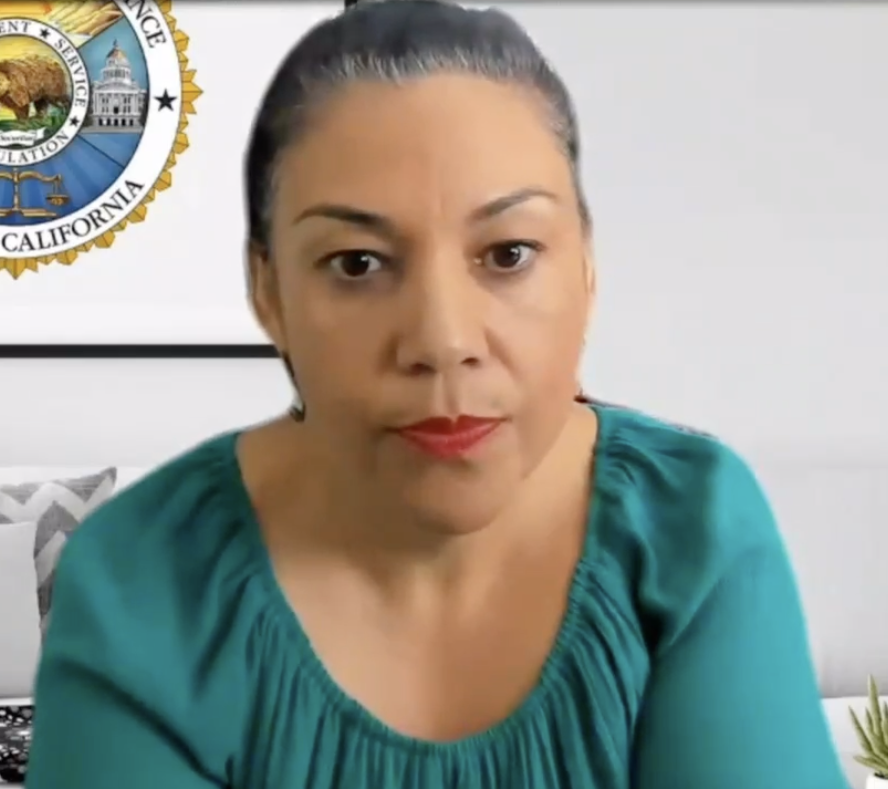
Juarez | Screenshot
“However, now the FAIR Plan has morphed into the insurance of first resort for many, many people around the state and … in some areas in Humboldt County where people … that’s the only insurance that is available to them,” Juarez said, noting that the program is run by an insurance company, not the state. “Also, the FAIR Plan only allows people to have insurance for wildfires, not for everything else. Consumers have to purchase … a policy from another insurance company, making it an even bigger expense with lesser coverage for the consumer.”
Turning to the board for discussion, Bushnell asked how the new regulations would affect rural residents who can’t get coverage under the FAIR Plan. “[There are] people that are currently buying homes [who] are not able to secure any kind of insurance to close their escrows,” she said. “What would you suggest for those types of situations?”
Juarez urged people seeking insurance through the FAIR Plan to get in touch with the state Department of Insurance. She also offered a helpful tip.
“One of the biggest tips that I could give people is, if you’re having a very hard time finding insurance in your area, you’re working with your local broker … [and] many times they are working with a group of insurance companies that have saturated that market, so their risk in that area is too high, and that is why they’re not covering in that area,” Juarez said. “I would suggest call[ing] an insurance agent or broker in Sacramento or Los Angeles or San Diego even. The idea behind that is maybe they are working with other insurance agencies that might be able to cover your area because they don’t have many [clients] over there.”
Bushnell also asked about retired residents who’ve paid off their homes but can no longer afford insurance due to rising rates.
Juarez said the county, or other local organizations, could look into state grants to help offset the cost of insurance. “We might be able to … work with you and also help to write letters of support for that,” she said. “But at this point, you know, the availability of insurance is in dire need. And so that is what we are working with to try to make sure that we increase [the] number of insurance companies doing business in the state. Hopefully that [will] make it available for those people in the future.”
Third District Supervisor Mike Wilson asked how the Department of Insurance protects “low-value, low-risk” property owners from having to subsidize “high-value, high-risk” properties.
Juarez emphasized that it is the Department of Insurance’s responsibility to make “absolutely sure that no one is discriminated against in any way.”
“The expectation that we have of the insurance companies is that they work with us to make sure that everyone is being covered and that it is being covered appropriately,” she said. “That is why we have we have 1,400 employees in the Department of Insurance [who] review these rates. We have actuaries who review these numbers and lawyers who will go through all of these things very specifically to make absolutely sure that we are being able to cover everyone that is that needs it and that it is not discriminatory in any way.”
First District Supervisor Rex Bohn noted the state’s insurance issues “should have been addressed two years ago because it started four years ago.” On top of that, Bohn said the fire-prone counties have done their part, spending “millions if not billions” fire-safing their communities.
“We’re doing our job,” he said. “People are fire-safing, they’re putting on the right roof, they’re knocking trees down left and right and doing the right thing, and they’re seeing nothing for it. … They will probably keep it up because they benefit from hopefully not burning down, but that has to be recognized.”
Juarez said she would work with county staff to schedule a town hall meeting to speak directly with Humboldt County residents. In the meantime, folks who have questions can contact the California Department of Insurance at 800-927-4357.
Following a brief public comment period, Wilson made a motion to accept the report, which was seconded by Fourth District Supervisor Natalie Arroyo. The motion passed in a 5-0 vote.
Measure S Payment Deadlines
The board also received a report on the status of Measure S cannabis cultivation taxes owed to the county and approved a staff’s plan to recoup the delinquent funds.
Earlier this month, the board unanimously voted, with Second District Supervisor Michelle Bushnell recused, to partially reinstate the Measure S cannabis cultivation tax at 10 percent for the 2024 cultivation year, with taxes due in the 2025 tax year. At that meeting, the board directed staff to come up with a plan to address the 962 permit holders who collectively owe over $14 million in delinquent taxes.
During this week’s meeting, Planning and Building Director John Ford said staff’s proposed plan has two core components: deadlines and consequences.
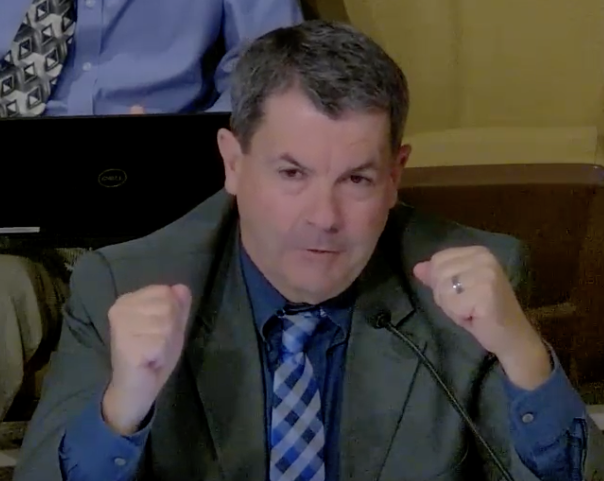
Ford | Screenshot
“We would first go through and assess the …. current permits that owe taxes and do an assessment of whether or not they are likely related to an existing application and existing permit,” Ford said. “If not, we’ll send a letter out indicating that you don’t appear to be active and you have 30 days to bring your tax current. Otherwise, we’re going to take your permit forward for denial.”
Under the proposed strategy, applications that haven’t been active “for some time” will receive a 30-day written notice requiring the applicant to commit to a payment plan with the Humboldt County Treasurer-Tax Collector’s Office to have all taxes paid by Dec. 31, 2024. Applications that are “actively being worked on – including interim permit holders – must commit to a payment plan by Dec. 31, 2023, and have all taxes paid by Dec. 31, 2024. Interim permits will not be extended after Dec. 31, 2023, where taxes are not current or a payment plan is established.
“The idea here is that all of the back taxes that are due would be paid off before the county starts charging taxes again, and that would be for the 2024 [cultivation] tax year, due in 2025,” Ford said. “If everything’s paid off by 2024, then the slate would be clean. … [I]f people are not following their payment plan, their permit could be suspended, and if it’s not brought current within 60 days it could result in revocation. If all the taxes are not current by the end of 2024, then the permit would be brought forward for revocation.”
Turning to the subject of permit fees, Ford noted that there are nearly $830,000 in unpaid permit fees for 568 approved cannabis permits. Staff’s plan proposes to stop work on applications “unless there is a deposit on hand to complete the work on the application through final action.” Applications that are delinquent by more than 90 days will be given written notice to become current, or the permit will be recommended for denial. Approve permit holders will be given 60 days to become current or their application will be suspended.
Speaking during public comment, Natalynne DeLapp, executive director of the Humboldt County Growers Alliance, called the plan “a representation of good governance.”
“Having rules, deadlines and consequences is what helps us all have boundaries and succeed in life,” she said. “I have one main point that I would really recommend, and that is simply to shift the date from Dec.31 [2023] to Mar. 31 [2024]. Right now, we’re deep in the middle of harvest and we also have a lot of county government closure deadlines between now and Dec. 31. So, just being cognizant of timing, if we can kick this to Mar. 31 that would be best for farmers [and] that would also allow them to meet with their accountants and bookkeepers.”
DeLapp also recommended staff shift the tax payment deadline from Dec. 31, 2024, to Mar. 31, 2025.
Following public comment, Wilson asked Ford if the 90-day extension would make a difference to staff. Ford said the dates “are somewhat subjective,” adding that the extension would still allow all the taxes to be paid before Measure S taxes resume in 2025, “which is the real goal.”
Wilson made a motion to approve staff’s recommendation with the suggested change to push the deadlines out by 90 days, which was seconded by Arroyo.
Fifth District Supervisor and Board Chair Steve Madrone, who attended Tuesday’s meeting via Zoom, wasn’t keen on pushing extending the deadline, stating “I don’t want to reward irresponsible behavior anymore.”
“The only way we’re ever going to get any of [these] tax or fees paid is to set some firm deadlines,” Madrone said. “For those that did not come in and have had ample opportunity to do so that have not set the payment plan, I would actually move the deadlines forward rather than backward or further out. … Those that have paid their taxes completely … it’s unfair to them that others that have not set up a payment plan and have not paid their taxes or fees are continuing to grow.”
After a bit of back and forth on the merits of pushing out the deadline, the board voted 3-1, with Bushnell recused and Madrone casting the dissenting vote, to approve staff’s recommendation with the small amendment to extend the deadlines by 90 days.
###
You can find our previous coverage of Tuesday’s meeting, including the board’s discussion on Bohn’s inclusion of a firearm in an auction basket at a recent meeting of the Rural County Representatives of California, at this link.
Rio Dell Man Found Dead in Vehicle That Plunged Down Steep Embankment Near the North End of Avenue of the Giants
LoCO Staff / Wednesday, Oct. 25, 2023 @ 12:20 p.m. / Traffic
Press release from the California Highway Patrol:
On October 24, 2023, at approximately 1233 hours, CHP Humboldt Communications Center received a report of a vehicle off the roadway at the Jordan Creek Bridge on US 101 southbound, north of Jordan Road.
Emergency personnel responded to the scene and located a 2004 Nissan Xterra approximately 75 feet down a steep embankment. A male subject located inside the vehicle was determined by medical personnel on scene to be deceased. At this time, it is unknown exactly when this crash may have occurred. The Humboldt County Coroner’s Office is assisting in confirming the identification of the driver and their identity will be withheld pending notification of the next of kin.
The CHP Humboldt Area office is continuing its investigation and asks anyone who may have additional information to contact the California Highway Patrol at 707-822-5981.
A Couple of Bridges Over the Mattole Will be Closed for a Spell Tomorrow So’s Caltrans Can Inspect Them
LoCO Staff / Wednesday, Oct. 25, 2023 @ 10:55 a.m. / Infrastructure

Honeydew Bridge. Photo: Caltrans.
Press release from the Humboldt County Department of Public Works:
The Humboldt County Public Works will be closing the following bridges so that CalTrans can perform their inspections.
Lindley Bridge on Thursday, October 26, 2023 from 10:00 AM to Noon.
Honeydew Bridge on Mattole River on Thursday, October 26, 2023 from Noon to 2:00 PM.
Emergency vehicles will be allowed passage, if needed.
Dates and times may have changed from previous postings.
We thank you in advance for your patience.
Two State Agencies Ground Cruise Driverless Cars for Public Safety
Levi Sumagaysay / Wednesday, Oct. 25, 2023 @ 7:24 a.m. / Sacramento
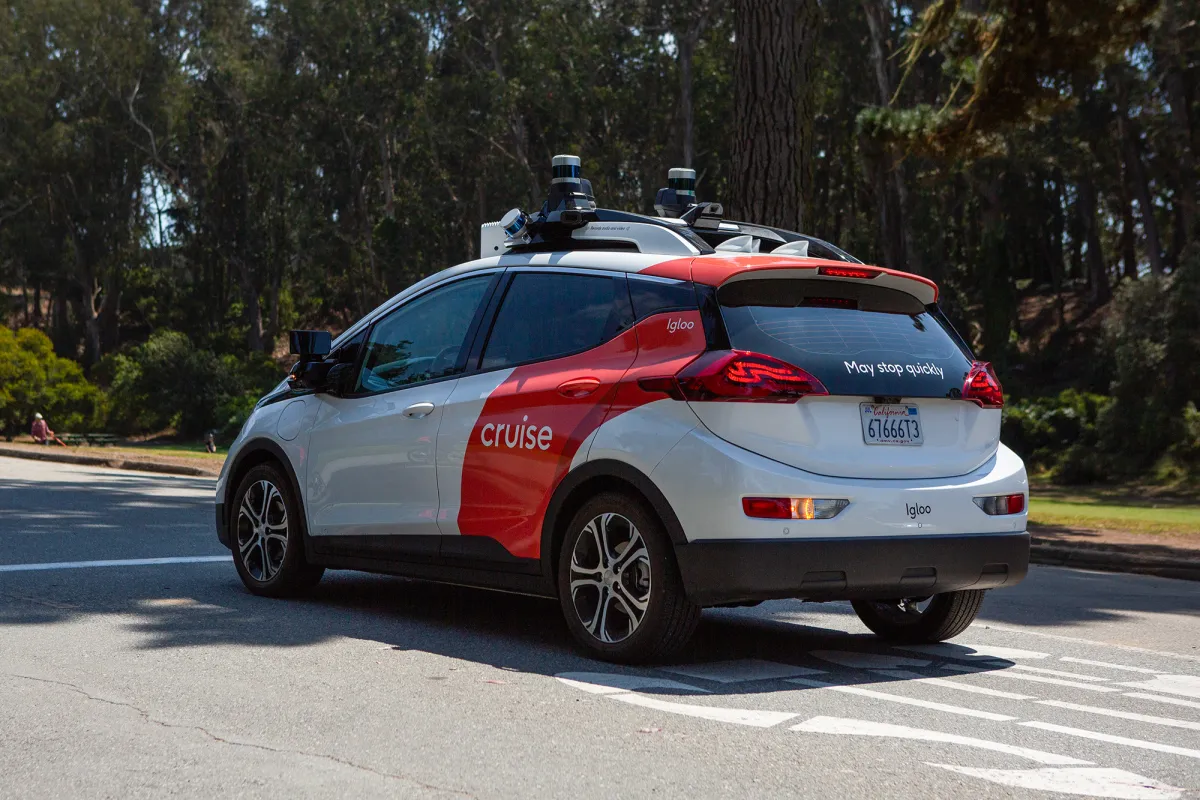
A driverless Cruise vehicle in San Francisco on Aug. 18, 2023. Photo by Semantha Norris, CalMatters
Citing public safety concerns, two state agencies on Tuesday suspended driverless car company Cruise’s licenses to test and deploy its vehicles, and its ability to carry passengers, immediately grounding its fleet of about 150 robotaxis in San Francisco.
The Department of Motor Vehicles was the first to say it had immediately suspended the General Motors-owned company’s licenses to test and deploy its fully autonomous vehicles. In response to CalMatters’ request for comment on the DMV’s move, the California Public Utilities Commission said it has also suspended Cruise’s ability to carry passengers in driverless vehicles.
Cruise, founded in San Francisco in 2013, conducted its first driverless ride in the city in 2020. It opened a fully driverless taxi service to the public in San Francisco in early 2022, in which riders can summon vehicles like they would on a ride-hailing app. That service was only available at night until this August, when the public utilities commission approved 24/7 operations.
The DMV’s suspension notices, seen by CalMatters, show that the agency based its suspensions on an Oct. 2 incident in San Francisco in which a Cruise autonomous vehicle dragged a pedestrian who had been hit by a different vehicle right beforehand. The vehicle that first hit the woman was driven by a human who fled the scene and has not been arrested, according to various media reports.
In its notices to Cruise, the DMV notes that the next day, the company showed representatives of the DMV and the California Highway Patrol video from the vehicle’s cameras that ended with the autonomous vehicle stopping after it braked when the pedestrian fell into its path after being hit by another vehicle. But the DMV also said it was not made aware that the Cruise vehicle then tried to pull over while the pedestrian was underneath it.
“The department only learned of the AV’s subsequent movement via discussion with another government agency,” the suspension notice says. DMV spokesperson Anita Gore told CalMatters that agency was the National Highway Traffic Safety Administration, which last week opened its own investigation into Cruise over four safety incidents, including the Oct. 2 incident.
The DMV said in its notices that the agency then requested the additional footage from Cruise, and received it Oct. 13.
“When there is an unreasonable risk to public safety, the DMV can immediately suspend or revoke permits,” the DMV said in a news release, which also said Cruise’s suspension is partly based on a state regulation related to the following: “The manufacturer has misrepresented any information related to safety of the autonomous technology of its vehicles.”
Cruise spokesperson Hannah Lindow said Tuesday the company disputes the DMV’s contention that it did not initially show DMV representatives the full video.
“We had a meeting with the DMV on 10/3, in which we showed them the complete video multiple times,” Lindow said in an email. “They later requested a copy of the video shown on 10/3, which we provided to them.”
The DMV said in an email that it “stands by the facts contained in the order of suspension.”
Cruise also released a statement on its website in which it said it shared the full video with the officials. It also provided a description of the incident, which reads in part: “The AV detected a collision, bringing the vehicle to a stop; then attempted to pull over to avoid causing further road safety issues, pulling the individual forward approximately 20 feet.”
The company said in that statement that it plans to include the incident in future simulation tests “to allow the vehicle to better determine if it should pull over safely or stay in place.”
Cruise now has five days to request a hearing about the DMV’s suspension of its deployment license, and 60 days to request a hearing about the suspension of its driverless-testing permit.
The public utilities commission, which has also now suspended Cruise’s ability to carry passengers in the agency’s autonomous vehicle deployment and driverless pilot programs, is carrying out its own investigations into Cruise, spokesperson Terrie Prosper said.
Though the DMV and the commission coordinate on regulation of autonomous vehicles and will continue to do so, the suspension decisions were made separately, Prosper said.
The suspensions do not affect Cruise’s ability to test its vehicles with safety drivers, according to the DMV. The public utilities commission suspension, however, does affect the company’s ability to carry passengers even with a safety driver.
The commission’s suspension comes after it voted in early August to allow Cruise and another autonomous vehicle company, Waymo, to expand their ability to charge for robotaxi service in San Francisco at all hours. A week after that approved expansion, the DMV ordered Cruise to cut its 300-vehicle fleet in half as the agency investigated incidents involving the company’s autonomous vehicles, including a crash involving a fire truck.
In mid-August, San Francisco City Attorney David Chiu filed motions to stay the public utilities commission’s decision, citing “poor AV performance creating safety hazards and interfering with first responder operations, public transit, street construction workers, and the flow of traffic,” and said his office would also seek a rehearing. The application for the rehearing is pending, Prosper said.
Also Tuesday, labor leaders and others gathered in Los Angeles to protest Alphabet-owned Waymo’s unveiling of a test of its so-far free robotaxi service in Santa Monica and Venice last week, and a planned expansion by the company elsewhere in the area next month. They expressed concerns about safety, with some of them citing collisions involving self-driving vehicles in San Francisco, and the possible elimination of jobs.
In addition, Los Angeles City Councilmember Hugo Soto-Martinez plans to introduce a motion Wednesday, calling for the L.A. city attorney to join San Francisco in urging the public utilities commission to adopt more “common-sense regulations” on self-driving cars, said Nick Barnes-Baptista, a spokesperson for the councilmember.
“We should not be putting lives at risk by allowing our city to be a test subject for the tech industry,” Soto-Martinez said in an emailed statement.
Waymo spokesperson Sandy Karp said the company encourages people “to learn more about the positive impacts Waymo’s autonomous ride hailing is having on safety, accessibility and sustainability.”
Regulation of driverless vehicles has been a hot topic in California. Earlier this year, Gov. Gavin Newsom vetoed a bill that would have regulated self-driving trucks, saying in his veto message that it was “unnecessary for the regulation and oversight of heavy-duty autonomous vehicle technology in California, as existing law provides sufficient authority to create the appropriate regulatory framework.
###
CalMatters.org is a nonprofit, nonpartisan media venture explaining California policies and politics.
California Colleges Miss the Deadline to Offer Student Parents Priority Registration
LoCO Staff / Wednesday, Oct. 25, 2023 @ 7:21 a.m. / Sacramento
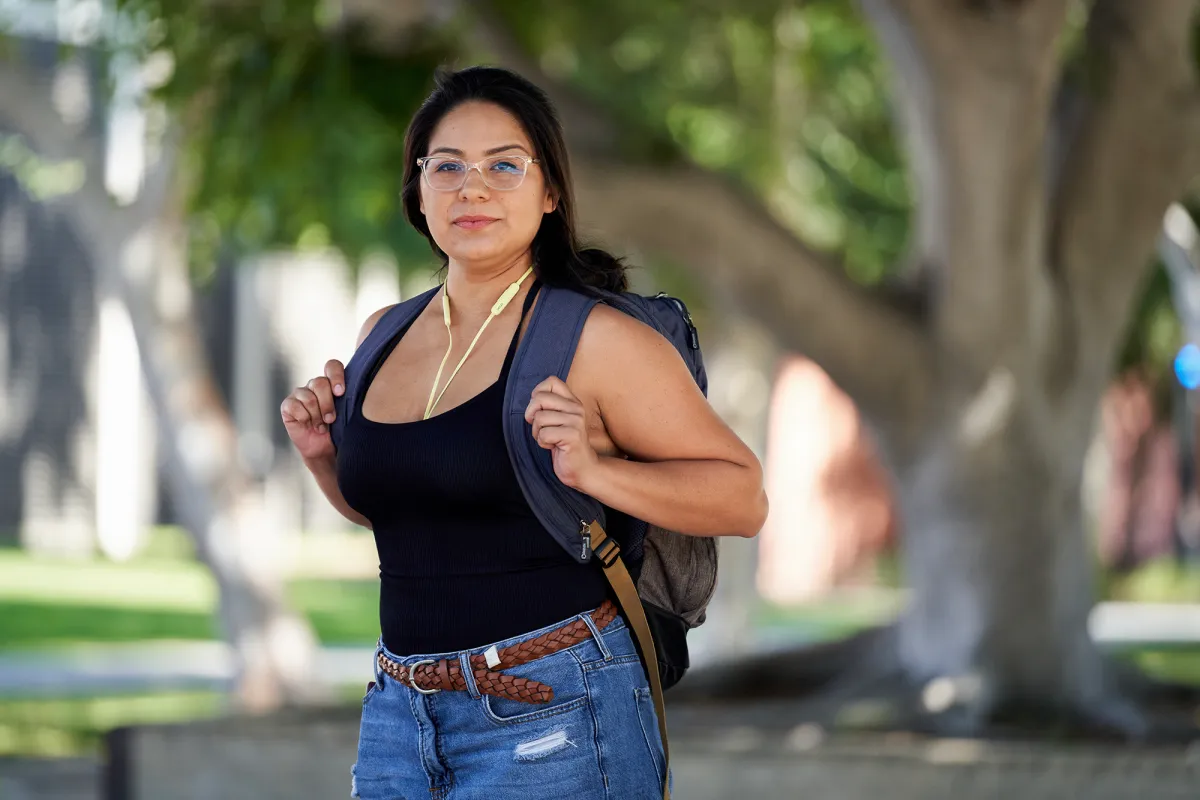
Elisa Arquieta at California State University Long Beach on Oct. 12, 2023. Arquieta is both a student and a parent. Photo by Lauren Justice for CalMatters
It was well past 8 a.m. by the time Elisa Arquieta finished dropping off her daughter at middle school and her younger two children at her university’s child care center. Only after dropping them off did she realize it was also well past the opening of fall class registration for her and the rest of her Cal State Long Beach classmates.
Arquieta eventually logged on to her student portal to find the final two classes required for her degree completely booked. As a fourth year student and with no other choice but to waitlist the courses, Arquieta became nervous, wondering how this would affect her graduation date.
“I was just like, ‘Ah, but I kind of need these,’” Arquieta said.
Student parents like Arquieta have long been an underserved population in higher education despite more than 200,000 college students in California having dependents. Nationally, 1 in 5 college students have dependents.
To address their specific needs, Assemblymember Marc Berman, a Menlo Park Democrat, authored Assembly Bill 2881, which was signed into law in September 2022. The law stipulates that all campuses across California’s three public higher education systems provide priority registration for student parents by July 1, 2023 and maintain a website listing resources for them by Feb. 1, 2023.
“This bill would remove barriers that inhibit academic success and degree attainment for student parents, bring greater attention to their needs, and in doing so, uplift their children as well,” Berman said via email.
Although the law took effect this year, most California student parents will have to wait for priority registration. While all 10 University of California campuses offered priority registration for student parents prior to this fall, both the California State University and California Community College systems failed to meet the deadline. They cited a lack of data on the number of eligible students and a lack of time to implement the necessary software. However, advocates and campus coordinators are optimistic the law will formalize and ease data collection, allowing schools to better serve these students’ needs.
All three public systems in California lacked a comprehensive method of regular data collection on student parents and their needs on each individual campus prior to the law.
In 2019 Larissa Mercado-López, a Fresno State professor of women’s, gender and sexuality studies, led the first effort in California public higher education to count the number of student parents on her campus. According to Mercado-López, 350 pregnant or parenting students self-identified as part of the 2022 fall survey — a figure she called a likely undercount.
Like other public campuses in California, Fresno State relied on numbers from the Free Application for Federal Student Aid prior to the release of Mercado-López’s annual survey. However, given some students become a parent after applying for financial aid and with only 70% of students nationally filling out the FAFSA, Mercado-López said universities should routinely collect their own data on student parent populations and their needs.
The law will now require campuses to collect that data. The California Community Colleges added a question to its application this past summer to identify student parents eligible for priority registration. The California State University added an option to students’ registration portals for student parents to certify their eligibility. At the UC, student parents must self-identify with their campus by filling out a form to alert the registrar of their priority registration eligibility.
“It kind of indirectly addresses that invisibility issue or awareness,” said Afet Dundar, senior research director at the Institute for Women’s Policy Research in Washington, D.C. “So that’s the good part in terms of the resources and website.”
Data collected by campuses can help them better assist student parents by connecting them to government programs like CalWORKS, Cooperative Agencies Resources for Education and the Special Supplemental Nutrition Program for Women, Infants, and Children that are designed to provide financial assistance and other resources. All campuses in the UC and California Community Colleges systems successfully created or updated a website of resources for student parents to comply with the law. With the exception of CSU Bakersfield, CSU Los Angeles, CSU Maritime Academy and San Francisco State University, all other CSU campuses also created the resource pages for this fall.
Data captured from FAFSA and the California Dream Act application for the 2018-19 academic year found 72% of student parents in California intended to enroll at a community college, according to the UC Davis School of Education. In 2018, 145,061 student parents were enrolled at community colleges, while 24,023 were enrolled in the CSU system and 2,975 were enrolled in the UC system.
“This is about gender and racial equity, really, when we talk about student parents.”
— Afet Dundar, senior research director at the Institute for Women’s Policy Research in Washington, D.C.
Research on the racial demographics of student parents entering community college in 2016 in California found 48% of student parents were Latino, 25% were white, 13% were Black and 14% were Asian or “other,” according to a report from UC Davis. The same report found 77% of the state’s student parents were female while 33% were male.
Women of color are the majority of the student parent population and about one-third are student-fathers, according to Dundar.
“This is about gender and racial equity, really, when we talk about student parents,” Dundar said. “There are additional considerations because our student debt report showed [students of color] are more likely to take on debt. It has nothing to do with race. It has everything to do with their lack of intergenerational wealth.”
Pregnant or parenting students face a unique set of barriers in higher education: affordability, child care, family-friendly housing and transportation. These barriers result in 52% of student parents nationwide leaving school without their degree despite investing as much as six years in their undergraduate education, according to the Institute for Women’s Policy Research.
“We’re talking about non-traditional students here and trying to fit them into a traditional four-year university mold is really difficult,” said Liz Reed, CSU systemwide assistant director of enrollment management technology.

Katie Dyer at Fresno State College on Oct. 16, 2023.Dyer is a student at Fresno State College and a parent. Photo by Larry Valenzuela, CalMatters/CatchLight Local
Katie Dyer works part time as an office manager at a hydrogeology firm, parenting 10-and 12-year-old kids while double majoring in philosophy of religion and women and gender sexuality studies at Fresno State. Like many student parents, Dyer’s higher education journey began at her local community college. In 2018 Dyer began taking night classes at Fresno City College, saying she “wanted more and better — and that was not going to happen without an education.”
Around 44% of student parents nationally are balancing a full-time job with their parental and educational responsibilities, according to the U.S. Government Accountability Office. Having so much on their plate leads to what researchers call “time poverty,” in which student parents’ obligations leave them with little time to complete coursework and maintain mental and physical health.
Over the course of their undergraduate education, Dyer navigated a divorce, child care during a pandemic, and homeschooling.
“Every semester there is a point where I feel like I’m gonna completely fall apart every single time and it’s just because there’s a lot,” Dyer said. “I think the important part for me with being a student who has kids is that you include your kids in what you’re doing. We talk about what they’re learning, we talk about what I’m learning, we do our homework together.”
“You know that you can’t fail and you can’t stop because you’ve got these two little cheerleaders just standing there ready to celebrate everything with you.”
— Katie Dyer, student parent at Fresno State
Dyer, like many other student parents, attributes her motivation to attain her bachelor’s degree to her children.
“They know I’m graduating in May and they’re so excited about it,” Dyer said. “You know that you can’t fail and you can’t stop because you’ve got these two little cheerleaders just standing there ready to celebrate everything with you.”
For Arquieta, part of her stress turned to celebration when was able to get off the waitlist for her classes, putting her back on track to hit her graduation date and leaving her with one less challenge to overcome.
“Luckily, I was able to get it,” Arquieta said. “But it was just like, ‘Oh my gosh, I’m gonna have to wait and I’m gonna have to figure this out.’”
###
Iyer and Mendez-Padilla are fellows with the CalMatters College Journalism Network, a collaboration between CalMatters and student journalists from across California. This story and other higher education coverage are supported by the College Futures Foundation.
CalMatters.org is a nonprofit, nonpartisan media venture explaining California policies and politics.
OBITUARY: Alexander Alpha Leen, 1962-2023
LoCO Staff / Wednesday, Oct. 25, 2023 @ 6:56 a.m. / Obits
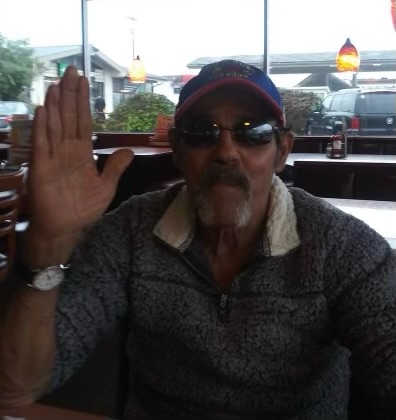
Alexander Alpha Leen
June 1, 1962 - Oct. 17, 2023
Alex Leen was a kind, loving person who enjoyed entertaining people. Alex told amazing stories of fiction and his childhood. He loved the outdoors, camping, gold, panning, fishing, swimming, barbecuing and spending time in the redwoods. He loved to sing, especially around a bonfire, while camping or just relaxing at home. Alex was a jack of all trades who did auto body work, carpentry, lawn care and winemaking.
Alex was born in Eureka and spent the majority of his life in Humboldt County.
Alex married his wife, Leah Fike, on October 9, 1980. His first daughter Amy James was born on April 5, 1981. Alex and Leah moved to oil city Louisiana where he worked in the oil fields. On January 23, 1986, was the birth of his second daughter, Joanna Leen, in Shreveport, Louisiana. After moving back to Humboldt, County, the birth of his third daughter, Daisy Leen occurred in Eureka California on May 19, 1991. Alex grew to know the Lord and would speak to people about him at every possible opportunity.
Alex was a gypsy of Armenian and Argentinian heritage. He prided himself in Christmas traditions, family, tales and songs, as well as many stories.
Alex‘s wife Leah passed away in June 2018. He spent the last years of his life with stage four kidney failure, having to get dialysis three times a week. He struggled physically and dealt with a lot of pain. The family is comforted, knowing that Alex is resting Resting peacefully pain-free and is reunited with his wife, granddaughter, Jamie Leen, past relatives and being embraced by the Lord.
Alexander Alpha Leen passed away on Tuesday, October 17, 2023 from heart failure. he is survived by his daughters, Amy James, Joanna Leen, and Daisymae Leen. His grandchildren, Hannah Bingham-Leen, Noah, Bingham-Leen, Michael Leen, Isaiah Leen, Nathaniel Leen, and Sequoyah Quilantan. His sisters, Jackie, Mona and Tisha, along with a myriad of nieces, nephews and cousins. Alex is preceded in death by his granddaughter, Jamie Leen, brothers, Anthony, Dovie, Senior, Tambi, Bambi (China), and Jeff. His sisters, Tima, Melody, Wanda, Jackie, and Paris. His parents, Mary Custa and Nick Lee.
Alexander will be greatly missed and remembered by many. His impact on people will carry on for many years. May the Lord embrace you and guide you on your spiritual journey. We love you daddy, God bless you.
###
The obituary above was submitted on behalf of Alexander Leen’s loved ones. The Lost Coast Outpost runs obituaries of Humboldt County residents at no charge. See guidelines here.


