

OBITUARY: Alan Wade Franklin, 1958-2026
LoCO Staff / Monday, May 4 @ 6:56 a.m. / Obits

Alan Wade Franklin of Ferndale passed away from a tragic accident on April 22, 2026. A devoted husband, father, grandfather, son, brother, uncle, and friend, his presence and laughter will be deeply missed by all who knew and loved him.
Born June 23, 1958 in Fortuna to Marvin and Ida Franklin, he grew up in a close-knit family in the town of Scotia—the same town where he would later raise his own children. Life instilled in him a deep appreciation for family and tradition. He was especially proud of his Wailaki heritage.
After graduating from Fortuna High School in 1976, he first noticed Sandy in 1979. Introduced later by a mutual friend, it was love at first sight. The couple married on March 15, 1980 and went on to welcome three sons: Garrett, Landon and Tyler. Fatherhood became a profound turning point, giving his life deeper meaning that would live on through his boys.
Few things brought more joy than watching his sons compete in sports. Whether it was football, baseball, basketball, or motocross, he never missed a game. His competitive spirit always kept things lively and memorable.
A man who took great pride in his work ethic, he started with paper routes and grocery store jobs before spending 26 years at Pacific Lumber Company. In the years that followed, he took classes at College of the Redwoods, worked in construction, logged his own land, built the family’s forever home in Ferndale, and retired from UPS after forming many lifelong friendships. Even in retirement, he briefly worked for Diamond R Ranch.
Truly one of a kind, he was the heartbeat of the family and a man of his word. Throughout his life, he made sure those around him knew how much they mattered. If you were part of his tribe, there was never any doubt about his love or his willingness to do anything for you.
His accomplishments were many. An Eagle Scout and 42-year member of the Native Sons of the Golden West, he was also a boxer, abalone diver, black belt, motocross racer, logger, cowboy, member of the Cattlemen’s Association, patriot, hunter, basketball player and coach, golfer, party host, BBQ master, card player, music lover and a master storyteller who made everything happen.
He cherished his time at Ruth Lake — relaxing on the water, boating, playing cards, and enjoying a good highball. A man with a deep personal relationship with God, he gave thanks daily for his many blessings and always lived by his conscience, doing what he believed was right.
Alan leaves behind his beloved wife Sandy; sons Garrett Franklin and Lori, Landon Franklin, and Tyler Franklin and Alyssa Johnson; father Marvin Franklin and Dottie Gilliam; brother Brian Franklin (Tay, Briceland, and Keelan); sisters Dana Christen and Hans (Kady and Karly) and Wendy Franklin and Tami; grandchildren Sakari, Jakoda, and Nakinzi Franklin; special grandson Hudson Bobillot; and many cherished cousins, uncles, aunts, in-laws, and friends who were family to him. His favorite dogs, Pablo and Willy, wait for him at the door. He was preceded in death by his mother Ida Franklin in 2002 and several other beloved family members.
A graveside service will be held on Saturday, May 9 at 11 a.m. at Sunrise Cemetery in Fortuna. A celebration of life will follow at the Elks Lodge in Eureka at 1:30 p.m.
###
The obituary above was submitted on behalf of Alan Franklin’s family. The Lost Coast Outpost runs obituaries of Humboldt County residents at no charge. See guidelines here. Email news@lostcoastoutpost.com.
BOOKED
Today: 12 felonies, 20 misdemeanors, 0 infractions
JUDGED
Humboldt County Superior Court Calendar: Yesterday
CHP REPORTS
MM101 N HUM 2.10 (HM office): Traffic Hazard
Humboldt Rd / Maher Ave (HM office): Trfc Collision-Unkn Inj
ELSEWHERE
RHBB: 30 Acre Wildfire Burns East of Leggett, Draws Air Tankers and Additional Water Tenders
RHBB: Sixty-Seven-Year-Old Woman Dies After Collision With Vehicle in Fort Bragg
RHBB: Evacuation Warning Issued as Structure Fire Sends Black Smoke Over Covelo
RHBB: Traffic Control At Seventh And F Streets For Vital Arcata Waterline Improvements
LoCO LIT BIT: An Excerpt From ‘Redwood Curtain Rising,’ a New Novel by Local Author Nancy Resnick
Nancy Resnick / Sunday, May 3 @ 8 a.m. / LoCO Lit Bit
Please find below an excerpt from Redwood Curtain Rising, a soon-to-be-published novel by local resident Nancy Resnick about “chosen family, healing and the courage it takes to write a new life chapter at any age.”
Redwood Curtain Rising will be available at local bookstores next month. You can preorder a copy at Resnick’s website. Also, there’ll be a reading and meet-and-greet with the author at the Morris Graves Museum on Sunday, May 24, at 1 p.m. See here for details.
Are you a Humboldt County writer who has written a book? Or a writer who has written a book about Humboldt County? You should share an excerpt with LoCO Lit Bit! Hit us up at news@lostcoastoutpost.com, and put “Lit Bit” in the subject line.
###

The cute 1920s Craftsman house was on I Street in Eureka, shielded from the busy through street by a high redwood fence and dense foliage.
“Ready to do this?” Keisha shifted the wine bottle and tray of brownies to one hand and knocked on the door with the other. Anna held a bright bouquet of flowers. Through the glass they could see people inside the house, but no one seemed to have noticed their knock.
“Should we just go in?” Anna asked. Keisha nodded her assent and they made their way past a group of relaxed, mostly gray-haired people, looking for Keisha’s colleague Romi, who had invited them to the birthday gathering.
“There you are, welcome!” Romi enfolded Keisha in a warm full-body hug that seemed characteristic of Humboldt. “And you must be Anna.” She extended her embrace to Anna, then whisked the flowers into a vase, positioned the brownies on a table already loaded with desserts, and deftly slotted the wine into place with a number of other bottles on a side table.
Everyone was talking about the earthquake. Where they were when it happened, what they’d lost to breakage. Some were making plans to help with food distribution and other relief work. Anna and Keisha found themselves welcomed, mingling and joining surprisingly wide-ranging conversations, talking with one woman about her travels with her son in Peru, and with another woman who was flying to Mexico the next morning.
Keisha stood next to a younger, dark-haired woman who was adding more unmatched plates and cutlery to the table. “Hi, I’m Rebecca. It’s my mom’s birthday party, and this is my house.”
“Your house is lovely,” said Keisha. The Craftsman-style house was small but full of charm, with high ceilings and well-proportioned rooms.
“Yeah, I was super lucky to buy this a couple of years ago before the prices started going up.” Rebecca adjusted their offerings on the table already filled with bowls and platters of food.
“No kidding,” said Keisha. “I live in Portland and prices have been sky-high there for a long time.”
“For sure. Portland’s a good city. I grew up in Humboldt and wouldn’t have predicted I’d want to come back. I left after high school and lived in some different cities in the Midwest and on the East Coast. But here I am, with my parents and my sister nearby.”
Romi joined their conversation. “My kids are adults and live here now too. I’m glad they came back; we see each other all the time.”
“You’re both lucky to have family close like that,” said Keisha. “I don’t have any siblings. I was adopted as an eight-year-old, but in foster placements before that. My adoptive parents died when I was starting college. My only close relative wasn’t really a blood relative, but I called her my Nanna. She passed less than a year ago.”
She found herself unexpectedly near tears. She didn’t know why she was confiding in these women. Probably all this emotional openness was contagious. Romi put an arm around Keisha’s shoulders. “That just happened, then. I’m so sorry for your loss,” she said, and rather than being a rote phrase, her words reflected genuine kindness.
What was it with all of this touching and hugging, Keisha wondered. It was kind of nice in a way, even though the hug was a form of physical intimacy she hadn’t been expecting; but still, the air inside the cottage started to feel too warm, excessively cozy and intimate. She needed to get out of there. She glanced around the party and, seeing that Anna was engaged in conversation, decided to go walk around a couple of blocks.
###
Once outside in the crisp evening air, Keisha wondered what the hell had just happened. It wasn’t like her to start revealing deeply personal things to people she didn’t know. She was practiced at keeping her own counsel. She felt agitated and started taking long brisk strides along the residential street, barely noticing the well-maintained Craftsman bungalows and tidy yards.
Don’t let them get to you, never show weakness, always demonstrate competency. Show that you have earned your place. Take nothing for granted. These principles had served Keisha well as a child, keeping her out of trouble, her grades always high despite disruptions in her living situation — even those times she would wake up in the morning and have to recall which placement she was in, which family was pretending she was part of them. The approach was pretty ingrained by the time she became an adult. She knew it was atypical for a kid in foster care; it was more common to preemptively strike out, to misbehave, not wait to be rejected. But Keisha had her Teflon to keep her strong and contained.
She’d been starting third grade when she was adopted by Carl and Pamela. They were solid people: sincere, matter-of-fact, kind. They belonged to the Unitarian Church, helped their community, and respected different beliefs and creeds. She sometimes felt as though her adoption allowed them to check off a box labeled ‘good deeds.’ But even if there was a tiny bit of self-satisfaction involved in their adoption of a mixed-race child, it didn’t diminish the goodness of their actions.
Keisha’s life improved. It was much better to have stability, continuity, to live in a pleasant, clean, modest single-story tract home in a neighborhood of small lots and well-tended gardens. Over the next years she proved to them that they hadn’t made a mistake in taking her in. She wanted to convince them, but at the same time she held a part of herself back, just to be safe. She was waiting for proof, too-that they were legitimately her parents and the whole thing wasn’t just temporary.
And then meeting Nanna gave Keisha’s life another turn for the better. Their relationship started with a chance encounter on the street. Keisha had been walking by when the little old lady called out to her, something about what a nice day it was. An old lady in a battered straw hat, brown and skinny as the rake she was using to weed her vegetable patch.
Greetings grew into conversations over homemade cookies and lemonade on the big front porch. It was like discovering a grandmother who lived right around the corner. Keisha started helping Nanna with her big vegetable garden and learning about cooking from her. She’d worried at first about how Carl and Pamela would react. To their credit, they took the relationship in stride. They called her Nanna too, and treated her as Keisha’s honorary grandmother. Something about the connection to an older generation seemed to anchor the family. Keisha would always be grateful for how Nanna helped her appreciate her good fortune in her adoptive parents.
Soon after she started college, her life crumbled. Carl and Pamela were one freeway exit from their home, returning from dinner at one of their favorite restaurants. They were hit by a truck that had crossed the center divider, the driver trying frantically to brake. The mechanical malfunction was fatal for both Keisha’s parents and the truck driver, a young man with a pregnant fiancée. Supposedly, all the deaths were instantaneous. Keisha tried to find comfort in knowing that Carl and Pamela had been happy at the end, coming home from a pleasant evening, secure in their love for each other. But she grieved their deaths and wished she had let herself love them more.
Nanna was a comfort: warm and kind, but always pragmatic. It was a hard time, and she would have been completely alone without Nanna. Together they decided that Keisha needed to use the scholarship she’d earned and continue with college. Nanna was always in her corner, with no limitations on what she envisioned Keisha capable of accomplishing. Nanna’s became the home that Keisha visited, the only place she knew she could relax and let the Teflon dissolve.
She was fortunate to go to law school just before the price of admission skyrocketed, so her student loan debts were manageable. After joining Randolf, Patterson in San Francisco, she’d quickly realized that the same qualifications that got her offers at prestigious firms could be leveraged for a different path — law professor. It was satisfying, and she liked the life she’d built. So, what was this deep well of emotion all about?
Do we ever stop needing to prove ourselves, she wondered. Do we ever relax and feel deeply secure in our lives? She’d earned professional legitimacy, and she liked her work. But what about other aspects of her life-love, possibly a family? Her friend Yasmine was a successful attorney, married with a beautiful family, and she didn’t seem to suffer from self-doubt. Keisha wasn’t sure whether she envied Yas or felt relieved not to be juggling so many balls in the air. She might want a messier, more complex life. But that meant relinquishing control, and she had so many reservations about that.
She’d already walked about ten blocks and had come full circle back to the house. Maybe being in this new place was a means to becoming more grounded and comfortable with herself. In any case, Keisha had had more than enough introspection for the moment. It was getting cold, and it was time to get back to the party.
###
Anna was in conversation with a lean, silver-haired guy, probably around her age. He had a nicely shaped goatee and a face that reminded her a little of Brad Pitt, the older, sexy version. He’d lived in Oakland for years before moving to Humboldt. An artist, getting ready to have a show open: a collection of his new pieces, encaustic on wood. This was a medium far bolder than the watercolors Anna had experimented with. She was definitely finding herself intrigued by the art around here.
Was the guy flirting with her? Deep-blue eyes with a crinkle, tall, broad shoulders, curly hair pulled back in a ponytail-he was seriously good looking, and unless Anna was mistaken, he was turning on the charm. It had been a while since Anna had engaged in flirtation of any kind, but just as she started wondering what this vibe was, and whether she wanted to be part of it, a woman came up behind them. Putting her hand on his arm with a distinctly proprietary air, she looked directly at Anna with a challenging glint in her eyes, evidently intending to establish her territory. The message couldn’t have been clearer: Back off, he’s taken.
Anna found herself pasting a pleasant expression on her face and backing away. “Great to meet you both,” she said blandly. “I look forward to seeing you — both — at the Arts Alive opening. My friend and I are planning to be there.” I am conceding your clear ownership of the good-looking artist.
The other woman watched Anna leave, not concealing a victorious gleam. Anna felt a surge of amusement. What a reminder that attractive men are always in short supply, she told herself. And what a thin veneer of convention separates us from other primates — seriously, that was like watching monkeys at the zoo. I guess we are all animals when it comes down to it, she thought. At least no one at the party was actually urinating on bushes. A sudden vision of monkeys with bright-pink bottoms picking lice from each other’s heads came into her mind and she could barely suppress a snort of laughter.
TO YOUR WEALTH: Why Does the Stock Market Keep Going Up?
Brandon Stockman / Sunday, May 3 @ 7 a.m. / Money
This is one of the questions I get periodically, especially with so much negative news filling our news feeds.
One simple reason is found in two words: earnings growth.
The stock market is made up of shares in publicly traded companies, and many of those publicly traded companies are currently making money and expect more money to be made in the future. Therefore, they are worth more.
Recently, Exhibit A released a great chart to illustrate this:

“But wait,” one might say.
“There are troubling things happening in the world.” Yes.
“Gas prices are going up.” True. Filling up the gas tank strains the pocketbook.
“The robots are taking over.” I’m team humanity.
“The President uses it to make decisions.” Likely true.
Sometimes the answer really is as boring as earnings.
You don’t always need a revelatory chart or secret mathematical equation or cabal of ultra-rich people pulling strings to explain it.
I’m not saying it won’t go down. For example, price-to-earnings ratios — how expensive the market is — are high by historic standards. And earnings outlooks could change, which is why investors must always be prepared for the stock market to go down.
But even if the bears turn out to be right and the stock market drops, don’t forget: Historically, the stock market usually goes up.
Financial author Ben Carlson ran the numbers going back nearly a century:
The U.S. stock market has experienced positive returns:
- 56% of the time on a daily basis
- 63% of the time on a monthly basis
- 75% of the time on a yearly basis
- 88% of the time on a 5 year basis
- 95% of the time on a 10 year basis
- 100% of the time on a 20 year basis. (1)
So one simple answer to the question: “Why does the stock market keep going up?” is “Because that’s normally what happens.”
###
Source:
1. “The Stock Market Usually Goes Up (But Sometimes it Goes Down)”, May 21, 2023. Accessed online.
###
Brandon Stockman has been a Wealth Advisor licensed with the Series 7 and 66 since the Great Financial Crisis of 2008. He has the privilege of helping manage accounts throughout the United States and works in the Fortuna office of Johnson Wealth Management. You can sign up for his weekly newsletter on investing and financial education or subscribe to his YouTube channel. Securities and advisory services offered through Prospera Financial Services, Inc. | Member FINRA, SIPC. This should not be considered tax, legal, or investment advice. Past performance is no guarantee of future results.
Search Warrant Served at Miranda’s Rescue Amid Allegations of Felony Animal Abuse, Fraud and Conspiracy
LoCO Staff / Saturday, May 2 @ 10:01 a.m. / Crime
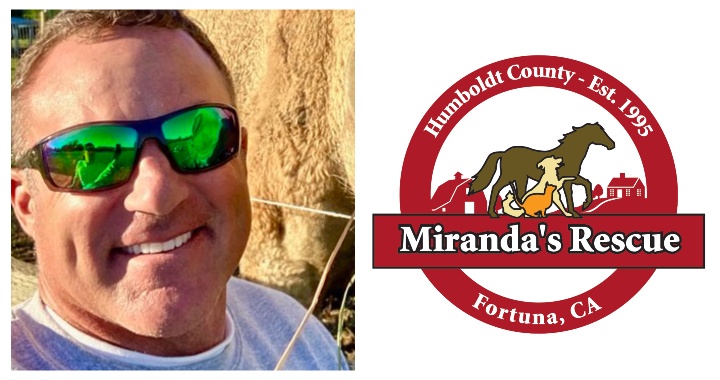
Shannon Miranda of Miranda’s Rescue.
###
Press release from the Humboldt County Sheriff’s Office:
On April 22, 2026, the Humboldt County Sheriff’s Office received credible information regarding allegations of felony animal abuse, animal cruelty, fraud, and conspiracy associated with Miranda’s Rescue, located in the 1600 block of Sandy Prairie Road in Fortuna.
Due to the serious nature and complexity of the allegations, the Humboldt County Sheriff’s Office Major Crimes Division was assigned as the lead investigative unit. Based on evidence provided to and subsequently obtained by investigators, a search warrant was sought and granted for Miranda’s Rescue, including the residence and business.
On May 1, 2026, at approximately 6:30 p.m., investigators served the search warrant at the location. During the service of the warrant, evidence related to the investigation was seized.
Animals located on the property, including dogs and cats, were examined by Humboldt County Animal Control. At this time, Humboldt County Animal Control will continue to monitor the animals on a daily basis while the investigation remains ongoing.
This is an active and ongoing investigation. The Humboldt County Sheriff’s Office is asking anyone with information related to this case to contact the Major Crimes Division at (707) 445-7251 or the Sheriff’s Office Crime Tip Line at (707) 268-2539.
The Sheriff’s Office takes allegations of animal abuse and related criminal conduct seriously and will continue to pursue this investigation thoroughly.
THE ECONEWS REPORT: New Threat to Eel River Dam Removal?
The EcoNews Report / Saturday, May 2 @ 10 a.m. / Environment

Lake Elsinore — future destination of Eel River water? By Catatonique - Own work, CC BY-SA 4.0, Link
###
On April 21st, US Department of Agriculture Secretary Brooke Rollins rocked the North Coast with a Tweet: She claimed that a Los Angeles-area local water district, the Elsinore Valley Municipal Water District, wanted to purchase the Eel River dams to operate them for hydroelectric power and provide irrigation. The Water District has since walked back Sec. Rollin’s Tweet, claiming that it had no firm plans and its interest was, at present, only exploratory. Now, Congressman Huffman is involved and livid—rightfully so, as he has worked hard on a solution that would work for both parts of his district—and has initiated an investigation into this affair.
Alicia Hamann and Scott Greacen of Friends of the Eel River join the show to discuss whether the public should take this threat seriously and what can be done to keep dam removal on track.
###
HUMBOLDT HISTORY: Clarence Bugenig, an Eminent Korbel Horseman, and a Testy Encounter With Norton Tooby
Ralph W. Dearing / Saturday, May 2 @ 7:30 a.m. / History

Clarence Bugenig in 1935, showing the style that brought him fame and honor in regional rodeo circles for three decades. Photo via the Humboldt Historian.
###
A small circus with one elephant came to Blue Lake — I think it was in 1927. They pitched their large tent on the baseball diamond, put up signs, and tried hard to attract a large crowd. It never happened.
One of the feature attractions was a famous bucking horse that nobody could ride. The ringmaster gave a long and impassioned pitch about this famous horse and offered $50 to any local cowboy who could ride him for ten seconds or something like that.
There was a bunch of us high school kids from Korbel and Blue Lake sitting up in the grandstand. Clarence Bugenig was sitting with us. He was a few years older than we were, perhaps 19 or 20 years old, but we all knew him.
Clarence, who had brothers and sisters who lived on a dairy in the Arcata bottom, was employed as a ranch-hand by Jack Tamboree, who managed the cattle ranches for the Northern Redwood Lumber Company of Korbel. Clarence had established himself as a pretty good bronc rider, winning the saddle bronc competition at several county fairs or rodeos in northern California and southern Oregon affairs.
We encouraged him to take the ringmaster’s challenge. After all we figured that 50 bucks was as good as in his pocket. He grinned, walked down the steps to the arena, and told the man he thought he could ride the horse. We watched his preparations with interest. He adjusted the stirrups on the saddle to the proper length for him and made sure the hackamore rope was the right length. After the announcer made his speech, Clarence mounted that gray bronc, jerked the blindfold off, and proceeded to ride the horse until he quit bucking. That horse was a pretty good bucker, but Clarence had no trouble riding him.
Clarence was the toughest man I have ever known. He moved fast and when working with horses had no fear. We were at the Deer Creek Ranch one time, and Clarence was riding a new, young horse that was only about half broke. The horse was tied in a stall in the horse barn. When Clarence went in beside him to untie him, the horse kicked him out of the stall. Instead of being cautious and careful, Clarence immediately went right back into the stall. The horse kicked him out again. By this time, we thought he would try a different tack, but no, back in the stall he went. This time the horse didn’t kick anymore. Clarence untied him, backed him out where he could saddle him, and took off. This is the way Clarence handled horses when he was young.
As he got older, he gave up bronc riding in favor of owning a few racehorses which he raced at county fairs. I remember he won his share of races at these events with a small girl riding for him at times. She was a great rider, and she and Clarence were married for a time.
Eventually Clarence became a partner of Wayne Vickers and lived on the Angel Ranch above Korbel. They purchased several ranches in Humboldt County and Clarence ran them.
Although the last time I saw Clarence Bugenig was many years ago, I will always remember him. No one who knew Clarence ever forgot him.
###
When I recently got together with Arthur and Maxie Tooby at one of our ex-Humboldters gatherings in Sacramento, I remembered another horse story and another memorable Humboldt man. Arthur always reminds me of his father. I met Norton Tooby when I was employed on the Iaqua Ranch in 1932.
The Iaqua Ranch was owned by the Northern Redwood Lumber Company and had a common border with a large ranch owned and operated by Tooby & Prior. The line fence was located at the bottom of a canyon. This country is quite steep, but on the south slope of the canyon, the feed was excellent, and the snow never remained long on the ground because of the ocean breezes which traveled up this canyon. In those days there were coveys of grouse in the fall, in September and October. When disturbed they would fly up in pine trees and just sit there. You could ride right under them. There were trails along the slope running parallel, so that a steer could graze without reaching down very much. It was wonderful pasture for cattle.
One of my jobs, about once a month, was to pack a horse with 150 pounds of salt, lead him over to this area, which we called the Bohannon pasture, and salt the 110 head of three-year-old steers we pastured there.
On more than one occasion, I noticed a small band of saddle horses wintering on the Iaqua side of the canyon. There was a gate of sorts in the line fence— actually it was constructed of rails, placed one above the other, between posts. Each time I noticed the horses there, I found the rails down on one end, and it looked as though someone had taken them down in order to let the horses run where the feed was much better.
I reported this development to my boss, who was Mr. Ed Buck. He instructed me to round these horses up the next time I found them on Iaqua property, drive them to the Iaqua Ranch, and corral them. He said, “You must feed them and water them each day, and I will advertise them in the daily paper in Eureka. Tooby will be notified to come and drive them back to his ranch, and we can bill him for the feed and the trouble he has caused us.”
It seems that was a long shot in those days. How do you round up ten loose saddle horses in a steep country by yourself? I don’t quite remember how it was done, but I remember one fine-looking, gray horse that seemed to lead the others, and he just lined out the way I wanted them to go to the county road. At any rate I did corral them and telephoned Mr. Buck, and he did the rest. A few days later, Mr. Tooby and another horsebacker arrived at the Iaqua corral, looked at the horses, then jumped on me for causing them all this trouble. I was 19 years old at the time, and I was aware of who Norten Tooby was. After he let off plenty of steam, I pointed out to him that it was too late for him and his man to try and drive the horses back to his ranch that afternoon. It would be dark in about an hour, and he would have a tough time trying to drive horses in the dark.
There was plenty of room in the ranch house at Iaqua, so I invited them to spend the night. I had plenty of food, and I could cook them a good supper. Norton thought that was a sound idea and accepted my invitation. After supper, he became very friendly and told me stories of his life, starting in England. Norton understood livestock, especially sheep. In the days when he first landed in Humboldt County, there were more sheep than cattle. He got his start in the world of finance by buying wool from the sheepmen when the price was about five cents a pound. He warehoused it in a building on the waterfront in Eureka, holding it over for a better price. A war came along, and the price went way up. He sold and cleared enough money to start his career.
Almost sixty years have passed since that night, but whenever I get to talking with his son, the memories are revived.
###
The piece above was printed in the March-April 1990 issue of the Humboldt Historian, a journal of the Humboldt County Historical Society. It is reprinted here with permission. The Humboldt County Historical Society is a nonprofit organization devoted to archiving, preserving and sharing Humboldt County’s rich history. You can become a member and receive a year’s worth of new issues of The Humboldt Historian at this link.
OBITUARY: Richard Carl Blake Jr., 1956-2026
LoCO Staff / Saturday, May 2 @ 6:56 a.m. / Obits

Richard Carl Blake Jr., a beloved Hoopa Valley Tribal member and the Chief Judge of the Hoopa Valley Tribal Court, unexpectedly passed into the spirit world on April 27, 2026. He spent his last days surrounded by his loving family and treasured lifelong friends.
Richard was born in Hoopa on November 8, 1956, to Richard and Letitia Blake. He is survived by his wife, Kristen, daughters Haley and Harmani, and stepchildren Heather (Alvaro) Romero and Dustin Kelley and his siblings, sisters Cynthia (Bruce) Williamson, Terri (Rick) Rivera, and Dorothy (Mark) Fry, and cousin/sister Marion (Doug) Emmert. Richard’s nieces and nephews are Laney Ashley, Glenn (Hien) Thompson, Brian (Jill) Williamson, Tara (Kenny) Quinones, Brooke (Bryan) Benson, Tana Williamson, Jeanette Rivera, Tyler (Sarah) Fry, Bryan Guyer, Richard (Julia) Guyer, Brandon (Anika) Rivera, Shelly (Steven) Harrington, Jackson Rooms, and Jessie Rooms. He also has numerous great-nieces and nephews, cousins, and friends he called “cousins.” Richard never ended a meeting or call with his family members or others he loved without saying “I love you.”
Richard was preceded in death by his parents, Richard Blake, Sr. and Letitia Jackson Guyer, brothers, Warren (Mokie) Blake and Edward (Eddie) Guyer, and stepfather, Edward Guyer.
Richard lived with his family first in Hoopa and then in Crescent City for the majority of his childhood. After his parents’ divorce when he was 16, Richard moved with his mother to Napa, where he completed high school and attended community college and ultimately culminated his education at University of Southern California (USC). This achievement began his love for his favorite college football team, The Trojans (Fight On).”
Richard began working at a young age. His working life started as a cashier at 7/11, which gave him the chance to develop the incredible “people skills” and emotional maturity for which he was known and admired. He also worked as a truck driver and probation officer. His dedication to whatever position he held and his willingness to tackle the toughest assignments lead to more and more responsibilities. Richard’s unique and varied work experiences, and his innate charisma provided him an exceptional point of view and understanding of human nature, which ultimately led to him being elected as the Chief Judge of the Hoopa Valley Tribe in 2002. Richard served as Chief Judge until 2018, and during that time he also served as the Chief Judge of the Redding Rancheria Tribal Court, and Appellate Judge for the Cow Creek Tribe in Southern Oregon.
Richard’s love of Tribal law and his dedication to his community motivated him to run again as Chief Judge of the Hoopa Valley Tribe. He was re-elected in 2022 and served in that position until his passing. During this time, he also served as the Chief Judge of the Redding Rancheria, developed and ran the Juvenile Healing to Wellness for Hoopa Valley, and served as Associate Judge for the Tolowa Dee-ni’ Nation’s Court.
Richard’s numerous accomplishments include President of the Board of the National American Indian Court Judges Association (NAICJA) and board member for 13 years, representing Region 2 (Tribal Courts in California, Nevada, and Hawaii). In 2016, Richard was the recipient of the NAICJA Judicial Excellence Award. Richard was one of the founding members of the Northern Tribal Court Coalition (NCTCC), which continues today to promote and strengthen Tribal Justice Systems. Richard was also appointed as Co-Chair of the California Tribal State Forum, and he sat as a member of California Federal-Tribal Forum. He was a member of the National Council of Juvenile & Family Court Judges (NCJFCJ) and was named as the 2016 “Innovator of the Year.” He also served as faculty for NCJFCJ in the areas of Domestic Violence and Domestic Sex Trafficking and was an invited speaker to numerous conferences where he spoke on the strength and utility of Tribal Courts to address the unmet needs of tribal communities around the United States and internationally.
To know Richard was to love him. He was a complex and enchanting mix of humor, humbleness, intelligence, and trickster, just to name some of his obvious characteristics. During Richard’s brief, but serious illness in the hospital, friends and family shared stories of how he helped, teased, embarrassed, inspired, or just loved them. We came to the realization Richard had the unique ability to make everyone call him their “best friend.” It was wonderful to hear and read how far-reaching Richard’s influence traveled throughout the United States and beyond.
Viewing: Friday, May 8, 2026, 10 a.m. -12 noon, at Gobles Funeral Home, 560 12th St, Fortuna.
Services: Saturday, May 9, 2026, 1 p.m. in Hoopa at The Neighborhood Facility
Burial: Jackson’s Cemetery on Pine Creek Rd and reception to follow at the Hoopa Trading Post.
Pallbearers:
Glenn
Thompson
Tyler Fry
Brian
Williamson
Bryan Guyer
Richard
Guyer
Robert Lee
Brandon
Lara
Robert Jackson
Jody
Jackson
Loren Colegrove
Monty
Nykoluk
Chance Carpenter
Dana
Norton
Damon Cross
Honorary Pallbearers:
Bruce
Williamson
Mark Fry
Rick
Rivera
Doug Emmert
Glenn
Thompson
Ken Quinones
Dr.
George (Porty) Blake
Pliny (Jack) Jackson
Marion
(Inker) McCovey
Ronald (Ronnie) Balabas
Shawn
Balabas
Abraham Camez
Adam
Robertson
Raymond McCovey
Marion
(Buck) McCovey
Arthur Jones
Romeo
McCovey
James McCovey
Robert
Kane, Jr.
Russell Hurley
Marc
(Bubba) Riggins
Timothy Miller
Judge
Joseph Wiseman
Albert Jasso
Pat
Callan
Dr. James (Jim) Bennie
Tyler
Ward
Paul Siewell
Michael
Hollowell
###
The obituary above was submitted on behalf of Richard Blake Jr.’s family. The Lost Coast Outpost runs obituaries of Humboldt County residents at no charge. See guidelines here. Email news@lostcoastoutpost.com.


