

OBITUARY: Barbara Elizabeth Rybeck, 1958-2024
LoCO Staff / Friday, May 10, 2024 @ 6:56 a.m. / Obits
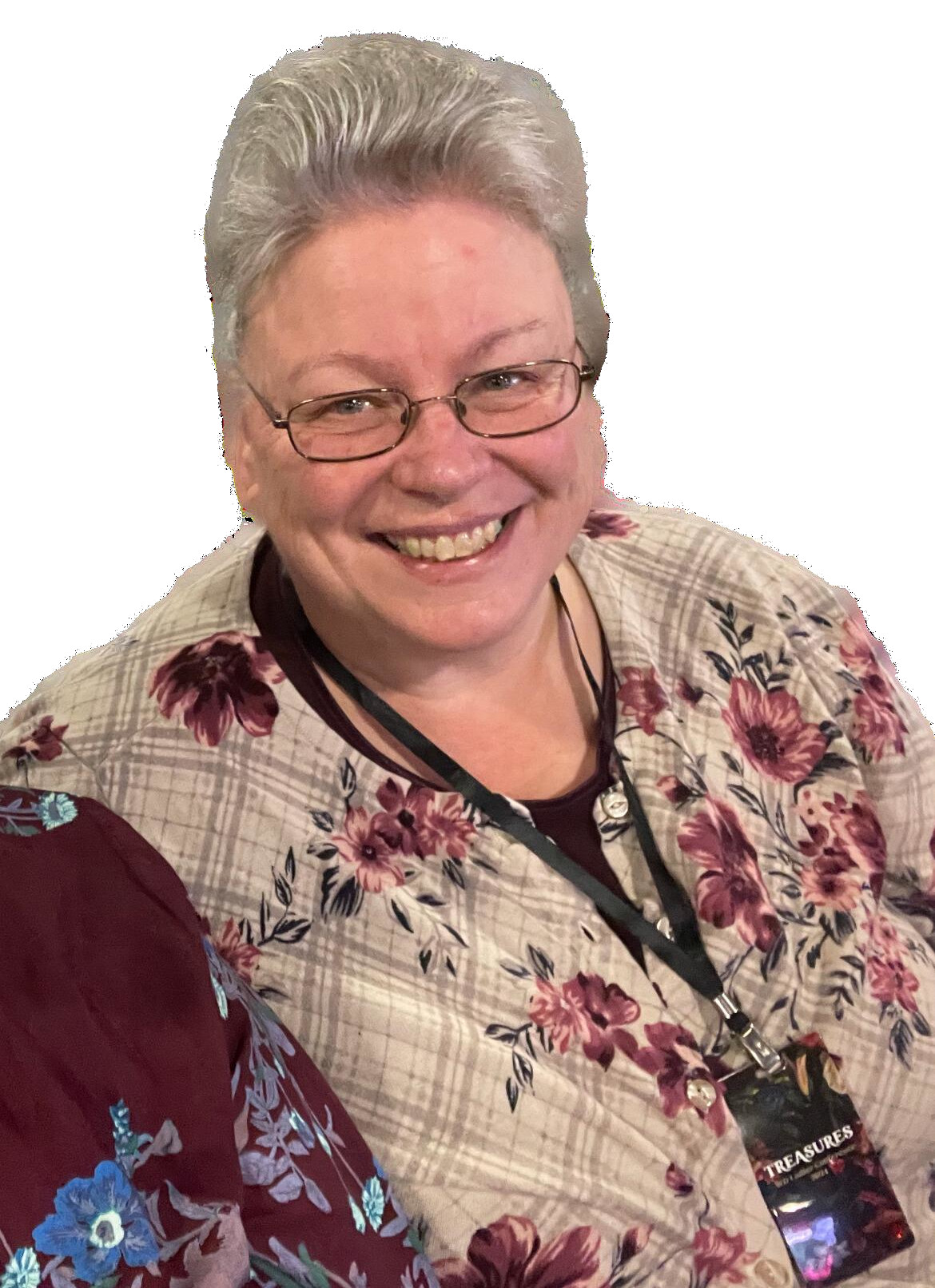
Our beloved Barbara Elizabeth Rybeck (Jones), 65 years of age, was called home to be with the Lord on
April 11, 2024. She was born on September 19, 1958, to Robert and Dorothy (Krauter) Jones in Arcata.
Barbara leaves behind a legacy of love and devotion, survived by her children: Rebekah (Robert) Davis, Jeanette Rybeck, Sarah (Steve) Gomes, Emily Frayer, Michael (Julia) Rybeck, and Janelle Rybeck. Her beloved grandchildren, Jaxon, Jace, Jedediah, Jeremiah, Madelynn, Katelynn, Tegan, Micah, Jonah, Silas, and Harper, were the lights of her life. She is also survived by her siblings: Ron (Orinne) Jones, Kris (Linda) Koreen, Scott (Patricia) Jones, Patti (John) Gregorio, and Doug (Lisa) Jones, along with her Aunt Corinne Matthews, sister-in-law Joanne Rybeck, and numerous well-loved nieces, nephews, and extended family.
With heavy hearts due to the unexpected loss yet brimming with memories of her vibrant personality, we bid farewell to Barbara Elizabeth Rybeck. Her sparkling blue eyes and million-dollar smile illuminated the lives of all who had the privilege to know her. Barbara’s open-hearted, effervescent character and joyful nature had a magnetic pull, drawing everyone, even strangers, into her warm embrace. She was the embodiment of selflessness, consistency, strength, wisdom, and compassion, whose presence radiated genuine warmth and light into the lives of all who knew her.
To her six children and eleven grandchildren, she wasn’t just a mother and grandmother, but a problem solver, a doctor of both body and soul. She didn’t just mend their clothes and stuffed animals, but their hearts as well. Her sage advice could always fix any problem. Her selflessness knew no bounds, and her every action was proof of her endless love for her family and faith in God. She had an uncanny ability to anticipate the needs of others, thoughtfully providing and serving in ways both practical and whimsical. Her funny gifts and cherished family traditions she created reflect her unending thoughtfulness and the depth of love she held for her family.
As a teenager, she attended Full Gospel Tabernacle, now known as Eureka, the Pentecostal Church. There, she learned every word of the old gospel hymns she so loved to sing and devoted her life to Christ. Bishop John and Marilyn McDonald picked her up for church services, gave her Bible studies, mentored her and thought of her as an extension of their family.
Barbara’s presence always brought a feeling of lightness to even the darkest days, her infectious laughter filling the house with warmth and joy, and her silly sense of humor making everyone laugh until tears ran down their faces. As a peacemaker, she sought harmony in every situation, bringing calmness and resolution whenever there was discord. She was the rock, a source of stability and peace, always guiding with her gentle wisdom and unfaltering strength in the face of adversity. To her family, she hung the moon and stars, exemplifying every trait her children felt they needed to be successful in life. Barbara’s passion for adventure was evident in her love for traveling with her family, whether it was to concerts or vacations, spanning all 50 states and a few countries, crafting memories that will forever be etched into their hearts. She reveled in the shared experiences and cherished moments with her children and grandchildren. Her pride in them knew no bounds, as she cheered on their successes and offered unwavering support through life’s challenges. Barbara took immense pride in the accomplishments and talents of her kids and grandchildren.Above all, Barbara found immeasurable fulfillment in the knowledge that her family had chosen to serve the Lord. It was a legacy she held dear, a testament to the values she instilled and the faith that sustained her. Her joy in their spiritual journey was matched only by her boundless love for each member of her family.
Throughout her life, Barbara embraced the beauty of simplicity and the significance of cherishing the little moments and making lemonade from lemons. Whether she was hosting holiday gatherings, reading devotions or stories to her grandchildren, enjoying a cup of coffee on her deck in the morning, listening to the birds, and reading her morning devotion, she found joy in the everyday blessings that surrounded her. Grounded in God’s word, she continually chose the high road, despite the storms she encountered or how she may have been wronged. She lived her life in accordance to the scriptures she so cherished, every action rooted deeply in the love of Jesus, easily witnessed by those around her. The old gospel hymns she continuously sang, her voice lifting in praise and sweet melodies of faith will forever reverberate in the lives of her family and friends.
Barbara’s love extended beyond her family; it encompassed all she encountered. She saw the good in people, accepting them wholeheartedly and making them feel seen and valued. She easily made friends and lasting connections throughout her church and community. Her 50 years of dedication to serving others through education, both in the classroom and through Children’s Sunday School, stand as a testament to her commitment to nurturing young minds. Whether in the classroom or the church, her teachings were infused with laughter, love, and unwavering faith in God. Many students frequently lingered on breaks or after class to chat, maintaining contact post-graduation, seeking guidance before college exams, and soliciting her assistance in crafting referral letters for their career paths. A true storyteller at heart, Barbara had a gift for weaving creative tales that captivated her audience, and she used this talent when teaching Sunday School and Summer Youth Camps leaving kids on the edge of their seats. At school, she made learning Science and Math truly fun. Her practical jokes brought laughter to many, and her hugs, the warmest embrace one could ever receive. In Barbara’s presence, one couldn’t help but feel a sense of confidence and belonging. Her loving devotion to her family and community touched countless lives, leaving an indelible mark of kindness and compassion sure to be felt for generations to come. As her son-in-law said, “Barb never wanted to be a big deal, but she was a big deal to so many of us”.
The palpable, deep void left in Barbara’s wake reverberates with the memories of her comforting embraces, her words of wisdom, and the joyful sound of her laughter. We will deeply feel the loss of her steadfast presence, her commitment and devotion to the children and youth of our community, her selfless devotion to her family and others, and that quiet reassurance you could always count on. Barbara was a pillar of strength, and support, a source of unwavering guidance and friendship. She leaves behind an enduring legacy of a life well-lived, with family and God at the center. Her strength, resilience, and unwavering faith have left an indelible mark on all who were fortunate to know, love, and be loved by her. Though she is no longer physically present with us, her spirit remains ever-present in our hearts, a constant reminder of the profound impact she made on so many.As we cherish the memories we share, hear the lessons she imparted and how she embodied God’s love, Barbara’s life will continue to illuminate an inspirational path for us to follow in her absence. Her legacy is one of living a life of joy, in service to others, with forgiveness and God’s love at the forefront. Barbara, you have forever enriched our lives with your love, laughter, and wisdom. Rest in the arms of the Lord, Barbara Rybeck, you are finally home.
In lieu of flowers, we kindly request donations to the Barbara Rybeck Western District Camp Scholarship Fund via this link.
Please join us in honoring and celebrating the life of Barbara Elizabeth Rybeck on Saturday, June 1, 2024, at 11 a.m. The service will be held at Eureka the Pentecostal Church, located at 1060 Hoover Street, Eureka.
Mom, we will continue to find you in your favorite songs, flowers, colors, anything heart-shaped, and always in our own hearts. May you rest in God’s eternal peace and love.
###
The obituary above was submitted on behalf of Barbara Rybeck’s loved ones. The Lost Coast Outpost runs obituaries of Humboldt County residents at no charge. See guidelines here.
BOOKED
Yesterday: 4 felonies, 7 misdemeanors, 0 infractions
JUDGED
Humboldt County Superior Court Calendar: Today
CHP REPORTS
No current incidents
ELSEWHERE
RHBB: Nov. 3, 2026 General Election Vote Center and Ballot Drop Box Locations
RHBB: Mendocino Railway President And Ceo Robert Jason Pinoli Elected To Aslrra Board Of Directors
RHBB: Wildfire Burning Near Highway 101 South of Laytonville
OBITUARY: Daniel Hilliard Mielke, 1991-2024
LoCO Staff / Friday, May 10, 2024 @ 6:56 a.m. / Obits

It is with heavy hearts that we announce the passing of Daniel Hilliard Mielke on April
22, 2024, in Guthrie, Oklahoma. Born on April 2, 1991, in Hayward, Daniel was welcomed
and loved by his best friend and brother, Benjamin and the East Bay Mielkes. At the age
of three, Daniel moved with his parents and brother to Arcata and spent his
childhood roaming the redwoods, ocean, and rivers with his cousins and the Hammer
Lane gang. Daniel graduated from Arcata High School in 2009. Ultimately, he decided
to settle in Guthrie, Oklahoma in 2023, to follow his parents in retirement and live near his
brother Ben, Ben’s wife Baylee and their three children.
Daniel was a great sports enthusiast and played soccer, football, baseball and basketball in his youth. He was an avid fan of OU, the San Francisco Giants, Warriors, and 49ers, and nephew Jack’s various sports teams.
Indeed, Daniel’s most cherished moments were those spent with his family, particularly his nieces, Haddie and Posey, and nephew Jack. Whether doing artwork, playing house, reading books, or playing rundown, Daniel — nicknamed Uncle D — looked forward to his “kid time.” He was overjoyed at Haddie’s performances, Jack’s games, and Posey’s antics. Daniel’s love for them was immense, and his relationship with them incredibly special. Daniel was also an animal lover, having many pets through the years, with Stitch most recently his constant companion.
In addition to his parents, Marsha and Steven Mielke, and brother Ben Mielke’s family, Baylee, Jack, Haddie, Posey, and baby, Daniel is survived by many loving family members: Uncle Joe & Aunt Julie Mielke (Hayward), Cousins Brandon & Natasha (Sophia, Emma), and Lauren & Martin Kilgariff (MJ, Dean); Uncle John & Aunt Lisa Mielke (Eureka), Cousins Jeff & Leshele (Stella, Scarlett, Dean, Duke), Matt (Logan, Sierra, Evelynn), and Alison; Uncle David & Aunt Dorothy Mielke (Temecula, CA), Cousins Brady & Winifred Smith (Gene, Henry), and Baron & Breanne (Davey); Uncle Dean & Aunt Danica Mielke (Concord), Cousins Molly & Jeremiah Francis, and Jillian; Uncle Walter & Aunt Beverly Hilliard (Rimersburg, Penn.), Cousins Marci & Jason Kelley (Brea, Delaney), and Heather & Randy McKay (Alexa); and too many friends and neighbors to list.
To honor Daniel Mielke, there will be two memorial services followed by celebration of life events. The first will be at 1824 Phillip Lane, Guthrie, Oklahoma, on July 13, 2024 at 4 p.m. The second will be held in Humboldt County on August 3, 2024, at 4 p.m. at the Bayside Community Hall (2297 Jacoby Creek Road, Bayside. Daniel’s remains will be interred in Humboldt County.
In lieu of flowers, please make donations to NAMI (National Alliance of Mentally Ill) of Humboldt County, PO Box 1225, Eureka, CA 95502-1225 or online at this link.
###
The obituary above was submitted on behalf of Daniel Mielke’s loved ones. The Lost Coast Outpost runs obituaries of Humboldt County residents at no charge. See guidelines here.
Cal Poly Humboldt Releases Updated Safety Protocols for Upcoming Graduation Ceremonies
LoCO Staff / Thursday, May 9, 2024 @ 3:58 p.m. / Cal Poly Humboldt
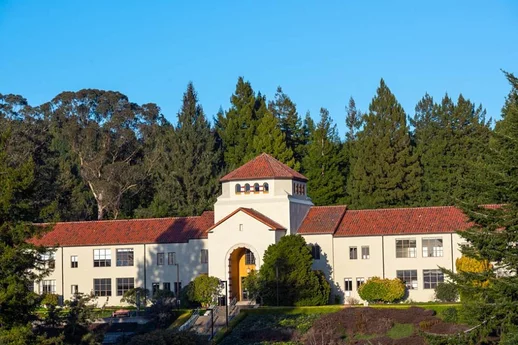
Image via Cal Poly Humboldt
###
Press release from Cal Poly Humboldt:
Graduates, this week we will celebrate the culmination of your hard work at Cal Poly Humboldt during the various Commencement ceremonies and Cultural Graduation Celebrations. Your resilience and dedication to completing your degree is extraordinary, and the entire Lumberjack community is incredibly proud of you.
As in previous years, graduates and guests are expected to follow standard Commencement safety protocols. Due to smaller venue spaces, additional restrictions will be in place to ensure it is a momentous experience for all graduates and families. See the Commencement website for the locations and ceremony times.
We know that some graduates may feel compelled to exercise their right to free speech. Out of respect for fellow graduates and the many families and friends who will be attending, it will be important for us to work together to ensure the ceremonies are enjoyed by all.
Access and check-in
Parameters for a safe and positive experience
- Graduates, guests, and faculty and staff must be registered to attend the ceremony. No walk-ins can be accommodated due to venue capacity restrictions.
- Arrive with your black cap and gown 45 minutes prior to the start of the ceremony for your major.
- At the check-in area outside the venue, pick up your wristbands for the anticipated number of guests you entered when you registered. Distribute the wristbands to your guests.
- Graduates, guests, and faculty will need a wristband to enter the venue and will need to wear them for the entire ceremony.
- A no-touch visual search for any prohibited items will take place upon entry.
Signs to celebrate graduates are welcome, but the following guidelines are applicable:
- Signs may not be attached to a pole or structure, or have offensive language, as determined by event personnel.
- Signs may not be larger than 11” x 17” to prevent obstructing the view of other guests, or in any way create a safety hazard for others as decided by event personnel.
Prohibited items:
We look forward to celebrating your important achievements during the Commencement festivities later this week, and we appreciate your support in making sure all graduates and families are able to enjoy these special occasions.
- Larger bags and backpacks. However, clear bags, small clutches, and medical and parental bags are permitted.
- All of our venues are not able to accommodate space for skateboards, scooters, bicycles, and bicycle u-locks
- Weapons or anything that can be used as a weapon
- Noise makers and confetti cannons
- Outside food and beverages
- Animals, except for working service animals
- Tobacco products (including e-cigarettes), alcohol, and illegal drugs
- Drones and unmanned aircraft systems
- Structures such as canopies and pop-up tents
(PHOTOS/VIDEO) Demolition of Spooky Humboldt Landmark Underway
Andrew Goff / Thursday, May 9, 2024 @ 3:25 p.m. / Horror

Major demolition operations in full swing at Loleta’s old creamery building, long the small Eel River Valley town’s most recognizable structure. Outpost readers may recall that the massive brick building suffered major damage in the December 2022 earthquake and it was quickly deemed unsalvageable. It last housed creamery operations in 2010.

Of course, any mention of the Loleta creamery building in front of longtime Humboldtians is bound to prompt a proud regurgitation of the structure’s slight importance in cinema history: Scenes for the forgettable 1982 film Halloween III: Season of the Witch were filmed there. Sadly, the Humboldt “Map of the Movies” will now need to be updated.
There has been no public mention of how the site may be used in the future once the site is cleared.
Below you’ll find some photos of the Loleta creamery building’s deconstruction.


The section of building that collapsed in the 2022 earthquake

The creamery building reimagined as ‘Silver Shamrock Novelties’ for Halloween III
DA Says Pro-Israel Deputy Roger Rees Won’t Be Assigned to Cases Involving Cal Poly Humboldt Protesters
Ryan Burns / Thursday, May 9, 2024 @ 1:46 p.m. / Activism , Courts
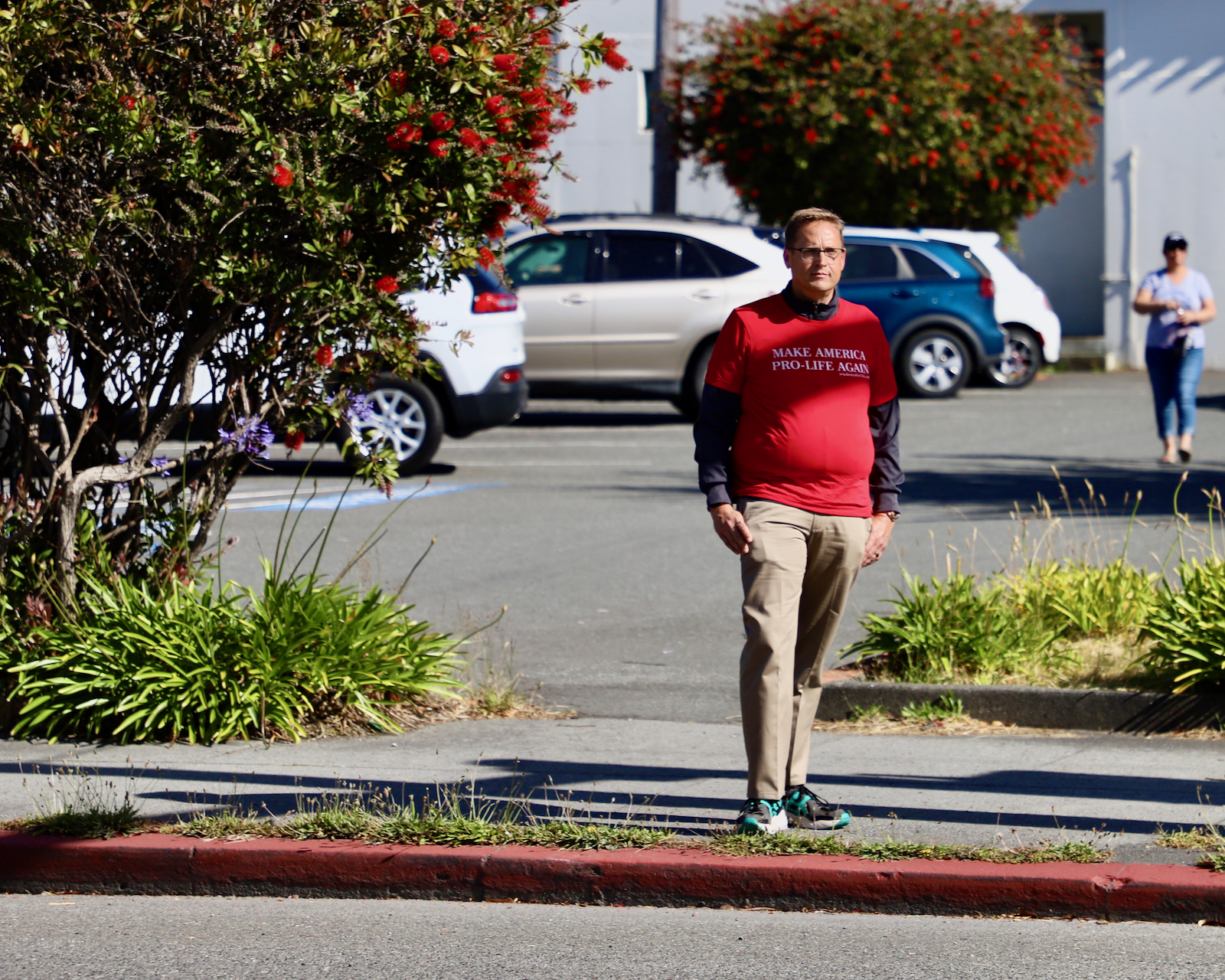
Deputy District Attorney Roger Rees, seen here in 2022 across the street from a public protest at the Humboldt County courthouse after the Supreme Court overturned Roe v. Wade, has faced public scrutiny recently over his provocative demonstrations of support for Israel. | File photo by Andrew Goff.
###
If the office of District Attorney Stacey Eads winds up pressing charges against any of the 32 people arrested at the recent pro-Palestine demonstration and occupation at Cal Poly Humboldt, Deputy DA Roger Rees won’t be involved in the prosecutions, Eads told the Outpost via email Wednesday.
Rees, a veteran prosecutor who came to the Humboldt County DA’s office from Santa Monica in 2013, has recently faced scrutiny over his public demonstrations of support for Israel. As noted in a story on Redheaded Blackbelt by reporter Ryan Hutson, Rees regularly stands across the street from the Humboldt County Courthouse on Friday afternoons, waving a big Israeli flag in opposition to the crowds of pro-Palestine protesters who gather at the same time.
Rees has sometimes taken a more confrontational, even inflammatory approach. For example, in December he stood among a group of pro-Palestine protesters — whose signs called for a “Free Gaza” and ceasefire — with a sign of his own that read, “RAPE IS OK THEY ARE JEWS” on one side and “CUT OFF BABY HEADS” on the other:
Asked by Hutson to explain the meaning of those phrases, Rees said he was simply articulating beliefs held by the pro-Palestine protesters. When told that the protesters reject those assertions, Rees replied, “They’re lying to you.”
He consistently refers to such protesters as “pro-Hamas,” conflating their support for the people of Palestine with an endorsement of the October 7 Hamas-led attack on Israel. (Rumors of militants beheading babies, first published by Israeli media, have not been substantiated by either the Israeli government or subsequent news reporting.)
Until recently [actually, it’s still (or back) up], an Israeli flag was hanging from his office on the fourth floor of the courthouse, causing some to questions whether Rees was violating a county policy that prohibits employees from engaging in political activities on county time or premises.
In a phone interview Wednesday, Rees insisted that displaying the Israeli flag is not inherently political. Citing security concerns, he would neither confirm nor deny that the window with the flag was even in his office, but he went on to say that the Israeli flag has been hanging in a public-facing window since May of 2021.
“It wasn’t a political statement then and it isn’t a political statement now,” Rees said. “It’s just a statement in support of the people of Israel. … And it wasn’t until Hamas decided to invade Israel on October 7 and kill a bunch of people – rape them, behead them, burn them – that then it became an issue.”
Rees said he maintains a strict boundary between his political demonstrations and his work. In fact, when the Outpost first asked him about his political demonstrations, he replied via email, “I do not use my county email to conduct any personal business. Thank you for understanding.”
When he responded to a follow-up inquiry, he did so on his personal cell phone during a lunch break, and when asked questions he deemed work-related, he declined to answer them unless he could call back on his work phone.
As evidence supporting his argument that flags aren’t political — or at least not a violation of county policy — Rees noted that the county displayed the Progress Pride flag on its own flagpoles throughout the month of June.
Rees said he meets up with fellow supporters of Israel each Friday at noon.
“We stand there underneath the flagpole on the courthouse steps and we show our support for Israel,” he said. “And every Friday from four to six, when people who support Hamas are out there, I stand opposite them so everybody knows there is a differing viewpoint from what they have to offer.”
Asked if he has any concerns about these demonstrations influencing his ability to prosecute certain cases without an appearance of bias, Rees said, “That [question] is blurring the line again between my work and my personal activities.”
He declined to respond to that question directly while on his personal phone, though he went on to say, “[S]peaking generally, I wouldn’t have any participation in a case [in which] the appearance that I couldn’t be impartial could be called into question.”
Some protesters, including local elementary school teacher Alice Finen, have voiced concerns that Rees’s demonstrations — particularly his sign referring to rape — might have a negative impact on the ability of District Attorney’s Office to fairly prosecute crimes involving sexual assault.
Asked his thoughts on those concerns, Rees said, “That’s too specific for me to answer when I’m on my personal time and I’m not talking about work.”
Forging ahead, we asked whether public employees have a responsibility, as representatives of the people, to be careful about what they say and do publicly, even on their own time?
“I do hold myself to a higher standard,” Rees replied, “and that’s why I’m out there every opportunity I get to support the people of Israel when there are people out there that would see them killed.”
In her emailed replies to questions, Eads did not explain why she wouldn’t assign Rees to any cases brought against the Cal Poly Humboldt protesters, but Rees said it’s unlikely that he’d be assigned to such cases in the first place since his caseload mostly involves homicides and other serious and/or violent felonies.
What if a suspect of such a crime happened to be of Palestinian descent? Wouldn’t they be justified in asking for Rees to be disqualified?
“If we as prosecutors have a conflict, we will declare that,” he said. “If the defense thinks we do, they’ll file a motion to recuse us, and then a court would review that and if the court thinks that, yes, there’s a conflict, they would relieve the [DA’s] office and the attorney general will be appointed. There are mechanisms in place if any individual defendant felt like he or she was not being treated fairly.”
We suggested that such a hypothetical just goes to show that, in a courtroom, attorneys’ biases — and the supposedly inviolable line between their personal and professional lives — get called into question all the time. Lawyers’ public activities can and do affect court proceedings, right?
Rees replied, “I don’t think mine do, so — .”
On Wednesday, Eads said she has not yet received the investigative reports from law enforcement that will allow her to make charging decisions for those arrested on campus last month.
Californians Will See Lower Electricity Rates and a New Fee That Won’t Vary With Power Use
Ben Christopher / Thursday, May 9, 2024 @ 1:17 p.m. / Sacramento

Power lines in Sacramento on Sept. 20, 2022. Photo by Rahul Lal, CalMatters
State utility regulators decided today to let California’s largest power providers stick their customers with a new monthly flat fee in exchange for a reduction in the overall price of electricity, a controversial change to the way that millions of households pay their utility bills with weighty implications for state climate change policy.
Under the new policy, utilities will be required to reduce the price households pay for the electricity they use every time they charge a phone or run an air conditioner. That rate cut will vary from between 8% and 18%, depending on the utility, season and time of day, according to the commission’s analysis.
To make up for the lost revenue, regulators have introduced the concept of a “fixed charge,” a break from California electric billing tradition. For decades electric bills from Pacific Gas & Electric, Southern California Edison and San Diego Gas & Electric have been the “pay as you go” variety, with households only paying for the electricity they use.
Starting in late 2025 for SCE and SDG&E customers and in early 2026 for those with PG&E, the state’s investor-owned utilities will be able to charge customers a monthly fee regardless of how much power the customer draws from the grid. So-called fixed charges are a mainstay of electric billing across most of the country, where the average fee is roughly $11.
The new California charge will be $24 for most customers, but lower income households, who already qualify for discounted electric rates, will see fees of either $6 or $12.
The unanimous vote by the California Public Utilities Commission comes after months of heated debate that pitted Assembly and Senate Democrats and Republicans against legislative leadership and the governor’s office, advocates of rooftop solar against labor unions representing utility workers and environmental advocates against one another.
Backers of the billing change say it’s a necessary step to bring down electricity rates in California, which are among the highest in the country. California regulators want all new cars sold to be electric by 2035 and are taking steps to discourage gas-powered indoor appliances. Those goals are hard to square with sky-high electric prices.
The state’s planned “transition to all electric homes, cars and trucks is truly transformative,” said CPUC President Alice Reynolds at today’s hearing. Under the proposed change all customers “will be better off financially if they electrify — whether that’s purchasing an electric vehicle or switching out a gas appliance with an electric one.”
Opponents argue that the change in billing policy won’t move the needle for most households considering dumping their gas-powered cars and appliances, a project that can cost tens of thousands of dollars, but will instead needlessly discourage energy conservation efforts while punishing rooftop solar customers.
The policy is a break from 50 years of regulatory tradition in California, which is “if you use more you pay more and that encourages conservation,“ said Loretta Lynch, a former CPUC president and critic of what she sees as a “pro-utility” bias on the current body. Reducing the penalty on high energy use will also have “huge cost consequences down the road” for a grid that already struggles to keep up with summer-time demand, she said.
The ultimate impact of the policy change may be more muted than either side wants to admit, said Merideth Fowlie, a UC Berkeley economist and one of a handful of researchers to initially float the idea in 2021 of an income-graduated fixed charge as one way to pay for reduced electricity rates.
The three-tiered CPUC-approved change doesn’t vary much by income and its promised rate reductions are relatively modest, said Fowlie.
“Clearly, I’m disappointed, because I don’t think it comes close to where I think we should be in terms of reductions,” she said. “If this forces another conversation — which is, ‘Why are we paying for wildfire risk mitigation, which is essentially climate change adaptation, or some of these major investments in decarbonisation, on bills?’ — I think that’s an important conversation to have.”
Winner and losers in new California utility fee
Though utilities won’t earn any more revenue or profit as a direct result of the change, there will be winners and losers under the new billing program.
The reduced price of electricity will likely save money for people who use a lot of electricity, such as a large household in an AC-dependent part of the state or the owner of an electric SUV, a heat pump and an induction stove more than enough to offset the cost of the new fee. Many, if not most, low-income households who qualify for the discounted fixed charge will also emerge as financial winners.
But there are sure to be plenty of losers, too. Smaller households, Californians living along the temperate coast, energy conscious customers and people with solar panels on their rooftops are all more likely to see their total utility bills rise.
That group makes for a powerful political bloc that has fiercely rallied against the regulatory change for months. Many showed up or called in at the commission hearing.
“The big utility tax will increase monthly utility bills on four million households while doing nothing to encourage electrification,” said Yvette DeCarlo, speaking on behalf of a coalition of environmental nonprofits, tenant rights groups, liberal advocacy organizations and anti-tax activists.
Severin Borenstein, another Berkeley economist who co-authored the 2021 study with Fowlie, said modeling suggests that the lower electricity rates under the policy will only increase electric vehicle purchases by roughly 5% above what they would otherwise be.
“It’s in the right direction, though, and I think that we can’t get to where we need to go unless we start,” he said.
The fixed charge policy was included in a budget proposal by Gov. Gavin Newsom’s administration in 2022, but it wasn’t until last year that many state legislators woke up to it. Twenty-one coastal Democrats, led by Thousand Oaks Assemblymember Jacqui Irwin, introduced a bill ordering the CPUC to reverse course. So too did Senate Republican leader Brian Jones. Both efforts were quietly put on ice at the behest of legislative leadership.
In a letter Jones and the rest of the Senate GOP caucus sent to CPUC president Reynolds earlier this week, the San Diego Republican expressed some skepticism that the state regulatory body could be trusted to keep the fixed charge at its current level.
“We are particularly concerned that this will only be the beginning,” the letter said. “The CPUC has been granted unchecked power to increase this new charge at any time. If the $24.15 plan is approved, the next proposal may see the fixed charge hiked to $50, $100, or even higher!”
More shade directed at the rooftop solar industry
For California’s residential solar industry, the vote is just the latest regulatory broadside.
Over the last two years, the CPUC has slashed the payments that utilities are required to give to single family homeowners, apartment buildings, schools and businesses that install solar panels.
That’s based on the argument, advanced by the commission, the regulated utilities and many energy economists, that relatively well-to-do solar customers have been overcompensated in California since the early 2000s, which has had the effect of off-loading the costs of running the grid onto non-solar households.
Advocates for the fixed charge say assigning solar customers an unavoidable monthly charge is yet another way to balance out who pays for major utility line items like wildfire prevention, subsidies for low income households, EV charging networks and distribution system upkeep.
“What the fixed charge does is ensure that we’re no longer going to have freeloaders,” Scott Wetch, a lobbyist who represents many unionized workers employed by California’s for-profit utility companies, told CalMatters earlier this month.
Homeowners with solar panels were well represented among those who called in to give public comment.
“I have solar panels on the home, which we’ve got right away to cooperate with California’s move to have 100% renewable energy. But yet we’re getting hit with this unfair tax,” Joy Frew, a self-described senior citizen from San Diego County, told the commission over the phone.
“People that really invested in solar trying to do the right thing for the planet — all of a sudden we’re being slapped in the face for doing it,” said a called named Steve Randall from San Clemente.
Not that every Californian with a solar panel above their head is opposed to the fixed charge. Fowlie, one of architects behind the idea, said her family hopped on the solar bandwagon as a way to bring down their monthly utility bill.
“I’m gonna be the biggest loser under this proposal,” she said. “I would be in that higher income bracket and I have solar, so my bills would go up. But I think it’s a win for California, so I’m a big supporter.”
###
The CalMatters Ideas Festival takes place June 5-6! Find out more and get your tickets at this link.
CalMatters.org is a nonprofit, nonpartisan media venture explaining California policies and politics.
Skeletal Remains Found in Fieldbrook in 2006 Have Been Identified as Belonging to ‘Cowboy Fred’, Says Sheriff’s Office
LoCO Staff / Thursday, May 9, 2024 @ 10:28 a.m. / News
Humboldt County Sheriff’s Office release:
The Humboldt County Sheriff’s Office has utilized DNA technology to identify remains discovered in 2006 as Freddie Earl Long, DOB: 04/13/1943.
On 10/09/2006, a skull was located on timber company property in the Fieldbrook area. Deputies and detectives responded and searched the area where they located additional skeletal remains, clothing, and various personal items. The Humboldt County Coroner’s Office and sheriff’s detectives conducted the investigation and concluded that there was no physical evidence that indicated foul play. The Coroner’s office brought in a team of experts to provide a forensic anthropological analysis on the remains. The experts from UC Santa Cruz conducted a thorough examination, however, no additional evidence was located, and no identifying features could determine the identity of the remains. DNA and dental information were submitted to the Department of Justice and the information was entered into the Missing and Unidentified Persons System (MUPS), still no identification was ever made.
In 2022, the Humboldt County Sheriff’s Office partnered with Othram Inc., a company specializing in forensic genetic genealogy to submit DNA for forensic genome sequencing. With the new DNA profile, HCSO conducted a genealogy investigation and determined that the remains belonged to Freddie Long. The closest living relative to Long was contacted and provided a DNA sample for confirmation. The relative also confirmed that Long had gone missing around 1993, however, he had never been reported missing to authorities. With this updated information, the personal effects found with the body and the anthropological analysis also confirmed that the remains were Freddie Long.
Freddie Long, age 50 at the time of his disappearance, was last known to be living in the area of Big Bar, CA. Long may have gone by the alias “Cowboy Fred.” Due to limited information about Long around the time he went missing, the Sheriff’s Office is requesting anyone with information about this case to contact Detective Danielle Vickman at 707-445-7251.
To report information about other missing persons or unsolved homicides, please contact Investigator Mike Fridley at 707-441-3024. A list of the HCSO’s unsolved cases and current missing persons can be located at: https://humboldtgov.org/2772/Unsolved-Cases


