On November 2, 2023, at 4:03 P.M., officers from the Eureka Police Department
responded to the parking lot of the Bayshore Mall to investigate a reported robbery.
Upon arrival, officers discovered that a thirty-six (36) year-old male and his eight (8)
year-old daughter were the victims of a robbery while entering their vehicle in the mall’s
parking lot after shopping inside. The victims were passing through Eureka while visiting
California from Central America.
It appears three suspects followed the father and daughter into the parking lot from a
store where they had made several purchases. The father handed a bag to his daughter
as he loaded their purchases into their vehicle. A black male suspect then ripped the bag
from the eight-year-old’s grasp and fled to a waiting vehicle, occupied by two black
female accomplices. The vehicle then fled the parking lot, nearly striking the juvenile in
the process. The family’s loss includes a brown leather bag containing passports and
travel documents, as well as cash money.
The male suspect is described as a black male adult, approximately 6’0,” tall and weighing 200
pounds, with black dreadlocks. The male was wearing a black shirt and dark colored jeans.
Both females were described as black females in their twenties, one was wearing a black
“Raiders” sweatshirt and black jeans, the second was wearing a white and black plaid shirt and
black leggings. All three fled in a black Jaguar SUV. Please see the attached photos captured
from security cameras at the mall.
If you recognize any of these suspects, or have any information about this incident, please
contact Detective Sergeant Cory Crnich at (707) 441-4318 or ccrnich@eurekaca.gov. If you
see them please call 911.
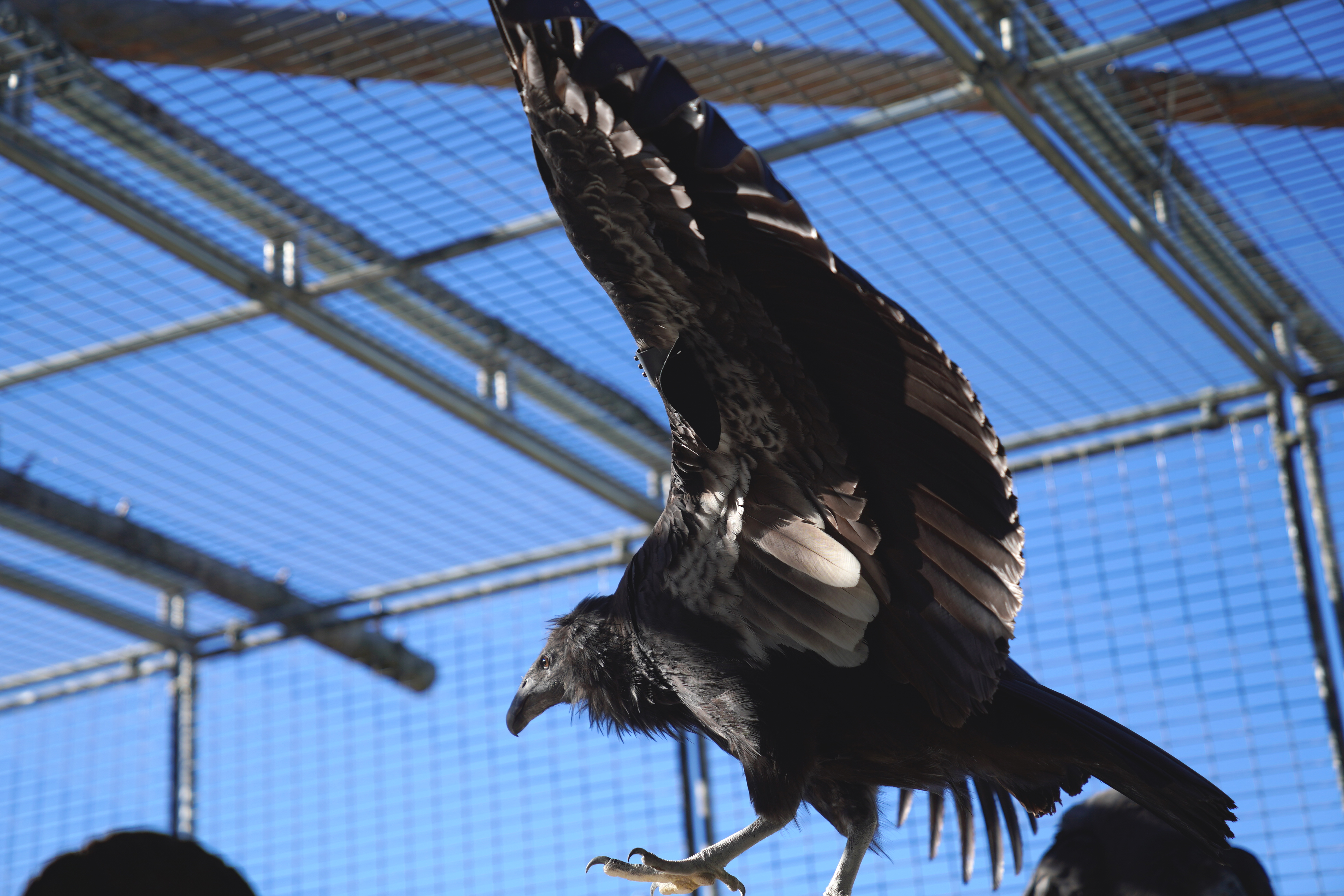
The Northern California Condor Restoration Program (NCCRP), a partnership between the Yurok
Tribe and Redwood National and State Parks, is preparing to release three more prey-go-neesh
(California condors) into Yurok ancestral territory in the very near future.
All three birds are healthy and behaving in a way that indicates they are ready for the wild. The
condors are set to all be released together as early as late next week. The timing of the release is
contingent upon multiple factors, the biggest being weather. There must be at least a few sunny days
in a row to give the birds good visibility and flight conditions when they depart the condor release
and management facility. Additionally, previously released prey-go-neesh must be present at the
management facility before the release procedure is initiated. The presence of additional prey-go-
neesh will ensure the new birds are as calm as possible during their first steps into the natural world.
An announcement will be made when the release date is finalized. The release can be viewed live at this link.
“We couldn’t be more excited to release three more condors,” said Yurok Wildlife Department
Director Tiana Williams-Claussen. “I would like to thank the Los Angeles Zoo as well as all of our
partners, funders, and donors for supporting the reintroduction of prey-go-neesh. Soon, 11 prey-go-neesh will soar over our ancestral homeland.”
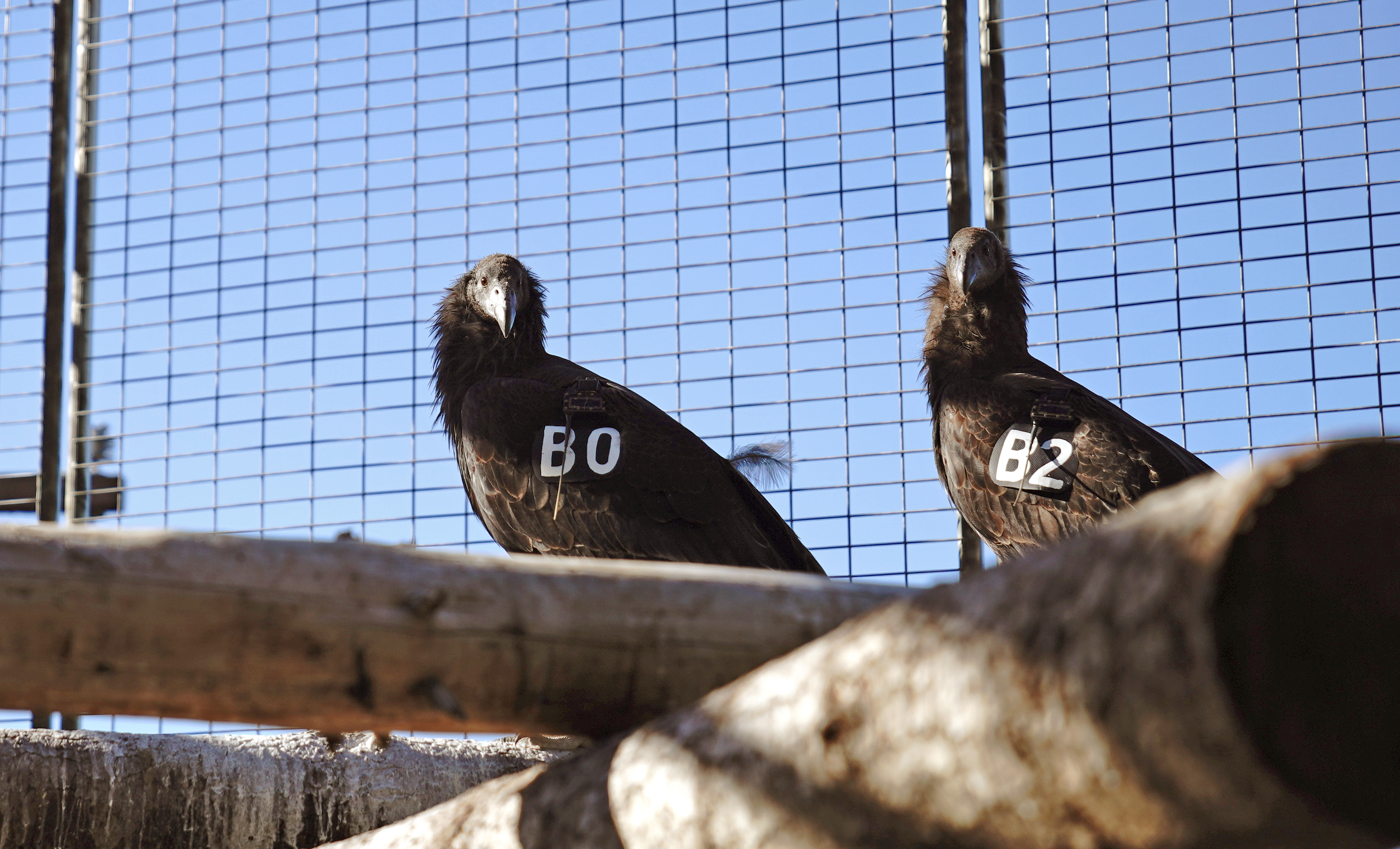
On October 9th, the NCCRP received the three young condors from the Los Angeles Zoo. The
newcomers are two females and one male, including 1140, wing tag B0 (female); 1148, wing tag
B1(male); and 1151, wing tag B2 (female). Hatched and reared at the Los Angeles Zoo, the three
prey-go-neesh are approximately a year and a half old. While in the care of the zoo, the birds were
vaccinated for Highly Pathogenic Avian Influenza (HPAI). They will be the first condors vaccinated
for HPAI to be released into the wild.Condors are extremely social creatures. Upon release, NCCRP biologists expect the eight free-flying
birds to assist the new group in getting acclimated to a new environment. As the new condors have
waited in the release and management facility, acclimating to their new home, they have been
regularly visited by free-flying birds, laying the groundwork for their integration into the population.
Last year, the NCCRP released the first eight condors to fly over far Northern California in more
than a century. Overall, the birds are faring very well in their new environment. NCCRP biologists
and technicians regularly observe the birds exhibiting positive behaviors, such as feeding, soaring,
and resting in safe roosts. They have explored much of Yurok ancestral territory in Humboldt and
Del Norte Counties, including trips as far south as Hyampom and as far north as the Notchko area
on the Yurok Reservation. To date, their furthest trip from the NCCRP’s condor release and
management facility was 52 miles.
While the NCCRP’s condor biologists are satisfied with the condors’ progress toward becoming self-
sufficient, there has been one major setback.
B0 and B2 staring at human with camera.
Last month, Yurok condor A6 (Me-new-kwek’, “I am bashful or shy”), along with several other
condors in the new population, consumed part of a poacher-killed elk within Bald Hills in Redwood
National Park and the carrion was most likely tainted with lead. Five out of eight birds were found
to have the toxin in their blood. The NCCRP believes the lead came from the illegally killed elk
because of the timing, on-the-ground observations, and other strong evidence.
Of the five birds, Me-new-kwek’, wing tag A6, was the only one whose lead level came back higher
than the identified treatment threshold, warranting immediate medical intervention for lead
poisoning, the leading cause of death among condors. Thankfully, NCCRP and Sequoia Park Zoo
staff were able to successfully treat Me-new-kwek’. He is doing well and currently serving as a
mentor for the newly arrived birds. It is planned for him to be re-released with the new cohort when
they are released.
Yurok Connection to the Condor
The restoration of this sacred species is an expression of the Yurok Tribe’s cultural imperative to
maintain balance in the world. It is also part of a larger effort to rewild the temperate rainforest
ecosystem in Yurok ancestral territory on the far Northern California coast. In addition to the
reintroduction of the critically endangered condor, the Tribe is currently restoring fish and wildlife
habitat on significant segments of the Klamath River, Trinity River and Prairie Creek as well as other
Klamath tributaries. The Tribe is also closely involved in the ongoing removal of the four Klamath
dams, which represents the largest salmon habitat restoration project in US history. The removal of
the dams will also benefit many other fish and wildlife species, including condors.
The Yurok Tribe initiated the condor reintroduction project in 2008, with funding support from the
Bureau of Indian Affairs, the U.S. Fish and Wildlife Service, and Redwood National Park, as well as
the Administration for Native Americans, Pacific Gas and Electric Company, Global Conservation
Fund, the National Park Foundation, and many more corporate, agency, and private supporters and
citizens. The Yurok Wildlife Department completed an immense amount of work to prepare for the
reintroduction of this imperiled species.
Maya Murchison at Eastlake High School in Chula Vista on Oct. 23, 2023. Murchison, a high school senior, says the recent U.S. Supreme Court ruling on affirmative action has affected her college application process. Photo by Adriana Heldiz, CalMatters
For students of color, the Supreme Court’s recent ban on affirmative action has left them frustrated but undaunted as they plow through college application season. Some California private colleges, meanwhile, are increasing their outreach efforts to attract more students and send a signal that the end of race-based admissions doesn’t change their belief in the importance of diversity.
“I want to go to a college where I feel comfortable and supported and confident. So yes, the ruling has definitely affected what schools I’m looking at,” said Maya Murchison, a senior at Eastlake High School in Chula Vista. “I want to know what colleges are doing to guarantee diversity.”
The court’s 6-3 ruling in June prohibits all colleges in the country from using race as a consideration in admissions. California’s public universities have not used affirmative action for almost 30 years, but some of the state’s selective private colleges, and many out-of-state public universities, have relied on affirmative action to attract students of color and create a more diverse student body.
Collectively, the state’s private nonprofit colleges enroll around 180,000 undergraduates who are drawn to the smaller class sizes and leafy campus idyll.
Immediately after the court decision, an association representing more than 80 California nonprofit private colleges wrote that it feared that the end of race-based admissions will mean less diversity on campuses: “Our member colleges and universities across California are deeply concerned that the decision will have a chilling effect on applications and enrollment among historically underserved community groups — Black, Latino, and Native American students, low-income and first-generation students,” wrote Kristen F. Soares, president of the Association of Independent California Colleges and Universities.
Four months later, that fear is still there, Soares said in a phone interview.
Those worries are fueled by the struggles that the University of California experienced when state voters approved a ballot initiative in 1996 that barred public institutions from considering race as a factor in admissions, contracting and hiring. Diversity at the UC collapsed in the first few years after the ban and the university has written that its formidable spending on outreach programs — half a billion dollars since the late 1990s — and race-neutral changes to its admissions processes weren’t as effective as affirmative action.
Private colleges will see next spring and fall how the Supreme Court’s decision affected their admissions and enrollment patterns.
Response of some California private colleges
Still, the court ruling has prompted some of California’s more selective private schools to appeal to students through campus visits and stronger relationships with high school counselors.
Pomona College, a highly selective liberal arts college in Los Angeles County, has increased the number of nearby high schools it hosts for half-day visits to its campus from 17 to 25, upping the number of students from around 650 to 900. Pomona covers the transportation and food costs. The college and its sister campuses of the Claremont Colleges are also inviting counselors from more than 460 high schools in the region, including about half that predominantly serve low-income students. It’s the largest such event the consortium has put together — and Pomona is hosting it.
“The reality is that we know in our backyard that we probably could have been doing more and we needed to do this work and felt like now was a good time to make that turn,” said Adam Sapp, director of admissions at Pomona, in a phone interview. About a quarter of the college’s 1,700 students are from California.
But while the campus won’t use race as a factor in admissions anymore, its longstanding practice of holistic review allows for applicants to explain how their identities played a role in their academics and social experiences relevant to college admissions. The court ruling said students can still discuss their racial and ethnic backgrounds in admissions applications.
“We see the benefits of diversity as critical to the success of Pomona,” Sapp added, later noting that “none of that has changed because of the Supreme Court.”
The amount low-income students have to pay after financial aid across California’s private colleges ranges from almost nothing to $30,000 a year or more, according to federal data on average total costs that CalMatters reviewed.
University of Southern California, among the state’s most selective private colleges, is pursuing a recruitment strategy that’s worked for them so far, said Timothy Brunold, dean of admission. The approach didn’t focus on the racial makeup of high schools. “Our practice has not focused on particular schools because of their racial/ethnic makeup,” he wrote in an email. “Instead, we’ve tended to be mindful of schools based on other factors, such as the socio-economic makeup of their student body, their geographic location, and past history with USC.” The university used affirmative action as one of many factors in admissions prior to the court ruling.
On-campus diversity efforts matter
The biggest impact of the Supreme Court ruling might not be related to admissions, some experts said, but whether colleges will continue to support diversity on campus. That means bolstering student groups, programs and events focused on race and ethnicity, providing ample financial aid, and creating an overall welcoming atmosphere.
That will be crucial to attract students of color going forward, said Angie Barfield, executive director of Black Students of California United, which promotes civic engagement, academic achievement and leadership among Black students in California. Her organization is doubling down on its college recruitment efforts by raising money to host students on college tours, arranging for Black college alumni to meet with students, encouraging colleges to interview promising students, and providing extra guidance to students with their applications.
“We tell students, you might not think you belong there, but you do,” Barfield said. “There’s a lot of fear of the unknown, a lot of imposter syndrome. So we work hard to expose our students to college life via their culture and show them they can succeed anywhere.”
“I want to go to a college where I feel comfortable and supported and confident. So yes, the ruling has definitely affected what schools I’m looking at.” — Maya Murchison, senior at Eastlake High School in Chula Vista
Lisa Andrews-Swartzlander, a longtime school counselor and college mentor in Los Angeles County, said imposter syndrome is common among students of color but it’s not insurmountable. She advises her students to be proud of their accomplishments and forge ahead regardless of a Supreme Court ruling that “sends a message that your history doesn’t matter, your culture doesn’t matter.”
“I am not deterring any of my students from attending their desired universities,” she said. “In fact, I’m encouraging them to embrace rigorous coursework and intentionally apply to universities that have eradicated affirmative action. Their presence needs to be visible no matter what.”
Cultural groups, such as historically Black or Latino fraternities and sororities, are amping up their outreach efforts and can play a key role in helping students of color feel comfortable on campus, she said.
“The message is, we want you here, you will be safe, you will thrive,” Andrews said.
Colleges have been reaching students for years
For some colleges, the ruling will have minimal impact because they’ve already been working for decades to diversify their campuses, said Shirley Collado, president of College Track, a nonprofit that helps students of color get into and graduate from college. Affirmative action, she said, was only one tool among many that colleges used to attract and retain students of color. Other important factors include affordability, school information materials in multiple languages, and an overall welcoming, appreciative — and not patronizing — attitude toward students of color.
That’s true for the University of San Francisco. The selective private college didn’t factor a student’s race or ethnicity in its admissions decisions prior to the Supreme Court ruling, said its head of admissions in an interview, but still topped a national ranking for campus diversity. Much of that is aided by California’s rich panoply of cultures: Roughly two-thirds of the school’s incoming students are California residents. Once students are admitted, they’re encouraged to apply for a competitive program for Black scholars and one for first-generation students.
“I think that’s what helps students decide, ‘Yes, I want to come to USF,’” said Sherie Gilmore-Cleveland, an associate provost who directs admissions at the university. The emphasis isn’t just on recruitment but also on persuading students to attend once they’re admitted.
Hosting high school students on campus matters. So does visiting the students. “I think whenever students have an opportunity to hear directly from the college and when colleges are actually coming to students’ high schools, I know it’s an old school way of recruitment, but it helps students feel seen,” Gilmore-Cleveland said. The campus has extensive visiting hours, too, but doesn’t pay for prospective students’ travel, she said.
Some colleges partner with specific high schools or nonprofits to put students on a college-bound path beginning in ninth grade, Collado said. College Track recently announced such a partnership with 14 colleges nationwide, including UC Merced and American University. The agreement includes admission, financial aid and ongoing support once students are enrolled. USC runs a similar program for low-income students from Los Angeles.
The state’s private college association is also ramping up relations with community colleges. In September it hosted a conference with community college and high school counselors on financial aid and admissions policies that several private colleges offer. Soares said it was the first such event in at least 15 years.
Students aren’t deterred
“On a symbolic level, the Supreme Court decision is tragic. It speaks volumes about where we are as a country,” Collado said. “But for most of us, we get up the next day and the work continues. It’s a disruption but it does not shift how important this issue is. It won’t stop us from doing what’s right for kids in this country.”
Kimberly Sockwell, a senior at Orange Vista High in Riverside County, said campus diversity is important to her, but it’s not the only factor she’s considering as she looks at colleges. How safe it is for women and how accessible for disabled people also are priorities, she said.
“I want to be with people who look like me, but not just that. I want to be exposed to different kinds of people and viewpoints,” said Sockwell, who identifies as African American and Salvadoran. “I’m looking for a place where I can grow into an adult and become someone I’ll be proud of, and my family will be proud of.”
Bethzy Mejia, a senior at Robert Kennedy School for the Visual Arts and Humanities in Los Angeles, said she’s unfazed by the Supreme Court ruling. She’s confident that her accomplishments — a 4.0 grade point average, internships, student government, marathon runner — will earn her a spot at the country’s most elite colleges.
“On a symbolic level, the Supreme Court decision is tragic. It speaks volumes about where we are as a country. But for most of us, we get up the next day and the work continues.” — Shirley Collado, president of College Track
As for her application essay, she does plan to write about being the child of immigrants from Guatemala — not to alert colleges to her ethnicity, but because she considers it a central part of her identity.
“The essay question is, what makes you unique. Well, my race makes me unique,” Mejia said. “But I’m not going to focus on that 100%. I’m going to write about my achievements and my mentality.”
Murchison, the Eastlake High student who serves as president of the Black Students of California United, also said she’ll be writing about race in her application essay. Her topic is “Black girl magic,” a theme she probably would not have chosen prior to the Supreme Court decision.
“I want to make my identity clear,” she said. “But it’s frustrating, because it’s an extra step I shouldn’t have to take. What if I wanted to write about something else?”
Crafting an essay that addresses race with the exact right tone, choosing colleges with a commitment to diversity but also strong programs in the subjects that interest her, like business and marketing — it’s often overwhelming, she said.
“At times I just want to give up,” Murchison said. “But then I remember my goals and just keep pushing forward.”
###
CalMatters.org is a nonprofit, nonpartisan media venture explaining California policies and politics.
Richard
Lloyd Moorehead Sr. (Butch) of Eureka passed away unexpectedly in his
home October 25, 2023. He was born February 28, 1939, to Theodore
Moorehead Sr. and Isabel (Whipple) Moorehead at their home on the
reservation in Smith River. He was the youngest of his siblings,
Theodore Jr, Ramona, Ione, Beverly and Shirley. He joined the
military as a teen. He
didn’t talk much about his life in the Navy. He worked in the sawmill
industry
for most of his life, in various roles. He retired at the age of 69,
after he worked over 40 years in the industry. He married the love of
his life, Dixie Gallaway. Dixie had four
children from previous relationships, but grandpa treated them like
his own. He was a family man — providing for his family is what
drove him to be a hard worker. This is something he instilled in his
children and grandchildren.
Butch
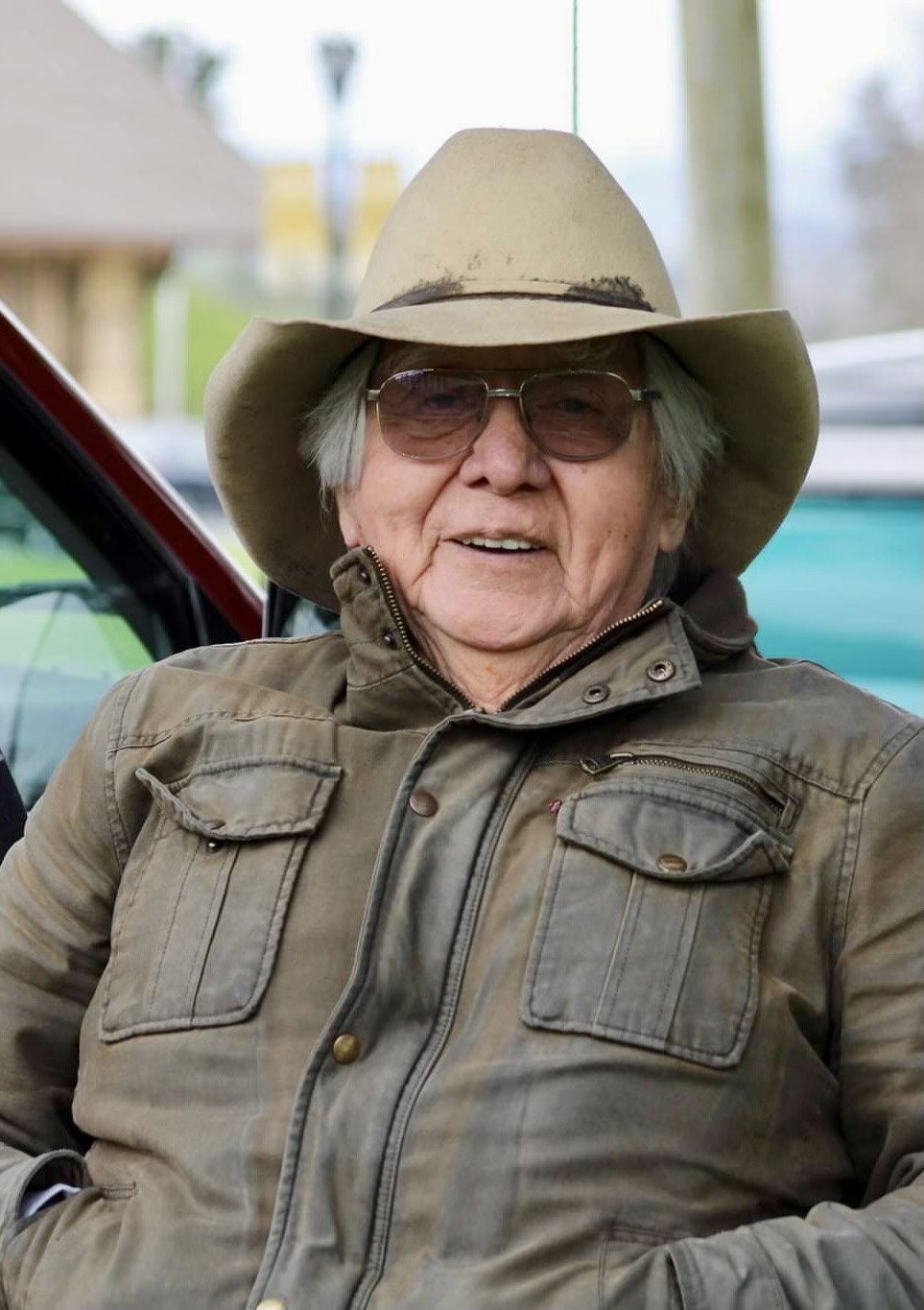
was well known for driving around town in his teal 1994 Chevy Truck
and was rarely ever seen without his cowboy hat on. He had many
friends that he met throughout the years, whenever he went to “town”
he would be gone for a while because he would run into someone he
knew and chat for a bit. He was there for his children and
grandchildren; we always knew we could count on him. His home was
always open if family or friends needed a place to stay. He was
genuine, and one of a kind.
He
is preceded in death by his wife, Dixie Moorehead; his parents,
Theodore and Isabel Moorehead; his
siblings,
Theodore Jr, Ramona, Ione and Beverly and Shirley (who was still a
baby when she passed away). He was survived by his children: Richard
(Rick) Moorehead Jr. and Melissia Johnson; grandchildren,
Katrina Simpson, Richard Moorehead III, Charlene Harralson
(Christopher), Kristina O’Loughlin (Sean), Micheal Moorehead, Aimee
Moorehead (Andrew), Robert Moorehead; great-grandchildren:
Kira Simpson (Owen), Kyla Simpson, Kirsten Simpson, Kadence Simpson,
Dan’des’ne Moorehead, Brendon Harralson (Baylee), Madison Harralson,
Dylan Moorehead-O’Loughlin, Jasmine O’Loughlin, Kenai O’Loughlin,
Aliana Williams, Adaline Williams, Benjamin Williams; great-great
grandson
and his pride and joy Koda Fite, and Kalaia Fite (on the way). He had
numerous other relatives, too many to list. Just know he loved you
all!
Family,
friends and acquaintances of the Moorehead family are respectfully
invited to attend the graveside services of Richard to be held at
Howonquet Indian Cemetery, Smith River at 10 a.m.
on Saturday, December 2, 2023.
Following services, we will be having a potluck at 4 p.m.
at Tish Non Community Center, located at 266 Keisner Road, Loleta. We
ask that if you join us, please bring a side dish.
###
The obituary above was submitted on behalf of Butch Moorehead’s loved ones. The Lost Coast Outpost runs obituaries of Humboldt County residents at no charge. See guidelines here.
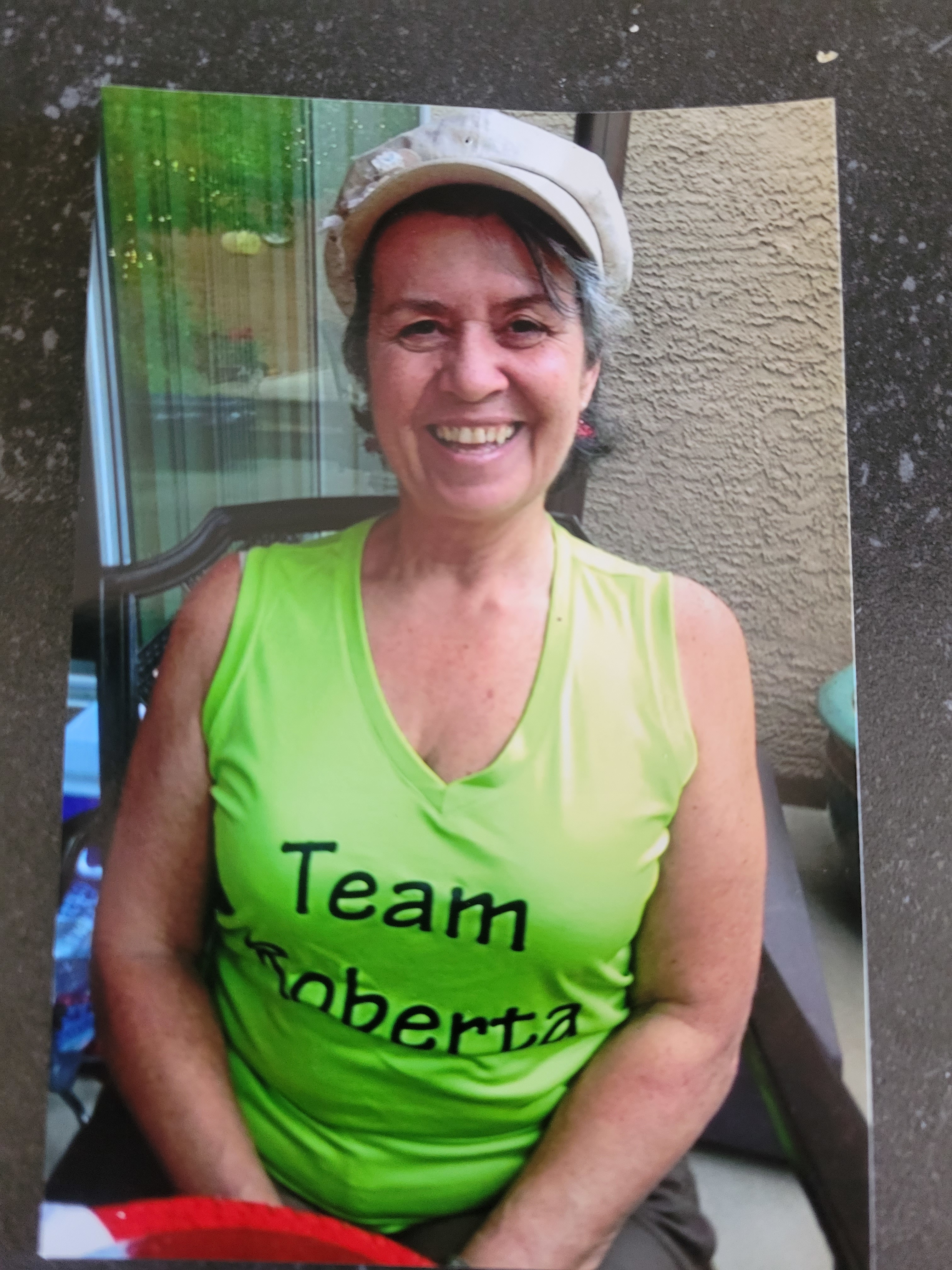
My sister, Roberta Staley, passed away peacefully on October 26, 2023 with Emmy and me by her side. She was 69 years old. Nine years ago she was diagnosed with an aggressive brain tumor and was given 18-24 months. She was a fighter and never gave up. Roberta was born in Arcata on October 7, 1954. She graduated from Eureka High in 1972.
Roberta worked for Louisiana Pacific for many years, where she met her good friend Carol Booth Sherbin. They had many crazy adventures together. Thank you, Carol, for traveling several times from Sacramento to spend precious time with her. Later on she decided to try being a waitress at various restaurants. The last place she worked was the Cookhouse, where she met her good friend Michelle Pando. They also had many crazy adventures together. Thank you, Michell,e for coming from Long Beach several times to be by her side. I also want to say thank you to her good friend since junior high Pam White for her many visits. You all made her feel loved and valued even when she wasn’t very nice to be around. You all know what I mean. Most of all thank you, Emmy, for being there from day one and to the very end. I couldn’t have done it all without you.
Roberta was one of a kind. Always up for an adventure and loved living life to the fullest. She could party all night and still get on her bicycle the next day and ride 60 miles in top form. She was especially proud of the fact that she was able to climb to the top of Half Dome in Yosemite. She traveled to Italy several times to visit our relatives. Before her illness she loved hiking with her hiking group.
Roberta was preceded in death by our mom, Leda Rossi, and her father, Theodore Fraga. She is survived by her sister, Teresa Eskra (Steve); sons Chris Staley (Shannon) and Joshua Staley; nephews Jason and Kevin Call; grandchildren Andra Staley, Brooke Staley, Joshua Staley, Emma Staley and Stevie Staley; great-niece Zoey Call and great nephew Christian Call; and lifelong friends Emmy, Pam, Carol and Michelle.
I also want to thank the wonderful staff at Redwood R&R for their compassionate care. I would also like to say thank you to Scotty, her hospice nurse for his kindness and professionalism. I will miss my sister even though she was a pain in the butt sometimes. I hope you are singing and dancing with all your buddies that went before you.
###
The obituary above was submitted on behalf of Roberta Staley’s loved ones. The Lost Coast Outpost runs obituaries of Humboldt County residents at no charge. See guidelines here.
David Manville Treat passed away October 21, 2023 at his home surrounded by his family.
Dave was born November 20, 1940 to Walter and Lois Treat in Newman, Calif.
Dave graduated from Orestimba High school in 1958. After high school he toured Europe then decided to join the army, due to his love of Europe, where he was the stationed in Germany during the Cold War. He also received his AA from CR. He had numerous jobs growing up. He worked on a turkey farm, an airport and even was a Police officer. Then finally he worked for PG&E and ended up moving to Eureka. He retired after 33 yrs.
Dave and Natalie married February 6, 1966 and would go on to have two daughters. Dave was a wonderful, loving father and husband. He loved to spend his summers at Trinity Lake with his family and friends. He loved hunting, fishing and was an amazing woodworker.
But most of all Dave was the best grandfather. He loved all of his grandchildren with all his heart.
Dave is survived by his wife Natalie and two daughters, Terri (Billy) Robison and Trina (Jeremy) Morais. He is also survived by his brothers Bob (Pegi) and Phil (Rita) Treat; his grandchildren Ashley Robison (Sterling), Kendra Robison (Trevor), Kara Bruschi (Chase), Tanner Bruschi and Ryan (Samantha) Morais; great-grandchildren Raelynn Bruschi. Dave was predeceased by his parents, Walter Treat and Lois Treat.
At Dave’s request there will be no services.
###
The obituary above was submitted on behalf of Dave Treat’s loved ones. The Lost Coast Outpost runs obituaries of Humboldt County residents at no charge. See guidelines here.
James Arthur Nelson, 67, of Eureka, passed away peacefully on September 29, 2023. Jim grew up in Eureka, a town he loved and never left. Jim worked at Eureka Ready Mix for many years, as well as his own trucking company, and he took pride in keeping his trucks and equipment clean and very well maintained.
As a kid he spent a lot of time at his parents’ property in Phillipsville, and loved taking his Chevy Blazer to pick up friends to drive around. As an adult, Jim loved to barbecue, have a cocktail and tell his friends about current events and news. He had many friends in this community and we would appreciate them to bring their memories and stories to share.
James will be dearly missed and always remembered.
James was predeceased by Harold and Amelia Nelson, his parents. He is survived by his brothers Ken and Donald Nelson, and his children Nicholas and Chelsea. We will be holding a celebration of life be held in his honor as opposed to traditional funeral services. We request all of Jim’s loved ones to join us in celebrating his life at The Wharfinger building on the 19th of November from 3 p.m. to 7 p.m.
###
The obituary above was submitted on behalf of Jim Nelson’s loved ones. The Lost Coast Outpost runs obituaries of Humboldt County residents at no charge. See guidelines here.