
Several Days of Sunshine and Warmth are Forecast for Humboldt County, and We’ve Sure as Hell Earned Them
Hank Sims / Tuesday, April 25, 2023 @ 8:22 a.m. / How ‘Bout That Weather

Ol’ Mr. Sun. Photo by Rajiv Bajaj on Unsplash
###
Rain is a wonderful thing for the plants and animals of the forest, especially after three straight years of drought, but it can be tough down here on the human level. Maybe your experience differs, but in this reporter’s circles people’s behaviors are more and more resembling Jack Nicholson’s, about two-thirds of the way through The Shining.
Here we are nearing the end of April — about halfway through the October-September rain calendar — and we’re sitting pretty at 40 inches of rainfall in Eureka, the first time in ages and ages that we’re actually well ahead of what we used to think of as a “normal” amount of precipitation.
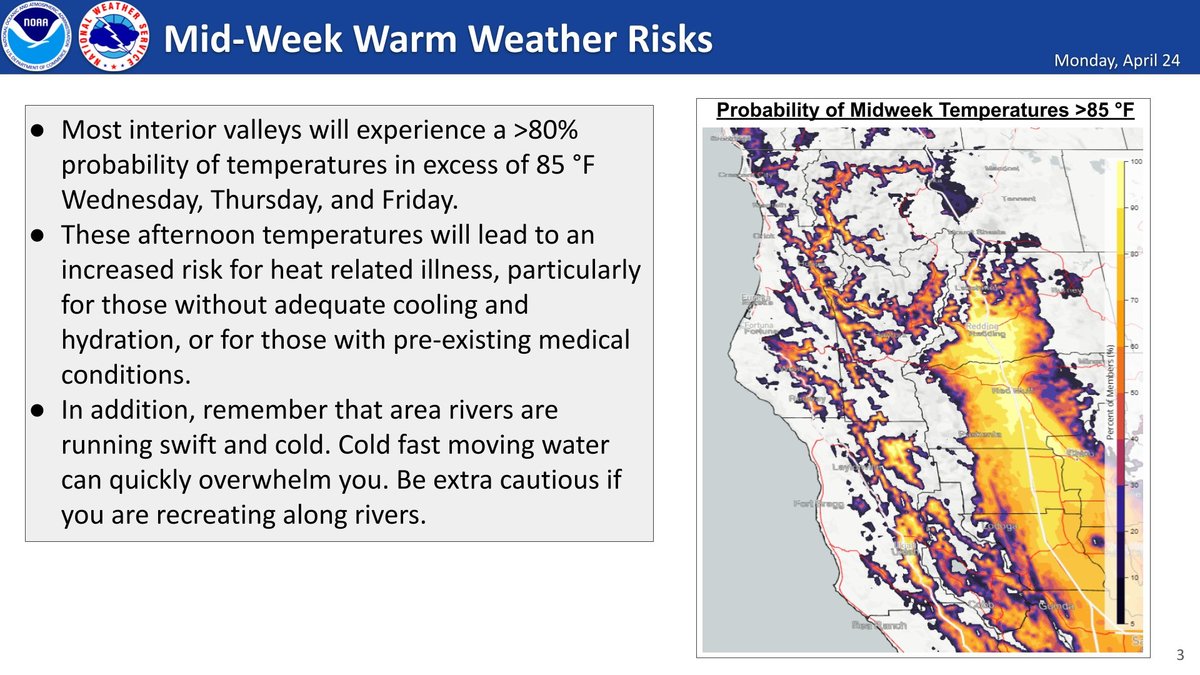
So this is a great time for a little break, and it looks like we’re going to get it! The sun is forecast to shine brightly throughout the next seven days, and we’re even due for a little mini-heatwave on Wednesday, Thursday and Friday. Temperatures on the coast are gonna climb into the 70s, and in the inland areas they could spike all the way into the 90s!
After that: More sun, but chillier.
Here’s how our friends at the National Weather Service office on Woodley Island phrase it, in this morning’s Area Forecast Discussion:
SYNOPSIS…A warming trend will occur across Northwest California through mid week, with interior valley high temperatures climbing into the 80s and ranging to the 60s and 70s along the immediate coast. Thereafter, cooler temperatures along with showers and thunderstorms will become more probable this weekend into early next week.
Eat, drink, be merry. Enjoy the sunshine while it lasts.
Graphic: National Weather Service, Eureka.
BOOKED
Yesterday: 6 felonies, 9 misdemeanors, 0 infractions
JUDGED
Humboldt County Superior Court Calendar: Today
CHP REPORTS
250 Mm271 S Men 2.50 (HM office): Closure of a Road
ELSEWHERE
RHBB: Klamath National Forest Announces Seasonal Hiring for Upcoming Recreation Season
RHBB: Shasta-Trinity National Forest Prescribed Fire Work To Occur in Two Ranger Districts This Week
100% Humboldt, with Scott Hammond: #108. Leslie Castellano—Art, Transit, And A Kinder Eureka
California’s Lowest Paid Health Workers Want a Pay Boost. Why Industry Leaders Are Pushing Back
Ana B. Ibarra / Tuesday, April 25, 2023 @ 7:25 a.m. / Sacramento
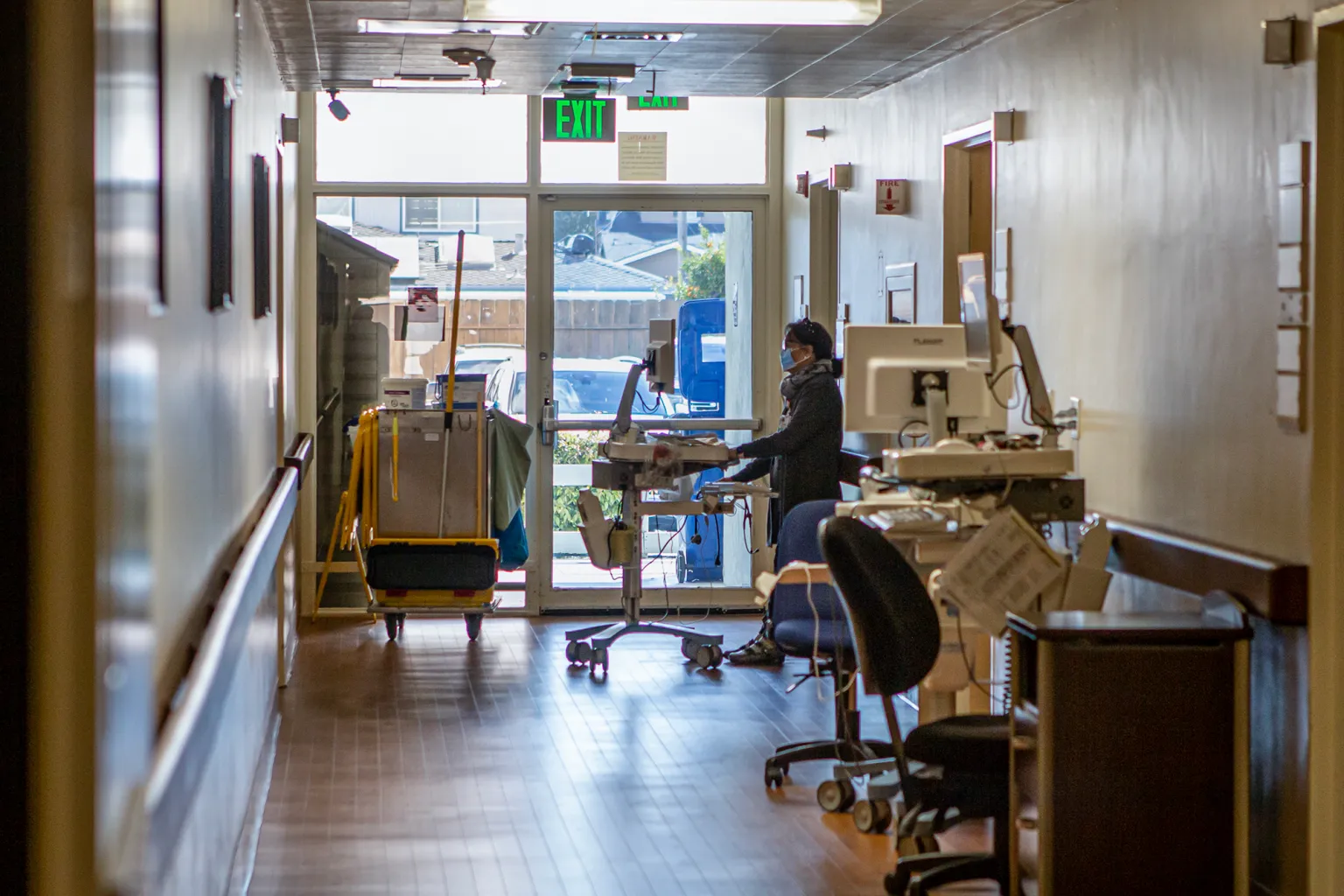
A medical personnel working on her computer in the corridor of Hazel Hawkins Memorial Hospital in Hollister on March 30, 2023. Photo by Larry Valenzuela, CalMatters/CatchLight Local
Supporters of a proposal to raise the minimum wage for California health workers point to Inglewood, where last fall voters approved a wage hike that primarily applied to staff at dialysis clinics and at the city’s only hospital. But the implementation of that local measure has been bumpy, signaling potential problems for the larger effort.
Inglewood’s ordinance went into effect Jan.1, raising the minimum wage for those workers to $25 an hour. Then in March, Centinela Hospital Medical Center, a 362-bed acute care facility owned by Prime Health Care, laid off 48 workers and reduced hours for others, according to a complaint filed earlier this month by the Service Employees International Union-United Healthcare Workers West. The union led Inglewood’s measure and is sponsoring the statewide bill.
The union alleges hospital administrators made the cuts in retaliation to the newly implemented wage increase, even though the city ordinance prohibits health facilities from funding the pay increase by laying workers off or reducing their benefits.
Centinela officials maintain that the hospital is complying with Inglewood’s minimum wage ordinance. They say they laid off workers after a thorough assessment that determined the hospital was overstaffed in certain units. Centinela offered nearly half of the affected staff other positions within the hospital and many accepted, according to a hospital spokesperson.
“The recent reduction in force was entirely unrelated to the ordinance and affected 2% of the staff,” Susan Lowe, Centinela’s spokesperson, said in an email. “It was related to strategic changes in operational needs and improvement measures, and staff have been added in areas that positively impact patient care and address community needs.”
While the lawsuit is pending, the union is advocating for a broader pay hike for California health workers via Senate Bill 525, by Los Angeles Democratic Sen. Maria Elena Durazo, a longtime labor leader. Durazo’s bill calls for a minimum hourly wage of $25 that would be adjusted annually for inflation. California’s minimum wage is currently $15.50, although it’s higher in some cities and counties.
“It’s not asking for the moon, this is just the baseline of a fair wage for the people who provide vital treatment.”
— Renee Saldaña, spokesperson for SEIU-UHW
If the proposal becomes law, the new minimum wage would go into effect in January 2024 and benefit an estimated 469,000 health workers. It would include people who make slightly more than $25, who would likely get a corresponding pay increase, according to an analysis by UC Berkeley’s Labor Center.
Qualifying workers would receive an average increase of $5.74 per hour, which would increase operating costs at health facilities by about 3%, the report said. Some lower paid workers in health facilities include nursing assistants, patient aides, medical technicians and janitorial workers.
The proposal faces a great deal of opposition from industry heavy hitters, including hospital executives, clinic leaders and the doctors’ lobby, which argue this isn’t something all providers can afford or easily implement, especially when they’re dealing with other stressors in their budgets. The California Chamber of Commerce lists the bill as a “job killer.”
But union leaders say the time is now, especially as the industry grapples with workforce shortages that are burning out current staff. “Twenty-five dollars an hour breaks down to roughly $50,000 a year,” said Renee Saldaña, a spokesperson for SEIU-UHW. “It’s not asking for the moon, this is just the baseline of a fair wage for the people who provide vital treatment.”
Who would benefit
Eneryk Santana last month joined the tens of thousands of people who commute daily across the San Diego-Tijuana border for work or school. He’s a medical assistant at San Ysidro Health Center in Chula Vista and the high cost of living on the U.S. side, he said, forced him to look for housing in Mexico.
To avoid rush hour traffic at the border crossing, he tries to leave his place by 4 a.m. While the border cities are less than 20 miles apart, the process of crossing the border can take up to a few hours on busy days. The commute has been an adjustment, but he said his monthly rent in Tijuana is about $1,000 less than what he was paying in Chula Vista — a significant difference for someone making $22 an hour.
For Santana, a boost in pay would allow him to consider moving back to the U.S., he said. Ideally it could also mean more people attracted to this type of work. “Being short-staffed, when someone calls off, we don’t have much staff who can cover,” Santana said. “And it’s hard not only for workers, but also for the patients, who sometimes have long wait times.”
Workers in clinics and hospitals account for about half of all workers who would see a boost in pay under Durazo’s bill, according to the analysis from UC Berkeley’s Labor Center. Because of their current low earnings, workers in home health services and nursing homes would see the biggest difference — approximately a 40% increase.
Three-fourths of the workforce who would receive a raise under the bill are women, and almost half are Latino, according to the report.
The fight against industry
Hospitals are leading the opposition to the wage hike, arguing that some facilities are in precarious financial situations. A handful of hospitals in the state have reduced or plan to reduce services. Last week a Montebello hospital filed for bankruptcy and a hospital in the San Joaquin Valley closed its doors at the beginning of this year.
Having to boost minimum wage pay, hospital leaders say, would only add to that strain. A wage hike at this time “takes a very serious problem and makes it impossible,” Carmela Coyle, president of the California Hospital Association, recently said in a call with reporters.
Punctuating its point, the hospital association released a report earlier this month that found that 1 in 5 hospitals are in an “unsustainable financial position” and at risk of closing. Hospitals are considered at-risk if their incomes aren’t covering costs, meaning they are losing money, and have increasing debt, said the report, which sampled 114 hospitals.
Union leaders have pushed back on hospitals’ arguments, noting that most hospitals are part of large health systems that can weather rough patches.
A wage hike at this time “takes a very serious problem and makes it impossible.”
— Carmela Coyle, president of the California Hospital Association
Health economists have described the current landscape of California hospitals as a mixed bag with independent and rural hospitals, especially, experiencing severe financial pressures.
During the peak of the pandemic, hospitals had increased expenses, but also received financial aid from the federal government. That funding phased out in 2022. The state has not yet audited totals for this last fiscal year, but in 2021, altogether California hospitals posted earnings of $11.9 billion, up from the $8.5 billion hospitals recorded in 2019, according to financial data from the Department of Health Care Access and Information.
A coalition of counties has also voiced its opposition to the bill, noting the bill would apply to workers at county public health and mental health departments, as well as clinics and hospitals operated by counties.
Implementing such a bill would cost the counties hundreds of millions of dollars annually, said Kalyn Dean, a legislative advocate with the California State Association of Counties. To absorb that cost, she said, counties could be forced to reduce services and cut jobs in other government departments.
Meanwhile, clinic leaders say that while they support the idea of boosting pay for their workers, they are subject to strict reimbursement rules that do not allow them to take on the additional expense. The vast majority of community health centers’ patients are covered by Medi-Cal, the health insurance program for low-income people. Medi-Cal pays these centers a fixed amount per patient visit. Modifying that amount to afford a wage increase would require both state and federal approval, said Dennis Cuevas-Romero, vice president of government affairs at the California Primary Care Association, which represents health centers.
“Unlike other businesses, we can’t just say, ‘OK, the state requires us to increase the minimum wage, let’s just increase the cost of our services.’ We are prohibited from doing so,” he said.
Some provider groups are likely to seek an exemption from this bill, but community health centers say they would like to find a way to make this work because a “nightmare” scenario would be for their clinic employees to leave for better-paying jobs at a nearby hospital.
“Our health centers want to get there,” Cuevas-Romero said. “I think the questions are: Where’s the money coming from? And how do we implement it?”
###
CalMatters.org is a nonprofit, nonpartisan media venture explaining California policies and politics.
OBITUARY: Brandon Lee Taylor, 1972-2023
LoCO Staff / Tuesday, April 25, 2023 @ 6:56 a.m. / Obits

A lifelong resident
of McKinleyville — born July 20, 1973 in San Gabriel; passed on
February 15, 2023 at UCSF after a battle with multiple cancers.
Brandon went to Morris Elementary and graduated from Mack High class of ’91. Brandon started at Sun Valley Floral Farms in Arcata shortly after graduation. He started making shipping boxes, and in a few years, he was shipping/receiving manager/supervisor who spoke fluent Spanish. The company sent him to Oxnard to teach another farm how to operate more smoothly, efficiently, and mostly in the black. He worked for Sun Valley nearly 20 years. Brandon then went to work for Fox Farms Soil Co. He was hired here for his mad skills in shipping/receiving and worked until he got an offer at a farm near Redway for his other agricultural skills, not just shipping/receiving.
Brandon is survived by many. His mother and stepfather Patricia and Edward Cushing, and his many aunts and uncles. His brother Daniel Niles (Melia) and his kids Kai, Arya, Ronan, Dominic, and Julian. His stepson Morgun Wagner (Tiffany) and his kids Jayden Gowey Wagner, Aidyn, and Adalynn Wagner. His son Brandon D. Taylor (Chelsea) and his sons Raymond Taylor and Alistair Taylor. His daughter Christina Lomelli Espinoza (Cesar) and her daughters Zuleka, Kaely, and Camila. His daughter Rose Vasquez Espinoza (Mack) her kids Mack Jr. and Rio. His second family Sid, Donald, David, and Chuck Niles. His lifetime brothers Chad Reagan, Ted Marks, D.J. Nichols, and Jason Viera.
He was a kind soul with a big heart, always willing to help friends or family. He will be missed.
###
The obituary above was submitted on behalf of Brandon Taylor’s loved ones. The Lost Coast Outpost runs obituaries of Humboldt County residents at no charge. See guidelines here. Email news@lostcoastoutpost.com.
OBITUARY: Billie Rose Lichti, 1937-2023
LoCO Staff / Tuesday, April 25, 2023 @ 6:56 a.m. / Obits

In Loving Memory of Billie Rose Lichti
May 22, 1937 - April 8, 2023
Born in Chickasha, Okla. Resided in Carlotta, Calif.
It is with heavy hearts that we announce the passing of Billie Rose Lichti, who peacefully passed away at the age of 85, on the early morning of Saturday, April 8, 2023. She passed in her sleep while holding her daughter’s hand. Billie’s life began in Chickasha, Oklahoma, in 1937, of Chickasaw Indian heritage and one of six children born to Maxwell and Geneva Williams. Billie moved to California during the Great Dust Bowl in 1938. She could tell some great stories about their trek out west. They settled in the central valley of California and lived the farm life. Billie, as most young folks did in those days, picked her share of cotton. She attended high school in Arvin, California, where she met Jim Clark, a senior to her freshman. They married before Billie graduated in 1953. Their first child, Denise Doreen also arrived in 1953. Jimmy LeRoy came in 1955 and Wallace Farrell came 13 months later in 1956. Their youngest, Darren Sue (aka Sam) joined the family in 1959.
Billie moved to the San Francisco Bay Area and married Ted Lichti in 1975, inheriting his two children: son Bruce and daughter Rocky. Billie helped Ted run Wilsons Hardware and an apartment complex he owned in Pittsburg. Billie worked right alongside Ted from 1975-1983 . They sold everything and moved to Humboldt County in 1983. They opened Country Cousins Hardware in Carlotta in 1984 and closed it in 1988 to work on opening a restaurant. They purchased an old VFW Hall out on Highway 36. Billie worked with Ted to renovate the old hall, later opening Pepperwood Falls Country Inn in 1992. Billie served some of the best Prime Rib in Humboldt County. The locals loved that they could get their own beers out of the fridge and pay on the honor system. It was a place to eat, meet up with friends for some pool, or to attend a dance or a wedding. Pepperwood Falls closed in 1996 after Billie’s health began to fail. In 1998, Sam and her husband Lenny, along with their two daughters, moved to Humboldt County to help with both the care of Billie, and the continued renovations of the VFW hall, which had become a large family home. Billie and Ted hosted many parties, family reunions, and weddings for family and friends over the years. It was a sad time for everyone when Billie could no longer play the role of hostess that had given her so much joy and pleasure over the years.
Billie loved to play Bingo and play the slots and had more wins than anyone. She loved annual trips to the horse races, where the winning continued. She loved to play Mexican train with the family, and cribbage. She and Ted played cribbage every day on the same cribbage board. She once had a perfect score of 29! She loved to watch The Price is Right, so the family learned to keep their phone calls to either before or after the show. Billie was a fantastic candy maker, baker, and cook. No one made a better pineapple upside-down cake than her. She had a very close relationship with her son-in-law Lenny and she made more of those cakes for him than could be counted. She always said she bet she was the only mother-in-law whose son-in-law told her he loved her at the end of every phone call. She was generous to a fault and had a heart for helping those in need: family, friend or stranger. Billie was, for a time, a member of Alcoholics Anonymous. She had approximately 35 years of sobriety and loved all of her fellow AA friends. Billie’s last 20 years were a series of ups and downs health-wise. She had been in Hospice 3 times. Once graduating from Hospice, and once discharging herself so she could travel. We called her the “energizer bunny” and “the cat with 12 lives”. She had more dress rehearsals for dying than anyone should have to endure.
Billie was preceded in death by her parents Maxwell and Geneva, her brother Mike, and by three of her four children: Denise (2001), Jimmy (2012), and Wally (2000). Losing her children was Billie’s biggest struggle, something that grieved her daily. As she got closer to her last days, she spoke often of being reunited with them. Billie was a Christian and had no doubt that there was life after death with her Lord and the children she missed so much.
She is survived by husband Ted, daughter Sam (Lenny), stepson Bruce (Becky), and stepdaughter Roxanne (Freddie), the granddaughter she helped raise, Cynthia (Chris), her four sisters: Maxine Murphy (Mick), Jane Midwell, Nan Holliday, and Susie Reppert. Billie leaves behind 11 grandchildren: Cindy, A.J., Jimmy, Samantha, Lindsay, Alex, Jenny, Cynthia, Christina, Teddy, and Michael. Billie cherished her 16 great-grandchildren: Teddi, Tyler, Taryan, Liam, Brooks, Ben, Maddox, Emily, Charlotte, Tristan, Owen, Rachel, Hattie, Jamie, Blake, and Bryson. Billie has five surviving great great-grandchildren: Aric, Carter, Bailey, Theodore, and Ellacyn. She will be missed by her grand god-children Ben and Tesha, as well as her great grand god-children Taylor, T.J., and Avie. Billie leaves behind in-laws Gayle & Doug Salter, and Teri & Steve Glazer. Billie will be remembered by her many nieces and nephews, especially her niece Kelly who visited the most and kept her belly and freezer full. Billie also leaves behind her forever daughter-in-law Debi, her almost adopted daughter Lisa and close friends Claudia and Sky.
Billie’s family would like to give a special thank you to Dr. Ruben Brinkhaus and his office staff, who treated Billie with compassion and provided her with over-the-top care. Over the years, this included house calls and office drop ins and anything else she needed. Special thanks also go out to Hospice of Humboldt, Home Care, Respite Care, for without them we could not have kept Billie at home as long as we did. There is no better end of life care. A special thank you to Billie’s care provider Paula, who showed respect and tenderness. To the staff at the Hospice House for Billie’s last days…thank you for showing such care and concern, for allowing us to grieve, visit, and interact in our own way, and for encouraging us and guiding us in saying goodbye.
A memorial service to celebrate Billie’s life will be held on Monday, May 1st, 2023 at 3 p.m. at Hydesville Community Church. In lieu of flowers, the family kindly requests donations be made to Shriners Children Hospital, Hospice of Humboldt, or a church or charity of your choice in Billie’s honor.
###
The obituary above was submitted on behalf of Billie Lichti’s loved ones. The Lost Coast Outpost runs obituaries of Humboldt County residents at no charge. See guidelines here. Email news@lostcoastoutpost.com.
OBITUARY: Rebecca Bair Kurwitz, 1941-2023
LoCO Staff / Tuesday, April 25, 2023 @ 6:56 a.m. / Obits

Rebecca Bair Kurwitz passed
away in Eureka on Friday, April 14, 2023, following a brief illness.
She was the last surviving child of Marie Melanson Bair and Thomas
Edward Bair III. Though her parents were Humboldt natives, she was
born in Los Angeles California on July 16, 1941 during a period when
her father was training horses for motion pictures. She attended
Canal School and College Elementary, graduating from Arcata High in
1958. She lived most of her youth at the Bair Family ranch in the
Arcata Bottom, and resided in McKinleyville at the time of her death.
She is survived by her husband, George Kurwitz; seven children; Melinda Myers (Patrick Swartz), Merry Rogers (Jack), Christina Otteson (Jay), Matthew Myers, Sean Taggart, Kelly Buckman, and Ken Kurwitz (Dawnelle); 12 grandchildren; Samuel (May) and Augustus Johnson, Brendan (Jodi), Ryan (Sam), and Isabella McDonald, Kacey Soares, Zachary (Kate), Jeffrey (Chelsey), and Tyler (Nayeli) Myers, and Katelyn, Jacob, and Nathan Kurwitz; 7 great-grandchildren; Elias, Noah, Tristan, Lachlin, Tayler, and Rhett Myers and Lindon Lorenzen. There are so many more young people who call her grandma; too many to list here. Her many nieces and nephews will miss her dearly, but especially her sisters’ daughters, Sophie and Lillie Steinbock, Rose Steinbock Alvarez and Jan Carr.
She was predeceased by her grandson Lance Lorenzen, along with her siblings Martha Bair Steinbock, Mary Bair Paita, and Thomas Bair IV.
Mom was kind, generous and compassionate. She tirelessly and endlessly took care of everyone she met as well as she did her children and grandchildren. She gave of herself happily to those most vulnerable and alone in the world. She was an advocate for those who didn’t have anybody to look out for them.
She volunteered at Planned Parenthood and for numerous Democratic Party campaigns, but more recently she just helped whoever needed help, with whatever they needed. She was most recently busy enjoying planning her 1958 AHS class reunion. She bought shoes for other people’s kids, dropped off food to people who were ill, and she dearly loved numerous dogs and cats. Her Border Collie, Bulldozer, is beside himself with grief. Dogs weren’t the only animal she devoted herself to carrying for. Chickens, geese, cats, parrots, kids, it didn’t matter what it was, if it needed help, she’d give it a home (often over dad’s eyerolls). It was important to her that her adopted son, Sean was able to stay connected to his tribal community and Yurok heritage.
She laughed easily and often, which she’d tell you is the mark of a well-lived life. She loved making cookies with her great-grandchildren, sewing beautiful gifts for new babies, and reading a copious number of books.
In lieu of flowers, she would have preferred a contribution in her honor to your favorite charity,
Services will be held June 2, 11 a.m., at Christ Episcopal Church in Eureka. Please contact the family for details. Her remains will be interned in the Bair Family plot at Greenwood Cemetery.
###
The obituary above was submitted on behalf of Rebecca Kurwitz’s loved ones. The Lost Coast Outpost runs obituaries of Humboldt County residents at no charge. See guidelines here. Email news@lostcoastoutpost.com.
OBITUARY: Daniel Esmond Forbes, 1937-2023
LoCO Staff / Tuesday, April 25, 2023 @ 6:56 a.m. / Obits
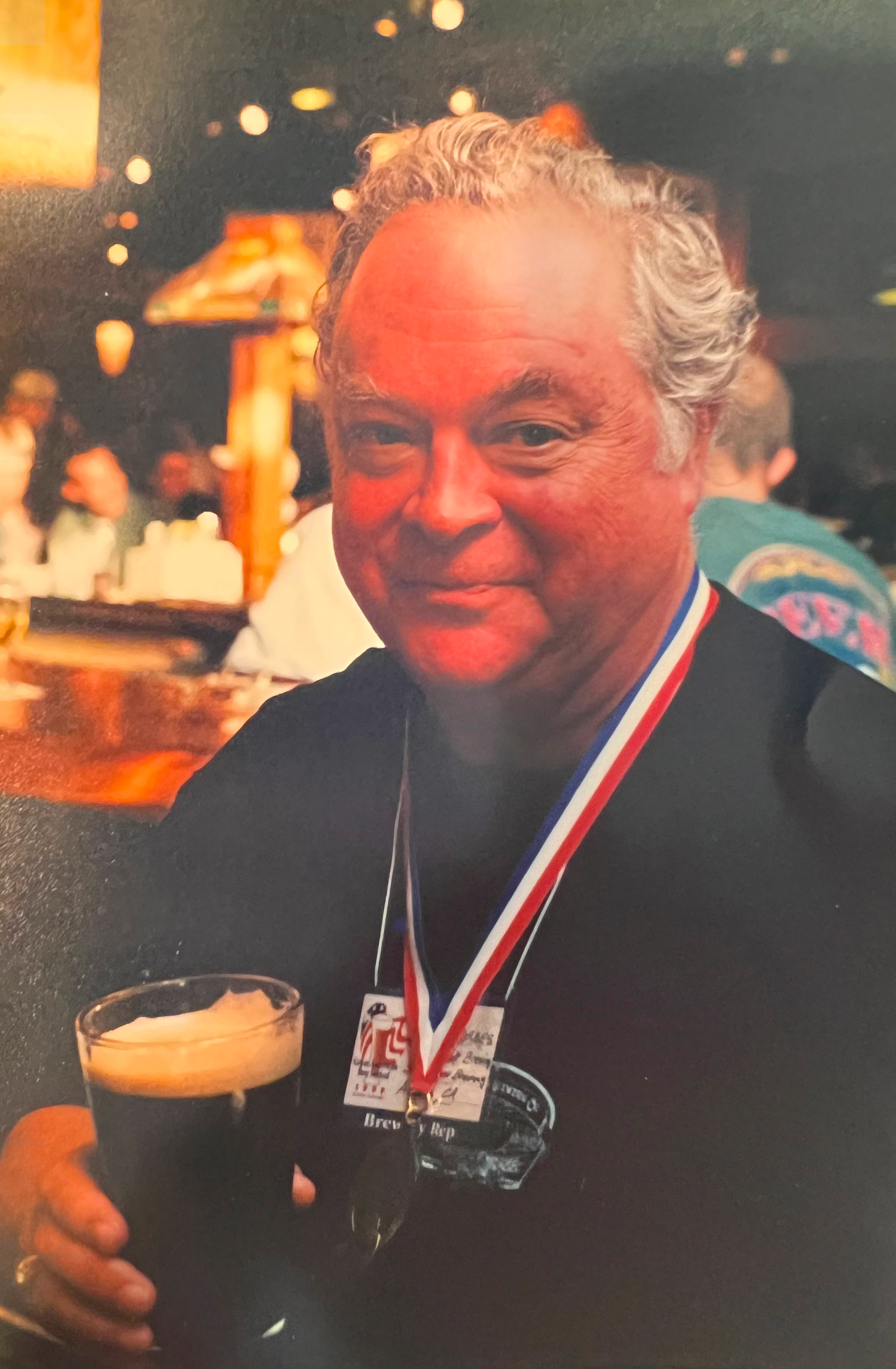
Daniel Esmond Forbes passed away on February 22, 2023 at age 85 while
on a daily walk near his home in Arcata.
He was born June 11, 1937, in Compton to parents Joseph McCue Forbes Sr. of Illinois and Mary Jean Childs Forbes of Ohio. Brother Joseph McCue Forbes Jr. was born in August 1940.
The Forbes family moved to Arcata in 1946, when Joseph Sr. became a professor and coach at Humboldt State College (HSC). The family lived in a house on upper B Street, now part of the Cal Poly Humboldt campus, as well as the historic Bair-Stokes House on 13th Street, before building a mid-century modern home at the foot of Fickle Hill Road. Throughout these years, Danny attended College Elementary School on the college campus and then Arcata High School, where he was voted to have best legs.
As Department Chair for Health and Physical Education, his father Joseph M. Forbes was instrumental in constructing the track, football stadium and field house at HSC. Joe Sr. encouraged diverse students from his former teaching job at Compton Junior College to become students at HSC. Upon his retirement in 1975, the Joseph M Forbes Physical Education Complex was established in his name. This facility is now known as the Forbes Gymnasium and the Recreation and Wellness Center.
With first wife Audrey Ann Ritola, Dan had three children: Linda Ann born June 1958, Alan Daniel born May 1960, and Sheri Ann born December 1961. After graduating from HSC, Dan was employed by Safeway (now Wildberries Marketplace) and was an active member of the JCs (Junior Chamber of Commerce). He then earned a teaching credential and taught several grades over the years, including special education and shop, at Bloomfield Elementary School, Stewart Elementary School, and Sunny Brae Middle School.
He married Linda Hall Swarts on August 11, 1968, a true love match. For the rest of their lives together, they used “Love is You”, “XXOO” and “Strangers in the Night” as terms of endearment to declare their enduring love for one another. During summer breaks from teaching, the couple traveled back and forth across the US collecting antiques, Frank Sinatra memorabilia, embossed glasses, music boxes and advertising dolls. Dan kept immaculate records and the couple eventually were able to boast that they had visited every county in the lower 48 states.
Inspired by early breweries Anchor Brewing Company and New Albion Brewing Company in the 1970s, Dan and Linda visited Sierra Nevada Brewing Company (Chico) and Hopland Brewery (Hopland), some of the first California microbreweries to set up shop in the late 1970s and early 1980s. Thereafter, Dan dedicated vacation time to visiting all microbreweries in the US. Little did he know that the number of microbreweries would explode in the following decades. Undeterred, Dan was passionate about collecting logo pint glasses, coasters, and business cards well into retirement, planning routes across the US. When he got home, he created cabinets and organized files in which to display these collections, some of the largest in the nation. Across more than three decades, he visited more than 6,000 microbreweries.
Dan and Linda enjoyed attending the East Coast Breweriana Association (ECBA), the National Association of Breweriana Advertising (NABA), and the Brewery Collectibles Club of America (BCCA) annual conventions, where they made lifelong friends. Meanwhile, Dan offered his “extra” collectables and graphic design skills for display in local breweries. In retirement, he made friends with local brewers and together they traveled to the World Beer Cup Competition in Denver, Colo. to represent local breweries.
Linda and Dan decorated their home with visually stunning displays that they shared with friends and family via countless gatherings, dinners, holiday parties, garden tours, and beer tastings. Dan was the consummate host, sharing jokes and pouring everyone’s beverage of choice from behind the bar. His home reflected his high standards for visual display, and his friendly demeanor welcomed new and old friends alike. Linda and Dan would have celebrated their 55th wedding anniversary in 2023.
Dan was preceded in death by his father Joseph Forbes (1976), mother Mary Jean Childs Forbes (2011), and brother Joseph Forbes (2018). He is survived by his wife Linda Forbes; children Linda Smith, Alan Forbes and wife Rebecca, and Sheri Forbes; grandchildren Danielle Jackson and husband Todd, Katie Smith, Amanda Key and husband Tim, Matthew Forbes, Madalin Forbes; and great grandchildren Colton Smith, Todd “TJ” Jackson II, Asher Key, Evryn Key, Josiah Jackson, Elijah Smith, and Emery Key.
A celebration will be held on Sunday, June 11, 2023 at their family home in Arcata to remember Dan for the kind and loving husband, son, brother, father, grandfather, great grandfather, and friend he was. Friends and family are welcome. In lieu of flowers, please support your local breweries.
###
The obituary above was submitted on behalf of Daniel Forbes’s loved ones. The Lost Coast Outpost runs obituaries of Humboldt County residents at no charge. See guidelines here. Email news@lostcoastoutpost.com.
HUMBOLDT TODAY with John Kennedy O’Connor | April 24, 2023
LoCO Staff / Monday, April 24, 2023 @ 4:20 p.m. / Humboldt Today
HUMBOLDT TODAY: Law enforcement is investigating an apparent murder-suicide that left two men dead in Fortuna; one man’s reckless driving along a waterfront pedestrian trail in Eureka ends in his death; plus, you’ll soon need to buy towels somewhere else. Those stories and more in today’s online newscast with John Kennedy O’Connor.
FURTHER READING:
- During a Welfare Check, EPD Officers Find Two People Dead Inside a House on Fairfield Street
- Man Dies After Being Ejected From His Ford Van While Speeding on Eureka Waterfront Trail, EPD Says
- Two Arrested for Fentanyl, Illegal Guns Following Vehicle Investigation on Little Fairfield, Sheriff’s Office Says
- Man Asleep Behind the Wheel While Parked in Blue Lake Intersection Discovered With Drugs, Pepper Spray, Burglary Tools, Sheriff’s Office Says
- Salmon OUT, Yellowtail IN: Nordic Aquafarms Announces Species Switch-Up at its Planned Humboldt Facility
- Two Men Dead in Suspected Murder-Suicide on Newburg Road, Fortuna Police Say
HUMBOLDT TODAY can be viewed on LoCO’s homepage each night starting at 6 p.m.
Want to LISTEN to HUMBOLDT TODAY? Subscribe to the podcast version here.


