In a dramatic reversal, Humboldt County Sheriff-Coroner William Honsal this afternoon met with the parents of 38-year-old Eric Matilton at St. Joseph Hospital, where Matilton has been on life support since attempting to hang himself in the county jail on Nov. 17, and told them that he will now allow them to pursue the donation of their son’s organs. [CORRECTION: The Matiltons met with Honsal at the Humboldt County Coroner’s Office.]
“I have agreed to have a forensic pathologist assist with the organ donation and also do the autopsy,” Honsal said in a text to the Outpost. “Doing it this way achieves both objectives and [allows us to] still adhere to our protocol.”
Honsal had previously indicated that departmental protocol mandated a thorough investigation into any death that occurs while in law enforcement custody, which rendered organ donation impossible, a stance that appeared to contradict provisions of California Health and Safety Code explicitly allowing organ donations from people who died “under circumstances requiring an inquest by the coroner.”
The unexpected reversal was a welcome surprise to Matilton’s family and those working to facilitate organ donation.
“Hallelujah!” said Robynn Van Patten, chief legal and administrative officer/executive vice president of Donor Network West, the organization that has been working with the family to facilitate the organ donations.
Reached by phone, Eric’s father, Clyde Matilton, said he and his wife, Jeanine, met personally with Honsal at the Humboldt County Coroner’s Office.
“The only way this meeting came about was because of the publicity,” Clyde Matilton said. “That was kinda like the last hope for us.”
According to Clyde, Honsal apologized for not contacting them personally before today while saying the delay gave him time to investigate the situation and figure out a way to facilitate the two medical procedures. Honsal also told them that he hopes to be able to update county protocol so this doesn’t happen again, Clyde said.
“You know, [he was] saying all the right things,” he added.
Van Patten said she’s now busy working to facilitate the donation of Eric Matilton’s organs. “So we’re calling the pathologist who’ll be present,” she said. “He’s gotta come up from San Diego. The O.R. [operating room] is being set up for tomorrow.”
Van Patten added that she plans to be there personally.
Donor Network West had previously identified four compatible donors for Eric Matilton’s organs, including a Los Angeles resident who was in line for a heart transplant. But with the planned organ donation in jeopardy in recent days, those matches may have fallen through.
“This has been in such a state of insecurity that if other matches come up for those individuals, they’ll go with those,” Van Patten said. The contract pathologist coming up from Southern California will need to conduct testing to determine the stability and viability of Matilton’s organs, she added. “We’re in the process of re-allocating [the organs]. We need time to assemble the team.”
Clyde Matilton said he and his wife had to fight hard to honor their son’s desire to be an organ donor, and they take some solace in the fact that it’s now likely to happen. They’re hoping the pathology exam, autopsy and organ removal can take place as soon as tomorrow, though it may not happen until Sunday as the various parties involved assemble the necessary team.
Nonetheless, after sitting with their son on life support and in police custody for nearly two weeks, things appear to finally be moving in the right direction.
“It was a relief,” Clyde said regarding today’s developments. “We’re really happy this is happening, but my son is still dead. Now we gotta go do that, but I really am happy this is happening. He’s gonna save people’s lives.”
###
[NOTE: This post has been updated to include comments from Honsal, Van Patten and the Matiltons.]
###
UPDATE, 4:07 p.m.:
The Humboldt County Sheriff’s Office issued the following press release:
Eric Matilton was placed in custody at the Humboldt County Correctional Facility on November 3, 2023, for brandishing a firearm and a parole hold. On Friday, November 17, 2023, he was found in his jail cell by correctional deputies following an apparent suicide attempt. Rescue efforts were initiated and performed, and he was subsequently transported to the hospital for treatment.
As a result of this incident, Mr. Matilton’s injuries have been determined to be non-survivable.
In the event that an in custody death occurs inside the correctional facility, the Humboldt County Sheriff’s Office and all county law enforcement agencies have signed an agreement to ensure that in custody deaths are investigated by the county’s Critical Incident Response Team (CIRT). Protocol requires that every in custody death must be fully investigated, including the completion of a forensic autopsy, by a contract pathologist. A forensic examination will be used to make a final determination of the cause of death. This protocol is in place to ensure a transparent, evidence-based investigation is completed and sent to the District Attorney for review.
As Mr. Matilton is an organ donor whose family desires to honor his wishes, Sheriff Honsal consulted with counsel, the District Attorney, subject matter experts and a forensic pathologist to see if there was a way to honor Eric’s wishes. As a result of these consultations, the Sheriff has agreed to have a forensic pathologist involved to pursue the donation of Eric’s organs and perform the autopsy to ensure investigation protocol is followed. The Matilton family was also consulted, and the donor network is now making these preparations.
Upon completion of the CIRT investigation, the Humboldt County District Attorney will review all facts and evidence in this investigation to conclude if there is any criminal liability.
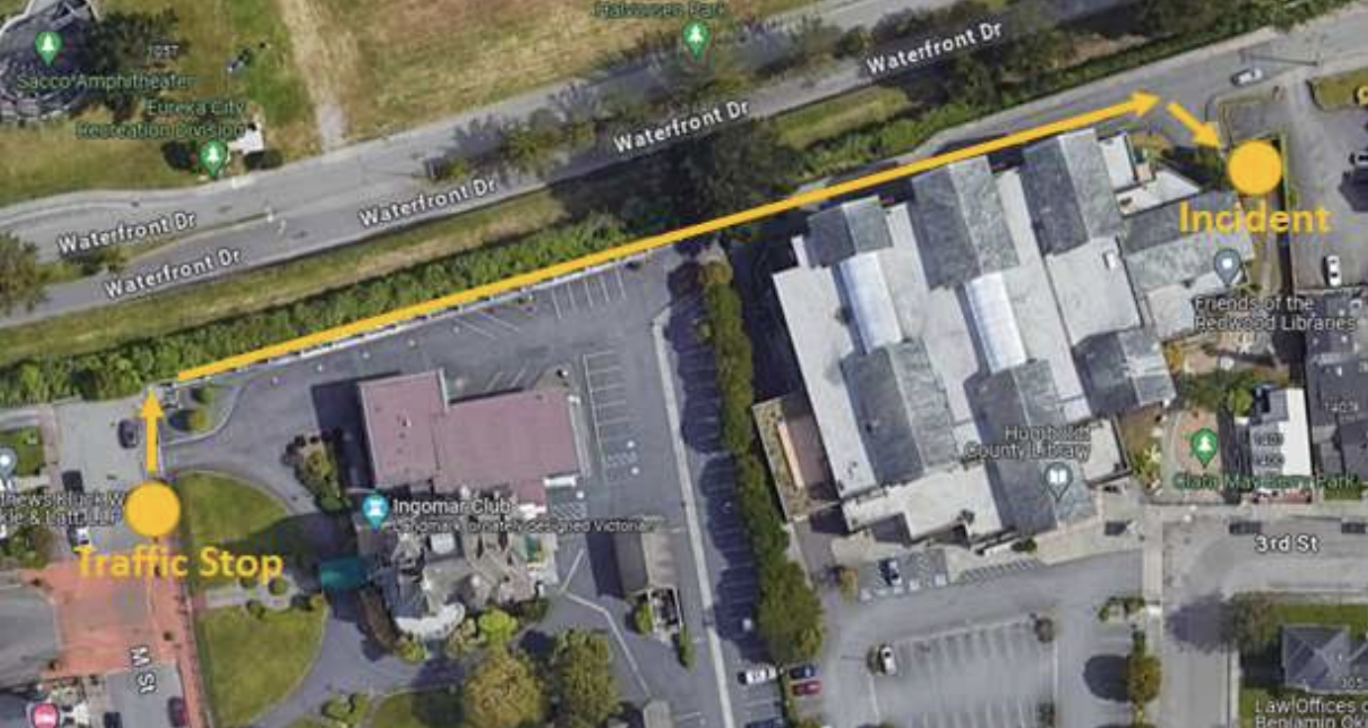
The Eureka Police Department has released additional information on the events that ended with officers shooting and killing a man who fought with them after fleeing from a traffic stop near the Ingomar Club over the weekend.
The man killed has been identified as 31-year-old Cutten resident Matthew Williams. Read EPD’s telling of his death below:
This press release is an update to the November 26, 2023 officer involved shooting with
information current as of today.
On November 26, 2023, at about 9:36 a.m., a Eureka Police Department officer conducted a
traffic stop on a vehicle for expired registration, on M Street, north of 2nd Street. When the
vehicle stopped, the right front passenger immediately exited the vehicle and began fleeing on
foot; the male ran east along a walkway north of the Ingomar Club and towards the northside of
the Humboldt County Library. The officer conducting the traffic stop did not pursue the male.
While the officer who conducted the traffic stop remained with the vehicle and its two
occupants, nearby officers responded to check the vicinity for the male who fled. An officer
located the male as he was attempting to scale a fence to the north side of the Clara Mayberry
Park, which was closed. Utilizing verbal commands, the officer attempted to gain voluntary
compliance for the male to stop. However, the male refused to comply and a physical
altercation ensued.
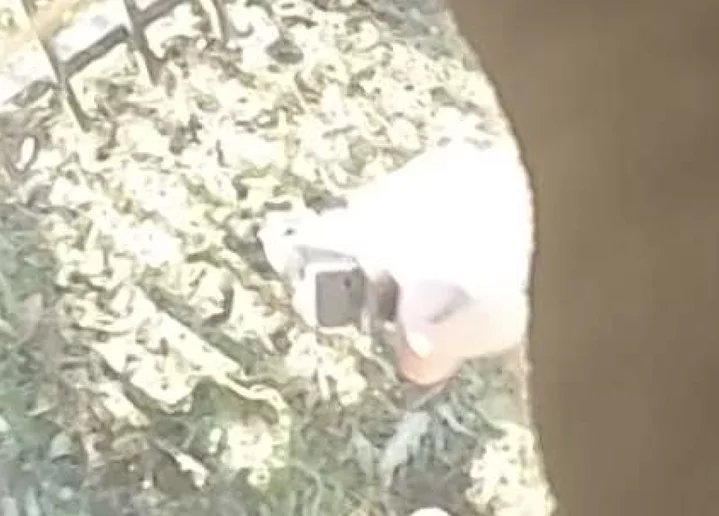
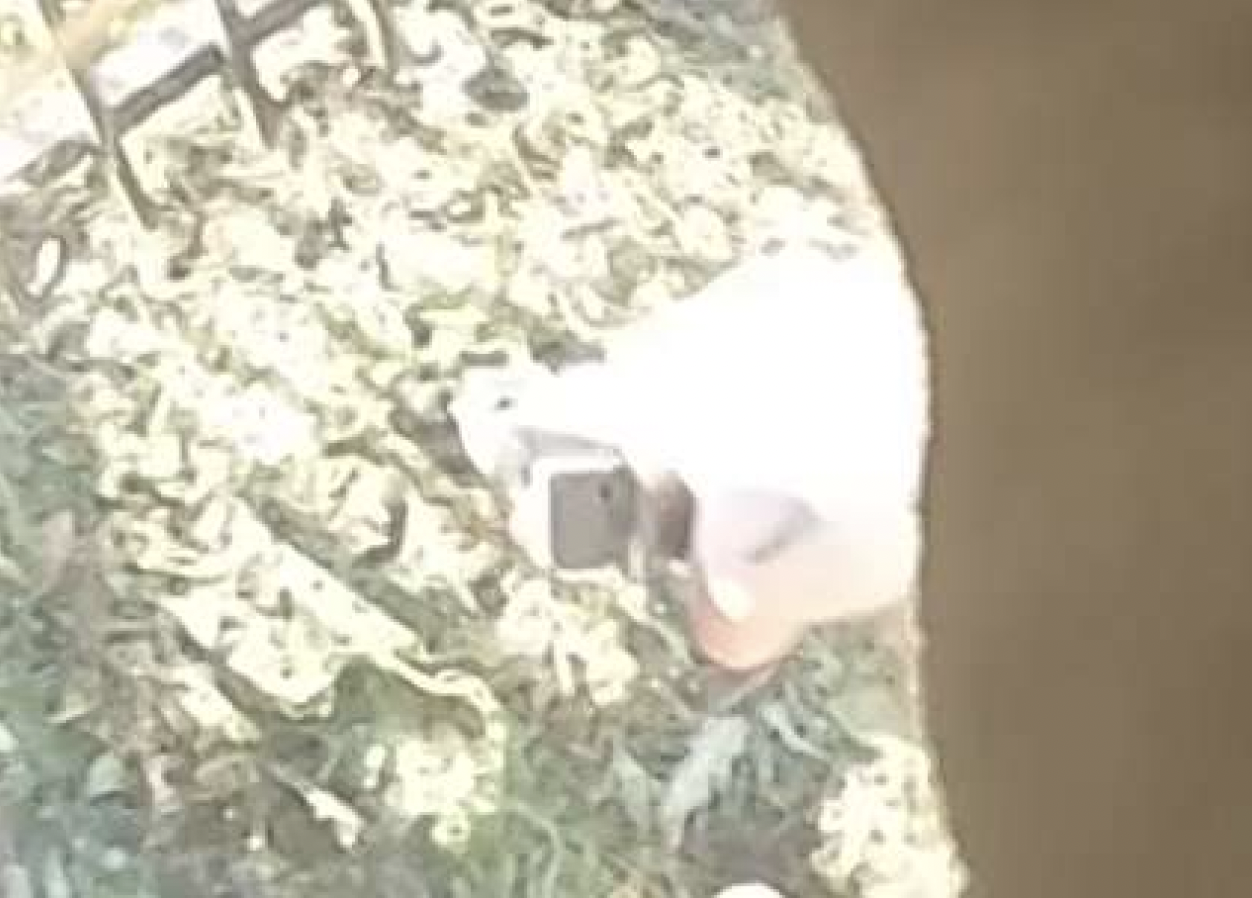
A second officer arrived to assist. The male then produced a pistol which he held in his right
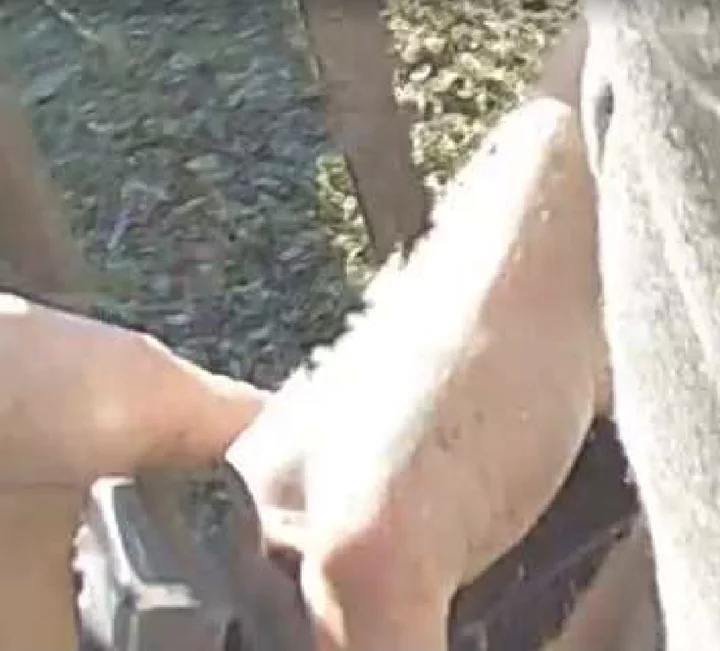
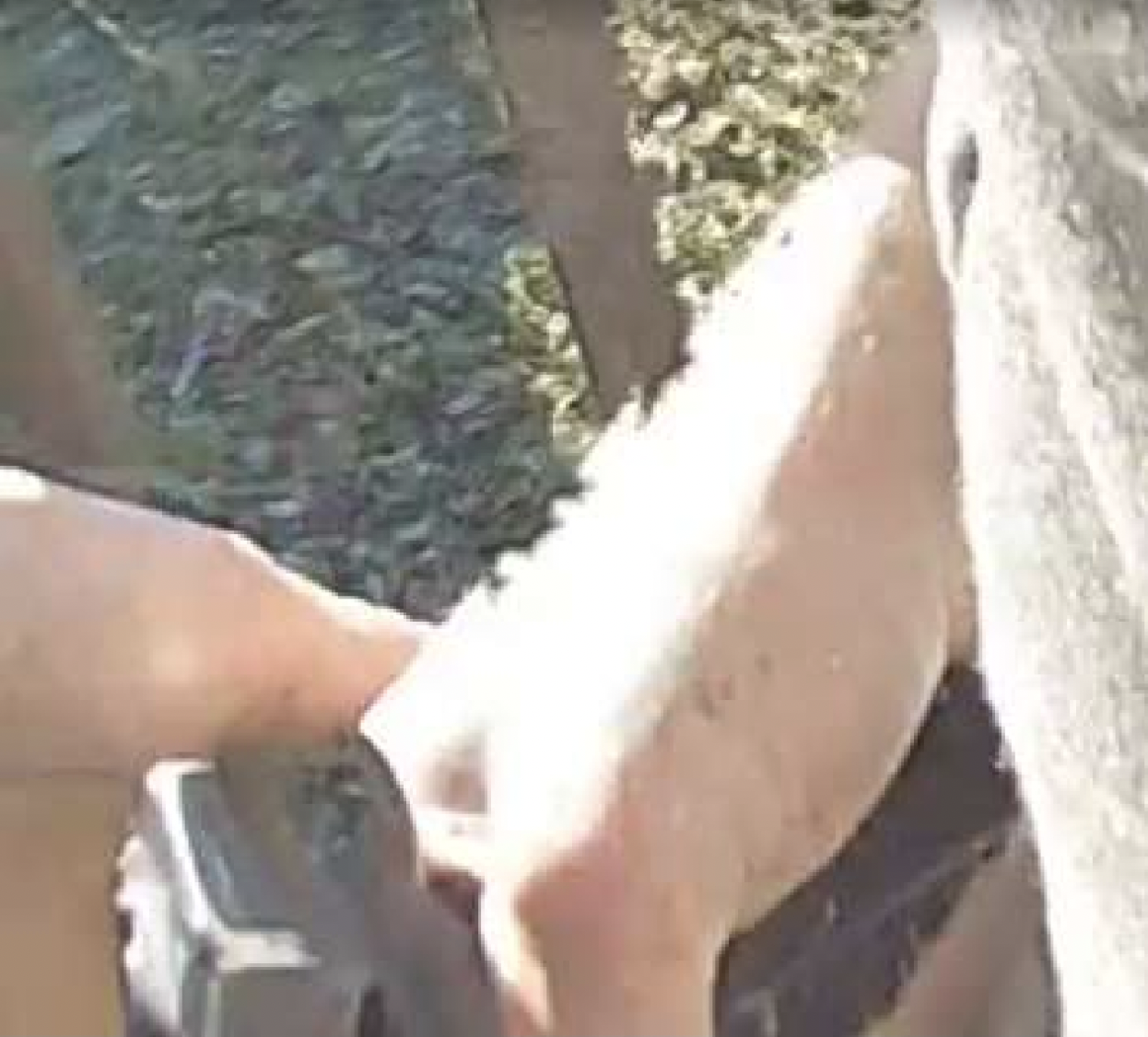
hand. During the altercation, the male was able to manipulate the firearm’s slide, chambering a
live round.
Photo of the firearm in the male’s hand, captured from the officer’s body worn camera
Photo of the male chambering a live round, captured from the officer’s body worn cameras
At this point during the altercation, shots were fired by officers and the male was struck by the gunfire. It’s unknown at this time if the male fired his handgun during the altercation.
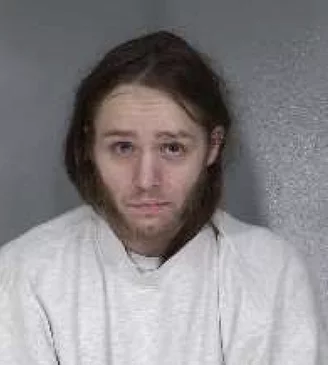
The male was then quickly detained and life-saving efforts were immediately provided by officers followed closely by Humboldt Bay Fire. The male succumbed to his injuries while on scene. An autopsy is scheduled to be performed which will provide further details on the extent of the male’s injuries. The male has been identified as 31-year-old Cutten resident, Matthew Robert Williams.
Matthew Robert Williams
Williams was found to be in possession of 42 grams of fentanyl, a large amount of cash, and had
several outstanding felony warrants for his arrest. The firearm Williams possessed has been
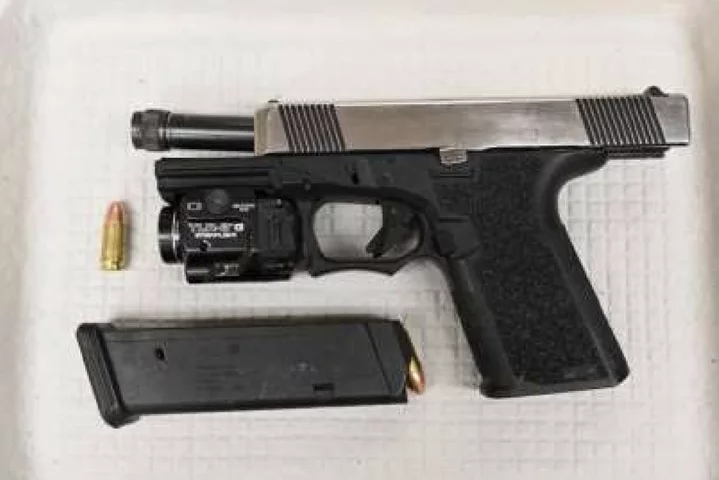
determined to be a ghost gun. (A ghost gun is an un-serialized and untraceable firearm.)
The officer that conducted the original traffic stop left that location to assist the officers who
had been involved in the shooting. The vehicle and occupants left the area and were later
located by the Humboldt County Sheriff’s Office. The occupants were interviewed and the
vehicle was towed as evidence.
Firearm recovered from Williams
The shooting was captured on one of the officer’s body worn camera. However, the body
camera from the second officer suffered a malfunction and did not capture the incident.
All body worn camera and audio footage will be released in accordance with state law.
One officer has over 7 years of experience in law enforcement. The second officer has over 4
years of experience in law enforcement. Their names will be released at a later time in
accordance with state law. Both officers suffered minor injuries as a result of the altercation
and incident. The officers have both been placed on paid Administrative Leave per department
protocol.
As is standard protocol within Humboldt County, the multi-agency Critical Incident Response
Team (CIRT) is handling the criminal investigation. Upon completion, the investigation will be
turned over to the District Attorney’s Office for review.
Eureka Police Department has initiated an Internal Shooting Review that will run concurrent
with the criminal investigation being conducted by CIRT. The Internal Shooting Review
determines whether involved officers followed departmental policy, identifies potential policy
and procedural changes, and any training needs. Once completed, this report will be reviewed
by the City of Eureka Independent Police Auditor (IPA) who will report to the Community
Oversight on Police Practices (COPP) board.
This is an on-going investigation. Anyone with information regarding the incident is asked to
contact Detective Bailey with the Eureka Police Department Criminal Investigations Unit at 707-
441-4215 or DA Investigator G. Hill at 707-268-2553.
With four words, the California Supreme Court thwarted agribusiness giant Westlands Water
District’s years-long scheme with the federal Bureau of Reclamation to rubber stamp a
permanent water contract. The contract would have discounted Westlands’ massive debt to the
United States taxpayers and evaded Westlands’ and Reclamation’s responsibilities to restore
California fisheries decimated by the sprawling Central Valley Project.
“’Petition for review denied.’ That is the Supreme Court’s entire decision, and it is the right
decision,” said Hoopa Valley Tribal Chairman Joe Davis.
“From the Fresno County trial court’s first decision in 2020 to the Supreme Court’s final decision
this week, every judge who reviewed the record saw what the Court of Appeals called `strained
arguments’, `materially incomplete’ documents, references to documents that `did not exist’, and
a contract `not sufficiently definite to be binding and enforceable’,” said Council Member Daniel
Jordan.
“Westlands thrived in a culture of corruption during the Trump Administration, when the contract
was written,” said Hoopa Valley Tribal Fisheries Director Michael Orcutt. “Westlands and
Reclamation have brought our fishery to the brink of destruction.”
In the water contract, Reclamation states, falsely, that Westlands had “fulfilled all of its
obligations” and had made “full repayment.” Before federal accountants could confirm that,
Reclamation signed Westlands’ contract in February 2020, and later withdrew key financial
documents from public scrutiny.2
“They might have gotten away with it,” said Vice Chairman Everett Colegrove, “if it hadn’t been
for the skill and dedication of the legal teams assembled by Trinity County, San Joaquin County,
Central Delta Water Agency, South Delta Water Agency, North Coast Rivers Alliance, Pacific
Coast Federation of Fishermen’s Associations, Planning and Conservation League, Center for
Biological Diversity, and many other nongovernmental organizations.”
“Time’s up,” said Council Member Isaac Bussell. “Secretary Haaland needs to rip up that
contract and write one that does what federal law requires: meet trust responsibilities for Hoopa’s
fishery, collect hundreds of millions owed by Westlands and other CVP contractors for fishery
restoration, collect future restoration payments, and end once and for all Westlands’ assault on
our property rights and sovereignty over the Trinity River fishery.”
“Next week, President Biden will convene a Tribal Nations Summit,” said Chairman Davis. “I
will be there to remind his Administration that its commitment to honor trust responsibilities to
protect tribal sovereignty and resources means water contracts like the one the California
Supreme Court struck down have no place in the Bureau of Reclamation.”
The case is: Westlands Water District v. All Persons Interested in the Matter of the Contract
Between the United States and Westlands Water District Providing for Project Water Service, San
Luis Unit and Delta Division and Facilities Repayment, Court of Appeal, Fifth Appellate District
Case No. F083632 and consolidated with Case No. F084202 (September 1, 2023).
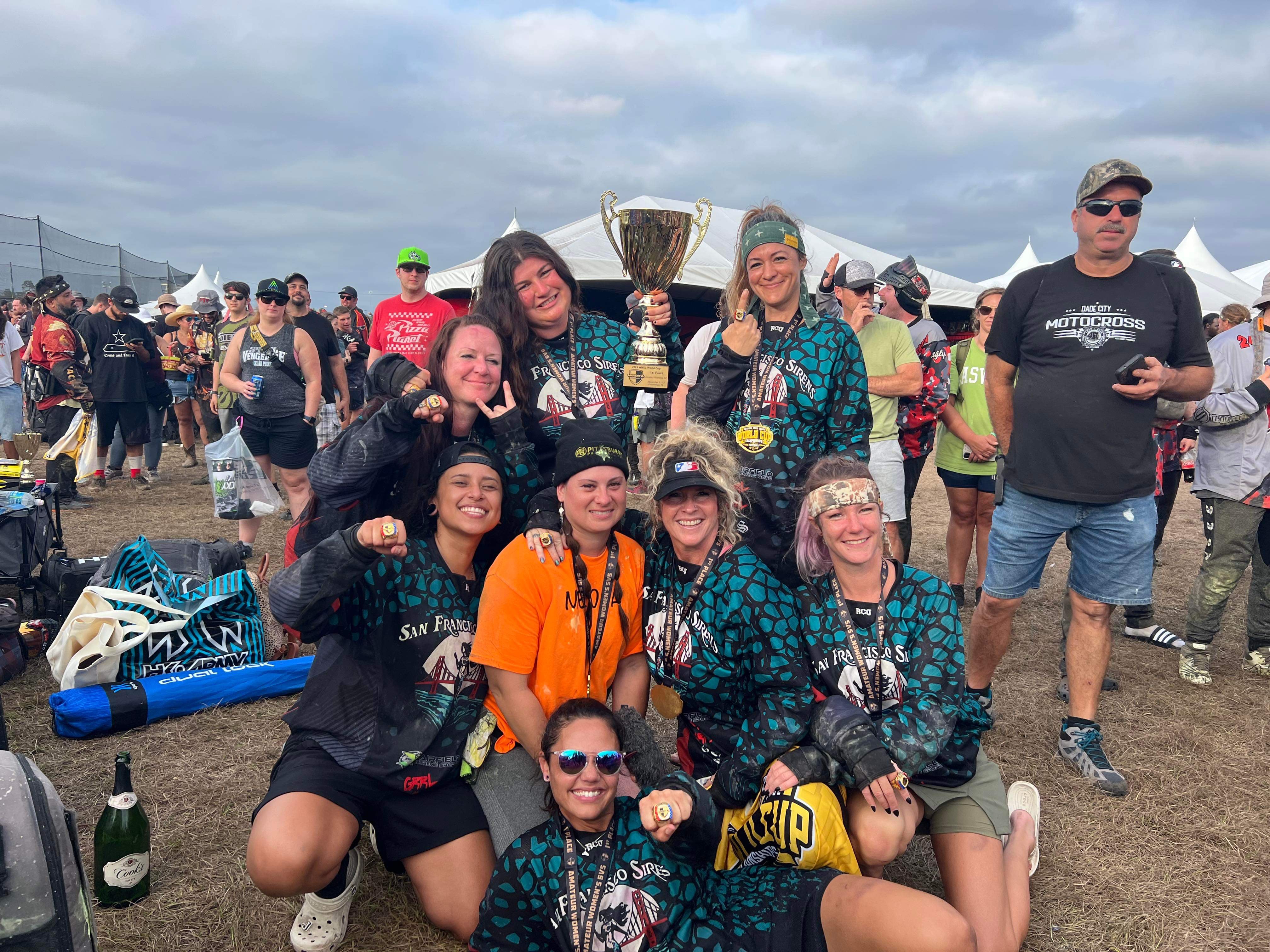
The San Francisco Sirens (Cobine at the top right, holding up a “one” Whoops! actually, lower right, with pink hair) after their NXL World Cup win in Miami | Photos submitted by Scout Cobine
###
In case you haven’t noticed, Humboldt’s local ladies have been kicking butt in the sports world the past year, with women from our area winning medals, being inducted in halls of fame, and becoming national champions. Now another local woman has joined the ranks, helping her paintball team win the National Xball League (NXL) World Cup Championship games in November.
The team, the San Francisco Sirens, placed first in the women’s amateur division at the world cup in Miami and includes one of our own – Scout Cobine, who owns and operates Humboldt Paintball in Fortuna. Cobine has been playing with her teammates for about a decade, and said that it’s because they’ve been together so long that she and her team were able to bring home the title.
“We’ve been together for over 10 years as a team,” Cobine told the Outpost in a recent phone interview. “We’ve been through so many ups and downs and we’ve had the rug pulled out from underneath so many times. And as a squad, we’re like a family. We work together really well. We communicate really well.”
Cobine said that the win was a wonderful end to what was otherwise a very difficult season. Prior to this season, Cobine’s team had long played pro as the Sacramento Diamonds, until they were recently sold to a team in St. Louis. When the team learned about this and were told they would have to travel to Missouri to practice, they were not very excited. Traveling that far was not really feasible for most of the team, Cobine said, so they had to back out of their professional spot.
When they called the NXL about it, Cobine said, they were told that they could still play in the amateur division. Without a coach and without any financial backing, the team traveled to Chicago for the Windy City Major games in September, where they placed second. After that, the team found sponsorship and a coach, Anthony Portillo, through Fairfield Extreme Sports.
“[Anthony] was absolutely phenomenal and coached us into a first place win, in hopes of getting us back to our pro spot,” Cobine said.
Cobine, 35, has been playing paintball most of her life. She was first introduced to the sport at about 12 years old, by her brother, who took her out to shoot in the woods off of Freese Avenue in Eureka, near the McKay Tract. She did not exactly fall in love with the game the first time, and Cobine said the experience was actually “awful” — she was the only girl playing, and all the boys were super mean to her.
Her love for the game began a few years later, when Cobine was about 15 or 16, and she was introduced to airball, a term for competitive paintball played on a field with blow-up, air-filled bunkers. Someone took her to play at the airball field in Fortuna, which she now owns, and when she played the game on the field, she was completely won over and hasn’t stopped playing since.
In high school Cobine began training with then-Humboldt paintball team Trainwreck. During her senior year of high school and her freshman year of college, Cobine would play with the team every week at a field near Sacramento called Wild Adventure Paintball. Every Sunday for two years Cobine would get up at 3 a.m. to drive down to the field, and drive back up the same night and be back to class on Monday morning.
During that time, Cobine met a couple of women paintball-players who she clicked with and they started hanging out and playing together. Eventually the women asked her to join their Sacramento team, and she has been playing with them ever since. Having previously played with mostly male teammates, Cobine said she was a little worried about how she would get along with a women’s team, but said it turned out to be wonderful.
“It just turned out to be the most wonderful experience of my life,” Cobine said. “Like they have just turned into my absolute family.”
Paintball – which basically consists of shooting the opposing team with paintballs – includes a lot of different types of play, with varying team sizes and ways of scoring the game. Cobine’s team plays Xball, which consists of five players on each team trying to score as many points as possible in the allotted time. If you want to learn more about how the game is played, here is a video that explains it better than this ignorant reporter ever could:
Cobine took over the paintball field in Fortuna about eight years ago, starting with some gear she bought from a friend who was closing down his own paintball business. She started out with six paintball guns, a set of bunkers and a compressor, and has now grown the business to two full fields, offering 50 gun rentals.
Even with running a business, Cobine makes the roughly four-and-a-half-hour drive down to Fairfeild for team practice once to twice a month, and also has to travel for tournaments during the season. Cobine is also a mother of three – a five-year-old, eight-year-old and a 12-year old — and sometimes has to travel with some or all of the kids in tow.
The paintball field does get pretty good business, Cobine said, but it’s still not always enough, especially in the winter months, when not nearly as many people come out to the field. To help make ends meet, Cobine also works nights at Winco.
But the business of her life does not stop her from continuing to play with her team, which she says is incredibly important for her. Cobine said that she already has most of her next paintball year planned out, with the Sirens next headed to the Las Vegas Major in March. In the meantime, Cobine wants to focus more energy on the paintball business and hopes that reading this might inspire people to come check out Humboldt Paintball, whether they are a seasoned player, or have never tried it before.
“I’m a local from Humboldt and I’ve found something in such a small area that completely changed my life,” Cobine said. “You never know what you’re going to get into.”
Illustration by Miguel Gutierrez Jr., CalMatters; iStock
In her first year as chancellor of the California State University system, Mildred García will earn just under $1 million in total compensation to lead the nation’s largest system of higher education.
That’s more than triple Gov. Gavin Newsom’s compensation. It’s also a steep increase from the three previous chancellors who led the 23-campus system.
According to an analysis by CalMatters using publicly available salary data, system leaders and presidents in the Cal State system have seen their pay increase at a higher rate than full-time professors and lecturers over the past 15 years.
While the Cal State system aims for executive salaries to be at the median of comparable institutions nationwide, trends pushing that median upward have resulted in larger salaries for the system’s chancellor and campus presidents.
Cal State is facing backlash for approving student tuition increases earlier this year and simultaneously raising executive pay during a $1.5 billion budget deficit. Meanwhile, the California Faculty Association is preparing to strike for increased pay. The faculty union has four strikes planned for early December at Cal Poly Pomona, San Francisco State, Cal State Los Angeles and Sacramento State.
García inherits a system with a long list of priorities — chief among them, negotiating raises for the 29,000 instructors the faculty union represents. The union said Oct. 31 that 95% of its members who voted approved of strike plans amid negotiations to lift the minimum wages for the lowest-paid instructors and increase salaries generally, among other demands.
CalMatters reached out for an interview with García, but she declined through Cal State spokesperson Amy Bentley-Smith.
“The CSU should use the budget … for direct instruction and student advancement, not for continued expansion of administrative bloat and endless administrative positions at the Chancellor’s Office and on all 23 campuses.” — Charles Toombs, faculty union president and Africana studies professor at San Diego State
At the Cal State Board of Trustees meeting in July, faculty and union members criticized executive salary increases at the university system. At that meeting, the board voted in favor of the chancellor’s compensation package and discussed a proposal to increase student tuition.
“The CSU should use the budget it receives from the state for direct instruction and student advancement,” said Charles Toombs, faculty union president and Africana studies professor at San Diego State, “not for continued expansion of administrative bloat and endless administrative positions at the Chancellor’s Office and on all 23 campuses.”
Additionally, student leader Dominic Treseler said at the July meeting a tuition hike beginning in Fall 2024 would adversely affect students.
“Students should not bear the inequitable burden of addressing revenue shortfalls for the system,” said Treseler, president of the Cal State Student Association and a senior studying political science at San Jose State. Nevertheless, the board voted in September to increase tuition by 34% over five years.
Rate of salary increases for instructors lag behind executives
Cal State presidents have seen their base salaries grow by an average of 43% between 2007 and 2022, translating to an average $119,882 salary increase per campus president over that time.
In 2022, all 23 presidents received a 7% raise. Additionally, 14 of the presidents who underwent three-year reviews received additional equity increases between 6.7% and 20%.
“Even after making the general salary increases and other market adjustments, 17 campus presidents remain below their peer group median salary,” Bentley-Smith wrote in an email statement.
The Cal State chancellor has seen significant salary increases over the same 15-year period — increasing 38% from a $451,500 base salary for former chancellor Charles Reed in2007 to a $625,000 base salary for interim chancellor Jolene Koester in 2022.
The Cal State Board of Trustees allotted an additional 27% salary bump in July 2023 when they approved a $795,000 base salary for García. Additionally, $80,000 in deferred compensation, a $96,000 annual housing allowance, and a $1,000 monthly auto stipend brought her total compensation package to just under $1 million a year.
In comparison, instructor salaries have been slower to grow. On average, lecturer salaries at Cal State increased by 22% within the past 15 years, translating to a $13,000 pay bump for the system’s 3,000 full-time lecturers. In Fall 2022, full-time lecturers earned an average of $71,255.
Meanwhile, professor pay has risen at a rate of 30% since 2007, going from an average of $93,643 to $122,016 in Fall 2022. Full professors, the top rank on the tenure track, at Cal State are the highest-paid faculty while lecturers are the lowest.
“Yeah, I can’t even describe how bad it feels. But it feels horrible. But here I am.” — Claire Garrido-Ortega, co-president of the faculty union at Cal State Long Beach and health science lecturer
Even for students, the pay disparity between on-the-ground faculty is concerning.
“It’s kind of crazy to expect our faculty members to be able to perform so well at such a low compensation rate,” Treseler said.
Claire Garrido-Ortega, co-president of the faculty union at Cal State Long Beach and health science lecturer, said in her 18 years of teaching in higher education, she has only received one pay increase as a result of union bargaining in 2020.
“Yeah, I can’t even describe how bad it feels,” she said. “But it feels horrible. But here I am.”
Cal State spent about a third of its $12 billion budget on salaries and wages during the 2022-23 year. Of that expense, nearly half, or just over $2 billion, went to faculty. Staff expenses came to one-third, at $1.4 billion. Most of the rest of the funds went to other employees, including student assistants. The smallest slice, just 0.3%, or $14.3 million, covered executive salaries. While the executive expenses increased by $3 million over the past five years, the net percentage of the budget did not increase.
A 2022 systemwide review of staff salaries in the Cal State system found that they “have not kept pace with general industry or with other higher education institutions” over the past 15 years. Of the employees who responded, 96% agreed the CSU lacks “an appropriate and consistent process for advancing the pay of employees.”
Cal State isn’t the only system in the state rewarding executives with raises. Within the past decade, University of California chancellors, equivalent to CSU presidents, had an average salary increase of 73%, or $233,738, between 2012 and 2022.
In July 2020, UC Regents approved an $890,000 base salary for UC President Michael Drake, the system leader, a steep increase from his predecessor Janet Napolitano, who earned a base salary of $570,000 in 2019.
Salaries for executives are increasing nationwide
In spite of outcry from faculty and students over recent decisions from the board of trustees, pay for university executives has consistently increased across the country.
From 2010 to 2019, compensation for college presidents across 49 states, excluding Hawaii, increased 56%, according to an analysis published in the Chronicle of Higher Education. The average salary for a college president rose from $543,000 in 2010, to $715,000 in 2019, an increase 32% above the rate of inflation, according to the article’s authors Judith Wilde and James Finkelstein, professors at George Mason University in Virginia.
Part of what is driving salaries upward is the trend of campuses looking for candidates with corporate leadership experience, Wilde said.
“People in those kinds of positions are used to seeing higher salaries,” Wilde said. “They see that most large universities have overall budgets of many millions if not into the billions of dollars.”
Despite the nationwide upward trend, the reality is that California institutions are still on the lower end of the base salary nationally, according to Wilde, particularly in the Cal State system. She added that California generally has a higher cost of living than other states yet salaries do not reflect that fact when compared to administrators at other state institutions.
“The most ridiculous set of contracts we see are out of Florida. California is not anywhere near up to that,” Wilde said. “They’re low, particularly if you are thinking about the Cal State system, which has lower pay than the UC system.”
Presidential pay at Cal State is determined by the median salary of comparable institutions nationally, in addition to the candidate’s reputation, breadth of experience and other accomplishments, according to CSU compensation policy.
“We are a state institution at the end of the day and we have to be fiscally prudent with our resources,” Cal State’s Bentley-Smith said. “So we need to attract and retain the brightest and most talented in order to serve our mission and so we need to pay accordingly to attract those people.”
Bentley-Smith declined to answer whether executive salaries could be capped in the future, stating any policy change on executive pay would need to be initiated by the board of trustees.
“The more we’re asked to do, the more society yells at us and says, ‘Oh, you’re failing at your mission,’ while you’re asking us to do a lot.” — Lynn Mahoney, San Francisco State University’s president
For Cal State presidents, each campus is grouped with comparable universities across the nation to assess the median salary. The median salaries of the comparison groups sit at $498,269 on the high end and $370,234 on the low end.
In comparison, the average base salary for presidents in Texas public universities rounded to $670,000 in 2022. Additionally, three of the nation’s highest-paid presidents that year were in Texas. The University of North Texas, the University of Texas at Austin and the University of Houston all paid their presidents over $1 million in base salary, also well above the $608,426 average of presidents in the UC system in 2022.
At Cal State, presidents meet with the chancellor during the first year of appointment to discuss campus-specific goals and set starting compensation. For new presidents, base salary is not permitted to exceed their predecessor’s by more than 10% unless “extraordinary circumstances” arise – including the president’s recognized ability.
A year later, they reconvene to discuss progress, after which reviews are conducted every three years, according to Cal State policy. Presidential reviews entail feedback from student and campus leadership as well as alumni.
Along with increases in salary, presidents are often granted additional compensation and perks during contract negotiations that can dramatically increase their full compensation. Presidents can consult with personal lawyers for added benefits such as exit agreements, allowing presidents to remain at their respective schools in the form of a teaching position, in some cases, even if removed for a specific reason.
Former Cal State chancellor Joseph Castro resigned as the system’s leader in February 2022 after allegations he mishandled sexual harassment complaints. Castro then exercised his “retreat rights” to become a faculty member at Cal Poly San Luis Obispo, where he started teaching in spring 2023.
Wilde said there are typically no metrics to determine if a president is reaching the goals of the university. Executive contracts involving performance bonuses or incentives list things generally, such as increasing enrollment, without specific benchmarks. Wilde expects executive pay to continue the upward trends seen nationally.
Finklestein added that a president’s goals are often considered a private matter among the board and not made public. He said this further perpetuates the treatment of campus presidents as corporate executives rather than a leader of an educational institution.
The role of the campus president
San Francisco State University’s president, Lynn Mahoney, joined the campus in May 2019. Mahoney, who earns a base salary of $463,585, says her salary is at the median of comparable institutions.
Mahoney said her job includes four main roles: hiring and mentoring the campus leadership, promoting the university’s mission to external stakeholders, providing basic needs for students and guiding the campus as a moral and political leader.
“So my typical day is meeting, meeting, meeting, meeting,” Mahoney said.
She says over the past five years, increasing demands of presidents have made the job more difficult. Mahoney said colleges increasingly provide students’ basic needs, as well as moral and political guidance for the campus community during turbulent times locally, nationally and abroad.
In addition, she said she holds a lot of responsibility in her oversight of a $300 million budget, the success of 23,000 students and the well-being of all the employees.
“The more we’re asked to do, the more society yells at us and says, ‘Oh, you’re failing at your mission,’ while you’re asking us to do a lot,” Mahoney said. “So there’s another piece now to being a university president that is so much harder, and so much more complicated than it ever was before.”
Mahoney added that while base salaries for campus executives may be high, it’s a necessary tool for the system to recruit on a national stage. According to Mahoney, in hiring for her own campus, she’s lost candidates to campuses that could offer higher salaries and in states with lower costs of living than California. She thinks Chancellor García is the type of candidate many campuses across the nation would have loved to hire.
“If the next state over is going to pay $900,000 or more, $1.2 million, how is the CSU going to recruit the kind of quality chancellor it needs to serve the largest, most impactful state university system?” Mahoney said.
The Cal State system employs search firms to scout the most qualified candidates for a position. Mahoney said after she submitted her application for the position she was contacted by a search firm while serving as the provost and vice president for academic affairs at Cal State Los Angeles, and was ultimately hired by the board of trustees for her current role.
Finklestein said it’s common that university presidents allocate their time toward external relations, including fundraising for the university, working with state legislators and meeting with university board members. Presidents rarely get involved in issues of curriculum or make academic decisions that haven’t been heavily vetted beforehand, he said.
“I think this is something that most people don’t understand today,” Finklestein said. “A university president has actually very little to do with the day-to-day running of the university.”
###
CalMatters.org is a nonprofit, nonpartisan media venture explaining California policies and politics.
They came, they saw, they yelled at each other. A lot.
Somewhere in the 100 or so minutes of crosstalk and insults tonight was Fox News’ heavily-promoted “The Great Red vs. Blue State Debate” between Florida’s Republican Gov. Ron DeSantis and California’s Democratic Gov. Gavin Newsom.
Touted by moderator Sean Hannity as a contest of ideas — an opportunity to sort through two clashing governing philosophies that have come to define this divided country — the event wound up more of a verbal smackdown, with both DeSantis and Newsom at one point accusing the other of being a bully.
“What are we actually doing here?” Newsom asked rhetorically early in the night. It was likely a question on many viewers’ minds as Hannity, begging not to be the “hall monitor,” repeatedly tried to cut through the jumble of shouting to urge his participants to let each other speak.
The answer would be made clear before the telecast was over, when Hannity, finally turning the presidential campaign subtext of the whole affair into text, prodded Newsom: “Will you say, unequivocally, under no circumstances are you running?”
Here are five key moments from the bitter, pugnacious, downright messy showdown:
Presidential aspirations, stated and unstated
It’s no coincidence that the head-to-head format — DeSantis and Newsom standing at lecterns in a television studio in Alpharetta, Georgia, sans live audience — resembled a presidential debate, underscoring the high stakes for a man now seeking the most powerful office in the land and another widely touted as a future contender.
The implications of the event were far more immediately significant for DeSantis, who hoped that a knockout performance could rescue his floundering campaign for president. Once a serious threat to the frontrunner for the Republican nomination, former President Donald Trump, DeSantis has sharply faded in public polls with less than two months until the first contest in Iowa and now risks falling into third place behind former South California Gov. Nikki Haley.
Many pundits were surprised when DeSantis accepted Newsom’s debate challenge in August, pitting him against someone who is not even in the presidential race. But lacking opportunities to face off directly against Trump, who has refused to participate in the GOP primary debates, DeSantis aimed to show Republican voters that he is best-equipped to take on Democratic President Joe Biden in the general election.
“What Biden would do, the people around him, they would look to California for the model to go forward in the next four years. That would accelerate the decline of this country,” DeSantis said tonight. “The failures need to be left in the dustbin of history.”
The Hannity debate gave Newsom another opportunity to introduce himself to a broader audience that has not been following his work in California — and, perhaps most valuably, to redefine himself for conservative and moderate voters who watch Fox News and could be crucial to winning swing states in a presidential election.
Even as he once again shot down any notion that he was running a “shadow campaign” for the Democratic nomination — “I don’t know how many times I can say it,” Newsom told Hannity, “Joe Biden will be our nominee in a matter of weeks” — the very suggestion presented Newsom as someone who could be a legitimate candidate for the job.
A leg up for DeSantis
Before the debate, Newsom warned that it would be a two-on-one pile-on, with Hannity and DeSantis teaming up to make their liberal foe look bad.
In the end, he wasn’t wrong. Though Hannity promised to serve as an impartial moderator, he framed most of the questions by highlighting something that he believed was wrong with California — high taxes, high gas prices, bad schools – and asking Newsom to defend it.
A typical exchange: Fox News displayed a graphic showing the violent crime rate in California is higher than the national average and nearly twice that of Florida. (These rates are based on FBI data collected voluntarily from local law enforcement agencies, about half of which did not report in Florida.)
“How do you explain that when safety and security, I would argue, is a prerequisite for the pursuit of happiness?” Hannity asked.
Newsom tried to flip the question onto DeSantis, pointing out that Florida has far higher incidences of murder and gun violence than California, where gun control laws are much stricter.
“Maybe spend a little more time back in your home state and address the murder and gun violence in your own backyard,” Newsom said.
DeSantis, who filmed a campaign ad in San Francisco’s Tenderloin neighborhood this summer lamenting its widespread drug use and homelessness, said “public safety has collapsed” in California.
“In a lot of these places in California, everything’s under lock and key because they’ve basically legalized retail theft,” he said. “They have chosen in California to put the interests of the criminals over public safety.”
Liberal elites and conservative bullies
The debate took almost no time to get personal, and was at moments downright nasty. DeSantis noted early on that Newsom’s own in-laws had relocated to Florida. Newsom later referred to DeSantis as “weak, pathetic and small.”
But nothing seemed to bring out the animosity between the two governors quite like the coronavirus pandemic, which came up on multiple occasions during the telecast.
DeSantis criticized California’s strict lockdown measures to slow the spread of the virus, contrasting his own decision to reopen businesses and schools much sooner in Florida. He said Newsom “did huge damage to people” by shutting down the economy while he ate dinner at the French Laundry and should apologize for keeping students out of classrooms while his own children returned to their private school.
“The only person who should apologize is Ron DeSantis for the tens of thousands of lives that died unnecessarily because he played to the fringe of his party,” Newsom responded, referring to data from the federal Centers for Disease Control and Prevention that shows more Floridians died per capita from COVID-19 than Californians.
The conversation devolved into another shouting match when Newsom brought up that DeSantis threatened a $27.5 million fine against the Special Olympics last year unless they dropped their coronavirus vaccine requirement for athletes. The organization, which runs athletic competitions for disabled people, eventually reversed course.
“They were discriminating against the athletes,” DeSantis said. “You’re a liberal elite. You wanted them to be ostracized.”
“You attack vulnerable communities,” Newsom replied. “You’re nothing but a bully. I understand that intimidating and humiliating people, that’s your calling card.”
The looming abortion question
Newsom delighted throughout the debate in needling DeSantis about his sinking support in the presidential race, even urging DeSantis at the end to drop out and give Haley a better shot to stop Trump.
He seemed determined to deliver a fatal blow during a segment on abortion, which Democrats hope will be a key issue in the 2024 election after the U.S. Supreme Court overturned a constitutional right to abortion last year and which Republicans have taken pains to downplay on the campaign trail.
In the week before the debate, Newsom put an ad on television in Florida highlighting a law that DeSantis signed this year banning abortion after six weeks. The spot accuses his Republican rival of criminalizing women who seek the procedure and doctors who perform it.
“Will you or will you not support a national ban if it lands on your desk?” Newsom asked tonight of a hypothetical DeSantis presidency. DeSantis repeatedly ducked the question, before Newsom turned straight to camera to speak to the viewers at home.
“He will sign that extreme six-week national ban,” Newsom said. “The American people should know that.”
A poop map of San Francisco
Yes, a poop map. As the debate drew to a close, DeSantis actually whipped out a printout purportedly from a user-generated app tracking human feces found on the streets of San Francisco.
It was intended to be his knockout punch at Newsom on the issue of California’s spiraling homelessness crisis, which he said has gotten so bad that “human feces is now a fact of life” for residents. DeSantis blamed Democrats’ lax attitude.
“You have the freedom to defecate in public in California,” DeSantis said. “You have the freedom to pitch a tent on Sunset Boulevard. You have the freedom to create a homeless encampment under a freeway and even light it on fire.”
“They’re not the freedoms our founding fathers envisioned,” he added, “but they have contributed to the destruction of the quality of life in California.”
###
CalMatters.org is a nonprofit, nonpartisan media venture explaining California policies and politics.
It is with great sorrow that the Spek Family shares the passing of our beloved Hans Spek, an
incredible local and international artist, teacher, and dreamer. He passed peacefully in
Humboldt County on the morning of November 25th, 2023 knowing he was deeply loved. Hans
was preceded in death by his lovely wife Christine Spek on July 28, 2020 during the pandemic.
Christine departed this world in the home her and Hans shared and the wonderful environment
they created together with Hans, daughter Lisette, and family by her side. Hans and Christine
were so cherished and loved.
Hans was born on March 1, 1934 in the city of Haarlem in his homeland of Holland. He came
into this world on Centauru Straat in his family’s home on the street he shared with his
grandmother. He had a little sister who he loved. He was a clear joy to his family throughout his
childhood, an adorable and spirited baby and child as evidenced by the many family photos.
He was a wanderer and was known to be found by his fathers fellow policemen on the other
side of town exploring from a young age. Hans, like many of his children and grandchildren,
was towheaded with a great big smile. Christine was born Christine Schoemaker in the city of
Delft, Holland on April 6th 1935. She was a sweet and caring child, the oldest of five children.
Christine was descended from rose breeders and Hans was from the family who had long
served the Dutch royals through forestry. Both of their fathers were policemen, Hans’ father
with the Royal Police. Christine’s father was a part of the dutch underground and helped save
many lives through his work with the Dutch Resistance during the war years. Hans and
Christine were both mischievous, perhaps one of the qualities that united the two. They lived
through and survived many of the unspeakable tragedies of World War II in their childhoods but
in spite of the pain they both witnessed and experienced, their spunky and fun loving
personalities persisted.
During the war, Hans’ family moved from his hometown of Haarlem he loved so much to a
house in the country in Vaassen where they survived on the farmland. They then moved to
Apeldoorn where Hans’ grandfather was a forester to the royals at Het Loo palace. Christine’s
family lived in Arnhem during the war years, moving to Apeldoorn during the Hunger Winter
following the war. This was where Hans and Christine met when they were 13 and 14 years old.
They attended high school together at Queen Wilhelmina High School where they were taught
English, German, and French in addition to their native language of Dutch. Hans took art
classes with a Dutch Master outside of school, encouraged by his mother who respected his
great passion for art.
It was at Queen Wilhelmina High School that Hans and Christine fell in love. Christine loved
that Hans was an artist and wanderer, and Hans loved that Christine was dedicated and funny.
Their parents and teachers disapproved, but neither Hans nor Christine allowed that to hamper
their connection, they insisted on being together. They went on many adventures together in
the Netherlands, trips to the Island of Terschelling to tan and have great fun with their friends,
travel to Austria, a bike trip through Belgium countryside where Hans slept in the farm houses,
and so many more wonderful times. After high school Hans was in the Air Force in Holland for
two years and then worked as a cartographer making maps. Christine was a writer and editor
for a publishing company in Delft where her high intellect was recognized. In 1958, Hans and
Christine were married and boarded a boat to immigrate to a new country at the ages of 23
and 24. America had limited availability at the time, so they settled for Canada. Christine was
nervous to leave her homeland, but Hans reassured her that if she ever needed they could
return, they might as well have an adventure - and they did! First stop was Canada where their
first child, son Jeff, was born. Christine was delighted to be a mother, she loved babies and
children. Hans worked as a surveyor and was soon offered an opportunity to immigrate again,
this time to Southern California. They jumped at the chance and it was in Santa Ana that they
welcomed their daughter Lisette.During their years as a family in Southern California, Hans worked as a Civil Engineer and
painted avidly in his free time, teaching oil painting lessons up to three times a week. He
traveled to Alaska through his employment where he saw nature that deeply inspired him.
Christine was a dedicated mother and wife, she was incredibly intelligent and went to college
while her children were in school to earn a B.A. in Literature from Cal State Fullerton. She then
opened a popular and quality store in Tustin selling Many wonderful imports and decorations.
Hans and Christine were both creating avidly during this time, Hans with his oil paints and
watercolors and Christine with watercolors, textile stitching, knits, and recipes. They went on
family vacations with their kids to Europe and road trips to the Tetons they loved so much in
Wyoming. Hans enjoyed adventures with his daughter, spending time with his son fly fishing in
Yellowstone National Park, and skiing with his family in the winter. Hans and Christine later
went back to the Tetons with both of their children and all five grandchildren where wonderful
memories were made. Hans always wanted to go on an adventure, both big and small, and
Christine was perpetually along for the ride, she was amused by her loved ones interests and
always joined in - even with Skiing eventually!
Christine loved to cook and bake incredible dishes and Hans heavily preferred her cooking.
She loved to read Russian literature and, like her father’s family, grew beautiful roses in her
garden. Hans enjoyed going fishing, maps, collecting trinkets, exploring in nature, and listening
to music, especially organ music. He had a liking for mastery and tradition, and Christine had
one for creativity. Hans was a dreamer, his entire life he reported many fantastically realistic
dreams, often flying through landscapes and exploring many lands. Hans was an incredibly
talented and accomplished oil painter and artist, he was so proud of his paintings and felt a
deep connection to and was inspired by many of the grand master painters such as
Rembrandt (his favorite), Frans Hals, Canaletto, Caravaggio, and Vermeer. He replicated a
number of their famous works throughout his lifetime between his own landscapes, portraits,
and still lives. Christine was accepting of everyone and always open to new ideas and
experiences. She loved a hearty conversation, even if someone’s views didn’t match her own.
Christine was incredibly righteous. Both Hans and Christine were wickedly humorous, so keen,
observant, and clever. They were companions in every sense of the word.
Hans and Christine moved for the final time in 2006 to Humboldt County to fulfill Christine’s
dream of living near grandchildren; Hans graciously agreed even though he was pained to
leave the art market where his paintings sold so well in Southern California. They moved to
Fortuna, a community they loved and a landscape that inspired Hans’ later artworks. Here, they
both participated in raising 3 of their 5 grandchildren, granddaughters Rhea, Ula, and Marlo.
Christine jumped right in to help pick them up from school, cook amazing weekly family
dinners, host weekend and holiday sleepovers at her house, and brought a loving and soft
touch to every milestone. She made incredible pancakes. They never missed a holiday or
birthday since the day their cherished first granddaughter Rhea was born. They often went
back to Holland and made trips to Florida to visit their son Jeff, grandsons Garret and Ian, and
great-granddaughter Willow. Hans had an art studio in their garage again where he continued
to paint while Christine knitted many masterpieces and gifted them to her family.
Hans was a
member of the Redwood Art Association for many years. Christine hiked often with the
Ramblers walking group, Hans would join periodically, and they loved farmers’ markets and
good cafes. Hans taught all three of his granddaughters to drive. Christine was incredibly close
with her family, especially daughter Lisette with whom she held a strong bond and
granddaughter Marlo who was her very best friend. They spent a lot of time together at cafes,
the knitting shop, advising each other on sewing and designing, and being so comfortable in
each others company. Christine was a master gardener and had show-winning Daffodils in the
Daffodils by the River flower show in Fortuna. Hans continued to teach art lessons and had
many students in Humboldt County who he loved to spend time with, he won many awards for
his paintings. Hans advised his granddaughters Marlo and Ula in art over the years. Everywinter, Hans made his traditional Dutch New Years Olibollen donuts and they sent Dutch
chocolate letters to the family in Florida for Christmas.
When Christine’s health began to decline, Lisette and her children cared for her and had a jam-
packed last year full of memories. Hans never left her side until the very end. He was
devastated to lose his wonderful wife of 62 years and friend of 72 years. In his final years, he
spent a great deal of quality time with daughter Lisette who cared for him lovingly as well as his
granddaughters. Lisette and her daughters provided him much care and often took him on car
rides and adventures.
Hans and his best friend Ula spent an incredible amount of time together
in his final five years. They shared a brilliant connection and friendship creating and discussing
art. Marlo devoted herself to a well-forged common bond with Hans in artistry. Marlo and Ula
were his protégés and carry on his legacy in painting. The family made every holiday a party for
Hans.
In The end of his 89th year, after a stellar visit with his son and a lovely Thanksgiving
celebration with his family, Hans went “home” to be with his wife Christine who he loved so
much. His last drawing was the Tetons, a reflection of his love for the time spent with his family
and so many wonderful memories. He had just spoken with his daughter and let her know he
had dreampt of all of the people who he loved. He was excited and ready for his next trip.
There will be a memorial and celebration of life held on Saturday, December 2 at 2 p.m. at
the Christ Lutheran Church: 2132 Smith Lane in Fortuna. Artists and friends who knew Hans
and Christine are encouraged and welcome to attend the event. Many thanks to all who made
this community so great for them. Thank you to Emma for your loyal friendship to our Hans.
And thank you to Lisette for your hard work over many years providing the absolute best care
and attention to Hans and Christine.
To our beloved Hans and Christine, thank you so much for your incredible beings. The Spek
Family loves you both so dearly. We will always keep your lights alive. We houden zoveel van
je!
###
The obituary above was submitted on behalf of Hans Spek’s loved ones. The Lost Coast Outpost runs obituaries of Humboldt County residents at no charge. See guidelines here.