

GROWING OLD UNGRACEFULLY: Was that ‘D’ or ‘T’?
Barry Evans / Sunday, Dec. 3, 2023 @ 7 a.m. / Growing Old Ungracefully
The old joke goes, “Please tell your father to call me back, Jim Clew. That’s C as in crocodile, L as in leopard, E as in elephant…” “Sorry, E as in what?”
Meanwhile, NATO (North Atlantic Treaty Organization, in case you’re young and innocent) has its own 26-word phonetic alphabet, one that’s engraved into every pilot’s brain, even if, like me, you haven’t flown in 30 years. From Alfa-Bravo-Charlie to Xray-Yankee-Zulu, the NATO system is unambiguous and easily-memorized, used by pilots and dispatchers and airline ticket agents the world over. Developed over several decades, iteration after iteration, the NATO phonetic alphabet was finalized in 1956 and universally adopted by virtually all groups needing to communicate precisely by radio or telephone. It’s particularly useful for airline pilots and air traffic controllers, for whom accurate communication can mean life or death. (I learned to fly in a PA-28 Cherokee whose code letters “Tango-Romeo-Bravo” sounded — and sound — so cool when pronounced in a plummy Oxford accent.)
Even though it’s been generally adopted, not everything is totally uniform (or Uniform, that being the NATO signifier for “U”). For instance, in this country you’ll often see “Alpha” and “Juliet” written instead of the official NATO “Alfa” and “Juliett.” Wisely, the creators of the NATO alphabet recognized that “ph” isn’t universally spoken as “f”; and that native French speakers, for instance, drop the “t” in Juliet when speaking, hence the double “t.”

NATO Phonetic Alphabet and International Code of Signals (Public domain)
I grew up on the Morse Code — or at least learned it when my brain was sufficiently flexible (in the Boy Scouts) to be able to still remember it pretty well, although I’m now much slower than decades ago. In the mid-1830s, artist Samuel Morse figured out a way to send numbers over a telegraph line, the idea being that operators would use a codebook to translate letters to numbers and vice-versa. Within a few years, mechanical engineer Alfred Vail came up with an early version of what is now the International Morse Code, skipping the numbers and going straight to letters.
Vail based his code of dots and dashes on the frequency of letters, so that “e” (the most common letter in English) is represented by a single dot; “a” by dot-dash; s by three dots; and “o” (surely an outlier?) by three dashes. Hence SOS = dit dit dit dah dah dah dit dit dit. Vail and Morse were the first two operators on Morse’s experimental telegraph line between Washington and Baltimore in 1844; sadly, they subsequently had a falling out over patent rights.
(When I say I learned Morse Code, I was strictly a klunky amateur. Today the Boy Scouts of America award a “Morse interpreter’s strip” for sending and receiving at a rate in excess of five words per minute, a painfully slow method of communication. Typically, operators during WW2 would send and receive at 70-100 words per minute.)
Another code, still used (very) occasionally for ships at sea, is the International Code of Signals, adopted for worldwide use in 1901. You can see an example of this in Old Town on the F Street pier, greeting everyone and anyone to our fair city. I’ll leave it to you to figure out exactly what these 15 flags say.

Photo: Barry Evans.
BOOKED
Today: 10 felonies, 12 misdemeanors, 0 infractions
JUDGED
Humboldt County Superior Court Calendar: Today
CHP REPORTS
Poppy Dr / Sherwood Rd (HM office): Closure of a Road
ELSEWHERE
County of Humboldt Meetings: Behavioral Health Board - SUD/Dual Recovery Committee - Sept. 10, 2026
County of Humboldt Meetings: Behavioral Health Board Executive Committee Meeting - July 1, 2026
RHBB: Judge Overturns Search Warrant in Student Activist Case: Devices Ordered Returned
RHBB: Multi-Vehicle Crash Closes South Fortuna Boulevard Near Strongs Creek Plaza
‘There is Always Hope’: Health Care Providers, Law Enforcement Discuss Substance Use Disorders During Eureka’s Community Health Town Hall
Isabella Vanderheiden / Saturday, Dec. 2, 2023 @ 4:42 p.m. / Local Government
###
The City of Eureka held a Community Health Town Hall this morning to discuss some of the issues surrounding substance use disorder in our community and explore strategies to help struggling individuals find supportive care without stigma.
“This is a really important topic because I think there’s so many misconceptions and so many myths about addiction and substance use,” Eureka Mayor Kim Bergel said at the beginning of today’s town hall. “It’s a tough one sometimes to talk about. I just want to remind folks that substance use – this is one of the myths – is not a moral issue. … Substance use does not discriminate. It doesn’t care if you live on a hill with a lot of money or if you live on the street – substance use doesn’t care.”
One of the panelists, Dr. David Villasenor, a psychiatrist with the Eureka Veterans Administration, said the solution to addiction is “super simple,” but stopping the abuse is where it gets complicated.

Villasenor
“The pathway to that solution is very difficult and can be very convoluted and confusing, but there is always hope in addiction,” he said. “I’d like to say that some people in recovery are some of the wisest people I know. They have a profound understanding that the onus of control is theirs, that they have to make the decision … and other people who don’t have that challenge really never face their demons and have to make that personal change in such a profound way.”
However, individuals struggling with substance use disorder have co-occurring mental health conditions that can make treatment more difficult and even lead to further abuse, said Wes Harrison, executive director of Crossroads Recovery in Eureka.
“Each exacerbates the other,” he said. “Mental health – if left untreated – will feed into substance use behavior and then that substance use behavior will exacerbate the mental health and will very quickly and rapidly decline an individual’s quality of life, which will often lead to more substance use, criminality, homelessness and even death.”
In recent years, the local and national addiction crisis has been driven largely by the proliferation of the synthetic opioid fentanyl. Jacob Rosen, program director of the Crisis Alternative Response of Eureka (CARE) team, asked the panel how fentanyl has changed their approach to substance use disorder.

Harrison
“I haven’t seen a heroin positivity case in two years … which tells me one very important factor: fentanyl is the drug of choice,” Harrison said. “We had gotten really good at understanding opiate withdrawal and treating heroin use … and we thought all of that knowledge would really prepare us somewhat for fentanyl. … What we didn’t know was just how difficult the detox portion of fentanyl was going to be.”
Providers didn’t know how long fentanyl would stay in a user’s system, Harrison said.
“We were used to opiates getting out of a person’s system within three to five days, which meant you could detox in that period of time,” he continued. “What we’re seeing now is fentanyl staying in people’s systems for up to two weeks after their last use. Their detox is lasting 10 days.”
Rio Dell Chief of Police Greg Allan said he couldn’t remember the last time he encountered heroin. “Fentanyl is the big one right now and it’s hard to combat it.”
One of the issues with fentanyl – and even more so with Xylazine, a powerful non-opioid sedative that is sometimes mixed with fentanyl – is its resistance to naloxone, also known by its brand name Narcan, an opioid antagonist medication used to reverse an opioid overdose.
“[Fentanyl] is a high-potency synthetic opioid 100 times more potent than heroin, and all of our treatments are calibrated to heroin,” said Villasenor. “We have this drug that’s only been around a couple of years and we still don’t have a good protocol.”
Vesta Wunner, a behavioral health clinician with the Humboldt County Department of Health and Human Services, said it often takes more than one canister of naloxone to save someone from overdosing on fentanyl and encouraged people – everyone – to carry several doses at any given time.

Wunner
“This is going to save your life in an overdose emergency,” Wunner said, holding a box with the “NARCAN” label. “You may need four or five of these. If you have an opioid or synthetic opioid addiction, medically assisted treatment has a variety of drugs that can help somebody maintain sobriety over time, but that’s not Narcan. That’s methadone and suboxone, and those – just like somebody who has diabetes – a medication that can stabilize a person while they’re getting other kinds of treatment and support.”
Throughout the discussion, the panel emphasized that substance use disorder must be treated like a disease “because it behaves like a disease.”
“That’s why we say it and repeat it over and over again,” Harrison said. “This moral failing issue – sure, it feels that way because then we get something to blame – but the way substance use disorder works is … it is a brain disorder. It follows the disease model because it behaves exactly like a disease.”
Chief Allan emphasized the importance of humanizing people who struggle with substance use disorder.
“You know, looking down on somebody, thinking that you’re better than them or they’re less than you – I always tell people that one decision in your life could have put you in that same position,” he said. “Think about where you came from, the people around you and those that are suffering in your family and put yourself in that position. Humanizing is a great way to understand what somebody else is going through.
The panel spoke at length about several other issues surrounding substance use disorder and took questions from attendees. Press “play” on the video above if you’d like to watch the full video.
###
If you’re struggling with substance abuse disorder, contact the Substance Abuse and Mental Health Services Administration (SAMHSA) national helpline at 1-800-662-4357.
THE ECONEWS REPORT: Meet the Energy Superstar at the Hoopa Valley Public Utilities District
The EcoNews Report / Saturday, Dec. 2, 2023 @ 10 a.m. / Environment

Photo via the California Energy Commission.
The Hoopa Valley Tribe is engaged in exciting work to help promote a greener, more resilient power grid. And they are being recognized for their good work! Linnea Jackson, the general manager of the Hoopa Valley Public Utilities District, is the California Energy Commission’s 2023 “Tribal Champion” award winner and inductee into the Clean Energy Hall of Fame.
Linnea joins the show to
talk about the challenges of providing power, water and waste
services for a rural district and opportunities to help better the
Hoopa Valley through new investments in renewable energy.
If you want to celebrate with Linnea, you can join the ceremony in person or by Zoom.
HUMBOLDT HISTORY: The Eureka Loggers Basketball Squad Burned Brightly in the 1960-1961 Season
John Murray / Saturday, Dec. 2, 2023 @ 7:30 a.m. / History

Standing: left to right: Coach Mark Melendy, Tom McGuire, jr.; Dave Oswald, soph.; A. J. Mayo, jr.; John Murray, sr. [author]; Mike Walsh, jr.; Randy Teach, jr.; Mark Carlson, soph.; Manager John Theilen. Kneeling: Ed Norton, sr.; Gene Albonico, sr.; Bill Goodwin, jr.; Larry Sample, jr.; Tom Hash, soph.; Gary Hibler, sr.; Mike Daly, soph. (not shown: Jack Nash, jr.). Photos courtesy the author, via the Humboldt Historian.
Sixty years ago, the 1960-61 sports scene at Eureka High School had gotten off to a slow start. The football team had finished with a 2-5-1 record that included two losses to arch rival Arcata by a combined total of 6-76.
Basketball season was about to commence, but times were different then. There was no McKinleyville High School. There was a Big 4 conference consisting of Arcata, Del Norte, Eureka, and Fortuna, and a Little 4 conference made up of Ferndale, Hoopa, St. Bernards, and South Fork. Conference play would consist of playing everyone in their own conference twice and the teams in the other conference once. This was the first year with this new format. In years past, each team played all the other schools twice. On the court there was a jump ball at the start of each quarter, there was no shot clock, and no three point shot.
In addition to the rules and scheduling changes, each school fielded a “lightweight” and “heavyweight” squad. There were no varsity and junior varsity squads based on age. A point system was assigned to an individual based on age, height, and weight, and if their total was under a certain amount, they could be a lightweight even if they were a senior.
With basketball season starting, Eureka was the pre-season favorite. We had finished second the last two years behind Fortuna. Our record against them in that two-year span was 1-3 but we had broken their twenty-five game win streak with our sole victory over them. We always had problems with Arcata and our record for the previous two years against them was 1-7. We had dominated everyone else in the Big 4 and Little 4. We were probably favored because of my presence at center at 6‘8” and having led the league in scoring and been a unanimous All-League selection the previous year.
However, there was more to it than me. This year there was a team chemistry that had been lacking in the 1959-60 season and the other players were pretty good in their own right. One of the pictures shows and lists the team members. I want to mention the other starters, all juniors. Our point guard was Bill Goodwin, an excellent ball handler and a deadly shooter, especially at free throws. The other guard was Larry Sample, probably the best athlete on the team, a good shooter and ball handler who would occasionally do the most unexpected things, usually for the better.
The forwards were Randy Teach and Tom McGuire, who were steady rebounders, defenders, and scorers. A sixth person, Mike Walsh, had transfered over from St. Bernards and as he got familiar with our system, he was like an extra starter.
In addition to the team members was our coach Mark Melendy. Mark was a star quarterback at Eureka as well as Humboldt State. In between the two, he was a belly gunner on a B-17 bomber in WWII. His philosophy was demonstrated when I first made the team as a sophomore and he gathered us for our first team meeting. He told us we were there to have fun. As I was digesting that he followed up with, “If any of you think losing is fun, you can leave right now!” The season started remarkably with wins over Willits, 61-33; and Ashland, 59-38; and then we headed off to Weed. Weed was a perennial powerhouse in their area and would give us a good test. As the air is thinner in Weed at 5,000 feet, the altitude posed a problem for those of us used to living at sea level.
Our Friday night game with them was nip and tuck and at the end of the regulation game, we were tied and went into overtime. We were told a few hours after the game that at that point the official scorer, a Weed supporter, had made an error and that Weed had actually won by one point, but since it was their error we went to overtime and prevailed 56-52.
In the Saturday night game I picked up an early foul and it wasn’t too long until I picked up a second foul. I averaged about one foul a game and it became apparent that they were running plays designed to get me to foul out of the game, which I did with about two minutes left in the fourth quarter. At that time Weed had a slight lead and held on to win 51-56.
We went back to the coast to prepare for the preseason Big 4 tourney. We played Fortuna on Friday at Arcata, and host Arcata would play Del Norte the same evening, and the losers and winners would play each other on Saturday. Our game against Fortuna started as usual. During warm ups, their center, Don Jacobsen, and I would chat at mid court. We had played each other so many times we were friends. He always grouched that as the second tallest player in the league at 6‘4”, he hated our match-ups often called the “Battle of the Titans” as he wasn’t close enough to my height. For the first time, we had a fairly easy win. The next night we played Arcata. It was a difficult game with the Arcata defense playing defense loosely on my teammates in order to sag into the key and help defend against me. This ploy did not work in the third quarter because with the extra room my teammates took and made all ten shots. The Arcata jinx was buried as we went on to win, 58-39.
We played one more pre-season game against Arcata. It was a pre-lim to a Harlem Clowns game. It was a very hard fought game that we won by only two points. At this point I was averaging just under twenty-two points per game and just over two fouls.
The first week-end of league play saw victories over Arcata and Ferndale. This led to two things of note: On the following Monday the physics class was celebrating because our instructor had told us that if I scored fifty points over the weekend, he would cancel the test on Monday. I had 15 and 35 thus the test was canceled. But it also caused another issue to surface.
At that time Eureka had two newspapers, The Humboldt Times, distributed in the morning, and the Humboldt Standard, distributed in the late afternoon. They had two different sports editors. The Times had Al Tostado, a part time St. Bernards coach and ardent supporter of St. Bernards. The Standard had Don Terbush, who was the uncle and father figure to his two nephews who were my neighbors.
Mr. Tostado wrote an inflammatory article indicating that my teammates were under instructions to feed me the ball in the fourth quarter. He compared that to a Del Norte player who was such a gentleman that after scoring 26 points, he asked to be taken out of the game. The article is in my scrapbook with my mother’s hand-written notes on it pointing out I only played one minute in the 4th quarter and other disclaimers. We had a team meeting where I proclaimed I liked scoring points and we kept playing our game.
Coach Melendy usually took the first string out if we had a 20 point lead. If that occurred in the first half we would start the second half and if we started to pull further ahead he would pull us again. The only time that he did not follow this script was against Hoopa. On the way to the game he pulled me aside and said that Hoopa was playing in a new gym and people were coming from up and down the valley to see me play. He told me to give them a show. At half time I had 20 points and in the third quarter another 20, including a half court shot at the buzzer. He then took me out.
In league play, there were two games of note. The first was against South Fork. I learned some background information on this game when I gave rides home from Stanford on different breaks to Jack Monschke, a starting guard for South Fork. I will use the information that I gained a year after we played to set the stage.
Leading up to our game, I was averaging close to 30 points a game and 0.8 fouls. The South Fork team was averaging about 28 points per game. The South Fork coach wasn’t happy with those stats and decided that I was not to score a lot of points, and instituted a game plan that consisted of two large people following me all over the court when they were on defense and when they were on offense they would not try to score but just stall to use as much time as possible in order to keep the ball out of our hands. Remember, at that time, unlike now, there was no shot clock that mandated you shoot the ball and at least hit the rim within thirty-five seconds of gaining possession of the ball.
When we won the opening tip, I went to my corner of the court and even though I did not have the ball there were two fellows pinning me in the corner with their arms raised to deny me the ball. The other three were in a zone against my remaining four teammates. This took us by surprise, to say the least, and we did not score initially. When South Fork came down, they went into their stall. At the end of the first quarter they were ahead 4-1. More of the same occurred in the second quarter but we ended up ahead 6-5 at the half.
Coach Melendy wasn’t pleased at the half, not with us, but with the other coach and said, “OK, if they want to play that way let’s go out there, get the opening tip, score a basket and we will stall the second half.” What I learned later was South Fork had intended to play a regular second half. The second half started, we got the opening tip but rather than take the ball down and work it in for a close shot like the coach instructed, Sample dribbled down and threw up a fifteen foot jump shot and made it. We held them and went into our stall.
They did not contest our stall, and for a few minutes Goodwin was actually sitting on the ball while the defenders stayed away from him. By the end of the third quarter, we were up 17-9. In the fourth quarter they closed the gap and we were ahead by one with a minute or so to go and Goodwin and Sample were dribbling out the clock when Goodwin was fouled. He calmly sank two free throws putting us up three, and South Fork was allowed to dribble the length of the court and make a lay-in to end the game in our favor, 20-19. They achieved their goal of keeping it close and holding me in check as I only had 4 points and no fouls.
The other game of interest was against Del Norte at their gym. The first half was a hard fought contest that ended up with us ahead 30-28. Coach Melendy, called the third quarter “the best basketball” he had seen. It wasn’t so much of a team effort, but Larry Sample just took over and made unbelievable shots. The most memorable incident had to be explained to me during the quarter break.
Del Norte had stolen the ball, and as they were taking it to their end, they lost it to us, and because of that I was ahead of the rest of the team getting back on offense. As I got to the free throw line, I turned and saw all my team mates still on the other end of the court but I didn’t see the ball. Then I heard a bam/swish noise as the ball hit the backboard and went through the net. The ref held up two fingers for a basket and though I didn’t know what had happened, I trotted down to defense.
What had happened was that Sample had the ball and glanced up at the clock as he neared half court and saw that there were only two seconds left, so he let go with his half court shot that he made. When the buzzer didn’t go off he realized that there had been 1:02 left on the clock. That shot put us up 16 points and the Del Norte coach, Maciel, wandered over to our bench and asked Melendy what the heck was going on? We won by 23.
Our last game was against Fortuna, which we won to end up 10-0 in league play and 16-1 over all. We had planned to make our standard trip to Yreka for a post-season tournament, as Eureka had done for the last eight years or so. At this point Don Terbush came forth and told Coach Melendy that he knew some people in the Bay Area, and he thought he could get us an invite to the prestigious Tournament of Champions.

At this time there was no North Coast Sectional tournament or state championships. The Tournament of Champions was held at Harmon Gymnasium, the home court of the U.C. Berkeley Bears and consisted of the champions from seven central California leagues and one at-large team. It was recognized as the northern California championship tourney. Coach asked us if we wanted to go, and we certainly did. Mr. Terbush worked his magic and we were offered the at-large bid. We accepted and then sat on the information so that Mr. Terbush could break the story in the Standard. Mr. Tostado got wind of what was going on, but could only print rumors as no one would confirm the story. Yreka was mad that Eureka was backing out and we were never invited to their tournament again.
The tournament line-up was set with other teams being: McClymonds (Oakland), Livermore, Monterey, Redwoods (Marin), Sacred Heart (San Francisco), Vallejo and Richmond. As we were the number eight-seeded team we had the honor of playing the number one seed, the Richmond Oilers, who were 24-0 and known for their full court press where they defend you closely all over the court rather than just down on their defensive end.
We had two weeks to prepare for our game We had practiced against the press before and usually it did not bother us. To better ourselves, Melendy asked his brother-in-law, Ernie Cunningham if he would reassemble his St. Bernards squad and press us. I recall them using extra people to harass us even more than normal.
We didn’t know what to expect as we set off on what was then a two-day trip to the Bay Area. We were told that most Bay Area people thought we may not play in shoes, and another pre-season story about Richmond surfaced: “If they can keep their center out of jail, they will do well!”
Harmon Gymnasium was different than we were used to. It seated 8,000 and the seats were at a very steep angle. The McClymonds team was playing before us and they rolled out a cart with a bunch of head phones and a microphone so the coach could talk to them over the very noisy cheering section. It was, to say the least, different.
The account of the game, which we won 48-42, is aptly described in Don Terbush’s article from the Humboldt Standard, which follows.
Loggers Beat ACAL Champs 48-42, Play Vallejo High Tonight by Don Terbush Standard Sport Editor
BERKELEY—Eureka, in its greatest showing of the year, provided California cage prepdom with its most stunning upset as the underdog Loggers rose to undreamed of heights in securing a 48-42 Tournament of champions win over the previously invincible Richmond Oilers Thursday night.
Nearly 6500 onlookers converted Harmon Gymnasium in sheer pandemonium, as the Oilers’ 24-game skein snapped.
The Loggers, led by the brilliant, ball-hawking play of Bill Goodwin took a 5-4 lead with 3:50 remaining in the first quarter and pulled steadily away to record what must rank as the upset of 1961 in high school cage circles.
…Goodwin, a 5-11 junior guard, enjoyed his finest 32 minutes of high school basketball. He pulled in nine of Eureka’s 32 rebounds, tallied an equal number of points, including five-for-five at the free throw line, set up countless scoring plays with precision passing and ball-handling, and thwarted Richmond’s full-court press on numerous pressure-packed occasions.
A majority of teammate Larry Sample’s 13 points came as a result of Goodwin’s feed passes. Center John Murray, one of the TofC’s most publicized players, topped rebounding with 11 and contributed 12 points. Most of the 6-8 senior’s brightest moments came in the second half. …Eureka jumped ahead with 3:50 remaining, and then two layins by Goodwin and Sample added up to a 10-5 first quarter lead. During the first period the Oilers went six minutes without scoring a point.
We then proceeded to lose our next two games, but we had left our mark as our win over Richmond was called the biggest upset in tournament history. After the championship game that McClymonds won both Goodwin and I were named to the ten-man all tourney team. Along with McClymonds we were the only teams with two people selected. Other post season honors saw me selected to the All Northern California first team. In our own league I was a unanimous first team selection plus Goodwin and Sample were placed on the second team. Teach and McGuire were honorable mention.
Some fifty years later our team was selected as the second team to be inducted into the Eureka High School Hall of Fame. In 2011, that honor was also bestowed upon me as an individual player. As part of my “Poster,” I selected a picture of me being guarded by Don Jacobsen of Fortuna so that he could tell his friends he was in the Eureka High Hall of Fame.
After graduation, two of our team, Albonico and Norton, were killed within three months in separate auto accidents. Four of us attended Stanford as undergraduates; myself, Goodwin, Walsh, and Oswald. Another, Teach, received a Ph.D from Stanford. Hibler would go on to earn a Ph.D from Oregon State University.
###
The story above was originally printed in the Spring 2021 issue of the Humboldt Historian, a journal of the Humboldt County Historical Society. It is reprinted here with permission. The Humboldt County Historical Society is a nonprofit organization devoted to archiving, preserving and sharing Humboldt County’s rich history. You can become a member and receive a year’s worth of new issues of The Humboldt Historian at this link.
OBITUARY: Mary Dawn Cunningham, 1927-2023
LoCO Staff / Saturday, Dec. 2, 2023 @ 6:56 a.m. / Obits
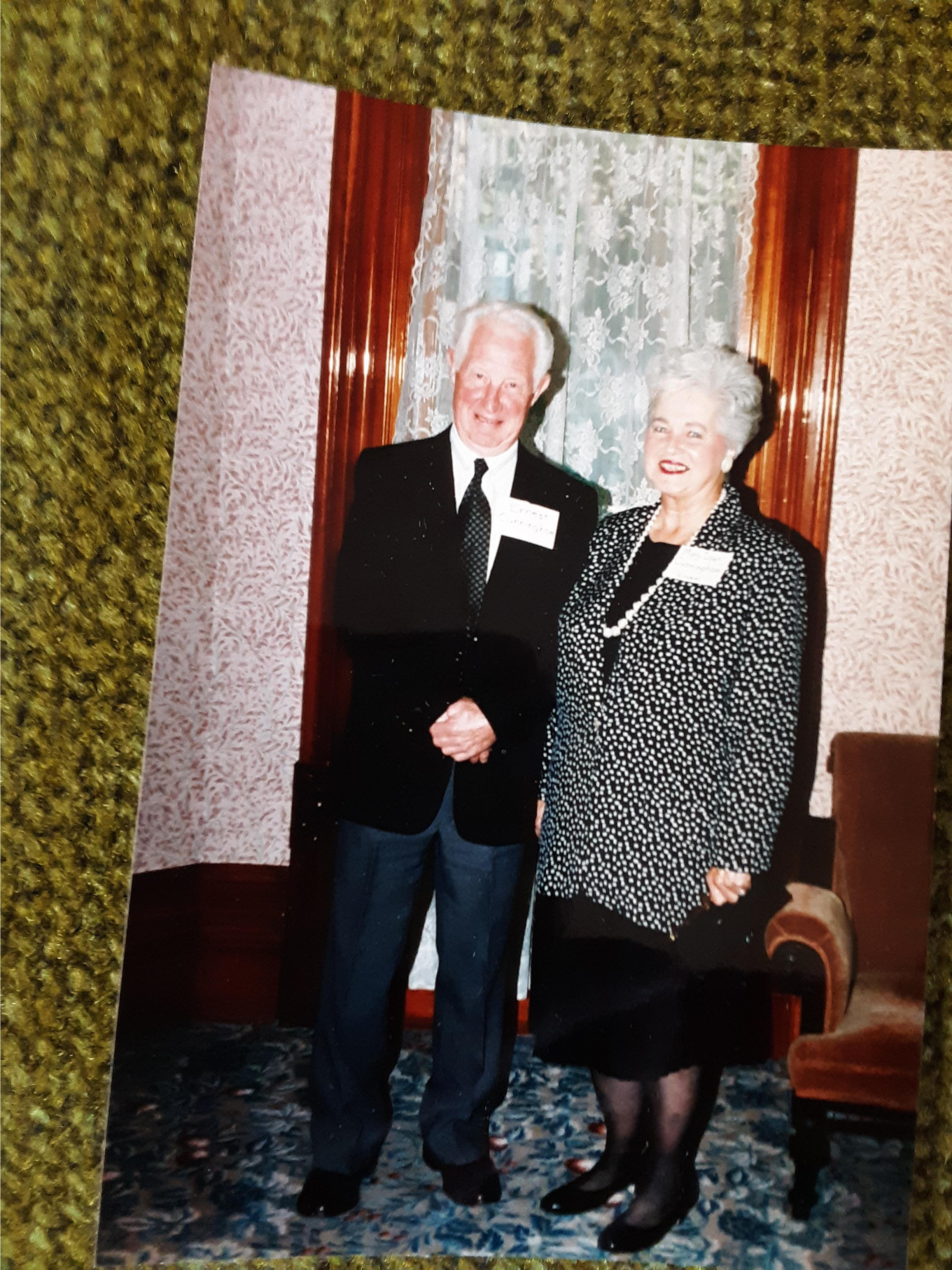
Mary
Dawn Cunningham left us on November 23, 2023 in the early morning
hours. She was widowed on September 24, 2008,after the death of her
husband, Ernest Cunningham. She is survived by her daughter Katy
Cunningham and her son William Cunningham.
Mary Dawn was born in Alameda on June 7, 1927 to Mary and Mark Melendy. Soon after they came to Humboldt County and lived in Freshwater until they moved into their house in Eureka, on M Street.
Mary Dawn attended Lafayette Elementary School, then Eureka Junior High, Eureka Senior High, where she excelled as a student. After graduating high school, she attended Humboldt State College majoring in education. After graduation she taught 1st grade at Freshwater Elementary for three years.
Friends introduced Mary Dawn to Ernest Cunningham, and a romance began, ending in marriage on December 27, 1949.
They purchased a home in Eureka in 1951, living in that home for the rest of her life. Mary Dawn and Ernest started a family and had two children: Katy Eileen Cunningham and William Ernest Cunningham.
Mary was tremendous homemaker. As well as being a participating mother in her children’s education, she was also active in PTA, Beta Sigma Phi Sorority and the local 4-H Chapter. she was also very knowledgeable regarding local Humboldt County history and wrote number of articles about various local historical events.
She loved to travel and enjoyed the family trips in their small RV, touring around the country.She and Ernie also enjoyed a partnership with another couple, and owned a local laundromat together. After selling the laundromat, Mary and Ernie went traveling in Europe, discovering more information on their family heritages.
Mary Dawn lived comfortably through the rest of her life in the house they purchased in 1951.
Mary Dawn Cunningham passed away gracefully at home at the age of 96, with her children. There will be a graveside service on December 21, 2023 at 11 a.m. at the Oceanview Cemetery. Family and friends are cordially invited to attend.
###
The obituary above was submitted on behalf of Mary Cunningham’s loved ones. The Lost Coast Outpost runs obituaries of Humboldt County residents at no charge. See guidelines here.
Humboldt Planning Commission OKs Draft Short-Term Rental Ordinance After Months of Deliberation
Isabella Vanderheiden / Friday, Dec. 1, 2023 @ 4:17 p.m. / Housing , Local Government
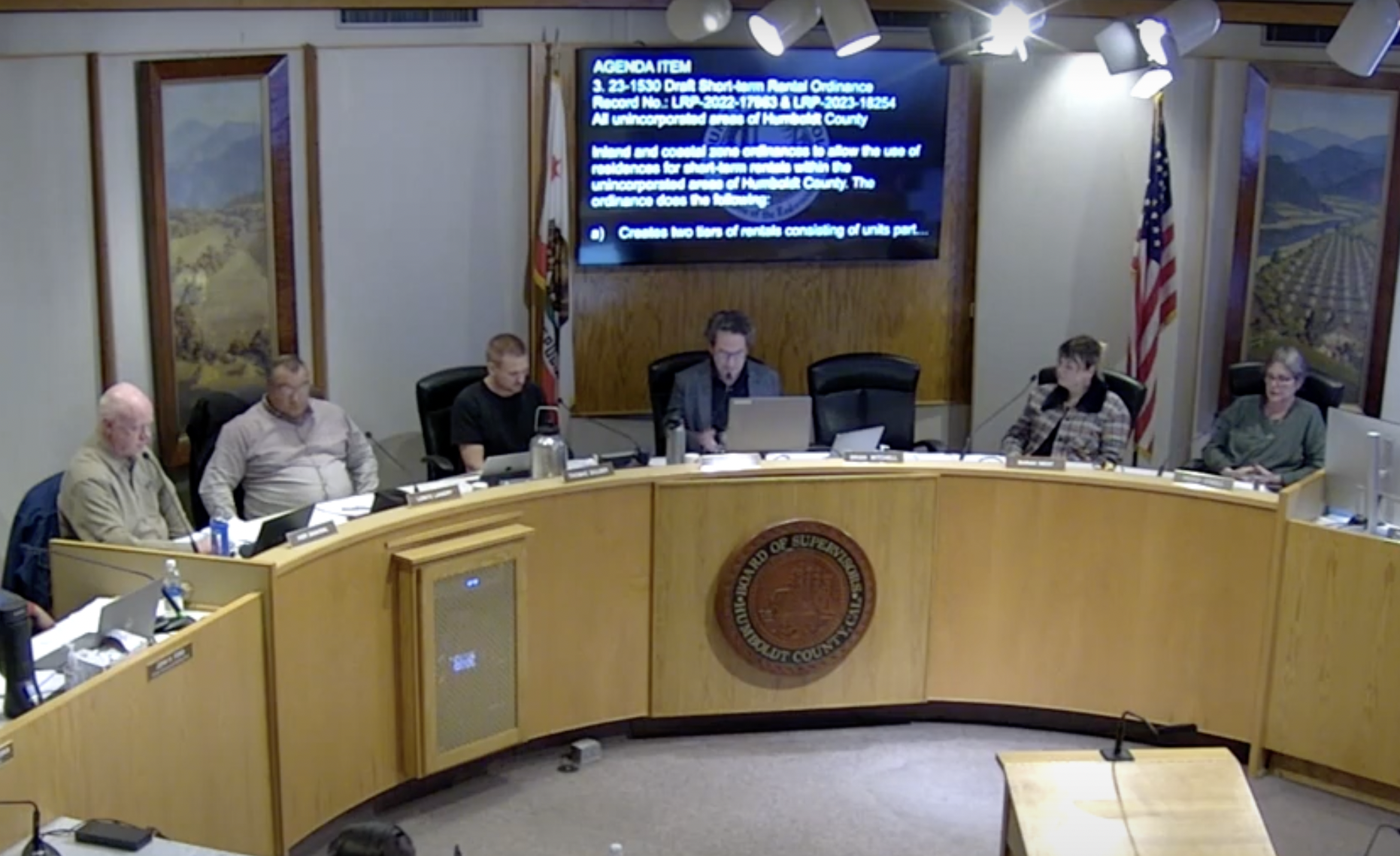
Screenshot of Thursday’s Humboldt County Planning Commission meeting.
###
The Humboldt County Planning Commission on Thursday unanimously approved new guidelines for short-term vacation rentals operating in unincorporated areas of the county.
The new rules, which have been in the works for several months, provide a regulatory framework for short-term rentals (dwelling units that are rented to guests for 30 consecutive days or less, through services such as Airbnb or Vrbo) to prevent adverse impacts on the local housing stock and neighborhood character. Of the 34,093 residential units in unincorporated Humboldt County, approximately 567, or 1.66 percent, are currently being used as short-term rentals.
Once the ordinance is approved by the Humboldt County Board of Supervisors, likely in the next month or so, property owners operating short-term rentals in unincorporated Humboldt will be required to go through a permitting process. Existing operators – anyone who has operated a short-term rental prior to the effective date of the ordinance, which has yet to be determined – without unresolved property violations will be given first priority.
During the Planning Commission’s final review of the draft document on Thursday evening, commissioners once again wrestled over how many short-term rentals should be allowed to operate in a given area. At an earlier meeting, the commission had agreed to a two percent cap on short-term rentals in the Humboldt Bay region, where housing is already scarce.
Commissioner Iver Skavdal thought it would be a good idea to extend the two percent cap to some of the county’s “over-impacted” Community Plan Areas, including Trinidad and Westhaven, where short-term rentals comprise between six and eight percent of the total housing stock.
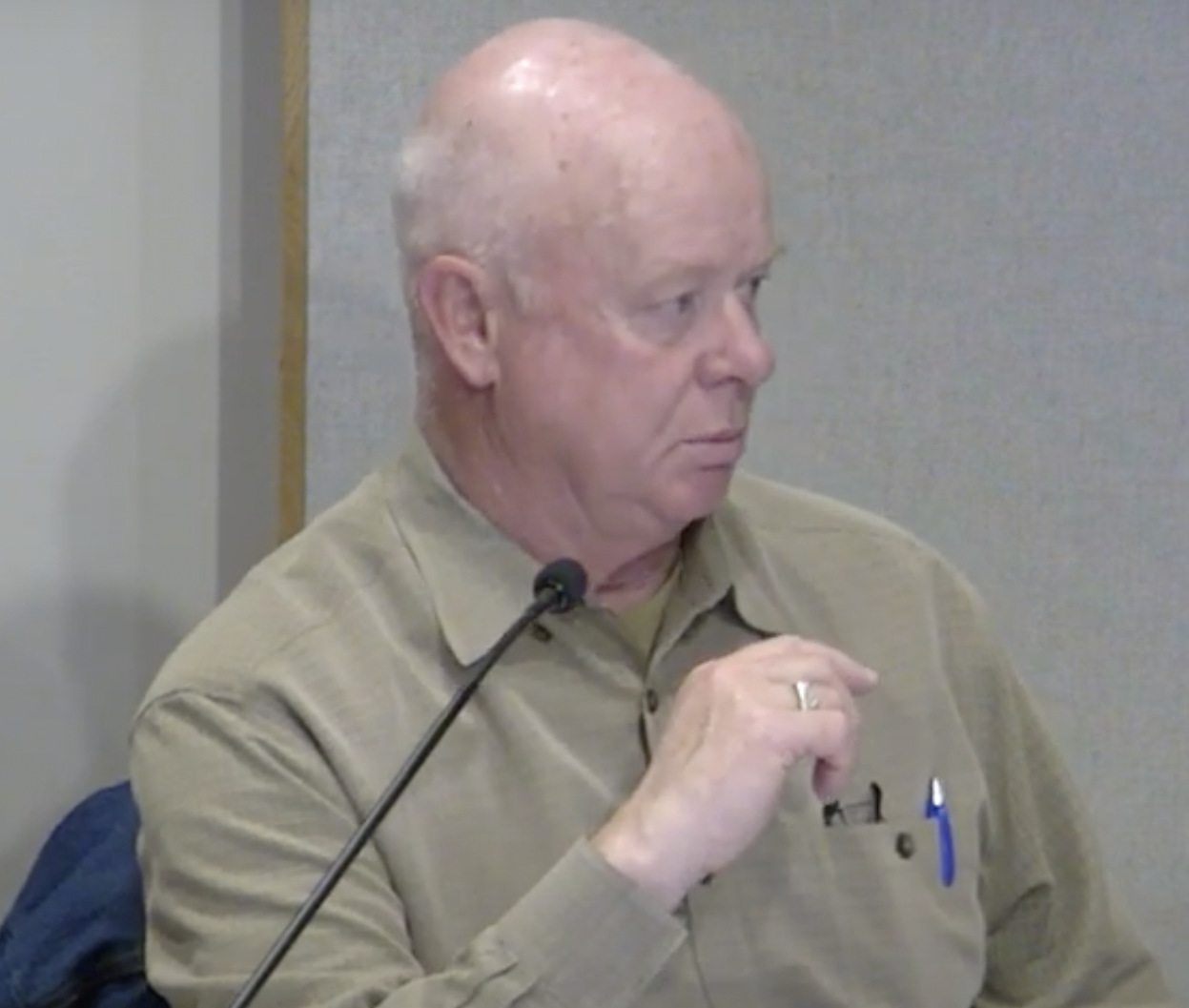
Skavdal
“There’s still a little bit of room between the number of short-term rentals that we have and the two percent [cap], and if all that balance just happened to show up in Trinidad or Westhaven – which is already an overly impacted area – it would seem to be unfair to that part of the community,” he said. “I’m trying to find a way to set another limit so those Community Plan Areas never get over a certain amount, or just hold at their current amount.”
Commissioner Peggy O’Neil agreed, adding that she would like to see short-term rentals “more distributed [throughout the county] to give more opportunity” to operators looking to supplement their income without overwhelming a specific area.
Commission Chair Noah Levy was a little more hesitant, noting that the “overall purpose of the cap was to ensure housing was available in places where people most need it in the Humboldt Bay Area.”
“If we essentially freeze the ability for any new, short-term rentals to occur in the places where they’re currently most popular – i.e. Trinidad, Westhaven or Orick – we end up putting more pressure on the communities that have, to this point, been less impacted in terms of the density of these rentals,” he said. “It’s true that having six or eight percent is impactful in Orick or Westhaven … but I guess I see those as being less critical regions for most people in the Humboldt Bay Area to live or find housing.”
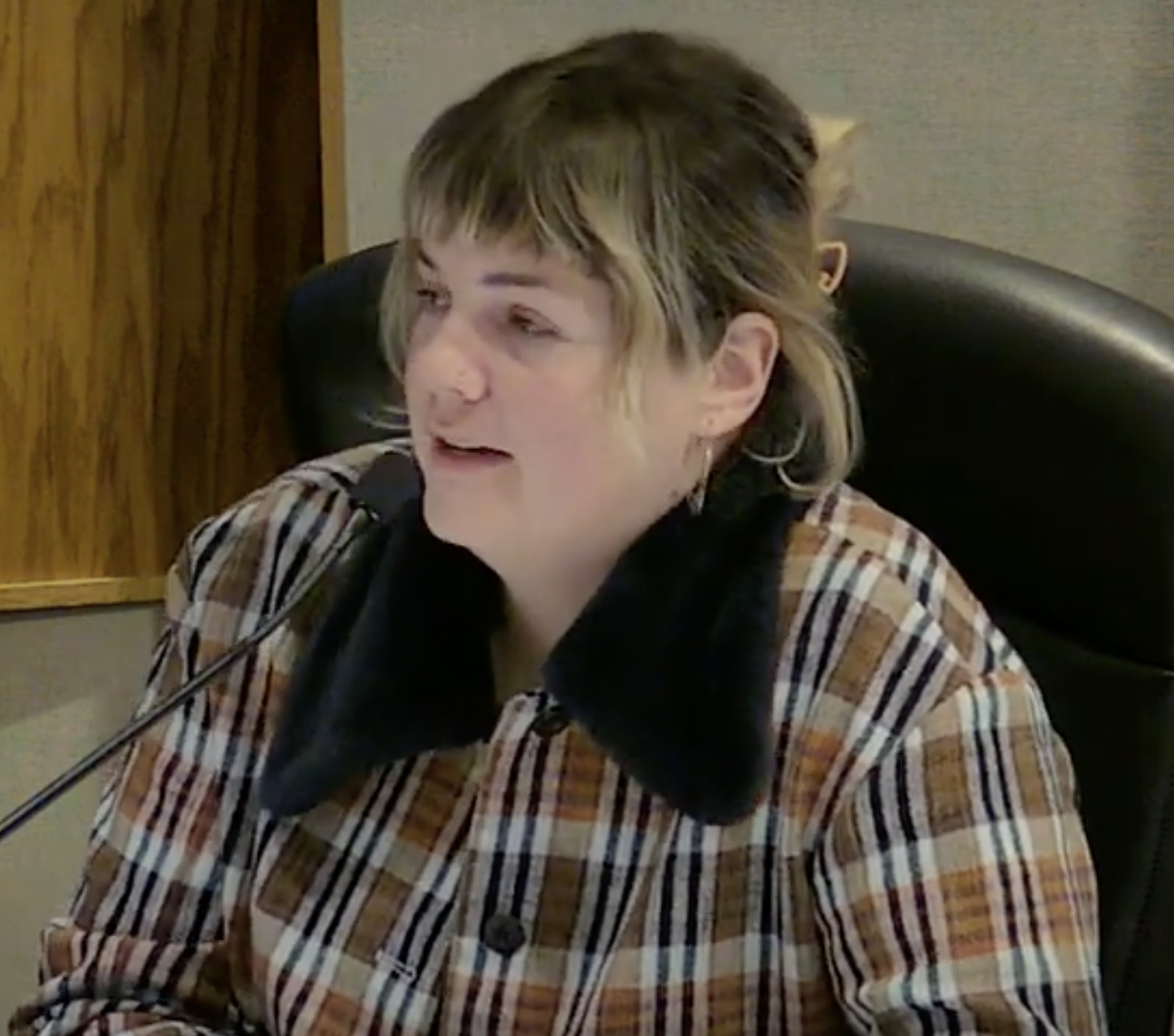
West
Commissioner Sarah West noted that the commission had received comments from several people living in those communities. “They have voiced that they are feeling the impact when they look for housing in those areas,” she said.
Commissioner Lonyx Landry added that housing had become less and less affordable near Orick with the proliferation of short-term rentals in the area due to the community’s proximity to Redwood National and State Parks.
After a bit of additional discussion, the commission ultimately agreed to a five percent cap on short-term rentals in Community Plan Areas, with the exception of the inland portion of Shelter Cove “where the standard does not apply” due to specific zoning rules.
Commissioners also wrestled with the issue of transferability and whether a short-term rental operator should be allowed to transfer their permit to another individual, particularly to children or next of kin, in the event of the operator’s death.
Cade McNamara, a planner with the county’s Planning and Building Department, recommended that the commission make the permits non-transferable to avoid conflict. “We get into kind of a sticky situation when we try to limit what can and cannot be transferred legally,” he said.
Planning and Building Director John Ford added, “Basically, this is a choice between not allowing transfers or allowing transfers that go well beyond children.”
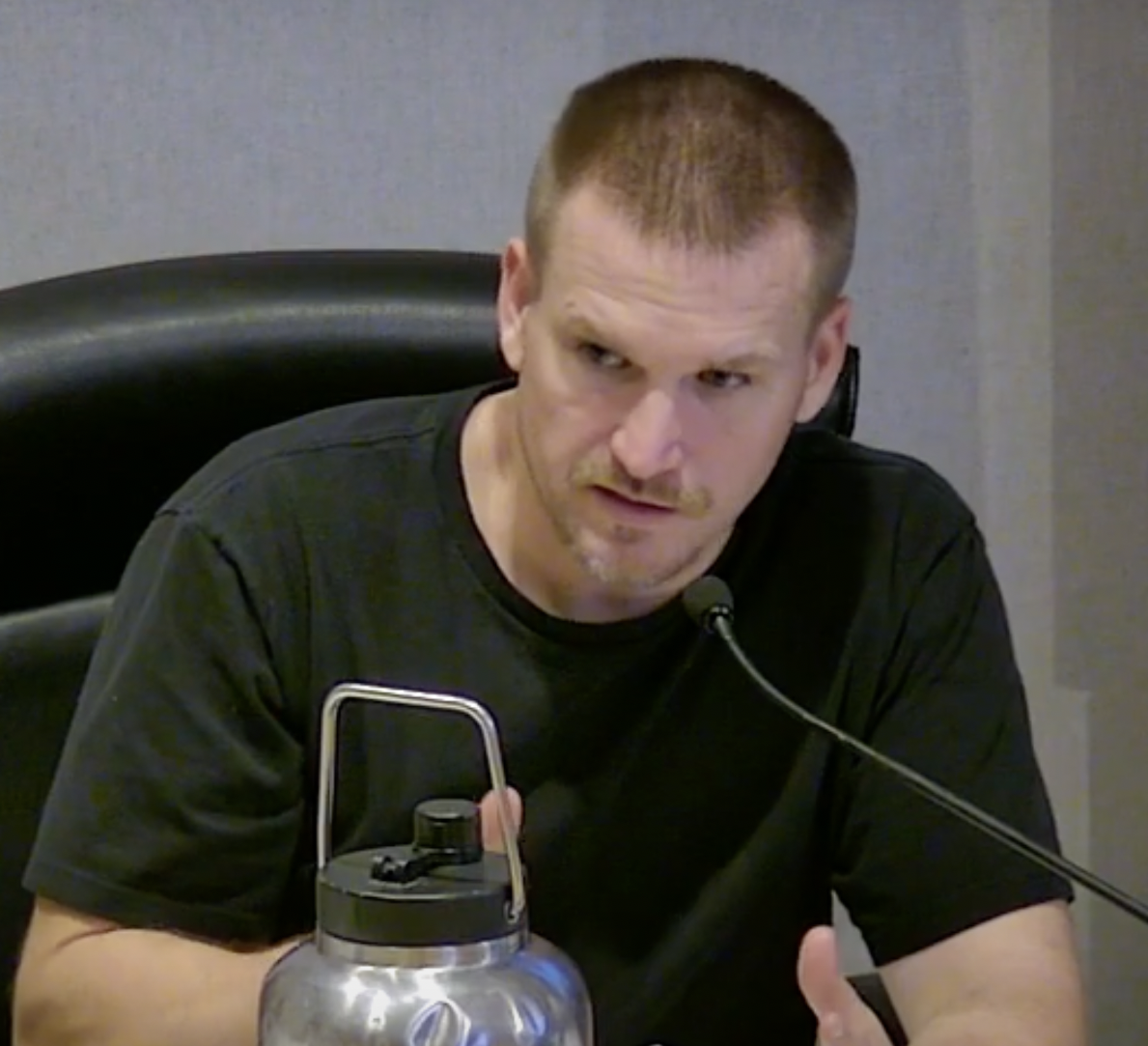
Mulder
Commissioner Thomas Mulder advocated for transfer of ownership, emphasizing the importance of being able “to pass things down to your children.”
West disagreed. “I just don’t think this is an appropriate avenue to do it,” she said. “As soon as you open up the door to make this pass down you are commodifying it, you’re conferring value … on making a home a commercial use. And I don’t agree with that.”
Skavdal said he had “flip-flopped all over” the transferability issue, but was reluctant to support it. “I have a short-term rental next door to my house, it can be there for generations and generations and it will just remain a short-term rental. I’m not sure I’m in favor of that.”
Mulder suggested that staff put a time limit on transfers to avoid having short-term rentals around long term as Skavdal feared. The commission entertained the idea but ultimately felt it was too complicated and decided to vote on the matter.
West made a motion to approve staff’s current recommendation not to allow transfers, which was seconded by Skavdal. The motion passed 4-2, with Levy and Mulder dissenting and Commissioner Brian Mitchell absent.
The commissioner went over a few smaller points but did not make any additional changes to the draft ordinance.
Mulder acknowledged the importance of being able to “agree to disagree and respect each other’s difference” and made a motion to adopt the ordinance as is, which was seconded by Landry.
The motion passed unanimously.
###
Previously:
(PHOTOS) The Historic Trinidad Lighthouse Has Been Placed Atop Its New Forever Home
Ted Pease / Friday, Dec. 1, 2023 @ 3:23 p.m. / Our Culture


On a chilly, rainy day in January 2018, the Trinidad Memorial Lighthouse was lifted from its home of 68 years on the bluff overlooking Trinidad Harbor and edged its slow way down to the parking lot at the State Beach.
Nearly six years later, on another rainy day, the 74-year-old lighthouse came to rest Friday on a new permanent foundation at the foot of Trinidad Head. The Trinidad Civic Club, which owns the lighthouse, came to an agreement with the Trinidad Rancheria to place the lighthouse and 2-ton bronze fog bell on its harbor property.
The memorial is an exact replica of the original 1871 lighthouse, still in operation on Trinidad Head’s southern cliff. The memorial was built in 1949 at the end of Trinity Street above the harbor to commemorate fisherfolk and other sailors lost at sea.
When city engineers determined in 2017 that the bluff was slipping away under the lighthouse, the iconic memorial needed a new home. It touched down there in a steady rain Friday as a crane deposited the 25-foot-tall, 40,000-pound lighthouse onto its new foundation.
Work will continue on the foundation and to place the original 2-ton bronze fog bell on the new memorial site.


