Offshore
wind developer RWE announced that it has accepted a “settlement”
with the Trump Administration. In exchange for abandoning its
offshore wind lease off of Humboldt County’s coast, the German energy
company will receive $1.22 billion to instead invest in fossil fuel
projects. The Trump Administration has reached similar settlements
for projects on the East Coast, which
are being litigated,
and the California Attorney General’s Office has sent
the Trump Administration “notices of intent to sue” for
other settlements on the West Coast.
What
does this settlement agreement mean for the future of offshore wind
off Humboldt’s coast?
Matt
Simmons, climate attorney at EPIC, and Jen Kalt, executive director
of Humboldt Waterkeeper, join the program to discuss.
Press
release from the Humboldt County Sheriff’s Office:
On
August 20, 2026, at approximately 4:30 a.m., Humboldt County
Sheriff’s Office deputies arrested 27-year-old McKinleyville
resident John Davis IV in connection with the robbery of the Shell
Gas Station on Central Avenue in McKinleyville, which occurred on
August 19, 2026.
Following
the robbery, deputies conducted extensive follow-up investigation,
including reviewing surveillance footage, conducting probation
searches, interviewing witnesses, and collecting evidence related to
the incident. Through these investigative efforts, Davis was
identified as the suspect.
Davis
was booked into the Humboldt County Correctional Facility on the
following charges:
P.C.
211 – Robbery
P.C.
1203.2 – Violation of Probation
Anyone
with additional information regarding this case is encouraged to
contact the Humboldt County Sheriff’s Office at (707) 445-7251 or
the Sheriff’s Office Tip line at (707) 268-2539.
The year was 1893. A young man of
twenty joined a group of friends on a
fishing excursion at the Mattole River.
Early one morning, he opted for a hike
in order to explore the surrounding
area. The young man climbed a bluff to
observe the view and found himself
overlooking the land that he knew would
one day be his home. In 1894, when he
reached the age of 21, Albert Etter
made the journey to Eureka and filed
claim to the parcel of land that he and
his family would settle — the land now
known as the Ettersburg Ranch.
The Ettersburg Ranch in southern
Humboldt County provided more than
simply a home for the Etter family.
Thanks to the Etter brothers, the ranch
became a place of enterprise and self-sufficiency, where the industries of
timber, agriculture, and livestock played important roles. It was the unique
site of an agricultural experimental station, where many varieties of plants
were grafted, developed, raised and distributed throughout the world.
Benjamin.
The rich history of the Ettersburg
homestead may be said to have begun
with the story of one man. Born in Switzerland in 1822, Benjamin Etter came
to the United States as a young man and
first settled in Missouri. He served in
the United States armed forces for the
duration of the Mexican War. After the
war, Etter received a homestead of forty
acres from the government in the area
that is now downtown Chicago. He sold
the land, however, when, like so many
others, he heard the cry of “GOLD!”
from faraway California.
According to Leo Etter, grandson of
Benjamin, the elder Etter traveled to
California by sea, crossing the isthmus
of Panama, not an easy journey in those
days. From there he found passage on
anothership heading for San Francisco.
Etter then went overland to El Dorado
County, where he lived and mined gold
for some years. In 1854, he traveled to
St. Joseph, Missouri to visit family, and
there he met and married Wilhelmina
Kern, a native of Germany. The newly
married couple made their way back to
El Dorado County, where they settled in
Placerville to raise their family and to
continue Etter’s mining operations.
There, Benjamin Etter mined for gold
from approximately 1849 to 1870. During this time, Wilhelmina bore seven of
their thirteen children (ten of whom
survived). The couple’s only daughter,
Louise, was born in 1858. The remaining boys were Emil, born in 1861; Jules,
in 1863; George, in 1866; William, in
1867; Fred, in 1869; Albert, in 1872;
August, in 1875; Francis and Louis,
twins, in 1879 and the youngest, Walter,
in 1882.
Wilhelmina.
After twenty-one years of mining,
Benjamin Etter decided to move his
family farther west, to the newly-developing region surrounding Humboldt Bay. Perhaps he had tired of a
miner’s life, or perhaps he had, by then,
accumulated enough gold to begin a new
business enterprise of his own. No doubt
the Etters had heard talk of the rich
pasture lands and enormous stands of
timber alongside an idyllic bay to the
west. Whatever the reason might have
been, the year of 1870 saw the family
settle on some acreage at Coffee Creek,
near Ferndale.
During their years in Ferndale, the
rest of the Etter children were born and •
raised. Benjamin Etter devoted himself
to a prospering dairy business, at which
all of the children were obliged to work
until they reached the age of 21. After
that, they were free to strike out on their
own.
Wilhelmina Etter and her husband
were said to have possessed a great love
for plants, for gardening, and for experimentation in growing things. It was
their mother, however, who was most
influential in instructing her children in
gardening techniques. Although all of
her children enjoyed the benefit of such
instruction, one in particular developed
a fascination for the horticultural arts.
For him, it became a lifelong study.
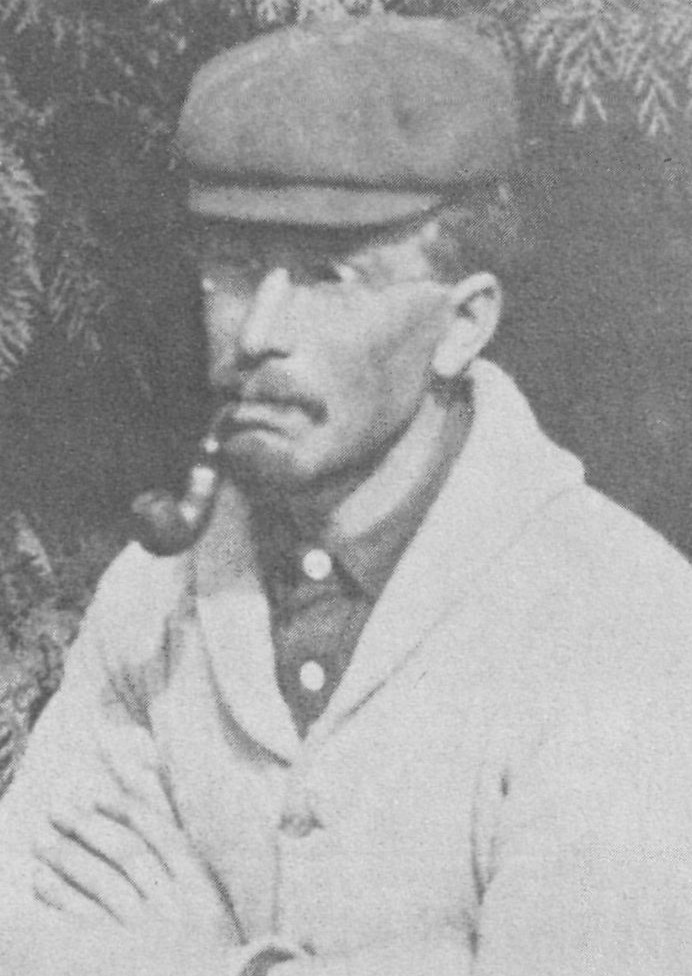
Albert Etter has often been referred
to as Humboldt’s counterpart to the
famed horticulturalist, Luther Burbank. Indeed, Etter and Burbank were
not only friends, but fellow scientists as
well, exploring similar avenues of plant
breeding and hybridizing. Albert Etter
eventually pursued the course of his
childhood fascination in his extensive
experimental work at the Ettersburg
Ranch.
Albert was the first of his family to
settle the property, a beautiful little valley surrounded by rolling hills. This
land was later to be known as Ettersburg. The area was named for the Etter
brothers, pioneer sons of Benjamin
Etter, who came to the place to homestead, to raise families, and to work the
land. Albert was soon joined at the property by his brother August, and shortly
thereafter by his brothers Fred and
George. The four formed a partnership
called the Etter Brothers and thus
began the work of developing various
business enterprises connected with
their land. George Etter purchased a
ranch of his own on bordering property
(now owned by Lee French). The three
remaining brothers then combined
their holdings into one large ranch.
August and Albert built the first
ranch house, a small cabin, in 1905.
Albert.
Albert erected a small platform in the
branches of a madrone which he dubbed
his “sleeping tree,” and there might
have spent many hours planning the
future projects that he and his brothers
would undertake. The brothers each
excelled in a variety of skills, and their
combined efforts would help to further
their goals of self-sufficiency for themselves and for their families. Soon after
homesteading a section of the ranch
known as “Grasshopper Ridge,” Fred
Etter purchased a sawmill and moved to
the Petrolia area in the year 1900, where
he operated the mill for the next twelve
years.
Leo Etter’s wife, June, recalled a
visit by the elder Etter to her family’s
ranch in nearby Honeydew immediately following the great earthquake in
1906. Neighbors were few and far
between, and a democratic spirit prevailed during times of crisis. The North Coast was not immune to damage by the
earthquake, and June recalled that a
large rockslide occurred nearby.
Etter’s visit was an expression of concern for the safety of his friends. Leo’s
father, Fred Etter, and June’s father,
Elihu Lindley, were great friends
throughout their lives.
Fred Etter brought his sawmill from
Petrolia to the Ettersburg Ranch in
1912. The brothers used the steam-powered mill to develop an extensive
lumber business at the ranch. Fred had
charge of the woods and mill operations.
Timber on the property provided the
necessary lumber for many county
bridges, for neighboring homesteads,
and for all of the buildings that would
eventually be constructed at the ranch
itself.
In the years that followed, Fred
employed between eight and ten millworkers for the ranch’s logging operations. All the hired hands lived at the
ranch along with other members of the
Etter family. In 1911, Fred Etter traveled to St. Louis, Missouri, to attend the
World’s Fair and visit relatives there. It
might have been at this fair that he met
his future wife, Margaret, and the two
were married later that year. Margaret
joined her new husband at the ranch,
and the following year bore their first
son, Leo Etter.
Fred and Margaret Etter with their children. Leo is standing at left, Cyril, center and Bernard, seated.
Fred Etter was noted for his skills as a
carpenter, and took charge of most of
the construction on the ranch. The first
of several barns was constructed in
1910. The main ranch house was built in
1914. The two-story structure contained
many rooms for family and ranchhands. Decks surrounded the entire
house both upstairs and downstairs. The
huge downstairs kitchen provided
meals for ranch-hands and family. A
large pantry and root cellar stocked
whatever goods were necessary to feed
the many mouths. The house was built
entirely of lumber milled on the
property.
With the ranch house completed, construction then commenced on the barns,
shops, and various other out-buildings.
One of these included an apple-evaporating plant, built in 1918. The apple business proved an integral part of ranch
life. Close to forty acres were planted
with many varieties of apples, most of
which were developed through Albert’s
experimental work.
The entire family would help with the
yearly apple harvest. Leo Etter recalled
his uncles, their wives and children,
arriving at the ranch for apple harvest.
They came from all over the surrounding area: Jules Etter, who lived across
the nearby Mattole River; Louis Etter,
who resided on property bordering the
ranch that is now owned by Lee French;
Walter Etter, who homesteaded land on
nearby Wilder Ridge; Frank Etter, who
lived across Bear Creek in Honeydew;
and Emil Etter, also a resident of
Honeydew. With the large family working together, many fresh and dried
apples were shipped to Eureka through
the G.M. Connick and Company, and to
the surrounding communities as well.
Harvest work at the ranch was not
limited to apples, however, and the family worked together during harvests of
chestnuts, strawberries and other
produce.
A cheese factory was constructed on
nearby property and Ed Mixer, a
cheesemaker from Switzerland, was
hired to oversee the cheesemaking.
There were 75 goats on the Ettersburg
Ranch at the time, and goats were popular stock for many of the neighboring
homesteads. Families from the surrounding areas brought goats’ milk to
the factory on a regular basis to be made
into cheese. One of Leo Etter’s earliest
recollections is that of milking the goats,
and then delivering the milk to the
nearby factory.
Other livestock on the ranch included
sheep, cattle and horses. August Etter
had charge of the stock, and much of the
farm work and transportation of goods.
Transportation in the early days of
Humboldt homesteading was no simple
matter. The Mattole Road, once merely
a walking trail, underwent expansion
and improvement during the early
1870s. This road was an important connection between the southern and
northern parts of the county. Although a
daily stage began operation between
Petrolia and Eureka in 1871, the road
south of Petrolia toward Ettersburg
was not as frequently used, and therefore not as well maintained. The journey from the Ettersburg Ranch to
Eureka was made approximately twice
a year in what Leo referred to as the
“express grocery wagon.” This wagon
was pulled by four horses, and the trip
required five days in each direction.
These biannual wagon runs were essential to ranch life. Many tools were
repaired and replaced, and supplies
were purchased.
The eldest Etter, Benjamin, never
learned to drive an auto. His grandson,
however, recalled some of the early
ranch vehicles, the first being his
father’s purchase of a 1912 “locomobile” in 1920, which was remodeled to
serve as a truck for ranch work. Leo
taught himself to drive in that truck at
age fourteen. The family purchased a
Model “T” in the early 20s, a Model “A”
in 1929, and a Chevrolet coupe in 1937.
Some years later, another mode of
transportation became a familiar part
of the Ettersburg Ranch — that of the
airplane. Leo Etter’s love of flying
began with an airplane ride he took with
his father in 1927. After that ride, he
hoped to one day pilot a plane of his own.
Etter recalled his early flight training
at Long Beach Airport and his first solo
flight at Oakland Airport in “an old
open bi-plane.” He received a pilot’s
license in 1938 at the Los Angeles International Airport. After serving in the
army from 1942 until 1946, Etter
returned to the ranch, where he built a
hangar and an airstrip for his first
plane, an Aeronica Champion. In 1947,
he attended school at Cal Aero Tech in
Glendale, where he received an aircraft
mechanics and engine rating. During
1948 and 1949, Etter managed the airport at Ukiah and received his commercial license and flight instructor’s rating. From 1950 until his recent retirement, Etter managed the airport and
flight operations in Garberville, where
he provided flight instruction and charter service for the local area.
Much of Etter’s charter work included delivery of equipment and supplies to
local logging operations during the fifties. These equipment runs often involved making low passes over a designated logging area to drop supplies. The
charter service also served as an air ambulance for logging accidents, a
common occurence. Leo recalled flying
his uncle, August, to Eureka on frequent trips. August Etter would always
marvel at this modern mode of transportation — a trip that once took five
days now took only thirty minutes. And
once he had flown, the elder Etter never
desired any other way to travel.
Perhaps some ofthe more historically
important and most noted aspects ofthe
Ettersburg Ranch were its agricultural
achievements under the guidance of
Albert Etter. Many varieties of plants
from around the world were cultivated.
The produce included peaches, plums,
pears, grapes, chestnuts and walnuts, as
well as the many acres of apples and
strawberries. Albert, together with his
brothers, developed, grafted, hybridized and sold many new and experimental varieties of apples, strawberries
and other plants.
In 1924, he married Katherine, a
young “mail-order” bride from New
Jersey. When she arrived, the brothers
built a house for the couple adjoining the
original first cabin, and adjacent to
Albert’s experimental gardens. Katherine Etter eventually took over the job of
postmistress for Ettersburg, a position
she held for many years, and she resided
in that same house all of her life.
In addition to his horticultural talent,
Albert Etter had an aptitude for writing. In reference to his own writings
about Ettersburg, Albert once commented, “…I will assume all responsibility and take all blame…” On a letterhead
from the ranch was printed:
“…Ettersburg Experimental Place,
Ettersburg, California. Founded in
1894 by Albert Etter. Location: 40 miles
from nowhere, in the mountains of
Southern Humboldt. My specialty - taking up the study of Nature where the
Creator left off…”
One of Etter’s major preoccupations
was what he referred to as “…solving the
age-old apple riddle: From where did
our apples come, and how to breed
apples…” Although cultivated for many
centuries, Etter felt that the apple had
undergone little improvement from the
original species.
Over the years, Etter continued to
experiment and to develop new, hardier, and climatized varieties of apples.
He used the basic premise that hybrid
varieties could be used successfully
when crossed with pure species or other
unrelated hybrids. Varieties such as the
“Manx Coddling” from England, and
the “Reniette Ananus” from Holland,
both small hybrid crab apples, were
used to successfully breed other new
varieties at Ettersburg. The reason for
this success appeared to be that the foreign hybrids were not closely related to
any local apple varieties. For example,
Etter
crossed these very small crab
apples with the native Humboldt wild
crab apple. The new variety that was
eventually produced, was said to be
“…464 times as heavy as the mother species fruit…”
Etter introduced angle-worms to the
soil for building bacterial content, and
providing soil aeration. He also introduced Monantha Vetch, a European
variety, to the local area. At first, local
ranchers were skeptical, but they soon
came to realize the benefits of the vetch
as an excellent forage and cover crop for
livestock feed and soil improvement.
The cultivation of Monantha Vetch as
a cash crop was an important part of the
agricultural tasks at Ettersburg. Leo
Etter recalled the early thrashing operations at the ranch. The Etters owned
and operated their own thrashing
machine for use at the ranch as well as
for many neighboring ranches. When
thrashing time arrived, this work involved many friends and neighbors.
Albert and August were not the only
Etter brothers to experiment with plant
breeding. Their youngest brother, Walter, became quite interested in apple
experimentation and developed a variety he named the “Waltanna”, after
himself and his wife, Anna. The Waltanna variety was sold worldwide, and
was reported to have been shipped as far
away as Australia. Over the years,
Albert Etter, and his brother, August,
continued their extensive work in crossing and developing many varieties of
deciduous fruits. The basic principle of
crossing wild species with previously
cultivated varieties proved to be successful for much of their experimentation.
As the horticultural experimentation
continued, people from around the
world grew interested. Fruit growers,
plant breeders, agricultural scientists,
and those simply interested in the
experimental work, wrote letters of
inquiry and made frequent visits to the
Ettersburg Ranch.
At one time, trees and shrubs from all
parts of the world surrounded the ranch
house, with many varieties of flowers
growing at their bases. Even today,
nearly a century later, thousands of daffodils surround the house each spring. A
tropical palm and a monkey-puzzle tree
grow outside the house, as well. And
there is an incredible flowering wisteria
plant intertwined and growing up the
tree some seventy-five feet above.
The early days of Ettersburg saw the
arrival of many new families to the area.
The education of local children, both
informally at home, and more formally,
at a school, was an important concern
for these pioneer families. According to
Leo Etter, the first Ettersburg School
was located near the largest madrone
tree for miles around, referred to by
local homesteaders as the “Indian Council Tree.” The great tree was alleged to
have been the site of council meetings
for the regional Indian tribes. Perhaps
it was under the branches of this tree
that local Indians educated their own
children.
The area nearby the tree was
chosen as the site for the first Ettersburg School. By 1918, there were
approximately twenty children living in
the Ettersburg area, and a larger school
building was deemed necessary. Fred
Etter built the Ettersburg schoolhouse
that year on property at the ranch. Fred
and Margaret Etter had had two more
sons by that time: Cyril, born in 1914
and Bernard, born in 1917. Leo was six
years old when his father built the
schoolhouse, and he began to attend the
school that same year.
The three brothers lived many years
at the family ranch. Leo mentioned that
logging operations at the upper ranch
during the 1950s were managed by his
two younger brothers. Cyril Etter
resided at the ranch for many years with
his wife, Vale, and their son, Mike. Mike
Etter continues a family tradition
today, residing in a home he built on a
section of the lower ranch, with his wife,
Betty, and their three children.
The Etter women played a major role
in the ranch history. Besides the continual responsibilities of child-rearing and
home maintenance, the women cooked
for the ranch hands, as well as their own
families. Leo recalled that his mother,
Margaret, was often joined by his aunts
Louise, Katherine and Josephine, in
order to have help with the constant
chores of cooking, canning, gardening
and keeping house for so many. Margaret Etter maintained records of all
household and ranch business for some
years.
Today, Leo Etter and his wife, June,
reside at the family ranch house. Portraits of the first Etters, Benjamin and
Wilhelmina, hang in the living room.
Besides maintaining the ranch and
remodeling the house, Leo gardens,
runs sheep, and annually harvests the
chestnut trees that his father helped to
plant. June Etter has commented, “…it’s
not everyone that has the opportunity to
come home again…”
###
The piece above was printed in the September-October 1985 issue of the Humboldt Historian, a journal of the Humboldt County Historical Society. It is reprinted here with permission. The Humboldt County Historical Society is a nonprofit organization devoted to archiving, preserving and sharing Humboldt County’s rich history. You can become a member and receive a year’s worth of new issues of The Humboldt Historian at this link.
A dead male humpback whale was found on Mad River Beach on July 3. | Photo provided by LoCO reader Tom Schallert
Scientists catalogued the highest number of dead marine mammals in over a decade on the North Coast’s beaches last month — almost triple the typical monthly average.
Twenty-eight marine mammals were found dead last month. Researchers usually find 10 in July, Dawn Goley, the director of Cal Poly Humboldt’s Marine Mammal Stranding Program, told the Outpost. Most of them were seals and sea lions, but at least two dead humpback whales were included too. The program has tracked dead marine mammals over a 140-mile stretch of coastline from northern Mendocino County up into Del Norte since 2012, checking out the same spots at the same times to ensure consistency.
It’s too soon to tell what’s causing the inflation, Goley said, and many of the animals are too decomposed to examine anyway. This year’s El Niño hasn’t gathered enough strength yet to heat coastal waters close to shore, but it’s getting warmer further out to sea. The ocean also sometimes suffers through heat waves, which have become more common over the last five-ten years, Goley said. Boat strikes may have killed some of them. Some may have starved. Researchers don’t have exact data on the amount of living creatures here either; an increased sea lion and seal population, as well as increased boat traffic, might be driving the rate up as well. “But,” Goley said, “Given the magnitude of it, something else, something unique, is going on this year, and I’m sure it has to do with environmental changes.”
Grey whales have died this year at a higher rate than normal as well, Goley said. Some have starved, or become so emaciated they were unable to recover from injuries. There was another spike in grey whale deaths five years ago, so the stranding program and NOAA are working together to determine why they’re starving. It’s a “complicated” issue, Goley said, but there’s likely a human element.
They’re also paying close attention to the Guadalupe fur seal, which migrates up here from Mexico to feed offshore. Their population is depleted further south, and strandings here could mean trouble down there. California and steller sea lions seem to be doing OK.
Keeping track is difficult, Goley said. If you see a stranded marine mammal on the beach, Goley wants you to contact them, either by emailing marinemammals@humboldt.edu, or by calling 707-826-3650.
A man sought by police for an alleged stabbing in January has since been apprehended, but the Humboldt County District Attorney’s Office has confirmed it won’t file charges against Cody Sides for the incident in Willow Creek.
A search warrant for the arrest of Sides was active for months after a woman alleged that, as she was refueling her truck alongside State Route 299 on January 8, she was stabbed by Sides. She was taken to the hospital for treatment, the Humboldt County Sheriff’s Office reported.
A since-removed GoFundMe page stated the woman “sustained life-threatening injuries and was rushed into emergency surgery to repair damage to her stomach, colon and pancreas,” according to the Times-Standard.
However, reviewing the case in April, the Humboldt County District Attorney’s Office found insufficient evidence to charge him for the stabbing.
[CORRECTION: We originally stated that Sides was arrested in April, not that the district attorney had reviewed the case then. We’ve corrected that. Apologies.]
“Charges were not filed as there was insufficient evidence to prove a crime beyond a reasonable doubt,” wrote Humboldt County District Attorney Stacey Eads in an email, a decision she said was based upon investigative reports submitted by law enforcement.
“Sometimes for cases we review there is probable cause to believe a crime occurred, however, in our evaluation the existence of conflicting statements, lack of corroboration, credibility issues, self-defense or other evidentiary considerations preclude us from being in a position to file charges as there is not sufficient admissible evidence to prove the crime beyond a reasonable doubt,” she explained, noting this determination is always a case-by-case analysis.
Separately from the alleged stabbing, the office has charged Sides in two cases this summer. He was arrested by the California Highway Patrol August 7, and charged last week with firearm and ammunition possession with a felony conviction, plus misdemeanors like possession of a switchblade in a vehicle, possession of burglar’s tools and drug charges. A separate misdemeanor drug case was filed in July.
He has pleaded not guilty to all charges.
His attorney did not want to comment. A HCSO spokesperson did not immediately return an email seeking further information.
Possible Conflict Issues for Hoopa Shooting Defense Attorney
The defense attorney representing one suspect accused of murder for the fatal shooting of 17-year-old Dylan Moon in Hoopa has raised possible conflict issues that could preclude her from representing the defendant. This could mean further delays in the case that has gripped the community.
Judge Steven Steward will decide next week on attorney Rebecca Linkous’ request to hold a confidential one-on-one hearing with him over possible conflicts she said came to her attention after reviewing gang-related evidence from the District Attorney’s office.
Linkous represents defendant William Warren. Along with murder, Warren and co-defendant Tse-Lin Lincoln are accused of assault charges, each with gang-related enhancements that would add additional jail time if they’re convicted.
The unusual request to have the judge review the type of conflicts personally and confidentially was appropriate, Linkous argued, because of the nature of these gang allegations.
Linkous pointed out she holds seven years of experience working on gang cases in another county, and was concerned Humboldt County would be unable to find another attorney with similar experience.
Both defense attorneys are private, and were hired by the county to represent the suspects after both the Conflict Counsel and Public Defender’s offices declared conflicts in the case.
Lincoln’s attorney, Andrea Sullivan, did not have an opinion on the matter.
But prosecutor Roger Rees opposed the private meeting with the judge, called an ex parte in camera hearing.
He argued the meeting serves no purpose but to give legal advice to Linkous, arguing she was seeking a “second bite of the apple” because Judge Lawrence Killoran had previously denied a similar request.
When asked by Steward, Rees confirmed the District Attorney’s office plans to continue with the gang allegations.
Judge Steward said the private meeting “may be appropriate,” but he was unsure today, noting earlier he’d not previously ran into this issue. The matter was scheduled for August 26. The preliminary hearing is also set to be scheduled on this date.
After much back and forth over which judge would oversee last week’s mental health diversion hearing for school threats suspect Daryl Ray Jones, a new wrinkle has emerged.
A new judge will be tasked with deciding whether he’ll be diverted into treatment after an appeals court overturned a previous ruling.
Judge Kelly Neel was set to decide today whether Jones would be offered treatment and have criminal proceedings against him paused. But Monday, the court of appeals commanded the Humboldt County Superior Court to overturn a ruling on a motion to disqualify a judge.
Earlier, the DA’s office had used a peremptory challenge to attempt to disqualify Judge Neel. This type of measure allows attorneys to disqualify a judge, without needing to prove or give reason why they believe the judge is prejudiced in the case.
Judge Timothy Canning had denied the District Attorney’s Office’s challenge to Judge Neel being assigned to the casee, and she oversaw a hearing last week where a psychologist testified on Jones’ suitability to be diverted from criminal proceedings.
But on August 17, the Court of Appeals overturned this, according to court records. The Humboldt County Superior Court followed by granting the challenge against Neel, in an order signed by Judge Canning.
Multiple other Humboldt County Superior Court judges have been disqualified from hearing the case, as the threats affected many in the community — the calls included multiple businesses, schools and daycares. Neel’s child goes to a school that received threats, the prosecution said when seeking to disqualify her.
According to court records, the next hearing on the matter will be held Monday. The case will be reassigned to a different judge, according to Canning’s order.
Press release from the Humboldt County Sheriff’s Office:>
On August 19, 2026, at approximately 10:14 a.m., Humboldt County Sheriff’s deputies were dispatched to Tagmeyer Beach in Willow Creek to search for an individual who had been observed struggling to swim in the Trinity River the previous day. The individual’s vehicle remained parked at the location, prompting concern for their welfare.
Deputies responded to the area and began searching for the individual. With assistance from the Humboldt County Sheriff’s Office Special Services Division, deputies conducted an extensive search of the river and surrounding river bar.
During the search, deputies located two deceased individuals in the water. The circumstances surrounding their deaths remain under investigation and appear consistent with drowning.
The deceased have been identified as 45-year-old Arcata resident Lex Rincon and 18-year-old New York resident Krishna Rincon. Their next of kin have been notified.
The cause and manner of death remain pending. Autopsies are scheduled for early next week.
The Humboldt County Sheriff’s Office extends its heartfelt condolences to the Rincon family, friends, and loved ones during this difficult time.
A pedestrian crosses Highway 101 at B Street, a historically dangerous intersection in Eureka. | Photos/graphics by Isabella Vanderheiden unless otherwise stated.
###
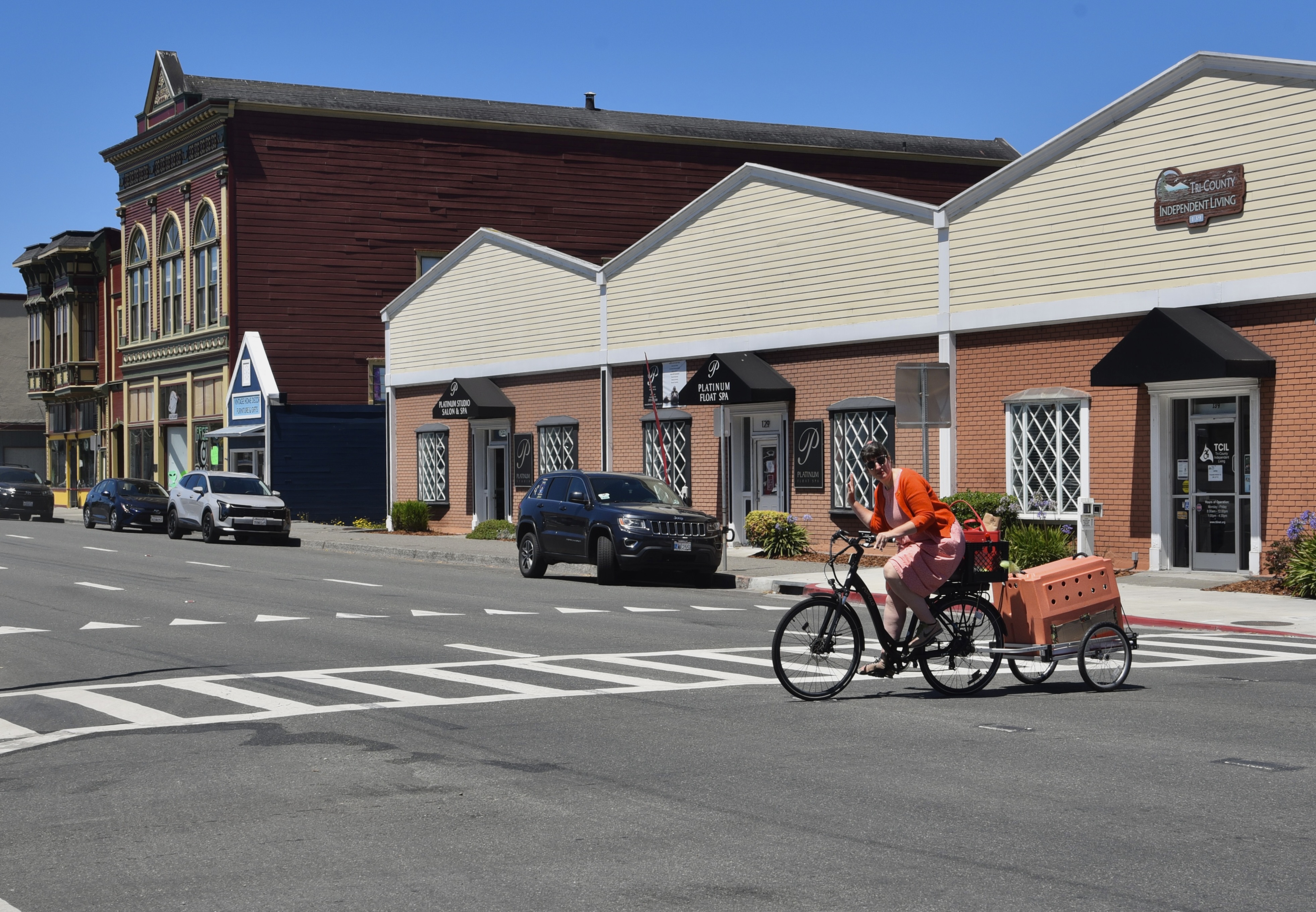
Crossing the street in Eureka — especially along Highway 101 where traffic moves fast and protected crosswalks are few and far between — can be a nerve-racking experience for pedestrians and cyclists.
Just the other day, watching traffic pass through downtown from the corner of Fifth and F streets while waiting for my turn to cross the street, I saw two vehicles zoom through red lights and another come to a hard stop midway through the crosswalk. A few weeks ago at the intersection of Broadway and Wabash, I saw a vehicle come dangerously close to hitting a pedestrian traversing the same crosswalk where a man was killed earlier this year. I’ve seen countless other close calls — as well as full-on collisions — while driving and walking in Eureka, seemingly more than anywhere else in the county. Why is that?
Data compiled by the Eureka Police Department confirms that, along with Fourth and Fifth streets, Broadway is one of the most dangerous thoroughfares in the county. More traffic collisions happen on Broadway than any other street in the city. In fact, Eureka ranks among the worst in the state for serious traffic collisions across the board, according to data from the California Office of Traffic Safety (OTS).
In 2017, Eureka recorded 275 injury and fatal traffic collisions, enough to rank first among 94 similarly sized cities with an average population of 26,100 residents. That same year, the city ranked second for injury collisions involving pedestrians and third for incidents involving cyclists. Between 2017 and 2023, Eureka averaged 240 injury traffic collisions per year, as shown in the table below. (The OTS did not have data available for 2024 and 2025.)
Injury/fatal traffic collisions in Eureka between 2017 and 2023.
How does Eureka compare to the rest of the county?
Looking at that same time period, 2017 to 2023, roughly one-third of all injury traffic collisions in Humboldt happened in Eureka, though the numbers fluctuate quite a bit from year to year. Data from the EPD shows a notable uptick in collisions during the work week between noon and 8 p.m.
As show in the table below, Eureka’s collision rate is five to eight times higher than that of Arcata and Fortuna, though it isn’t exactly an apples-to-apples comparison, given the differences in population.
Countywide injury/fatal traffic collisions between 2017 and 2023.
Eureka’s high collision rate is largely attributable to Highway 101. Unlike the county’s six other incorporated cities, the 101 cuts right through downtown Eureka, carrying thousands of vehicles across multiple lanes each day and increasing the likelihood of traffic collisions.
What can be done to reduce Eureka’s collision rate? It depends who you ask.
Increasing Traffic Enforcement
The EPD has employed numerous tactics over the years to reduce collisions on the city’s main thoroughfares, with some success.
In 2025, Police Chief Brian Stephens launched a department-wide effort to boost officer-initiated enforcement, increasing traffic stops by 300%. Earlier this year, the EPD launched “Operation Gateway 101,” a collaborative initiative with the city’s public works and code enforcement departments aimed at improving traffic safety and “quality-of-life concerns” along the Highway 101 corridor. The department launched its “Slow Down Eureka!” social media campaign a few months ago to discourage speeding.
Despite this effort, injury traffic collisions are on the rise. After reporting an 18% increase in injury traffic collisions since the start of 2026, the EPD issued a press release and survey last month seeking public input on improving traffic safety in Eureka.
In a recent interview, EPD Commander Leonard La France acknowledged the uptick in incidents, but told me that traffic collisions are “technically on a downward five-year trend.” Yes, traffic collision reports are up by about 18%, he said, but “criminal” collision reports have actually gone down by 9%.
“Even though we’re on a downward trend, it’s still not good,” La France said, adding that the department’s latest push to reduce collisions is part of its effort to increase proactive policing. “I think we’ve been more vocal about collisions and why we want to stop them [because] we’re getting exhausted by going to injury collisions that are really avoidable. It’s not been happening more; it’s just now we really want to talk about it, and [figure out] how to solve this problem together.”
The vast majority of the city’s traffic collisions occur on the city’s North-South and East-West arterials: Fourth/Fifth, Sixth/Seventh, H/I and Harris/Henderson. As shown in the chart below, Broadway ranked highest for traffic collisions, with approximately 39 incidents recorded since the beginning of the year.
The nightmarish five-way stop at Broadway and West Wabash, where a pedestrian was hit and killed earlier this year, ranks among the most hazardous intersections in the city, along with Buhne and J, Seventh and I, and Harris and H.
But what’s driving these numbers? And why are collisions so bad in these areas in particular?
“I think a lot of it is distracted driving,” La France said. “That’s one common factor we’re seeing [in our data], and it’s not just people on the phone. … They’re driving a vehicle that weighs thousands of pounds without really paying attention because they’re just getting from point A to point B, and it feels to me that people aren’t taking it as seriously as they should. It’s more like a secondary thing that we do to get from here to there … and I think that’s a lack of insight that we’re seeing.”
“Even speeders,” he continued. “We find people doing 50 in a 30, and we ask why and [we often hear], ‘I just wasn’t paying attention,’ which for some people is probably true because it’s a straightaway on H or I street and they hit the gas, and they just don’t realize that all of a sudden, they’re doing 20 over.”
Intentional or not, if you’re going 20 to 30 miles over the posted speed limit, there’s a good chance you’ll end up in jail, La France said.
“That to me is beyond reasonable,” he continued. “We had a collision where some guy blew a red light or a stop sign at Fairfield and Henderson going probably at least 50 miles an hour. [He] crashed into a couple cars, injured someone really bad, [and] we charged them with felony [reckless driving]. [He’s] lucky it wasn’t manslaughter.”
EPD’s push to increase proactive policing has led to an uptick in arrests for both driving and non-driving offenses, but has it made a meaningful impact on people’s driving habits?
As La France puts it, “perception is reality,” so if drivers see an increase in police presence, most of them will alter their behavior accordingly. “Some people won’t because it doesn’t matter to them, but I think a majority of people, when they see a cop, they are reminded that driving is a major responsibility.”
EPD conducts a traffic stop in the Starbucks drive-thru. | Photo: EPD
To reach a wider audience, La France and his colleagues have taken to posting pictures from the scene of traffic collisions to social media — often accompanied by sarcastic quips and hashtags like #YouCantParkThere, #FelonyArrest, #TogetherWeDriveChange and “LowerTheCollisionRate — to show residents what EPD deals with on a daily basis.
“Like, this is why we’re telling you not to drive like this,” he said. “We’ve got to expand who we’re reaching, but how do we do that? … We have some traffic safety videos coming out, and we’ve talked about doing TikTok videos, but I don’t think we’re there yet, although I do love TikTok. … Can we do some videos that are kind of funny but also serious? And again, how do we do that?”
I asked La France about traffic-calming measures implemented in the city in recent years (bulbouts, roundabouts, speed bumps, etc.) and whether he had noticed any changes in driving habits. He acknowledged that certain tactics can have an immediate effect on behavior — “If your car bottoms out [going over a speed bump] you’ll quickly learn not to do that” — but said it’s hard to determine what will have a long-term, meaningful impact.
“I remember years ago — and I mean years — when the Bayshore Mall had some major issues with people speeding in the parking lot, one [general manager], who isn’t there anymore, just went rogue and put up some speed bumps,” he said. “It definitely changed behavior. … The question is, do you want that severe of consequences for that kind of driving behavior? … There are some good ideas, but is it truly effective? I don’t know.”
A pedestrian and her dog cross Highway 101 at G Street in Eureka.
Can Traffic-Calming Measures Solve Eureka’s ‘Traffic Safety Crisis’?
For years, the Coalition for Responsible Transportation Priorities (CRTP) has sounded the alarm over the “traffic safety crisis” plaguing Highway 101 in Eureka. The local nonprofit — which “envisions a North Coast region with vibrant local communities where walking, biking, public transit and other socially and environmentally positive modes of transportation are the norm” — believes that traffic-calming measures are the key to reducing collisions.
“We really try to advocate for the types of improvements that have evidence to support their effectiveness, and the most effective interventions in our research are these street design and traffic-calming interventions that provide protected infrastructure for people walking and biking,” CRPT Executive Director Colin Fiske said in a recent interview. “There’s just an abundance of evidence showing that they do improve safety.”
Take bulbouts, for example. These widely hated curb extensions might be inconvenient to some, especially drivers of large vehicles, but research from the Federal Highway Administration and numerousotherentities shows that bulbouts improve pedestrian safety by enhancing visibility.
“I think that’s probably why a lot of people find them annoying, because you do have to slow down quite a bit to make a sharper turn,” Fiske said. “But there’s a safety reason for that, which is that there might be a pedestrian, bicyclist or even another vehicle there that, if you’re making the turn too fast, you won’t be able to see in time.”
CRTP’s 2025 report, “Dangerous Downtown Streets,” examined traffic hazards on Fourth and Fifth streets through locally-sourced data and walking audits. The report concluded that high traffic speeds, failure to yield and poor visibility are among the leading causes of collisions involving both motorized and non-motorized traffic. These factors are amplified at intersections without traffic signals or protected crosswalks.
“Participants in the October 2024 walk audits in the corridor generally found the pedestrian experience in the corridor to be unsafe, unpleasant, and stressful, with many concerns about accessibility for pedestrians with disabilities,” the report states. “Particular concerns about safety and accessibility included crossing Fourth and Fifth Streets at unsignalized intersections, crossing side streets and driveways at unsignalized intersections, various sidewalk and curb ramp accessibility hazards, high noise levels, and lack of adequate lighting.”
The report offers a laundry list of traffic-calming measures to reduce hazards along Highway 101, but few — if any — have been implemented. The city recently installed rapid-flashing beacons at several crosswalks, but it’s not clear if those were already planned or constructed in direct response to the report.
Fiske acknowledged that it takes time to source the funding and do the studies needed to address some of these issues, but in the meantime “people are still dying and getting hurt.”
“The frustrating part of doing this work, having done it for about 11 years now, is that things just tend to take so long,” Fiske said. “After we’ve identified that there’s a problem and everyone agrees that something needs to be done, it still takes a decade for there to be anything done.”
A newly installed rapid-flashing beacon at Seventh and C streets.
The City of Eureka has adopted numerous traffic-calming strategies in recent years. Back in 2018, the city council approved the “Eureka North-South Multimodal Corridor Plan,” which eventually reduced traffic on H and I streets from three to two lanes with a buffered bike lane. A few years later, in 2023, the council adopted a resolution “declaring the importance of complete streets” as part of the city’s commitment to traffic safety and reducing collisions. This led to the construction of 170 new sidewalk bulb-outs throughout the city, as well as flashing beacons at crosswalks and signal reconfigurations at several intersections.
Brittany Powell, a project manager with the city’s engineering department, reported a 20% decrease in traffic collisions on H and I streets since the project wrapped up. Similarly, Powell told the Outpost that signal reconfigurations at Myrtle/West, Harris/S and Buhne/S have “reduce[d] the number of potential conflicts at intersections.”
“The addition of bulb-outs (curb extensions) are proven to slow speeds of turning vehicles and creates shorter crossings for pedestrians,” she added.
Similarly, Caltrans has constructed numerous traffic-calming features along Highway 101 over the past decade through its South Broadway Complete Streets Project, including a pedestrian-activated crossing near Broadway Cinema, separated bike lanes, new transit stops, enhanced pedestrian and cyclist striping, lighting, sidewalk upgrades and a new traffic signal at Hilfiker.
Caltrans, too, has drawn the ire of drivers who feel the projects are unnecessary or even dangerous. Asked to respond to these concerns, Caltrans spokesman Myles Cochrane acknowledged that it can take time to adjust, but said the traffic-calming measures implemented so far have had a significant impact on collisions.
“Caltrans data shows total collisions along U.S. 101 through Eureka have gone down about 70% since 2015. Collisions involving pedestrians or cyclists have gone down about 50% during that same period,” Cochrane wrote via email. The Outpost asked where that figure was sourced, but we’ve yet to hear back. “Since 2015, the state has invested around $50 million in safety and complete streets improvements along U.S. 101 through the city. [Highway] 101 in Eureka belongs to Caltrans; it’s Humboldt’s busiest stretch of roadway, and we’re pleased with the progress.”
Still, traffic-calming measures do have limits.
“Regarding people entering traffic outside of designated crossings, including situations involving impairment or behavioral health, there’s no single easy answer,” Cochrane said. “Highway features cannot prevent every unpredictable action, and sometimes there’s more at play than how we design things. Caltrans follows the Safe System principle that people will sometimes make mistakes, and the transportation system should have multiple layers of protection, so the consequences of those mistakes can hopefully be minimized.”
“The ultimate goal is zero collisions,” he added, “and we need to keep our eyes on the prize.”
A cyclist crosses Highway 101 at C Street.
Implementing a ‘Vision Zero’ Strategy in Humboldt
While the prospect of “zero collisions” may seem like a pipe dream, the Vision Zero Network believes it’s entirely possible.
[CORRECTION: The Vision Zero Network’s goal is not zero collisions, it is zero traffic fatalities and serious injuries, as explained in more detail below. The Outpost apologizes for the error.]
The Sonoma County-based nonprofit has helped implement advance the Vision Zero Strategy, which originated in Sweden in the 1990s, in dozens of cities across the country. The strategy strives to “eliminate all traffic fatalities and severe injuries, while increasing safe, healthy, equitable mobility for all.”
The Vision Zero strategy is a departure from the “traditional” approach to traffic safety, commonly referred to as the “Three E’s” — Enforcement, Education and Engineering. Vision Zero advocates argue that the Three E’s are too focused on the individual and perfecting driving behavior. Vision Zero, on the other hand, acknowledges that people make mistakes, and to avoid collisions resulting in serious injuries or fatalities, road systems should be designed to reduce the severity of crashes.
“This isn’t a situation where you can say, ‘oh, let’s just put more dollars into traffic enforcement, and we’ll have safer roads’ because no community is going to have a police officer at every corner,” Leah Shahum, founder and executive director of the Vision Zero Network, told the Outpost. “That’s just not feasible. … And yet, there’s an overdependence or overemphasis on traffic stops being able to solve the problem. … There’s also growing recognition around the country that the idea of overemphasizing traffic stops is not only impractical and inefficient, but it can be really harmful in terms of worsening and exacerbating racial disparities.”
To make a meaningful impact on collisions, policymakers need to employ a multi-disciplinary approach that goes beyond the transportation and public safety sectors, Shahum said.
“Transportation planners, engineers, police — they should absolutely be at the table, along with public health partners and folks who work in trauma centers and the hospitals, [because] they have the bird’s-eye view of what’s happening,” she said. “[We need] folks from all these different fields … really coming together [to discuss] what works and what doesn’t in their communities. What do we need now most? What do we need more of? What do we need less of? How do we … modernize our road safety efforts to be most effective, most cost-efficient and most equitable?”
Last month, the Humboldt County Association of Governments (HCAOG) rolled out a series of temporary traffic safety demonstration projects as part of the county’s Vision Zero Action Plan, which is currently underway. Feedback from these traffic-calming projects — located in Arcata, Eureka, Ferndale and Fortuna — will be incorporated into the county’s action plan.
The plan will take some time to develop, but once it’s adopted, it will reshape the county’s approach to traffic safety and inform permanent design decisions to reduce collisions.
“Road design is a critical element for slowing speeds and saving lives, so we work to identify and fund projects across the region in line with best practices for reducing speed and conflicts between vehicles and vulnerable road users like pedestrians and bicyclists,” HCAOG senior planner Stevie Luther told the Outpost via email. “Our consultants are designing a public education campaign that when implemented will encourage safer behavior from all road users, targeted to address specific problems like distracted driving and speeding.”
The public draft is slated for release in October, and a public meeting will follow. The final plan will be reviewed by the HCAOG board in December.
Want to share your thoughts? Take the survey here.
Traffic-calming projects like this mini roundabout at Humboldt and G streets in Eureka have been installed across the county. | Photo: HCAOG
In Closing, A Plea From a Pedestrian
Getting hit by a car is a jarring and terrifying experience. If you live through it, it will change the way you interact with other vehicles, pedestrians and cyclists for the rest of your life. I would know; I was hit by a car while crossing Highway 101 at E Street on a January night in 2023.
I had met with a friend earlier in the evening, and I was standing at the corner waiting for the green light. When the signal turned in my favor, I looked both ways and stepped off the curb into the crosswalk. I had made it maybe two steps when I was suddenly pushed to the ground, hitting my head and scraping my face on the asphalt.
Before I could comprehend what had happened, a gray-haired man with thick-rimmed glasses in a silver SUV pulled up to the curb. He rolled down his window and asked if I wanted him to pull over. My immediate response, which may come as a surprise to those of you who haven’t gone through a shocking and disorienting experience, was to say, “I’m fine!” The man didn’t think twice and continued north on the 101.
As I scraped myself up from the sidewalk, I saw the countdown signal was still going and I dashed through the intersection, rubbing my throbbing cheek. I heard someone near the Starbucks shout, “Hey, are you OK?”
“I’m fine!”
I didn’t go to the ER that night because I felt fine, which was probably influenced by the concussion. My jaw hurt a little, and so did my hip, which bore most of the impact, but it was probably no more damage than an ordinary fall would do, right? And as strange as it may sound, I was actually embarrassed about what had happened to me.
I went to the ER the next day and was told that, yes, I had a concussion and deep bruising on my hip, and that I had a hairline fracture in my orbital cavity, just below my left eye. Noting too serious, but the attending physician still admonished me for waiting a full 12 hours to go to the ER, warning that I could have had a collapsed lung or internal bleeding.
Over the days and weeks that followed, I replayed the scene over and over in my head, imagining what could have happened if I had been just two or three steps further into the crosswalk. It took a couple of weeks before I worked up the courage to walk to work again, and when I finally did, I watched the cars around me with a degree of caution and paranoia I had never experienced before. Even still, if a vehicle approaches the crosswalk too quickly, I hesitate before crossing the street.
While working on this story, I spoke with a lot of people who know a lot more about the topic of traffic safety than I do, but I kept coming back to my own experience and how it has changed my walking and driving habits. Sure, EPD can increase enforcement and the city can build a new roundabout at a problematic intersection, but above all, the onus is on each and every one of us to be responsible and help keep each other safe.