

Eureka Homicide Suspect Destinee Rhamy Surrenders
LoCO Staff / Wednesday, Sept. 27, 2023 @ 5:15 p.m. / Crime
PREVIOUSLY: EUREKA HOMICIDE: EPD Seek Suspect They Say Stabbed Roommate to Death; Victim Identified
###

One week after the Eureka Police Department issued a press release saying they’d secured an arrest warrant for 20-year-old Destinee Grace Rhamy, wanted in connection to the stabbing death of her former roommate, 27-year old Holland Elbik, Rhamy turned herself in at the county jail, according to the following release from the City of Eureka:
On September 27, 2023, Homicide Suspect Destinee Rhamy surrendered to the Humboldt County Correctional Facility and was booked on her warrant for Murder. Rhamy is being held on $750,000 bond.
BOOKED
Today: 6 felonies, 12 misdemeanors, 0 infractions
JUDGED
Humboldt County Superior Court Calendar: Today
CHP REPORTS
Us101 / Sandmine Rd (HM office): Trfc Collision-No Inj
7985 Mm101 S Hum 79.90 (HM office): Assist with Construction
Us199 / Us101 N Us199 N Con (HM office): Assist CT with Maintenance
Poppy Dr / Sherwood Rd (HM office): Closure of a Road
ELSEWHERE
Governor’s Office: California and the Australian state of Queensland ink new partnership to accelerate climate resilience, agricultural technology, and innovation
County of Humboldt Meetings: Human Rights Commission Agenda- Hybrid Meeting
Fishing the North Coast : Cool Water, Rain Spark Klamath Salmon Push
Governor’s Office: Governor, First Partner statement on the passing of Gloria Steinem
Sheriff’s Office Seeking Info About Del Norte County Man Believed to Have Worked at a Honeydew-Area Farm Last Month
LoCO Staff / Wednesday, Sept. 27, 2023 @ 4:27 p.m. / Crime
Press release from the Humboldt County Sheriff’s Office:

The Humboldt County Sheriff’s Office is seeking the community’s help to locate a Del Norte County man last known to be in Southern Humboldt County.
Gilberto Bautista Hernandez, age 23, of Smith River, was last in contact with family members on Aug. 27, 2023. Hernandez is believed to have traveled to the Honeydew area to reportedly work on a farm.
Hernandez is described as a Hispanic male, approximately five feet tall, 130 pounds, with brown eyes and black hair. Hernandez is reportedly missing all of the toes on his right foot.
Anyone who may have seen Hernandez in the Southern Humboldt area or has information about his whereabouts is encouraged to call the Humboldt County Sheriff’s Office at (707) 445-7251 or the Sheriff’s Office Crime Tip line at (707) 268-2539.
(PHOTOS) Introducing 4th Street Mercantile, Eureka’s New ‘Vendor Mall’ That Holds More Than 30 Shops Under One Roof
Stephanie McGeary / Wednesday, Sept. 27, 2023 @ 4:10 p.m. / Business
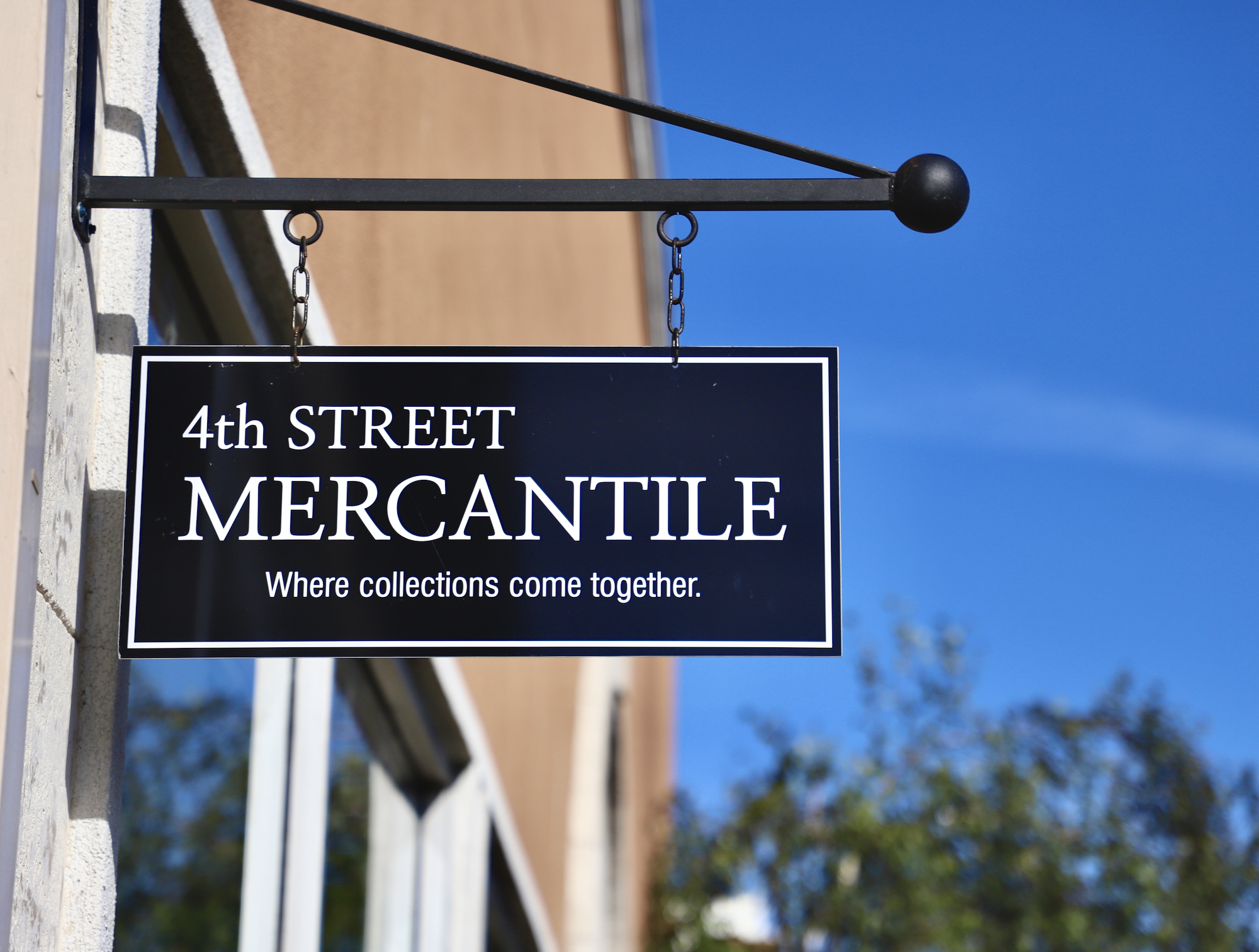
The sign for the new vendor mall on 4th St. between C and D | Photos: Andrew Goff except where noted
###
Move over, Bayshore Mall! There’s a new mall in town, and this one is pretty much way cooler. It’s called the 4th Street Mercantile, a brand new business on Fourth Street between C and D Streets in Eureka that holds more than 30 local vendors all under one roof.
The business is the brainchild of owners Crystal and Aaron Woodbury Haynes, who used to live in McKinleyville and moved back to the area about a year ago. When lived away and returned to Humboldt, the couple would spend time visiting the flea markets and outdoor vendor markets – such as the Friday Night Market and the Old Town Vintage Market – and realized that although these were good options for some people to sell their wares, the area really didn’t have a permanent, indoor vendor market.
The couple owns and operates a furniture business, Worthy of Love, which specializes in restoring used and antique home furnishings. As owners of a furniture business, they know that attending outdoor markets is not really an option for folks who sell larger items.
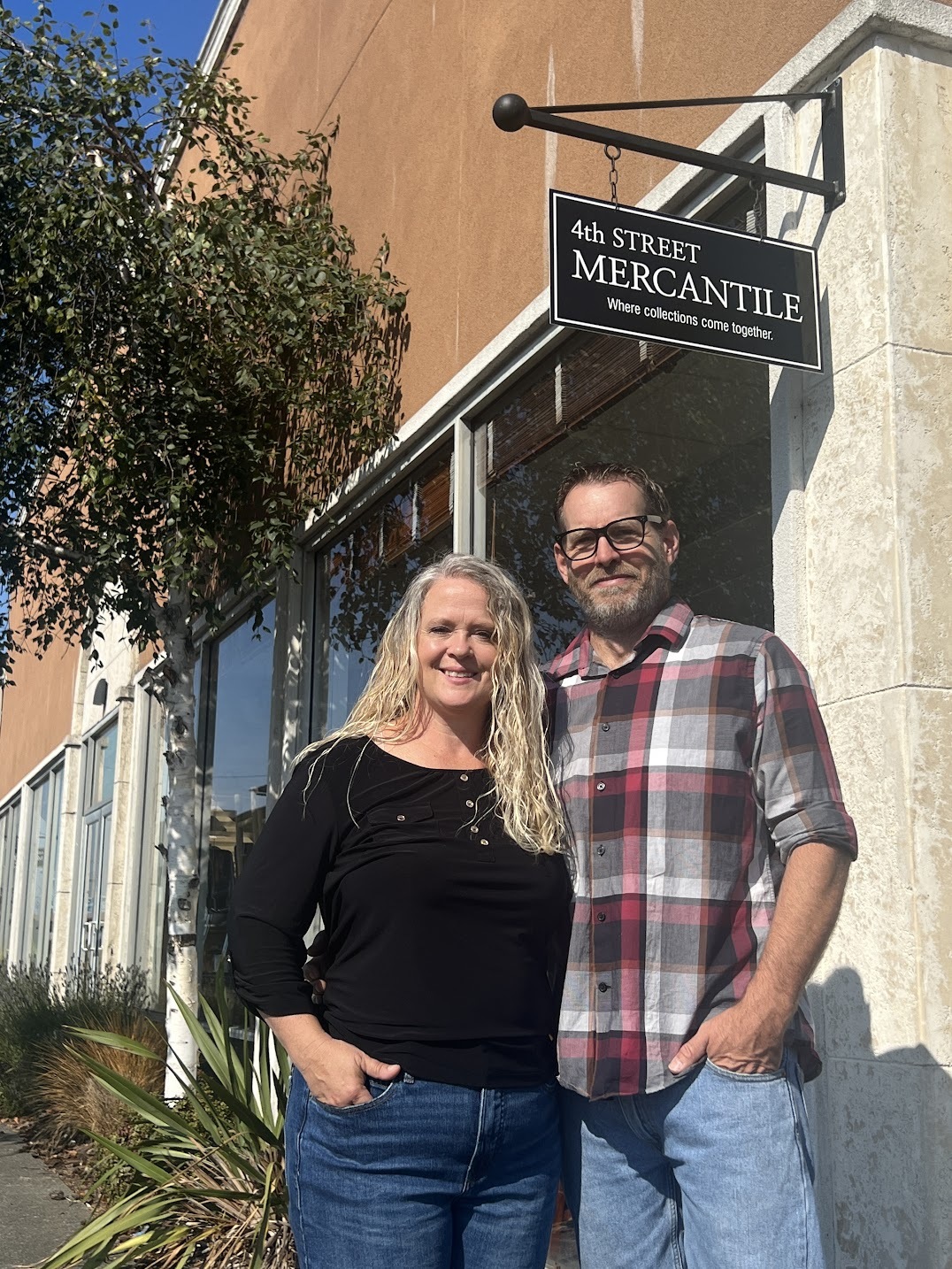
Crystal and Aaron Woodbury Haynes pose outside their new shop | Submitted
“Most furniture vendors can’t do the little markets downtown because [the booths] are 10 by 10,” Crystal told the Outpost during a tour of the soon-to-open store. “So when we started this, we decided we were going to provide big spaces and make those spaces available for people who wanted to carry larger merchandise.”
After looking at a few other spaces in Eureka, the two opted for the Fourth Street location, in the building that previously held the office of defunct newspaper the Eureka Reporter. Though it is not an area that necessarily gets a lot of foot traffic, they were happy with the size and layout and the fact that it has a parking lot, which they will use to hold open air markets on occasion.
Once they secured the spot, the owners put out a call looking for vendors to rent out the booths. In less than a day, they had almost completely filled their available spaces and now have a long waiting list of small business owners who want to jump on board, they said.
In addition to their own furniture business, the mercantile holds a variety of other local vendors selling all kinds of items, including refurbished and custom furniture, vintage clothing and accessories, glassware, art, handwoven blankets and much more. The Woodbury Hayneses said that they try to make sure that there is a lot of variety and that no two vendors are too much alike. Though a few of the vendors carry some new items, nearly all of the merchandise is either recycled or hand-crafted.
The way it works is that the vendor pays a monthly fee to rent their booth space (the cost varies, depending on the size, with the biggest spaces costing $500 per month) and price their own merchandise with their own tags. Once the vendor has set up their space, they don’t have to stick around to man it or hire any of their own staff. The owners take care of all the sales and provide the vendors with their money, minus a 10 percent service fee. This type of business model is ideal for vendors who can’t afford to rent their own entire shop, or don’t have the time or the savvy to run their own business.
Angela Hunt, owner of Rustic Whimsy, a shop that carries a combination of new and used items and custom furniture, decided to close down her Scotia shop in favor of moving into the 4th Street Mercantile because the setup allows her more time to focus on creating her pieces rather than spending it running a store.

Some of Rustic Whimsy’s wares
“The shop does okay, but people just don’t always make it out to Scotia,” Hunt told the Outpost while setting up at the mercantile. “I’ve been looking for a space like this. … This is ideal for me because I don’t have any employees, so this gives me time to work on custom pieces.”
The space also holds a community classroom, which is available for the vendors (or other folks) to hold workshops and classes. The room can hold up to 24 people and can be rented out for $100 – with $50 due upfront to hold the spot and the other $50 due the day of the class. Hunt is very excited about the classroom, she said, because she sells a special kind of chalk-paint for making over furniture and housewares and has always wanted to hold a class to show people how to use the product.
Because the mercantile holds many different businesses, the prices vary, but the owners said it is important to them to keep items as affordable as possible. They will offer layaway for pieces that cost $100 or more, allowing customers to pay half of the price up front and the other half when they pick it up, which can be up to 30 days later. In their own furniture store they also offer a “recycle furniture program,” Crystal said, where you can bring in a piece of used furniture and receive store credit. It’s okay if the piece needs some love because restoring furniture is what they do, but it does need to be real wood. No particle board, folks.

Raelina Krikston at her shop, Solstice, inside the mercantile
“We understand that people are struggling,” Aaron said. “We have kids and we see our kids struggling and we try to help them as much as we can. Now we’re just trying to put it out there so we can help others as well, because everyone is struggling right now with the cost of everything.”
4th Street Mercantile will be holding a grand opening this Saturday, Sept. 30 from 10 a.m. to 6 p.m. and will feature not only the vendors inside the store but also 20 outdoor vending booths, multiple food trucks and music. Starting on Saturday, the store will regularly be open Wednesday through Saturday from 10 a.m. to 6 p.m. and Sunday from 10 a.m. to 4 p.m.
If you are interested in renting a space at 4th Street Mercantile or just learning more, you can call the store at 707-798-1731, message them on Facebook, or just come in! The owners want you to see the space before you commit anyway, so they would love for you to come say ‘Hi!’
Scroll down for more photos of LoCO‘s peek inside the new store!

“I like this idea because there’s something for everyone,” Vintage Rose owner Sonya Rose told the Outpost

Furniture!

Jewelry!

Vintage clothes!

Wine-obsessed home decor!

This stuff!
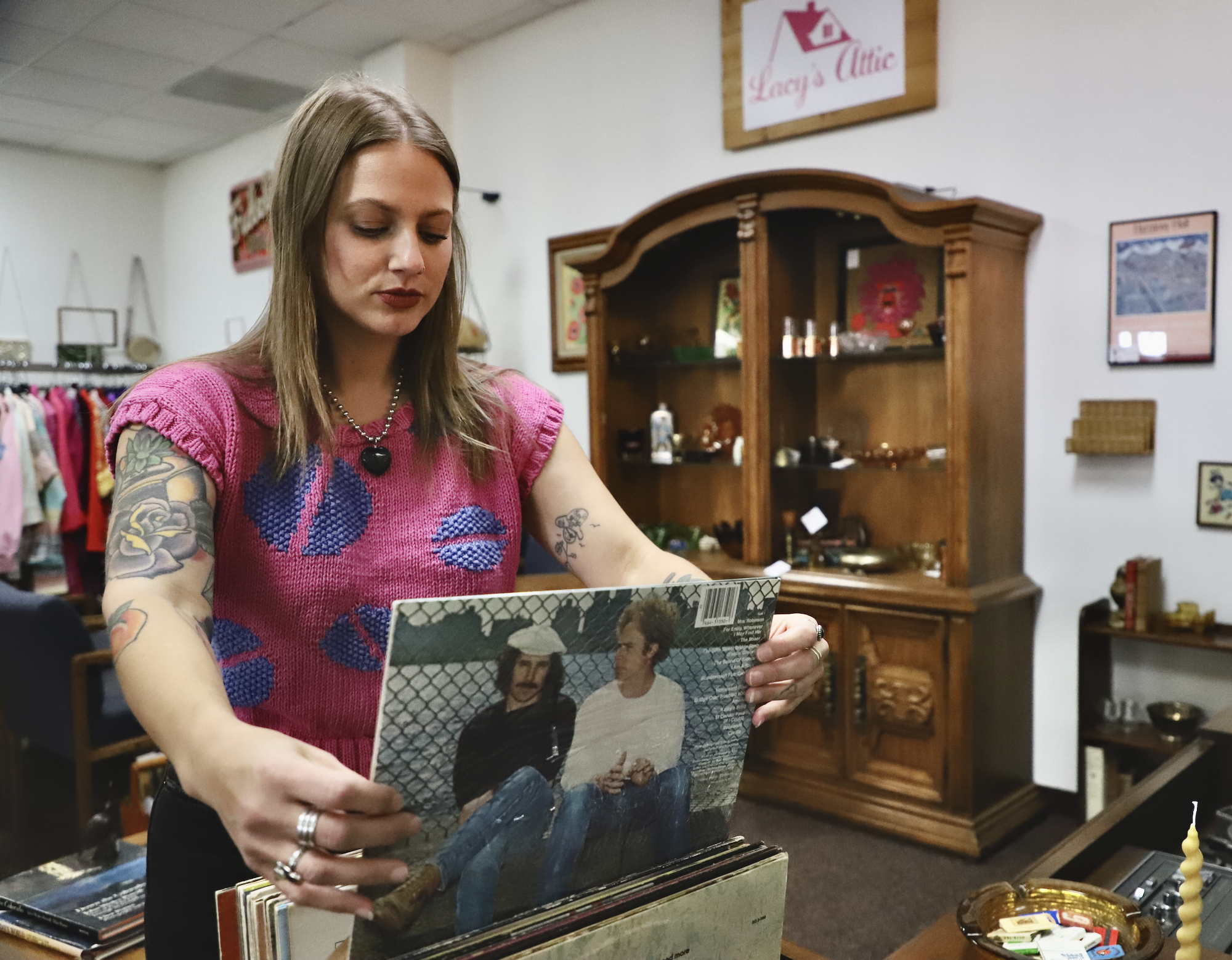
Above: Tilly Thompson, owner of Lacy’s Attic, readies her space for future customers. Her shop is named in honor of her sister, Lacy Cantrell, who passed away after a battle with cancer. The two had a shared passion of collecting vintage items together. She now hopes to share that passion with Humboldt.
Humboldt County Sheriff’s Office Investigating Drive-By Shooting at Fire Camp
LoCO Staff / Wednesday, Sept. 27, 2023 @ 11:08 a.m. / Crime
Press release from the Humboldt County Sheriff’s Office:
On Sept. 27, 2023, at about midnight, Humboldt County Sheriff’s deputies were dispatched to a fire camp along State Route 96 in Orleans for the report of a drive-by shooting.
According to security officers at the location, a dark-colored sedan occupied by two people reportedly drove past the camp and began shooting out of the vehicle. No one was injured. The vehicle reportedly continued driving, turning down Asip Road. Deputies searched the area but were unable to locate the suspects.
This case is still under investigation. Anyone with information about this case is encouraged to call the Humboldt County Sheriff’s Office at (707) 445-7251 or the Sheriff’s Office Crime Tip line at (707) 268-2539.

TRAIL UPDATE: They’ve Put in a Lot of Work on the Trails Around Eureka So Maybe Get to Walkin’ on ‘Em, OK?
Rees Hughes / Wednesday, Sept. 27, 2023 @ 10:36 a.m. / Nature

It was year ago that the Board of Supervisors approved the McKay Community Forest (MCF) Trail Plan and its proposed network with 31 miles of multi-use roads, multi-use trails (including 1.5 miles of accessible trails), hiking trails, and mountain bike trails.
Where do things
stand a year later? At this time, there are two significant trailheads.

NORTHRIDGE: There is a parking area just east of the intersection of Walnut Drive and Northridge Road in Cutten that offers access to 3.5 miles of trails. These trails have been the focus of trail building efforts initially by the California Conservation Corps and more recently by Volunteer Trail Stewards and Redwood Coast Mountain Bike Association. The parking lot is open, signage is up and many of these trails are passable. They are still a work in progress and vulnerable to wet weather.
The Huckleberry Trail, a 0.2 loop trail, has been built as an accessible trail. This short trail has a hard-packed rock surface and maintains the necessary grade and width. Park at the Northridge lot.
HARRIS STREET: Key to progress on the 3 miles of trail from Harris is the purchase and installation of a 20-foot bridge that will facilitate access from Harris. People using this trailhead will have to park on Harris. While significant sections of the trails in this area are passable, much remains to be completed. The longest trail in this area will wrap around the south side of Redwood Acres before returning adjacent to Ryan Slough.

Some of the multi-use roads scheduled to be eventually constructed throughout the MCF will not be developed until they are needed for harvesting timber. The McKay forest resources will be sustainably managed. Although there have been no harvests yet, when there are the resources generated by the harvests will be used to pay for things like trail development and other amenities. At this time, the trails in other parts of the Forest will receive minimal attention.
Although the County is exploring other ways to accelerate progress, the Volunteer Trail Stewards are looking for additional volunteers to assist with trail construction and maintenance and in removal of invasive plants. Bob Vogt, County point person for the project, observed that “these volunteers have been amazing and should be credited directly with building the trails and recreational opportunities that we see in the MCF today.” No particular skills are necessary to be a volunteer. Consider attending workdays on the first Saturday morning of each month. If you are available on Tuesdays or Wednesdays, that is an option too. As Volunteer Coordinator, Rachael Garcia, notes, “Our volunteer efforts are a labor of love, but with much to receive in return. Caring for these trails not only gives the personal benefits of keeping active and enjoying time outdoors, but it also serves the public’s interest in having clean, safe, and well-structured spaces for recreation. This is a community forest, after all, and there is a definite sense of community being nurtured through our time on the trails.”

Contact Rachael at vtscoordinator@humtrails.org for more information or to get on the notification list.
LISTEN: A Conversation With Humboldt County Poet David Holper on Untranslatable Words, and His New Book
LoCO Staff / Wednesday, Sept. 27, 2023 @ 10:09 a.m. / Literature
Longtime Humboldt County poet David Holper — beloved College of the Redwoods English professor, the inaugural poet laureate of the City of Eureka — has a new book out. It’s called Language Lessons: A Linguistic Hejira, and it’s (in part) a meditation on words from other languages that are not easy to translate into English.
To mark the occasion, Holper recently joined KHUM-FM DJ Midge Martin for a conversation about the book, his work as poet laureate and just, generally, the practice of poetry in this day and age. Check it out here:
There’ll be a book launch party at a private residence this Saturday. See the following note from Holper:

Inaugural Poet Laureate for the City of Eureka David Holper will be reading from his latest book of poem Language Lessons: A Linguistic Hejira. The reading will be on Saturday, September 30th, 1-2 pm at 4007 Cedar Street in Eureka. As the reading will be outside, bring a lawn chair and dress for being outside.
Using 109 untranslatable words from languages (mostly) other than English, David Holper takes the reader on a spiritual journey through life, love, travel, food, and everything else. Each of the poems provides the untranslatable word, its language and definition, a poem that illuminates the word, and an illustration. Paperback copies of the book will be available for purchase and signing by the author.
California Community College Enrollment Is Up, but One Group of Students Lags Behind
Adam Echelman / Wednesday, Sept. 27, 2023 @ 7:39 a.m. / Sacramento

Students walk through campus at Sacramento City College on Feb. 23, 2022. Photo by Miguel Gutierrez Jr., CalMatters
In April 2020, Alejandra Guerra, 23, started working at Amazon while finishing her associate degree in criminal justice at Sacramento City College. Working nights and weekends at the warehouse near the Sacramento airport, she earned $18.70 an hour, nearly five dollars more than she had been making prior to the pandemic as a secretary.
The hours were grueling: She finished her last warehouse shift of the week at 5:30 a.m. on Monday and started class, online, at 8 a.m. “I have very bad ADHD, so it’s very hard for me to concentrate when I’m sitting in front of a laptop, especially when I just worked a 10-and-a-half-hour shift,” she said. “I’m just thinking about sleep.”
She dropped out of school in May 2020 with about seven classes left to graduate. More than three years later, she still hasn’t returned, making her part of an emerging trend among community college students ages 20 to 30. While other age groups are returning to college following a drop during the COVID-19 pandemic, these twenty-somethings are the last holdouts.
At its lowest point following the start of the pandemic, the California Community Colleges system had lost just over 417,000 students, an 18.5% drop compared to the 2018-19 academic year. That was a 30-year low. The decline means colleges risk losing state funds in the near future, since their funding is pegged in part to enrollment. In the long-term, it means employers may grapple with a less educated or less skilled workforce.
“We’re seeing increased wages in occupations that don’t require a bachelor’s or an associate degree.”
— Don Miller, vice president of academic affairs at Rio Hondo College
Enrollment numbers grew by about 5% in the 2022-23 school year, according to data provided by the California Community Colleges Chancellor’s Office. It’s the most recent data available, though numbers are not yet official. Early estimates from various community college districts show enrollment gains continuing into this fall, too.
But that rebound is uneven: it stems largely from high school students who are taking college classes, and to a lesser extent, from adults over 30 who are returning to college after leaving at record rates during the pandemic. Meanwhile, students in their 20s, like Guerra, continued to leave college. The state’s 116 community colleges lost more than 13,000 students between the ages of 20 and 30 last year, about a 2% decline in that population compared to the previous year.
The result is a demographic shift across the community college system. For over a decade, it was students between 20 and 30 years old who made up the plurality of students on campus. Last year, it was students under 20 who represented the largest group. These youth, particularly those in high school, have become central to the strategy of California Community College Chancellor Sonya Christian, who has said she wants to require every ninth-grader in California to enroll in a community college course.
Low unemployment means low enrollment for some colleges
Administrators say there is no single explanation as to why this generation of twenty-somethings is lagging behind the rest. For one, the age group isn’t monolithic, and students with different racial or ethnic backgrounds showed differing trends. The population of Asian and Filipino students in their 20s declined by 6 and 12%, respectively, while the number of African-American and Native students in the same age group increased by a few percentage points compared to the previous year. Another possible explanation comes from a recent survey of the state’s community college students, which found that roughly one-third of students between the ages of 21 and 30 had experienced homelessness in the past year — a higher rate than any other age group.
But most college administrators agree that the economy is often a leading factor. Historically, college enrollment fluctuates with the economy. A good economy and ample job opportunities mean students often choose work over school.
“We’re seeing increased wages in occupations that don’t require a bachelor’s or an associate degree,” said Don Miller, vice president of academic affairs at Rio Hondo College, located near Whittier in eastern Los Angeles County. He cited rising wages in the service industry, such as at Starbucks, as well as for entry-level openings at logistics companies, such as Amazon or UPS.
Logistics in particular has seen a boost in hiring and wages since the start of the pandemic as more people shifted to online shopping. New shipping warehouses opened in the Inland Empire, making Amazon the largest private employer in the region, and some Central Valley cities are close behind.

Amazon SMF1 facility in Sacramento on Sept. 25, 2023. Photo by Rahul Lal for CalMatters
At East Los Angeles College, logistics and technology professor Leo Medina said his classes, which prepare students to work at places like Amazon and UPS, used to enroll more than 800 students a year before the pandemic. He lost about a quarter of his students in 2020 but said some are starting to return, often with encouragement or financial incentives from their employers.
“You hit the ceiling if you don’t have a certain amount of education or skill,” he said.
Guerra started out in an entry-level position at Amazon, but after a year working the night shift, she got promoted. First, she became a data analyst and then an operations supervisor, where she made about $22 an hour.
For years, her managers at Amazon encouraged her to go back to school. While the company covers tuition, books, and fees for many of its employees, Guerra said she was unsure whether she wanted to go back to school or instead try to advance internally through more promotions. Her mentality changed this spring, when she lost her job and had to search for a new one.
“I have all these skills that I’ve learned, but there’s all these jobs that don’t want to hire me because I don’t have a degree,” she said. She found a position as a receptionist at a property management company in Sacramento and plans to enroll in college at some point next year.
Losing the ‘drive’ for community college
Community colleges have collectively spent millions of dollars, much of it part of COVID relief funds, to draw back students like Guerra. They run recruitment events at churches, community centers and rodeos. They’ve set up call centers to reach out to students and are plastering billboards with eye-catching puns along highways and on buses. The Sacramento-area community college district flew a drone display in the image of a cap and gown to woo spectators at a professional soccer match. The efficacy of those marketing efforts is up for debate.
But research has found a few clear trends in college recruitment. Only 13% of students who drop out of college re-enroll in school within five years, according to a 2019 analysis by the National Student Clearinghouse. Once students leave high school and put off going to college, it becomes harder to convince them to enroll, too.
Hunter Garcia, 22, enrolled at Butte College near Chico in the fall of 2019 after seeing a flier that advertised the school. He dropped out in the midst of the pandemic after starting his third semester and soon began working the night shift at a nearby Walmart warehouse. He didn’t feel safe at night near his apartment, and since he didn’t have a car, he walked to work each day around sunset, waiting until 10 p.m. to start his nine-hour shift. After six months, he quit. But by then, he said he felt too isolated and exhausted to restart an online education. “I just lost the drive,” he said.
Only 13% of students who drop out of college re-enroll in school within five years, according to a 2019 analysis by the National Student Clearinghouse.
Many colleges are rethinking the structure of college: trying to fit school around the student, instead of the traditional model, which asks students to schedule their lives around school. In one of the most innovative approaches, eight community colleges in California have opted into a pilot program that aims to redesign part of their curricula so students can gain a degree without ever attending class.
Most colleges are making simpler changes, such as offering more flexible hours, more online classes and new courses that are more easily applicable in the workforce. One school is offering higher wages for student tutors in an effort to keep them on campus and keep them from seeking higher-paying jobs elsewhere.
Garcia has no intentions of going back to school in the near future, though he hasn’t ruled it out entirely. He works as a carpenter now, making around $25 an hour, but it’s not much easier than his previous job at WalMart, he said. “My body won’t be able to keep up with this forever,” he said.
###
Erica Yee contributed to this reporting.
Adam Echelman covers California’s community colleges in partnership with Open Campus, a nonprofit newsroom focused on higher education.
CalMatters.org is a nonprofit, nonpartisan media venture explaining California policies and politics.


