

Sham Hospice Schemes Are Bilking Medicare — and Harming California Seniors
Ana B. Ibarra / Wednesday, April 29 @ 7:20 a.m. / Sacramento

Photo by Odin Reyna via Pexels.
###
This story was originally published by CalMatters. Sign up for their newsletters.
###
California has emerged as the epicenter of a sweeping hospice fraud crisis, one that is costing taxpayers hundreds of millions of dollars and putting vulnerable seniors at risk.
Yet years after the state acknowledged the problem, key regulatory fixes remain in limbo while state and federal officials trade blame.
Hospice care, an end of life service typically reserved for people with less than six months to live, has become a target for fraudsters looking to steal taxpayer dollars — with devastating consequences for patients caught in the middle. It has also become rich fodder for government and media investigations.
Last week, Sheila Clark, who leads the California Hospice and Palliative Care Association, became emotional as she told congressional leaders the story of a woman in Southern California who in 2020 suffered a devastating fall in the middle of the night on the way to the bathroom. The woman, a Medicare recipient, could not see; she needed cataract surgery. But scheduling that surgery ran into a hitch: at the time, Clark said, the woman’s records showed her enrolled in hospice – seemingly fraudulently. Unable to recover from the injuries of her fall, the woman died two months later. “That did not need to happen,” Clark said.
That case and others have refocused attention on a problem that advocates say has never gone away – and is again sparking a partisan fight. At the congressional hearing, some Republicans blamed California and Gov. Gavin Newsom for failing to get a handle on it, while some Democrats blamed the Trump administration for not doing enough and pardoning fraudsters.
The Newsom administration says it has not been standing idle. Just this month, California Attorney General Rob Bonta announced charges against 21 suspects who allegedly defrauded the state of $267 million in a major hospice fraud ring. Since 2021, the office has filed 119 hospice-related criminal cases. The U.S. Attorney’s Office also announced separate recent arrests in California.
The California Department of Health has also revoked 280 hospice licenses over the last two years and is reviewing another 300, according to officials. Meanwhile, state regulations meant to limit who can obtain a hospice license were due months ago.
Stuck in the middle of delays and political back-and-forth are Medicare and Medi-Cal beneficiaries. Californians who truly need end-of-life services may be at risk if they sign up with a sham hospice operator who may provide inadequate care or none at all, while others are enrolled in hospice services even though they are not dying and are locked out of services they need. “People lose access to care, they lose access to medications, to their [doctor], elective surgery,” Clark said. “It’s disheartening.”
Stricter hospice rules are still pending
In 2022, the California State Auditor found that the state’s “weak controls have created the opportunity for large-scale fraud and abuse.” Among other red flags, auditors noted a clustering of hospices in single buildings, particularly in Los Angeles County, and high rates of living patients discharged from hospice.
The audit found that Los Angeles County saw a 1,500% increase in hospice agencies over a decade, along with indicators of large-scale billing fraud and evidence that thieves stole medical personnel’s identities to obtain licenses.
That same year, the state placed a moratorium on new hospice licenses, which is set to expire next year. Meanwhile, emergency hospice regulations intended to tighten who can obtain a hospice license are again delayed. The state Department of Public Health says it’s revising draft emergency regulations based on feedback from industry representatives and consumer groups.
“Once these regulations are in place they will include stricter standards for who can own or run a hospice, nurse-to-patient ratios, limits on operators who try to oversee multiple agencies at once, minimum staffing requirements, and more thorough screening of potential licensees before a license can be approved,” said Mark Smith, a department spokesperson.
Licensing is only the first step – the federal Centers for Medicaid and Medicare Services must certify operators before they can start billing. Clark and Isidro say better fraud prevention would demand more transparency and better data sharing between state and federal government.
Fraud can happen in a number of ways
Psychotherapist Lynn Ianni still does not know how fraudsters got a hold of her information. Two summers ago she was finishing her last physical therapy session for a shoulder injury when Medicare denied her claim: Records showed she was enrolled in hospice care.
Ianni, who also testified in last week’s hearing, assumed it was a clerical error – she had hurt herself playing pickleball, but led an active healthy life. Medicare pointed her to a hospice in Arcadia where she was supposedly enrolled. The address was in a strip mall; she had never heard of the doctor. She spent hours on the phone, over months, trying to clear up the problem. Medicare refused to cover care for her shoulder even as she paid her premiums.
“It was over six months that I had no coverage or no services,” Ianni said. “I was really terrified because I couldn’t figure out how to solve it, and I had no resolution in sight.”
Fraud can take different forms. It can be providers knowingly overbilling Medicare and Medi-Cal or submitting false claims — but it can also be elaborate cases in which bad actors create sham agencies, steal medical information and bill for services they never provide or that are not medically necessary.
These scams sprawl past hospice care. The U.S. Centers for Medicare and Medicaid Services and the Office of Inspector General have also raised concerns over fraud in home health services, skin substitutes, and durable medical equipment such as wheelchairs and walkers or oxygen tanks. Just Tuesday, the feds accused a Pasadena clinic of improperly charging Medicare more than $34 million for skin grafts and wound care services it didn’t provide.
Scammers have many tricks. They make robocalls or approach people at grocery stores, after church, or door-to-door, offering gift cards, meals, or free health services in exchange for forms that ask for personal and medical information.
“They don’t realize that their Medicare number is being stolen, and next thing you know, they’re being entered into hospice,” said Catherina Isidro, director of the California Senior Medicare Patrol, a group that helps people report and navigate Medicare fraud.
Health workers have also filed whistleblower complaints reporting that colleagues share patient information with fraudsters in exchange for kickbacks, Isidro said. That kind of fraud is harder to guard against because medical providers are supposed to be people of trust.
Clark said fraudsters have made a business of stealing Medicare identification numbers from the dark web and then selling them to hospices or home health agencies. “They literally call themselves brokers,” Clark said. “‘Here’s 10 beneficiary numbers. How much will you give me every month that you’re able to bill?’”
Safeguarding your medical information is key
Families who truly need hospice care should not shy away from seeking the benefit over fear of fraud, said Mollie Gurian, vice president of government affairs at Leading Age, a group that represents providers of aging services. People can use the Medicare Care Compare site’s quality scores and phone directory to start looking for legitimate hospice providers. Legitimate providers should pick up the phone and be able to answer questions about their services, Gurian said.
“[Hospice] is a great benefit, and the fact that it’s been utilized to commit fraud in this way is very distressing.”
For everyone else, advocates advise guarding Medicare and Medicaid identification numbers like a Social Security number – never sharing the number over the phone or in exchange for freebies. People should also read Medicare summary notices and explanation of benefits documents to ensure everything looks accurate.
“It’s really critical that older adults, you know, Medicare beneficiaries, their caregivers or their family members, whoever is taking care of them, that they be very vigilant,” Isidro said.
Those who suspect fraud should call their state’s Senior Medicare Patrol, a federally-funded helpline that can help people disenroll from services they did not request, often within a day or two.
That hotline helped clear up Ianni’s Medicare account and restarted her benefits. Six months after first learning she was fraudulently enrolled in hospice, Ianni got a new Medicare card in the mail, with no explanation for what had happened. Just in time, too, she said: two weeks later, she broke a finger. “I was so relieved.”
###
Supported by the California Health Care Foundation (CHCF), which works to ensure that people have access to the care they need, when they need it, at a price they can afford. Visit www.chcf.org to learn more.
BOOKED
Today: 11 felonies, 8 misdemeanors, 0 infractions
JUDGED
Humboldt County Superior Court Calendar: Today
CHP REPORTS
Sr299 / Glen Rd (RD office): Missing Elderly
ELSEWHERE
RHBB: Two Brothers Found Deceased in Trinity River
RHBB: Silver Alert Issued for Missing Humboldt County Man With Dementia and Seizure Disorder
Governor’s Office: FREE MONEY FOR KIDS: Governor Newsom and First Partner celebrate one million families claim CalKIDS “baby bonds” accounts
County of Humboldt Meetings: CAT (Committee for Active Transportation) Meeting Agenda
OBITUARY: Wincel Ann Nicholas, 1938-2026
LoCO Staff / Wednesday, April 29 @ 6:56 a.m. / Obits

Wincel Ann Nicholas, 87, of Biggs, California, passed away peacefully at her home on March 7, 2026 surrounded by her family. She was born on September 6, 1938, in Paris, Arkansas, to Eddie “Red” and Magdelene Garrett. Her early years were spent moving with her family throughout California, from Port Hueneme to Ferndale, and eventually Rohnerville, where she attended Fortuna Union High School.
In 1954, Wincel married Gordon Emry Stephens, and together they welcomed two children, Geneva Ann Stephens and Gordon Emry Stephens, Jr. In the late 1960s, she relocated to Anchorage, Alaska with her sister, Katie Currier and her family, where she later met and married Dr. Carmine Franklin Nicholas. Together they had one daughter, Christine Nicholas Santerre. Following Dr. Nicholas’s passing in 1972, Wincel returned to Humboldt County in 1975. There, she pursued her education at College of the Redwoods, earning degrees in business administration and photography, and went on to become a successful business owner in Fortuna for many years.
In 1982, Wincel reconnected with her high school classmate, Phil Branstetter, who became her life companion for over 30 years. Together they shared a life rich enjoying many mussel feeds and good times at Capetown, traveling, dancing and time with their blended family. They made their home in Fortuna before moving to Capetown in 2004 and later settling in Ferndale in 2006. After Phil’s passing in 2013, Wincel continued to cherish her independence and strong community ties. In 2024, she moved to Biggs, California to be closer to her daughter and became a member of Quota International, continuing her lifelong commitment to service.
Wincel lived a vibrant and adventurous life. She was an avid golfer and a dedicated member of the Redwood Empire Golf and Country Club for over 40 years, actively participating in tournaments and serving in leadership roles within the Women’s Golf Association. She was also a longtime member of Epsilon Sigma Alpha, Beta Zeta chapter, where she built enduring friendships over four decades. A passionate traveler, Wincel explored the world — from hiking the rugged Lost Coast Trail between Mattole Beach and Shelter Cove, to embarking on African safaris with stops in Dubai, and visiting England, Scotland, Ireland, Mexico and Hawaii.
In her later years, Wincel found great joy in life’s simple pleasures — playing pinochle with her card club, attending women’s luncheons, and walking the beach with her dear friend Marilyn Forsell and her beloved dog, Gracie. Above all, she treasured her family. She took immense pride in her grandchildren, delighting in time spent cooking, making jam, attending their sporting events and graduations, and following their lives with deep interest and love.
Wincel will be remembered for her quiet understanding, her thoughtful and wise words of wisdom, and her steadfast independence. She was a compassionate listener who devoted her life to caring for others, often placing their needs before her own with grace and humility.
She is survived by her sister, Katie Currier; her children, Gordon Stephens (Tammy), Christine Nicholas Santerre (Chadd), and stepson Lee Branstetter; her grandchildren, Geneva’s son, Robert Randow, Maggie Stephens Kelly (Vince), Garrett Stephens, Taylor Santerre Mardesich (Davis), Lance Santerre, Maci Branstetter, Kylee Branstetter, and Lane Branstetter.
Wincel was preceded in death by her parents, Red and Magdelene Garrett; her daughter, Geneva Stephens Lewis; her granddaughter, Benicia Champagne (Geneva); and her late husband, Dr. Frank Nicholas, and her beloved life partner, Phil Branstetter.
Her legacy of strength, kindness and quiet generosity will live on in all who knew and loved her.
A graveside service will be held July 11th at 10 a.m. at Ocean View cemetery in Eureka with a celebration following in Ferndale. More information will be made available.
In lieu of flowers, the family requests donations be made to the Colorectal Cancer Alliance.
###
The obituary above was submitted on behalf of Wincel Nicholas’s family. The Lost Coast Outpost runs obituaries of Humboldt County residents at no charge. See guidelines here. Email news@lostcoastoutpost.com.
TODAY IN SUPES: Board Appoints Two Residents – Mike Wilson and Carol Vander Meer – to Represent Humboldt on the Great Redwood Trail Agency’s Board
Isabella Vanderheiden / Tuesday, April 28 @ 3:04 p.m. / Local Government , Trails

Screenshot of Tuesday’s Humboldt County Board of Supervisors meeting.
###
Following tense deliberation at today’s meeting, the Humboldt County Board of Supervisors voted to appoint Board Chair Mike Wilson and Arcata resident Carol Vander Meer to two at-large seats on the Great Redwood Trail Agency’s (GRTA) board of directors. Vander Meer, a local nonprofit consultant, currently serves on the Humboldt Trails Council.
The motion passed in a 3-2 vote, with First District Supervisor Rex Bohn and Second District Supervisor Michelle Bushnell dissenting.
The Board of Supervisors reviewed 18 applications from a wide range of contenders, including several elected officials, retirees, city engineers and consultants, many of whom described themselves as avid cyclists and trail users. All but one of the applications were sent in by Humboldt County residents, with one submitted by Trinity County Supervisor Julia Brownfield, which would become a point of contention among supervisors.
At the outset of the discussion, Clerk of the Board Tracy D’Amico informed the board that two applicants had dropped out “due to the number of applications and other restraints,” including Trinidad resident Susan Ferson and Rio Dell Mayor Debra Garnes, who is currently serving as the city appointee on the GRTA board. Garnes’ two-year term is up in August.
Each applicant was given two minutes to make their case as to why they would be the best fit for the GRTA’s nine-person board, which includes two representatives each from Humboldt, Marin, Mendocino and Sonoma counties, as well as a city representative, who is selected by cities located along the path of the 300-mile trail.
Everyone who spoke expressed great enthusiasm for the trail, though some warned that such an ambitious project would come with complications, including Trinity County Supervisor Julia Brownfield.
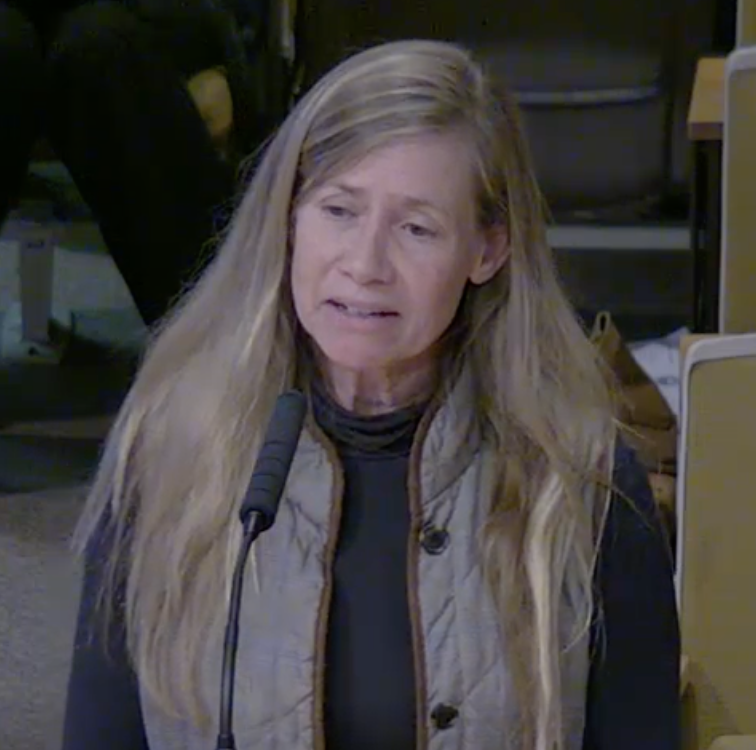
Brownfield | Screenshot
“I love trails, but we need to address the issues — [and] there’s some very big issues,” she said, noting that the trail passes through a “very historic and very cultural” portion of her district in Trinity County. “There will be obstacles in the way of this trail, and we need to be very cognitive and respective of those.”
Supervisors Bushnell and Wilson saved their pitches for last. Bushnell emphasized that one of the most critical segments of the trail passes through the remote Eel River Canyon, which straddles the Humboldt-Mendocino county line. Given that the area is already in her district, she felt she would provide much-needed representation for SoHum landowners.
“I think I bring a unique opportunity to the board [because] I represent those landowners already, and I see a great opportunity through the Eel River Canyon,” Bushnell said. “I want to make sure that people’s voices are heard, that we can do it right and we have a smooth transition with having that trail go through the canyon. … Regardless [of the appointment], I’ll continue to represent my constituents through the Eel River Canyon and look forward to what the Great Redwood Trail can bring to Humboldt County.”
Wilson began his pitch with a reminder that the GRTA is a state agency, and emphasized that representation is “not just for our local community, but users across the state.”
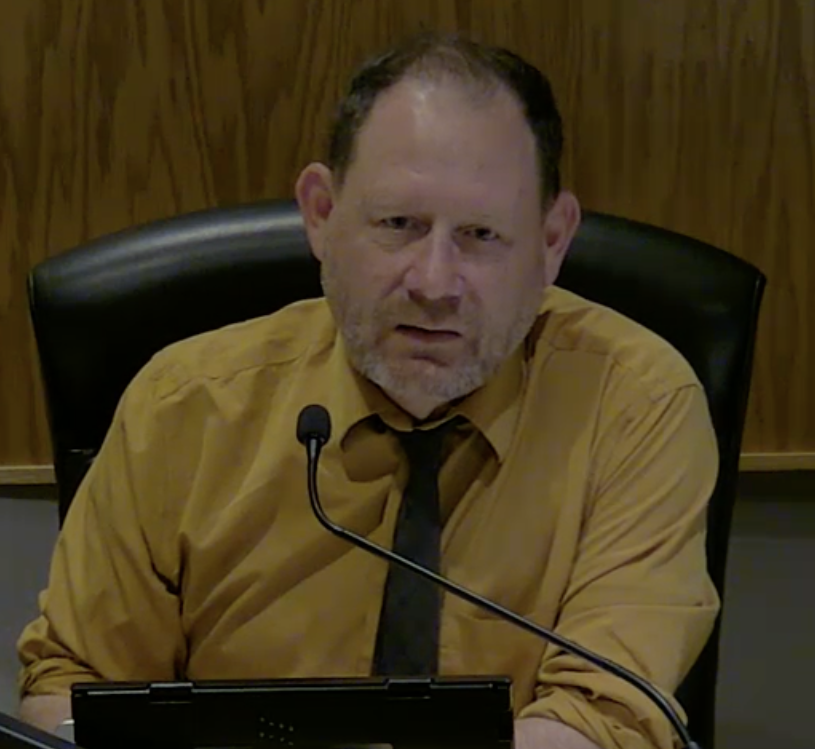
Wilson | Screenshot
“I’ve been a trails advocate since 2005, [and] I have extensive experience working with local communities, tribal governments and state agencies,” he said, referring to his tenure on both the Board of Supervisors and the California Coastal Commission. “I recognize the challenges and the opportunities the trail represents to connect our communities, strengthen the regional economy and benefit residents and visitors alike. I’m committed to ensuring to a diversity of local voices that shape the development, and it would be an honor to represent Humboldt County on the GRTA.”
During public comment, Tom Wheeler, executive director of the Environmental Protection Information Center, vouched for Vander Meer, who was unable to attend today’s meeting due to travel. “She was instrumental in getting the Bay Trail done [and] ran Friends of the Dunes for 30 years,” he said. “She — I think all of you know her — is a collaborative, thoughtful person, and I think that she would do very well on this board.”
Following public comment, outgoing GRTA board member and Fifth District Supervisor Steve Madrone also highlighted Vander Meer’s resume, noting that she secured a personal reference from Hank Seemann, the county’s deputy director of Public Works, “who really championed getting [the Bay Trail] done and getting it built.”
Madrone made a motion to appoint Vander Meer and Wilson to the GRTA board, which was seconded by Fourth District Supervisor Natalie Arroyo “for the purpose of discussion.”
While discussing whether or not it would be appropriate to appoint a Trinity County representative to the seat, Wilson said, “I don’t think it would be advantageous for Humboldt County to give half of its representation to Trinity County.” Instead, he suggested that the county advocate for Trinity County to have its own seat on the GRTA.
Bohn spoke highly of a few applicants from the Eel River Valley, but felt Brownfield and Bushnell would be the best fit for the GRTA board.
“We have two capable people [who] have two very different … approaches to this thing, but I know they will listen to their people along the trail to make a successful trail,” he said. “To make a successful operation, you’re going to have to have the neighbors involved.”
A little later in the discussion, Madrone echoed Wilson’s call for Trinity County to get its own seat on the GRTA, which drew sharp criticism from Bohn. “Today’s your opportunity,” he said. “You walk the talk, or you just talk the talk.”

Madrone | Screenshot
“I find it unfortunate that in order to push your position, you feel the need to insult me,” Madrone responded. “Anybody that knows me knows that I have been dedicated to trails for over 50 years here in Humboldt County, and I walk my talk every day in regards to that and the rest of it. So, it’s unfortunate you feel the need to do that. I’m going to leave it at that.”
Given the two-year term for each appointee, Arroyo thought it would be advantageous to select people who lived in communities that are next in line for trails.
“I think the phases of the trail that we’re most likely to see developed … are the ones that are already kind of in the queue or where there are small gaps to fill, like the Annie and Mary Trail to Blue Lake, like the segment to College of the Redwoods,” she said. “All of the areas in the sort of greater Humboldt Bay Area, broadly speaking, and then just outside of that are the likely next ones to move forward.”
After some additional discussion, the board voted 3-2, with Bohn and Bushnell dissenting, to appoint Vander Meer and Wilson to the GRTA.
###
The board is about to come out of its closed session discussion. Check back a little later — or perhaps tomorrow morning, this is shaping up to be a long one — for more coverage of today’s meeting.
Faced with Painful Budget Cuts, Fortuna Debates Selling the River Lodge and Closing the Depot Museum
Dezmond Remington / Tuesday, April 28 @ 12:52 p.m. / Local Government

The Fortuna River Lodge. Photo from city website.
PREVIOUSLY
###
Last night, the Fortuna City Council, forced to consider selling the Fortuna River Lodge to offset the city’s systemic budget issues, decided they’d research leasing it to a third-party operator instead.
Fortuna’s in a bad place, financially. Sales and hotel tax revenues have plummeted over the last few years, while the price of liability and health insurance has skyrocketed. The city’s taking a hit to its General Fund; the city is spending $550,000 on a state-mandated General Plan update next fiscal year, putting $40,000 towards purchasing a new phone system, and shelling out an extra $200,000 for police department salary increases.
Bridging the $1.8 million gap between where the city’s finances were projected to be several years ago and where they actually are may prove difficult. The council instituted a hiring freeze last year (though they made some exceptions to hire an emergency dispatcher and an economic developer), leaving two positions unfilled. However, those savings aren’t close to covering the difference; the city needs another $500,000 in reductions to balance the General Fund’s operating budget. The budget for the next fiscal year is due June 30.
At a well-attended public budget workshop last night, Fortuna’s Finance Director Aaron Felmlee shared some strategies city staff had come up with to absorb some of the monetary impacts. Some of them were fairly anodyne (continue the hiring freeze), but a few proposals inspired resistance: many public commenters and a few of the city council members said they were saddened that they even had to think about selling the Fortuna River Lodge or closing the Fortuna Depot Museum for a large chunk of the year.
Maintaining and staffing the lodge is expensive. The city spent $470,000 from the General Fund on its operations last year, and only made $194,000 back. That pattern is typical; since 2021, the city has spent about $1 million more on the lodge than it made back. Felmlee said he estimated that the city would have to charge renters $2,880 per day to make ends meet. Currently, it charges an average of $1,356. He said he didn’t think most people would be willing to pay more than double the current rate to use the lodge.
To offset the costs, Felmlee proposed “eliminating” the River Lodge Manager. Fortuna paid the current manager, Jennifer Lourenzo, $54,000 plus benefits in 2024, according to government data. The frozen coordinator position paid about $17,000 annually. City staff suggested leasing the building to another government agency, or even selling it outright, though that idea was shot down by the council almost immediately.
“I don’t want to sell it,” councilmember Tami Trent said. “I don’t even want to look at that option. I’m hoping we can get back on our feet. I don’t even want to lease it, personally.”
“It is a landmark,” Mayor Mike Johnson said. “It’s a unique facility, the only one of its kind, and it should stay owned by Fortuna. Hopefully we can come to some agreement with another agency or group and keep its operations going, and get something back out of it.”
Felmlee said the measures would save the city $180,000. The city voted unanimously to research leasing it.
The city’s public transit for seniors and disabled people is another headache. Fortuna is being given less transit funding from the Humboldt County Association of Governments than in past years, almost $200,000 less than in 2021. The city is holding off on hiring a full-time transit supervisor, but even without that, it costs the city an average of $43 every time someone rides the bus. Felmlee projected that increasing operational expenses combined with flatlining revenues will result in an $80,000 deficit in 2030, though next year the budget is balanced.
The council voted to ask HTA to take a look at their transit system and, potentially, operate its Dial-A-Ride system in Fortuna. Trent voted “no” on the resolution.
But the item that generated the most discussion was the prospective closure of the Fortuna Depot Museum. The museum, open year-round, costs about $30,000 to run, most of that for a part-time curator position. The finance department suggested closing it from October to April every year, and to pay the curator with donations made to the museum.
The museum is open four days a week during the winter hours, but during the peak tourism season in the summer, it’s open every day. Multiple public commenters and council members railed against the idea of closing the museum or cutting the hours.
“Our Depot Museum is a hidden gem, right in the center of our community,” said Ruth Dekat, a member of the city’s historical commission. “To close it even for short periods of time would mean a death sentence, because eventually, we would say, ‘Well, we lived without it for six months. We can live without it for another such period of time,’ and then eventually it would go away. That’s what makes me sad about this whole thing.”
Curator Alexandra Service also addressed the council. She’s worked at the museum since 2009; Mayor Johnson called her a “walking encyclopedia” of Fortuna’s history. She said people come in year-round for all kinds of reasons, such as genealogical research or fact-finding about a house or a building they’re purchasing. It’s a community resource, she said, and it would be worse off without the museum.
City Manager Amy Nilsen said the museum was “unique.” Many cities don’t fund their local museums directly, and she said it may be difficult to keep the museum open long-term. The council decided to wait on deciding its fate until May.
All of the staff and councilmembers said they hated considering gutting of some of their cherished community resources, but understood the necessity.
“I understand the sentiment of the council that these are really difficult decisions, because they are,” Nilsen said. “Aaron [Felmlee, finance director] and I spent hours and hours going through this budget with the department heads, trying to figure out where there was room to make cuts. And it’s painful, because we’re at the point now where the cuts — they hurt to some degree, right? They’re difficult for you to make, it’s difficult for staff to make those recommendations.”
“We got to start someplace, sometime,” Johnson said. “But it’s not going to get any easier.”
It Would Cost About $180 Million to Make Cal Poly Humboldt’s Facilities ADA Accessible, Latest Estimate Finds
Sage Alexander / Tuesday, April 28 @ 12:32 p.m. / Cal Poly Humboldt

File photo.
Cal Poly Humboldt would need about $179 million to make the campus physically accessible, the university’s latest estimate found.
Compared to the facilities budget, “it’s massive,” said Travis Fleming, CPH Acting Associate Vice President of Facilities Management.
The estimate was calculated in March following the university’s biennial facilities condition audit. Georgia-based consultant ISES Corporation tallied up costs for fixing all the physical accessibility issues on campus, like renovating bathrooms, repaving sidewalks and other areas noncompliant with the Americans with Disabilities Act (ADA).
The ADA, passed in 1990, requires public universities to provide equal access to students with disabilities.
The hundreds of issues on campus, called “barriers,” stop people from accessing an area, like a sidewalk curb that prevents a wheelchair user from taking a path. The consultants logged some 190 barriers for the exterior alone.
This estimate includes projects at campus housing, academic facilities, walkways and outdoor spaces. The costs are scattered throughout the campus, said Fleming.
“One thing that’s really expensive is making existing restrooms accessible,” he said.
For example, he said making the men’s and women’s bathrooms accessible in the Music B building would take about $750,000, not including design costs. Contractors often have to move walls and redo plumbing, while still meeting fixture counts required in bathrooms.
To hone in the estimate this year, Fleming added an individualized multiplier to the consultant’s estimates based on the difference between projected and actual costs of recent projects. He said factors like locally elevated fuel and shipping costs, and limited competition, mean construction projects typically end up more expensive than estimated at Cal Poly Humboldt.
Contractors for state projects also must meet insurance and prevailing wage requirements.
He believes some estimates are a bit overshot. But since he’s not expecting a $200 million check to arrive in the mail this year, he said inflation will shortly eat into any wiggle room.
Fleming said the hilly topography alongside the age of the buildings makes addressing accessibility problems particularly challenging.
But the biggest thing blocking improvements is funding, alongside the construction schedule that requires much of the work to be done in the summer, he said.
The university requests funds for projects each year from the state as part of the capital outlay program, and can now use this estimate for requests.
“Right now, there’s not a lot of state funding that’s coming in for capital improvements, so we’re trying to find as much money internally that we can,” he said.
A push has been underway over the last few years to address deep rooted accessibility issues at Cal Poly Humboldt.
In 2023, a student filed a class action lawsuit against the university, alleging the Cal Poly Humboldt failed to create an emergency evacuation plan that took into account her disability. She also alleged she was excluded from campus activities and ran into a spread of barriers daily, like inaccessible bathrooms or doors. The case was ultimately settled out of court.
Efforts to chronicle problems sparked a smattering of people to form the Committee on Accessibility and Accommodation Compliance (CAAC). They’ve identified hundreds of barriers and called for improvements.
Some are hopeful the $179 million estimate will help secure funding to fix the long-standing issue at the university.
“It’s kind of this ridiculous pile of money,” said James Graham, co-chair of the CAAC and professor of geospatial science.
This estimate exceeds the yearly operating budget of the University.
Graham is hopeful that having this figure handy will help the campus administration, and advocates, push for funding. He said it gives a clear number for the campus to request from the CSU Chancellor’s office.
“For the first time, we have a dollar figure,” said Graham.
Graham said CPH’s 1993 ADA transition plan has an $11 million figure for similar work. An updated transition plan is set to be finished shortly.
More recent figures didn’t address the cost difference between estimates and the current market, noted Fleming.
UPDATE, Thursday 12:40 p.m.: In a follow up email from a spokesperson, Fleming also attributed the ballooning estimate to additional ADA accessibility requirements since 1993, inflation, and the increase in construction costs.
“It’s important to note that today’s list is more detailed and comprehensive than in the past because of the new accessibility requirements of ADA laws,” he said.
Humboldt Hill Property Owner Faces Potential Fines, Misdemeanor Charges for Dirt Dumping and Stream Bed Alteration
Ryan Burns / Tuesday, April 28 @ 11:31 a.m. / Environment , Government

Property owner Mike Duncan has been cited by Humboldt County and CDFW for unpermitted grading in a stream-side management area at his property on Humboldt Hill. | Google Earth.
PREVIOUSLY
###
More than a year before Mike Duncan took ownership of his residential parcel up on Humboldt Hill, he was warned against altering the stream bed that runs across it.
Duncan was having a house built for himself and his family on this hillside property just south of Eureka, and in an email sent almost exactly two years ago, Kathryn M. Rian, environmental scientist with the California Department of Fish & Wildlife (CDFW), explicitly mentioned this creek, telling Duncan, “[D]o not alter this stream in any way.”
The unnamed headwater stream runs from Duncan’s property through a Wiyot-managed wildlife preserve on its way to Humboldt Bay.
As the Outpost reported last month, Duncan did subsequently alter that stream bed through unpermitted grading and construction activity. He violated several county codes and state laws in the process and could now be facing criminal charges and hundreds of thousands of dollars in civil penalties.
According to inspection reports, the unpermitted grading and construction has destabilized the hillside, and the stream bed has been polluted with imported rock, concrete and other debris.
To briefly recap the situation, the county issued its first stop-work order in April 2023, citing unpermitted grading in a stream-side management area. In response to the county’s order, Duncan hired a local landscape design company to perform erosion control work, and the stop-work order was lifted.
But those erosion control measures failed within a matter of months, triggering more scrutiny and regulatory oversight. Emails obtained through a California Public Records Act request show Duncan expressing a desire to cooperate and resolve the issues, but starting late last year, the county started receiving complaints from neighbors saying they’d seen “hundreds” of truckloads of dirt being delivered to his property at 89 Blue Spruce Drive.
In October, the county issued another stop-work order, and earlier this month, CDFW sent Duncan its own Notice of Violation. In a February site visit, department staff documented substantial alterations to the stream bed, channel and bank. They noted that native riparian vegetation had been removed; rock, fill material and debris had been placed along the steam bank; and various types of debris — including asphalt, concrete waste and sediment — were in spots where they could pass into state waters.
Rewinding the timeline a bit, here’s how the property looked in the spring of 2023:

Riparian vegetation along the stream channel. Photo taken July 7, 2023. | CDFW.
And here’s a shot from April of 2024, still prior to much of the unpermitted construction activity on this hillside:

In this shot, looking upstream toward the residence, CDFW staff noted “a clearly defined stream bed and riparian vegetation.” | CDFW.
###
Now let’s take a look at some shots taken during a CDFW property inspection on February 27, 2026, after all of the unpermitted activity:

A retaining wall, constructed of concrete landscape pavers and chunks of concrete, slumps as the underlying dirt fill material erodes. | CDFW.

CDFW notes, “Extensive scouring and erosion of exposed fill material along the stream bank, with scattered rock, chunks of asphalt, and concrete debris.” | CDFW.

Chunks of asphalt and concrete debris in the stream bed. | CDFW.
In the Notice of Violation, CDFW staff reminds Duncan that in 2023, the department went easy on him. The Eureka office had received several complaints from the public and a referral from the Humboldt County Planning and Building Department, which had already issued its first stop-work order. Rather than taking punitive action, CDFW offered an advisory.
“Although the Department ultimately decided not to exert its jurisdiction over the drainage feature along the western edge of the property, it explicitly referenced the unnamed stream along the eastern edge of the property, advising against alterations to stream habitat and outlining permitting requirements,” the CDFW notice says.
In all, department staff documented violations of three Fish and Game code sections: 1602(a), 5650(a) and 5652(a). Each violation can be prosecuted civilly and criminally, with a maximum civil penalty of $25,000 per day. The criminal violations are considered misdemeanors.
In an email to the Outpost, CDFW Senior Environmental Scientist Supervisor Michael G. van Hattem said the department’s Notice of Violation was referred to the department’s law enforcement branch, which will decide whether or not to file with the Humboldt County District Attorney’s Office. The DA’s Office would have discretion over criminal prosecution.
When the Outpost spoke with Humboldt County Planning and Building Director John Ford last month, he said his department hoped to coordinate with CDFW so that the various violations could be resolved through a single compliance agreement. Reached by phone on Friday, Ford said that work is moving forward.
“We’ve met with Mr. Duncan, and he is entering into a compliance agreement to abate the violations,” Ford said. All of the material that was brought in without a permit will need to be removed, and the riparian area that’s been damaged will need to be restored. Duncan and his consultants and contractors are preparing the remediation plan, which the county will circulate to CDFW, the Water Board and the California Coastal Commission for review and comment.
“Once we have something that achieves the goal of compliance, then the property owner would be responsible to implement that plan,” Ford explained.
Duncan, the general manager at Schmidbauer Building Supply, declined to say much when we reached him for last month’s story, and he did not respond to a voicemail seeking comment for this one.
‘A Betrayal:’ California to Share Data on Immigrant Drivers Nationally
Khari Johnson and Wendy Fry / Tuesday, April 28 @ 7:24 a.m. / Sacramento

The DMV has asked for $55 million to share its driver license data to a national organization. Advocates say the move could endanger unauthorized immigrants. Department of Motor Vehicles parking lot in central Fresno on Dec. 13, 2022. Photo by Larry Valenzuela for CalMatters
###
This story was originally published by CalMatters. Sign up for their newsletters.
###
California is preparing to share with an outside organization detailed information about driver license holders, including immigrants who do not have legal authorization to live in the U.S.
That breaks a promise the state made a decade ago when it began issuing licenses to unauthorized immigrants, advocates say, and it means more than 1 million people may face higher risk of deportation.
But if state officials don’t turn over the data, the Department of Homeland Security may refuse to accept California licenses and IDs at airports, the advocates believe, following a briefing with the California Department of Motor Vehicles and the office of Gov. Gavin Newsom earlier this month. State authorities confirmed they plan to share the data to comply with the Real ID Act of 2005, which set requirements for accepting state identification in federal facilities like airports.
Representatives from four advocacy groups who participated in the briefing told CalMatters the shared information will show whether a person has a Social Security number, meaning it could be used to identify people in the country without authorization.
The state plans to provide the information to the American Association of Motor Vehicle Administrators, a nonprofit organization whose governing board is made up of DMV officials from across the country.
The information given to the association will go into the group’s State-to-State Verification system and its platform, known as SPEXS, which allows DMVs and contractors that work with them to verify if someone has more than one license issued in their name. Sharing that data allows agencies that issue driver licenses to verify that a person doesn’t have duplicate licenses in multiple states.
In the future, an ID database like the one the association maintains could be used to support mobile licenses people can use on their iPhones or online age verification for access to mature content or chatbots.
But advocates fear that federal immigration officials will try to gain bulk access to the data and use the fact that a person doesn’t have a Social Security number as a signal that they’re deportable.
The state received assurances from the association that safeguards will be added to prevent bulk searches for unauthorized immigrant license holders in the database and to prevent access by the Border Patrol and Immigration and Customs Enforcement, according to people who joined the briefing with the DMV and governor’s office. But they remain skeptical.
To carry out the plan to share data with the association the California Legislature will need to approve $55 million to cover the DMV’s costs. It may also need to amend existing law, which states that a Social Security number obtained by the DMV cannot be shared for any other purpose than to address unpaid taxes, parking tickets, or child support.
A spokesperson for the governor’s office declined to confirm details of the call or respond to specific concerns from advocates.
“California continues to lead in supporting immigrant families and protecting personal data from federal overreach,” the spokesperson, Diana Crofts-Pelayo, wrote in an email. “The state has taken the same approach to protect Californians’ data during the Real ID implementation, while maintaining Real ID compliance for the benefit of all Californians.”
Ian Grossman, the chief executive of the DMV administrator association, told CalMatters that participation in the verification system is voluntary and that only authorized state employees or contractors have access to the system, that bulk searches of the system are not currently allowed, and all searches must contain specific information about an individual like their name and date of birth.
Social security number ‘99999’
For more than a decade, California and 18 other states invited undocumented people to obtain drivers licenses in order to support public safety and the economy. Economists say that such laws improve economic activity, drive billions of dollars in taxes into state coffers, and benefit public safety because people who lack federal authorization to be in the country can feel more comfortable reporting criminal activity.
More than 1 million people have obtained drivers licenses in California under Assembly Bill 60, a law passed in 2013. The law prohibs the state from using information obtained in the licensure process to consider an individual’s citizenship.
But the multistate verification system can reveal whether a person is an undocumented immigrant. According to an association manual obtained by CalMatters, the database will include the last five digits of a person’s Social Security number, and if that person has no Social Security number, the association allows states to use the placeholder “99999.”
Advocates fear that federal immigration officials could gain access to information in the database, including on undocumented Californians, by asking local officials to make requests on their behalf.
That sort of end run would not be without precedent.
CalMatters reported on instances last year and this year where local law enforcement agencies broke state law and shared information gathered by automated license plate readers with ICE or Border Patrol agents.
The DMV and the governor’s office say the association will notify California of requests from any entity other than a participating state, including attempts to subpoena the database for information about California license holders, providing them with the opportunity to challenge subpoenas or intervene in other requests. But if a subpoena is accompanied by a gag order the association could not deliver any such notification. An agreement between the association and the California DMV obtained by CalMatters states that the association will inform California “if legally permitted” if it receives a subpoena “to release, disclose, discuss, or obtain access to S2S information.”
Hasbrouck believes the DMV and governor’s office “must have known” the reassurances they got from the association were “hollow given the possibility of gag orders.”
He also said that, as a private entity, the association has less protection from court orders or subpoenas than a government agency. Its data sharing is also more easily hidden, since the association is not subject to Freedom of Information Act requests or open meeting laws.
Advocates see ‘a direct betrayal’
Advocates who spoke with CalMatters said sharing the driver license information with the association sells out immigrant license holders. The law that created the program prohibits the state from using information the program gathers to determine citizenship.
“It’s unclear how extreme the danger people are being put into by this decision but there ’s no doubt we told people with AB 60 licenses this would never happen, but it’s happening, and that’s a direct betrayal,” said Tracy Rosenberg, head of advocacy at Oakland Privacy, who was on the call.
Linda Nguy, an associate director at the Western Center on Law and Poverty, compared the disclosure to a move last summer by Health and Human Services Secretary Robert F. Kennedy to share data about millions of non-citizens with federal immigration agencies. That was a violation of federal law, department officials concluded, according to a memo obtained by the Associated Press.
Pedro Rios, director of the U.S.-Mexico Border Program at the American Friends Service Committee, was not on the call, but echoed Rosenberg and Nguy, calling the data sharing plan “a betrayal of California’s commitment to protect and defend all its residents, especially those who have an AB 60 drivers license.”
Becca Cramer-Mowder, who was on the call representing the Electronic Frontier Foundation, questioned why the governor’s office and DMV are in a rush to comply with the Real ID Act two decades after it passed at a time of increased pressure from the Trump administration.
“It just seems like we’re missing the bigger picture of this moment in time,” she said
The plan to share license information with the database depends on the state budget process because the DMV is requesting $55 million to move the data over to the association’s systems.
At a state Senate budget hearing last month to approve the funding, lawmakers questioned why the state should follow a timeline set by a private organization and share part of Californians’ Social Security numbers. They also asked the DMV to explore the reasoning behind a lawsuit filed by Oklahoma lawmakers in January to block data sharing with the association, in which they argued that sharing personal data collected for driver’s licenses violates state law there.
DMV director Steve Gordon told them that California unsuccessfully tried to convince the motor vehicle association to consider a unique identifier other than a social security number and “anybody who has a social security number that’s sharing information of course would have a concern” but told lawmakers “we need to go. We need to go now.”
DMV spokesperson Jaime Garza said that Californians can submit a request to surrender or cancel a drivers license but that driving without a license is illegal.
Nick Miller, a spokesperson for Assembly Speaker Robert Rivas, told CalMatters lawmakers continue to work on the policy issue.
“Protecting immigrant communities from the Trump administration’s relentless attacks — and ensuring Californians are empowered and defended — continues to be a top priority for the Speaker,” he said in an email.
Rosenberg with Oakland Privacy suggested that the state might be better off opting out of the Real ID system than sharing information about its license holders, noting that more than 60 percent of Californians already have passports.
“I just wonder what would happen if the state asked Californians to get a passport in order to fly for a couple of years in order to protect 1 million Californians with AB 60 licenses. Maybe we should give people that opportunity.”


