

Former North Coast Journal Bookkeeper Agrees to Pay Back $50k as Part of Embezzlement Plea Agreement
Rhonda Parker / Thursday, Jan. 19, 2023 @ 2:21 p.m. / Courts
After fighting a felony embezzlement charge for more than five years, Carmen Marie England agreed this morning to pay back nearly $50,000 stolen from the North Coast Journal while she worked there as an office manager and bookkeeper.
As part of a plea agreement approved by Judge Kelly Neel, England promised to repay $15,000 within 30 days and then make monthly $400 installments until the $48,836.97 is paid off. The 62-year-old Willow Creek resident will also pay interest at 10 percent.
The felony embezzlement count was not dismissed but will be re-assessed in two years. Providing England has abided by her agreement, the charge may then be dismissed.
England pleaded guilty instead to a misdemeanor charge of trespassing. Deputy District Attorney Roger Rees and Deputy Public Defender Wade Orbelian negotiated all morning to come up with a deal that satisfied all parties.
“It was a charge we could agree on,” Rees said outside court. “She was on North Coast Journal property and engaging in activities that are not legal.” Former NCJ owners Judy Hodgson and Carolyn Fernandez were in court this morning to observe the likely end of a very long case. Including the investigation phase, it’s been going on about eight years.
“We are somewhat satisfied with Carmen’s plea of guilty today,” Hodgson told the judge. “We would have preferred that she plead guilty to embezzlement upfront.” Hodgson said some people have questioned why the NCJ has persisted with the case for so many years. It’s because she has seen embezzlement harm or even destroy small businesses, Hodgson said.
“The reason we have been so dogged in pursuing this is to take her (England) out of circulation and as a warning to others (businesses),” she said.
England is prohibited from working in any kind of money management or bookkeeping. She told the judge she is now employed full-time during the week and occasionally on weekends. England wasn’t asked about her work duties.
In addition to paying restitution, she will be on probation for one year and must perform 60 hours of community service. Rees had asked that she either serve 15 days in jail or the equivalent in community service.
At her preliminary hearing, England testified she had never stolen from NCJ. Until today, she had been prepared to go to trial on the embezzlement charge. Judge Neel noted England has finally acknowledged her crime.
“You wouldn’t agree to pay back almost $50,000 if you weren’t taking responsibility,” Neel said.
England’s husband has accompanied her to all her many court appearances.
PREVIOUSLY:
- Former North Coast Journal Office Manager Pleads Not Guilty to Embezzlement Charges
- Who Stole Money From the North Coast Journal? Judge Delays Hearing So Prosecutor Can Examine Accountant’s Analysis
- NCJ EMBEZZLEMENT CASE: Defense Attorney Claims a Dozen or More People Could Have Stolen the Newspaper’s Money, But the Accused Former Bookkeeper Did Not
- Accused Bookkeeper Takes the Stand in North Coast Journal Embezzlement Hearing
- Bookkeeper Held to Answer in North Coast Journal Embezzlement Case, But the Case May Not Make it to Trial
- Settlement Talks Fail, and Accused North Coast Journal Bookkeeper Will Stand Trial for Embezzlement
- NCJ EMBEZZLEMENT CASE: No Evidence That Money Stopped Disappearing After the Accused Quit, Defense Attorney Claims
BOOKED
Today: 7 felonies, 13 misdemeanors, 0 infractions
JUDGED
Humboldt County Superior Court Calendar: Yesterday
CHP REPORTS
No current incidents
ELSEWHERE
RHBB: MP18 Fire Grows to 5,202 Acres as Unhealthy Smoke Settles Over Hoopa
RHBB: 780-Foot Cruise Ship Scheduled to Dock in Humboldt Bay Next Friday
RHBB: Trinity County Fair Association to Host Community Meeting on Fair’s Future
RHBB: Humboldt County Planning & Building Department to Host Public Meetings to Discuss Housing Element
Yurok Tribe Nets Big State Grant to Build Youth Center in Weitchpec
LoCO Staff / Thursday, Jan. 19, 2023 @ 1:51 p.m. / News

Graphic: Yurok Tribe.
Press release from the Yurok Tribe:
The Yurok Tribe received a $7.9 million grant from California Health and Human Services Agency (CalHHS) to construct a much-needed Yurok Youth Center in Weitchpec.
“The new facility will serve as a one-stop location, where our youth will have access to the culturally informed services and self-empowering support they need to lead healthy, productive lives,” said Yurok Chairman Joseph L. James. “I would like to thank California Governor Gavin Newsom and CalHHS for investing in the future of the Yurok Tribe. This cutting-edge center will strengthen our youth, our families and our community for many generations to come.”
On the first floor of the three-story, 4,320-square-foot building, there will be a calming space for youth, a pantry and an area for group events and classes. The second floor will consist of a private intake kiosk and several office spaces for Yurok Behavioral Health staff, professional therapists and external service providers. The top floor will include: a cultural classroom, game room, a computer station for virtual medical appointments as well as space for mutual support groups and parenting classes. An amphitheater and traditional sweathouse will be constructed outside of the youth center.
The conveniently located Yurok Youth Center will offer a wide variety of culturally centered services for local youth between 12 and 23-years-old. The services include: clinical services, outpatient treatment for substance use disorder, tutoring and school-linked healthcare services, such as individual and family therapy. Yurok Health and Human Services and other tribal departments will put on culturally relevant community wellness events and youth prevention activities at the center too. The Tribe has found that culture is a potent form of prevention and it will be embedded into all of the center’s operations. The building will also contain a legal clinic and a foster care office staffed by personnel who can help youth navigate the justice or foster care systems.
The youth center will be built adjacent to the Libby Haripop Nix Community Center in Weitchpec, the most populated part of the upriver side of the Yurok Reservation. Hundreds of families reside in close proximity to the future facility. Currently, the only youth-serving centers are in Eureka, which is a two-hour drive from Weitchpec under ideal conditions. In the dark, rainy winter months, when depression and suicide risks increase, travelling to one of the Eureka healthcare sites can take much longer as a result of poor driving conditions.
Due to several interrelated factors, such as intergenerational and modern-day trauma, limited access to healthcare services and economic inequities, young members of the Yurok Tribe and many other tribes across the United State experience behavioral health conditions far more frequently than their non-tribal counterparts. To begin addressing this issue, Yurok Health and Human Services (YHHS) Suicide Prevention Program Manager Shoshoni Gensaw-Hostler and former YHHS Clinician Alita Redner, in 2021, applied for and received a $150,000 grant from the California Department of Healthcare Services’Behavioral Health Continuum Infrastructure Program (BHCIP) to start developing plans for the youth center project. In a few short months, they completed a feasibility study, obtained stakeholder feedback, identified a site for construction and developed the initial concepts for the facility. With guidance from the Yurok Tribal Council, Yurok Planning and Community Development Department Grant Writer Ray Moisa and Gensaw Hostler completed the concept design for the new facility and secured the competitive $7,975,438 BHCIP award for the construction of the green-built center. Yurok tribal youth participated in every part of the decision-making process to ensure the project meets their unique needs. The advisory group will continue to be consulted on all center functions, ranging from the development of childcare services to individual case planning.
“It is extremely important for youth to have a meaningful say in the decisions that affect their lives. We want to empower local teens and young adults to become resilient, independent and successful adults,” Gensaw-Hostler said. “For many years, we have needed a youth center in the Weitchpec area and I’m so grateful it is finally going to be a reality.”
In the spring, the Yurok Tribe’s Per-Geesh Construction Corporation will begin building the new facility. The green building will be constructed with natural materials that are representative of the Tribe’s culture.
The Yurok Youth Center funding originated from California Governor Gavin Newsom’s $480.5 million investment in 54 projects to improve California’s behavioral health infrastructure for children and youth. Administered by the California Department of Healthcare Services’Behavioral Health Continuum Infrastructure Program and part of Governor Newsom’s Master Plan for Kids’ Mental Health, this historic investment provides grant funding to construct new facilities and expand existing facilities that help children, youth, transition-age youth, and perinatal individuals with a mental health and/or substance use disorder.
County Chief Financial Officer Tabatha Miller Leaving for Finance Director Job With the City of Arcata
Ryan Burns / Thursday, Jan. 19, 2023 @ 1:10 p.m. / Local Government
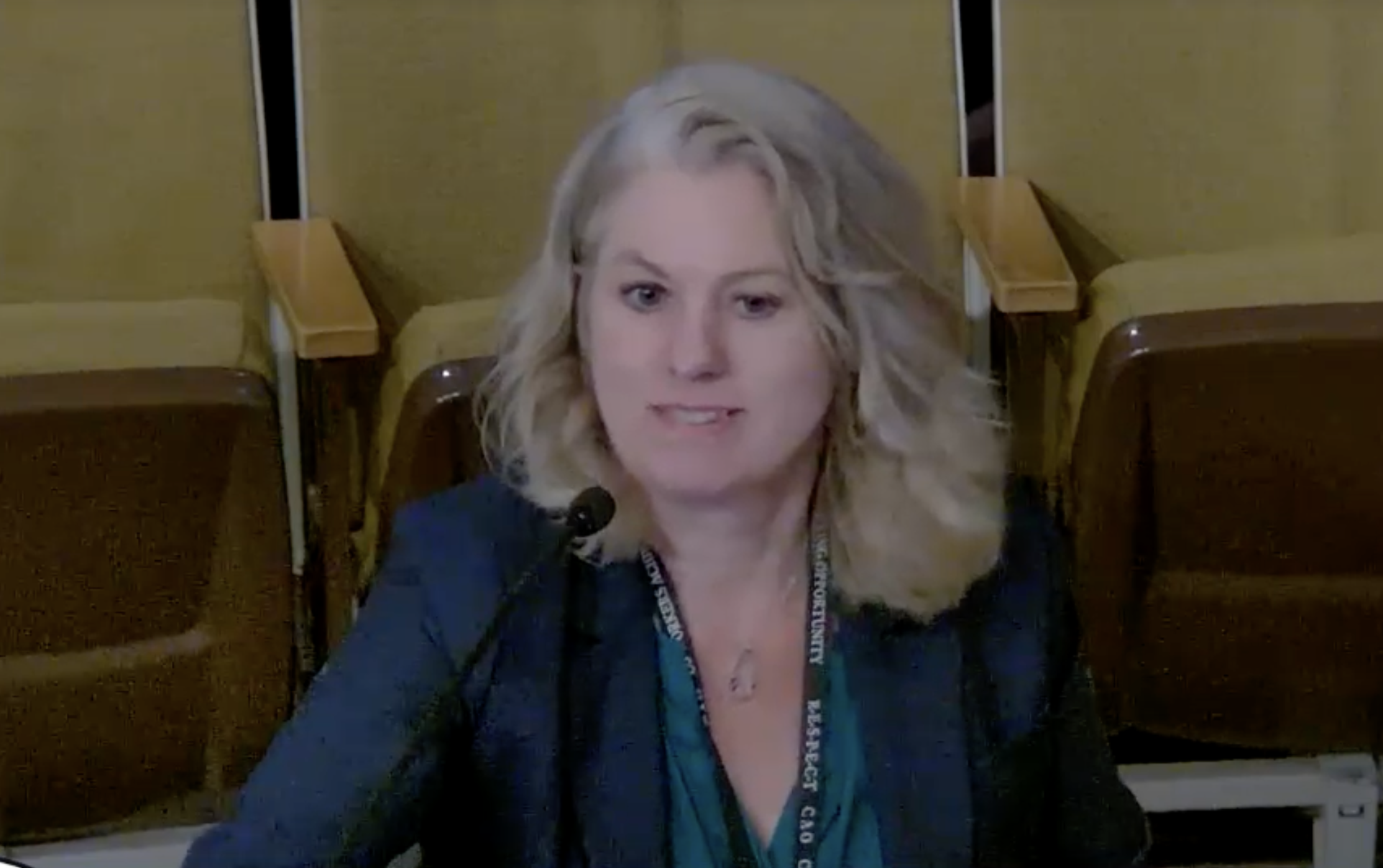
Tabatha Miller. | Screenshot from a September Board of Supervisors meeting.
# # #
After less than a year on the job, Tabatha Miller, Humboldt County’s assistant county administrative officer and chief financial officer, is resigning to become finance director with the City of Arcata.
Miller came to the county from Fort Bragg, where she was city manager for nearly four years, and she has earned plaudits from county supervisors and others for her work organizing the county’s messy finances during her brief tenure.
“I think it’s a great loss for the county and a great win for the City of Arcata,” said First District Supervisor Rex Bohn. He credited Miller with putting the county back on solid ground financially and added that he often saw Miller working on the weekends. He suspects that Miller took the Arcata job because it has a much smaller budget, which will allow her to settle down a bit.
“She rolled up her sleeves and got us in a great place … ,” Bohn said. “She’s put us in a great position where she feels comfortable leaving us.”
When former Auditor-Controller Karen Paz Dominguez resigned at the end of June, per the terms of a separation agreement with the county, Miller stepped in as interim assistant auditor-controller under Paz Dominguez’s successor, Cheryl Dillingham.
At its regular meeting last night the Arcata City Council unanimously ratified a five-year contract with Miller, with her employment set to begin this next Monday, Jan. 23. Her initial annual base salary will be $125,361. With the county, Miller was a non-contract employee who earned $84.45 per hour when she started and $90.56 per hour after the latest round of wage increases.
“I’m going to miss her terribly,” Bohn said. “Aside from being a great asset, she’s just a really nice person. She’s so smart. Just wicked smart.”
Asked for a statement, Deputy County Administrative Officer Sean Quincey sent the following on behalf of his boss, Alishia Hayes:
Tabatha has been a wonderful partner and member of the county team, and we wish her and her family nothing but the best.
She did great work with other departments, including our Auditor-Controller, to help put us into a better position to close our books on prior years and have better vision into future years. And her leadership, experience and skill have helped our staff grow.
Chief Financial Officer is an important role at the county, helping to coordinate and oversee our overall budget, and she met those responsibilities and more. Our community will still get to benefit from having her in Humboldt County, she’ll just be in a new role with the City of Arcata.
Tabatha helped lay a stronger foundation for the county and we will continue to build on her successes as we move forward.
An email seeking comment from Miller was not returned by the time this post was published.
Jury Finds Fortuna Man Guilty of Sexual Assault of a Child
LoCO Staff / Thursday, Jan. 19, 2023 @ 12:37 p.m. / Courts
PREVIOUSLY:
- Fortuna Man Arrested After Police Suspect Him of Sexually Assaulting Juvenile Over a Period of Years
###
Press release from the District Attorney’s Office:

Neiva.
Today, a Humboldt County jury found Miles Keola Neiva (39) of Fortuna guilty as charged on multiple child sexual assault charges.
In September of 2021, 13-year-old Jane Doe disclosed Neiva had been molesting her for several years. Neiva, a firefighter, was a trusted family friend who occasionally lived with the family.
Doe bravely testified at trial and gave impactful testimony.
Investigation led by Fortuna Police Department Detective Ryan Richardson uncovered evidence, including suspected child pornography, that corroborated Doe and tended to prove Neiva’s sexual interest in children. The Child Abuse Services Team (“C.A.S.T.”), and the Northern California Computer Crimes Task Force (NC3TF) further supported the investigation into Neiva’s crimes.
The case was prosecuted by Deputy District Attorney Whitney Timm with assistance from District Attorney Investigator Ryan Hill and Victim Witness Advocate Keosha Chambers.
Judge Greg Elvine-Kreis presided over the trial and is scheduled to sentence Neiva on February 15. Neiva faces up to 23 years to life in prison. Zack Curtis represented the defendant.
State COVID Testing Sites Begin to Close
Kristen Hwang / Thursday, Jan. 19, 2023 @ 9:31 a.m. / Sacramento
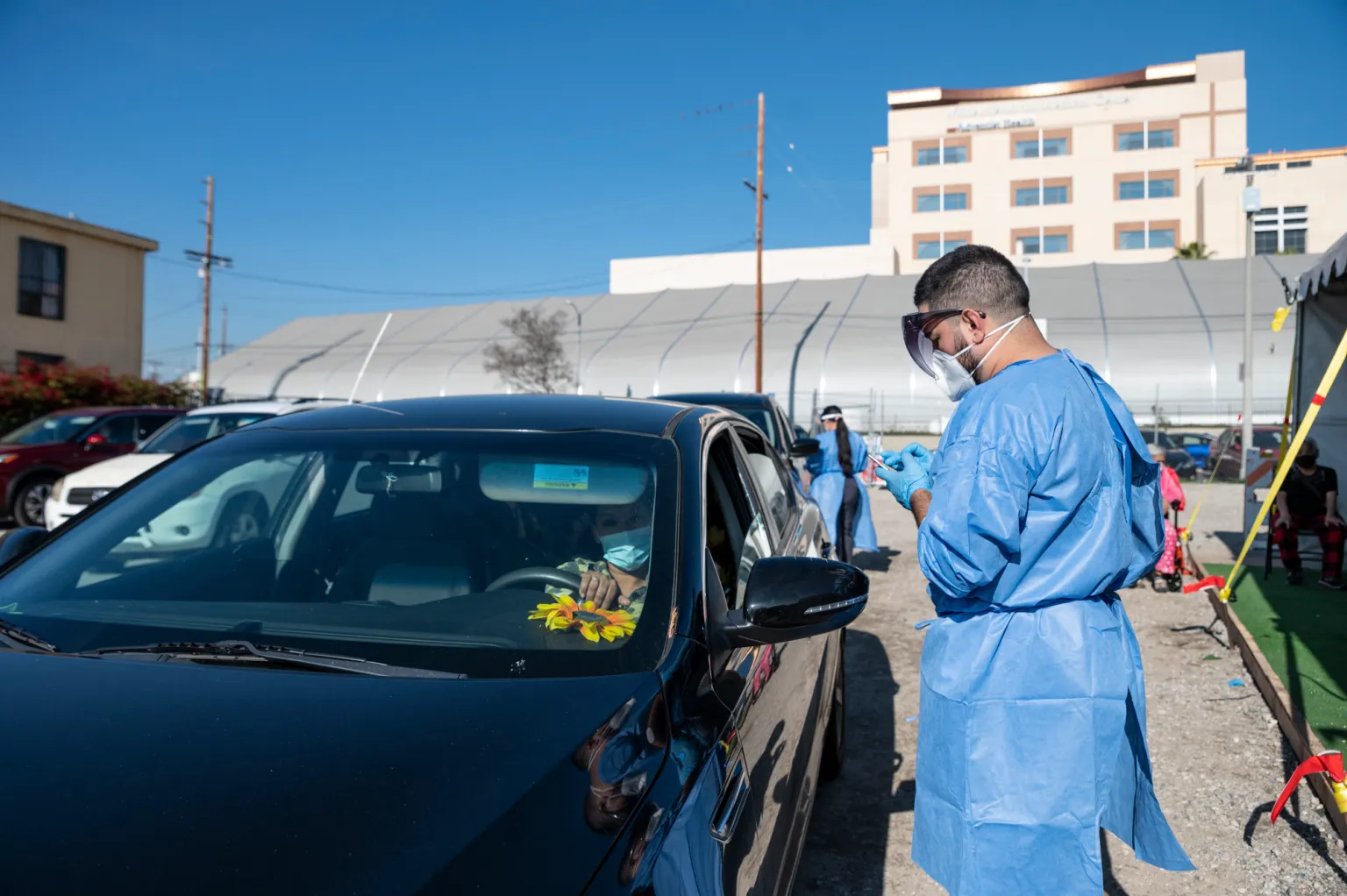
A staff member of Total Testing Solutions checks in a patient who had been waiting two hours at a COVID-19 testing site in Boyle Heights, Los Angeles on Jan. 5, 2022. Photo by Raquel Natalicchio for CalMatters.
California is preparing to close dozens of state-run COVID-19 testing and treatment sites ahead of the planned end of the state of emergency in February.
Sites that are operating under 50% capacity are scheduled to close before the end of January. Forty-four OptumServe sites will be shuttered this week, and 48 mobile “mini-buses” will begin closing in two weeks, according to the California Department of Public Health. OptumServe, a health care operations company, runs 123 testing and treatment sites along with four vaccination clinics through state contracts.
The health care giant has at least four contracts, under its former name Logistics Health, with the state totalling $1.05 billion to provide testing and vaccination services though it has been criticized in the past for its bumpy rollout. Another branch of the company signed an additional $47 million contract to design a data management system for COVID-19 test results.
“A final plan for demobilizing the remaining sites is being prepared, but we have not set a completion date,” an unidentified department spokesperson said in a statement. The state health department would only answer emailed questions and did not attribute the statement to a person.
The state of emergency, which has provided extra funding and staffing flexibilities at medical facilities, is slated to end on the last day of February.
“We learned a lot through this COVID response, and we need to make sure we don’t lose those gains.”
— Dr. Mark Ghaly, State Health and Human Services Secretary
The closures come just one week after Gov. Gavin Newsom released his January budget proposal, which moves $614 million in unspent COVID-19 response funds to the state’s general fund and drastically reduced the amount of pandemic money for the upcoming year.
Last year’s budget included $1.8 billion for COVID-19 emergency response and the state’s long-term strategy, while the proposed budget for the upcoming fiscal year is only $176.6 million. The cutbacks come as the state faces a projected $22.5 billion deficit, according to Newsom’s proposal. State Health and Human Services Secretary Dr. Mark Ghaly said in a budget call with reporters that the bulk of the proposed decrease comes from fewer state testing responsibilities, but he emphasized that the spending reductions are not “a statement about moving on from COVID in California.”
“We will continue to seek opportunities to support public health,” Ghaly said. “We learned a lot through this COVID response, and we need to make sure we don’t lose those gains.”
Demand for molecular COVID-19 testing has plummeted statewide since last January, when the omicron variant pushed hospitals to the brink of collapse. At the time, more than 800,000 PCR test results were reported for a single day and more than 15,000 people were hospitalized with COVID-19 at the peak of the surge. In comparison, less than 30,000 test results and 4,600 hospitalizations were reported on the final day of December (the most recent day with finalized tallies, according to state data).
Across the state, county health departments are preparing for the closures and absorbing the costs into their own budgets.
In Los Angeles County, OptumServe will stop operating four sites, but the county will contract with another vendor to keep the doors open, a county health services spokesperson said via email.
“It is important to underscore that the change will be seamless,” the health services communications office told CalMatters in an unsigned statement. “Community residents seeking a testing site will not experience any disruption to the existing services.”
During a media briefing last week, L.A. County Public Health Director Barbara Ferrer said the county was committed to ensuring there are “ample” testing and vaccination options.
In other areas of the state, health departments are unable to run the sites alone. All five OptumServe sites in Fresno County will close by Jan. 31. Only one of the sites is currently operating above 50% capacity, public health spokesperson Michelle Rivera said. The mobile test-to-treat buses will stop services the first week of February.
Community members will still have options, Rivera said. The county health department is continuing to work with community-based organizations, UCSF-Fresno and Fresno State’s nursing school to keep offering testing, treatment and vaccination services throughout the area. The Fresno County Board of Supervisors also approved funding for a rural mobile health program to deliver health care to farmworker and other rural communities.
Fresno County has been hit particularly hard by the latest post-holiday wave of COVID-19 as well as concurrent flu and respiratory syncytial virus surges, issuing emergency do-not-transport orders to EMTs for the sixth time since the start of the pandemic to combat overflowing emergency departments. Do-not-transport orders, also known as assess-and-refer, require ambulance personnel to determine whether a patient requires emergency transportation or if they are stable enough to be referred to a non-emergency medical facility like primary care.
“Unfortunately, it appears we will be dealing with COVID for the long haul.”
— Roger Ross, Santa Clara County Emergency Operations spokesperson
In Santa Clara County, state-run sites are also slated for closure in the coming weeks, emergency operations spokesperson Roger Ross said. The county will, however, continue to run three mass vaccination sites and has already begun folding COVID-19 response into the health department’s normal operations.
“Public health recently created a COVID Prevention and Control Program as part of our standard operations. Most of the work now resides here,” Ross said. “Unfortunately, it appears we will be dealing with COVID for the long haul.”
In Orange County, where COVID-19 health orders have at times drawn public ire, testing and vaccination strategies will largely move to “the open marketplace where individuals will self-manage COVID-19” through primary care and other community resources, the health department announced last month in a news release. County-run vaccine sites, which were serving about 200 patients per week, were closed in December, although the health department continues to offer vaccinations for vulnerable populations like unhoused individuals, said Obinna Oleribe, deputy chief of Orange County public health services.
The federal government requires health insurance plans to cover eight over-the-counter COVID-19 tests per person per month, including FDA-approved at-home PCR tests. Every household can also order four free rapid tests from the federal government. When used appropriately, at-home tests of all kinds are considered highly accurate, although data shows PCR tests are more reliable.
###
CalMatters.org is a nonprofit, nonpartisan media venture explaining California policies and politics.
OBITUARY: Diane Sommerhause Bent, 1953-2023
LoCO Staff / Thursday, Jan. 19, 2023 @ 6:56 a.m. / Obits
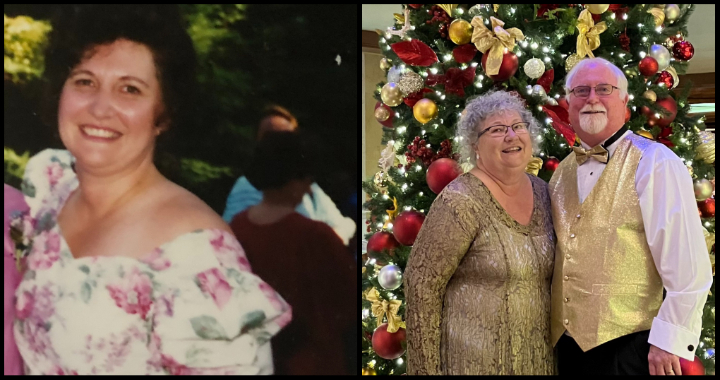
Diane Sommerhause Bent was born on Dec. 9, 1953 in San Diego. She moved to Eureka at age three, where she remained for the majority of her life. Diane attended Freshwater Elementary, Winship Middle and Eureka High (Class of ‘72). She looked fondly on her time working at Broken Eggshell, Big Loaf Bakery and Hilfiker Retaining Walls, where she retired in 2020.
Diane spent her life devoted to her family and the friends that she made family. She also loved going on adventures with loved ones and enjoyed traveling around and seeing family across the country and the world. She made her final trip in December 2022 on a cruise around Hawaii with her husband Patrick. She was also an avid member of the Eureka Moose Lodge for the past 20 years. At home, Diane enjoyed gardening and would ensure her oasis was filled with purple flowers. She also enjoyed reading murder mystery novels and watching the tenacious Judge Judy. She was a fan of all things supernatural and keeping her mind open to all possibilities. She was a great cook, and would get excited to try new recipes and have a nice family dinner. Her specialty dishes will be missed; including cabbage rolls, tamale pie, paella, pasta al limon, angel biscuits, ginger pickles, and pancakes (for the grandkids).
Diane is proceeded in death by her parents, Oma and Ralph, siblings Ruth and Jim, and many close friends that were family to her.
Diane is survived by her beloved husband of 31 years, Patrick, siblings Chuck and Ron, and children Chelsea, Courtney and Kylie. Diane loved being “Gam” and survives grandchildren Jerran, Basil “Isaac”, Payton, Mackenzie, Sophia, Gianna, and step-grandchildren Nick and Roman. Diane had a big heart and welcomed friends of the family into her home as if they were her own children, which lists too many to count.
Diane died suddenly on Jan. 13, 2023 in Eureka at the age of 69. She left this world in the company of her husband, Patrick, and ultimately died due to heart failure. A celebration of life will be held at a later date (TBD). At that time, immediate family will break away and spread her ashes at Diane’s chosen location. She found happiness with dragonflies, and may all that miss her find comfort in them.
###
The obituary above was submitted on behalf of Diane Bent’s loved ones. The Lost Coast Outpost runs obituaries of Humboldt County residents at no charge. See guidelines here. Email news@lostcoastoutpost.com.
OBITUARY: Richard Allen Griffith, 1955-2022
LoCO Staff / Thursday, Jan. 19, 2023 @ 6:56 a.m. / Obits

Richard Allen Griffith was born on July 3, 1955 in Eureka. He was the
fifth child of seven born to Frank and Jewel Griffith. He passed on
Thanksgiving night, Nov. 24, 2022 in Oroville of complications from
heart disease.
Richard spent his early years in Eureka, where he attended Eureka City Schools. The family moved to Loleta in 1965. His early years were spent playing Little League baseball, participating in 4-H and running amok on the family farm. He’s credited with getting his sister Karen started in basketball by insisting that she be included in his 8th grade morning pick-up games when she was only six years old.
Richard graduated from Fortuna High School in 1973. He was an FFA member all four years, taking mostly livestock to the Humboldt County Fair. After high school, Richard joined the U.S. Navy and was a proud veteran. He served on the flight deck of the U.S.S. Enterprise and the U.S.S. Constellation. He enjoyed tours of duty that took him to South Korea, the Philippines and other places in Southeast Asia. Upon his discharge from the Navy he enrolled at College of the Redwoods, where he completed the welding program and graduated with honors. This led to several jobs in the area of heavy equipment repair, which he loved doing. Later he worked as a long-haul truck driver, which he also enjoyed a lot.
In his later years, he moved to Phoenix to be near his son, Dwight. He enjoyed the warm weather of Arizona, his dogs and being close to his son. Recently, he had moved to Oroville to be close to his daughter, Alyssa, and his grandchildren. He was a lifelong Democrat and always kept up on politics and enjoyed a lively discussion. He had a sharp wit and a great sense of humor.
Richard was a loving son, father, grandfather and brother. He loved his family deeply and enjoyed all the large family gatherings. With 24 aunts and uncles and a gazillion cousins there was always a lot going on in the family! He’ll be remembered fondly as the mechanical genius that he was — he loved anything with a motor.
Richard will be missed deeply, but will never be forgotten. The family would like to recognize and thank his daughter, Alyssa, for doing so much for him. He loved her so much and appreciated everything she did for him.
Richard was preceded in death by his son, Dwight (in 2021), his parents, Frank and Jewel, his brother, Donald, and his sister, Judy. Richard is survived by his children, Keeley Griffith (Ashley), Alyssa Hornsby and James Crist, along with grandchildren Peyton and Addie Hornsby, Aniyah Griffith and Garrett, Sawyer and Ingrid Crist. He is also survived by his brothers David (Susie) and Doug (Nancy) and sisters, K. Joan (Carol) and Karen (Marty) and a gazillion incredible cousins, nieces and nephews.
We will love and miss him forever. He truly was a “one of a kind!”
Services will be held at Sunset Memorial Cemetery in the chapel on Friday, January 27 at 2 p.m. with military honors. Cards may be sent to the family at P.O. Box 6732, Eureka, 95502. Memorial contributions can be made to the Judy Griffith Scholarship fund at the Humboldt Area Foundation.
###
The obituary above was submitted on behalf of Richard Griffith’s loved ones. The Lost Coast Outpost runs obituaries of Humboldt County residents at no charge. See guidelines here. Email news@lostcoastoutpost.com.


