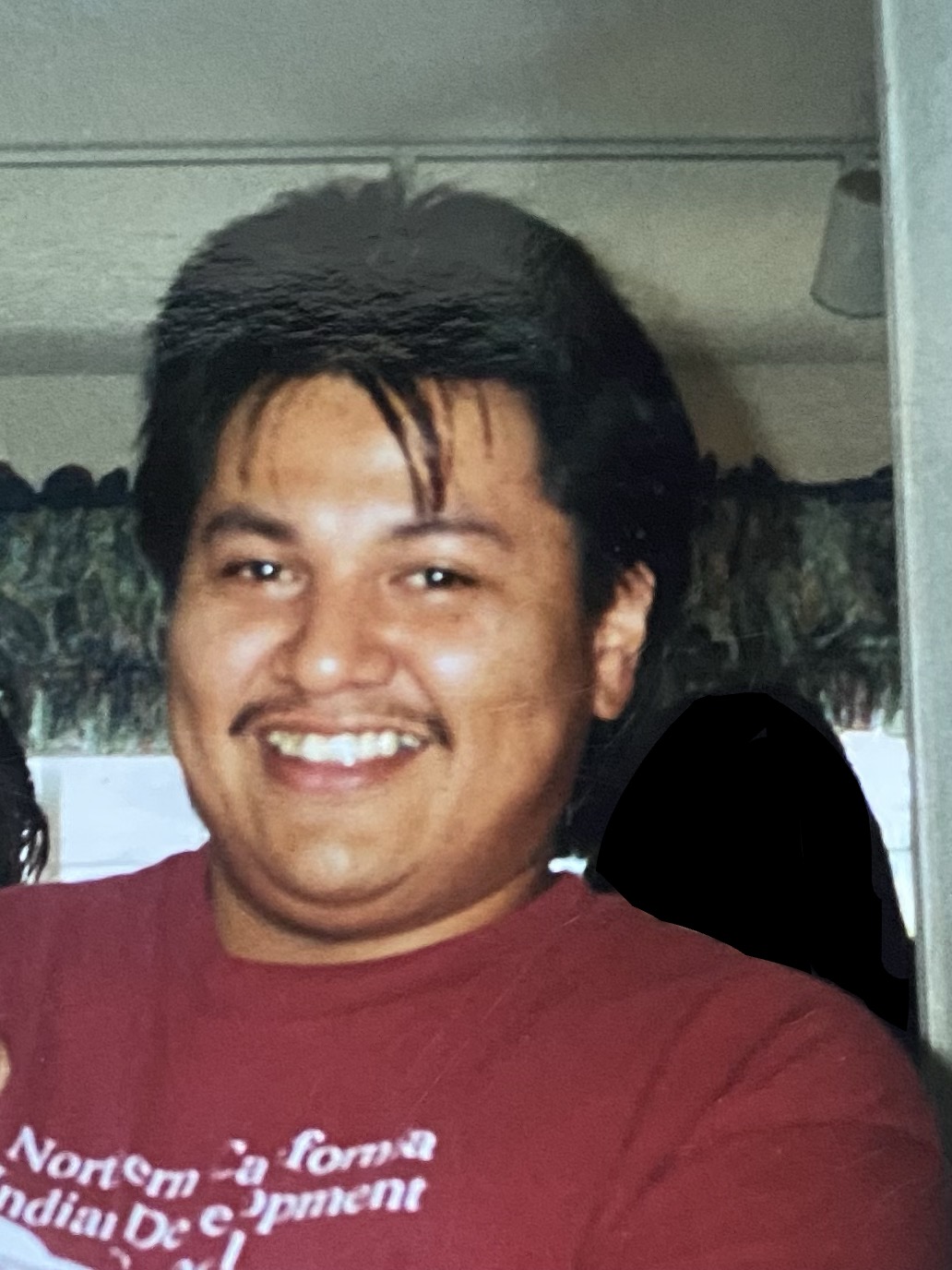
Danny was born
August 4, 1973 in Eureka and sadly passed away on November 7, 2022 at
the age of 49.
Danny met everyone with a smile and made friends
easily and were countless in number. He had friends from south of
Humboldt County up through the Oregon border. In Danny, you had a
true and loyal friend who will be missed by so many. You could count
on him to be there to offer a helping hand, listen to you attentively
in your time of need, and he would sacrifice his own needs to aid a
friend. Danny had the best smile. He could always make you laugh if
you were feeling down. He most enjoyed the days spent traveling to
visit family and friends. Danny loved everyone, especially his mother
and children. Danny was kind, sensitive, kind-hearted and loving and
all who knew him will feel a substantial loss.
Danny attended
Zoe Barnum High School and was a proud member of the Bear River Band
of the Rohnerville Rancheria. Danny has a large extended family
consisting of many aunties, uncles and cousins. Danny was extremely
close to his siblings Elizabeth (Pumpkin) French, who preceded him in
death, and brother Jeremy Houston, Sr.
Danny is going to
be greatly missed by his family and friends. Don’t mourn for Danny,
instead be joyous for him as he is where he yearned to be – with
his Creator and son Dominic.
Danny is survived
by his mother Aileen Meyer, brothers Jeremy, David and JJason
Houston, Kevin Matilton, Joe Lopez and sisters Dusty, Shelly, and
Natasha Lopez. Aunties Brenda and Eloise Bowie as well as several
cousins. Danny’s surviving children are daughters Shania Brissette
and Shayla Lopez and sons Cheyenne and D.J. Lopez, including his son
Dominic Lopez who tragically preceded him in death. Danny is also
survived by his nieces and nephews Rachel, Jeremy, Jr. and MaeMae
Houston and his grandchildren Booboo and Ash, Cecilia, Catalaya and
Keanu.
Danny is preceded
in death by his father Edward Lopez, Jr. and sister Elizabeth
“Pumpkin” French and grandmother Margaret Moon Bowie and grandfather Edward Lopez, Sr. and his children’s mother Jeanne
Marie Stanshaw, and stepfathers Robert Tracy Johnson and Richard
Meyer.
Pallbearers are
Jeremy Houston, Cheyenne Lopez, Jimmy Bowie, Edward Gus Bowie, Billy
Robinson, Sr., Sage Foley and Vincent Bianca.
Honorary
Pallbearers are Denny Sherman, Brian Wells, Billy Robinson, Jr., John
McGinnis, Dakota McGinnis, Roy Robinson, Nicholas Murray, Nathan
French, Ann Fiester and Jolanda Ingram-Obie.
Memorial Services
will be held Sunday, November 20 at Saunders Funeral Home at 1835 E
Street in Eureka at 10 a.m. Gravesite services will be held on
Monday, November 21 at Sunrise Cemetery in Fortuna on Newburg Road at noon. A potluck memorial reception will be held at his mother’s
home on Singley Hill Road in Loleta or
at the Tish-Non Community Center in Loleta immediately following the
services at Sanders Funeral Home in Eureka on Sunday. Notice will be
given at the memorial services on Sunday where the potluck memorial
reception will be held.
###
The obituary above was submitted on behalf of Danny Lopez’s loved ones. The Lost Coast Outpost runs obituaries of Humboldt County residents at no charge. See guidelines here. Email news@lostcoastoutpost.com.
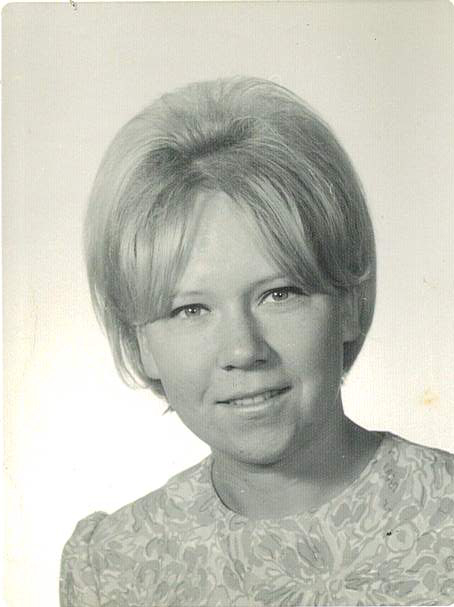
Peggy passed away peacefully with her husband, Don, by her side
at Mad River Hospital.
She was preceded in death by her mother, Mardel Holder, and her
father, Ves Holder. She is survived by her daughters, Angela
Holthaus (Charlie), Holly Bianco (Steven) and Rebecca York; her
sister, Sue Blankinship (Wayne); and her brothers Gary Holder (Joeinne),
Jerome Holder and John Holder (Danielle). She also leaves behind
her grandson, Cody Cortelyou, and granddaughter, Lacey Simas.
Peggy had a great passion for all animals, especially her horses
and her dogs, Dock and Wyatt.
For many years, Peggy took all of the school pictures in Humboldt
County through Lifetouch Studios.
Peggy will be greatly missed by her friends and family.
At her request, there will be no services.
Donations may be made at any animal shelter or Hospice of
Humboldt.
###
The obituary above was submitted on behalf of Peggy Godfrey’s loved ones. The Lost Coast Outpost runs obituaries of Humboldt County residents at no charge. See guidelines here. Email news@lostcoastoutpost.com.
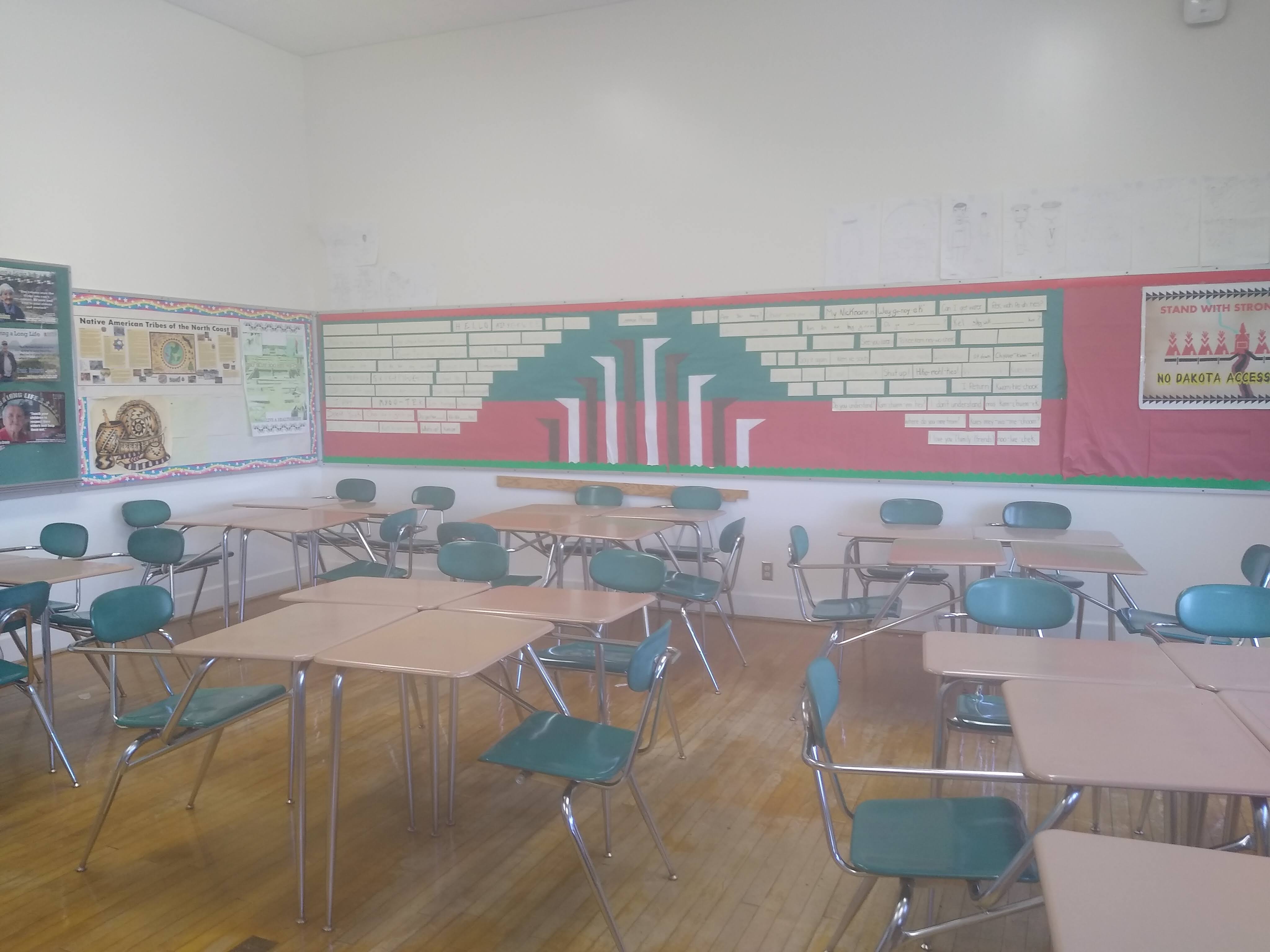
A Yurok language assignment. | Photos courtesy Mneesha Gellman except where noted.
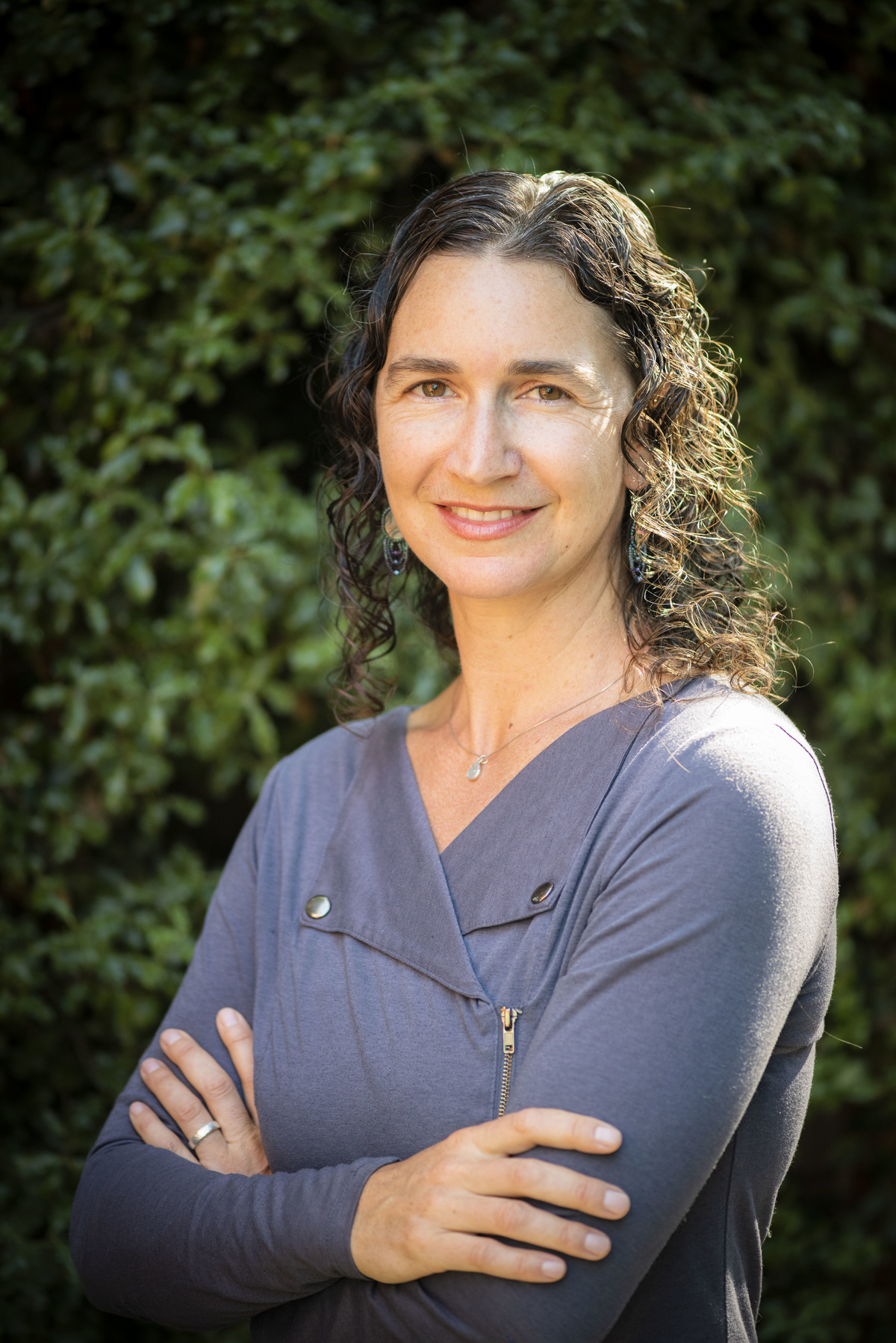
Dr. Mneesha Gellman. | Photo by Joop Rubens
Dr. Mneesha Gellman is an associate professor of political science at Emerson College in Boston, and for most of her scholarly career she’s been interested in minority and indigenous rights. However, before embarking on a scholarly path that would take her to such far-flung locales as Turkey, Mexico, El Salvador and Sierra Leone, Gellman grew up right here in Humboldt County, attending Freshwater Elementary, Zane Junior High and Eureka High School, graduating in 1998.
In a recent phone interview, Gellman said her academic pursuits eventually dovetailed with her upbringing.
“When I had a pause after I’d published my first book and was really taking stock of what I wanted the next phase of work to look like, I realized that so many of the issues that I’ve been focusing on elsewhere are absolutely front and center in the place that I still consider to be my home,” she said.
The issues she’d been focusing on included language rights and their relationship to cultural survival. She’d studied student access to “mother tongue” or heritage languages in Turkey and Latin America.
Looking to direct her academic gaze closer to home, Gellman reached out to the Yurok Tribe’s education department in 2016. She learned that the tribe wanted to gain a better understanding of the impacts of Yurok language classes, which have been offered at Hoopa Valley High School since 1996 and at Eureka High School since 2012.
The programs have been heralded as integral to the revival of a nearly extinct language, one of many Native American dialects that were actively and often violently suppressed at compulsory federal boarding schools.
In recent years, through data collection, interviews and analysis, Gellman has learned that the impacts of the Yurok language program go even deeper than language revival, helping indigenous students to reconnect with their heritage and improving their academic success while expanding the worldview of all students, reminding them that Native American cultures shouldn’t be relegated to history books.
After securing permission from the Yurok Tribal Council and local school administrators, Gellman began making site visits at Eureka High and Hoopa Valley High “to better understand how schools are supporting students of indigenous heritage and also how they can do a better job of facilitating their success.”
Her studies have led to several published academic papers and contributions to published books, and she recently took some time to share some of what she’s learned.
The Yurok language classroom at Eureka High School.
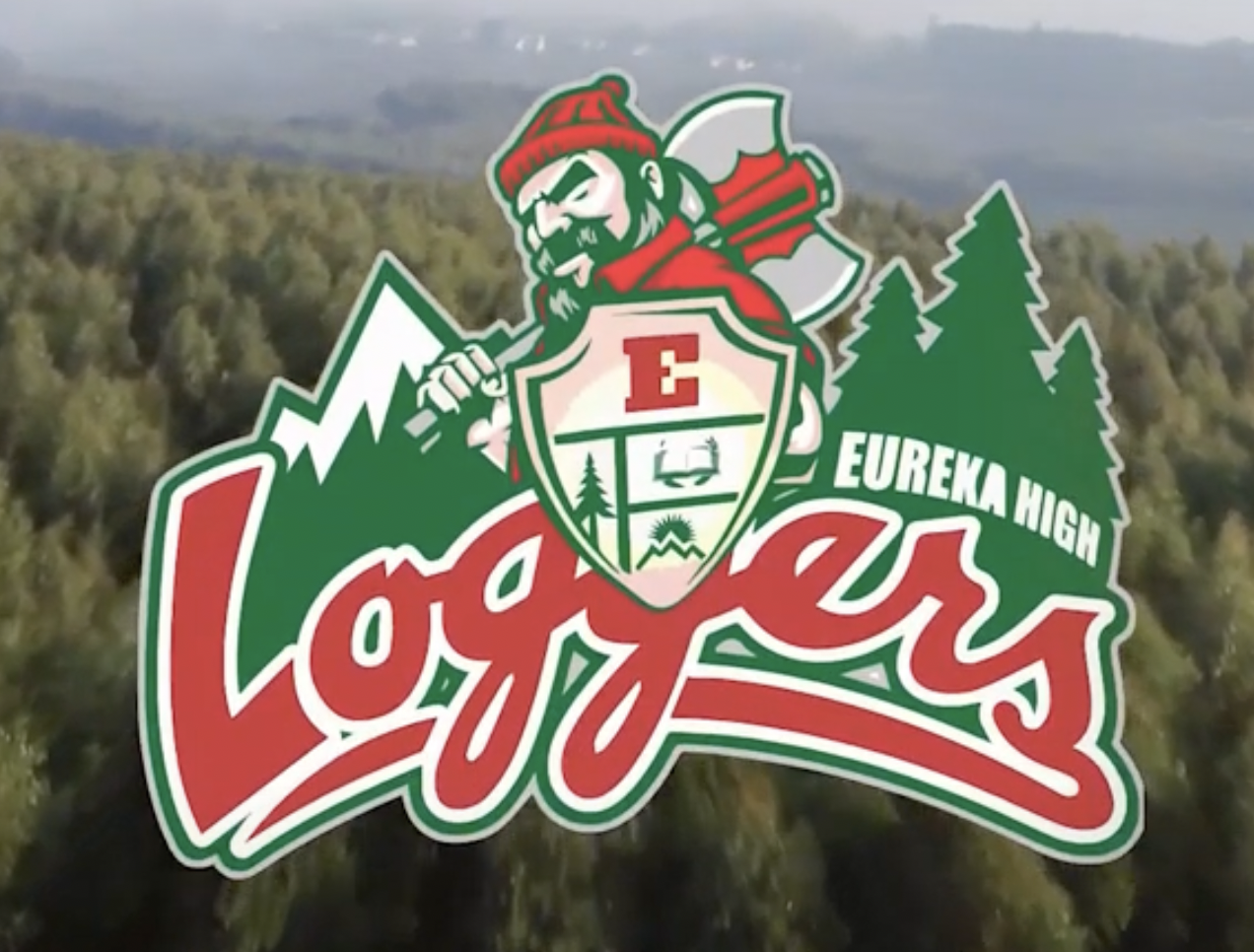
Sometimes you can glean information about a school’s dominant culture without even stepping inside a classroom. In a recently published paper, titled “Unsettling settler colonialism in words and land: A case study of far Northern California,” Gellman opens with a description of the Eureka High School mascot: a “grizzled logger” with an ax slung over his shoulder. She also quotes the city’s slogan — “I have found it!”
Screenshot from YouTube
Such emblems and mottos are intricately linked with the history of our region, “where logging, land claims and White militias went hand-in-hand in the second half of the 19th century,” she writes.
The paper goes on to examine two ways in which such cultural messaging is being deconstructed — how settler colonialism is being “unsettled,” in other words. One way is through the Yurok language programs in local high schools; the other is through the 2019 return of Duluwat Island to the Wiyot Tribe.
In interviews with students, Gellman found that the Yurok language courses offer benefits to all types of students, even those who were aware of the classes but didn’t take any of them.
For example, her paper quotes a white EHS alum whose Spanish class was across the hall from the Yurok class: “I told my mom, ‘It seems like kids don’t take Yurok class seriously,’ and she said, ‘Yes, but at least it exists.’ I never had to think about it, what it means to lose a language or culture, because I’m White and speak English, but that struck me.”
One of the white students who did take Yurok classes told Gellman that they learned a lot more than just vocabulary and syntax. “Well, learning the language kind of helps me understand their experiences and certain things that they may do or say a little bit better, since that … can inherently lead to me learning more about the culture,” the student said.
Gellman is currently working on a project that analyzes U.S. history textbooks in California and other parts of the country, and she said it’s disturbing to see the extent to which Native American people and cultures are referred to exclusively in the past tense.
“One book I documented had 15 pages talking about Native houses and food and ritual and regalia — all in the past tense,” she said. The Yurok courses serve as reminders that this is a contemporary language and culture.
“For white students who are actually enrolled in the classes, many of them said things to me in interviews like, ‘Before I took this class I thought that Native Americans were extinct,’” Gellman said. “So it was a tremendous space of intercultural learning or intercultural consciousness raising that I think will serve young people very well as they navigate increasingly diverse worlds.”
Reached by phone, Eureka High Interim Principal Rob Standish said administrators are extremely proud of the Yurok program, which includes up to three levels of Yurok studies.
“It’s more than language,” he said. “[Students] also learn about culture, tradition and different perspectives. It helps students broaden their perspective and be more worldly.”
The program’s longtime instructor at EHS, James Gensaw, recently took a job in Del Norte County, but Standish said the tribe qualified a new teacher, Roberta Chavez, who is in the midst of her first year teaching the courses at Eureka High.
“This new set of kids, they’re so appreciative of Ms. Chavez coming in,” he said. “They welcomed her with open arms.”
Gellman said that for indigenous-identified students, the Yurok classes have been found to boost self esteem and improve academic achievement.
“It validates a sense of Native or indigenous identity as something that is worthwhile and legitimate,” she said. “And it also boosts school success by bringing people to the school in the first place, getting people to walk through the schoolhouse door because they know they can go to the Yurok language class, and while they’re there they might as well attend geometry since they’ve already, you know, gotten out of bed.”
Even students from different minority backgrounds benefit, she found.
“Hmong-American students, Polynesian-American students, Latinx students who are taking the Yurok classes, they reported things like, ‘Being in this class made me more interested in researching my own family heritage,’” Gellman said. “So the inclusion of one minority language class in the curriculum validated the existence of minority identities for students from a range of other backgrounds.”
It allowed these minority students “to be one whole self without having to assimilate into the dominant framework of whiteness that still characterizes Eureka City Schools and most of the public school systems in the United States today.”
Eureka City Schools has been forced to reckon with its treatment of minority students on several occasions over the past decade. In 2013, for example, the district was sued by the ACLU of Northern California over allegations that its educational environment was characterized by pervasive racial harassment and hostility toward Black and Native American students.
A 2020 report from the ACLU found that achievement gaps persist and issued Eureka City Schools a failing grade. Native American students in the district met or exceeded English standards at only half the rate of other district students over the 2016–2017 and 2017–2018 school years, according to the report.
Just last year, the Eureka City Schools Governance Board and Eureka High administrators found themselves in hot water over their handling of a mural-painting initiative led by four Eureka High clubs representing BIPOC students — the Black Student Union, Native American Club, Asian and Pacific Islander Club and Latinx Club.
Administrators first told students that they’d need to develop official criteria and procedures before proceeding — something that had never been required for previous murals — and then Superintendent Fred Van Vleck recommended banning murals altogether, noting the difficulty of developing guidelines that wouldn’t be controversial.
Last November, the board did just that, voting 3-1 (with one trustee absent) to ban all new murals on campus. The board eventually reversed course in response to student, staff and community outcry, clearing the way for four new student murals representing cultural diversity. They were unveiled in June.
Standish told the Outpost that the district is continuing to work on cultural awareness. A couple of years ago, he said, the school board and district office opted to bring in a third party to perform a cultural equity audit, interviewing staff, parents and students. The results will be presented to the district in the next few months.
“That’s something that we’re proud of doing and we’re doing on our own so we’re not blind to our shortcomings,” Standish said.
Gellman, meanwhile, has been conducting more research on local schools. She has another academic article, called “Speaking Up: School Climate and Language Politics in the Trump Era,” that will soon be published in a special issue of the Humboldt Journal of Social Relations. It examines identity politics during the Trump era — again through observations at Eureka High School and Hoopa Valley High School — and finds that schools, particularly Spanish and Yurok language classes, can be sites of resistance to our era’s toxic political culture around issues of diversity.
She has also written a just-published book called Indigenous Language Politics in the Schoolroom, which includes chapters about Eureka High and Hoopa Valley High. Her next book will examine BIPOC student wellbeing across Eureka High, Hoopa Valley High, Del Norte High and McKinleyville High.
Much of the public education curriculum in the United States is rooted in whiteness, Gellman observed. “It’s really rooted in white experiences, white historical figures and a narrative that uses Manifest Destiny and the Doctrine of Discovery in describing what it means to exist in the United States today.”
In that context, classes such as those offered through the Yurok program can provide safe harbor for students who often feel attacked and discriminated against, Gellman explained. In her academic work she argues that there’s room to reform public school curricula in ways that will make it “more resonant and meaningful” for students who haven’t felt represented within that setting.
“And it will take bravery in leadership on those issues, because doing work around whiteness is scary,” Gellman said. “It’s confronting, it’s painful, and it’s also deeply necessary in order to move forward as a society.”
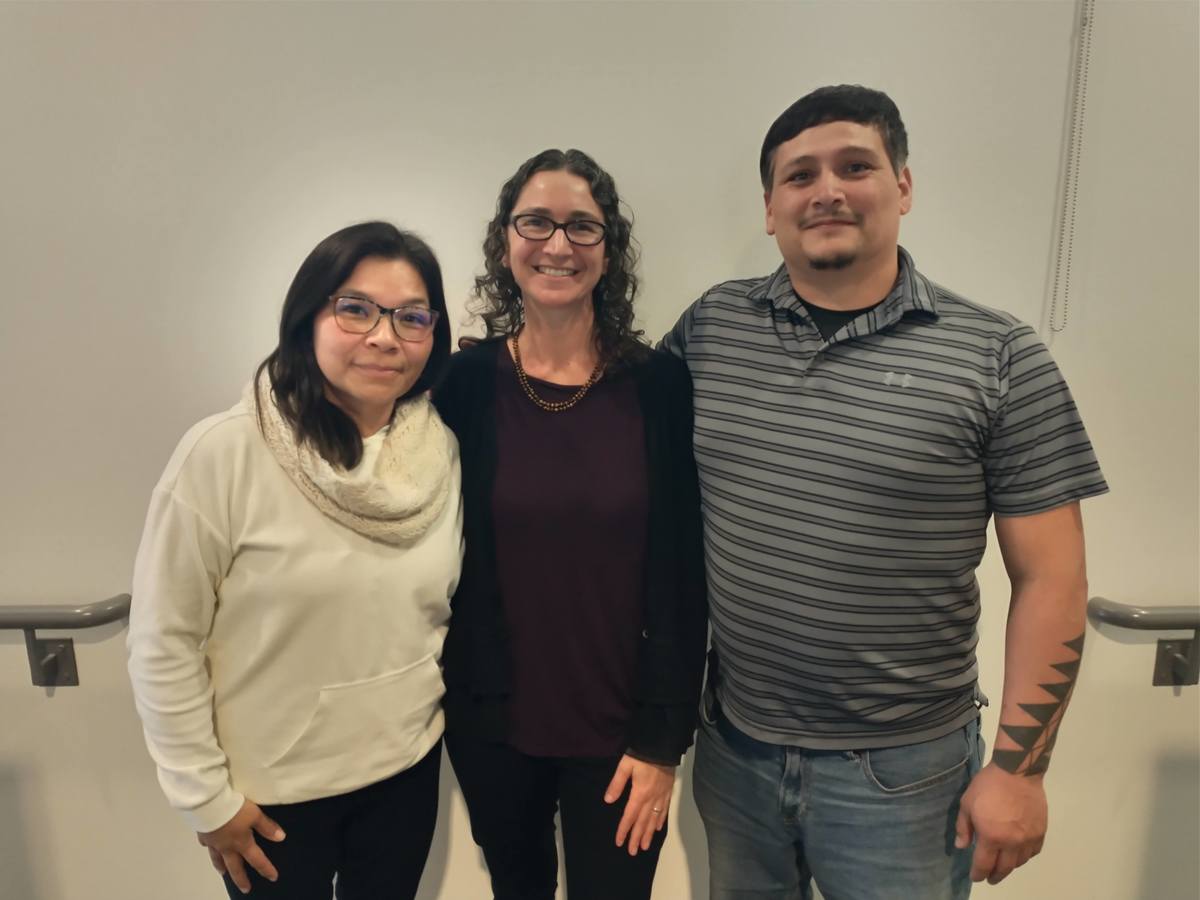
Yurok Language Program Manager Victoria Carlson, Gellman and Yurok language teacher James Gensaw.
Here we see a red fox throwing down against a grey fox elsewhere in California, at a previous date. Photo: USFWS Pacific Southwest Region, CC BY 2.0, via Wikimedia Commons
Press release from the Division of Environmental Health:
A resident in the Manila area was bitten by a fox over the weekend, almost a month after a similar incident in the same area involving a fox that later tested positive for rabies.
The fox in the most recent incident has not been caught and its rabies status cannot be confirmed. The bite victim is currently undergoing treatment for possible rabies exposure.
Since this report, Humboldt County Department of Health & Human Services Division of Environmental Heath (DEH) has received several additional reports of foxes acting aggressively in the area by the north end of the Ma-l’el Dunes.
Local health officials are urging caution to people in the area between Manila and Mad River Beach. Anyone who sees an animal acting strangely should contact DEH which is monitoring reports in that area.
Benjamin Dolf, DEH Supervising Environmental Health Specialist, said generally it is important to use caution around wild animals, and if you encounter an animal that is sick, injured or docile do not try to approach it, help it or try to nurse it back to health.
Rabies is always present in the wildlife population throughout Humboldt County, especially foxes, skunks and bats. People who come across sick or injured animals can contact the Humboldt Wildlife Care Center which has staff who are trained to respond.
Preventive measures against the spread of rabies in Humboldt County include avoiding contact with wild and stray animals, bringing pet food indoors at night and reporting animal bites to your county or municipal animal control officer.
If you are bitten, wash the bite(s) immediately with soap and water and go to the emergency department to seek medical treatment. It is critical that anyone potentially exposed to rabies be treated within 24 hours, and sooner is better.
Public Health officials stress the importance of fully vaccinating domestic animals against rabies, including dogs, cats and select livestock.
For questions about rabies or to report a rabid or suspected rabid animal, call DEH at 707-445-6215 or toll free at 1-800-963-9241.
To report a sick or injured animal, contact the Humboldt Wildlife Care Center at 707-822-8839.
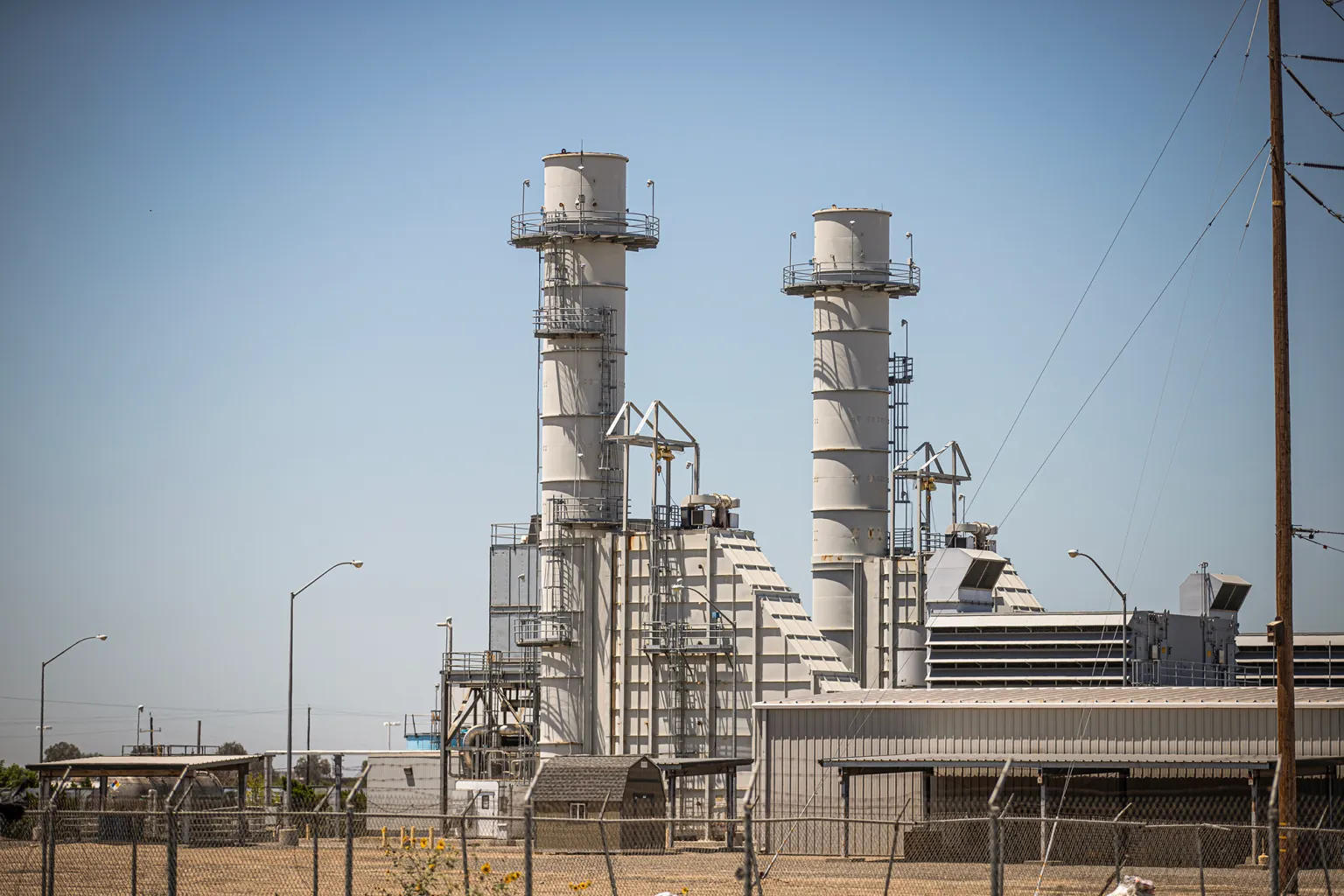
The state’s new draft climate plan would revolutionize how California gets its power. This power plant in Fresno, the Malaga Peaking Power Plant, burns natural gas, which is a fossil fuel. Photo by Larry Valenzuela, CalMatters/CatchLight Local
The California Air Resources Board today unveiled a new version of its highly-anticipated strategy for battling climate change, setting more ambitious targets for cutting greenhouse gases and scaling up controversial projects that capture carbon.
If adopted by the air board at its Dec. 15 meeting, the plan would radically reshape California’s economy, alter how Californians’ vehicles, buildings and appliances are powered, and ultimately serve as a blueprint for other states and countries to follow.
“Failure is not an option,” said air board Chair Liane Randolph. “There is too much at stake and we need to move as fast and as far as we can to lessen the worst impacts of climate change and leave future generations a livable and healthy California.”
The five-year climate change strategy, called a scoping plan, outlines in its 297 pages how California could end its reliance on oil and also clean up the nation’s worst air pollution.
The staff’s final draft plan adds bolder commitments, reducing fossil fuel use by 94% from 2022 levels by 2045 — up from a goal of 91% in the September version of the plan.
The plan also sets a more aggressive goal of cutting carbon emissions 48% below 1990 levels by 2030 – up from the 40% by 2030 required under state law — until reaching net-zero emissions in 2045. (Net-zero or carbon neutrality means striking a balance between the carbon dioxide added to the air and the carbon that’s removed.)
California has a long way to go to meet the new 48% goal in just eight years. By 2020 it had cut emissions only about 14% below 1990 levels, according to air board officials.
Danny Cullenward, a climate economist who serves as an advisor to the state, said California isn’t on track to meet its existing 2030 reduction target, much less the new, more stringent goal.
“I don’t want to say California isn’t doing anything on climate. We’ve done a lot of things,” he said. “But this is such a superficial exercise and it’s filled with so many faults and errors.”
Air board officials said they are confident the state can achieve the new target largely because of new mandates and policies enacted this year. State officials phased out sales of new gas-powered cars by 2035, set a more stringent low-carbon fuel standard and streamlined siting and permitting of renewable energy projects.
“This plan is a comprehensive roadmap to achieve a pollution-free future,” Gov. Gavin Newsom said today in a statement. “It’s the most ambitious set of climate goals of any jurisdiction in the world, and it’ll spur an economic transformation akin to the industrial revolution.”
But Cullenward criticized the staff’s modeling, which is used to predict how each sector of the economy will reduce emissions. He said the plan lacks a thorough analysis of the feasibility of its projections and makes major assumptions.
One example, he said, is that the plan relies on other agencies, such as the California Energy Commission, setting new policies, but it doesn’t address the timing and roadblocks they may face or other details.
“It’s a pretty aspirational document but it’s filled with bureaucratic doublespeak,” he said. “It’s really frustrating because there’s so much work to be done.”
“I don’t want to say California isn’t doing anything on climate…but this is such a superficial exercise and it’s filled with so many faults and errors.” — Danny Cullenward, economist and advisor to the state
Some policy experts say setting ambitious goals are a crucial step to cleaning up air pollution and combating climate change.
“The scoping plan can at least help us direct our attention even if it doesn’t give us as much detail as we want,” said Dave Weiskopf, senior policy advisor with NextGen Policy, a progressive advocacy group. “On the one hand that is really frustrating. On the other hand, it tells us that if we put in the effort to say what we think a good plan should look like, we at least have a shot of getting the state to take meaningful action.”
The revised plan, compared to the earlier versions, expands the state’s reliance on two advanced technologies for removing planet-warming carbon dioxide.
Combined, 15% of all of the targeted greenhouse gas cuts will come from direct carbon capture and carbon capture and storage.
One method directly removes it from the atmosphere, also called direct air removal. Another, called carbon capture and storage, collects carbon spewed from industry and power plant smokestacks and injects it into the ground.
California currently has no carbon removal or capture and storage projects, and air board officials say they wouldn’t be deployed until 2028. The plan cites the state’s 17 oil refineries as an industry that could install them.
Environmental groups oppose both technologies, saying they extend the lives of fossil fuels, while oil companies say they are necessary to achieve the state’s long-term climate goals.
The move to decarbonize and transition away from fossil fuels will also drastically increase electricity use, which is expected to soar by as much as 68% in 2045. Such a transformation to zero-carbon energy sources such as wind and solar will be expensive, costing $18 billion in 2035 and $27 billion in 2045, according to air board staff.
At Newsom’s direction, the air board in September already strengthened its draft plan, originally released last May, to include new goals for offshore wind, cleaner aviation fuels and reducing vehicle miles traveled.
Other changes include constructing 3 million climate-friendly homes by 2030 and 7 million by 2035, installing at least 6 million heat pumps by 2030, and eliminating the option of building new natural gas plants or using fossil fuels in the electricity sector to maintain grid reliability.
Capturing 20 million tons of carbon
The air board was directed to create a new carbon removal program that puts guardrails on carbon capture, use and storage projects while streamlining the permitting process. The program is due the passage of SB 905, which Newsom prioritized in his climate package at the end of this year’s legislative session in August.
These technologies aim to remove at least 20 million metric tons of carbon by 2030 and 100 million metric tons by 2045, according to the plan. Though controversial, air board staff say the practice is a “necessary tool” to reduce emissions from industrial sectors where no other alternatives may exist.
Once captured from smokestacks, the carbon could be transported to sites in the Central Valley. Air board staff say the valley is an ideal location for injecting carbon dioxide deep into rock formations because it has the capacity to store at least 17 billion tons.
“We’ve squeezed out all of the emissions that we can under the inventory for manufacturing for transportation and for industry, but we know residual emissions will remain,” said Rajinder Sahota, the board’s deputy executive officer for climate change and research. “We’re going to need all the tools in all of these categories.”
But at an Oct. 28 workshop, members of the state’s Environmental Justice Advisory Committee raised several concerns about engineered carbon removal, saying it is an unproven strategy that could continue to plague local communities with air pollution. They also say it would delay closure of oil facilities and act as a substitute for direct emissions reductions.
“The Air Resources Board’s latest climate plan once again pins California’s future on a dangerous carbon capture pipe dream,” said Jason Pfeifle, a senior climate campaigner at the Center for Biological Diversity. “Caving to polluters who want to keep burning fossil fuels and dirty biomass energy is a one-way ticket to climate destruction. California needs a plan that rejects industry scams, preserves our ecosystems, and rapidly phases out fossil fuels.”
“The Air Resources Board’s latest climate plan once again pins California’s future on a dangerous carbon capture pipe dream.” — Jason Pfeifle, the Center for Biological Diversity
Air board staff acknowledged their concerns, but Randolph, the board’s chair, said many of the goals could not be achieved without them. She said the board has prioritized creating a metric to measure how residents could be affected by these projects and also consider the needs of residents who are most affected by air pollution.
Randolph said the plan’s heavy emphasis on cutting emissions from transportation will also significantly improve air quality in vulnerable communities. Cutting vehicle miles traveled and improving access to mass transit, designing more pedestrian-friendly neighborhoods and increasing access to electric bikes and vehicles all play a role.
The board expects the state’s cap and trade program – which allows big polluters to buy credits to offset their emissions – will play a much smaller role over time. It would help “fill the gap” to meet the accelerated 2030 emissions reduction target.
Cap and trade has been criticized by legislators and experts heavily in recent years. One of the criticisms is that there are at least 310 million unused credits currently in the system, which is a problem because companies can hoard credits that allow them to keep polluting past state limits in later years. Air board officials say they hope to reform the program and address the oversupply of credits at the end of next year.
###
CalMatters.org is a nonprofit, nonpartisan media venture explaining California policies and politics.
Press release from the Humboldt County Division of Public Health:
Health Officials are urging community residents to take precautions this season after the Centers for Disease Control and Prevention (CDC) reported an increase in COVID-19 cases and earlier-than-expected flu activity and respiratory syncytial virus (RSV) cases across the state and country.
The “Tridemic,” as some have labeled it, is fueling increases in rates of reported respiratory illnesses nationwide.
Anyone can contract any of these respiratory illnesses, but those most at risk of developing severe complications from influenza, COVID-19 and RSV tend to be young children and infants, and adults aged 65 and older, as well as individuals with compromised immune systems.
Humboldt County Health Officer Dr. Candy Stockton said, “Because there is currently no vaccine for RSV, and because getting RSV and flu or COVID at the same time is especially dangerous for young children, it’s really important that we all do our part to help protect our kids by making sure we are up to date on both our flu and COVID vaccines this year.”
Respiratory illnesses like flu, COVID-19 and RSV can be prevented with good respiratory hygiene, including regular hand washing, avoiding close contact with individuals experiencing cold or flu-like symptoms, covering coughs and sneezes with a tissue or shirt sleeve, and disinfecting high-touch surfaces. Masking is also an effective countermeasure, with N95 or KN95 respirators providing the highest degree of protection. As with COVID-19, babies and toddlers under 2 years old should not wear a mask.
Following these tips as well as getting a seasonal flu vaccine and keeping up to date on COVID-19 vaccinations and boosters are important measures in keeping yourself and those around you safe.
To schedule a flu shot, contact your local pharmacy or primary care provider. To schedule a COVID-19 vaccine or bivalent booster, visit MyTurn.ca.gov.
On 10/18/2022 at approximately 2252 hours, the Arcata Police Department responded to the 5200 Blk of Carlson Park Dr. in the Valley West neighborhood of Arcata, on the report of a possible homicide. Officers located 33 year old Nicklas Sellars of Eureka, deceased in a tent. It appeared Mr. Sellars had suffered multiple gun shot wounds.
On 11/16/022, Arcata Police Department Detectives, with the assistance of the Humboldt County Sheriff’s Office SWAT team, arrested 30 year old Devon Preston Cathey of Arcata, for the suspected homicide of Mr. Sellars.
Anyone with information on this crime is encouraged to call Arcata Police Department Detective V. Johnson at (707)822-2428.