

THE HUMBOLDT HUSTLE: These Siblings Work to Play and Play to Work, and They’re Rocking Block Parties All Over the County
Eduardo Ruffcorn-Barragán / Saturday, Nov. 19, 2022 @ 7:30 a.m. / The Humboldt Hustle

From left: Elle, Brianna and Devin Penner. Photo: Diane Penner.
The Penner siblings personify the double meaning of the word
“social.”
By
day each of the three siblings work in some form of social work. And
by night they perform either glam/pop/rock covers in one band or jazz
in another. You might have come across their performances as either
Amber Soul or Young & Lovely, respectively.
The
Penners include the frontwoman and eldest of the three Elle, 32; the
composer/arranger Devin, 31; and the creative Brianna, 26.
The
flamboyant looks that the Penner sisters exhibit at their
performances always leave an impression. With shiny outfits, bright
matte lipstick and wigs that demand your attention, it‘s hard to
forget them.
“The
reality of it is that our gig money goes to sustaining the gigs.”
Elle says. “It’s not a lot, and what we earn mostly goes to the
outfits.”
The aesthetic they inhabit is deliberate, and stems from two things — to surprise you with the absolute lavishness of their costumes and to allow themselves a little anonymity when they are not performing. With that, they draw a boundary between their performative selves and their professional selves.
Promo video by Tyson Ritter.
The
Penner siblings are originally from Red Bluff, where their family
name is well known. For the past 40 years, kids there were likely to
be taught at their local high school by a Penner. Kevin Penner,
father to the now Humboldt-resident Penners, instilled music and
harmony into his children.
“He
was a worship leader, so he had us join on that pretty early,”
Brianna says, “He also had us join multiple children’s choirs.”
Each
of them learned the piano at a young age, and were taught to sing
along to the likes of Johnny Cash and the soundtrack to the early
2000’s film “Oh Brother Where Art Thou?”
“Our family band was our first band,” Elle says. “We would perform at the senior center and at things like the Dairyville Orchard Festival.”

Amber Soul. Photo: Tyson Ritter.

Young & Lovely. Photo: Diane Penner.
Before
the formation of Amber Soul, the Penners arrived one after the other
over a three-year span. In 2017, Elle graduated from California State
University, Chico with a master’s degree in social work. To cover
her tuition, she agreed to work two years either for Child Protective
Services or for the State of California as an Adoption Specialist.
“I
got very lucky that a state job opened up in Arcata right around the
time that I was graduating.” Elle says. “I jumped at the
opportunity right away and I moved here.”
Brianna,
like her older sister, went to San Diego State University for her
undergrad years. After earning her bachelor’s degree in psychology
she had two options — move back to Red Bluff or live with her older
sister in Humboldt County.
“Our
family used to vacation here, it’s beautiful.” Elle said to
convince Brianna. Brianna is now a Mental Health Case Manager for the
county.
With
the sisters in Humboldt, they stuck to their 9 to 5s until Devin made
the move too.
After
his time in Marine Corp and spending seven years with the All-Star
Jazz Band, he decided to get into the business of helping –
specifically, working in mental health. After earning his bachelor’s
degree in psychology, he started looking for a master’s program.
Realizing that he spent too much time away from his family, he made
the move to earn his master’s at Cal Poly Humboldt in 2019. Devin
is now a therapist for local veterans.
With
all three in Humboldt County, Devin began to feel disconnected from
music, so he sought out local bands. After connecting with Zachary
Zwerdling – a local attorney and small-scale music impresario —
Devin found out that there was an opening with the local cover band
Ghost Train and he volunteered to fill the spot.
Ghost
Train, including Devin, performed at a Eureka Friday Night Market and
Elle offered her support by showing up.
“I
was there for emotional support but when I saw them perform I
thought, if this can happen for this group… man, I want to show
what we’re capable of too!” Elle says.
Not
long after, Elle and Devin recorded a cover song to show Zwerdling.
After impressing him, they began building a group of musicians to
achieve sound they have today. In that search, Elle suggested Brianna
join the group, and the family band got back together.
Each
committed to their day job, it’s difficult to see how they make the
time to plan, rehearse, and perform every other week, if not multiple
times a week.
“We
rehearse, but we don’t have to put massive prep work, thankfully.”
Devin says. “Because we grew up doing this together it’s easier.”
Band
members who did not grow up with the Penners rely heavily on
individual practice. When they do have in-person rehearsals, the
Penners will have structural charts and direct the band with physical
cues to make sure they are playing effectively and accurately.
“I
find a way to make the cues theatrical and part of the performance so
I can do that for the band not just at our limited rehearsals but at
the gig.” Elle says. “It’s also a benefit for the audience to
see.”
Somehow
all three siblings manage their time to play gigs for both bands on a
regular basis. Brianna describes Amber Soul as tart and punchy like
sour candy, where Young & Lovely is sweet and smooth like
chocolate. Lately, the latter group has been busier at local wineries
playing their jazz. Booking out as many gigs as possible over the
next year, these siblings are making a social impact in more ways
than one.
“I value the gift of spending time with my siblings and other people who speak the language of music and speak it well.” Brianna says. “In the end, performing feels like playtime.”

Photo: Diane Penner.

Photo: Diane Penner.
###
Got an interesting story about living the Humboldt Hustle? Email eddie@lostcoastoutpost.com. He’d love to hear it!
BOOKED
Today: 12 felonies, 8 misdemeanors, 0 infractions
JUDGED
Humboldt County Superior Court Calendar: Today
CHP REPORTS
0 Us101 S (HM office): Assist with Construction
ELSEWHERE
Fishing the North Coast : Eureka Fleet Enjoying Best Salmon Fishing in Years
RHBB: Possible Highway 101 Closure Requested as Fire Reported Near Redcrest Off-Ramp
Governor’s Office: Governor Newsom signs historic investments to bolster support for special education
RHBB: RV Burns to the Ground on Highway 36, Briefly Ignites Nearby Vegetation
OBITUARY: Harriet Mattheis, 1928-2022
LoCO Staff / Saturday, Nov. 19, 2022 @ 6:56 a.m. / Obits
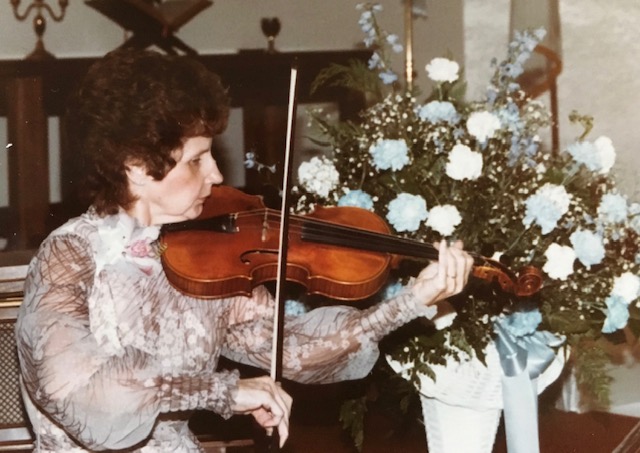
Harriet Gladys Mattheis was born on December 16, 1928 to Harry Bender and Lucille Valentine Bender in Berkeley. During her growing-up years she lived in Bay Area and Southern California communities. After graduating from high school, she attended and studied music at Pasadena City College and La Verne College. While at La Verne she met James Milton Mattheis and they were married on December 19, 1949. Together they lived in Los Angeles, Eureka, Willow Creek, Hoopa and Weaverville.
Harriet was an accomplished musician with a lovely voice, and she sang in many choirs and chorale groups. She also directed children and adult church choirs. She once composed a Christmas Cantata for the whole K-6 elementary school community at Redeemer Baptist School in Los Angeles. Harriet played several instruments, including the piano, violin and organ. She often spoke of her organ professor at La Verne, Ralph Travis, nicknamed “Travy,” and fondly remembered learning to play the pipe organ in the campus chapel. She used her organ-playing and directing skills at many churches, including the First Covenant Church in Eureka and the First Baptist Church in Weaverville. In her final years she loved to listen to the Kegg organ being played at Christ Episcopal Church, Eureka. In addition to playing, Harriet also gave piano and violin lessons to many children and adults.
After retirement, Harriet and Jim loved to jump into their RV to visit relatives and to experience the beautiful sights of the United States and Canada.
Those who knew Harriet experienced her great joy and enthusiasm for sharing music, her friendly spirit, her delightful sense of humor and most importantly, her deep love for God and the Christian faith. She passed away on November 9, 2022 at Redwood Memorial Hospital with Paul and Pam lovingly at her side.
Harriet was preceded in death by her husband Jim in 2015. They were married sixty-five years. She was also preceded in death by her dear sister, Jean Clark. She is survived by her daughter and son-in-law Pam and Paul Gossard (Eureka), her son and daughter-in-law John and Susan Mattheis (San Diego), her son Timothy Mattheis (Maui), grandson Daniel Gossard and wife Becky (Salem, Oregon), and great-grandchildren Eden Joy, Alexandria Elizabeth, and Elisha James Gossard. She is also survived by her dear friends Lois Gossard and Lee Ann Gossard.
The family would like to thank the residents and staff at Frye’s Care Home for providing a caring and loving community for Harriet in the final years of her life. Thanks also to the staff at Redwood Memorial Hospital for the loving care shown her during her final days and hours.
In lieu of flowers, donations may be made in Harriet’s memory to the organ and music fund at Christ Episcopal Church in Eureka, California.
A service for Harriet will be held on Friday, December 2, at 11 in the morning at Christ Episcopal Church, 15th and H Streets, Eureka.
###
The obituary above was submitted on behalf of Harriet Mattheis’s loved ones. The Lost Coast Outpost runs obituaries of Humboldt County residents at no charge. See guidelines here. Email news@lostcoastoutpost.com.
OBITUARY: Anita Mary Frances Brazil, 1927-2022
LoCO Staff / Saturday, Nov. 19, 2022 @ 6:56 a.m. / Obits
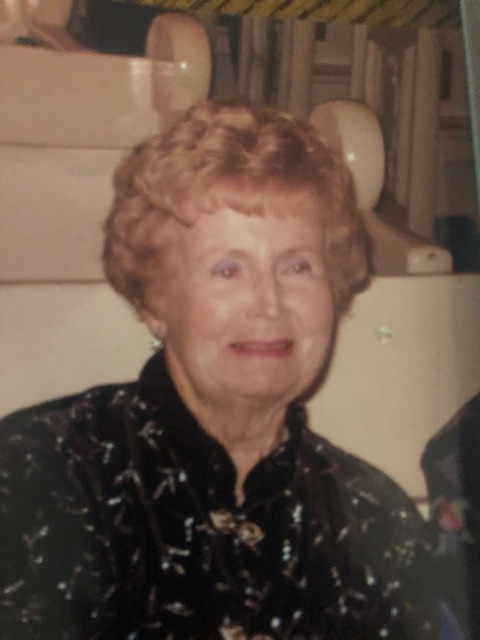
Our
beloved mother, grandmother, sister, aunt and friend passed away
peacefully on November 9, 2022 at Timber Ridge Assisted Living with
her family by her side.
Anita graduated from Eureka High School in 1945. She soon married Harold Brazil and became the wife of a hard working dairyman and they began their large family of ten children, Francis (Sharon) Brazil, David Brazil, Eileen (Dennis) Chism, Philip (Jean) Brazil, Joel (Donna) Brazil, Louise (Tim) Monson, Trude (Alan) Pape, Karen (John) Renner, Eric (Michelle) Brazil and Gina Brazil.
In 1977, Harold passed away after 32 years of marriage. In 1980, she married her brother-in-law, Henry Brazil, a long-time bachelor, who inherited the large family. They were married 39 years before Henry passed away in 2019.
Anita was a very devout Catholic, a loving mother and grandmother. She loved gardening, reading and raising African violets.
She will be remembered as a person who put her family first, last and always and enjoyed life to the fullest. She made our world a better place and will be greatly missed by all of us.
Anita was preceded in death by her first husband Harold Brazil and her second husband Henry Brazil, her daughter Eileen Chism, grandson Troy Brazil, her parents Stewart and Mathilde Atwell, her brothers Warren “Buster” Atwell, Gerald “Dick” Atwell, her brothers-in-law Jim Cruz, Tom Golbov, Ralph Brazil, Max Cardoza and Ernest Christensen, her sisters-in-law Norma Brazil and Cecelia Christensen.
She is survived by her nine children, 19 grandchildren, numerous great-grandchildren, sisters Colleen Cruz and Joan Golbov, sister-in-laws Flora Cardoza, LaDonna Atwell and Donna Atwell, daughter-in-law Barbara Brazil and many nieces and nephews.
The family would like to thank Timber Ridge Assisted Living and their wonderful care givers, especially the awesome night duty care givers who sat with our mom all night in the last few weeks of her life. Also, a special thank you to Hospice of Humboldt and First Choice Care Home for their compassionate care of our dear mother.
Visitation will be at Sanders Mortuary on Saturday, November 26, 2022 from 10 a.m. to 10:30 a.m., followed by the Mass of Christian Burial at 11:00 a.m. at St. Bernard’s Catholic Church, Eureka. Officiated by Rev. Michael Cloney. Due to the holiday weekend, Anita will be laid to rest at St. Bernard’s Cemetery on Monday, November 28, 2022 at 10 a.m. Pall Bearers are grandsons Blaine Brazil, Ross Brazil, Josh Monson, Casey Pape, Kyle Poli and Blake Renner. Honorary Pall Bearers are grandsons Bryan Brazil, Joseph Brazil, Michael Brazil and Jared Pape.
Friends and family are invited to attend a reception at the Ferndale Town Hall, 834 Main St., Ferndale.
In lieu of flowers, please consider a donation to Hospice of Humboldt, 3327 Timber Fall Court, Eureka, CA 95503 or your favorite charity.
###
The obituary above was submitted on behalf of Anita Brazil’s loved ones. The Lost Coast Outpost runs obituaries of Humboldt County residents at no charge. See guidelines here. Email news@lostcoastoutpost.com.
Students, Teachers Confront Eureka School Board, Saying Van Vleck’s Bullying Has Sparked Staff Exodus
Ryan Burns / Friday, Nov. 18, 2022 @ 2:12 p.m. / Education

Eureka City Schools Superintendent Fred Van Vleck (left) and Assistant Superintendent Paul Ziegler look on as Eureka High student Jenica Huddleston addresses the board. | Photos by Andrew Goff
###
A group of Eureka High School students and teachers showed up to last night’s meeting of the Eureka City Schools Board of Trustees to confront the board and Superintendent Fred Van Vleck over their management of the district.
Taking turns at the microphone, the students lamented the recent and abrupt departure of several beloved educators, and they urged the board to remove Van Vleck, saying his bullying of staff has created a climate of fear. When Board Chair Lisa Ollivier responded with a prepared statement about how recent events are being “interpreted,” the students collectively groaned and jeered before walking out of the meeting.
Many of them wound up sticking around, though, waiting in the hallway or outside the district office for more than an hour while the board met in closed session. And when the meeting resumed, more attendees, including two Eureka City Council members, stood up to address the board, urging its members to take this crisis of faith seriously and to ensure that students feel heard and appreciated.
The board, for its part, defended recent accomplishments of district staff and leadership, pointing to the adoption of a new strategic plan and increased test scores at nearly all of its eight schools sites.
They also tied the recent resignation of Eureka High Athletic Director and Assistant Principal Ed Sonia to his alleged failure to promptly notify the administration about the November 2 arrest of volunteer basketball coach Nathan Hentley on child sex charges.
Despite the public outcry, the board stood firmly behind their superintendent. Just last month they unanimously approved a new four-year employment contract for Van Vleck, giving him a base salary of more than $246,000 plus retirement, health and welfare benefits and cost-of-living increases.
In the prepared statement, Ollivier said, “We are proud of the impact Fred has made over the past 10-plus years, and we look forward to working with Dr. Van Vleck in the years to come.”

Ollivier reads a statement.
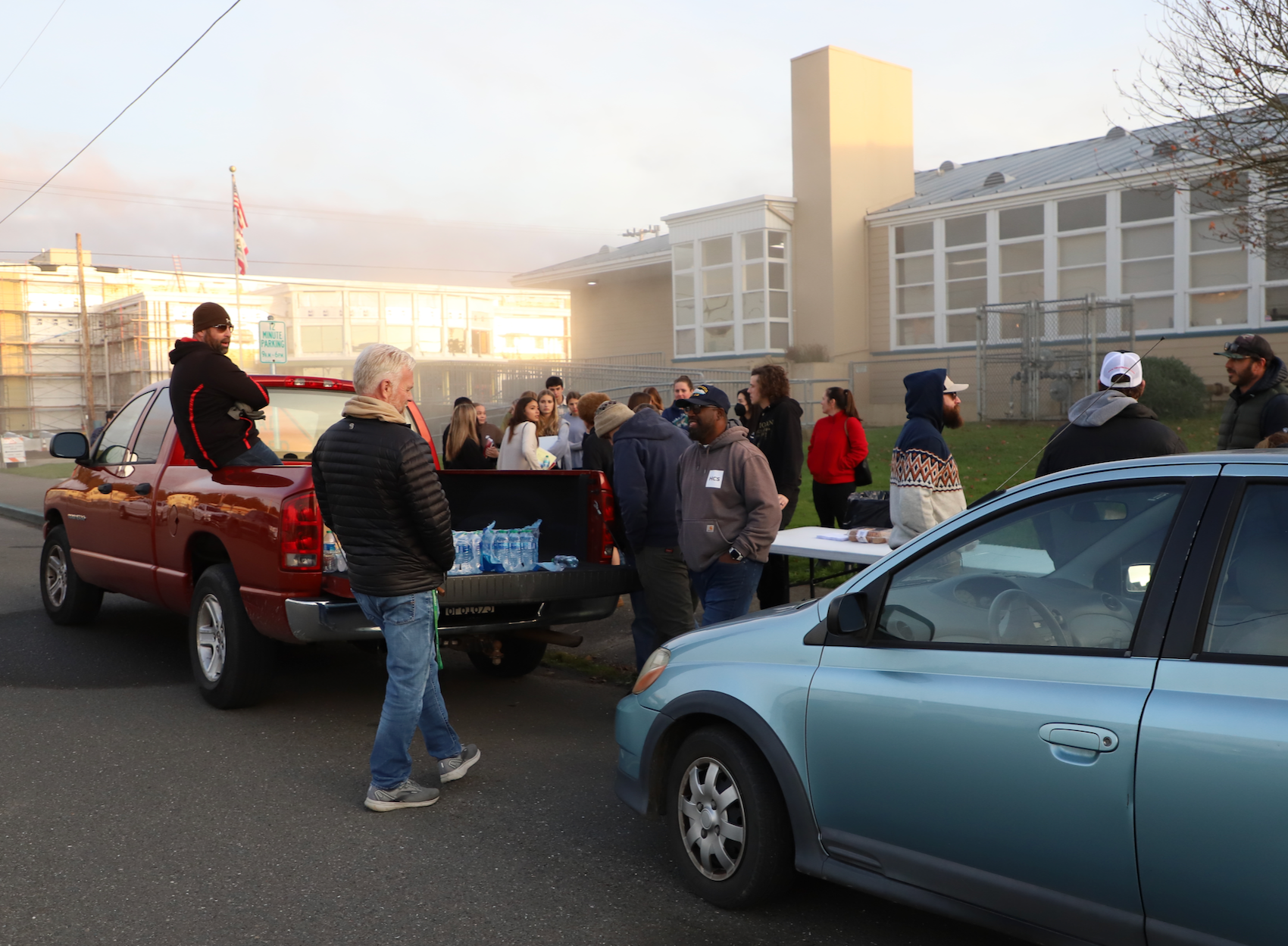
Students, faculty and supporters gather ahead of last night’s meeting.
Students, teachers and their supporters gathered outside the district office ahead of the meeting. A portable table was set up on the sidewalk, and the assembled crowd ate snacks and sipped hot chocolate from styrofoam cups while talking among themselves and waiting for the meeting’s 5:15 start time.
Twice in the past two weeks, hundreds of Eureka High students have walked out of class in protest, marching the two blocks from EHS’s main entrance to the district office to wave signs and shout messages to the administrators inside. Van Vleck has yet to directly address the students’ concerns, deferring media inquiries to Interim Eureka High School Principal Rob Standish.

Students protest on the steps of the district office this past Wednesday.
When last night’s meeting finally got under way, Ollivier announced that public input would be limited to 20 minutes, with a strict three minutes allotted to each speaker. She asked the audience to refrain from cheering or clapping because it would count against the 20-minute running clock.
The first student to address the board was junior Jordan Phanh, who spoke about the departure of former teacher and athletic director Kristina Christiansen, who resigned last year and is now suing Eureka City Schools for harassment, a hostile work environment, sexual discrimination and retaliation.
“She claimed to have informed the Eureka City District about the issue, but no action was taken,” Phanh said, adding that district employees don’t feel supported or respected. He also spoke to Christiansen’s impact on him and other students in Eureka High’s AVID (Advancement Via Individual Determination) program.
“She was more than just our teacher,” he said. “She was our supporter, our mentor and our biggest motivator.”
Phanh alleged that the board had contradicted its stated values and misused its power, leading to a widespread lack of trust in their leadership. He then addressed the superintendent.
“There is an apparent trend seen,” he said. “That trend is the resignation of our admin after having a direct conversation with Mr. Van Vleck. This is a trend that cannot be ignored.” He said Van Vleck needs to receive training on how to behave with employees and should have someone else present whenever engaging in direct conversations with them.
“If Mr. Van Vleck cannot comply with this or any of the suggested solutions today then I am confident that students will continue to voice and protest until Mr. Van Vleck resigns from his position.”
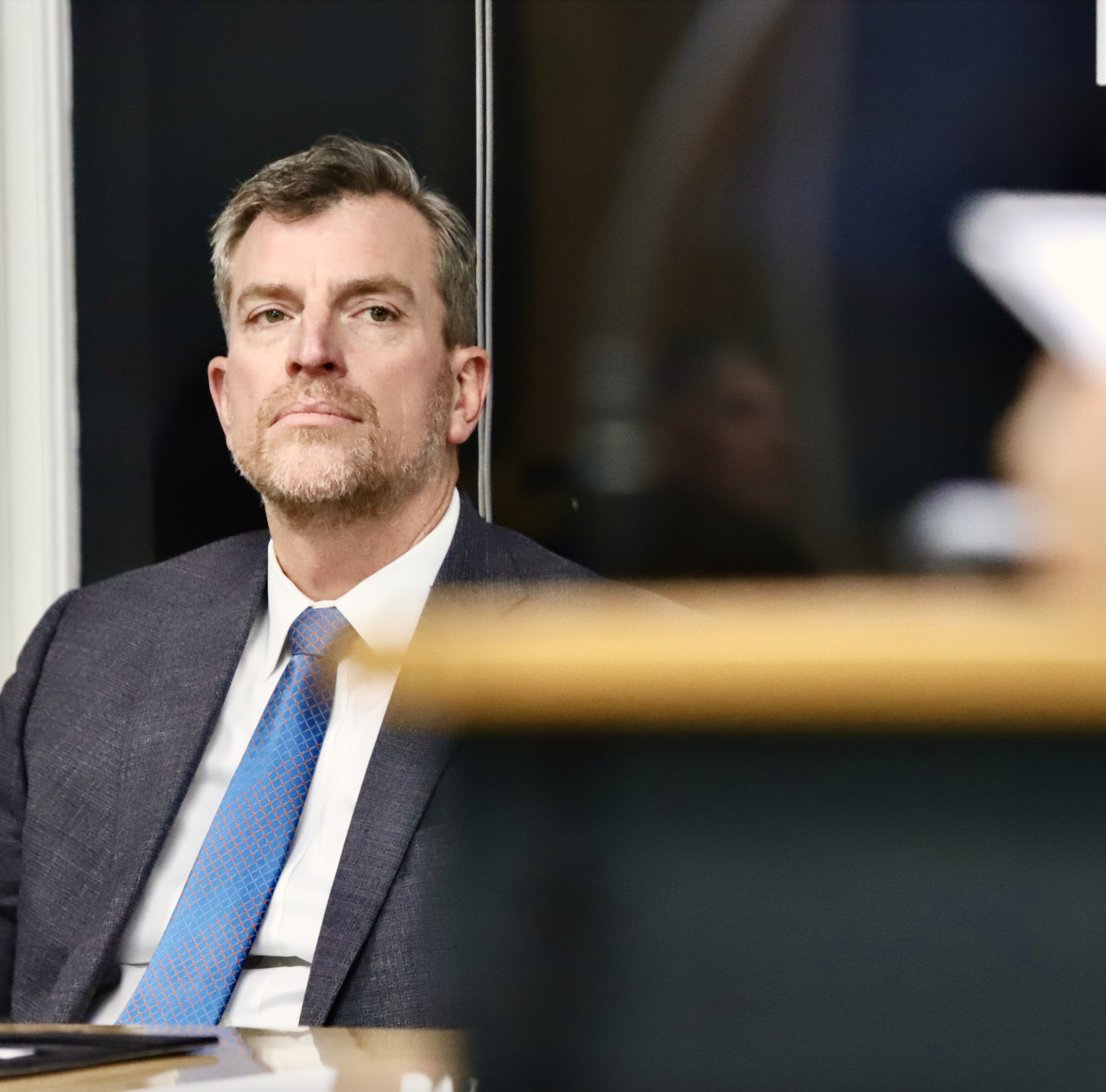
Throughout the meeting, Van Vleck sat behind a table stage right, his whiskered chin slightly raised, his face stoney and inscrutable.
Senior Sidney Madsen also spoke about the toll that recent staff departures have had, saying Sonia’s abrupt resignation was particularly painful because “he didn’t even say goodbye or even clean out his office — other people did it for him.”
Yet another district employee, instructional aide and assistant athletic director Cara Heddinger, had just resigned earlier in the day, and Madsen said many students were in tears because of it. AP Biology and Chemistry teacher Rebecca Baugh, meanwhile, has stepped into the assistant principal position left vacant by Sonia’s departure, and Madsen said her departure from the classroom has negatively impacted student achievement.
“And being in that class now feels like distance learning again,” she said. “There’s no connection anymore. There’s no motivation.” Grades have gone down and students are suffering from the removal of educators with whom they’ve built relationships, she added.

Junior Nicola Costanzo addresses the board.
Junior Nicola Costanzo brought up a change.org petition to remove Van Vleck, which has garnered more than 600 signatures.
“As a community we’ve done all that we can do,” Costanzo said. “We’ve mourned. We’ve fought. We’ve protested. So now we call on you. Ultimately, the decision to remove Fred Van Vleck isn’t in our hands; it’s in yours.”
Jenica Huddleston, associated student body treasurer, quoted from the Eureka City Schools governance handbook, saying the board has fallen short of its mandates to promote good decision-making and create the best learning opportunities for all students.
“I can firmly say, on behalf of the students, that we do not feel that we are in a positive culture, and there has not been good decision making and policy,” Huddleston said.
The tide of public commentary briefly shifted as former EHS principal Jennifer Johnson, who recently took a job in the district office, addressed the board on behalf of herself and the instructional side of the executive team. She defended that team and “our leader, Fred Van Vleck,” saying they are passionate about students and firmly on “team Eureka City Schools.”
She said the district has implemented a variety of positive measures in recent years — bringing in instructional coaches and delivering professional development, for example — and was gaining traction until the pandemic hit. At that point, the district had to pivot, “and Eureka City Schools did that better than any district locally,” Johnson said.
The executive team supports the strategic vision put forward by the board, she said, adding, “We are excited about the direction and steps our superintendent and cabinet have taken to support our work in increasing student achievement.”
However, faculty support is not unanimous. Teacher and former coach Garett Montana, for example, spoke about the inspiring impact that late EHS coach Ray Mechals had on him and said this generation of students is having their role models taken away from them.
The assembled crowd largely ignored Ollivier’s request to refrain from clapping, and Montana’s comments earned an enthusiastic round of cheers.
Fellow teacher Tim Olson, a 27-year district employee, said teachers and students have tried to sound the alarm, “but it’s not getting through.”
“We met with Fred,” he continued. “We talked with Fred. We said, ‘Fred? This management style ain’t working.’”
He said the district can’t afford to lose people like Christiansen, Sonia and former teacher and coach Ron Perry, who is now principal of Six Rivers Charter High School Arcata High School.
“Those are all winners,” Olson said. “Where are they? They’re making somewhere else great. They’re not making us great. They changed lives. And why are they going? Why is it common knowledge in this county that people don’t want to work at Eureka City Schools?”
With that, the 20-minute public comment window had closed, and Ollivier pulled out a sheet of paper and began to read the board’s prepared statement. She thanked people for attending and said the board values public involvement. The room sat quietly as she read until she said, “Please know that the board is very aware of recent events and how they’re being interpreted.”
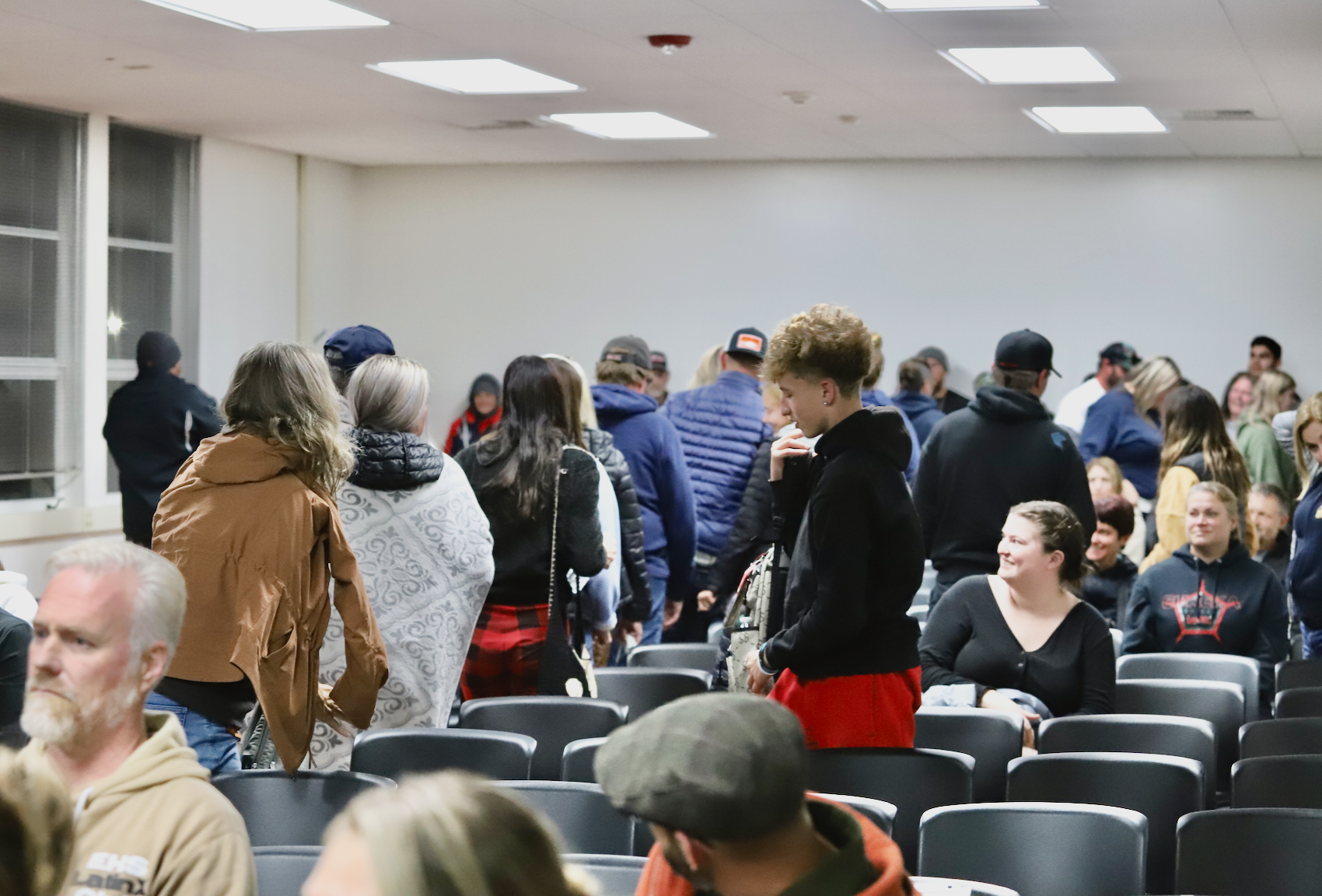
Students leave the meeting in protest.
As the students loudly stood and began filing out of the room, Ollivier beseeched them to stay.
“Please wait,” she said into her microphone. “We listened to you. Please stay and hear this out.”
About half of the crowd in attendance left as she continued reading. She addressed Sonia’s resignation, saying he had failed to notify Van Vleck, Interim Principal Standish or Human Resources about Hentley’s recent arrest.
“That’s a lie,” someone from the audience called out. After the meeting, both Olson and Heddinger told the Outpost that Sonia did, in fact, notify Standish about Hentley’s arrest. We caught up to Standish in the hallway of the administrative building to ask if that was true and he said he’d been “kept out of the loop on that.” A phone call and text to Sonia Friday morning were not returned before this post was published.
Continuing her statement, Ollivier said that when Van Vleck confronted Sonia about his “failure to communicate,” Sonia was insulted and resigned on the spot.
“Frankly,” Ollivier said, “the board and Dr. Van Vleck were surprised by such an overreaction, and we were very disappointed that the former AD did not view this as a learning opportunity.”
She went on to say that Van Vleck is increasing his involvement with a student stakeholders group, and she expressed pride in his work before adjourning to closed session.

Van Vleck speaking to the board in closed session.
The meeting was scheduled to resume at 6:30 p.m. but the board didn’t reconvene until 6:54. Following a report from Student Board Member Sadie Smith, public comment was resumed, and more students expressed their concerns.
As did Leah Gee, a former district employee and mother of a Eureka High student. She chastised the board for reading a statement that chalked up the controversy to misinterpretations, a statement that had clearly been prepared before the students spoke. Gee said it came across as dismissive and left the students crying in the hall.
A couple of students echoed that sentiment, saying it feels like the board isn’t really listening.
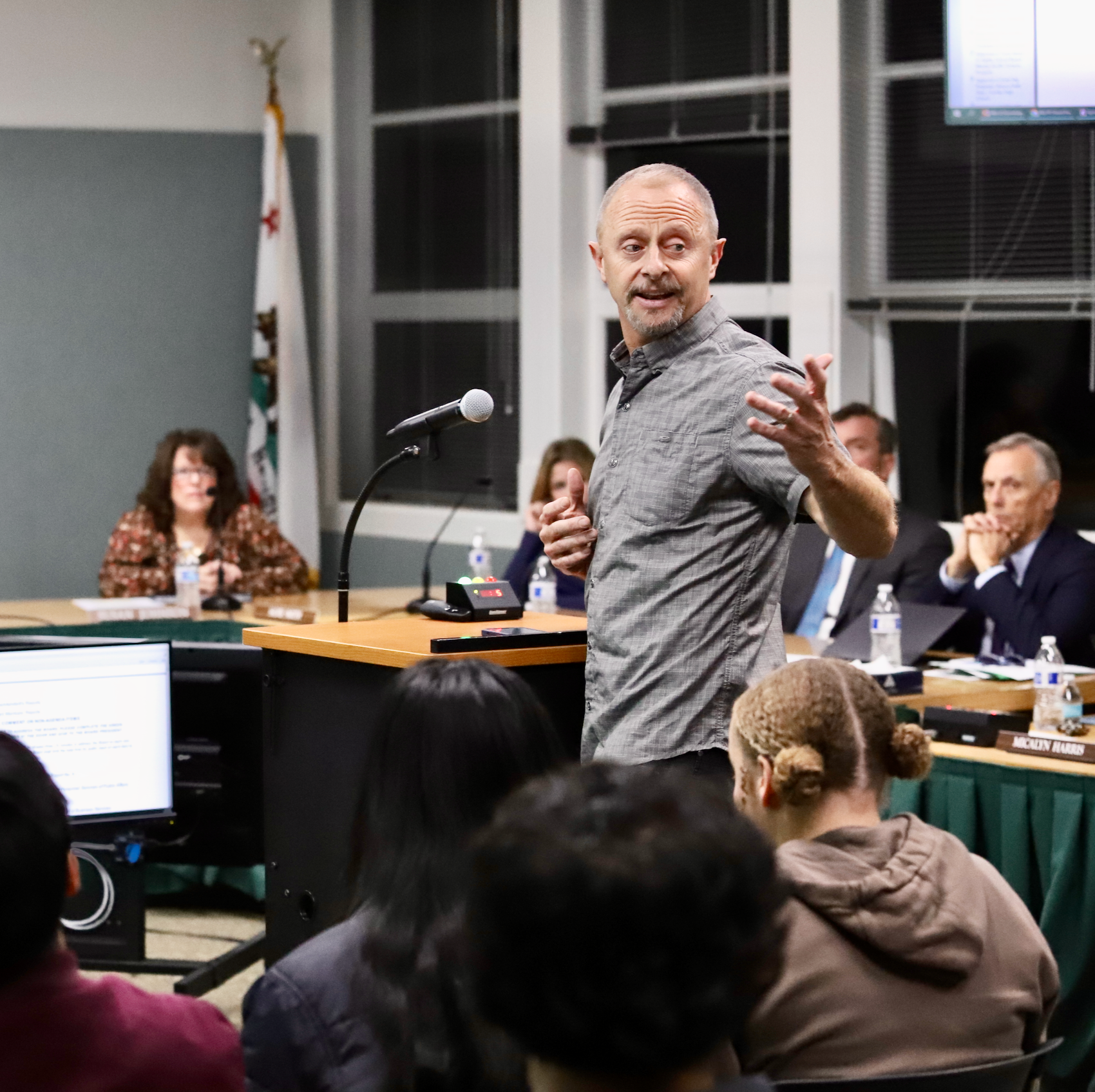
Bauer
Eureka City Councilmember Scott Bauer thanked the board for their public service and suggested that they should have extended the original public comment period beyond the 20-minute limit as a means of encouraging young people to participate in the public process.
Fellow Councilmember and Mayor-Elect Kim Bergel said the board’s pre-written response made the kids feel devalued and failed to convey the gravity of the situation. She also suggested that the meeting should have been televised given its importance.
The Outpost reached out to Van Vleck via email on Thursday morning, passing along a list of the questions and concerns that have been expressed recently and asking him to reply before noon today. He did not.
Instead, his executive assistant, Micalyn Harris, issued the following press release this afternoon:
Statement by Eureka City Schools Governing Board
Provided by Board President Lisa Ollivier on Behalf of the Governing Board
November 18, 2022 - On behalf of the Board, thank you to those who attended the Eureka City School’s Board Meeting last night to express your support and/or concern regarding the direction of the District. We respect those who took the time out of their schedules to attend last night’s meeting. We value public involvement in our District.
We recognize the impact on our students due to the immediate resignation of the former Assistant Principal in charge of athletics (AD). The former AD had positive relationships with many of our high school staff and students. While a normal transition period would have been beneficial to our students and coaches, it was not an option, due to the AD’s sudden resignation.
We support Interim EHS Principal Rob Standish in his recommendation of Omar Khattab, a long-time Eureka City School’s employee and former Athletic Director, to fill the position of Assistant Principal in charge of athletics.
To ensure our students and their needs are addressed, two of our Board members, along with Superintendent Van Vleck and EHS Assistant Principal Baugh, met with Student Board Member Smith to learn more about the high school students’ feelings with the AD’s resignation. Additionally, we actively listened to the perspective of the students who addressed the Board last night.
Dr. Van Vleck is expanding his quarterly work with the Eureka High School Superintendent’s Student Stakeholders Group (SSSG) to include a Student Board Member led ThoughtExchange opportunity for all EHS students. (ThoughtExchange is known for allowing students to voice their thoughts and deliver the best solutions to our most pressing challenges.) The results of this work will help guide our direction forward.
As a Board, we have one employee, our Superintendent, Dr. Fred Van Vleck. We are proud of the impact Fred has made over the past 10+ years, and we look forward to working with Dr. Van Vleck in the years to come.
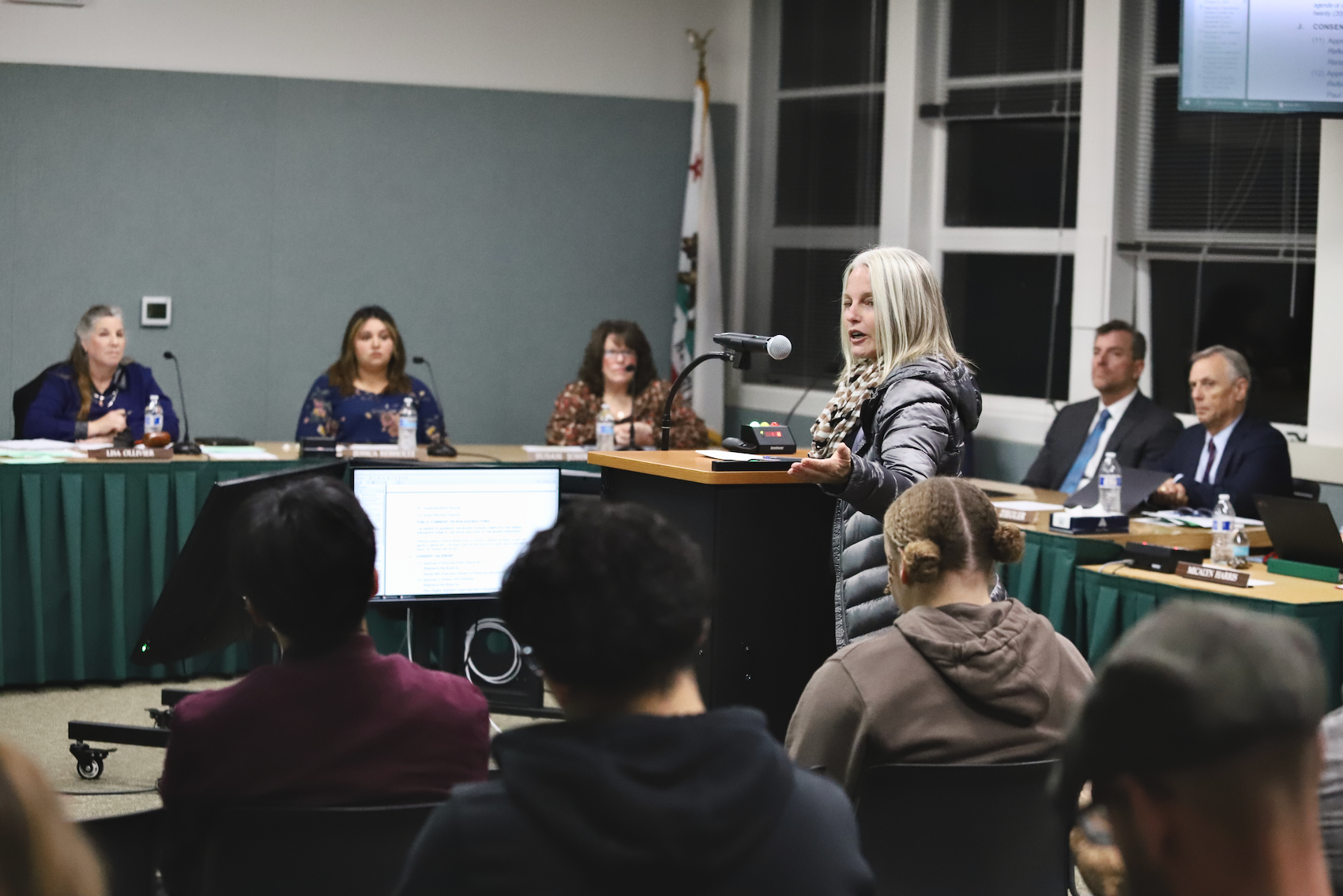
Eureka Councilmember and Mayor-Elect Kim Bergel.
[CORRECTION: This post has been updated to remove an erroneous buy-out figure for Van Vleck’s contract.]
NEW ELECTION REPORT! Fernandez Pulls Ahead in Eureka Ward 3 With 9,614 Additional Votes Tallied; Arcata Earth Flag Back in Play
Hank Sims / Friday, Nov. 18, 2022 @ 11:45 a.m. / Elections
Big news from the most recent tally from the Humboldt County Office of Elections, which released its most recent report from the Nov. 8 election just a few moments ago.
The big news: G. Mario Fernandez has pulled ahead of John Fullerton for the Eureka City Council Third Ward seat, and seems on pace to take the election:
| CLERK-RECORDER/REGISTRAR OF VOTERS | ||
|---|---|---|
| CERVANTES | 18,140 | 56.10% |
| HUNT NIELSEN | 14,193 | 43.90% |
| EUREKA CITY COUNCIL, THIRD WARD | ||
|---|---|---|
| FULLERTON | 783 | 47.63% |
| FERNANDEZ | 861 | 52.37% |
| EUREKA CITY COUNCIL, FIFTH WARD | ||
|---|---|---|
| DELOACH | 488 | 52.36% |
| KOHL | 444 | 47.64% |
Elsewhere, as we see, Juan Pablo Cervantes is cruising to an easy victory over Tiffany Hunt-Nielsen in the clerk/recorder/registrar race, and Renee Contreras de Loach has a commanding lead for the Fifth Ward seat.
Elsewhere: Julie Ryan has easily defeated incumbent Alan Bongio, the embattled Humboldt County Planning Commissioner, for his seat on the Humboldt Community Services District. Mike Morgan lost his bid to return to the Trinidad City Council. Kyle Conley, Christina Mobley and Mike Johnson are in fine shape in the Fortuna City Council race.
Here’s another big turnaround, though — a big shift in Dave Meserve’s Arcata Earth Flag measure, which would require the city to hang the Earth Flag on top of city-owned poles, with the American flag and the California flag underneath. The measure looked crushed on Election Night, but the late vote-by-mail ballots have swung that around sharply — it’s now 49.4 percent yes and 50.6 percent no and looks like it could be headed for passage.
There should be about 10,000 votes left to count, according to numbers released by the elections office shortly after the polls closed last week. The general rule is that these things trend leftward, and they sure did this time, with Cervantes and Fernandez picking up big gains. Expect more of that.
But tune in next week for the definitive result!
That Smoke in Eureka Today is Coming From a Logging Slash Burn Up in Elk River
Hank Sims / Friday, Nov. 18, 2022 @ 11:12 a.m. / Fire
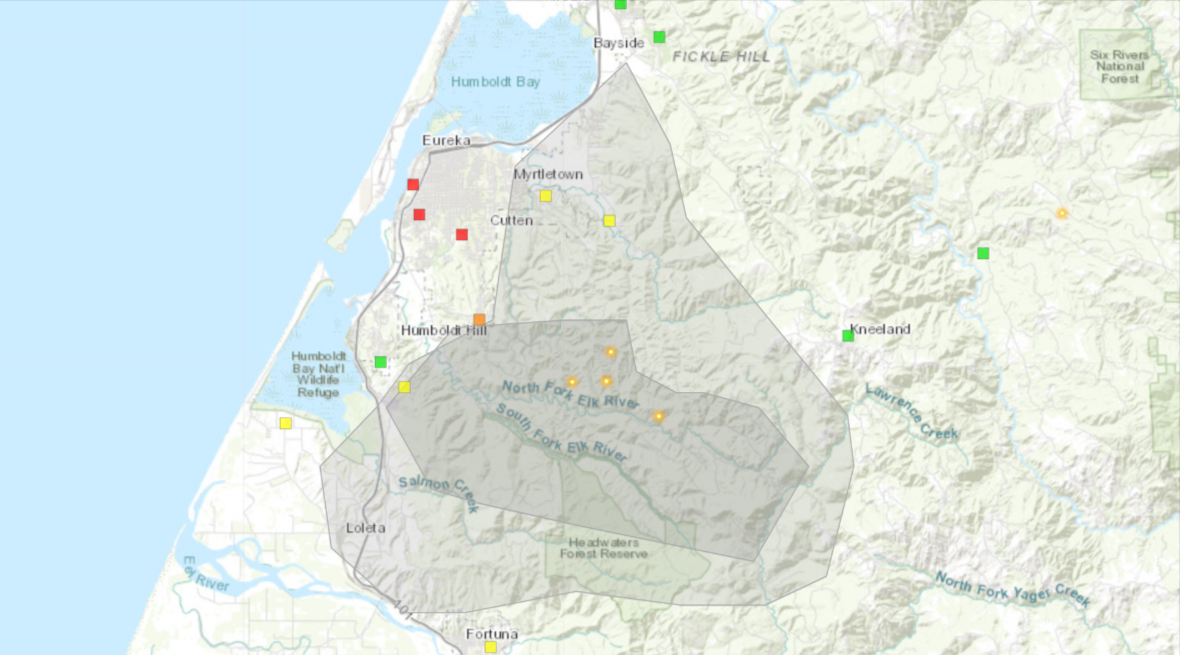
Air quality today via fire.airnow.gov.
Little hazy in Eureka today, eh? Your Lost Coast Outpost was startled from his slumber early this morning by the faint smell of smoke, and we can’t imagine we were the only ones.
As of this writing the air carries that tang — one more common to the summer than the fall, and to the inland regions of the state than to our coastline, where the blessed AC that is the Pacific Ocean generally purifies the environment 24/7.
Why is this? Well, it’s a combination of a slash burn up in the Elk River watershed and some uncooperative weather, which sent the smoke down into the bay rather than out in a different direction, where it was supposed to go.
Reached by telephone this morning, Debra Harris, the burn program officer for the North Coast Unified Air Quality Management District, rended garments and fell on her sword with the most anguished apology this reporter has ever encountered in more than two decades of reporting on Humboldt County governmental entities.
Harris immediately said she was the one who authorized the Elk River burn permit, and nearly as immediately took sole blame for the fact that the winds weren’t blowing as strongly as had been forecast. She reiterated and adumbrated on this theme for the length of a 15-minute conversation with a somewhat befuddled reporter, who had only called to ask if she knew where the smoke was coming from. Harris ran down all the equipment and technology she uses to decide whether to issue a burn permit of this scale, and explained that the weather just did not behave as expected.
“We did everything we could,” Harris said. “And I came to work this morning, I said, ‘Oh boy.’”
All this is to say: The smoke is coming from a logging slash fire on Elk River, and Debra Harris — a good egg who takes her job seriously — is very deeply sorry.
The smoke should lift soon.
THE HUMBOLDT CHRONICLES: Rep. Jared Huffman’s State of the Cannabis Address, in the Wake of the Mid-Term Elections
Chuck Rogers / Friday, Nov. 18, 2022 @ 8:59 a.m. / Cannabis

File photo.
For our final episode of 2022 , we took a look at the results of the 2022 mid-term elections as they affect the Humboldt cannabis industry with our special guest, Congressman Jared Huffman.
The Humboldt Chronicles airs on “The Lounge” — KLGE, 94.1 FM — at 6 p.m. on the third Wednesday of every month (except next month). Find archives here.


