

OBITUARY: Patrick Thomas Murphy, 1935-2022
LoCO Staff / Thursday, Nov. 3, 2022 @ 6:56 a.m. / Obits

Patrick Thomas Murphy
born March 26, 1935 - passed
October 20, 2022
Patrick Thomas Murphy passed away peacefully in his sleep on Thursday, October 20, 2022, at the age of 87 with his wife of 65 ½ years, Lois, by his side. He was born in Eureka on March 26, 1935. He is survived by the love of his life, Lois Ann Murphy, whom he met at the Holmes Flat swimming hole in 1955. He was welcomed to heaven by many friends and family members before him. Family that is here to support one another through this very difficult time are his three children, oldest daughter, Kelly Murphy of Fortuna; his youngest daughter Joy Carter, of Monterey and his son and daughter-in-love, Roy and Leslie Murphy of Pleasant View, Tenn. He is also cherished by his three grandsons, Patrick & (Ashley), Christopher and Neil and (Jennifer); two granddaughters, Megan and (Piper) and Kachelle; two adopted granddaughters, Jackie and Natalie’ his 14 great-grandchildren who all adored him and were often found on his lap playing with “GRAMPS” in many photos. To the many nephews, nieces and cousins — he loved you all!
Pat was born in Eureka, but by the time he was 8 years old his parents, Bill and Minnie Murphy and purchased the Redcrest Grocery Story on the Avenue of Giants and moved to Redcrest. After attending elementary school in Holmes Flat, he attended Fortuna High from 1949 until graduating in 1953. He soon became part of the upriver gang, which were all the kids from Redcrest, Holmes and Pepperwood that had to ride the school bus up the Eel River into Fortuna High. He excelled at Fortuna High in academics, as well as sports, he played football, baseball, a Golden Glove boxing champion, and wrestler. He was an active FFA Member raising sheep on the Murphy’s property. He worked for local dairies in Ferndale and Loleta all through high school. After high school he was scouted by the SF Giants, he met Babe Ruth and continued to play ball for the Humboldt Crabs, he was known for his left-handed pitching ability and his incredible skill on first base! He was offered a scholarship to play baseball. He turned it down.
Patrick had several other interest and hobbies at the time, he married the love of his life in 1957, went to work for Pacific Lumber Company. He continued with his hobbies, that would become his lifelong experiences and memories he sought after. He was an avid hound man, owning up to 15 hounds at one time. He hunted and we ate it all, no waste. His first buck he shot at 6 with his daddy holding him on his shoulders. He hunted everything from grouse, pheasant, ducks, turkey, to deer, to bear, to elk and one of his favorite hunts and meat was buffalo! As far as fishing and being a master fisherman, WOW!! He fished every river in the six-rivers national forest, but the Eel, Van Duzen and Mad rivers mostly. He fished the Humboldt Bay and surrounding ocean with comfort, ease, and respect. By the early 1960’s we had bought property out in Trinity County on the Van Duzen Rd., we moved out to the Dinsmore area permanently in 1967, He raised his family out there and his parents kept the store in Redcrest for over 40+ years. He went to work for Louisiana Pacific mill out at Dinsmore, when it shut down, he was a logger, a road builder and heavy equipment operator for years out in the Dinsmore area. Once he got older and his 3 kids had graduated high school he moved mom back to town, he spent the later part of his working career running the big crane/shovel stacking logs for EEL Rivers Sawmill until he retired in 2000. He and his wife Lois then returned to their family home in Dinsmore.
He became an avid tournament BASS fisherman in the early 1970s. He was also one of the men that planted the first BASS in Ruth Lake. He eventually went on to become 7th in the state of California among Western BASS. He made the ranking in Western BASS magazine. They wrote an article about him, stating what an accomplished bass fisherman he had become. They described the beauty and splendor of fishing for bass on his local lake, known as Ruth Lake, where he planted the bass and help build that lake! He ran heavy equipment building the dam for Ruth Lake. Thanks Dad, for improving the destination location of Ruth Lake and making it a BASS Lake that many enjoy to this day! He and his friend Keith Clow won the 3rd Annual Ruth Bass Fishing Tournament! That was one of many trophies, he loved fishing more and more. He sold his ranger bass boat 2018 to a local man after he couldn’t fish any longer. It did his heart good to know his boat could still be seen on Ruth Lake to this day!
He had the gift of being a true storyteller and he always loved sharing the many he had with family and friends, he was a country man, a simple man, he loved his family and would protect them at all costs. He loved nature and being out in it. He was one of the kindest people you would ever meet, with the biggest smile you’d ever see. He truly lived the life of… if you don’t have anything nice to say about someone don’t say anything! He loved Jesus and knew God and rarely went to the building called church. It was no matter as he demonstrated to all that he knew what a person who loves unconditionally constantly and consistently looks like. There is nothing as strong as true gentleness, and nothing a gentle as true strength. This was Pat Murphy! Our family hero! Greatly loved and missed by all!
His wishes are to have a “Celebration of Life” on Ruth Lake. We have planned this for Saturday July 8, 2023, from 1 p.m. to 3 p.m. Location and more details on Pat’s “Celebration of Life” on Ruth Lake to be announced as we get closer to date. Mama wanted the sun shining and Dad wanted the fish biting!
Our family would like to thank you, for all the phone calls, cards, and prayers. If you want, please send any memorial donations to one of his favorite’s charities, St. Jude’s Children’s Hospital, Wounded Warrior Project, or Ruth Community Church in Ruth, California.
###
The obituary above was submitted on behalf of Patrick Murphy’s loved ones. The Lost Coast Outpost runs obituaries of Humboldt County residents at no charge. See guidelines here. Email news@lostcoastoutpost.com.
BOOKED
Today: 12 felonies, 12 misdemeanors, 0 infractions
JUDGED
Humboldt County Superior Court Calendar: Today
CHP REPORTS
Us101 / Bayshore Way (HM office): Assist with Construction
ELSEWHERE
RHBB: South Jetty Fire Sends Heavy Smoke Across Eureka Area
RHBB: Report of Possible Drowning on Trinity River
RHBB: 77-Year-Old Solo Hiker Missing in Siskiyou County Wilderness
Governor’s Office: Acting Governor Rivas proclaims Disability Pride Month
OBITUARY: Sandra J. Myers, 1941-2022
LoCO Staff / Thursday, Nov. 3, 2022 @ 6:56 a.m. / Obits
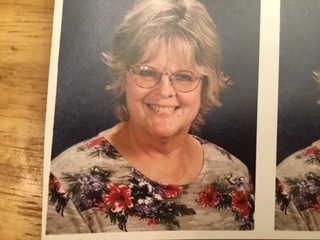
Sandra J. Myers
Dec. 19, 1941 - Sept. 20, 2022
Sandra Jean Myers passed away September 20, 2022 in Fresno. She was a longtime resident of Fortuna. Born on December 19, 1941 in Monterey Park, her family moved to West Covina, where she attended West Covina High School (class of 1959) and graduated from Mount San Antonio Community College in Walnut. She was employed by Aero Jet ElectroSystems in Azusa for 15 years.
Shortly after leaving Aero Jet Sandie and her husband Bob moved up north to Garberville. Together they opened up a donut shop in Garberville called The Donut Barn. While Bob ran the shop, Sandie worked as secretary to the principal at South Fork High School in Miranda. While at South Fork she proudly displayed some of her memorabilia of the Los Angeles Dodgers, much to her sister’s dismay. During her time at South Fork Sandie and Bob lived in Garberville, Phillipsville (where their mobile home was flooded out) and then lived in Miranda. Finally in 1998 they moved to Fortuna, where she remained just prior to her death.
She retired from South Fork after 20-plus years. She thought she would enjoy her retirement doing crafts she loved, painting and photography. However she volunteered part time at Adult Day Care in Fortuna. She quickly got on their payroll and stayed several years until the Fortuna office closed.
Sandie enjoyed crafts, scrapbooking with friends and photography. She also enjoyed antiquing and had quite a collection of Coca Cola antiques. She enjoyed watching the Dodgers play and vying with her sister’s Giants on who had the better team.
Sandie was preceded in death by her parents Wallace and Helen Mullvain, her husband Virgil “Bob” Myers and her brother-in-law Ken Snyder. She is survived by her siblings Wallace Mullvain Jr, of Menifee, California, Cynthia Mullvain of West Covina and Sherrie Snyder of Fresno as well as two nephews Westley Mullvain of Tennessee, Casey Snyder of Roseville and niece Ashley Mullvain of Indiana. She is also survived by two granddaughters and four great grandchildren.
A celebration of life will be held on Saturday November 19, 2022 at 10 a.m. at Calvary Chapel Fortuna 914 9th Street Fortuna, CA 95540. We invite all who knew her to come and share your stories. For questions you can contact her siblings at 209 642-5657 and leave a message.
###
The obituary above was submitted on behalf of Sandra Myers’ loved ones. The Lost Coast Outpost runs obituaries of Humboldt County residents at no charge. See guidelines here. Email news@lostcoastoutpost.com.
Supervisors Suspend Measure S Cannabis Cultivation Taxes for Two Years
Ryan Burns / Wednesday, Nov. 2, 2022 @ 4:50 p.m. / Cannabis

A cannabis garden in better times. | File photo.
###
After hearing an hour and a half of pleading, distraught public commentary from financially struggling local cannabis growers, the Humboldt County Board of Supervisors gave them a reprieve on Tuesday, voting 3-1, with Second District Supervisor Michelle Bushnell abstaining recusing herself, to suspend Measure S cultivation taxes for the next two years.
Bushnell abstained recused herself because she has her own cultivation operation, and Third District Supervisor Mike Wilson cast the lone “no” vote. He observed that the booming weed economy people are harking back to was based on prohibition. He also noted that while growers may unanimously support axing the tax, a majority of voters approved Measure S.
“That’s the constituency, ultimately, that we are answering to,” Wilson said.
Back in February, the board slashed 2020 Measure S bills by 85 percent, citing profound economic struggles for an industry beset by rampant overproduction and a transition away from small-scale farms in remote forested hills. According to growers who spoke on Tuesday, things have only gotten worse.
Tabatha Miller, the county’s chief financial officer and assistant county administrative officer, said there’s a 57 percent delinquency rate for the current tax year, even with the dramatic 85 percent reduction.
The vast majority of public speakers urged the board to eliminate Measure S completely.
“Everyone taxes the cannabis industry at such an outrageous amount,” one local grower said. He specifically called out the $52.7 million in excise taxes that the county has collected since implementing Measure S in the 2017/18 fiscal year. “It’s great for the county, but it’s killed the entire Humboldt County cannabis industry,” he said.
Others objected to the fact that the taxes are based on cultivation area rather than production quantities or sales amounts.
“It seems like you’re just handcuffing farmers before they’re even out of the gate,” a cultivator named James observed. The owner of Humboldt Renegade Farms also asked for a 100 percent reduction in taxes, saying, “The overtaxation and overregulation is literally killing the small farmer in Humboldt County.”
Nick Erickson, owner of Full Moon Farms, said many Humboldt County farms have already failed, “and we’re gonna see more farms leave this industry before it’s over. That is why I’m asking you all today for complete elimination of Measure S.”
Erickson added that he, for one, is still optimistic about the future of the industry. “The current market is unsustainable for any size cannabis business model, including large corporations,” he said. “It will correct itself to at least have a living wage.”
Honeydew grower Sean Stamm said farming is a lot of work, “and starting indebted for the last three years has been backbreaking and demoralizing.” He beseeched the board, “Help us get through this time so we can make Humboldt great again.”
Karla Knapek of Honeydew Valley Farms said that the lowest amount they were offered for flower last year was $263 per pound while last month they were offered just $200 for a pound. The break-even figure for her business is around $375 per pound. She joined the chorus requesting a 100 percent reduction in Measure S taxes.
When the matter finally went back to the board for discussion, First District Supervisor Rex Bohn said he’d be willing to slash taxes again, even though local growers asked to be taxed six years ago “because you were excited about being legal.”
Still, he said he’d be fine with a two-year suspension or even a four-year suspension of Measure S taxation. He noted that the collapse of the local cannabis industry has had “trickle-down” impacts across the entire county economy.
Wilson then remarked that the inflated value of cannabis was caused by its status as an illegal substance, which impacted communities across the country. And he said some of the restrictions growers still want — from one-acre cultivation caps to crackdowns on out-of-state imports — are all “gradations of regulation” that would artificially inflate the product’s value.
Wilson also observed that the supervisors don’t have the authority to entirely eliminate or repeal Measure S since it was passed by voters.
Fifth District Supervisor Steve Madrone, who attended the meeting remotely, struck a more positive note, saying change breeds adaptation. He also cited the old adage “You can’t squeeze blood from a turnip” and suggested revising it to “You can’t squeeze blood from a bud.”
“Let that be a quote for the day,” he proposed. Madrone went on to say he supported the two-year moratorium on tax collection.
Bohn wound up making the motion to suspend Measure S collection for two years — cultivation years 2022 and 2023, billed in 2023 and 2024, respectively. The motion, which Madrone seconded, also deferred all outstanding Measure S payments until October 2023, and it directed staff to return with recommendations to modify Project Trellis, which uses Measure S revenues to fund micro-grants.
PG&E Execs Gets an Earful, Offer Update on SoHum Capacity Problems
Ryan Burns / Wednesday, Nov. 2, 2022 @ 12:55 p.m. / Energy , Local Government
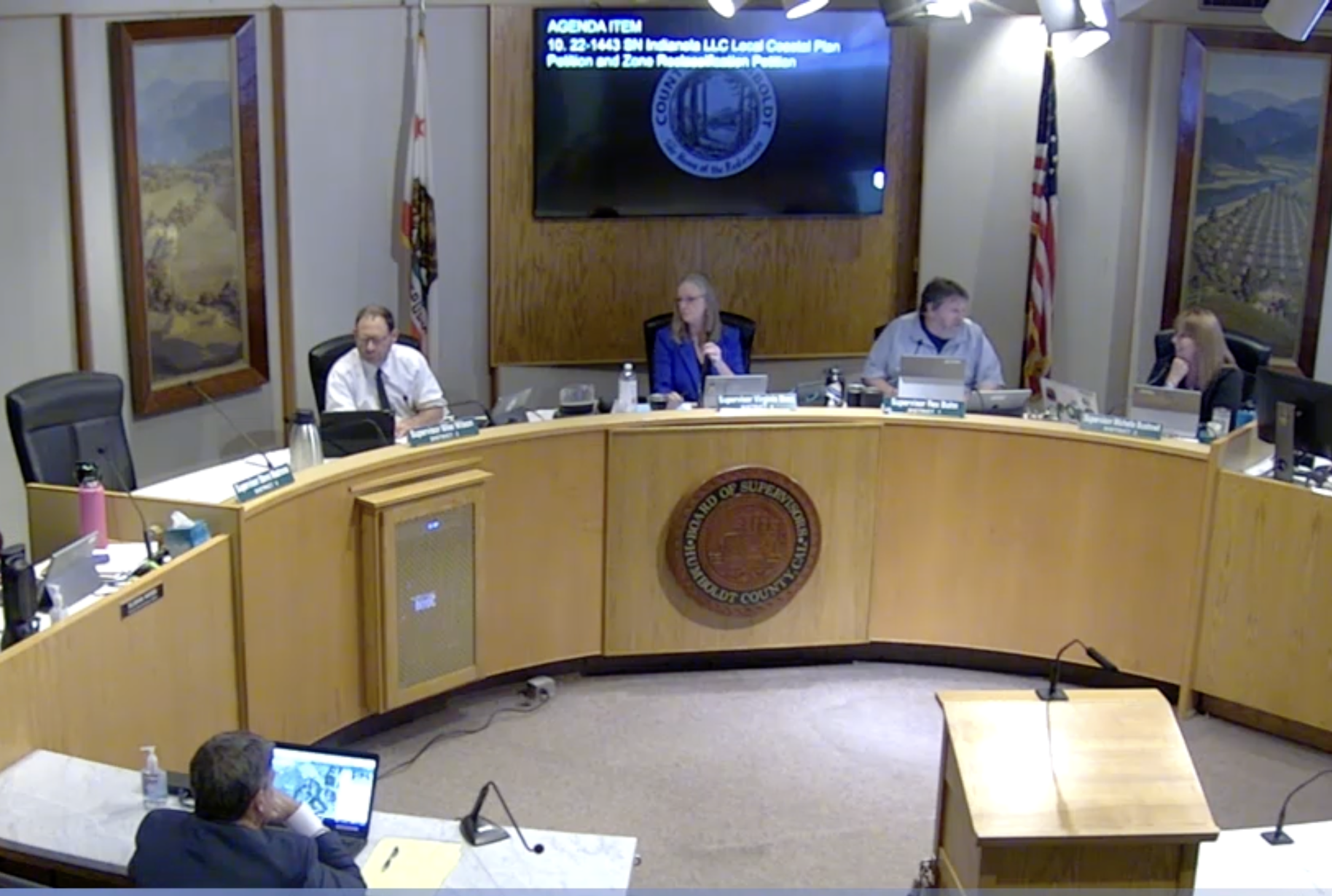
Screenshot from Tuesday’s meeting.
###
Executives from Pacific Gas and Electric appeared before the Humboldt County Board of Supervisors on Tuesday to answer questions and offer updates about the utility’s recently revealed electricity transmission limits, which threaten to hamstring economic and community development across Southern Humboldt.
There were some terse exchanges, though PG&E officials revealed that upper management recently approved tens of millions of dollars in additional infrastructure improvements that should shorten the timeline for resolving the most disastrous implications.
Planning and Building Director John Ford launched the proceedings with an overview of the “dire implications” of PG&E’s electricity transmission limitations, which he said could stifle both residential and commercial development, impacting the county’s compliance with state climate and housing regulations at a time when the local population is expected to surge to support Cal Poly Humboldt, offshore wind development and other industrial growth.
And he noted that PG&E hasn’t been transparent about why they didn’t see these problems coming and do something to prevent them.
“Today’s discussion is the culmination of over six months of asking for answers,” Ford said, adding that county staff has been asking, to no avail, for maps that show where in the county PG&E has capacity to support growth and where it does not.
Ford pulled no punches in his criticism of the utility’s business model, which he said is essentially to provide service until capacity is used up, as it now appears to be across Southern Humboldt. This “first come, first served” model leaves important questions unanswered, he said.
For example, while PG&E has promised to spend tens of millions on infrastructure improvements over the next few years, providing upgrades to supply Fortuna, Rio Dell and a new hospital project in Garberville, “the basic question of what this will do for capacity has still not been answered,” Ford said. “[W]here will we be in 10 years when we can no longer buy automobiles with internal combustion engines and there is no capacity to charge electric vehicles? What will happen when there’s not sufficient power to address the housing need caused by offshore wind development?”
In meetings with PG&E, he said, the question often gets asked: How did this happen?
Ford theorized that PG&E may have known about the vulnerabilities of its system “and simply made a business decision to allow the capacity to be used up without making timely capacity improvements.”
The utility, for its part, supplied a variety of local and regional employees to address the board’s questions. Ronald Richardson, vice president of PG&E’s north coast region, told the board that PG&E has developed a number of “mitigations and solutions” since August, including $300 million-worth of capacity upgrades in the Garberville and Petrolia areas.
Carl Schoenhofer, regional senior manager, pointed the finger at cannabis, saying new business applications in SoHum are seeking large amounts of electricity.
“Not that we have anything against cannabis,” he said. But growth in that industry has not been factored into the state-approved load forecasting models, and in SoHum, new business applicants are requesting more than double the existing customer load from PG&E’s Rio Dell, Garberville, Fruitland and Fort Seward substations.
Plus, cannabis operations are often in remote, rural locations, which requires significant capacity upgrades to distribution lines, transmission lines and substations, Schoenhofer said. PG&E’s senior leadership recently approved $16 million-worth of capacity upgrades to serve new business applications in the Eel River Valley, and Schoenhofer said that work should be completed no later than 2024.
Residents in the more remote regions of SoHum, including Miranda, Blocksburg, Petrolia and Whitethorn, can expect to face a longer timeline, with transmission capacity upgrades not planned to be completed until the end of 2026. Schoenhofer called that an “aggressive” timeline.
Jon Stalllman, principal with a group called Grid Research Innovation and Development, said he’s helping PG&E with its strategic capacity planning. He said the area from Garberville to Alderpoint “presents some of the most complicated engineering solutions that we have in our service area” with cannabis projects demanding big energy loads “on the outer edges of our distribution system.”
Around Briceland, Honeydew and Petrolia, PG&E would need to spend $300 million to serve just 37 new business customers, Stallman said. This would entail engineering and construction through “extremely difficult mountainous terrain.” The utility is exploring other options in the area but Stallman offered “no promises” because they’re extremely complex.
“We really do want to serve the area; it’s just extremely complicated,” Stallman concluded.
First District Supervisor Rex Bohn was first up to grill the execs. He noted that while there may be 37 new customers seeking power hookups along one transmission, PG&E has a lot of existing customers there. And it’s not like cannabis operations are a new phenomenon.
“How many cannabis applications have you fulfilled already, and did you see a trend maybe starting?” he asked. “Because there has to be hundreds of those out there already.” Bohn cited the utility’s well-document failures to maintain its aging infrastructure. “So some of that $300 million would be tied into normal rehabilitation of the lines from years of service, I would think,” he said.
Fortuna City Manager Merritt Perry and Planning Director Kevin Caldwell appeared at the meeting, and they criticized PG&E for its lack of transparency, saying city officials only recently realized there was a problem when local developers were denied hookups despite having received “will serve” letters from the utility.
“So, things weren’t adding up,” Perry said. In August, city officials finally got an assessment from PG&E, whose reps said it would take $900 million and nine years to get new connections.
“I really can’t overstate the impact of that assessment,” Perry said. “Essentially what it was doing was putting a building moratorium on the City of Fortuna and telling anybody who wanted to invest, whether it’s in homes or in businesses in the city, that they needed to go elsewhere.”
The city has developers ready to start projects in the old Fortuna mill site and more than 150 residential housing projects approved or at some stage of the planning process, Perry said. Plus, the city’s wastewater treatment plant needs high-power energy upgrades to comply with regulatory permits, a new senior center is in the works and existing businesses need to expand their power usage.
“I think it’s really important that we understand the circumstances that led to this,” Perry said. “We still haven’t heard exactly why everything was business as usual and then we ran up against a wall.”
Second District Supervisor Michelle Bushnell said that she appreciates the $30 million investment to serve the new Garberville hospital and its associated housing, but she asked, “Where’s that leave everybody else in Southern Humboldt?” There’s no room for growth in Garberville proper, she added.
“So, for people that are investing a lot of money, we need better answers,” Bushnell said. “And I understand you guys are trying to get there [but] we need to get there quicker.”
Later in the meeting, following a public comment period, Third District Supervisor Mike Wilson said our culture’s belief in constant growth has led to infrastructure problems beyond just electricity to include delayed maintenance on roads, water and wastewater systems. Centralized energy generation may need to give way to micro-grid technology and distributed systems, he said.
PG&E’s execs had brought up the concept of equity, saying the utility must do right by all of its ratepayers across the state, which means that expensive upgrades in remote locations don’t make the most sense.
Wilson pointed out that land use decisions are also implicated in our current predicament because PG&E is now responding to legal requirements to supply service in these remote areas, which were approved for development at the local level. But Wilson added that there’s a key difference.
“We’re the transparent organization; you are not,” he told the PG&E execs.
The board wound up simply accepting the informational report before moving on to other matters.
College of the Redwoods Ends COVID Vaccine Mandate
LoCO Staff / Wednesday, Nov. 2, 2022 @ 10:53 a.m. / COVID-19 and Humboldt

Photo: CR.
Press release from College of the Redwoods:
The College of the Redwoods Board of Trustees announced the end of their COVID-19 vaccine mandate at their Nov. 1 meeting.
Looking at the steep decline in COVID-19 hospitalizations and deaths in the District, Governor Newsom’s announcement that he will end the state’s COVID-19 state of emergency on February 28, 2023, and to aid in CR’s continued efforts to build back enrollments, the Board of Trustees retired two policies related to CR’s COVID-19 vaccine mandate - Board Policy 2900 and Administrative Policy 2900. The Board also rescinded Resolution 782 that directed the District leadership to require evidence of COVID-19 vaccinations for all students and employees.
The Board’s actions, effective immediately, lifts the COVID vaccine mandate for students and employees. Students are no longer required to be up-to-date on their COVID-19 vaccinations in order to register for face-to-face classes.
CR recognizes that vaccinations help reduce the spread of COVID-19 and prevent serious disease. As such, the District still highly recommends that all students, faculty, and staff maintain an up-to-date vaccination status.
Schools Scramble to Find Teachers as California Expands Transitional Kindergarten
Elizabeth Aguilera / Wednesday, Nov. 2, 2022 @ 7:59 a.m. / Sacramento
Last year, Gov. Gavin Newsom announced a $2.7 billion initiative to expand transitional kindergarten to all 4-year-olds. The state gave school districts only 13 months to prepare for the first wave of the expansion, which began this school year.
That’s not much time, especially during a pandemic and in the midst of a dire teacher shortage. School districts had to make plans for implementing the new grade, hire teachers and aides and find classrooms for the new students.
By far, staffing has been the largest challenge for districts. Statewide, districts need thousands of teachers and aides to staff transitional kindergarten classes throughout the four-year rollout of the expansion.
This year, some districts were able to meet most of their needs by moving teachers who were doing other jobs, including subbing, running reading programs or teaching other grades. Now districts are worried about finding qualified teachers for the next few years of the expansion. The scramble to find staff is also creating a domino effect on child care programs and preschools whose teachers are ideal candidates for higher-paying transitional kindergarten classrooms.
“TK is a great opportunity for students and beneficial for families as well, but the rollout is so fast that I don’t know that we have all the staffing and workforce available to meet the needs,” said Noemy Salas, senior director of Early Childhood Education Programs for the Chula Vista Elementary School District, in San Diego County. “All of the districts are hiring. We are competing for the same teachers and that is a concern.”
The California Education Department did not release guidelines for how to implement the expansion of transitional kindergarten until February of this year. Once they had the guidance, districts had to seek approval for their plans from local boards of education by June 2022 for a fall start date.
“All of the districts are hiring. We are competing for the same teachers and that is a concern.”
— Noemy Salas, senior director of Early Childhood Education Programs for the Chula Vista Elementary School District
Education Deputy Superintendent Sarah Neville-Morgan said the districts had all of last year to plan for the expansion, and the multi-year rollout gives them several years to grow to meet full demand. In addition, she said her department worked directly with school districts, provided plan templates and strategized with districts about how best to expand their transitional kindergarten classes even before the guidance was released in February.
“We can completely see and understand they are feeling the pressure. They are dealing with multiple factors and trying to find staff and prepping classrooms for preschool-age children,” said Neville-Morgan, who leads the Opportunities for All Branch, which oversees the early learning and care, multilingual support and special education divisions.
“It goes back to seizing the moment. This was California’s moment to transform education.”
She points to the Education Department’s efforts to help districts prepare and launch the program, such as informational webinars, and scheduling office hours so districts could ask questions and share concerns. The department also created workgroups and design teams to plan how to best carry out the expansion, and recently created a communications tool kit to help districts outreach to community members and parents. The Education Department has also offered grants to districts for planning, implementation, renovation and new construction, and teacher training.
The expansion was bold but the execution has been arduous, said Bruce Fuller, professor of education and public policy at UC Berkeley who also heads the Children’s Forum, which researches education issues in the state.
“Ideally, expansion will accelerate in year two as more families learn about the TK opportunity and Sacramento distributes facilities, dollars, and trains necessary teachers in steadier fashion, moving beyond a glacial pace,” Fuller said.
State education officials and legislators say the districts shouldn’t have been surprised by the expansion because it has been discussed for years.
“This is decades in the making. It’s a big deal for California, for our kids, for our education and success,” said Assemblymember Kevin McCarty, a Sacramento Democrat who is the chair of the Assembly’s education finance subcommittee. McCarty authored a bill to expand transitional kindergarten that was later included in the governor’s budget.
For years McCarty and early education advocates pushed for expanding transitional kindergarten — and failed. But this time, several factors made it possible:
- The pandemic required state officials to think differently about how to educate children who were not attending online classes or struggling academically;
- Newsom made early education a priority and supported the expansion;
- Plummeting school enrollment made room for 4-year-olds on campuses;
- Political groups and labor organizations aligned on the expansion.
“A lot of children during the pandemic stayed at home, and TK gives them a gentle onramp to our schools,” Neville-Morgan said. “Because more families kept younger children at home, we think having TK launched now creates some of those school readiness components.”
California transitional kindergarten was first offered in 2012 to 4-year-olds who turned 5 between Sept. 2 and Dec. 4. These children had previously enrolled in kindergarten but in 2010 a new law required children to turn 5 by Sept. 1 to enter kindergarten.
Now, with the expansion, each year of the rollout will see more children eligible to attend school based on their birth dates. By 2025-26 all 4-year-olds will be eligible.
At that point, up to 500,000 California children will be eligible to attend transitional kindergarten and more than 300,000 are likely to be enrolled, according to the Learning Policy Institute, a research organization focused on education policy and practice.
The institute estimates California will need 12,000 to 16,000 transitional kindergarten teachers and between 16,000 and 20,000 assistants for those classrooms.
There are several ways to become eligible to teach transitional kindergarten. A teacher with a multiple-subject credential with 24 units of early childhood development completed by August or a child development permit is qualified. There is also a temporary waiver available to teach for those with preschool experience, a bachelor’s degree and early childhood development credits.
In addition, the state is developing a new credential approved by the California Commission on Teacher Credentialing last month. The PK-3 early learning credential will cover transitional kindergarten through third grade.
Deborah Stipek, a professor at the Stanford Graduate School of Education who is a member of the commission’s Early Childhood Credentialing workgroup, said the state is helping with staffing on several fronts: teacher preparation grant funds, the development of the new PK-3 credential, and flexible paths for potential teachers to fill the available jobs.
“I suspect that any schedule would have seemed too fast for some districts,” Stipek said. “They have a three-year runway, which seems substantial.”
There are a couple of districts further along in expanding transitional kindergarten, including San Diego Unified, which invited all 4-year-olds this year.
“We worked around the clock to get teachers in the pipeline and kids in the seats,” said Stephanie Ceminsky, director of early learning for the district. She said enrollment in transitional kindergarten more than tripled compared to last year and the district opened 189 classrooms this year.
“It goes back to seizing the moment. This was California’s moment to transform education.”
— Sarah Neville-Morgan, Education Deputy Superintendent
Most districts are moving more slowly with the rollout schedule.
Los Angeles Unified needed 500 teachers and aides to staff the expansion this year, said Dean Tagawa, executive director of the district’s Early Childhood Education Division. But with reassignments of current staff, Tagawa said his department only hired 20 people outside the district.
As the largest district in California, Los Angeles Unified had a roster of qualified teachers because it has several programs for kids under 5, including transitional kindergarten, state preschool classrooms, and early education centers for 2- to 4-year-olds. It also ran various programs over the years that targeted 4-year-olds for school readiness.
“It was like we just kept moving,” Tagawa said. “It wasn’t as challenging and we had the teachers already.”
For other districts, it has been tougher and there is still anxiety about finding enough teachers.
Sacramento City Unified has 346 kids enrolled, said Aida Buelna, transitional kindergarten administrator for the district. It has 19 transitional kindergarten classrooms, up from 10 before the expansion. Buelna said the district plans to add another 15 to 19 classrooms next fall.
“There was no way we were going to be able to do this all at once,” Buelna said. “For next year, we want to start hiring early.”
At Chula Vista, finding teachers for the dual language immersion transitional kindergarten classrooms, where students are taught in two languages, has been even more challenging because they require an extra certification, Salas said.
In the process of building out transitional kindergarten, Salas lost at least 10 instructional aides working in the district’s preschool program. Now, she’ll have to fill those jobs, too.
“You are going to see that every new year — staff leaving preschool to go to transitional kindergarten.”
— Rita Palet, executive director of early education programs and services for the San Diego County Office of Education
To find qualified teachers and assistants, districts are looking directly at the legion of child care and preschool teachers already working with 4-year-olds at private and nonprofit preschools and child care centers. Some programs have lost teachers and aides to districts, which pay more and offer summers off and pension plans, and preschool and child care providers are worried about losing even more as districts need more teachers in the next few years.
“They are the best ones to be teaching TK but it’s leading to stress on both sides,” said Rita Palet, executive director of early education programs and services for the San Diego County Office of Education. “You are going to see that every new year — staff leaving preschool to go to transitional kindergarten.”
Palet and other education officials say they support early education teachers who want to make the switch. But they say they feel as though the state didn’t take into account how difficult it would be for child care and preschool programs to fill the gaps left by departing staff and students.
“We have highly institutionalized state preschool and Head Start programs. You can’t just move those kids and move those teachers instantly without doing real damage,” Fuller said. “I don’t think anybody thought through how slowly those tectonic plates, that are interrelated, would be moving.”
Neville-Morgan and McCarty said recent increases in the reimbursement rates the state pays providers for child care and preschool for low-income children should help with hiring and retention. But advocates and providers say the increased rates are not enough to meet state staffing requirements for younger children, who require more adults per child than 4-year-olds.
In California, the typical center-based preschool teacher with a bachelor’s degree earns about $42,600 a year compared to $84,700 for a transitional kindergarten teacher, according to a June study by the Center for the Study of Child Care Employment at UC Berkeley.
The center found that nearly half of all preschool teachers have a bachelor’s degree or higher and three-quarters have a child development permit. The center has been advocating for an expedited certification pathway for preschool teachers based on a similar process for private school teachers who are able to get a multiple-subject credential without attending a preparation program, said Elena Montoya, senior researcher at the UC Berkeley center.
“Teachers who might leave their work in a preschool to go work in TK may love their job and love what they are doing,” said Montoya. “But they may have to make this choice because their wages are not enough to subsist on.”
###
CalMatters.org is a nonprofit, nonpartisan media venture explaining California policies and politics.
OBITUARY: Joyce Vivian Smith (Holt), 1943-2022
LoCO Staff / Wednesday, Nov. 2, 2022 @ 6:56 a.m. / Obits
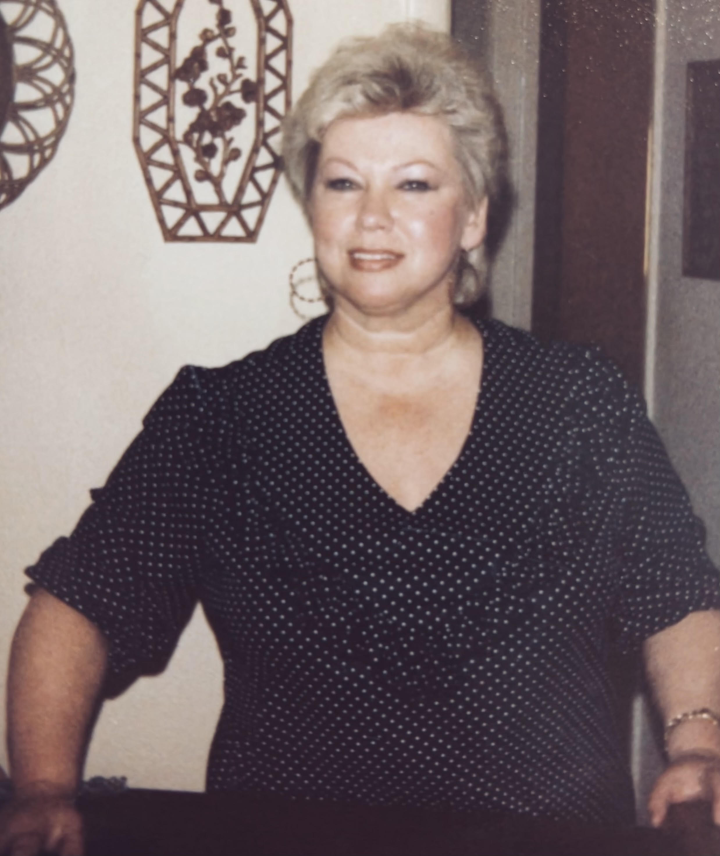
Joyce Vivian Smith (Holt)
Oct. 7, 1943 –
Oct. 25, 2022
Joyce passed away at Especially You Care Home on October 25, 2022 at age 79. For the last several years Joyce struggled with declining health due a diagnosis of Parkinson’s Disease. Despite her diagnosis she lived her life to the fullest and continued to make friends until the very end.
Joyce came into this world with an unmatched exuberance for life. A true force; Joyce made her own rules. She was born in Astoria, Oregon to Vivian (deceased) and Norman (deceased) Holt and moved to Eureka when she was very young. Joyce spent her first year of life on a fishing boat before growing up and living in Eureka for the majority of her life. She graduated from Eureka High School in 1961.
Joyce made friends everywhere she went. She always had a gift on hand and celebrated every occasion. Joyce was full of spirit and generosity (unless she was playing cards) and made everyone around her feel special. She had an internal fire that brightened the world around her. She loved to talk, laugh and listen to others. She was direct, honest and had an infectious laugh that energized any room. If you were lucky enough to know her she made an impact. She was a real powerhouse.
Joyce worked for many years as a department store manager of women’s clothing in Eureka and in Santa Cruz. She was passionate about helping women find clothes that made them look and feel good. Joyce later worked as a bookkeeper for Redwood Electronics Supply. She was a very hard worker and put 110% into everything she did.
Joyce is survived by her daughter Joelle Davidson, daughter in-law Lynne Sandstrom, granddaughters Trysta Hays, Brandi Hays and great granddaughters Lili and Katana. She is also survived by her two sisters, Diane Bare (Ted) and Ida-Fay Felthauser (Mike), nephews Les Bare, Jason Lindholm and Cory Lindholm and her cousin Kathy Payne. She is proceeded by her daughter Rana Krueger, granddaughter Tiffany Hays and cousin Nyle Henderson. Her lifelong friendships include Joanie Lee, June Lee, Nancy Wilson, Irene Johnson (deceased), Liane Peroni, Lucy Sprat, Fran Morehouse, Esther Curtis, Kristy Norton, Gene Hansen and many others.
Joyce was so full of love and life. She often proclaimed that someone should write a book about her adventures. Her one of a kind personality led to a one of a kind life. We will miss her.
Thank you to Hospice, Pace and Especially You for the wonderful care you provided.
A celebration of her life will be held on November 19, 2022 at the Moose Lodge in Eureka from 1 p.m. to 3 p.m. Family and friends are welcome to attend and celebrate her wonderful life.
###
The obituary above was submitted on behalf of Joyce’s loved ones. The Lost Coast Outpost runs obituaries of Humboldt County residents at no charge. See guidelines here. Email news@lostcoastoutpost.com.


