

THE ECONEWS REPORT: Klamath River Woes, But Progress on Dam Removal
LoCO Staff / Saturday, Sept. 3, 2022 @ 10 a.m. / Environment

The Klamath Basin. Background layer attributed to DEMIS Mapserver, map created by Shannon1, CC BY-SA 4.0, via Wikimedia Commons
###
It is tough to be a fish in the Klamath River. On the heels of a large fishkill caused by a debris flow following the McKinney Fire comes another fishkill, this time caused by a pathogen, Flavobacterium columnare, more commonly known as gill rot. Hot, tepid waters in the lower Klamath form a perfect breeding ground for the disease. Elsewhere in the Klamath watershed, ranchers are illegally diverting water (at the encouragement of Rep. Doug LaMalfa), creating perilous conditions in the Shasta River, a tributary to the Klamath.
But there is good news too. The final environmental analysis for Klamath River dam removal is complete and dam removal may begin as early as next year.
Guests Craig Tucker, Natural Resources Policy Advocate at the Karuk Tribe, Dave Webb of Friends of Shasta River and Nick Joslin of the Mount Shasta Bioregional Ecology Center join Gang Green to break down what’s happening in the Klamath.
AUDIO:
BOOKED
Today: 6 felonies, 12 misdemeanors, 0 infractions
JUDGED
Humboldt County Superior Court Calendar: Today
CHP REPORTS
777 Casino Way (HM office): Trfc Collision-No Inj
Us101 / Sandmine Rd (HM office): Trfc Collision-No Inj
7985 Mm101 S Hum 79.90 (HM office): Assist with Construction
Us199 / Us101 N Us199 N Con (HM office): Assist CT with Maintenance
Poppy Dr / Sherwood Rd (HM office): Closure of a Road
ELSEWHERE
KINS’s Talk Shop: Talkshop September 3rd, 2026 – William Honsal
Governor’s Office: California prioritized fighting organized retail theft, those results are paying off with 36,000 arrests and $293 million in stolen goods recovered
Mad River Union: Whistleblower calls for Miranda’s Rescue end
Mad River Union: Arcata’s petite data center only the first
FIRE UPDATE: Six Rivers Complex Grows to 40,995 Acres, 64 Percent Containment
LoCO Staff / Saturday, Sept. 3, 2022 @ 9:39 a.m. / Emergencies

Hand crews using Drip Torches as part of defensive burning operation between Lone Pine Ridge and Horse Linto Creek. Photo: CAIIMT14 via Inciweb
###
Press release from the unified command of the Six Rivers Lightning Fires:
The Six Rivers Lightning Complex remains in unified command with California Interagency Incident Management Team 15, California Highway Patrol, Trinity County Sheriff, and Humboldt County Sheriff. The Six Rivers Lightning Complex is currently 40,995 acres with 64% containment and 1,521 personnel assigned to the incident.
CURRENT SITUATION
Wildland firefighters will continue efforts to increase containment on the remaining two fires of the Six Rivers Lightning Complex. The Ammon fire has experience minimal growth over the past week, however, interior smoldering of ground fuels will persist with limited threats to control lines. The Campbell fire also remained within the control lines yesterday.
Today, firefighters will focus efforts on holding and improving the control lines near Cedar Creek on the north end of the fire and above the communities of Trinity Village and Hawkins Bar near the southeastern perimeter.
A National Infrared Operations fixed wing aircraft conducted an overnight flight to identify the remaining pockets of heat across the fire area. Today, ground resources will target those hotspots to limit the potential for future spread. Fire resources will continue tactical patrols due to the steep terrain and abundance of burning dead ground fuel, to lessen the threat of hot material rolling across the mid-slope roads causing spot fires outside of the control lines along all the perimeters.
Most of the current smoke production is being generated from several large, unburned pockets of vegetation well within the perimeter of the Campbell fire. The northeast winds in the early morning may bring smoke into communities West and South of the fire area. The overall decrease in fire behavior should improve air quality in the coming days.
Check out the Six Rivers Smoke Outlook for more information: https://outlooks.wildlandfiresmoke.net/outlook/65384a03.
ROAD CLOSURES
Due to a large presence of fire personnel and machinery working to build containment lines for the Ammon Fire, residents are asked to limit travel on Titlow Hill Road/Route 1 in zones HUM-E052 and HUM-E062 to essential traffic only. Residents may still use roads to travel out of evacuation order zones:
The following roads into evacuation zones have been closed.
- Forest Route 7n15 at Six Rivers Forest BoundaryThe following roads are restricted to local traffic only:
- Horse Linto Creek Road at Saddle Lane (Open to residents only)
- 6N06 Sandy Bar (Route 6)
- Titlow Hill Road (Route 1) at Horse Mountain Botanical AreaState Route 299 remains open to through traffic. Residents are encouraged to visit http://quickmap.dot.ca.gov/ to check for state highway closures.
FOREST CLOSURES
Forest order NO. 22-10-06 Six Rivers Lightning Complex is currently in place, which includes river access at Kimtu Park.To view this closure and map, please visit: https://www.fs.usda.gov/alerts/srnf/alerts-notices
EVACUATION UPDATES
For the latest evacuation information go to Humboldt County Office of Emergency Services (https://humboldtgov.org/2383/Current-Emergencies) or Trinity County Office of Emergency Services (https://www.trinitycounty.org/OES). For an interactive map of evacuation zones visit: https://community.zonehaven.com/. To sign up for alerts: www.humboldtgov.org/alerts.
HUMBOLDT COUNTY EVACUATION WARNINGS remain in effect for zones:
HUM-E032: NORTH OF Forest Route 7n02, SOUTH OF Hoopa Valley Reservation, EAST OF Trinity River, WEST OF County Line
HUM-E061-A: NORTH OF Forest Route 7n15, SOUTH OF Forest Route 7n15, EAST OF Seeley McIntosh Road, Campbell Ridge Road, WEST OF Forest Route 7n15
HUM-E058: NORTH OF Forest Route 7n15, SOUTH OF Horse Linto Creek Road, EAST OF Peach Tree Lane, WEST OF Coon Creek Rd, Forest Route 7n15
TRINITY COUNTY EVACUATION WARNINGS:
ZONE 480: This zone includes all areas north of the Denny Road from the intersection of the Denny Road and Wallen Ranch Road, FS Road 7N04 through Hawkins Creek north to the County Line. Wallen Ranch Road, FS Road 7N04 and any spur roads off FS Road 7N04 will be closed to public access. The temporary Evacuation point will be at the Wayside Chapel located at 1020 State Route 299 in Willow Creek, CA.
ZONE 481: This zone includes areas along the Denny Road North and North of Denny saddle through the Happy Camp Mountain Area including Bell Creek. Areas southeast of Happy Camp Mountain through Dryer Creek and Bell Flat. Denny Road will remain open.
Zone 482 - Suzy Q Road and all roads off of Suzy Q Road
An EVACUATION WARNING remains in effect for Campbell Ridge Road from Salyer Heights to Seeley McIntosh Road. Salyer area, including Galaxy Road, and the area of Ziegler Point Road/Forest Service Road 7N04 have been reduced to an Evacuation Warning.
ANIMAL EVACUATION CENTER Hoopa Rodeo Grounds 1767 Pine Creek Rd., Hoopa, CA 95546 Phone: (707) 492-2851
THE CANNABIS COVERSATION: Appellations
Jesse Duncan / Saturday, Sept. 3, 2022 @ 7:30 a.m. / Cannabis
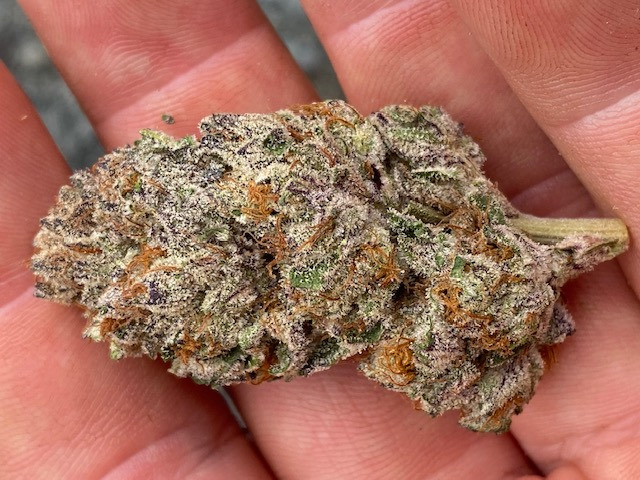
Photo: Jesse Duncan.
###
The concept of appellations refers to a place of origin, and is receiving significant attention in the cannabis industry.
In areas like Humboldt, Trinity, Mendocino and Sonoma, where sun-grown cannabis is the norm, farmers are advocating for an appellation’s designation, which will certify where something was grown and how. Supporters believe that appellation designations will prevent the whitewashing of cannabis cultivation and solidify certain regions as go-to destinations for sourcing cannabis goods.
Much like with wine and cheese, cultivators hope an appellation will differentiate product quality and create a lasting bid in the market. Amid declining prices and a decided market move away from outdoor in the smokeable flower category, the push is on to create cannabis appellations.
According to the California Department of Food and Agriculture, an appellation of origin is “a protected designation that identifies the geographical region of a product and usually includes production requirements.” The program intends to help prevent the misrepresentation of a cannabis goods’ origin and promote regional collaboration around production.
To qualify for an appellation’s designation, cannabis must be grown in the ground, and without the use of structures or artificial light. In other words, appellation programs are for sun-grown flower only and prevent indoor, mixed-light, and sun-grown greenhouse operators from participating.
Part of me grumbled when I came to understand the limited scope of the appellation’s designation. There are sun-grown greenhouse grows that plant directly in native soil and use cold frames with greenhouse plastic simply to block a bit of UV and prevent flowers from full environmental exposure. No power, no tarps, just vented frames with greenhouse covers. In my view, sun-grown greenhouse flower has unparalleled beauty. Buds get frostier under skins while reducing potential scorch and bronzing. But in the purest sense, greenhouses littering the horizon are off-putting to some and arguably spoil the surrounding natural beauty.
Moreover, supporters of appellation programs argue that terroir — or the natural environment in which a product is produced including factors such as soil, topography and climate— directly impact the quality and uniqueness of products produced.
This is certainly the case, as I have written about in the past. The very same strain can take on very different expressions based on microclimate exposure. Flowers grown in hot, arid environments will look very different than those grown with moderate temperatures and marine layer influence. Herein lies an opportunity to brand and differentiate according to many farmers.
To be clear, I applaud the concept of cannabis appellations and understand they have created significant economic value in other industries. That said, I question their viability in terms of unifying regional producers – I believe they will do the opposite.
I just googled the term “appellations” and came up with a list of the top 100 appellations for wine, along with a dizzying array of others.
Herein lies my concern.
As we look to break up a geographical area like Humboldt into multiple appellations, I fear divisiveness and further segmentation among industry participants. The cultivation community in Humboldt is already fractured. We have HCGA, Humboldt Grace and several other cannabis organizations, all presumably pedaling in their own direction. While there is undoubtedly some collaboration between these groups as we saw in the Suspend Measure S campaign, they have not really been able to coalesce around shared goals – even something as basic as marketing Humboldt cannabis.
[CORRECTION: An earlier version of this story incorrectly stated that Humboldt Grace was, like HCGA, an “alliance” that “advocates for its members.” Humboldt Grace is not a membership organization. The Outpost regrets the error.]
If we slice up the county further based on appellation, I fear competition will increase as various regions market themselves as the preferred spot for sourcing products. Instead of one voice advocating for the benefits of consciously grown cannabis, a term I often hear used by my friend Chris at Redwood Roots, we will now have a further bifurcated market with multiple regions presumably claiming superiority.
Given the financial headwinds facing the industry and ever-increasing competition, I believe things will get contentious between different regions which will detract, rather than support, Humboldt’s cannabis-related marketing efforts.
Depending on how aggressive we get with defining appellations, the county could potentially be segmented into many regions, further muddying the waters. In the simplest sense, we could go with SoHum, NorHum and Eastern Humboldt, but these regions boast of enormous diversity and oversimplification would sell the concept of appellations short, failing to truly honor terroir. Lowland producers, those at elevation, and those closer to or further from the coast have very different environmental exposures and will grow very different expressions of the same flower.
One might also wonder if the folks in Redway want to be grouped with those in Shively, Myers Flat, Phillipsville, Garberville, Miranda, Briceland or the Cove. What about Bridgeville, Larabee, Dinsmore and County Line? Hydesville, Carlotta and Swain’s Flat?
For example, I saw a proposed Appellation logo for Palo Verde proudly claiming to be the “Heart and Soul of the Emerald Triangle.” How do other regions feel about that? If Humboldt or the Emerald Triangle more broadly has multiple regions vying for the same, I’m not sure this helps overall outreach efforts.
Additionally, while connoisseurs may detect the nuances in cannabis flavor profiles based on the appellation, I’m not sure average consumers will. Will someone detect the slightly earthier or slightly more piney undertones from one cannabis flower to another? Will these differences create brand loyalty and improve prices? I’m not sure they will.
I have personally smoked truckloads of weed over the past three decades but generally find that OG tastes like OG and that Wedding Cake tastes like Wedding Cake. Flowers clearly look different based on environmental exposure, but I haven’t noted a meaningfully different consumption experience based on where something was grown outdoors. I don’t claim to have a refined cannabis palate, but argue most consumers don’t either.
While it’s entirely true that poorly grown or quick-dried weed will burn hotter and harsher, Appellation designation won’t solve that, nor account for these differences.
What I generally hear in response to this critique is that different regions will specialize — that is, they will grow what grows best in their appellation and become known for that. I agree that some strains do better in some places, but question whether, on a global basis, cannabis varietals will become as ubiquitous to certain regions as some grapes or cheeses are.
Another potential factor limiting the success of appellation designation is that smokeable flower is decreasing in market share. Extracts, edibles, drinkables, topicals and other methods of consumption are gaining ground quickly, and some believe that ultimately, smoking flower will be the exception, not the rule. Not everyone likes to smell like burnt weed, and many users find smoking irritates the throat. Even “smooth” smoke hits novice users like a hammer and induces coughing and a burning throat.
In short, I believe that given changing consumer preferences, cannabis appellations will become less important over time.
I understand that times are scary for cannabis cultivators. Average prices are falling in all states with competitive markets and more opening licensing schemes. Offers for fresh product here in Cali continue to erode and I fear a nasty close to the season for full-term and late second-run farms that won’t come to market for a couple of months.
Appellation programs are trying to bring demand and economic value back to regions that are struggling. I get it and empathize with that desire. And I truly hope cannabis appellations are a home run for Humboldt and other regions.
But given the risks of further dividing an already fragmented cannabis community, I think a better play is a more inclusive marketing program that highlights the diversity and uniqueness of a cultivation community like Humboldt. Through marketing the diverse microclimates and cultivation methodologies deployed by Humboldt cultivators, we can differentiate ourselves as uniquely positioned to meet consumer needs. One governing or marketing body that encompasses all farmers in the region and tells a diverse, unifying story makes more sense to me. Sun-grown flower, coastal zone living soil indoor, and mountain grown mixed-light are all differentiators we should be proud of and capitalize on as a community.
Much love,
Jesse
###
Jesse Duncan is a lifelong Humboldt County resident, a father of six, a retired financial advisor and a full-time commercial cannabis grower. He is also the creator of NorCal Financial and Cannabis Consulting, a no-cost platform that helps small farmers improve their cultivation, business and financial skills. Please check out his blog at, his Instagram at jesse_duncann, and connect with him on Linkedin.
A NURSE WRITES: No One’s Telling You What You Have to Do About COVID Anymore, but Here’s What You Can Do
Michelle Lewis-Lusso / Saturday, Sept. 3, 2022 @ 7 a.m. / COVID-19 and Humboldt
I have enjoyed the warm summer here in Humboldt County, and I’ve been spending time in my sunny backyard with my family, getting my annual reminder that sunscreen is not magical and needs reapplication. United Indian Health Services (UIHS) has even hosted some outdoor community events at our clinics throughout the region, some for the first time in three years. Seeing old friends, clients and coworkers in person has been as soothing and needed as those precious sunny summer days are to my mental health.
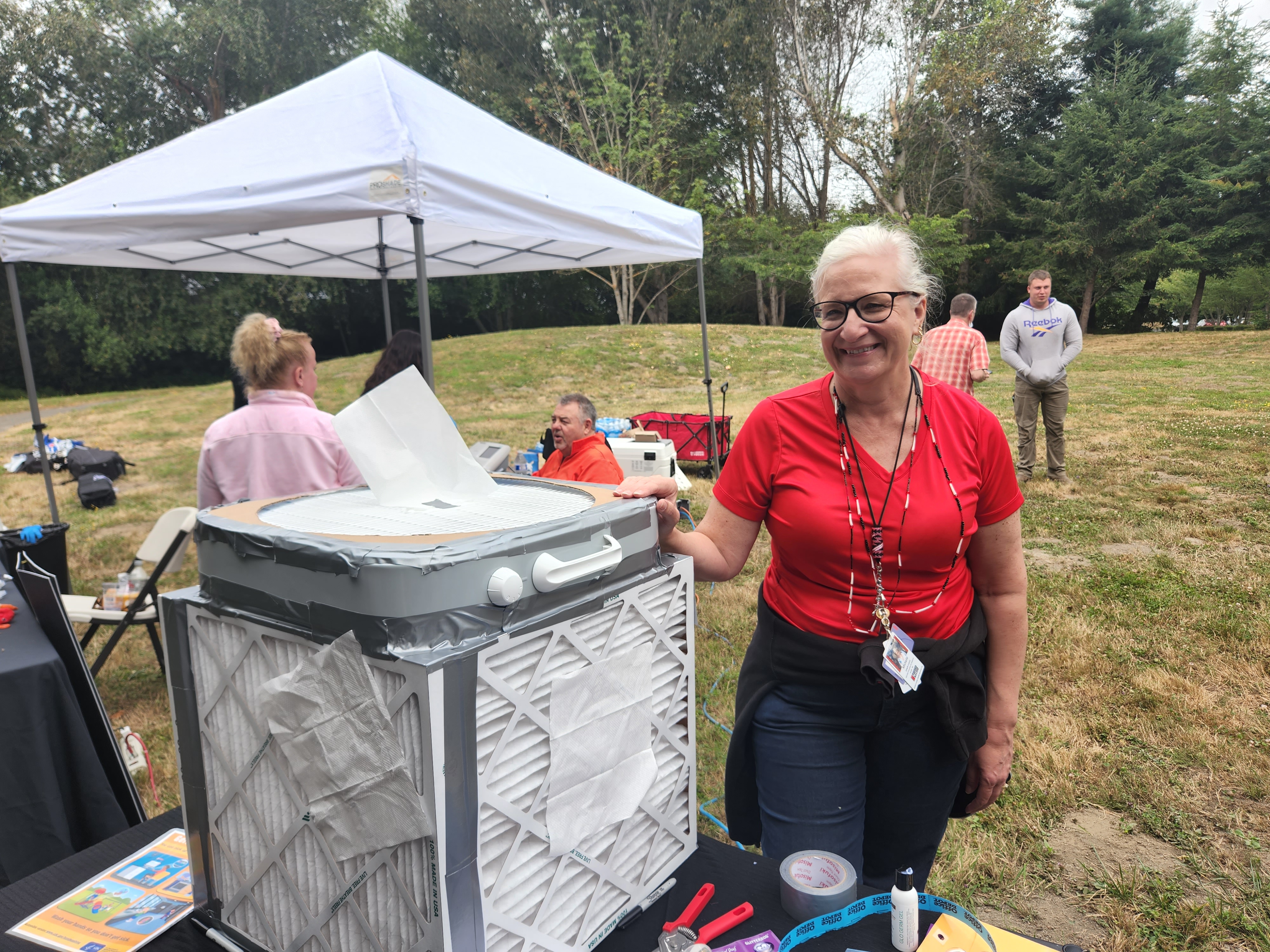
Nurse Michelle with one of her nifty Corsi-Rosenthal boxes. Photo: Submited.
That said, this is your monthly COVID-19 column, and while the “rules” have changed recently, at least according to the CDC, the actual situation across the country still suggests a need for proactive steps, or at least that I inform you of the current state of affairs.
Let’s start with those CDC guidance changes. The CDC has “streamlined” the COVID-19 guidance, and has removed social distancing recommendations, quarantine and “test-to-stay” for school. It is also no longer required to mask on public transit (but it is recommended) or have proof of a vaccination or a negative test before, during or after travel.
The logic behind this seems to be twofold. First is the idea of “meeting people where they are,” and not trying to force or demand action from the public, since you may have noticed that was slightly divisive and didn’t work as intended. Second is the acknowledgment that COVID-19 exposure is happening regularly, and quarantining after exposure is, unfortunately, no longer a realistic response with so many cases still going around. COVID-19 is now posing less risk of “medically significant” infections, so the guidance is simplified to “stay current with your vaccines and stay home if you are sick.”
Confirmed cases in California have been trending downward for a month, which is great. Both Humboldt and Del Norte Counties are “low” or “in the green” as far as transmission (cases and hospitalizations). Unfortunately, there are still 8,000 cases daily (in California), and experts suggest the true number could be 6-7 times higher. Summer is also drawing to a close, and the colder weather will draw all of us indoors, which has lead to a troubling surge in COVID-19 deaths the past two years, while over 500 Americans still die daily of COVID-19.
None of this is to make you despair — the situation has been improving slowly, and there are mitigation efforts you can take to protect yourself and your community. Check with the Centers for Disease Control and Prevention “COVID-19 by County” page to see what level of caution you should take when out and about, or even when traveling to another area. Being ready for the unexpected helps me feel better when I am traveling — emergency kit for the car, first aid kit, disinfecting wipes, masks, hand sanitizer and antigen test kits are the new normal.
Last month I introduced you to Corsi-Rosenthal boxes, and I have been building my own and teaching classes on them in the community. These filters will remove well over 90 percent of virus and bacteria particles in the air (also wildfire smoke!) and are incredibly easy to make. If you are worried about the air quality in a shared space, I encourage you to build and install a Corsi-Rosenthal box. They are great in school classrooms, offices and retail shops, and have a meaningful impact on reducing the spread of COVID-19.
Forget COVID-19 for a minute. Your grandmother was right — if you’re sick, stay home (and get tested). If you do get infected with COVID-19, you still need to isolate for five days whether you have symptoms or not. COVID-19 antigen (at home, rapid) tests are available and very helpful to use if you are experiencing symptoms — even if you think it’s “just a cold” or “boy, my allergies are really acting up”, or “wow, this smoke is really making my throat feel scratchy.” And don’t forget to wash those hands!
Regardless of when you end isolation, avoid being around people who are more likely to get very sick from COVID-19 until at least day 11, wear a high-quality mask around people, and do not go places where you are unable to wear a mask, including public transportation and travel settings.
Masking remains important for those who aren’t infected as well. As I mentioned last month, the BA.5 variant has become the dominant strain in most areas, and it remains infectious for the vaccinated and previously-infected alike. This is troubling because of what is becoming known as “long COVID.” While risks of severe infection, hospitalization and death have decreased, incidents of long COVID have continued for some people infected with the regular version of COVID.
Long COVID is still not well understood but is essentially a cluster of late onset health symptoms brought on by COVID-19 infection. One of the more common symptoms associated with long COVID is brain fog. I don’t know about anyone else, but I don’t need any additional brain fog in my life. Some other symptoms include tiredness, fatigue, fever, difficulty breathing, headache, difficulty sleeping, joint pain, depression, and anxiety. No. Thank. You. Very much.
Fall approaches, and the rules are becoming recommendations. Use your freedom to make healthy choices, and listen to your grandmother.
###
Michelle Lewis-Lusso (she/her) is an Infection Prevention and Control nurse at United Indian Health Services, serving the 11,000+ clients and staff at their six area clinics. She’s not your grandma, but also thinks you should cover your mouth when you cough.
OBITUARY: Eugene ‘Neal’ Sligh, 1937-2022
LoCO Staff / Saturday, Sept. 3, 2022 @ 6:56 a.m. / Obits
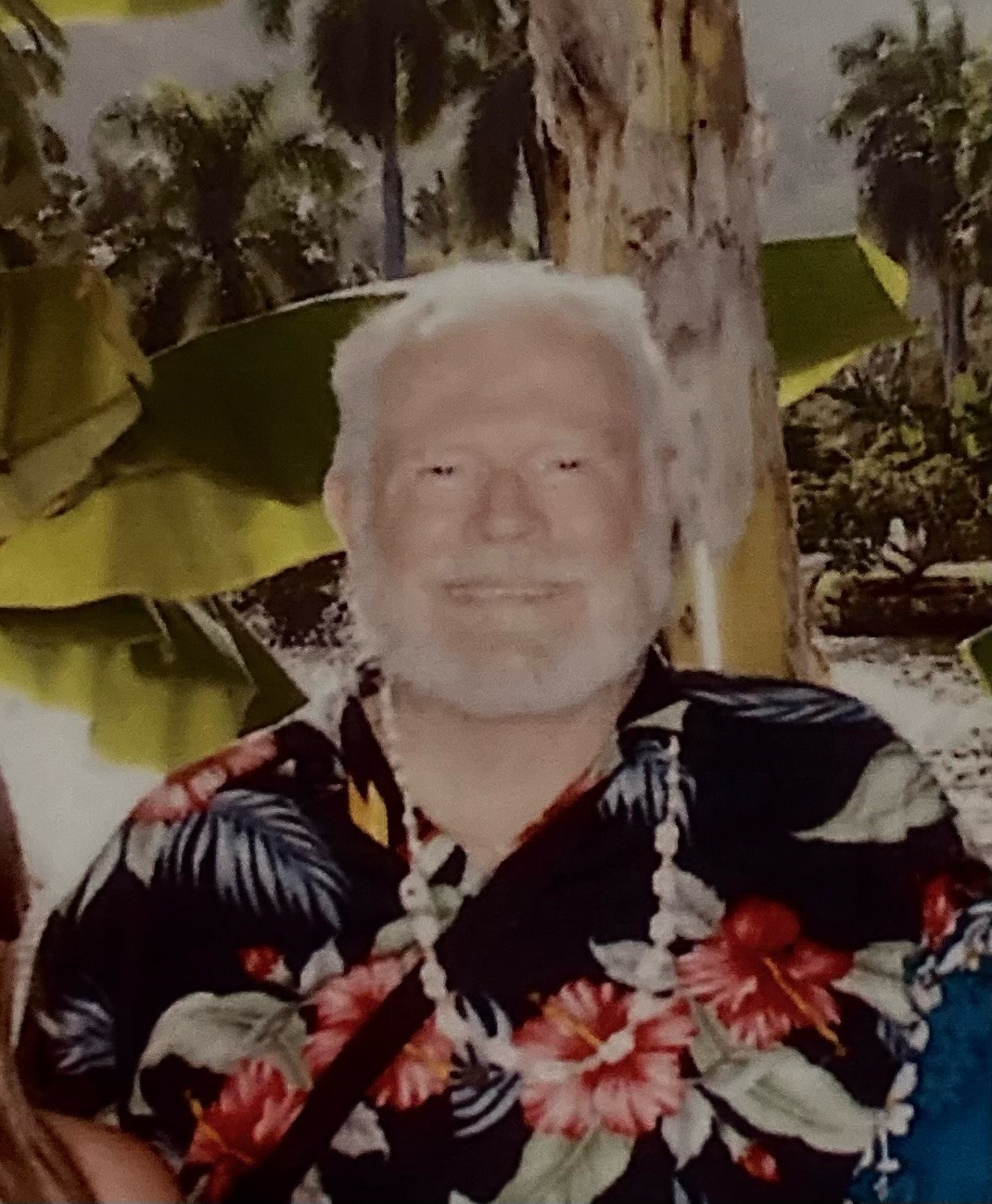
Neal
Sligh (Mr. Sligh, or “Coach,” as known to hundreds of former students
at Pacific Union School), was born March 9, 1937 to Thomas “Roy”
Sligh and Jessie Lee Sligh in Gadsden, Alabama. Neal passed away at
home surrounded by his family in the early morning of August 27,
2022. Neal did not “go gentle into that good night (Thomas).”
Neal struggled to the end to tell Sharon, his wife, and those
present, “I love you.” In his last moments, he reached out with
both arms to embrace someone or something unseen and then found
peace.
Neal and his parents lived for several years in Pell City, Alabama, but the family decided to move west to seek better employment. Neal spoke of being a young boy riding across the country in a vehicle equipped with a rumble seat.
Neal and his parents moved around quite a bit when he was a young boy and he attended a number of schools. He described moving away from newfound friends as difficult. The family eventually settled in Oceanside, California. Neal was living in a mobile home park when he became friends with James “Jim” Nolan. They became lifelong best friends and were close until Jim’s death in 2009.
Neal enjoyed sports and had natural athletic ability. In high school, he found that he excelled at track and field. Neal began pole-vaulting and literally went to new heights in high school and junior college, setting school records. Neal loved coaching and taught several local young men who set records to pole-vault.
After Neal graduated high school, he decided to enlist in the US Marine Corp Reserve. The Korean War was coming to an end and Neal always downplayed his courage in joining the Marine Corp as the war was ending. Neal loved being a Marine and had the honor of serving with Marine Heroes that had served during WWII and Korea. Neal was a young boy during WWII and talked about what a scary time it was to grow up. Neal had tremendous reverence for “The Greatest Generation,” which led to him reading and studying extensively about WWII.
Once Neal graduated from junior college, he looked to transfer to a four-year college that was as far away from Oceanside as possible, but still in California. Humboldt State College fit the bill and he moved to Arcata. Neal initially had trouble figuring out his major but found elementary education. Teaching school was his calling and he thoroughly loved every minute of it.
One day on campus, Neal was in a hallway when he noticed a pretty young lady crying. As a gentleman, he was always vigilant for “damsels in distress.” Neal approached the Freshman girl and asked what the problem was and if he could help. The young lady was having trouble figuring out what classes to take, so Neal assisted by planning her class schedule. The young lady was Sharon Jane Eller, the future Mrs. Sligh, and the love of his life. Neal and Sharon dated for the next two years and married in 1962 in Crescent City.
Neal and Sharon started a family in 1966, with the birth of their son, Ronald “Ron” Sligh, and had their second child in 1970, daughter Tierzah Sligh. The family purchased a lot on Anderson Lane in Arcata in 1972 and began building their home with help of family, friends, and sub-contractors. Neal did much of the construction himself. Anderson Lane was a special place and all the neighbors became like family and helped each other out. Neal loved living there and often said it was the best place he ever lived. The family is very thankful for the Pattersons, Mendes, Akanas, Westmans, Thompsons, and Desimones.
Neal and Sharon enjoyed traveling and being on the academic year, which allowed them to take many summer trips. Sharon talked Neal into going on a 450-mile bicycle tour with their church’s youth group. They then came up with the idea of doing a coast-to-coast biking trip. In 1983, the family took a 64-day bike trip from Florence, Oregon to Muskegon, Michigan.
During the crossing, Neal’s family met a biking group called Wandering Wheels. He biked across the country five more times with Wandering Wheels and went on trips to Russia and China. Neal’s favorite jackets were his Wandering Wheels Jackets. He had several and wore them all the time.
Neal’s son Ron married Annette (Demmin) Sligh in 1988. Neal immediately found that Annette was a new daughter and treated her as such. Neal’s love of teaching was passed down to Annette and gave them a unique bond.
Neal became “Papa” upon the birth of his first granddaughter, Josephine “Joie” Sligh, followed by Ashley Sligh, Jessica “Jessie” Ibarra, and Annabelle Sligh. He was fortunate to gain a step-granddaughter, Gabriella “Bela” Ibarra.
He taught at Pacific Union Elementary School in Arcata for 34 years and retired in 1995. Neal coached seventh-grade basketball for most of his career. Neal had the ability to get his teams to reach the best of their abilities and he had several undefeated seasons. During his career, Neal found himself as the vice-principal for three years. The administrative role took him out of the classroom, which weighed heavily on him. The principal at the time told Neal that he would have to stop coaching basketball, as it was taking too much of his time. Neal told his boss that being the vice-principal was taking up too much of his coaching time. Neal went back to the classroom and began enjoying his job again.
Neal was very active in the Arcata United Methodist Church for 50 years and has been in Eureka First United Methodist Church for the last 10 years. These past 11 years, Neal was a member of the Redwood Roamers, the RV’ing group, of the Eureka Elks Lodge #652. Also, back in the 1960s, he had revived the Humboldt Archers and enjoyed his years with the club.
Neal was preceded in death by his parents, Roy and Jessie, and his sister, JoAnne Sligh, who he never met. Neal is survived by his wife, Sharon, son Ron Sligh (Annette), and daughter Tierzah Sligh. He is also survived by his above-mentioned granddaughters. Neal will be missed by his niece, Misty Malloroy, nephew Todd Eller, niece Kim Anderson, and extended family.
We miss him greatly, yet, we know his struggle with dementia and his “liquid-only diet” is over. During the last month of his life, the family had the support of friends, Hospice of Humboldt, Visiting Angels, and local hospitals.
Services will be on September 10, 2022, at 11 a.m. at the Eureka First United Methodist Church at 520 Del Norte St in Eureka, California with a reception following.
###
The obituary above was submitted by Neal Sligh’s loved ones. The Lost Coast Outpost runs obituaries of Humboldt County residents at no charge. See guidelines here. Email news@lostcoastoutpost.com.
OBITUARY: Shane Lyndon Toroni, 1965-2022
LoCO Staff / Saturday, Sept. 3, 2022 @ 6:56 a.m. / Obits

Shane Lyndon Toroni
Born
— Jan. 26, 1965
Died
— July 28, 2022
It is with profound sadness, we announce the passing of Shane Toroni, after a 10½ year battle with Metatastic Pancreatic Neuro-Endocrine Tumors, a very rare cancer. He was 57½ years young and fought his cancers with strength, courage and a strong will to live, never giving up hope, no complaints. He also had a hereditary condition known as Lynch Syndrome, a gene mutation which was discovered in 2017 through an Arizona Genetic Counselor. This mutation makes one at a higher risk for some cancers. Early intervention is essential.
Shane attended South Bay Elementary School, Jacobs Junior High and graduated from Eureka High School in 1983. He worked in various cabinet making shops and for Wallace & Hines bars, and as a casual longshoreman for 20-plus years before becoming a registered longshoreman in the I.L.W.U., Local 14, Eureka, Calif., following in his father and uncle’s footsteps. He remained an active member until his passing. His last job was as a crane driver and as the local dispatcher. He loved his job which provided good wages and benefits so sorely needed in his fight with cancer. He also enjoyed the camaraderie of his union brothers.
Shane was born and raised in Humboldt County, a true native son. Besides work, he had a green thumb and enjoyed gardening, was a deer and waterfowl hunter, a clammer, a mushroom forager, a wild blackberry picker and a jam and pie maker. He loved to cook and grill on his Traeger, enjoyed the slots at Bear River and the horse races at the Humboldt County Fair, playing cards with friends and social media time. He was also a son, brother, uncle, nephew, cousin and friend to his survivors.
Shane was preceded in death by his father, Leland Toroni; his paternal grandparents, Martin and Linda Toroni; his maternal grandparents, Carl and Shirley Aldrich; nine uncles and three aunts; one first cousin; his hunting buddy and longtime companion, Zeke; and many other relatives and friends.
He is survived by his mother, Marlene Toroni; his sister, Sandy Toroni; and his niece, Rylee Ratcliffe; also by his uncle, Gerald Aldrich (Marlene) and aunt, Deanne Alexander; first cousins; his hunting buddy and companion, Charley; and many other relatives and friends.
Shane was cremated by Ayers and his ashes and Zeke’s will be scattered. No services are planned at his request.
###
The obituary above was submitted by Shane Toroni’s loved ones. The Lost Coast Outpost runs obituaries of Humboldt County residents at no charge. See guidelines here. Email news@lostcoastoutpost.com.
OBITUARY: Marilyn L. (Paxton) Robertson, 1933-2022
LoCO Staff / Saturday, Sept. 3, 2022 @ 6:56 a.m. / Obits

Marilyn L. (Paxton) Robertson of Eureka passed peacefully on September 1, 2022, age 89.
Marilyn was born February 13, 1933 in San Bernardino,, the eldest of four children. She moved to northern California in the early ‘50s with her first husband, Willard Watts, and two small children, Linda and Tony Watts. She later began working for the phone company, where she met and married James “Fuzzy” Robertson. They purchased the current home in 1958 and had three children together — Joe, Ruthie and Lori — and a step-son, Jimmy Robertson, joined their blended family. Marilyn balanced homemaking, child-rearing and outside employment with PG&E and Dr. Richard Wissinger.
“One year, she was room mother at Freshwater School and transformed herself into the Wicked Witch of the West (complete with full green makeup, pointed hat and cackle) and even scared her own children who didn’t know who she was,” fondly remembers her sister-in-law, Roxie Paxton. Fuzzy was a teamster and retired from the short-haul trucking industry and together they delighted in spending time with the grandchildren.
Everyone who knew her will miss her intelligence, love for the wildlife, and her fresh tortilla & beans dinners with the family! She was very creative and talented — sewing Halloween costumes and clothes for her kids; making popcorn balls for the neighborhood parties; whistling to her kids for them to come home; her attachment to the wringer washers for doing the family laundry and drying the clothes on the line!
Marilyn was preceded in death by daughter Linda, husband Fuzzy, grandson Cody Watts, step-son Jimmy Robertson; her parents and three siblings. Surviving her are her children Tony & Marilee Watts (Reno), Joe (Eureka), Ruthie Robertson & Paul Shoen (Gardnerville, Nevada) and Lori & Mike Koehnen (Chico); brother Tim and Roxie Paxton, Eureka; seven grandchildren and nine great-grandchildren. A celebration of life will be held in the future.
###
The obituary above was submitted by Marilyn Robertson’s loved ones. The Lost Coast Outpost runs obituaries of Humboldt County residents at no charge. See guidelines here. Email news@lostcoastoutpost.com.


