For years, the idea of establishing supervised drug injection sites has been a long-standing goal for some progressive California leaders looking to address the burgeoning overdose crisis. Efforts to launch such programs have come close, but never to the finish line.
Now, as the latest legislation seeking to sanction these sites heads to the governor’s desk, proponents are gearing up to make these injection sites a reality — and they hope a success — in the Golden State.
Senate Bill 57 would authorize these overdose prevention pilot programs in Oakland, San Francisco and Los Angeles, which would operate through Jan. 1, 2028.
While former Gov. Jerry Brown rejected similar legislation in 2018, supporters are hopeful Gov. Gavin Newsom will sign this one after he said he was open to the idea during his campaign for governor.
“We have been engaging with the governor’s office for the past four years on this measure. We haven’t heard that he’s not going to sign it, so we’re hopeful that he’ll stick to his word from 2018,” said Jeannette Zanipatin, California state director of the Drug Policy Alliance, an advocacy group that works to decriminalize drugs and a co-sponsor of the bill.
Alex Stack, a spokesperson for the governor’s office, said they don’t comment on pending legislation.
But if Newsom does sign it, what exactly would these sites look like? Who would be responsible for staffing them and how will they be funded? The details and logistics will be left to local officials.
“They are asking us to help them address the escalations and crisis of overdose deaths that we’re experiencing in California.” — Sen. Scott Wiener, a San Francisco Democrat
Because San Francisco has been considering this idea for almost a decade, it would likely be the first ready to launch a program in early 2023, Zanipatin said. Supervised injection sites could cost a couple of million dollars per year to run, and cities and counties that choose to establish these programs will have to find their own source of funding.
Last year, New York City became the first to establish supervised injection sites in the U.S. Cities in other countries have operated such centers for years, including Vancouver, Mexicali and Barcelona. The Vancouver site is often referenced as a model — with about 1,700 individuals using it each month, the center is credited with reducing overdose deaths in its neighborhood and city. Switzerland was the first country to open a supervised injection site in 1986.
The goal of these programs, supporters say, is to provide drug users a safe, hygienic space where they can get clean needles and administer their own drugs under the supervision of trained staff. Staff members would monitor users and be ready to administer overdose reversal medications if needed, which could ultimately save lives. Medical groups in support of these programs have pointed out injection sites could also help reduce the risk of Hepatitis C and HIV infections associated with intravenous drug use.
Sen. Scott Wiener, author of the bill, said the jurisdictions that would pilot the programs asked to be included in the bill. “They are asking us to help them address the escalations and crisis of overdose deaths that we’re experiencing in California,” Wiener, a San Francisco Democrat, said during an Aug. 1 legislative hearing.
Those in opposition to Wiener’s bill, including Republican legislators and law enforcement groups, argue these programs are a type of addiction maintenance that normalize illegal behavior.
Before setting up their overdose prevention programs, the cities and counties must provide local health and law enforcement officials the opportunity to weigh in. Once set up, these centers must make referrals to substance use disorder treatment programs and other social services if the user wishes to access them. The bill would also protect people from criminal charges for using the sites.
The overdose crisis has become one of the most pressing public health issues, with deaths and emergency room visits spiking in recent years, in large part due to the infiltration of the synthetic opioid fentanyl. Overdose deaths from fentanyl jumped from 1,603 in 2019 to 3,946 in 2020, and then to 5,722 in 2021, according to the California Opioid Overdose Surveillance Dashboard.
California’s second swing at this policy comes as the Biden administration is also embracing “harm reduction” strategies — which focus on keeping drug users alive and safe rather than punishing them. Needle exchange programs and programs that distribute the overdose reversal drug naloxone are some examples.
Among those urging the governor to veto the bill is the Senate Republican Caucus. “Fueling the drug epidemic with drug dens and needle supplies is like pouring gasoline on a forest fire. It merely worsens the problem,” the caucus wrote in an Aug. 1 letter to Newsom.
Law enforcement organizations have stated their opposition to the bill, saying it sends the wrong message to the public and fails to address addiction at its root.
Wiener and supporters of the bill say supervised injection sites will not solve the overdose crisis. Rather, the goal is to prevent deaths.
Opponents have also raised concerns about the bill not providing a “cognizable strategy for figuring out how to get the addict to the injection site,” John Lovell, a lobbyist with the California Narcotic Officers’ Association, said during last week’s hearing. “What injection sites do is there is a magnet effect so that people come into the area,” but that doesn’t mean they will actually go inside the facility, he said.
Laura Thomas, director of HIV and harm reduction policy at the San Francisco AIDS Foundation, another co-sponsor of the bill, said she doesn’t think getting people into these centers will be a challenge. “Overwhelmingly, people would prefer to use in a clean space. No one wants to be using drugs on the sidewalk. If we give people a better option they will use it,” she said.
An often-referenced survey of 602 injection drug users in San Francisco showed that 85% would use a supervised injection site. About 75% of them said they would use it at least three days per week.
“Fueling the drug epidemic with drug dens and needle supplies is like pouring gasoline on a forest fire.” — Senate Republican Caucus
The idea, according to supporters, is to build trust with people who come in, prompting them to spread the word and eventually link people to treatment when they are ready. These centers often look like a clinic, and people usually go through a brief interview when they first walk in.
Thomas said that while it would be ideal for such centers to be open 24/7, realistically, hours of operation would be dependent on funding. That same San Francisco study showed that 62% of the drug users surveyed preferred a supervised injection site to be open from 8 a.m. to 4 p.m.
Funding could prove to be a challenge in the long term. In New York City, where two safe injection sites opened last fall, the city and state do not pay for them. The nonprofits running the programs seek private donations, making it difficult for the centers to extend their hours or expand into other neighborhoods.
Thomas said California community organizations that already work in the field of substance use disorders would be best-equipped to run the programs, but funding should come from public health departments because they are a public benefit.
Some of the cities and counties included in the bill have potential public funding streams. For example, Los Angeles County voters in 2020 passed Measure J, which allows the county to use at least 10% of its locally generated, unrestricted funding for community investment programs, which could include overdose prevention programs.
“We’re also hoping that these pilot projects serve as a catalyst and identify some private-public partnerships,” Zanipatin said.
###
CalMatters.org is a nonprofit, nonpartisan media venture explaining California policies and politics.
Gale
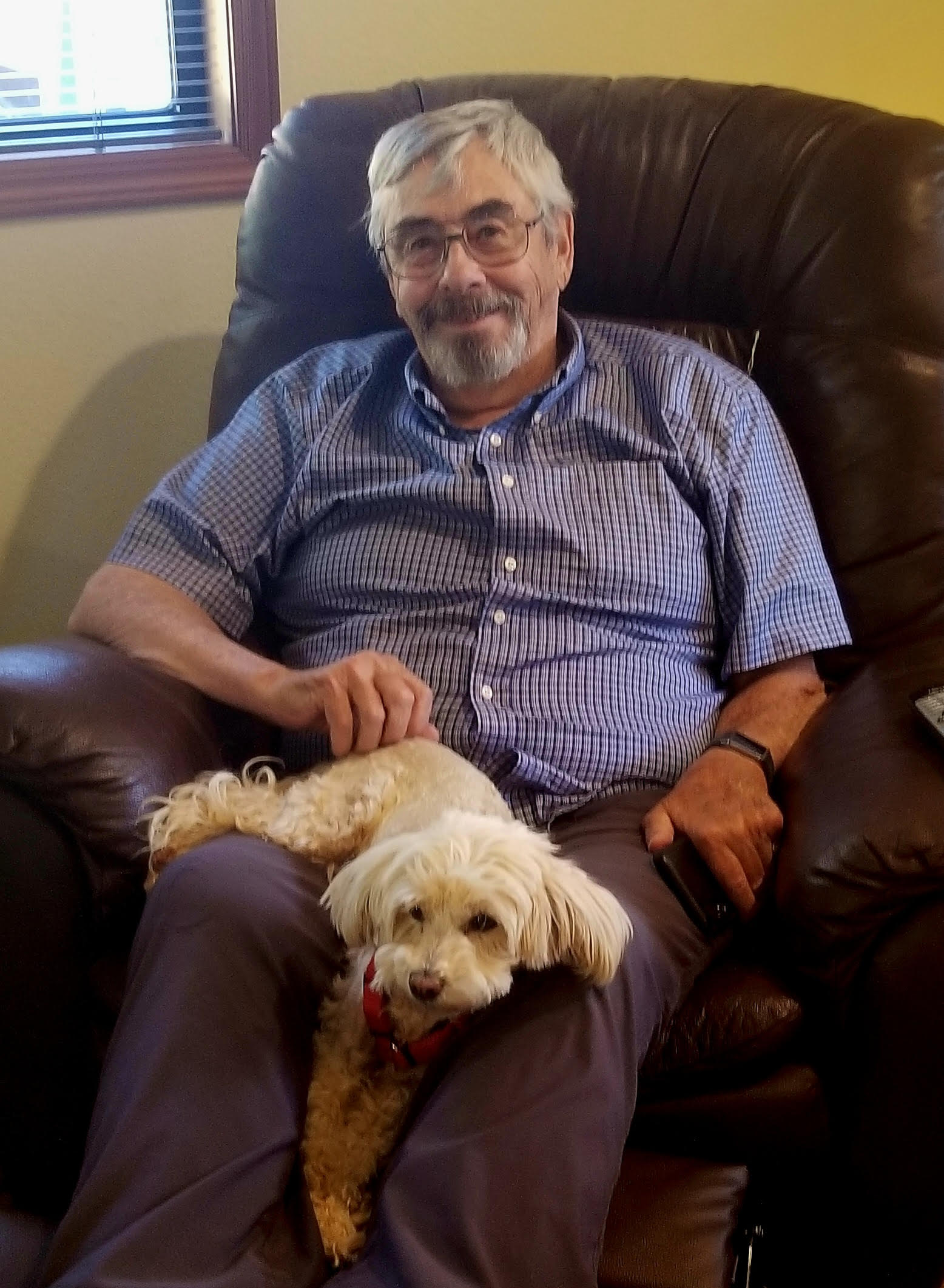
was born in Richmond, California, where he had many adventures with
his brother Dwayne and his sidekick “Ogle.” His stories of
his childhood were hilarious and full of crazy stunts. He attended
DeAnza High School. He liked to tell people it took him six years to
graduate. When he got puzzled looks he added they were building the
junior high so all students, 12 to 18, were placed at DeAnza.
Gale
came to Humboldt to get his teaching degree. With his storytelling
skills, he would have been a great teacher, but he had an opportunity
at State Farm that he couldn’t pass up. He was a fixture in Arcata at
6th and G for many, many years. His clients and office staff became
his friends.
Gale
married Karen Banducci. Early in their marriage, Gale served in the
Army National Guard. Later on they were blessed with two sons, who
they dearly loved, that were opposite as night and day. They also had
bonus son, Sam Cannon, who Gale loved dearly. Gale was involved in
coaching Little League Baseball and basketball for several years. He
became close friends with other coaches, especially Harold Shamp, who
remained a close friend to the end.
After
the passing of Karen and Kellen, Gale married Debi Cool. He became an
instant father to her children and grandpa to theirs. He was very
loved and admired by them all. He spent many hours watching them
splash and play at his cabin at Trinity Center, making our summers a
joy.
Gale
was also a man of great faith. He served as Bishop, Institute leader,
and Temple Worker alongside his wife Debi, for the Church of Jesus
Christ of Latter Day Saints. He was a loved member of the Arcata Ward
choir. Though he couldn’t carry a tune, he always came with a smile.
Gale was a good man who is so very loved and will be missed by
family, friends, and his goofy little dog, Fuji, who he sang to
everyday. Gale’s service went beyond his church callings. He often
would secretly do acts of kindness, never seeking credit for his
service.
Gale
leaves behind so many friends that were so special to him: “Grondo”
John Grondalski, who he loved like a brother, Harold Shamp, the
Blaires, Claire Monge, and little buddy Justin Hamblin, to name just
a few.
Gale
played hard, loved many, sang terribly, and will be forever in our
hearts. He is survived by his wife Debi, children, Gabe, Terah/ David
Kropp, Matthew/ Augusta Spallino, Shanna Davis, 15 grandchildren, 9
great-grandchildren, and two little dogs. He was preceded in death by
Karen and son Kellen King.
A
celebration of life will be held on Saturday, August 20 at 11 a.m. at
The Church of Jesus Christ of Latter Day Saints, 1660 Heartwood
Drive, McKinleyville.
Cremation by Ayers Family Cremation.
###
The obituary above was submitted by Gale King’s loved ones. The Lost Coast Outpost runs obituaries of Humboldt County residents at no charge. See guidelines here. Email news@lostcoastoutpost.com.
Workforce development programs at College of the Redwoods. | Image via CR website.
###
The Humboldt County government hasn’t had much in the way of positive fiscal news over the last couple years, but a key piece of it arrived Tuesday afternoon in a one-sentence email from the state’s Economic Development Division.
“Humboldt has been released from cash hold,” the message read.
The constraint was just one of several repercussions stemming from the Auditor-Controller’s Office’s failure to meet fiscal reporting requirements, including the submittal of the county’s long-overdue 2019-20 Single Audit. The cash hold restricted the county from drawing down federal grant funds intended to reimburse the various community organizations that partner with the county on workforce development programs.
Economic Development Director Scott Adair was elated by the news that the hold had been lifted, and in a phone interview he said the state agency made the decision thanks to improved practices and communication from the Auditor-Controller’s Office, which is under new leadership after challenger Cheryl Dillingham defeated incumbent Karen Paz Dominguez in the June election.
Adair said that in conversations with EDD staff, “they specifically credited the amount of fiscal progress we’ve made in just a short period time.”
The 2019-20 Single Audit, which was due this past September, still hasn’t been submitted to the state, but Adair said the state agency has been pleased by improved communication and other changes.
“The implementation of new practices and fiscal policies and procedures [and] a change of leadership at the Auditor-Controller’s Office has given [the EDD] some renewed confidence in the county’s ability to successfully manage our WIOA dollars,” Adair said, referring to grant funding from the federal Workforce Investment Opportunity Act.
Humboldt County Development Specialist Peggy Murphy agreed. “They’re very pleased with seeing the progress,” she said.
Adair said that since Dillingham took over, his department has been getting memos from the Auditor-Controller’s Office laying out “some real rigorous timelines” for when staff will submit various overdue reports, including both the 2019-20 single audit, which they expect to submit to the federal clearinghouse by the end of the month, and the 2020-21 single audit, which they expect to submit by the end of October.
“They’re moving very quickly over there to try to get things done,” Adair said. “We’ve been sharing that information with the state, and previous to that we just didn’t have info to share with them because we weren’t getting it.”
Officials with the EDD appreciate the information. “Just the fact that they’re seeing communication — they’re seeing actual, tangible, written deadlines and dates coming from the AC’s office — they’re just feeling really good about it,” Adair said.
The Outpost reached out to Champayne-Bryant for comment but had not yet heard back by the time this post was published.
The Humboldt County Workforce Coalition currently subcontracts with Cal Poly Humboldt to manage its programming, which includes employment and education services for local youth, help for dislocated workers, layoff aversion services and rapid assistance for the recently unemployed.
Connie Stewart, executive director of initiatives at Cal Poly Humboldt and one of the partners in the workforce coalition, said she and her colleagues are happy about the news.
”We’re really excited because we can move forward now with the Humboldt Workforce Coalition,” she said. “The job market is open for business.”
“None of us completely shut down service, but we had been living with anxiety” due to uncertainty about whether the state would ever reimburse for costs, Stewart said. “But now we really are open for business. We can tell people we have money.”
Adair and Stewart said the county’s overdue fiscal reporting also prevented the Humboldt Development Board from applying for valuable grants, including money to boost employment in the blue and green economies — burgeoning sectors such as renewable energy, fisheries and marine/coastal resources. (The World Bank says the “blue economy” is “sustainable use of ocean resources for economic growth, improved livelihoods, and jobs while preserving the health of ocean ecosystem.”)
“With the state budget, there were so many grants the Workforce Development Board couldn’t apply for without the cash hold being lifted,” Stewart said. “We’re gonna be competitive for those grants [going forward]. That’s the good news. … There’s just hundreds of millions of dollars for training programs coming, and with offshore wind development [off the Humboldt County coast] and other projects, we need a lot of those training dollars.”
Adair echoed that sentiment, saying the release of the cash hold “actually positions our organization, our agency and our community again to be eligible to apply for some of this other competitive grant funding, which is phenomenal given everything that’s occurring in the pipeline for development right now for the community.” He mentioned both the offshore wind development as well as the high-speed fiber optic line being installed along the ocean floor between Eureka and Singapore.
“For staff it also is just a huge psychological relief,” he added. “When we’re in a position when we’re under cash a cash hold, we’re essentially operating under a position where we are penalized because we’re not meeting programmatic service directives which we are required to comply with … . Having that cash hold released and no longer hanging over our heads is really going to be a motivator and a driver for generating some positive energy around the program again.”
On August 9, 2022, at approximately 1505 hours, a white Chevrolet pickup truck driven by Sherrie Keener was traveling southbound on US-101 north of SR-271. A white/blue Hino Box Truck, driven by Phoebe Paiva, was stopped off the west road edge facing east, preparing to enter southbound US-101 south of the Chevrolet. Sherrie Keener drove the Chevrolet from the southbound lane of US-101 over the solid white edge line onto the shoulder of US-101 striking the left side of the Hino Box Truck. Both vehicles came to rest off the west shoulder of US-101. Pavia sustained no injuries from the crash. Sherrie Keener sustained major injuries and was transported to St. Joseph Hospital for medical care. Both juvenile passengers sustained major injuries and were transported to St. Joseph Hospital for medical care. Michael Keener sustained moderate injuries and was treated at the scene. Sherrie Keener placed under arrest and then released to the hospital due to her injuries.
The California Highway Patrol would like to thank Garberville Fire Protection District, Cal Fire, and City Ambulance for their response and assistance. The crash remains under investigation by the California Highway Patrol – Garberville Area.
Sherrie Keener is being charged with 23153(f) CVC – Felony DUI of drugs resulting in injuries to another person.
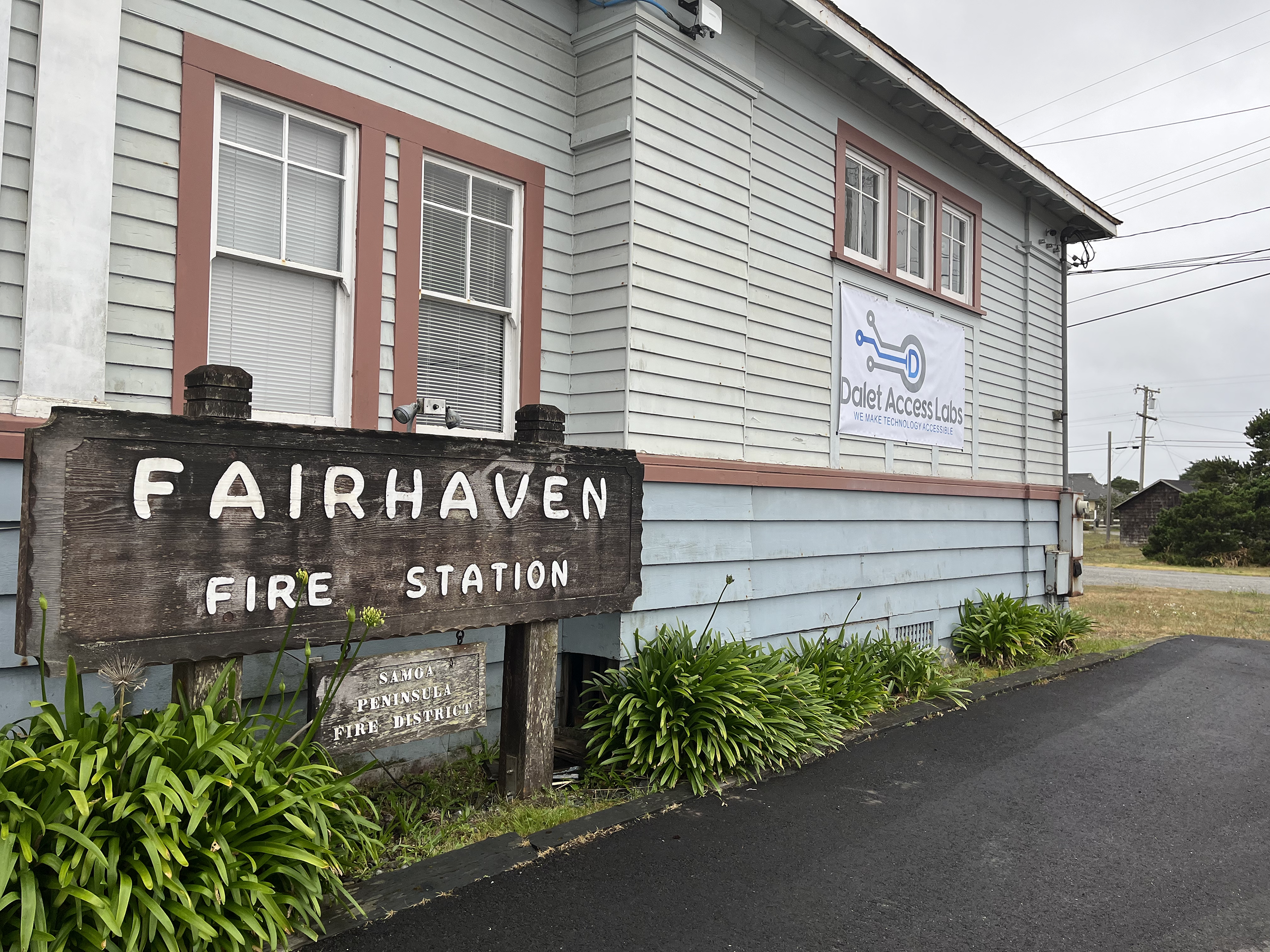
Dalet Access Labs center of operations at the Fairhaven Fire Station | Images submitted by the Humboldt County Office of Education
###
The tiny, unincorporated area of Fairhaven recently became one of the coolest places to live in Humboldt, after the community was provided with access to free high-speed internet as a part of a statewide competition designed to help improve broadband connectivity throughout California.
The project – a partnership between Bay Area company Dalet Access Labs, the Humboldt County Department of Education (HCOE) and the Samoa Peninsula Fire District – was completed as a part of the California Digital Divide Innovation Challenge, a competition with a $1 million prize launched by the California Department of Education (CDE) in 2021 to help bridge the state’s digital divide, especially among students and families that were impacted by the switch to digital learning during COVID.
The CDE challenge required that participants work with students experiencing a lack of connectivity, either due to barriers of affordability or infrastructure. According to a press release from the Humboldt County Office of Education, Fairhaven was selected to participate because the area has not consistently had internet service available and many children in the community were not able to participate in distance learning during COVID.
“We wanted to create a solution that could become a model for the rest of rural California and the world,” Colby Smart, assistant superintendent of HCOE, said in a press release. “We created what’s called a ‘low latency mesh network’ that addresses two issues in Humboldt County: The high cost of broadband internet and the availability of broadband internet.”
One of the antenna nodes
Odion Edehomon, founder and CEO of Dalet Access Labs, said that the internet service went live on July 1 and offers all the residents of Fairhaven internet with impressive speeds of up to 600 or 700 mbps. Edehomon added that the network operates completely on solar power, which charges batteries that can keep the power running 24/7.
“The network is very transformational,” Edemon told the Outpost in a recent phone interview. “We built it as a critical infrastructure – meaning if all else fails, if PG&E decides, you know they are going to turn the power off over the next 20 years, the network will be the only thing that works, because we built it as an off-grid network.”
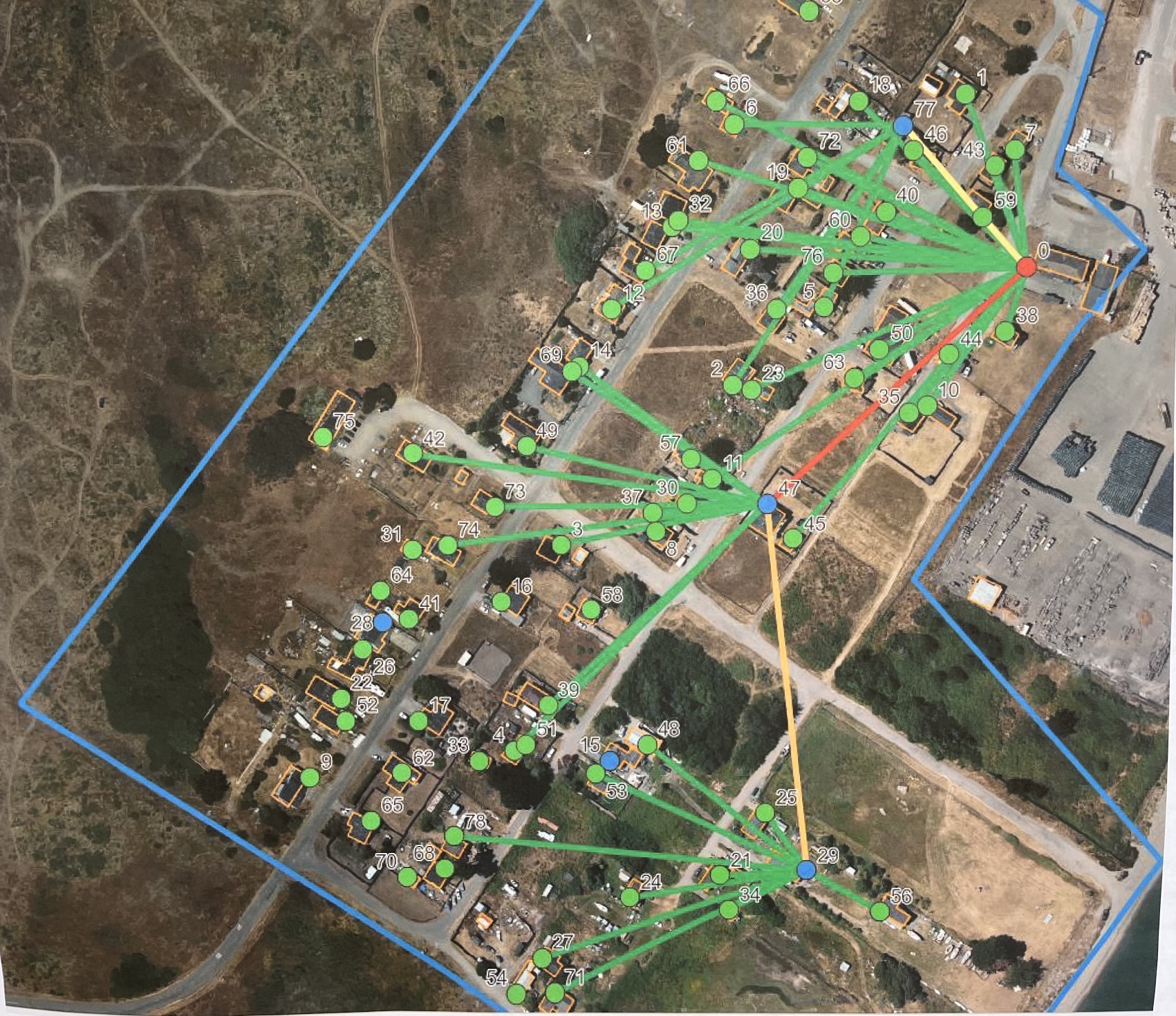
The Samoa Fire District’s Fairhaven station was selected as the base of operations because of its proximity to the homes in Fairhaven. From the fire station the network signal is sent out to five antenna nodes installed on the roofs of houses scattered throughout the community, providing service to the 78 homes in Fairhaven.
One of the biggest challenges, Odion said, was figuring out where to install the nodes. Because Fairhaven is located in the coastal zone, permitting for new infrastructure can be a very complicated process, sometimes taking years to allow for new infrastructure. Because this project needed to be completed within the allotted time frame for the CDE challenge, Edehomon said the company decided to work with homeowners to install the nodes on their houses, rather than installing new poles in the ground. This allowed the company to avoid the lengthy permitting process. Not too surprisingly, the homeowners were amenable to the idea. Who wouldn’t be, if it would get you superfast internet for free?
At this point, you might be feeling pretty jealous of the residents of Fairhaven. Internet service is known to be pretty unreliable in many parts of Humboldt and you’re probably wondering, where the heck is my superfast internet that operates off the grid?
Map showing the service area in Fairhaven. The red dot is the fire station and the blue dots represent the antenna nodes
Well, not to worry. Edehomon has big plans to expand service throughout Humboldt County in the coming months and years. The company is already in the process of expanding its infrastructure to Samoa, which should come online by next month, Edehomon said. After that, the service can expand to Manila, then Eureka, Arcata, McKinleyville and beyond. Edehomon said the Dalet Access also plans to offer service to all the local Tribal Nations.
As Dalet Access Labs expands its infrastructure to more areas, Edehomon said, those using its internet service will also have access to open roaming. This means that your high-speed internet connection will travel with you, similarly to cell phone service, and you can use your network on your devices anywhere that has the infrastructure in place. No longer would you need to buy a cup of coffee to use the WiFi at a cafe.
Of course, the service will not be free for everyone. Fairhaven is receiving free service as a part of the CDE challenge, which will be over at the end of August. But Edehomon said that the high-speed service is very affordable and people can expect to pay $80 monthly for the same speed Suddenlink would charge $120 for. For the community of Fairhaven, Edehomon said that CDE is planning to subsidize the cost of service, so that it can continue to be affordable for Fairhaven residents after the challenge is over.
As far as the CDE challenge goes, the winner will be announced at the end of this month and Edehomon feels very confident that this project – which far exceeded the minimum criteria – will win. Edehomon said that his company didn’t just enter this competition to win $1 million, but also to help bridge the digital divide and ensure that rural and underserved communities have access to the technology they need to thrive in the modern world.
“A country like us, as wealthy as we are, the state of our infrastructure is very poor,” Edehomon told the Outpost. “So when you go into communities like Fairhaven, mostly underserved communities all over this country – they are always the last to get any good technology. So for us, we’re doing it the other way around. We prefer the bottom up approach. Why don’t you take this good technology to those that need it most?”
Photos of the Six Rivers Lightning Complex from Inciweb.
Approximately 703 residences and 100 commercial buildings in Humboldt County are currently threatened by the Six Rivers Lightning Complex — a group of six lightning fires covering 10,781 acres to the north and south of Highway 299 near Willow Creek.
Amanda Munsey, spokesperson for the fire’s incident management team (Incident Management Team 11), told the Outpost this afternoon that the fire remains 0 percent contained. However, firefighters anticipate some level of containment in the coming days.
“[Firefighters] are optimistic that they should get containment on the map soon,” Munsey said.
A map of the Six Rivers Lightning Complex. | Inciweb
Incident Management Team 11, comprised of the U.S. Forest Service and Calfire, stated in its daily fire update that the complex is actively threatening communities along the Trinity River.
“Primary areas of focus are the communities along the 299 corridor, Waterman Ridge, Friday Ridge Road, and Ammon Ridge,” Incident Management Team 11 stated. “Evacuations continue around Willow Creek, Friday Ridge, Salyer and Trinity Village. Additional fire growth could impact communities and residences along Route 1.”
The growth of the Bremer Fire north of Willow Creek.
Approximately 1,245 firefighters are currently assigned to the complex, and are carrying out individual strategies to contain each of the six fires.
On the Bremer Fire, burning directly north of Willow Creek and east of the Trinity River, firefighters are working to develop control lines and protect a threatened cell tower that provides communication services to the Willow Creek area.
Firefighters forecast that winds will push the Bremer Fire — and the Waterman fire burning northeast of Willow Creek — toward residences in Salyer Heights, Willow Creek and Trinity Center.
Firefighters anticipate that the largest fire growth will occur to the west and south of the Oak, Ammon and Charlie Fires burning well south of Highway 299 and west of the Trinity River.
Growth of the Campbell Fire burning southwest of Willow creek.
On the Campbell and Ammon Fires, firefighters are working to complete dozer lines to halt the anticipated growth. Fire retardant has also been dropped in the Ammon Ridge are in an effort to keep the fire north of Ammon Ridge, south of Waterman Road, east of the FS-1 road and west of the Shasta-Trinity National Forest boundary.
“Most of the smoke production has been coming from [the Ammon Fire],” the Incident Management Team stated. “Areas south of this fire are hot and dry. Yesterday firefighters saw increased fire activity when good clean air from southwest winds presented. This area is not expected to be as active today.”
Growth of the Ammon Fire burning south of Willow Creek, parallel to Humboldt Bay.
Warmer, drier weather and up-canyon winds are expected to create more hazardous fire conditions in the Quimby Creek area. Fire conditions in the fire’s northern zone, meanwhile, are expected to be less severe due to higher humidity levels.
“Overnight, hard work by firefighters, in combination with high humidity, kept fire growth to a minimum,” the Incident Management Team stated. “Higher humidity is expected today on the northern end of the fire and there is not a lot of anticipated movement today.”
Today’s smoke conditions. | U.S. Air Quality Index
According to the U.S. Air Quality Index, today’s air quality is “hazardous” to “very unhealthy” in the Burnt Ranch and Hyampom areas. Conditions are also “unhealthy” in Willow Creek. The air quality in Hoopa and Coastal Humboldt remains “good.”
An evacuation shelter has been set up at Trinity Valley Elementary School at 730 Highway 96 in Willow Creek. A shelter for evacuated animals is also available at the Hoopa Rodeo Grounds at 1767 Pine Creek Road in Hoopa.
No structures are reported to have been destroyed in Humboldt County at this time. The number of threatened and destroyed structures in Trinity County is unknown.
The Six Rivers Lightning Complex at sunset. | Inciweb
Press release from the Humboldt County Sheriff’s Office:
On August 8, 2022, at about 10:14 a.m., Humboldt County Sheriff’s deputies were dispatched to the 3800 block of Little Fairfield Street, in the county’s jurisdiction of Eureka, for the report of an assault.
Deputies arrived in the area and located a 74-year-old male victim with serious injuries. The victim was transported to a local hospital for treatment. While investigating this incident, deputies received information regarding three additional assaults involving a suspect with a similar description occurring between the incident location and the 600 block of West Harris Street. During one of these assaults, the suspect reportedly physically attacked a patron of a nearby business, then fled with the victim’s groceries. All four of these assaults are believed to have been unprovoked instances of violence.
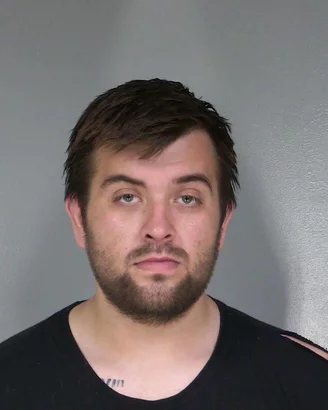
Deputies searched the surrounding areas and located the suspect, 24-year-old Dylan James Roberts, walking in the area of Burrill and Hiller Streets. Roberts was taken into custody without incident.
Roberts was booked into the Humboldt County Correctional Facility on charges of robbery (PC 211), assault (PC 240) and battery (PC 242).
Later that day, while in custody at the Correctional Facility, Roberts physically attacked a cell mate and vandalized a cell. He was booked on additional charges of assault (PC 240), battery (PC 242) and damage to a jail (PC 4600).
This case is still under investigation and additional charges may be requested as this investigation progresses. If you witnessed or were a victim of any of these assaults, please contact the Humboldt County Sheriff’s Office at (707) 445-7251, reference case number 202204073.