

Thirty-Year-Old Medi-Cal Income Limit Leaves Some Seniors Without Needed Care
Ana B. Ibarra / Thursday, June 2, 2022 @ 7:09 a.m. / Sacramento
California living is expensive. So imagine having to get by on $600 a month. That’s essentially what some seniors and people with disabilities have to do in order to access Medi-Cal, the state’s health insurance program for low-income residents.
Individuals with significant medical expenses — but whose income is too high to qualify for free Medi-Cal — may still access the program if they pay some of the costs.
That share of cost works like a monthly deductible; people are allowed to keep $600 for personal use and must spend the rest of their income on health care expenses before their Medi-Cal coverage kicks in.“If you make $1,600 a month, $1,000 has to go toward paying for your care,” said Tiffany Huyenh-Cho, a staff attorney at Justice in Aging, an organization that is urging state lawmakers to update the income rule. Because people using this type of Medi-Cal usually have costly care, for some it’s worth paying, but most can’t afford it, she said.
In January of this year, the latest month for which state data is available, there were about 81,000 people who were enrolled in Medi-Cal but couldn’t use it because they did not meet their share of the cost. The majority are over 65 or have a disability, data show.
Take Maxine Wells of San Diego — she is 91, and with the help of her son, Keith Wells, she recently applied for Medi-Cal. Her Social Security monthly income of $2,000 puts her over the limit for free coverage. Keith is still waiting to get official word from the state on his mom’s eligibility status, but isn’t sure they’ll be able to meet her share of the cost.
The dollar amount that people get to keep, $600 for an individual and $934 for a couple, hasn’t changed since 1989, when the minimum wage was $4.25 an hour.
“It was shocking to hear it hasn’t been updated since then,” Keith Wells said.
Older adults like Wells also qualify for Medicare, the federal health insurance program for seniors and people with disabilities. But Medicare doesn’t cover all her needs or at-home care. Wells, a former beauty shop owner, suffers the aftermath of a heart attack, which left her heart muscle damaged. She has chronic obstructive pulmonary disease (COPD), dementia and anxiety. Medi-Cal would supplement her Medicare coverage. About 1.4 million Californians are enrolled in both programs.
California has put forth sweeping and first-in-the-nation policies to expand health insurance coverage to more people. It has one of the lowest uninsured rates in the country — about 6% of California residents don’t have health insurance. Still, pockets of people continue to struggle to afford the coverage and care they need, meaning they go without it.
Aging advocates say older adults tend to live on fixed incomes but are sometimes subject to rules that haven’t kept up with the current cost of living.
Aging and health advocates are now asking legislators and the governor’s office to allow Medi-Cal recipients who need to pay a share of cost to keep more of their income. Assembly Bill 1900 by Assemblymember Dr. Joaquin Arambula, a Fresno Democrat, proposes to raise the monthly limit from $600 for an individual, which is about 55% of the federal poverty level, to $1,562, or 138% of the federal poverty level.
This adjustment would require federal approval, according to the Department of Health Care Services, which oversees the Medi-Cal program.
Arambula’s bill made it out of the Assembly last week and is now before the Senate. “This is simply a matter of fairness for Californians who are struggling to make ends meet and need access to health care,” Arambula said about his bill in the Assembly Health Committee hearing earlier this year.
Linda Nguy, a policy advocate with the Western Center on Law and Poverty, said it would be difficult to pass the bill if funding for it isn’t included in this year’s state budget. Funding for this proposal was not included in the governor’s May revision of the budget.
However, the version of the budget released Wednesday by the Legislature’s Democratic leaders allocates $31 million to reduce the share of cost for this population. The Legislature and Gov. Gavin Newsom must now come together and hammer out a final budget.
The Legislative Analyst’s Office has estimated that this proposal would cost anywhere between $53 million and $151 million, of which half would be paid for by the state and the other half through federal funds. Without that funding, Arambula’s bill would likely get stuck in the Senate’s fiscal committee, Nguy said.
At least nine other states and the District of Columbia allow people who pay a share of cost for Medi-Cal (Medicaid in other states) to keep a higher amount for personal use than California does, according to the Kaiser Family Foundation.
“If you make $1,600 a month, $1,000 has to go toward paying for your care.”
— Tiffany Huyenh-Cho, attorney at Justice in Aging
“It’s so unfair,” said Naty Chavira, a teacher in the Los Angeles area whose parents, Jose and Alicia Chavira, are struggling to afford expensive medication and in-home assistance. “Do you know how hard my dad worked? He paid his taxes, he’s a good citizen, and here he is today in survival mode. I know that his finances are taking a toll on his health.”
Jose, 77, a former welder, has been struggling with a number of health issues and symptoms — diabetes, depression and vertigo, among others. He has spent most of his retirement caring for his wife, Alicia, 78, a former housewife who raised six kids and was diagnosed with Alzheimer’s disease a few years back. But now his health is deteriorating too.Naty would like her parents to get some in-home assistance and for her dad to get the hearing aids he needs, but Medicare won’t pay for those expenses, so she helped them apply for Medi-Cal. However, in order to get that coverage, the couple would get to keep only $934 of their $2,600 monthly Social Security income.
When you take $500 away for bills, they’d get to keep $400 for their food and medication. “It’s insane,” Chavira said.
###
CalMatters COVID and health care coverage is supported by grants from the Blue Shield of California Foundation, the California Health Care Foundation and the California Wellness Foundation.
CalMatters.org is a nonprofit, nonpartisan media venture explaining California policies and politics.
BOOKED
Today: 7 felonies, 6 misdemeanors, 0 infractions
JUDGED
Humboldt County Superior Court Calendar: Today
CHP REPORTS
Us199 / Middle Fork Gasquet Rd (HM office): Traffic Hazard
Old Arcata Rd / Halvorsen Cr Rd (HM office): Animal Hazard
2550 Mm162 W Men 25.50 (HM office): Trfc Collision-No Inj
ELSEWHERE
RHBB: ‘Check In With Your People’: Humboldt’s Suicide Rate More Than Twice the State Average
RHBB: HAF+WRCF Opens Fall Grant Round for Artists, Seniors and Holiday Programs
California May Give Fast Food Workers Power to Bargain With Their Industry
Alejandro Lazo and Jeanne Kuang / Thursday, June 2, 2022 @ 7 a.m. / Sacramento
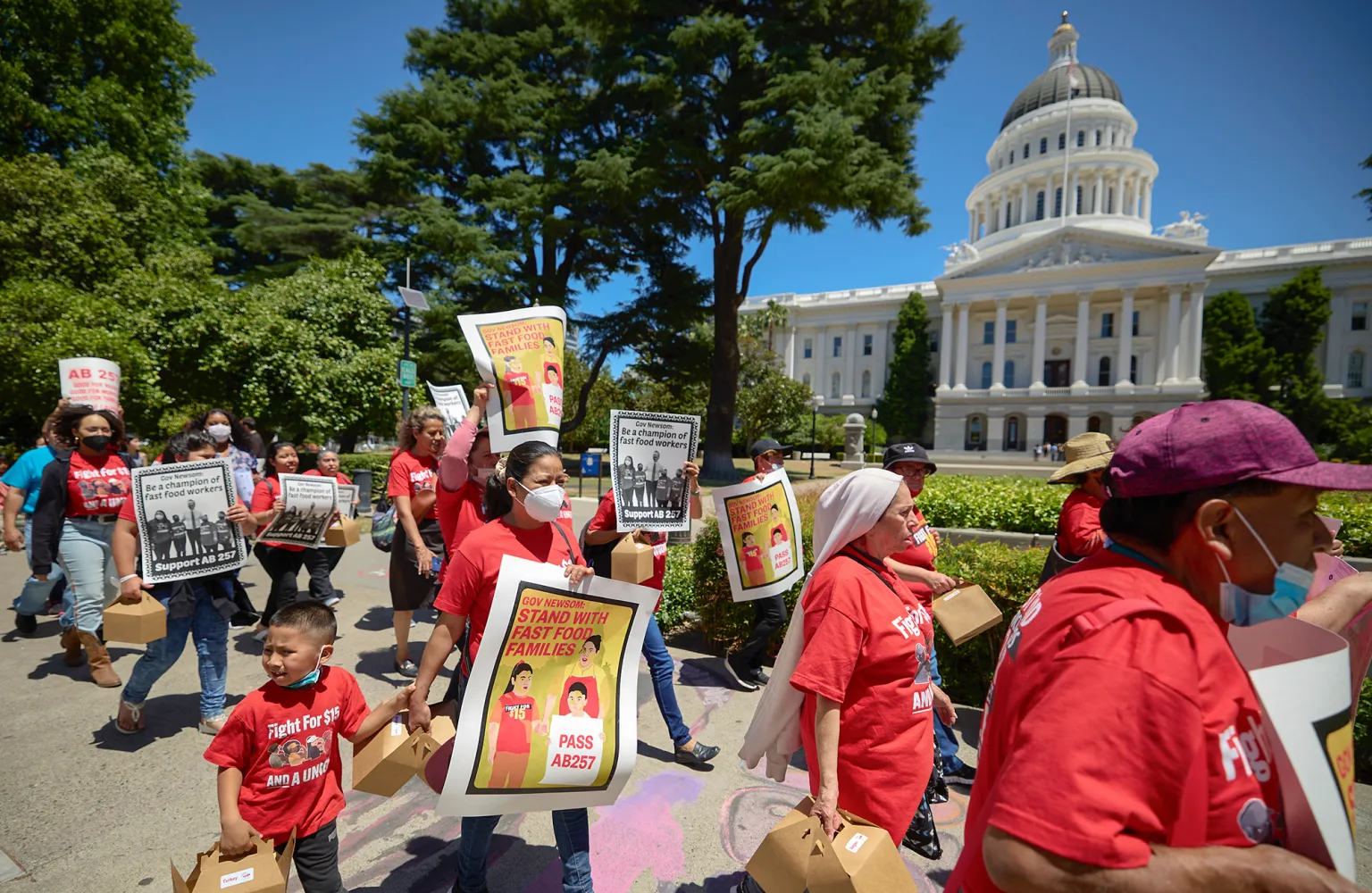
Fast-food workers and other SEIU members marched to the Capitol to deliver postcards and petitions in support of Assembly Bill 257 to the governor’s office on May 31, 2022. Photo by Fred Greaves for CalMatters.
For three days in April, a striking group of Jack in the Box cashiers and cooks shut down their Sacramento County store. They were calling for better schedules, more staff and for management to repair a broken ice maker.
They also called for a transformation of their industry.
Donning red T-shirts from the decade-old “Fight for $15” minimum wage campaign, the workers chanted for the passage of Assembly Bill 257.
AB 257 threatens to upend the fast food franchise business model in California. It would create a state-run council to negotiate wages, hours and working conditions for an industry that, according to federal data, employs more than 700,000 people in the state.
Under the bill, employers would be responsible for the regulations, but so would the fast food corporations that partner with franchise owners.
The measure is set to be heard in a state Senate committee next week, when organizers plan a series of coordinated strikes at fast food shops in San Diego, Los Angeles, Oakland and Sacramento.
“AB 257 will force them to change — will hold them accountable,” said Adonida Briseño, 26, a Jack in the Box worker who took part in the April strike.
A potential foothold
The Service Employees International Union’s push to pass AB 257 is one of the most significant organizing efforts in its “Fight for $15” campaign, a chance for a foothold into a low-wage industry where unionization has long been elusive.
California has been a proving ground for the union’s efforts to advocate for low-wage workers. Los Angeles adopted a $15 minimum wage in 2015 and the state followed suit in 2016.
But franchisors and franchisees say AB 257 is unnecessary and burdensome and would raise prices for working-class customers.
“Inflation is top of mind for everybody,” said Jeff Hanscom, spokesman of the International Franchise Association, which represents corporations and franchisees. “It just doesn’t make sense.”
Gene Erdman, who works at a company that owns 235 Pizza Hut franchise locations in southern California, said the council would increase costs and squeeze businesses.
“It’s not the relationship with the franchisor,” said Erdman. “What makes it hard to make money is what we’re dealing with from a regulation standpoint in California.”
After narrowly passing the state Assembly in January, the bill is set to receive its first Senate hearing June 8.
Solution or overkill
Sen. Dave Cortese, a San Jose Democrat who chairs the Senate committee hearing the bill, said he supports rooting out wage theft, one of the bill’s aims, but he worries that the bill’s creation of a broad, regulation-setting body would be like “using a meat cleaver instead of a scalpel” on the problem.
“We just have to be careful about regimenting wages from an independent council,” he said. “In tough times, you have to be able to make course corrections.”
Sen. Josh Newman, a Brea Democrat who is on the fence, said it would be “no small thing to create a new body to oversee a whole industry.”
While the pandemic decimated indoor dining, large corporate restaurant chains fared better than neighborhood, locally-owned locales because of their size and cash holdings. Fast food restaurants, in particular, had more experience with drive-throughs, carryout and delivery options.
California has the most fast food workers in the country. In April more than 725,000 workers were employed in California’s limited-service food industry, which includes fast food workers as well as those who work in fast casual establishments, pizzerias and cafes. That’s higher than before the pandemic and 11% more than the same month last year.
Fast food counter workers in California made $15.61 an hour and cooks $15.35 on average, according to federal data from last May.
Few fast food stores have unionized. Organizers blame that on high employee turnover and the thousands of individual franchise owners they’d have to bargain with.
Drop in a bucket
There has been a trickle of successful Starbucks union elections this year, but those stores are owned by one corporate employer rather than franchisees. They represent a “drop in the bucket” of fast food locations, said Nelson Lichtenstein, a labor historian at the University of California, Santa Barbara.
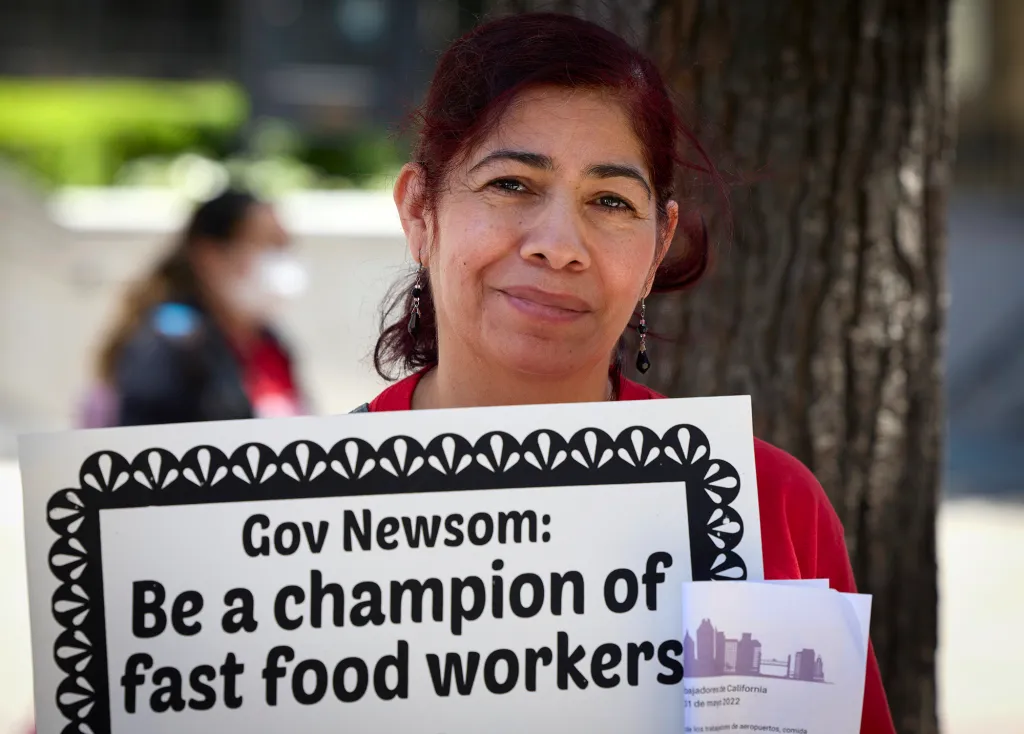
Leticia Reyes, a Jack In The Box employee, joined other fast-food workers and SEIU members to deliver postcards and petitions in support of AB257 to the Governor’s Office on May 31, 2022. Photo by Fred Greaves for CalMatters
Leticia Reyes, 55, a cook at the Sacramento County Jack in the Box, said workers like her aren’t benefiting from the industry’s growth. She worked through the pandemic, despite her fears about getting sick, because her husband was laid off from his hotel chef job.
“They’re making millions and millions of dollars off of us, the workers,” Reyes said. “And we aren’t very safe.”
The restaurant frequently was busy and understaffed and the drive-through was packed.
One day last June, the air conditioner was broken and temperatures soared to 109 degrees, according to a complaint Reyes and six other employees filed with California’s Division of Occupational Safety.
“The manager told us that it wasn’t hot, we were going through menopause,” Reyes said. “We had to bring fans from our homes to withstand the heat.”
Worker complaints
The workers went on strike for one day, prompting the manager to fix the air conditioning, Reyes said.
A few days later, on Aug. 3, the workers filed a wage theft complaint with the state labor commissioner, alleging owner Anil Yadav had been cheating workers out of pay and denying them breaks, including during 16-hour shifts.
“You have the potential to transform the industry from a really low-wage sector — with little ability to change — to become a model for other sectors.”
— David Madland at the Center for American Progress
Yadav did not return phone calls seeking comment. An attorney for Yadav, Kevin Kevorkian, declined to comment.
Workers went on strike again in April, after filing a second CalOSHA complaint citing moldy machines, a hole in the ceiling that let rain in and faulty drive-thru speakers that they said led to a customer pulling a gun on a cashier.
That complaint also said workers, including a pregnant employee, had to climb onto a table to scoop ice for customers from a broken dispenser. Copies of both CalOSHA complaints and the wage theft complaint were provided to CalMatters by SEIU.
Fast food workers in California have gone on strike 2,560 times since the start of the pandemic, the SEIU said. The union also has helped workers file more than 330 health, workplace and wage complaints in California.
CalOSHA issued 38 COVID-related violations at fast food establishments, affecting a tiny fraction of the industry, the California Restaurant Association pointed out.
California has some of the nation’s strictest worker protection laws, the association contends, so the state should instead fund its backlogged wage theft and workplace violation investigators.
The franchise system
“We believe the system is set up to be robust and protective,” said Matt Sutton, an association spokesperson. “There’s a pathway for people, and they use it all the time.”
But franchise systems leave business owners with little room for overhead, leading them to cut corners and pay low wages, critics say.
“The corporations — the McDonalds, the Jack in the Boxes, the Burger Kings — by design have created this system as a means to diminish the power of working people,” said David Huerta, president of the California SEIU State Council. “We’re trying to untangle that and create an environment where workers have a direct voice with their employers.”
Fast food corporations have long rejected legal responsibility for how franchisees treat workers. Under former President Donald Trump, the Department of Labor curbed instances in which corporations counted as a “joint employer” of restaurant workers, though under President Joe Biden the same agency rolled back that regulation.
“It’s going to make it very difficult for us to keep staffing our restaurants.”
— Harshraj Ghai, owner of 200 restaurants
The SEIU and its allies in the state Legislature want California to establish joint responsibility, holding franchisors liable for labor law violations at their franchisees’ locations.
That has the restaurant association and fast food store owners worried that corporate franchisors will pull back opportunities in a field they say has lower barriers for entry small and minority business owners than other enterprises.
A joint council
The bill would create an 11-member council composed of business, labor and state representatives. It would set across-the-board standards for fast food chains with 30 or more locations, franchised or not.
“This is blanket legislation for the entire state,” said Harshraj Ghai, whose company, Ghai Management Services, is one of the state’s largest franchise owners with about 200 Burger Kings, Taco Bells and Popeyes stores employing more than 4,000. “The rules are going to be made for markets like Fresno and San Francisco — all the same.”
Ghai said his father started working in Burger Kings when his family immigrated from India in the 1990s and operated his first franchise in 1999.
He fears a statewide council’s rules would raise costs when inflation already is squeezing his profit margins. Most of his locations are in California.
“It’s going to make it very difficult for us to keep staffing our restaurants,” he said.
One of his Sacramento-area Burger King locations was the site of a rally for AB 257 in May. There workers complained of a broken AC. He said the equipment has been replaced and the store this week passed a CalOSHA inspection after employees filed a complaint. That labor enforcement system, he said, is the right way to resolve worker complaints.
Sectoral bargaining
Similar to the fast food push, nursing home workers, who also are supported by SEIU, have asked state lawmakers to create a board overseeing their industry.
This so-called “sectoral bargaining” approach is common in Europe, including Austria and France. It allows workers to bargain with employers across an industry rather than at each shop or business.
While some local and state governments in the U.S. have enacted industry-specific boards to dictate working conditions, SEIU’s fast food council push is more ambitious, said David Madland, a senior fellow at the Center for American Progress.
“You have the potential to transform the industry from a really low-wage sector — with little ability to change — to become a model for other sectors,” Madland said.
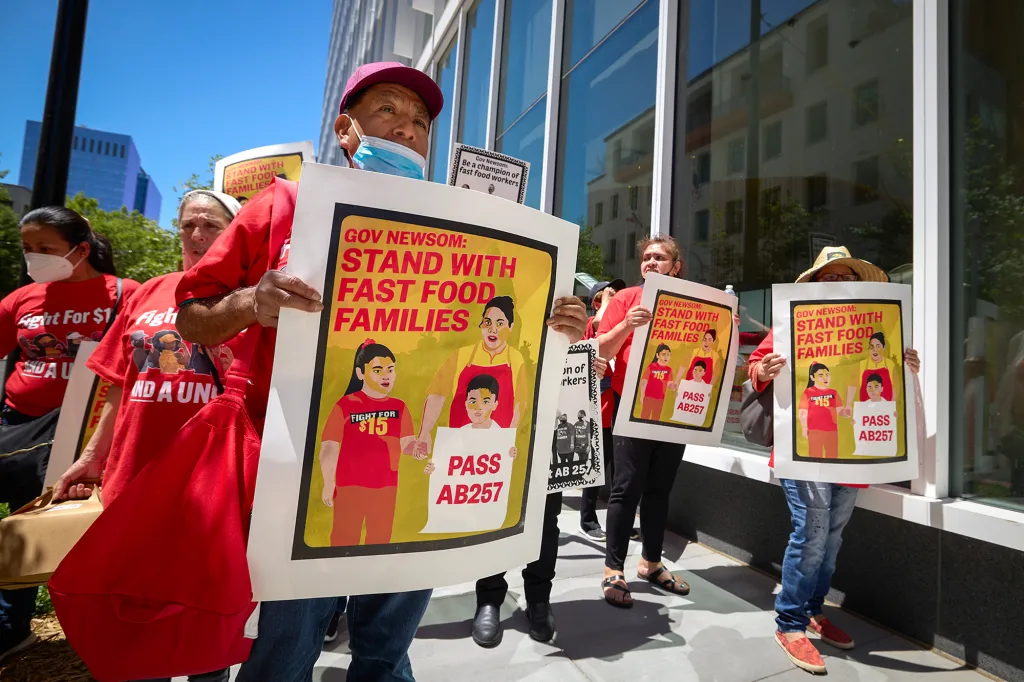
Jose Bautista marched with fast-food workers and other SEIU members in support of AB257 on May 31, 2022. Photo by Fred Greaves for CalMatters.
Even so, the idea isn’t new for California. For most of the 20th century, the state issued industry-specific wage orders through the governor-appointed Industrial Welfare Commission to cover marginalized workers.
In sectors as wide-ranging as film, canning, and sheep-herding the commission set standards such as the lengths of breaks, the provision of uniforms and the temperature of workplaces. It even had the power to dictate the state minimum wage.
Today 17 industries still operate under its orders though the board itself is gone. It was defunded in 2004 at labor’s urging after years of political controversy, including loosened regulations.
As for the Sacramento County Jack in the Box, Reyes says the strikes have produced some results. Managers have fixed the broken ice machine and the air conditioning unit. And they have paid her some of the wages she said they owed her.
But forming a union to ensure long-term change is impossible at her store, Reyes said, because many workers are scared and that’s why the statewide bill is necessary.
###
This article is part of the California Divide project, a collaboration among newsrooms examining income inequality and economic survival in California. CalMatters.org is a nonprofit, nonpartisan media venture explaining California policies and politics.
OBITUARY: Joy I. Houseworth, 1940-2022
LoCO Staff / Thursday, June 2, 2022 @ 6:56 a.m. / Obits
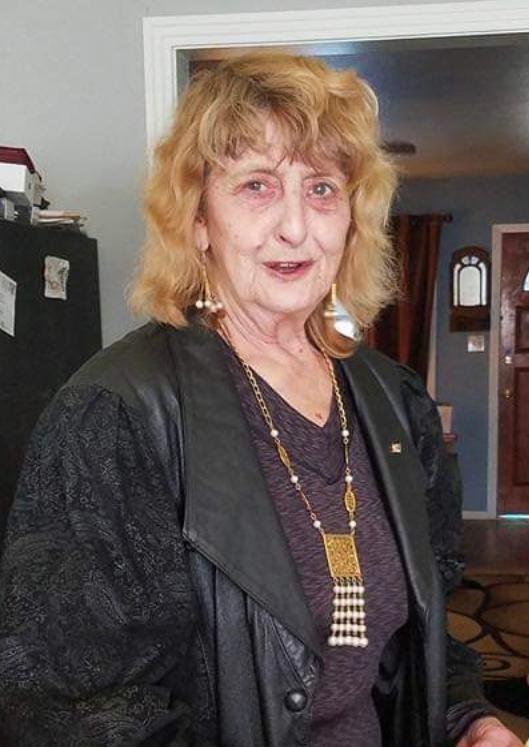
On April 5, 2022,
we lost our beloved Joy due to heart complications. Joy was born to
Woody and Emma Sherrill on December 31, 1940, in Lebanon, Oregon. As
a child, her family moved to several different cities.
Joy married Norm Tyler in Klamath Falls, Oregon on October 1, 1957. After living in Klamath Falls for a short period of time, they relocated to Humboldt County, living in Redcrest, Scotia and Rio Dell. Together, Joy and Norm started a family, having three boys and one daughter, Rick, Barbara, Kenneth and Norman. Joy was a very talented person at art and making costumes for her children for the Scotia Kawana’s Day Parades. Joy and Norm divorced in the late ‘70s. Joy continued to raise her children on her own. She was a very hardworking woman and loving woman. She worked for Crown Redwood until they closed, Simpson Timber and Eel River Sawmills.
In her free time, Joy enjoyed dancing, playing pool and being with family and her beloved friends. In the early ‘80s, Joy met the love of her life, William Houseworth. Their passion together was to be outdoors. They enjoyed ocean fishing, abalone diving and walking the beaches collecting agates. Joy and Bill were married at the Heart of Reno wedding chapel in Reno, Nevada on June 16th, 1986. Together they bought their little piece of paradise in Holmes Flat, where Bill and Joy lived out the duration of their lives together.
After the passing of Joy’s husband, Joy enjoyed spending time with her family. She was always up for a road trip to Petrolia to see her brother Gary and to wonder the beaches. Joy enjoyed having visits with her friends, drinking a nice cold beer, enjoying a good family gathering, camping up at Ruth and gambling at the casino.
Joy is preceded in death by her baby son Bobby Ray, husband William Houseworth, parents Woody and Emma Sherrill, Sister Geane Coleman, Brother Larry Sherrill and sister Louise Pulver. Joy is survived by her brother Gary Sherrill (Clara), her children; son Rick Tyler, daughter Barb Bettis (Rod), son Ken Tyler (Sandy), son Norm Tyler (Shelly), grandchildren; Emma and Christopher Tyler, Rodney Bettis (Holly), Bridget Vaile (Mike), Kalyn Tyler, Kendra Tyler, Erin Tyler and Trent Tyler and her five great-grandchildren; Kelsi Day, Austin Baker, Brice Bettis, Makayla Johnson-Vaile and Chase Bettis.
Joy’s family was the pride and joy of her life. The legacy of Joy’s kind spirit, passion for outdoors, love of gambling and her zest of life will live on through them. We will always carry your memory in our hearts.
###
The obituary above was submitted by Joy Houseworth’s loved ones. The Lost Coast Outpost runs obituaries of Humboldt County residents at no charge. See guidelines here. Email news@lostcoastoutpost.com.
OBITUARY: Norma K. Coen, 1932-2022
LoCO Staff / Thursday, June 2, 2022 @ 6:56 a.m. / Obits

Norma K. (Jennings) Coen was born on March 22, 1932, in Eureka and passed from her earthly life on April 22, 2022, while being tenderly cared for at Frye’s Care Home. Her daughter Pam, granddaughters Paige and Abi and great-grandson Louis were able to be there for her passing. They were able to play the girls (Claire included) and the Redwood Coast Children’s Chorus singing “Swing Low. Sweet Chariot.”
Norma’s parents were Edward (Ted) E. Jennings and Nevada (Vada) California (Myers) Jennings. Ted was a lineman for Pacific Telephone and Vada worked at Norman’s Cleaners in Henderson Center. Norma spent much of her childhood in Myers Flat where she was the youngest of the cousins and always felt she had to be tougher and meaner than all of them just to keep up!
Norma married Captain (USAF) Charles C. Coen on November 6, 1949. She went on to be an Officer’s wife for the next 20 years. She moved her family, Rick, Deryl, and Pam as Chuck was stationed in California, Texas, Arizona, Maine, Puerto Rico, and Michigan. Through all this moving Norma was determined that her children would grow up knowing their grandparents. Before each move she brought the kids to Myers Flat to spend time with extended family. Norma also returned with her kids after the 1964 flood destroyed Myers Flat. She remembered that her dad Ted said: “I knew you’d come McGee.” Chuck retired in 1967 and they settled in Fortuna.
The moving was not over as Chuck launched a second career as a building official. They settled in Nevada City until they desire to be close to their grandkids led them to move to Weaverville, they bought a sign and hung it in their house stating “If I had known grandchildren were this much fun, I would have had them first. Their grandchildren were able to spend many happy hours, swimming, eating strawberry waffles and being loved on by Papa and Grandma. Both Norma and Chuck were active in Weaverville’s Golden Age Center. Norma baked and sold cookies to help pay off the Center’s mortgage. For many years Norma found friendship, a sense of purpose, hard work and downright fun at the Center.
Due to health conditions, Norma moved back to Eureka in 2018. Her return to Humboldt County brought back many memories for Norma. She loved going to the beach, believing that all her worries would fade away as she sat by the ocean listening to the waves. Norma also enjoyed sight seeing around Eureka and admiring the different architectural styles.
Norma is remembered as being spunky, sweet, fiercely loyal to family and friends, hilariously funny, super-outgoing, hard-working, and generous. She was also known as a baby and dog lover. One of her friends once wished that after he died, he could come back as one of Norma’s dogs! Norma is survived by her daughter Pam, grandchildren; Michael, Sasha, Claire, Paige and Abigail and great grandchildren; Piper, Harper, Kaine, Louis and Elijah. She was preceded in death by her parents Ted and Vada, husband Chuck and her sons Rick and Deryl.
The family extends heartfelt thanks to everyone at the Golden Age Center, all of the staff at Frye’s Care Home, Hospice of Humboldt and Ayres Family Cremation. In honor of Norma’s wishes there will not be a memorial service. A family graveside service will be planned for a later date.
###
The obituary above was submitted by Norma Coen’s loved ones. The Lost Coast Outpost runs obituaries of Humboldt County residents at no charge. See guidelines here. Email news@lostcoastoutpost.com.
OBITUARY: Rodney Lee Bones, 1956-2022
LoCO Staff / Thursday, June 2, 2022 @ 6:56 a.m. / Obits

Rodney Lee Bones passed away on May 15, 2022. Rodney was born in Scotia to Fred and Eilene Bones on June 23, 1956. Shortly after he was born his family moved to Rawlins, Wyoming. There Rodney spent time rock hunting with his family. When he was 10 years old they moved back to Fortuna. Rodney graduated from Fortuna High School in 1974.
After graduating from high school he began his extensive logging career working for his uncle at Don Nolan’s Trucking, where he got his handle “Hot Rod.” He then drove the self loader truck for Pacific Lumber Company. When Pacific Lumber company shut down logging operations he drove truck for various local logging companies in Humboldt County. Rodney finished his logging career driving for Sierra Pacific Industries out of Eureka.
Rodney loved hunting and fishing. During hunting season he was gone every weekend. He would be out with his family and friends. He made all the hunting trips memorable and enjoyed the weekends. When he was not hunting or fishing he was instructing hunter safety courses.
Rodney was an avid trapshooter. He was a member of both the Eel River Gun Club and the Humboldt Trap and Skeet Club. He shot competitive trap with the PITA for many years. He traveled up and down California and into Oregon to shoot competitively. Sundays you could find him at the gun club, enjoying a morning of shooting and visiting with friends. Trapshooting was a family sport, he was surrounded by his father, children, nieces and many friends at the gun club.
Rodney was preceded in death by his parents, Fred and Eilene Bones.
He is survived by his daughter Julene Bones, his grandchildren Josh Robinson, Teasha Locke and her husband Adam, Timothy Jones and his wife Brandy, and Makayla Jones. He is survived by his son Scott Bones and wife Eveliz, and his granddaughter Annika. He is survived by his daughter Lindsy Bones and his granddaughters Emilee and Cameron Garfield. He also has many great grandchildren, cousins, and friends. Rodney was very loved by all.
A celebration of life will be held on June 12 at 2 p.m. at the Eel River Gun Club in Fortuna. In lieu of flowers, please donate on his behalf to your favorite charity.
###
The obituary above was submitted by Rodney Bones’ loved ones. The Lost Coast Outpost runs obituaries of Humboldt County residents at no charge. See guidelines here. Email news@lostcoastoutpost.com.
OBITUARY: Thomas Nathan Payton, 1951-2022
LoCO Staff / Thursday, June 2, 2022 @ 6:56 a.m. / Obits
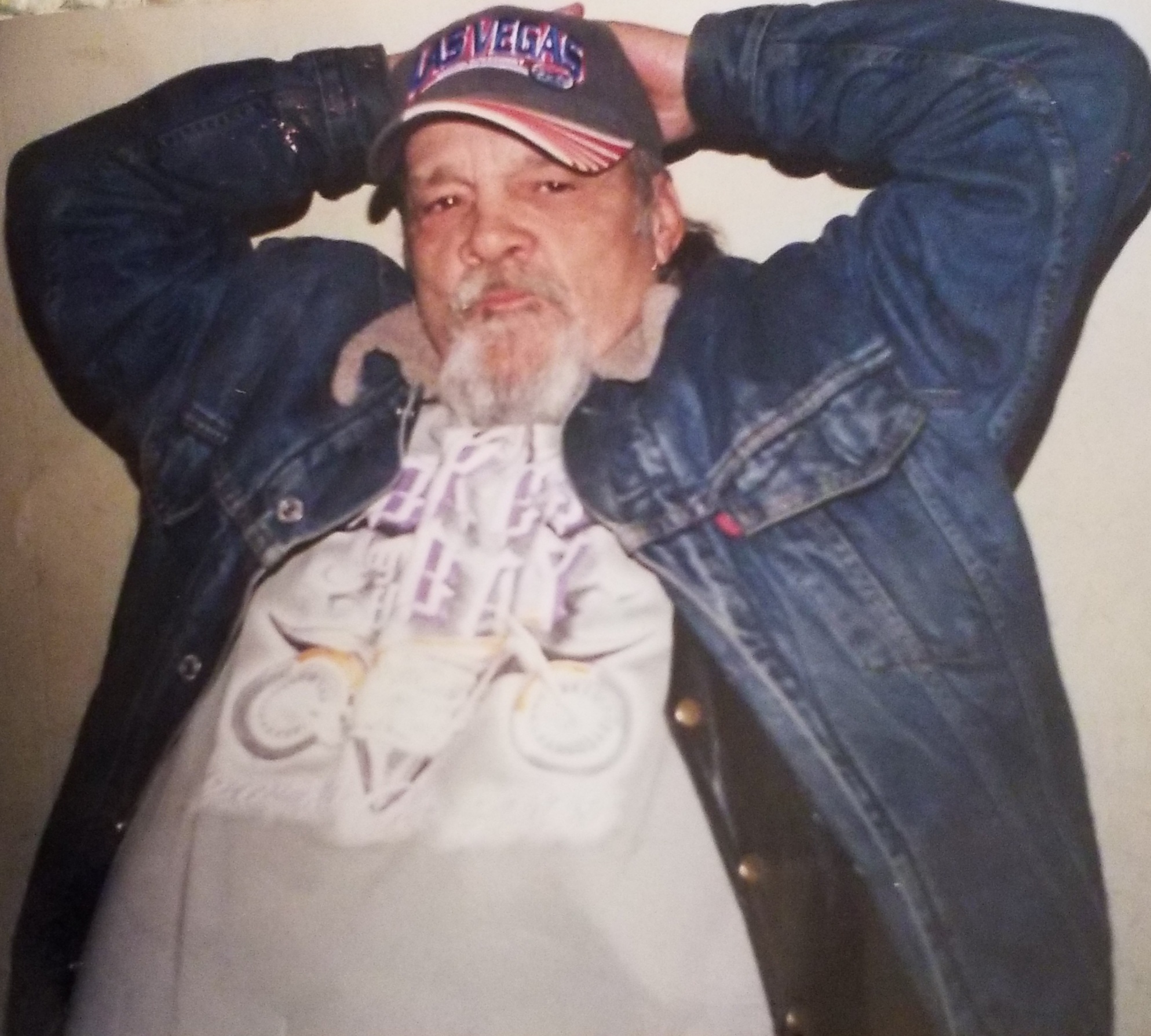
Thomas Nathan Payton (Tommy), age 71, passed away peacefully at St. Joseph Hospital in Eureka on May 9, 2022, with his partner, Beverly Jameson, by his side.
Tom was born in Massachusetts on July 9, 1951. He spent the last 38 years of his life Living in Eureka. He was the President of a Clean and Sober Motorcycle Club (Lost Coast Survivors) for many years before retiring.
Tom was a very loving father and grandfather. His happiest moments were spent with his children and grandchildren. Tom was very proud of his family and he loved them very much.
Tom is survived by his wife of 30 years, Rosenea Bennett Payton, his sister Norma Woodward Payton, brother in-law Kenneth Werre Sr. and sister in-law Becky Payton; his children Jeremy Shannon, Tommy Payton Jr., Nathan Payton, Raymond Payton, and Enrique De loza; his grandchildren Vanessa Payton, Brittany DaPonte, Breanna Payton, Trey (Thomas Payton 3rd), Jadyn Payton, Bella Payton, Dallas Payton, Kali Payton, and Liam Payton; nephews Lee Payton, Rodney Woodward Jr. and Kenneth Werre Payton Jr.; mother-in-law Judith Rossiter; his partner Beverly Jameson, her children Terry and Angela Cox, and her grandchildren.
He is preceded in death by his mother Mary Govan, father Nathan Payton, his sister Nancy Payton, his brothers Chappy and Billy Payton, and his first wife Debbie Payton, and there daughter Brenda DaPonte. Tom has a very large extended family and will be loved and missed by so many people.
On June 12, 2022 at 1 p.m. There will be The Last Run/Memorial for Tommy Payton. The Last Run will start at Redwood Harley Davidson. Meet at 1 p.m. and ride to Berry Summit Vista Point. After a short gathering there, the memorial will be held at the Veteran’s Hall at 3 p.m. Food will be provided.
###
The obituary above was submitted by Tommy Payton’s loved ones. The Lost Coast Outpost runs obituaries of Humboldt County residents at no charge. See guidelines here. Email news@lostcoastoutpost.com.
(UPDATE) Arcata Police Seek Public’s Help in Locating At-Risk Elderly Man
LoCO Staff / Wednesday, June 1, 2022 @ 9:33 p.m. / Emergencies
UPDATE: The Arcata Police Department says that Mr. Buck has been located and reunited with his family.
###

From the Arcata Police Department:
APD is requesting assistance in locating an elderly missing adult.
Whitney Buck DOB/8-16-1930 left his residence in Arcata at about 4:00 pm to run errands in the Arcata area. Buck was last seen at a relative’s residence in McKinleyville at about 5:00 pm.
Buck is described as a white male adult, 6‘3”, 175 pounds with grey hair and dark eyes. Buck was last seen wearing a navy-blue corduroy jacket, pale yellow dress shirt, khaki pants, brown sweater, and scarf.
Buck is driving a Silver 2008 Nissan Altima with California License Plate AN226DP.
Buck can sometimes become confused when he is driving to places and will sometimes stop on the side of the road and take a nap.
A photograph of Buck is available on the Arcata Police Department Facebook Page
Anyone with information any information regarding Buck’s whereabouts is asked to contact APD at 707-822-2424.


