

Newsom Unveils ‘Completely New Strategy’ for California’s Mental Health Crisis
Jocelyn Wiener / Friday, March 4, 2022 @ 7:05 a.m. / Sacramento

Gov. Gavin Newsom, pictured on Feb. 17, 2022, unveiled a new proposal Thursday to address California’s mental health crisis. Photo by Alisha Jucevic for CalMatters.
Gov. Gavin Newsom yesterday unveiled a much anticipated proposal to address a mental health crisis increasingly visible on trash-strewn sidewalks and in cramped jail cells around California.
The proposal, known as the Community Assistance, Recovery and Empowerment (or CARE) Court, would provide a framework for courts to compel people with serious mental illnesses and substance use disorders into treatment, while also providing participants with supportive housing and wrap-around services.
“This is a completely new strategy,” Newsom said at a press conference to introduce the new plan. “And I hope that creates a space for a different conversation than we’ve had in the past.”
All 58 counties would be required to participate in the program, which is currently just a policy framework and still needs to be approved by the Legislature. Counties could face penalties for failing to provide requisite services, administration officials said.
“This is a completely new strategy. And I hope that creates a space for a different conversation than we’ve had in the past.”
— Gov. Gavin Newsom
That’s one of several details that differentiates this proposal from Laura’s Law, which also entails court-ordered treatment but allows counties to decide whether they want to participate. Newsom noted that, in one year, only 218 people were served by Laura’s Law. The Newsom administration estimates that the CARE Court program could serve between 7,000 and 12,000 Californians.
Administration officials say the new proposal is different, in part, because of the resources it comes with. It builds on a $12 billion allocation to address homelessness last year, as well as another $2 billion proposed this year, they said.
People could come into the program through short-term involuntary hospital stays (also known as “5150s,” through the criminal justice system or at the recommendation of family members, mental health providers or first responders, among others. They would not need to be homeless to participate.
The court would order a tailored plan involving some combination of housing, medication and services, and would offer the support of a full clinical team, as well as a public defender and a “supporter” who could help a participant make care decisions and prepare advanced mental health directives.
Unlike with conservatorships, which can be indefinite, participation would be time limited – one year, with the possibility of an additional one-year extension.
A stream of state and local leaders spoke to the urgency of the need at the news conference, held on the San Jose campus of Momentum for Health, a behavioral health treatment organization.
Santa Clara County Superior Court Judge Stephen Manley, a widely regarded trailblazer who has presided over that county’s mental health court for decades, told those gathered: “We need to stop trying to fix a failed system that is rapidly, in my view, from what I see every day, moving us back to where we were 100 years ago when the answer for the mentally ill was simply to incarcerate them, put them in the hospital and keep them there until they die.”
Oakland Mayor Libby Schaaf, whose city has seen a dramatic burgeoning of encampments in its parks, vacant lots and underpasses, described joining the city’s homeless count on a recent freezing morning. She lost her composure as she shooed a rat off of a sleeping woman, she said. She later learned that the woman had spent three years living in that same spot, feeding rats because they were her “chosen company” and refusing services.
“She had been offered care, shelter, housing countless times but had been left to freeze on the pavement of our city,” Schaaf said.
“It’s time that our Golden State stops walking by our greatest moral shame and faces it head-on with clarity and compassion,” she said.
“It’s time that our Golden State stops walking by our greatest moral shame and faces it head-on with clarity and compassion.”
— Oakland Mayor Libby Schaaf
With the new proposal, state leaders are trying to forge a new path beyond the decades-long stalemate surrounding involuntary treatment of the most seriously mentaly ill.
Dr. Mark Ghaly, the secretary of Health and Human Services, described the need to move beyond “old and broken models.” The Lanterman-Petris-Short Act, which established the standards for involuntary treatment for people with disabilities, passed in 1967, more than half a century ago. In recent years, much of the debate about how to serve people with serious mental illness has centered on whether or not to change that law. Bills moving through the Legislature are still grappling with that question.
Newsom took care to emphasize his interest in working with disability rights groups on the new proposal.
Kevin Baker, director of governmental relations for ACLU California Action, said in an email to CalMatters that his organization is “keeping an open mind” while waiting to see more details, though noting that “there are a million questions and a million things that could go wrong.”
“The problem of homelessness is caused by the cost of housing, and we won’t solve homelessness, mental health or substance abuse problems in our communities by locking people up and drugging them against their will,” he said. “New funding for housing and services would be good, if we also keep in mind that people don’t lose their civil liberties just because the government wants to help them, no matter how sincerely.”
He added that he thought the proposal is a significant and complex change in the law that should be heard by legislative committees and “not quietly slipped into a budget trailer bill as I hear may be the plan.”
County behavioral health departments would shoulder significant responsibility for implementing the new plan. Michelle Doty Cabrera, executive director of the California Behavioral Health Directors Association, told CalMatters that her members are all too aware of the “runaway train of need” for mental health services. While celebrating Newsom’s commitment to bring in more funding for housing, she said she worried that the administration was not planning to allocate enough resources for increased services.
“There’s no way you can squeeze blood from a turnip,” she said. “We’re at our limit in terms of what we can do. We need more resources to do more.”
The California State Association of Public Administrators, Public Guardians, and Public Conservators echoed this sentiment in a similar statement, saying they needed more resources to meet the “significant impacts” the program would undoubtedly have on demand for their services.
“The governor has thrown down the gauntlet and said we’re going to change things in a big way.”
— Randall Hagar, legislative advocate and policy consultant for the Psychiatric Physicians Alliance of California
Randall Hagar, legislative advocate and policy consultant for the Psychiatric Physicians Alliance of California, called the new proposal “really welcome.”“The governor has thrown down the gauntlet and said we’re going to change things in a big way,” he said. “It’s one of the first new ideas I’ve heard in a long time.”
###
CALmatters.org is a nonprofit, nonpartisan media venture explaining California policies and politics.
BOOKED
Yesterday: 7 felonies, 17 misdemeanors, 0 infractions
JUDGED
Humboldt County Superior Court Calendar: Friday, Sept. 4
CHP REPORTS
No current incidents
ELSEWHERE
RHBB: CDPH Issues Immunization Recommendations for 2026-27 Respiratory Virus Season
RHBB: Redway Transfer Station to Close an Extra Day for Construction
RHBB: Dows Prairie Road to Close for Two Months for Culvert Repair
OBITUARY: Louise Wilson, 1926-2022
LoCO Staff / Friday, March 4, 2022 @ 6:56 a.m. / Obits
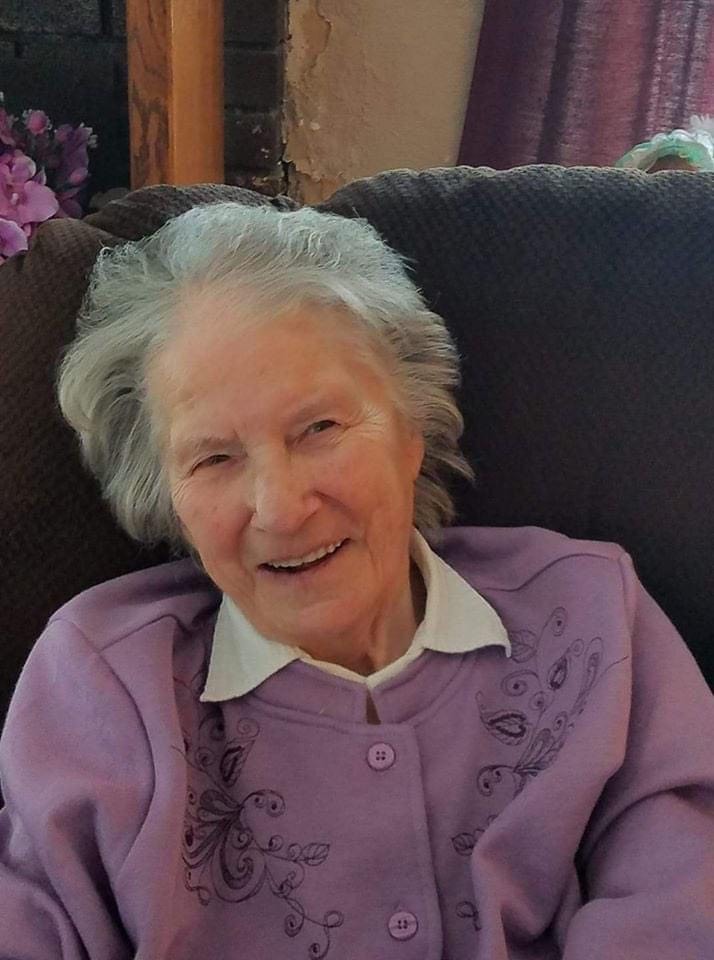
Louise
Wilson entered Heaven on February 25, 2022 at the age of 95.
Louise
was born to Jack and Myrtle Lee Salsman on June 30, 1926 in
Richland, Missouri. It was there that she met the love of her life,
Paul Wilson, and they were married in Belton, Texas in 1940 shortly
after he joined the service. In 1946 they moved back to Missouri,
having their first son
in 1948 followed by twins in 1950. Paul then came out to California
after his brother and two of Louise’s sisters had moved here to
start a career and a life on the West Coast. Louise soon followed
with her mother
and their children in tow.
Louise wholeheartedly embraced the role of wife and mother, having three more children after settling in Eureka, losing her son Kevin before birth — a loss she would carry with her every day.
As Paul went to work to support his family, Louise dedicated her life to raising her children. Her heart was full of love for babies, as she was a caregiver in the nursery at their church and as her kids got a little older she became a caregiver for many children over the years, providing childcare for working mothers. Those children were loved as her own. She did this for many years and continued as her grandchildren came and joined in with the neighborhood kids she was taking care of. Her door was always open and full of laughter and love.
As years passed by, children grew. Her caretaker role was then filled with the needs of her mother and then Paul. Once he retired they were able to travel, going back to Missouri to visit the family they had left and to look back on where they started. They loved and organized family picnics at Richardson’s Grove and hosted large family gatherings at their home. They were happiest when their family gathered and whether it was laughter from stories or hooting at a game on TV. They were surrounded by who they loved the most. The babies of the family, more often then not, would be found snuggled on Louise’s lap. She was the best Nana. Louise absolutely loved getting together with her sisters, whether they were playing cards, sharing a meal, shopping with them and her daughters… Then grandchildren joined the fun.
Paul and Louise were married 67 years and then he was called home. After years of taking care of him as he had became frail, she was lost. The love, the true love and commitment the two of them shared was admired by so many. They took care of each other. They were best friends and set an example to everyone of what commitment and unconditional love really is. Louise continued for 13 years without him, missing him every day and wishing she could see him “just once.” We know he was in Heaven and there to greet her when she arrived. All she wanted was to see him, her mother, her baby boy and all six of her siblings – as being the youngest, she was the last to join them. We know they are all together now and although we will miss her dearly, we know she is safe, healthy, loved and happy. We couldn’t ask for more than that.
Louise was preceded in death by her husband Paul, her parents, siblings and her little baby boy Kevin. It had been over 50 years and she still spoke of him and made sure his little grave was visited and he was remembered. She is also preceded in death by her daughter-in-law Margaret Wilson and her son-in-law Duane McKay.
She is survived by the ones she loved with her whole heart: Children: Paul Wilson (Vicki) Ron Wilson (Lynn) Connie McKay, Doug Wilson, Kelly Ward (Rodney) … Rodney … who always put a sparkle in her eye and made a smile appear — not a son-in-law, but a son. Grandchildren: Mike Marcelli (Charity), Angela Gibson, Brad Gibson, Shane DePute (Tiffany) Sasha Africa (Bret) Ryan Wilson (Estelle) Steve Wilson, LeAnne Ives, Alicia Toroni. Great Grandchildren: Lacey Yates (Chad), Kody and Katie Marcelli, Capri and Aria Africa, Kaden, Kinsley and Carson DePute, Rebekah, Caleb, Jeremiah and Isaiah Ives and Kayla Wilson… and Maxine Wilson, who will be arriving this month. Great-great-grandson Kareem.
Funeral services for Louise will be held Saturday March 5, 11 a.m. at Sanders Funeral Home in Eureka with graveside services to follow at Oceanview Cemetery. There will be no reception. Sanders Funeral Home requires masks.
We would like to thank everyone for their outpouring of love and support, and the staff at Granada for making Louise comfortable and for taking such good care of her during her short stay. We are grateful.
###
The obituary above was submitted on behalf of Louise Wilson’s loved ones. The Lost Coast Outpost runs obituaries of Humboldt County residents at no charge. See guidelines here.
OBITUARY: Edna Johnson, 1923-2022
LoCO Staff / Friday, March 4, 2022 @ 6:56 a.m. / Obits

Edna Johnson passed away at the age of 98 on February 25, 2022 at 3:49 p.m. in her home in Hydesville. She was born on Nov 18, 1923, in Phillips Co., Kansas.
She is survived by her brother, William George Barg, Jr, who lives in MacClenny, Florida, grandson Gerald Randall Johnson who lives in Carlotta, her granddaughter in-law, Linda Wilkinson who lives in Fortuna, great-granddaughter Jennifer Johnson, great-great granddaughter Kylee Lexus Carter, her nephews: Jimmie Nash, Robert Barg, George Barg, nieces: Colleen Hartman, Arliss Nash Morgan, Vicki Barg, Judith Barg, and many others. She was preceded in death by her husband, Lloyd M. Johnson, her sister Evelyn Barg, her father, William George Barg, Sr., her mother, Susanna Rosina Howard, her son Gerald L aka ‘Pete’ ‘Jake’ Johnson, and a lot of other family and friends.
Edna was born and raised in Phillips Co., Kansas on a 300-acre farm. She and her siblings had to wear bandanas over their face during the dust bowl days as well as walk to school through snow and freezing cold temps. Edna was one tough woman and was not afraid of work and was a hard worker. She made bombs and ammo at Naval Ammunition Depot in Hastings, Nebraska during World War II, she drove a semi, and later she worked at the Coast oyster plant. Her husband was a contractor, so she traveled to various jobs with him and helped him with his bookkeeping.
She moved to Eureka in Humboldt County in about 1956 with her husband Lloyd. They lived in Carlotta for many years. They had burros out there. Later they moved to Hydesville and lived there around 20 years. Her sister died of polio, so she helped raise her three children, Jimmie Nash, Colleen Hartman and Arliss Morgan. She helped support her grandson, Gerald R. Johnson.
One story I remember her telling me was: Edna didn’t care for live fowl, as she got attacked by a rooster when she was a young child. A truck full of live turkeys stalled on the highway in Kansas. The driver gave one live turkey to her husband, who put it in the cab of the truck with them. It scared her, so she made him stop and get it out of the cab and put it in the back.
She had a big, beautiful walnut tree and would gather the nuts, clean them an distribute them to family and neighbors, as well as pears. She was an excellent cook, and her recipes were considered gold by the family. She canned fruits and vegetables every year. She washed her dishes by hand and used the dishwasher for her canning jars. She helped her husband design the remodel of their home in Hydesville.
I remember her preparing enough food to feed a 100 people for her 90th birthday party. She had 75 people attend. She was great at gardeningvegetables and flowers; she took pride in her yard looking nice. She crocheted beautiful full-size afghans, smaller ones for children, and beautiful doilies. She loved to dance, and her and her husband use to go dancing about every weekend. She was extremely independent, was able to drive, take care of herself, and conduct business right up until she was hospitalized before passing.
She really wanted to live to 100 and always told me to live long, so I was the only one I knew.
A memorial service will be held at a later date.
###
The obituary above was submitted on behalf of Edna Johnson’s loved ones. The Lost Coast Outpost runs obituaries of Humboldt County residents at no charge. See guidelines here.
OBITUARY: Betty Jean Morris, 1929-2022
LoCO Staff / Friday, March 4, 2022 @ 6:56 a.m. / Obits
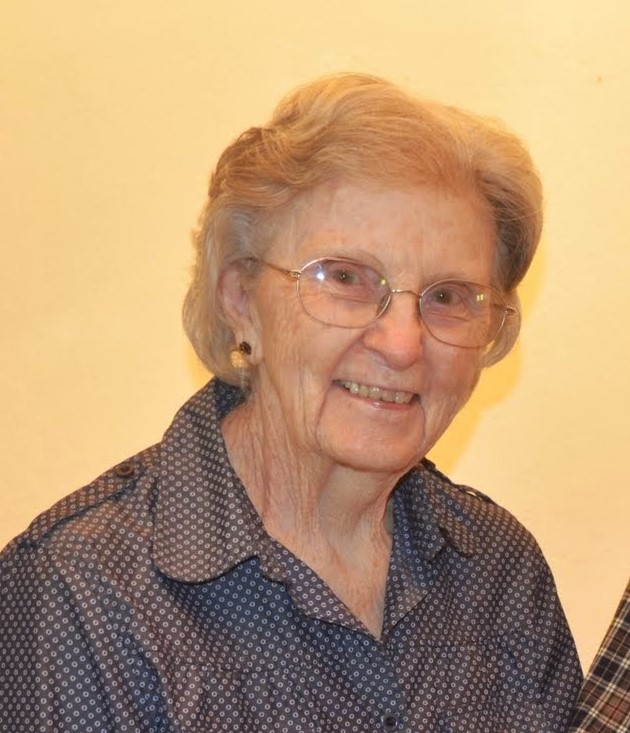
Betty
Jean Morris passed away peacefully in her bed on Monday, February 28,
2022. She was 92.
She was born to Archie and Lottie Winters in Healdsburg in 1929, the youngest of their 12 children. Both of her parents passed away while she was still in grade school, so different ones of her sisters took her in until she finished school. She ended up in Lakeport where she met and fell in love with John S. Morris. They were married in 1947. They lived in Lakeport for a few years, then moved to Ukiah, and finally to Eureka in 1965.
She and John were long-time members of First Covenant Church, Eureka. Betty was active in the Women’s ministry. She loved to sew and enjoyed helping some of the young girls of the church to learn as well. She was an avid gardener, and when she had to be inside, she could often be found knitting.
When John retired in 1981, they went to Peru, where their daughter and son-in-law worked, and spent six months as guest helpers with Wycliffe Bible Translators.
She is survived by her daughter Judy (& David) Payne of Tyler, Texas, and her son Bill (& Allison) Morris of Eureka; five grandchildren: John (& Laura) Morris, Rebecca Morris, Nathan (& Katy) Payne, Jacob (& Tatiana) Payne and Adam (& Katie) Payne; plus nine delightful great-grandchildren.
Because of her love for children, in lieu of flowers, the family requests donations be made to Triumphant Life Camp, through First Covenant Church of Eureka.
Memorial service to be held at First Covenant Church of Eureka on March 18 at 10 a.m.
###
The obituary above was submitted on behalf of Betty Morris’s loved ones. The Lost Coast Outpost runs obituaries of Humboldt County residents at no charge. See guidelines here.
Attorney General’s Office Confirms ‘Final Notice’ to Auditor-Controller Was Not Sent By Mistake
Ryan Burns / Thursday, March 3, 2022 @ 4:08 p.m. / Government
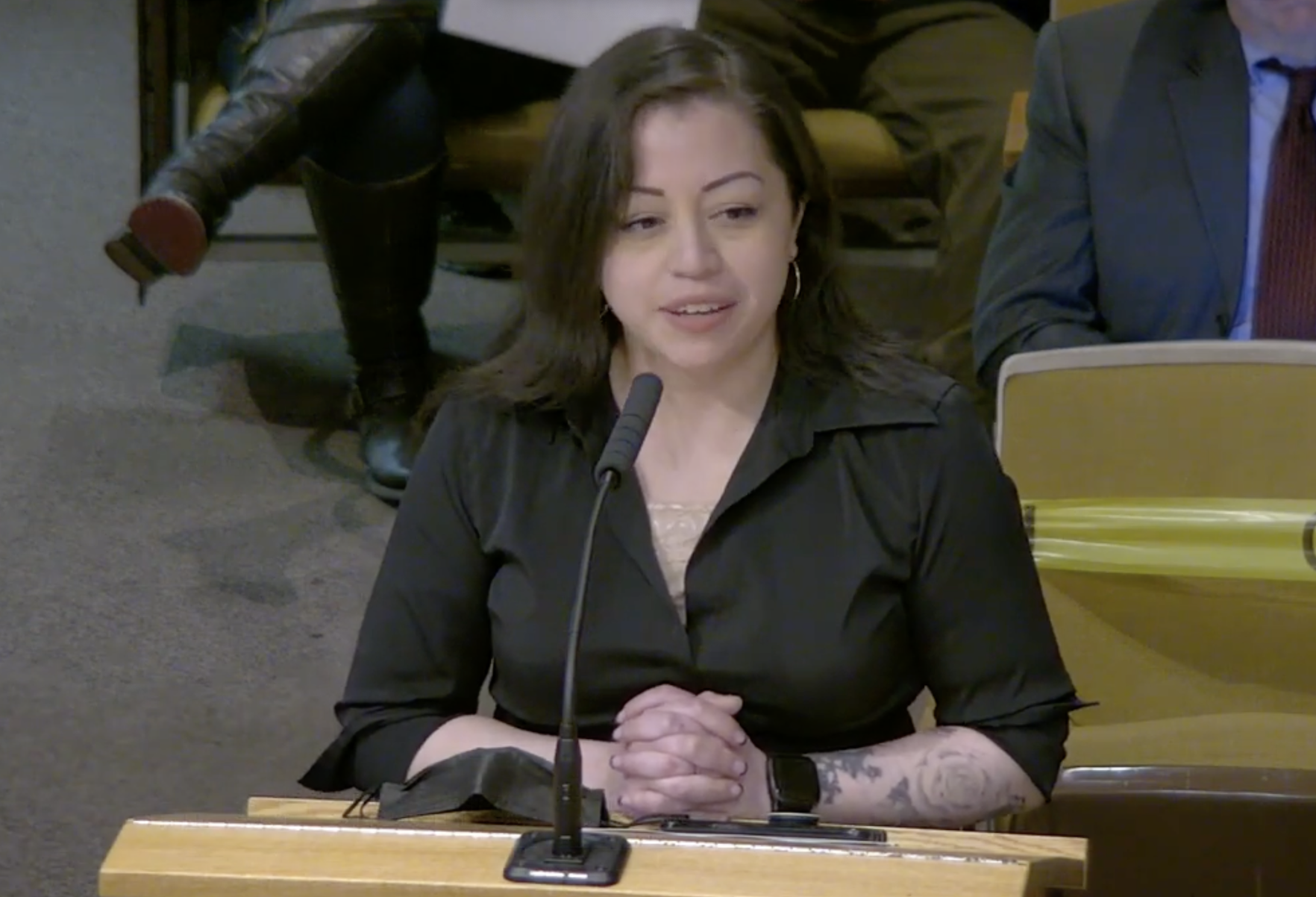
Auditor-Controller Karen Paz Dominguez addressing the Board of Supervisors on Tuesday. | Screenshot.
###
Last week’s “final notice” letter from the California Attorney General’s Office, which threatens legal action against embattled Humboldt County Auditor-Controller Karen Paz Dominguez for her failure to submit a long-overdue financial transactions report, was not sent in error, as she suggested publicly this week.
The A.G.’s Office confirmed as much Thursday in an email to Paz Dominguez, saying a pending report from the State Controller’s Office “does not relieve the County of any reporting responsibilities including filing a timely Financial Transactions Report (FTR) and completing the annual single audit by the required due dates.”
The State Controller’s Office offered a similar clarification on Wednesday, confirming to the Outpost that the A.G.’s “final notice” letter was not issued because of some automated system but was indeed sent at the request of the state controller.
This is all rather convoluted, so let’s back up a bit.
In early December, State Controller Betty Yee notified the county that she’d be sending in a team from her office’s Division of Audits to investigate the county’s financial practices and reporting. (You can read her letter here.)
“The basis for the investigation is the county’s failure to file its Financial Transactions Report (FTR) for fiscal year (FY) 2019-20,” Yee’s letter said. That report, which is a state-mandated responsibility of the Auditor-Controller’s Office, is now more than a year past due.
So Yee’s investigation team came in and investigated, conducting interviews, assessing the county’s internal controls and examining its overall financial reporting processes. However, the team has yet to issue its report.
Cut to this past Friday. That’s when Paz Dominguez received the “final notice” from Deputy Attorney General Julianne Mossler. It reminds Paz Dominguez that the state has made several attempts over the past year to compel her to submit the report, saying she could even use unaudited information if necessary, just as long as she finally turns it in.
Mossler’s letter tells Paz Dominguez that she has until March 16 to submit the Financial Transactions Report or else the state will pursue legal action against her (and/or against the county), including a $5,000 fine.
At Tuesday’s Board of Supervisors meeting, Paz Dominguez suggested that Mossler’s letter was sent by mistake — or perhaps as the result of some automated notification system.
Addressing the board, Paz Dominguez said she appreciated the opportunity to “clear up some misconceptions” given that she had recently spoken with representatives from the State Controller’s Office about the letter.
“It came as a surprise to the State Controller’s Office team that is working with our county that the Attorney General sent that letter,” Paz Dominguez said. “They were going to communicate with people at the Attorney General’s Office, and what they could communicate with me yesterday was that they think that maybe it’s probably because we were on a list and the Attorney General has a schedule that they check, and a calendar, and that because we were still on that list by that date, they chose to write that letter.”
The county has engaged outside auditing firm CliftonLarsonAllen to complete the long-overdue 2019-20 Financial Transactions Report. Representatives from that firm have given a target completion date of March 31 — two weeks beyond the new deadline imposed by the state.
But Paz Dominguez says she’s been under the impression that she should wait for the State Controller’s Office to issue its investigation report before completing the overdue document. The State Controller’s Office may want to send in its own accountant to complete the necessary work.
She reiterated this perspective on Tuesday, telling the board, “when the State Controller’s Office [representative] wrote her letter to the county … she said it would be upon her findings that she would determine whether she would appoint an accountant to come and complete the Financial Transactions Report.”
Back in December, Paz Dominguez said she was “thrilled” by that possibility — she would welcome any and all help from the State Controller’s Office.
However, in reading Yee’s letter, it’s not clear whether she’s offering help or simply stating that she may have to resort to sending in a competent professional to fix the county’s financial mess.
“The results of this investigation will assist my office in determining if I need to appoint a qualified accountant to obtain financial information required to be reported to my office in accordance with [Government Code] section 53891,” the letter states.
On Tuesday, Paz Dominguez told the Board of Supervisors that the State Controller’s Office is still drafting its report, “so it does seem a little bit out of the timeline for the Attorney General to be demanding this [Financial Transactions Report]. Either way,” she continued, “I am still waiting for a response from the deputy attorney general who emailed that letter, and I have not yet received one.”
First District Supervisor Rex Bohn asked for clarification: Was she saying that the Attorney General’s letter was sent in error?
“Given what I have heard from the State Controller’s Office directly? Yes,” she said. “That is what I think has happened.”
Here’s video of Tuesday’s meeting, queued up to that exchange:
Mossler’s follow-up email, sent today, makes it clear that the notice was not sent in error. She confirms that the State Controller’s Office’s review of the county’s financial reporting practices is still in progress, saying the final results will be shared in an exit conference “when appropriate.”
But that has no bearing on the state’s imposed deadline.
“The internal control system review does not relieve the County of any reporting responsibilities,” Mossler says, “including filing a timely Financial Transactions Report (FTR) and completing the annual single audit by the required due dates.”
Not only is the county’s 2019-20 Financial Transactions Report overdue, but the report covering the next fiscal year, 2020-21, was due by Jan. 31. Mossler tells Paz Dominguez that instructions for submitting those reports “remain the same as has been included in previous letters from [the State Controller’s Office],” but, perhaps in an attempt to be helpful, she attached a 43-page user guide for local government reporting along with a list of answers to frequently asked questions.
We reached out to Paz Dominguez to ask whether, in light of Mossler’s latest correspondence, she believes the 2019/20 Financial Transactions Report will get submitted to the state by the March 16 deadline.
Initially she said her schedule for today was jam-packed, so she wouldn’t be able to dig deep into the letter until this evening. But shortly thereafter she sent a follow-up email, saying:
I had a quick break between meetings so I provided a response to Ms. Mossler [saying] that I would review her request with county counsel as it didn’t align with what we discussed with the SCO [State Controller’s Office]. I’ll likely meet with my county counsel liaison early tomorrow and will know more then. Oh, how I wish I could clone myself and be in two places at once…
Still no word on whether she’ll be able to submit the overdue report before the March 16 deadline.
Eureka City Council Votes to Remove Lots From Parking Assessment District to Make Way for EaRTH Center
Isabella Vanderheiden / Thursday, March 3, 2022 @ 1:49 p.m. / Eureka Rising

The EaRTH Center gateway, pictured in a slide presented at the Feb. 9 Eureka City Council meeting.
The Eureka City Council unanimously approved a resolution Tuesday to remove the two city-owned parking lots on Third Street between G and H streets, behind Lost Coast Brewery, from the city’s Parking Assessment District (PAD) to make way for the recently approved EaRTH Center.
As detailed in the agenda summary, the PAD was created in 1954 and encompassed most of the city’s central business district. “During that time, the city council approved issuance of bonds for the acquisition and construction of off-street parking facilities, and in 1955, a bond was formally issued and the City began to acquire and develop parking lots.”
The PAD is no longer collecting assessments. However, any lot funded by the PAD must go through a public hearing process to allow for the lot to be reduced or removed by a developer.
Although Tuesday’s discussion was a procedural follow-up to the council’s recent approval of the ambitious housing and transit project, several local business owners rallied against the development of the lot over concerns about downtown parking capacity.
“In peak season, it’s really hard for a lot of people to park and we really got to take advantage of that,” said Sebastian Elrite, owner of Humboldt Bay Provisions in Old Town Eureka. “The thing to think about, in my perspective, would be if occupancy rates for the businesses and staff are high and everybody’s there at the same time, you definitely need a lot more parking than what’s currently available because we all want to have our seats full and our businesses and people able to come and go as they’re able.”
Megan Kramer, a local real estate agent with Coldwell Banker Cutten Realty, expressed her support for the project and acknowledged that the “housing situation in Humboldt County has become dire,” but requested the council consider an alternative project site.
“As proposed, this project would significantly increase traffic congestion and create unacceptable challenges for parking,” she said. “In the case of parking, we should accept expect conflict to arise with private property owners as tenants of the proposed project and existing users of the public parking lot that will be removed and will trespass onto private property to find a place to park. We should assume private owners will act and to protect their rights.”
Kramer ultimately requested that the council “select an alternative location and to move forward with this project.”
Eureka resident Kelly Martin echoed previous concerns about parking but also said he was worried about a potential increase in crime and “the homeless impact on local businesses.”
Project proponents, including Eureka resident and executive director of the Environmental Protection and Information Center, Tom Wheeler, said the EaRth Center “would be a very good thing for Eureka.”
“It’s going to provide low-income housing for people in our community; it will provide housing for traveling medical professionals, and will provide student housing,” he said. “I think [it] is really going to be wonderful for Old Town [and] it’s going to give us a shot in the arm of youthful energy. …This transit center is going to benefit the whole of the city, but in particular, it’s going to benefit our Old Town-downtown core.”
Wheeler added that public land “should be put to the best public use” and urged the council to continue its support for the project.
Colin Fiske, executive director of the Coalition for Responsible Transportation Priorities, said, “It’s past time that we devote some resources, some funding to develop a transit center downtown.”
“We have plenty of parking and we need to give transit a try,” he said. “… Last time we were here it was a very full discussion. There were a lot of members of the public here. You had a good discussion and you made the decision to support the EaRTH Center. This is really bureaucratic sort of hoops that you have to jump through tonight and I hope that you will just continue on as planned.”
Following public comment, Councilmember Leslie Castellano acknowledged the need for more long-term parking throughout Old Town and downtown. “We are looking at some new solutions so that folks who are working those six- or eight-hour shifts can park … so they don’t have to worry about getting a big ticket or something like that.”
Councilmember Scott Bauer asked City Manager Miles Slattery to address concerns surrounding the price of the project, which is estimated to cost roughly $680,000 per unit.
“That is incorporating all of it but it is expensive,” Slattery said. “The cost of construction, as anybody will tell you, is very expensive right now. … When you take into consideration the transit center and the commercial space down below, it’s close to $500,000 a unit. That’s the going rate but it’s expensive right now.”
Councilmember Natalie Arroyo criticized the notion that additional low-income housing would contribute to more crime in Old Town and downtown, noting that she had only recently risen above the low-income bracket.
“I continue to take issue with this way that people are characterizing low-income folks in the community because I recently very recently became not low income,” she said. “… I’ve said this before, but low-income people statistically spend more of their money locally, so there’s also that benefit. I really get frustrated to hear any disparaging of the poor working folks in our community and students in our community who are still here being a part of the community, and any disparaging of transit riders. Frankly, that’s something I can’t quite stomach.”
Councilmembers Katie Moulton and Kim Bergel agreed. Bergel subsequently made a motion to adopt the resolution to remove the two city lots from the PAD. The vote passed in a unanimous 5-0 vote.
The full discussion can be found here.
Hoopa Valley Tribe Scores Big State Grant to Make Over Tish Tang, the Rodeo Grounds and Other Cultural and Recreational Facilities
LoCO Staff / Thursday, March 3, 2022 @ 12:32 p.m. / Infrastructure
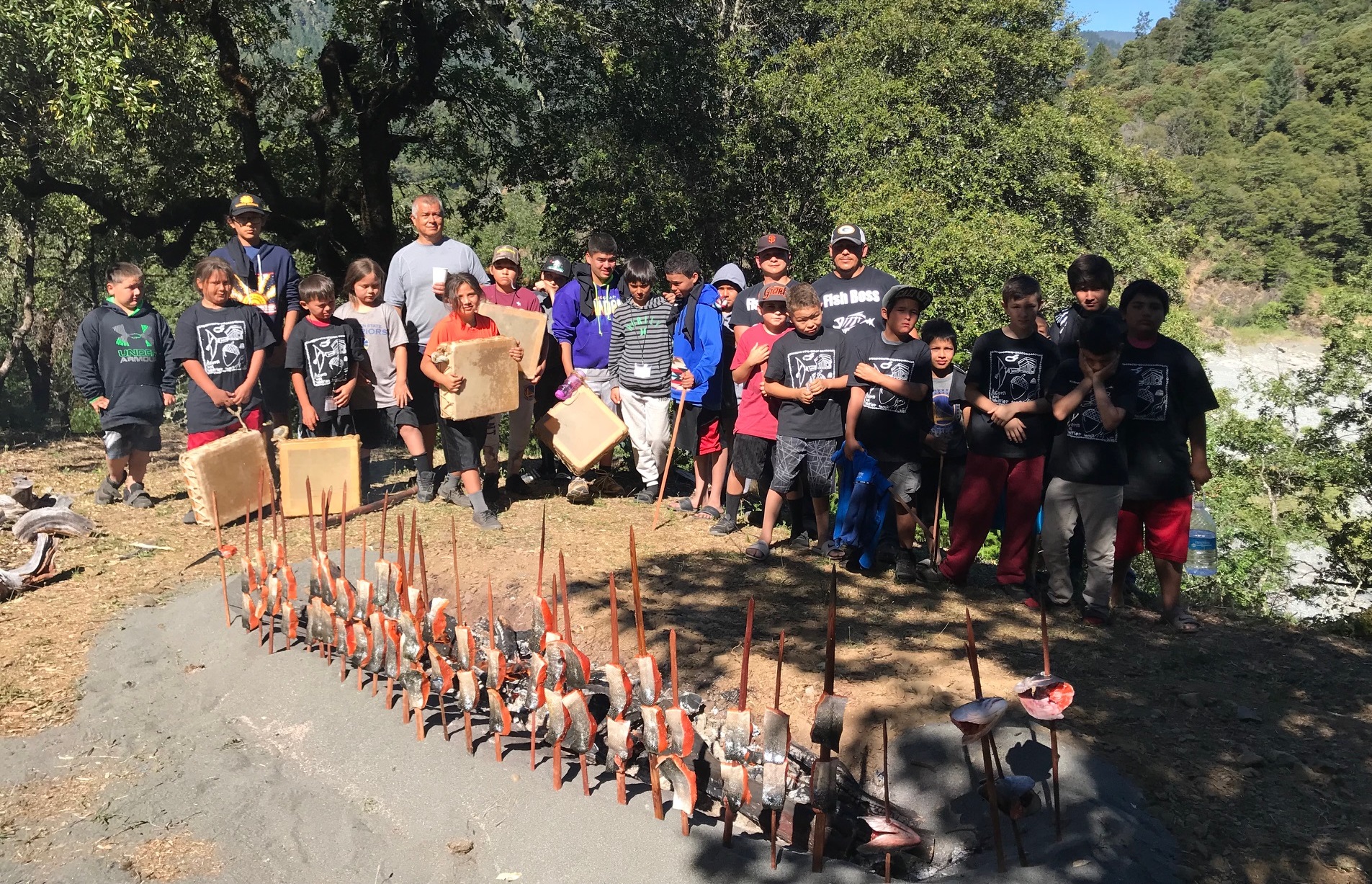
Youth cultural activities held at Tish Tang Campground. Photo: Hoopa Valley Tribe.
###
Press release from the Hoopa Valley Tribe:
As part of his landmark Clean California initiative, Governor Gavin Newsom today announced the award of $5 million to the Hoopa Valley Tribe. The program is designed to foster cultural connections and civic pride, the project initiative led by The California Department of Transportation (Caltrans). The Clean California Local Grant Program is part of a two-year program through which approximately $296 million in funds will go to local communities to beautify and improve local streets and roads, tribal lands, parks, pathways, and transit centers to clean and enhance public spaces. Through the combination of adding beautification measures and art in public spaces along with the removal of litter and debris, this effort will enhance communities and improve spaces for walking and recreation. Additionally, with an eye on equity, half of the overall program funds benefit underserved communities. The maximum project amount is $5 million.
Developed in close collaboration with tribal and local governments, non-profits, and businesses, the state beautification projects will be completed in California’s counties including art installations, green space, and proposals that improve safety and promote community connections.
“This is much-needed and such welcome news,” said Hoopa Vice-Chairman Everett Colegrove. “The Hoopa community is grateful to be funded by the Governor’s initiative. Nearly all of the chosen sites are in historically underserved communities.”
The project consists of four separate areas owned by the Tribe: Pookey’s Park, Hoopa Rodeo Grounds, Tish Tang Campground, and Neighborhood Facilities. The community will receive a makeover, including debris removal, beautification, rehabilitation, and enhancement of community parks and spaces. The project will also improve accessibility and added upgrades, as well as memorialized elements added to the sites.
“The Hoopa Valley Tribe is very excited about this opportunity,” said Hoopa Tribal Chairman Joe Davis. “All four (4) of these spaces serve as public areas regularly used by community members of all ages and the proposed work at these existing facilities will continue to enrich the lives of all users by promoting health and wellness, walkability, accessibility, safe communities, and community pride while preserving natural resources and increasing wildland urban interface (WUI) protection. With this project, the Tribe seeks to provide conscientious continuity of ADA accessibility, cultural themes, increasing opportunities for health and wellness and community engagement.”
Crews are set to begin work on the Hoopa community project this spring and complete it in June 2024


