Press release from the Humboldt County Sheriff’s Office:
On Dec. 14, 2021, at about 7:09 p.m., Humboldt County Sheriff’s deputies were dispatched to the area of Bald Hills and French Camp Roads for a search and rescue of a man who had become stuck in the snow.
The man told dispatchers that he was driving through the area from Southern California and had followed his GPS onto Bald Hills Road. The man reportedly got lost in the area and his vehicle became stuck in the snow on French Camp Road.
Deputies arrived in the area, located the man in good condition and transported him to a safe location.
Interior Humboldt County remains under a Winter Weather Advisory until 4 p.m. Wednesday, December 15, with heavy snow expected between 2,000 and 3,000 feet. Travel on rural, high elevation roads could be very difficult to impossible.
Residents and visitors are encouraged to stay on the main, highly traveled routes when possible as they are better maintained during snowy conditions. Avoid taking unfamiliar roads during inclement weather.
If you must drive in snow or wet road conditions, follow these tips:
Check road conditions before you go and carry chains;
Ensure your cell phone is fully charged before you go and bring a battery backup;
Pack an emergency kit;
Bring extra food, water, warm clothes, and blankets;
Pack a shovel to free your vehicle if you get snowed in;
Pack a flashlight with extra batteries.
If you become stranded in the snow and are unable to find help, call 9-1-1.
John
Lyons passed away suddenly at home on the evening of December 7. John
was a beloved husband, father, brother, friend, and the proudest
“PapaSan” to his granddaughter, Stella.
John
was born in Youngstown, Ohio, to Phyllis and Clarence Lyons. As part
of a military family, John traveled extensively, remembering fondly
his time spent in Okinawa and French Morocco along with his sisters,
Betty and Rosemary (Mutima), and brother, Little Clarence. Clarence
Senior’s last assignment to George Air Force Base in Victorville,
California saw John starting school at Apple Valley Junior High where
he first met his wife, Carol McDougall. John’s and Carol’s early
friendship continued as they served in student government together
throughout their high school years, even though they never had the
good fortune to be in the same classes. They married in 1972 and went
on to have three treasured sons, Eli Benjamin, Isaac Zachariah, and
Jacob McDougall.
John
was an exceptional athlete, first playing Pop Warner football and
Little League baseball under the coaching of his father, Clarence. In
high school, he went on to play varsity basketball, baseball and
football. He was a standout running back and garnered all-conference
honors. His football buddies on the defensive line liked to razz John
by insisting that they did all the real work while he got all the
glory! John was recruited to San Jose State and did spend a short
while there but ultimately accepted a full-ride scholarship to
Arizona State University and went on to play in the Fiesta Bowl with
the Sun Devils.
Having
fallen in love with Humboldt County while attending Humboldt State
College (University), Carol lured John to the Arcata area where John
graduated with a BA degree in Business with an emphasis in Marketing.
John went to work for Prudential Life Insurance Company for several
years before joining Wells Fargo Bank in Eureka as a loan officer.
John loved his 13 years at Wells Fargo when lending decisions were
made locally and generally sealed with a handshake. It was at this
time that he came to know and respect many of the Humboldt County
“old-timers” and gained an appreciation for local customs and
lore. Many nights John would come home from work with a bag of fish
gifted by a local fisherman. With banking deregulation, John found
less satisfying work at Hibernia and Bank of America (centralized and
out-of-county loan decisions) and he went on to spend 25 years
working at Eureka Housing Authority before retiring in 2016.
John
remained an avid recreational sportsman throughout his adult life
until a hip replacement and fused foot sidelined him. He coached
women’s softball, Little League baseball, and youth soccer as an
occasional sidekick to Pete Shepard. He, himself, spent many, many
years playing Slo Pitch baseball and rec league basketball and, more
recently, came to enjoy many afternoons on the bocce court with other
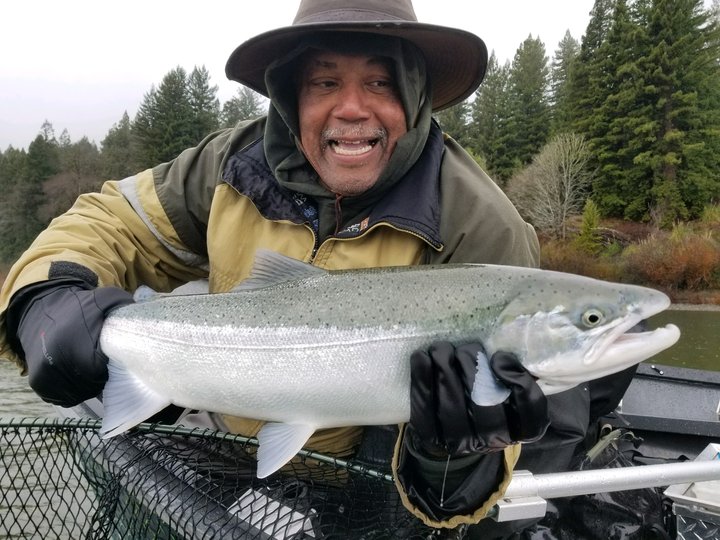
retired friends. John loved to fish and he knew the banks of most of
the local rivers well. It was only more recently that John had to
content himself fishing from a boat with local guides, Reef Twibell
and Alan Borges. Those trips were so fun for him and subsequently led
to the usual “fish tales.”
John
was community-minded and served for many years as president of the
Eureka chapter NAACP, where he was instrumental in initiating the
first Dr. Martin Luther King celebration, an event that has grown
exponentially in scope from its humble beginning – 45 minutes at
lunchtime on the Courthouse steps. John also served on the Humboldt
County Human Rights Commission and was a designated neutral observer
at controversial demonstrations and other events.
By
all accounts, John was a much-loved man who made a place for himself
in Humboldt County, a county known for little diversity. He could be
intimidating when confronting injustice, meanness or threat. He was,
at his center, a kind and caring man and not one to impose judgment
on others. He accepted people for who they were regardless of their
circumstances. Every morning he sat down with his ‘little black
book’ and made calls (and, no, he never did give in and acquire a
cell phone) to check in on his friends and acquaintances asking how
they were doing, were they taking care of themselves, did they want
to get together for a bit? Ultimately, John felt that the true
measure of a man was whether or not one was a gentleman. And he was.
John
was preceded in death by his parents, Phyllis and Clarence Lyons, his
sons, Eli and Jacob Lyons, his brothers-in-law, Bobby McDougall and
Michael Howard. He is survived by his wife of 49 years, Carol Lyons,
his son, Isaac Lyons, his beloved granddaughter, Stella Bea (Baby
Girl to PapaSan) and Stella’s mother, Pearl Podgorniak, his
sisters, Betty Lyons, Mutima Imani, his brother, Clarence Lyons, his
parents-in-law, Bob and Gert McDougall, sisters-in-law, Sharon Howard
and Fran Jones (David), and numerous nieces and nephews. In truth,
John is also survived by the Ponte, Chan, and Twibell families who
have been an integral part of his family life here in Humboldt
County.
In
lieu of flowers, the family asks that you reach out to others with
love, kindness, and acceptance. If so inclined, you are welcome to
make a donation to a charity that you support. A celebration of
John’s life will be planned for a later date, likely in the spring
when, hopefully, all can gather more freely.
###
The obituary above was submitted on behalf of John Lyons’ loved ones. The Lost Coast Outpost runs obituaries of Humboldt County residents at no charge. See guidelines here.
William Roger
(“Bill”) Schneider was born in 1929 in Plainfield, New Jersey. He
was the second and last child born to George and Tryphena Schneider.
He grew up in Plainfield with his older sister, Betty, who was four
years older and who Bill had great respect and admiration for.
Bill was very
athletic throughout his life. While attending Plainfield High School,
he threw the javelin for the track team and would run five miles
every evening to stay in shape. After graduating from high school,
Bill enlisted in the U.S. Army during the Korean War, where he spent
four years in the anti-aircraft artillery division. After his
honorable discharge from the Army, Bill enrolled in New York
University, where he threw the javelin for the NYU track team.
One night while he
was swimming at the Plainfield YMCA, he met Gertrude (“Trudy”)
Lentzsch. The two dated for a while and were married in 1954. The
couple welcomed their first child, their son, Keith, in 1955. In 1956
they welcomed their second son, Gregory. In 1957, the family moved
across the country to Whittier, California, where one of Trudy’s
four brothers, Ray Lentzsch, was employed as a journalism professor
at Whittier College. In 1958, Trudy gave birth to their first
daughter, Lori. During this time, Bill worked at various office jobs
while attending night classes at local colleges, and eventually
graduated from Chapman College in Orange, Calif., with a B.A. in Business
Administration. In 1965, Trudy gave birth to their second daughter,
Lisa, and their family was then complete.
After his graduation
from Chapman College, Bill began working in the aerospace industry as
an accountant and cost controller. This was during the time of the
Apollo moon mission, and Bill enjoyed being a part of our country’s
race to the moon. Bill later became interested in real estate and
after working for a real estate broker for a while, he obtained his
own California Real Estate Broker’s license and opened his own
office in Whittier.
Bill and Trudy lived
in Whittier for 45 years, during which time they were very active
members of their community. They were involved in their church and
spent time working within Christian outreach programs, helping
troubled youth in the Fred C. Nelles Youth Correctional Facility in
Whittier. Both Bill and Trudy were extremely sociable and would reach
out to help anyone in need. They would often invite strangers over
for lunch or dinner, people from all walks of life whom they would
meet in passing, and they always enjoyed the uniqueness of each
person they invited to share their company. The couple loved living
in Whittier and made many lifelong friends while living there.
In 2002, they
decided to relocate to Salem, Oregon, to be closer to their youngest
daughter, Lisa and her growing family, and enjoyed being able to help
out as grandparents and spend time with Lisa and her husband, Mark
and their four children. They spent 11 years living in Salem, where
they remained active in their community and their church and
continued to make many more friends. In 2013, Bill and Trudy
relocated once more, this time to McKinleyville, to be
closer to their three oldest children and their spouses, their seven
other grandchildren, and their growing number of great-grandchildren.
They remained
physically active throughout their lives and would often play tennis
or go bowling or swimming or go for walks. Bill was quite proud of
the fact that he would swim 36 lengths of the swimming pool
throughout his eighties.
Bill and Trudy’s
relationship was one where each of them would complement the other’s
attributes, so that together they were much stronger than either of
them were by themselves. This was most evident when Trudy was
diagnosed with stage 4 breast cancer at the age of 60 and Bill became
her caregiver. Trudy made a complete recovery and remained
cancer-free for the remainder of her life. At the age of 80, Trudy
was diagnosed with dementia, and Bill again became her caregiver,
encouraging her to stay active and engaged with family, in the
community and in their church. They would continue to visit often
with friends and family and always looked for new opportunities to
make friends.
Bill and Trudy’s
64-year partnership ended in 2019, when Trudy left this world to
spend eternity in heaven with her family and friends who preceded her
there. Bill continued to remain as optimistic as he could without his
“better half,” remaining engaged with his family and friends and
continuing to socialize in the community at every opportunity.
At the age of 88,
Bill was diagnosed with colon cancer, and over the next three years
his overall health declined. He eventually succumbed to his cancer on
October 16, 2021. When Bill left this world to reunite with Trudy and
his family and friends who were awaiting him in heaven, close to him
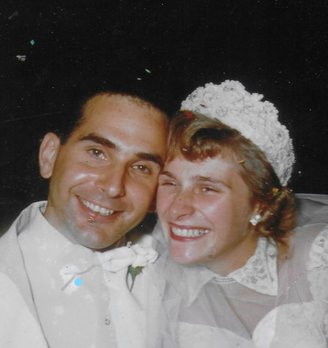
on his nightstand was his favorite photograph, which he cherished and
was most proud of—a photo of Trudy and Bill on their wedding day.
For Bill, this represented the beginning of everything in his life on
Earth that he valued the most: his wife, his four children, his
eleven grandchildren and their spouses, and his fifteen
great-grandchildren. Along with his favorite picture, he left behind
many precious memories. Goodbye, Bill, and tell everyone we know in
heaven that we miss them and look forward to seeing them again.
###
The obituary above was submitted on behalf of Bill Schneider’s loved ones. The Lost Coast Outpost runs obituaries of Humboldt County residents at no charge. See guidelines here.
Press release from the Humboldt County Sheriff’s Office:
The Humboldt County Sheriff’s Office is seeking information related to the vandalism of a water tank serving the City of Blue Lake.
On Dec. 13, 2021, at about 9:52 a.m., an official from the City of Blue Lake contacted the Humboldt County Sheriff’s Office to report the vandalism of a city-owned water tank. According to the city, an unknown individual(s) illegally accessed the water tank, damaging it and causing an uncontrolled loss of water. It is estimated that a total of 200,000 gallons of water was lost prior to the discovery and an additional 200,000 gallons was lost due to repair activities.
The City of Blue Lake reports that residents should not experience direct impacts from this loss at this time. City staff continue to monitor water levels and quality, and are working to repair the tank.
“The intentional sabotage to a water supply system is a federal offense and is considered a form of domestic terrorism,” Blue Lake City Manager Mandy Mager said. “The city will be seeking to press charges on the individual(s) responsible to the fullest extent.”
The Humboldt County Sheriff’s Office is working in coordination with the FBI and other state partners to investigate this crime.
Anyone with information about this case or related criminal activity is encouraged to call the Humboldt County Sheriff’s Office at (707) 445-7251 or the Sheriff’s Office Crime Tip line at (707) 268-2539.
[Ed. note: The following editorial piece was written by Tiffany Devitt and Jim Araby and first appeared in CalMatters.]
# # #
Photo by Andrew Goff
It stinks to be in the cannabis industry in California right now.
We aren’t just speaking metaphorically either. Four years after cannabis advocates and workers celebrated the opening of the largest legal recreational marijuana market in the world, misguided licensing and taxation policies have created an emporium of dysfunction.
Today, hundreds of California cannabis farmers are choosing to let crops rot in the fields rather than risk a money-losing harvest or returning to the illicit market.
Astonishingly, amid this crisis, California’s Department of Tax and Fee Administration recently announced yet another tax increase. On Jan. 1, 2022, the state’s cannabis cultivation tax will increase by almost 5%, raising it to a whopping $161 per pound.
Let’s compare how much higher the cultivation tax is for cannabis than, say, wine grapes, almonds or raisins. Actually, no such comparison is possible because no other agricultural product has a cultivation tax. On the contrary, other agricultural industries are supported by federal crop subsidies to protect family farms from market fluctuations that could put their homes and livelihoods at risk.
The state cultivation tax is but one of many cannabis taxes imposed by state and local governments. The industry is also subject to local cultivation, manufacturing, processing, distribution and retail taxes, as well as local “road” taxes that are imposed merely for driving through a jurisdiction. Next a state excise tax is applied that’s approximately 27% of the wholesale price, and, lastly, a state sales and use tax.
While the aggregation of these taxes contributes to the overall dysfunction, the cultivation tax is, by far, the most problematic. For starters, it is levied at the very beginning of the supply chain. So, every one of those later taxes also applies to the cultivation tax. In other words, our taxes are taxed again and again and again, compounding each time.
To make matters even worse, the cultivation tax is a flat tax, meaning it’s not proportional to the sales price. Given the recent precipitous drop in the price per pound for cannabis, this matters. Last year, the cultivation tax was 10% to 20% of bulk material costs. Today it’s as high as 80%. Furthermore, it is applied essentially at the time of harvest regardless of whether materials are sold.
This is devastating for farmers, but they’re not the only ones who are hurting. Cannabis workers across the industry are impacted. Hundreds of jobs have been lost due to excessively high taxes and even more will disappear in the coming year as companies are forced to further cut costs, reduce operations or go out of business altogether.
Labor unions have fought for better wages, reasonable hours and safer working conditions for cannabis workers. Despite strong organizational success, there will be little unions can do to improve protections in this relatively young industry so long as it faces state-imposed financial hardships.
And gradually ceding the industry to lavishly capitalized, out-of-state companies will mean that workers may never benefit from California’s strong labor policies, while cannabis workers, who are pushed back into the unregulated market will be even worse off. Working conditions in these illegal endeavors often resemble indentured servitude with dangerous conditions, low pay and no health benefits.
By perpetuating tragically wrong-headed tax policies, the state’s inaction is costing jobs, strengthening an already dominant illicit market and all but ensuring that one of California’s great heritage industries will be non-competitive when federal legalization occurs.
Fixing the problem is simple: Reform or repeal the state cannabis framework, beginning with the elimination of the cultivation tax. With the state projecting a whopping $31 billion surplus in 2022, it can well afford to forgo the cultivation tax to facilitate what should be a vibrant, global-leader industry. Until then, Sacramento’s misguided tax policy will continue to compound, hurting cannabis cultivators, consumers and workers alike.
# # #
Tiffany Devitt is chief of Government Affairs at CannaCraft, a California cannabis company.
Jim Araby is director of Strategic Campaigns for UFCW Local 5, a 30,000-member union in the Bay Area.
Press release from the Humboldt County Sheriff’s Office:
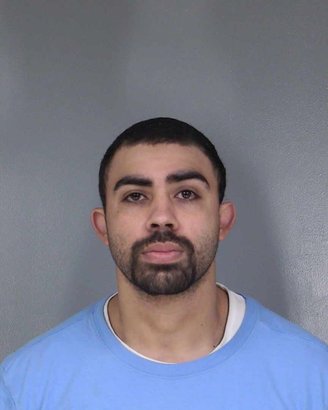
On Dec. 14, 2021, at about 4:40 a.m., Humboldt County Sheriff’s deputies on patrol in the unincorporated area of Eureka conducted a vehicle investigation on a suspicious occupied vehicle parked at the Herrick Avenue Park and Ride.
Deputies contacted two individuals, a male and a female, inside the vehicle. The male, who was later identified as 23-year-old Malique Tija Bassey Smart, initially provided deputies with a false name. Upon proper identification, deputies learned that Smart had multiple felony warrants for his arrest. During a search of Smart incident to arrest, deputies located approximately 0.3 grams of methamphetamine.
Smart was booked into the Humboldt County Correctional Facility on charges of false identification to a peace officer (PC 148.9(a)) and possession of a controlled substance (HS 11377(a)), in addition to three felony warrants for violation of probation.
The female occupant was released at the scene.
The Humboldt County Sheriff’s Office would like to remind the public that loitering, camping, and/or vending is prohibited at the Herrick Avenue Park and Ride. Deputies routinely patrol this area during the overnight hours.
Anyone with information about this case is encouraged to call the Humboldt County Sheriff’s Office at (707) 445-7251 or the Sheriff’s Office Crime Tip line at (707) 268-2539.
Press release from the Humboldt County Sheriff’s Office:
On Dec. 13, 2021, at about 6:24 a.m., Humboldt County Sheriff’s deputies on patrol in the Blue Lake area conducted a vehicle investigation on an occupied vehicle parked in the area of Hatchery Road.
Deputies contacted two individuals, a male and a female, inside the vehicle. The male, 34-year-old Gene Chester Nelson, was found to have a felony warrant for his arrest. Gene was taken into custody without incident.
During a search of Nelson incident to arrest, deputies located approximately 0.4 grams of methamphetamine and over 0.8 grams of suspected fentanyl. Deputies also located drug paraphernalia.
Nelson was booked into the Humboldt County Correctional Facility on charges of possession of a narcotic controlled substance (HS 11350(a)), possession of a controlled substance (HS 11377(a)), possession of a controlled substance paraphernalia (HS 11364(a)) and violation of probation (PC 1203.2(a)(2)), in addition to a warrant for parole revocation (PC 3000.08(f)).
The female was released at the scene.
Anyone with information about this case or related criminal activity is encouraged to call the Humboldt County Sheriff’s Office at (707) 445-7251 or the Sheriff’s Office Crime Tip line at (707) 268-2539.