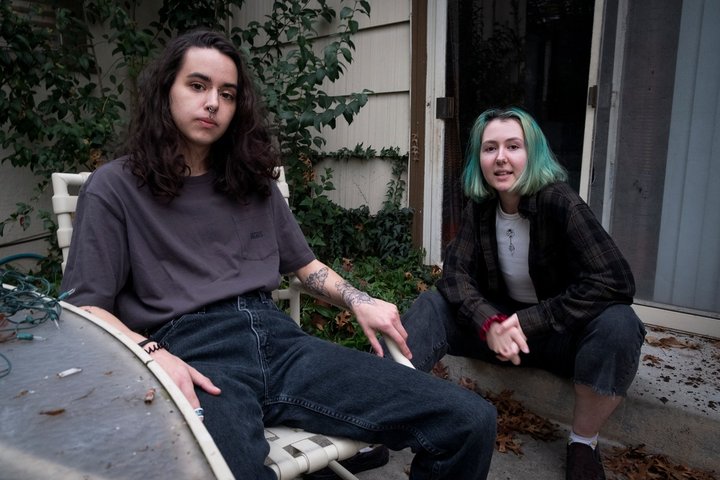
Eli Fox and Jamie Marquis at their home in Sacramento on Dec. 4, 2021. Photo by Karlos Rene Ayala for CalMatters.
###
Jamie Marquis can’t count the number of times they’ve been called the wrong name.
A junior psychology major at the University of California, Davis, who identifies as non-binary, they changed their name several years ago. But since then they’ve struggled to get that name even on basic educational records, instead of their name assigned at birth that they do not identify with, commonly known as a deadname.
“I wish that there was a way to really explain to cisgender people how being deadnamed feels,” Marquis said. “It’s humiliating. It makes you feel out of place and unwelcome, because of all the things about your identity, even your name is being ignored.”
A new state law could make a huge difference for people like them, Marquis said. Not only could it ease anxiety, but it could also provide important protections from discrimination and harm.
The new law, which takes effect on Jan. 1, requires the state’s public colleges to update records for students who have legally changed their names. It also allows graduates to request an updated copy of their diploma at no cost to them.
Then, starting with the 2023-24 class, it will require institutions to allow students to self-identify their names on diplomas, even without legal documentation of a name change. (The legislation does not specifically require colleges to let students self-identify their names on educational records besides diplomas without legally changing their name. It also does not affect how people are identified on legal documents used for tax, immigration status and other purposes.)
“It’s humiliating. It makes you feel out of place and unwelcome, because of all the things about your identity, even your name is being ignored.” — Jamie Marquis, junior psychology major at the University of California, Davis
The right to self-identify one’s name on a college diploma helps protect transgender and gender non-conforming students, advocates say. Research shows that transgender people are at higher risk of discrimination and violence.
Academic records listing a student’s name and gender as assigned at birth could potentially “out” that student’s identity, which can put them at a significant disadvantage when seeking housing and employment, said David Chiu, who authored the bill while representing San Francisco in the state Assembly. Chiu, now the San Francisco city attorney, said he was asked by Equality California and other transgender activist groups to draft the bill.
“A college diploma represents years of hard work and academic achievement,” Chiu said in an interview. “It shouldn’t cause stress or harm by having someone’s deadname on it because of outdated school policies.”
No statewide policy
In California, public colleges have been using a range of policies about what names they record on diplomas and in other records, as no statewide policy existed. In November 2020, the University of California system put in place a policy — the Presidential Policy on Gender Recognition and Lived Name — that ensures that all individuals are identified by their accurate gender identity and preferred name on university-issued documents and in UC’s information systems.
At California State University and the California Community Colleges, there have been no system-wide policies, spokespersons said. But the two systems support the new state law, they said.
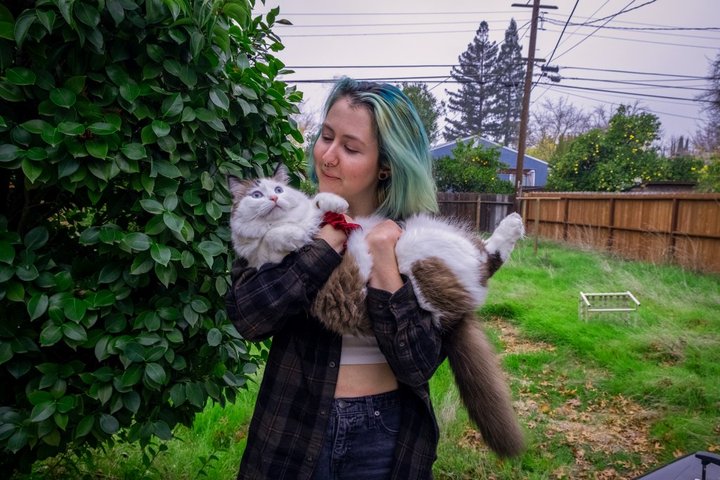
Jamie Marquis and their cat Cleo in their backyard in Sacramento on Dec 4, 2021. Photo by Karlos Rene Ayala for CalMatters
Some campuses have put their own policies in place. American River College in Sacramento County, for example, adopted an affirmed name policy in 2019, which allows students to change their names in campus computer systems, and in early 2020, to self identify their name on their diplomas.
The change, college officials said, has been powerful and emotional for students. Emilie Mitchell, interim dean of social and behavioral sciences at American River College, described her experience helping a former student change their name in the college’s computer system.
“This person was just crying when they were talking about going into classes, and professors often read the roster out loud, and it was their deadname,” Mitchell said. She said she could hear the retraumatization they experienced.
Within five minutes, Mitchell was able to change the student’s name in the system.
“I thought, that’s such a small thing, right?” Mitchell said. “All I did was click a couple of boxes, literally, but this person’s experience, their educational experience, their sense of being validated in their identity, was so profound.”
Eli Fox, a junior psychology major at California State University, Monterey Bay, changed their name during their first few months of college but said they had to deal with a lot of stress due to their deadname being on high school documents.
“It was really tricky to get everything to line up,” Fox said. “There are a lot of school administrative people who aren’t really educated, and it was really difficult trying to educate them and also advocate for myself.”
High-school teachers, college professors, and administrators have often resisted respecting their name or helping them change their school documents, Fox said. They often asked Fox invasive questions about their transition that made them feel like they were just being nosy.
“No one should have to explain their identity or justify the way that they are to anybody,” Fox said.
Fox said they are relieved to see the law pass, as it will make the process easier for future students like them. Fox aspires to use their degree in psychology to work in data gathering and research, and wants to continue their education in biopsychology, and incorporate social theory into science.
Fox says they have gained so much knowledge just from being queer and being around queer people. They hope to help show LGBTQ+ youth of the future to be proud of who they are while looking different or feeling different.
Reducing anxiety
Michelle Haggerty, a psychology professor who advises the Queer Student Union at College of the Redwoods in Eureka, said the new state law will help to reduce the anxiety of both students and professors and to create a more accepting environment on campus. If students are able to update their names on school records before the semester starts, it will erase any awkward scenarios where the professor may deadname a student by accident, Haggerty said.
She also said this new policy will help students after they graduate, lessening how much they may have to explain their name or who they are to future employers. Haggerty has known students who have quit their jobs due to discrimination and invasive questions about their transitions, she said.
“Depending on where you are, it makes people feel unsafe,” Haggerty said of being transgender or gender non-conforming. “Different industries and different communities will look at these things differently… I think it’s hard to make a judgment on ‘Am I safe or not?’ and ‘Who can I reveal these aspects of myself to?’”
“A college diploma represents years of hard work and academic achievement. It shouldn’t cause stress or harm by having someone’s deadname on it because of outdated school policies.” — David Chiu, who authored the bill while in the state Assembly
The new law could help protect cisgender college students, too.
Linda Johnson — a sophomore at College of the Redwoods who has earned a bachelor’s degree from Pomona College and a master’s degree from Fuller Theological Seminary — said that she was unable to have her maiden name printed on her diploma. At a time when she was going through a divorce from an abusive spouse, she wasn’t able to feel happy or excited when she received her diploma. Instead, she didn’t even want to look at it.
“It would have been so much easier if I could have gone and said ‘This is what I want’ without having to wait for all of the legalities to catch up,” Johnson said.
Marquis, the Davis student who is also an American River College graduate, remembers the anxiety of a day when they walked up to the counter of the community college’s records and admissions office to update their academic records. Had they forgotten a document? Would they be met with help or hindrance?
“It’s so awkward and uncomfortable to have to go up to every teacher, every front desk staff, every doctor, and explain the situation,” they said. “And it’s draining to constantly be polite to the people that want to tell you all about how hard it is for them to remember.”
When the process went smoothly, they felt a sense of bewildered relief. But their name-change journey still wasn’t over. When they transferred to UC, they had to present records from high school which still used their deadname.
Now, Marquis hopes the new law will remove some of these roadblocks — and that that could help them finally just be themselves at ease.
As a beacon of hope, Marquis aspires to take this experience with them as they enter the field of psychology after college and work with mentally ill queer children, letting them know it is ok to be themselves, whoever that may be.
###
Taylor is a fellow with the CalMatters College Journalism Network, a collaboration between CalMatters and student journalists from across California. This story and other higher education coverage are supported by the College Futures Foundation.
CALmatters.org is a nonprofit, nonpartisan media venture explaining California policies and politics.
Dr.
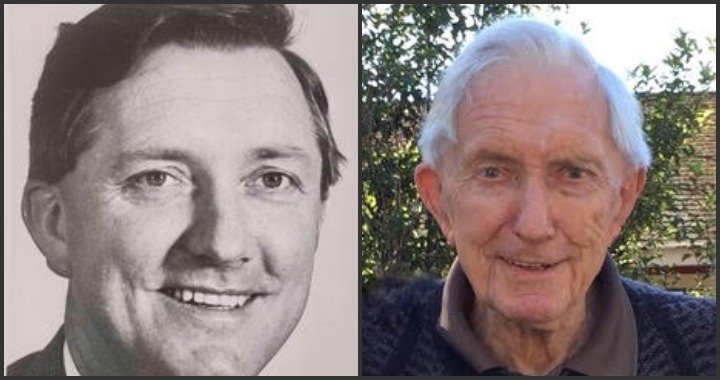
William Forbes Murison January
26, 1927 - November 29, 2021
On
November 29, two months shy of his 95th birthday, Bill Murison passed
away peacefully at Sequoia Springs in Fortuna with his beloved wife
of 70 years, Eve, by his side. Bill was born January
26,
1927 in Glasgow, Scotland to parents Jean Black Swan, a seamstress,
and Forbes Murison, an architect.
After
serving in the Royal Navy for two years, Bill started his college
education in 1947 at Edinburgh University. He received his Bachelor
of Science in Forestry in 1951 from the University of British
Columbia, Vancouver, Canada then returned to Scotland to marry Ailsa
“Eve” Cameron. They were wed in Saint Andrews on September 29,
1951 and within a few weeks they said farewell to family and friends
to start their new life in British Columbia. Bill greatly valued
education and went on to further his studies receiving a scholarship
to Harvard University where he obtained his masters degree in
forestry in 1956. He then returned to the University of British
Columbia and completed his Ph.D in 1960.
Over
the course of his lifetime Bill lived many places, always believing
that relocating provided an opportunity to learn about a new area and
opened the door to new friendships. Bill worked as a Forester in
Nakusp, British Columbia, a small town that was always near and dear
to his heart. He worked as a biologist for Harvard University, held
the positions of Professor of Forestry, Dean of Public Services, and
Dean of Continuing Education at Humboldt State University. He served
as President of Selkirk College in Castlegar, British Columbia,
Associate Vice President of Cal State University Fullerton, and
Director of the Los Angeles Basin Educational Liaison.
It
was Humboldt County, however, where Bill spent the majority of his
life and where he chose to retire. He loved Humboldt County, the
environment and the people. He enjoyed the challenges and
opportunities of his work with the community. In the 1970s and 80s he
had a hand in establishing community programs such as the Open Door
Clinic and United Indian Health Services, and was involved with
organizations such as the United Way, The Humboldt Library Board and
Foundation, the Boy Scouts of America, the First Presbyterian Church
of Eureka, the First Presbyterian Church of Blue Lake, the North
Coast Scottish Society, the Arcata Chamber of Commerce, and the
McKinleyville Chamber of Commerce to name a few. Bill gave generously
of his time and talents volunteering for many organizations in the
area.
Bill
Murison had a zest for life. He loved his family and friends, the
outdoors, and he was fascinated by nature. He loved learning and
educating people, loved a good conversation and a good glass of
scotch. He enjoyed writing, reading, stamp collecting, walking,
hiking, and classical music. He was a man of faith who was always
quick with a smile and a kind word. The true joys of Bill’s life
were Eve and their children; John, Graeme, Gavin, and Lisa. He was
proud of their accomplishments and blessed by their care in his later
years. They, in turn, were blessed by his love, wisdom, friendship,
guidance, and the example he set as a constant source of joy,
positivity, and humility.
Bill
is survived by his loving wife Eve, sons John Murison, Graeme Murison
(Lily) , Gavin Murison (Beth), and daughter Lisa Glasheen.
Grandchildren Sam Murison, Colten Walters (Andrea), Casey Kacsmaryk
(Kurtis), Kelly Goodell (Mike), Max Glasheen, Megan Donaldson
(Justin), and Brenna Keegal (Denzil). Great-grandchildren Shelby,
Nathan, and Sierra Walters, Tyler Glasheen, and Lacey, Avia,and Ronen
Donaldson. Also, Bill’s sister Anne Russell of Australia. Bill was
preceded in death by his son-in-law John Glasheen.
The
family would like to thank Sequoia Springs and Hospice of Humboldt
for their love and care. In lieu of flowers the family invites you to
contribute to the HSU Foundation, Hospice of Humboldt or The Michael
J. Fox Foundation for Parkinson’s Research.
###
The obituary above was submitted on behalf of Bill Murison’s loved ones. The Lost Coast Outpost runs obituaries of Humboldt County residents at no charge. See guidelines here.
George Patterson Miller passed
away in his home on Saturday,
November 27 at 10:20 a.m.
At his side were his wife, Sharon, and a couple of
family members who were
singing favorite hymns and reading the bible out loud. It was one day
before he and Sharon’s 67th
anniversary.
George
was born on the Victorian house on ‘L’ street in Fortuna. He grew
up as the youngest of seven on the family ranch in Holmes,
where he thrived in a free-roaming and hard-working atmosphere. He
prided himself on his aim with the slingshot and his ability to get
vehicles unstuck from the river bar. He thought he would like to
become a veterinarian.
George
graduated from Fortuna High in 1954. While himself a student there,
George had the responsibility of driving the school bus, delivering
the students on the southern route. In those days the buses were
equipped with governors on them to control their speed. After
dropping off the last student, George was known to intentionally
break the governor by over-revving the motor while on a down-hill
run, thus enabling him to drive the speed he wanted to – at
least until the problem was noted and was repaired.
George
had a good friend who had been invited to a birthday party but alas
he had no way of getting to it. He invited George to the party
because he had a car. Even though George didn’t know the birthday
girl, he bought a gift for her that he thought was useful. The young
lady’s
name was Sharon Caples and her boyfriend was pretty proud of the
personal gift he had gotten for her – a pillowcase. Cheeks were
glowing red when George’s gift was opened – a pair of underwear!
After
graduating, George was working at the mill up Bull Creek when he
noticed a very industrious young lady painstakingly washing the
windows of her parents’ home – everyday, the same time he was off
work. It was the girl from the party. They decided to marry but there
were two problems. Sharon was just entering her senior year at South
Fork High. George had to promise her father that she would finish
high school. Secondly, George was too young to get a marriage license
so they had to take his father with them to apply. The two were
married on November 28, 1954.
Soon
after their marriage, along with a group of several young men, George
lined up at the recruiting station to serve his country. To his
disgust, before his name was called, the office closed for lunch,
telling the young men who were left to “come back later.” George
never did.
March
24, 1956, their first child — Sandra — was born in the Scotia Hospital. Second
child Stephen followed on April 19, 1958. He holds the title of being
the last baby born in the Scotia Hospital. On August 25, 1961, their
final baby was born – Christopher, in Redwood Memorial.
After
trying his hand at a few jobs, George settled on being a faller of
“the big trees” for gyppo loggers. He continued in this career
for 28 years. On several occasions through these years, during the
summer months, the family could be found camping near where George
was working.
George
and Sharon joined the Fortuna Seventh-Day Adventist around 1958. They
have been faithful members since. The family was fully involved the
church’s Pathfinder
Club
for young people.
George,
with his many abilities, became the head deacon of the church. The
purpose of this job is to keep up the facility and to be helpful to
members with specific needs.
In
the early 60s, the family settled on Bellview Avenue
in Rio Dell. They stayed here for about 10 years before settling
permanently on three
acres in Fortuna. It was here that George thoroughly enjoyed having
room to raise a few cows, sheep and bees. He planted numerous fruit
trees and every year grew a big garden.
To
keep his small family cared for and in private Christian school, and
because he was a jack of all trades and a work-a-holic, George took
on many extra jobs which included but weren’t limited to making
‘split stuff’ on the beaches, doing any type of home repairs for
people, auto mechanics, rental manager, straightening pond bars and
guard rails, to name a few. George had his own shops in which any
number of projects could be found. Later in life, because his keen
eye detected maintenance and improvement needs in the facility of the
Fortuna Adventist Community Service Center, he was offered the
maintenance job, which he filled for many years.
It
was around 1980 that George did a 360-degree career change. He
started working for a local dentist manufacturing dental implants and
dental tools. His perfectionism and ingenuity shone in this
profession, in which he continued for over 30 years. George was
frequently called back to falling for friends and acquaintances and
this he enjoyed greatly.
George
is survived by his wife Sharon J. Miller, his children Sandra D. (and
Mike) Riley, Stephen A. (and Tammi) Miller, and Christopher L. (and
Deborah) Miller. And by his brother Gerald (and Glenda) Miller, six grandchildren and too many great grandchildren, nieces, and nephews
to list.
A
memorial will be held on Saturday, January 8, 2022 at 3:30 p.m. at the
Fortuna Seventh-Day Adventist Church in Fortuna.
In lieu of flowers, please consider a donation to the Fortuna Volunteer
Fire Department, 320 S. Fortuna Blvd. because their lift assist team
was called to the house on many occasions, or to the wonderful people
at hospice with whom we were just getting acquainted.
###
The obituary above was submitted on behalf of George Miller’s loved ones. The Lost Coast Outpost runs obituaries of Humboldt County residents at no charge. See guidelines here.
No
one seems to want to talk about it, but exceptionally plugged-in social
media watchers may have picked up a few rumors or clues that former
First Lady, Senator, Secretary of State and Democratic nominee for
the Presidency Hillary Rodham Clinton was in Humboldt County over the
weekend.
And
we can tell you: Those rumors are true! Hills did, in fact, grace our
shores for a spell. In a photo that was briefly posted to Facebook
before being taken down, Clinton could be seen posing with locals at
Sue-meg Village, the reconstructed
Yurok town at the newly rechristened Sue-Meg State Park.
The
Outpost
spoke to the person who took the photo, who said he had no idea that
it had escaped into the wild. He said he was not in a position to
speak about what Clinton was up to at Sue-Meg, but confirmed that she
was there.
We
reached out through official channels to both the Parks Service and
the Yurok Tribe; the former had no comment, and the
latter is apparently busy with other tasks.
Well!
Apart from that, perhaps you’d like to know what Team Hillary
ordered from the South G Kitchen, that food truck parked outside
Redwood Curtain in Arcata?
As far as South G’s mention of a documentary, there: We can only say that Humboldt County’s Film Commissioner, Cassandra Roberts Hesseltine, says she had no idea such a filming was taking place.
So that’s it! Any other Hillary sightings, Humboldt?
Environmental consultant Melanie McCavour could wind up losing her at-large seat on the Humboldt County Planning Commission tomorrow as the Board of Supervisors considers whether she has a conflict of interest after taking a job with the Bear River Band of the Rohnerville Rancheria.
McCavour, who was appointed to the Planning Commission almost three years ago, was recently hired as Bear River’s tribal historic preservation officer (THPO), according to the staff report. That could be a problem, the report says, because according to the county’s cannabis ordinance, all commercial grows must be set back at least 600 feet from tribal cultural resources, and it will now be McCavour’s job to evaluate and approve grow operations under those criteria.
That means she’d have to recuse herself from considering any and all projects for which she’d also be serving as the Rancheria’s THPO.
Frequent recusals could make it hard for the Planning Commission to reach a quorum, the staff report says. “Therefore,
considering removing Ms. McCavour and replacing the At-Large position would benefit both the
applicants and the Planning Commission.”
It’s not clear who brought this potential conflict to the county’s attention. The staff report uses the passive voice, saying Clerk of the Board Kathy Hayes “has been notified of a potential conflict.” By whom, McCavour herself? Someone who doesn’t like how McCavour votes?
We sent McCavour an email and left a couple voicemails on Monday but have yet to hear back.
The Planning Commission has seven members, five of whom are appointed by individual supervisors to represent their respective districts while the other two are appointed to serve “at large,” meaning they represent the entire county and must be approved by a majority of the Board of Supervisors.
McCavour has been a staunch environmental advocate on the commission. She voted to deny a permit to rebuild a fallen billboard south of Eureka last year, and in 2019 she was in the majority that voted to deny the controversial Humboldt Wind Energy Project atop Bear River Ridge and Monument Ridge south of Scotia. She argued that it was not worth trading tribal cultural resources for a project that would make only “a tiny, tiny dent” in accommodating the energy needs of primarily Southern California residents.
The county staff report says removing McCavour and appointing someone else to her position “would benefit both the
applicants and the Planning Commission.”
###
Paz Dominguez
What else is on the docket for Tuesday? Well, if you’ve been following the seemingly endless drama surrounding Auditor-Controller Karen Paz Dominguez, it won’t surprise you to learn that she appears in several agenda items.
First, Paz Dominguez is being asked to deliver this month’s “written and verbal update” on county payroll. The payroll function was recently moved back to her office from the Human Resources Department, and the transition has not gone smoothly.
At a bruising Nov. 9 Board of Supervisors meeting, at which department heads, fiscal staff and supervisors laid into the A-C for being difficult to reach, vindictive and woefully behind in her duties, the supervisors unanimously voted to require monthly payroll updates from her. The board also asked Paz Dominguez to develop “metrics and
comparables” so the board can see whether or not her office’s duties are getting accomplished.
She has yet to produce such a report or develop those metrics, according to a staff report. “As of Dec. 8, 2021,” it says, “the AC report has not been
complete and there has been no communication to the [Board of Supervisors] on the status of these directed reports.”
Reached for comment via email, Paz Dominguez said the board does not have any authority to direct the actions of other elected officials — a stance she has taken previously and that the board disputes. She went on to say that if the board gives her additional tasks to perform then it will need to provide her office with additional resources, per California Government Code Section 26884.
“They can ‘direct’ as many new tasks as they want but if they don’t provide the resources necessary to complete those tasks, then they should not be surprised when the tasks are not completed,” Paz Dominguez said in her email. “Despite the poor timing and notice of this imposed presentation, I have agreed to allot 15-20 minutes at 1pm … to be at the BOS meeting. Were it not scheduled during our critical payroll processing day, I would have allotted more time.”
She also disputes the allegation that she has failed to produce the requested reporting, noting that she provided “a detailed zoom presentation regarding payroll and made myself available for the entire 4+ hours of that agenda item,” apparently referring to the Nov. 9 meeting.
Lastly, Paz Dominguez accused the Board of Supervisors of allowing false statements about her office to go uncorrected during public meetings.
“It is my expectation that this BOS will soon begin retracting the misstatements it has allowed be made into the public record about the A-C Office,” she wrote.
###
There’s one other item on Tuesday’s agenda that points the finger at Paz Dominguez, and it concerns First 5 Humboldt, the county’s child development organization. As reported early last month, First 5 Executive Director Mary Ann Hansen said her organization’s annual audit was held up by overdue reporting from the Auditor-Controller’s Office.
That situation was resolved shortly thereafter, but according to a staff report, First 5’s independent auditor wound up finding that the Auditor-Controller’s Office failed to live up to its accounting and oversight responsibilities under its Memorandum of Understanding (MOU) with the county.
Specifically, the auditor concluded that “the formal financial closing process was not followed as it has been followed in previous years,” which required her to correct financial statements for receivables and accrued liabilities and make other changes “in accordance with generally accepted accounting principles.”
The staff report says this audit finding could have dire consequences.
“The current finding is egregious
and has the potential to impact the Commission’s ability to secure grants to provide needed services to
Humboldt’s children and families and accomplish its voter-approved mandate,” it says.
Asked about this via email on Monday, Paz Dominguez said that given her workload she would not be able to provide a detailed response by my deadline but should be able to before tomorrow’s meeting. We’ll update this post with that response when it comes in.
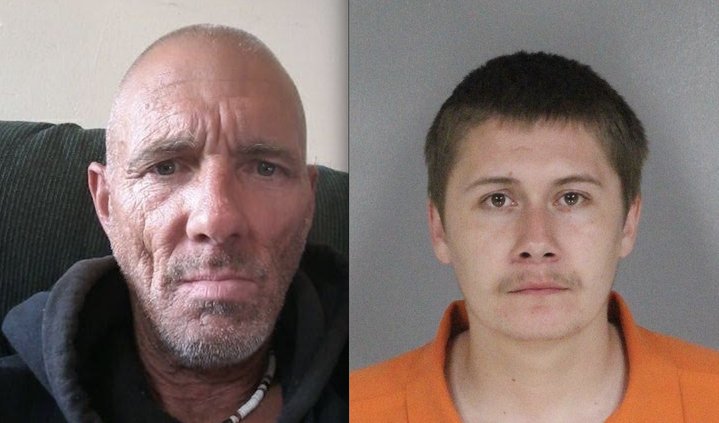
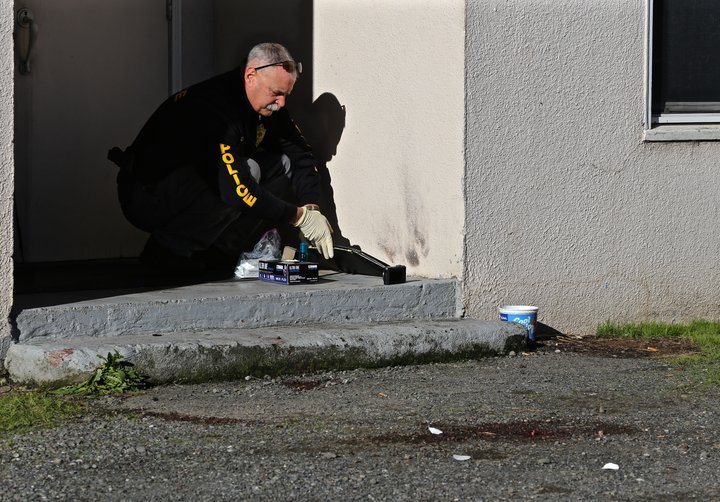
Charles Levaugh, left, was found stabbed to death behind a Eureka church in 2017; Wesley Starritt, already in custody on unrelated murder charges, has now been arrested in relation to the crime
On December 4, 2017, 56-year-old Charles “Chuckie” Levaugh was found deceased in
an alley near the 2000 block of E Street in Eureka. The investigation revealed that
Levaugh was sleeping when he was stabbed to death by an unknown suspect.
Four years later and after numerous developments in the case, the Humboldt County
District Attorney’s Office has formally charged 23-year-old Wesley Lee Starritt for the
murder of Levaugh. Starritt has been in custody since May 2020 on unrelated charges of murder, attempted murder, and assault with a deadly weapon.
Acting Chief Stephens said, “The cases we have reported on over the last week are
great examples of the tenacity and dedication our detectives and evidence technicians
have in seeking justice for victims and their families. I want to personally thank them for
their incredible work on these cases. I also want to thank the Humboldt County
District Attorney’s Office for their continued support, guidance, and commitment to
holding the offenders accountable for these heinous acts of violence.”
EPD Detective Ronald Harpham at the scene back in 2017 | Photo: Andrew Goff
Starting Wednesday, Californians will once again be required to wear masks indoors in public places regardless of vaccination status, state health officials announced today.
The renewed masking requirement follows a 47% increase in COVID-19 case rates since the Thanksgiving holiday and the arrival of new variant, said Dr. Mark Ghaly, the state’s health secretary.
The mask mandate will run through Jan. 15 and is specific to public settings, not private gatherings. Nevertheless, health officials recommend people get tested ahead of holiday gatherings and consider better ventilation by opening windows or convening outdoors when possible.
The mandate will mainly affect about 50% of the state population that lives in counties that currently don’t have their own mask mandate, Ghaly said. Los Angeles and several Bay Area counties already have mask mandates for public settings in place.
Along with renewed mask rules, the state will also require that attendees at mega events — those of 1,000 people or more — who are unvaccinated show proof of a negative COVID-19 test taken within one day, if an antigen test, or two days for PCR tests. The state is also recommending that travelers get tested before and after trips.
The first statewide mandate was imposed in 2020 and lifted last June.
After the state’s June 15 reopening, vaccinated people were allowed to return to grocery stores, retail and other public settings without a mask — at least under state rules. People who were not vaccinated still had to adhere to indoor masking. Telling the difference, however, was tricky: Ghaly acknowledged today that throughout the pandemic enforcement of these rules has been a challenge.
Ghaly said state officials are not considering any further restrictions or capacity limits on businesses at this time. “Is this the first step along the course we’re familiar with…including closures? Absolutely not.”
That’s because, he said, despite concerns of the new Omicron variant and rising case rates, the state has effective tools at hand: vaccines and masks.
To date, 74,685 Californians have died from COVID-19.
###
CALmatters.org is a nonprofit, nonpartisan media venture explaining California policies and politics.