

GROWING OLD UNGRACEFULLY: Traveler’s Tips
Barry Evans / Sunday, Nov. 28, 2021 @ 7 a.m. / Growing Old Ungracefully
My goal in life is to have visited more countries than my age (currently batting 80 for 79 — I can die happy), so I’ve traveled a lot. Maybe you know all of what follows, but in case, here are a few hard-earned, sometimes painfully, tips that don’t come under the usual “How Not to Get Robbed” type of travel advisories.
If you’re traveling with someone, know you’re vulnerable to petty irritations. For Louisa and me, it’s at transition points that we tend to get tetchy with each other — checking in at the airport, deciding which restaurant to go to, shall we/shan’t we go on a boat trip that’s about to leave. Knowing in advance our vulnerabilities, it’s easier to stop in mid-stride and say, “Hey, we’re just doing our Transition Dance.”
Be gentle on yourself! Chances are, every time you arrive at a new destination, you’ll screw up somehow — get ripped off by a cab driver, get lost trying to get back to your hotel, tell the waiter in your best French that you love them when you mean to say you loved the meal…it’s happened to all of us when we’re away from home. I have a rule: the first couple of days in a strange place, I’m bound to overpay for something or other, so I make it OK to “donate” $50 or so to the local economy. And those two days figuring things out? It’s not lost time, it’s learning time.
Don’t rush! Soaking in the
atmosphere is more important than checking off those “don’t miss”
places in your guidebook. For instance, we gravitate to old churches
and cathedrals in Europe, not so much for the history, their
stained-glass windows and ornate tombs. It’s more about the smell,
the atmosphere, letting in the ghosts of hundreds-of-years-worth of
visitors, not to mention the hardy, often daring, artisans who built
those stone edifices. So we just sit quietly, allowing the sense of
the place to come to us, rather than looking for it.
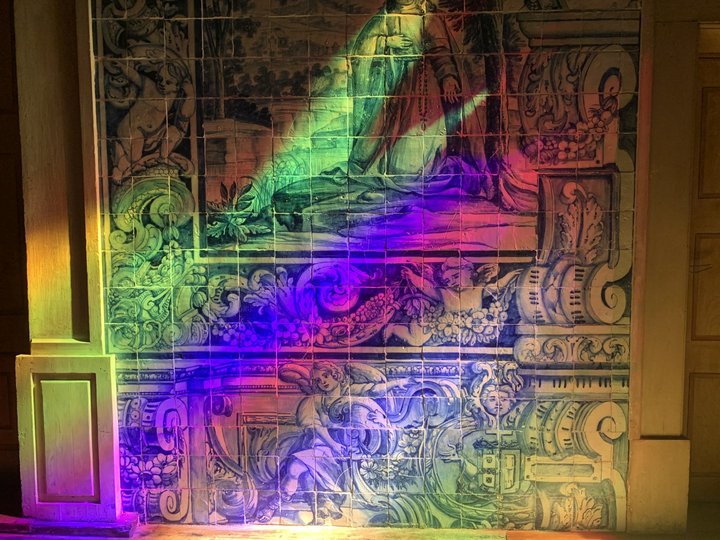
Pride lives! Thanks to a stained glass window between the sun and these azulejo tiles in a 600-year-old church in Portugal. (Barry Evans)
Don’t skimp! You’ve spent a ton of money just to get wherever. If it costs five or ten Euros to visit a monument, so be it. Ditto that bacalhau com natas (salt cod in cream) Portuguese dish that looks so inviting on the menu — it’s spendy, but compared with what you paid to actually get there, maybe it’s not so expensive.
Don’t overplan. Days when you wake up not knowing what you’re doing that day are the best of all. Taxi drivers, Uber drivers, tourist office helpers, front-desk staff — are your friends. Make the most of your time with them. We’ve learned more about a country in 30 minutes in the back seat of an Uber than days wandering around seeing the sights.
Learn the frequent-flyer points game to get free flights all over. Here’s a good place to start. And, since you’ll probably be flying out of (deep breath) the California Redwood Coast - Humboldt County Airport, aka ACV, you should head over to the United Airlines Visa card site, here.

We flew free to Cambodia on frequent flyer miles a few years ago. This temple is near Ankor Wat. Photo: Barry Evans.
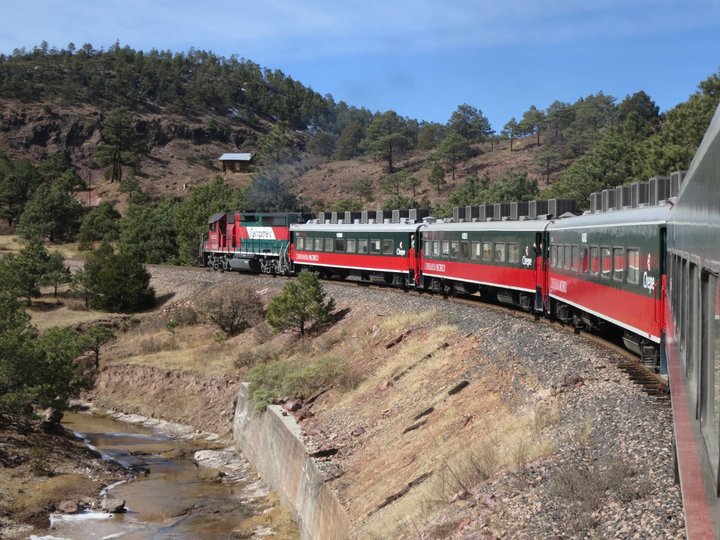
Heading up the Copper Canyon, Mexico. Photo: Barry Evans.
BOOKED
Yesterday: 12 felonies, 16 misdemeanors, 0 infractions
JUDGED
Humboldt County Superior Court Calendar: Today
CHP REPORTS
Sr299 / Industrial Pkwy (RD office): Traffic Hazard
0 Sr299 (RD office): Trfc Collision-1141 Enrt
ELSEWHERE
100% Humboldt, with Scott Hammond: #129. You Don’t Have to Be Wealthy to Give Back | Sara Dronkers
RHBB: Trinity County Marks 25th Anniversary of September 11 with First Responder Commemoration Ceremony
RHBB: CDPH Issues Immunization Recommendations for 2026-27 Respiratory Virus Season
RHBB: Redway Transfer Station to Close an Extra Day for Construction
LETTER FROM ISTANBUL: The Golden Hour
James Tressler / Sunday, Nov. 28, 2021 @ 7 a.m. / Letter From Istanbul
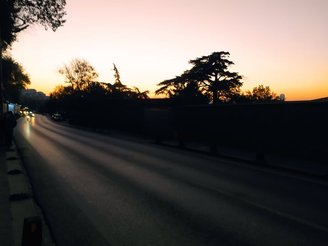
Photo: Tressler.
Nizam
walked quickly and nervously through the twilight. The fences and
houses along Limon Paşa
Boulevard were dark silhouettes beneath the rapidly aging sun. Ah,
the Golden Hour, he mused, not without nervous irony. A golden death
at the golden hour.
Not that he was really planning to go through with it. His whole mindset had been kicking around in a daze for some time. Everything had taken on this dense unreality, like those false sounds one hears on a sleepless night (something he had been rather familiar with of late).
It was Saturday evening, and the young people passed him on the sidewalks. They chatted gaily, some even rode the green scooters that were available all around the city. Their forms were cast in a strange blue mist as they went on, bound gaily for the city center and Saturday night charms. He bitterly envied them, and eyed them wistfully as they disappeared into the murky shadows.
Nizam was 26, at the straying edges of youth. He had not managed to graduate university as he had promised his family the year before, when they had issued their ultimatum. True to his father’s word, he had been cut off from his allowance, was told, “Time to be a man, son!” That was the previous June.
Now it was late November, the last rays of the long autumn fading with the sunset. The forecast called for rain the following week, and the slog into winter was surely ahead. On top of that, he was behind on rent. His flat mate, an easygoing Erasmus student from France who had been kindly sponsoring his precarious lifestyle since September, was heading home in a few weeks, which meant that he most likely would be out on his ass by the New Year.
“This fucking inflation!” he said, repeatedly. “You can’t step out the door these days without dropping a hundred lira!”
It was true, for the record. The country’s currency had fallen sharply in recent weeks against the dollar, as the Federal Reserve and other international entities tightened their policies. Experts had warned of double-digit inflation in Turkey.
Nizam, whose primary source of income was giving informal English lessons and writing term papers for a handful of lazy associates from college days, found himself broke most of the time. Hell, all the time! His father owned some mining interests in Central Asia, but since the divorce a few years back, had slowly cut back on alimony payments, most likely because he was giving this money to his new girlfriend (a theory posited by his mother, who herself had resignedly and angrily gone to live with relatives in Arizona. The mother sent Nizam whatever she could send, but Nizam suspected she was wearing out her welcome with the relatives more and more with each financial request).
Two hundred bucks. No, five hundred. What he could do with that right about now. Dollars were like gold here! With the current exchange rate, five hundred would be worth more than ten times that in Istanbul. He could even keep them a few weeks on the almost sure bet that the lira would continue its plunge.
None of these thoughts were really in his head as he walked along Limon Pasa. They had been on his mind the past couple of days, but they were not justifications so much as indications. Indications of what? The “approximate possibilities of his reality,” as Nizam had put it. He was rather a deep thinker.
“Anything is possible in this world, of course,” he would reason. “We all know that! But that is not the issue. The issue is – within each person’s own individual universe (this was key) – what are the approximate possibilities on any given day? After all, there are some things that just will never happen, not in our individual universe. I could win a million dollars, or get hit by a train – all in the same day even, you say. Yes, but we all know ourselves, right? And I know that in my approximate universe, those two things are never likely to happen. One cannot force things, you see – “
And on and on, in this nebulous world of Raskolnikovian proportions the young man swirled, as he walked on through the twilight. The street lights were on now, and the cars had turned on their headlights. The big city buses hurtled past. Naturally, all of the taxis that passed were busy since it was the weekend.
This idea concerning his “buyuk anne” (grandmother, in Turkish) had evolved from this strange thinking, and he knew it was just a crazy lamp post kind of reasoning. He was on his way to see his 90-year-old grandmother at the hospital. A couple of weeks before she had fallen down at her apartment, broken her hip and been taken to hospital. The surgery was successful, but then she had contacted Covid at the hospital. The doctors thought she had got it while getting X rays.
His grandmother was a strong old woman, always had been. She was conservative, still wore the headscarf and traditional dress. Her side of the family was the wealthy side, having made a modest fortune in agriculture and real estate back in the day. As an economics student and would-be entrepreneur, Nizam could say he was pretty well-versed in the family fortune. And he could also boast that he and “Granny” had always been close, but then one could also say she was a traditional woman who was fond of all her children and grandchildren.
What occupied Nizam in his twilight walk (it was actually dark out now) was the pure romance of his notion. That he would actually put his granny out of her misery. How hard could it be? She had had very few visitors (relatives mostly lived in the south of Turkey, and his own parents we already know about). The poor woman had lived 90 years, all happy and healthy until the unfortunate accident. He actually lamented this accident. After all, he had always admired the old lady, the strength, good sense and spirit of her. To him, she represented the ideal old-fashioned Anatolian woman, broad-shouldered, broad-hearted and absolutely practical in all affairs.
And yet look at her now, he thought. All alone in a hospital, sick with a disease that she never would have caught if this stupid accident hadn’t occurred. If the stupid hospital staff had been more careful. Most likely, she would die in that hospital anyway. Was that any way to end a beautiful, long and well-lived life? He even fancied that his grandmother, in her staunch, practical wisdom, would approve of his plan.
(Full disclosure: Not too long ago, Nizam had read of a man in India who had been killed his wife with a cobra, had in fact bought and learned how to milk the cobra. The man had administered a sedative to the wife, then had the snake “bite” her in her sleep. However, the subsequent inquest had revealed that such species of snake would have been dormant during the estimated time of the bite, and that nevertheless tests had shown the species to be non-aggressive. The Indian man had been forced to confess.
After reading this story, Nasim had envisioned a conversation with his granny:
“Did you hear about that guy in India, granny? Tried to get away with killing his wife with a cobra. The dumb bastard got caught, of course!”
“Hmph!” granny in his thoughts sniffed. “You’d think there would be much easier ways than that!”)
###
Easier indeed, Now, if he could actually do it … All he had to do was stop in for a visit. He was family after all, they had to let him see her. He could stay for awhile, and if his granny was awake she would of course be glad to see him. They could talk for awhile, and he could amuse her with his quick wit and family gossip. And sooner or later, she would tire, fall asleep, and he could just take a nearby pillow and …. The Golden Death, that’s what it was called in this part of the world. The reward for a long, good life was to die peacefully in one’s sleep. So would it be so wrong, to give his dear granny the Golden Death?
He knew enough of her affairs (from his mother) that the properties were to be divided equally among the mother and her two brothers, and that the mother planned to immediately sell her share. That would presumably be enough to take care of them both, if the offer were good. Well, there were always foreign buyers on the market.
Nizam reached the intersection in Üsküdar. It was a bright, busy Saturday evening, lots of traffic. He had a few lira left on his Istanbulkart, enough to get him to the hospital in Acibadem and back. The bus ride was usually about 15 minutes, but took a bit longer because of the traffic. He was so preoccupied that he forgot to don his mask, and the bus of course was very crowded. A nearby woman, a nervous type, sharply reminded him. “Mask!” she snapped, pointing to her own black one.
Nizam apologized abstractedly, and fished his mask from his coat pocket. The bus was mostly full of families, with mothers balancing shopping bags in both hands while their children, wearing winter coats, looked out the windows. The buses going the other way were all full of young people heading to catch the ferries to Beşiktas and Karaköy, where all the good bars and night spots were. Nice to be them, Nizam thought absently.
He knew that he would never go through with this sordid plan. He knew that as the bus went up the hill, with the streetlights shining damply in the gauzy night air. A light rain had begun to fall, and the streets were shiny and black. He would go to the hospital, check on his grandmother and dumbly head back to the flat in Kuzguncuk. He would drink the last of the bottle of Jack Daniels he had at the flat, smoke the last bit of joint he had saved in the ashtray next to the bed. And in the morning, he would wake up with the same feelings of loneliness and desolation.
At Koşuyolu, he got off the bus, and changed to a blue minbus. It only cost two lira, which he paid with two coins from his pocket. He arrived at the hospital about ten minutes later. It was slow at the hospital, but then it was early. As always, his eyes took a moment to adjust to the sterile brightness of the corridors. The woman working at the desk recognized him and nodded as he indicated toward the lift.
Up on the second floor, he went to his granny’s room. Not unexpectedly, she was asleep. Against the fresh whiteness of the hospital bedding, her face looked grey and wasted. She looked very tired. Nizam sat down and just looked at her for a long time as she slept. He thought about the time in high school when he’d brought a girl home from school. He had been nervous about it, as he introduced the girl to his parents, and they all sat in the dining room having Turkish coffee and some chocolates. His granny had been visiting for a few weeks then, and had come out and sat with them during the visit, and Nizam remembered how he had looked at her, and his granny had smiled and given him a wink with her twinkling brown eyes, and he had been grateful for her quiet encouragement.
He thought of that day again, as he regarded his sleeping granny. Ninety years! And not sick a day in her whole life, he reflected. If it weren’t for her falling down, she no doubt could have lived to be a hundred. No doubt at all! Now most likely she would die soon. The doctors said the operation and the Covid had really sapped her strength, knocked the life out of her. Their hope was that if her recovery continued, as it seemed to be doing, she would be able to return home to her apartment in a few more days.
That would be best, Nizam thought. If she had to die, as she soon would, it would be better she died at home, not in some hospital bed surrounded by nobody, or by a grandson who had pondered (briefly) the idea of murdering her. To die at home, in her sleep, in her own bed: that was truly the golden death.
He kissed his granny on the forehead, even though he was supposed to avoid touching her, and wished her good night.
On the way home, Nizam felt better. Maybe he had figured something out. Maybe in the approximate possibilities of his world, he could turn out all right. He was still young, after all.
###
James Tressler, a former Lost Coast resident, is a writer and teacher living in Istanbul.
THE ECONEWS REPORT: Restoring Blue Lake’s Powers Creek, One of the County’s Most Significant Urban Streams
The EcoNews Report / Saturday, Nov. 27, 2021 @ 10 a.m. / Environment
Humboldt State University students visit Powers Creek to learn about watershed restoration. Photo: Blue Lake Rancheria.
###
The Mad River is isn’t one of the county’s largest, but it’s the source of water for more than half of the county’s population. One of its tributaries, Powers Creek, runs smack through the town Blue Lake — and through Blue Lake’s industrial outskirts — and it’s been much impacted by development over the years.
But recently, people have started to do something about that. In this episode, we’re joined by representatives of the Mad River Alliance and the Blue Lake Rancheria, who tell us about a recent restoration project aimed at bringing back the natural systems supported by the creek.
AUDIO:
OBITUARY: Roger Hall, 1959-2021
LoCO Staff / Thursday, Nov. 25, 2021 @ 6:45 a.m. / Obits
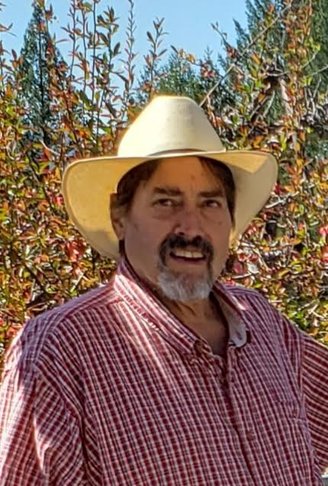
Roger William Hall (Oct. 24, 1959-Oct. 5, 2021) enjoyed a very full life, though too short, with the many people who love him.
Roger was a dedicated father to Audrey Jean Hall whom he adored and cherished. He was equally committed to her mother, his partner, Audreena Wantt for over 32 years. His friends became part of his family because of his passion, love, sincerity and dedication towards the many people he knew. He maintained and fostered friendships that began in grade school at Hoaglin/Zenia and Covelo. He would go to any length to physically, financially, and emotionally help the people he loved. If you ever had a need for assistance, support, shelter or someone to sit and enjoy the moment with, he was there. His love of his family and his friends was unwavering. Roger never really met a stranger and shared his love of life and laughter freely. Words cannot describe the moments with Roger and the importance they held for him as well.
Shortly after graduating from Round Valley High School, he traveled to Alaska, and later with LSI to states such as South Carolina as a welder. He was an avid fisherman, accomplished horseman, gifted gardener, straight shooter figuratively and literally, and experienced logger who was no stranger to hard work and long days. He valued and treasured antiques and Indian artifacts; preserving, treasuring and respecting their history and purpose.
The loss of Roger cannot be explained with words, but is felt by each person who knew and cared for him. He would always want us to cherish the happy memories with him and not focus on the loss we feel.
He is survived by Audreena Wantt, ‘the love of his life” and mother of his one and only child, Audrey Jean Hall; mother, Lois Hall; father, Charles Hall; brother, Michael Hall; sister, Kathy O’Day; nieces, Natasha Zabinski (her son, Alexander Demello) Cheyenne Zabinski, and Brittney Hall; and Baldosser (Schlink), Shannon, Nemitz and Bugenig cousins. Many of his passions and talents were heavily influenced by his grandparents Kate Ramey, Viva, George, and Darotha (Dodie) Hall. He said he often felt jealous because his Grandmother Dodie loved and was loved by so very many people and he didn’t want to share her. However, his love and support reached out just as far with the same passion and compassion.
If you or someone you love struggles with alcohol addictions, there are free detox and rehab programs such as AA (1-800-839-1686) and Stop Addiction (1- 877-578-6624) who can help you with free counseling and programs.
###
The obituary above was submitted on behalf of Roger’s loved ones. The Lost Coast Outpost runs obituaries of Humboldt County residents at no charge. See guidelines here.
OBITUARY: Dianne Bernard, 1948-2021
LoCO Staff / Thursday, Nov. 25, 2021 @ 6:45 a.m. / Obits
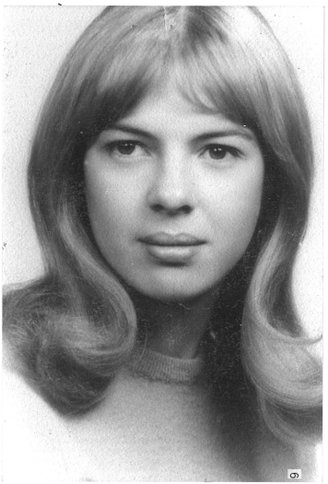
Dianne Mary Bernard was born July 12, 1948, in Chicopee, Massachusetts and passed on to her next adventure on November 17, 2021. She was the first child of the late Armand Bernard and Alice (Kupiec) Bernard. Armand was a restaurateur and Alice supported the family taking care of the children and home. Although her dad was French Canadian, Dianne grew up in a tight knit Catholic Polish community surrounded by extended family and friends. Nearly all of them lived within a two-block radius of each other and most of them still do. After high school, Dianne headed to California to visit her cousin living in San Diego, and to experience the sixties scene and see the Pacific Ocean. Through mutual friends, she met her ex-husband, Mike Brady. Dianne and Mike had four children together.
Dianne enjoyed traveling with Mike. Together, they would go to Paris and Denmark, tour the United States, and spend time in Mexico. She had fond memories of apple picking in Washington State. Eventually, the family settled in Berkeley. Dianne was an avid yard-saler and treasure hunter. She sold those treasures in the second-hand shop that she and Mike opened. She was proud that her shop was mentioned in the late Herb Caen’s column in the San Francisco Chronicle.
In 1984, looking for a new beginning, Dianne visited a friend in Arcata and fell in love with the north coast. A dear friend found Dianne a home in Arcata and with the help of her brother-in law, she got a car big enough to move herself and her four children from Berkeley. Dianne lived in this home until her passing. She created a beautiful garden and made the place her own. There were challenges and difficult moments, but Dianne would say that you will always get what you need.
Over the years, Dianne continued her adventures by traveling to other states, going to the gem show in Tucson or attending music festivals. She loved the vision quest she took where she fasted and meditated alone in the wilderness for three days. A personal achievement was her graduation from Humboldt State University with a Bachelor of Arts degree in Religious Studies. After graduation, she worked at Our House with the Youth Services Bureau, Redwood Community Action Agency. She made a lot of friends and worked with troubled teens. A highlight was a work trip to Washington, D.C. After 15 years with the program, Dianne felt that it was time to follow another of her dreams. She studied Ayurveda medicine at the California College of Ayurveda in Grass Valley and received a Practitioner certification. Her professional career path segued into the food service industry in Arcata where she worked at the Pacific Rim Noodle House and then the North Coast Co Op. After some years in the Deli, she retired.
In her retirement, Dianne spent time with her family, friends, and her dogs. She loved to work in her garden and was an exceptional gardener. She would read several books at the same time about all kinds of different subjects. She enjoyed walking at the Arcata Marsh and the Community Forest. When the day was gray, Dianne would remark that the flowers and colors were more vibrant.
Dianne was preceded in death by her father and mother, Armand and Alice Bernard, her brother, Timothy A. “Putt” Bernard, her ex-husband, Michael Brady and her family dogs, Lulu, Freida, Athena and Tank. Dianne is survived by her loving sister, Judith Gilliam of Chicopee; several cousins, nieces, and nephews all of Chicopee. She leaves behind her devoted daughters Faith Brady, Tasha Brady (Brandon, Sebastian, and Mason), Billie Brady (Emiliano and Amaya), her son Michael Brady (Mike Jr.) and her beloved canine companion, Yoda.
Dianne loved to laugh. She was kind, generous, thoughtful, spiritual, and fun to be around. Her passing has left an emptiness, but Dianne’s legacy is to embrace life and practice kindness. A Celebration of Life will be held in early 2022. Future announcements will be posted to Dianne’s Facebook page.
###
The obituary above was submitted on behalf of Dianne’s loved ones. The Lost Coast Outpost runs obituaries of Humboldt County residents at no charge. See guidelines here.
EPD Says it is Employing Undercover Operations to Combat Rising Rates of Retail Thefts
LoCO Staff / Wednesday, Nov. 24, 2021 @ 5:26 p.m. / Crime
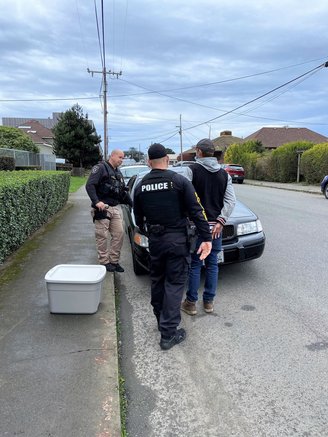
Photo: EPD.
Press release from the Eureka Police Department:
In response to rising retail theft reports, The Eureka Police Department (EPD) has coordinated undercover operations with the assistance of EPD patrol officers, the Community Safety and Engagement Team (CSET), the Problem Oriented Policing team (POP), non-sworn personnel, and an Agent from Alcohol Beverage Control (ABC).
Over the past two weeks, undercover operations have been conducted at local retailers due to the on-going theft related activities throughout the City of Eureka. During just two operations, 10 total individuals were detained and 9 were ultimately arrested for burglary and shoplifting. For some, additional charges included being in possession of controlled substances, burglary tools, drug paraphernalia, resisting arrest, providing false ID to a peace officer, misdemeanor and felony warrants.
“We hope these ongoing retail theft operations not only provide support to our community’s businesses and their employees, but also deliver a strong message to would-be-shoplifters that their unlawful conduct won’t be tolerated in Eureka,” said Eureka Police Chief Steve Watson.
As Black Friday approaches and holiday shopping is in full swing, the Eureka Police Department will continue crime fighting efforts, including undercover operations. We’d also like to remind those holiday shopping, to not leave shopping bags in your vehicle while you go store to store. Make stops at home or carefully secure in a trunk. If you opt for online shopping, track your packages and limit the time they spend on the porch. Ideally have them sent when someone will be home to receive them.
(VIDEO) Humboldt Public Health Director Sofia Pereira Reflects on County’s Impending 10,000 COVID Case Milestone, Progress Made During the Pandemic
John Ross Ferrara / Wednesday, Nov. 24, 2021 @ 3:19 p.m. / COVID-19 and Humboldt
Department of Health and Human Services Director Sofia Pereira issued a video statement today, reflecting on the enormity of the pandemic as Humboldt nears the milestone of 10,000 total confirmed COVID-19 cases.
As of today, Humboldt County has recorded a total of 9,963 cases, 117 deaths and 443 hospitalizations.
“As we prepare to gather this week with family and friends, we are seeing the number of positive cases of COVID-19 in Humboldt County nearing a grim statistic — nearly 10,000 positive cases,” Pereira said. “Given the recent meteoric rise in the use of at-home tests, we know that the true number is much higher than that.”
In her statement, Pereira also discussed the progress the county has made since COVID-19 vaccines were first made available to the public.
“I’m so grateful that we now have a way to dramatically reduce the risk of hospitalizations and death in our community,” she said. “This is saving lives and I’m so grateful for that ability.”
In the last year, more than 160,000 vaccine doses have been administered to nearly 81,000 Humboldt County residents.
Watch Pereira’s full statement in the video embedded at the top of this story.


