Iona
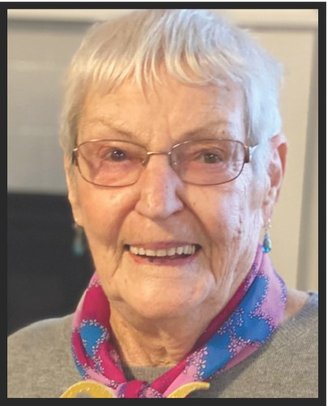
May Ross was born on February 4 1924 in the Sand Hills of Colorado on
her parents’ farm, 20 miles north of Wray, Colorado. She
passed on September 19, 2021 with her family and friends at her side
in the home of her granddaughter in Vancouver, Wash.
Iona
grew up during the depression. She tried to teach her children to
“Eat it up, wear it out and make it do and do without.”
Iona
practiced that all her life, which wasn’t easy. She was widowed
during World War II.
She
worked in the mill in Lebanon, Oregon after graduating from high
school to take care of her daughter.
After
she was married to Evert Ross they moved to Arcata.
Evert
worked in the woods for Hammond, and the family lived in Crannell, a
lumber town. Her children loved the freedom of the country. Iona went
to work for Louisiana Pacific in Samoa after her family was raised.
When
she retired she volunteered at Mad River Hospital as a “Pink
Lady,” where she made life long friends. She took a course for
caregiving and enjoyed caring for many of her clients. She enjoyed
her membership in Beta Sigma Phi and kept in touch her sisters.
She
loved to travel and was always ready to go.
It
didn’t matter if it was to Germany, Ireland, Hawaii, Philippine
Islands, Mexico or just to the city to visit her daughter or Oregon
to visit her family, she was ready to go.
Every
morning Iona would say her prayers for the addicted, prayers for healing and prayer to the Sacred Heart.
“Take
my hand O blessed Mother, hold me firmly list I fall. I grow nervous
while walking and humbly on thee call. Guide me over every crossing.
Watch me when I’m on the stairs. Let me know that you’re beside me.
Listen to my fervent prayers. Bring me to my destination, safely
along the way. Bless my every undertaking and my duties for the day.
And when evening creeps upon me, I’ll never fear to be alone. Once
again O Blessed Mother. Take my hand and lead me home.”
Iona
is survived by her son Jerry Ross, sister Margaret Lang, grandchildren Yvonne Guido, Vicky Starnes, Miles Eastman, Jeremy Coleman,
Thomas Ross, Amy Ross, and many more great grand children and
great-great grandchildren.
Iona
was proceeded in death by her husband Evert Ross; children Rita
Rogers, Tim F. Ross, Larry Ross; grandchildren Timmy E. Ross, and
great grandchild James Fawcett.
A
memorial mass will be held on Saturday October 2, 2021 at St .Mary’s
Catholic Church in Arcata. Rosary at 10:30 a.m., and mass at 11 a.m.
###
The obituary above was submitted on behalf of Iona Ross’s loved ones. The Lost Coast Outpost runs obituaries of Humboldt County residents at no charge. See guidelines here.
On
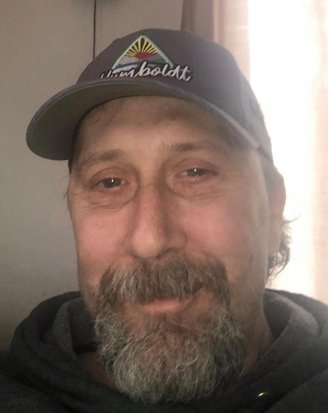
August 20, 1970, Robert Fisher was born in Bitburg, Germany AFB to Robert
and Diana Fisher. On Sept 18, 2021, Robert passed away unexpectedly
He
was a loving father, son, brother, uncle and friend. Robbie loved to
fish and go to the beach. But most of all he liked just hanging out
with his family.
His
untimely passing came as a surprise to his family and friends.
Robert
is survived by his children Brittney Fisher and Robert Fisher, his
mother Diana Fisher, his sister and her husband Tammy and Forrest
Anderson, his nephew Jordan Stewart, and nieces Sydney Stewart and
Hunter Anderson and many friends that he loved very much.
He
was preceded in death by his father, Robert Lee Fisher.
A
celebration of Robbie’s life will be at sequoia park on Sept. 25, at
2 p.m.
Robbie
was loved by so many and he will be dearly missed. We are so blessed
to have had him in our lives
We
love you, Robbie.
###
The obituary above was submitted on behalf of Robert Fisher’s loved ones. The Lost Coast Outpost runs obituaries of Humboldt County residents at no charge. See guidelines here.
Marlene
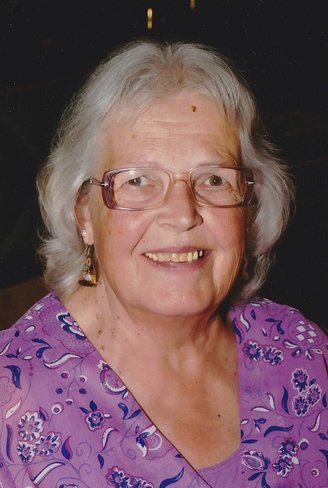
went to be with the Lord on August 27, 2021 at the age of 81. She was
born on October 23, 1939 in Fortuna at the home of Edwin and
Marie Betts. She was a 1957 graduate of Fortuna High School.
She
leaves behind her three children, Shawn (Kathy) Snell, Megan Coffman
and Rory Snell.
Marlene
was preceded in death by her husband Michael Owen Snell, two
grandchildren Joshua Snell and Jessica Callender, parents Edwin and
Marie Brandt Betts and her brother Ronald Betts.
Marlene
was well known for her gardening. Along with the family cemeteries
and family gardens, she took care of the gardens in the town of Rio
Dell for the past 10 years.
She
had requested no service so the family held a private one. She is
buried in the Oceanview Cemetery with her husband.
###
The obituary above was submitted on behalf of Marlene Snell’s loved ones. The Lost Coast Outpost runs obituaries of Humboldt County residents at no charge. See guidelines here.
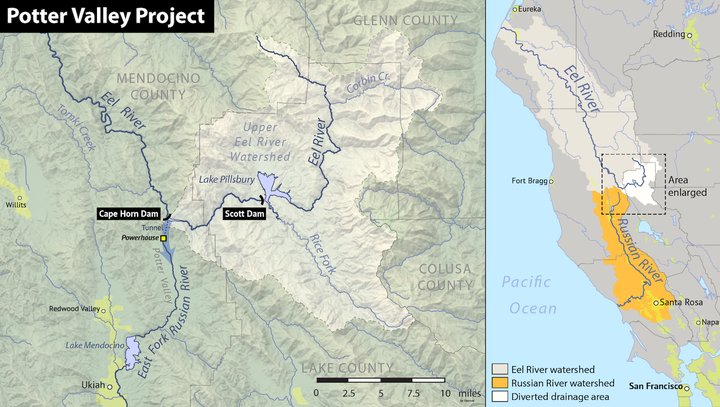
Bad news arrived Thursday morning for the Two Basin Partnership, a regional coalition of agencies working to take over PG&E’s license for the Potter Valley Project, a hydroelectric system that diverts tens of thousands of acre-feet of water each year from the Eel River into the headwaters of the Russian River.
Earlier this month, the Two-Basin Partnership — which is comprised of California Trout, the County of Humboldt, the Mendocino County Inland Water & Power Commission, the Round Valley Indian Tribes and Sonoma County Water Agency — reached out to the Federal Energy Regulatory Commission (FERC) to request a pause in its application, an abeyance of just a few extra months in order to re-evaluate its plans.
This morning, FERC denied the request, telling the partnership that it has until April 14, 2022, when the current license for the project is due to expire, to file its final license application. If the partnership misses that deadline then FERC may force PG&E to surrender the license, likely leading to the project being decommissioned.
Congressman Jared Huffman (D-San Rafael), who has actively worked to develop a “two-basin solution” that satisfies the sometimes divergent interests of the agencies involved, expressed resolve in a statement issued in the wake of today’s decision.
“The Two Basin Partners have worked diligently to find common ground and resources to pursue a revitalized Potter Valley Project – but we always knew that this would be a major challenge,” Huffman said. “Today’s ruling by FERC is just a new chapter in seeking a Two Basin Solution, and I am committed to doing the hard work needed to achieve that end. This partnership and the stakeholders in the Eel and Russian river basins are strong and ready to take on a new challenge.”
The Two-Basin Partnership has been struggling to finance the takeover. FERC requires roughly $20 million-worth of studies before it will agree to transfer the license, and PG&E has declined to foot any of that bill, as have water users in Mendocino and Sonoma counties.
The Two-Basin Partnership has been working to form a regional entity that would file the license application and operate the project. FERC gave the partnership 60 days to file a status report, including completed studies that the agency requires.
Even before the FERC decision announced today, the Two-Basin Partnership’s path to relicensing had begun to look so tricky and unlikely to succeed that local environmental group Friends of the Eel (FOER) recently came out in opposition, urging the partnership to instead allow the license to expire so that decommissioning can begin.
In a Sept. 9 press release, FOER Executive Director Alicia Hamann said, “The
lack of meaningful support from Russian River interests, which stand to benefit the most from this
proposal, means there is yet no proposal to monetize any future water diversions, and thus no way
to support the costs of maintaining a diversion.”
The group says removal of Scott Dam is necessary for the survival of the Eel River’s populations of chinook salmon and steelhead, both of which are listed under the
federal Endangered Species Act as Threatened. In the September 9 press release the group said dam removal is inevitable, and decommissioning is the most sensible path toward that goal.
Reached on Thursday, Hamann said she was excited by FERC’s ruling. “This is exactly the kind of reasonable response we hoped for but did not expect to see from FERC – that there needs to be meaningful progress toward relicensing before license extensions can be considered,” she said in an emailed statement. “Absent some miraculous new funding source, it appears that PG&E will begin FERC’s surrender process when the license expires in April of next year. And the dams on the Eel River will be removed soon after.”
Craig Tucker, a consultant who has been working on behalf of Humboldt County in the Two-Basin Partnership, wasn’t quite so happy.
“We are disappointed that FERC denied our request for abeyance,” he said via email. “Still, Humboldt County remains committed to working with our partners on a two-basin solution, whether that means relicensing the project ourselves or working with PG&E on a surrender plan. Both Russian and Eel River communities are facing hardships related to water shortages and we have to work together to solve these problems. We will regroup with partners soon to plan our next steps.”
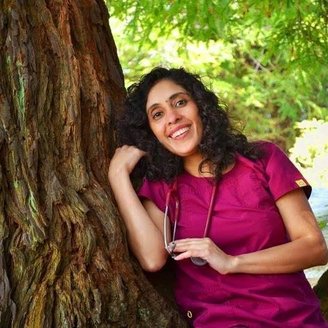
A Nurse at Jerold Phelps Community Hospital in Garberville has been selected as a 2021 Healthcare Hero by the California Association of Health Facilities. Adelaida Yanez, RN was one of twelve individuals who work in long-term care across the entire state to be selected for this award.
Adelaida is an integral part of the team providing high-quality care for skilled nursing residents at Jerold Phelps Community Hospital. Through the diligence and care of Adelaida and all of the hospital staff, the facility has had zero positive COVID-19 cases within residents to date. In September 2020, when the devastating August Complex wildfire burned within 10-miles of the skilled nursing facility, Adelaida helped lead the evacuation of residents to Fortuna. She was also instrumental in SoHum Health’s vaccination effort in early 2021, when Jerold Phelps Community Hospital was the only provider of COVID-19 vaccines within a fifty-mile radius.
Adelaida Yanez, RN has been a leader in the fight against COVID-19 in Southern Humboldt and beyond. SoHum Health extends a heartfelt congratulations and sincere gratitude for her contributions to their stellar team of healthcare professionals. Adelaida will receive her award at the California Association of Health Facilities Annual Convention in Palm Springs this November.
Jerold Phelps Community Hospital is part of a family of health services provided by SoHum Health. SoHum Health’s services also include Southern Humboldt Community Clinic, Garberville Pharmacy, and Southern Humboldt Family Resource Center. For more information visit sohumhealth.org or call (707) 923-3921.
Inaugural Avelo flight from Sonoma County lands at Las Vegas airport a few weeks ago. This will be us soon! Photo: Avelo.
###
Press release from Avelo Air:
Building on the popularity of Avelo Airlines’ current service
between the Humboldt Bay Area and Los Angeles, the airline today announced the addition of a
second popular leisure destination – Las Vegas. Everyday one-way low fares to the
entertainment capital of the world starting at $29* are available at AveloAir.com.
Avelo’s exclusive twice-weekly direct service between California Redwood Coast - Humboldt
County Airport (ACV) and Las Vegas’ McCarran International Airport (LAS) begins November 18,
2021 and will be operated by Boeing Next Generation 737-800 aircraft.
“We are excited to add this second popular vacation and entertainment destination to our
Eureka / Arcata schedule,” said Avelo Chairman and CEO Andrew Levy. “Getting to Vegas from
the Humboldt Bay Area is now easier and more affordable than ever. The addition of Las Vegas
to our existing Los Angeles service, demonstrates our commitment to providing more choice
and convenient access to the places our Customers want to go at everyday low fares.”
The flight will operate on Thursdays and Sundays. Flight 147 departs ACV at 3:00 p.m., arriving
LAS at 4:45 p.m. Flight 148 departs LAS at 5:25 p.m., arriving ACV at 7:25 p.m.
“We are beyond excited to expand our partnership with Avelo Airlines,” said County of
Humboldt Director of Aviation Cody Roggatz. “The Humboldt Community has been very
supportive of the Los Angeles service that Avelo started in May 2021, leading Avelo to expand
their offerings out of ACV with this new service to Las Vegas. Humboldt residents will now have
low-price airfare for direct access to all that the entertainment capital of the world offers.”
“I want to thank Avelo for its continued confidence in our community. Their expanded
investment in air service is further evidence that Humboldt County’s future is bright,” said
Gregg Foster, Executive Director of the Redwood Region Economic Development
Commission. “This new service will provide a vital and convenient link between two great
leisure and business destinations. We look forward to working with Avelo and local business
and travel interests to ensure a durable and mutually beneficial partnership.”
The Entertainment Capital of the World
As one of North America’s leading business and leisure destinations, Las Vegas offers something
for everyone, including unrivaled entertainment and nightlife, exhilarating sporting events,
world-famous hotels and dining experiences, casinos, shopping and more. Beyond the strip,
outdoor adventures, family friendly activities, top-rated golf courses and iconic attractions
await visitors of all ages.
“Avelo Airlines continues to expand its service between Las Vegas and unique California
destinations, which is a win for our customers,” said Chris Jones, McCarran International Airport
Chief Marketing Officer. “Beyond bringing more travelers to Las Vegas, this new route will
create more opportunities for local residents to experience the natural beauty of the North
Coast of California and Redwoods National and State Parks.”
A Different, Better and More Affordable Travel Experience
Avelo’s everyday low fares have no change or cancellation fees. There is also no charge for
Customers who choose to make reservations by phone. Additionally, Avelo offers several
unbundled travel-enhancing options that give Customers the flexibility to pay for what they
value, including priority boarding, checked bags, carry-on overhead bags, and for bringing a pet
in the cabin.
Avelo operates single-class, fuel-efficient 189-seat 737-800 mainline jets from ACV, offering
Customers a more spacious and comfortable experience than the regional aircraft historically
serving this airport. Customers may choose from several seating options, including seats with
extra leg room, as well as pre-reserved window and aisle seating.
Avelo became America’s first new scheduled airline in nearly 15 years when it initiated service
on April 28, 2021, from its first base at Los Angeles’ most convenient and popular airport —
Hollywood Burbank Airport (BUR). The airline – which offers a more convenient, caring and
affordable experience – currently serves 10 popular destinations across the Western U.S.
In early November, Avelo will begin serving Customers in Connecticut from its first East Coast
base at Tweed-New Haven Airport (HVN). The airline will initially fly between HVN and five
popular Florida destinations – Fort Lauderdale, Fort Myers, Orlando, Palm Beach and Tampa.
Avelo is distinguished by its Soul of Service culture. The culture is grounded in a “One Crew”
mindset that promotes teamwork, kindness and, above all, doing the right thing. By caring for
one another and owning their commitments, Avelo Crewmembers provide a smooth,
enjoyable, reliable and caring experience for its Customers.
About Avelo Airlines
Avelo Airlines was founded with a simple purpose — to Inspire Travel. The airline offers
Customers time and money-saving convenience, surprisingly low everyday fares, and a
refreshingly smooth and caring experience through its Avelo Soul of Service culture. Operating
a fleet of Boeing Next Generation 737 aircraft, Avelo serves 10 popular destinations across the
Western U.S., including its base at Los Angeles’ Hollywood Burbank Airport (BUR), and starting
this fall, Avelo will begin serving Connecticut from its first East Coast base at Tweed-New Haven
Airport (HVN). For more information visit AveloAir.com.
About California Redwood Coast – Humboldt County Airport (ACV)
The California Redwood Coast – Humboldt County Airport (ACV) is the gateway to California’s
iconic Redwood Coast, home to Redwood National Park and the world’s tallest trees. More
information on the airport and the region can be found at flyhumboldt.org.
About McCarran International Airport (LAS)
McCarran International Airport is conveniently located just two miles from Las Vegas Boulevard
and 3.5 miles from the Las Vegas Convention Center, with most hotels located within a 15-
minute drive from the airport. McCarran currently has nonstop service to 120 cities in the U.S.,
with direct flights to and from Mexico. For more information visit mccarran.com.
*The one-way $29 introductory fare includes government taxes and fees. The fare is available
on a limited number of flights and seats. The fare must be booked by October 7, 2021, for travel
completed by January 11, 2022. Additional fees for carry-on and checked bags, assigned seats
and other optional services may apply. For full terms and conditions, please see Avelo’s
Contract of Carriage.
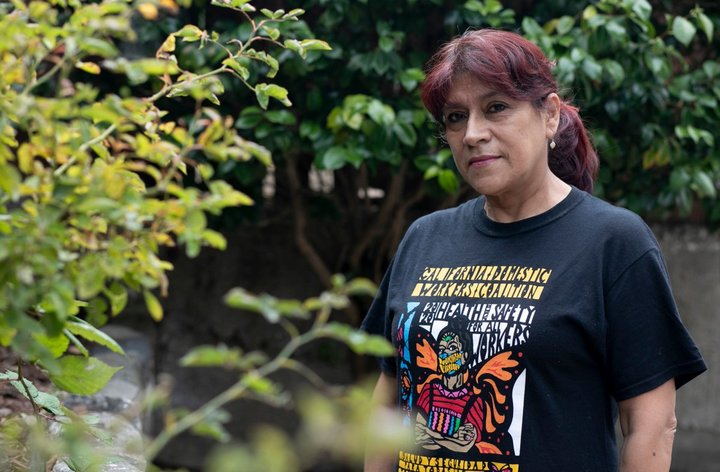
Martha Garrido, a domestic worker who lives in San Francisco, was unable to work for several weeks after breaking her hand but did not have access to paid sick leave. Photo by Anne Wernikoff, CalMatters
California requires employers to provide at least three days of paid sick leave each year to full-time workers. But when the pandemic hit, that wasn’t enough to cover 14-day quarantine requirements. Many workers had to either come in sick or take time off without pay.
On Sept. 30, the program is set to end. The state’s business lobby says it’s time, because many companies can’t afford the leave without a federal tax credit that offsets their costs, which is also expiring. It’s also a relief for some business owners struggling to find workers.
But even though California is currently reporting the lowest COVID-19 case rate in the country, some worker advocates say it’s too soon.
The return of students to classrooms means ending the additional leave could be “a crisis for many working families,” said Katie Waters-Smith, political organizing director for the California Work & Family Coalition.
“Parents can’t leave small children at home, so paid sick leave is even more important than usual on two fronts — making sure parents don’t feel like they have to send sick children to school, and making sure that parents can stay home when their children are sent home because of exposure without losing their income or pay,” Waters-Smith said in an email.
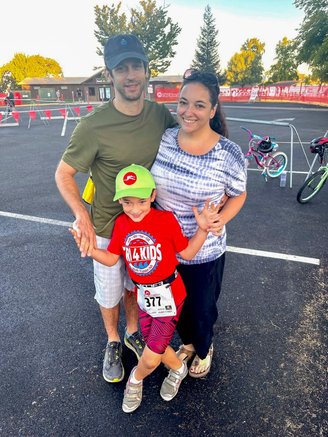
Alex Huth with his wife and son. Photo courtesy of the Huth family
Alex Huth, whose 8-year-old son Leo had to stay home from a summer day camp after a COVID-19 exposure, said being able to take time off was a big help, with limited childcare options in the Sacramento area where they live.
Leo’s after-school childcare program is at his school, so if there’s a classroom exposure, the only option is to take more time off work. Huth said even for parents working from home, child care can be difficult to balance.
“We’re there, but we’re in another room with the door closed,” said Huth, an engineer for the California Air Resources Board. “It really wears on him, and it wears on us, and being able to just say, you know, for these three days I am a parent and I’m going to be available for my 8-year-old … it means a lot.”
Under the supplemental leave program passed in March, employees qualify if they are unable to work, even remotely, because they’re in quarantine or isolation, they’re caring for a family member who is, or they’re getting a vaccine or having side effects. Workers can receive as much as $511 a day, or a maximum of $5,110 total, with hours accrued retroactive to Jan. 1. Employers who provide the additional leave receive a federal tax credit equal to the worker’s paid time off, including any healthcare costs.
The state did not have data available yet on how many employees have used the leave. Independent contractors and employees at smaller businesses that don’t opt in are not covered. Some cities and counties have also required supplemental sick leave for COVID-related reasons.
Newsom’s office said there are no efforts to extend the COVID sick leave. There were a few failed attempts to expand sick leave in the Legislature this past session. Assemblymember Evan Low, a Democrat from Silicon Valley, said draft legislation on sick leave due to the surging delta variant of the coronavirus wasn’t ready before the session ended on Sept. 10.
“I’m disappointed we don’t have a bill to extend paid leave to support workers during the pandemic,” Low tweeted. “But we will not stop trying.”Assembly Bill 995, authored by San Diego-area Assemblymember Lorena Gonzalez, sought to increase the 24 hours of paid sick leave to 40 hours.
“Encouraging workers to stay home when they feel sick has been particularly critical during the COVID-19 pandemic,” the bill analysis said. “Some of the worst workplace outbreaks of the virus have occurred in the food sector industry, where on a national level, more than half of its workers cannot take paid sick leave.”
Gonzalez pulled the bill in June.
In July, three El Super grocery stores in Los Angeles and San Bernardino counties were fined more than $447,000 after a state investigation found sick workers were told to come to work until they received their test results, even when they had symptoms, according to the California Department of Industrial Relations. Other employees were denied time off to isolate, even if a household member tested positive.
“Given the ongoing COVID threat, it is premature to sunset the supplemental paid sick leave,” said William Dow, professor of health policy and management at the University of California, Berkeley’s School of Public Health.
“Unfortunately we know that in the absence of paid sick leave, too many employees will risk going to work and exposing others,” he said in an email. “Leave to care for others in COVID-19 quarantine or isolation is of course important as well.”
California should assume the cost of the federal tax credit for businesses as it expires, he said, or increase the minimum state requirement for paid leave to more than three days. “This would not be as effective because it would incentivize employers to discourage the use of sick leave, but it would be better than nothing,” he said.
“Unfortunately we know that in the absence of paid sick leave, too many employees will risk going to work and exposing others.” — William Dow, professor of health policy and management at the University of California, Berkeley’s School of Public Health
Linda Centeno, a Los Angeles resident and program advocate for Legal Aid at Work, had a breakthrough case of COVID-19 with severe symptoms. The supplemental sick leave gave her the time she needed to recover, since she didn’t have enough sick time accrued otherwise.
“I needed desperately to have paid sick leave, and I hate to think that there’s someone out there with a similar amount of debilitating pain that has to worry about financial security and about paying rent,” she said.
But with the expiration of the federal tax credit, businesses in California say it’s time to let the program end.
In August, the California Chamber of Commerce implored the Legislature to avoid any extension of the new law, Senate Bill 95, citing concerns over affordability, as well as abuse of the leave since employers are banned from seeking medical documentation, according to Ashley Hoffman, policy advocate for the chamber.
In addition, Hoffman said, there are a number of other leave programs available instead of supplemental sick leave, including exclusion pay — which provides employees regular pay for 10 or more days if they are available to work but must quarantine due to a workplace exposure. They can also take as much as eight weeks of paid family leave, or workers compensation.
“A big part of it is, what can a business afford? We heard, for example, a small business that used to offer other kinds of benefits. But because of all the other paid leave and sick leave, they had to forego some of the other benefits,” Hoffman said. “It can come at the cost of other things, whether it’s that or a business being able to afford other people to work.”
While the law exempts businesses that have 25 or fewer employees, smaller to mid-size firms are still trying to crawl out of the COVID recession they’ve been in for nearly two years, said John Kabateck, California director of the National Federation of Independent Business.
“Make no mistake, every worker should be afforded the ability and right to tend to health challenges and problems for themselves or their families,” he said. “But the problem we have with the supplemental leave bill is… this was being heaped on top of a pile of generous leave programs that employees are able to tap into as it relates to COVID. So this is just one more onerous cost on the fragile corner bookstore, restaurant or auto shop owner and more. And at the end of the day, where do those costs come from?”
“A big part of it is, what can a business afford? It can come at the cost of other things, whether it’s that or a business being able to afford other people to work.” — Ashley Hoffman, california chamber of commerce policy advocate
The future of sick leave
While the pandemiclaid bare the health and economic impacts of sick leave policies for workers in different industries, gaps existed long before COVID for employees in small firms, domestic workers and others.
Between 6.8 million and 19.6 million private-sector workers were left without paid sick days because the federal coronavirus law exempted companies with fewer than 50 employees, the Economic Policy Institute, a pro-labor think tank in Washington, D.C., said in June 2020.
“Obviously, those loopholes need to be closed, and workers — regardless of race or ethnicity — also need a permanent fix to this basic labor standard,” the institute said.
Martha Garrido, a member of La Colectiva de Mujeres de San Francisco, works daily cleaning houses and caring for older adults. But as a domestic worker, she can’t take time off, Garrido said. If she doesn’t work, she doesn’t get paid.
“So what I have to do is save some money to take time off, either to be able to take care of a family member if they get sick in an emergency, or because I feel sick or have pain in my hands or body from the work we do without rest,” she said via a translated statement.
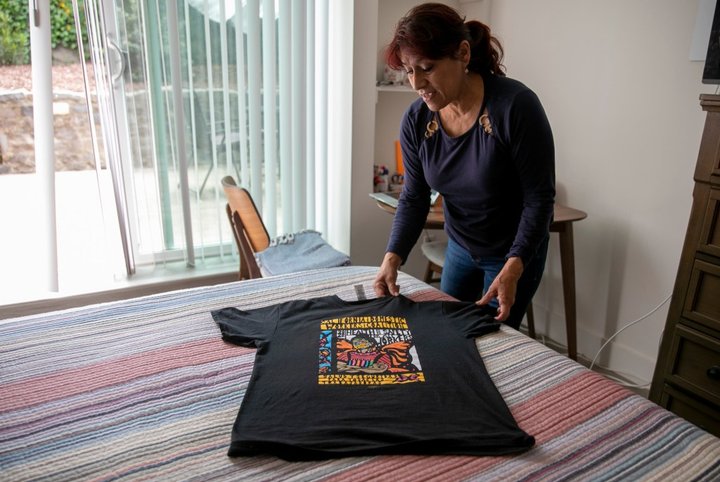
Martha Garrido lays out a California Domestic Worker’s Coalition shirt on the bed at her San Francisco home. Garrido says she was able to avoid falling behind on rent after breaking her hand earlier this year because her landlord gave her a break while she was unable to work. Photo by Anne Wernikoff, CalMatters
In February, Garrido slipped while working and broke her hand. She had to have a cast on for seven weeks. She stayed home for about two weeks, but then she went back to work, cleaning houses with her cast on, she said.
Garrido is working with the California Domestic Workers Coalition to push for more equitable leave policies in San Francisco, including a system making it easier for those with multiple employers to accrue and use their leave.
“The COVID 19 pandemic has further exposed how domestic workers have no access to an economic safety net in times of great need. These failures have had devastating impacts on domestic workers in California,” the coalition wrote for the San Francisco campaign. “When these benefits are truly accessible, domestic workers will be closer to achieving the dignity and respect they deserve.”
###
CALmatters.org is a nonprofit, nonpartisan media venture explaining California policies and politics.