Press release from the Humboldt County Department of Health and Human Services:
Thanks in part to a $5.1 million grant from the Investment in Mental
Health Wellness Grant Program for Children, Humboldt County will soon
have a residential facility for children and youth experiencing mental
health crises.
Fortuna-based Pediatrician Dr. Evan Buxbaum said he regularly sees
children in his practice who are experiencing depression and anxiety. “Our
children had been experiencing mental health crises even before COVID,
but the events of the past year have made issues around adolescent
mental health significantly worse.”
Dr. Buxbaum added that when
children in Humboldt County become suicidal or experience a mental
health crisis, there is often no place to send them for care locally, so they
get placed on a psychiatric hold in a local emergency room while they
wait for a residential treatment center or psychiatric hospital bed to open
up out of county. This year, that wait has extended to days or sometimes
weeks due to a severe shortage of youth residential beds in the state.
Recognizing there had to be a better way, Dr. Buxbaum started searching for
ways to bring a crisis residential treatment facility to the county and
approached Humboldt County Department of Health & Human Services
(DHHS) Children’s Behavioral Health Division to apply for money to create a
crisis stabilization and residential treatment center in Humboldt.
Jeremy Nilsen, deputy director for DHHS’s Children’s Behavioral Health
Division, said a facility such as this will greatly benefit the county’s youth.
“This facility will provide a treatment option in-between outpatient services
and inpatient hospitalization,” he said. “It will offer intensive services to
youth and their families locally and can be an alternative to out-of-county
hospitalization.”
DHHS Director Connie Beck said receiving these funds is a game changer.
“This grant will provide a local facility with services for youth that will help
reduce the number who are unfortunately sent out of the area for
treatment and will allow them to stay connected to their community.”
The facility will be owned and run by a local nonprofit medical group created
by Dr. Buxbaum and staffed by a pediatrician, nurse practitioners, pediatricand adolescent-trained counselors, social workers and case managers, as
well as a full support staff. Psychiatric oversight will take place via
telepsychiatry, and the facility will provide participants with a full array of
Behavioral Health supports. The organization will be a service provider that
DHHS contracts with.
“Youth being served at the facility will get intensive help to stabilize them
during a time of crisis,” Nilsen said. “The facility will offer a variety of
services such as therapy and medication support, and staff will work with
families to quickly set up longer-term services and supports needed to
maintain stability.”
Dr. Buxbaum said the facility will be modeled after other “trauma-informed,
evidence-based” residential care programs for youth in a mental health crisis.
“These facilities focus on counseling, somatic experience, mindfulness,
healthy coping mechanisms and the integration of family and community into
the healing journey and rely less on excessive medication.”
Currently, Dr. Buxbaum said his organization is in the process of
purchasing a facility that would provide rooms for nine residential beds,
three stabilization beds and include a Children’s Crisis Residential Program
to meet the needs of individuals from 7 to 21 years old experiencing
moderate to severe mental health crises.
“We feel extraordinarily fortunate to be able to bring this service to Humboldt
County and look forward to working with our young people in need, their
families, the service providers already doing amazing work in our community
and County Behavioral Health to create something extraordinary,” Dr.
Buxbaum said.
DHHS Behavioral Health Director Emi Botzler-Rodgers agrees, “A children’s
crisis residential treatment program is an incredible opportunity for our
community to support our youth. It will allow us to keep them local and
connected to family and community supports. It is also wonderful to be able
to partner with Dr. Buxbaum’s group. It allows us to bring together expertise
and resources in a way that maximizes the potential for a really amazing and
successful program.”
Nilsen said he is looking forward to the positive impact this will have in the
community, “Simply put, this is a great opportunity for our county and our
county’s youth.”
“Chinatown” Alley, between E and F Streets and 4th and 5th Streets in Eureka | Photo: Andrew Goff
The alleyway between E and F Streets and Third and Fourth Streets near Old Town Eureka, which was once the center of Eureka’s Chinatown neighborhood, will soon be renamed and redecorated as a part of the Eureka Chinatown Project — an effort to educate the community on the history of the Chinese people who once lived in the area and why they were forced to leave.
Project Coordinator Brieanne Mirjah gave a presentation on the project during Tuesday’s Eureka City Council meeting, starting with some background on the Chinatown neighborhood and the Chinese expulsion from Humboldt in 1885. Though the expulsion is largely attributed to a shootout between rival Chinatown gangs, during which a Eureka councilmember was shot and killed, Mirjah said during the presentation, the fact is that there was a rising anti-Asian sentiment during that time.
“Of course, not every Chinese person was expelled from Humboldt County,” Mirjah said to the council. “But there was virtually no population here and unfortunately that void has greatly affected the Chinese representation today and we hope that this project is a stepping stone to reverse that. I want to help create a culture where my children not only feel included, but welcome here.”
The official name and design for the alley’s sign is still in progress, Mijrah said, but it will likely be “Chinatown” in Toisanese — the dialect that was spoken by the Chinese people who lived here before the 1885 expulsion. In addition to the alley renaming, the project will include the addition of a commemorative plaque that will focus on the role of the Chinese community here and why they left. Also during Tuesday’s meeting, the council waived the fee to rename the alley.
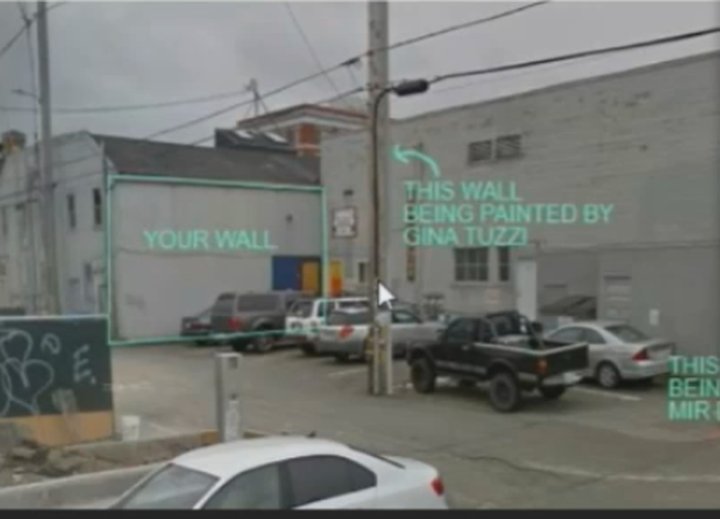
In collaboration with the Humboldt Asians and Pacific Islanders (HAPI) and the Eureka Street Art Festival, the Chinatown project will also include the installation of a mural in the alleyway behind the Savage Henry Comedy Club. The project is currently soliciting artists, Mirjah said, to paint a piece that will “celebrate the history and culture of the Chinese before the expulsion and tie-in to the Chinese community currently in Humboldt.” The mural will be painted during this year’s festival, August 7 through 14.
The proposed location of the “Chinatown Alley” mural | Screenshot from Mirjah’s presentation at the Eureka City Council meeting
The Eureka Chinatown Project is also working with the City to add information to the city’s informational kiosks and wayfinding signs, which city staff is currently working on updating. The signs will point tourists in the direction of the historic Chinatown neighborhood and two of the kiosks will include panels with information on the life and history of the Chinese people in the area. Eventually, the project will also include signage on the Waterfront focusing on the 1906 expulsion — another horrifying event that occurred after a salmon cannery brought in Chinese workers to the ire of many white citizens.
Of course, Mirjah pointed out, there is only so much information that can fit on a sign, so the project will also include tours with more in-depth information about the expulsions and the life and contributions of the Chinese people of Humboldt. At first, the tours will be digital and self-guided, Mirjah said, and guided walking tours will be added when we have made it through the pandemic.
“We’re very excited to launch this multi-faceted project,” Mirjah said at the end of Tuesday’s presentation. “I’m proud to say it’s a full community effort. With the support of city officials and local businesses, we’re about 25 individuals made up of Chinese and Asian Americans and allies. We have historians, HSU staff and community members on this project.”
Press release from the Humboldt County Sheriff’s Office:
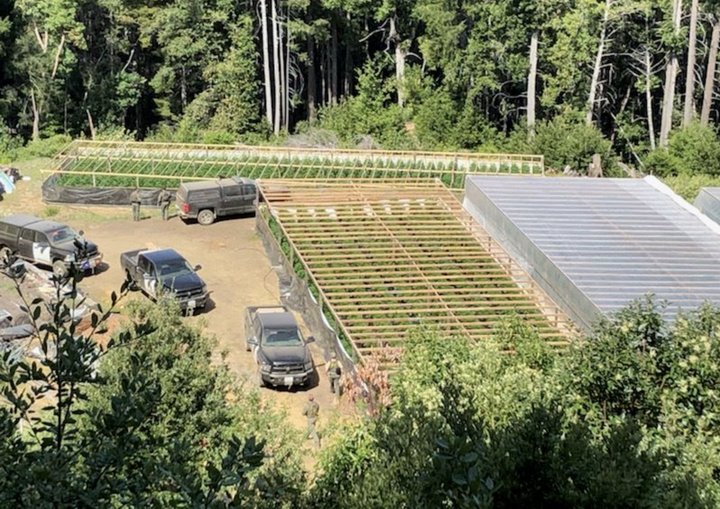
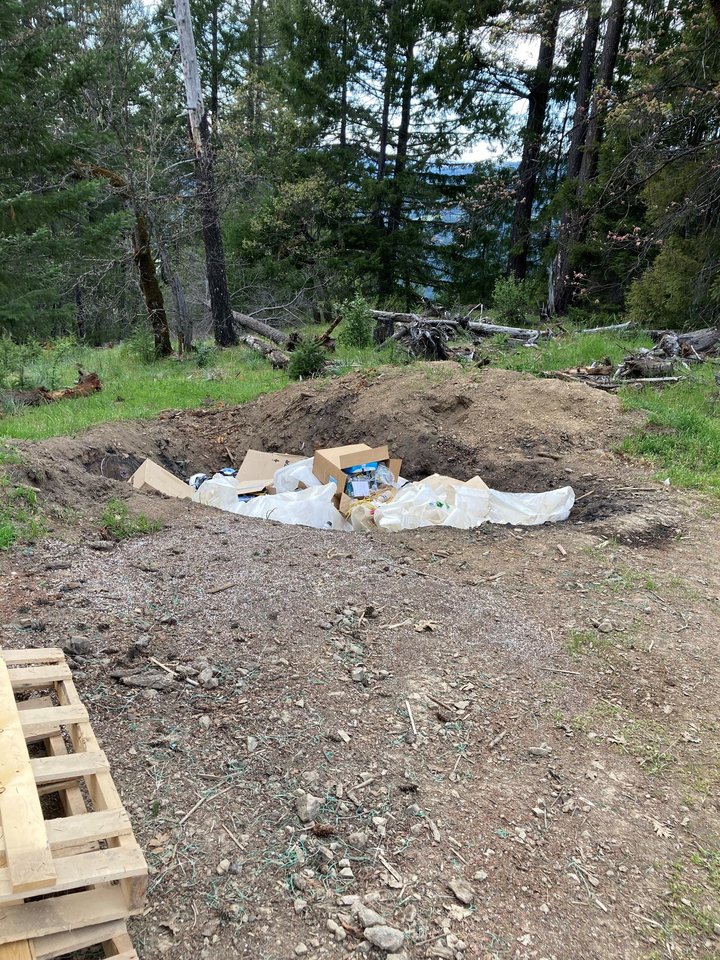
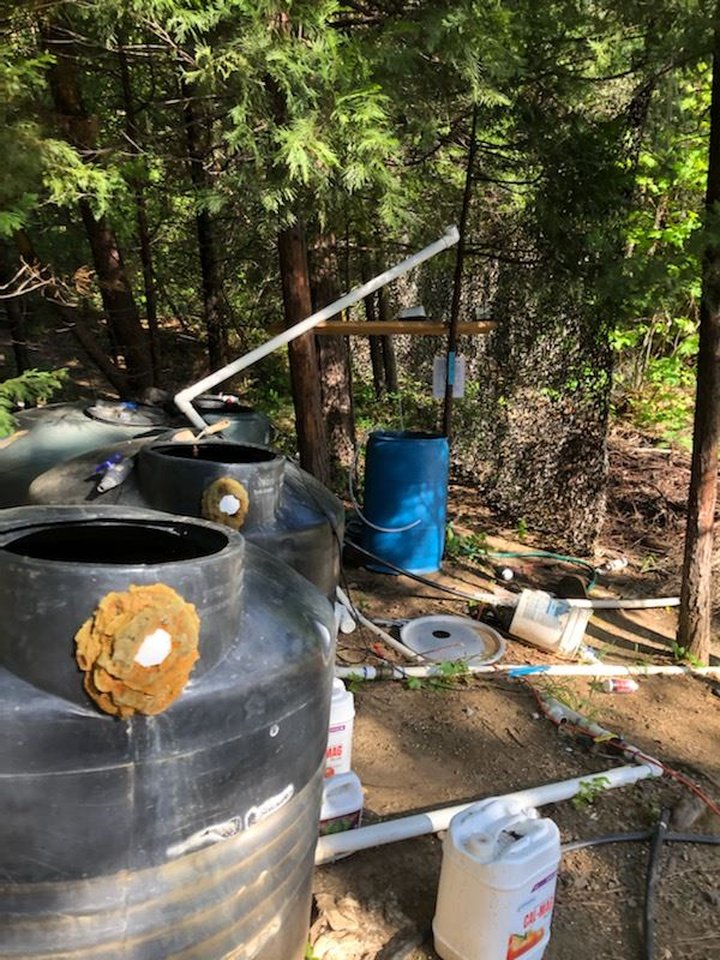
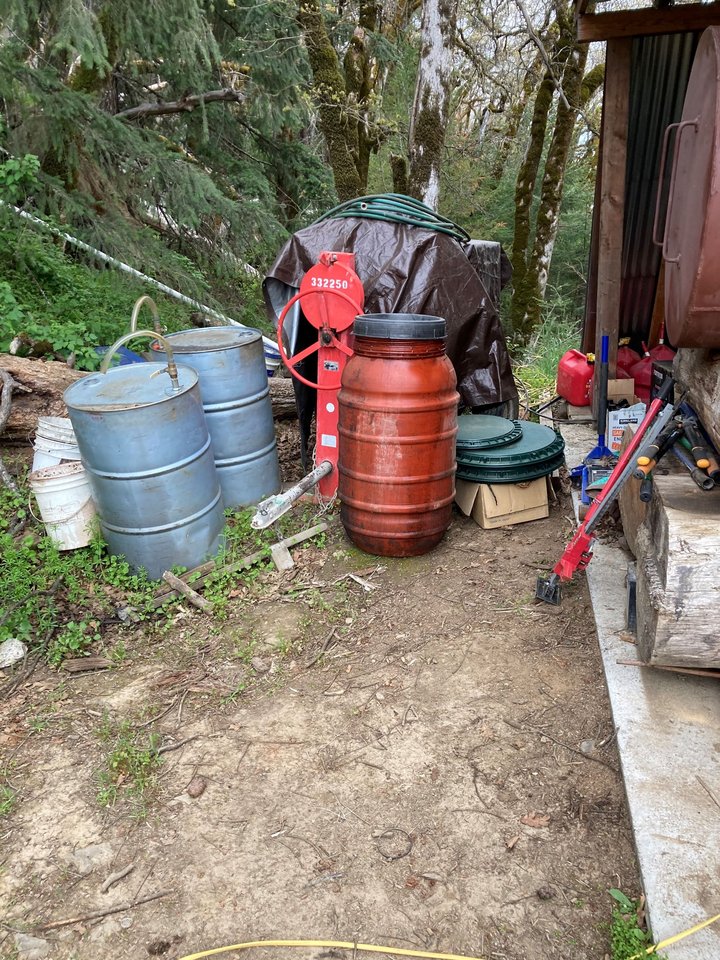
On May 6, 2021, deputies with the Humboldt County Sheriff’s Office Marijuana Enforcement Team (MET) served multiple search warrants to investigate illegal cannabis cultivation in the Rancho Sequoia and Dobbyn Creek areas. The California Department of Fish and Wildlife, Humboldt County Department of Health and Human Services Environmental Health - HazMat Unit and Humboldt County Code Enforcement assisted in the service of the warrants.
Six parcels were investigated during the service of the warrants. The parcels did not possess the required county permit and state license to cultivate cannabis commercially.
During the service of the warrant in the Dobbyn Creek area, deputies eradicated approximately 1,200 growing cannabis plants. Deputies seized and destroyed over 171.5 pounds of cannabis bud, approximately 123 pounds of processed cannabis and approximately 454 pounds of cannabis shake.
Assisting agencies found the following violations:
Five water diversion violations (up to $8,000 fine per day, per violation), three of which were substantial instances of water diversion.
Two water pollution violations (up to $20,000 fine per day, per violation)
During the service of the warrants in the Rancho Sequoia area, deputies eradicated approximately 4,334 growing cannabis plants.
Assisting agencies found five environmental violations including water diversion violations (up to $8,000 fine per day, per violation) and depositing trash in or near a waterway violations (up to $20,000 fine per day, per violation).
Additional violations with civil fines are expected to be filed by the assisting agencies.
No arrests were made during the service of the warrant. The case will be forwarded to the DA’s Office for review.
Anyone with information about this case or related criminal activity is encouraged to call the Humboldt County Sheriff’s Office at (707) 445-7251 or the Sheriff’s Office Crime Tip line at (707) 268-2539.
The COVID-19 pandemic has done what over a century of past plagues, recessions, crimewaves, droughts and earthquakes couldn’t.
It shrank California’s population.
According to new data released today by the State Department of Finance, California’s population declined by 182,083 people in 2020. That’s the first time that annual statistic has come with a minus sign since 1900, when the department began collecting these estimates.
The new report adds a disappointing coda to what has already been a dour few weeks for California’s demographers. Last week, the U.S. Census Bureau put out its decade-long population counts showing that though the state grew between 2010 and 2020, it did so at a slower rate than the rest of the country.
The new population estimate also provides more fodder for Gov. Gavin Newsom’s critics who took last week’s Census announcement as evidence that the Golden State is in decline.
State forecasters stress that the factors that contributed to this population dip are unique to this period — and therefore temporary. In 2020 roughly 51,000 Californians died of COVID-19. Travel restrictions and fear of contagion also dramatically tamped down the number of new arrivals from abroad, the main source of the state’s population growth over the last decade.
“Going forward, we anticipate that those two factors that tipped us temporarily into negative territory are going to change over the next few months,” said Department of Finance spokesperson H.D. Palmer.
But even if California reaches herd immunity, the state isn’t likely to experience a serious growth spurt anytime soon. Our pre-pandemic plodding rate of growth is thanks to a few long-term trends.
The state birth rate, which took a dip in 2020, has been on a gradual decline for years.
The number of Californians who have left the state for more affordable corners of the union has also been a drag on the state’s head count for three decades. That “net-domestic outmigration” exceeded the number of new immigrants from around the world for the first time in 2018, according to Department of Finance estimates.
Palmer went out of his way to stress that Californians packing it up for Texas and Colorado are not the primary cause of the state’s striking population decline.
“Some people who run with statistical scissors will try to extrapolate or hyperventilate that this is evidence of some sort of ‘Mad Max’ style ‘exodus’ from California and that is not the case,” he said.
California’s conservative critics have spent the betterhalfofthiscentury warning that the state’s relatively steep tax rates on higher-income individuals and voluminous regulations will chase the Golden State’s job creators to less taxed and regulated states.
But a new analysis from the Public Policy Institute of California says the state remains as attractive as ever for the well-off. It’s people in the working and middle classes who are leaving, largely due to high housing and other costs. “In the past five years the flow of middle-income residents out of the state has accelerated,” wrote Hans Johnson, a demographer with the institute.
The overall numbers of Californians coming and going mask much larger changes within the state. The more dramatic “exodus” has not been from California to Florida, but from the Bay Area to the Central Valley and from Los Angeles to the Inland Empire.
According to the state’s new estimates, San Francisco’s population declined by 1.6% while Los Angeles’ population dropped by 1.3%. The beneficiary of all those work-from-anywhere emigrants lie inland. Since January 2020, the populations of Merced, Manteca and Tracy in the north San Joaquin Valley and Banning and San Jacinto in Riverside County all grew by more than 2%.
###
CALmatters.org is a nonprofit, nonpartisan media venture explaining California policies and politics.
Today, Yurok Connect launched a new program that will provide free digital devices and a
substantial discount on monthly internet bills to eligible customers on the Yurok Reservation.
The Federal Communications Commission recently approved Yurok Connect to establish an
Emergency Broadband Benefit (EBB) Program. The Emergency Broadband Benefit Program will
offer eligible Yurok Reservation households a reduction of up to $75 per month on monthly
internet bills. All qualified participants will also be offered a Wi-Fi-capable Android tablet. These
services are open to new and existing Yurok Connect customers.
“This new program will provide virtually free internet service to those who are having trouble
making ends meet during this challenging time. It is going to benefit many tribal and non-tribal
reservation residents,” said Joseph L. James, the Chairman of the Yurok Tribe. “I would like to
thank our IT Department for working creatively to make this happen.”
The Emergency Broadband Benefit Program was set up to help households struggling to pay for
internet services during the pandemic. This Program will assist many families, elders and individuals
on the Reservation, where the median household income is $11,000 per year. The Program will
ensure that residents have access to virtual healthcare, jobs and educational opportunities.
The Emergency Broadband Benefit is limited to the monthly service discount and each eligible
household will receive one device. To be eligible, one member of the household must meet one of
the following criteria:
Qualifies for the Lifeline program;
Receives benefits under the free and reduced-price school lunch program or the school
breakfast program, including through the USDA Community Eligibility Provision, or did so
in the 2019-2020 school year;
Received a Federal Pell Grant during the current award year;
Experienced a substantial loss of income since February 29, 2020 and the household had a
total income in 2020 below $99,000 for single filers and $198,000 for joint filers; or
Meets the eligibility criteria for a participating providers’ existing low-income or COVID-19
program.
Yurok Connect will begin taking applications for this program on May 12, 2021. To apply for the
Yurok Connect discount and to receive a free digital device, please call (530)-599-1375 if you live in
the Weitchpec area. The phone number for Klamath area residents is (707) 951-8028. The
Emergency Broadband Benefit Program will expire when funds are exhausted or six months after
the US Department of Health and Human Services declares the end of the COVID-19 health
emergency. The EBB program is funded by the Consolidated Appropriations Act, 2021 (CAA),
which established the Emergency Broadband Connectivity Fund of $3.2 billion.
Prior to the EBB program, only Eligible Telecommunications Carriers (ETCs) were qualified to
offer programs, such as Lifeline, which prevented Yurok Connect from accessing these funds. The
FCC announced on February 25, 2021 that non- ETC broadband providers could apply for the EBB
program.
Tribal citizens living off of the reservation are encouraged to contact their internet service provider
to see if EBB discounts are available in their area. Additional information about the program can be
found here.
Yurok Connect is currently upgrading and expanding its broadband deployment system. Even
though the project is not yet complete, many homes have already received a high-speed service for
the first time. In the next couple of months, numerous homes will get access to the internet and
existing customers will receive a truly fast service.
Owned by the Yurok Tribe, Yurok Connect is one of only a handful of tribally operated Wireless
Internet Service Providers. Yurok Connect was established with funds from 2009 USDA
Community Connect Grant and started offering broadband service in 2013 on the Yurok
Reservation.
For additional info about Yurok Connect, please visit https://www.facebook.com/Yurokconnect
Press release from the Humboldt County Joint Information Center:
Humboldt County’s COVID-19 case rate is on an upward trend, and local health officials urge all community residents to get tested if they are experiencing symptoms and note that testing options have expanded to additional locations across the North Coast.
Humboldt County Public Health Director Michele Stephens said that even with progress in the county’s vaccination efforts, there are still a large number of residents who are not vaccinated and have no immunity at all against this virus.
“Testing is a crucial component of containing positive cases before they have a chance to spread so we can move past this pandemic,” Stephens said. “Here in Humboldt, we are fortunate to have lots of convenient and free testing options available to residents. Getting tested helps keep all of us safer, particularly those most vulnerable to severe disease.”
Individuals who are not fully vaccinated should be tested if they have been exposed to someone with COVID-19, have traveled out of state or have participated in higher risk activities such as attending large gatherings. Testing is now available in even more areas of the county.
No-cost testing is available from 7 a.m. to 7 p.m. seven days a week through the OptumServe site at Redwood Acres located at 3750 Harris St. in Eureka. OptumServe’s mobile testing sites also offer testing in a different location of the county each weekday.
OptumServe testing locations:
Arcata – Mondays, 8 a.m. to 5:30 p.m. (Arcata Community Center, 321 M.L.K. Jr. Pkwy.)
Garberville – Tuesdays, 9 a.m. to 4:30 p.m. (SoHum Health Sprowl Creek Campus, 286 Sprowl Creek Road)
Fortuna – Wednesdays, 8 a.m. to 5:30 p.m. (River Lodge Conference Center, 1800 Riverwalk Dr.)
To schedule, go to lhi.care/covidtesting, or call 888-634-1123. After initially focusing on testing for facilities and a small number of tribal sites, the North Coast Testing Partnership (NCTP) is now expanding to include broad testing of tribal groups across Humboldt and Del Norte counties. This expansion is possible due to increased testing capacity at the NCTP laboratory and the completion of the online registration and reporting platform.
The partnership between the two counties and United Indian Health Services (UIHS) launched last year to provide a local COVID-19 testing option. While this is primarily intended for tribal populations, anyone can receive a test at one of the collection sites listed below.
Humboldt County NCTP testing locations:
Bear River Rancheria – Tuesdays, 8:30 a.m. to 1 p.m. (266 Keisner Road, Loleta)
Weitchpec Tribal Office – Every other Thursday, 11 a.m. to 1 p.m., (Hwy 96, Weitchpec)
Trinidad – Every other Monday, 1 to 3 p.m., (foot of Bay St., Trinidad)
Blue Lake Rancheria – Wednesdays, 8:30 a.m. to 1 p.m. (RV parking lot behind 777 Casino Way #777, Blue Lake)
Orick – Every other Monday, 1 to 3 p.m., (120025 U. S. Hwy. 101, Orick)
Del Norte County NCTP testing locations:
Crescent Elk Middle School – Thursdays, 3:30 to 5 p.m. (994 G St., Crescent City)
Howonquet (Xaa-Wan’-K’wvt) Hall Community Center – Every other Thursday, 8:30 a.m. to 1 p.m. (101 Indian Ct., Smith River)
Margaret Keating Elementary School – Tuesdays, 3:30 to 5 p.m., (300 Minot Creek Road, Klamath)
Elk Valley Rancheria – Every other Thursday, 8:30 a.m. to 1 p.m., (2332 Howland Hill Road, Crescent City)
Walk-ups are allowed at each testing site. To sign up for a test in advance and to learn more about NCTP, go to northcoasttestingpartnership.org.
Moderna and Johnson & Johnson COVID-19 vaccines will also be offered by UIHS at some NCTP testing sites. These Mobile Vaccine clinics are walk-up and open to all residents age 18 and older. Available sites and dates are listed below. UIHS Mobile Vaccine locations and schedule:
Bear River Rancheria – Every other Tuesday beginning May 11, 10 a.m. to 1 p.m. (266 Keisner Road, Loleta)
Weitchpec Tribal Office – Every other Thursday beginning May 20, 11 a.m. to 1 p.m., (Hwy 96, Weitchpec)
Trinidad – Every other Monday beginning May 17, 1 to 3 p.m., (foot of Bay St., Trinidad)
Blue Lake Rancheria – Every other Wednesday beginning May 19, 10 a.m. to 1 p.m. (RV parking lot behind 777 Casino Way #777, Blue Lake)
Orick – Every other Monday beginning May 10, 1 to 3 p.m., (120025 U. S. Hwy. 101, Orick)
Where downtown, you ask? So far, the university is not saying. But the press release below says details are forthcoming:
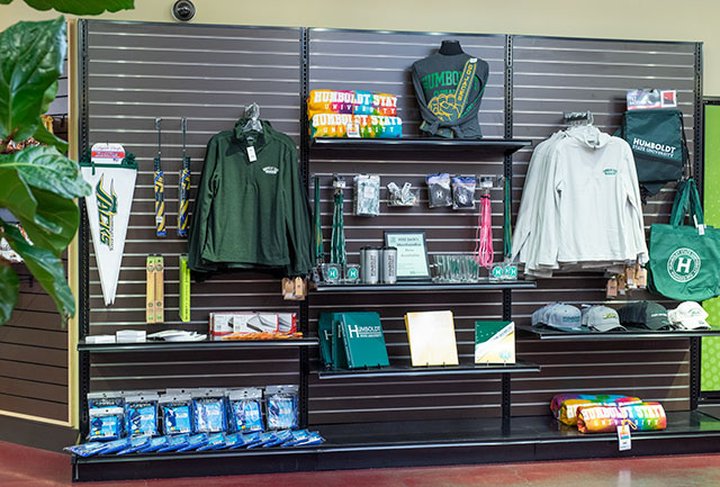
Humboldt State University is pursuing a new opportunity for a bookstore location in downtown Arcata. This option, which would involve a property purchase with non-state funds rather than a lease, could be finalized shortly.
Due to this, the University has decided not to move ahead with the previously announced lease of the building that formerly housed Pacific Outfitters. This has been a complex process, and the University appreciates the ongoing cooperation and assistance of Pacific Outfitters.
HSU expects to be able to share details soon on the new opportunity and possible location.
Moving downtown will be valuable for the University and the community. A downtown location will provide numerous benefits that students, community members, and visitors have been asking for. HSU has been working with the community to find ways for students, many of whom travel from more urban areas, to connect with and feel welcome in the community. The new location will help.
With HSU goods, and the ability to hold student and community-centered events like guest lectures and mixers, students will have a welcoming space in the heart of Arcata.
The move also opens up the current Bookstore space, which students have been requesting to use for lounge space, activities, and entertainment. The Bookstore will maintain its current warehouse space on campus for receiving and picking up textbooks, along with handling textbook rentals, and the University is exploring delivering textbooks to students in residence halls. The College Creek Marketplace on campus will continue to sell HSU Bookstore items in the store and expand upon the current selection.
Follett will continue managing the Bookstore, bringing their specially branded HSU merchandise and other items for store visitors. And HSU will be looking at working with College of the Redwoods and local high schools to carry some of their branded items to create a shared community. The Bookstore will continue selling HSU merchandise in Eureka’s Clarke Museum.