

OBITUARY: Douglas Graham Wallace, 1932-2021
LoCO Staff / Tuesday, April 13, 2021 @ 6:56 a.m. / Obits
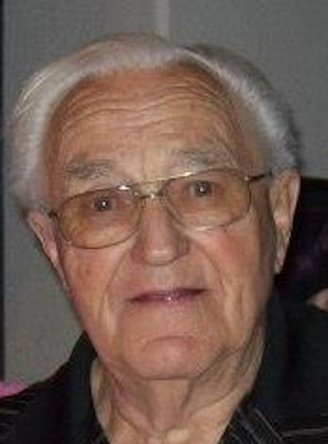
Douglas
Graham Wallace
March
22, 1932 – April 2, 2021
Doug and his twin brother, Daniel, were born in Salem, Oregon to Ethel Mae and William Earl Wallace. Daniel passed away as an infant but was never forgotten by his twin. They were the youngest of siblings Robert, Les, Bill, Buster and Betty. The family moved to Humboldt County in the mid-30’s where they lived in various places in Southern Humboldt and worked in the woods, fishing and farming. Doug became the “breadman” and worked for 30 years as a driver salesman for Big Loaf.
Doug met the love of his life, Barbara Jean Hooven, while they were in elementary school. As he liked to say “I chased her around the school yard until she caught me”. They were married on June 18, 1950, and celebrated their 68th anniversary before Barbara passed away in January 2019.
Doug never met a stranger, he was outgoing, cheerful, always helpful and often had a joke ready, if the situation was right. As a father, grandfather, great-grandfather, uncle, youth basketball coach and community member, Doug was sincerely loved. For many of his nieces and nephews he was truly the favorite uncle.
Fishing, camping, waterskiing and family vacations were a way of life for the young Wallace Family. Annual family campouts on the Mendocino coast during abalone season were a highlight of the year for family and extended family members. Fresh caught abalone was always the highlight of the traditional potluck gathering. Later in their lives, Doug and Barbara became Snow Birds and spent winters in Arizona where they had lots of adventures and made wonderful friends. In 1994 they had what became an adventure of a lifetime when they caravanned to Alaska in their RV with 5 other couples for a four-month excursion. This group of friends stayed close and met annually every September for many years in Winchester Bay, Oregon for crab fishing and enjoying each other around the campfire for their traditional Happy Hour, complete with reminiscing, funny stories and corny jokes.
For Doug and Barbara, family was everything. They were always on the go attending milestone events in their children, grand-children and great-grandchildren’s lives- birthdays, graduations, and weddings as well as football, basketball and soccer games.
Doug is survived by his children, Carolyn, Bo (Wendy), Nancy and Richard (Alexis); grandchildre Sara, Trent, Jenna, Jodi, Justin, Kyle, Kayla, Samantha and Zach; great-grandchildren Joshua, Kamren, Trinity, Mason, Javon, Demitri, Reuben, Alino, Rylie, Bo, Chandler, Carson, Jimmer, Whitney, Kenzie and Kinley. He is also survived by numerous nieces and nephews who adored him. He was preceded in death by all his siblings, his beloved wife Barbara, great-grandson Nicholas, granddaughter Tara, and son-in-laws Bill Wood and Terry Young.
A celebration of Doug’s life will be held at the Pepperwood Meadow in Southern Humboldt Community Park at 1 p.m. on Saturday, April 24, 2021. COVID-safety will be observed. There will be a graveside service in Salem, Oregon on Saturday, May 22, 2021.
Doug was well cared for over the past year by the Hospice Of Humboldt team and the wonderful staff at Ida Emmerson Hospice House. Nurse Scotty, Social Worker Debra, Shower Aid Idzal and Chaplain Pat provided Doug with wonderful care. Roxanne, In-Home Care Provider, engaged Doug in many happy hours of spirited conversation and cribbage games, which he treasured.
In lieu of flowers, please consider donating to Hospice of Humboldt.
###
The obituary above was submitted on behalf of Doug Wallace’s loved ones. The Lost Coast Outpost runs obituaries of Humboldt County residents at no charge. See guidelines here.
BOOKED
Yesterday: 7 felonies, 9 misdemeanors, 0 infractions
JUDGED
Humboldt County Superior Court Calendar: Today
CHP REPORTS
5345 Walnut Dr (HM office): Trfc Collision-Minor Inj
ELSEWHERE
Mad River Union: Flight Path
Mad River Union: McK not-a-tree cell tower project bumped
Mad River Union: Arcata council decides this, decides that
Mad River Union: Porchfest 3 evolves with new prep, participation
Paying Too Much for Health Insurance? New Subsidies Announced Today
Liliana Michelena / Monday, April 12, 2021 @ 3:10 p.m. / Sacramento
Californians enrolled in health coverage this year will qualify for substantial savings as $3 billion in federal aid kicks in, including for people who are currently getting no subsidies.
Covered California, the state’s insurance marketplace, today opened a special enrollment period that allows people to sign up and make use of federal COVID-19 relief dollars designated for health coverage aid. This money is on top of subsidies already provided to some low-income and middle-income Californians through the Affordable Care Act.
Households that already receive some aid could get a couple hundred dollars more in savings in their monthly premiums. Also, people who are currently paying full price for insurance could get about $700 in savings a month, said Covered California Executive Director Peter V. Lee.
Experts expect this boost in aid to translate into a significant drop in the number of Californians living without health insurance, especially once the word spreads.
“This is a huge deal for middle class Californians paying mammoth checks to insurance companies,” Lee told CalMatters today. Affordability, he said, is the number one reason people go without health coverage.
The new aid, part of the American Rescue Plan, makes subsidies available to many more Californians. Covered California estimates about 2.5 million people will benefit from new and expanded help. That includes about 810,000 currently uninsured people.
“This is a huge deal for middle class Californians paying mammoth checks to insurance companies.”
— Peter V. Lee, Covered California Executive Director
For people looking to sign up, their coverage can go into effect as soon as May 1 if they enroll before the end of April. People will be able to sign up for the remainder of the year. This enhanced federal aid, however, does have an expiration date: It will run through the end of 2022.
For people already enrolled in a health plan through Covered California, their out-of-pocket share will be automatically adjusted; they should see savings as early as next month.
The federal law expands eligibility for federal assistance and sets a maximum for how much of their own money families and individuals can spend on health coverage — 8.5% of their income.
For instance, for a household with $70,000 of annual income, the cost of its health insurance would be capped at $5,950 per year. A household earning $200,000 per year wouldn’t have to pay more than $17,000 per year for health insurance.
“The American Rescue Plan does limit the subsidy to amounts in excess of 8.5% of household income, so for a millionaire that would be premiums in excess of $85,000 (a year) and American health care is expensive but it’s not that expensive,” Joseph Newhouse, a professor of health policy and management at Harvard University, said during a press call with Covered California.
Previously, households with incomes above 400% federal poverty level — about $51,040 for an individual or $104,800 for a family of four — were not eligible for federal assistance. Those families and individuals often buy their health coverage directly from insurers, but now those same people may be able to pocket some of their premium cost if they go through the state exchange.
Last year, California became the first state in the nation to offer aid to middle-income residents who made too much to benefit from federal subsidies. The state raised the threshold for aid to incomes at 600% of the poverty level. Lee said about 50,000 more Californians signed up for coverage through the state marketplace when that assistance came online.
The new federal subsidies will be bigger than what the state provides and will replace state help. Now “California doesn’t have to write the check,” Lee said.
The new federal subsidies will be bigger than what the state provides and will replace state help.
California has embraced the ACA wholeheartedly and has passed several pieces of legislation to enhance the health law. Besides creating its own bucket of subsidies, it also created its own tax penalty when the previous administration eliminated the federal one. Surveys and polls have shown that mandating people to have health insurance through a penalty is unpopular, but Lee and other insurance market experts say it does nudge people to sign up.
L.A. Care Health Plan, which serves Los Angeles County, has about 100,000 people enrolled through Covered California. Lower income individuals who are just above the threshold to qualify for Medi-Cal could see their portion of the premium reduced to almost zero, said John Baackes, the CEO of L.A. Care Health Plan.
The vast majority of L.A. Care enrollees “were getting a subsidy of some sort, but none had a $0 payment,” Baackes said.
During 2020, as many people lost their jobs during the pandemic and with it their employer-sponsored health insurance, more people fled to Covered California and Medi-Cal, the state health insurance program for low-income people.
Historically, people drop off Covered California because they gain coverage through a job or become newly eligible for Medi-Cal. Usually, about 10% of those who drop off become uninsured, Lee said. Last year, that number grew — about 25% of those who left Covered California lost coverage completely.
###
CALmatters.org is a nonprofit, nonpartisan media venture explaining California policies and politics.
Environmental Groups Sue Humboldt County Over Rolling Meadow Ranch Cannabis Project Near McCann
LoCO Staff / Monday, April 12, 2021 @ 11:19 a.m. / Cannabis
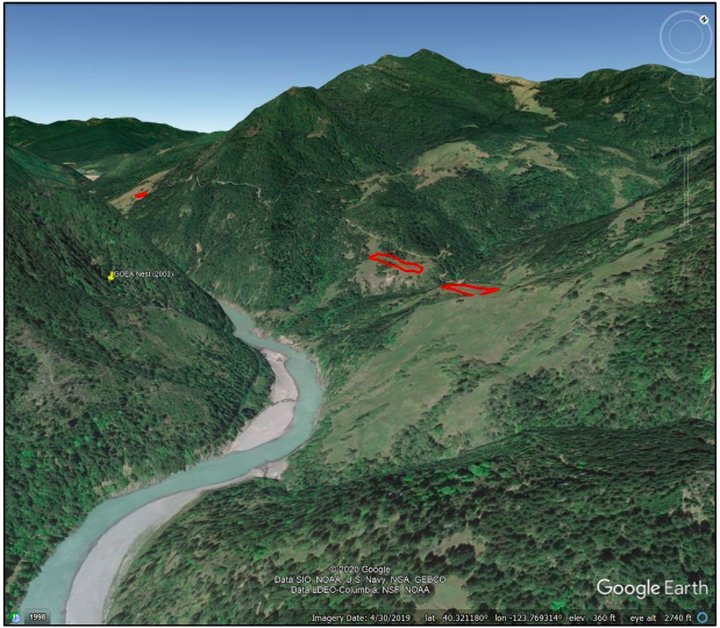
A documented golden eagle nest site (yellow pin) is within line-of-site of proposed cultivations areas for Rolling Meadow Ranch (shown in red). | Image created by CDFW as part of a comment letter submitted to the county.
PREVIOUSLY
###
Press release from the NEC:
CITIZENS for a SUSTAINABLE HUMBOLDT (CSH) and the NORTHCOAST ENVIRONMENTAL CENTER (NEC) have filed a lawsuit in the Humboldt County Superior Court, with claims under the California Environmental Quality Act, the State Planning and Zoning Law, and other laws, challenging the environmental review and permits approved by the Humboldt County Board of Supervisors.
The recent permitting of the Rolling Meadow Ranch project (“Project”), a large industrial Cannabis project near McCann, on the banks of the Main Stem Eel River, has been a great disappointment to the neighbors in McCann, local Fire Districts, and many others in the community.
After much consideration of this outsized Project’s ramifications for the environment and our community, CSH, NEC, and a neighbor of the Project seek to compel preparation of an Environmental Impact Report (EIR) that will fully analyze and disclose the Project’s impacts and proposed feasible mitigation, and will consider alternative designs that can avoid or reduce the Project’s impacts.
The litigation includes the following claims:
- Substantial evidence supports a fair argument that the Project may cause significant impacts to the environment (including unmitigated impacts to wildlife, rare prairie ecosystems, and wetlands), thus requiring an EIR.
- The Project’s access roads do not meet mandatory requirements under the County’s State Responsibility Area Fire Safe Regulations; the Project poses a vastly enhanced risk of wildfire, with inordinate response times from emergency services, as well as numerous traffic safety impacts and public safety issues.
- Wells used for irrigation may impact groundwater resources and hydrologically connected surface water features and dependent aquatic habitat and species.
- The cumulative impacts of the Project, in combination with other projects, including impacts to groundwater resources, biological resources, and wildfire risk, were not adequately analyzed.
- The Project’s potential to induce growth in a remote rural area was not adequately analyzed.
- The Project is fundamentally inconsistent with mandatory policies of the Humboldt County General Plan and is also inconsistent with the CMMLUO and other applicable land use regulations.
- The Project’s description has been unstable, inconsistent, and uncertain, precluding accuracy in assessing the true scope of potentially significant impacts. Also, development activities (road improvements, well drilling) have occurred on Rolling Meadow Ranch in advance of permit issuance, contrary to CEQA (and County regulations) requiring evaluation of “the whole of the project” in question, resulting in “piece-mealed” analysis.
- The County’s failure to follow CEQA and local land use regulations with respect to the Rolling Meadow Ranch Project are part of a larger pattern and practice. Other industrial-size cannabis projects have been approved with wells without investigation of their hydrological connectivity, exploitation of the “Prime Agricultural” loophole, and inadequate road access.
- This case is the first litigation of its kind regarding the Humboldt County cannabis compliance and permitting process as it has unfolded over the last five years. The lawsuit can serve as a local legal landmark, and set important precedent that has the potential to shift legislative policy towards more sustainable management of environmental resources and public trust resources in the context of cannabis cultivation and land use regulation.
As Larry Glass, Executive Director of the Northcoast Environmental Center, added, “The NEC wants to draw a line in the sand in regards to cannabis projects and stop the pay-for-play scheme that appears to be in place. It seems that if you have the money, you’ll get your permits, but if you are a mom and pop operation, you are out of luck.”
###
DOCUMENT: CSH, NEC and Mary Gaterud v. County of Humboldt, Board of Supervisors
MONDAYS WITH MICHAELE: Let the Children Play
LoCO Staff / Monday, April 12, 2021 @ 7:45 a.m. / Mondays With Michaele
Back to it! Your President of Positivity is ready to face another Humboldt week in which she is once again celebrating the Week of the Young Child. For a second consecutive sheltered year, Humboldt County Office of Education and the City of Eureka are joining with local agencies to bring awareness to the importance of early learning for kids. Head over to the HCOE website for more details on fun ways you can engage with your young ones this week.
To commemorate this annual tradition, Michaele is joined this week by Winzler Children’s Center Director Heather Richardson and Eureka City Councilmember Kati Moulton who also wish to recognize the hard work local educators have put in during this past pandemic year. Humboldt together!
# # #
Perhaps You’d Like to Explore Previous Mondays With Michaele For Some Reason!
Hey, Parents of Girls! The Arcata Boy Scouts are Looking to Get a Girls’ Troop Going
Jacquelyn Opalach / Monday, April 12, 2021 @ 7:30 a.m. / Education
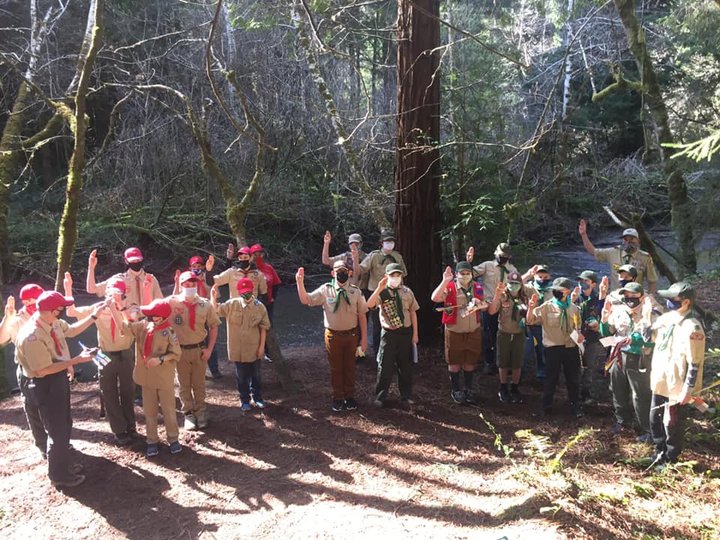
Photo via Troop 15’s Facebook page.
###
Hey, parents: Girls can join the Boy Scouts, too, you know.
Boy Scouts of America has been dealt a relatively gentle hand in terms of COVID-19-related complications. Scouts have had to adjust to enjoying their activities masked and socially distanced, but aside from that boys enrolled in local troops have continued to do fresh outdoorsy stuff, earn merit badges and move up the ranks over the past year.

Addeson Swain is looking for co-troopers. Photo courtesy the Swain family.
That is, everyone but 13-year-old scout Addeson Swain, who realized she is the only girl active in the local scouting scene after moving to Humboldt from Red Bluff a year and a half ago. Because the organization does not allow for co-ed troops, Addeson is technically troopless.
When Addeson’s family moved, “the BSA was really great,” Jason Swain, her dad, told the Outpost. “They got us set up with a troop that was willing to take us in and try to get us into an actual group of girls.”
Since then, she’s been participating alongside an Arcata-based troop of 24 kids, called Troop 15, for activities like kayaking, fishing, and hiking. “We meet once a week to work on rank advancement and merit badges, [and do] various fun different activities,” Troop 15 leader Daniel Washburn told the Outpost. “We just finished up with the graphic arts merit badge, and next month, we’re beginning the communication merit badge. We also go on outings each month.”
But until she officially belongs to a girls troop, Addeson can’t move up the ranks or earn badges like her male counterparts. When she arrived in Humboldt, Troop 15 intended to recruit and create a second troop for girls.
“Just after that, the pandemic really hit, and so BSA didn’t do any type of recruiting,” Jason said. Without access to schools, it’s been tough to get the word out to local families that Scouts BSA is still in session, and that girls, in fact, welcome to join. “I think a lot of it is word of mouth,” Jason said. “No one knows that the Boy Scouts are taking girls.”
With school campuses opening back up, the search for interested 11- to 17-year-old girls has commenced. Jason has been helping by printing and distributing fliers that are marketed specifically to girls “I want her to have the same experience as everyone else,” he said about Addeson. “Once we can find at least four other girls to join, she will be able to do everything that everyone else is doing. And finally, get the acknowledgment that she’s done all this stuff that she has been doing for the last year.”
The Boy Scouts of America organization, which offers five programs in total, started accepting girls into their most popular program, Scouts BSA (formerly called Boy Scouts), in 2019. The program, which culminates in scouts earning the highly-regarded and coveted Eagle Scout rank, now accepts girls and boys aged 11 to 17, but the troops are never co-ed. Troop 15 in Arcata is aiming to form a “linked troop,” which is when a girls troop and a boys troop share a chartered organization, troop committee and troop number, and might do some or most activities as a group.
There are a few reasons the organization is so firm about dividing troops by gender. At the time of the change, a former Boy Scouts of America Scouting Executive, Sharon Moulds, told NPR that separating teenagers in Scouts BSA is important to their development and helps them better learn leadership skills. And on camping trips, the organization decided, boys and girls must sleep in different campsites for comfort and safety reasons. Girl troops must have female adult troop leaders, while boy troops must be overseen by adult men.
“I think they’re focusing on the separating, because of the public image of mixing. I think Scouts BSA would like to get everybody involved more, but they want to make sure that they’re not scaring away parents and whatnot,” Washburn said.
Accepting girls into all of their programs is the most recent change in a wave of improvements the 111-year-old organization has taken to make its offerings more inclusive. Boy Scouts of America lifted their ban on gay scouts in 2013 and gay scout leaders in 2015, and they opened their doors to transgender kids in 2017. (The organization does currently allow troops to exclude atheists and agnostics.) Even with these changes, in some small communities, such as ours, progress can be slow to materialize.
Both Jason and Addeson both hope that with greater participation from local girls, Troop 15 will be able to form the linked troup, for the benefit of all scouts. If your daughter or someone you know is interested in joining this effort, you can get more information by contacting Daniel Washburn at daniel@wente.org or (707) 702-1515.

Unwelcome and Tough to Evict: California’s Costly, Uphill Battle Against Invasive Species
Julie Cart / Monday, April 12, 2021 @ 7 a.m. / Sacramento
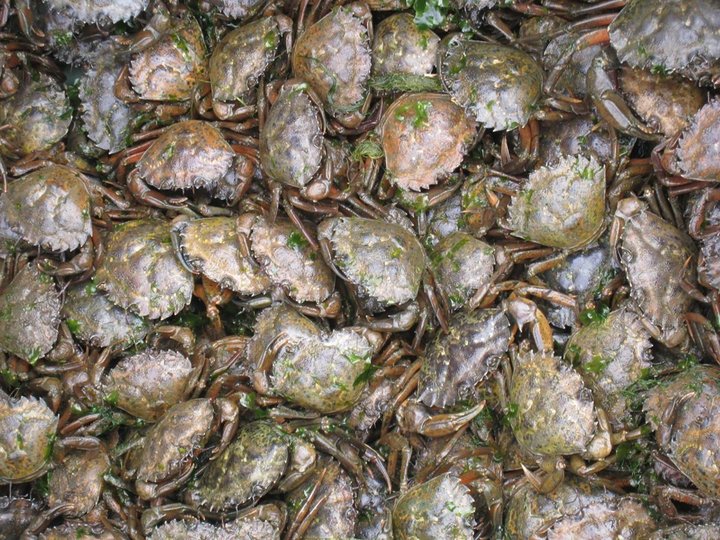
Close up view of a bin of green crabs pulled from a single trap. In some cases there can be close to 100 crabs per trap in years of very high numbers. Photo courtesy of Ted Grosholz.
###
It’s nothing less than an invasion. Interlopers are coming into California by land, by sea…and by FedEx.
That’s what happened with the European green crab, a voracious cannibal that stowed away in packages of worms sent by overnight delivery to commercial fisherman in California. Unknown to anyone, the tiny crustaceans were concealed in seaweed that wrapped the cargo and were freed into the Pacific when fishermen tossed it overboard.
Then the green crabs, which a century ago decimated the East Coast’s shellfish industry, began to dine out in the Pacific, munching nearly everything in sight. Authorities made plans to rid the ocean of the pests.
But, as a research team from UC Davis discovered, invasive species don’t go quietly. Nor do they react well to full-on assaults. In fact, years of digilent and costly crab removal from a Bay Area lagoon went terribly wrong, triggering an unexpected population explosion.
Still, this serendipity has led to a new, live-and-let-live approach to combat invasive species: forget about trying to wipe them out, and get them down to a manageable population instead.
The new strategy could be a game changer. An army of scientists and state biologists are spending millions of dollars annually in California to combat an increasing scourge of invasive species — more than 1,700 types of plants, bugs and marine animals that are out-competing, elbowing out and, in some cases, devouring native plants and animals.
California has “unique things that make us susceptible,” given the enormous diversity of its environment, said Martha Volkoff, who manages the state Department of Fish and Wildlife’s invasive species program. “We have a lot of risks that states that are more homogenous wouldn’t have.”
Costly to control, these invasives have damaged some California crops and critical flood control and water delivery systems.
“Eradication is rarely successful and control is an unending process.”
— State Lands Commission, January report
California spends $3 million a year attempting to eradicate nutria, a large, homely, orange-toothed rodent that destroys wetlands and bores holes into levees. Another $3 million a year goes to educating boaters about quagga mussels, which hitch rides on hulls and cling to equipment in the state’s vast water transport system. And, for the last 20 years, authorities have spent more than $34 million to manage Atlantic cordgrass in the San Francisco Bay-Delta.
These costs represent only a fraction of the costs “because eradication is rarely successful and control is an unending process,” according to a report that state officials presented to the Legislature in January.
The environmental damage in the United States is estimated at $120 billion to $137 billion per year. One of California’s most destructive foreign pests was the Mediterranean fruit fly, which infested fruit orchards around the state beginning in the 1970s and cost hundreds of millions to combat.
The economic and environmental impacts are getting worse, abetted by a changing climate and a smaller world where exotic creatures can hitch a ride across the globe.
Efforts to get rid of invasives have mixed results, and sometimes make things worse, as when animals or insects are introduced to eradicate pests, and instead wind up becoming a new pest.
As with the stubborn little European green crab, attempts to erase them can backfire. Big time.
A case of crabs
For creatures with seemingly limited mobility, it’s remarkable how easily invasive species move around the world.
The state has had a Marine Invasive Species Program for more than 20 years, a recognition that about 80% of non-native pests arrive in North America via international commercial ships. Much of the dispersal is accomplished with the help of unwitting humans, for example, in ballast water when seagoing vessels take on water then disgorge it along its path.
Then there’s the panicked disposal of a once-cute pet, such as an alligator that’s outgrown the family bathtub and released into a local canal or park lake. Or the silent menace of classroom aquariums, which it turns out, are abetting in the trafficking of invaders from Ukraine — zebra mussels, near the top of California’s most-wanted list.
Zebra mussels filter out algae that native species need for food and they glom on to native mussels, incapacitating them, according to the U.S. Geological Survey. The fingernail-sized mussels also congregate and clog water intake areas of power plants.
After years of an all-out campaign by state agencies to fend off the introduction of zebra and quagga mussels, a highly-efficient commercial distribution chain unleashed the pests in the state.
“Moss balls, which are placed in home aquariums, are infested with tiny zebra mussels,” Volkoff said. “They were found in Washington, (in moss balls) imported from Ukraine. Then they came into California from a distributor that supplied two national pet store chains across 49 states. Now we have zebra mussels on shelves of big-box pet stores. We didn’t see that coming.”
Invasive marine animals can move about by attaching themselves to marine equipment and hidden in bait buckets. Sometimes they don’t even need human help: Green crab larvae can bob along in ocean currents for as long as three months. They are models of adaptability, growing and molting wherever they wash up, immediately establishing themselves as the new local bullies.
Green crabs, which are native to Europe, have decimated shellfish industries in South Africa, Brazil, Asia and Australia. They made their way to California, where they were first noted in the 1980s, and are moving up the coast to British Columbia and off Alaska, threatening the Pacific shellfish catch. The crabs are too small — 3 to 5 inches at full growth — to wind up on dinner plates as a viable commercial harvest.
In 2009, researchers mounted a project to remove European green crabs from Seadrift Lagoon, at the northern end of Stinson Beach in Marin County.
In Seadrift Lagoon, crabs damage eelgrass beds, which are critical for young fish. They also have pushed out (or eaten) native crabs that provide food for shore birds.
So far they’ve had no significant impact on the area’s lucrative commercial crabbing, officials say, but the Dungeness Crab Task Force is keeping a wary eye on them. Green crabs are not picky eaters and can mow through scallops, soft shelled crabs, mussels and clams.They use their outsized claws as shovels and then crack the shells.
Funded by about $500,000 in federal grants, Ted Grosholz, a professor and ecologist at the UC Davis Department of Environmental Science and Policy, has spent more than a decade trying to evict green crabs from the lagoon.
His team used a straightforward approach: absolute eradication of the adult crab population in Seadrift Lagoon. Aided by platoons of volunteers, scientists baited traps with smelly leftovers from fish processing operations. Then they waited.
The adult population was estimated at about 125,000 in 2009. Four years later, the trapping had reduced them to about 10,000.
With that news, Grosholz and colleagues at the Smithsonian Environmental Research Center and Portland State University were preparing to write an academic paper detailing their success.
The crabs had different plans.
Like house guests overstaying their welcome, they proved to be nearly impossible to boot out.
When biologists say that non-natives “out-compete” natives, they don’t intend it as a metaphor. Almost across the board, invasive species have singular attributes that allow them to land on their feet and take over.
Grosholz is almost admiring when he describes the characteristics of European green crabs that allow them to thrive wherever they wash up. “It has a suite of traits that make it a good invader,” he said. “They are physiologically tougher than a lot of other crabs. They are more tolerant of variable salinity. They are very tolerant of terrible conditions.”
Kate Bimrose, with the Greater Farallones Association, supervised volunteer data recording for the green crab research, but also managed her own invasive emergency at nearby Bolinas Lagoon. European beach grass and ice plants were pushing out native dune and saltmarsh plants on an island there.
The invasive plants were classic: “Admirable, adaptable and ferocious,” Bimrose said.
Ice plants don’t enjoy salt water, so Bimrose and her crew set up pumps with the idea to drown the ice plants with salty water, a project operated by the Marin County Parks Department. “It was a great idea, but it proved to be difficult,” she said, repeating a familiar refrain among those trying to eradicate invaders.
The team also tried pulling up the plants and piling them in a massive heap, allowing them to dry out and decompose naturally. But the disembodied plants, in an effort to survive, sent out creepers in search of ground to re-establish themselves. Like zombie ice plants.
Unlike native animals and plants that don’t have weapons or immunity to fend off predators, invasive species are willing to kill to maintain a foothold in a new ecosystem.
Black Mustard plants, leggy green plants with showy yellow flowers, sprout in areas where wildfires have scorched vegetation. Native plants can be picky, temperamental and slow to grow, but not so the mustard, which, given an inch, will take over a hillside.
Even its dead stalks produce a chemical that inhibits the ability of other plants to grow around it.
“They are physiologically tougher than a lot of other crabs. They are more tolerant of variable salinity. They are very tolerant of terrible conditions.”
— Ted Grosholz, ecologist at the UC Davis Department of Environmental Science and Policy
Volkoff has a special disdain for the stout American bullfrog, which was brought to California from the Midwest during the Gold Rush for food and insect control. They carry a fungal disease that infects native amphibians, including rare species.
Some troublemakers are so appealing that their beauty masks their malevolence. Take the Pacific purple sea urchin — the state of California dearly wishes someone would.
The colorful, spiny creatures take advantage of twin calamities: warming seas and a disease that killed starfish, its main predator. Purple urchins have been decimating much of the coast’s kelp forests, triggering a state of emergency.
The urchins are an example of a native species becoming invasive, a distinction critical to understanding invasive species management. It’s not as important to identify a species as native or non-native, Volkoff said, but rather focus on its ability to do damage. The federal definition cites the potential to cause harm to the environment, the economy or public health.
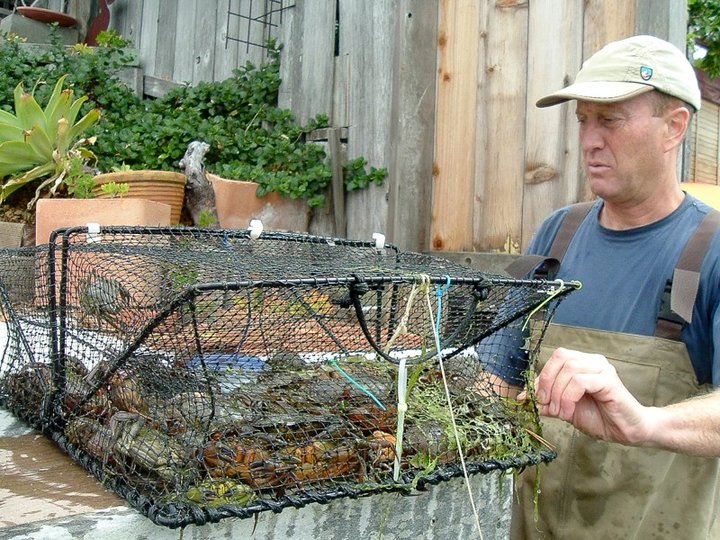
Ted Grosholz examines a trap just pulled out of the water holding green crabs removed from Seadrift Lagoon, near Stinson Beach. Photo courtesy of Ted Grosholz
Not home alone
The business of eradicating invasive species is nothing if not humbling. The UC Davis team was elated in 2013 after removing 90% of Seadrift Lagoon’s green crabs. But then, a census the next year revealed a surprise: A green crab baby boom, with about 300,000 swimming around, nearly triple the pre-eradication population.
Grosholz and the team were dumbfounded. “This was so unexpected. We thought, ‘What happened, what did we do?’,” he said. “We were almost at the finish line. We’ve wasted all this money, all this effort. We’ve failed miserably.”
Upon reflection, the scientists realized they had not taken into account that the crabs are cannibals. They are not sentimental when it comes to devouring their own young, or those of their neighbors. So when the volunteers eliminated the adults — mature crabs that would have culled the population — juvenile crabs had the run of the place. And their populations surged.
“This was so unexpected. We thought, ‘What happened, what did we do?’”
— Ted Grosholz, after the first eradication attempts
In a paper published in March, Grosholz and his co-author identified a “hydra effect,” a reference to the mythical serpent that grew two heads for each one that was removed. Their all-out eradication approach was heavy-handed, they concluded.
Grosholz said the findings could become a game plan for fish and wildlife authorities: Rather than attempting to wipe out an entire population and possibly unleash unintended consequences, try “functional eradication,” reducing invasives to a level low enough to protect native species, but not so low that it triggers a population explosion.
The work to control the crabs is ongoing, this time using the new technique. The lagoon now is home to about 50,000 — less than half as many as a decade ago.
“Whenever you get something that’s unexpected in science, you need to look at it,” Grosholz said. “This is an important result, the management lesson is going to be important.”
In the war against invasive species, you learn to take what victories you can get.
###
CALmatters.org is a nonprofit, nonpartisan media venture explaining California policies and politics.
OBITUARY: Kenneth ‘Justin’ Brink, 1979-2021
LoCO Staff / Monday, April 12, 2021 @ 6:56 a.m. / Obits
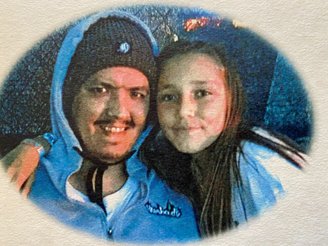
Beloved son, grandson, husband, and father Kenneth “Justin” Brink of Fortuna passed away peacefully at home with his family by his side on February 24, 2021 after a 3 ½ year battle with ALS (Lou Gehrig’s). He was 41.
Justin was born on December 17, 1979 in Hoopa to Tanya (Iiams) Wilmot and Ken Brink. He is survived by his wife Shawna; children Nekhia, Makenna, and Aislyn; parents Tanya (Greg) Wilmot and Ken (Karen) Brink; Brothers Jefferson (Joal) Brink, Jerry (Tiffany) Brink, and Robert (Andrea) Jackson; sister Tiffany (Tim) Reynolds; grandmothers Ellen Kerr and Patricia Bagley; and grandfather Gerald “Duane” Brink; He is also survived by many aunts, uncles, nieces, and nephews. He is preceded in death by his stepson Tyson Partee; his aunt Lavee (Brink) Nelson; his uncle Les Bagley; his grandfather Glen Bagley; and his great-grandmother Nellie Aubry.
Nicknamed “The Lawyer” by his grandma Pat, Justin had the gift of introspection – he always had questions and was always seeking answers. He loved a good debate. Justin was a man of character with a heart of gold as big as any.
As many can attest, Justin was a great all-around athlete, but football was his obsession. He played for McKinleyville High School, Eureka High School, and College of the Redwoods. He was a huge Pittsburgh Steelers fan. He was an avid golfer, and loved a good poker game anytime.
Justin was a proud member of the Karuk tribe; he grew up participating in traditional activities. He played “Sticks” and danced in the dances, he knew how to hunt and fish and above all, he had a deep respect his elders such that it cannot be put to words.
Justin’s number one passion in life was his girls. They brought him absolute joy - they were his heart. Justin showed us that good and true, honest and forthright, funny and intelligent men truly do exist. His passing has broken our hearts, and he will be sorely missed.
Justin’s family would like to extend a heartfelt thank you to Justin’s Hospice crew – especially his RN Scotty and SW Allison – we truly could not have done this without you.
A gathering celebrating Justin’s life will be held this summer when it is safe for everyone to attend. The date/time/place will be posted at a later date.
###
The obituary above was submitted on behalf of Justin Brink’s loved ones. The Lost Coast Outpost runs obituaries of Humboldt County residents at no charge. See guidelines here.


