

Dungeness Crab Season to Start This Week, After Fishermen and Seafood Processors Settle Price Negotiations
Stephanie McGeary / Sunday, Jan. 10, 2021 @ 3:23 p.m. / Ocean

Dungeness crab in Crescent City | Photo: Jessica Cejnar
Humboldt and Del Norte seafood lovers will finally have access to local Dungeness crab starting as early as next weekend, after negotiations between California crab fleets and processors were settled on Friday.
Harrison Ibach, president of the Humboldt Fishermen’s Market Association, told the Outpost Saturday that processors and fishermen settled on a price of $2.75 per pound for Dungeness crab. Fishermen had initially asked for $3.25 per pound, but processors say that the market has been severely impacted by the closure of restaurants due to COVID-19. Though the price is lower than what he’d hoped for, Ibach said he is just glad that the process is over and that the season can finally begin.
“We’re looking forward to a safe and orderly start to the season,” Ibach said, adding that the fishermen’s associations have a “gentlemen’s agreement” to start crabbing at roughly the same time. This discourages fishermen from gathering more than their fair share of crab, while also discouraging them from heading out in dangerous weather conditions to get an early start, he said.
Fishermen in the Bay Area will start setting pots on Monday and our local fisherman should start midweek, Ibach said, making crabs available to consumers by the weekend or early next week.
The California Department of Fish and Wildlife opened the commercial Dungeness crab season on Dec. 23, much later than its usual start. The season was delayed in central California to protect whales from becoming entangled in the crabbing gear, and was delayed in the northern management zone — which includes Humboldt and Del Norte Counties— due to low weight in the meat quality tests.
Based on the poor quality meat tests from November, Ibach said he does not expect a large volume of crabs this year. Combined with the delay in the season and the low price, this could be bad news for the fishermen, many of whom rely on the revenue from crab season. But Ibach said he is trying to stay positive.
“I think everyone is looking forward to getting started and we have high hope that maybe we’ll have a decent season,” he said.
###
PREVIOUSLY:
BOOKED
Yesterday: 4 felonies, 14 misdemeanors, 0 infractions
JUDGED
Humboldt County Superior Court Calendar: Yesterday
CHP REPORTS
No current incidents
ELSEWHERE
RHBB: Miranda’s Rescue Says It Hopes to Reopen After County Suspends Its Permits Again
RHBB: Injured Woman Airlifted After Ettersburg Fall; Local Volunteers Among Responders
RHBB: Missing Man in Del Norte County
Coalition for Responsible Transportation Priorities: It’s the Week Without Driving!
Former Lumberjack Alex Cappa Likely Suffers Broken Ankle in First NFL Playoff Game, Buccaneers Coach Says
John Ross Ferrara / Sunday, Jan. 10, 2021 @ 10:05 a.m. / LoCO Sports!
While the Tampa Bay Buccaneers won their playoff game against the Washington Football Team yesterday, Alex Cappa’s season is likely over.
The Bucs guard and former Humboldt State standout was visibly upset as he limped off the field and into the locker room near the end of the second quarter yesterday with an apparent leg injury.
G Alex Cappa (ankle) is questionable to return. pic.twitter.com/pZK4u3w7il
— Tampa Bay Buccaneers (@Buccaneers) January 10, 2021
Following the game, Bucs Head Coach Bruce Arians told reporters that the injury appeared to be serious.
“It looks like a fracture,” Arians said. “We’ll check with a better X-ray machine, but right now it does not look good.”
Watch Arians discuss the injury in the video embedded above.

Alex Cappa. | Photo provided by the Tampa Bay Buccaneers.
GROWING OLD UNGRACEFULLY: Amen, Awomen
Barry Evans / Sunday, Jan. 10, 2021 @ 7 a.m. / Growing Old Ungracefully
Whatever happened to a
sense of humor? Here’s how Representative Emanuel Cleaver, D-Missouri
(who happens to be a United Methodist Church pastor) ended the
traditional prayer to open the 117th Congress last week:
Now may the God who created the world and
everything in it bless us and keep us. May the Lord make his face to
shine upon us and be gracious unto us. May the Lord lift up the light
of his countenance upon us and give us peace — peace in our
families, peace across this land and, dare I ask, oh Lord — peace
even in this chamber, now and ever more. We ask it in the name of the
monotheistic god, Brahma, and god known by many names by many
different faiths. Amen and A-Woman.
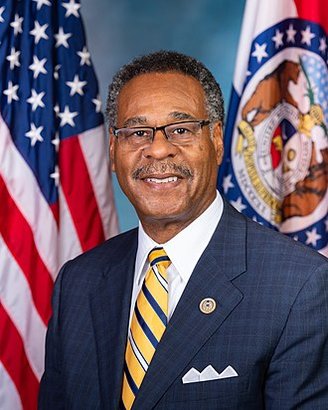
Emanuel Cleaver II.
The backlash was immediate and sadly predictable from such worthies as Donald Trump Jr. and Newt Gingrich. Representative Guy Reschenthaler, R-Pennsylvania, tweeted, “The prayer to open the 117th Congress ended with ‘amen and a-women.’ Amen is Latin for ‘so be it.’ It’s not a gendered word. Unfortunately, facts are irrelevant to progressives. Unbelievable.”
Speaking of facts: Amen isn’t Latin, it’s Hebrew, goes back to Deuteronomy, probably at least 3,000 years, well before Latin emerged. With the meaning “truth” or “certainty,” used adverbially “as an expression of agreement.” OK, it’s not gendered, but no adverb is. If you’re into Helena Blavatsky’s mystical religion of Theosophy, you may believe that “amen” derived from one of Egypt’s main gods, Amun. (Amun-Ra appeared when Amun was conflated with the sun god, Ra, and to whom the great Karnak temple is dedicated.)
Cleaver later explained his “a-women” play on words. “I concluded with a light-hearted pun in recognition of the record number of women who will be representing the American people in Congress during this term.” Indeed, we now have 144 women in the House and Senate; the previous high was 129.
So it was a pun, a
deadpan joke. Obviously. Look, I understand deadpan humor. I’m a
Brit married to an American, I know what it’s like to say something
daft as if total earnestness and be taken seriously. My theory is
that, over in Blighty, you assume someone’s joking unless it’s
clear they’re not…vice versa over here. “It was a joke,” I’ll
say to Louisa. “It didn’t sound like a joke,” she’ll say, and
we’ll wonder yet again how we have managed to survive nearly 50 years
in each others company.
So c’mon! It wasn’t the greatest pun in the world. Wasn’t even a pun, strictly speaking. But Emanuel Cleaver meant no harm in his shout-out to those 144 female legislators, you know that guys. There are more important things to worry about right now. Seriously.

Amun, one-time “King of the Gods” in Egypt, adopted by the ancient Greeks under the guise of Zeus. The word “amen” probably didn’t derive from this guy, but “ammonia” did.
LETTER FROM ISTANBUL: Trouvaille
James Tressler / Sunday, Jan. 10, 2021 @ 7 a.m. / Letter From Istanbul
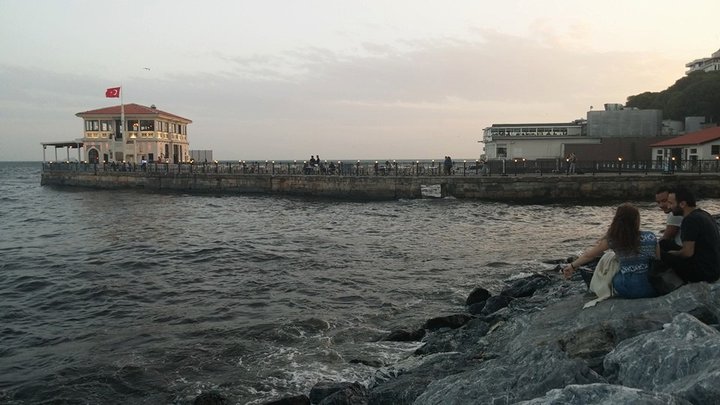
Photo: James Tressler.
###
I never would have found the meaning of the word “trouvaille,” let alone how to pronounce it, if it weren’t for Rory Moore.
When I knew him, he was working on a short story with that as the tentative title.
“Tru-vai! It means ‘a lucky find,’” Rory explained. “I’m writing a story about a guy who wins the lottery and then dies the same day.”
“How is that a lucky find?” I asked.
“Well, that’s just it,” he said, scratching his head. “I’m still trying to sort that part of it out.”
He never did finish that story, or if he did he never showed me. But that’s just an introduction. He goes by a different name now, at least on social media, the way so many people do, a kind of ironical name that fits his sense of humor.
Originally, Rory is an Irishman who comes from London. No, that is not a misprint or sample of American geographical ignorance. He really is an Irishman from London. Though a Londoner by trade, in his heart “I bleed green!” he always insisted, especially after a few pints, almost opening up a vein on the spot.
Anyway, Rory was born in Ireland, but his parents divorced early, which after the separation led to him being raised in London. As a young man, Rory went into business, did fairly well. But he was bothered as many young people are that he was not living life as fully as he could be. In his case, it was a nagging itch to write or travel, both if possible.
This not infrequent malaise persisted as he drifted into his thirties, until one day he opted out of his contract with the London firm, completed a teaching course and with a TEFL certificate in hand, Rory set off for a life of travel and letters. Teaching of course was meant just to pay the bills.
After a short stint in Dubai, where he found the money good but the climate hot and inhospitable for a literary man, Rory accepted a post in Istanbul. Here, he found the rolling hills overlooking the Bosphorus, the sprawling cityscape, better suited to his romantic disposition.
At the school in Fulya, a district on the city’s European side, he found the teaching work tolerable, the hours flexible enough for him to at least attempt to write the Chekov-inspired short stories he felt were in him to write, with the right dosage of applied focus and a few glasses of Jameson’s at the appropriate reflective hour. Later he transferred to Suadiye, where I was working at the time, so that’s how we grew to be friends.
The stories were slow in coming. He always seemed to be distracted. Friends who wanted to meet for drinks (quite often, for his brisk Irish charm made him popular with Turks and expats alike), or there was a late class at the school, or the demands of city life.
At the school he met Cigdem, a smart, energetic woman about his age. They were soon inseparable, and within a year married. For Rory, it was “the best thing I’ve ever done,” he told people. She “completed” him, as the tired saying goes.
After the first two years, they decided to invest in their future. They purchased a beautiful flat in Moda, a fashionable neighborhood on the city’s Asian side. The neighborhood rests on a thin stretch of coast overlooking the Sea of Marmara. The flat was large, spacious, even with a spare room that could serve as his study. A study! Exactly what had been missing in his work. With the proper environment, he could now fully release his heretofore inexorably restrained literary powers.
###
I should try to say more about his wife, Cigdem (it’s pronounced “Chee-dem,” a lovely name which refers to a delicate kind of flower). We only met once or twice, and she seemed nice enough. Her English was fluent, both from teaching and from living with her husband, so that it bounced jauntily back and forth between Londonese and Rory’s own pronounced Irish lilt, and she used the occasional Americanisms to boost the overall linguistic picture.
But sad to say, I never knew her that well. It was one of those things about Rory. He was always saying, “I’ve gotta throw me a proper house party! I mean, in a literary sense.” He presented a fond fireside evening in the mind, with a room of select guests, everyone sipping wine and discussing books, with the host Rory, sleeves rolled up, tie off (he was fond of wearing a tie and waistcoat), his Irish cheeks red with drink, waving his arms about while he plunged into sweeping dismissal of “Ulysses” (the most over-rated book in all of Western literature, he professed, patriotism be damned!).
“We could even discuss our own work,” he enthused. “Your stories as well! Give feedback, all that. We could even found a School!”
We discussed these gatherings of great minds a few times, but for whatever reason, they never materialized. But that was his way. Always flitting from one idea to the next. It was the same with other people. When you had his attention, you felt really possessed, that he was concentrating, hanging on your every word, ready to leap in with an affirmation or denouncement. But just as quickly, another person would enter the room and he was off racing with them, leaving your words hovering in the air –
I suspect it was the same with Cigdem. The time or two I met her, she seemed to have that polite acquiescence (in public) some clever wives acquire when married to such energetic, overflowing husbands. They’re used to having to share them with the world; presumably, Cigdem had enough of Rory at home.
Anyway, the apartment in Moda had to be pricey, especially with its gardens and view of the sea. How they paid for it one can suppose that Cigdem’s family played some part. They owned some successful businesses in the south of Turkey, mostly related to agriculture. She had that friendly poise, the easy good manners that people from good (good? I mean, happy) wealthy families have. And there was a streak of practicality in her manner that you sensed was a strong foundation in their relationship. Somebody had to mind the shop while Rory chased his flights of fancy.
###
That is all I can really say. Even when I knew him in Istanbul on an almost daily basis, Rory was always a hard guy to pin down, or keep in one place. He was saving up, he said, to travel to Ireland for the summer, so he worked extra hours and was always on the go. He had it in his mind that a summer in “God’s Own Country” was just the thing in order. He was tired of Istanbul for the moment, tired of the traffic and politics, among other things.
When the summer arrived, I got a call from him one day, out of nowhere. It surprised me. I’d assumed he’d already left for Ireland.
“Y’round today, mate?” he asked. “I’ve got a favor to ask. I’m in a bit of a jam!”
It was Saturday, my wife was at work so I had an open schedule. “Just meet me at Bahane Kultur and I’ll explain.”
Bahane Kultur is an outdoor bar in Kadikoy that we both knew well. I got there first, ordered a pint of Tuborg and sat at a table overlooking the street so that Rory could spot me easily when he arrived. It was a fine afternoon in early June, and lots of young people were out in the streets.
We saw each other at the same time. Rory was wearing shorts and t-shirt on his stocky frame. He raised his arms in a kind of fond hail from down the street, and it looked like he already had a few drinks in him.
“Good to see you, sir!” he said, shaking hands and sitting down. He signaled to the waiter to bring him a pint. I was curious, and a bit flattered to be honest that Rory seemed to have reserved this bit of time for an important matter to discuss with me, like I was being taken into his confidence.
We raised a toast and drank, and talked of casual things for awhile. He asked how my writing was going, and he listened attentively, with sympathy, only interrupting suddenly to ask if I’d read “The Royal Game” by the Austrian author Stefan Zweig. I hadn’t.
“Oh, it’s brilliant, man!” Rory exclaimed. He went on to discuss it for several minutes, strongly urging me to read it. “I’ve been thinking of adapting it into a play! That’s what I wanted to talk to you about. Well, actually that and this other thing –”
The “other” thing was what he, with a heavy gesture, proceeded to move on to.
“Me and the Mrs are done,” he said. “It’s over.” He just looked at me and waited for the impact to register.
“What?”
“She kicked me out last night. I’ve been out all night. Slept on the beach last night! That’s why I look a bit rough.”
This was not the kind of discussion I’d been prepared to have, obviously. But the sunlight coming in over the tables was pleasant, and the beer was fresh and cold, so it did not bother me to listen.
Over the next half hour, or perhaps longer, Rory got the whole thing off his chest. Seems he’d been seeing someone (“Well, not ‘seeing,’ just meeting!”), a girl he’d known back in London during his business days. An old associate, Lisa or Laurie. They’d chatted on Facebook and whatnot, and recently she’d come to Istanbul for a visit. He’d gone to her hotel, and –
“And it was not like anything planned, I swear!” he went on, thrusting a stocky forearm towards the heavens.
Evidently, one night had turned into several nights, off and on. At some point, Cigdem’s suspicions were inevitably aroused. She was used to her husband bouncing about, rushing off to meet a friend for drinks, that sort of thing. But her instincts must have kicked in.
“Man, she took my keys and hid them!” Rory protested. “She said, ‘I swear you’re lying to me! You’re not leaving this house!’” He looked at me in protest, to see if I shared his outrage. “I said, ‘You’re insane! You can’t lock me in and forbid me from going anywhere! You’re off yer head, woman!’” Whenever Rory got angry or outraged, his Irish lilt grew more pronounced.
Finally, she’d relinquished the keys, but when he came back the next day, the locks had been changed, and all of Rory’s things – his books, teaching materials, clothes, etc – were lying in a pile at the gate of the entrance.
“So that’s where I need that favor,” Rory concluded, with a resigned shrug of his shoulders. “I need someone to go over there and help me carry that stuff. I feel like if someone – you, for instance – were there she might be more reasonable.”
“So has she said she wants a divorce?” I asked.
“No, not in so many words. It’s me, really. I’m through! I’ve had it! You know (Lisa or Laurie) wants me to come back to London. She knows some people who can help me with that play I was telling you about. That’s what I want. I feel like I’m holding myself back here. I want to really give it a go in London.”
We didn’t get much further on the subject, for presently his phone rang. It was his somebody, a relative, back in London. And then his phone rang again, and this time it was Cigdem’s brother, who Rory told me afterward was going to go with him to the apartment, thus relieving me of the dreary duty.
“Thanks anyway,” Rory said, after he brought me up to speed. “Man, what a day! What a life we lead! Cheers!” We raised glasses, to life I guess.
###
Shortly after that meeting, Rory did end up moving back to London. We keep in touch sporadically on Facebook. That play adaption of The Royal Game never materialized, though he did manage to make it to “God’s Own Country” that summer, for I saw lots of pictures that he posted. Eventually he went back into business of some sort, I didn’t ask.
One day about a year ago, he reached out and insisted we have a chat. “It’s been too long!” he said. On FaceChat we talked for about an hour. Seems he’d recently read one of my novels and was impressed. “Authentic,” he proclaimed with approval. He’d also left his job and was seriously considering starting up a literary magazine. During the chat, he had lots of ideas, as he always did, and for a moment or two I began to envision the two of us embarking on a great literary adventure, taking the world by storm.
“Well, I’m still thinking about it, tossing some ideas around,” Rory said presently. “I need to give it a proper think. I’ve been making some changes to my life, and I think this is what I really want.”
“Sounds interesting,” I said. “Keep in touch.”
“Absolutely, man! Will do.”
###
That was a year ago, and I’m still waiting to hear from him.
I suppose by now he has been tossed by that whirlwind heart of his onto some other wave, some other passion. But that’s Rory. Sometimes I wonder whatever happened to Cigdem, and whether she stayed in that apartment in Moda they purchased, or sold it and went elsewhere. Hopefully she is happy.
From time to time, I am inclined to condemn Rory for leaving her the way he did. As a married man myself, it feels capricious, selfish, irresponsible, and maybe it is. But we all sometimes feel the pressures of monotony, the drudgery of routine, especially in these terrible times. In my case, perhaps it is only luck that I don’t share Rory’s desperate plight . Walking with my own wife and son, watching as he is learning to take his first steps, smiling with delight, those heavy oppressed feelings wash away, and I feel grateful for the trouvaille marriage (and now fatherhood) is for me, despite their occasional frustrations and limitations. I can recall those times, especially in youth, when all the paths of the world seemed to be open to me, and the dire urgency one felt unable to choose just one. And as one grows older, thoughts of paths untaken can sometimes be haunting. In this light, I find it difficult to be hard on Rory, or at least not any harder than perhaps, on his many unquiet nights, he is on himself.
###
James Tressler, a former Lost Coast resident, is a writer and teacher.
THE ECONEWS REPORT: What is Jackson State Forest Telling Us, and How Should We Manage It?
The EcoNews Report / Saturday, Jan. 9, 2021 @ 10 a.m. / Environment

On this week’s EcoNews Report, Gang Green heads south to learn about the Jackson Demonstration State Forest outside of Fort Bragg and the new timber harvest plans that are being proposed for the forest. The planned logging raises important questions facing the future of sustainable forestry: Can we grow old-growth faster by logging mature second growth? What’s the best way to store carbon, in 2x4s or in forests? And should public forests be managed primarily for timber production?
For more on the proposed logging, check out:
- Mendocino Trail Stewards
- “ACTION ALERT: Tell CAL FIRE Not To Log The Western JacksonDemonstration State Forest,” EPIC.
AUDIO:
INTRODUCING: Total Request LoCO! A Weekly Showcase for Locally Made Video Content
John Ross Ferrara / Saturday, Jan. 9, 2021 @ 9:30 a.m. / Total Request LoCO

The Lost Coast Outpost is pleased to announce its newest feature: Total Request LoCO.
The new weekly column is a showcase for all locally-filmed videos sent in by readers. Music videos, karaoke, recorded live performances, stand-up comedy, magic, ventriloquy, shorts films, whatever. If you send ‘em, we’ll share ‘em every Saturday morning.
Got a video you want blasted through the LoCO megaphone? Upload it to YouTube and email the link to News@LostCoastOutpost.com with your name, maybe a brief description of your work and “TRL” in the subject line.
Please do not submit videos containing any form of violence, racism, illegal activity, pornographic material, bullying or harassment.
Now check out these videos sent to us by C-Baker, Oryan Peterson-Jones AKA Die Geister Beschwören, Travii Bandz and Dirty Rats.
Northern Humboldt Education Leaders Issue Pledge Following Wednesday’s Riot at the Capitol
Jacquelyn Opalach / Saturday, Jan. 9, 2021 @ 8:06 a.m. / Education

Photo: Andrew Goff, Lost Coast Outpost.
Calling Wednesday’s attack on the U.S. Capitol “profoundly
disturbing,” 11 northern Humboldt school superintendents co-authored a
letter today condemning the riot and sharing how they plan to address
it in education. By supporting the immediate emotional needs of
students, staff and families, and by further developing history,
critical thinking and communication curricula, these districts have
short- and long-term plans to help Humboldt’s youth understand
current events.
“This is a frightening moment for children, youth, and adults alike,” they wrote. The superintendents contrasted the Wednesday riot with the June 1, 2020 Black Lives Matter demonstration at Lafayette Square, when peaceful protestors were removed with tear gas to make way for a Donald Trump photo-op.
“We cannot and will not pretend that the law has been applied consistently; to do so would be a disservice to our students and families from their many backgrounds, experiences, and educations. We commit to deepening our work toward racial equity in our schools.”
The letter encourages students and families to reach out to trusted staff or school counseling services for additional support, and directs families to the National Association of School Psychologists for information about how to speak with youth about stressful political events.
Read the full letter below:
January 8, 2021
Dear Community,
Many of us within the Northern Humboldt Administrator’s Collaborative are writing today as educators, leaders, caregivers, and community members. The events that occurred in the Nation’s Capitol on Wednesday were profoundly disturbing. Educators and Board Members commit to uphold the Constitution and protect it from all enemies, foreign and domestic. We condemn the attacks we saw earlier this week, and any further efforts to use violence to impede our democracy.
This is a frightening moment for children, youth, and adults alike. However, we make the commitment to support each other through this moment. This includes: giving space for the big emotions that accompany violence, encouraging honest dialogue about the events that led to this moment, and supporting those who lead with integrity in times of crisis. These actions will enable us to continue to deepen the support for our students, staff, and families through what has truly been a difficult year.
Of particular concern is the stark contrast between these events and the Black Lives Matter protests over the summer. It is alarming to compare this storming of the Capitol with the June 1, 2020 violent removal of peaceful protesters from Lafayette Square, just a few blocks away. We cannot and will not pretend that the law has been applied consistently; to do so would be a disservice to our students and families from their many backgrounds, experiences, and educations. We commit to deepening our work toward racial equity in our schools.
As educators, we pledge to work together to tell accurate, complete histories of our nation — including its darkest days — to inspire the next generation of leadership. We pledge to teach critical analysis and rigorous, non-violent debate so we can better understand one another and our nation. And we pledge to care for the emotional needs of our students, families, and staff to the best of our ability in this harrowing moment.
And finally, we want to speak directly to our students. We are sorry that you must deal with this in the midst of the already disruptive pandemic. We want you to know that we are committed to your safety, your education, and your future. We will continue to support you and encourage you to reach out to a trusted staff member and/or our counseling services if this moment is impacting you deeply.
For more resources on how to talk with youth about stressful political events in 2020 and 2021, please visit the National Association of School Psychologists site at https://buff.ly/399CVog.
Sincerely,
Luke Biesecker
Superintendent, Arcata School DistrictLinda Row
Superintendent/Principal, Big Lagoon Union School DistrictDeAnn Waldvogel
Superintendent/Principal, Blue Lake Union Elementary School DistrictJustin Wallace
Superintendent/Principal, Fieldbrook Elementary School DistrictMelanie Nannizzi
Superintendent/Principal, Jacoby Creek School DistrictWendy Orlandi
Superintendent/Principal, Maple Creek School DistrictHeidi Moore-Guynup
Superintendent, McKinleyville Union School DistrictRoger Macdonald
Superintendent, Northern Humboldt Union High School DistrictRene McBride
Superintendent, Pacific Union School DistrictLark M. Doolan
Superintendent/Principal, Peninsula Union School DistrictAlyse Nichols
Superintendent/Principal, Trinidad Union School District


