The Lost Coast Outpost is pleased to announce its newest feature: Total Request LoCO.
The new weekly column is a showcase for all locally-filmed videossent in by readers. Music videos, karaoke, recorded live performances, stand-up comedy, magic, ventriloquy, shorts films, whatever. If you send ‘em, we’ll share ‘em every Saturday morning.
Got a video you want blasted through the LoCO megaphone? Upload it to YouTube and email the link to News@LostCoastOutpost.com with your name, maybe a brief description of your work and “TRL” in the subject line.
Please do not submit videos containing any form of violence, racism, illegal activity, pornographic material, bullying or harassment.
Now check out these videos sent to us by C-Baker, Oryan Peterson-Jones AKA Die Geister Beschwören, Travii Bandz and Dirty Rats.
Calling Wednesday’s attack on the U.S. Capitol “profoundly
disturbing,” 11 northern Humboldt school superintendents co-authored a
letter today condemning the riot and sharing how they plan to address
it in education. By supporting the immediate emotional needs of
students, staff and families, and by further developing history,
critical thinking and communication curricula, these districts have
short- and long-term plans to help Humboldt’s youth understand
current events.
“This
is a frightening moment for children, youth, and adults alike,”
they wrote. The superintendents contrasted the Wednesday riot with
the June 1, 2020 Black Lives Matter demonstration at Lafayette
Square, when peaceful
protestors were removed with tear gas to make way for
a Donald Trump photo-op.
“We
cannot and will not pretend that the law has been applied
consistently; to do so would be a disservice to our students and
families from their many backgrounds, experiences, and educations. We
commit to deepening our work toward racial equity in our schools.”
The
letter encourages students and families to reach out to trusted staff
or school counseling services for additional support, and directs
families to the National Association of School Psychologists for
information about how to speak with youth about stressful political
events.
Read
the full letter below:
January 8, 2021
Dear Community,
Many of us within the Northern Humboldt Administrator’s Collaborative are writing today as
educators, leaders, caregivers, and community members. The events that occurred in the
Nation’s Capitol on Wednesday were profoundly disturbing. Educators and Board Members
commit to uphold the Constitution and protect it from all enemies, foreign and domestic. We
condemn the attacks we saw earlier this week, and any further efforts to use violence to impede
our democracy.
This is a frightening moment for children, youth, and adults alike. However, we make the
commitment to support each other through this moment. This includes: giving space for the big
emotions that accompany violence, encouraging honest dialogue about the events that led to
this moment, and supporting those who lead with integrity in times of crisis. These actions will
enable us to continue to deepen the support for our students, staff, and families through what
has truly been a difficult year.
Of particular concern is the stark contrast between these events and the Black Lives Matter
protests over the summer. It is alarming to compare this storming of the Capitol with the June 1,
2020 violent removal of peaceful protesters from Lafayette Square, just a few blocks away. We
cannot and will not pretend that the law has been applied consistently; to do so would be a
disservice to our students and families from their many backgrounds, experiences, and
educations. We commit to deepening our work toward racial equity in our schools.
As educators, we pledge to work together to tell accurate, complete histories of our
nation — including its darkest days — to inspire the next generation of leadership. We pledge to
teach critical analysis and rigorous, non-violent debate so we can better understand one
another and our nation. And we pledge to care for the emotional needs of our students, families,
and staff to the best of our ability in this harrowing moment.
And finally, we want to speak directly to our students. We are sorry that you must deal with this
in the midst of the already disruptive pandemic. We want you to know that we are committed to
your safety, your education, and your future. We will continue to support you and encourage you
to reach out to a trusted staff member and/or our counseling services if this moment is impacting
you deeply.
For more resources on how to talk with youth about stressful political events in 2020 and 2021,
please visit the National Association of School Psychologists site at https://buff.ly/399CVog.
Sincerely,
Luke Biesecker
Superintendent, Arcata School District
Linda Row
Superintendent/Principal, Big Lagoon Union School District
DeAnn Waldvogel
Superintendent/Principal, Blue Lake Union Elementary School District
Justin Wallace
Superintendent/Principal, Fieldbrook Elementary School District
Melanie Nannizzi
Superintendent/Principal, Jacoby Creek School District
Wendy Orlandi
Superintendent/Principal, Maple Creek School District
Heidi Moore-Guynup
Superintendent, McKinleyville Union School District
Roger Macdonald
Superintendent, Northern Humboldt Union High School District
Rene McBride
Superintendent, Pacific Union School District
Lark M. Doolan
Superintendent/Principal, Peninsula Union School District
Alyse Nichols
Superintendent/Principal, Trinidad Union School District
First District Humboldt County Supervisor Rex Bohn on Tuesday will ask his fellow board members to consider a resolution asking for freedom from California’s COVID-19 regulations.
The declaration, called the Healthy Communities Resolution, includes a list of principles, one of which states, “our county is best served by an ability to respond locally to the COVID-19
virus.” Another declares, “school districts in our jurisdiction are urged to safely open all schools as soon
as possible and provide in-person instruction to the greatest extent possible without
further delay.”
The resolution, which amounts to a statement of opposition to the state’s color-coded and tier-based Blueprint for a Safer Economy, emerged from a conference of Republican state representatives held in Red Bluff late last year. One of the authors, Assemblymember Kevin Kiley, issued a cri de cœur via Twitter in November: “California’s experiment with autocracy and lockdowns has failed.” (He’s also active in the effort to recall Gov. Gavin Newsom.)
A number of counties, including Placer, Orange, Siskiyou, San Luis Obispo, Lassen and El Dorado, have passed a version of the resolution. Humboldt County currently has the lowest number of cumulative COVID-19 cases per 100,000 population (1,471.6) of any county in the state, according to the L.A. Times.
Meanwhile, Lassen, one of the six counties to adopt the Healthy Communities Resolution, has the state’s highest per-100,000 case count (15,863.4). However, the Northern California region in general is faring better than the rest of the state.
In a phone interview with the Outpost Friday, Bohn said the proposal is intended to give the county more flexibility down the road, after more people have been vaccinated. “It’s just an idea to give us a little bit more mobility for our health officer, and to let folks know down south that we are a bit different,” he said.
Though Humboldt has had “some breakouts” of COVID-19 recently, Bohn said, “we’re doing a pretty good job on masking and distancing.” He said the recent surge in cases has not led to overcrowding of local ICUs, and he argued that Humboldt County’s rural setting should be considered. “We have what, 35 people per square mile?” he said.
The Healthy Communities Resolution objects to California’s current practice of assigning tier-based restrictions to entire counties. Instead, it says, “the State should enable our COVID-19
response to be tailored to geographically separate areas, such as different zip codes,
as circumstances and case levels warrant.”
But Bohn said his motive is mostly tied to youth education.
”It’s mainly [about] getting our kids back to school … ,” he said. “The one size doesn’t fit all.”
The governor’s budget proposal for the coming fiscal year clocks in at more than $227 billion. Illustration by Anne Wernikoff, CalMatters; iStock
###
More than last year’s budget. More than the year before. More than any California budget ever.
Despite — or maybe because — the last 10 months of arrested economic activity and unchecked viral contagion, Gov. Gavin Newsom introduced a record-breaking $227 billion spending plan for the coming fiscal year.
It includes:
A higher level of education spending per pupil than ever before.
An extra $4.6 billion to fund expanded summer school programs.
Nearly $1.5 billion to subsidize electric car sales and expand charging infrastructure.
$16 billion into the state’s rainy day fund.
$5 billion in “immediate action” pandemic programs he hopes the Legislature will pass in the coming weeks.
It’s certainly been a journey since last January. “We were talking about a ten-year expansion of our economy here in the state of California,” Newsom marveled at a press conference this morning. Then the coronavirus arrived. Lockdowns began. The number of unemployed Californians surged and tax revenue projections withered.
With his budget proposal today, the governor heralded what he framed as the beginning of the end. “We are on a much better fiscal footing than anyone could have imagined even a few months ago,” he said.
As always, Newsom’s fiscal framework is only the opening offer in a half-year back-and-forth between the governor’s office and the Legislature. The state constitution requires a final budget for the coming fiscal year be passed in June.
But this rough draft from the governor’s office will set the terms of debate for the taxing and spending negotiations to come. As the ongoing public health and economic disasters threaten an increasingly credible political disaster for the governor — manifested in a mounting recall campaign — the proposal also gives Newsom a chance to prioritize and set a new tone for 2021.
Where’s all this extra cash coming from?
The unexpected cushion of cash in this year’s budget is made possible by the dismally low expectations lawmakers worked under last summer. In a profoundly pessimistic mood, the administration and legislative leaders lowballed their projected tax haul.
Blessed is he who expects nothing, for he shall never be disappointed.
In November, the state’s nonpartisan Legislative Analyst Gabriel Petek broke the “jarring” news: “As it turns out, revenues have proven to be much more resilient than that…We see a very large revenue windfall taking shape.”
Driven by a still-roaring stock market and stable earnings among the state’s highest earners and largest taxpayers, the governor’s new tax revenue projection for the current fiscal year is 20% higher than it was projected to be in June. “Folks at the top are doing pretty damn well,” the governor noted today.
That doesn’t mean state lawmakers can go on a spending spree. This year’s extra financial buffer is a one-time pot of cash, but the economic drag of the pandemic could last for years. The governor’s office projects long-term deficits in the $7 billion to $11 billion range extending into the next three years.
That fiscal reality will make it much harder for the governor and Legislature to introduce permanent new programs or expand existing ones.
Budgeting on the fast track
Newsom’s fiscal proposal is running on parallel tracks this year: one set at the Capitol’s standard, lumbering procedural pace, the other cranked up to high, we’re-in-the-middle-of-a-pandemic speed.
That fast track is reserved for roughly $5 billion in COVID-related policies that, in the governor’s view, are too urgent to be left to the constitutionally mandated five-month budget-writing timeline. It’s typical for governors to include “early action” items in their budget proposals. But they usually aren’t this big, ambitious or expensive.
“In this environment, we can’t wait as we traditionally have for the fiscal year to end — to adjudicate and dialogue around the give and takes of budget. There are certain things that require urgency,” Newsom said today.
He’s been previewing some of these insta-budget proposals all week. They include:
The “Golden State Stimulus”: The governor wants to send $600 checks to pad the pockets of hard-up Californians. Unlike the federal government’s COVID relief bill, these checks will only go to the state’s lowest earners — those who make less than $30,000. “We want to get roughly $4 million checks out within 3 weeks of me signing this package,” Newsom said.
Rental assistance: California got an extra $2.6 billion from the most recent federal relief bill to help renters. The governor wants to pass that renter relief alongside an extension to the current moratorium on evictions.
Cash for open classrooms: The governor stopped short of ordering the state’s public schools back open. He said he rejected presenting a “closed fist versus an open hand” today, but acknowledged that the state might need to take a heavier hand in districts where districts and teachers unions cannot come to an agreement. For now, he’s hoping a $450 per student cash bonus will entice districts to get their students off Zoom and back to brick-and-mortar school, once health authorities deem it safe to do so.
Small business boosters: The package includes more than a billion dollars in tax credits and cash grants to struggling businesses and non-profits.
It’s not clear when these measures will be introduced — and once introduced, when and if they will pass. But Newsom said he hopes to see some of these policies introduced “in the next few weeks.”
A return to the pre-pandemic era state spending?
Last summer, lawmakers got the budget to balance by drawing down the state’s saving accounts, rescinding a few tax breaks for businesses, cutting state worker pay and kicking the can on necessary payments — especially to schools.
The question going into this year’s budget cycle: How much of that will get backfilled?
The governor’s spending plan includes $9.2 billion to pay back deferred payments to public school districts. That adds up to about two-thirds of those IOUs.
The budget also seeks to restore some of the funding for higher education that last year’s budget gutted. And it introduces emergency grants for students struggling financially and proposes 9,000 new slots for the state’s chief financial aid program, the Cal Grant.
But at a time when early childhood advocates have been begging the state for support to keep child care facilities impacted by the pandemic open, the budget proposal shows no significant increase in investment in child care. Transitional kindergarten is getting a small boost with $250 million for expansion of the program for four-year-olds and additional on-time funds that also can be used for facilities.
Some new budget fights, same as the old fights
Progressive lawmakers have been clamoring for years, though with increasing urgency since the beginning of the pandemic, to expand Medi-Cal, the state’s subsidized health insurance program, to cover undocumented seniors.
Newsom got on board with the idea last last year but it foundered, along with so many other legislative ambitions, as COVID cases began to mount. Asked why the proposal was missing from his budget this year, Newsom emphasized how much more challenging the budget landscape is today compared to a year ago. “We have to be mindful of overcommitting $3 plus billion a year,” Newsom said, referring to the cost of expanding healthcare to undocumented seniors. “I believe in universal coverage…Right now the resources are scarce.”
This year’s budget proposal also includes a few tidbits likely to revive the perennial debate over housing production that pits the state against reluctant local governments.
It’s an urgent issue for the governor. During his 2018 election, Newsom vowed to oversee the production of 3.5 million units. But among the failed proposals to boost the production of housing was his ill-fated attempt to punish local governments that don’t permit enough housing by yanking their transportation funding. The governor’s office has also taken the Orange County beach town Huntington Beach to court for failing to build enough.
This year the governor is proposing to create a “housing accountability unit” which, according to a summary packet published today, will engage in “monitoring, technical assistance and enforcement of existing housing production laws.”
“This is to monitor city council meetings. This is to monitor board of supervisor meetings,” the governor said. “We’re not going to wait for an article to be written to be proactive in terms of holding local governments accountable.”
“The Governor is rightfully prioritizing clean mobility and clean air for the Californians most vulnerable to pollution, poverty and pandemic,” Coalition for Clean Air policy director Bill Magavern wrote in a statement.
###
CalMatters reporters Elizabeth Aguilera, Rachel Becker, Jackie Botts, Ricardo Cano and Mikhail Zinshteyn contributed to this report.
CALmatters.org is a nonprofit, nonpartisan media venture explaining California policies and politics.
Since we at the Outpost try to make a point of posting all things related to Sequoia Park Zoo’s Redwood Sky Walk and also try to give our readers the occasional dose of cute baby animals, we would be remiss to not share a video that combines the two: Guinea pigs scurrying along their own tiny Sky Walk at the zoo!
“While we eagerly await the opening of the #RedwoodSkyWalk, the Guinea pigs in the Barnyard are enjoying their own elevated walkway,” the Sequoia Park zoo writes of the adorable video posted on its Facebook page.
Watching these cute, furry rodents do their thing is pretty darn fun already. Add in the resemblance of their wooden ramps to the soon-to-be-open Sky Walk, and the cuteness becomes almost too much to bear. Look at them! They think they’re people!
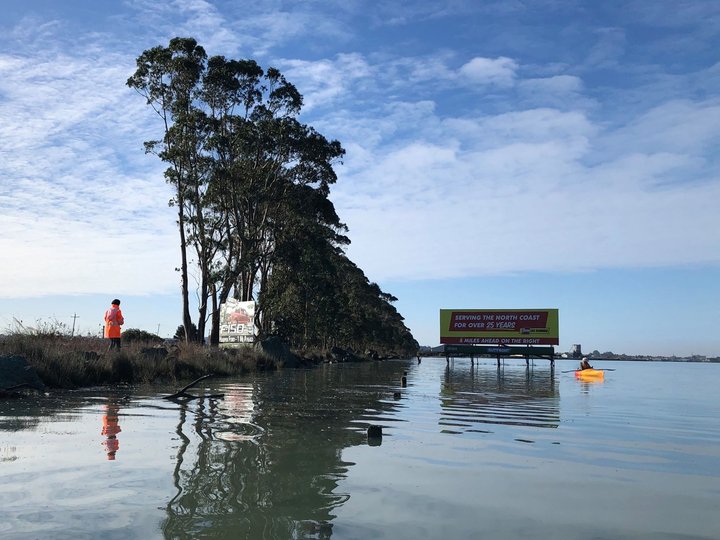
King tide on Humboldt Bay, Dec. 14, 2020 | Photo: Ryan Burns
The surf will be particularly high and dangerous over the next few days, leading up to king tides — extremely high tides that occur only a couple of times a year — on Monday Jan. 11 and Tuesday Jan. 12.
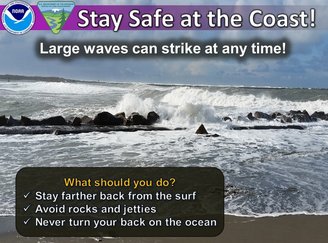
Wherever you decide to view or document the water, make sure you do it safely! When large ocean swells coincide with high tides, the combination brings an increased change of damage and flooding. The U.S. National Weather Service and the Bureau of Land Management remind you to avoid climbing on coastal rocks and jetties over the next few days and to never turn your back on the ocean.
“Jetties
are particularly dangerous and large waves can appear suddenly,” the National Weather Service Eureka posts on its Facebook page. “Don’t
be fooled by rocks and jetties that seem to be too high to be overtopped
by waves. It might just be a period of smaller waves. Larger waves can suddenly appear and wash over previously dry rocks and jetties.”
You can find more information about the king tides and how to send in your photos in this press release from the City of Arcata:
The City of Arcata is seeking community assistance with
photo-documenting water levels on Arcata Bay and in local creeks and streams during the King Tide
events occurring Monday, January 11 and Tuesday, January 12.
King Tide events show projections of what “normal” tide levels could look like in the future as a result
of sea level rise, and a visual record of King Tide events from year to year provides valuable data used
by City staff when planning for sea level rise.
On Monday, January 11 at 10:18 a.m. and Tuesday, January 12 at 11:08 a.m., all community members
are invited to observe and photograph the highest tides at key locations of interest throughout Arcata. A
“King Tide Guide ” map of the observation sites can be found at cityofarcata.org.
Photographs of the tides can be emailed to kingtide@cityofarcata.org to be added to the City’s King
Tide GIS Storymap in the future. Images may also be shared with the California Coastal Commission’s
statewide King Tide Project at coastal.ca.gov/kingtides. Photographs of the tides at locations in
Humboldt County not included in the “King Tide Guide” are also welcome and encouraged.
In addition, on Tuesday, January 12, the City will host a virtual King Tide and Sea Level Rise
Discussion at 2 p.m. The conversation will include information on how King Tide events can show
effects of future sea level rise, photos of past King Tide events will be shared and Community
Development Director, David Loya, will discuss how the City is approaching responses to sea level rise.
A Zoom link to attend can be found at cityofarcata.org.
All community members who choose to observe the King Tides are urged to follow safety precautions
around water and COVID-19, and more detailed information on how to safely observe the tides can be
found at cityofarcata.org.
For more information about KingTides and sea level rise, contact the Community Development
Department at kingtide@cityofarcata.org.
Press release from the Humboldt County Sheriff’s Office:
On Jan. 8, 2021, at about 2:40 a.m., Humboldt County Sheriff’s deputies on patrol in the area of Myrtle Avenue and Mitchell Road, in the county’s jurisdiction of Eureka, conducted a vehicle investigation on a truck and cargo trailer parked in a dirt turnout along the road.
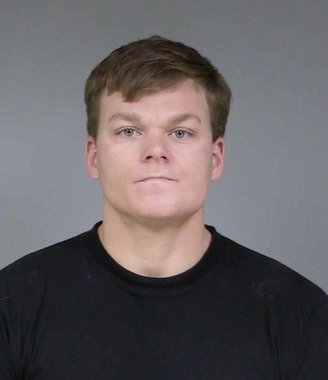
During their investigation, deputies learned that the cargo trailer had been reported stolen out of Crescent City. Inside the truck, deputies located two individuals asleep. Deputies contacted the occupants, one of which was later identified as Justin Edward Norton, age 32 of Eureka. Norton was found to have warrants for his arrest.
Norton was taken into custody and booked into the Humboldt County Correctional Facility on fresh charges of possession of a stolen vehicle (PC 496d(a)), in addition to his warrants for domestic violence charges (PC 273.5(a), 273(d)(a) and 273.6(a)) and driving on a suspended license (VC 14601.1(a)).
The stolen trailer was towed, and the second occupant of the vehicle was released at the scene.
Anyone with information about this case or related criminal activity is encouraged to call the Humboldt County Sheriff’s Office at (707) 445-7251 or the Sheriff’s Office Crime Tip line at (707) 268-2539.