On August 8, 2026, at approximately 12:10 a.m., a Eureka Police
Department (EPD) officer responded to the area of Union Street and
West Wabash Avenue for a report of a theft from a vehicle.
It is watching you.
Upon arrival, the
officer contacted the victim, who reported that multiple pieces of
equipment had been taken from their vehicle. The victim advised that
one of the stolen items could be identified by several “EPD”
badge stickers affixed to the top, as well as its serial number.
Before contacting
police, the victim spoke with a male subject in the area and asked if
he had seen anyone who may have taken the equipment. The male
indicated that he had seen a possible suspect fleeing the area.
Officers checked the
surrounding area but were unable to locate the suspect or the stolen
property. Later that same day, at approximately 8:15 p.m., the
handling officers conducted a patrol check of the area in an attempt
to locate the stolen property. An officer located the male subject
who had previously spoken with the victim. The male was identified as
20-year-old Eureka resident Vincent Potts, who was known to officers
and matched the description provided by the victim.
Upon contacting
Potts, the officer observed an item in the backseat of his vehicle
that appeared to resemble one of the items reported stolen. Potts was
detained, and a subsequent search of the vehicle confirmed the item
was the stolen equipment. The equipment was identified by the “EPD”
badge stickers affixed to it. An additional piece of equipment
reported stolen was also located in another vehicle associated with
Potts.
Potts was taken into
custody for possession of stolen property. The stolen equipment was
recovered and was returned to its owner.
This investigation
remains ongoing and active. Anyone with information regarding this
incident is encouraged to contact the Eureka Police Department’s
Criminal Investigations Unit (CIU) at 707-441-4300.
An automated license plate reader (ALPR) camera from the Atlanta-based company Flock Safety. | Photo by Tony Webster, CC BY 2.0.
###
Last month, the Humboldt County Sheriff’s Office installed a pair of Flock Safety-brand automated license plate-reading (ALPR) cameras near Willow Creek, expanding its countywide network of the controversial surveillance devices to 11.
Our local Sheriff’s Office is among more than 7,000 organizations in the U.S. that contract with Atlanta-based Flock Safety, whose ALPR cameras employ artificial intelligence to identify and track vehicles. The company was recently valued at $8.4 billion, according to the New York Times.
Over the past 30 days, the Humboldt County Sheriff’s Office’s network of Flock cameras has captured more than 130,000 individual license plates, according to the agency’s online transparency portal. In addition to “reading” the passing plates, Flock’s high-resolution cameras record and analyze each vehicle’s make, model and color and capture other identifying features, such as scratches and dents. All of that data is stored for up to 30 days.
The Sheriff’s Office currently shares its Flock network data with 22 other California law enforcement agencies, which can access the stored information for their own investigations.
An Outpost investigation last year found that the Sheriff’s Office appeared to be violating state law and its own policy by allowing outside law enforcement agencies to conduct hundreds of thousands of searches per month of its ALPR data, often without first obtaining legally required information such as the reason for the search and the identity of the officer conducting it.
The Sheriff’s Office subsequently restricted the number of outside agencies with access to its ALPR data — from nearly 300 to just 22 — and the agency said it regularly conducts retroactive audits of search data to ensure that no unauthorized or improper access was granted.
The Outpost investigation also revealed that hundreds of searches by local and state law enforcement officers referenced federal agencies, including Immigrations and Customs Enforcement (ICE), in direct violation of SB 34. A CalMatters investigation found that this law is routinely violated by California law enforcement agencies. Furthermore, while state law prohibits ICE and other federal agencies from accessing ALPR data directly, it does not prevent local agencies from conducting searches on their behalf.
Over on the Sheriff’s Office’s Flock transparency portal you can download a spreadsheet that tells you the date and time of each search conducted by the HCSO’s own employees in the past 30 days, along with the reason behind the search, the related case number and the number of Flock cameras accessed. What the spreadsheet doesn’t show is who has accessed the HCSO’s own Flock camera data, or when or why.
Civil liberties advocates, both locally and nationwide, have raised privacy concerns over the proliferation of ALPR cameras. These critics point to cases of alleged abuse, such as this Arizona cop who allegedly used Flock cameras to stalk his wife, or this Texas officer who searched more than 83,000 cameras to track a woman across state lines who was falsely accused of self-administering abortion medication.
On its transparency portal, the Sheriff’s Office says its Flock cameras don’t detect individual faces, gender or race, and the agency’s list of prohibited uses includes immigration enforcement, traffic enforcement, harassment or intimidation, personal use and profiling by race, sex, religion or any other protected class.
Still, public pushback persists. Earlier this year, a petition circulating online called on the Sheriff’s Office to end its contract with Flock Safety and remove all of its leased ALPR cameras, arguing that the devices raise privacy concerns and contribute “to a climate of fear and mistrust.” To date, that petition — linked here — has gathered almost 1,600 signatures.
Back in June, the Humboldt County Board of Supervisors spent about four hours debating the Sheriff’s Office’s use of Flock Safety ALPRs. The board wound up voting 4-1 to create an ad hoc committee to examine alternatives to Flock, including systems that would give the county more control over its data and potentially allow local/on-site data storage.
The board also voted 4-1 to have the Public Works Department develop a policy governing the placement and use of surveillance technology on county property and rights-of-way. First District Supervisor Rex Bohn cast the lone dissenting vote on both actions.
In response to an emailed inquiry about the Sheriff’s Office’s two new cameras, Public Information Specialist Erin Inskip said the devices were deployed on July 1, and the agency does not currently have plans to add any more.
PG&E spokesperson Megan McFarland tells us that last night a helicopter carrying a large, 1,000-pound bucket was among the resources being used to battle the blaze.
Unfortunately, McFarland says, the helicopter pilot allowed the bucket to graze power lines along Highway 96. The poles stayed standing, but it was enough to knock out juice for the night.
McFarland was not certain which agency or contractor was piloting the helicopter. ‘Third party,” she said, is essentially PG&E-speak for “someone who is not PG&E.”
Laborers work on the steel waterline replacement project in March. File photo.
It’s been over a year since construction crews started ripping up streets around Arcata, replacing important water and sewage infrastructure, some of it nearing a century old. But the project is very close to being done.
City officials named it the “steel waterline replacement project,” but a lot more than just steel waterline has been replaced since it kicked off in July of 2025. Underground, Arcata was rife with aging control valves and water meters, near-death asbestos cement pipe, and undersized water mains. Updating it was costly. The city had to spend about $12 million on the project, which replaced around 10% of the city’s network.
The city’s project manager, Steven Luu, told the Outpost that he expected work to finish sometime in September or October, though the contractor, McCullough Construction, could take as late as December. The only section remaining is in Sunny Brae, on Shirley Boulevard and the connected cul-de-sacs, though it’ll take another week or two to finish work near city hall on Seventh Street.
Crews closed streets block-by-block, starting with the areas deemed most likely to have issues. Slapping “Band-Aids” on leaky pipes, repairing them piecemeal as they fail, is a more expensive strategy in the long run than replacing them all, and city crews did have to repair some sections of failed watermain right before the contractor replaced them.
Residents have had to put up with some inconveniences. Detouring around blocked streets, navigating patchy asphalt and infrequent water turnoffs is annoying, but the project has measurably improved Arcata’s infrastructure, Luu said. Many of the city’s fire hydrants were being serviced by undersized water mains two inches smaller than the standard. Some neighborhoods didn’t have enough hydrants to begin with. Crews installed new hydrants and properly sized pipes. That’s an obvious safety improvement, but residents may also be able to pay lower home insurance premiums if they can prove they’re closer to a hydrant, Luu said.
The new water meters are better too. They allow residents to measure their water consumption hour-by-hour online (check that out here), which could help someone diagnose a leak or their biggest sources of usage.
Luu said he was thankful that most people have patiently dealt with the inconveniences, and he asks that drivers near the next work site be cautious and drive slowly.
The Myrtle Ave. version of ‘The Mallard.’ Photo: Ryan Burns.
Press release from the City of Eureka:
The City of Eureka
and Linc Housing are encouraging community members interested in
affordable housing at The Mallard to join the interest list before it
closes on August 21, 2026.
The Mallard is a
90-home affordable housing community being developed through a
partnership between the City of
Eureka and Linc Housing at three locations in Eureka. Construction
began in Spring 2025, and the
first homes are expected to be ready for residents this fall.
The interest list is
currently open for 62 of the community’s affordable homes. After
the list closes, a public
lottery will establish the order in which applicants are screened.
The remaining 25 affordable homes
will be leased through the Housing Authority’s waiting list, along
with three manager units.
“We want to make
sure people in our community know about this opportunity and have a
chance to get on the interest list before it closes,” said Caitlin
Castellano, Deputy Development Services Director of the City of
Eureka. “The Mallard is the result of a strong partnership between
the City and Linc Housing, and we’re excited to see these new
affordable homes nearing completion.”
Community members
can learn more about The Mallard, eligibility requirements, and how
to join the interest list at www.themallardeureka.com.
The interest list
closes August 21, 2026.
About the Mallard
The Mallard will
provide 90 affordable homes across three new communities in Eureka,
with one-, two- and three-bedroom apartments and amenities including
community rooms, courtyards, playgrounds and secure bicycle storage.
The project was made possible through a partnership between the City
of Eureka and Linc Housing, along with state funding that supports
both housing and related transportation and infrastructure
improvements.
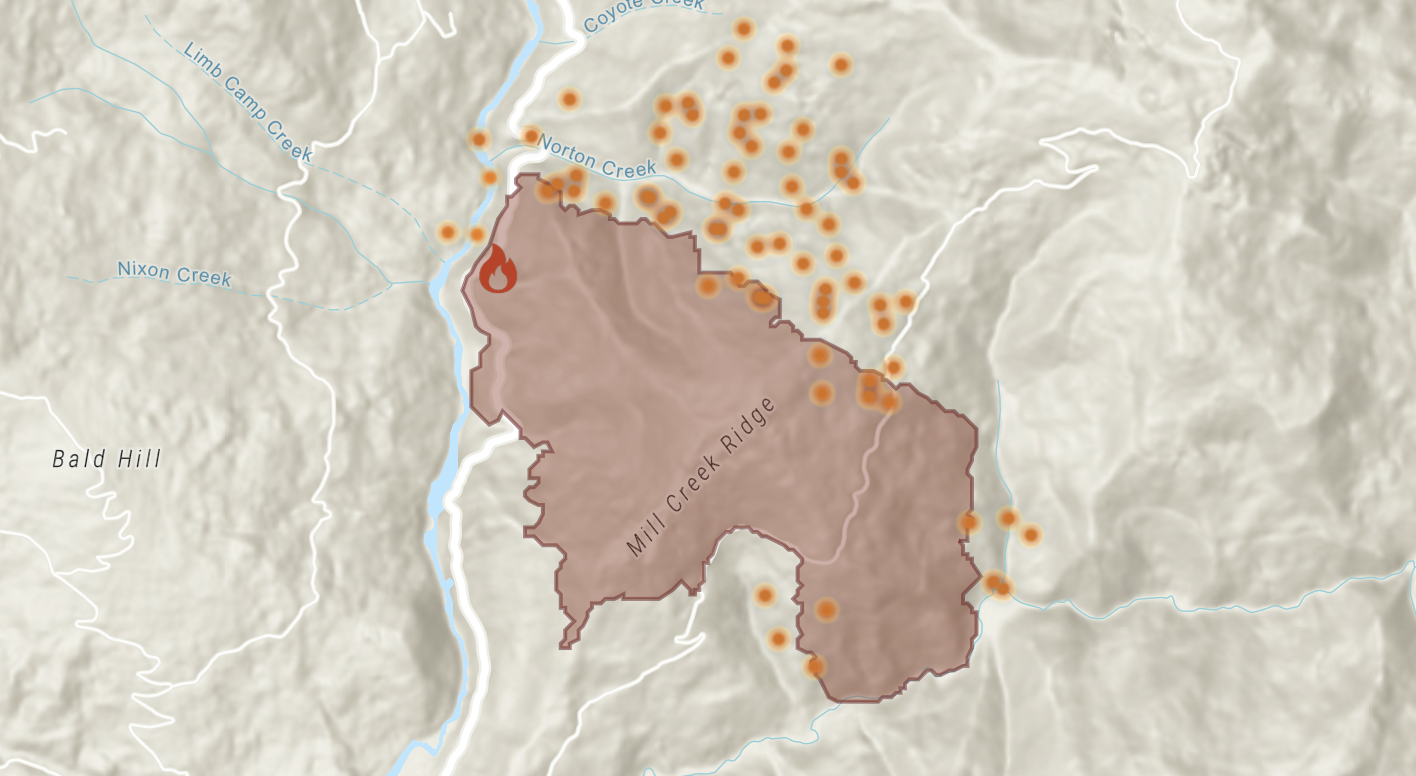
As of 7 a.m. on August 11, 2026, California Incident Management Team 1 has assumed command of the Mile Post 18 Fire. The team extends its gratitude to the Hoopa Valley Tribe for their outstanding efforts during the initial response. Protecting communities and Highway 96 remains the top priority, and significant progress has been made over the past few days to keep the fire east of Highway 96 and the Trinity River.
Today, firefighters will focus on strengthening containment lines along the highway. A night shift has been established and is currently mirroring the day crews, ensuring the fire is fought around the clock.
The Mile Post 18 Fire is being managed with full suppression tactics. As additional crews and resources arrive, firefighters will evaluate and utilize the most effective containment lines, including roads, natural features, and previous fire lines. The number one priority for Team 1 is safety. The steep, rugged terrain presents a challenge for fire crews.
Weather:
Dry conditions persist in the region with high temperatures reaching into the triple digits. Dead and downed trees that have dried out from a hot summer are a risk for rapid spread. A marine layer is forecasted that should help keep the sky covered and slow the spread of the growth of the fire. The marine layer will raise the relative humidity up to 90% in some areas, a boon for crews building line.
Evacuations:
Evacuation Warnings: HIA-E003, HIA- E004, HIA-E006, HIA-E002-A, and HIA-E14-C
Road Closures:
Highway 96 remains closed North of Hoopa due to Fire activity. Closures also are in place for Hostler Ridge Road, Mill Creek Road and Big Hill Road.
This story was originally published by CalMatters. Sign up for their newsletters.
###
Thinking about buying or leasing an electric car in the near future? California will soon be making that cheaper.
On Friday, Gov. Gavin Newsom launched “MyFirstEV,” a new state program that sets aside millions of dollars to fund rebates for residents who buy or lease a zero-emission vehicle — a category that includes battery-electric cars and hydrogen fuel cell-powered vehicles.
First-time EV buyers can qualify for a $3,500 discount when buying or leasing a new electric vehicle, as long as the retail price is under $50,000. If you’re looking for a used electric car, there’s still a price reduction available — a smaller one, however: $1,750 off for vehicles retailing for under $25,000.
The state’s program comes a year after President Donald Trump’s massive spending and tax plan known as the One Big Beautiful Bill ended federal tax credits for EVs nationwide. Previously, American consumers could claim a $7,500 tax credit after buying a new EV or $4,000 for used EVs.
When announcing the program in July, Newsom said that as the federal government pulls back from supporting EVs, California would instead be “putting its foot on the accelerator” — and that the instant rebate program would “[make] it easier for families to drive clean, breathe clean and keep more money in their pockets.”
The program has secured $270 million in funding — half of that from the state budget and the other from participating EV automakers.
Who qualifies for new EV rebate?
Only California residents who are buying or leasing an EV for the first time are eligible for this rebate.
And consumers will have to confirm that this is the first time they are buying or leasing an EV before taking their car home, said Lindsay Buckley, communications director of the California Air Resources Board, the agency tasked with managing the program.
“Participants will be required to sign a legal document declaring that this is in fact their first purchase or lease of an electric vehicle,” she said.
“So if you’ve already bought or leased an electric vehicle in the past, then you wouldn’t be eligible for this program.”
Limiting the program to first-time buyers could actually help boost the popularity of EVs among people who have never bought them, said Scott Moura, a UC Berkeley professor of civil engineering.
“Providing incentive to people who have bought EVs before isn’t really adding to the number of people who purchase EVs,” he said. “The funds can be used most effectively if they’re targeted towards first-time EV buyers.”
Do you need to apply ahead of time?
No — there’s no application to fill out ahead of time. All you need to do is go to a dealership of one of the 15 participating automakers.
Hyundai, Lucid and Tesla rebates are available starting today. The other participants will launch their programs throughout the fall.
This is different from other past state rebate programs — like the now-terminated Electric Bicycle Incentive Program — which have required participants to fill out an application before making a purchase.
If you move forward with making a purchase or lease, confirm two things with the salesperson and the financing team:
That you qualify for the MyFirstEV discount
That there are still state funds available for this specific car brand.
When federal EV rebates were available, buyers had to initially wait until they filed their taxes the year after buying their car to request this money back. But state officials say that folks interested in the FirstEV discount won’t have to wait so long.
“Californians will be able to go down to participating automakers’ dealerships and access the rebates at the point of sale,” Buckley said. “They won’t have any delay in getting this discount.”
Can I get a rebate for any EV I want?
No — MyFirstEV discounts will only cover battery-electric cars and hydrogen fuel cell-powered vehicles from automakers participating in the program.
Hybrid vehicles are also not included in MyFirstEV, state officials confirmed with KQED.
There’s also a price limit: The EV you choose must cost under $50,000 if it’s a new car, and $25,000 if it’s used.
There is, however, a small exception to this price rule if the automaker is headquartered in California — in which case the discounts will apply regardless of the manufacturer’s retail price.
More than a dozen electric car brands are based in the Golden State, with several selling models priced beyond the $50,000 limit.
Can low-income buyers get additional support?
While the MyFirstEV discount will not vary based on income, consumers can stack the discount with other incentive programs, including the Driving Clean Assistance Program and Clean Cars 4 All.
To qualify for Clean Cars 4 All, residents must have an income of less than or equal to 300% of the federal poverty level. This program could unlock up to $12,000 in additional savings.
Will some carmakers have more rebates than others?
No — funds will be divided equally among the participating automakers.
However, there may be greater demand for some brands, which could mean that rebates may run out faster at some dealerships.
###
This article includes reporting from KQED’s Laura Klivans.