

Believe It or Not, There Are Laws About Riding E-Bikes, E-Scooters and E-Motorcycles, Eureka Police Department Kindly Reminds the Public
LoCO Staff / Wednesday, Aug. 12 @ 12:28 p.m. / Local Government , Transportation
Electric-powered transportation is having a moment. Or, heck, maybe we’re in the midst of a sea change in how people move around! Either way, there are a lot more e-powered vehicles zipping around our streets these days, and folks with the Eureka Police Department have noticed that not everyone is doing it right.
In response, EPD recently launched an informational social media series. Here’s what the department has to say:
Subject: Know Before You Ride: California’s E-Bike, E-Scooter & E-Motorcycle Laws
As electric-powered transportation continues to grow in popularity, the Eureka Police Department has seen a significant increase in calls for service involving the reckless operation of e-bikes, e-motorcycles, e-scooters, and other electric-powered mobility devices. Many of these incidents involve riders who are unaware of the laws that govern these vehicles, creating safety concerns for riders, pedestrians, and motorists alike.
With the new school year approaching, the Department has also observed an increasing number of juveniles using these vehicles to travel to and from school. While these devices can be a convenient and enjoyable mode of transportation, it is important that riders and parents understand the laws, safety requirements, and responsibilities that come with operating them.
To help educate our community, the Eureka Police Department is launching an informational social media series focused on California’s electric mobility laws. Throughout the series, we’ll break down the different classifications of e-bikes, e-scooters, e-motorcycles, and other electric vehicles, explain where they can legally be ridden, discuss helmet and licensing requirements, and highlight common violations officers encounter.
Our goal is to provide parents, students, and community members with the knowledge they need to make informed decisions, promote safe riding habits, and reduce preventable collisions and enforcement contacts.
Be sure to follow along over the coming weeks as we explore California’s e-bike, e-scooter, and e-motorcycle laws through easy-to-understand graphics and practical safety tips.
Below are some images and info from the social media campaign. For more, click on over to Facebook.



BOOKED
Today: 10 felonies, 12 misdemeanors, 0 infractions
JUDGED
Humboldt County Superior Court Calendar: Today
CHP REPORTS
9180 Mm1 N Men 91.80 (HM office): Traffic Hazard
Summer Ln / E Washington Blvd (HM office): Defective Traffic Signals
Poppy Dr / Sherwood Rd (HM office): Closure of a Road
ELSEWHERE
County of Humboldt Meetings: Behavioral Health Board - SUD/Dual Recovery Committee - Sept. 10, 2026
County of Humboldt Meetings: Behavioral Health Board Executive Committee Meeting - July 1, 2026
RHBB: Judge Overturns Search Warrant in Student Activist Case: Devices Ordered Returned
RHBB: Multi-Vehicle Crash Closes South Fortuna Boulevard Near Strongs Creek Plaza
(UPDATE) First Evacuations Ordered Northeast of Hoopa
Isabella Vanderheiden / Wednesday, Aug. 12 @ 11:50 a.m. / Emergency , Fire

The evacuation map as of 1:45 p.m. Evacuation warnings are depicted in yellow, and the order is in red. View the interactive map here.
###
UPDATE, 1:45 p.m.: The Humboldt County Office of Emergency Services has expanded the evacuation warning to include HIA-E001-B, the zone encompassing Grasshopper Prairie. Details here.
###
UPDATE, 12:20 p.m.: The Hoopa Office of Emergency Services shared the following post on Facebook to clarify that there are no residents living in the evacuation zone.
The Humboldt County Sheriff’s Office has issued an EVACUATION ORDER for Zone HIA-E002-A due to ongoing fire activity associated with the Mile Post 18 Hoopa Fire.
Important Notes:
- There are currently no residents in this zone.
- The evacuation order is a precautionary measure, ensuring safety in light of the fire activity.
- Road Closures: Access is restricted at mile markers 15.5 and 21.
Zone Boundaries:
- North: Mill Creek
- South: Coyote Creek and Hopkins Creek
- West: North Fork Mill Creek
- East: HWY 96
Stay informed and prioritize safety. Further updates will be provided as the situation develops.
###
Original post: Fire officials have issued an evacuation order for HIA-E002-A, the zone northeast of Hoopa along Upper Mill Creek Road. The emergency notice urges people living in the area to “leave the area immediately” as the Mile Post 18 Fire spreads East.
“Take evacuation route to Hoopa Neighbor Facility,” according to the notice, which was issued at 11:30 a.m. “Wildfire near Hwy 96 mile marker 18. Road closure on Hwy 96 mile marker 15.5 to mile marker 21. Fire personnel on scene. Avoid the area, first responders in area.”
Zones HIA-E002-B, HIA-E003, HIA-E004, HIA-E006 and HIA-E014-C are still under an evacuation order.
Updated evacuation information can be found at this link. More information can be found in the Facebook post below.
Arcata’s Final Decision on the Wood-Fired Sauna Facility on South G Street Deferred to the City Council
Dezmond Remington / Wednesday, Aug. 12 @ 11:39 a.m. / Bidness Time

40 South G Street, where the facility may one day be established. Submitted photo.
PREVIOUSLY
- Will the Proposed Arcata Contrast Therapy Facility on South G Burn Wood? Or Will It be Forced to Spurn It For Good?
- Arcata Wood-Heated Sauna Proposal Not Quite Shot Down in Flames by Planning Commission
- Despite Wood-Burning Appliance Ban, an Arcata Entrepreneur Hopes the City Will Give Him a Break on Wood-Fired Sauna Facility
###
Another chapter in Zachary Vondrak’s entrepreneurial saga ended in an anticlimax.
Last night’s meeting of the Arcata Planning Commission was the latest round of bureaucratic wrangling over the fate of Vondrak’s proposed contrast therapy/sauna manufacturing facility, which he wants to heat by burning wood sourced from forest fires or downed trees. The members of the Arcata Planning Commission, wary of being the authority to interpret an odd wrinkle in city code, decided to let the city council make the final decision.
Arcata prohibited the installation of new wood-burning stoves several years ago to reduce the amount of toxic particulate matter trapped in Humboldt’s oft-dense marine layer, and its code seems clear. The heading over the important section: “Reduce emissions from stationary area sources: residential, commercial, and industrial.” Vondrak’s sauna facility would be a commercial source of woodsmoke; if the code is read at face value, he’d be forced to change his plans. (He claims that his stoves, which use a “gasification” system, produce less soot than traditional woodstoves, citing some evidence produced under laboratory conditions. The commission noted his evidence is unverified, and that less soot doesn’t necessarily translate into less particulate matter.)
But that wasn’t necessarily the city’s intention when the code was updated, David Loya, Arcata’s director of community development, said at the meeting. They were mostly concerned with residential woodsmoke, not “one-off” sources like, say, a wood-fired pizzeria or Vondrak’s saunas. Yes, the heading mentions commercial interests, but that wasn’t what city staff, the planning commission or the city council were talking about at the time, he said. They weren’t trying to eliminate particulate matter pollution altogether, just to reduce it.
“Almost my whole career, I’ve had to say, ‘I think what we were thinking at the time was,’ or ‘I believe the discussion was,’ or ‘I heard from someone that what they were thinking was’ — I have the benefit of actually having been involved in this discussion, and when that policy was developed, 100% of the conversation was around household usage,” Loya said. “And, I agree 100%, I can’t deny the heading says ‘Industrial, Commercial, and Residential.’ The discussion that led to that policy change…all of that conversation focused on, ‘How is that going to impact residential use of these wood-burning stoves?’”
If the commissioners wanted to, Loya said, it would be up to them to decide what mattered more. Their decision could have implications for future business owners who wanted to use wood-burning appliances, or they could narrowly tailor this decision to Vondrak’s facility.
The city’s intentions at the time didn’t matter to at least two of the commissioners, Dan Tangney and Peter Lehman, who said that what was written down outweighed any past discussion about which groups should be regulated more. Lehman also objected to the use of any wood-burning appliances for public health reasons.
Many of the commissioners said they weren’t comfortable interpreting the policy, though it was within their power. They kicked around a few ideas (granting Vondrak permission to use wood-burning stoves on a three-year trial basis, implementing no-burn days during the winter, only allowing him to use gas or electric stoves), but finally decided it should be the city council’s decision to make. The decision was unanimous.
(UPDATE: Evacuation Order Issued) Mile Post 18 Fire Surpasses 2,800 Acres as Crews Grapple With Spot Fires Along Eastern Edge; Containment Estimated at 10%
LoCO Staff / Wednesday, Aug. 12 @ 9:20 a.m. / Fire
Fire map as of this morning.
###
UPDATE, 11:30 a.m.: The Humboldt County Office of Emergency Services has issued an evacuation order for the area northeast of Hoopa. Details here.
###
UPDATE, 9:45 a.m.: Shortly after this post was published, California Incident Management Team 1 updated the fire’s acreage to 2,803 acres with 10% containment.
For more information, email 2026.mp18@firenet.gov or call 530-625-2124.
###
Fire update from the California Incident Management Team 1:
Acres Burned: 2,107
Containment: 10%
Start Date: 8/7/2026
Personnel: 720Today’s public meeting has been moved to the Hoopa Valley Tribal Office at 11860 State Road 96. The meeting will still take place at 6:00 PM and will also broadcast live on the Mile Post 18 Facebook page.
Operational Update:
Crews successfully held the fire east of Highway 96 and the Trinity River, quickly addressing small areas of fire that crossed established control lines. On the southern portion of the incident, handcrews continued constructing handline down to Mill Creek and successfully completed firing operations to secure and hold the line. Active early morning fire behavior persisted on the northeastern perimeter due to heavy, dry fuels and complex terrain. Spot fires ahead of the main fire occurred along the eastern boundary, and crews will work today to contain them along Oil Springs Road. The incident continues to be managed under full suppression tactics with firefighter and public safety remaining the highest priority.
Fire managers would like to remind the community to please keep all personal drones grounded. Drone activity forces firefighting aircraft to land, stopping critical air operations.
Weather:
A layer of marine air will push into the Trinity River drainage, keeping temperatures in the 80s, with overnight lows in the 60s. Afternoon humidity will drop to 25–30 percent; however, overnight recovery has been good, reaching between 60 to 80 percent. Winds will shift from light, downcanyon northeast at night to northwest at 5–10 mph in the afternoon and evening.
Evacuations:
Evacuation Warnings: HIA-E003, HIA- E004, HIA-E006, HIA-E002-A, and HIA-E14-C. More information can be found here.
Road Closures:
Highway 96 remains closed north of Hoopa due to fire activity. Closures also are in place for Hostler Ridge Road, Mill Creek Road and Big Hill Road.
###

Newsom Makes Last-Minute Push to Help California Utilities Facing Wildfire Bills
Jeanne Kuang and Levi Sumagaysay / Wednesday, Aug. 12 @ 7 a.m. / Sacramento
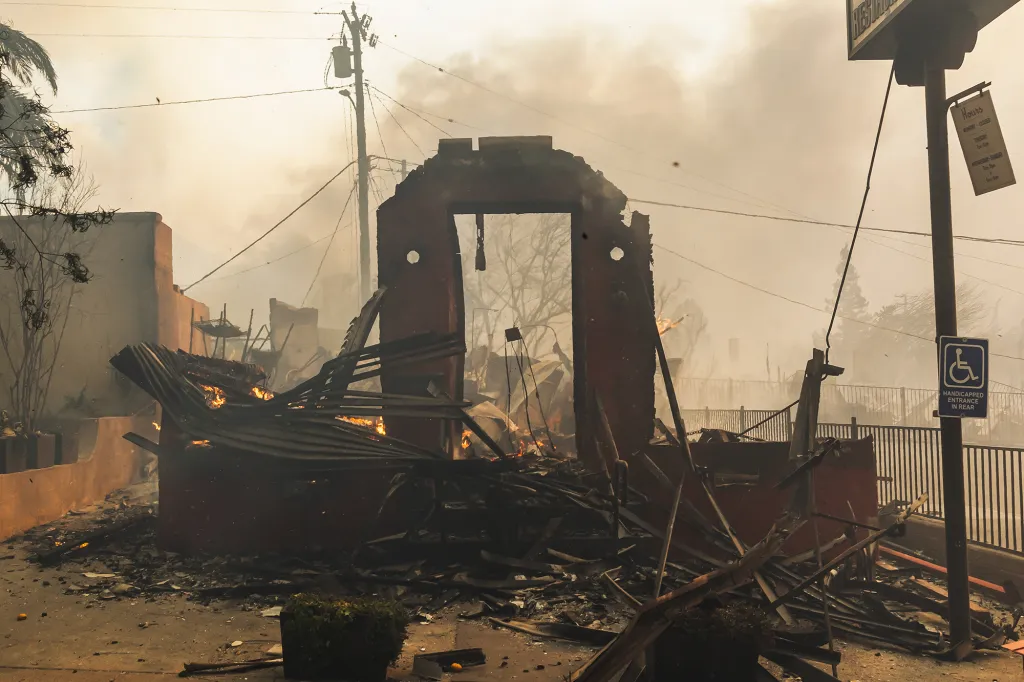
The remaining structure of a building burned from the Eaton Fire in Altadena. Jan. 8, 2025. Photo by Ted Soqui for CalMatters.
###
This story was originally published by CalMatters. Sign up for their newsletters.
###
In the final few weeks of his last legislative session as California governor, Gavin Newsom is asking lawmakers to help reduce how much profit-making utility companies must pay out after wildfires.
His administration has for weeks floated to lawmakers a wide-ranging but still-vague package of bills to address the spiraling costs of wildfires that has made a slew of different interests unhappy.
Insurance companies have launched an ad campaign against what they call a potential “utility bailout,” that would leave them unable to recover from the power companies the costs of paying homeowners’ insurance claims. Attorneys representing fire survivors and other plaintiffs that sue utilities don’t want to see their fees reduced.
Wildfire survivors worry the governor’s proposal would prevent them from being made financially whole for suffering trauma. Local government leaders are demanding that they continue to be paid the full cost to rebuild incinerated infrastructure.
On the other side are the politically influential utilities, who have drawn fury for their equipment sparking several of the state’s most devastating wildfires.
The state’s three investor-owned utilities, Pacific Gas & Electric, Southern California Edison and San Diego Gas and Electric, aren’t in imminent financial danger and last year saw profits rise. But fire costs have contributed to Californians paying the second-highest electricity rates in the country, and lawmakers and Newsom’s office worry that if it becomes harder for utilities to borrow money those bills will continue to climb. The utilities together provide power for about three-quarters of the state.
Newsom and the lawmakers say utilities are held responsible for too much after a wildfire and that bad actors like hedge funds are taking advantage to get a cut. If another devastating wildfire triggers damages too high for a utility to pay, the potentially resulting bankruptcy would make it even harder for victims to collect.
“The status quo doesn’t work,” Newsom said at a press conference last week when asked whether his proposal is in the best interests of fire survivors. “And we’re trying to balance all of those needs in a very familiar process that will unfold over the course of the next few months.”
CalMatters asked the governor’s office whether the timeline Newsom mentioned was correct, considering the legislative session ends in three weeks. A spokesperson said the governor meant “the next couple of months of the legislative session,” and did not respond to whether Newsom will call a special session to address the issue.
As he mulls a presidential run, Newsom has political incentive to push through a deal. Opponents from the right are eager to paint California as unaffordable and lurching through disasters; further rate hikes or the specter of a utility bankruptcy wouldn’t help. But backing the utilities also comes with risks: Anger at the companies remains fresh after Edison was last week found by Cal Fire and the Los Angeles County Fire Department to be responsible for the January 2025 Eaton Fire that killed 19 people in Altadena.
The chair of a key Assembly committee, Democratic Assemblymember Cottie Petrie-Norris, is generally on board with Newsom’s proposals, but lawmakers in the Senate appear less certain. Fire survivors are urging them to slow down and commit to a more public debate.
“You cannot be ‘there are some bad actors’ and therefore we will have a secret bill,” said Joy Chen, who leads a group of Los Angeles wildfire survivors. “Then your bill is the bad actor.”
A familiar fight
It’s a redux of a bitter fight that has bookended Newsom’s time as governor.
He stepped into his role in the wake of devastating wildfires that tore through Northern California in 2017 and 2018, several of which PG&E was found to have been responsible for.
The utility was in a bind: Under California law it was strictly liable for fires that were getting more severe, partly due to climate change, and regulators were no longer letting the companies pass damages onto customers in cases where they were found careless.
Facing mounting suits from victims and insurance companies, the company in 2019 declared bankruptcy. Newsom quickly signed legislation to help buffer utilities from those claims, drawing accusations of a bailout. The state created a $21 billion wildfire fund, paid for half by utility shareholders and half by customers through a $2.50 surcharge on their monthly electricity bills, to pay victims’ claims, provided the utilities follow stricter safety regulations.
Then in January 2025, during an intense windstorm, electricity arcing from a century-old out-of-service Edison tower in Southern California’s Eaton Canyon set dry brush ablaze. The resulting Eaton Fire, burning at the same time as the deadly Palisades Fire, claimed 19 lives and nearly 9,500 homes and other buildings. UCLA estimated losses at between $24 billion and 45 billion.
The state wildfire fund is expected to be drained once the costs of insurance claims, Edison’s multimillion-dollar voluntary settlements with survivors and numerous unsettled lawsuits are tallied. (Lawmakers extended the fund last year to address future fires, adding to electricity customers’ surcharges through 2045.) Profiteering hedge funds have sought to take advantage by buying up insurance claims.
Newsom’s goal is twofold: Limit who can make claims to the fund and limit how much they can get. In private briefings last week and a document outlining his package released Tuesday, his office said he would combine the cost reductions with bills to boost home hardening, help homeowners get off the state’s insurer-of-last-resort and re-enter the home insurance market, tie utility executive pay to safety and require shareholders to pay down customers’ rates for two summers.
Details of the package remain scant. The outline released Tuesday did not include proposed legislative language.
CalMatters contacted the state’s three major utility companies. San Diego Gas & Electric did not respond. PG&E and Edison referred questions to Nathan Click, spokesperson for the utilities’ campaign, which is called Wildfire Victims First and has been blanketing the state with ads telling Californians to urge their lawmakers to act.
Click, who is also a political spokesperson for Newsom, did not answer specific questions, including whether utilities are meeting directly with lawmakers. Instead, he shared statements from a handful of business groups and a powerful electrical workers’ union urging lawmakers to advocate for the proposed liability reduction.
In addition, the chief executives of PG&E and Edison have said they plan to take action to protect their shareholders if California lawmakers do not pass legislation to limit their fire liability. They did not specify what they planned to do.
Over the past four years PG&E, Edison and SDG&E collectively spent $5.2 million on California political campaigns, sponsored travel for lawmakers and donations to officials’ favored charities, according to CalMatters’ Digital Democracy database.
PG&E also has the fifth-highest spending on lobbying in the 2025-2026 legislative session and was the top spender from April through June. In the first half of this year, the three utilities reported spending nearly $7 million to influence Newsom’s administration, the Legislature and their regulators at the California Public Utilities Commission.
Limiting damages
Newsom suggests chipping away at utilities’ liabilities by limiting attorneys’ fees, reducing the amount of money local governments can recoup to rebuild burned infrastructure and curbing how much some victims can receive in damages.
His proposal would set up a state-administered “fast pay” program to prioritize wildfire fund payouts for survivors whose loved ones are killed, who are injured or whose properties are destroyed. To participate, claimants would likely need to give up their right to sue the utility — trading an often lengthy wait through litigation to get comprehensive damages in exchange for the relief of a quicker payout.
For other victims “in harm’s way,” the Tuesday outline suggests allowing up to $150,000 in damages.
Newsom’s office and Petrie-Norris, who generally supports the idea, said they do not intend to limit emotional distress claims for survivors they deem legitimate but those kinds of damages should be curbed for others.
“If you were part of a disaster no one’s going to say you can’t make a claim,” Petrie-Norris, an Irvine Democrat who chairs the Assembly utilities committee, said. “If you did not actually experience a disaster, what non-economic damages should you be entitled to?”
Petrie-Norris and Newsom are concerned about billboard attorneys who seek clients to file lawsuits against utilities and the wildfire fund; one study has found attorneys are likely to get 30% to 40% of victims’ payouts. Groups representing survivors and attorneys argue it’s not so clear who should count as a victim. Residents who lost no property and stayed in their homes miles away could still be harmed by smoke inhalation, for example.
Chen said she was “stunned” after she was briefed by the governor’s office last week and was told that only people who are evacuated and have their house burn down would be eligible for non-economic damages.
“Let’s say someone was out of town, but their house burned down so they didn’t evacuate,” she said. “But they lost everything, so they have to rebuild. So you won’t compensate them for pain and suffering?”
Newsom also wants to stop investors from buying claims and prioritize small business claimants over corporations, but his office has not explained how to accomplish that.
The proposed bill package has so incensed some wildfire victims that opponents of the plan have shrugged at arguments that some claimants are taking advantage of the Wildfire Fund.
“The utilities are finding a lot of creative ways to avoid responsibility. That’s it,” said Graham Knaus, chief executive of the California Association of Counties. “We should not be opening the door for them to escape accountability.”
Shifting costs
Another component of the outline released Tuesday could affect homeowners across the state. Newsom is proposing to limit — or eliminate entirely — insurance companies’ right to recoup money from utilities when a utility-caused fire forces those insurers to pay out homeowners’ claims.
The process is known as subrogation. The two powerful industries have been at odds over it for years.
Utilities and insurance already clashed in 2018 when utilities unsuccessfully backed a bill to loosen a unique California legal doctrine that holds power providers strictly liable for wildfire damages near their equipment even if they aren’t found responsible for the fire.
“We’re a well-resourced industry, but not like (the utilities),” Rex Frazier, president of the Personal Insurance Federation of California, recalled. “Their lobbying spend was just crazy.”
Denni Ritter, vice president for the American Property Casualty Insurance Association, said eliminating subrogation could impede the progress that has been made due to the regulations California adopted last year to address insurance availability problems.
“We’re at this precarious time,” Ritter said. Because the state now allows insurance companies to consider catastrophe modeling and reinsurance costs in pricing their premiums, some insurers have resumed writing new policies in California, and the number of policies in the last-resort FAIR Plan is growing at a slower rate, according to the state insurance department.
But if they can’t recover the costs of wildfire claims, Frazier and Ritter said insurance companies will raise premiums, which would affect homeowners even in areas with low fire risk.
“We don’t understand how they’re not embarrassed to suggest that the answer to their problem is to shift their costs over to other people,” Frazier said. “Why should a homeowners insurance customer in a dense urban environment have to pay considerably more?”
Sen. Ben Allen, the Democratic chair of the Senate utilities committee and a candidate for insurance commissioner, said he doesn’t want to make that tradeoff if the package doesn’t include other benefits for consumers or taxpayers.
Petrie-Norris said it could be worth it.
“If I can save you $2 on your utility bill and your insurance bill goes up by $1, that seems like a smart thing for us all to do,” she said. But we’ve got to make sure that’s true and whether there are unintended consequences.”
###
Jeremia Kimelman and Digital Democracy engineer Andrew Chan contributed to this story.
OBITUARY: Julia M. DeMartini, 1931-2026
LoCO Staff / Wednesday, Aug. 12 @ 6:56 a.m. / Obits

Julia M. DeMartini
August 30, 1931 – June 30, 2026
On June 30, 2026, Julia joined her husband, John, who had passed on March 6, 2026. Julia and John were not to remain separated long after seventy and one-half years of marriage.
Julia was the eldest child born to Erwin F. Papke and Anna M. (Duchmann) Papke in Eureka.
Julia attended Nazareth Convent School and graduated from Eureka High School in 1949.
After high school, Julia sometimes helped her cousin Anita (Atwell) Brazil and her cousin’s husband Harold Brazil at their ranch near Tompkins Hill. Julia would recount working in the milking barn helping milk cows and then going to the house to help Anita with household duties. Julia was proud to be the only “female” allowed to have a beer with the men because she worked alongside them in the barn.
Julia also enjoyed dressing up and going to the local dance halls with her sisters. At one dance, she introduced her sister, Barbara, to Jerry Spellenberg. Julia said he was “too good looking” for her and thought he would be perfect for Barbara. She was correct: Barbara and Jerry married and spent many years together until Barbara’s passing.
One evening while attending Humboldt State College (Cal Poly Humboldt), Julia’s brother Bill (Buddy) Papke brought John home for one of their mothers’ home cooked meals with the intention of introducing John to their youngest sister, Norma. After meeting John and being very impressed by his appetite, Julia claimed John for herself and won his heart.
Prior to her marriage to John, Julia worked for Daly Brothers department store as a window dresser. She recalled the time that her boss, Harman, told her if there was an earthquake to quickly get away from the windows. Sure enough, there was an earthquake and Julia remembered quickly getting away from the windows as they broke and watching the hanging lights in the store sway back and forth, missing each other. John was in Arcata at the time and couldn’t get ahold of Julia. The concern they shared that day seemed to be a wakeup call that prompted their engagement soon after.
Julia placed faith and family foremost in her life. Julia and John were married on August 28, 1955. On their ninth wedding anniversary they welcomed their seventh and last child. The family moved to McKinleyville in 1966.
Julia was a stay-at-home mom while John taught at Humboldt State University (Cal Poly Humboldt). She had to contend with seven, sometimes unruly, children while John was working out of town for extra income. (Where she got her patience is still a mystery.) Her days were full of the duties that go along with raising a large family.
Both children and grandchildren remember helping her harvest, can, and freeze the bounties from the garden, picking wild berries for pies, cobblers, and jam, and freezing fish for future meals.
Julia’s hobbies included reading and agate hunting, which she passed on to her children and grandchildren.
Julia’s faith was an unbreakable thread throughout her life. She and John were the 1969 Charter members of Christ the King Roman Catholic Church in McKinleyville.
She taught CCD classes for the children and participated in Parish events and fundraisers. As a Eucharist Minister, she took communion to those that were unable to attend Mass.
Her heart was in the parish’s St. Vincent de Paul chapter. She served as president for many years, retiring in her 80s. The downstairs room of her house was a pantry filled with items to make food boxes for those in need. Every week she and a daughter or two, and usually with a grandchild, would go shopping to keep the pantry full. Many of her grandchildren grew up helping fill food boxes and delivering them. Thanksgiving was her favorite time to make special food boxes so that families could enjoy a complete Thanksgiving meal. She and her main “St. Vinnie” ladies, Jo Barber and Maxine Bolt, helped many local families in need over the years.
Julia faithfully attended holy mass every Sunday, even on vacation. While at Frye’s Care Home, her daughter Angela took her to 4 o’clock mass at St. Joseph’s in Eureka on Saturdays. Julia was very appreciative of Angela taking her to mass.
After her children became adults, Julia and John enjoyed travelling. Her favorite trip was visiting Costa Rica and getting to feed and pet her favorite animal, a sloth. Julia would join John on his scuba diving work trips. She would keep track of the divers on the boats and was known to fix some delicious meals.
In John’s retirement, Julia joined John in collecting gall wasps when John began his study of California gall wasps. Together in their 80s, they would head off to the local mountains and travel on questionable dirt roads to collect galls. They had a couple of “adventures” including breaking down with no cell service, only to be helped by someone who happened, by chance, to drive by. Their guardian angels definitely accompanied them on those outings.
Julia graciously hosted John’s fellow researchers from Scotland twice. In honor of her contributions to their studies, as was done for John, in 2018 a new species of gall wasps, Dryocosmus juliae, was named in Julia’s honor.
Julia was preceded in death by her husband, John, her parents Erwin F. and Anna M. Papke, brother William “Buddy” Papke, sister Barbara Spellenberg, father- and mother-in-law, John A. and Violet DeMartini, brothers-in-law Gerald “Jerry” Spellenberg, Bill Dye, David DeMartini, and Dale Wheeler.
Julia is survived by her children, Michele DeMartini, Paul (Ann) DeMartini, Jean (Gary) McIntire, Angela DeMartini (Al Steer), Jack (Lisa) DeMartini, Catherine (Mike) Galloway, and Eric DeMartini.
Grandchildren: Danielle DeMartini (Nathan Wells), Erika (Brett) DeCarlo, Matthew DeMartini, Alfonso Arechiga, Shane McIntire, Lindsey (Nate) Robertson, Kenny (Ria) Winkler, Brendan Grace (Samantha Sachs), Brittan (Megan) Grace, John (Melissa) Rose-DeMartini, Brian DeMartini, Amanda (Dean) Wilson, and Jesse (Janine) Galloway.
Seventeen great-grandchildren (plus one on the way) and numerous nieces and nephews.
Her sister Norma Dye, brother-in-law Charles DeMartini, sisters-in-law Bev DeMartini, Linda DeMartini, and Violet Wheeler.
Thank you to Joanne Skaggs for being a faithful friend to Julia. Thank you to Charleen Hoopes for bringing Holy Communion to Julia and John.
Thank you to Hospice House for their wonderful care during Julia’s final days. Thank you to Frye’s Care Home for their loving care of both John and Julia, and especially to Rosie, Telma, and Kenzie for the love and compassion shown to Julia after John’s passing.
A funeral mass for Julia and John will be held on the day between their wedding anniversary and Julia’s birthday:
Saturday, August 29 at 12:30 p.m., Christ the King Catholic Church, 1951 McKinleyville Ave, McKinleyville.
A gathering at the parish hall with refreshments will be held afterwards.
Donations in Julia and John’s memory may be made to St. Vincent de Paul or Hospice of Humboldt.
###
The obituary above was submitted on behalf of Julia DeMartini’s loved ones. The Lost Coast Outpost runs obituaries of Humboldt County residents at no charge. See guidelines here. Email news@lostcoastoutpost.com.
TODAY IN SUPES: Board Advances Stronger Protections for Old-Growth Trees in Lower Redway, Approves Maps for Long-Awaited Beau Pre Heights Subdivision
Isabella Vanderheiden / Tuesday, Aug. 11 @ 4:50 p.m. / Local Government

Screenshot of Tuesday’s Humboldt County Board of Supervisors meeting.
###
Looking to strengthen protections for old-growth trees and prevent future misinterpretations of the Lower Redway “Q Zone,” the Humboldt County Board of Supervisors today directed staff to clarify certain aspects of the zoning ordinance, which was established in 1990s to safeguard redwoods near the John B. DeWitt State Natural Reserve.
The board’s action, passed in a unanimous 5-0 vote, directed county staff to form an open working committee to review potential changes to the ordinance, including expanded terms for “imminent danger” and “immediate hazard,” as well as minimum standards for arborists’ and foresters’ reports. The working committee will include Lower Redway residents, forestry experts, PG&E representatives and others.
The board also directed staff to come up with a draft ordinance that would expand protections offered by the Q Zone to forested areas across the county. The board asked staff to set a moratorium on proposed tree removal projects while staff drafts the new ordinance. The action was opposed by First District Supervisor Rex Bohn, who argued that a countywide ordinance was “too enveloping.”

The Lower Redway Q Zone is depicted in yellow. Click to enlarge. | Map: County of Humboldt
As previously reported by the Outpost, Q Zone protections came to the fore earlier this year after four old-growth redwoods were felled on a residential property at Oakridge Drive and Briceland Road in Lower Redway. The incident sparked outrage among environmentalists and raised questions about whether county policies outlined in the Q Zone Ordinance were being properly applied.
Speaking at today’s meeting, Planning and Building Director John Ford admitted that staff had an “incorrect understanding” of the county’s jurisdiction in the Q Zone, having previously thought that CalFire had the ultimate authority.
“Through this process, it was confirmed that the county does have the ability to implement local ordinances in situations where the property is less than three acres in the area, and not zoned TPZ [timber production zone],” Ford said. “[T]here [are] a number of concepts contained within the Q Zone that could be clarified and improved.”
For example, the ordinance allows for a tree in “imminent danger of falling” to be removed, but it does not set terms for what qualifies as “imminent danger.”
“It’d be better to give some more clarity to what an ‘imminent danger’ is and what an ‘immediate hazard’ is because trees can pose hazards for other reasons than just falling,” Ford continued. “It should be clear from the county’s perspective what that means and under what circumstances that a tree could be successfully considered for removal. And to correlate with that, there should be a more robust requirement process for determining the health and the safety of the tree.”
Ford also expressed willingness to draft a separate ordinance that would safeguard old-growth trees throughout the county.
All who spoke during public comment spoke in favor of the proposed changes to the Q Zone, though Redway resident Sue Maloney urged the county to keep better records to preserve institutional knowledge and avoid misunderstandings in the future.

Maloney
“We need to make sure that all these discussions get passed on to your successors … because there seems to be this kind of selective institutional amnesia every 10 or 15 or 20 years,” Maloney said, adding that the wrong ordinance was attached to the board’s agenda. “Is there a way to keep this in the front of everyone’s memory so that [it] doesn’t get lost again?”
“And I’m in favor of protecting more trees countywide, but not if it means delaying or weakening the Q zone for Lower Redway,” she added.
Following public comment, Ford emphasized that whatever comes next has “got to be a very public process.”
“This isn’t something that can be done in a closet,” he said. “Whether we work at [assembling] a specific group that works at it, or just have a lot of public meetings through the process … it’s got to have a lot of input.”

Ford
“I did have the experience of writing a tree preservation ordinance once before … and that was done in committee with a lot of different people representing the community,” Ford added a little later in the discussion. “It turned out to be quite extraordinary, and actually developed new areas of regulation that hadn’t been applied to trees before.”
Third District Supervisor and Board Chair Mike Wilson spoke in favor of a countywide ordinance to protect old-growth across the county. He floated the idea of setting a temporary moratorium while staff works on the ordinance to prevent “folks from trying to get ahead of what we’re trying to work on.”
Second District Supervisor Michelle Bushnell asked what would happen if someone applied for a special permit to remove a hazardous tree from their property under the moratorium. Ford said the county would still be able to issue an emergency permit for tree removal.
Bushnell made a motion to approve staff’s recommendation, including direction to create a countywide ordinance and set a temporary moratorium, which was seconded by Fourth District Supervisor Natalie Arroyo.
Bohn spoke in favor of the proposed changes to the Lower Redway Q Zone but felt a countywide ordinance was a step too far. He said he would not support a moratorium “of any sort.”
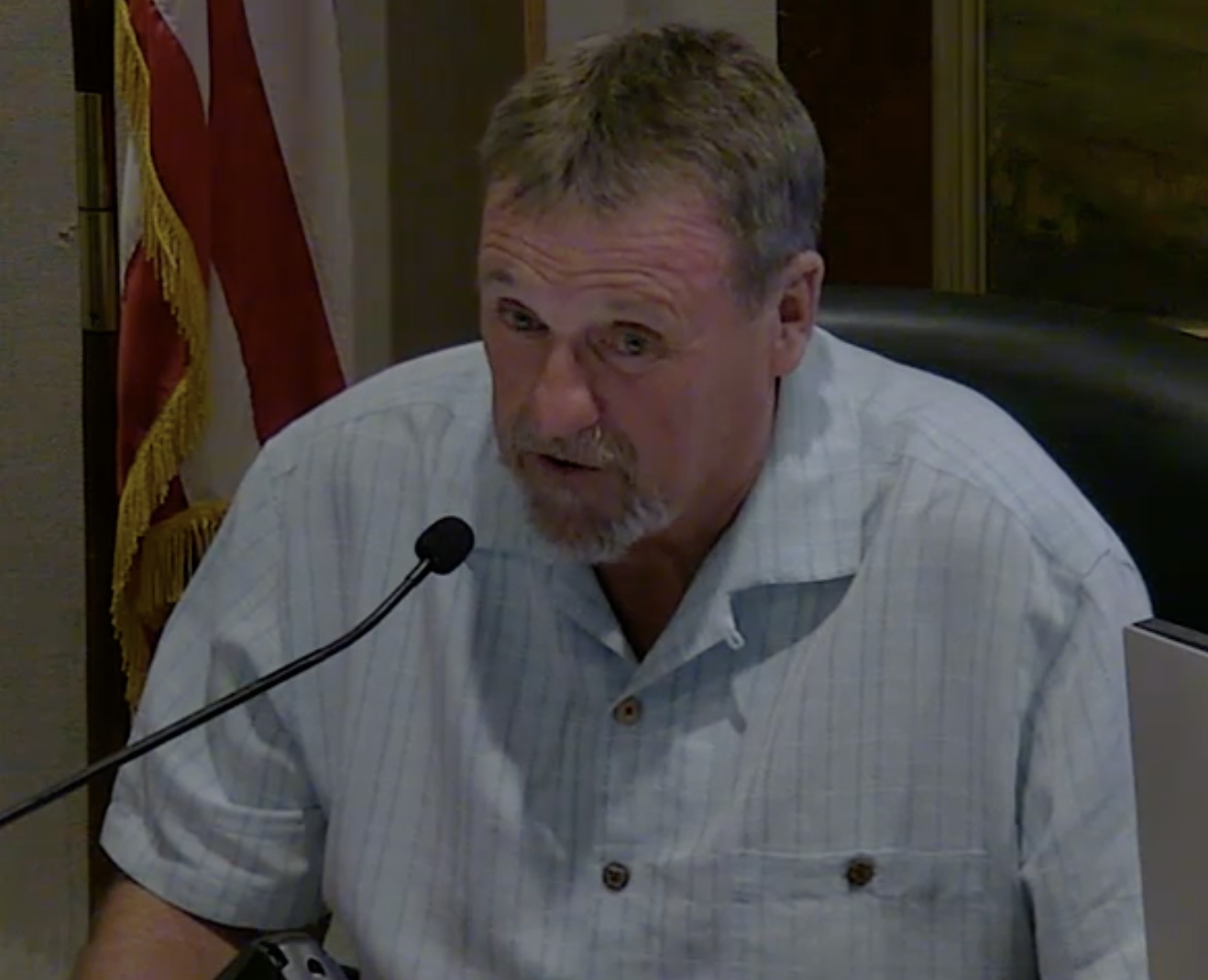
Bohn
“[As] somebody that lives with redwood trees, they’re a giant weed at the end of the day because I’m getting too old to climb my ladder now,” he said. “They’re wonderful and everything else, but my neighbors are asking for trees to come down … but I don’t have a place to fall ‘em because I’m in too small a lot. … I’m just saying, this hasn’t been a giant issue, but it’s becoming an issue to control … property rights. … In 15 years, I’ve had four of these or three of these [requests to remove trees], and now we’re going to encompass the whole county.”
After some additional discussion among board members, Bushnell decided to split her motion in two to separate the recommendations for Lower Redway from the countywide proposal.
The proposed Q Zone amendments passed in a 5-0 vote. The second motion passed 4-1, with Bohn dissenting and Bushnell noting that she was “amenable to the discussion coming back” to board, but not necessarily supportive of a countywide ordinance.
Revisiting the Beau Pre Heights Subdivision
Earlier in the meeting, Fifth District Supervisor Steve Madrone pulled an item concerning the final maps for the Beau Pre Heights Subdivision from the consent calendar for further discussion.
The Danco Group project, first approved by the Humboldt County Planning Commission in 2011, aims to turn a 197.3-acre forested parcel near McKinleyville, between Norton and Murray roads, into a 79-lot subdivision with parcels ranging in size from 1.03 to 4.79 acres. The commission has granted Danco numerous extensions on the project over the past decade to allow the builder to complete necessary improvements.

A map of the Beau Pre Heights Subdivision, located north of McKinleyville. | Map via County of Humboldt.
After a brief overview of the project from Public Works staff, Madrone acknowledged that the project has been in the works for many years, but the number of extensions were “a bit unusual.” He expressed concern about various environmental issues (fragmentation of forests, wetland delineations, fire danger, wildlife impacts, etc.) and suggested that Danco conduct a comprehensive environmental impact report (EIR) to assess cumulative impacts.
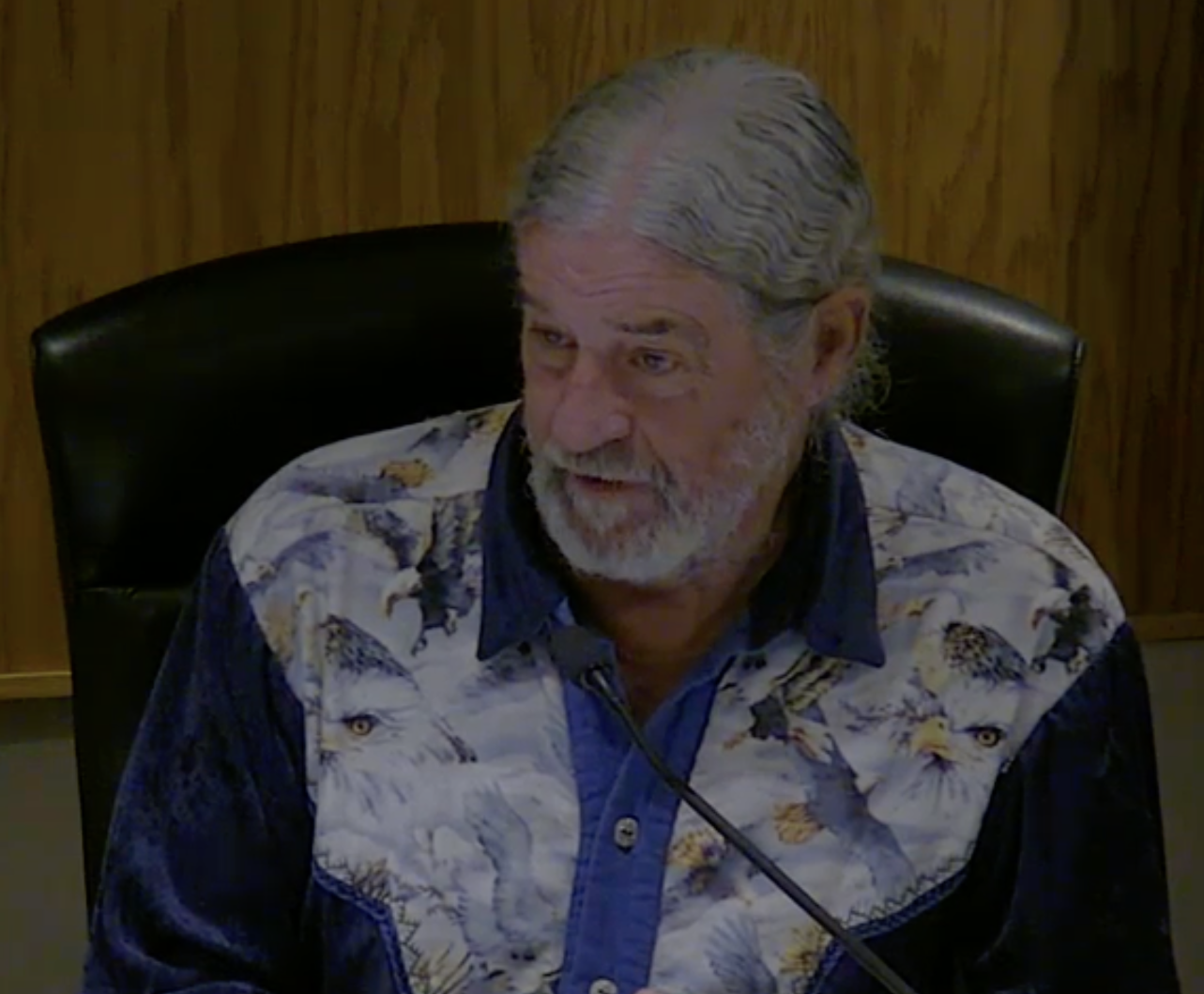
Madrone
“I pulled this [item] because it seems to me that the EIR that was done in 2011 was incomplete in terms of actually assessing the cumulative impact of this entire development,” Madrone said. “I’d be curious to know why the developer chose not to do a comprehensive EIR at that time.”
Bohn and Bushnell took issue with Madrone attempting to apply 2026 standards to a project that was approved in 2011. Bohn asked staff if it was appropriate to “change horses in the middle or the race,” or if it would open the county up to potential liabilities.
Ford said the Subdivision Map Act was written to “provide security for a developer once they receive the approval” from a governing body. “If they do everything they’re required to do, there’s not a second bite of the apple being taken.”
“What happened 15 years ago, as troubling as it may be, is not what’s at issue today,” Ford continued. “What’s at issue today is whether or not the applicant has put together a package to complete all the required improvements of the tentative map, the local ordinance and the Subdivision Map Act. We believe they have.”
Madrone argued that the wetlands study was done in a “piecemeal fashion,” and again called for a comprehensive wetlands delineation.
Speaking via Zoom, Chris Dart, Danco’s president of development and lead project manager for the Beau Pre Heights Subdivision, told the board that wetlands studies were vetted through the U.S. Army Corps of Engineers, the Water Quality Control Board and the California Department of Fish and Game, now the Department of Fish and Wildlife.
“Every single lot was evaluated,” he said. “… We’ve invested [and] we’ve done everything we’ve been told to do. We followed the process to the T, and we’re not trying to do anything that’s manipulative or anything to that effect. … I understand that rules change … but we are following that process, and we believe that we’ve done that to the letter of the law.”
A few people who spoke during the public comment portion of the meeting suggested the board continue the item to next week to give members of the public and the board more time to research the project’s history.
Arroyo and Wilson entertained the notion, but Ford said he would “caution expectations,” implying that pushing the item out a week wouldn’t change the outcome.
“You don’t get to go back and recreate what’s been done,” Ford said.
The board eventually voted 4-1, with Madrone dissenting, to approve the item.


