

(UPDATING) Huge Fire in Downtown Arcata
LoCO Staff / Friday, Jan. 2 @ 3 p.m. / Fire
UPDATE, 5:46 p.m.: The Sun Sets on Northtown Books
Here was the scene on H Street as the sun set.
This is an unimaginable loss to the community. All these businesses were cool. Dandar’s was just getting going, and it already had young, hardcore fans.
But Northtown Books, especially, has stood in that spot since before I moved to town, nearly 40 years ago. It was an immensely important cultural institution in the city and the county. I don’t know how it can be replaced.
I do know I speak for a whole lot of people when I say that tonight my thoughts are with Dante, Monica, Jay, Jon and everyone else who made it what it was. Thank you so much for your devotion to that store.
— Hank Sims
###
UPDATE, 5:28 p.m.:

It’s hard to tell exactly what’s happening on the I Street side of the fire, but this photo — just snapped — would seem to indicate that the Hensel’s Hardware main building, at least, may have made it through. The paint store, the kitchen store and the candy store are not likely to have been as lucky.
— Hank Sims
###
UPDATE, 5:15 p.m.: Buildings Coming Down
Emergency personnel have a backhoe on scene and are starting to bring down buildings.
— Hank Sims
###

###
UPDATE, 4:36 p.m.: No Known Injuries; Cause of Fire Still a Mystery

Photo: Burns.
Dave White of Arcata Fire just spoke to the Outpost’s Ryan Burns and other reporters on scene. Some key points:
- Firefighters are still uncertain what caused the blaze.
- There are no known injuries associated with the fire, either among civilians or emergency personnel.
- Firefighters expect to be actively, “defensively” fighting the fire into the night. There are still interior parts of the fire that they can’t reach.
White said the fire was originally spotted by one of the department’s own engines, which happened to be passing by.
Here’s audio of their conversation, which is pretty hard to make out due to the nearby jackhammering:
— Hank Sims
###
UPDATE, 4:19 p.m.:
###
“They are still hitting the fire from all sides and from above,” says our reporter. “Northtown and Dandar’s look like a total loss. A PG&E sledgehammer on treads is here digging into the asphalt.”
— Hank Sims
###
UPDATE, 4:09 p.m.:

Photo: Ryan Burns.
— Hank Sims
###
UPDATE, 3:48 p.m.:

Photo: Kyrs McKasson
Burns says “They’re hitting it with everything they’ve got and it’s still flaming.”
Dante DiGenova, owner of Northtown Books, tells Burns that the fire seems to have started in the apartments above Tenth Street:
— Hank Sims
###
UPDATE, 3:35 p.m.:
The city of Arcata’s mandatory evacuation notice:
If you are in the area of the structure fire in the area of 10th/H st in downtown Arcata, there is a Mandatory Evacuation in effect for the surrounding residences and businesses. Please follow all orders from Police and Fire personnel. Arcata Police Department
— Hank Sims
###
UPDATE, 3:30 p.m.:

The owner of Dandar’s Boardgames and Books tells Ryan Burns that his business is a “total loss”:
— Hank Sims
###
UPDATE, 3:26 p.m.:
Videos below by the Outpost’s Ryan Burns:
— Hank Sims
###
UPDATE, 3:25 p.m.:
They’re requesting Red Cross respond to the scene, as apartments have been evacuated.
— Hank Sims
###
UPDATE, 3:23 p.m.:
Scanner traffic says four buildings are involved — most of them two-story — and two of those have collapsed.
— Hank Sims
###
UPDATE, 3:15 p.m.:
The Outpost’s Ryan Burns, on the scene, confirms that it is the Hensel’s building on fire. Traffic is closed one block in every direction from 9th and I streets.
Below is video taken from Wildberries by reader Josh Buck.
— Hank Sims
###
UPDATE, 3:11 p.m.:
Scanner traffic is indicating mandatory evacuations in the area. Fire departments are being called in from around the region, from as far south as Rio Dell, to help provide coverage.
The address being given over the radio is that of Hensel’s Hardware.
— Hank Sims
###
A very large fire just broke out in downtown Arcata. The above video, sent by reader Laura Keenados, shows that it’s between H and I streets on Tenth, but it’s unclear to us at the moment which building is actually burning.
An Outpost reporter is en route. We’ll update as we find out more.
BOOKED
Yesterday: 4 felonies, 7 misdemeanors, 0 infractions
JUDGED
Humboldt County Superior Court Calendar: Today
CHP REPORTS
No current incidents
ELSEWHERE
RHBB: Nov. 3, 2026 General Election Vote Center and Ballot Drop Box Locations
RHBB: Mendocino Railway President And Ceo Robert Jason Pinoli Elected To Aslrra Board Of Directors
RHBB: Wildfire Burning Near Highway 101 South of Laytonville
A New California Law Gives the State More Power Over Workplaces. Trump Is Suing to Block It
Levi Sumagaysay / Friday, Jan. 2 @ 8:53 a.m. / Sacramento

Manny Ruiz strikes alongside other workers with Teamsters 2785 at Amazon Warehouse DCK6 in the Bayview District in San Francisco on Dec. 19, 2024. Amazon workers at multiple facilities across the U.S. went on strike to fight for a union contract. Photo by Jungho Kim for CalMatters
###
This story was originally published by CalMatters. Sign up for their newsletters.
###
California, under a law taking effect Jan. 1, seeks to uphold the labor and unionization rights of private-sector employees, as the federal agency that has held that power for decades is in limbo.
But the new law’s future is unclear because the Trump administration is challenging it.
The law, which grants more powers to the California Public Employment Relations Board, is a response to the National Labor Relations Board lacking a quorum.
President Donald Trump fired the NLRB’s chairperson, Gwynne Wilcox, days after he began his second term in January. His two nominees to the board have yet to be confirmed, so the federal board has been without the three members it needs for a quorum for months.
Assemblymember Tina McKinnor, the Inglewood Democrat who wrote the bill, said when the governor signed it in September that “California will not sit idly as its workers are systematically denied the right to organize due to employer intransigence or federal inaction.”
The NLRB sued California over the law in October, saying in its lawsuit that the state is trying to assert authority over “areas explicitly reserved for federal oversight.”
On the legal challenge to the law, Terry Schanz, McKinnor’s chief of staff, referred CalMatters to the state attorney general. Attorney General Rob Bonta’s office is responsible for defending the law in court. A spokesperson for Bonta said the office would have nothing to say about it.
With the NLRB unable to fulfill its duties, states are trying to fill the gap in enforcing the National Labor Relations Act, which Congress passed in 1935. But labor experts contacted by CalMatters do not have high hopes for the California law, which is similar to a law passed in New York this year. They said courts, including the Supreme Court, have ruled that states cannot decide matters pertaining to federal labor law because of preemption, the doctrine that a higher authority of law overrides a lower authority.
“It’s difficult to imagine a scenario where the courts do not overturn these (state) laws,” said John Logan, professor and chairperson of Labor and Employment Studies at San Francisco State University.
William Gould, a former chairperson of the National Labor Relations Board during the Clinton administration and a professor emeritus at Stanford University, agreed: “In the courts the matter is a dead letter unless (the Supreme Court) shifts gears.”
That’s what the California and U.S. chambers of commerce, along with other business groups, are hoping, according to their amicus brief in support of the Trump administration’s lawsuit against California: “Under California’s view, every state could have its own labor law for private-sector workers. Dozens of laws would overlap and collide.”
The California Labor Federation, an umbrella organization for unions that represents about 2 million California workers, said in an amicus brief that even before Trump fired the NLRB chief, the federal agency’s backlog had been a problem, leading to companies being able to delay bargaining in good faith with their employees’ unions without consequences.
If the California law is overturned, employees who have formed unions but have not succeeded in securing contracts with employers such as Amazon and Starbucks — which are among the companies seeking to have the NLRB declared unconstitutional — may continue to face delays, according to Logan. Or, he said, it’s not clear what would happen if other workers tried to organize and their companies simply fired them.
“The NLRB defunctness is a scandal which cries out for political reform,” Gould said.
New California Fee Targets Batteries in PlayStations, Power Tools and Singing Cards
Alejandra Reyes-Velarde / Friday, Jan. 2 @ 8:50 a.m. / Sacramento
This story was originally published by CalMatters. Sign up for their newsletters.
###
Starting January 1, Californians will pay a new fee every time they buy a product with a non-removable battery – whether it’s a power tool, a PlayStation, or even a singing greeting card.
The 1.5% surcharge, capped at $15, expands a recycling program that’s been quietly collecting old computer monitors and TVs for two decades. The change is a result of Senate Bill 1215, authored by former state Sen. Josh Newman, a Democrat who represented parts of Los Angeles and San Bernardino. It was signed into law in 2022.
Consumers will pay the fee when buying any product with an embedded battery whether it’s rechargeable or not. Many of these products, experts said, end up in the trash. In its most recent analysis, the California Department of Resources Recycling and Recovery estimates about 7,300 tons of batteries go to landfills illegally or by accident.
California pioneered electronic waste fees with computer monitors and TVs in 2003. The fee worked, keeping hazardous screens out of landfills and building better systems for proper disposal. But over the last 20 years, electronic waste has continued to evolve.
Powerful lithium batteries have become cheaper and more accessible as demand for technology has increased. They now power everyday products, from cellphones and AirPods to power tools and toys.
“These things are everywhere. They’re ubiquitous,” said Joe La Mariana, executive director of RethinkWaste, which manages waste services for 12 San Mateo County cities – a co-sponsor of the legislation.
They’re also, under some circumstances, a risk. Under harsh conditions at recycling and waste facilities, lithium-ion batteries can burst into flames and even explode.
“Paying a small check‑stand fee to fund proper collection is far cheaper than million‑dollar fires, higher insurance premiums, and rate hikes passed back to communities,” said Doug Kobold, executive director of the California Product Stewardship Council, which co-sponsored the legislation.
A growing problem
In 2016, in the San Mateo County city of San Carlos, a lithium-ion battery sparked a major fire at the Shoreway Environmental Center recycling facility. It caused a four-month plant shutdown and $8.5 million in damage. RethinkWaste, a regional waste management agency, oversees that facility. As a result of the fire, its insurance premium rose from $180,000 to $3.2 million annually, La Mariana said; ratepayers ultimately bore that cost.
That fire catalyzed the waste management agency to seek solutions to the growing battery fire problem.
“Being a publicly owned facility, every bit of that property is owned and paid for by our 430,000 ratepayers,” La Mariana said. “So we have a fiduciary responsibility to maintain the integrity of these assets. But also, on a human level, we have a very high responsibility for the safety of our colleagues and our co-workers.”
Battery fires in waste and recycling facilities are an everyday hazard. Experts say they’re underreported, likely because facilities fear oversight or increases in insurance premiums.
And batteries can catch fire anywhere. Earlier this year, two girls were hospitalized after an electric scooter caught fire in a Los Angeles apartment building. According to the Federal Aviation Administration, there are nearly two battery fires on U.S. flights every week.
Clean energy shift brings battery hazards
The fee consumers will pay in the new year is just one piece of the state’s evolving response to the emerging risk of lithium-ion batteries.
Single-use plastic vapes are exempt from the new law because the Department of Toxic Substances Control raised concerns about collection and recycling systems handling nicotine, a hazardous substance, said Nick Lapis, an advocate with Californians Against Waste, which co-sponsored the legislation. They’re also the fastest growing source of lithium-ion battery waste.
“If you imagine somebody’s a pack a day smoker, that means every single day they’re throwing out a device with a lithium-ion battery,” Lapis said.
Last year, assemblymembers Jacqui Irwin and Lori Wilson introduced Assembly Bill 762, a law that would ban single-use plastic vapes entirely. Lapis says he expects the Legislature to address the risk of vapes this year.
Large-scale lithium-ion batteries present great danger of a different kind.
During the Los Angeles fires, dangerous lithium-ion batteries, including from electric vehicles, were left behind — resulting in a major cleanup operation by the Environmental Protection Agency.
And almost a year ago, a fire burned at a battery storage site in Moss Landing for two days, requiring more than 1,000 people to be evacuated. Monterey County neighbors to the facility have complained of feeling sick since the fire, and a recent study detected toxic metals in nearby marshes.
In 2024, Newsom established a collaborative of state agencies, including the California Air Resources Board and the California Department of Forestry and Fire Protection, to look into safety solutions for battery storage technologies. New CalFire regulations for battery storage systems will take effect this year.
Finding ways to properly dispose of batteries and their lithium in the waste stream is critical as the state transitions away from fossil fuels, said Meg Slattery, a scientist for Earthjustice.
“The next question becomes … where are we sourcing materials, and thinking through what happens to this when we’re not using it anymore, which I think we’re not traditionally great at thinking about as a society,” she said.
OBITUARY: Lonnie Mack Martin, 1958-2025
LoCO Staff / Friday, Jan. 2 @ 6:56 a.m. / Obits

Lonnie Mack Martin
1958-2025
A life well lived.
It is with deep sorrow and heavy hearts that we announce the passing of our loved one, Lonnie Martin. Our beloved advanced into heaven at home in the loving arms of his soulmate, Kathleen Little, to be with, by grace, our Lord on December 21, 2025, after a month-long battle in the hospital where he fought complications from COPD and RA. Lonnie wasn’t ready to leave us all on Earth quite yet, but his body regrettably had other plans. We were honored to respect his brave wishes of returning home so he could go peacefully where he wanted to be, where his heart was, at home in Rohnerville.
Lonnie was revered as a son, a nephew, a brother, a cousin, a husband and life partner, an uncle, a dedicated and proud father, a grandfather, and a great-grandfather, but most of all, he was our tremendous friend. He was regarded as a gallant man who loved his family the most although he also enjoyed earthly pleasures of buck hunting, country music, drag racing, coaching youth sports, baseball (go, Giants!), western movies, BBQing, gardening, and caring for pets. Lonnie particularly enjoyed ringing the family cowbell in support of all his son James’ regional baseball and all-star games while cheering him on. He also enjoyed going to Maui with his family and soaking in the sun and beauty offered there recently. Losing Lonnie is a stark reminder to hold your loved ones close because every day is a gift, and tomorrow is not promised. The grief felt by his loss is insurmountable.
Lonnie was born in Fresno then raised in Humboldt County from age three, where he eventually attended Fortuna Union High School. In 1964, the Martin family was displaced from Stafford when the floods took the house off its foundation and down the river. They lost most everything but the clothes on their back at that time. After that, the Martin family moved to North Court in Scotia for a few years when Lonnie’s dad worked at the Scotia Mill, and then finally to Fortuna on Garden Lane where Lonnie and his siblings attended South and Town Schools. They enjoyed camping together at the beaches and at Swimmer’s Delight in Carlotta during the summers, and spending time together at the Grange.
Lonnie became skilled at many trades. He was an automotive mechanic and enjoyed building and driving his Firebird 400, Chevy Vega, Cheville, Camaro, and Mustangs. He also spent time working at Halverson’s Sawmill, Carlotta Lumber, and B & J Roofing.
Lonnie had the eyes of an eagle, and a heart of gold. We called him a hummingbird because of his love of all sugary things. He had a wonderful sense of humor, a joking personality, and his way of showing love often involved poking fun at you. We will miss his kind demeanor, joyous laughter, and boisterous and outspoken presence that defined him up until the sudden end of his life. It was a privilege to have known him, stubborn and determined as he was. Underneath his reserved exterior, he maintained a certain tenderness which can only be described as selfless kind-heartedness and empathy towards others. He often found happiness in everyday life through watching the flowers bloom and listening to the birds sing in his backyard and being with, and there for, his soulmate Kathleen. He is sorely missed and was deeply loved and appreciated by all who were blessed enough to be in his presence and called his friend.
Lonnie was preceded in death by his grandparents, Ira Martin, Alice Martin, Mack Williams, and Violet Williams, parents, James Martin and Nina Martin, sister, Deborah Gutierrez, uncle, Wayne Martin, mother and father-in-law, Margaret Philpot and Thomas Philpot, brothers-in-law, Miguel Gutierrez, Robert Philpot and Dennis Philpot, sister-in-law Gloria Philpot, and his grandson, Daniel Hernandez.
He is survived by his soulmate and life partner, Kathleen Little, their cherished children, grandchildren, and great-grandchildren, James (Natalie) Martin, Peyton Martin, Monika (Jesse) Mayhan, Margo Mayhan, Sara Little, Emerald Robinson, Zackariah Spencer, Jeremiah Spencer, Lailoni (Matthew) Farnsworth, Felipe (Makayla) Hernandez, Freya Hernandez, Solinda Hernandez, Elizabeth Hernandez, Jamie (Jason) Wray, Jason (Lani) Wray Jr., Kimika Wray, Nakaila Wray, Leann Martin, Brandi Martin, Sie Arnold, Luci Arnold, Lydia Martin, Wyatt Martin, Kyle (Christa) Martin, Kylee Minica, Ryleigh Callahan, Kaycee Martin, Aaleigh Kerney, aunt Betty Martin, brothers Larry (Shelia) Martin, Loren Martin, nephews and nieces, Miguel (Tiffany) Gutierrez Jr., Ashley Gutierrez, Isaak (Paige) Gutierrez, Larry (Jennifer) Martin, Dustin Martin, Jordan Martin, Gavin Martin, Ira Martin, Mira Martin, Preston Martin, Brooke (Ben) Martin-Gill, Jonathan (Kelly) Philpot, Kailaya Philpot, Thomas Philpot, Jamison Philpot, Regina (Tina) Amaral, Lacey (Cameron) Amaral, Owen Conatser, Angela (Jeremy) Arrington, Victoria Arrington, Allora Arrington, Davina Arrington, Eleanor Arrington, Vanessa (Tom) Herr, Hailee Herr, Aaliyah Herr, David Herr, Alivia Herr, Havana Herr, Roseabella Herr, Melissa (Ritchie) Blake, Logan Blake, Bryce Blake, Amanda Blake, Emily Blake, Becca Blake, cousins, Donald Martin, Walker (Kylie) Martin, Cedar Catanio, Lloyd Nichols, Karen Nichols, James Nichols, Lexi Coleman, Roy Nichols, Jess Nichols, Jeanette (Gary) Trone, Kevin (Krista) Trone, Brandon Trone, Mary Martin-Webb, Stephen Webb, and Chris Webb. He is also survived by numerous other friends and relatives. Special mention of his primary caregiver and friend, Bobbi Reese, for years of not only great friendship, but also excellent and devoted specialized care.
Celebration of life services for Lonnie have been arranged and will be held on Saturday, January 31, at the Veteran’s Hall in Fortuna at 1 p.m. Friends and family are welcome toattend the potluck and share in paying tribute to his accomplishments as well as mourning his loss. Guests are encouraged to bring cherished photos, memories, and a dish to share in his honor. His eternal resting place will be at the Sunrise (Newberg) Cemetery in Fortuna. The family wants to thank friends and relatives for their presence and support during this challenging time, as well as Hospice of Humboldt for their service.
###
The obituary above was submitted by Lonnie Martin’s family. The Lost Coast Outpost runs obituaries of Humboldt County residents at no charge. See guidelines here. Email news@lostcoastoutpost.com.
OBITUARY: Erling Dellabalma, 1939-2025
LoCO Staff / Friday, Jan. 2 @ 6:56 a.m. / Obits
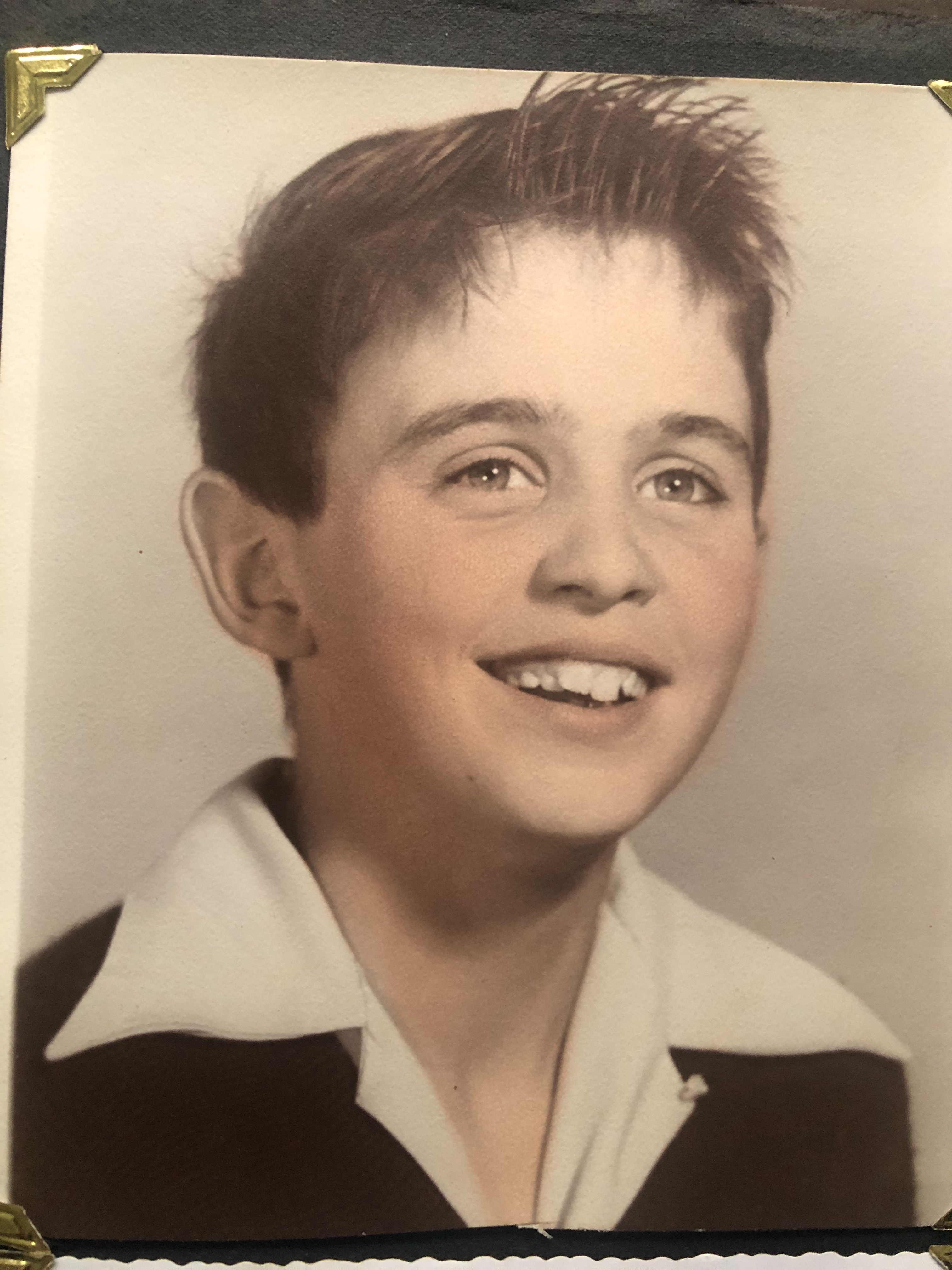
Erling Dellabalma
March 18, 1939 - Dec. 20, 2025
Dad left us unexpectedly on December 20, 2025. He was 86 old.
Dad was born on March 18, 1939 to Natale and Mary Dellabalma of Orick.
In 1944, his parents bought a dairy farm in Elk River, where Dad worked with his father, and brothers, Donald, Raymond, John, and James. He attended St. Bernard’s Elementary School, then went to Eureka Senior High School so he could enroll in the building trades classes. He graduated in 1958.
After graduation, Dad worked as a carpenters apprentice. In 1959, Dad’s parents gave him a plot of land to build a house. Dad married Mom, July 3rd, 1960. A little over a year later, the first of five children was born.
In October of 1961, they moved into the house they had built, and lived there together for over 64 years.
Dad was a loving father, and husband.
Dad worked at three different lumber mills, Vandenor Lumber, Georgia Pacific, and finally at Schmidbauer Lumber , where he started as a loader operator, and later was promoted to timber buyer, and made many friends.
In 1989, Dad and Mom purchased the Sullivan Ranch in Elk River and started a dairy. After several years, the decision was made to sell the dairy cows, and start raising beef. After almost 35 years, Dad retired from Schmidbauer Lumber, and became a full time rancher.
Dad loved making hay.
Dad was very generous, always ready to lend a hand, and a friend to all. It was not uncommon for Dad to run into someone he knew wherever he went. Dad loved family get togethers, his home, ranch, and Christmas.
He was a lifelong member of St. Bernard’s Catholic Church. He was also a member of the Sons of Italy, and Native Sons of the Golden West.
Dad was preceded in death by his parents, Natale and Mary, his brothers, Raymond, John, and James, and his youngest son, Kevin. He is survived by his wife of over 65 years, JoAnn, his daughter Macheal Haskins (Dan) and his sons, Michael, Robert, and Tim. His grandchildren, Sarah, Katie, Matthew, Dylan, Rebekah, Aleksandra , Clarence, Samuel, and Elizabeth. Great-grandchildren, Ella, Abel, Solomon, Noel, Elora , Mathias, Iden, and Elijah.
There will be a rosary at 9:30 a.m., and Mass at 10 a.m., both at St.Bernard’s Catholic Church, in Eureka, on January 14, 2026. In lieu of flowers, please make a charitable contribution to St. Bernard’s Church.
###
The obituary above was submitted by Erling Dellabalma’s family. The Lost Coast Outpost runs obituaries of Humboldt County residents at no charge. See guidelines here. Email news@lostcoastoutpost.com.
COASTAL FLOOD WATCH: Stormy Weather and King Tides May Cause ‘Moderate to Major’ Flooding Along the North Coast
Isabella Vanderheiden / Wednesday, Dec. 31, 2025 @ 1:36 p.m. / How ‘Bout That Weather

Graphic: Eureka National Weather Service
###
Heads up, coastal dwellers! Over the next few days, an incoming storm and high atmospheric tides will almost certainly cause flooding along low-lying shorelines and flood-prone areas around Humboldt Bay.
A Coastal Flood Watch is in effect Thursday morning through Saturday afternoon.
“A Coastal Flood Watch means that flooding is possible but not imminent,” according to the National Weather Service advisory. “High astronomical tides and large surf may cause moderate to localized major flooding in low-lying areas along the Redwood Coast. Up to 1.5 [feet] of saltwater inundation above ground level is possible in low-lying areas near shorelines and tidal waterways.”
The rain could start up as soon as tonight, but it won’t get stormy till Friday.
###

Graphic: Eureka National Weather Service
A Sheriff’s Office K-9 Unit Sniffed Out a Massive Collection of Illegal Substances During a Salmon Creek Traffic Stop Yesterday; Two Eel River Valley Residents Arrested
LoCO Staff / Wednesday, Dec. 31, 2025 @ 10:41 a.m. / Crime

This is how K-9 Yahtzee rolls. Photo: HCSO.
Press release from the Humboldt County Sheriff’s Office:
On Dec. 30, 2025, around 10:30 p.m. Humboldt County Sheriff’s Deputies conducted a traffic stop near Salmon Creek Road on Northbound Highway 101 in Southern Humboldt County. During the stop, a Sheriff’s K9 was deployed to conduct a free air sniff of the vehicle’s exterior. The K9 alerted to the presence of illegal narcotics.
A subsequent search of the vehicle resulted in the discovery of a significant quantity of suspected controlled substances, including fentanyl, methamphetamine, cocaine, Xanax pills, MDMA and other prescription and illicit drugs. Deputies also located drug paraphernalia and items consistent with narcotics sales, including a digital scale.
The approximate seizure included the following:
- Fentanyl — 6.7 ounces and 35 suspected M30 fentanyl pills
- Cocaine — 18.58 grams
- Methamphetamine — 8 grams
- Xanax — 335 bars
- Methadone — One bottle of liquid methadone and 8 pills
- Lorazepam — 59 pills
- Oxycodone — 2 pills
- Suspected DMT — 4 grams
- Suspected PCP
- Numerous, as yet unidentified pills and pipes
The driver, identified as Michael Thurston, 47, of Rio Dell, was arrested, transported to the Humboldt County Correctional Facility and booked on the following charges:
- VC 14601.1(a) — Driving with a suspended or revoked license
- HS 11351 — Possession of a controlled substance for sale
- HS 11352(a) — Transportation or sale of a controlled substance
- HS 11375(b)(1) — Possession for sale or sale of a controlled substance
- HS 11375(b)(2) — Possession of a controlled substance
- HS 11350(a) — Possession of a narcotic controlled substance
- HS 11377(a) — Possession of a controlled substance
- HS 11364 — Possession of drug paraphernalia
- PC 182(a)(1) — Conspiracy to commit a crime
The passenger, identified as Tinisha Smith, 30, of Fortuna, was arrested, transported to the Humboldt County Correctional Facility and booked on the following charges:
- HS 11351 — Possession of a controlled substance for sale
- HS 11352(a) — Transportation or sale of a controlled substance
- HS 11375(b)(1) — Possession for sale or sale of a controlled substance
- HS 11375(b)(2) — Possession of a controlled substance
- HS 11350(a) — Possession of a narcotic controlled substance
- HS 11377(a) — Possession of a controlled substance
- HS 11364(a) — Possession of drug paraphernalia
- PC 182(a)(1) — Conspiracy to commit a crime
The Humboldt County Sheriff’s Office remains committed to protecting the safety and wellbeing of our communities by actively investigating and disrupting the transportation and distribution of dangerous drugs.
Anyone with information about this case or related criminal activity is encouraged to call the Humboldt County Sheriff’s Office at (707) 445-7251 or the Sheriff’s Office Crime Tip line at (707) 268-2539.


