
OBITUARY: Jesse Dean James, 1973-2025
LoCO Staff / Friday, Dec. 5, 2025 @ 6:56 a.m. / Obits

Jesse Dean James, of Hoopa, passed away on November 26, leaving behind a legacy of service, dedication and unwavering commitment to his community and his faith.
Jesse spent many years working for various entities within the Hoopa Tribal businesses, always striving to contribute to the growth and well-being of his people. His work later expanded beyond the valley when he became a recruitment officer for TCCC and Americorps. In this role, Jesse excelled at bringing young adults from across the nation to join a supervised crew devoted to community service. Through his leadership, countless young people earned certificates that helped them pursue higher education, new opportunities and stronger futures. His achievements garnered national recognition, and Jesse was honored in Washington, DC, with an award celebrating his remarkable recruitment strides and impact across the country. He later led the Americorps program until he later found a new stride working for his tribe.
Despite his responsibilities, Jesse made time for those who looked up to him. Known to many as an uncle, he offered guidance when it was needed most, sharing knowledge, stories and humor with a sincerity that made people feel seen and valued.
His involvement in his culture and ceremonies was a meaningful part of his life, where he supported the dances and upheld traditions in ways that were uniquely his own, from Medildin to Sregon and everywhere in between.
Jesse’s commitment extended deeply into his spiritual path. After joining the 1910 Shaker faith, he traveled far and wide — throughout California, Oregon, Washington and even into Canada — praying, learning and strengthening his connection to the Creator. His journeys were not only expressions of devotion but also opportunities to build relationships, offer support and grow his own understanding.
Jesse was known for being stern and straightforward, a man who spoke with intention and never wasted words. Yet those who knew him understood the heart behind his honesty. His presence carried weight, his guidance carried purpose, and his love for his people carried through everything he did.
His family, friends and community will greatly miss him, but the lessons he shared, the work he accomplished, will continue to echo long after his passing. Jesse’s life was one of service, strength and spirit — one that touched many, and one that will not be forgotten.
Jesse is preceded in death by his mother, Esther; father, Paul; brother, Paul Jr.; sister, Snickles; niece Cassie; his cherished aunts and uncles Dodo, Cuddles, Becky, Lorita, Bunzy, Willie, Mathew, Jimmy, Skippy and Dave.
Grandparents: Jimmy and Josie James, Frank and Lila Colegrove.
Jesse is survived by his Uncle Tweet & Marge Colegrove; aunts Noreen and Harold Jones, Patty James, Pat Colegrove; and the many he called his brothers, sisters, nieces and nephews.
The family would like to give a special thank you to the staff at K’ima:w and to Dr. Eva Smith for always being there for Jesse.
Pallbearers:
Honeyman Jackson
Dave Jackson
Manual Mattz
Tim Perry Jr
Thomas Perry
Everett Colegrove Sr
George Blake
Walt Lara Sr.
Harold Jones
Phillip Vigil
Rodney Vigil Sr.
George Moon
Mike Ferris
Rick Hall Sr.
Muss Colegrove
Frankie Hostler
Joe James
Trevor James
Rick Hall Jr.
Lance Hall
Mike Beck
Bradley Hostler
Eli Hostler
Sonny Dean
Joe Surber
Jackson Surber
Koo Man Lewis
Bronc Colegrove
Mussie Colegrove
Shawn Colegrove
Wyatt Colegrove
Willie Lamebear
Jr Bowen
Marty Lamebear
Landon Lamebear
Kayson Lamebear
Andy Lamebear
Alec Lamebear
Dewey Jones Sr.
Dewey Jones Jr.
Sonny Jones
Jimmy Jones
Pergish Carlson
Will Bear Carlson
Mike Carlson
Monte Jarnaghan
Rick Billings
Jake Blake
Caw-tep Sylvia
Lyle Moon
Frances Colegrove
Rudolph Colegrove
Terry Ballard
Wolf Colegrove
Panther Colegrove
Nolan Colegrove
Anthony Colegrove
Brandon Colegrove
Max Hodge
Gary Colegrove Jr.
Raymond Mcquillen
Julian Markussen
David Drake IV
Cogy McCovey
Curtis Hostler
Frank Hostler
Sonny Hescock
Oscar Colegrove
Leroy Baldy
Boyd Ferris
Decon Ferris
Kevin McConnell
Ben Spencer
Jesse McCovey
Damon Cross
Michael Gabriel
Cesar Kartaltepe
Sébastien Ferris
Lorenzo Rogers
Larry Maloney
Dominc Obie
Ralphy Peters
Bubba Sanchez
Bruz Aubrey
Tis Mil Ashley
Nano Ewing
Gary Ewing
Chris Lopez
Elrod Masten
Wally Gray
Harold Myers
Ricky Dowd
Paul Kuska
Shawn Tuner
###
The obituary above was submitted on behalf of Jesse Dean James’s loved ones. The Lost Coast Outpost runs obituaries of Humboldt County residents at no charge. See guidelines here.
BOOKED
Today: 4 felonies, 7 misdemeanors, 0 infractions
JUDGED
Humboldt County Superior Court Calendar: Today
CHP REPORTS
No current incidents
ELSEWHERE
100% Humboldt, with Scott Hammond: #132. How Eureka Reconnected With Its Waterfront | Nancy Flemming
RHBB: Planning Commission Grapples With Miranda’s Rescue as Public Calls for Permit to Be Revoked
RHBB: OES Announces Community Meetings Focused on Flood Preparedness and Evacuation Readiness in November
RHBB: Six Rivers National Forest Conducting Prescribed Burns Through November
OBITUARY: Laurance D. Iloff, 1949-2025
LoCO Staff / Friday, Dec. 5, 2025 @ 6:56 a.m. / Obits

The family of Laurance D. Iloff is saddened to announce his passing on Oct. 21, 2025, at age 75.
Laurance Dick Iloff was born in Vallejo. He was sent to foster homes at a very young age, never knowing his real parents. He grew into a fine young man, marrying his first wife, Laurel Hamilton, while they were young and having two boys together. He was then drafted to the U.S. Army, being shipped off to Vietnam two years later, serving our country on the front lines until the war ended. He was a proud veteran but hurt by the treatment veterans received when they came back to the United States. It changed him.
A few years later Laurance and Laurel divorced, and he moved to Humboldt County, where he lived out the rest of his life. He was able to bring his boys from Vallejo and raise them in Humboldt. He coached adult soccer and coached his boys in baseball.
He remarried to Carol Shoemart and her two boys, Tim and Mike, becoming a blended family until they divorced several years later. Laurance continued to live as a single dad raising his boys, working and growing his roots in Eureka. He worked in Korbel for many years as a millwright and then at Eureka Neon Signs, making signs for local businesses of the greater Humboldt.
Laurance later in life had to get on disability due to a permanent work injury. He continued to live the rest of his days in Eureka. He was a proud veteran and father, living a very private life. He loved gardening, fixing old cars, and rebuilding, refurbishing, or renovating a wide range of objects and systems.
Laurance is preceded in death by his parents; his brother, Mark Iloff; his son, Shawn Iloff; his grandson, Cody Iloff; and his step-grandson, Norman Jr.
He is survived by his only living son, Laurance Troy Iloff Sr. and his daugher-in-law, Elsie; his grandchildren Sherice, Troy Jr., Josh, Estelle, Andre, Da’Shawn, Da’Naja, Shawn and Rachelle; his step-grandchild Jack; great-grandchildren Matthew, Shianna, Piper; step-grandchild Jack; and his step–great-grandchildren Kaden, Ava and Violet.
A private ceremony will be held by his family. In lieu of flowers, the family is requesting donations to be made in his honor to the Veterans Building in Eureka, which supports our local veterans.
###
The obituary above was submitted on behalf of Laurance D. Iloff’s loved ones. The Lost Coast Outpost runs obituaries of Humboldt County residents at no charge. See guidelines here.
OBITUARY: Nathan (Nate) Jamieson, 1974-2025
LoCO Staff / Friday, Dec. 5, 2025 @ 6:56 a.m. / Obits
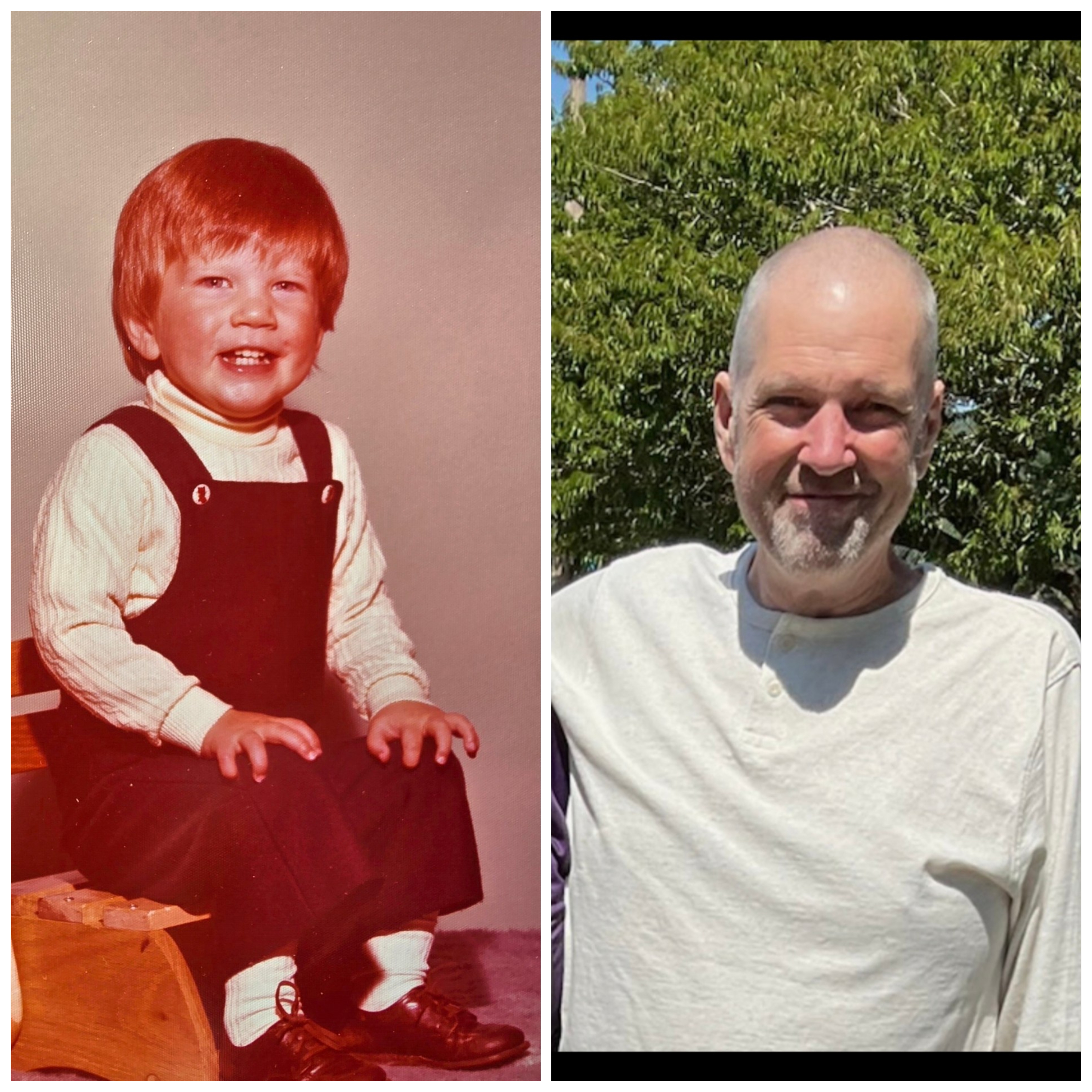
Born Nathan Larry Jamieson on June 7, 1974, in the wee hours of the morning, to Diane Sargent and Philip Jamieson in Eureka.
Nathan attended too many schools to recount as the family travelled quite a bit in his younger years. Nathan lived in Eureka, Crescent City and Angwin. When his parent split and he moved back to Eureka with his mom and sister. Later his mom remarried and they moved to San Diego. Being a military family now, they were transferred to Norfolk, Virginia. They took that chance to drive cross-country and explore the nation. They also lived in Virginia Beach, Virginia and Honolulu, Hawaii, where his mother divorced again and moved back to Humboldt, settling in Fortuna.
In Fortuna, Nathan attended Fortuna Junior Academy and Fortuna Union High School. He also spent time living with his father in Crescent City and going to Del Norte High.
In his adult years Nathan spent many years working at The Flying J gas station in Eureka. He never met a stranger! During this time his heart was broken and he was never quite the same. He became a little bit of a nomad afterwards, spending time in Oregon, San Diego and Florida… if not other places. He seemed to go where the wind took him, but it always brought him home to Humboldt.
Nathan dealt with many issues in his short life, from having meningitis at a very young age, to dealing with diabetes and other health issues. Ultimately, he passed away unexpectedly November 15 from complications with his diabetes.
Nathan is preceded in death by his maternal grandparents, Mury and Betty Sargent of Carlotta and paternal grandparents Hugh Jamieson and June Corincone of the Bay Area; his maternal aunt Marsha (Marty) Cloney (Sargent) and his mother, Diane Sargent, both of Humboldt.
Nathan is survived by his father, Phil Jamieson, and wife Karen Haban of Gasquet; his sister Heather Jamieson of Fortuna; and cousins Kerri Holt (Kathy) and Angie Holt and her son Bobby and grandsons.
Internment services by Ayers.
At this time there will be no services.
###
The obituary above was submitted on behalf of Nate Jamieson’s loved ones. The Lost Coast Outpost runs obituaries of Humboldt County residents at no charge. See guidelines here.
(PHOTOS, VIDEO) Hundreds Turn Out to Old Town Eureka for Christmas Tree Lighting at Dick Taylor Craft Chocolates
Ryan Burns / Thursday, Dec. 4, 2025 @ 4:32 p.m. / Business , Community

A fully illuminated Christmas tree stands inside the Dick Taylor Craft Chocolate factory in Old Town Eureka. | Photos by Alan Workman.
###
Hundreds of residents and visitors flooded down to First Street in Eureka’s Old Town last night to attend the third annual Christmas tree lighting celebration at the Dick Taylor Craft Chocolate factory.
“Yeah, it was definitely the biggest one so far,” co-owner Adam Dick said in a phone interview this afternoon. “This is the third time we’ve done it, and it’s been getting bigger year over year. But this felt like the biggest one for sure.”
The city had blocked off First Street between D and E, and crowds gathered shoulder-to-shoulder, sipping hot beverages and noshing various items from a pair of local food trucks as the Arcata Redwood Interfaith Gospel Choir performed:
Video by Ryan Burns
###
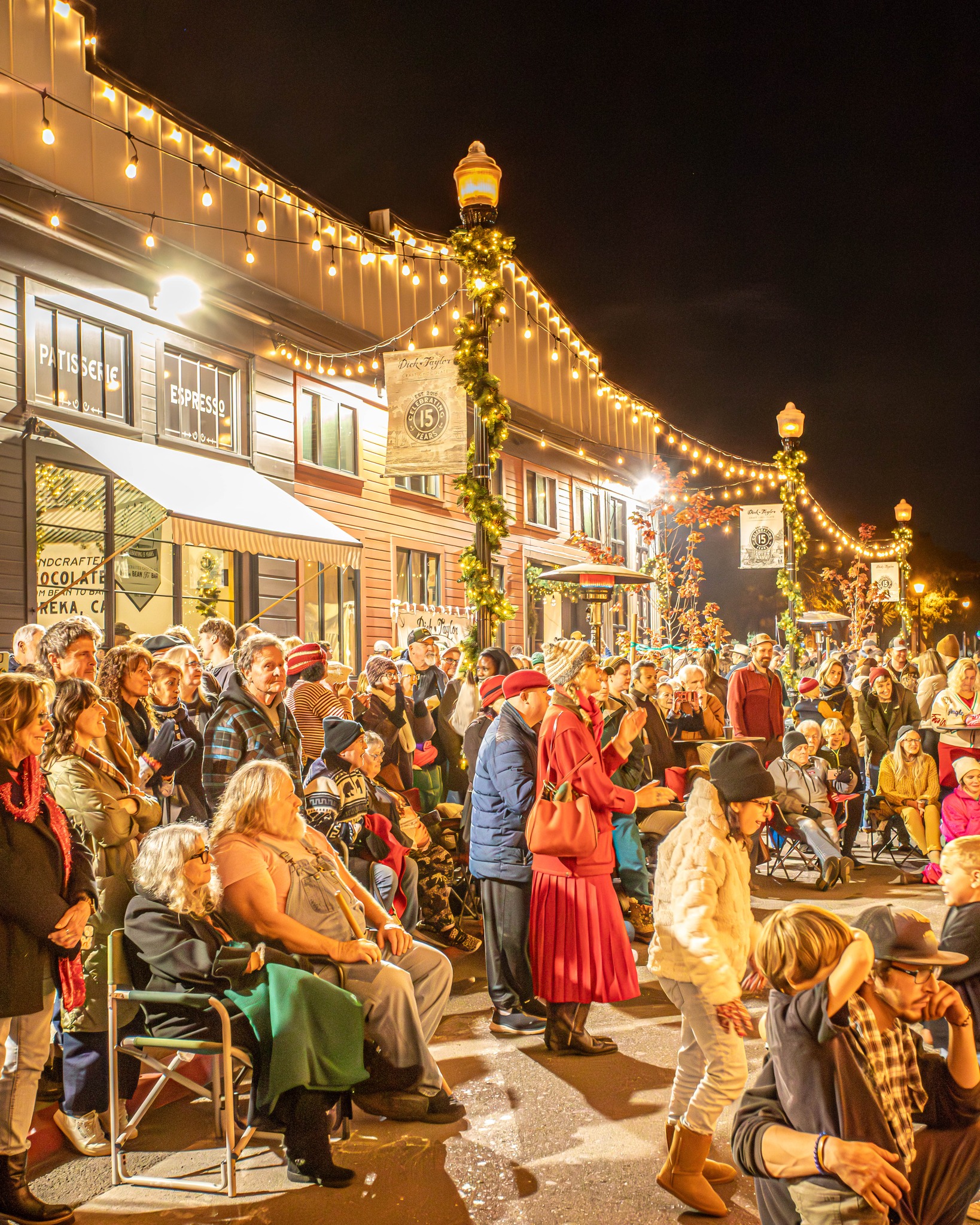
Photo by Alan Workman.
###
Over the past year, Dick Taylor owners Adam Dick and Dustin Taylor were able to widen the sidewalk in front of their chocolate factory, and it proved an ideal holiday gathering spot. Inside the factory, the pair addressed the crowd (or as many who could fit inside, anyway) ahead of a group countdown to the tree lighting.
Taylor remarked on his fond memories of attending the annual Christmas tree lighting that used to take place at the Eureka Inn, and he said that when he and Dick purchased this waterfront warehouse with such high ceilings, they realized the could revive the tradition.
Here’s the big countdown:
###
Last we checked in with Dick Taylor, tariffs on imported cocoa were wreaking havoc on the industry. But speaking to us from inside the factory this afternoon, Dick said 2025 has been a strong year for the business.
“We’re navigating most of these price hikes fairly well,” he said. “Some tariffs have been eased on Central American countries, but cocoa from Africa doesn’t fall under that. Maybe, in time, all cocoa will be exempt from tariffs.”
Dick said the holiday season is prime chocolate-selling time.
“There’s something that must be in our mammalian brains,” he remarked. “When it’s really warm, people really don’t eat as much. But at soon as November rolls around, people just seem to start craving chocolate.”
Out on the street, tiny cups with free samples of drinking chocolate were being snatched up as fast as employees could set them on trays. Dick said the business’s workforce has allowed him and Taylor to enjoy some of the fruits of their labor.
“[Last night] was a blast for us, too,” he said. “We have such a good crew here now, a really good staff. They’re so capable. In the early days it was Dustin and I doing all the stuff. Now, with this good crew, we can socialize and talk to some of the people who’ve been buying our stuff for years.”
As he prepared another batch of chocolate for the masses, Dick said he’s happy with how the tree-lighting ceremony went down.
“It felt like a good, positive community event, which is all we could hope for.”


More photos by Alan Workman.
The CBS TV Show ‘Sheriff Country’ Features Some Fleeting Yet Beautiful Shots of Ferndale
Ryan Burns / Thursday, Dec. 4, 2025 @ 12:31 p.m. / :) , Hardly News

Promo image for the CBS show Sheriff Country.
###
Welcome to Edgewater County, a rural community in picturesque Northern California — a place where outlaws cultivate marijuana in the forested hills, Cal Fire firefighters fight forest fires and justice goes by the name of Sheriff Mickey Fox.
This, as some of our TV-watching readers have no doubt discovered, is the fictional setting of the new CBS police procedural drama Sheriff Country. It’s a spinoff of the popular series Fire Country, which debuted three years ago and also takes place in Edgewater County. As we noted at the time, the trailer for Fire Country featured a brief but unmistakable helicopter/drone shot of Rio Dell. Fun!
Alas, like the late-2000s sci-fi series Eureka and the Netflix soap Virgin River, these fictional versions of our region were filmed almost entirely in Canada. Nonetheless! When it comes to scene-setting, sometimes you need the real deal. Your cinematographer can maybe settle for, say, Milton, Ontario, or Langley, British Columbia, for your building exteriors, but when it comes to majestic aerial views, there’s no substitute for the Eel River Valley.
The trailer for Sheriff Country includes a brief, bird’s eye shot of Rio Dell and Scotia. And some eagle-eyed Ferndale residents recently spotted sky-high footage of their Victorian Village in the show’s fifth and sixth episodes. The images below are all from those two episodes. Blink and you’ll miss ‘em, so we’ve preserved them here for your leisurely enjoyment.

The sun sets over Ferndale.

Americana to the max.
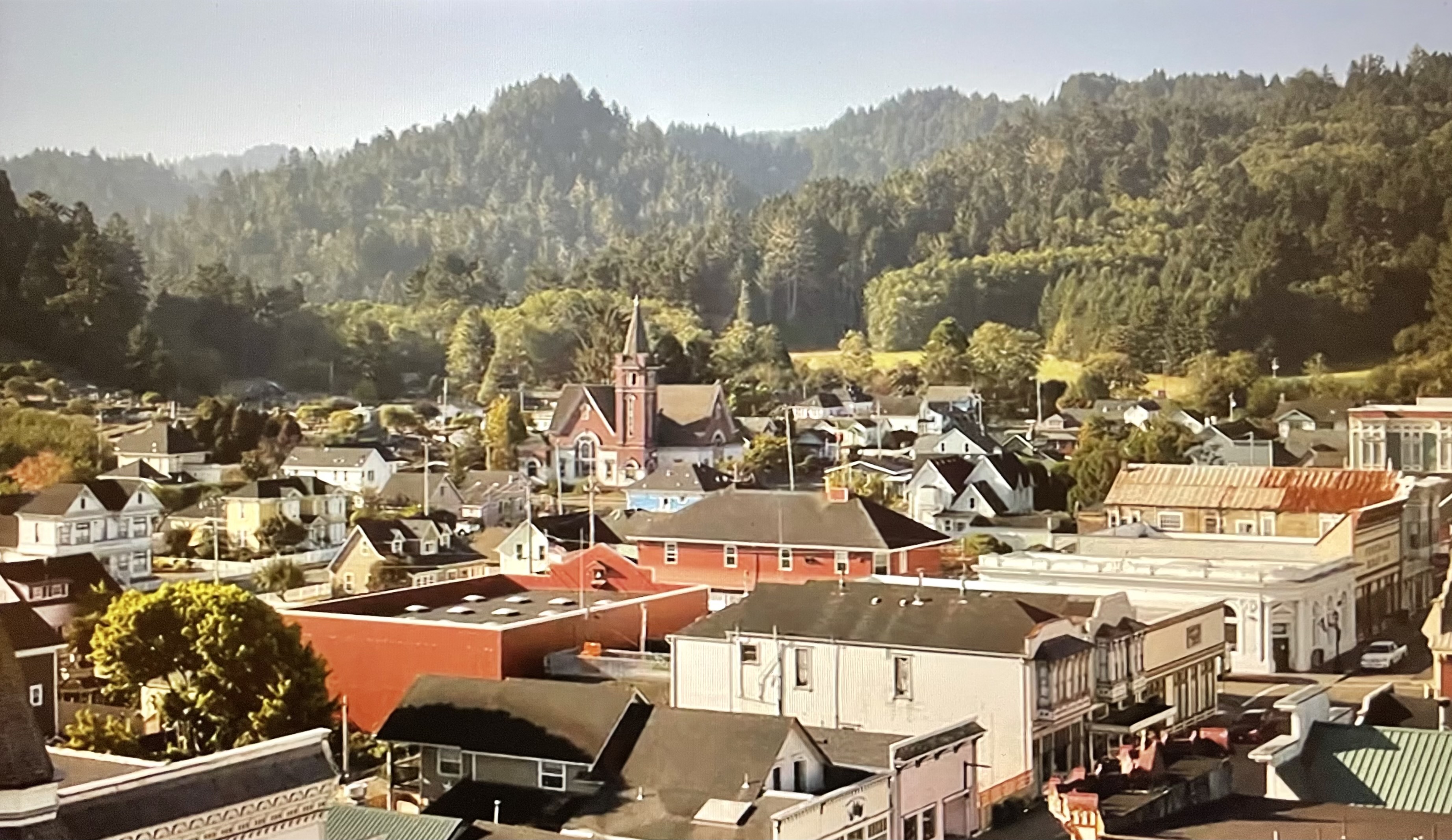
Main Street, The Old Steeple and environs.

Lookin’ good, Cream City!
Want to Help Shape New Development in Eureka? If So, Don’t Miss Next Week’s Community Town Hall!
Isabella Vanderheiden / Thursday, Dec. 4, 2025 @ 7:30 a.m. / Housing , Infrastructure , Local Government
Attention, Eurekans! Would you like to have a meaningful impact on new developments in our fair city? Now is your chance.
Next week, the City of Eureka will host a community town hall — Designing Density with Neighborhoods in Mind — to gauge public opinion on proposed design standards for infill housing and new developments. The city is seeking public input to ensure that the new design standards protect and maintain what we love about our neighborhoods while also supporting a wider range of new housing options.
Staff with Eureka’s Planning and Building Department have been hard at work developing both subjective and objective design standards for infill development. The proposed regulations are still in the works, but Eureka City Councilmember Kati Moulton thought it’d be a good time to get the public involved in the process.
“We spent all of last year talking about larger developments on public land,” Moulton said, referring to the long-blighted Jacobs Campus that was at the heart of a convoluted land swap between the Eureka City Schools District and a mysterious private developer. Long story short, the deal went up in flames, and the school district opted to sell the property to the California Highway Patrol. “Now it’s time to talk about the other side of the picture, which is smaller [developments] that are going into our neighborhoods and what folks want to see there.”
In this context, “design standards” refers to a checklist of sorts that developers and architects can refer to when drawing up plans for a new build.
“You know, what should a building look like from the road? How far should the top story be set back so there’s as much lighting on the building around them as possible?” Moulton said. “Giving developers a checklist [explaining] this thing has to be this many inches wide, and you have to have this many textures or this number of windows per square feet of wall. That kind of stuff.”
The town hall will take place on Monday, Dec. 8, from 5:30 to 7:30 p.m. in Council Chambers at Eureka City Hall – 531 K Street. Want to attend remotely? Sign up here.
###

Eureka City Council Decides to Add Anti-War Resolution to Future Agenda, Also Sends 2017 Resolution to State Representatives
Dezmond Remington / Wednesday, Dec. 3, 2025 @ 4:14 p.m. / Activism

Mayor Kim Bergel at last night’s meeting. Screenshot.
PREVIOUSLY:
A well-backed effort by about a dozen public commenters at last night’s Eureka City Council meeting resulted in a resolution calling for an end to military bombings on Venezuelan boats being added to the next city council meeting’s agenda on Dec. 16.
The council also unanimously decided to send a 2017 resolution affirming its dedication to human rights to California’s elected representatives in Washington, with a letter added for context.
“All this divisiveness and hate is really boring and it’s painful and it’s hurtful and we really it doesn’t help any of us,” Mayor Kim Bergel said, a tad effusive. “It really doesn’t help any of us.”
The new resolution, written by the Humboldt Anti-War Committee, claims that Eureka has a responsibility to hold the government accountable for violating international laws, and should also support the exit of troops and arms from the Caribbean and an end to sanctions on Venezuela. A call asking for advocates to show up to the city council meeting brought in plenty of activists, many of whom said that they had a moral obligation to do anything they could to stop the extralegal killings of Venezuelan civilians.
“Kids are struggling, classrooms are understaffed, teachers and aides are not paid nearly enough,” said one public commenter. “And our money’s going to bombs being dropped on boats in Venezuela, probably on the mainland soon. I think this is our opportunity to shovel it back in any way we can…It’s a no-brainer. I think it would mean a lot.”
Bergel said she had remembered the 2017 resolution while listening to the commenters, and thought it relevant enough to be worth sending again. She read through the whole resolution aloud.
“In light of the current climate in our country and the negativity and hate that is being fostered,” the resolution reads. “…We will never back down on human rights, whether in healthcare, the workplace, or any other area threatened by others who treat people as objects to be demeaned or objects to be assaulted.”
Eureka’s city clerk said she wasn’t sure which government officials the resolution was being sent to.
Besides Bergel’s comments, there was little discussion on the topic from the other councilmembers.


