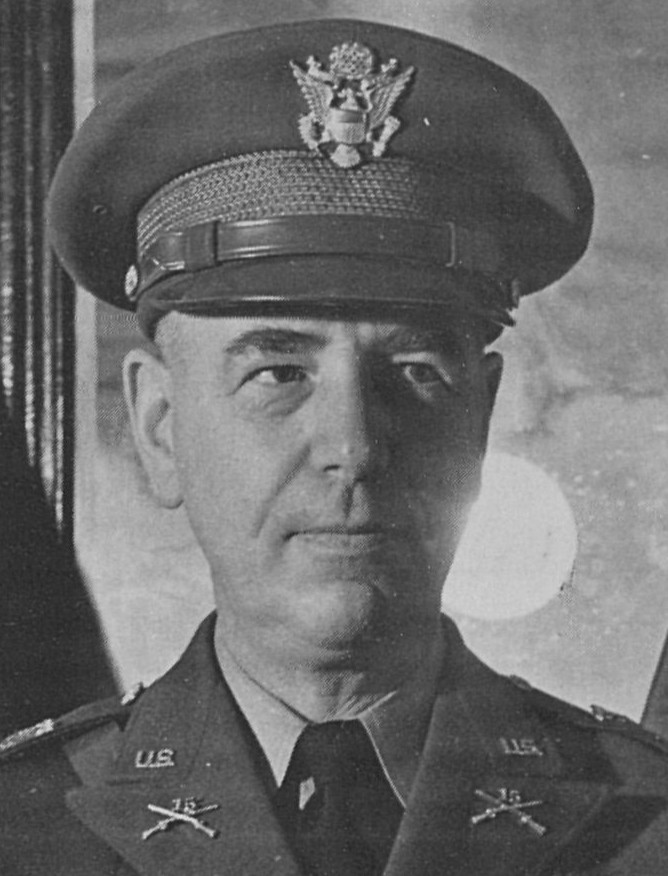
Thomas Monroe second from left, is shown with fellow officers in 1914 at’ Camp Cotton, El Paso, Texas, where men and materials were assembled under General Pershing for the campaign against Pancho Villa. Photos via the Humboldt Historian.
###
Col. Thomas H. Monroe, Sr. will mark
his 95th birthday on April 28. Those
many years have special meaning to a
man who spent the prime of his life away
from home but never lost touch with his
deep roots in Humboldt County.
His devotion to the nation spanned the
two major wars and service under
Generals John J. Pershing and Douglas
MacArthur. This same spirit of service
was devoted to civic projects in his home
community after retirement from the
military.
He traces his Humboldt County heritage back to the Albee family, early
settlers who came overland from the
Midwest. His great-grandfather,
Joseph Albee, settled on a ranch in the
Redwood Creek area in 1852 and was
killed by Indians in 1862. Joseph Albee’s
daughter, Ann, married Col. Monroe’s
grandfather, Welton Alanzo Monroe.
The Colonel’s father, Alanzo Judson
Monroe, was born at Hydesville in 1858
and his mother, Lucretia Huntington,
was born at Rockford, Ill.
The Albee name was ever present in
Col. Monroe’s youth. George Albee, his
great uncle, taught him chemistry at
Eureka High School. George later became superintendent of schools and the
high school’s Albee Stadium was named
in his honor.
Col. Monroe likes to tell a story involving his grandfather, Charles A. Huntington, who was a Congregational
Church minister. While serving as an
Indian Agent and teacher at Neah Bay,
Wash., Huntington told a group of
Native Americans about the Biblical
account of the flood brought on by 40
days and 40 nights of rain. One of his
listeners replied, “It rains here 90 days
and 90 nights and we’re not flooded out.”
The Monroe name carries with it the
traditions of longevity and military service. Col. Monroe’s brother was Brig.
General Hammond McDougal Monroe,
who died on Jan. 25, 1985 at the age of
91. The Colonel’s two sons are Col. Thomas H. Monroe, Jr., who lives in
Eureka, and Col. Putnam Waldner Monroe of Austin, Texas. All four men graduated from the U.S. Military Academy
at West Point.
Col. Monroe was born in Eureka on
April 28, 1890 in a cottage at Del Norte
and E streets, the site of the present
First Baptist Church. He remembers
that the one-story cottage had the distinction of being a “highrise” with a
number of steps leading to the entrance.
This was because the house was built
over huge redwood stumps and blasting
talent had not been available for their
removal prior to construction.
Growing up in early-day Eureka left
him with a number of other vivid childhood memories:
Like the time, at age 4, when something came over the backyard fence
while he was in the yard with his
mother. The family bulldog picked up
the object before he could get to it. It was
food laced with strychnine and the dog
died.
Or the time when Henry Way, pond
tender for the Occidental Mill, fished
out a large octopus.
Then there was the organ concert at
church when, at age 14, he was charged
with the responsibility of pumping the
leather bellows. At a point in a selection
when all stops were open, the bellows
broke. At first the organist thought he
had “goofed off,” and it was all pretty
tense until the truth emerged.
His first taste of schooling came as a
5-year-old when he attended a kindergarten school operated at D and 6th
streets by Mrs. Henry Way, wife of the
Occidental Mill pond tender.
From there he attended elementary
grades at the one-room Lincoln School,
Grant School, Brown School and Pioneer School. He recalls that some
teachers were strict on discipline and “if
you got a licking at school you would get
a licking at home.” In one of the more
exciting schoolroom incidents at Pioneer School, a male teacher lost his
patience and started to pull young Monroe out the door. The student clung to a
desk and finally both boy and desk went
tumbling outside. The colonel recalls
that this incident led to a request that he
apologize to the teacher and apologize
he did.
He was sent to a preparatory school at
Portland, Oregon, for a year in 1906 and
returned to get his high school education
at Winship School. He graduated from
Winship, Eureka’s first high school, in
1909.
He was elected student body president at the high school and played on the
football team. “In those days we used a
donated football and furnished our own
playing equipment.”
Memories of high school include the
building of a tennis court with a wood
surface, membership in the Sequoia
Yacht Club, where students could swim
in a pool built of timbers and caulked
like a ship’s hull, and summer work
experiences.
During the summer of 1907, he worked
in a sash-and-door factory at Samoa.
The next summer he joined two friends
on a pack trip into the Klamath River
country, and in the summer of 1909 he
got a job with a relocation survey crew
working in the Eel River canyon for the
Northwestern Pacific Railroad.
In December of 1909, he took a competitive examination for West Point at
University of California at Berkeley. An
entrance test followed in January, and
he entered West Point in the class of
1914 on March 1. His sponsor was Congressman Englebright of Grass Valley.
A memorable event in his cadet years
was being in attendance at the inauguration of President Woodrow Wilson following his election in 1913. The ceremony gave him an unexpected glimpse of
a dashing second lieutenant in the cavalry
who had graduated from West Point in
1909 and was to become General George
S. Patton. At the inauguration, Patton,
on horseback, had words with an unauthorized man who had taken over the
speaker’s podium. The man wouldn’t
move until Patton finally threatened
him at close range with his saber.
After graduating from West Point,
Col. Monroe’s first assignment as a second
lieutenant in the infantry was at El Paso,
Texas, with General John J. Pershing. It
was here, at Camp Cotton, that Pershing
was assembling troops and material for
the much publicized punitive expedition
against the notorious Francisco (Pancho)
Villa, Mexican bandit and revolutionary.
The action was ordered by President
Wilson after Villa’s band raided Columbia,
New Mexico in 1916 and killed a number
of American citizens.
It was at El Paso that Col. Monroe
asked General Pershing for a month’s
leave to marry his fiancee, Clara
Waldner, in Eureka. The general said
“no,” but allowed a three-day leave. The
bride-to-be hurriedly traveled by train
to El Paso, and the wedding took place
on March 27, 1915.
The bride soon returned home and the
groom went on to Columbia, New Mexico and the jumping off base for the
expedition into Mexico. Col. Monroe was
made adjutant of a motor truck battalion of 1,100 vehicles. It was the battalion’s job to supply the troops engaged in
the pursuit of Villa.
President Wilson had ordered that
Villa be captured dead or alive, and the
expedition trailed the renegade for 11
months from March, 1916 to February,
1917, but failed in its objective. World
War I was at hand, and in this same year
Pershing was appointed commander in
chief of the American Expeditionary
Force in France.
Col. Monroe returned to the Sixth
Infantry Regiment at El Paso and was
then assigned to an officers’ training
camp in Tennessee. His regiment became
part of the 54th Infantry, and he became
a battalion commander. He was sent
overseas from New York in July, 1918,
and landed at Liverpool, England. From
there, his outfit went on to Winchester,
England and Le Havre, France.
He recalls, “We were known as the
‘Sightseeing Sixth’ because we marched
all over France and never got into a
serious battle.”
But it wasn’t all that easy. There is
the memory of battling large rats in the
trenches, being hospitalized with dysentery and viewing the Verdun battlefields where reminders of the recent
dead lay all about. It was at Verdun that
a million men died in the bloodiest battle
of World War I.
After the Armistice and his return to
New York, Col. Monroe came home to
Eureka on leave before reporting for a
two-year assignment with the ROTC at
the Georgia Military Academy. Then
came a one-year stint at Georgia Tech,
followed by one year of duty as head of
the ROTC in the Fourth Corps Area in
Atlanta.
Other assignments included the Command and General Staff School at Fort
Leavenworth, Kansas, temporary duty
with the Chemical Warfare Corps at
Edgewood Arsenal, Maryland, organizer of the Chemical Welfare Board for
the Army and service as secretary of the
board for three years.
In 1929, Col. Monroe was transferred
back to the infantry and assigned the
Philippine Command at Fort McKinley.
It was here that he became acquainted
with General Douglas MacArthur. After
knowing and working with a number of
generals. Col. Monroe rates MacArthur
the “greatest general of modern times.”
In 1930, Gen. MacArthur put Col.
Monroe in command of Camp Baguio, a
Philippine resort of 250 rooms for Army
and Navy personnel. A year later, the
colonel was sent to the Army War College in Washington, D.C., for more study.
In 1932, Gen. MacArthur ordered him
to Fort Benning, but that order was
canceled. Instead, Col. Monroe was assigned
to the War Department’s general staff
under Gen. MacArthur to work in the
British Empire Section G2 (intelligence).
Col. Monroe in 1941.
In 1936, he was sent to Oakland as an
instructor for the California National
Guard, a duty he remembers as “pleasant with a lot of good friends.”
World War II brought him the assignment of antitank officer with the Sixth Army
in June of 1942. In September of that
year he took command of the 15th Infantry, a part of the Third Division at Fort
Lewis, Washington. From Fort Lewis
he went to Fort Ord near Monterey, to
Camp Prickett, Virginia, and then to
North Africa on November 7, 1942,
where he served in an area from Casablanca to Tunis.
In July, 1943, he was ordered back to
the U.S. to serve as instructor at the
Army-Navy Staff School, Washington,
D.C., where he headed the Intelligence
Section.
After his retirement from the Army
on May 1,1946, Col. Monroe returned to
Eureka and devoted his time and talent
to civic affairs. He served as public relations director for the Eureka Chamber
of Commerce and Civil Defense director
for the county. He received a state appointment as director of civil defense for
the entire North Coast District. He has
always shown a keen interest in community history and is a member and
past president of the Humboldt County
Historical Society.
The Colonel has four grandchildren
and seven great-grandchildren. His wife
died in 1976.
His home is in a scenic wooded section
of Monroe Lane in the Redmond Road
area of Eureka. He retains a lively
interest in the community, in reading
and in corresponding with his many
friends. Two hobbies in his retirement
years have been fishing and gardening.
He says, “I can’t do much of that anymore, but I still have a martini every
night at five.”
###
The story above was excerpted from an article originally printed in the March-April 1985 issue of The Humboldt Historian, a journal of the Humboldt County Historical Society, and is reprinted here with permission. The Humboldt County Historical Society is a nonprofit organization devoted to archiving, preserving and sharing Humboldt County’s rich history. You can become a member and receive a year’s worth of new issues of The Humboldt Historianat this link.
Evo Frank
Fanucchi September
22, 1920-October 18, 2025
A
rough and tumble Italian boy, grew
up in Eureka. He sold newspapers at brothels, played stick ball with
gangsters and helped his parents run a barely legal establishment.
He
joined the US Navy construction battalion during World War II, proudly
serving his country as a Seabee.
Returning
home, he began a long career as bartender and co-owner of Roy’s
Italian restaurant.
A
frugal do-it-yourselfer, Evo could
lay brick, pour cement and fix just about anything mechanical. He only
really got “old” after the age of 103!
Evo is
survived by his wife Catherine, who he met in 1974; his daughter Tina
Grenamyer-Nickles, who lives in Fallon, Nevada; her sons Keith, Monte and
Lance and their children. He also leaves behind his nephew Joe
Fanucchi and his children — Lisa, Teri, Brett, Angela and Julie — and his
niece Nina Crowe and her children, Zack and Alex. He was preceded in
death by his parents, Angelo and Teresa; his brother Roy Fanucchi; and
his sister Ida Newell.
There
will be a gathering at the Elks Lodge from 1 to 3 p.m. on November 16 for an
Honor Guard Ceremony.
###
The obituary above was submitted on behalf of Evo Fanucchi’s loved ones. The Lost Coast Outpost runs obituaries of Humboldt County residents at no charge. See guidelines here.
Emily
Becker (Peterson) passed away peacefully, surrounded by her loved
ones, on Saturday, September 13, 2025, after a courageous six-year
battle with breast cancer.
Born
on July 12, 1974, in Humboldt County, Emily spent her entire life in
the place she loved most. She attended Cutten Elementary, Winship
Junior High, and graduated from Eureka High School in 1992. During
high school, she excelled at volleyball but chose to devote her
junior and senior years entirely to showing her beloved horse,
Cricket. Given to her at the age of eight, Cricket became Emily’s
lifelong best friend and partner. Together they competed throughout
Humboldt County, ultimately winning the California State Horsemen’s
Association (CSHA) statewide championship in 1992 — a title no
other Humboldt County rider has achieved.
After
high school, Emily attended Humboldt State University, where she
earned her degree in Natural Resources Interpretation in 1997.
Following graduation, she fulfilled her dream of becoming a
California State Park Ranger after completing training at the
California Police Academy in Asilomar. Emily was proud to serve as a
Park Ranger at Humboldt Redwoods State Park, a place that held her
heart. She was known for her engaging campfire programs, guided
hikes, and dedication to running Cuneo Creek Horse Camp. She also led
the Mounted Assistance Unit, blending her love of horses with her
commitment to public service.
Emily’s
compassion extended to all animals — she rescued countless dogs,
cats, and even horses throughout her life. She had a generous spirit,
never missing a loved one’s birthday and often gifting roses from
her own garden.
In
December 2007, Emily met the love of her life, Kristofer Becker.
Together, they built a beautiful family, welcoming their children,
Tabitha and Isaac, who became the center of her world. Emily devoted
herself to motherhood, cheering on her kids at every activity,
planning family adventures, and creating lasting memories through
their many travels and camping trips. She loved cooking for her
family and was, by all accounts, one of the best around.
Emily
will be remembered for her warmth, her strength, her devotion to
family and animals, and her deep love of nature and the redwoods that
surrounded her home.
Emily
is survived by her husband, Kris Becker, and their two children,
Tabitha and Isaac Becker; her mother Robin Haynes and stepfather
Chris Haynes; her father Jay Peterson; her sisters Erin Peterson and
Cyndi Fischer; her brother Jamey Fischer; her parents-in-law Gerrie
and Hannes Becker; her sister-in-law Sonja Becker; her brother-in-law
Erik Becker; and many beloved cousins, aunts, uncles, nieces, and
nephews.
A
celebration of Emily’s life will be held this summer. In lieu of
flowers, donations in Emily’s memory may be made to a favorite
animal rescue, Hospice of Humboldt, or a California State Park that
holds special meaning.
###
The obituary above was submitted on behalf of Emily Becker’s loved ones. The Lost Coast Outpost runs obituaries of Humboldt County residents at no charge. See guidelines here.
Wai Yan Leamon was born in
British Hong Kong. From birth her mother was unable to care for her, so she lived in a children’s home in Hong Kong. When she was 10 years old, she was adopted by Richard and Sue Leamon and came to
join her new sister and brother, Heather and Forrest, in rural Potter
Valley, California. She quickly adapted to country life raising and
showing animals in 4-H and playing soccer and baseball. She
graduated from Potter Valley Elementary School and Ukiah High School.
She also attended Mendocino Community College, where she studied
history and anthropology.
Although she had a playful and sweet
demeanor, most of her adult life was eclipsed by mental illness.
Cancer took her life in Eureka.
Wai is survived by her mother Sue
Leamon and her sister Heather Glaser (Ben), her niece Rayah and
nephews William (Antonia), Alan, Andrew and Luke Leamon. She was
predeceased by her father Richard and brother Forrest Leamon (Ana).
A private family graveside service is pending.
###
The obituary above was submitted on behalf of Wai Yan Leamon’s loved ones. The Lost Coast Outpost runs obituaries of Humboldt County residents at no charge. See guidelines here.
On Nov. 6, 2025, at about 11:15 p.m., Humboldt County Sheriff’s deputies assigned to the McKinleyville area were on patrol near McKinleyville Ave. and Hiller Rd. when they observed a male subject emerge from a residential driveway on Hiller Rd.
The subject who was dressed in dark clothing, wearing a backpack continued walking along Hiller Rd. as deputies tried to initiate contact with him. During this time, the subject reached into his pockets and discarded items in the bushes and onto the ground.
Deputies detained the subject, who was identified as Aaron Thomas Bjorkstrand, 42 years-old, a convicted felon, of McKinleyville.
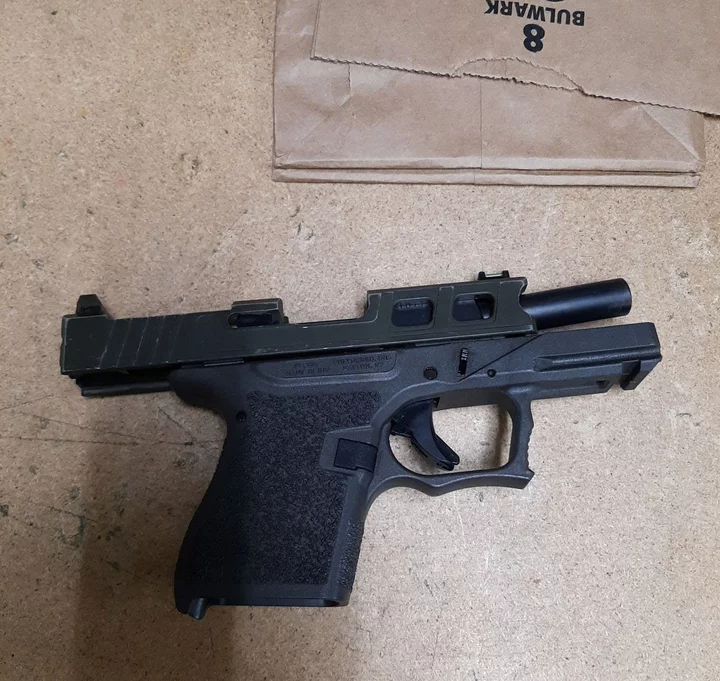
Bjorkstrand was in possession of a stun gun flashlight and an empty gun holster. The discarded property collected by deputies included:
A loaded Glock 22.40 caliber semi-automatic handgun
An unloaded, non-serialized handgun determined to be a “ghost gun”.
A loaded gun magazine
Apple iPhone
Bjorkstrand was arrested and transported to the Humboldt County Correctional Facility (HCCF) and booked on the following charges:
P.C. 29800(a)(1) Felon in possession of a firearm
P.C. 30305(a)(1) Felon in possession of ammunition
P.C. 24610 (a) Possession of an undetectable firearm
Press release from the Humboldt County Department of Health and Human Services:
After
delays and many unknowns during the federal government shutdown,
CalFresh recipients started receiving their November benefits on Thursday, Nov. 6. This move followed an order from a federal judge
earlier in the day who directed the U.S. Department of Agriculture to
find enough money to restore full funding for SNAP benefits by
Friday, Nov. 7.
While
this situation continues to be fluid, Humboldt County Department of
Health & Human Services Director Connie Beck said Friday morning,
with the changing information and unknowns, finding out benefits
started being issued last night was a “wonderful surprise” and a
relief for the more than 30,000 county residents who receive
CalFresh.
“In
this trying time, staff and our community have really stepped up,”
she said. “Not only is DHHS is the midst of hosting our own county
employee food drive, but numerous local restaurants, businesses and
other community residents are doing the same. I am proud to be a part
of this community and very proud of this department and our staff.”
According
to a news release from California Gov. Gavin Newsom issued Thursday
evening, “Following two lawsuits filed by California and other
states and a coalition of others, California families are beginning
to see their full SNAP benefits restored on their EBT cards. Earlier
today, a court ordered the Trump administration to immediately issue
100% of funding for 5.5 million California SNAP recipients. Following
the regular process for providing CalFresh benefits, benefits are now
beginning to be available on recipients’ cards so that families can
again access the food they need.”
While
this is subject to change, it means that households that would
normally receive their full benefits between Nov. 1 and 7, are on
track to have their full benefits available by Friday, and households
that would normally receive their full benefits between Nov. 8 and
10, are on track to have their full benefits available as normal, an
email from the California Welfare Directors Association stated.
Households determined to be newly eligible for November are also on
track to receive full benefits.
In
Humboldt County, approximately 22% of county residents receive
CalFresh benefits which equates to between $5.8 and $6 million a
month. These benefits not only supplement the food budgets of elderly
community residents, families with children and other individuals,
there are many businesses in the county that accept EBT cards and
rely on this income as well.
Families
that receive benefits through the WIC (Women, Infants & Children)
program, can expect to continue receiving them through November,
despite the shutdown.
For
more information about your CalFresh benefits, visit BenefitsCal.comor
call DHHS’s Social Services Call Center at 1-877-410-8809.
Press release from the Humboldt County Sheriff’s Office:
The
Humboldt County Planning & Building Department has recently
received several reports of an email scam targeting our community.
In
this scam fraudulent emails claim to be from the Humboldt County
Planning Commission and may identify as a current and/or former
employee. The scammer tells the victim that they have reviewed and
approved their permit application and an “application approval fee”
is required before approval can be finalized.
The
email appears to mine information from publicly accessible documents
such as agendas and related application documents and uses that
information to include very specific details about the applicant’s
project into the message. It also includes instructions on how to
wire funds to settle the account.
The County of Humboldt does not charge or
require an “application approval fee.” We would like the
community to know that this is a scam. While departments such as
Planning & Building may contact you regarding an application or
legitimate past amounts due, the county will never ask you to:
Mail
large sums of cash
Wire
funds to a private account
Use
a credit card over the phone, or
Pay
with gift cards or pre-paid money card
If you have any questions about the status of a
pending permit application, please call the Planning & Building
Department at (707) 445-7541.
The Humboldt County Sheriff’s Office
encourages anyone who believes they may have been targeted or have
been a victim of this type of fraudulent activity to report the
incident immediately by calling (707) 445-7251.
Remember these tips to help protect yourself
from fraud:
1.
Spot imposters
Scammers often pretend to be someone you trust,
like a government official, a family member, a charity or a company
with which you do business. Don’t send money or give out personal
information in response to an unexpected request – whether it comes
as a text, a phone call or an email. And do not open attachments in
emails from unknown sources.
2.
Do online searches
Type a company or product name into your
favorite search engine with words like “review,” “complaint”
or “scam.” Or search for a phrase that describes your situation,
like “IRS call.” You can even search for phone numbers and email
addresses to see if other people have reported them as scams.
3.
Don’t believe the name in an email or your caller ID
Technology makes it easy for scammers to fake
email account names and caller ID information, so the name and number
you see aren’t always real. If someone calls asking for money or
personal information, hang up. If someone emails you asking for you
to take action, do not click links in the email or open attachments.
If you think the person contacting you might be telling the truth,
call back to a number you know is genuine.
4.
Talk to someone
Before you give up your money or personal
information, talk to someone you trust. Con artists want you to make
decisions in a hurry. They might even threaten you. Slow down, check
out the story, do an online search, consult an expert — or just
tell a friend. If you have an application with the Planning
and Building Department call and ask.
5.
Don’t rely on personal information
Living in the digital age, access to
information is easier than ever. Scammers are often able to get their
hands on very personal information, providing it to their victims to
make their scam look more legitimate. Don’t trust a scammer who is
able to provide your personal information. If you followed the above
tips and still aren’t sure, call back at a publicly listed number
for the organization from which the scammer claims to be or contact
your loved one directly.
Sign
up for the Federal Trade Commission’s scam alerts
at this link.