

SMOKE ALERT! Today It’s Time for the Mattole to Get the Prescribed Burn Treatment
LoCO Staff / Monday, Jan. 27, 2025 @ 11:43 a.m. / Non-Emergencies

This is how we do it. File photo: Redwood State and National Parks.
Press release from Humboldt Redwoods State Parks:
California State Parks, in cooperation with CAL FIRE, are planning to conduct prescribed burns in Humboldt Redwoods State Park during the current dry weather period until rain returns, possibly this weekend. Smoke and flames may be visible from Mattole Road in Humboldt Redwoods State Park.
The prescribed burns are designed to reduce the encroachment of conifer trees and shrubs into prairies, as well as reduce fuels loads in the forests to lessen the likelihood of catastrophic wildfire. These prescribed burns will continue an on-going resource management program designed to maintain prairie grasslands, enhance forage for wildlife, control exotic plant species, return fire as a natural process to the parks, and maintain our old growth forests for generations to come.
For additional information contact Lathrop Leonard, Forester II (707) 502-9352.
BOOKED
Today: 9 felonies, 9 misdemeanors, 0 infractions
JUDGED
Humboldt County Superior Court Calendar: Today
CHP REPORTS
3000 MM36 E HUM 30.00 (HM office): Trfc Collision-No Inj
ELSEWHERE
Governor’s Office: Donald Trump declares the Republican Party the pro-pollution party
KINS’s Talk Shop: Talkshop February 12th, 2026 – Stacey Eads
Governor’s Office: Governor Newsom announces major expansion of mortgage relief program, with a four-fold increase in payments to survivors
The Guardian: The troubling rise of longevity fixation syndrome: ‘I was crushed by the pressure I put on myself’
Trump Orders More Central Valley Water Deliveries, Claiming It Would Help LA Fires
Alastair Bland / Monday, Jan. 27, 2025 @ 7:32 a.m. / Sacramento

Ikluft, CC BY-SA 3.0, via Wikimedia Commons
President Donald Trump signed a sweeping executive order Sunday that told federal agencies to “immediately take action” to deliver more Central Valley water and eliminate rules that stand in the way, including endangered species protections.
In the new order, Trump cited the Los Angeles fires, even though the actions he is ordering — primarily delivering more water from the federal Central Valley Project — would primarily serve farms. About 75% of Central Valley Project water is used for agriculture, while much of the rest goes to cities and towns in the San Joaquin Valley, including Sacramento and Fresno.
“In particular, the Secretary of the Interior and the Secretary of Commerce shall immediately take actions to override existing activities that unduly burden efforts to maximize water deliveries,” Trump’s order reads.
At stake are the rules that guide two massive Delta water systems, the federal Central Valley Project and a state-operated system, the State Water Project. These networks of reservoirs, pumps and canals deliver water to millions of acres of farmland and 30 million people. They draw water from rivers that flow into the Sacramento-San Joaquin Delta and San Francisco Bay, which imperils Chinook salmon, smelt and sturgeon that are protected by the federal Endangered Species Act.
Trump ordered federal agencies to “expedite action related to any exemption under the Endangered Species Act…for the long-term operation” of the water delivery systems. In addition, he directed the federal Bureau of Reclamation to “take all available measures to ensure that State agencies — including the California Department of Water Resources — do not interfere.” He entitled a section “Overriding Disastrous California Policies.”
Environmentalists are likely to sue if federal agencies override the Endangered Species Act when setting rules that control how much water is delivered via the Central Valley Project or State Water Project.
“Do not be fooled by Trump’s lies: none of the policies in this executive order will move even a single drop of extra water to communities devastated by these wildfires. This administration is presenting us with a false choice,” U.S. Rep. Jared Huffman, a California Democrat who is the ranking member of the House Natural Resources Committee, said in a statement Sunday. “Fishers, farmers, treasured species, and every water user all depend on our water resources – we do not have to pick winners or losers.”
Several community watchdog and environmental groups, including Restore the Delta and San Francisco Baykeeper, warned that Trump’s actions “will have devastating consequences for California’s water future, public health, and environmental protections, threatening a federal takeover of California’s right to manage its land and waters.”
Noting that the actions would benefit farmers, San Francisco Baykeeper Science Director Jon Rosenfield called the administration “a lawless regime that uses extortion to enrich their political supporters.”
Trump’s order said “it is in the Nation’s interest to ensure that California has what it needs to prevent and fight these fires and others in the future. Therefore, it is the policy of the United States to provide Southern California with necessary water resources, notwithstanding actively harmful State or local policies.”The environmental groups said Trump’s order “conflate fire prevention needs with water operations in California all based on the myth that water operations for environmental protections had any impact on water infrastructure used in the Los Angeles fires.”
Some Los Angeles fire hydrants ran out of water fighting the fires, but city fire and utility officials say it was caused by a sudden surge in demand and limited capacity of city pipelines — not a lack of supply. In addition, the city’s water comes mostly from the Owens Valley and groundwater, not the Delta or the Central Valley.
Rosenfield said the State Water Project ensures, even in the worst of droughts, that communities have a minimum share of water designated for purposes of “human health and safety,” which includes firefighting needs. “They always deliver that human health and safety water, always — it’s never interrupted,” Rosenfield said.
Trump called on the Bureau of Reclamation to operate the Central Valley Project with rules that his first administration implemented in 2020. Reverting to those rules could override rules signed into law by Biden administration officials and endorsed by state officials, in December. The Biden rules would reduce Central Valley Project farm deliveries, but the State Water Project — which serves Southern California cities as well as San Joaquin Valley farms — would receive more water compared to Trump’s 2020 rules.
Directors of the state’s water and resources agencies could not be reached for comment.
Ryan Endean, a public information officer with the California Department of Water Resources, said in a statement last week that his agency stands by its new Delta water management rules. Under those rules, Endean said, “farms and cities have the potential to gain additional water supply, while endangered species are protected. To abandon these new frameworks would harm California water users and protection of native fish species.”
The Central Valley Project provides about 5 million acres feet of water to farm, enough to irrigate about a third of the agricultural land in California, according to the Bureau of Reclamation. It also delivers about 600,000 acre-feet for municipal and industrial use, enough to supply about 1 million households with water each year.
The order follows a series of remarks in recent weeks by the President which reflect a profound misunderstanding of California’s water supply, weaving between inaccurate and fantastical.
In Pacific Palisades on Friday, while visiting with local leaders in the aftermath of the region’s wildfires, Trump said, “We have to have that water … You’re talking about unlimited water coming down from the Pacific Northwest, even coming up from parts of Canada, and it pours down naturally … you’ll never run out, you’ll never have shortages and you won’t have things like this, and when you do you’ll have a lot of water to put it out.” Water does not flow into California from Canada, and the Pacific Northwest does not feed into Central Valley rivers.
The order also includes provisions to expedite aid to victims of the Southern California wildfires and Hurricane Helene in North Carolina.
He ordered federal agencies to provide a plan that “expedites options for housing relief to survivors displaced by wildfires in California.” Also, “within 5 days from the date of this order, he ordered federal agencies to “expedite the bulk removal of contaminated and general debris” in order “to accelerate the rebuilding of areas devastated” by the wildfires.
County officials and the Army Corps of Engineers officials have warned homeowners in the fire zones that sifting through debris and removing it could be harmful without guidelines and precautions from the EPA for handling hazardous waste.
###
CalMatters.org is a nonprofit, nonpartisan media venture explaining California policies and politics.
California Senator Reappointed as Insurance Chair Despite Questions Over Corruption Probe
Ryan Sabalow and Julie Watts / Monday, Jan. 27, 2025 @ 7:26 a.m. / Sacramento

State Sen. Susan Rubio addresses lawmakers during a Senate floor session last year in Sacramento. Rubio has been reappointed chair of the chamber’s insurance committee, despite questions surrounding a federal corruption investigation. Photo by Fred Greaves for CalMatters.
The leader of the California Senate has reappointed the former chair of the chamber’s insurance committee, despite uncertainty over her possible involvement in a federal corruption probe.
On Friday, Senate President Pro Tempore Mike McGuire announced he was reappointing Democratic Sen. Susan Rubio of West Covina to chair the committee after the seat had been vacant for three weeks.
“Senator Rubio has headed up the Insurance Committee since 2019, and I have confidence in her experience and her ability to lead the committee while the state faces unprecedented challenges with the insurance market,” McGuire said in an emailed statement, referencing the Los Angeles fires.
The insurance committee chair was the only one McGuire left vacant when he announced his committee assignments on Jan. 3. McGuire told CalMatters he had been “awaiting additional information from the U.S. Attorney’s Office before finalizing any decisions.”
McGuire said Friday in a statement: “The Senate takes allegations of ethical and criminal behavior incredibly seriously which is why I directed the Senate’s legal counsel to pursue answers as to whether any violation involving a member of the Senate occurred. What’s been learned: No case has been filed by the U.S. Attorney’s Office and no additional information is available from the U.S. Attorney’s Office.”
A spokesperson for the U.S. Attorney’s Office in Los Angeles had no comment and referred CalMatters to the Department of Justice’s policy guidelines that detail when federal prosecutors can publicly discuss investigations.
“DOJ generally will not confirm the existence of or otherwise comment about ongoing investigations,” it reads. “DOJ personnel shall not respond to questions about the existence of an ongoing investigation or comment on its nature or progress before charges are publicly filed.”
Federal officials have not identified Rubio by name in the corruption probe, which has ensnared a handful of other officials in San Bernardino County, Compton, Commerce and Baldwin Park.
However, no one else matches the description of “Person 20,” who according to recently released federal court documents asked for $240,000 in bribes from a cannabis company and accepted $30,000 in illegal campaign contributions. The allegations stem from when Rubio was a member of the Baldwin Park City Council.
Rubio emphatically denied accepting bribes in an interview with CalMatters’ reporting partner, CBS News, that aired Wednesday night. But when asked if she denied that she was “Person 20” she responded, “I’m not saying that.”“I’m just saying that you read the report,” she continued. “And whatever is happening there is happening there, but I think that (investigators) would have to reach out to me in order for me to be part of any of this.”
Rubio’s office previously told the Los Angeles Times in a statement that she “volunteered hours of her time” aiding the authorities in their investigation and that she “has no reason to believe that she would be included in any criminal allegations.”
###
CalMatters.org is a nonprofit, nonpartisan media venture explaining California policies and politics.
TINY FOOTPRINTS: Don’t Drink the Keurig Kool-Aid
Ashley Thomas / Sunday, Jan. 26, 2025 @ 7 a.m. / Tiny Footprints
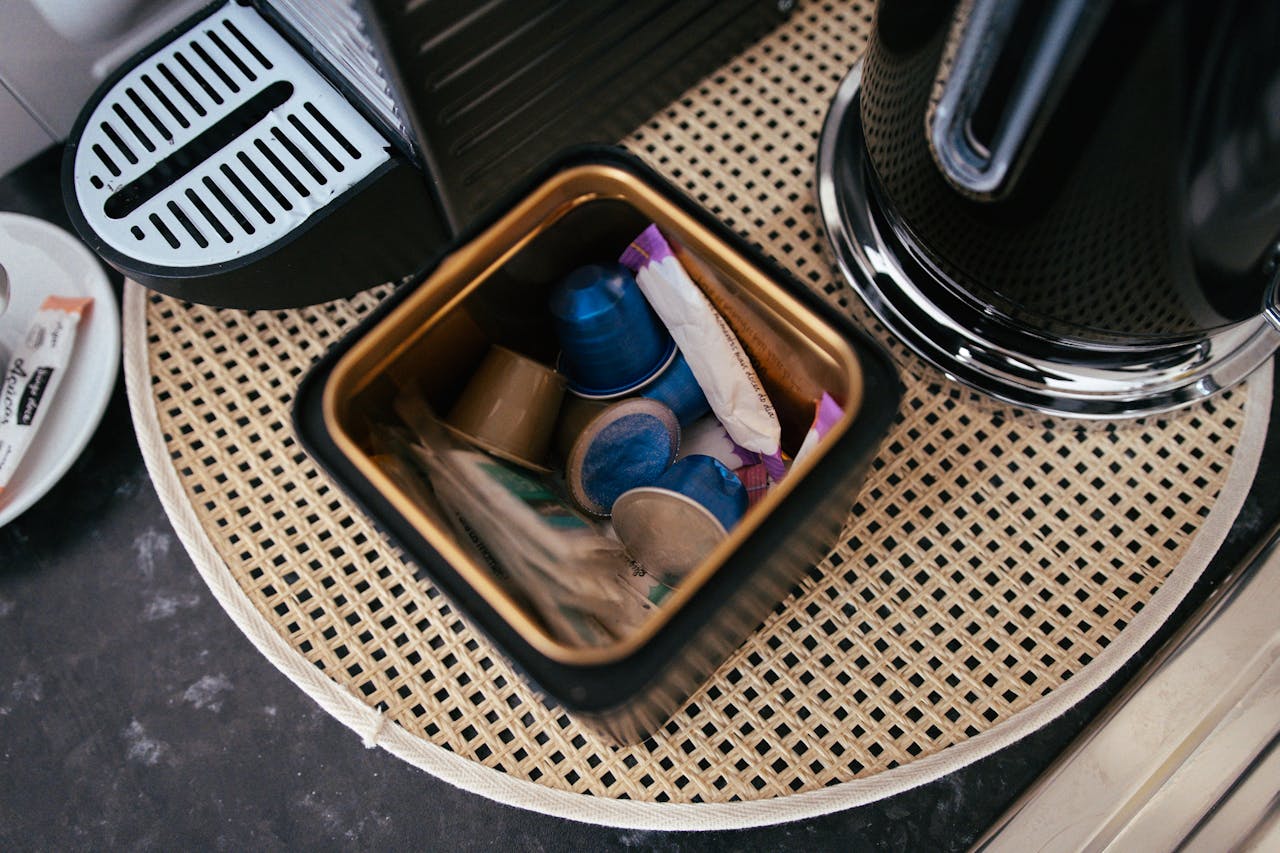
Photo by Jaycee300s via Pexels.
If you drink coffee, there’s a chance you have a brewing ritual. A ritual that you likely have some attachment to. Hey, maybe you’re even passionate about it. It can be an immersive sensory experience: Grinding the beans and inhaling their rich, earthy scent. Waiting for the kettle to whistle and emit a stream of vapor if you’re using a French press or pour over. The distinctive, rain-like sound of a drip coffee machine filling your kitchen as the sun breaks free of the horizon. At its best, it can be a mindfulness practice, a reminder to slow down and appreciate the moment. To start the day with a level of presence and patience.
Or… you could pop in a K-cup.
While the stripping away of ritual in favor of speed and convenience is arguably problematic for the human psyche, this is a column about environmental sustainability. But there’s usually a correlation between things that are bad for our mental health and practices that are bad for our planet. NPR reported last year that Keurig agreed to pay $1.5 million in penalties for misleading statements about how recyclable their single-use pods are. Just because they’re technically recyclable, it doesn’t mean it’s easy to do so, leading to a history of large recycling companies not accepting them. A Berkeley non-profit called “The Story of Stuff Project” estimates that the number of K-cups currently in landfills “could wrap around the planet more than 10 times.”
There must be more sustainable ways to enjoy the world’s favorite caffeinated beverage, right? Why yes, there are. So many ways:
- Reusable K-cups: If you’re smitten with the Keurig system, you can invest in stainless steel, reusable K-cups. Simply pack it with ground beans, pop it in like you would the single-use variety, and hit “go.” Toss the grounds and rinse it afterwards, and you’re free to use it over and over.
- Coffee filters: Spare the planet from all those paper coffee filters that add up over the years, and invest in a reusable coffee filter for your drip machine. The metal ones are easy to clean and can be used for years. If you’re attached to paper filters, opt for the ones that aren’t bleached white, as those can’t be composted.
- Consider the French press: This method has a built-in filter and doesn’t require any waste other than the beans.
- Compost those beans: Coffee grounds are a fabulous addition for the compost. If you compost for your own garden, you can personally reap the benefits. If not, it’s great to toss them into the local green bins if you’re able to.
- Coffee on the go: Most coffee shops are happy to fill your personal mug or to-go container, which reduces overreliance on single-use cups. These single-use plastics are often not recycled despite being labeled as such. And some places, like Jitter Bean, give a discount on your drink when you use the mug you purchase from them, so it eventually pays for itself. Plus, it keeps my coffee hot for hours.
- Forswear the straw: If you don’t have a reusable mug the next time you’re in the coffee shop drive-thru, resist the offer for a straw to go with your cold drink. Many single-use cups now have built-in spouts, making straws unnecessary. If straws are your jam, consider investing in the reusable version. I found some that are dishwasher safe and BPA free. Finding the right system for having them available in my car or purse when I’m on the go remains elusive to me. Drop your strategy in the comments if you’ve got a successful one!
Happy (sustainable) caffeinating!
###
Ashley Nichole Thomas is a marriage and family therapist who’s passionate about shrinking her carbon footprint. In her free time she writes fantasy novels, and remains unconvinced that fairies don’t exist.
OBITUARY: Maria Lourdes Furtado, 1939-2025
LoCO Staff / Sunday, Jan. 26, 2025 @ 7 a.m. / Obits

Maria Lourdes Furtado passed away peacefully surrounded by her family
on January 21, 2025.
She was born on January 25, 1939, in Ponta da Faja Grande, Flores, Acores and the last surviving member of her immediate family. Maria immigrated to the United States in 1956 and lived in Arcata until 2002, before moving to McKinleyville.
Maria started working as soon as she got to the United States. Her first job was in the kitchen at the Big 4 Inn and she continued working in commercial kitchens at the Eureka Inn and Jolly Giant Commons at HSU. She retired in 2001 to care for her Mother.
Our Aunt truly spent her life in service to others. She learned to speak English soon after arriving in the United States and would drive new immigrants to their appointments and help translate for them. She was a devout Catholic and attended daily mass for many years.
Every holiday Maria selflessly prepared an amazing meal. It brought her great joy to be caring for her family and spending time together. Maria was an early advocate for the homeless, purchasing and preparing monthly meals for the unhoused in Arcata. She enjoyed gardening and flowers. She always had freshly cut flowers to put at her parents’ grave. Many hours were spent enjoying daily walks. Maria was a talented crocheter, creating many heirloom keepsakes that we will treasure.
Maria is survived by her niece Diane (David) Sloane, nephews Rev. Jose Furtado, Jim (Keri) Furtado and Steve (Lorrie) Furtado, grandnieces Kelsey Sloane & Jenna Furtado, grandnephews Justin Furtado & Ryan Sloane, sister-in-law Fatima Furtado, and cousins in Canada, Massachusetts and in Flores, Acores.
She is preceded in death by her beloved parents Alberto L. & Serafina L. Furtado, brothers Angelo L. Furtado and Pedro N. Furtado.
A rosary followed by a funeral mass will be held at 10:45 a.m. January 29th at Christ the King Catholic Church at 1951 McKinleyville Avenue, McKinleyville. Interment will follow at St. Mary’s Cemetery in Arcata.
Memorial Contributions may be made to Eureka Rescue Mission, St. Vincent DePaul’s Dining Facility, or donor’s favorite charity.
###
The obituary above was submitted on behalf of Maria Furtado’s loved ones. The Lost Coast Outpost runs obituaries of Humboldt County residents at no charge. See guidelines here. Email news@lostcoastoutpost.com.
Extreme Weather Shelter Opening Tonight in Eureka
Isabella Vanderheiden / Saturday, Jan. 25, 2025 @ 12:09 p.m. / Emergencies

Graphic: City of Eureka
###
The City of Eureka will open an extreme weather shelter tonight in response to frigid weather conditions anticipated across the region. Temperatures are forecast to dip below 30 degrees tonight through Sunday morning, with wind chills as low as 25 degrees, according to the National Weather Service.
If you or someone you know needs shelter tonight, be at one of these locations at the specified time, and city workers will drive you to the shelter:
- Free Meal at 6 p.m. (35 West Third Street)
- Sacoo Amphitheater at 6:30 p.m. (near the Adorni Center)
- HOPE Center at 7 p.m. (720 Wood Street)
- 14th and Koster Streets at 7:30 p.m.
For additional questions or concerns, contact the City of Eureka at (707) 441-4253. Click here for information about extreme weather shelters and warming stations located elsewhere in the county.
Stay safe out there, folks.
THE ECONEWS REPORT: International Climate Action in a Trump Era
The EcoNews Report / Saturday, Jan. 25, 2025 @ 10 a.m. / Environment

Photo: Dean Calma / IAEA, via Flickr.
Every year, delegates from across the globe meet to discuss how we can muster an international response to climate change. On November 5, 2024, voters elected Donald Trump to be president and one of his first actions was to, again, pull the United States from global climate accords. How can we take meaningful action on climate change when an election fundamentally changes American climate policy? And are these annual meetings actually accomplishing anything or is the age of multinational climate action over?
Guests Derek Walker Adjunct Professor in International Climate Change Law at Vermont Law and Michelle McMillan, law student at Vermont Law share their perspectives.


