

OBITUARY: Bruce J. Amado, 1939-2025
LoCO Staff / Friday, Aug. 15, 2025 @ 6:56 a.m. / Obits

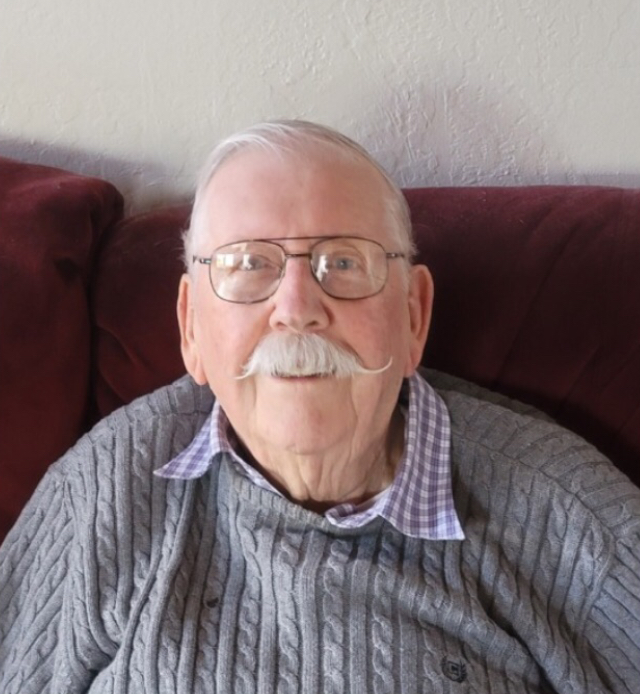
Bruce J. Amado
September 22, 1939 – April 12, 2025
Bruce J. Amado was born on September 22, 1939, in Sacramento. He went to be with the Lord on April 12, 2025, after a long battle with Parkinson’s disease. He was the middle child of three siblings.
Life was difficult when, at only eight years old, he learned that his father had passed away suddenly. This left his mother, Lorene, to raise three children on her own, just following the Depression. Luckily, Bruce had the fortune of having an uncle, Vernon, and a stepdad, Bernard, who stepped in and mentored him. During these years, he developed a deep love for fishing and the outdoors.
He took great pride in his first job delivering newspapers and used some of the proceeds to help his family financially. His next job was working at John F. Mahaney Company, a local wholesale farm supply store, where he developed much of his work ethic. He attended Sacramento City College and later transferred to Humboldt State University, where he studied fisheries and marine biology—an area of life where he found his calling.
Bruce joined the Department of Fish and Game as a Fish and Wildlife Assistant at Feather River Fish Hatchery in Oroville, shortly after the dam was constructed. On August 29, 1964, he married the love of his life, Sharon. They moved back to Rio Dell, where Sharon taught third grade, and together they briefly managed a trailer park in Eureka. Bruce then took a job at Mt. Shasta Fish Hatchery.
It was there they found a little piece of property, built a house, and started a family. In 1972, they welcomed a son, and in 1974, a daughter. They were able to move from hatchery housing onto their new property, but only for a few years before Bruce transferred to Mt. Whitney Fish Hatchery in 1982.
Bruce and Sharon spent many years skiing at Mammoth, fishing creeks, mountain lakes, and aqueducts, and hunting doves and mule deer in the Sierras. He had the opportunity to ride pack animals into the highest elevation lakes with milk crates of small trout, as well as dropping them by small plane into remote lakes.
In 1985, Bruce accepted the job of his dreams at Mad River Fish Hatchery in Humboldt County. Soon after, his family rejoined him. This hatchery raised trout, salmon, and steelhead, and Bruce took great pride in spawning fish each fall and caring for the eggs. His daughter recalls visiting on school days off, watching him carefully pick the eggs to remove any fungus and marveling as they developed “eyes.” Bruce’s smile often drew photographers, and he was always eager to share his knowledge of hatchery work with anyone interested.
He especially loved releasing fish into streams, talking to fishermen, and watching the fish go free—knowing he and his crew had raised them from the start.
Outside of work, Bruce enjoyed teaching fly-tying to his 4-H group, sailing and fishing the ocean from his 19-foot West Wight Potter sailboat, and golfing locally. In 1998, he retired and put his lifetime fishing license—awarded to him by the department—to good use. He spent summers sailing and camping in Tahoe, and one year caught the fish of his lifetime: a 70-pound king salmon, the largest caught in Eureka that year. Proud of the catch, he purchased a salmon smoker for the fishing derby where he won the record.
Bruce even tried commercial fishing for a year, purchasing a salmon trawling boat and crab permit. He ran “The Echo” for a couple of years with Joy, supplying his yacht club with crab for many crab feeds. Cooking and serving crab came naturally to him, as generosity was second nature.
The yacht club brought Bruce and Sharon many great experiences. While Sharon wrote and printed the newsletter, Bruce timed the races—his Potter being slow but perfect for the job. He made many friends there, including his best friend Ralph Krause, with whom he paddled across Humboldt Bay as part of a club. Early weekend mornings were spent crossing the bay, spotting wildlife, and enjoying breakfast with friends.
Bruce’s love of nature never faded. In his later years, he golfed with friends and his son until he could no longer play. Determined to stay active, he rode his electric tricycle and fished local beaches for surf perch with his friend Joe Ceriani, sometimes joined by his granddaughter Sophia and daughter Wyly.
Bruce will always be remembered for his kindness, caring attitude, hardworking character, and gentle nature. He was devoted to his family and expressed his love through thoughtful acts of service—like greeting loved ones at the door with a cup of coffee or juice.
He is survived by his wife, Sharon; daughter Wyly (husband Elmer, grandchildren Abigail and Julian, and great-grandchild Sequoia); son Jon (wife Helia and daughter Sophia); brother Gary (wife Judy and sons Christopher and Michael); and sister Jolene.
In lieu of flowers, please donate to the Michael J. Fox Foundation to further Parkinson’s research.
A celebration of life will be held at the Wharfinger Building in Eureka on September 20, 2025, at 2 p.m.
###
The obituary above was submitted on behalf of Bruce Amado’s loved ones. The Lost Coast Outpost runs obituaries of Humboldt County residents at no charge. See guidelines here.
BOOKED
Today: 7 felonies, 18 misdemeanors, 0 infractions
JUDGED
Humboldt County Superior Court Calendar: Today
CHP REPORTS
No current incidents
ELSEWHERE
KINS’s Talk Shop: Talkshop September 1st, 2026 – Aaron “Stu” Salles
EcoNews: “What’s in a Name?”: A Chilling Act of Censorship
EcoNews: The Fix Our Forest Act: Benefit or Bypass
RHBB: Debris Burning Suspension Remains in Effect Despite This Week’s Rain
What’s Going on at the Homeless Encampment on Arcata’s O Street?
Dezmond Remington / Thursday, Aug. 14, 2025 @ 12:53 p.m. / Homelessness

A photo of some of the trash on the property. Photos courtesy of John Shelter.
Several dozen homeless people and tens of tons of trash coexist on a chunk of land split into several parcels in Arcata, where O Street ends and a grassy field and a few groves of trees and blackberry bushes begin, and it’s here that the recent protests at Arcata’s City Council meetings have been waged over.
Some activists have claimed that Arcata’s government is unfairly and brutally forcing them off of land they have a right to keep camping on; because it’s private property, the city disagrees and says they’re doing their best to make sure the inevitable egress proceeds fairly and safely.
So what’s going on?
The occupied land is split up into four parcels, about 20 acres total, located west of the Wing Inflatables factory and north of Samoa Boulevard and bisected by the railroad. One of the property owners reached out to the city about doing something about six months ago after years of struggling with the problem.
A map of the land the homeless are living on.
John Shelter, the operator of New Directions, the company contracted by the property owners and the city to clean up the site, flagged 27 encampments when he first started work in May this year (an encampment could be one tent by itself or a few together). That number has gone down a bit; only 24 of those encampments are occupied as of last week. It’d be impossible to take a census on the place, because people come and go, but he said in an interview with the Outpost that an occupancy of around 50 people would be a safe guess.
The mental and physical costs of living outside and being crushed under the weight of extreme poverty are immense. Shelter says he met people that were camping on the properties all the way back in 2007. One of them, an older woman who can’t walk, still lives there and is often robbed. He and his crew have removed over 4,000 syringes from the area, and the lack of bathrooms force people to fill empty containers with their own waste. He couldn’t say whether or not many of the occupants were sick.

The other main occupant of the land is the trash, mounds and mounds of it, visible even via aerial photography taken last year. Shelter and his crew have removed 91,000 pounds of the stuff since May from the fields surrounding the encampments, fields of decomposing clothing and household appliances and straight-up garbage; Arcata’s city manager Merritt Perry called it a “solid-waste catastrophe.”
There is plenty more of it. He says they haven’t touched the area people are camping in (Shelter says one of his top priorities is making sure no one’s personal items are junked), and there’s more detritus in the thick berry vines and trees ringing the property. Some of it is recyclable, but the overwhelming majority of it gets trucked to the landfill.
Figuring out what to do with the people is a lot more complicated.
“I’m gonna say a majority of them probably don’t want to leave,” Shelter said. “The ones that had been embedded there for a while — they probably don’t, you know, and I would never say that most of them want to. But [they might] if we provide an opportunity that is neutral, that is a compromise.”
Letting them stay isn’t an option either. The property owners want the city to enforce the trespassing laws, and despite the outbursts, the city can’t just decide that the homeless can stay there.
There aren’t any immediate plans for the properties, but even planning any development requires the garbage thrown away and the people gone.
Perry said that they had enough funding to house all of the campers in city-funded housing projects if they did decide to leave, though there might not be enough space to accommodate all of them.
“Do you accept people who choose not to go into housing, and do you allow them to live on private property against the wishes of a private property owner, or do you enforce trespassing laws?” Perry said in an interview with the Outpost. “And I think when people aren’t looking for solutions, I think you have to enforce trespassing laws. I think you have to do both things. You have to exercise compassion: invest in housing, invest in very low income housing, but at the same time, you can’t relax the standards of a community to allow trespassing on private property or camping in public spaces.”
Shelter’s approach so far (and thus the city’s) has been far from the heavy-handed demolition many of the protestors at the city council meetings have been accusing him of, he claims. None of the campers have been arrested or forced off and have been given months to move elsewhere or into city-sponsored housing. He believes that a little prevention would have been the best cure.
“That whole area on O Street started because it was out of sight, out of mind,” Shelter said. “That’s the biggest crap I’ve ever heard in my life. I kept telling people from day one, out of sight, out of mind is not good. It’s not good. ‘Oh no, it’ll be fine. Don’t you care about them? John, let them be over there. They’ll be fine.’ Well, 15 years later, it’s not fine, right? We should have never allowed it to get that big. We should have helped these individuals.”
Perry said anyone that wanted to discuss long-term solutions would be welcome to reach out.
“The city wants to engage in dialogue for solutions,” he said. “Just yelling and insulting the council or staff really isn’t going to lead to a productive outcome. But I think the city really wants to do it the best it can, to see people transition out of homelessness into housing, and they put their money where their mouth is. I mean, they put the time and effort to create a lot of low- and very low-income housing, and the city will continue to do that — but then we also need to see people who are unhoused step up and pursue those housing options.”
(VIDEO) Rumble Over the Redwoods’ 100-Year-Old WWII Pilot Profiled by David Muir on ‘World News Tonight’
Andrew Goff / Thursday, Aug. 14, 2025 @ 12:47 p.m. / :)
Over the weekend, thousands in Humboldt made the trip up to McKinleyville for the second edition of the Rumble Over the Redwoods airshow.
One of the event’s featured stars was none other 100-year-old retired U.S. Army Air Corps Col. Joe Peterburs, who was given the opportunity to once again take the controls of a P-51 Mustang, the same type of aircraft he flew in combat in his youth.
The historic flight was chronicled by news crews at ABC’s World News Tonight. You can tune in above.
Cooley Out: Humboldt County’s Latest Director of Aviation Lasted Barely Two Months
Ryan Burns / Thursday, Aug. 14, 2025 @ 11:45 a.m. / Airport , Local Government

Ryan Cooley. | Image via County of Humboldt.
Well, that didn’t last long.
Humboldt County’s latest director of aviation has resigned after just two months and five days on the job.
Ryan Cooley, who arrived here after working three years and eight months as the airport director up in Del Norte County, submitted a letter of resignation dated yesterday, according to Public Information Director Cati Gallardo.
Cooley held a couple other aviation-related jobs before that, though as recently as 2016 he was managing a GameStop in Klamath Falls, Ore., according to his LinkedIn profile.
“This was not the result of any disciplinary matter, and I’m proud of what we accomplished during my tenure,” Cooley told Times-Standard reporter Robert Schaullis, adding, “I’m grateful for the opportunity to have served the community and wish the county and especially the department of aviation continued success.”
Gallardo said via email, “As this is a personnel matter, the county has no further information to share with the media on this topic.”
Cooley was appointed aviation director at the June 3 Board of Supervisors meeting with the expectation that he would begin work the following Monday. The job, which has a pay scale ranging from $193,710 to $219,169 per year, entails management and development of the county’s six airports, including everything from overseeing day-to-day operations to leading capital improvement projects and guiding long-term planning.
Curiously, Cooley’s sudden and unexpected departure mirrors that of the previous aviation director, Cody Roggatz. Both men resigned — or, in Roggatz’s case, disappeared for a spell before resigning — almost immediately after the big Rumble Over the Redwoods airshow up at ACV, the California Redwood Coast - Humboldt County Airport.
A county insider tells us that Cooley’s resignation was unrelated to that event, however.
The Outpost has requested a copy of Cooley’s resignation letter. We’ll update this post when we hear back from the county.
###
UPDATE, 1:24 p.m.:
Well, there’s not much to this letter of resignation. Marked “CONFIDENTIAL,” it reads, in its entirety, “I, Ryan Cooley, hereby resign my employment as the Humboldt County Director of Aviation, effective immediately.”
Step Aside, Ponies! Kinetic Sculptures Are Taking Over the Ferndale Racetrack at This Year’s Humboldt County Fair
Isabella Vanderheiden / Thursday, Aug. 14, 2025 @ 10:29 a.m. / Community , Kinetic

RePtile Dysfunction makes its rounds at the Arcata Plaza during the 2024 Kinetic Grand Championship. | Photo: Isabella Vanderheiden
###
Good news for people who like funnel cakes and human-powered sculptures! The Humboldt County Fair is joining forces with the Kinetic Universe to produce the first-ever Kinetic Obstacle Exhibition Derby (KO-ED) on opening day this Saturday.

Image: Kinetic Universe
The KO-ED will kick off at the Humboldt County Fairgrounds at 1:30 p.m. with the Kinetic Racers’ Pageantry Parade, followed by the Rutabaga Royalty Hobby Kinetic Creature Race, a “delightfully absurd” stick creature competition. (Think hobby horse racing. If you’re not familiar with the sport, do yourself a favor and click here.) The illustrious Ladies’ Hat Day competition will take place at 3:30 p.m. And for the main event at 5 p.m., the famed Ferndale Racetrack will be transformed into a chaotic obstacle course where eight kinetic teams will zig-zag through mud and hay bales, dodge water balloons and fend off rodeo clowns.
Wait, what?! I thought there was supposed to be horse racing on opening day! What gives?!
No, dear reader, there will be no horse racing at this year’s fair. Despite multiple attempts to save the time-honored tradition, the California Horse Racing Board (CHRB) rejected the Humboldt County Fair Association’s request, ending a 128-year tradition of horse racing at the fair. In a last-ditch effort to keep horse racing in Humboldt, the fair association submitted a secondary request to host three consecutive race weekends in October, but it was denied.

Horse racing at the Humboldt County Fair. | Photo: Redwood Coast via Flickr. Creative Commons license.
Looking to replace the money-making event — which brought in nearly $1 million in commissions and purses during a three-week run last year — the fair association teamed up with the Kinetic Universe to offer something a little different for this year’s fair.
“We’re thrilled to partner with the fair,” Jennifer Thelander, Kinetic Universe outreach director, wrote in a prepared statement. “They offered to build us a custom racecourse based on our wild ideas. Spectators will see racers challenged in ways they aren’t at the Kinetic Grand Championship — we can’t wait for everyone to see what we’ve planned.”
While you get yourself amped up for opening day, get a behind-the-scenes look at what it takes to prepare for the Kinetic Grand Championship in friend of the Outpost Ray Olson’s documentary series, “One Team’s Quest for Kinetic Glory!” The multi-part series follows racing team mPROM2 in the weeks leading up to the big day. Keep scrolling to check ‘em out!
A full schedule of this year’s fair offerings can be found here.
###
California’s Newest Invaders Are Beautiful Swans. Should Hunters Kill Them?
Ryan Sabalow / Thursday, Aug. 14, 2025 @ 7:17 a.m. / Sacramento

A bill pending in the California Legislature would allow landowners and hunters to shoot invasive mute swans like this one seen recently in the Grizzly Island Wildlife Area near Fairfield. Photo by Miguel Gutierrez Jr., CalMatters
###
This story was originally published by CalMatters. Sign up for their newsletters.
###
On an early August morning, it didn’t take long to spot the first pair of huge white swans with orange and black bills and graceful, curving necks as they swam in the marsh along the side of a Solano County levee road.
They dabbled in the vegetation as a pickup drove through the Grizzly Island Wildlife Area. A short drive later, past a herd of a dozen tule elk, two more swans appeared in the marsh alongside the dirt road. Then four more. A few hundred yards down the road, out in the distance past a thicket of swaying reeds, dozens of swans swam in the water.
For casual bird watchers, the sight of all these majestic animals might be a pleasure and bring to mind swan-themed works of literature, such as “Leda and the Swan” and “The Ugly Duckling.”
But for wetland biologists and others with a stake in the health of the surrounding Sacramento-San Joaquin Delta, the largest estuary on the West Coast, the birds represent the latest – and an exponentially growing – threat to the few remaining wetlands left in California.
These are mute swans, native to Europe and Asia. Weighing up to 30 pounds and with a wingspan of up to eight feet, they’re the biggest bird in the marsh, and they’re not the least bit shy about throwing their weight around.
Fiercely territorial, especially during breeding season, they’ve been known to drown smaller animals and have killed at least one American kayaker. They’ve displaced colonies of nesting native birds in other parts of the U.S. they have invaded. Mute swans also feed gluttonously on submerged vegetation, destroying the plant life on which other native wetland species depend.
“They might be a pretty, big, white bird … and they may be charismatic, but they can be pretty nasty,” said Brad Bortner, a retired chief of the U.S. Fish and Wildlife Service’s migratory bird management programs in Washington D.C.
In 2008, California banned anyone without a special permit from keeping mute swans as pets or from importing them into the state. The hope was to head off yet another destructive invasive species taking hold in the state.
It didn’t work. The mute swan population exploded in just a few years. In 2022, state waterfowl biologists estimated there were 1,150 of them. This spring, they estimated more than 12,000, nearly double the year before. Most of the mute swans are in the Suisun Marsh, a sprawling complex of public wetlands, agricultural lands and private duck-hunting clubs on the outskirts of the Bay Area near Fairfield.
“We keep watching them climb and climb and climb,” said Melanie Weaver, waterfowl coordinator for the California Department of Fish and Wildlife.

Mute swans at the Grizzly Island Wildlife Area on Aug. 8, 2025. Photo by Miguel Gutierrez Jr., CalMatters


First: A lone mute swan glides across the water at the Grizzly Island Wildlife Area on Aug. 8, 2025. Last: Birds and ducks glide across the water at the Grizzly Island Wildlife Area. Local birds are at risk of displacement by the mute swan. Photos by Miguel Gutierrez Jr., CalMatters
A measure before the state Legislature aims to allow hunters and landowners to shoot the swans for the next five years to try to bring their numbers down to more manageable levels in the Sacramento-San Joaquin Delta and beyond.
The hunting groups supporting Assembly Bill 764 essentially ask: If Californians are OK with spending more than $13 million since 2018 to kill nearly 6,000 nutria, the 20-pound, orange-toothed South American rodents that have invaded the same waterways, why not let hunters and land owners do the same to mute swans – but for free?
“If the population gets too large and out of control, it may be beyond our ability then to really effectively manage them,” Mark Hennelly, a lobbyist for the California Waterfowl Association, told the Assembly Water, Parks and Wildlife Committee this spring. “So we want to get ahead of the problem.”
Animal welfare groups object
That argument has so far been a surprisingly easy sell in the Legislature, despite California’s passionate and influential anti-hunting activists. Similar swan-killing proposals have led to protests in other states.
The measure easily passed the Assembly without any lawmaker voting against it. It’s now pending in the California Senate.
No group has opposed the measure so far, according to the CalMatters Digital Democracy database, but that might soon change.
Mute swans, unlike nutria, have a dedicated group of supporters, mostly on the East Coast.
Nicole Rivard, a spokesperson for Friends of Animals, said she and fellow members of the animal welfare organization believe mute swans shouldn’t be treated like vermin.
The birds arrived here through no fault of their own, brought by humans, and they don’t deserve to be killed for it, she said.
Rivard believes the California legislation is motivated by hunters looking for an excuse to have yet another bird to legally shoot. Currently, mute swans can only be killed by landowners if the birds “are found to be injuring growing crops or property,” according to state regulations.
“We’re anti-hunting, so we don’t like the idea that (hunting) might be, you know, part of the reasoning behind this,” Rivard said.
Arguing that claims of mute swans’ environmental damage and aggression are overblown, Friends of Animals and other groups opposed killing them decades ago, after Mid-Atlantic states proposed eradication when their populations began expanding dramatically in the 1990s and early 2000s.
The groups protested, filed lawsuits and proposed legislation to try to stop the killing. They had mixed success. Some states began killing the nonnative swans over the animal welfare groups’ objections. Notably, Maryland was able to knock the mute swan population down from around 5,000 birds in the early 2000s to around 200 by 2010.
“Continued control and maintenance operations have reduced that number to just a handful of birds today,” said Josh Homyack, the game bird section leader for the Maryland Department of Natural Resources.
In Maryland, government agency employees raided mute swan nests and destroyed eggs, captured and euthanized swans when they were flightless during their feather-molting season and shot them in carefully coordinated operations, Homyack said. The state also issued a few permits to kill the birds to local landowners.
In New York, the mute swan lobby got a law passed that made it harder to kill the birds, requiring state officials to “fully exhaust non-lethal control measures” such as nest destruction and capturing birds and moving them to wildlife facilities “prior to any lethal removal.”
The mute swan population in New York has stayed steady at around 2,000 to 3,400 birds.
Charisma matters with invasive species
On the East Coast, mute swans have been around since before the turn of the last century. They were first imported as ornamental livestock for zoos, parks and estates.
Some of California’s mute swans likely came in the same way. Weaver, the California waterfowl coordinator, said others were likely brought in the past few years to chase away Canada geese that have increasingly become a nuisance at parks and golf courses.
“People were buying these (swans), and they were just throwing them out there,” she said.
Weaver noted their owners didn’t do the responsible thing and clip their wings to keep them from flying off. That’s hardly surprising. It’s no easy task to grab a hissing 25-pound swan, big and angry enough to swamp a kayaker. So with nothing to stop them, the birds flew to nearby marshlands and began reproducing.
“Here we are, not very many years down the road, with a population that is really increasing at a rapid rate,” Weaver said.
So far, California’s wildlife agency hasn’t enacted a mute swan eradication plan similar to the one it started almost immediately – and publicly promoted – a few years ago, after nutria first started turning up in the San Joaquin Valley.
Nutria are similarly destructive feeders on aquatic plants. The South American swamp rodents also burrow holes in levees, posing a threat to the state’s flood-control and water-supply infrastructure.
Dave Strayer, a retired invasive species expert with the Cary Institute of Ecosystem Studies in New York, said he’s not surprised state officials haven’t been as aggressive with the beautiful mute swans, given the uproar over killing them in other states.
He said research has shown that when it comes to invasive animals, charisma matters. The more attractive a problematic non-native species is, the less appetite there is to wipe it out.
Stayer gave an example: Few complain about killing common nonnative rats, but you’re apt to get death threats at even the suggestion of wiping out ecologically harmful feral cat colonies in the same habitats.
He noted that no one has ever complained about efforts to eradicate one of his research subjects, the nonnative zebra mussels that have also invaded California.
“I never had even one person stand up for zebra mussels and say, ‘No, these are beautiful, elegant God’s creatures’ and so forth,” he said.
Few wetlands and too many mute swans
Supporters of the swan-killing legislation say reducing the number of mute swans should be fairly easy since the giant white birds are easy to spot, identify and kill. Their size and the color and shape of their bills also reduce the risk they’ll be confused with other protected bird species, they say.
California’s native tundra and trumpeter swans would still be protected and illegal to shoot if the bill becomes law.

Mute swans at the Grizzly Island Wildlife Area on Aug. 8, 2025. Photo by Miguel Gutierrez Jr., CalMatters
Despite their undeniable beauty, Weaver, the state waterfowl coordinator, sees mute swans similarly to nutria.
The swans pose too great a threat to native species reliant on the few wetlands left in California, which has lost at least 90% of the habitats to agriculture and urban sprawl.
“They don’t move around the state all that much, and they really like the Delta-Suisun Marsh area, so it’s still easy to handle the issue,” Weaver said. “The longer we wait, it won’t be.”
OBITUARY: Mervin Frank ‘Mickey’ Foster, 1932-2025
LoCO Staff / Thursday, Aug. 14, 2025 @ 6:56 a.m. / Obits
Mervin Frank “Mickey” Foster, age 92, passed away peacefully on June 27, 2025, in Eureka, with loved ones by his side.
Born on September 22, 1932, Mickey lived a long and full life marked by dedication to family, service to his country, and a tireless work ethic.
Mickey was a storyteller. His memory was sharp, and he had a keen ability to remember details.
Following graduation from Arcata High School in 1950, he began college at Humboldt State University for a short period of time. However, following his older brother’s footsteps and his own love of airplanes, he enlisted and served honorably in the United States Air Force from 1951 to 1955 during the Korean War. This was a period that shaped his steadfast character.
He told of how difficult it was to find work after returning to Eureka after his discharge. He initially worked for Standard Oil as assistant manager of a Standard Oil service station. He spoke of the starched white uniforms employees of the station wore and the excellent service provided to customers. He then began selling sports cars for Paoli Brothers. He sold cars for multiple local dealerships for 10 years. He later retired after 26 years as the manager of Shafer’s Ace Hardware. He became a familiar and trusted face in the community.
Mickey had a deep appreciation for history and craftsmanship, which was evident in his passion for collecting antique guns. In his early years he enjoyed abalone diving and racing sports cars. He was a member of the Elks, VFW, and Native Sons of the Golden West. These interests brought him joy and connected him with others who shared his enthusiasm.
In May of 2024 he was honored as a Humboldt Hero for faithfully serving his country in wartime and his community in peacetime.
He is survived by his devoted wife of 26 years, Betty Foster. The years he spent with Betty were his happiest. They loved spending time with their family, loved their dogs and enjoyed many activities together. Their love for each other was clear to all who knew them.
He is also survived by his stepchildren, Kathy Campbell, James Nelson, and Sheri Schaal; grandchildren, Megan/Casey Allen and Jerad/Chelsee Meisner. He is also survived by many nieces and nephews, notably Lonnie and Carrie Foster.
Mickey was preceded in death by his daughter Michelle Foster; wife Verna Foster; and siblings Darol, Robert, Geraldine, and Christine.
Those who knew Mickey remember him as kind-hearted, fun, and caring — a man whose honesty and hard work left a lasting impression on everyone he met.
In contemplating his death, he looked most forward to being reunited with his daughter, Michelle. The look of peace on his face after his death left us to believe this reunion had taken place.
May his memory bring comfort to those who knew him. A service will be held at a later date. He asked that any donations in his memory may be made to the Leukemia Foundation or St. Jude’s Hospital.
###
The obituary above was submitted on behalf of Mickey Foster’s loved ones. The Lost Coast Outpost runs obituaries of Humboldt County residents at no charge. See guidelines here.


