
Trump Administration Rescinds Designated Offshore Wind Project Areas; Existing Lease Areas — Including Humboldt — Will Likely Not Be Affected
Isabella Vanderheiden / Thursday, July 31, 2025 @ 12:50 p.m. / Offshore Wind

A 9.5-megawatt floating wind turbine deployed at the Kincardine Offshore Wind project, located off the coast of Aberdeen, Scotland. | Photo: Principle Power.
###
In its latest move against the wind industry, the Trump-led Bureau of Ocean Energy Management (BOEM) announced Wednesday that it will rescind over 3.5 million acres of designated Wind Energy Areas (WEAs) on the outer continental shelf, halting plans for new offshore wind energy projects along the coast.
The directive does not appear to affect lease areas that have already been awarded, including those within the Humboldt WEA, which spans more than 200 square miles roughly 20 miles west of Eureka. Those lease areas sold for over $331.5 million in December 2022 during the first-ever offshore wind lease sale on the West Coast.
“While we are not the final word, this decision does not appear to affect existing lease areas, but rather areas identified as potential future lease sites,” Humboldt Bay Harbor, Recreation and Conservation District Executive Director Chris Mikkelson told the Outpost.

Map: BOEM
“By rescinding WEAs, BOEM is ending the federal practice of designating large areas of the [outer continental shelf] for speculative wind development, and is de-designating over 3.5 million acres of unleased federal waters previously targeted for offshore wind development across the Gulf of America, Gulf of Maine, the New York Bight, California, Oregon, and the Central Atlantic,” the press release states.
The announcement comes in response to an order issued earlier this week by U.S. Secretary of the Interior Doug Burgum calling for the end of “any preferential treatment toward wind and solar facilities … in any Department regulations, guidance, policies, or practices.” Under the order, new wind and solar energy projects will be subject to “elevated review” and “enhanced oversight” by the federal government.
The order is yet another effort by the Trump administration to roll back Biden-era policies — or, as stated in the order, “an ideological agenda … tailored towards climate extremism” — that prioritized renewable energy over fossil fuel projects.
BOEM’s announcement comes just days after President Donald Trump repeatedly attacked wind power during a press conference at his Turnberry golf resort in Scotland. “We will not allow a windmill to be built in the United States,” he said. “They’re killing us. They’re killing the beauty of our scenery.”
On his first day in office, Trump fulfilled a long-held promise to block offshore wind development, issuing a sweeping Executive Order to halt leasing and permitting for new wind energy projects planned for the outer continental shelf, sparking widespread concern over the future of offshore wind in the United States.
Asked whether the announcement includes the Humboldt WEA, BOEM spokesperson Brian Walch told the Outpost: “There are no remaining unleased WEAs offshore California.”
###
BOEM press release:
The Bureau of Ocean Energy Management (BOEM) today announced it is rescinding all designated Wind Energy Areas (WEAs) on the U.S. Outer Continental Shelf (OCS). This action is being taken in accordance with Secretary’s Order (SO) 3437 - Ending Preferential Treatment for Unreliable, Foreign Controlled Energy Sources in Department Decision-Making – and the Presidential Memorandum of January 20, 2025 – Temporary Withdrawal of All Areas on the OCS from Offshore Wind Leasing and Review of the Federal Government’s Leasing and Permitting Practices for Wind Projects.
WEAs were originally established to identify offshore locations deemed most suitable for wind energy development.
By rescinding WEAs, BOEM is ending the federal practice of designating large areas of the OCS for speculative wind development, and is de-designating over 3.5 million acres of unleased federal waters previously targeted for offshore wind development across the Gulf of America, Gulf of Maine, the New York Bight, California, Oregon, and the Central Atlantic.
###
Note: This post has been updated to include a brief statement from BOEM.
BOOKED
Today: 10 felonies, 12 misdemeanors, 0 infractions
JUDGED
Humboldt County Superior Court Calendar: Today
CHP REPORTS
1656 Union St (HM office): Missing Indigenous
ELSEWHERE
County of Humboldt Meetings: Behavioral Health Board - SUD/Dual Recovery Committee - Sept. 10, 2026
County of Humboldt Meetings: Behavioral Health Board Executive Committee Meeting - July 1, 2026
RHBB: Judge Overturns Search Warrant in Student Activist Case: Devices Ordered Returned
RHBB: Multi-Vehicle Crash Closes South Fortuna Boulevard Near Strongs Creek Plaza
The New Bay Trail Promises to Transform the Humboldt Bay Marathon
Dezmond Remington / Thursday, July 31, 2025 @ 12:28 p.m. / LoCO Sports!

They can’t call this year’s event the “10th Annual Humboldt Bay Marathon” because they had to take a year off for COVID, but the first running of the Humboldt Bay Marathon was indeed 10 years ago and much has changed. Empires have risen. They have crumbled. Billions have been born; probably fewer than that have died. But by far the most substantial change between 2015 and now was the construction of the Humboldt Bay Trail, which promises to change everything. Forever. At least for the race.
On August 10, around 90 runners will tackle the marathon, which for the first time ever will utilize the barely month-old Bay Trail from Madaket Plaza up to Arcata, where runners will circle Klopp Lake and then make the trip back down. (Another 150 runners will run the half-marathon and the 5K.) In past editions, runners had to do two out-and-backs along the Waterfront Trail, and had to share limited trail space with the half-marathoners.
“Some people were like, ‘I love that,’” said race director Terri Vroman Little in an interview with the Outpost. “Most people were like, ‘I don’t want to go back over.’ I wouldn’t want to either.”
It’s a development that Vroman Little, 62, has been looking forward to for years, even sneaking onto the trail to do some running before its official completion. Earlier editions of the race necessitated heavy doses of traffic control, especially during the first edition, which blocked a lane on Highway 255. That race racked up costs of around $20,000 and came nowhere close to breaking even. The later use of the Bayfront Trail and the double out-and-backs meant that the race saw little of the eponymous bay; now, almost all of the marathon’s 26.2 miles will have a view.
“We’re called ‘Humboldt Bay Marathon,’ so the more access runners have to running alongside the bay just make it more ‘Humboldt Bay Marathon-ey,’” Vroman Little said. “And that new section behind the Brainard old mill site has been off-limits for decades. Now, being able to not just get back there myself, but being able to send runners from all over the place out there to see it — like, you can have eyes on Humboldt State, if you know where to look.”

A map of the Humboldt Bay Marathon course.
The view of the university has meaning for Vroman Little beyond a simple, pretty vista. Her friend Suzanne Seemann lectured for HSU’s geography department before she was killed in an intentional hit-and-run while running with Vroman Little and friend Jessica Hunt in 2012. The crash mangled Vroman Little, but she managed to recover enough to run the Famous Idaho Potato Marathon in 2018. Her injuries made it a “grim shit-show,” but regardless, she finished. She has no desire to run another one.
Seemann’s legacy is imbued into the marathon’s DNA. Her initials, SWS, have been hidden in every hand-drawn Humboldt Bay Marathon poster made for the event, and the race used to pass by where she died, a gesture Vroman Little said “reclaimed” the site.
Her death brought Vroman Little and Seemann’s husband Hank Seemann closer together. Hank Seemann, the current deputy director of Humboldt County’s environmental services division, had been an instrumental force behind the development of the Bay Trail.
“I hardly knew him,” Vroman Little said. “Like, he was just the guy who held the kids in the window to wave goodbye to Suzie, and then we would go for runs and come back. I didn’t really know him until after she died. So, in part, his work on the Bay Trail and the McKay Community Forest was like — he wants that for the community, and it was just a quiet, heartfelt thing to honor runners and honor Suzie.”
Little hopes that every runner who competes enjoys the hell out of it.
“Most people have trained for months to run this,” Vroman Little said. “This is their day…I just want them to feel like they won, even if it wasn’t the perfect race.”
The Public Defender’s Office is Overworked, Underfunded and Housed in a Truly Shitty Old Building, Civil Grand Jury Report Finds
Ryan Burns / Thursday, July 31, 2025 @ noon / Local Government

The Humboldt County Public Defender’s Office, located at 1001 Fourth Street in Eureka. | Photo by Andrew Goff.
###
PREVIOUSLY
###
Is Humboldt County’s criminal justice system inherently unfair to defendants? The latest report from the county’s Civil Grand Jury concludes that it most certainly is.
Titled “Scales of Justice Out of Balance?” and featuring Fyodor Dostoyevsky’s famous quote about how best to judge a society as an epigraph, the 34-page report finds that while attorneys staff in the Humboldt County Public Defender’s Office excel in their mission to represent indigent clients, they are egregiously overworked and underpaid compared to their counterparts in the District Attorney’s Office — plus they’re forced to work in an “inadequately maintained, infested, sometimes leaking, dilapidated” old building (pictured above).
“Staff experience burnout, secondary traumatic stress, and even physical attacks, with limited resources provided to address these issues,” the report says, “Despite these challenges, the Public Defender’s Office successfully and competently represents their clients, with few client complaints.”
Regarding the workload, the report notes:
Each attorney in the Public Defender and Conflict Counsel’s Office is doing the job of at least 2.5 attorneys based on caseload recommendations from the Office of the State Public Defender. This is without taking into account the complexity of the cases, and does not allow for even a single hour of sick leave, vacation, training or administrative tasks.
(The Conflict Counsel’s Office is part of the PD’s office and also represents indigent clients, though it includes private attorneys. Its attorneys are typically appointed when there’s a conflict of interest in the PD’s Office.)
Meanwhile, the DA’s Office receives about 40 percent more funding than the Public Defender’s Office despite having similar caseloads. Investigators and support staff in the PD’s Office staff make significantly less than their counterparts in the DA’s Office. Humboldt’s PD attorneys also make less than those in other California counties, which makes it tough to recruit and retain new ones.
“The PD has lost experienced and effective attorneys to alcoholism and burnout,” the report says. “One former Deputy Public Defender reported it took two years after leaving the office to recover from the stress and trauma and reach the point of being able to work again.”
As a reminder, Humboldt County’s Civil Grand Jury is an independent body of 19 citizen volunteers tasked with investigating the operations of local government agencies to ensure accountability, efficiency and transparency. For this report, the group interviewed county employees, made site visits, attended court proceedings and reviewed relevant records, laws and policies.
Regarding that ugly box of rotting shingles on Fourth Street, the Civil Grand Jury notes that the county has long planned to consolidate multiple county services into one comprehensive campus, which may explain the reluctance to fix up the PD’s existing office, but those consolidation plans have been repeatedly delayed, most recently because of the county’s budget woes.
As for the pay and resource disparity between the DA and PD offices, the report notes that the problem is not unique to Humboldt. While the American Bar Association says that, as a matter of principle, there should be parity between defense counsel and the prosecution, in reality that’s just not the case.
Consider the chart below, which shows the ratio of District Attorney Office funding versus indigent defense funding for the 32 California counties that reported data for both public defender and district attorney offices.

Data compiled by the California Legislative Analyst’s Office. | From the Grand Jury report.
###
The DA’s Office has other built-in advantages:
Much of what the DA needs to prosecute a case is given to them by law enforcement, including the law enforcement report, witnesses’, victims’ and defendants’ statements and contact information, electronic and physical evidence, and medical and laboratory reports. The PD must put together the defense by itself. The PD conducts its own investigations, and must identify, find and interview all defense witnesses.
The report invokes the Sixth Amendment and says it “seems difficult to justify” the big funding gap between the DA and PD offices, and it concludes that the scales of justice are most certainly out of whack.
Regarding the PD Office’s employees, the report says, “These defenders of justice are disadvantaged, deluged and devalued. They all work stressful jobs, in a demoralizing, decrepit environment, with too few staff, not enough money, little opportunity for advancement, and no hope of relief.
“Is there equity in our local judicial system? There is not,” the report continues. “The one and only advantage the Public Defender’s Office has is its quality, highly skilled, and dedicated staff. Pitted against a Goliath, these Davids are winning battles.”
As with all reports from the Civil Grand Jury, this one concludes with a list of findings followed by a list of recommendations. There are 20 of the latter in this instance. They include relocating the office into better facilities within a year; raise deputy PD wages to a level of parity with deputy DAs; provide more investigatory resources to the office; fund a full-time social worker for the office; allow the employees to bring emotional support dogs to work; and provide funding to hire more support staff.
You can download the full report by clicking here.
###
[CORRECTION: This story initially mischaracterized aspects of the Conflict Counsel’s Office and stated that the pay discrepancy between the DA and PD offices included attorneys. In fact, DA and PD attorneys are members of the same bargaining unit and thus have equal pay. The Outpost regrets the errors.]
She Had to Fight for Help With Medical Bills. A New California Bill Could Make It Easier
Ana B. Ibarra / Thursday, July 31, 2025 @ 7:08 a.m. / Sacramento

Sierra Freeman, 32, with her dog Milo in her living room in Stockton on July 21, 2025. Photo by Louis Bryant III for CalMatters
###
This story was originally published by CalMatters. Sign up for their newsletters.
###
Sierra Freeman has a rare genetic disorder that makes her prone to aneurysms and has sent her to the hospital repeatedly.
In July 2022, the Stockton resident had surgeries to repair an aortic tear and a ruptured blood vessel in her brain and spent two months at Stanford Medical Center, which hosts one of the leading programs in connective tissue disorders like the one Freeman has.
Over the next 18 months, she racked up more than $4 million in medical bills, most of which was paid through her employee health insurance. Her share was $14,343, which she says she’d still be paying if not for Stanford’s financial assistance program.
But Stanford, like many hospitals, didn’t make it easy for her. It took months of research and persistence on her part before the hospital waived $13,971.
“I feel like I now have the knowledge and power to apply for this the next time it happens. But I wish more people knew about it,” Freeman said.
A bill moving through the California Legislature would make the process of qualifying for hospital financial assistance easier for some patients. Assembly Bill 1312 would require hospitals to check whether patients are eligible for charity care or discounted payments before sending them a bill.
Specifically, the proposal would require hospitals to presume people enrolled in means-tested programs, such as food stamps and cash assistance, are eligible for financial aid without having to apply. People who are experiencing homelessness or who qualified for assistance from the same hospital in the previous six months would be automatically eligible.
It would also require hospitals to screen patients for eligibility if they are uninsured, enrolled in Medi-Cal with a share of cost or in a Covered California health plan before they are charged.
“We think, especially in light of the cuts that are happening at the federal level, that more and more this is going to be something that is needed in our community and throughout the state,” Sen. Pilar Schiavo, a Santa Clarita Democrat and author of the bill, said during the most recent meeting of the Senate Health Committee. “This is a … way to ensure that people know upfront that these programs are available to them to prevent the kind of crushing medical debt that unfortunately can really ruin families and their financial situations.”

Assemblymember Pilar Schiavo addresses lawmakers during the floor session at the state Capitol in Sacramento on May 16, 2024. Photo by Fred Greaves for CalMatters
Sen. Caroline Menjivar, chair of the Senate Health Committee, promised to continue discussions with Schiavo to add screening criteria for moderate-income patients with employer-sponsored insurance. The legislation has to pass the Senate by Sept. 12.
The bill recently went through a round of amendments after negotiations with the hospital lobby. Among the changes is a two-year implementation delay so hospitals can acquire the software necessary to screen patients. If the bill makes it out of the Legislature and is signed by Gov. Gavin Newsom, the earliest it could be enacted is July 2027. The California Hospital Association continues to oppose the bill as it awaits more possible amendments.
Applying for financial assistance
Under California law, hospitals are required to make financial assistance programs, also known as charity care, available to patients who earn up to 400% of the federal poverty level — $62,600 for a single person or $128,600 for a family of four — but also to patients whose medical expenses over the last year have exceeded 10% of their income.
Jan Emerson-Shea, a spokesperson for the California Hospital Association, said some hospitals go beyond that income threshold. Hospitals already promote their financial assistance programs through signs around the hospital, online and on medical bills sent to patients, Emerson-Shea said.
Still, many patients do not know about these programs, surveys and research have shown. A 2023 national survey by Dollar For, a nonprofit organization that helps people apply for financial assistance, found roughly half the patients who are potentially eligible for financial assistance do not apply.
Freeman said she doesn’t recall anyone at Stanford Medical Center telling her to apply for charity care, but she did find the application online.
The first time she applied on her own she was denied, she said. She applied a second time, this time with the help from Dollar For. In April 2024 Freeman received a letter from Stanford letting her know that her balance was being waived. She was also able to get back the money she’d already paid.
But the application process was not intuitive, she said. It took help from experts and emails back and forth with the hospital billing department. Yet, given her condition, it’s a process she’s likely to have to do again.
“The tricky thing is I’m supposed to be very low stress, right? Because I have a heart condition, and the disorder is made worse if your blood pressure is high, if you’re getting stressed,” Freeman said. “Like, I should be very calm, but I’m always thinking about the bills.”
The burden of medical debt
A handful of other states, including Maryland, Illinois and Oregon, have financial assistance screening requirements similar to what California is attempting.
A recent report from Oregon’s health agency showed that in the first five months its state law was in effect, hospitals reported challenges — primarily, with the software from third-party vendors that hospitals purchased to help check people’s income against publicly available financial data sources. Oregon health officials estimated in January it would take up to nine months before the program ran smoothly.
Los Angeles County is working with the Hospital Association of Southern California to develop a presumptive eligibility tool that would be available to local hospitals, saving them the need to go to third-party vendors.
“There’s nothing else like it in the country, and it really solves the problem of, OK, we know this is a good thing to do, but how do we make sure every hospital can do it?” said Dr. Naman Shah, with the Los Angeles County Department of Public Health.
Automatic qualification for financial assistance is critical for preventing medical debt, Shah said.
About 4 in 10 Californians, or an estimated 15 million people, carry medical debt, according to the California Health Care Foundation. That includes hospital bills, but also debt owed to doctors and dental offices. Research has shown that even small amounts of debt can disrupt people’s lives and the fear of it often keeps them from seeking timely care.
Many patients who are unaware of financial assistance programs resort to GoFundMe accounts, borrow money from family or friends, or charge their medical bills onto a credit card, said Selene Betancourt, a senior policy manager at the California Pan-Ethnic Health Network, one of the bill sponsors.
“And that makes it even harder to relieve because now it’s owned by a credit card company, a bank, and not by the hospitals,” Betancourt said.
Given the pervasive burden of medical debt and the lack of federal action, states and local governments have taken it upon themselves to provide at least some relief.
Last year, for example, the California Legislature passed a law to prevent medical debt from showing up on credit reports. The Biden administration announced a similar effort nationwide last summer, but recently, a judge, with support from the Trump administration, blocked the rule from taking effect.
At a more local level, Los Angeles County earlier this year rolled out a medical debt relief program, eliminating debt for approximately 134,000 residents so far, according to county health officials.
To do this, Los Angeles County partnered with the national nonprofit Undue Medical Debt to purchase debt in bulk at a discounted rate from health systems and collection agencies. The nonprofit runs similar projects in other states.
Debt relief efforts don’t fundamentally solve the issue of medical debt, “But when people are bleeding, they need a band aid,” said Allison Sesso, CEO of Undue Medical Debt. “There could be future debts for these individuals, but let’s remove the ones that are in front of them, so that the hill isn’t that much higher for them to climb.”
Sesso’s organization last month also announced that a recent donation allowed the group to pay off medical bills for an additional 47,000 Californians, largely in Riverside and San Bernardino counties. Those people should have started to receive notifications at the end of June, according to the nonprofit.
###
Supported by the California Health Care Foundation (CHCF), which works to ensure that people have access to the care they need, when they need it, at a price they can afford. Visit www.chcf.org to learn more.
OBITUARY: Martha Janelle Cringle Buss, 1938-2025
LoCO Staff / Thursday, July 31, 2025 @ 6:55 a.m. / Obits

Martha Janelle Cringle Buss passed away peacefully on Sunday, June 15, 2025 at St. Joseph Hospital.
Martha was born on January 11, 1938 in Terra Bella, California, after her family left Oklahoma during the Dust Bowl. At age 8, she moved with her family to Humboldt County and lived, as many did at the time, in the Eureka federal housing project (where the Eureka Mall now sits). She formed many lifelong friendships in that neighborhood.
Martha went to Lincoln Elementary School and was a proud member of the self-titled “Lincoln Legends.” Martha joked about being tone deaf and unable to carry a tune. In second grade, she and her friend Rich Ames sang so poorly that they were removed from class and made to sing in front of the principal so that they did not bring the entire class down. While Rich went on to become a beautiful singer, often performing at weddings and various events in the community, Martha remained forever musically challenged.
Martha was also an active member of Eureka High School’s Class of ’56. Martha was a driving force in the class’s Eureka reunions, held every five years, and rarely missed the 56ers’ annual mini reunions in Reno. In addition to class reunion activities, Martha was often seen at the Adorni Center as part of the Light and Lively exercise group and at monthly luncheons of the Red Hat group.
Martha married Robert (Bob) Buss in 1961. They celebrated 50 years of marriage before his passing in 2011. Together Bob and Martha raised two daughters and owned several local businesses before they retired in the late 80’s. Martha was a devoted mother and staunch supporter of her girls. She alternated “room mother” duties between the two during their elementary school years and was the cookie coordinator for their Girls Scout troops. Martha even overcame her terror of snakes to be “grub worm,” the organizer of all the food at Girl Scout summer camp. Martha was an avid gardener growing every imaginable vegetable, canning, pickling and baking her way through the summer harvest. Many will miss her gifts of garlic dill pickles and fresh rhubarb!
There was no adventure that Martha shied away from, she was game to try anything! Martha eagerly embraced adventure and experiences shared with friends and family were always her favorite! Martha and her best friend Shirley Moore travelled to Ireland and the Caribbean, in addition to the mischief they shared here in Humboldt. Martha loved travelling with her daughters on “girl trips” to the Caribbean, Mexico, Hawaii, Washington D.C., and more. She loved roller coasters, tried snow skiing at 50, paragliding at 78, and skydiving at 83. Her fearlessness and zest for life served her well. This was never more apparent than when she was diagnosed with pancreatic cancer in 2013. Her doctors told her she had a 3-5% chance of surviving five years. But Martha told them “I will be one of those 3-5%!” As she predicted, Martha defied the odds, passing away just days before the 12th anniversary of her diagnosis. She would want everyone to know that pancreatic cancer did not kill her! Through her experience Martha became an advocate for people diagnosed with pancreatic cancer in the local community and was a supporter of the PanCan network. Martha spent her last three+ years enjoying road trips and casino outings with her beau Leroy Murrell.
Martha is survived by her daughters Denise Berry of Anchorage, Alaska and Kathi (Paul) Gutierrez of Tumwater, Washington; her grandchildren Thomas (Jenn) and Ross (Alexandria) Berry and Paige and Chad Gutierrez; and her great grandchildren Jacob, Kaydence, Maxton and Coleman Berry. Martha also leaves behind 4 of her 7 siblings, Shirley Bock, Nancy Pelascini, Ben Cringle and Sandy (Steve) Benson, as well as countless nieces and nephews, including her niece Marsha Jones with whom she had a special relationship. Martha also leaves behind her truest friend Shirley Moore and her loving boyfriend Leroy Murrell.
Martha’s daughters would like to thank the St. Joseph Hospital staff for their care and kindness to our mother.
Friends and family are invited to a celebration of Martha’s life on August 27, 2025, from 12 p.m. to 3 p.m. at Old Growth Cellars in Eureka. In lieu of flowers, please consider a donation to the Humboldt Botanical Gardens or the Sequoia Park Zoo – both of which were very special to Martha.
###
The obituary above was submitted on behalf of Martha Buss’s loved ones. The Lost Coast Outpost runs obituaries of Humboldt County residents at no charge. See guidelines here.
OBITUARY: Donald M Brown, 1931-2025
LoCO Staff / Thursday, July 31, 2025 @ 6:53 a.m. / Obits
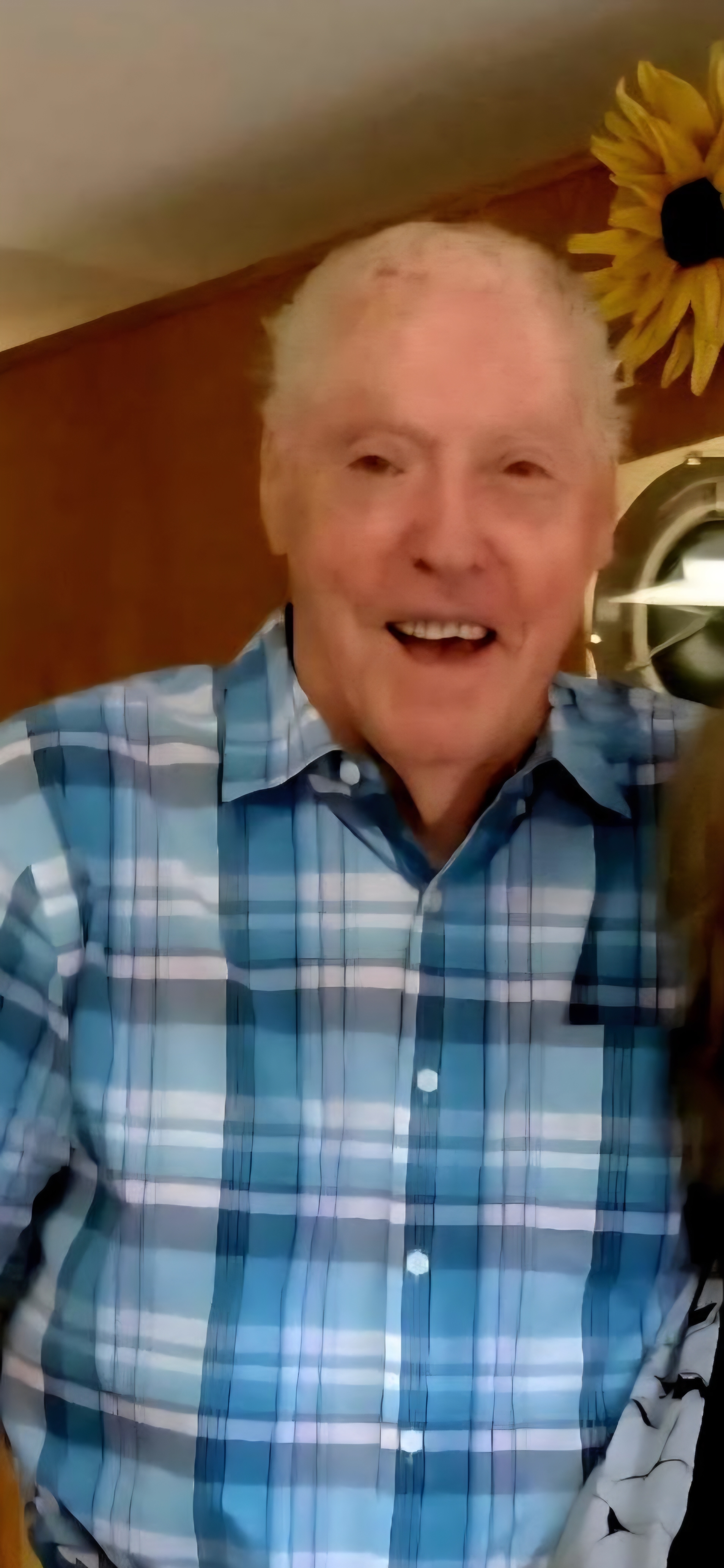
Donald M Brown, 94, born in Los Angeles, with twin brother Darrell, on July 6, 1931, to Roy Sr. and Lelah Brown.
His middle initial, M, was named after his mother’s midwife, Mrs. Marceille. Don was one of seven children who preceded him: Roy Jr., Leland, Betty, Darrell, Vince, and one other at birth.
Donald graduated from Fremont High School in Oakland in 1950. After graduating, he was drafted into the Army (1951–1953) with honors. Throughout his career, he worked in a machine shop making fire hose equipment in Oakland, then moved and worked in Eureka for Ernest Daw, W.P. Fuller, and did tile work with his brothers and father. He later worked at GP/LP beginning in 1969, until his retirement in 1996.
On Christmas night in 1953, he met the love of his life, Shirley Bugenig, at a dance. They married in 1955, lived in Eureka a few years, and bought a house in Arcata where daughters Carrie and Connie were born. They later moved and bought a house in McKinleyville to settle their roots.
Don enjoyed golfing with his buddies, taking trips, always took pride in working in his yard, and loved feeding and watching hummingbirds, ducking out of their way while feeding them. When Shirley broke her hip, she called him her nurse. It was okay at that time, but she would get irritated with him for helping too much. She had a stroke in 2012, and he was devastated. He tried taking care of others so they wouldn’t take care of him.
Don re-met Julie Thompson, which took some of his pain away. Once again, he traveled and cared for her until her passing in 2018. During that time, he became a member of The Presbyterian Redeemer Church in Fortuna, under predeceased Pastor Lance Anderson and current Pastor Tom Culbert. He gained many more friends there. This gave him a new job as an Uber driver for some of his friends.
Don is survived by his daughters: Carrie Gragert (Gordan) and Connie Fisher (Joe); three grandsons: Joey Martin, Mike Martin; and was preceded in death by Brady Gragert. Don also has many nieces and nephews — especially George Brown of Arcata and Janet Brown of Spokane Valley — for always being there for him and supporting his daughter Connie. He is also survived by Julie’s family and grandchildren.
Friends and family are invited to a service at Goble’s Funeral Home in Fortuna on August 6 at 1 p.m., with prior viewing before the service. Then on August 7 at 2 p.m., words will be spoken as he reunites with Shirley at Sunset Memorial Park Mausoleum Crypt in Eureka.
Continually, his words were: “I have lived a full and happy life.”
###
The obituary above was submitted on behalf of Don Brown’s loved ones. The Lost Coast Outpost runs obituaries of Humboldt County residents at no charge. See guidelines here.
Homeless Activists Force Arcata Special City Council Meeting to End
Dezmond Remington / Wednesday, July 30, 2025 @ 6:32 p.m. / Activism

David Loya (left) talking with a group of protestors. By Dezmond Remington.
About two dozen protestors swarmed a special meeting of the Arcata City Council today to protest supposed sweeps of homeless encampments, lambasting city officials and council members and forcing the rescheduling of another city council meeting.
The original meeting, a special city council session to consider awarding a contract to an organization called “Civic Possible” to help them update their Economic Strategic Plan, ended in chaos near the end of the half-hour long meeting when the demonstrators weren’t allowed to address the council on the topic of homeless encampments. Activists shouted down city representatives and questioned their motives, accusing the city officials that they did not care about the homeless and were restricting their freedom of speech by not allowing them to speak.
Council members can’t deliberate on anything that isn’t already on the agenda, and during special city council meetings, public comment is taken at the beginning instead of at the end like a normal city council meeting. In an interview with the Outpost conducted after the meeting ended, City Manager Merritt Perry theorized that that change led to a misunderstanding that helped lead to the outbursts.
Also contributing to the incident was a remark from a Civic Possible representative, who said that he had been working to “eliminate homelessness.” Perry guessed that the crowd thought he meant he wanted to “eliminate the homeless” instead.
“I think the crowd — I don’t think they understood the intent of the speaker,” Perry said.
After a 10-minute recess, Mayor Alex Stillman allowed for open two-minute public comments on any subject, and dozens of people took the opportunity to decry the state of Arcata’s homeless population and insult dead-eyed, silent city officials.
“Each and every single one of you is a fucking loser,” one anonymous public commenter said. “… I hope none of you ever sleep at night and you’re haunted for the rest of your fucking life.”
“You’re putting people under arrest?” another said. “How fucking dare you! That is disgusting, that is disturbing, that is unjust!”
People in the crowd chanted “stop the sweeps” while the council attempted to continue the meeting. Both Perry and Director of Community Development David Loya separately attempted to compromise with some of the demonstrators, saying they’d be happy to talk with them after the meeting, but the activists shouted over them both times.
The city council did end up awarding the contract to Civic Possible. The city council study session with the Arcata Fire District that was supposed to follow technically started, but adjourned before any action had been taken.
Perry denied that Arcata was sweeping homeless encampments.
The issue at the heart of the protestor’s worries is a private plot of land near O Street and Samoa Boulevard. Perry said that the landowner had asked law enforcement to enforce trespassing laws, and the city was not destroying any homeless camps on public property.
Perry said the council had done a lot to help Arcata’s homeless, naming various low-income housing projects they’d greenlit, shelters they’ve supported, and rental assistance and mobile home improvement programs.
“You can’t really yell somebody into doing what you want them to do,” Perry said. “I don’t think that’s the way it works. I think it has to be a two-way conversation focused on solutions and not shaming or yelling at somebody and forcing them to do what you want. And I think that’s the area we have to work on, is ‘How can we be more constructive about finding solutions, and what should those solutions look like?’”


